Plant Profile & Key Characteristics
Overview: Clarkia (Clarkia amoena) is an upright herbaceous annual reaching 0.3-1.5 m, grown as a colourful bedding and cut flower. It completes its life cycle in a single season and is prized for its papery four-petalled blooms.
Quick Specifications
| Specification | Attribute |
|---|---|
| Plant Type / Life Cycle | Annual |
| Mature Size | 0.3-1.5 m (1-5 ft) tall |
| Growth Rate | Fast to Moderate |
| Root System | Fibrous, shallow |
| Hardiness | Grown as an annual (spring sowing in zones 2-9, winter sowing in zones 10-11) |
Growth Form & Structure
- Height & Spread: 0.3-1.5 m (1-5 ft) tall in the ground; more compact in planters and containers.
- Growth Habit & Form: Upright, branching herbaceous annual forming loose flowering stems.
- Lifespan & Maturity: Completes its cycle in one growing season, flowering through spring and summer.
Anatomy & Physical Features
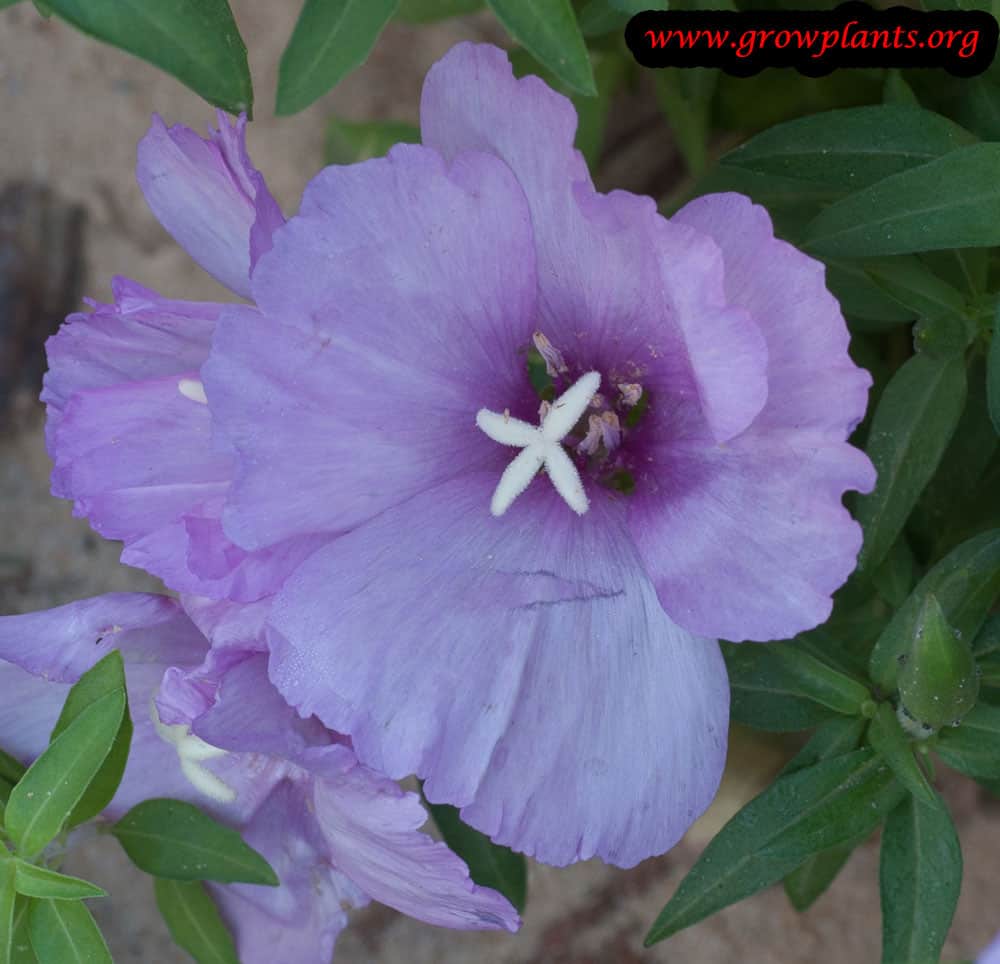
- Leaves & Foliage: Green, lanceolate leaves.
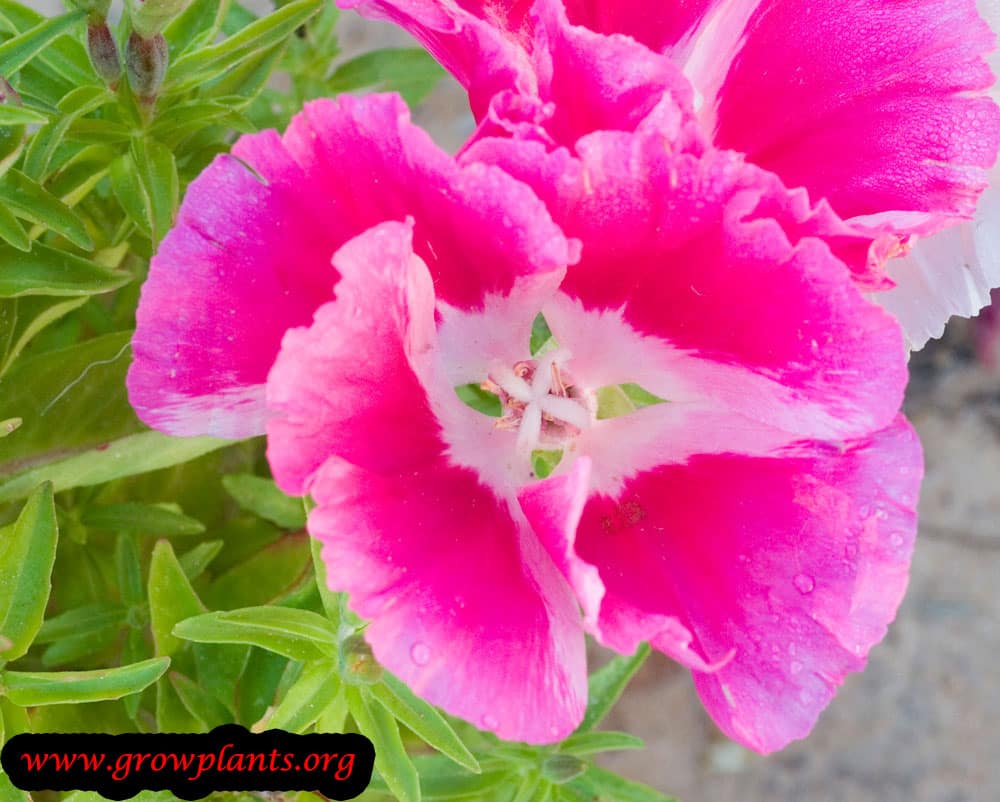
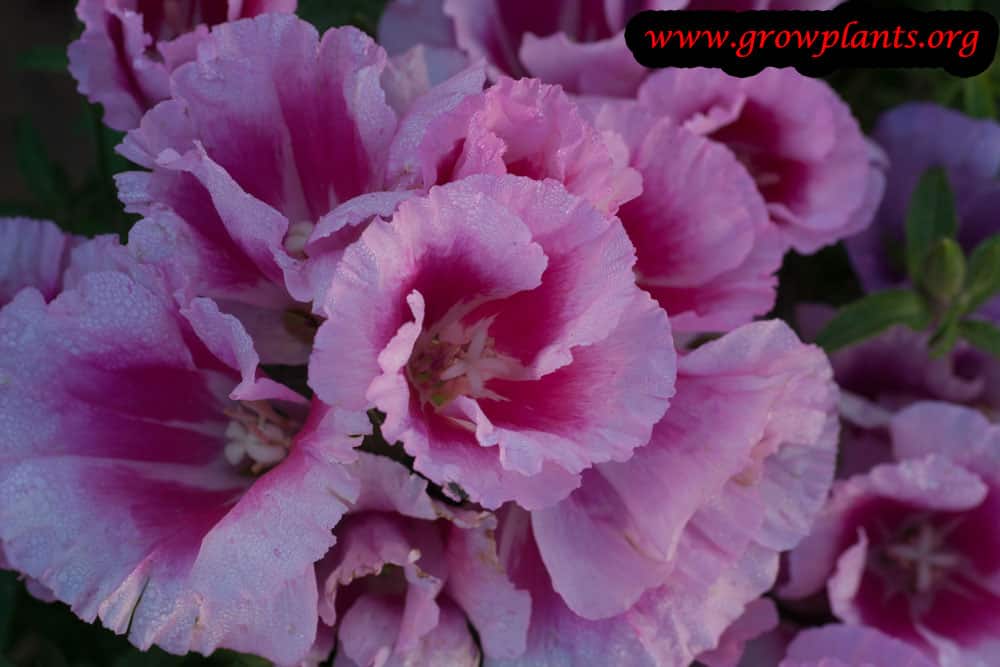
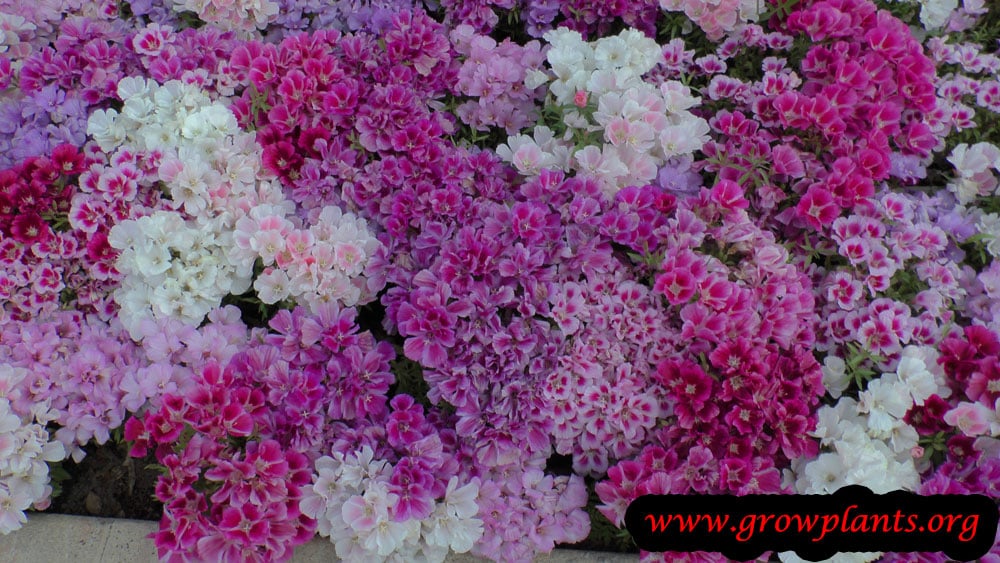
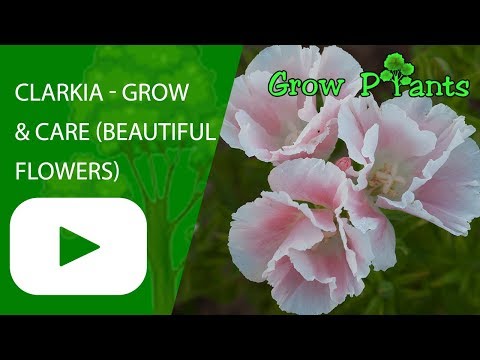
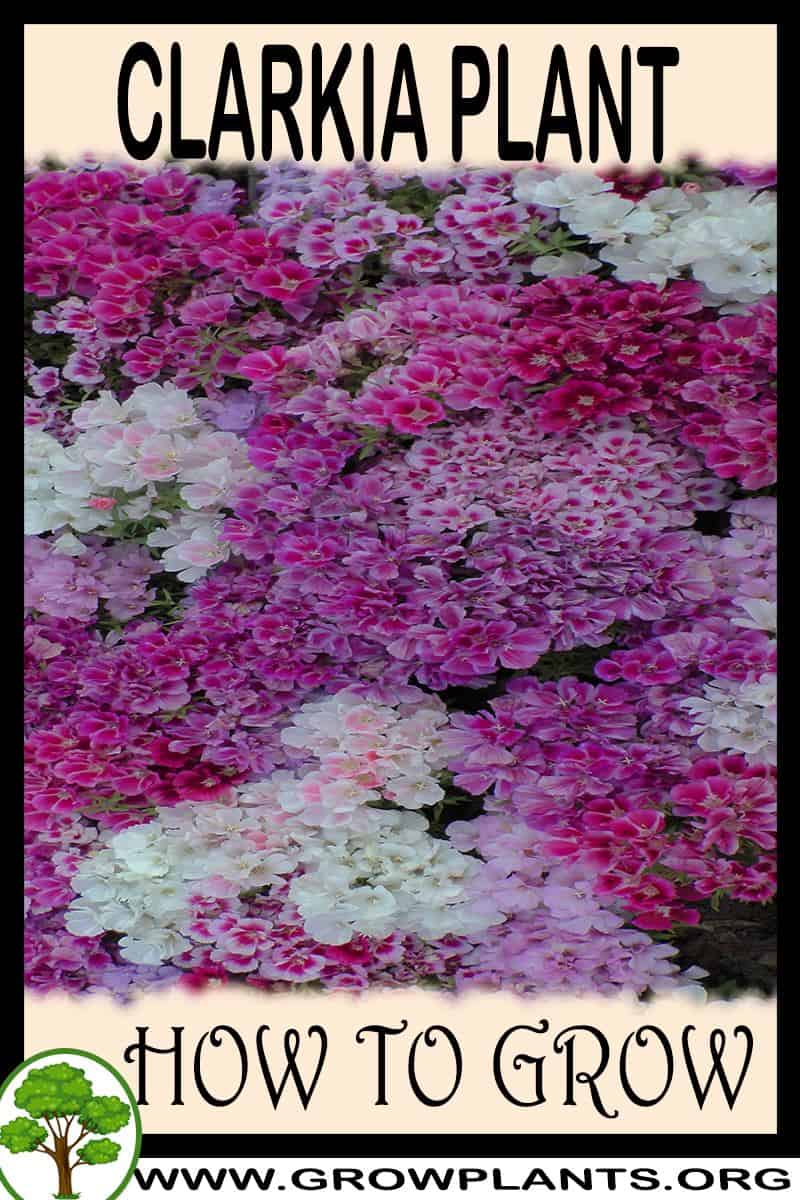
- Flower Characteristics: Pink, purple, white, orange or red four-petalled flowers, excellent as a cut flower.
Primary Uses & Landscape Value
- Functional & Ornamental Roles: Ornamental bedding and border plant, cut flower and pollinator attractant; suited to containers.
Care Guide: Planting, Soil & Watering
Overview: Clarkia is a quick, easy-going annual that flowers best in full sun to half shade in light, well-drained soil. It has modest water needs and dislikes rich, soggy ground, which reduces flowering.
Quick Care Requirements
| Requirement | Ideal Condition |
|---|---|
| Planting Season | Spring; autumn to winter in hot climates |
| Growth Rate | Moderate to fast |
| Soil Type | Light, well-draining |
| Water Need | Low to moderate; let the surface dry between waterings |
Planting & Establishment
- Best Planting Season: Plant or sow in spring in most climates, or in autumn to winter where summers are hot.
- How to Plant:
- Hole Preparation: Set young plants at their spacing in loose, free-draining soil.
- Soil Amendments: Avoid over-enriching; a light, lean soil with grit for drainage suits it best, as rich soil favours leaves over flowers.
- Planting Depth: Plant at the same depth as the root ball and firm gently.
- Growth Speed & Expectations: A fast, moderate grower reaching 0.3-1.5 m and flowering quickly in its single season.
Soil, Watering & Drainage Care
- Soil Mix & Drainage Needs: Needs light, well-drained soil; heavy or waterlogged ground causes it to flop and rot.
- Watering Schedule & Technique:
- Young / Newly Planted: Keep the soil lightly moist while seedlings establish.
- Established: Water moderately, letting the top of the soil dry before watering again.
- Seasonal Adjustments: A little more in warm, dry spells; ease off as flowering finishes.
Climate, Light & Hardiness
Clarkia is an annual wildflower suited to subtropical, temperate, Mediterranean, and desert climates, grown in full sun to half shade. Its usable hardiness spans roughly USDA zones 2–11, but cold controls exactly when it is sown: spring planting in zones 2–9, and cool-season winter planting in the frost-free warmth of zones 10–11.
Quick Climate Specifications
| Climate Zones | Subtropics, temperate, Mediterranean, desert |
|---|---|
| USDA Hardiness Zones | Approximately 2–9 (spring planting) and 10–11 (winter planting) |
| Cold Damage Begins | Around 0°C (32°F); frost damages seedlings and flowering growth |
| Frost Tolerance | Low (this is a frost-tender annual, not a perennial that overwinters as a hardy plant) |
| Light Conditions | Full sun to half shade |
Sunlight & Light Exposure
Optimal Light Setup
Full sun to half shade both support good flowering.
Direct Sun Requirement
Full sun generally produces the most abundant bloom on this bedding and cut-flower plant.
Shade & Heat Management
Like other Clarkia species, plants generally prefer cool growing conditions and can decline in intense, prolonged summer heat, which is part of why winter planting is used in the warmest zones.
Temperature Extremes & Hardiness
USDA Hardiness & Regional Limits
Clarkia is grown as a hardy annual across a wide zone range (2–11), but the site's own data shows cold as the limiting factor for outdoor culture: in cool zones (2–9) it is sown in spring after frost risk eases, while in warm, frost-free zones (10–11) it is instead sown in winter to avoid summer heat.
Cold Damage & Winter Protection
As an annual, frost near freezing will damage or kill seedlings and flowering plants; the zone-based planting timing exists specifically to keep the crop out of hard frost.
Frost Sensitivity
Low; this is not a frost-hardy perennial, so plantings are timed to avoid freezing conditions rather than to withstand them.
Extreme Heat Tolerance
Limited; sustained heat is a key reason winter (rather than summer) planting is used in the warmest zones.
Wind, Humidity & Microclimate
Humidity Preferences
Grown across a wide range of climates from desert to subtropical, suggesting adaptability to varied humidity as long as soil drains well.
Rainfall & Seasonal Moisture
Suited to climates with a defined cool, moist growing season followed by drier conditions, matching its Mediterranean and desert-climate use.
Microclimate Recommendations
An open, sunny bed timed to the local frost-free window (spring in cooler zones, winter in warm zones) gives the most reliable bloom.
Growing in Pots, Balconies & Indoors
Clarkia is a sun-loving hardy annual grown for its papery flowers – lovely in outdoor pots and window boxes, but not a houseplant. Indoors, without strong light, it stretches and grows leggy, and the grower confirms it is not suited to life as a houseplant.
Quick Details
- Container Size: A medium pot or window box (roughly 2-5 L) with free drainage suits a few plants; being an annual it never needs potting up
- Indoor Suitability: Not a houseplant; at most a bright sill for raising seedlings
- Best Spot: Full sun, or light shade in hot climates (fewer flowers but a longer season)
- Soil & Drainage: Light, free-draining mix that is not too rich – over-feeding gives leaf at the expense of flower
- Watering in Pots: A small-to-average amount; keep just moist and never waterlogged – pots dry faster than open ground
Indoors & On the Windowsill
- Not a houseplant: The grower says it will not grow indoors as a houseplant; in a room it becomes drawn and flowers poorly.
- Windowsill: A very sunny sill is useful for starting seedlings, but for real flowering it needs to move outdoors into full light.
- Season: Being an annual there is nothing to overwinter – sow a fresh batch each growing season.
On a Balcony or Patio
- Excellent container annual: It is at its best in pots, troughs and window boxes in full sun; deadhead spent blooms to keep it flowering, and shelter taller stems from strong wind.
- Heat & water: Reflected heat from walls and railings dries pots quickly – check moisture often in warm weather, but avoid keeping the mix soggy.
Choosing the Pot, Soil & Long-Term Care
- Pot & drainage: Any pot or window box with strong drainage holes; skip a standing saucer to avoid root rot.
- Potting mix: A light, free-draining mix; keep it on the lean side, as rich soil produces foliage rather than flowers.
- Feeding: Feed sparingly – a light, balanced feed is plenty; too much nitrogen suppresses blooming.
Growing this plant in a greenhouse
A greenhouse can give clarkia frost protection and cold protection.
Greenhouse at a glance
| Greenhouse suitability | Conditional - depends on your climate |
|---|---|
| Main benefits | frost protection, cold protection |
| Season extension | earlier spring & later autumn |
| Outdoor protection advisable below | about 5°C |
| Maintain greenhouse minimum | around 5°C for active growth |
| Suitable types | unheated greenhouse, polycarbonate greenhouse |
| Heating | Heating is optional - useful mainly for winter growing in cold areas. |
Related greenhouse guides
- Greenhouses: How to Choose the Right Greenhouse
- Polycarbonate Greenhouses: What to Look for Before Buying
Fertilizing & Feeding
Clarkia is an annual wildflower-type bloomer that performs best in lean, well-drained soil; light feeding supports steady flowering for cutting without producing the soft, floppy growth that rich soil tends to cause in this plant.
Quick Fertilizing Specs
| Feeding Level | light |
|---|---|
| Main Nutrient Priority | A balanced feed, applied lightly, rather than a nitrogen-heavy one that favors foliage over flowers |
| Best Feeding Period | Early growth after sowing or transplanting, continuing lightly through the bloom season |
| Organic Options | A light top dressing of aged compost worked into the well-drained soil this plant prefers |
| Soil pH | Tolerates a wide range of soil as long as drainage is good |
| Reduce/Stop Feeding | Feeding naturally winds down as this annual finishes flowering and completes its life cycle |
Feeding by Growth Stage
Early growth after sowing or transplanting
Support young plants as they establish roots and begin upright growth toward flowering
| Nutrient direction | A light, balanced feed to support steady early growth without excess softness |
|---|---|
| Timing | Shortly after seedlings are established or transplants have rooted in |
| Frequency | Light feeding is usually enough at this stage for an annual that prefers lean conditions |
| Fertilizer types | A balanced, light-strength fertilizer or a light top dressing of aged compost |
| Precautions | Avoid rich, high-nitrogen feeding, which tends to produce weak, floppy stems on this plant |
Budding and bloom
Sustain the long, colorful bloom period this plant is grown for as a cut flower
| Nutrient direction | A light, balanced feed to keep flowering steady without pushing excess foliage |
|---|---|
| Timing | As buds form and continuing through the bloom season, especially where flowers are being cut regularly |
| Frequency | This plant rarely needs more than an occasional light feeding once it is blooming well |
| Fertilizer types | A balanced fertilizer applied sparingly during active bloom |
| Precautions | Do not over-fertilize; excess nitrogen in particular favors leafy growth over the flowers this plant is grown for |
Post-bloom decline
Let this annual complete its natural life cycle after its bloom period ends
| Nutrient direction | None – the plant is finishing its life cycle and no longer benefits from feeding |
|---|---|
| Timing | After flowering has largely finished for the season |
| Frequency | No feeding at this stage |
| Fertilizer types | No feeding is needed as this annual completes its life cycle |
| Precautions | Do not fertilize a declining annual; withhold feeding and allow the plant to finish naturally or be cleared |
Nutrient Deficiency Signs & Corrections
Overall pale, light green leaves and fewer, smaller flowers than expected
| Possible causes | Nitrogen deficiency in very lean soil, Root stress from poor drainage or compacted soil, Overcrowding and competition from nearby plants |
|---|---|
| Appears first on | Older, lower leaves first |
| What to check | Overall plant vigor and flower count compared with a typical season, Soil drainage and compaction, Spacing and competition from neighboring plants |
| Possible correction | A light, balanced feeding during active growth; avoid a heavy hand, since this plant naturally prefers lean conditions |
Tall, floppy, weak stems with fewer blooms than expected
| Possible causes | Excess nitrogen from overly rich soil or over-feeding, favoring foliage over flowers, Too much shade reducing stem strength and bloom, Overcrowded planting competing for light and causing stretching |
|---|---|
| Appears first on | New stem growth reaching for light |
| What to check | Recent feeding history and soil richness, Amount of direct sun the planting receives, Plant spacing and crowding |
| Possible correction | Reduce feeding rather than increase it, and improve sun exposure and spacing; this plant blooms best in lean, well-drained conditions |
Pruning, Training & Seasonal Maintenance
Clarkia is a soft-stemmed annual grown for cut flowers and garden color. There is no woody structure to manage – “pruning” here means pinching young plants for bushier growth and deadheading spent blooms through the flowering season, which this plant’s own care notes confirm can be done throughout the season. Its main objective is prolonging bloom and keeping the plant tidy, not shaping a permanent framework, since the whole plant is replaced each year.
Quick Pruning & Maintenance Specs
| Pruning Tolerance | High for soft pinching/deadheading; not applicable to structural cuts – there is no wood |
| Primary Pruning Window | Throughout the flowering season (spring–summer) |
| Typical Frequency | Ongoing, every few days to weekly while in bloom |
| Main Objective | Prolong bloom via deadheading; encourage bushier growth via early pinching |
| Young Plant Priority | Pinch growing tips early to encourage branching rather than a single leggy stem |
| Mature Plant Priority | Regular deadheading of spent flowers; cutting stems for bouquets doubles as maintenance |
| Best Tool Type | Precision snips |
Pruning by Plant Age & Size
Newly Established
Pinch the growing tip once the seedling has a few sets of leaves to encourage side-branching and a bushier, more floriferous plant instead of one tall stem.
Young / Formative
No structural training system applies – this is a soft annual, not a plant that develops permanent branch architecture.
Mature / Established
Deadhead continuously as flowers fade to redirect energy into new blooms rather than seed production; harvesting stems for cut-flower use serves the same purpose.
Special Growth to Remove
Spent flower stems (deadheading) are the main removal task; since flowers grow in clusters on current growth, this is simply routine tidying rather than a structural decision.
Container & Small-Space Pruning
In containers, pinching young plants for compactness matters more than in open ground, since pot-grown plants can get leggy reaching for light; deadhead promptly to keep container displays full rather than seed-setting.
Tools
Precision snips or fingers are enough for both pinching and deadheading soft stems – no cutting tool heavier than that is ever needed on this plant.
Tool Hygiene & Disease Risk
Routine. Aphids and spider mites are the recorded pests, not tool-transmitted pathogens; clean tools are sufficient.
Cut Placement & Technique
Deadhead just above the next set of leaves or side-bud so the plant redirects growth there rather than leaving a bare stub.
Post-Pruning Care
No special aftercare needed beyond the plant’s normal watering.
Common Pruning Mistakes
Skipping deadheading, which lets the plant set seed and shut down further flowering earlier than necessary; not pinching young plants, resulting in a single leggy, flop-prone stem instead of a bushy plant.
When NOT to Prune
No meaningful restriction – this annual can be deadheaded or pinched throughout its growing season without risk to a future crop or framework, since there is none to protect.
Recommended Tools (by task)
- precision_snips – the only tool needed, for pinching young growth and deadheading soft flower stems.
Propagation Guide
Clarkia is a seed-grown annual – the site confirms vegetative or grafted propagation is not needed, and plants are simply started from seed or seedling. It is an easy, straightforward plant to raise from seed, typically sown directly where it is to flower.
Quick Propagation Specs
| Best Propagation Method | Direct-sown seed |
| Propagation Difficulty | Easy |
| Seed True-to-Type | Mostly uniform for the species form; mixed color strains (the site notes pink, purple, white, orange, red, and bicolor flowers) may show color variation from seed |
| Best Propagation Season | Spring; in hot climates, better sown in winter |
Growing from Seed
Sowing Season
Spring in most climates; in hot-summer climates the site recommends winter planting instead.
Sowing Depth & Orientation
Clarkia has fine seed and, as is typical for small-seeded annuals of this kind, is usually surface-sown or only very lightly covered rather than buried – this is general practice for the species and not a site-sourced figure.
Germination Conditions
Clarkia generally prefers cool conditions and moderate, not excessive, moisture to germinate, consistent with the site’s note that this plant needs only a small to average amount of water once growing.
Seedling Care
Because Clarkia can resent root disturbance, direct sowing where the plants are to flower is generally more reliable than transplanting seedlings raised elsewhere; thin crowded seedlings once they are large enough to handle.
Bloom & Flower Guide
Quick Details
- Bloom Season: Spring into summer
- Time to First Bloom: In its first year, roughly two to three months after sowing
- Flower Appearance: Four-petalled flowers in pink, purple, white, orange, red or bicolours
- Edibility: Grown as an ornamental and cut flower
Detailed Blooming Overview
Clarkia is an easy hardy annual that flowers freely from spring into summer, sending up slender stems lined with satiny four-petalled blooms. It flowers best in the cooler part of the season and makes a long-lasting cut flower.
Flower Characteristics
- Flowers have four petals and come in pink, purple, white, orange, red or more than one colour.
- Carried along upright stems, opening in succession up the stem.
Bloom Care & Thinning
- Prolonging the display: deadhead spent blooms regularly to keep new flowers coming.
- Position: a sunny spot and not-too-rich soil give the sturdiest, most floriferous plants.
Pests, Diseases & Troubleshooting
Overview: Clarkia is an easy cool-season hardy annual with few pests; its problems are mostly cultural – it sulks and stops flowering in heat and rich soil – plus the sap-suckers and mildews that affect any soft-stemmed bedding plant. Sow in situ in lean soil, give full sun and airflow, and avoid overfeeding and overwatering to keep it healthy and floriferous.
Quick Troubleshooting Overview
| Issue / Pest | Main Symptom | Primary Solution |
|---|---|---|
| Aphids | Curled sticky shoot tips with clustered soft insects | Rinse off; insecticidal soap; conserve predators |
| Spider mites | Fine speckling and bronzing in hot dry spells | Raise humidity; hose foliage; light soap if severe |
| Powdery mildew | White powdery coating on crowded, dry plants | Space for airflow; sulphur or bicarbonate |
| Downy mildew | Yellow leaf patches with grey mould beneath | Airflow; avoid wet foliage; remove infected leaves |
| Damping-off | Seedlings collapse at soil line and keel over | Sow thinly in clean mix; don’t overwater; good drainage |
| Few/short-lived flowers | Leggy growth and poor bloom | Lean soil, full sun, no feeding; sow in cool season |
Common Pests & Management
- Aphids (Aphidoidea):
- Symptoms: Soft green or pink aphids cluster on tender shoot tips, leaf undersides and flower buds, distorting growth and leaving sticky honeydew and sooty mould; they can also spread viruses.
- Prevention & Control: Rinse colonies off with a jet of water and conserve ladybirds, lacewings and hoverflies, which quickly clean up outdoor plantings. Insecticidal soap handles heavier colonies; avoid rich nitrogen feeding, which drives the soft growth aphids love.
- Two-spotted spider mite (Tetranychus urticae):
- Symptoms: In hot, dry weather the leaves show fine pale stippling and a dull bronze cast, with faint webbing on the undersides in bad cases and early leaf drop.
- Prevention & Control: Keep plants unstressed with adequate moisture and hose down foliage in hot spells – mites thrive on dry, dusty plants. Conserve predatory mites and use a light insecticidal soap only if stippling spreads.
- Whitefly (Trialeurodes vaporariorum):
- Symptoms: Tiny white flies rise in a cloud when foliage is disturbed; their nymphs on leaf undersides excrete honeydew and weaken the plant, more of an issue on sheltered or glasshouse-raised plants.
- Prevention & Control: Use yellow sticky traps to monitor and catch adults, and spray insecticidal soap to leaf undersides where nymphs feed. Good airflow and avoiding soft over-fed growth keep numbers low.
- Thrips (Thysanoptera):
- Symptoms: Silvery streaks and pale speckling on leaves and petals, sometimes with distorted, discoloured flowers; the slender insects hide in buds and blooms.
- Prevention & Control: Remove spent flowers, monitor with blue sticky traps, and spray insecticidal soap or spinosad in the evening to protect pollinators. Damage is usually cosmetic on this annual.
Diseases & Fungal Issues
- Powdery mildew (Erysiphe / Podosphaera spp.):
- Symptoms: A white-to-grey powdery bloom coats leaves and stems, worst on crowded, dry-rooted plants late in the season; leaves yellow and dry.
- Treatment & Management: Space or thin plants for airflow, avoid drought stress and remove badly affected leaves. Sulphur or potassium bicarbonate keeps it in check; as an annual, it is often simplest to tolerate light late-season mildew.
- Downy mildew (Peronospora / Plasmopara):
- Symptoms: Pale yellow angular patches on the upper leaf surface with greyish downy mould beneath in cool wet conditions; leaves brown and collapse.
- Treatment & Management: Improve airflow and drainage, avoid overhead watering, and remove infected leaves. Copper or an approved fungicide protects new growth in prolonged wet weather.
- Rust (Puccinia spp.):
- Symptoms: Yellow spots above and powdery orange-brown pustules on the leaf undersides; heavy infection yellows and drops foliage.
- Treatment & Management: Remove and destroy infected leaves and improve air circulation; avoid wetting the foliage. Rust is usually minor on this short-lived annual.
- Damping-off & root rot (Pythium / Rhizoctonia):
- Symptoms: Seedlings rot at the soil line and topple, and established plants in soggy soil wilt and collapse as roots blacken and rot.
- Treatment & Management: Sow thinly into clean, free-draining soil or mix, avoid overwatering and don’t sow into cold wet ground. Good drainage and airflow prevent both damping-off and later root rot.
- Botrytis (grey mould) (Botrytis cinerea):
- Symptoms: Fuzzy grey mould rots ageing flowers and crowded, damp foliage in cool wet spells, causing browning and collapse of blooms.
- Treatment & Management: Deadhead spent flowers, thin for airflow and avoid overhead watering. Hygiene alone usually controls it on annuals.
Growing Difficulties & Abiotic Problems
- Poor flowering / legginess:
- Cause & Symptoms: Rich soil, heavy feeding, heat or shade make Clarkia grow lush and leafy but flower poorly, or stretch and flop; it is adapted to cool weather and lean soils.
- Correction Strategy: Grow in full sun on poor-to-average, unfertilised soil, sow direct in the cool season, and do not feed with nitrogen; support taller types and pinch young plants for bushiness.
- Heat decline:
- Cause & Symptoms: Hot summer weather causes rapid decline, flower drop and early death, as Clarkia is a cool-season plant.
- Correction Strategy: Sow to flower in the cooler parts of the year, provide even moisture, and accept it as a short cool-season display rather than fighting summer heat.
- Flopping / lodging:
- Cause & Symptoms: Thin stems on rich soil or in wind cause plants to sprawl and flatten.
- Correction Strategy: Grow hard in lean soil, sow at the right density for mutual support, and use twiggy pea-sticks or netting for taller stands.
What Helps – Products & Tools
Clarkia needs only light help: insecticidal soap for aphids, whitefly, thrips and mites, and sulphur or potassium bicarbonate for powdery mildew, with copper for downy mildew in wet spells. As a cool-season annual the best ‘tools’ are lean unfed soil, full sun and good spacing rather than sprays.