Plant Profile & Key Characteristics
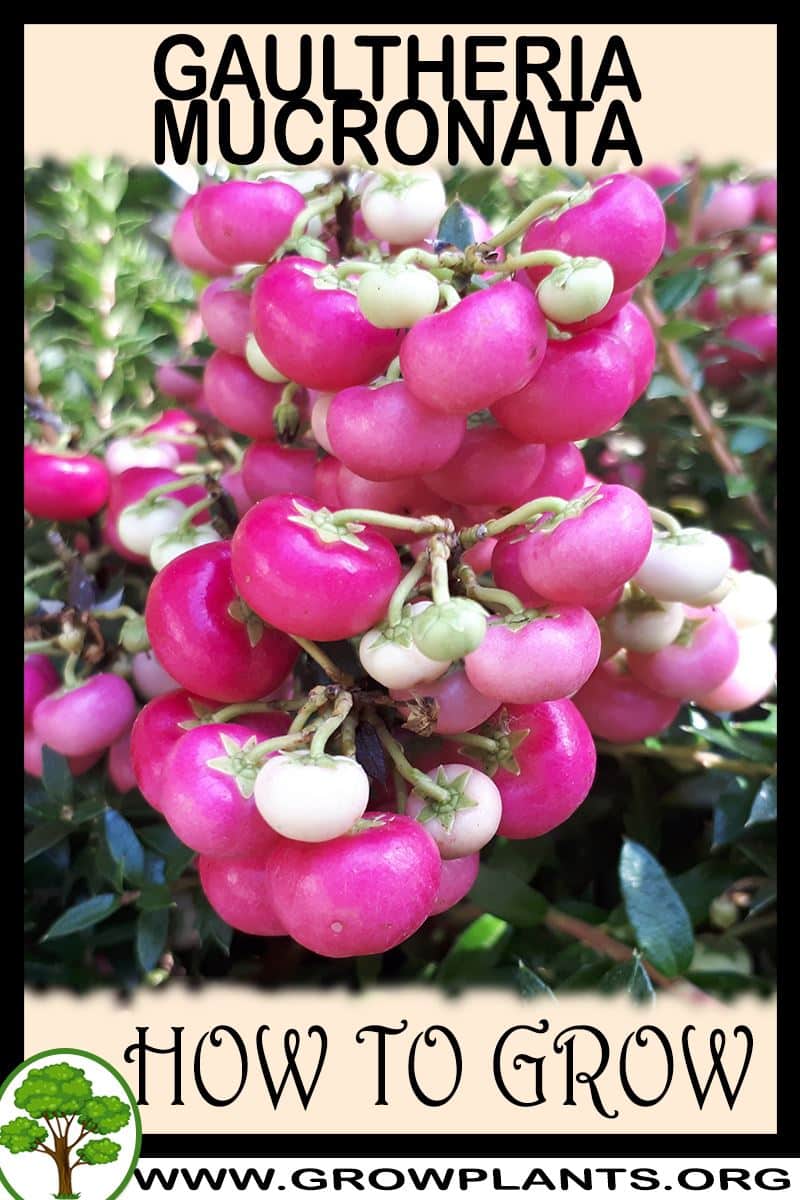
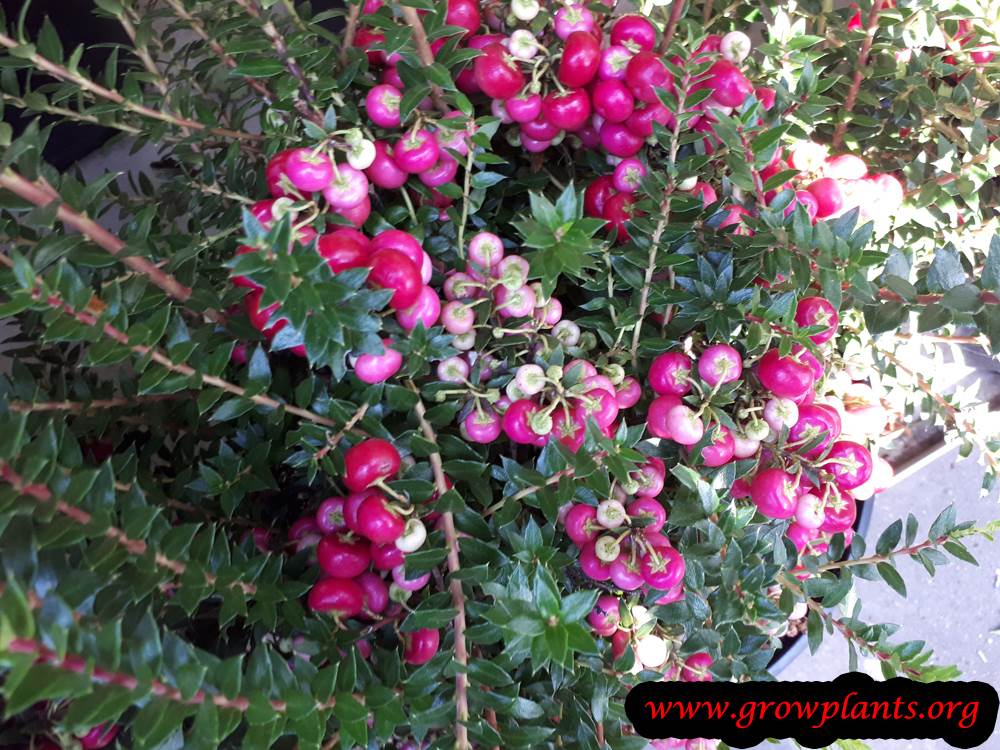
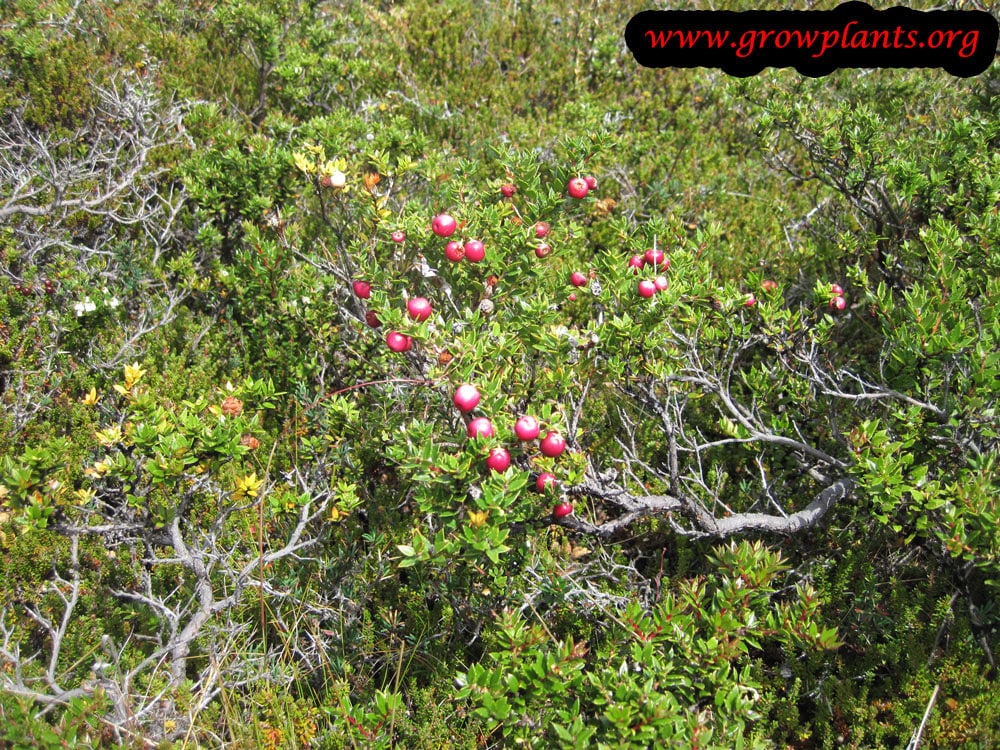
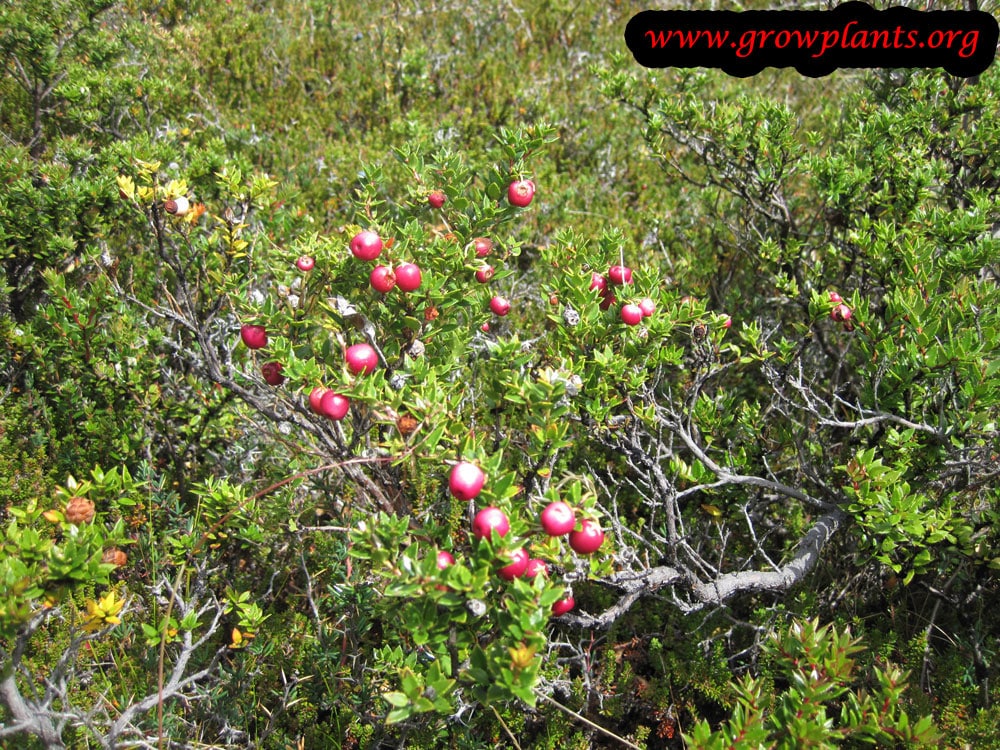
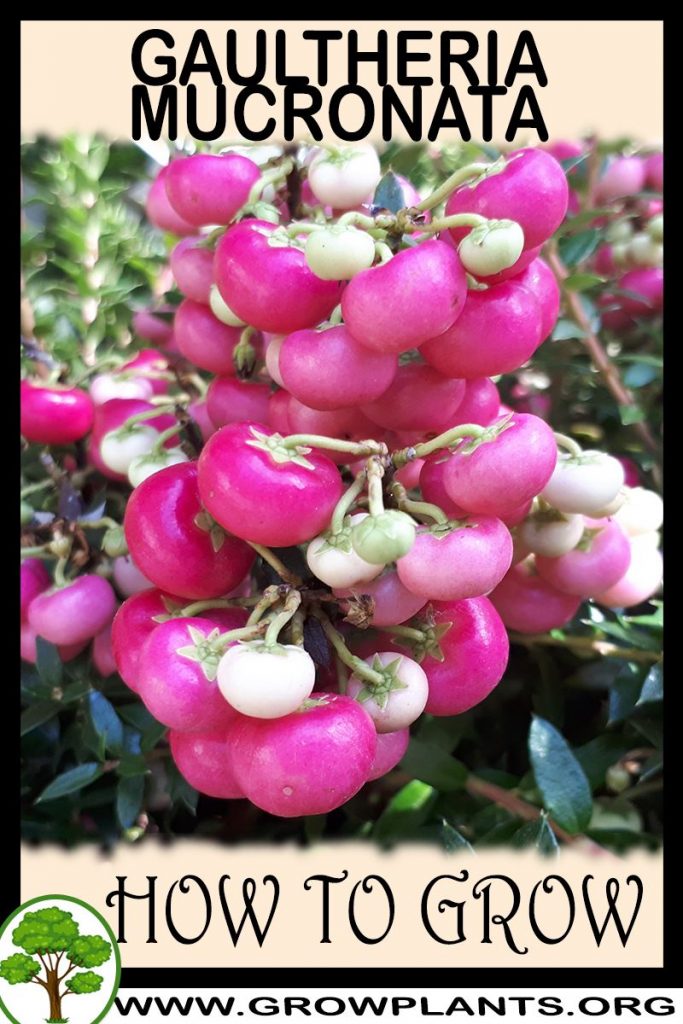
Overview: Gaultheria mucronata (prickly heath) is an evergreen, moderate-growing shrub reaching 50-150 cm (20-60 in), grown for its glossy small leaves and showy, long-lasting white, red or purple berries. A hardy, acid-loving perennial, it is used as ornamental groundcover and low hedging.
Quick Specifications
| Specification | Attribute |
|---|---|
| Plant Type / Life Cycle | Perennial (woody shrub) |
| Foliage Type | Evergreen |
| Mature Size | 50-150 cm (20-60 in) |
| Growth Rate | Moderate |
| Root System | Shallow, fibrous (acid-loving surface roots) |
| Hardiness | USDA zones 7-8 |
Growth Form & Structure
- Height & Spread: 50-150 cm (20-60 in) tall, spreading into thickets; also grows well in containers.
- Growth Habit & Form: Dense, bushy, suckering evergreen shrub forming spreading thickets.
- Lifespan & Maturity: Long-lived woody perennial; bears fruit from about 2 years.
Anatomy & Physical Features
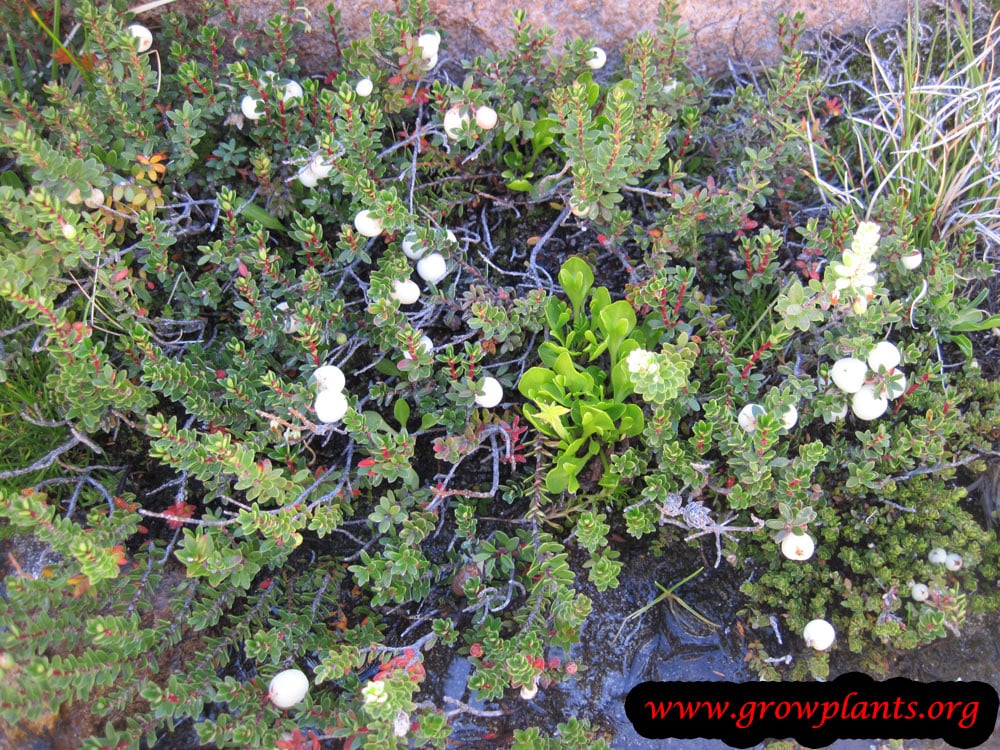
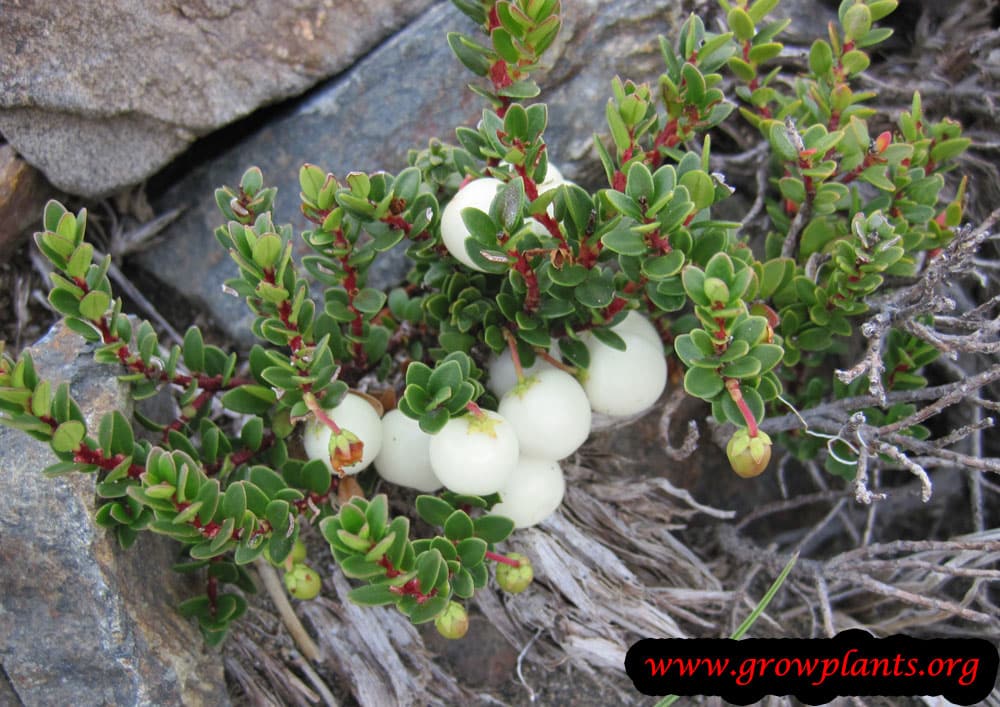
- Leaves & Foliage: Small, glossy green elliptic leaves with a leathery texture and pointed (mucronate) tips.
- Flower Characteristics: Small white bell-shaped flowers in clusters, with male and female flowers on separate plants (full detail in the Bloom guide).
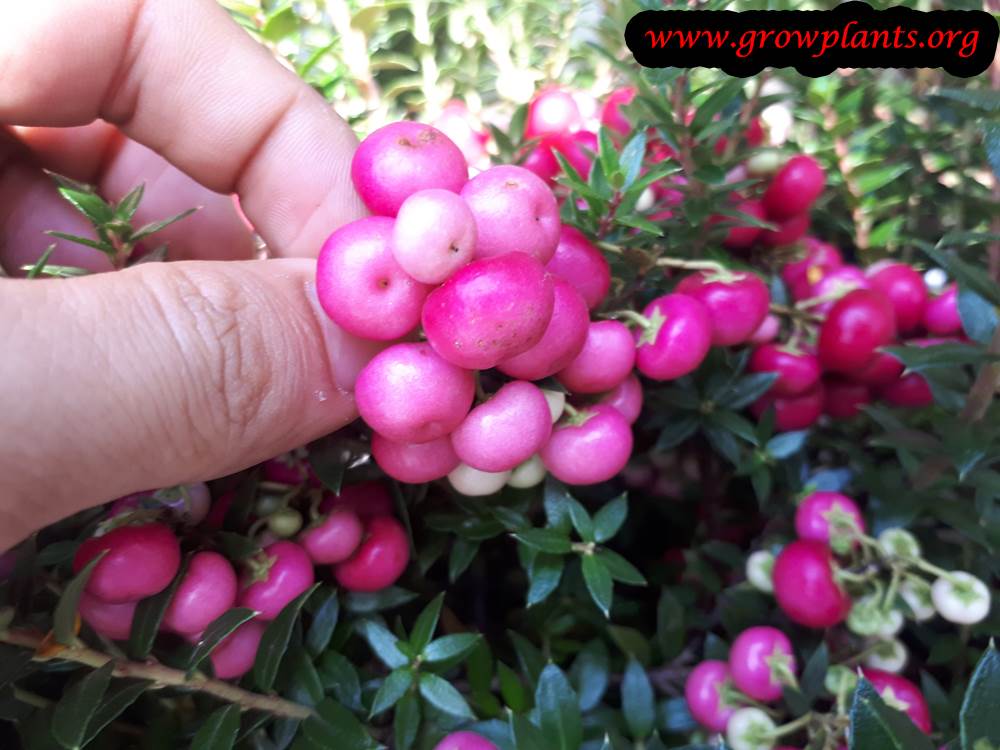
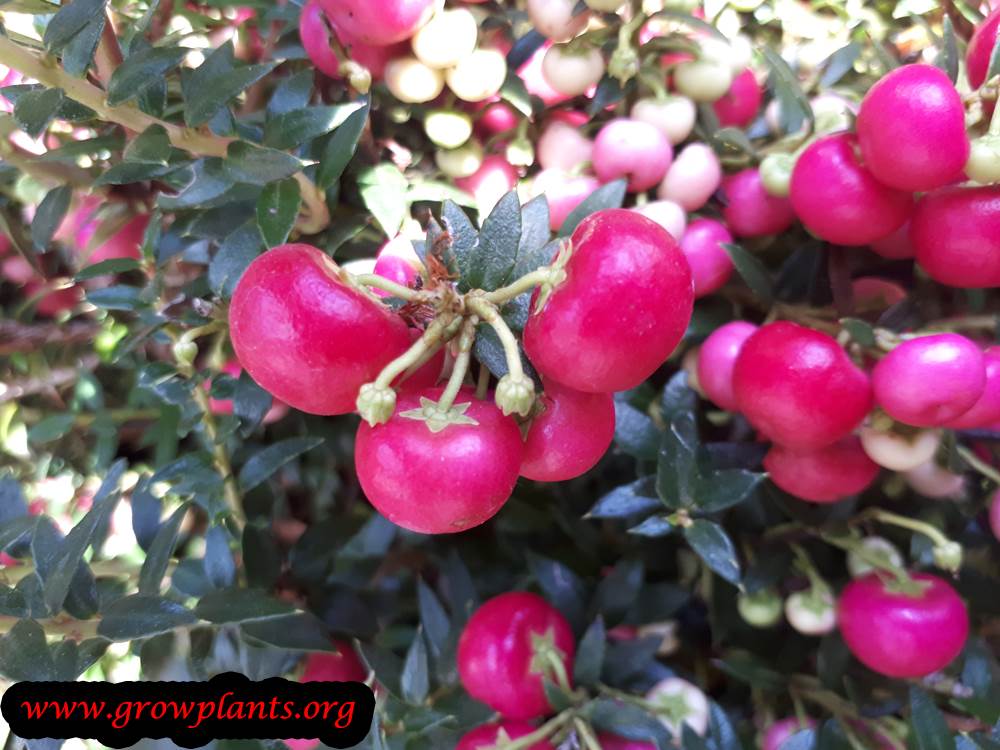
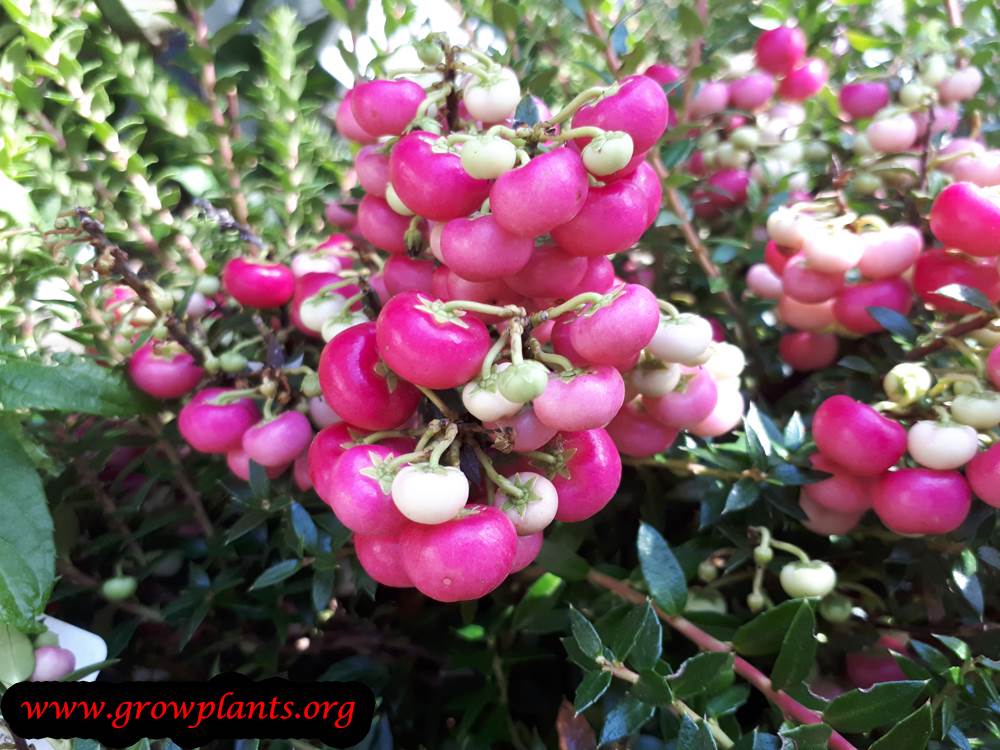
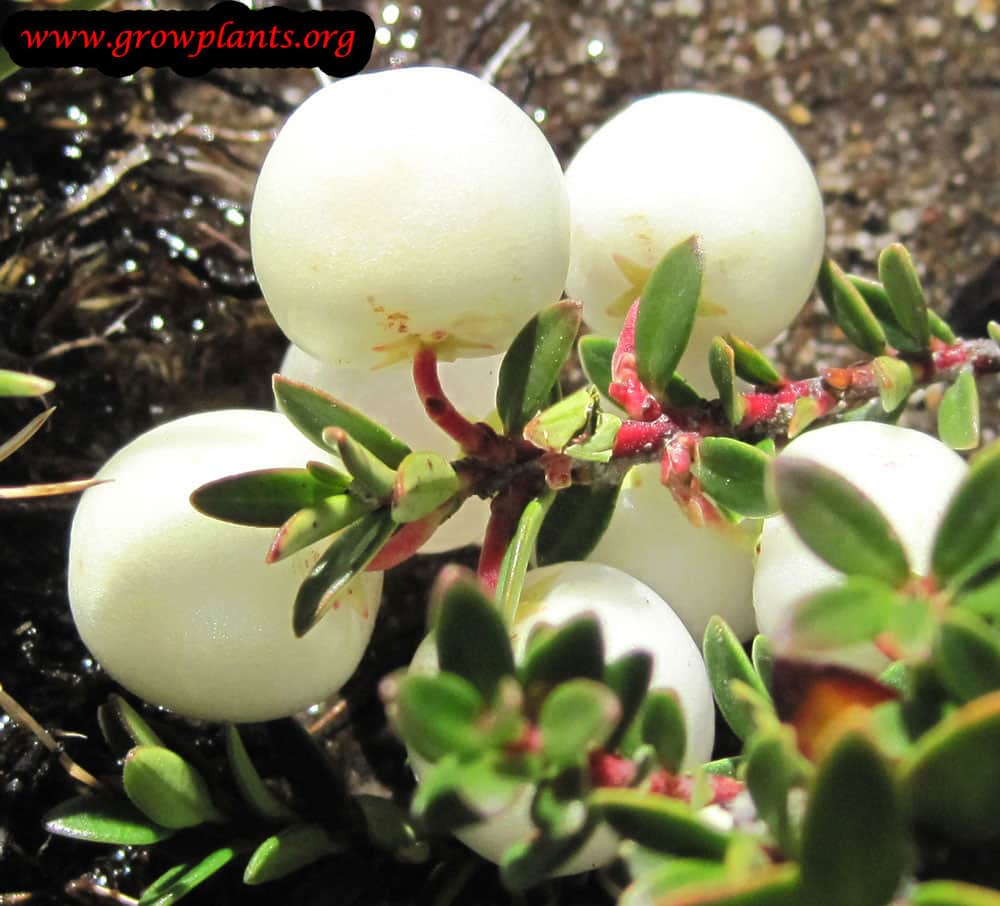
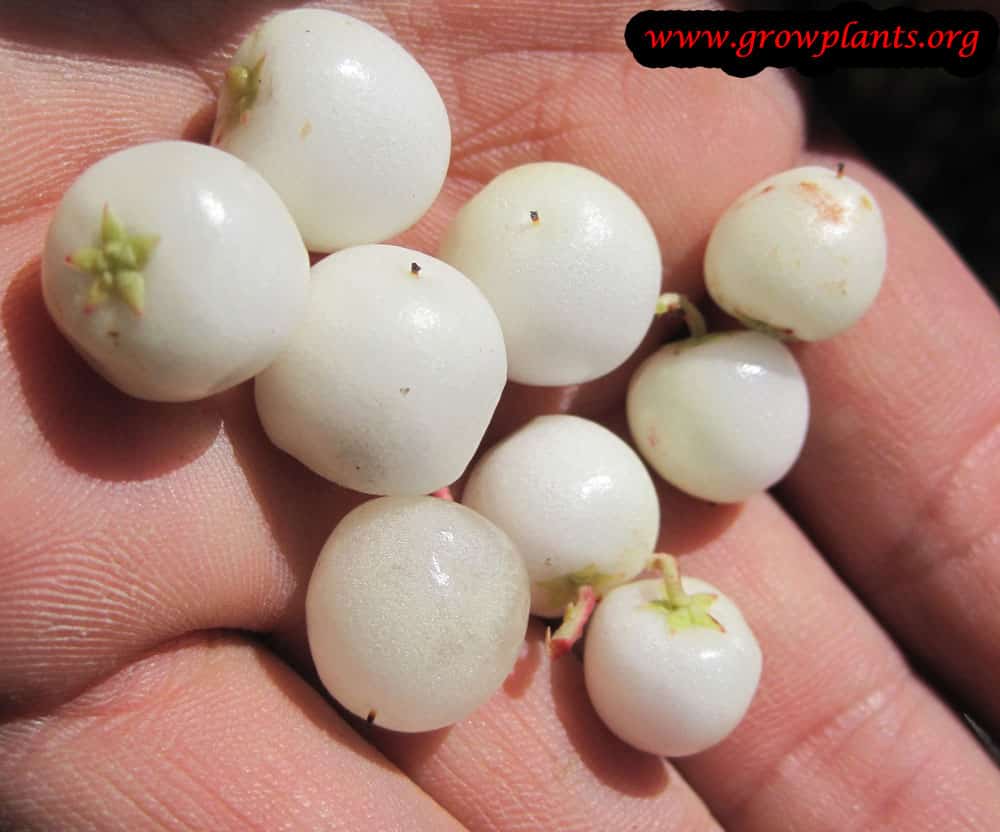
- Fruit Profile: Rounded berries 0.5-1 cm, white, red or purple, tasteless to sweet (full detail in the Fruit guide).
Primary Uses & Landscape Value
- Edible Uses: Berries eaten raw or made into jam; a male and female plant are needed for fruit set.
- Functional & Ornamental Roles: Ornamental berrying shrub, groundcover and low hedge for acid soils.
Care Guide: Planting, Soil & Watering
Overview: Gaultheria mucronata (prickly heath) is an evergreen, acid-loving shrub for cool temperate gardens, growing in full sun to part shade. It needs a moist but well-drained, humus-rich acidic soil and steady moisture, disliking both drought and lime.
Quick Care Requirements
| Requirement | Ideal Condition |
|---|---|
| Planting Season | Cooler months (late winter, spring or summer) |
| Growth Rate | Moderate |
| Soil Type | Moist, humus-rich, acidic and free-draining |
| Soil pH | Acidic (about 4.5-6.0) |
| Water Need | Moderate to high – keep the soil consistently moist |
Planting & Establishment
- Best Planting Season: Plant during the cooler, moister part of the year, from winter through spring and into summer where summers stay mild, so the roots establish before any heat or drought stress.
- How to Plant:
- Hole Preparation: Dig a hole about twice the width of the root ball and no deeper, loosening the sides so the roots can spread into the surrounding soil.
- Soil Amendments: Enrich the site with plenty of acidic organic matter such as ericaceous compost, leaf mould or composted pine bark; if your soil is alkaline, grow it in a raised bed or container of ericaceous mix rather than trying to correct the ground.
- Planting Depth: Set the plant at the depth it grew in its pot, with the root collar level with the surrounding soil, and avoid burying the stem base.
- Growth Speed & Expectations: Growth is moderate; over time it forms a bushy evergreen shrub roughly 0.5-1.5 m tall.
Soil, Watering & Drainage Care
- Soil Mix & Drainage Needs: It must have an acidic, humus-rich soil that stays moist yet drains freely, such as a peaty or ericaceous mix. Mulch with pine needles, bark or leaf mould to conserve moisture and keep the surface roots cool, and avoid lime and hard tap water where possible.
- Watering Schedule & Technique:
- Young / Newly Planted: Keep newly planted shrubs consistently moist, never letting the root zone dry out during the first season.
- Established: Even when established it prefers regular, deep watering; water generously in dry spells rather than letting it wilt.
- Seasonal Adjustments: Water most during warm, dry weather and reduce it in cool, wet winter months, when natural rainfall usually suffices.
Climate, Light & Hardiness
Gaultheria mucronata is a temperate-climate evergreen shrub grown in full sun to half shade in consistently acidic soil. It is a genuinely cold-hardy species, rated by the site to USDA zone 7–8, native to cool, moist habitats in southern South America.
Quick Climate Specifications
| Climate Zones | Temperate climates |
|---|---|
| USDA Hardiness Zones | Zone 7–8 |
| Optimal Temp Range | approximately 8–22°C (46–72°F) during the growing season |
| Cold Damage Begins | Not meaningfully applicable within zone 7–8 for the dormant/evergreen foliage; late spring frost can damage flowers |
| Approx. Survival Minimum | approximately −15 to −18°C (0 to 5°F) briefly, established plant, consistent with zone 7 |
| Frost Tolerance | High |
| Light Conditions | Full sun / half shade |
| Wind Tolerance | Moderate |
| Salt / Coastal Tolerance | Not established in source data |
Sunlight & Light Exposure
Optimal Light Setup
Full sun to half shade both suit this shrub.
Direct Sun Requirement
Not strictly required; half shade is listed as an acceptable alternative to full sun.
Shade & Heat Management
Some shade can help toward the warmer edge of its zone 7–8 range, since this is fundamentally a cool-temperate species.
Best Exposure / Orientation
A site with reliably acidic, moisture-retentive soil matters more than a specific compass orientation.
Temperature Extremes & Hardiness
USDA Hardiness & Regional Limits
The site rates this species to zone 7–8, a genuinely cold-hardy range consistent with its native cool, moist South American habitat.
Cold Damage & Winter Protection
Established plants need no special winter protection within zone 7–8; young plants benefit from mulch through their first winters.
Frost Sensitivity
Frost tolerance is high for the dormant/established evergreen foliage; spring frost after flowering begins can still damage the small bell-shaped flowers.
Extreme Heat Tolerance
Not documented as heat-tolerant; this is a cool-temperate species and is not well suited to hot, dry summer climates.
Wind, Humidity & Microclimate
Humidity Preferences
Prefers the moist, humid conditions typical of its native cool-temperate habitat; the site notes moderate to fairly heavy watering.
Wind Tolerance
Moderate; a reasonably sheltered site is preferable to fully exposed, wind-scoured ground.
Rainfall & Seasonal Moisture
Suited to climates with consistent rainfall through the growing season, paired with acidic, well-drained-yet-moist soil.
Microclimate Recommendations
Consistently acidic soil and reliable moisture matter more here than temperature management within its zone 7–8 range; note the site also states both a male and a female plant are needed to reliably set fruit, which is a pollination consideration rather than a climate one.
Growing in Pots, Balconies & Indoors
Gaultheria mucronata (prickly heath) is a compact evergreen shrub of 50-150 cm (20-60 in), grown for its showy berries. It is not a houseplant, but it suits a pot on a bright balcony or patio. It likes full sun to half shade, steady moisture and an acidic soil, and being hardy it is best left outdoors for its winter chill.
Quick Details
- Container Size: A medium to large pot sized to the shrub
- Indoor Suitability: Not a houseplant – a hardy, acid-loving outdoor shrub
- Best Spot: Full sun to half shade outdoors
- Soil & Drainage: Moist but free-draining acidic (ericaceous) mix
- Watering in Pots: Average to generous – keep evenly moist, never dry
Indoors & On the Windowsill
- Houseplant limits: The grower marks it as no for indoors – it needs bright, cool, moist outdoor conditions and a winter chill a warm room can’t give.
- Safety: The ornamental berries are not for eating and can cause illness if swallowed – keep them away from children and pets.
On a Balcony or Patio
- Light & moisture: A bright, cool spot suits it; pots dry faster than open ground, so check moisture in warm weather and keep the acidic mix damp.
- Practicalities: Good drainage runoff and a stable base; the evergreen foliage and berries make it an attractive year-round patio pot.
Choosing the Pot, Soil & Long-Term Care
- Pot & drainage: A pot with strong drainage holes; skip a standing water saucer to avoid root rot, but never let the mix dry out.
- Potting mix: An acidic (ericaceous) mix – peat or coir with a little perlite – kept moist.
- Feeding: Feed lightly through the growing season with an ericaceous feed, as nutrients leach from pots.
- Repotting: Refresh the mix and pot on every couple of years to keep the acidic conditions it needs.
Fertilizing & Feeding
A light feeder overall: this acid-loving evergreen shrub needs only modest, acid-forming feeding through its spring growth flush and bloom, with feeding withheld once growth slows for the cool season.
Quick Fertilizing Specs
| Feeding Level | Light feeder |
|---|---|
| Main Nutrient Priority | Balanced, acid-forming feeding |
| Best Feeding Period | Spring growth flush through bloom |
| Organic Options | Leaf mold, pine-bark mulch, or other acidic organic matter |
| Reduce/Stop Feeding | Feeding is withheld through the cool-season rest |
| Micronutrients | Iron chlorosis is the main risk if soil drifts away from acidic; correct only a diagnosed issue |
| Soil pH | Acidic soil, typical of heath-family (Ericaceae) shrubs |
Feeding by Growth Stage
Spring growth flush
Support fresh evergreen growth and flower bud formation as the shrub breaks into active growth.
| Nutrient direction | A balanced, acid-forming fertilizer formulated for ericaceous shrubs supplies steady nutrition without pushing soft growth. |
|---|---|
| Timing | As new growth begins in spring. |
| Frequency | A light feeding at the start of active growth is usually enough. |
| Fertilizer types | A balanced, acid-forming fertilizer labeled for ericaceous or heath-family shrubs, Leaf mold or pine-bark mulch worked into the acid soil |
| Precautions | Keep feedings light; this naturally slow, compact shrub can produce weak, leggy growth if overfed. |
Flowering and fruit set
Sustain flowering and support the female plants as the small bell-shaped flowers set fruit.
| Nutrient direction | Continue the same balanced, acid-forming feeding; adequate nitrogen alongside the other nutrients supports bloom and fruit set better than any single nutrient pushed alone. |
|---|---|
| Timing | During and just after the spring bloom period. |
| Frequency | A single light feeding is generally sufficient through this stage. |
| Fertilizer types | A balanced, acid-forming fertilizer labeled for ericaceous shrubs |
| Precautions | Avoid heavy feeding while flowers and young fruit are present, since excess nitrogen can favor leafy growth over flowering and fruit set. |
Cool-season rest
Let the evergreen shrub coast through cooler weather without pushing new, tender growth.
| Nutrient direction | None – withhold fertilizer while growth is slow or dormant. |
|---|---|
| Timing | Through autumn and winter, or whenever growth naturally slows. |
| Frequency | No feeding during this rest period. |
| Fertilizer types | No feeding at this stage; do not fertilize until active growth resumes in spring. |
| Precautions | Do not fertilize now; feeding a shrub that is not actively growing can encourage frost-tender growth and risks salt buildup. |
Nutrient Deficiency Signs & Corrections
New leaves turn pale yellow between dark green veins while older leaves stay green.
| Possible causes | soil pH too high for this acid-loving shrub, locking up available iron, poor drainage or waterlogged roots limiting iron uptake, naturally alkaline soil or alkaline irrigation water |
|---|---|
| Appears first on | newest leaves |
| What to check | soil pH against this plant’s acid-soil preference, drainage around the root zone, recent liming or alkaline water use nearby |
| Possible correction | Acidify the soil with an appropriate acid-forming amendment and apply a chelated iron product per its label. |
Overall pale, thin foliage and slowed growth, most noticeable on older leaves.
| Possible causes | low available soil nitrogen, nitrogen leaching in well-drained acid soils after heavy rain, competition from surrounding turf or dense underplanting |
|---|---|
| Appears first on | older, lower leaves |
| What to check | recent feeding history, soil organic matter level, how well the shrub is mulched |
| Possible correction | Apply a balanced, acid-forming fertilizer and refresh the organic mulch layer. |
Interveinal yellowing on older leaves while the veins themselves remain green.
| Possible causes | low soil magnesium, common in light or heavily leached acid soils, potassium-heavy feeding competing with magnesium uptake, root stress from waterlogging or drought |
|---|---|
| Appears first on | older, lower leaves |
| What to check | soil magnesium status, recent fertilizer balance, watering consistency |
| Possible correction | Apply a labeled magnesium source such as Epsom salt and correct any watering extremes. |
Pruning, Training & Seasonal Maintenance
Gaultheria mucronata is grown mainly for its neat evergreen mound and its long-lasting ornamental berries, so pruning stays light – aimed at opening the shrub’s interior for air and light rather than reshaping it. Because it is dioecious (separate male and female plants are needed for berries to form), pruning should never remove so much wood from either plant that it throws the flowering pair out of balance. The safest window is autumn into winter, once the berry display has faded and before spring flower buds develop.
Quick Pruning & Maintenance Specs
| Pruning Tolerance | Low to Moderate |
| Primary Pruning Window | Autumn to winter, after the ornamental berry display |
| Typical Frequency | Light annual thinning, not hard pruning |
| Main Objective | Open the interior for airflow and light; maintain the naturally neat, mounded habit |
| Young Plant Priority | None – allow the mound to fill in naturally |
| Mature Plant Priority | Thin overcrowded interior twiggy growth to reduce dieback risk in the moist, humid conditions this plant favors |
| Best Tool Type | Precision snips / light bypass secateurs |
| Avoid Heavy Pruning During | Spring, while flower buds are developing, and while berries are on ornamental display |
Pruning by Plant Age & Size
Newly Established
No pruning beyond removing damaged growth – let the mound establish.
Young / Formative
No structural or leader training needed; this shrub naturally forms a dense, rounded mound.
Mature / Established
Annual light thinning of the interior keeps the canopy from becoming congested – dense, humid interiors in ericaceous shrubs like this one are prone to dieback.
Seasonal Pruning Schedule
Dormant/Winter
Objective: thin crowded interior branches and remove dead or weak growth, per the plant’s own recorded pruning method. What NOT to remove: the outer flowering and fruiting wood. Expected response: better airflow, cleaner interior. Flowering/fruiting impact: minimal if limited to interior thinning after the berry display has finished.
Flowering & Fruiting Wood
Flowers form on the previous season’s growth in spring, and the ornamental berries that follow persist into autumn and winter. Pruning right after the berry display (autumn/winter) avoids cutting off wood that will carry next spring’s flowers; pruning later, into spring, risks removing flower buds and losing that year’s berry show.
Structural Pruning & Training
Selective interior thinning improves light and air without spoiling the naturally neat mounded form. Avoid shearing the outer silhouette, which would remove flowering wood and give the plant an unnaturally clipped look it isn’t suited to.
Special Growth to Remove
- Dead or winter-damaged twigs
- Weak, spindly interior growth
Container & Small-Space Pruning
This species is grown in containers. Light interior thinning is enough to keep it in bounds; since a male and a female plant are both needed for berries, prune paired container plants evenly so neither dominates or falls behind the other.
Tools
Precision snips or light bypass secateurs – stems are thin and this is fine interior thinning, not structural cutting.
Tool Hygiene & Disease Risk
Routine – clean, sharp tools are sufficient; no significant tool-transmissible disease risk is documented for this species.
Cut Placement & Technique
Use thinning cuts back to a lateral branch or the base of the twig being removed, not overall shearing; avoid flush cuts into older wood.
Heavy Pruning & Rejuvenation
This is not a plant that needs or clearly tolerates hard rejuvenation – it stays naturally compact (roughly 50-150cm) and a hard cutback would remove the flowering and berry-bearing wood that gives it ornamental value. If a plant does become leggy, spread renewal lightly over two seasons rather than cutting hard all at once.
Post-Pruning Care
Maintain consistently moist, acid soil; no aggressive feeding is needed.
Common Pruning Mistakes
- Shearing the outer canopy like a formal hedge, which removes flower and berry wood and spoils the natural form
- Pruning hard on only one sex of a paired planting, unbalancing pollination and berry set
- Pruning in spring instead of autumn/winter and losing that year’s berry display
When NOT to Prune
Avoid pruning during spring flower bud development, and avoid disturbing the plant while its berries are on ornamental display through autumn and into winter.
Pruning Troubleshooting
| Problem | Possible Cause | What to Check | Corrective Action |
| No berries despite flowering | Only one sex present, or the paired plants were pruned unevenly | Presence of both a male and a female plant; relative pruning between the pair | Ensure a paired planting and prune both plants similarly |
| Dieback or fungal spotting in the interior | Congested, poorly ventilated canopy | Canopy density | Thin inner branches each autumn/winter |
Recommended Tools (by task)
- precision_snips – for light interior thinning of the thin, twiggy growth this shrub produces.
Propagation Guide
Gaultheria mucronata is dioecious – male and female flowers grow on separate plants – and the site notes that vegetative propagation is necessary to guarantee sweet fruit, since seed-grown plants cannot be relied on for fruit quality or for a known sex; propagation is therefore done from semi-hardwood stem cuttings taken from a known, good-fruiting plant. Overall propagation difficulty is moderate.
Quick Propagation Specs
| Best Propagation Method | Semi-hardwood stem cuttings |
| Alternative Methods | Division of rooted suckers, where the plant has spread |
| Propagation Difficulty | Moderate |
| Seed True-to-Type | No – seedlings cannot be relied on for sweet fruit or known sex (site notes vegetative reproduction is necessary for guaranteed sweet fruit) |
| Vegetative True-to-Type | Yes |
| Best Propagation Season | Cuttings: mid–late summer; sucker division: dormant season (autumn/winter) |
| Cutting Rooting Time | Several weeks to a couple of months |
Stem Cuttings
Cutting Type
Semi-hardwood cuttings from current season’s growth.
Best Timing
Mid–late summer.
Cutting Preparation
Take short cuttings from a known-sex plant with reliably sweet fruit, and remove the lower leaves – this is the only way to guarantee both the fruit quality and the sex of the resulting plant.
Rooting Setup
A moisture-retentive, well-drained, acidic mix kept humid, matching this plant’s acid-soil preference.
Rooting Hormone
Beneficial for rooting this woody shrub, though not strictly required.
Rooting Time
Typically several weeks to a couple of months.
Division, Offsets, Pups & Suckers
This shrub can spread by suckering growth from the base or roots; where well-rooted suckers have formed, they can be separated with as much root as possible, ideally during the dormant season, and transplanted.
Bloom & Flower Guide
Quick Details
- Bloom Season: Spring
- Time to First Bloom: Usually two to three years from planting
- Flower Appearance: Small white bell-shaped flowers in clusters; male and female flowers on separate plants
- Edibility: Ornamental, grown for its flowers and showy berries rather than for eating
Detailed Blooming Overview
Prickly heath carries dainty white bells in spring, clustered along its wiry, small-leaved stems. It is a dioecious shrub, so male and female plants both play a part: the females go on to carry the large, long-lasting ornamental berries the plant is grown for.
Flower Characteristics
- Small white bell-shaped flowers held in clusters.
- Male and female flowers grow on separate plants, so a mix is needed for berries.
Bloom Care & Thinning
- Pollination: bees visit the flowers; grow at least one male near your females for a good berry set.
- Position: a moist, acidic soil in sun or light shade suits it best.
Fruit & Uses
Gaultheria mucronata, sold as prickly heath, is grown partly for its round berries, which ripen white, red or purple and are eaten fresh or made into jam; flavour ranges from nearly tasteless to mildly sweet.
Quick Edible Specs
| Edible Parts | Fruit (berries) |
|---|---|
| Main Use(s) | Culinary – fresh eating, jam |
| Eaten Raw or Cooked | Raw for fresh eating; cooked for jam |
| Preparation Required | None for fresh eating; cook with sugar for jam |
| Harvest Season | Summer / Autumn |
| Time to First Harvest | Not immediate – young plants need a couple of seasons to establish before fruiting; see this page’s planting/propagation details for the general timeline |
| Storage | Best eaten fresh or made into jam for longer keeping |
| Safety/Toxicity Caveat | None known for the ripe berries; as with other Gaultheria species, the berries are the part used for food |
Fruit
Round berries about 0.5–1 cm, ripening white, red or purple depending on the plant, with flavour ranging from nearly tasteless to lightly sweet. They are picked once coloured and slightly soft, eaten out of hand or simmered into jam. Birds are the main competition for the crop.
Harvesting
Harvest through summer into autumn as berries colour up. Because flavour is mild and variable, some gardeners let berries ripen a little longer to reach the sweeter end of the range before picking.
Preparation, Uses & Safety
Fresh berries need no preparation beyond picking and rinsing. Cooked with sugar, they make a simple jam. No toxicity is noted for the ripe fruit; as with other Gaultheria species, it is the berries that are used for food rather than the plant’s leaves or other parts.
Pests, Diseases & Troubleshooting
Overview: Gaultheria mucronata is an acid-loving Ericaceous shrub, so its problems mirror the family: black vine weevil is the classic pest (adults notch leaves, grubs devour roots), and the signature cultural failure is lime-induced chlorosis on alkaline soil. It also resents drought and hot, dry positions. Give it moist, acidic, humus-rich soil in part shade and watch the roots for weevil, and it stays healthy.
Quick Troubleshooting Overview
| Issue / Pest | Main Symptom | Primary Solution |
|---|---|---|
| Black vine weevil | Notched leaf edges; grubs eat roots, plant wilts | Nematodes/biocontrol; check rootball; barriers |
| Scale insects | Brown bumps on stems, honeydew, sooty mould | Wipe off, horticultural oil |
| Spider mites | Stippled, bronzed leaves in hot dry air | Raise humidity, hose foliage, miticidal oil |
| Aphids | Distorted new shoots, honeydew | Hose off, insecticidal soap, predators |
| Lime-induced chlorosis | Yellow leaves, green veins on acid-lover | Acidify soil; iron chelate; ericaceous feed |
| Phytophthora root rot | Wilting, dieback despite moisture | Improve drainage; avoid waterlogging |
Common Pests & Management
- Black vine weevil (Otiorhynchus sulcatus):
- Symptoms: The signature pest of Ericaceous shrubs, especially in containers. Flightless adult weevils chew tell-tale notches from leaf margins at night, but the real damage is done by white, legless, C-shaped grubs in the soil that eat roots and bark at the crown – the plant wilts, yellows and can collapse suddenly.
- Prevention & Control: Inspect the rootball at planting and potting. Water in pathogenic nematodes (Steinernema/Heterorhabditis) into moist, warm soil to kill the grubs – the key organic control. Trap adults with sticky bands or catch them at night by torchlight, remove leaf-litter hiding places, and use a physical barrier or sticky ring on pots. Biological drenches are far preferable to soil insecticides here.
- Scale insects (Coccidae / Diaspididae):
- Symptoms: Brown or grey limpet-like bumps on stems and leaf undersides, with honeydew and sooty mould from soft scales, causing gradual weakening.
- Prevention & Control: Scrape or wipe off light infestations, prune out badly encrusted twigs, and encourage parasitic wasps. Horticultural oil smothers the mobile crawler stage; time sprays accordingly.
- Spider mites (Tetranychus spp.):
- Symptoms: Fine pale stippling, a dull bronzed cast and faint webbing on leaves, worst on plants stressed by heat and drought against a warm wall or under glass.
- Prevention & Control: Keep the shrub cool-rooted and evenly moist (drought stress invites mites), hose the foliage, and raise humidity. Predatory mites and a miticidal oil clear stubborn outbreaks.
- Aphids (Aphididae):
- Symptoms: Soft green or black insects on the tender new shoots in spring, causing slight distortion, honeydew and sooty mould. Usually minor.
- Prevention & Control: Hose off, encourage ladybirds and lacewings, and pinch out badly curled tips. Insecticidal soap or neem clears heavier infestations.
Diseases & Fungal Issues
- Phytophthora root rot (Phytophthora spp.):
- Symptoms: Wilting, yellowing and branch dieback despite moist soil, with dark, decayed roots – common where Ericaceous plants sit in heavy, waterlogged or poorly drained ground.
- Treatment & Management: Plant in moist but free-draining, acidic, humus-rich soil; never waterlog. Improve drainage with organic matter and grit, water with rain water, and remove badly affected plants. Phosphonate drenches help protect valued specimens once drainage is corrected.
- Leaf spot & leaf gall (Exobasidium, fungal leaf spots):
- Symptoms: Brown or purplish leaf spots, or – with Exobasidium – swollen, reddened, distorted leaf or shoot galls typical of the heath family. Mostly cosmetic.
- Treatment & Management: Pick off and destroy galls and spotted leaves, improve airflow, and avoid overhead watering. Rarely needs spraying; copper fungicide helps in a persistent leaf-spot year.
- Powdery mildew & Botrytis (Erysiphe, Botrytis cinerea):
- Symptoms: White powdery film on leaves in humid, crowded, still air (mildew), or fuzzy grey mould on damaged tissue and berries in cool, damp conditions (Botrytis).
- Treatment & Management: Thin for airflow, avoid crowding, and remove affected parts. Sulfur or potassium bicarbonate manages mildew; better ventilation and dryer conditions curb Botrytis.
Growing Difficulties & Abiotic Problems
- Lime-induced chlorosis:
- Cause & Symptoms: The signature Ericaceous problem: on alkaline or limy soil, iron and manganese become unavailable and new leaves yellow between green veins, weakening the plant.
- Correction Strategy: Grow only in acidic soil (pH ~4.5-6.0) or an ericaceous mix; water with rain water, not hard tap water. Apply chelated iron and an ericaceous feed for a quick recovery, and mulch with pine needles or composted bark to keep the soil acidic.
- Drought & hot, dry positions:
- Cause & Symptoms: These woodland-edge shrubs have shallow, fine roots that scorch and brown in dry soil, drying wind or baking sun, causing leaf browning and dieback.
- Correction Strategy: Site in part shade with cool, moist roots, mulch generously to conserve moisture, and water in dry spells (especially container plants). Avoid hot, exposed, free-draining spots.
- Winter scorch & cold-wet damage:
- Cause & Symptoms: Cold, drying winter winds brown the evergreen leaves, and cold combined with waterlogged soil rots the roots.
- Correction Strategy: Shelter from harsh winds, ensure winter drainage, and mulch the root zone for insulation. Trim scorched growth in spring.
What Helps – Products & Tools
The priorities are biological: pathogenic nematodes for vine-weevil grubs, plus insecticidal soap, neem and horticultural oil for aphids, scale and mites. For disease, copper fungicide covers leaf spot, sulfur or potassium bicarbonate covers mildew, and phosphonate drenches protect against root rot. Just as important for this acid-lover are an ericaceous (acid) fertiliser, chelated iron and elemental sulfur for chlorosis, and an acidic mulch. Follow the label and spray oils in the evening to protect pollinators.