Plant Profile & Key Characteristics
Overview: Cyrtanthus spiralis is a small, bulbous, drought-tolerant perennial only 10-30 cm (4-12 in) tall, with distinctive spirally twisted leaves. Evergreen or dry-season deciduous, it is grown as an ornamental for its clusters of red, trumpet-shaped flowers.
Quick Specifications
| Specification | Attribute |
|---|---|
| Plant Type / Life Cycle | Perennial (bulbous geophyte) |
| Foliage Type | Evergreen or dry-season deciduous |
| Mature Size | 10-30 cm (4-12 in) tall |
| Growth Rate | Slow |
| Root System | Bulbous (geophyte) |
| Toxicity | Bulb contains alkaloids typical of the amaryllis family and is considered toxic if eaten |
| Hardiness | USDA zones 10-12 |
Growth Form & Structure
- Height & Spread: Compact, 10-30 cm tall; well suited to containers and to indoor culture.
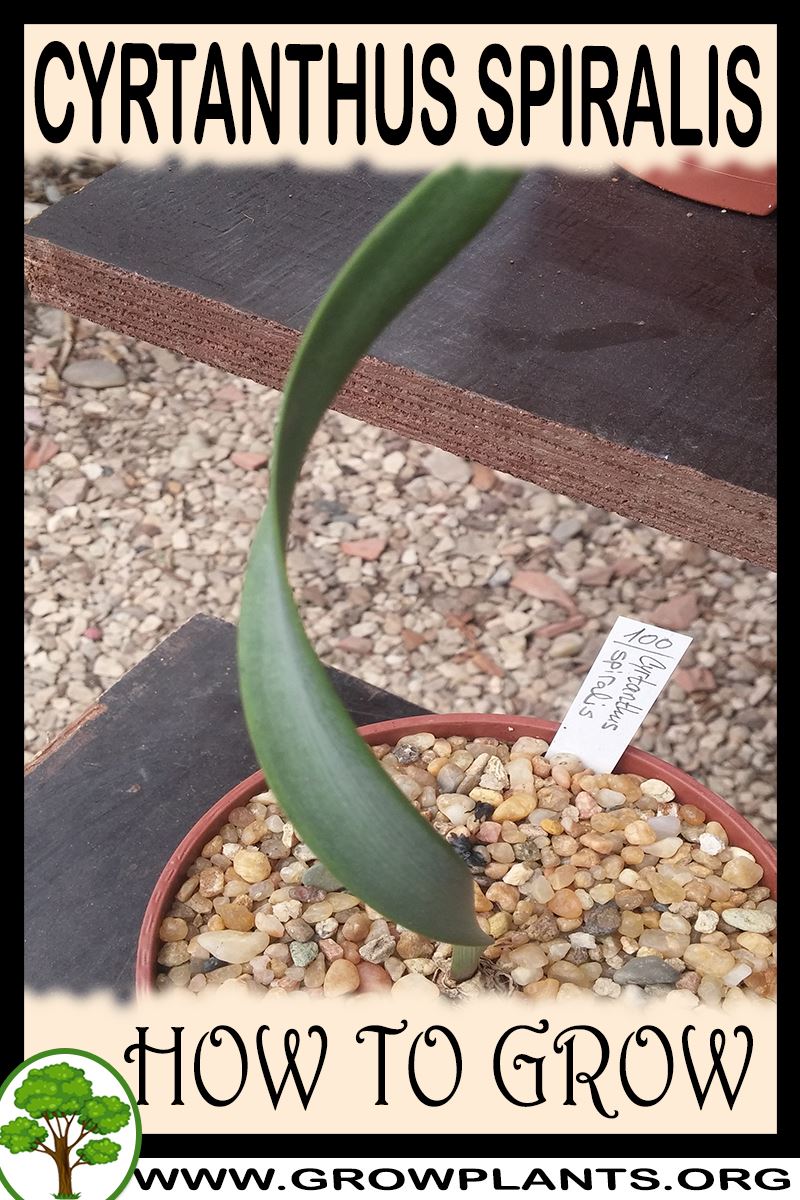
- Growth Habit & Form: Small, clump-forming bulb with a rosette of curled, spiralling leaves.
- Lifespan & Maturity: Slow-growing and long-lived, multiplying gradually by offset bulbs.
Anatomy & Physical Features
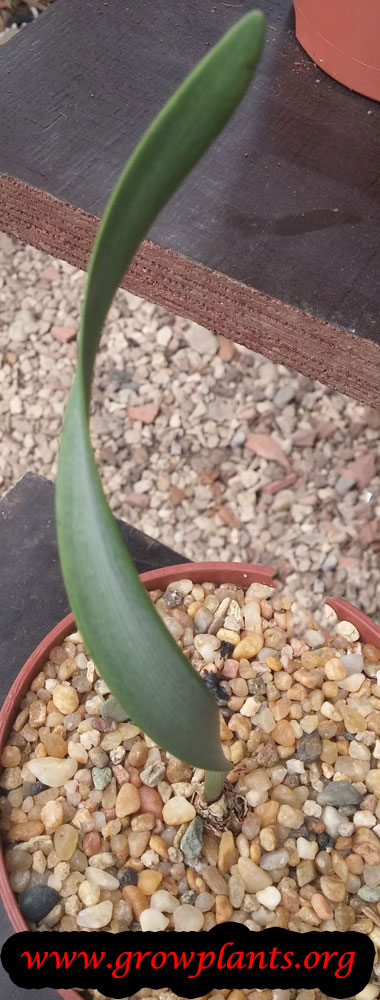
- Leaves & Foliage: Green leaves distinctively coiled into a spiral.
- Flower Characteristics: Red, trumpet-shaped flowers borne in a cluster on an upright stem.
Primary Uses & Landscape Value
- Functional & Ornamental Roles: Drought-tolerant ornamental for containers, rockeries and as a houseplant.
Care Guide: Planting, Soil & Watering
Overview: Cyrtanthus spiralis is a drought-tolerant bulbous succulent that grows best in light shade and very free-draining, gritty soil. It needs little water and sharp drainage to keep the bulb from rotting.
Quick Care Requirements
| Requirement | Ideal Condition |
|---|---|
| Planting Season | Spring through autumn (warm, frost-free season) |
| Growth Rate | Slow |
| Soil Type | Very well-draining, gritty or sandy soil |
| Water Need | Low – let the soil dry between waterings; drought tolerant |
Planting & Establishment
- Best Planting Season: plant in the warm season, spring through autumn, where it is frost-free.
- How to Plant:
- Hole Preparation: dig into loose, sharply drained soil.
- Soil Amendments: add grit or coarse sand to improve drainage; avoid heavy, wet soils.
- Planting Depth: set the bulb shallowly with its neck at or just below the surface.
- Growth Speed & Expectations: slow, forming a small clump about 10–30 cm tall.
Soil, Watering & Drainage Care
- Soil Mix & Drainage Needs: a gritty, free-draining mix – excellent drainage is essential to prevent bulb rot. Ideal for pots with drainage holes.
- Watering Schedule & Technique:
- Young / Newly Planted: water lightly to help it establish, letting the soil dry between waterings.
- Established: water sparingly and always allow the soil to dry out again.
- Seasonal Adjustments: keep it dry during winter dormancy.
Climate, Light & Hardiness
Cyrtanthus spiralis (Spiral-leaved Cyrtanthus) is a drought-tolerant succulent geophyte from Mediterranean, desert, or subtropical climates that, despite its arid origins, is grown in half to full shade rather than full sun. Rated for USDA hardiness zone 10–12, it has limited cold tolerance and needs a dry, protected dormancy to avoid rot in cooler or wetter conditions.
Quick Climate Specifications
| Climate Zones | Mediterranean, desert, or subtropical |
|---|---|
| USDA Hardiness Zones | 10–12 |
| Optimal Temp Range | approximately 15–28°C (59–82°F) |
| Cold Damage Begins | Foliage is damaged by any frost and by sustained temperatures below roughly 4–7°C (39–45°F). |
| Approx. Survival Minimum | The dormant bulb, kept dry, may survive a brief light frost, but is not reliably frost-hardy; sustained freezing is likely fatal. |
| Frost Tolerance | Very Low |
| Light Conditions | Half Shade / Full Shade |
| Wind Tolerance | Moderate |
| Salt / Coastal Tolerance | Low |
Sunlight & Light Exposure
Optimal Light Setup
Half to full shade suits it best - in its native arid habitat this type of bulb typically grows tucked under rocks or low shrubs, sheltered from the harshest midday sun rather than fully exposed.
Shade & Heat Management
Afternoon shade in hot climates helps prevent leaf scorch while the plant is in active growth.
Best Exposure / Orientation
A lightly shaded rock garden or a spot beneath open shrubs reproduces its natural growing position well.
Temperature Extremes & Hardiness
USDA Hardiness & Regional Limits
Reliable outdoors year-round only within zone 10–12; elsewhere it needs container culture with winter protection or indoor overwintering.
Cold Damage & Winter Protection
Keep the dormant bulb dry and sheltered from cold, wet conditions over winter, since cold combined with moisture is more damaging than cold alone.
Frost Sensitivity
High; even light frost typically damages foliage.
Extreme Heat Tolerance
Good; as a drought-tolerant, arid-climate succulent geophyte it handles high heat well, provided it is not also waterlogged.
Wind, Humidity & Microclimate
Humidity Preferences
Low to average; it does not need elevated humidity and, like other arid-climate succulents, is more at risk from excess moisture than from dry air.
Dry-Air Tolerance
High; it is well adapted to dry desert and Mediterranean-climate air.
Wind Tolerance
Moderate; typical garden wind is not a significant concern.
Coastal / Salt Tolerance
Low; not specifically adapted to coastal salt exposure.
Rainfall & Seasonal Moisture
Adapted to a distinct dry season with only a small amount of water needed even in active growth; excess rainfall or irrigation, especially during dormancy, is a bigger risk than drought.
Microclimate Recommendations
A lightly shaded, sharply drained, sheltered spot that stays dry through dormancy best reproduces its native arid-climate habitat.
Growing in Pots, Balconies & Indoors
Cyrtanthus spiralis is a small, slow-growing bulb that the grower confirms grows both indoors and in containers – which is exactly how this compact plant is best enjoyed. Its neat size and low water needs make it an easy pot subject for a bright indoor spot.
Quick Details
- Container Size: A small 12-18 cm (5-7 in) pot suits its 10-30 cm (4-12 in) size
- Indoor Suitability: A good houseplant – compact and undemanding
- Best Spot: Half to full shade; bright, indirect light indoors
- Soil & Drainage: Very free-draining, gritty bulb mix
- Watering in Pots: Small amounts – let it dry between waterings, keep dry in dormancy
Indoors & On the Windowsill
- A neat houseplant: The grower rates it suitable indoors; its small size and modest thirst make it easy to keep on a shelf or sill.
- Windowsill growing: Bright, indirect light suits it; avoid soggy soil, which is the main risk indoors.
- Safety: As a member of the Amaryllis family the bulb is poisonous if eaten – keep it away from children and pets.
On a Balcony or Patio
- Light & shelter: A bright, sheltered balcony or patio spot is fine; protect from heavy rain that could waterlog the pot.
- Moisture: Being a dry-tolerant bulb it prefers to dry out between waterings – never leave it standing wet.
Choosing the Pot, Soil & Long-Term Care
- Pot & drainage: Use a pot with strong drainage holes and skip a standing-water saucer to avoid root rot. Terracotta breathes and dries out faster, while glazed or plastic holds moisture longer. A gritty, sharply drained mix matters most for this bulb.
- Potting mix: A free-draining bulb mix – potting soil cut with extra perlite or grit.
- Long-term care: It flowers best slightly pot-bound, so pot up only when congested and renew the mix at the same time; keep dry through its dormant rest.
- Feeding: A light feed while in leaf is enough – potted plants need feeding a little more often than those in open ground, as regular watering leaches nutrients from the mix.
Growing this plant in a greenhouse
A greenhouse can give cyrtanthus spiralis frost protection and cold protection.
Greenhouse at a glance
| Greenhouse suitability | Conditional - depends on your climate |
|---|---|
| Main benefits | frost protection, cold protection |
| Outdoor protection advisable below | about 7°C |
| Maintain greenhouse minimum | around 7°C for active growth |
| Suitable types | unheated greenhouse, polycarbonate greenhouse |
| Heating | Heating is optional - useful mainly for winter growing in cold areas. |
Related greenhouse guides
- Greenhouses: How to Choose the Right Greenhouse
- Polycarbonate Greenhouses: What to Look for Before Buying
- Greenhouse Climate Control: Temperature, Ventilation and Humidity
Fertilizing & Feeding
A light feeder: this drought-tolerant, slow-growing geophyte needs only a light, low-nitrogen feeding during active growth and bloom, with feeding withheld entirely through its dry rest.
Quick Fertilizing Specs
| Feeding Level | Light feeder |
|---|---|
| Main Nutrient Priority | Light, low-nitrogen feeding to avoid forcing soft growth on a slow, drought-tolerant bulb |
| Best Feeding Period | Through active growth and the summer-to-autumn bloom period |
| Organic Options | A light top-dressing of compost in well-drained soil |
| Reduce/Stop Feeding | Stop feeding entirely once the plant enters its dry, deciduous rest |
| Micronutrients | Usually met by a light complete fertilizer; correct only diagnosed deficiencies |
| Soil pH | Tolerates a wide range in well-drained soil |
Feeding by Growth Stage
Active growth and bloom
Support the spiral leaves and the red trumpet flower clusters without pushing lush, soft growth on this slow-growing succulent bulb.
| Nutrient direction | A light, low-nitrogen feeding supports steady growth and bloom without forcing the plant beyond its naturally slow pace. |
|---|---|
| Timing | Through active leaf growth and the summer-to-autumn bloom period. |
| Frequency | Minimal feeding is usually enough; this is a naturally slow, light-feeding bulb. |
| Fertilizer types | A diluted, low-nitrogen complete fertilizer, A light top-dressing of compost in well-drained soil |
| Precautions | Keep feeding sparse; excess nitrogen can push soft growth this drought-adapted plant is not built to support. |
Dry, deciduous rest
Let the bulb rest through its dry deciduous period, drawing on stored reserves rather than fresh feeding.
| Nutrient direction | None – withhold fertilizer while the bulb rests in dry dormancy. |
|---|---|
| Timing | During the dry, deciduous rest period. |
| Frequency | No feeding during dormancy. |
| Fertilizer types | No feeding at this stage; do not fertilize a dormant, dry-resting bulb. |
| Precautions | Do not fertilize while the bulb is dry and dormant; resume only as new growth resumes the cycle. |
Nutrient Deficiency Signs & Corrections
Leaves emerge pale green or yellowish and bloom stems are unusually weak, beyond this plant’s normally modest vigor.
| Possible causes | very low available soil nitrogen even for a light feeder, nitrogen leaching from occasional heavier watering, an undersized or exhausted bulb |
|---|---|
| Appears first on | the newest spiral leaves |
| What to check | recent feeding history, bulb size and vigor, watering pattern relative to this plant’s drought tolerance |
| Possible correction | Apply a light, low-nitrogen feeding during active growth; avoid overcorrecting with a heavy feeding. |
New leaves emerge pale yellow while the veins stay green.
| Possible causes | high soil pH limiting iron availability in mineral, well-drained soil, waterlogged conditions that stress a drought-adapted root system, naturally low soil iron |
|---|---|
| Appears first on | newest leaves |
| What to check | soil pH, drainage around the bulb, recent watering pattern |
| Possible correction | Correct soil pH, ensure sharp drainage, and apply a chelated iron product per its label if chlorosis persists. |
Leaf tips brown or scorch, which shows up quickly on a plant this sensitive to overfeeding.
| Possible causes | fertilizer salt buildup, especially likely given how light a feeder this bulb is, underwatering that concentrates salts around the roots, feeding more heavily or often than this drought-tolerant bulb needs |
|---|---|
| Appears first on | leaf tips and margins |
| What to check | recent feeding amounts and strength, watering consistency, container or bed drainage |
| Possible correction | Stop feeding, flush the soil thoroughly with plain water, and resume only with a much lighter feeding. |
Pruning, Training & Seasonal Maintenance
Cyrtanthus spiralis is a slow-growing, drought-tolerant succulent geophyte that is evergreen in humid conditions but sheds its spiral leaves in dry spells, so grooming happens as needed year-round rather than on one fixed seasonal cutback. Maintenance is limited to removing individual dead leaves and spent bloom stems as they occur; there is no structural framework to prune.
Quick Pruning & Maintenance Specs
| Pruning Tolerance | Low – dead-leaf and spent-stem removal only |
| Primary Pruning Window | All year, as leaves and flower stems naturally die back |
| Typical Frequency | Light, opportunistic touch-ups rather than a scheduled session |
| Main Objective | Tidy the rosette without cutting into any leaf that is still green or turgid |
| Young Plant Priority | None; allow young offsets to establish undisturbed |
| Mature Plant Priority | Remove fully dried leaves and faded bloom stalks as they appear |
| Best Tool Type | Precision snips |
| Avoid Heavy Pruning During | Active growth flush – do not remove leaves that are simply drought-stressed rather than truly dead, since this species can shed and regrow leaves seasonally on its own |
Pruning by Plant Age & Size
Newly Established
No pruning; let the small bulb settle in through its first cycle.
Young / Formative
No structural training applies to this compact, clump-forming geophyte.
Mature / Established
Ongoing removal of individual dead leaves at the base and spent flower stems once the red trumpet blooms fade.
Seasonal Pruning Schedule
| Ongoing Sanitary (all year) | Remove any leaf that has fully dried, and cut spent flower stems back to the base once blooms fade; leave leaves that are merely dormant or drought-curled, as they may still be alive |
Special Growth to Remove
- Fully dried, papery leaves – remove at the base
- Spent bloom stems – cut back once the flower cluster fades
Container & Small-Space Pruning
This species is well suited to pots and is often grown that way. Container plants dry faster, so leaf die-back can happen sooner than in the ground – check for a fully brown, dry leaf before removing it rather than pulling one that is merely wilted from a dry spell.
Tools
- Precision snips for the thin leaves and flower stems – no loppers or saws are needed on this small geophyte
Tool Hygiene & Disease Risk
Routine – clean, sharp snips are sufficient. Its listed pests, snails and slugs, are not spread by pruning cuts.
Cut Placement & Technique
Cut dead leaves and flower stems close to the base without disturbing neighboring live leaves or the bulb neck.
Heavy Pruning & Rejuvenation
Not tolerated or needed – there is no woody growth to rejuvenate; a thinning clump is better addressed by lifting and dividing offsets than by cutting the plant back hard.
Post-Pruning Care
No extra feeding is required after routine grooming. Given its small water requirement, avoid overwatering after leaf removal, which does not increase its water needs.
Common Pruning Mistakes
- Removing drought-curled or dormant leaves as if they were dead, when this species naturally sheds and regrows leaves with moisture cycles
- Cutting the flower stem before the bloom cluster has fully finished
When NOT to Prune
Avoid removing leaves during a dry-dormancy phase just because they look wilted – wait to confirm they are fully dried before cutting.
Recommended Tools (by task)
- precision_snips – the only cut this small succulent geophyte needs: clean removal of dead leaves and spent flower stems.
Propagation Guide
Cyrtanthus spiralis can be grown either from seed or by separating the small bulb offsets it forms, and the site notes that vegetative propagation is not strictly necessary, meaning the species comes reasonably true from seed. Offset division gives a flowering-size plant faster, but seed is genuinely practical too, since Cyrtanthus species generally germinate readily. Overall difficulty is easy.
Quick Propagation Specs
| Best Propagation Method | Bulb offsets (division) |
| Alternative Methods | Seed |
| Propagation Difficulty | Easy |
| Seed True-to-Type | Yes – true species, not a hybrid |
| Vegetative True-to-Type | Yes |
| Best Propagation Season | Division when repotting or as new growth resumes; sowing when fresh seed is available |
Growing from Seed
Seed Handling & Viability
Use fresh seed where possible; like most Cyrtanthus species, seed viability is best soon after collection.
Sowing Depth & Orientation
Sow on the surface or just barely covered, as is typical for this Amaryllidaceae genus.
Germination Conditions
Warm, humid conditions with bright but not scorching light suit germination best.
Germination Time
Cyrtanthus species are generally reported to germinate fairly promptly, often within a few weeks under warm, humid conditions, though timing varies with freshness and temperature.
Seedling Care
Keep seedlings consistently moist while young; the site’s general watering guidance for this species (a small amount of water) can be relaxed a little while the small bulbs are still establishing.
Division, Offsets, Pups & Suckers
This species produces small bulb offsets around the base of the mother bulb. Separate offsets when repotting or as new growth begins, taking care to keep some roots attached, and pot them on using the same well-drained mix recommended for the mature plant.
Bloom & Flower Guide
Quick Details
- Bloom Season: Summer to autumn
- Flower Appearance: Red, tubular trumpet-shaped flowers in a cluster on an upright stem
- Edibility: Not edible – the bulb contains toxic alkaloids
Detailed Blooming Overview
Cyrtanthus spiralis flowers from summer into autumn, sending up a slim stem topped with a cluster of curved, red, tubular blooms. The narrow trumpet shape and bright colour make the flowers stand out well above the plant’s spiralling leaves.
Flower Characteristics
- Red, tubular, trumpet-shaped flowers.
- Carried in a cluster at the top of an upright stem.
Bloom Care & Thinning
- Safety: The bulb contains toxic alkaloids and should not be eaten; wash hands after handling.
Pests, Diseases & Troubleshooting
Overview: Cyrtanthus (fire lily) is a South African bulb in the amaryllis family, so it shares that family’s pest and disease profile: the amaryllis (lily) borer caterpillar, bulb-infesting flies and mealybugs, and the classic fungal red blotch (leaf scorch) and basal bulb rot. Because it is grown from a bulb, the priority is protecting the bulb from rot and borers; management is cultural – good drainage, dry dormancy, and prompt removal of the conspicuous caterpillars.
Quick Troubleshooting Overview
| Issue / Pest | Main Symptom | Primary Solution |
|---|---|---|
| Amaryllis (lily) borer | Red-and-black caterpillars tunnelling leaves and into the bulb | Hand-pick; remove eggs; Bt or spinosad on young larvae |
| Mealybugs | White cottony masses in leaf bases and on the bulb | Alcohol swab; horticultural oil; inspect bulb neck |
| Narcissus bulb fly | Soft, rotting bulb; grubs inside; poor growth | Discard soft bulbs; cover necks; firm soil after foliage dies |
| Red blotch / leaf scorch | Red streaks and blotches on leaves, bulb and flower stalk | Remove infected tissue; keep foliage dry; fungicide dip |
| Bulb / basal rot | Yellowing, soft rotting base in soggy soil | Improve drainage; dry dormancy; discard rotted bulbs |
Common Pests & Management
- Amaryllis (lily) borer (Brithys crini):
- Symptoms: The signature amaryllid pest – striking red, black and yellow banded caterpillars first mine inside the leaves (leaving translucent windows) then chew down into the bulb, hollowing it and inviting rot; a serious threat to the bulb.
- Prevention & Control: Inspect regularly, hand-pick caterpillars and rub off the clustered eggs on the foliage, cut out and destroy mined leaves, and spray Bacillus thuringiensis (Bt) or spinosad onto young larvae before they reach the bulb.
- Mealybugs (Pseudococcus species):
- Symptoms: White cottony masses hide in the leaf bases, around the neck of the bulb and sometimes on the bulb itself, sapping vigour and dropping honeydew.
- Prevention & Control: Wipe with an alcohol-dipped swab, spray horticultural oil or insecticidal soap into the crevices, and inspect the bulb neck and just under the soil where they lurk; isolate affected plants.
- Narcissus bulb fly (Merodon equestris):
- Symptoms: A single fat grub tunnels inside the bulb, which becomes soft and rotten and produces weak, distorted or no growth; adults resemble small bumblebees.
- Prevention & Control: Discard soft, light bulbs before planting, firm the soil around the neck as foliage dies down to deny egg-laying access, and cover or lightly mulch bulb necks; remove and destroy infested bulbs.
- Aphids (various species):
- Symptoms: Soft insects cluster on flower stalks and new growth, distorting them, leaving honeydew and potentially spreading virus.
- Prevention & Control: Rinse off with water, spray insecticidal soap, and encourage ladybirds and lacewings; controlling them also limits virus spread.
- Spider mites (Tetranychus urticae):
- Symptoms: On dry indoor or greenhouse plants leaves show fine pale stippling and a dull look, with fine webbing in bad cases.
- Prevention & Control: Raise humidity, rinse the foliage, and apply horticultural oil or insecticidal soap to the undersides, repeating as needed.
- Slugs and snails (various species):
- Symptoms: They rasp holes in leaves and flower stalks and graze soft new growth in damp conditions.
- Prevention & Control: Hand-pick after dark, use iron-phosphate bait and copper barriers, and remove damp hiding places near the bulbs.
Diseases & Fungal Issues
- Red blotch / leaf scorch (Stagonospora curtisii):
- Symptoms: The classic amaryllid disease – bright red spots, streaks and blotches appear on emerging leaves, flower stalks and the bulb scales, sometimes deforming growth; worst in wet, humid conditions.
- Treatment & Management: Remove and destroy infected leaves and outer bulb scales, keep foliage dry with bottom watering and good airflow, dip or drench bulbs with a fungicide before planting, and avoid overhead watering.
- Basal / bulb rot (Fusarium / Sclerotium species):
- Symptoms: The base of the bulb softens and rots, roots die, foliage yellows and wilts, usually in waterlogged soil or after borer or fly damage.
- Treatment & Management: Plant in free-draining soil, give a dry dormant rest, avoid injuring bulbs, discard soft rotted bulbs, and dust cut surfaces or dip bulbs in fungicide before storage or planting.
- Botrytis / grey mould (Botrytis cinerea):
- Symptoms: Fuzzy grey rot on flowers and damaged leaves in cool, damp, crowded conditions.
- Treatment & Management: Improve airflow and spacing, remove faded flowers and damaged tissue promptly, avoid wetting the foliage, and apply a biofungicide if pressure is high.
- Mosaic virus (Amaryllid mosaic viruses):
- Symptoms: Pale mottling, streaking and stunting of leaves; permanent and spread by aphids and on tools.
- Treatment & Management: No cure; rogue out infected plants, control aphids, use clean stock, and disinfect cutting tools.
Growing Difficulties & Abiotic Problems
- Bulb rot from overwatering:
- Cause & Symptoms: Standing water and heavy, poorly drained soil, especially during dormancy, rot the bulb and roots.
- Correction Strategy: Plant in gritty free-draining soil or raised positions, reduce watering as the plant enters dormancy, and never let bulbs sit wet and cold.
- Failure to flower:
- Cause & Symptoms: Deep planting, too much shade, overcrowding, or lack of a proper rest period leaves plants with foliage but no blooms.
- Correction Strategy: Plant at the correct depth in a bright spot, allow a distinct dry/cool rest, feed after flowering to build the bulb, and divide congested clumps.
- Leaf scorch from sun and salts:
- Cause & Symptoms: Sudden strong sun bleaches and browns leaves, and salt build-up burns leaf tips.
- Correction Strategy: Acclimatise to bright light gradually, provide light shade in the hottest sun, and flush the soil periodically to leach salts.
What Helps – Products & Tools
Protect the bulb first. Keep Bacillus thuringiensis (Bt) or spinosad for lily-borer caterpillars, horticultural oil and insecticidal soap for mealybugs, aphids and mites, iron-phosphate bait for slugs, and a fungicide for pre-plant bulb dips against red blotch and basal rot. Good drainage and a dry dormancy prevent most rot. Apply oils in the evening and follow the label to protect pollinators.