Plant Profile & Key Characteristics
Overview: Leucojum aestivum (summer snowflake) is a bulbous perennial of about 20-50 cm, grown as an ornamental and cut flower for its fragrant white bells. It is a deciduous geophyte hardy across USDA zones 3-9.
Quick Specifications
| Specification | Attribute |
|---|---|
| Plant Type / Life Cycle | Perennial (bulbous geophyte) |
| Foliage Type | Deciduous |
| Mature Size | 20-50 cm tall (8-20 in) |
| Growth Rate | Fast to moderate |
| Root System | Bulbous (geophyte) |
| Toxicity | Toxic (bulbs and foliage contain lycorine-type alkaloids; harmful if ingested) |
| Hardiness | USDA zones 3-9 |
Growth Form & Structure
- Height & Spread: Reaches about 20-50 cm (8-20 in) tall; suits borders and containers.
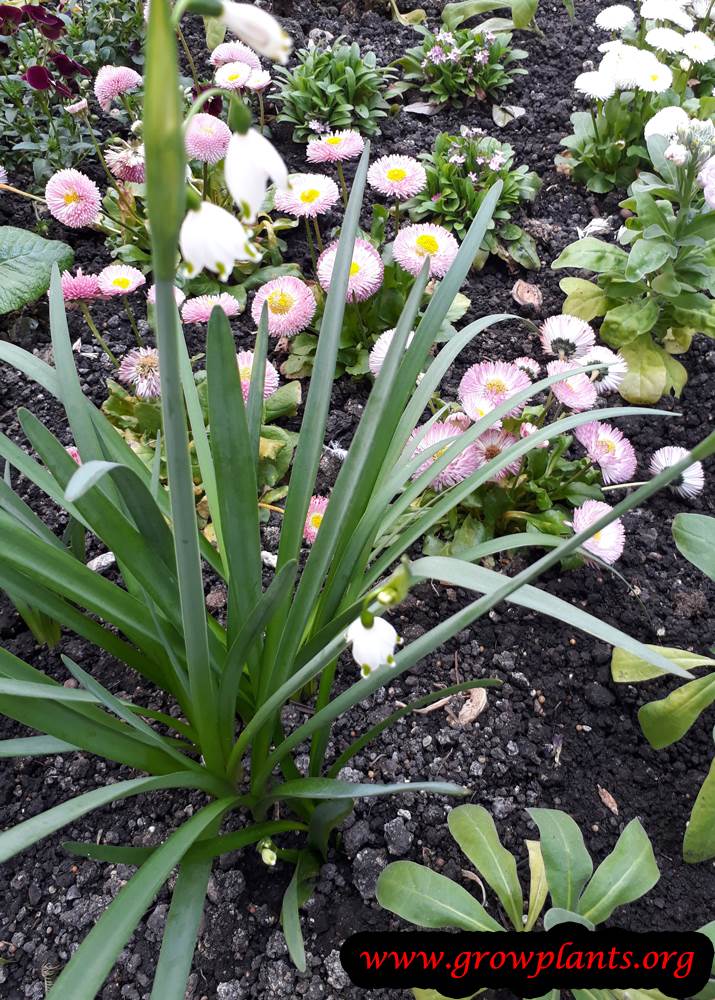
- Growth Habit & Form: Clumping bulbous perennial with strappy leaves and slender flowering stems.
- Lifespan & Maturity: Reaches flowering size quickly from bulbs; long-lived, naturalising into clumps.
Anatomy & Physical Features
- Leaves & Foliage: Green, linear strap-shaped leaves in a basal rosette.
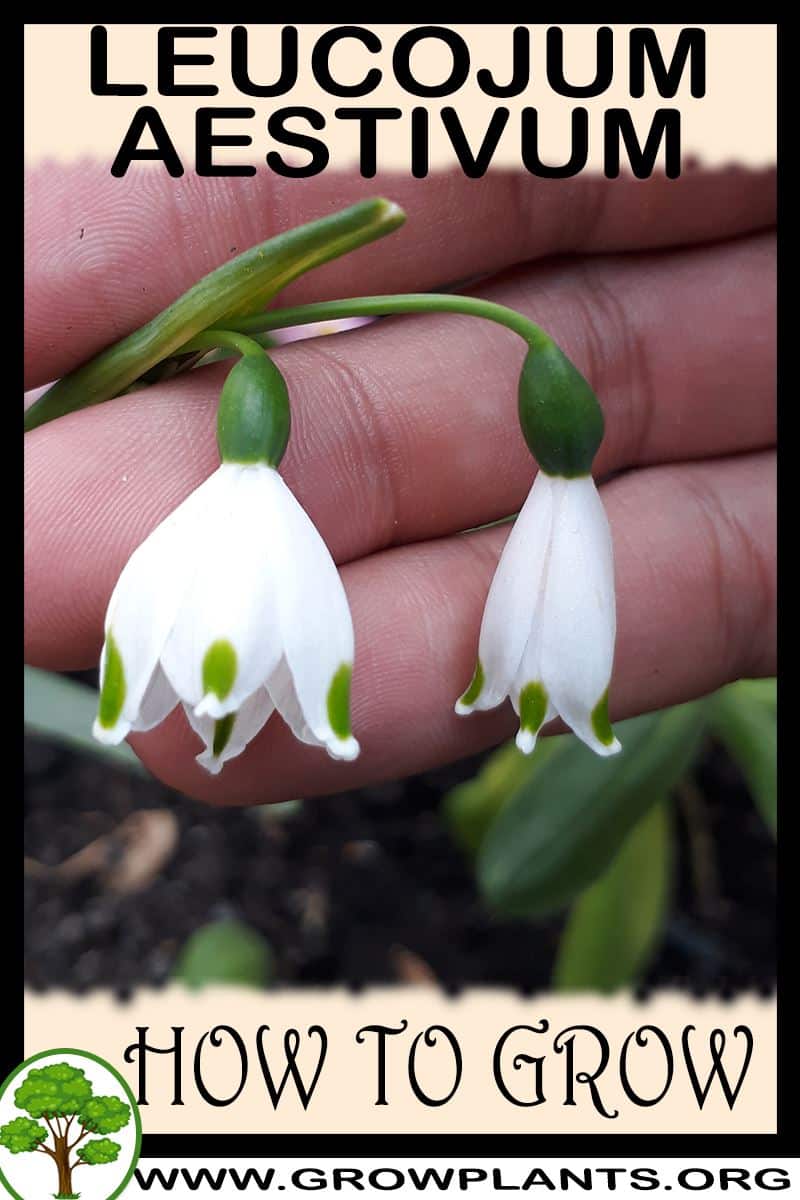
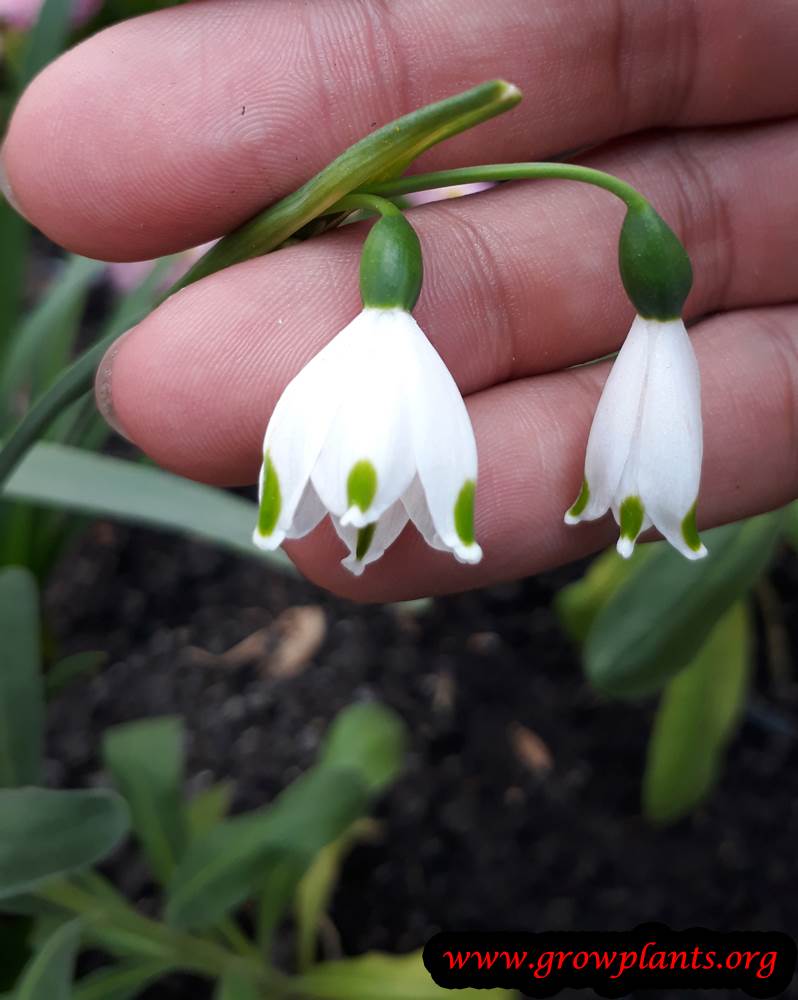
- Flower Characteristics: Fragrant white, bell-shaped flowers nodding on slender stems.
Primary Uses & Landscape Value
- Functional & Ornamental Roles: Ornamental bulb for borders and naturalising, tolerant of damp soil; a good cut flower.
Care Guide: Planting, Soil & Watering
Overview: Summer snowflake is a deciduous bulb that grows in full sun to part shade in temperate, Mediterranean, or subtropical climates (hardiness zone 3-9). It thrives in a rich, moist, well-drained soil – even at pond margins – with moderate to high water in growth.
Quick Care Requirements
| Requirement | Ideal Condition |
|---|---|
| Planting Season | Autumn to winter (dormant bulbs) |
| Growth Rate | Moderate to fast |
| Soil Type | Rich, moist, well-draining |
| Water Need | Moderate to high; keep moist during active growth |
Planting & Establishment
- Best Planting Season: Plant the dormant bulbs in autumn to winter.
- How to Plant:
- Hole Preparation: Dig each planting hole a few times the depth of the bulb.
- Soil Amendments: Enrich with organic matter so the soil stays moisture-retentive yet still drains.
- Planting Depth: Set bulbs a few centimetres deep with the pointed end up.
- Growth Speed & Expectations: A moderate to fast grower reaching about 20-50 cm (8-20 in).
Soil, Watering & Drainage Care
- Soil Mix & Drainage Needs: Use a rich, moisture-retentive soil that still drains well; it tolerates damp, pond-margin ground.
- Watering Schedule & Technique:
- Young / Newly Planted: Keep the soil moist after planting.
- Established: Water regularly during active growth and bloom.
- Seasonal Adjustments: Allow it to stay drier during summer dormancy.
Climate, Light & Hardiness
Leucojum aestivum (Summer Snowflake) is a cold-hardy European bulb suited to temperate, Mediterranean, or subtropical gardens with full sun to half shade. At USDA hardiness zone 3–9, it is considerably more cold-tolerant than most spring-flowering bulbs, and unlike many drought-adapted geophytes it comes from damp meadow and streamside habitats, so it tolerates and even prefers moister soil than typical bulbs.
Quick Climate Specifications
| Climate Zones | Temperate, Mediterranean, or subtropical |
|---|---|
| USDA Hardiness Zones | 3–9 |
| Optimal Temp Range | approximately 5–20°C (41–68°F) during active growth and flowering |
| Cold Damage Begins | Foliage tolerates hard frost well; damage is uncommon within the stated zone range and generally requires unusually severe or prolonged freezing. |
| Approx. Survival Minimum | Established bulbs are reliable through the full zone 3–9 range. |
| Frost Tolerance | High |
| Light Conditions | Full Sun / Half Shade |
| Wind Tolerance | Moderate |
| Salt / Coastal Tolerance | Low |
Sunlight & Light Exposure
Optimal Light Setup
Full sun to light, dappled shade both work well; in hot-summer climates some afternoon shade helps prolong flowering.
Direct Sun Requirement
Not strictly required; this bulb flowers reliably in part shade as well as full sun.
Shade & Heat Management
In warmer parts of its range, light shade and consistently moist soil reduce summer stress.
Best Exposure / Orientation
A moist border, streamside planting, or lightly shaded woodland edge suits its natural damp-meadow habitat.
Temperature Extremes & Hardiness
USDA Hardiness & Regional Limits
Reliable outdoors year-round across the wide zone 3–9 range, one of the more cold-hardy bulbs in general cultivation.
Cold Damage & Winter Protection
Little to no winter protection is needed within its zone range.
Frost Sensitivity
Low; this species is well adapted to freezing winters.
Extreme Heat Tolerance
Moderate; it performs best where summers are not extremely hot and dry, needing more consistent moisture through summer than many other spring bulbs.
Wind, Humidity & Microclimate
Humidity Preferences
Average to above-average; it tolerates and benefits from the higher ambient and soil moisture of damp meadow or streamside settings.
Dry-Air Tolerance
Moderate; it is more moisture-loving than most true bulbs and does not favor prolonged dry conditions.
Wind Tolerance
Moderate; established clumps in open ground handle typical garden wind without special shelter.
Coastal / Salt Tolerance
Low; not specifically adapted to salt spray or coastal exposure.
Rainfall & Seasonal Moisture
Unlike many dry-summer-dormant bulbs, this species is native to damp meadows and streamsides and tolerates consistently moist soil through the year; a hot, prolonged dry season is the main climate limitation.
Microclimate Recommendations
A moist, part-sunny border or streamside/woodland-edge position reproduces its native habitat and supports the strongest growth.
Growing in Pots, Balconies & Indoors
The grower rates the summer snowflake as not a houseplant, but it grows well in containers outdoors. It is a hardy, moisture-loving bulb that is happiest in a pot on a patio or balcony where it can catch the sun and go through a natural cold dormancy.
Quick Details
- Container Size: A shallow pan or 15-20 cm (6-8 in) pot, several bulbs together
- Indoor Suitability: Not a houseplant – grow it outdoors in a container
- Best Spot: Full sun to half shade
- Soil & Drainage: Moisture-retentive but free-draining mix
- Watering in Pots: Average to generous – it likes damp soil in growth
Indoors & On the Windowsill
- Not an indoor plant: The grower marks it unsuitable as a houseplant; it needs the seasonal cold and outdoor light to perform, so keep it outside.
- Safety: The bulbs are poisonous if eaten – keep them away from children and pets.
On a Balcony or Patio
- Light & position: A sunny or lightly shaded balcony or patio is ideal; unusually for a bulb it tolerates damp, so it will not sulk if the pot stays moist.
- Cold dormancy: Leave the pot outdoors through the cold season so the bulbs get the chill they need to flower.
- Moisture: Keep the mix damp in growth – pots dry faster than open ground.
Choosing the Pot, Soil & Long-Term Care
- Pot & drainage: Use a pot with strong drainage holes and skip a standing-water saucer to avoid root rot. Terracotta breathes and dries out faster, while glazed or plastic holds moisture longer. Group several bulbs for a fuller show.
- Potting mix: A well-aerated, organic-rich mix – peat or coir blended with perlite or vermiculite – keeps roots oxygenated in a pot. Lean towards a mix that holds some moisture.
- Long-term care: Lift and divide congested clumps every few years and renew the mix; feed lightly while in leaf.
Fertilizing & Feeding
A moderate feeder that grows in naturally rich, moist soil: balanced feeding as the leaves emerge, followed by a nitrogen-leaning feeding through the rest of active leaf growth, keeps the bulb well fed before it goes dormant.
Quick Fertilizing Specs
| Feeding Level | Moderate feeder |
|---|---|
| Main Nutrient Priority | Balanced feeding as leaves emerge, then nitrogen-leaning feeding through active leaf growth |
| Best Feeding Period | As leaves emerge in late winter or early spring, through bloom and into early summer |
| Organic Options | Rich soil amended with compost or organic matter |
| Reduce/Stop Feeding | Stop feeding once the foliage begins to yellow and die back for summer dormancy |
| Micronutrients | Usually met by rich soil and a complete fertilizer; correct only diagnosed deficiencies |
| Soil pH | Tolerates a wide range in moist, rich, well-drained soil |
Feeding by Growth Stage
Emerging leaf growth
Support the linear, rosette-forming leaves as they emerge from the bulb.
| Nutrient direction | A balanced complete fertilizer supports strong early leaf growth ahead of bloom. |
|---|---|
| Timing | As the leaves first emerge in late winter or early spring. |
| Frequency | A light feeding as growth resumes is enough. |
| Fertilizer types | A balanced complete fertilizer, Compost or organic matter worked into rich soil |
| Precautions | Avoid heavy feeding directly against the bulb; work fertilizer into the surrounding rich soil instead. |
Post-bloom leaf growth and bulb buildup
Keep the fragrant, bell-shaped blooms and the leaves that follow well fed so the bulb rebuilds for next year.
| Nutrient direction | A nitrogen-leaning complete fertilizer supports continued leaf growth after bloom, recharging the bulb. |
|---|---|
| Timing | Through bloom and while the leaves remain green afterward, into early summer. |
| Frequency | A few light feedings while leaves stay green after bloom are usually enough. |
| Fertilizer types | A nitrogen-leaning complete fertilizer, Compost worked into rich, moist soil |
| Precautions | Keep feeding moderate; this plant thrives in already-rich soil and does not need heavy fertilizing on top of it. |
Summer dormancy
Let the bulb rest once its foliage yellows and dies back for the summer.
| Nutrient direction | None – withhold fertilizer once the bulb goes dormant. |
|---|---|
| Timing | Once the foliage yellows and dies back in summer. |
| Frequency | No feeding during dormancy. |
| Fertilizer types | No feeding at this stage; do not fertilize a dormant bulb. |
| Precautions | Do not fertilize while the bulb is dormant and dry; resume only as new leaf growth begins the next cycle. |
Nutrient Deficiency Signs & Corrections
Leaves emerge pale green or yellowish and bloom stems are weak.
| Possible causes | low available soil nitrogen despite naturally rich soil, nitrogen leaching from moist conditions this plant favors, an undersized or exhausted bulb from a previous poor season |
|---|---|
| Appears first on | the newly emerging leaves |
| What to check | recent feeding history, soil richness and organic matter, watering and drainage |
| Possible correction | Feed with a balanced to nitrogen-leaning complete fertilizer during active leaf growth and refresh organic matter. |
New leaves emerge pale yellow while the veins stay green.
| Possible causes | high soil pH limiting iron availability, waterlogged, poorly drained soil restricting root uptake, naturally low soil iron |
|---|---|
| Appears first on | newest leaves |
| What to check | soil pH, drainage around the bulb, recent watering pattern |
| Possible correction | Correct soil pH, improve drainage around the bulb, and apply a chelated iron product per its label if chlorosis persists. |
Leaf tips brown or scorch despite this plant’s preference for consistently moist soil.
| Possible causes | fertilizer salt buildup around the bulb, especially in containers, underwatering that concentrates salts in soil that should stay moist, feeding too heavily or too often for the bulb’s size |
|---|---|
| Appears first on | leaf tips and margins |
| What to check | recent feeding amounts, watering consistency, container or bed drainage |
| Possible correction | Ease off feeding and flush the soil thoroughly with plain water, then return to lighter feeding. |
Pruning, Training & Seasonal Maintenance
Leucojum aestivum is a hardy deciduous bulb that tolerates almost no formal pruning. The only maintenance is removing spent flower stems once the bell-shaped blooms fade (spring to early summer), and cutting back the strap-like foliage once it yellows and collapses on its own in summer/autumn – not before, since the bulb needs that green leaf tissue to recharge for next year’s bloom.
Quick Pruning & Maintenance Specs
| Pruning Tolerance | Low – deadheading and post-dieback foliage removal only |
| Primary Pruning Window | Summer–Autumn, once foliage has fully yellowed |
| Secondary Maintenance Window | Immediately after bloom (spring–early summer), for spent flower stems |
| Typical Frequency | 1–2 times per year |
| Main Objective | Tidiness and clean seasonal die-back – not size or shape control |
| Young Plant Priority | None; newly planted bulbs need no cutting back their first season |
| Mature Plant Priority | Remove faded flower stalks; remove foliage only once fully yellow |
| Best Tool Type | Precision snips |
| Avoid Heavy Pruning During | Any time foliage is still green – cutting it early starves next season’s flowering |
Pruning by Plant Age & Size
Newly Established
No pruning needed – let the first full leaf cycle run its course so the bulb builds reserves.
Young / Formative
No structural training applies; this is a clump-forming bulb with no framework to shape.
Mature / Established
Routine deadheading of spent bloom stalks after flowering; once the whole clump’s foliage has yellowed and collapsed, cut it back to the base.
Seasonal Pruning Schedule
| Post-Flowering (spring–early summer) | Remove faded flower stems at the base; leave all foliage in place – it is still feeding the bulb |
| Foliage Die-Back (summer–autumn) | Once leaves are fully yellow and limp, cut back to the base; do not pull green leaves loose |
Special Growth to Remove
- Spent flower stems – cut at the base once petals fade
- Dead, fully yellowed foliage – remove only after it has collapsed, never while any green remains
Container & Small-Space Pruning
Leucojum aestivum grows well in pots. The same die-back rule applies, but container soil dries and warms faster, so foliage can yellow slightly earlier than in-ground plantings – check the leaves rather than going by a fixed calendar date.
Tools
- Precision snips or garden scissors for flower stems and foliage – no loppers or saws are ever needed on this herbaceous bulb
Tool Hygiene & Disease Risk
Routine – clean, sharp snips are sufficient. No disease-transmission risk is documented for this species that would call for disinfecting between plants.
Cut Placement & Technique
Cut flower stems close to the base near soil level. Cut foliage at the base only once fully yellow; avoid tugging leaves free, which can injure the bulb neck.
Heavy Pruning & Rejuvenation
Not applicable – there is no woody framework to rejuvenate. Congested clumps are refreshed by lifting and dividing bulbs, a propagation task rather than a pruning one.
Post-Pruning Care
No extra feeding is needed after routine foliage removal. Keep soil from staying waterlogged, and watch new spring growth for slugs and snails, its listed pest risk.
Common Pruning Mistakes
- Cutting back green foliage right after flowering, which starves the bulb and weakens next year’s bloom
- Braiding, folding, or tying the leaves to tidy them, which also reduces photosynthesis
When NOT to Prune
Do not cut foliage while it is still green and upright, even though it can look untidy for several weeks after flowering ends.
Recommended Tools (by task)
- precision_snips – the only cut this bulb ever needs: clean snips through thin flower stalks and strap-like foliage.
Propagation Guide
Summer snowflake is most easily increased by dividing the bulb clumps it forms over time; because it is a true species rather than a hybrid, seed also comes true and is a viable, if slower, alternative. Propagation is easy overall, with division giving flowering-size plants much faster than seed.
Quick Propagation Specs
| Best Propagation Method | Bulb division (offsets) |
| Alternative Methods | Seed |
| Propagation Difficulty | Easy |
| Seed True-to-Type | Yes – true species, not a hybrid cultivar |
| Vegetative True-to-Type | Yes |
| Best Propagation Season | Division once foliage dies back, around summer to autumn |
Growing from Seed
Seed Handling & Viability
Sow seed while fresh where possible; like many bulbous Amaryllidaceae relatives, viability can drop if seed is stored for long periods.
Sowing Season
Sow as seed ripens, typically around early to mid summer after flowering.
Germination Conditions
Cool, consistently moist, shaded conditions suit germination best.
Germination Time
Germination can be slow and is sometimes delayed until the following growing season, so patience is needed.
Seedling Care
Grow seedlings on undisturbed for a couple of seasons, keeping the soil moist and rich as the site recommends for the mature plant, before they reach flowering size.
Division, Offsets, Pups & Suckers
Leucojum aestivum spreads by forming bulb offsets that thicken into clumps. Lift and divide clumps once the foliage has died back (the site’s pruning timing of summer to autumn, when dead leaves and spent bloom stems are removed, is a good guide for when the bulbs are dormant enough to handle). Separate offset bulbs from the mother clump and replant promptly, since Amaryllidaceae bulbs generally establish best without prolonged drying out of the soil.
Bloom & Flower Guide
Quick Details
- Bloom Season: Spring to early summer
- Time to First Bloom: Bulbs generally flower in their first season once established
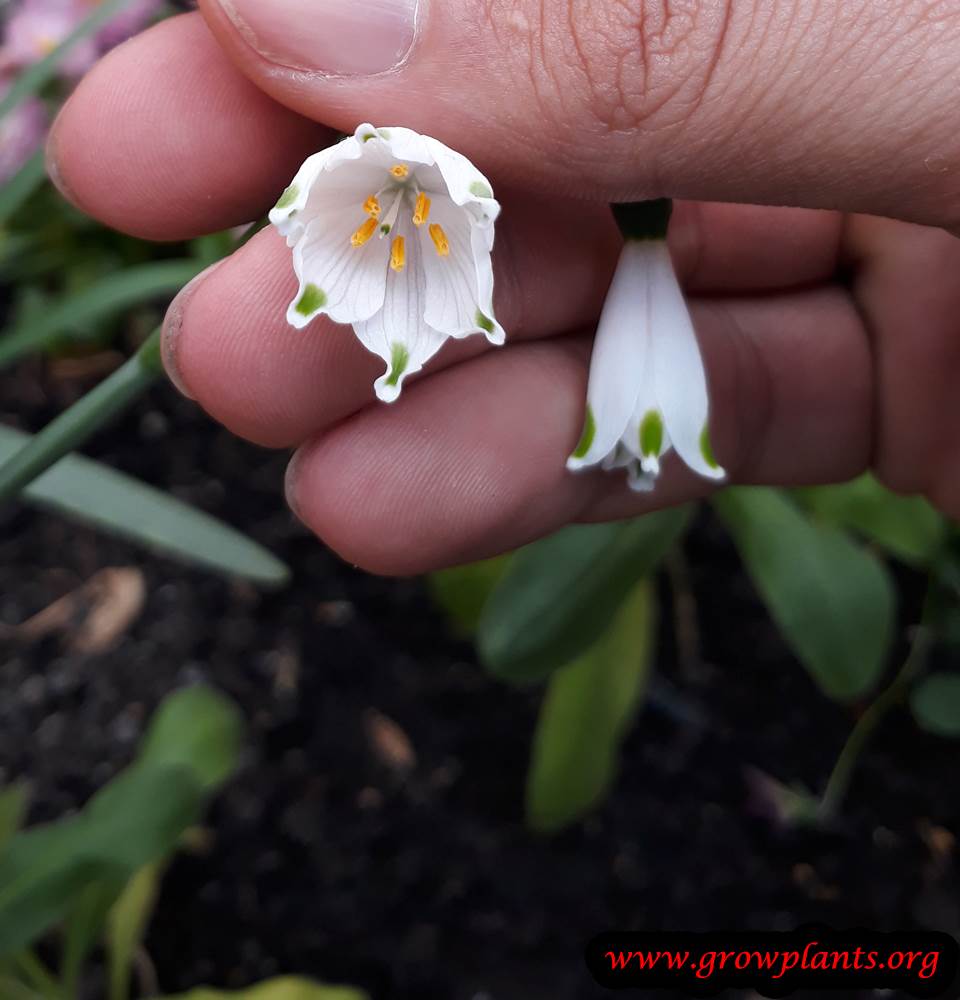
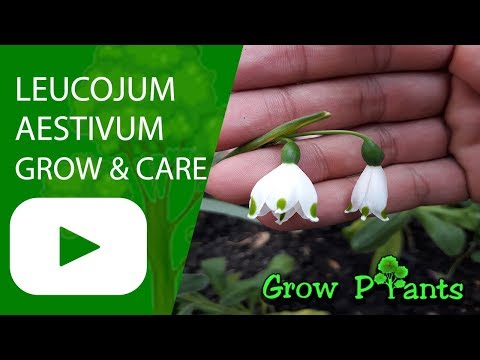
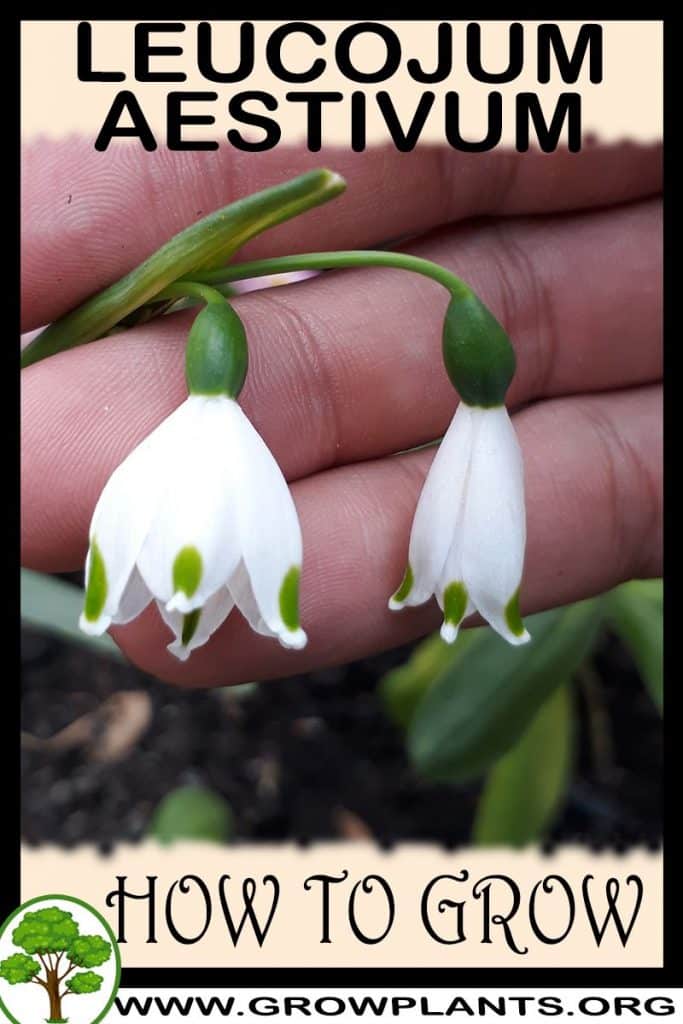
- Flower Appearance: Nodding white, bell-shaped flowers, each petal usually tipped with a small green mark
- Edibility: Not edible – the bulb contains toxic alkaloids
Detailed Blooming Overview
Summer snowflake (Leucojum aestivum) flowers from spring into early summer, dangling clusters of white, bell-shaped blooms from slender stems above strappy green leaves. The flowers are lightly fragrant, and each rounded petal typically carries a neat green spot near its tip. They make excellent, long-lasting cut flowers.
Flower Characteristics
- White, nodding, bell-shaped flowers on upright stems.
- Lightly fragrant, with a small green mark at each petal tip.
Bloom Care & Thinning
- Safety: The bulbs contain toxic alkaloids and should not be eaten; wash hands after handling.
Pests, Diseases & Troubleshooting
Overview: Summer snowflake is a hardy bulb of the daffodil family (Amaryllidaceae), and like its snowdrop and narcissus relatives it is largely trouble-free; its main threats are bulb-attacking flies and mites, slugs on the foliage and flowers, and basal or grey-mould rots of the bulb in wet, poorly drained ground. Healthy, well-drained planting and clean bulbs prevent nearly all problems.
Quick Troubleshooting Overview
| Issue / Pest | Main Symptom | Primary Solution |
|---|---|---|
| Narcissus bulb fly | Soft, rotten, non-sprouting bulbs; single grub inside | Firm soil over necks; discard soft bulbs; net |
| Bulb mites | Powdery, crumbling, rotting bulb tissue | Plant firm clean bulbs; discard infested |
| Slugs & snails | Grazed leaves and flowers, slime trails | Traps, barriers, hand-pick at night |
| Aphids | Distorted growth; virus spread | Water jet; beneficials; rogue virused plants |
| Basal rot (Fusarium) | Bulb rots from the base; chocolate-brown decay | Discard; well-drained soil; clean stock |
| Grey mould / smoulder (Botrytis) | Rotting, mouldy leaves and flowers in wet | Remove debris; airflow; avoid wet |
Common Pests & Management
- Narcissus / large bulb fly (Merodon equestris):
- Symptoms: The adult, a bee-like hoverfly, lays near the neck of the bulb; a single fat grub tunnels in and hollows it, so the bulb rots, fails to sprout or throws only weak grassy leaves.
- Prevention & Control: Firm the soil over the bulb necks as the foliage dies down (denying egg-laying access), and lift and discard any soft, light bulbs. Fine netting over prized clumps during the fly’s active period prevents egg-laying; there is no home cure once the grub is inside.
- Bulb mites (Rhizoglyphus spp.):
- Symptoms: Tiny pale mites that infest already-damaged or rotting bulbs, hastening a powdery, crumbling breakdown of the bulb tissue.
- Prevention & Control: Plant only firm, healthy, blemish-free bulbs, discard any soft or damaged ones, avoid injuring bulbs at planting, and keep the soil well-drained; the mites follow rot rather than starting it.
- Slugs & snails (Deroceras / Helix spp.):
- Symptoms: Grazed, holed and shredded leaves and flowers with slime trails, especially in damp spring weather.
- Prevention & Control: Hand-pick after dark, set traps, and ring clumps with grit or copper barriers; keep the area clear of debris where they shelter.
- Aphids (Aphididae):
- Symptoms: Soft-bodied insects on the foliage and flower stems, distorting growth and, importantly, spreading bulb viruses between plants.
- Prevention & Control: Dislodge with water and encourage beneficials; rogue out any mottled, streaked, virus-affected plants, as viruses are incurable and spread by aphids.
Diseases & Fungal Issues
- Basal rot (Fusarium oxysporum):
- Symptoms: The bulb rots from the base plate upward with a chocolate-brown, sometimes pinkish decay, so plants fail to emerge or collapse; worst in warm, wet, poorly drained soil.
- Treatment & Management: Plant firm healthy bulbs in free-draining soil, avoid waterlogging and damage, lift and destroy rotted bulbs, and do not replant into the same infected ground for several years.
- Grey mould / narcissus smoulder (Botrytis spp.):
- Symptoms: Rotting, browning leaves and flowers with a fuzzy grey mould in cool, wet, humid weather, sometimes with small black resting bodies; spreads through congested clumps.
- Treatment & Management: Remove and destroy affected foliage and debris, improve airflow by dividing crowded clumps, avoid overhead watering, and lift and discard heavily infected bulbs.
- Viruses (various mosaic viruses):
- Symptoms: Yellow streaking, mottling and distortion of leaves with weakened, poorly flowering plants; spread by aphids and incurable.
- Treatment & Management: There is no cure – remove and destroy affected plants promptly, control aphids, and buy from reputable virus-free stock.
Growing Difficulties & Abiotic Problems
- Rot in wet / heavy soil:
- Cause & Symptoms: Bulbs rot and clumps decline where soil stays wet, especially in summer dormancy – though summer snowflake tolerates damper ground than most bulbs.
- Correction Strategy: Grow in reliably moist but well-drained soil; avoid stagnant waterlogging, and lift and divide congested clumps to keep them healthy.
- Blind / non-flowering bulbs:
- Cause & Symptoms: Plenty of leaves but few flowers from overcrowding, too-shallow planting, deep shade, or foliage cut off too early.
- Correction Strategy: Plant at a good depth, divide congested clumps after flowering, feed as leaves grow, and let the foliage die down naturally to recharge the bulb.
- Transplant sulk:
- Cause & Symptoms: Poor establishment and shy flowering after being moved or stored dry too long.
- Correction Strategy: Move and divide ‘in the green’ just after flowering rather than as dry bulbs, and replant promptly without letting the bulbs desiccate.
What Helps – Products & Tools
Mostly a matter of clean bulbs and good drainage. Keep fine netting to exclude bulb fly on prized clumps, slug traps or grit/copper barriers, and insecticidal soap for aphids (chiefly to limit virus spread). For disease, sanitation and airflow manage basal rot and Botrytis – discard rotted bulbs rather than spraying, and rogue out virused plants. Handle any aphid spray in the evening to protect pollinators.