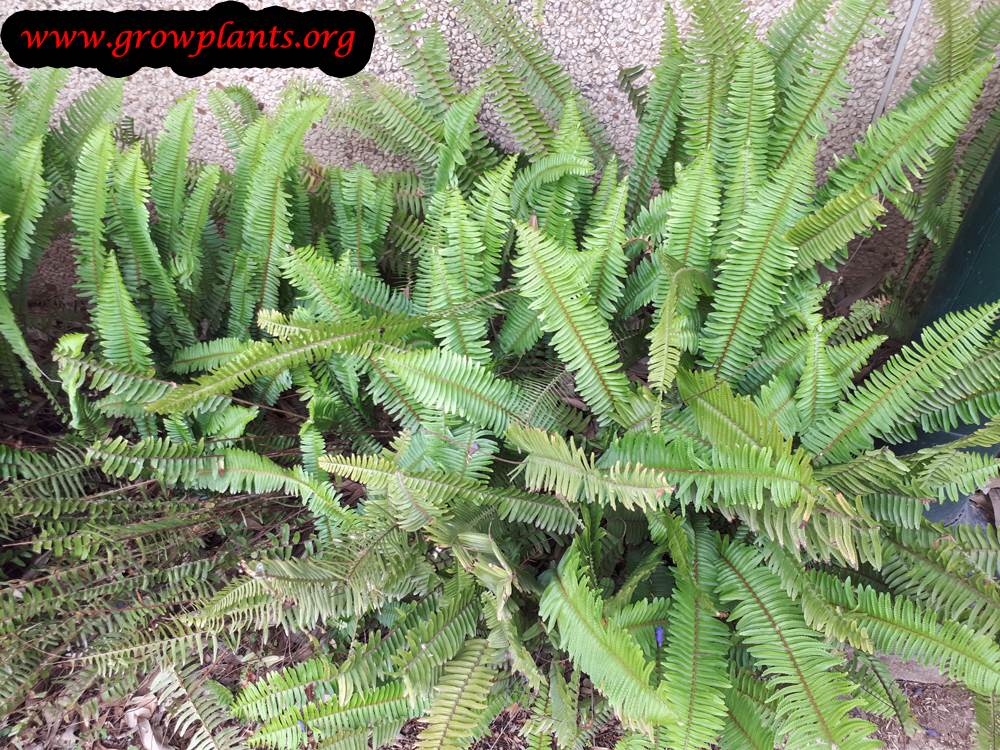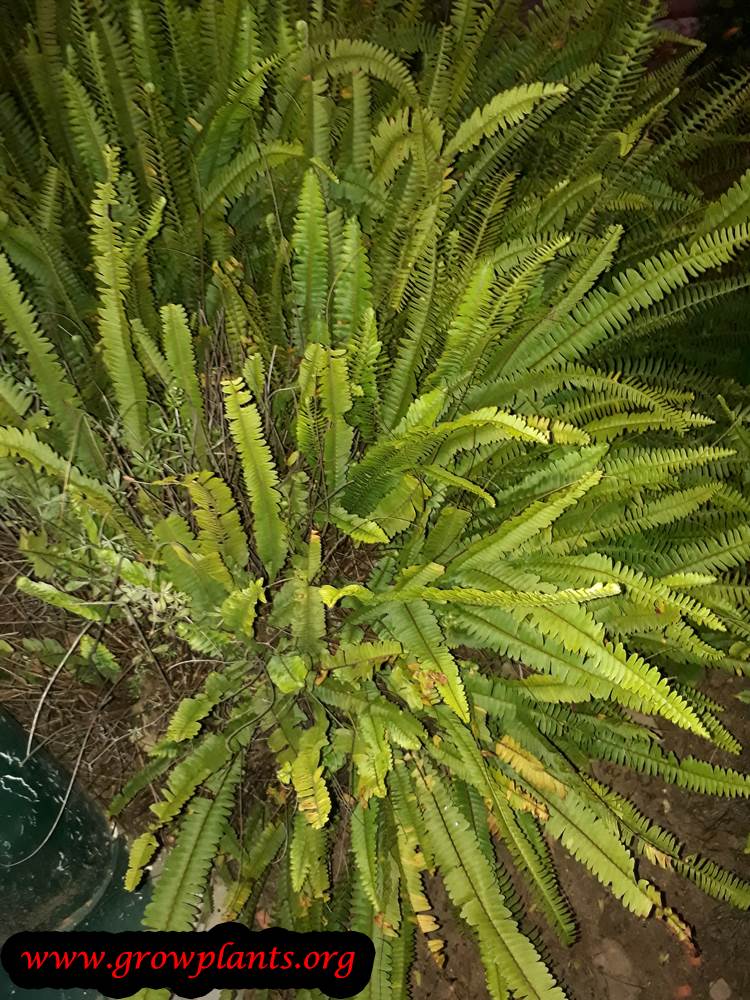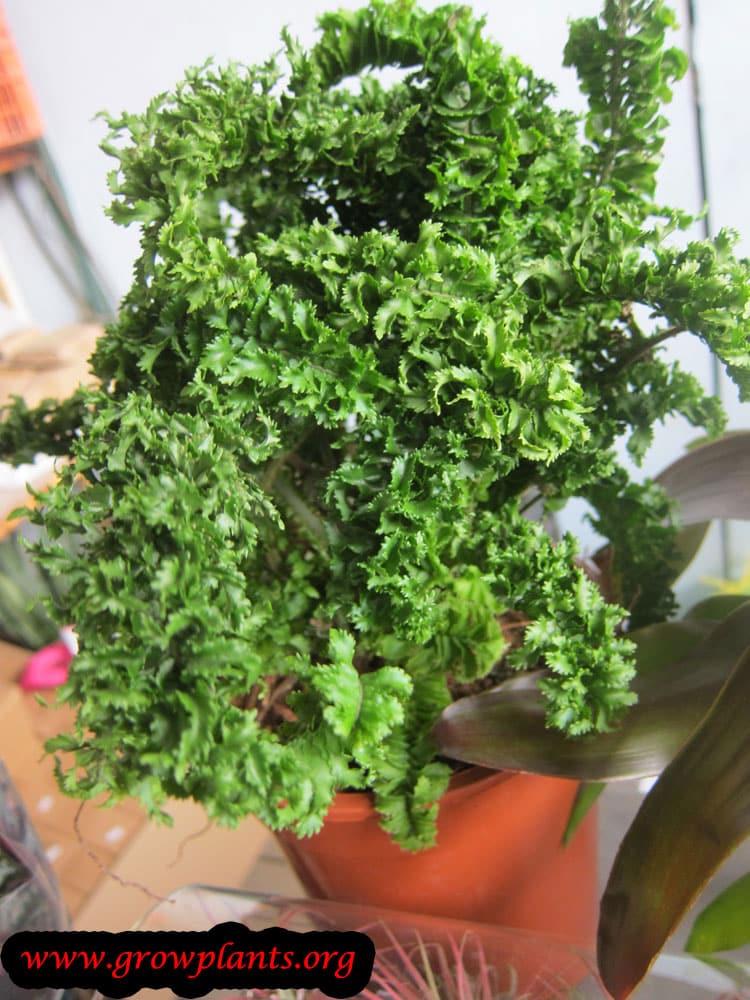
Plant Profile & Key Characteristics
Overview: Nephrolepis exaltata (Boston / fishbone fern) is an evergreen fern 30-90 cm (12-36 in) tall with arching, feathery fronds, grown as an ornamental. It suits tropical, Mediterranean, subtropical and temperate climates and is a popular, easy-care houseplant.
Quick Specifications
| Specification | Attribute |
|---|---|
| Plant Type / Life Cycle | Perennial fern |
| Foliage Type | Evergreen (deciduous in cold areas) |
| Mature Size | 30-90 cm (12-36 in) tall |
| Growth Rate | Moderate to Fast |
| Root System | Fibrous with creeping rhizomes and runners (can be invasive outdoors) |
| Toxicity | Non-toxic |
| Hardiness | USDA zones 9+ |
Growth Form & Structure
- Height & Spread: Forms a mound of arching fronds 30-90 cm (12-36 in) long; excellent in pots and hanging baskets.
- Growth Habit & Form: Rosette-like clump of arching fronds spreading by runners (stolons).
- Lifespan & Maturity: Fast-growing, long-lived perennial fern.
Anatomy & Physical Features
- Leaves & Foliage: Green, pinnate (feather-like) fronds that are deeply divided.
Primary Uses & Landscape Value
- Functional & Ornamental Roles: Ornamental houseplant for pots and hanging baskets; also a shade groundcover in frost-free gardens.
Care Guide: Planting, Soil & Watering
Overview: The Boston fern (Nephrolepis exaltata) wants a light, airy, humus-rich soil kept lightly moist, with high humidity and shade to part shade. It needs only low-to-moderate water but dislikes both drying out and sitting soggy.
Quick Care Requirements
| Requirement | Ideal Condition |
|---|---|
| Planting Season | Spring to summer (warm season) |
| Growth Rate | Fast to moderate |
| Soil Type | Light, airy, humus-rich, moisture-retentive |
| Water Need | Low to moderate – keep lightly moist with high humidity |
Planting & Establishment
- Best Planting Season: Plant in the warm season, spring to summer.
- How to Plant:
- Hole Preparation: Dig a hole (or choose a pot) as wide as the root ball.
- Soil Amendments: Use a light, humus-rich, free-draining mix.
- Planting Depth: Set the crown at soil level; do not bury it.
- Growth Speed & Expectations: Fast to moderate.
Soil, Watering & Drainage Care
- Soil Mix & Drainage Needs: A light, airy mix that holds moisture yet drains freely; never let it go soggy.
- Watering Schedule & Technique:
- Young / Newly Planted: Keep evenly moist while it establishes.
- Established: Keep lightly moist – do not let it dry out fully – with high humidity (mist or use a pebble tray indoors).
- Seasonal Adjustments: A little less water in cool, low-light winter; more in warm, dry air.
Climate, Light & Hardiness
Nephrolepis exaltata (Fishbone fern) grows in tropical, subtropical, Mediterranean, or warm-temperate climates, and is one of the more forgiving ferns for drier air and inconsistent watering. It prefers half to full shade and is rated for USDA hardiness zone 9+, meaning it needs a frost-free or near frost-free climate outdoors and is otherwise grown as a houseplant or hanging-basket subject.
Quick Climate Specifications
| Climate Zones | Tropical, subtropical, Mediterranean, or warm-temperate |
|---|---|
| USDA Hardiness Zones | 9+ |
| Optimal Temp Range | approximately 16–27°C (61–81°F) |
| Cold Damage Begins | Fronds typically brown and collapse once temperatures approach freezing, roughly below 2–4°C (36–39°F). |
| Approx. Survival Minimum | Not reliably frost-hardy; an established outdoor clump may tolerate a brief, light frost, but sustained freezing kills top growth. |
| Frost Tolerance | Low |
| Light Conditions | Half Shade / Full Shade |
| Wind Tolerance | Low |
| Salt / Coastal Tolerance | Low |
Sunlight & Light Exposure
Optimal Light Setup
Bright, indirect light or dappled shade is ideal; it holds up in somewhat dimmer conditions than many other ferns, which is part of why it succeeds as an indoor hanging-basket plant.
Shade & Heat Management
Give it more shade as heat rises - combined heat and direct sun scorches fronds faster than heat alone.
Best Exposure / Orientation
An east- or north-facing spot outdoors, or a bright room away from direct south/west window sun indoors, both work well.
Temperature Extremes & Hardiness
USDA Hardiness & Regional Limits
Grown outdoors year-round only where winters stay essentially frost-free (zone 9+); elsewhere it needs to come indoors or into a greenhouse for winter.
Cold Damage & Winter Protection
Move containers indoors before the first frost; outdoor plantings at the cold edge of the range benefit from a sheltered microclimate and mulch over the root zone.
Frost Sensitivity
Frost damages exposed fronds; the crown can sometimes resprout after a light frost if the root zone was protected, but repeated or hard freezes are usually fatal.
Extreme Heat Tolerance
Good relative to many ferns - this species is noted as unusually drought- and heat-tolerant for a fern, though frond quality still declines without adequate humidity and water.
Wind, Humidity & Microclimate
Humidity Preferences
Prefers high humidity for lush, dense fronds, but tolerates average household humidity better than most ferns.
Dry-Air Tolerance
Moderate - noticeably better than delicate maidenhair-type ferns, though prolonged dry indoor air still causes some frond-tip browning.
Wind Tolerance
Low; fronds tatter in exposed, breezy positions, so shelter it from strong or constant wind.
Coastal / Salt Tolerance
Low; some tolerance of a mild coastal microclimate is possible if sheltered from direct salt spray, but it is not a true seaside plant.
Rainfall & Seasonal Moisture
Adapts to somewhat more variable moisture than most ferns, which supports its reputation as a relatively drought-tolerant ornamental fern, though consistent moisture still gives the best appearance.
Microclimate Recommendations
A shaded, wind-sheltered spot with elevated humidity (grouped plants, a humidity tray, or a hanging position under eaves/canopy) keeps fronds fullest and greenest.
Growing in Pots, Balconies & Indoors
Fishbone fern (Nephrolepis exaltata) is an excellent houseplant – the grower confirms it grows well indoors and in containers. Like most ferns it prefers steady moisture, high humidity and bright, indirect light rather than harsh direct sun, which makes a shaded windowsill, bathroom or shaded patio its natural home in a pot.
Quick Details
- Container Size: A 15-25 L (3-6 gal) pot or hanging basket suits its arching fronds
- Indoor Suitability: A genuine houseplant – happy in a bright, shaded room
- Best Spot: Bright, indirect light to shade – keep out of hot, direct sun, which scorches the fronds
- Soil & Drainage: Rich, moisture-retentive but free-draining mix; it likes constant moisture without waterlogging
- Watering in Pots: Keep the mix evenly moist and never let it dry out – pots dry fast, and ferns resent drought; high humidity is key
Indoors & On the Windowsill
- A true houseplant: The grower confirms it grows well indoors. Give it bright, indirect light, steady moisture and high humidity – it is a natural for a shaded windowsill, a bathroom, or a terrarium.
- Humidity & light: Dry indoor air and hot direct sun are its main enemies. Keep it off scorching south-facing sills; mist the fronds, stand the pot on a humidity tray, or group it with other plants.
- Overwintering: Tender types (from warm, frost-free climates) should spend cold winters indoors as houseplants; hardier maidenhairs can stay outside in mild areas, but a pot lets you shelter them from hard frost – a key reason to grow ferns in containers.
On a Balcony or Patio
- Light & shelter: Choose a shaded, sheltered corner – a north or east aspect, or under a canopy. Ferns dislike wind, hot sun and reflected heat from walls and railings, all of which dry and crisp the fronds.
- Moisture: Pots on a balcony dry out quickly, so check daily in warm weather and keep the mix moist; grouping pots together raises humidity around the fronds.
- Practicalities: Provide free drainage and mind the runoff on paving or a shared balcony; a large planter is heavy once wet, so position it before filling.
Choosing the Pot, Soil & Long-Term Care
- Pot & drainage: Any pot with strong drainage holes; skip a standing water saucer to avoid root rot. Terracotta breathes and dries fast (you will water more often), while glazed or plastic pots hold moisture longer – useful for a thirsty fern.
- Potting mix: A rich, well-aerated organic mix – peat or coir with perlite or vermiculite, plus leaf mould if you have it – holds the steady moisture ferns need while still draining.
- Feeding: Potted plants need feeding more often than those in the ground, as watering leaches nutrients away; give a dilute, balanced feed through the warm growing season and ease off in the cool season.
- Repotting: Refresh the mix and pot up about every two years; divide crowded clumps or rhizomes in the growing season and trim away any dead or tired fronds.
Growing this plant in a greenhouse
A greenhouse can give nephrolepis exaltata frost protection and cold protection.
Greenhouse at a glance
| Greenhouse suitability | Good - clearly useful |
|---|---|
| Main benefits | frost protection, cold protection |
| Season extension | earlier spring & later autumn |
| Outdoor protection advisable below | about 5°C |
| Maintain greenhouse minimum | around 5°C for active growth |
| Suitable types | unheated greenhouse, polycarbonate greenhouse |
| Heating | Heating is optional - useful mainly for winter growing in cold areas. |
Related greenhouse guides
- Greenhouses: How to Choose the Right Greenhouse
- Polycarbonate Greenhouses: What to Look for Before Buying
Fertilizing & Feeding
A fast, vigorous grower with a dense mass of sword-shaped fronds and runners, it takes feeding more steadily than delicate maidenhair-type ferns, but it is also notably sensitive to fertilizer and tap-water mineral buildup, which shows up as frond-tip browning.
Quick Fertilizing Specs
| Feeding Level | moderate |
|---|---|
| Main Nutrient Priority | A balanced, nitrogen-leaning feed supports this vigorous fern’s fast flush of fronds and runners |
| Best Feeding Period | Spring through summer while the fern is actively producing new fronds and runners |
| Reduce/Stop Feeding | Taper off as growth slows with cooler temperatures and lower light in autumn and winter |
| Soil pH | Tolerates a range of well-drained potting mixes on the neutral to slightly acidic side |
| Organic Options | Compost-enriched potting mix supports its vigorous, fast growth |
| Micronutrients | Iron and manganese support healthy green color from a complete foliage feed |
Feeding by Growth Stage
Settling in after planting or repotting
Let the dense root and runner system recover in fresh soil before any fertilizer salts are introduced.
| Nutrient direction | None – withhold fertilizer while new roots and runners establish in the fresh mix. |
|---|---|
| Timing | The first stretch after planting, dividing, or repotting. |
| Frequency | No feeding at this stage. |
| Fertilizer types | No feeding at this stage; let the fern settle into fresh, moist soil before adding any fertilizer. |
| Precautions | Do not fertilize disturbed or newly planted roots; keep humidity and soil moisture steady while fronds recover. |
Active frond and runner growth
Support this fast grower’s dense flush of sword-shaped fronds and spreading runners through the growing season.
| Nutrient direction | A balanced, nitrogen-leaning feed at a steady, moderate rate matches this vigorous fern’s fast growth better than the very light feeding delicate ferns need. |
|---|---|
| Timing | Through spring and summer while new fronds and runners are actively forming. |
| Frequency | Regular light-to-moderate feedings through the active growing season, easing back if growth slows. |
| Fertilizer types | A balanced liquid or slow-release houseplant fertilizer, A nitrogen-forward foliage feed for actively growing ferns |
| Routine trace nutrients | iron, manganese |
| Precautions | Keep fertilizer concentrations moderate rather than strong, since this species is notably prone to frond-tip browning from salt buildup. |
Low-light and cool-season slowdown
Match feeding to the plant’s reduced demand once light and temperatures drop and frond production stalls.
| Nutrient direction | None – withhold feeding while growth is minimal in low light or cool conditions. |
|---|---|
| Timing | Autumn through winter, or whenever light and temperature drop and new growth stops forming. |
| Frequency | No feeding at this stage. |
| Fertilizer types | No feeding at this stage; resume once active frond growth restarts in spring. |
| Precautions | Do not fertilize while growth is stalled; continue steady moisture and humidity instead. |
Mineral and salt buildup maintenance
Manage the mineral and fertilizer buildup this fern is known to be sensitive to, which shows up as frond-tip browning.
| Nutrient direction | None – this is a maintenance step, not a feeding stage. |
|---|---|
| Timing | Periodically, especially where tap water is hard, independent of the regular feeding schedule. |
| Frequency | No feeding at this stage; this is a soil-flushing maintenance step. |
| Fertilizer types | No feeding at this stage; periodically flush the potting mix with plain water to clear built-up minerals instead of adding fertilizer. |
| Precautions | Do not fertilize during a flushing maintenance pass; let excess water drain fully away from the roots. |
Nutrient Deficiency Signs & Corrections
Pale fronds and a noticeably slower, thinner flush of new growth and runners than expected from this vigorous fern.
| Possible causes | Insufficient feeding for its fast growth rate, Low light reducing the plant’s ability to use available nutrients, A crowded, root-bound, nutrient-exhausted potting mix |
|---|---|
| Appears first on | New fronds and runners |
| What to check | Recent feeding history, Light levels, How root-bound and depleted the potting mix has become |
| Possible correction | Resume regular balanced feeding once active growth is underway, and divide or refresh the potting mix if it is root-bound. |
Frond tips turn brown or black, especially on older fronds, often following watering or feeding.
| Possible causes | Fluoride or other minerals in tap water, to which this species is notably sensitive, Fertilizer salts building up in the potting mix, Low humidity stressing frond tips independent of feeding |
|---|---|
| Appears first on | Tips of older fronds |
| What to check | Water source and mineral or fluoride content, Strength and frequency of recent feeding, Ambient humidity |
| Possible correction | Switch to rainwater, distilled, or filtered water where possible, flush the mix periodically, and keep fertilizer dilute rather than concentrated. |
Older fronds show yellowing between the veins while the veins themselves stay green.
| Possible causes | Frequent watering leaching nutrients from a fast-draining mix, A potting mix that has gone a long time without replenishment, A fertilizer that supplies nitrogen but skips secondary nutrients |
|---|---|
| Appears first on | Older, lower fronds |
| What to check | Watering frequency and drainage, How long since the mix was last refreshed or fed, The nutrient makeup of the fertilizer used |
| Possible correction | Switch to a complete fertilizer that includes secondary nutrients and refresh the potting mix periodically. |
Pruning, Training & Seasonal Maintenance
Nephrolepis exaltata has no woody framework and no flowers to protect, so pruning is really grooming: removing spent fronds and keeping its spreading runners in check. It is fast-to-medium growing and listed as a plant that can behave invasively via runners, so the main objective is containment as much as tidiness. Because it is evergreen with an ‘all year’ pruning window, light maintenance can happen any time and does not affect flowering or fruiting – there is none – but timing does affect how quickly the clump refills after a cutback.
Quick Pruning & Maintenance Specs
| Pruning Tolerance | Low for structural cuts (none exist); tolerates hard foliage cutback well |
| Primary Pruning Window | All year, light grooming |
| Secondary Maintenance Window | Early spring for a full rejuvenation cutback if needed |
| Typical Frequency | Every few weeks – remove fronds as they brown |
| Main Objective | Groom spent fronds; control runner spread |
| Young Plant Priority | Remove only damaged/transport-broken fronds |
| Mature Plant Priority | Continuous grooming plus runner containment |
| Best Tool Type | Precision snips / fingers for runners |
Pruning by Plant Age & Size
Newly Established
Remove only broken or crushed fronds from transplanting; let the clump establish before any grooming.
Young / Formative
No structural training – this is a rhizomatous fern, not a plant with a trainable framework. If a compact, non-spreading look is wanted, pinch off young runners as soon as they appear rather than letting them root.
Mature / Established
Ongoing removal of browned fronds at the base, plus regular cutting-back of runners that root into neighboring soil or pots – this species is noted to spread aggressively if left unchecked.
Seasonal Pruning Schedule
Ongoing Sanitary
Objective: keep the dense, humidity-loving clump tidy and reduce rot risk in old fronds. Remove fully browned or collapsed fronds at their base. Do not remove green, still-arching fronds – they are actively photosynthesizing. No flowering/fruiting impact, since the plant does not flower.
Pre-Growth / Early-Spring
Objective: rejuvenate leggy or tired specimens. Given this species’ fast growth rate, a full cutback of all fronds to a few centimeters above the crown is tolerated and typically flushes back within weeks. Expected response: rapid new-frond flush from the crown; no flowering impact.
Special Growth to Remove
- Runners/stolons – cut at the point they emerge from the crown before they root, to prevent the spreading habit noted for this species.
- Dead or fully browned fronds – cut at the base near the crown/rhizome.
Container & Small-Space Pruning
As a common houseplant, runners should be trimmed more aggressively in pots than in the ground – left alone they cascade over the pot edge and root wherever they touch soil. Regular grooming keeps the arching habit compact; no routine root-pruning is needed outside of repotting when rootbound.
Tools
- precision_snips – for individual frond and runner cuts; the soft herbaceous fronds never need loppers or a saw.
Tool Hygiene & Disease Risk
Routine – clean, sharp snips are sufficient; no specific transmissible disease risk is noted for this species.
Cut Placement & Technique
Cut each frond at the base of its petiole close to the crown; cut runners as close as possible to their point of origin to discourage regrowth.
Heavy Pruning & Rejuvenation
Tolerated: because of its fast growth, a full hard cutback of all fronds to just above the crown in early spring is an accepted way to rejuvenate an overgrown or leggy plant, with a fresh flush of fronds following quickly.
Post-Pruning Care
After a hard cutback keep humidity and watering consistent to support the new flush; hold off fertilizing until new fronds appear rather than feeding immediately.
Common Pruning Mistakes
- Removing green, healthy fronds purely to ‘tidy’ the plant, losing photosynthetic tissue unnecessarily.
- Letting runners root freely indoors or in beds, leading to overcrowding described as invasive.
- Cutting into the central crown instead of at the frond base.
When NOT to Prune
Avoid a full rejuvenation cutback right after a move to lower light or humidity, since regrowth depends on strong growing conditions and will stall under stress.
Recommended Tools (by task)
- precision_snips – all frond and runner cuts on this soft, non-woody fern, from routine grooming to a full spring rejuvenation cutback.
Propagation Guide
Boston fern is most easily propagated vegetatively, either by dividing an established crown or by rooting the plantlets that form along its long runners; both give an exact copy of the parent quickly. Raising new plants from spores is possible but much slower, so it is rarely used when runners and divisions are this easy – overall propagation is easy.
Quick Propagation Specs
| Best Propagation Method | Rooting plantlets from runners, or crown division |
| Alternative Methods | Spores |
| Propagation Difficulty | Easy |
| Vegetative True-to-Type | Yes |
| Best Propagation Season | Spring to summer |
Division, Offsets, Pups & Suckers
Where the plant has formed multiple crowns, lift and gently pull or cut the rootball apart so each division keeps its own fronds and a good share of roots; pot divisions immediately and keep humidity high (this fern prefers high humidity and light soil) until new growth shows they have re-established.
Runners & Stolons
Boston fern readily sends out long, wiry runners that form small plantlets at intervals along their length – this vigorous spread is also behind the site’s note that the plant can become invasive if left unchecked. Once a plantlet has produced its own small root system, either pin the runner section into a neighboring pot of moist soil and sever it from the parent once it is rooted, or simply cut off an already-rooted plantlet and pot it separately.
Spores
Spores can be sown on a sterile, constantly moist medium under high humidity, but germination and establishment take much longer than division or runners, so this method is mainly of interest to enthusiasts rather than for routine propagation.
Pests, Diseases & Troubleshooting
Overview: Boston ferns (Nephrolepis exaltata) are generally healthy but, indoors and in humid greenhouses, attract soft-scale, mealybugs, mites and foliar nematodes, and can develop rots and blights in wet, stagnant conditions. This is the standard species Boston fern, a popular house and hanging-basket plant. Most trouble is prevented by steady humidity, airflow and careful watering; harsh sprays scorch the delicate fronds, so control pests gently.
Quick Troubleshooting Overview
| Issue / Pest | Main Symptom | Primary Solution |
|---|---|---|
| Fern scale | White/brown specks along fronds; yellowing | Wipe/prune; light oil (test first) |
| Mealybugs | White tufts in crown and frond bases | Alcohol wipe; diluted soap/neem |
| Spider mites | Stippled, dull, dry fronds in dry air | Raise humidity; rinse; mild miticide |
| Foliar nematode | Dark bands between frond veins | Remove/destroy fronds; avoid wetting foliage |
| Root/crown rot | Wilting, blackened base in soggy mix | Fresh airy mix; ease watering |
| Gray mold / blight | Brown, fuzzy dying fronds | Remove debris; airflow |
Common Pests & Management
- Fern scale (Pinnaspis aspidistrae):
- Symptoms: White (male) and brown (female) elongated specks lined along the frond midribs and undersides, causing yellowing and frond decline.
- Prevention & Control: Wipe off with a soft damp cloth, prune out heavily infested fronds, and use a very light horticultural oil or insecticidal soap tested on a frond first, as ferns are sensitive; repeat as crawlers hatch.
- Mealybugs (Pseudococcus spp.):
- Symptoms: White cottony tufts in the crown and at frond bases, with honeydew and weakened growth.
- Prevention & Control: Dab with a cotton bud in 70% alcohol, then treat gently with well-diluted neem or insecticidal soap; rinse afterward and improve airflow.
- Spider mites (Tetranychus urticae):
- Symptoms: Fine pale stippling and a dull, dry, faded look on fronds in hot, dry indoor air, sometimes with fine webbing.
- Prevention & Control: Raise humidity, rinse the fronds, and apply a mild miticide or diluted oil; steady humidity is the best prevention for this fern.
- Foliar (leaf) nematode (Aphelenchoides spp.):
- Symptoms: Dark brown bands spreading between the veins of the fronds, section by section, worst where foliage stays wet.
- Prevention & Control: There is no easy cure – remove and destroy affected fronds, avoid overhead watering and splashing, isolate the plant, and discard badly infested ferns.
- Thrips (Thysanoptera):
- Symptoms: Silvery scarring and speckling on fronds with distorted new growth.
- Prevention & Control: Use sticky cards, remove damaged fronds, and treat gently with soap or spinosad only if needed.
Diseases & Fungal Issues
- Root & crown rot (Rhizoctonia / Pythium / Phytophthora):
- Symptoms: Wilting, yellowing and a blackened, rotten crown and roots in a soggy, airless mix or after overwatering.
- Treatment & Management: Grow in an open, peaty but free-draining mix, keep it evenly moist but never waterlogged, water the soil not the crown, and repot rotting plants into fresh mix after trimming dead roots.
- Gray mold / Botrytis blight (Botrytis cinerea):
- Symptoms: Brown, water-soaked, then fuzzy gray decay on fronds in cool, damp, crowded, still conditions.
- Treatment & Management: Remove dead and dying fronds and debris, improve airflow, avoid leaving foliage wet, and reduce humidity slightly; hygiene usually suffices.
- Bacterial blight (Xanthomonas / Pseudomonas):
- Symptoms: Water-soaked spots that follow the frond veins, then brown and collapse, spreading in warm wet conditions.
- Treatment & Management: Remove affected fronds, keep foliage dry, avoid overhead watering and splashing, and discard severely infected plants; there is no chemical cure.
Growing Difficulties & Abiotic Problems
- Frond browning / leaflet drop:
- Cause & Symptoms: Dry air, underwatering, drafts, or sudden temperature change brown the frond tips and drop leaflets – the commonest complaint indoors.
- Correction Strategy: Keep humidity high (pebble tray, grouping, humid room), water consistently, and shield from hot dry drafts and heat sources.
- Scorch from sun or salts:
- Cause & Symptoms: Direct sun scorches fronds, and fertilizer or hard-water salt buildup browns the tips.
- Correction Strategy: Grow in bright indirect light, feed lightly with dilute fertilizer, and flush the pot occasionally to leach salts.
- Yellowing / decline:
- Cause & Symptoms: Overwatering, cold, or exhaustion in an old rootbound plant yellows and thins the fern.
- Correction Strategy: Correct watering and warmth, repot and divide rootbound plants, and refresh the soil and divide crowded clumps to rejuvenate a tired fern.
What Helps – Products & Tools
Treat this delicate fern gently: soft-cloth wiping, 70% alcohol and well-diluted (test-first) horticultural oil or insecticidal soap for scale and mealybugs, humidity and rinsing for mites, and strict hygiene for nematode, Botrytis and bacterial blight – the key ‘tools’ are humidity, airflow and careful watering.