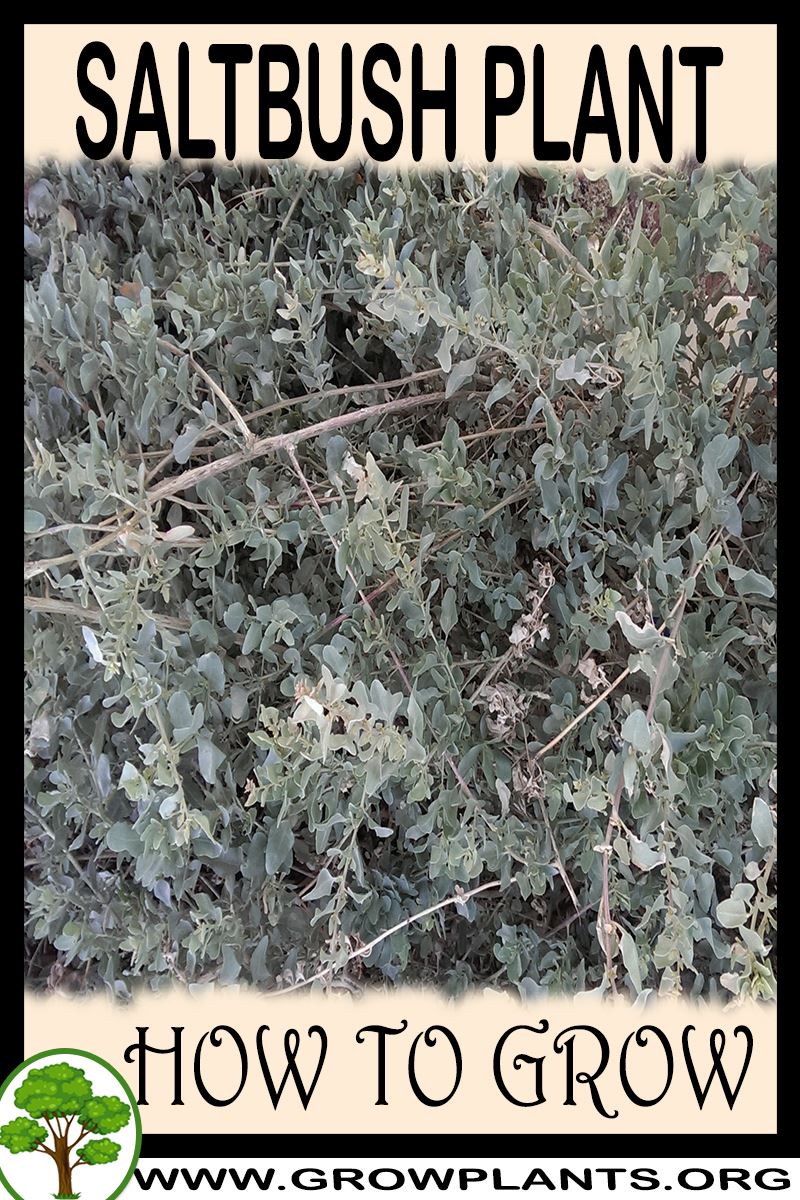
Plant Profile & Key Characteristics
Overview: Saltbush (orache) is an evergreen shrub genus growing 1-3 m (40-120 in) tall with salty grey or purple foliage. These drought- and salt-tolerant perennials are grown for their edible leaves, as ornamental hedges, and for medicinal use.
Quick Specifications
| Specification | Attribute |
|---|---|
| Plant Type / Life Cycle | Perennial (evergreen shrub) |
| Foliage Type | Evergreen |
| Mature Size | 1-3 m tall (40-120 in) |
| Growth Rate | Moderate |
| Root System | Deep taproot (halophyte) |
| Toxicity | Non-toxic / edible (salty leaves) |
| Hardiness | USDA zones 4-11 |
Growth Form & Structure
- Height & Spread: 1-3 m (40-120 in) tall, forming a dense shrub; can be grown in containers if kept small, and clips into a hedge.
- Growth Habit & Form: Bushy evergreen shrub with grey-green or purple foliage; salt- and drought-tolerant, and can be invasive.
- Lifespan & Maturity: Long-lived evergreen perennial; leaves harvested year-round once established.
Anatomy & Physical Features
- Leaves & Foliage: Green-grey or purple ovate to triangular leaves with a salty taste; edible.
- Flower Characteristics: Small red, pink, purple or green flowers at the stem tips, with nearby leaves turning purple (see Bloom guide).
Primary Uses & Landscape Value
- Edible Uses: Salty leaves eaten raw, cooked, dried or in pastry, and used as a herb, spice or salt substitute.
- Functional & Ornamental Roles: Ornamental and hedge shrub, salt-tolerant windbreak, and medicinal plant; drought tolerant.
Care Guide: Planting, Soil & Watering
Overview: Saltbush is a hardy, drought- and salt-tolerant evergreen shrub (hardiness zone 4–11) for full sun. It grows in poor, well-drained soil – including saline and alkaline ground – and needs little water.
Quick Care Requirements
| Requirement | Ideal Condition |
|---|---|
| Planting Season | Spring in zone 4–6; spring–summer in zone 7–9; spring–autumn in zone 10a; year-round in zone 10b–11 |
| Growth Rate | Moderate |
| Soil Type | Poor, well-drained; tolerates saline and alkaline soils |
| Water Need | Low – drought tolerant |
Planting & Establishment
- Best Planting Season: Plant in spring in zone 4–6, spring to summer in zone 7–9, spring to autumn in zone 10a, and year-round in zone 10b–11.
- How to Plant:
- Hole Preparation: Dig a hole about the width of the root ball in free-draining ground.
- Soil Amendments: It thrives in lean, well-drained soil and needs no rich amendment; prioritise drainage.
- Planting Depth: Set the shrub at its original depth with the root collar at the surface.
- Growth Speed & Expectations: Growth is moderate, reaching 1–3 m; it can be invasive, so site it thoughtfully.
Soil, Watering & Drainage Care
- Soil Mix & Drainage Needs: Free-draining soil is essential; as a halophyte it tolerates salty, alkaline and poor ground but rots in wet, heavy soil. It grows in containers with good drainage.
- Watering Schedule & Technique:
- Young / Newly Planted: Water young plants occasionally to establish them, without keeping the soil wet.
- Established: Once established it is highly drought tolerant, needing only a small amount of water.
- Seasonal Adjustments: Water lightly in prolonged summer drought and withhold in wet, cool periods.
Climate, Light & Hardiness
Saltbush (Atriplex) is a tough, drought- and salt-tolerant shrub suited to Mediterranean, desert, subtropical, and temperate climates in full sun to full shade, and it also grows well as a houseplant with enough light. It needs essentially frost-free conditions, though established plants can survive light frost.
Quick Climate Specifications
| Climate Zones | Mediterranean, Desert, Subtropical, Temperate |
|---|---|
| USDA Hardiness Zones | 4–11 |
| Frost Tolerance | Low |
| Light Conditions | Full Sun / Half Shade / Full Shade (some varieties tolerate shade but need light and will not bloom) |
| Salt / Coastal Tolerance | High |
Sunlight & Light Exposure
Optimal Light Setup
Adapts to a wide light range from full sun to full shade; shadier spots reduce flowering but the plant still grows.
Direct Sun Requirement
Tolerates direct sun well; not strictly required, given its shade tolerance.
Temperature Extremes & Hardiness
USDA Hardiness & Regional Limits
Suited to zones 4–11, a notably wide range for a salt-tolerant shrub genus; cold limits outdoor cultivation outside this range, and in cooler climates it can instead be grown as a houseplant with plenty of light.
Cold Damage & Winter Protection
Needs essentially frost-free conditions for best growth, though an established plant can survive light frost.
Frost Sensitivity
Sensitive to hard or prolonged frost; only brief, light frost is tolerated by mature plants.
Extreme Heat Tolerance
Very heat and drought tolerant, reflecting its origins as a hardy hedge and forage shrub in arid and saline environments.
Wind, Humidity & Microclimate
Wind Tolerance
Tolerates exposed, windy sites well, consistent with its use as a hedge plant.
Coastal / Salt Tolerance
Highly salt tolerant, handling both salt spray and saline soils; the edible leaves are naturally salty, reflecting the plant's adaptation to saline conditions.
Growing in Pots, Balconies & Indoors
Saltbush (Atriplex) is a hardy, silver-leaved, salt- and drought-tolerant shrub. The grower keeps it indoors only with plenty of light, where it won’t bloom, so a very bright window is the indoor limit; it’s at its best as a sun-loving balcony or patio container plant.
Quick Details
- Container Size: Start a pot 50-90% larger than the root ball and pot up in stages (bigger plant = smaller step)
- Indoor Suitability: Only with lots of light – it may grow slowly and won’t bloom indoors
- Best Spot: Full sun (some varieties take shade but need light)
- Soil & Drainage: Sandy or gritty, very free-draining; or potting/peat soil with a little lava grit
- Watering in Pots: Sparing – drought-tolerant; let the mix dry
Indoors & On the Windowsill
- Only in a very bright spot: The grower says it can be kept indoors but needs a lot of light, which may slow its growth, and it surely won’t flower – so treat a bright, sunny window as the limit and prefer a balcony or patio.
- Overwintering: In cold climates a pot lets you move this tender shrub to a bright, frost-free spot over winter.
On a Balcony or Patio
- Light, wind & salt: Ideal for a hot, sunny, exposed balcony – it shrugs off heat, wind and salt spray. Pots still dry fast in that exposure, so check the mix, though water sparingly.
- Practicalities: A stable pot and a free-draining base keep this shrub steady and its roots healthy.
Choosing the Pot, Soil & Long-Term Care
- Pot & drainage: Strong drainage holes are essential; the grower advises against leaving a water-filled saucer – if you use one, keep it away or empty it. Terracotta breathes and dries fast, suiting this drought-lover.
- Potting mix: Potting mix or peat soil with some lava grit, or a sandy mix – optionally blended with a little richer, more nutritious soil.
- Feeding: Feed lightly – adapted to poor soils, it needs little; a dilute feed once or twice in the growing season is plenty.
- Repotting: When it fills the pot, swap out part of the soil and prune both roots and leaves – old soil loses its structure over time.
Grower’s Container Tip
- Grow it small, pot up in stages: The grower’s method: start in a pot 50-90% bigger than the root ball – the larger the plant, the smaller the step – and move up a size each time the roots fill it, until it reaches the size you want. On a big plant, swap out part of the soil and prune the roots and leaves; old soil loses its structure over time, so this keeps a container plant healthy and in scale.
Fertilizing & Feeding
A light feeder: saltbush is a drought-tolerant, salt-tolerant shrub grown for its edible leaves and as a hedge, and it needs only lean feeding in the ground; container-grown plants need a bit more attention as the potting mix ages.
Quick Fertilizing Specs
| Feeding Level | Light feeder |
|---|---|
| Main Nutrient Priority | Balanced feeding with nitrogen kept modest; this drought-tolerant shrub is adapted to lean, often sandy soils |
| Best Feeding Period | During establishment, then light spring feeding for containers or weak-looking plants |
| Organic Options | Compost, humus, or well-rotted organic matter worked into the planting site or container mix |
| Reduce/Stop Feeding | Ease off once established in the ground; mature in-ground plants generally need little to no feeding |
| Micronutrients | Rarely an issue for this tough, adaptable shrub; correct only a diagnosed deficiency |
| Soil pH | Tolerates a wide range of well-drained soils, including sandy and saline sites |
Feeding by Growth Stage
Establishment after planting or cutting
Root a newly planted or newly rooted-cutting saltbush into its site or container while it builds the root system that gives it drought tolerance.
| Nutrient direction | A light, balanced feeding supports root establishment without forcing soft top growth. |
|---|---|
| Timing | At planting, timed to the warm season with reliable moisture in cooler hardiness zones, or at any time of year in mild climates. |
| Frequency | A single light feeding at planting is usually enough while roots establish. |
| Fertilizer types | A balanced, complete fertilizer used at a light rate, Compost, humus, or organic matter mixed into the planting site or potting mix |
| Precautions | This shrub can be invasive once established in the ground, so avoid heavy feeding, which only encourages faster, less manageable spread. |
Established maintenance, in ground and in containers
Maintain healthy, harvestable foliage on an already well-adapted shrub, whether it is growing in open ground or in a container that limits root run.
| Nutrient direction | In-ground plants rarely need feeding; container-grown plants benefit from periodic light feeding as nutrients in the potting mix are used up over time. |
|---|---|
| Timing | Spring for in-ground plants that look weak; through the growing season for containers, alongside routine repotting or soil refreshing. |
| Frequency | An occasional light feeding is enough; more frequent light feeding suits containers than open ground. |
| Fertilizer types | A balanced, complete fertilizer used sparingly, Fresh potting mix worked in when a container plant is stepped up to a larger pot |
| Precautions | Overfeeding this naturally lean-adapted, drought-tolerant shrub can push soft growth that is more prone to disease and less drought hardy. |
Nutrient Deficiency Signs & Corrections
Leaves turn a duller, more uniform gray or pale yellow-green and new growth is sparse.
| Possible causes | very low available soil or potting-mix nitrogen, an aging, depleted potting mix in container-grown plants, nutrient leaching after heavy irrigation or rain |
|---|---|
| Appears first on | older, lower leaves |
| What to check | recent feeding history, age and condition of the potting mix, if container-grown, irrigation and drainage pattern |
| Possible correction | Refresh the potting mix or work in compost, then apply a balanced complete fertilizer at a light rate. |
Leaf margins brown or scorch, particularly in containers, even with regular watering.
| Possible causes | fertilizer salt buildup in a container that lacks the buffering of open garden soil, under-watering that concentrates salts in the root zone, excessive feeding relative to this light-feeding shrub’s needs |
|---|---|
| Appears first on | leaf margins and tips |
| What to check | recent fertilizer amounts and frequency, watering consistency, drainage holes and container size relative to the plant |
| Possible correction | Ease off feeding, water thoroughly to flush accumulated salts, and consider refreshing the potting mix. |
New leaves turn yellow between veins that stay green.
| Possible causes | high soil or potting-mix pH tying up available iron, waterlogged or compacted soil limiting root uptake, naturally alkaline or calcareous soil |
|---|---|
| Appears first on | newest growth at the shoot tips |
| What to check | soil or potting-mix pH and drainage, recent overwatering or compaction, whether the same pattern shows on nearby plants |
| Possible correction | Improve drainage, avoid overwatering, and apply a chelated iron product per its label if the pattern persists. |
Pruning, Training & Seasonal Maintenance
This Saltbush (Atriplex) is grown chiefly for its edible, salty leaves, and its own facts give a distinctive pruning rationale: cutting is best done in summer specifically to prevent the plant from blooming, keeping it in active leafy, vegetative growth rather than letting it run to flower. Design/shape pruning and leaf harvesting are treated as the same activity in the source, so regular cutting throughout the year both maintains form and supplies the crop; it does not affect fruiting, as the plant is not grown for fruit.
Quick Pruning & Maintenance Specs
| Pruning Tolerance | High |
| Primary Pruning Window | Summer, ahead of flower bud formation (per source) |
| Secondary Maintenance Window | Ongoing, all year (leaf harvest) |
| Typical Frequency | Rolling harvest cuts plus a deliberate summer pre-bloom pinch |
| Main Objective | Prevent bloom to sustain leaf production; shape for design/hedge use |
| Young Plant Priority | Pinch tips to build a bushy, multi-branched leafy framework |
| Mature Plant Priority | Summer pinch-back before flower buds form; ongoing harvest cuts |
| Best Tool Type | Hand snips for harvest; hedge shears only if maintained as a clipped hedge |
| Avoid Heavy Pruning During | The plant’s first season after transplanting |
Pruning by Plant Age & Size
Newly Established
Minimal cutting until the plant is rooted in; remove only damaged growth.
Young / Formative
Pinch stem tips to build a bushy, multi-branched leafy structure; no formal training system is needed for this shrub.
Mature / Established
Recurring summer pinch-back timed before flowering begins, to keep the plant productive and leafy rather than reproductive; periodic shape trims if used as a hedge/screen.
Seasonal Pruning Schedule
| Stage | Objective | Remove | Do NOT remove | Expected response / flowering impact |
| Summer canopy management | Prevent bloom, per source, to sustain leaf quality and quantity | Emerging flower buds/stems; lanky over-extended shoots | Too much foliage at once from a leaf crop that needs to keep photosynthesising | Renewed leafy flush; suppresses or delays flowering directly, as stated in the plant’s own guidance |
| Ongoing / all year | Harvest and shape | Leafy stems for harvest, per source available all year | The entire plant at once | Continuous fresh leaf production |
Structural Pruning & Training
- Minimal formal structure needed; occasional thinning if grown ornamentally as a screen keeps the canopy from becoming dense and shading its own interior.
Special Growth to Remove
- Emerging flower/seed stems, pinched out in summer both to preserve leaf quality/flavour and to limit self-seeding – this genus is separately flagged as invasive in the source.
- Leggy, over-extended shoots that reduce leafy branching.
Container & Small-Space Pruning
Grows well indoors/in containers, but the source notes it needs a lot of light and, in low light, simply will not bloom – container plants therefore need regular pinching mainly for leaf density and compact size rather than for bloom prevention, which happens naturally indoors.
Tools
- Precision snips for routine leaf harvest and pinching.
- Bypass secateurs for the occasional heavier structural cut on older stems.
Tool Hygiene & Disease Risk
Routine – clean, sharp tools are sufficient; no disease-transmission risk is noted in this species’ own facts.
Cut Placement & Technique
Pinch or cut just above a leaf node to encourage more branching and more harvestable leaf; remove flower buds as soon as they appear rather than waiting for open bloom.
Heavy Pruning & Rejuvenation
Tolerated well given its high pruning tolerance and medium growth rate; a leggy plant can be cut back hard, best done during a warm active-growth period so it can flush fresh leafy regrowth rather than in the winter–spring bloom window this pruning schedule is designed to intercept.
Post-Pruning Care
Water moderately after a summer pinch-back to support a fresh leafy flush – this is a small-water-requirement plant, so avoid overwatering; no extra fertilizing is needed to trigger regrowth.
Common Pruning Mistakes
- Letting the plant bloom before pruning, which reduces leaf quality and allows self-seeding of a genus prone to spreading.
- Shearing only for appearance while skipping the summer pre-bloom pinch that actually protects leaf production.
- Removing so much foliage in one pass that the plant cannot maintain continuous leaf harvest.
When NOT to Prune
Avoid hard cutback in the first season after planting, and avoid stripping so much foliage during repeated harvesting that the plant cannot recover its leaf canopy.
Pruning Troubleshooting
| Problem | Possible Cause | What to Check | Corrective Action |
| Plant bolts/blooms early, leaf quality drops | No summer pre-bloom pinch performed | Whether flower buds are present on shoot tips | Pinch out buds as soon as seen and resume regular harvest-pruning |
| Leggy, sparse growth | Infrequent harvesting/pinching | Stem density near the base | Cut back harder to force new branching |
Recommended Tools (by task)
- precision_snips – routine leaf harvest and summer pre-bloom pinching.
- bypass_secateurs – occasional heavier cuts on older or over-extended stems.
Propagation Guide
Saltbush (Atriplex spp.) is most easily grown from stem cuttings, and the site gives a specific, reliable method for this; seed is also viable for these free-seeding shrubs. Propagation is easy either way, with vegetative reproduction not strictly necessary but convenient for reproducing a particular plant.
Quick Propagation Specs
| Best Propagation Method | Stem cuttings |
| Alternative Methods | Seed |
| Propagation Difficulty | Easy |
| Seed True-to-Type | Usually true-to-type (varies by species within the genus) |
| Vegetative True-to-Type | Yes |
| Best Propagation Season | Warm season, with high humidity |
| Grafting Required | No |
Growing from Seed
Sowing Season
Per the site, planting season ranges from spring in cooler hardiness zones (4–6) up to all year in the warmest zones (10b–11).
Germination Conditions
Not detailed by the site; Atriplex seed generally germinates in warm, light soil, and many species self-sow.
Stem Cuttings
Cutting Type
Stem cuttings.
Best Timing
Warm season, with high humidity.
Rooting Setup
Root either in water, changing the water every few days, or in soil – peat-based soil is noted as working better.
Rooting Hormone
Beneficial – the site recommends using a root-growth hormone when rooting in soil.
Bloom & Flower Guide
Quick Details
- Bloom Season: Winter to spring
- Flower Appearance: Small, inconspicuous flowers at the stem tips in red, pink, purple or green, with the nearby leaves often flushing purple
- Edibility: Grown for its edible salty leaves rather than its flowers; the tiny blooms are not a food crop
Detailed Blooming Overview
Saltbush is a leaf crop first and foremost, and its flowering is a low-key affair. In the cool season it produces small, spike-like clusters of tiny flowers at the ends of the stems in shades of red, pink, purple or green, and the foliage around them often takes on a purple cast. These are wind-pollinated flowers with no showy petals – and because the leaves are at their best before the plant blooms, many growers deliberately prune in summer to hold off flowering.
Flower Characteristics
- Tiny flowers in red, pink, purple or green, clustered at the stem tips.
- The leaves near the flowers often turn purple.
Bloom Care & Thinning
- Pollination: Wind-borne – the flowers have no need to attract insects.
- To keep leaves tender: Prune through summer to prevent flowering; a plant left to bloom puts its energy into seed rather than fresh foliage.
Fruit & Uses
Saltbush (Atriplex) is grown for its edible, naturally salty leaves — grey-green or purple, in ovate, elliptic, or triangular shapes depending on the species — eaten fresh, cooked, or dried as a vegetable and salt substitute.
Quick Edible Specs
| Edible Parts | Leaves |
|---|---|
| Main Use(s) | Culinary vegetable, natural salt substitute/seasoning, herb/spice, pastry ingredient |
| Eaten Raw or Cooked | Both — raw or cooked |
| Preparation Required | None beyond rinsing; drying optional for storage |
| Harvest Season | All year |
| Time to First Harvest | Can be harvested freely once the shrub is established |
| Storage | Dry leaves for longer-term storage |
| Safety/Toxicity Caveat | Naturally salty/high in sodium — use in place of added salt; like other Amaranthaceae greens it contains some oxalates, so normal culinary portions are best rather than daily bulk eating |
Leaves & Greens
Leaf colour and shape vary by species — grey-green or purple, ovate, elliptic, or triangular — and leaves often turn more purple near the flowers. Once established, leaves can be picked freely year-round. Because letting the plant flower can make the leaves less tender, gardeners growing saltbush mainly for eating often prune in summer to delay blooming and keep new growth coming (see Pruning). Leaves are eaten raw in salads, cooked as a vegetable, dried as a herb or spice, used as a natural salt seasoning, or added to pastries and savoury baking.
Preparation, Uses & Safety
Because the leaves are naturally salty, they are traditionally used to season other dishes rather than eaten as a large plain side vegetable — reduce or omit added salt when cooking with them. Moderate portions are best; no cooking is required to make the leaves safe to eat.
Pests, Diseases & Troubleshooting
Overview: Saltbush (Atriplex spp.) is a group of very tough, salt- and drought-tolerant chenopod shrubs that are nearly trouble-free apart from root rot in wet soil and the occasional chenopod-feeding insect. Saltbush is an exceptionally tough, salt- and drought-tolerant shrub (a chenopod, related to spinach and beet) that is largely trouble-free; its only real vulnerability is ironic for such a xeric plant – root rot in wet, poorly drained soil. The insects that appear are the usual chenopod feeders (aphids, flea beetles, leafminers, loopers), rarely at damaging levels. Grow it lean and dry in full sun with sharp drainage and it needs almost no intervention.
Quick Troubleshooting Overview
| Issue / Pest | Main Symptom | Primary Solution |
|---|---|---|
| Root rot (overwatering) | Wilting, yellowing, dieback in wet soil | Sharp drainage, water sparingly – the main risk for this xeric plant |
| Aphids | Sticky, distorted new shoots | Hose off, encourage predators, insecticidal soap if needed |
| Flea beetles / leafminers | Shot-holes or pale mined trails in leaves | Tolerate light damage; row cover on seedlings, neem if heavy |
| Loopers / caterpillars | Chewed leaves, frass | Handpick, Bt (Bacillus thuringiensis) if severe |
| Downy mildew / leaf spot | Pale patches or spots on leaves in humid weather | Improve airflow, avoid overhead water, remove affected leaves |
Common Pests & Management
- Aphids (Aphididae):
- Symptoms: Clusters of soft green or black insects on tender new shoots, with sticky honeydew and slightly curled, distorted growth.
- Prevention & Control: Dislodge with a water jet, encourage ladybirds, lacewings and hoverflies, and treat persistent clusters with insecticidal soap; usually a minor issue on this tough shrub.
- Flea beetles (Chrysomelidae (Phyllotreta / Psylliodes)):
- Symptoms: Tiny beetles that jump when disturbed and pepper leaves with small round shot-holes, most damaging to seedlings.
- Prevention & Control: Protect seedlings with floating row cover, keep them vigorous, and treat serious outbreaks with neem or a kaolin clay barrier; established shrubs shrug off the damage.
- Leafminers (Pegomya spp. (beet/chenopod leafminer)):
- Symptoms: Pale, winding or blotchy mined trails and blisters inside the leaves where larvae tunnel between the surfaces.
- Prevention & Control: Remove and destroy mined leaves, encourage parasitic wasps, use row cover on young plants, and avoid broad-spectrum sprays that kill the miners’ natural enemies.
- Loopers & caterpillars (Noctuidae / various):
- Symptoms: Chewed, ragged leaves and frass from various caterpillars feeding on the foliage.
- Prevention & Control: Handpick where practical, encourage birds and predators, and treat heavy infestations with Bt (Bacillus thuringiensis), which is selective and pollinator-safe.
- Two-spotted spider mite (Tetranychus urticae):
- Symptoms: Fine stippling and a dull, dusty cast on foliage in hot, dry, dusty conditions.
- Prevention & Control: Rinse foliage to remove dust and mites, and apply horticultural oil or insecticidal soap only for persistent infestations.
- Beet leafhopper (Circulifer tenellus):
- Symptoms: Small pale wedge-shaped insects; feeding is minor, but in some regions they transmit curly top virus to chenopods.
- Prevention & Control: Manage weeds that host them, encourage predators, and use row cover where curly top virus is a known local problem.
Diseases & Fungal Issues
- Downy mildew (Peronospora spp.):
- Symptoms: Pale yellow patches on the upper leaf surface with greyish-purple downy growth beneath, in cool, humid, wet conditions.
- Treatment & Management: Improve airflow and spacing, avoid overhead watering, remove affected leaves, and – rarely needed on this tough plant – apply a copper fungicide if it spreads.
- Leaf spot (Cercospora spp.):
- Symptoms: Brown to grey spots, sometimes with darker margins, on the leaves in prolonged wet weather.
- Treatment & Management: Remove affected leaves and debris, improve air movement, avoid wetting foliage, and treat with copper only if severe.
- Root rot (Phytophthora / Pythium spp.):
- Symptoms: Wilting, yellowing and dieback with dark, decayed roots – the main disease risk, caused by wet, heavy, poorly drained or overwatered soil, which this drought-adapted plant cannot tolerate.
- Treatment & Management: Plant in sharply drained soil, water sparingly, never waterlog, improve drainage on heavy ground, and remove badly affected plants; drainage is far more important than any spray.
Growing Difficulties & Abiotic Problems
- Root rot from wet feet:
- Cause & Symptoms: The dominant problem: this xeric halophyte rots in wet, poorly drained or overwatered soil, wilting and dying back.
- Correction Strategy: Grow in full sun with very sharp drainage, water sparingly once established, and improve heavy soils with grit rather than watering more.
- Chlorosis in waterlogged soil:
- Cause & Symptoms: Yellowing, weak growth where roots are suffocated in dense, wet ground.
- Correction Strategy: Improve drainage and aeration; the plant tolerates salt and drought well but not stagnant, airless soil.
- Legginess in shade:
- Cause & Symptoms: Sparse, open, floppy growth when grown with too little light.
- Correction Strategy: Grow in full sun for dense, sturdy growth, and trim to shape; saltbush responds well to pruning.
What Helps – Products & Tools
Saltbush is close to input-free; the main ‘tool’ is good drainage. For the rare pest, insecticidal soap and neem cover aphids, flea beetles and mites; Bt handles caterpillars; row cover and kaolin clay protect seedlings from flea beetles and leafminers. Fungicides (copper) are seldom needed. Manage this plant with siting and restraint rather than sprays.