Plant Profile & Key Characteristics
Overview: A low, succulent salt-marsh herb 20-40 cm (8-16 in) tall, grown both as an edible vegetable and as a curiosity ornamental. Depending on climate it behaves as an annual or a short-lived perennial and thrives in saline, well-drained soil in full sun.
Quick Specifications
| Specification | Attribute |
|---|---|
| Plant Type / Life Cycle | Herbaceous succulent — annual or short-lived perennial |
| Foliage Type | Evergreen where perennial; leafless (photosynthetic green stems) |
| Mature Size | 20-40 cm (8-16 in) tall |
| Growth Rate | Slow to moderate |
| Toxicity | Non-toxic / edible |
| Hardiness | USDA zone 3-10 as an annual, 10-11 as a perennial |
Growth Form & Structure
- Height & Spread: A low, branching succulent 20-40 cm (8-16 in) tall; suited to open ground and also grown in containers, though not as an indoor plant.
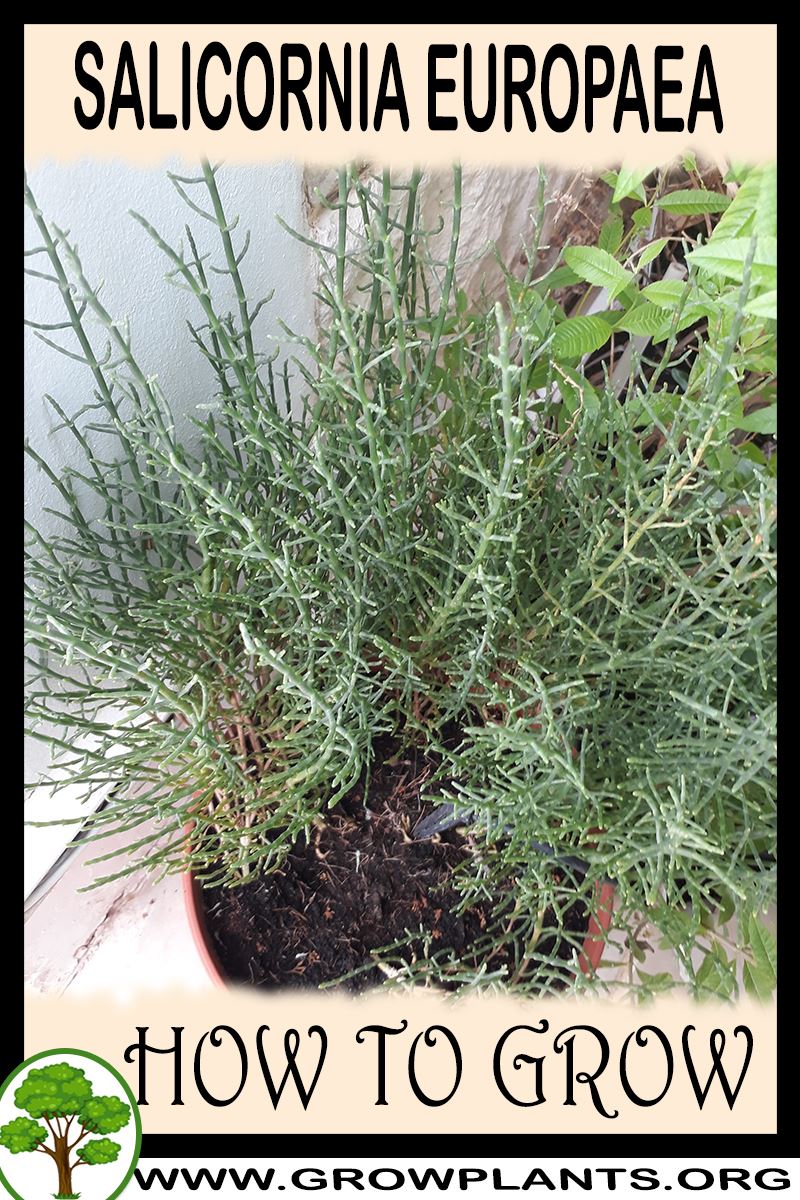
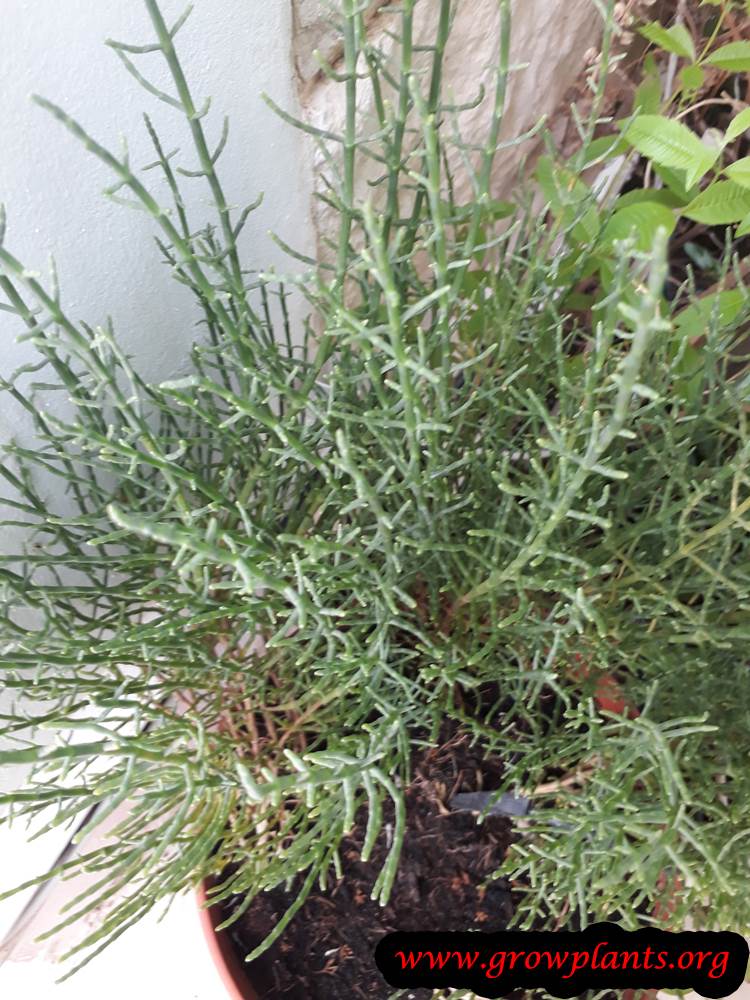
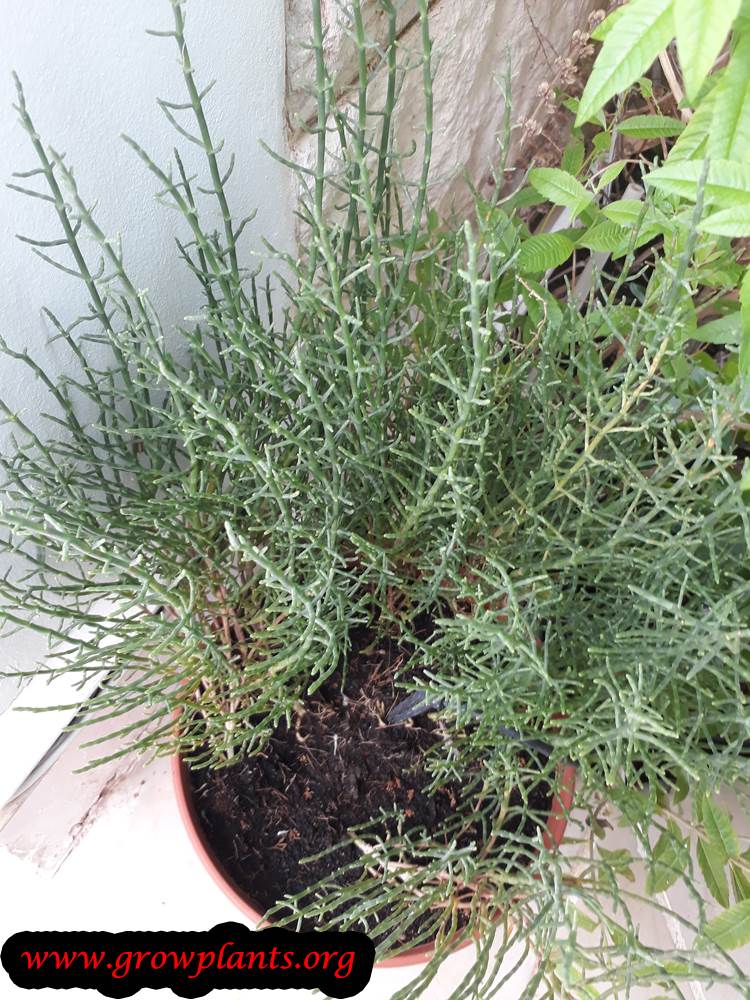
- Growth Habit & Form: Fleshy, upright, much-branched habit built from jointed, leafless green stems — a classic salt-tolerant (halophyte) glasswort.
- Lifespan & Maturity: Fast to reach harvest size within a season; as a perennial it re-shoots from the base for a few years.
Anatomy & Physical Features
- Leaves & Foliage: No true leaves — the plant is formed of green, stick-like, fleshy segmented stems that carry a naturally salty flavour.
- Flower Characteristics: Tiny, insignificant yellow flowers sunk into the stem joints.
Primary Uses & Landscape Value
- Edible Uses: The crisp, naturally salty stems are eaten as a vegetable (samphire) and used as a salt substitute.
- Functional & Ornamental Roles: Grown as a coastal/saline-soil edible and as an unusual ornamental; the stems have also been used in soap-making.
Care Guide: Planting, Soil & Watering
Overview: Common glasswort is a salt-marsh succulent that thrives in full sun and light, well-draining, even saline soils. It needs only modest watering and dislikes rich, waterlogged ground, so sharp drainage is essential.
Quick Care Requirements
| Requirement | Ideal Condition |
|---|---|
| Planting Season | Spring (as an annual), summer or autumn |
| Growth Rate | Slow to moderate |
| Soil Type | Light, well-draining soil |
| Water Need | Low to moderate — drought-tolerant once established; let the top few cm dry out between waterings |
Planting & Establishment
- Best Planting Season: Plant in spring where it is grown as an annual, or in summer to autumn as a perennial in mild zones (10-11); it establishes readily in warm, well-drained soil.
- How to Plant:
- Hole Preparation: Dig a planting hole roughly twice as wide as the root ball but no deeper, so the roots can spread into loosened soil.
- Soil Amendments: Keep additions light — a little compost is plenty; avoid rich, heavy amendments that hold too much water.
- Planting Depth: Set the plant at the same depth it grew in its pot, with the root collar level with the surface — never bury the stem, which invites rot.
- Growth Speed & Expectations: Expect a slow to moderate pace of growth, thickening up gradually.
Soil, Watering & Drainage Care
- Soil Mix & Drainage Needs: Provide light, aerated, sharply drained soil; in containers use a free-draining potting mix with added perlite or vermiculite rather than heavy garden soil, and make sure excess water escapes freely, since waterlogged roots quickly rot.
- Watering Schedule & Technique:
- Young / Newly Planted: Water regularly right after planting to settle the roots, keeping the soil lightly moist while the plant establishes.
- Established: Once established it is drought-tolerant — water deeply but infrequently, letting the top few centimetres dry out before watering again.
- Seasonal Adjustments: Increase watering during prolonged heat and cut right back over the cool, wet season, since soggy soil is the main cause of rot.
Climate, Light & Hardiness
Salicornia europaea (common glasswort) is a succulent halophyte grown in mediterranean, desert, subtropical, or temperate climates, and it needs full sun. Cold behavior differs by lifecycle: the site rates it to approximately zone 3–10 where it is grown as an annual, and zone 10–11 where it survives as a perennial.
Quick Climate Specifications
| Climate Zones | Mediterranean, desert, subtropical, and temperate climates |
|---|---|
| USDA Hardiness Zones | Approximately 3–10 as an annual; approximately 10–11 as a perennial |
| Frost Tolerance | Low as a perennial; grown as a frost-killed annual further from zone 10–11 |
| Light Conditions | Full Sun |
| Salt / Coastal Tolerance | High – a classic salt-marsh (halophyte) species |
Sunlight & Light Exposure
Optimal Light Setup
Full sun is required; this reflects its native open salt-marsh and tidal-flat habitat.
Temperature Extremes & Hardiness
USDA Hardiness & Regional Limits
Where winters are cold (roughly zone 3–10), it completes its lifecycle as an annual, dying with frost each year but reseeding; from about zone 10–11 it can persist as a perennial. Both patterns reflect the same underlying frost sensitivity - only the outcome (annual reseeding vs. perennial survival) differs by climate.
Frost Sensitivity
Foliage and stems are killed by frost; in perennial zones (10–11) a hard freeze would still be expected to damage or kill the plant.
Wind, Humidity & Microclimate
Coastal / Salt Tolerance
As an obligate salt-marsh species, it tolerates salt spray, saline soil, and even periodic tidal saltwater inundation far better than ordinary garden plants - a defining trait of the genus.
Wind Tolerance
Native to exposed coastal marsh and mudflat habitats, so it is generally tolerant of open, windy coastal sites.
Growing in Pots, Balconies & Indoors
Salicornia (glasswort / marsh samphire) is not a houseplant – the grower marks it unsuitable indoors – but this small, salt-loving annual (20-40 cm / 8-16 in) grows well in a sunny container. Indoors it needs the brightest sill; it is really an outdoor sun-and-salt plant.
Quick Details
- Container Size: A wide, shallow pot of about 5-10 L (1.5-3 gal)
- Indoor Suitability: Not a room houseplant; only a very sunny windowsill will do
- Best Spot: Full sun – it needs strong, direct light
- Soil & Drainage: Free-draining mix; as a coastal halophyte it tolerates – even enjoys – salty, moist conditions
- Watering in Pots: Keep the mix constantly moist; a light saltwater feed mimics its native marsh
Indoors & On the Windowsill
- Houseplant limits: A coastal sun plant – it won’t grow properly in a shaded room.
- Windowsill growing: A bright, sunny sill can raise a crop of tender shoots; unusually for a pot plant, it likes staying wet.
- Season: Grown as an annual – sow fresh each warm season rather than overwintering.
On a Balcony or Patio
- Light & wind: The sunniest spot on the balcony; it handles wind and salt spray well, so an exposed coastal position is fine.
- Practicalities: A shallow tray-style pot suits its shallow roots and makes it easy to keep evenly wet.
Choosing the Pot, Soil & Long-Term Care
- Pot & drainage: A shallow 5-10 L pot with strong drainage holes; skip a standing-water saucer to avoid root rot. Terracotta breathes and dries faster; glazed or plastic holds moisture longer.
- Potting mix: A light, aerated, organic-rich mix – potting compost or peat/coir with added perlite or vermiculite for drainage. It tolerates salty, wet conditions better than almost any other pot plant.
- Feeding: Nutrients wash out of pots faster than open ground, so feed potted samphire more often – a balanced liquid feed through the active growing season.
- Repotting: Start fresh mix each season; a roomy pot keeps roots cool and cuts down on daily watering.
Fertilizing & Feeding
A succulent halophyte from naturally lean, saline habitats, glasswort needs very little supplemental feeding in a garden bed; its jointed, edible stems stay tender and flavorful without rich fertilizing.
Quick Fertilizing Specs
| Feeding Level | Light feeder |
|---|---|
| Main Nutrient Priority | Minimal, low-nitrogen feeding only if growth looks weak |
| Best Feeding Period | Once during active growth in spring or summer, if needed at all |
| Organic Options | A very light organic top-dressing is optional; rich amendment is unnecessary |
| Reduce/Stop Feeding | Stop feeding as growth slows heading into the plant’s rest period |
| Micronutrients | Rarely an issue in its adapted well-drained, mineral-rich native soil type |
| Soil pH | Tolerates a wide range; adapted to lean, well-drained soil |
Feeding by Growth Stage
Active growth
Support the fleshy, stick-like green stems through their main growing period without pushing soft, over-lush growth.
| Nutrient direction | Minimal, low-nitrogen feeding is enough; this plant is naturally adapted to lean, mineral soils and rarely needs more. |
|---|---|
| Timing | Spring through summer while the plant is actively growing. |
| Frequency | Feeding is rarely needed once established; a single light feeding covers a season if growth looks thin. |
| Fertilizer types | A light-strength, low-nitrogen fertilizer, used sparingly if growth looks weak |
| Precautions | Avoid rich or frequent feeding; this succulent is grown for tender, flavorful stems, and overfeeding pushes soft, less flavorful growth. |
Dormant or slow-growth rest
Let the plant rest during its slow season, whether that means winter dormancy for perennial plantings or the natural end of life for annual ones.
| Nutrient direction | None – withhold fertilizer while the plant is dormant or in natural decline. |
|---|---|
| Timing | Autumn through winter for perennial plantings, or as an annual planting completes its life cycle. |
| Frequency | No feeding at this stage. |
| Fertilizer types | No feeding at this stage; hold off fertilizing until active growth resumes, if the planting is perennial. |
| Precautions | Do not fertilize while growth is dormant or the plant is naturally declining; it cannot use the nutrients. |
Nutrient Deficiency Signs & Corrections
Stems look pale or yellow-green rather than their usual bright green, with slow growth.
| Possible causes | low available soil nitrogen, very lean or depleted soil, poor drainage limiting root function |
|---|---|
| Appears first on | newer stem segments |
| What to check | soil fertility and drainage, feeding history, root health |
| Possible correction | Apply a single light, low-nitrogen feeding rather than a rich fertilizer. |
Stem tips soften, blacken, or die back after feeding, despite this plant’s natural salt tolerance.
| Possible causes | concentrated fertilizer salts building up in a pot or bed without natural tidal flushing, over-fertilizing a plant adapted to lean soils, poor drainage trapping salts around the roots |
|---|---|
| Appears first on | stem tips |
| What to check | recent feeding amount and frequency, drainage, watering consistency |
| Possible correction | Stop feeding, flush the growing area with plain water, and return to only occasional, very light feeding. |
Base of the plant softens, discolors, or collapses, sometimes mistaken for a nutrient problem.
| Possible causes | waterlogged, poorly drained soil, overwatering beyond this plant’s needs, fungal or bacterial rot organisms in wet conditions |
|---|---|
| Appears first on | base of stems and roots |
| What to check | soil drainage and moisture level, recent watering frequency, container or bed drainage |
| Possible correction | Improve drainage, reduce watering frequency, and avoid feeding until the plant recovers. |
Pruning, Training & Seasonal Maintenance
Salicornia is a leafless, jointed succulent – its fleshy green stem segments do the work leaves normally would, and the flowers are so small and insignificant that they play no real role in how it’s grown. There is essentially nothing to structurally prune: no branches to train, no framework to shape. Maintenance amounts to removing dead or blackened stem segments as they appear, mainly in autumn/winter, and lightly harvesting tender young stem tips through the growing season if the edible stems are being used. As either a true annual (cooler zones) or a short-lived perennial (warm zone 10–11 sites), the plant simply completes its own life cycle rather than being renewed by pruning.
Quick Pruning & Maintenance Specs
| Pruning Tolerance | Low – light removal of dead segments and harvest snipping only |
| Primary Pruning Window | Autumn / Winter, to remove dead or damaged stem segments |
| Secondary Maintenance Window | Light harvest cuts of young stem tips through spring–autumn once established |
| Typical Frequency | As needed, whenever dead segments appear or stems are harvested |
| Main Objective | Remove dead/damaged tissue and, if desired, harvest tender young stems |
| Young Plant Priority | Leave alone until well established; no shaping needed |
| Mature Plant Priority | Periodic removal of dead segments; light ongoing harvest |
| Best Tool Type | Precision snips |
| Avoid Heavy Pruning During | The plant’s early establishment period, and while snail damage is active and unaddressed |
Pruning by Plant Age & Size
Newly Established
Do not harvest or trim a young plant before it is clearly established – it has no framework to spare and needs to build its low clumping habit first.
Young / Formative
No training system applies. This is a low, naturally clumping succulent with no leader, canes, or scaffold branches to select.
Mature / Established
Once established, the only ongoing tasks are removing dead, blackened segments and, if the edible stems are wanted, cutting young tender tips for harvest.
Seasonal Pruning Schedule
Ongoing Sanitary
Objective: keep the clump healthy. Remove dead or damaged stem segments as they appear, most often noticeable in autumn and winter. Do not remove healthy green, plump segments – these are the plant’s only photosynthetic tissue. Response: a tidier clump with no meaningful change to the plant’s growth habit, since this species has no seasonal flowering or fruiting display that pruning would affect.
Special Growth to Remove
Dead or blackened jointed stem segments, and any tissue damaged by snails (the noted pest) – damaged segments are best removed cleanly rather than left to potentially rot inward.
Container & Small-Space Pruning
Growing in a container works the same way as in-ground – there is no canopy or root-to-canopy balance to manage through pruning here; simply remove dead segments and harvest tips as needed, keeping the well-drained soil this species needs.
Tools
Precision snips are the only tool needed – both for removing dead segments and for harvesting tender young stem tips from this small, fleshy-stemmed plant.
Tool Hygiene & Disease Risk
Routine hygiene – clean, sharp snips. Snails, the noted pest, are not spread by pruning tools, so no disinfection routine is needed.
Cut Placement & Technique
Snip cleanly at a stem joint rather than crushing or tearing the fleshy tissue mid-segment – a clean cut at a joint heals better and reduces the entry point for rot, which matters more here since damaged, bruised tissue on a succulent stem is slower to seal than on a leaf.
Heavy Pruning & Rejuvenation
Not applicable. Salicornia has no woody framework to rejuvenate. As an annual it simply completes its life cycle and is not cut back to force regrowth; as a short-lived perennial in warm zones it is better replaced than hard-pruned once it declines, rather than treated to a renovation cut.
Post-Pruning Care
No special aftercare is needed beyond avoiding overwatering – this species needs well-drained soil, and excess moisture around freshly cut, damaged, or snail-affected segments increases the risk of rot.
Common Pruning Mistakes
Harvesting or trimming a young plant before it’s established; crushing or tearing fleshy stems instead of making a clean cut at a joint, which can invite rot, especially where snail damage is already present; and treating the plant as if it needs shaping like a shrub, when it has no branching framework to shape.
When NOT to Prune
Avoid harvesting from a newly planted, not-yet-established plant, and avoid cutting extensively while snail damage is ongoing without first addressing the pest – removing tissue alone won’t resolve active feeding pressure.
Recommended Tools (by task)
- precision_snips – the single tool needed for both dead-segment removal and light harvest of this small, fleshy-stemmed succulent.
Propagation Guide
Salicornia is usually started from seed, sown directly into consistently moist to wet, saline or brackish soil that mimics its salt-marsh habitat; the site confirms vegetative propagation, while not required, is also easy for this plant. Unlike typical dry-climate succulents, glasswort should not be allowed to dry out or callus before propagating, since it naturally grows in saturated, salty ground. Difficulty is easy overall.
Quick Propagation Specs
| Best Propagation Method | Seed |
| Alternative Methods | Stem cuttings; division of the perennial form’s clumps |
| Propagation Difficulty | Easy |
| Vegetative True-to-Type | Yes |
| Best Propagation Season | Spring (as an annual), extending into summer/autumn where grown as a perennial |
Growing from Seed
Sow directly into consistently moist to wet, well-drained sandy or saline soil; unlike many succulents, glasswort’s marsh habitat means the germination bed should stay damp rather than being allowed to dry between waterings.
Stem Cuttings
Because this is a jointed, fleshy-stemmed succulent, short stem segments can be rooted directly in constantly moist, saline, well-drained substrate. Unlike typical dry-climate succulents, do not let the cut ends dry out or callus first – glasswort’s wetland origin means it roots best when kept damp throughout.
Division, Offsets, Pups & Suckers
Where grown as a short-lived perennial (hardiness zone 10–11 per the site), an established clump can be divided, keeping roots attached to each rooted section.
Bloom & Flower Guide
Quick Details
- Bloom Season: Summer into autumn
- Flower Appearance: Tiny, insignificant yellowish flowers sunk into the fleshy stems
- Edibility: Grown for its edible salty stems (samphire) – the flowers are tiny and are not eaten
Detailed Blooming Overview
Glasswort (Salicornia europaea) flowers from summer into autumn, but the bloom is barely noticeable: the minute yellowish flowers are set right into the jointed, succulent stems rather than borne on show. This is a plant valued for its crisp, salty shoots, not its flowers.
Flower Characteristics
- Very small, insignificant yellowish flowers.
- Embedded in the fleshy, segmented stems.
Bloom Care & Thinning
- Pollination: Wind-pollinated, which suits its tiny, petal-less flowers.
- Managing the bloom: No thinning is needed. For eating, harvest the young stems before flowering, when they are most tender.
Fruit & Uses
The succulent, jointed green stems of Salicornia – also known as sea asparagus, glasswort or samphire – are the edible part, prized for their naturally salty, briny flavour. They can be eaten raw or lightly cooked as a vegetable, and are also used as a natural salt substitute.
Quick Edible Specs
| Edible Parts | Stems (young, tender growth) |
| Main Use(s) | Culinary vegetable (raw or cooked); natural salt substitute; also historically used in soap-making |
| Eaten Raw or Cooked | Both – raw in salads, or lightly cooked/sautéed as a vegetable |
| Preparation Required | None beyond rinsing; woody older stems are best avoided in favour of young growth |
| Harvest Season | Spring, summer and autumn (year-round where grown as a perennial in milder climates) |
| Storage | Best used fresh, like a leafy vegetable; keeps briefly refrigerated |
| Safety/Toxicity Caveat | Naturally very high in sodium – those on a salt-restricted diet should eat in moderation |
Shoots & Stems
The green, stick-like, jointed stems are harvested once the plant is established, taking the young tender growth. They have a distinctively salty, briny, slightly crunchy character from growing in saline soils. Stems are used raw in salads, lightly cooked or sautéed as a vegetable side, and also processed as a natural salt substitute; historically the plant has also been used in soap-making.
Preparation, Uses & Safety
No cooking is required – stems can be eaten straight from the plant after rinsing, or briefly cooked to soften them slightly. Because the plant concentrates salt from its growing environment, its main safety consideration is sodium content rather than toxicity; use it as you would a salty seasoning vegetable, in moderation on a low-sodium diet.
Pests, Diseases & Troubleshooting
Overview: Glasswort evolved in harsh, saline tidal mud where few pests thrive, so it is one of the most trouble-free plants you can grow – honestly, there is little to spray for. The main risks are slugs and aphids on young growth and rotting if it is grown too wet in ordinary garden soil rather than the salty, well-flushed conditions it prefers.
Quick Troubleshooting Overview
| Issue / Pest | Main Symptom | Primary Solution |
|---|---|---|
| Aphids | Clustered insects and honeydew on soft tips | Water jet; insecticidal soap if heavy |
| Slugs & snails | Chewed seedlings and soft new shoots | Hand-pick; grit/copper barriers; keep area tidy |
| Root rot | Blackened, mushy base in stagnant soil | Improve drainage; use saline, well-flushed conditions |
| Damping-off | Seedlings collapse at soil line | Clean water, airflow, don’t sow too wet/dense |
Common Pests & Management
- Aphids (Aphis spp.):
- Symptoms: Small green or black soft-bodied insects occasionally clustering on the soft succulent tips, leaving honeydew; rarely a serious problem on this plant.
- Prevention & Control: A firm jet of water usually clears them; encourage ladybirds and lacewings. Insecticidal soap can be used on the rare heavy infestation, though it is seldom necessary.
- Slugs & snails (Gastropoda):
- Symptoms: Ragged holes and grazed soft tissue on seedlings and tender new growth, with slime trails, mainly in damp cultivated conditions.
- Prevention & Control: Keep the growing area tidy, hand-pick after dark, and protect young plants with grit or copper barriers; iron-phosphate pellets only where pressure is high. Established plants largely outgrow this.
- Leaf/stem-mining flies (Agromyzidae / shore flies):
- Symptoms: Occasional pale mines, specks or minor grazing on the fleshy stems from marsh-associated flies, usually cosmetic.
- Prevention & Control: No action is normally needed; remove badly marked shoots and keep plants vigorous. This is a very minor issue for a salt-marsh species.
Diseases & Fungal Issues
- Root & stem rot (Pythium / Phytophthora / general rot):
- Symptoms: Blackening, softening and collapse at the base – almost always caused by growing the plant in ordinary, poorly drained soil that stays stagnant, rather than the salty, oxygenated, tidally flushed conditions it evolved for.
- Treatment & Management: Grow in gritty, free-draining, saline media with fresh (not stagnant) water movement; avoid heavy, waterlogged garden soil. Remove rotted plants; the fix is cultural, not chemical.
- Damping-off (Pythium / Rhizoctonia):
- Symptoms: Young seedlings suddenly collapse and rot at the soil line in cold, wet, overcrowded, low-airflow conditions.
- Treatment & Management: Sow thinly in clean, free-draining media with good airflow, use clean water, and avoid overwatering cold seed trays. Warmth and ventilation prevent it far better than any fungicide.
Growing Difficulties & Abiotic Problems
- Wrong (freshwater / non-saline) conditions:
- Cause & Symptoms: Grown as an ordinary garden plant in rich, freshwater soil it becomes soft, weak and rot-prone and may be out-competed by weeds; it actually thrives on salinity that other plants cannot tolerate.
- Correction Strategy: Replicate its habitat: full sun, a gritty free-draining substrate, and periodic salty water (or coastal conditions). Do not overwater with fresh water or over-feed.
- Bolting & woodiness:
- Cause & Symptoms: As the season advances the succulent shoots become tough, stringy and woody as the plant flowers and sets seed.
- Correction Strategy: Harvest young shoots regularly while tender, and treat older plants as seed producers; sow successionally for a steady supply of soft growth.
- Salt / nutrient imbalance:
- Cause & Symptoms: Both too little salt (soft, weak growth) and, occasionally, extreme salt or nutrient shortage can stress the plant, dulling colour and slowing growth.
- Correction Strategy: Provide moderate salinity and lean, mineral soil; a light balanced feed is enough – this plant is adapted to poor, salty ground, so avoid rich fertilising.
What Helps – Products & Tools
This halophyte barely needs any inputs – its salt-marsh toughness keeps most pests and diseases away. Reserve insecticidal soap and a water jet for the rare aphid outbreak, use grit or copper barriers and hand-picking for slugs on seedlings, and rely on good drainage and saline, well-flushed conditions rather than fungicides to prevent rot.