Plant Profile & Key Characteristics
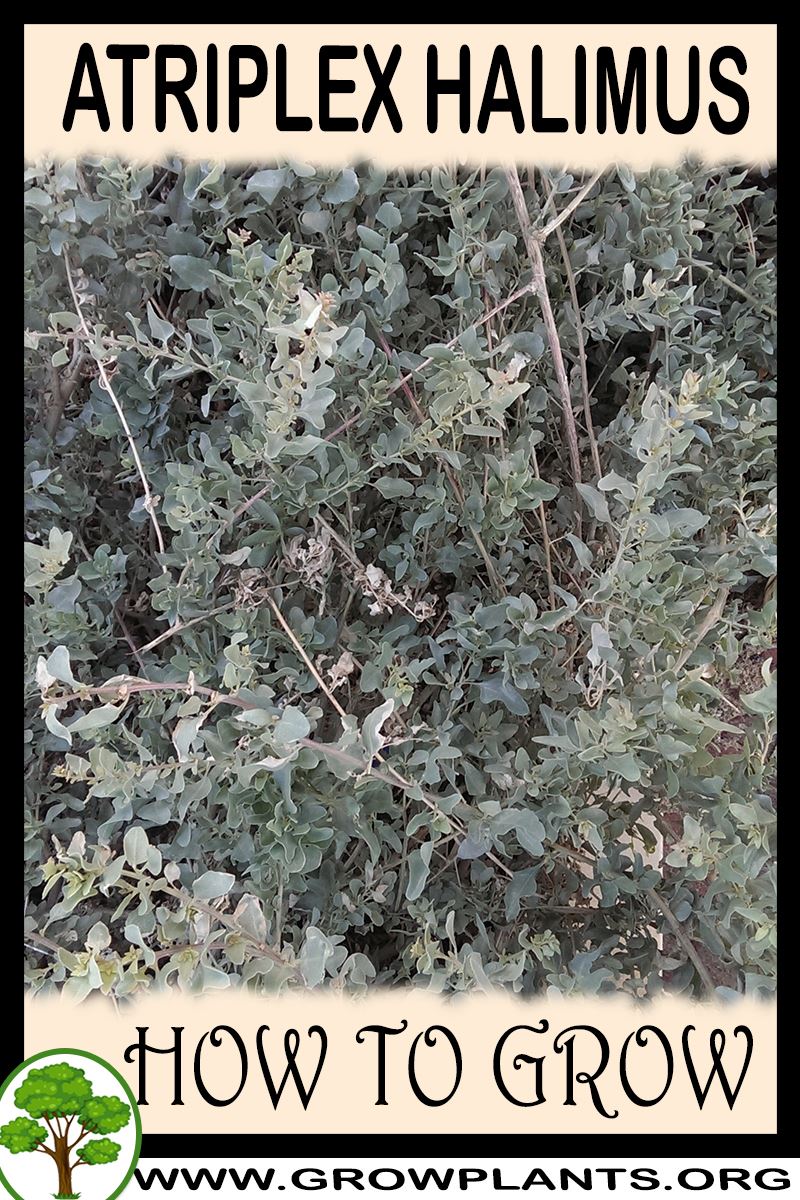
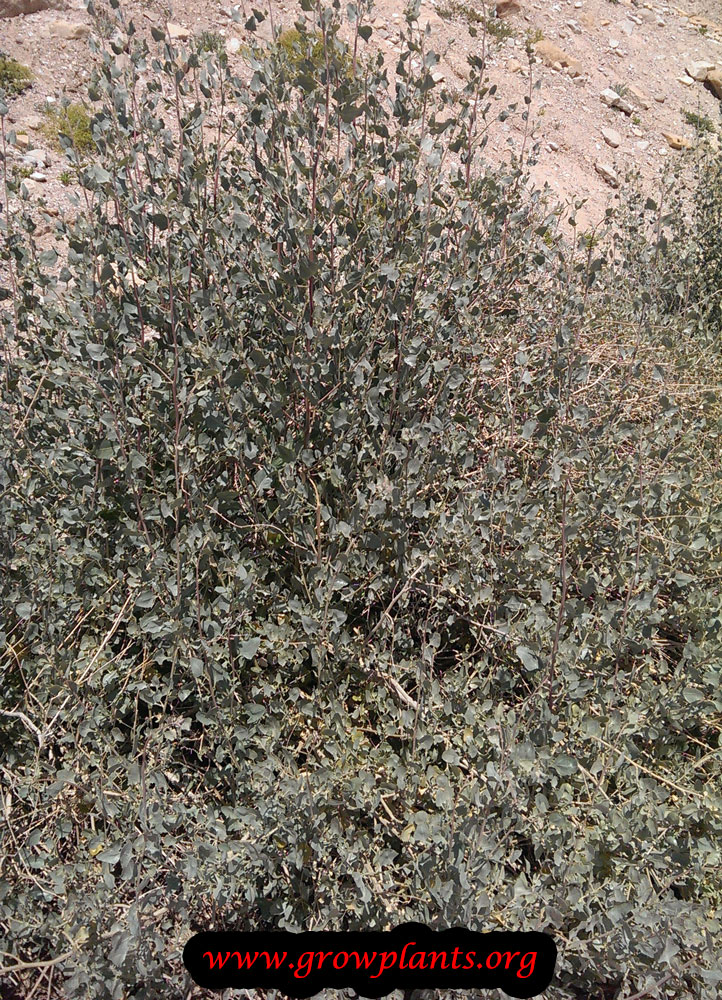
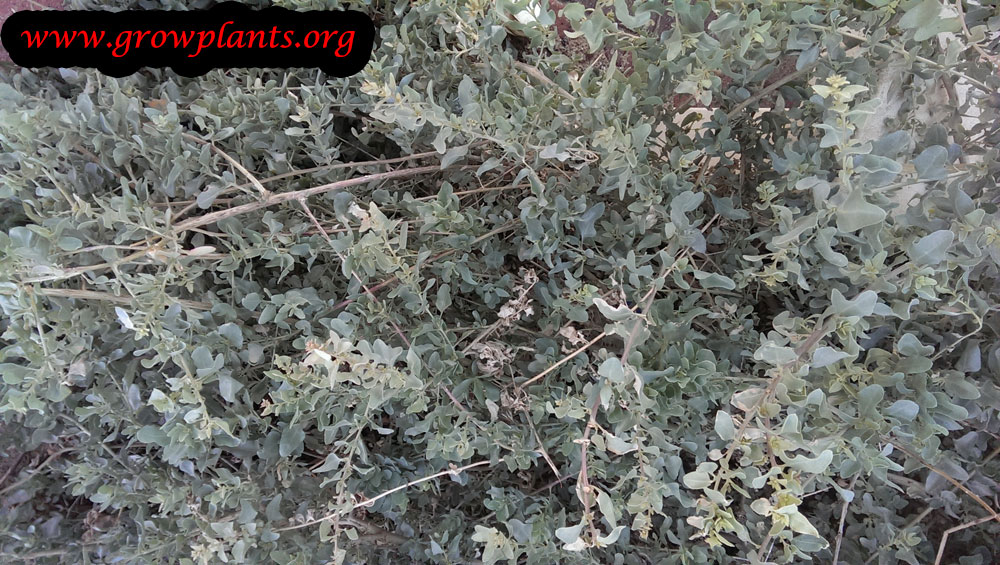
Overview: Mediterranean saltbush is an evergreen shrub growing 1-3 m (40-120 in) tall with silvery salty foliage. This drought- and salt-tolerant perennial is grown for its edible leaves, as an ornamental hedge, and for medicinal use.
Quick Specifications
| Specification | Attribute |
|---|---|
| Plant Type / Life Cycle | Perennial (evergreen shrub) |
| Foliage Type | Evergreen |
| Mature Size | 1-3 m tall (40-120 in) |
| Growth Rate | Moderate |
| Root System | Deep taproot (halophyte) |
| Toxicity | Non-toxic / edible (salty leaves) |
| Hardiness | USDA zones 7-11 |
Growth Form & Structure
- Height & Spread: 1-3 m (40-120 in) tall, forming a dense shrub; can be grown in containers and clips into a hedge.
- Growth Habit & Form: Bushy evergreen shrub with silvery-grey foliage; salt- and drought-tolerant, and can be invasive.
- Lifespan & Maturity: Long-lived evergreen perennial; leaves harvested year-round once established.
Anatomy & Physical Features
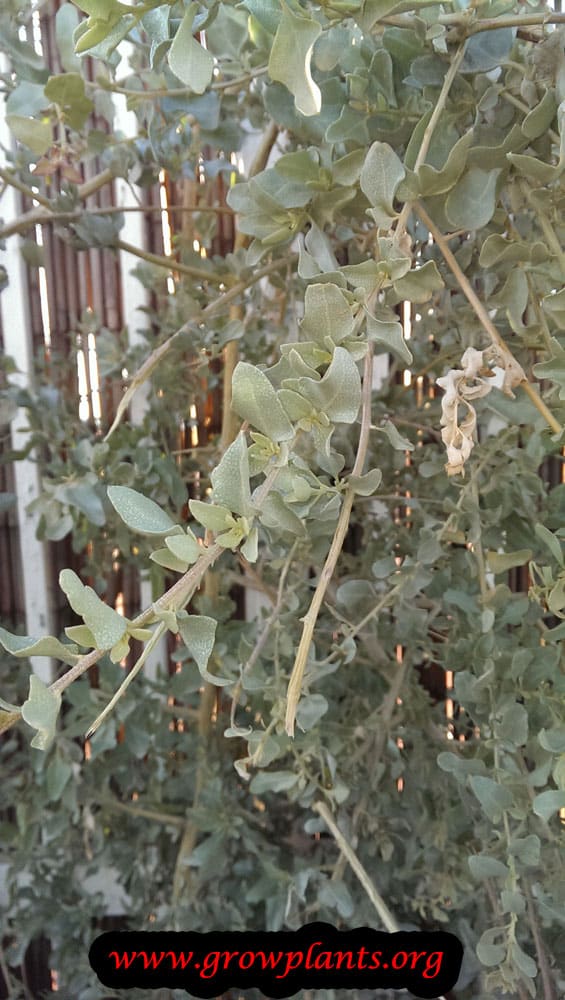
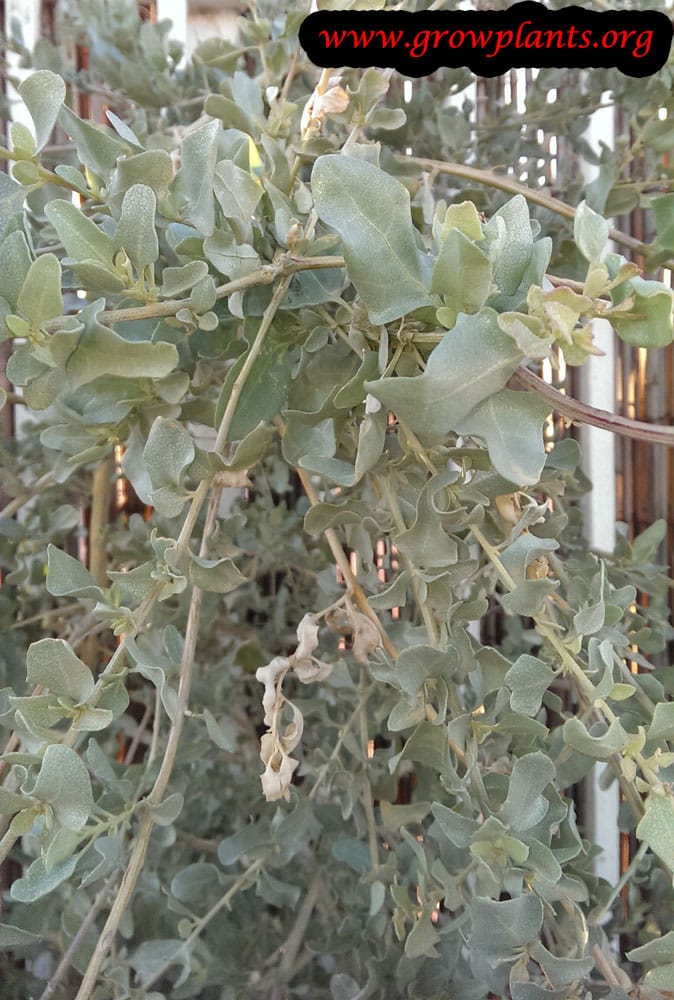
- Leaves & Foliage: Green-grey ovate leaves with a salty taste, turning purple near the flowers; edible.
- Flower Characteristics: Small green flowers at the stem tips, with nearby leaves turning purple (see Bloom guide).
Primary Uses & Landscape Value
- Edible Uses: Salty leaves eaten raw, cooked, dried or in pastry, and used as a herb, spice or salt substitute.
- Functional & Ornamental Roles: Ornamental and hedge shrub, salt-tolerant windbreak, and medicinal plant; drought tolerant.
Care Guide: Planting, Soil & Watering
Overview: Mediterranean saltbush is a tough, drought- and salt-tolerant evergreen shrub (hardiness zone 7–11) for full sun. It thrives in poor, well-drained soil – including saline and alkaline ground – and needs little water.
Quick Care Requirements
| Requirement | Ideal Condition |
|---|---|
| Planting Season | Year-round in mild, frost-free areas (avoid hard frost while young) |
| Growth Rate | Moderate |
| Soil Type | Poor, well-drained; tolerates saline and alkaline soils |
| Water Need | Low – drought tolerant |
Planting & Establishment
- Best Planting Season: Plant year-round in a frost-free climate; it survives light frost but protect young plants from hard freezes.
- How to Plant:
- Hole Preparation: Dig a hole about the width of the root ball in free-draining ground.
- Soil Amendments: It thrives in lean, well-drained soil and needs no rich amendment; prioritise drainage.
- Planting Depth: Set the shrub at its original depth with the root collar at the surface.
- Growth Speed & Expectations: Growth is moderate, reaching 1–3 m; it can be invasive, so site it thoughtfully.
Soil, Watering & Drainage Care
- Soil Mix & Drainage Needs: Free-draining soil is essential; as a halophyte it tolerates salty, alkaline and poor ground but rots in wet, heavy soil. It grows in containers with good drainage.
- Watering Schedule & Technique:
- Young / Newly Planted: Water young plants occasionally to establish them, without keeping the soil wet.
- Established: Once established it is highly drought tolerant, needing only a small amount of water.
- Seasonal Adjustments: Water lightly in prolonged summer drought and withhold in wet, cool periods.
Climate, Light & Hardiness
Atriplex halimus (Mediterranean saltbush) is a tough, drought- and salt-tolerant hedge shrub suited to Mediterranean, desert, subtropical, and temperate climates in full sun to full shade, and it also grows well as a houseplant with enough light. It needs essentially frost-free conditions, though established plants can survive light frost.
Quick Climate Specifications
| Climate Zones | Mediterranean, Desert, Subtropical, Temperate |
|---|---|
| USDA Hardiness Zones | 7–11 |
| Frost Tolerance | Low |
| Light Conditions | Full Sun / Half Shade / Full Shade (some forms tolerate shade but need at least some light) |
| Salt / Coastal Tolerance | High |
Sunlight & Light Exposure
Optimal Light Setup
Adapts to a wide light range from full sun to full shade, though some light is needed even in shadier spots for healthy growth.
Direct Sun Requirement
Tolerates direct sun well; not strictly required, given its shade tolerance.
Temperature Extremes & Hardiness
USDA Hardiness & Regional Limits
Suited to zones 7–11; cold limits outdoor cultivation outside this range, and in cooler climates it can instead be grown as a houseplant with adequate light.
Cold Damage & Winter Protection
Needs essentially frost-free conditions for best growth, though an established plant can survive light frost.
Frost Sensitivity
Sensitive to hard or prolonged frost; only brief, light frost is tolerated by mature plants.
Extreme Heat Tolerance
Very heat and drought tolerant, well suited to hot Mediterranean and desert summers.
Wind, Humidity & Microclimate
Wind Tolerance
As a species long used for coastal and exposed hedging, it tolerates windy sites well.
Coastal / Salt Tolerance
Highly salt tolerant, handling both salt spray and saline soils, which is why it is a classic coastal and seaside hedge plant; its edible leaves even carry a naturally salty taste.
Growing in Pots, Balconies & Indoors
Mediterranean saltbush (Atriplex halimus) is a tough, silver-leaved, salt- and drought-tolerant shrub. The grower says it can be kept indoors only with lots of light, so a very bright window is the realistic indoor home; it truly shines as a sun-loving balcony or patio plant.
Quick Details
- Container Size: Keep it in scale – start a pot 50-90% larger than the root ball and pot up in stages
- Indoor Suitability: Only with very strong light – a bright, sunny window; it won’t flower indoors
- Best Spot: Full sun (tolerates some shade)
- Soil & Drainage: Sandy, gritty, very free-draining; thrives in poor, salty soils
- Watering in Pots: Sparing – highly drought-tolerant; let the mix dry
Indoors & On the Windowsill
- Only in a very bright spot: The grower says it can live indoors but only with lots of light, and it won’t bloom there – a full-sun coastal shrub really wants a sunny window or, better, a balcony. With enough direct light a young plant can be kept on a bright sill.
- Overwintering: In cold climates a pot lets you shelter this tender, warm-climate shrub over winter in a bright, frost-free spot.
On a Balcony or Patio
- Light, wind & salt: Ideal for a hot, sunny, exposed balcony – it shrugs off heat, wind and salt spray. Pots still dry fast in that exposure, so check the mix, though water sparingly.
- Practicalities: A stable pot and a free-draining base keep this shrub steady and its roots healthy.
Choosing the Pot, Soil & Long-Term Care
- Pot & drainage: A pot with strong drainage holes; if you use a saucer, don’t leave it full of water. Terracotta breathes and dries fast, which suits this drought-lover.
- Potting mix: Sandy or gritty, very free-draining mix; it thrives in poor, salty soils, so keep it lean with sand and a little lava grit.
- Feeding: Feed only lightly – adapted to poor soils, it needs little; a dilute feed once or twice in the growing season is plenty.
- Repotting: Refresh part of the soil and prune the roots and top when it fills the pot, to keep it in scale.
Fertilizing & Feeding
A light feeder: this drought-tolerant Mediterranean saltbush is grown for its salty, edible gray-green leaves and as a tough hedge plant, and it thrives on lean native-shrub feeding rather than rich, frequent fertilizing.
Quick Fertilizing Specs
| Feeding Level | Light feeder |
|---|---|
| Main Nutrient Priority | Balanced feeding with nitrogen kept modest; this drought-tolerant shrub is adapted to lean soils |
| Best Feeding Period | During the establishment period and light spring feeding once established |
| Organic Options | Compost or well-rotted organic matter worked into the well-drained planting site |
| Reduce/Stop Feeding | Ease off once the shrub is established; mature plants generally need little to no supplemental feeding |
| Micronutrients | Rarely an issue for this tough, adaptable shrub; correct only a diagnosed deficiency |
| Soil pH | Tolerates a wide range of well-drained soils |
Feeding by Growth Stage
Establishment after planting
Root a newly planted Atriplex halimus into its well-drained site while it is still building the deep root system that gives it drought tolerance.
| Nutrient direction | A light, balanced feeding supports root establishment without forcing soft top growth. |
|---|---|
| Timing | At planting, which can be done at any time of year in mild climates. |
| Frequency | A single light feeding at planting is usually enough while roots establish. |
| Fertilizer types | A balanced, complete fertilizer used at a light rate, Compost or organic matter mixed into the planting site |
| Precautions | This shrub can be invasive once established, so avoid heavy feeding, which only encourages faster, less manageable spread. |
Established maintenance growth
Maintain healthy, harvestable gray-green foliage and a dense, tidy hedge form on an already well-adapted shrub.
| Nutrient direction | Feeding is rarely necessary; when growth looks weak, a light, balanced feeding is enough to restore vigor. |
|---|---|
| Timing | Spring, if feeding is needed at all, once the shrub is well established. |
| Frequency | Established plants generally need only an occasional light feeding, if any. |
| Fertilizer types | A balanced, complete fertilizer used sparingly, only if growth looks weak, Compost as an occasional top-dressing |
| Precautions | Overfeeding this naturally lean-adapted, drought-tolerant shrub can push soft growth that is more prone to disease and less drought hardy. |
Nutrient Deficiency Signs & Corrections
Leaves turn a duller, more uniform gray or pale yellow-green and new growth is sparse.
| Possible causes | very low available soil nitrogen, extremely thin, sandy, or low-organic-matter soil, nutrient leaching after heavy irrigation or rain |
|---|---|
| Appears first on | older, lower leaves |
| What to check | recent feeding history, soil organic matter level, irrigation and drainage pattern |
| Possible correction | Work in compost or apply a balanced complete fertilizer at a light rate, then watch new growth for improvement. |
Wilting, leaf drop, or root rot symptoms despite this shrub’s normal drought tolerance.
| Possible causes | poorly drained soil holding excess water around the roots, overwatering a shrub adapted to small amounts of water, compacted or heavy soil restricting root oxygen |
|---|---|
| Appears first on | whole-plant wilting with root and lower-stem softening |
| What to check | soil drainage and recent watering or irrigation frequency, root color and firmness just below the soil line, whether the site is naturally prone to standing water |
| Possible correction | Improve drainage and reduce watering; avoid fertilizing until active new growth confirms the plant has recovered. |
New leaves turn yellow between veins that stay green.
| Possible causes | high soil pH tying up available iron, waterlogged or compacted soil limiting root uptake, naturally alkaline or calcareous soil |
|---|---|
| Appears first on | newest growth at the shoot tips |
| What to check | soil pH and drainage, recent overwatering or compaction, whether the same pattern shows on nearby plants |
| Possible correction | Improve drainage, avoid overwatering, and apply a chelated iron product per its label if the pattern persists. |
Pruning, Training & Seasonal Maintenance
Atriplex halimus is a fast-recovering, salt- and drought-tolerant evergreen shrub grown mainly as an ornamental hedge or screen, and its own facts list pruning season as all year with the purpose simply ‘for design’ – it is not being shaped around a bloom or fruit cycle. Because the source flags this species as difficult due to invasiveness, controlling self-seeding by removing spent flower/seed heads is a genuine, recurring part of its maintenance alongside routine hedge shaping.
Quick Pruning & Maintenance Specs
| Pruning Tolerance | High |
| Primary Pruning Window | Flexible, all year per source |
| Typical Frequency | 2–3 shaping passes per year for hedges, plus spot deadheading |
| Main Objective | Density/shape and size control; limiting self-seeding |
| Young Plant Priority | Formative pinching low down to build dense branching from the base |
| Mature Plant Priority | Maintain the hedge line; periodically thin the interior to prevent a hollow shell |
| Best Tool Type | Hedge shears for formal hedge lines; bypass secateurs for thinning cuts |
| Avoid Heavy Pruning During | Extreme summer heat/drought stress or immediately before a hard frost |
Pruning by Plant Age & Size
Newly Established
Remove only damaged growth in the first season; let the plant root in before shaping.
Young / Formative
Pinch or tip-prune low on the plant early on to force branching from near ground level – important for a hedge plant, since skipping this step leads to a bare, leggy base later.
Mature / Established
Regular shearing to hold the hedge form, combined with occasional deeper thinning cuts into the interior so repeated shallow shearing does not hollow out the centre.
Seasonal Pruning Schedule
| Stage | Objective | Remove | Do NOT remove | Expected response |
| Ongoing / Summer canopy management | Maintain hedge form and density | New extension growth beyond the desired line; congested interior growth | All foliage on one face at once | Dense, even regrowth; repeated over-shearing without thinning leads to a hollow shell |
| Post-bloom (after winter/spring flowering) | Limit self-seeding, a flagged difficulty for this species | Spent flower/seed clusters | Healthy leafy growth | Reduces unwanted volunteer seedlings nearby |
Structural Pruning & Training
- Canopy density: repeated shallow shearing alone tends to build a dense outer shell with a bare, dead centre – work in occasional thinning cuts back to a lateral to keep the interior alive.
- Height & spread control is routine given its fast/medium growth and year-round pruning tolerance.
Special Growth to Remove
- Spent flower/seed heads from the winter–spring bloom, removed before seed drop to control this species’ documented self-seeding/invasive tendency.
- Dead interior growth exposed by repeated shearing.
Container & Small-Space Pruning
Grows well in containers; expect more frequent light trims than an in-ground hedge specimen to hold a compact size, with less need for the heavier interior-thinning cuts that a full-size hedge eventually requires.
Tools
- Hedge shears for formal hedge shaping.
- Bypass secateurs for structural thinning and deadheading spent flower clusters.
Tool Hygiene & Disease Risk
Routine – clean, sharp tools are sufficient; no specific disease-transmission risk is noted for this species.
Cut Placement & Technique
Shear to a consistent hedge line but vary the depth of cut slightly over time to avoid building a dense outer shell; make thinning cuts back to a main stem or lateral branch, not indiscriminately into the shell, when renewing the interior.
Heavy Pruning & Rejuvenation
Tolerated well – an overgrown or leggy specimen can be cut back hard given its year-round pruning tolerance and fast/medium regrowth; avoid doing this during extreme heat.
Post-Pruning Care
After a hard cutback, avoid overwatering – this is a drought-tolerant species and excess water is a bigger risk than underwatering; watch newly exposed interior stems for sunscald until regrowth provides cover again.
Common Pruning Mistakes
- Shearing only the outer surface repeatedly, producing a hollow, bare-centred shrub.
- Skipping the formative low pinching, leading to a bare leggy base on a hedge specimen.
- Leaving spent flowers to set seed, adding to this species’ self-seeding/invasive tendency.
- Hard-pruning during extreme heat stress.
When NOT to Prune
Avoid major cutback during extreme summer heat or drought stress, and avoid hard pruning immediately before an expected hard frost.
Pruning Troubleshooting
| Problem | Possible Cause | What to Check | Corrective Action |
| Bare, leggy base | Hedge sheared only at the top, never pinched low when young | Whether branching starts near ground level | Cut back harder low on the plant to force basal breaks |
| Hollow or dead centre | Repeated shallow shearing with no interior thinning | Presence of deadwood inside the canopy | Make thinning cuts to open the canopy and let light reach the interior |
| Volunteer seedlings nearby | Flowers left to set and drop seed | Whether spent flower/seed heads remain on the plant | Deadhead promptly after bloom, before seed disperses |
Recommended Tools (by task)
- hedge_shears – routine formal hedge/screen shaping.
- bypass_secateurs – interior thinning cuts and deadheading spent flower clusters.
Propagation Guide
Atriplex halimus (Mediterranean saltbush) is easiest to start from seed, which it produces freely, though semi-hardwood stem cuttings are a reliable alternative for reproducing a specific plant. Neither grafting nor any special technique is required, and overall propagation difficulty is easy.
Quick Propagation Specs
| Best Propagation Method | Seed |
| Alternative Methods | Semi-hardwood stem cuttings |
| Propagation Difficulty | Easy |
| Seed True-to-Type | Usually true-to-type (species, not a named cultivar) |
| Vegetative True-to-Type | Yes |
| Best Propagation Season | Warm season for cuttings; site lists planting season as all year in frost-free climates |
| Seed Sowing Depth | Shallow (small seed) |
Growing from Seed
Sowing Season
The site lists the planting season as all year; sowing is most successful in the warmer months.
Sowing Depth & Orientation
Sow shallow; the seed is small.
Germination Conditions
Warm temperatures and light, well-drained soil; the species self-sows readily where established.
Stem Cuttings
Cutting Type
Semi-hardwood stem cuttings.
Best Timing
Warm season, with high humidity around the cuttings.
Rooting Setup
Root in a moist, free-draining medium (e.g. a peat-based mix); high humidity improves success.
Rooting Hormone
Optional; can improve and speed rooting.
Bloom & Flower Guide
Quick Details
- Bloom Season: Winter to spring
- Flower Appearance: Tiny, inconspicuous greenish flowers clustered at the ends of the stems
- Edibility: Grown for its edible silvery leaves and as a hedge; the flowers themselves are insignificant and not used
Detailed Blooming Overview
Mediterranean saltbush is a foliage plant first and foremost, and its bloom is a quiet affair: small greenish flowers gathered toward the stem tips, easily overlooked against the silvery leaves. Like others in its family, it is wind-pollinated rather than reliant on insects, so the flowers have no need to be showy.
Flower Characteristics
- Very small, greenish flowers at the tips of the stems.
- Wind-pollinated, so plain rather than colorful.
Bloom Care & Thinning
- Managing the bloom: Little is needed; the plant is usually clipped for foliage or as a hedge regardless of its flowers.
Fruit & Uses
The grey-green, ovate leaves of Atriplex halimus (Mediterranean saltbush) are the edible part — naturally salty in flavour, they are used fresh or cooked as a leafy vegetable and natural salt substitute, and can also be dried for later use.
Quick Edible Specs
| Edible Parts | Leaves |
|---|---|
| Main Use(s) | Culinary vegetable, natural salt substitute/seasoning, herb/spice, pastry ingredient |
| Eaten Raw or Cooked | Both — raw or cooked |
| Preparation Required | None beyond rinsing; drying optional for storage |
| Harvest Season | All year |
| Time to First Harvest | Can be harvested freely once the shrub is established |
| Storage | Dry leaves for longer-term storage |
| Safety/Toxicity Caveat | Naturally high in sodium — use in place of added salt rather than alongside it; like other Amaranthaceae greens it contains some oxalates, so it is best enjoyed in normal culinary portions rather than as a daily bulk vegetable |
Leaves & Greens
Leaves are ovate, grey-green (turning purplish near the flowers), with a naturally salty flavour that comes from the plant’s tolerance of saline, coastal, and desert soils. Once the shrub is established, leaves can be picked freely year-round. They are eaten raw in salads, cooked as a leafy vegetable, dried and crumbled as a herb or spice, used as a natural salt seasoning, or included in pastries and savoury baking.
Preparation, Uses & Safety
Because the leaves are naturally salty, they are traditionally used to season other dishes rather than eaten as a large plain side vegetable — reduce or omit added salt when cooking with them. As with other saltbush-family greens, moderate portions are best; no cooking is required to make them safe to eat.
Pests, Diseases & Troubleshooting
Overview: Mediterranean saltbush (Atriplex halimus) is an exceptionally tough, salt- and drought-tolerant shrub that is largely trouble-free, its one real weakness being root rot in wet, poorly drained soil. Saltbush is an exceptionally tough, salt- and drought-tolerant shrub (a chenopod, related to spinach and beet) that is largely trouble-free; its only real vulnerability is ironic for such a xeric plant – root rot in wet, poorly drained soil. The insects that appear are the usual chenopod feeders (aphids, flea beetles, leafminers, loopers), rarely at damaging levels. Grow it lean and dry in full sun with sharp drainage and it needs almost no intervention.
Quick Troubleshooting Overview
| Issue / Pest | Main Symptom | Primary Solution |
|---|---|---|
| Root rot (overwatering) | Wilting, yellowing, dieback in wet soil | Sharp drainage, water sparingly – the main risk for this xeric plant |
| Aphids | Sticky, distorted new shoots | Hose off, encourage predators, insecticidal soap if needed |
| Flea beetles / leafminers | Shot-holes or pale mined trails in leaves | Tolerate light damage; row cover on seedlings, neem if heavy |
| Loopers / caterpillars | Chewed leaves, frass | Handpick, Bt (Bacillus thuringiensis) if severe |
| Downy mildew / leaf spot | Pale patches or spots on leaves in humid weather | Improve airflow, avoid overhead water, remove affected leaves |
Common Pests & Management
- Aphids (Aphididae):
- Symptoms: Clusters of soft green or black insects on tender new shoots, with sticky honeydew and slightly curled, distorted growth.
- Prevention & Control: Dislodge with a water jet, encourage ladybirds, lacewings and hoverflies, and treat persistent clusters with insecticidal soap; usually a minor issue on this tough shrub.
- Flea beetles (Chrysomelidae (Phyllotreta / Psylliodes)):
- Symptoms: Tiny beetles that jump when disturbed and pepper leaves with small round shot-holes, most damaging to seedlings.
- Prevention & Control: Protect seedlings with floating row cover, keep them vigorous, and treat serious outbreaks with neem or a kaolin clay barrier; established shrubs shrug off the damage.
- Leafminers (Pegomya spp. (beet/chenopod leafminer)):
- Symptoms: Pale, winding or blotchy mined trails and blisters inside the leaves where larvae tunnel between the surfaces.
- Prevention & Control: Remove and destroy mined leaves, encourage parasitic wasps, use row cover on young plants, and avoid broad-spectrum sprays that kill the miners’ natural enemies.
- Loopers & caterpillars (Noctuidae / various):
- Symptoms: Chewed, ragged leaves and frass from various caterpillars feeding on the foliage.
- Prevention & Control: Handpick where practical, encourage birds and predators, and treat heavy infestations with Bt (Bacillus thuringiensis), which is selective and pollinator-safe.
- Two-spotted spider mite (Tetranychus urticae):
- Symptoms: Fine stippling and a dull, dusty cast on foliage in hot, dry, dusty conditions.
- Prevention & Control: Rinse foliage to remove dust and mites, and apply horticultural oil or insecticidal soap only for persistent infestations.
- Beet leafhopper (Circulifer tenellus):
- Symptoms: Small pale wedge-shaped insects; feeding is minor, but in some regions they transmit curly top virus to chenopods.
- Prevention & Control: Manage weeds that host them, encourage predators, and use row cover where curly top virus is a known local problem.
Diseases & Fungal Issues
- Downy mildew (Peronospora spp.):
- Symptoms: Pale yellow patches on the upper leaf surface with greyish-purple downy growth beneath, in cool, humid, wet conditions.
- Treatment & Management: Improve airflow and spacing, avoid overhead watering, remove affected leaves, and – rarely needed on this tough plant – apply a copper fungicide if it spreads.
- Leaf spot (Cercospora spp.):
- Symptoms: Brown to grey spots, sometimes with darker margins, on the leaves in prolonged wet weather.
- Treatment & Management: Remove affected leaves and debris, improve air movement, avoid wetting foliage, and treat with copper only if severe.
- Root rot (Phytophthora / Pythium spp.):
- Symptoms: Wilting, yellowing and dieback with dark, decayed roots – the main disease risk, caused by wet, heavy, poorly drained or overwatered soil, which this drought-adapted plant cannot tolerate.
- Treatment & Management: Plant in sharply drained soil, water sparingly, never waterlog, improve drainage on heavy ground, and remove badly affected plants; drainage is far more important than any spray.
Growing Difficulties & Abiotic Problems
- Root rot from wet feet:
- Cause & Symptoms: The dominant problem: this xeric halophyte rots in wet, poorly drained or overwatered soil, wilting and dying back.
- Correction Strategy: Grow in full sun with very sharp drainage, water sparingly once established, and improve heavy soils with grit rather than watering more.
- Chlorosis in waterlogged soil:
- Cause & Symptoms: Yellowing, weak growth where roots are suffocated in dense, wet ground.
- Correction Strategy: Improve drainage and aeration; the plant tolerates salt and drought well but not stagnant, airless soil.
- Legginess in shade:
- Cause & Symptoms: Sparse, open, floppy growth when grown with too little light.
- Correction Strategy: Grow in full sun for dense, sturdy growth, and trim to shape; saltbush responds well to pruning.
What Helps – Products & Tools
Saltbush is close to input-free; the main ‘tool’ is good drainage. For the rare pest, insecticidal soap and neem cover aphids, flea beetles and mites; Bt handles caterpillars; row cover and kaolin clay protect seedlings from flea beetles and leafminers. Fungicides (copper) are seldom needed. Manage this plant with siting and restraint rather than sprays.