
Plant Profile & Key Characteristics
Overview: Tree wormwood (Artemisia arborescens) is an aromatic, evergreen perennial subshrub reaching 50-120 cm (20-48 in), grown for its fragrant, finely divided silvery-grey foliage. It is used as an ornamental and aromatic herb, its leaves valued for flavouring, herbal infusions and traditional uses.
Quick Specifications
| Specification | Attribute |
|---|---|
| Plant Type / Life Cycle | Perennial (subshrub) |
| Foliage Type | Evergreen (semi-evergreen in cold winters) |
| Mature Size | 50-120 cm (20-48 in) |
| Growth Rate | Moderate |
| Toxicity | Strongly aromatic and used medicinally rather than as food; contains bitter volatile oils, so use only in small amounts |
| Hardiness | USDA 5-11 |
Growth Form & Structure
- Height & Spread: 50-120 cm (20-48 in); suited to borders and to containers, and can be grown indoors in a bright, airy spot.
- Growth Habit & Form: Upright, branching aromatic subshrub with dense, fine foliage.
- Lifespan & Maturity: Perennial reaching mature size within a season or two; cut back in autumn to keep it compact and bushy.
Anatomy & Physical Features
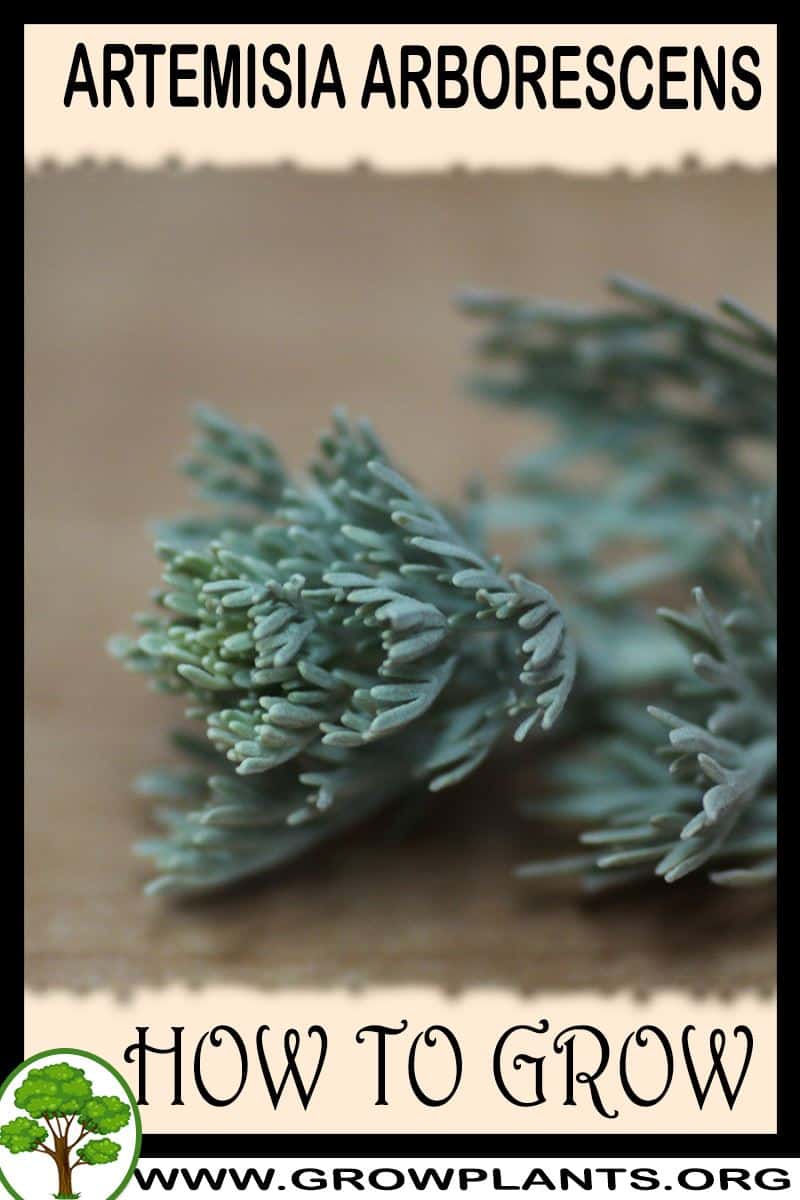
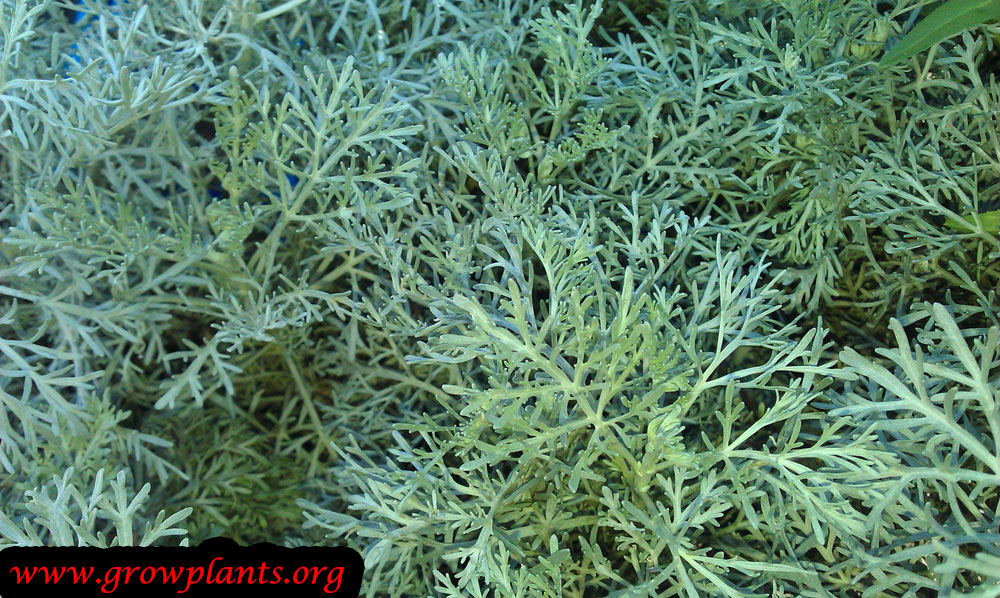
- Leaves & Foliage: Soft, feathery, deeply cut silvery green-grey leaves, strongly aromatic.
- Flower Characteristics: Small yellow flower heads in rounded clusters at the branch tips in summer.
Primary Uses & Landscape Value
- Functional & Ornamental Roles: Silvery aromatic foliage plant for ornamental and Mediterranean-style borders and containers; leaves used for herbal infusions, fragrance and traditional medicine (in small amounts). Best kept away from other plants (allelopathic).
Care Guide: Planting, Soil & Watering
Overview: Artemisia is an aromatic Mediterranean sub-shrub that thrives in full sun and light, sharply drained soil, and is markedly drought-tolerant once established. It prefers lean, dry ground to rich or wet soil, which can rot the roots.
Quick Care Requirements
| Requirement | Ideal Condition |
|---|---|
| Planting Season | Warm season — spring through autumn, once frost has passed |
| Growth Rate | Moderate |
| Soil Type | Light, well-draining, average-to-poor soil; dislikes wet, heavy ground |
| Water Need | Low to Moderate — drought-tolerant once established; let the soil dry between waterings |
Planting & Establishment
- Best Planting Season: Plant in the warm season, from spring through autumn once frost has passed. Give it room away from other plants — its foliage and roots are allelopathic and can inhibit close neighbours.
- How to Plant:
- Hole Preparation: Dig a hole slightly larger than the root ball in a sunny, open, free-draining spot.
- Soil Amendments: Little enrichment is needed — on heavy soil work in grit or coarse sand to sharpen drainage rather than adding rich compost.
- Planting Depth: Set the plant with its root collar at soil level; do not bury the stem.
- Growth Speed & Expectations: Moderate — it forms an aromatic, bushy clump about 50-120 cm, 20-48 inches, with silvery foliage that fills out over the season.
Soil, Watering & Drainage Care
- Soil Mix & Drainage Needs: Give it light, sharply drained soil and avoid heavy, wet ground, which invites root rot. In containers use a free-draining, gritty mix with ample drainage holes.
- Watering Schedule & Technique:
- Young / Newly Planted: Water to settle it in and keep the soil lightly moist while roots establish.
- Established: Water sparingly and deeply, letting the soil dry out between waterings; established plants tolerate drought well.
- Seasonal Adjustments: Water very little in winter and wet spells; give a little extra only in prolonged heat, always avoiding soggy soil.
Climate, Light & Hardiness
Artemisia arborescens (tree wormwood) grows in Mediterranean, subtropical, and temperate climates, adapting to full sun, half shade, or full shade, and it also does well as a houseplant. It is best sited in a frost-free spot for the healthiest growth, though its broad hardiness range shows it can tolerate colder winters than many silver-leaved Mediterranean shrubs.
Quick Climate Specifications
| Climate Zones | Mediterranean, Subtropical, Temperate |
|---|---|
| USDA Hardiness Zones | 5–11 |
| Frost Tolerance | Moderate |
| Light Conditions | Full Sun / Half Shade / Full Shade |
Sunlight & Light Exposure
Optimal Light Setup
Adapts to a wide range of light, from full sun to full shade.
Direct Sun Requirement
Tolerates direct sun well but does not strictly require it, since the plant also grows in shade.
Temperature Extremes & Hardiness
USDA Hardiness & Regional Limits
Hardy across zones 5–11, a broad range; growth and form are best where winters stay essentially frost-free, though the plant tolerates real cold within its hardiness zones.
Cold Damage & Winter Protection
Prefers a frost-free site for its best, most compact evergreen form; in colder parts of its range some dieback of the softer growth can occur, with regrowth from the woody base.
Frost Sensitivity
Tolerates frost within its hardiness range, though it performs best where frost is infrequent or absent.
Extreme Heat Tolerance
Handles warm Mediterranean and subtropical summers well.
Growing in Pots, Balconies & Indoors
Tree wormwood (Artemisia arborescens) is an aromatic, silver-leaved shrub the grower says can be kept indoors with enough light. It’s a sun-lover, so give it your brightest window; it excels in a balcony or patio pot.
Quick Details
- Container Size: 10-20 L (about 3-5 gal) for this shrubby plant
- Indoor Suitability: Indoor-capable with strong light – give it the brightest window
- Best Spot: Full sun to part shade (best in full sun)
- Soil & Drainage: Light, free-draining mix; dislikes heavy, wet soil
- Watering in Pots: Light – drought-tolerant once established; let the mix dry
Indoors & On the Windowsill
- Indoors with strong light: The grower says it can be kept indoors, but as a sun-loving shrub it needs the brightest window you have; in weak light it grows lax and loses its silvery good looks.
- Overwintering: A tender, warm-climate shrub – in cold regions a pot lets you bring it into a bright, frost-free room over winter.
On a Balcony or Patio
- Light & wind: Give it a sunny, open spot; the aromatic silvery foliage takes heat and wind well. Pots dry fast against warm walls, so check moisture, though it prefers drier feet.
- Practicalities: Make sure water drains away freely rather than pooling; a stable pot keeps taller plants from blowing over.
Choosing the Pot, Soil & Long-Term Care
- Pot & drainage: A pot with strong drainage holes; skip a standing-water saucer to avoid root rot. Terracotta breathes and dries faster, which suits these drought-tolerant plants.
- Potting mix: A light, free-draining potting mix with some grit or perlite; they dislike heavy, wet soil.
- Feeding: Feed lightly through the growing season – a dilute general feed now and then, as nutrients leach from pots faster than open ground.
- Repotting: Refresh the mix and pot up every year or two; divide or root-prune to keep clumps vigorous.
Fertilizing & Feeding
A light feeder: this frost-tender, silvery-leaved Tree Wormwood is grown for its fragrant, edible, and medicinal foliage, and stays healthiest on lean feeding that keeps growth compact rather than soft and frost-sensitive.
Quick Fertilizing Specs
| Feeding Level | Light feeder |
|---|---|
| Main Nutrient Priority | Balanced feeding with nitrogen kept low, favoring firm, aromatic growth over soft shoots that frost can damage |
| Best Feeding Period | Spring through summer active growth, in frost-free conditions |
| Organic Options | Compost or well-rotted organic matter worked into the well-drained planting site |
| Reduce/Stop Feeding | Ease off well before cool weather, so growth has time to firm up ahead of any frost risk |
| Micronutrients | Rarely an issue for this undemanding shrub; correct only a diagnosed deficiency |
| Soil pH | Tolerates a range but prefers well-drained soil that is not consistently wet |
Feeding by Growth Stage
Establishment after planting
Root a newly planted Artemisia arborescens into well-drained soil without forcing soft, frost-tender growth.
| Nutrient direction | A light, balanced feeding supports root establishment; there is no benefit to pushing rapid growth this early. |
|---|---|
| Timing | At planting during the frost-free part of the season, in spring, summer, or autumn. |
| Frequency | A single light feeding at planting is usually enough while roots establish. |
| Fertilizer types | A balanced, complete fertilizer used at a light rate, Compost or organic matter mixed into the planting site |
| Precautions | Plant this shrub away from other plants, as it can suppress nearby growth; keep feeding light so new growth firms up well. |
Active warm-season growth
Maintain the silvery, aromatic foliage prized for its fragrance and culinary and medicinal use, without producing soft growth that frost can damage.
| Nutrient direction | Keep nitrogen low; a lean, balanced approach favors firm, aromatic growth over soft, rapid stems. |
|---|---|
| Timing | Through the frost-free spring-to-summer active growing season. |
| Frequency | This shrub rarely needs feeding once established; an occasional light feeding is enough for container-grown plants. |
| Fertilizer types | A balanced, complete fertilizer used sparingly, Compost top-dressed instead of frequent feeding |
| Precautions | Overfeeding produces soft, floppy stems that are more vulnerable to cold injury and dilutes the plant’s fragrance. |
Cool-season slowdown and frost protection
Carry the plant through cooler weather where frost is a risk, without encouraging tender new growth.
| Nutrient direction | None – withhold fertilizer while growth is slow and frost protection is needed. |
|---|---|
| Timing | Cool weather and any period where frost protection is required. |
| Frequency | No feeding during this slowdown. |
| Fertilizer types | No feeding at this stage; do not fertilize while the plant is protected from frost and not in active growth. |
| Precautions | Do not fertilize until frost risk has passed and active growth clearly resumes; feeding now only creates tender growth that cold can damage. |
Nutrient Deficiency Signs & Corrections
Older leaves fade to a duller, more uniform gray-green or yellow and new growth slows.
| Possible causes | low available soil nitrogen, nutrient leaching after heavy rain or watering, thin, low-organic-matter soil |
|---|---|
| Appears first on | older, lower leaves |
| What to check | recent feeding history, soil organic matter level, drainage and watering pattern |
| Possible correction | Work in compost or apply a balanced complete fertilizer at a light rate, then watch new growth for improvement. |
Blackened, wilted, or dropped leaves following a cold snap, sometimes confused with a nutrient problem.
| Possible causes | frost or cold injury on this frost-tender shrub, soft growth from recent overfeeding that was more vulnerable to cold, poor drainage compounding cold stress at the roots |
|---|---|
| Appears first on | newest, most exposed shoot tips |
| What to check | recent temperatures and frost exposure, how much nitrogen-rich feeding preceded the cold snap, soil drainage around the root zone |
| Possible correction | Confirm cold exposure before treating as a nutrient issue; hold off feeding until active growth clearly resumes, then resume light, balanced feeding. |
New leaves at the shoot tips turn yellow between veins that stay green.
| Possible causes | high soil pH tying up available iron, waterlogged or compacted soil limiting root uptake, naturally alkaline garden soil |
|---|---|
| Appears first on | newest growth at the shoot tips |
| What to check | soil pH and drainage, recent overwatering or compaction, whether the same pattern shows on nearby plants |
| Possible correction | Improve drainage, avoid overwatering, and apply a chelated iron product per its label if the pattern persists. |
Pruning, Training & Seasonal Maintenance
Tree wormwood is a larger, frost-tender subshrub (50–120cm) with soft, feathered silver-green foliage that, left unpruned, quickly turns woody and leggy at the base. Unlike a species that dies back to the ground each winter, this plant keeps persistent stems through the cold season and needs frost-free conditions to thrive, so the safest and most effective time for its main structural cutback is spring, once the last frost has passed and new growth is visible – not autumn, when a hard cut would leave tender fresh wood exposed heading into the plant’s most cold-vulnerable months. Light tidying and deadheading can still happen in autumn; the harder renewal cut is reserved for spring.
Quick Pruning & Maintenance Specs
| Pruning Tolerance | Moderate – responds well to a spring cutback but does not reliably resprout from completely bare old wood |
| Primary Pruning Window | Spring, after the last frost, as new growth resumes |
| Secondary Maintenance Window | Autumn, for light tidying and deadheading only |
| Typical Frequency | One spring shape/renewal cut per year, plus light ongoing tidying |
| Main Objective | Prevent legginess and keep the silver foliage dense and compact |
| Young Plant Priority | Pinch tips early to build multiple branching stems from the base |
| Mature Plant Priority | Annual spring cutback of the previous year’s growth, thinning crowded inner branches |
| Best Tool Type | Bypass secateurs; precision snips for tip-pinching |
| Avoid Heavy Pruning During | Autumn and winter, and any hard cutback into completely leafless old wood |
Pruning by Plant Age & Size
Newly Established
Pinch growing tips in the first season to encourage low branching; hold off on any hard cutback until the plant is well rooted, typically its second spring.
Young / Formative
Repeated tip-pinching builds a dense, multi-stemmed shrub instead of a single leggy stalk; there is no leader or espalier-type framework to train on this rounded subshrub habit.
Mature / Established
Each spring, cut back the previous season’s growth by roughly a third to a half to keep the shrub compact, and thin any crowded inner branches for airflow through the dense silver foliage – always leaving live, leafed growth on every cut stem.
Seasonal Pruning Schedule
| Stage | Objective | Remove | Do Not Remove | Response / Bloom Impact |
| Pre-Growth / Early Spring | Renewal & shape | Cut back the prior season’s stems by about a third to a half; thin crowded inner branches | Any stem down to bare, leafless wood – always leave some green growth | Prompts dense, compact new growth for the season; some of the current year’s yellow bloom is sacrificed on cut stems, an acceptable trade since the plant is grown mainly for foliage |
| Ongoing Sanitary (autumn) | Light tidy | Spent flower heads and any obviously dead tips | The bulk of the season’s growth, which protects the crown through winter | Keeps the plant tidy without exposing fresh cuts to winter cold |
Special Growth to Remove
- Flower stalks – thin out if the plant is grown mainly for its foliage, per the same leaf-focused logic noted for this genus, so energy stays in the silver leaf display rather than the modest yellow bloom.
- Bare, leggy stems with no leaf – best avoided as pruning targets, since cutting back into fully bare wood on this subshrub may not resprout; instead prune just above the lowest point that still carries leaves.
- Any frost- or cold-damaged tips discovered in spring – remove back to live wood once new growth shows where the damage ends.
Container & Small-Space Pruning
Grows well in a container, which also makes it easy to move under cover in a cold snap given its frost-free requirement. Pot-grown plants benefit from slightly more frequent tip-pinching to stay compact, and the same spring renewal cut applies, scaled down for the plant’s size.
Tools
- Bypass secateurs – the spring renewal cut and inner-branch thinning, where stems have some woody substance at the base.
- Precision snips – tip-pinching and light autumn deadheading on soft new growth.
Tool Hygiene & Disease Risk
Routine – clean, sharp tools are sufficient; its listed pest (aphids) is not spread by pruning cuts.
Cut Placement & Technique
Cut just above a leafed node, never into bare wood below the lowest leaves, since this subshrub’s renewal capacity from old wood is limited. Thin whole inner stems at their point of origin to open the canopy rather than shortening them in place.
Heavy Pruning & Rejuvenation
Moderate tolerance only – a spring cutback of up to about half the previous year’s growth is safe and routine, but do not cut hard into completely leafless old stems expecting them to resprout, as they may simply die; a badly overgrown, woody specimen is often better replaced from a cutting than rejuvenated by a severe cut.
Post-Pruning Care
Water lightly after the spring cutback; avoid heavy feeding, which can push soft growth more prone to cold damage later. Protect the plant from any late frost following a hard spring prune, since fresh cuts and new shoots are more cold-sensitive than established growth.
Common Pruning Mistakes
- Following a generic autumn hard-prune schedule, which leaves fresh cuts exposed heading into this frost-tender species’ most vulnerable season.
- Cutting back into completely bare, leafless old wood expecting regrowth that may not come.
- Leaving the shrub unpruned for years until it becomes permanently woody and open at the base.
When NOT to Prune
Avoid hard pruning in autumn or winter given this species’ frost-free requirement. Avoid cutting into bare old wood at any time, and avoid pruning immediately before an expected late-spring frost.
Recommended Tools (by task)
- bypass_secateurs – the annual spring renewal cut and inner-branch thinning.
- precision_snips – tip-pinching and light deadheading on soft growth.
Propagation Guide
Artemisia arborescens (Tree Wormwood) is most easily and reliably propagated from stem cuttings, which root quickly and preserve the parent plant’s aromatic character and habit; seed is a workable alternative but seedlings can vary somewhat in scent strength and form. Propagation is easy for a home grower using either method.
Quick Propagation Specs
| Best Propagation Method | Stem cuttings |
| Alternative Methods | Seed |
| Propagation Difficulty | Easy |
| Seed True-to-Type | Variable (aromatic strength and habit can differ somewhat from seed) |
| Vegetative True-to-Type | Yes |
| Best Propagation Season | Spring or autumn |
| Cutting Rooting Time | 2–4 weeks |
| Seed Sowing Depth | Surface to very shallow (fine seed benefits from light) |
Growing from Seed
Sowing Season
Spring is the most practical time to start seed, alongside the site’s noted cutting seasons.
Sowing Depth & Orientation
Sow on the surface or barely cover; the seed is fine and germinates better with light exposure.
Germination Conditions
Warm temperatures and an evenly moist, well-drained medium favor germination; avoid waterlogging.
Stem Cuttings
Cutting Type
Non-flowering stem cuttings.
Best Timing
Spring or autumn.
Cutting Preparation
Strip the leaves from the section of stem that will be inserted into the rooting medium.
Rooting Setup
Cuttings root either in water or in moist soil.
Rooting Hormone
Not required; optional if you want to speed rooting.
Rooting Time
2–4 weeks.
Bloom & Flower Guide
Quick Details
- Bloom Season: Summer
- Flower Appearance: Small spherical yellow flower heads at the tips of the branches
- Edibility: Grown as an aromatic, silver-foliage ornamental; not grown for the flowers
Detailed Blooming Overview
Tree wormwood is prized for its fine, silvery, aromatic foliage, and its bloom is a secondary feature. In summer it produces small, spherical yellow flower heads at the ends of the branches, dotted over the silver mound. Many growers trim the flowering stems to keep the foliage looking its best.
Flower Characteristics
- Small, spherical yellow flower heads borne at the ends of the branches
- Held above finely divided, aromatic silver foliage
Bloom Care & Thinning
- Managing the bloom: If you value the plant mainly for its foliage, trim off the flower stems to keep its shape and leaf density.
- Pollination: By bees.
Fruit & Uses
Safety note: Artemisia arborescens (tree wormwood) is a close relative of true wormwood and its leaves contain thujone, a compound that is a health hazard if the plant is used heavily, frequently or as a concentrated extract; it is not a leafy vegetable and should not be eaten in bulk. Traditionally, small amounts of the soft, aromatic leaves are used to flavour tea or brewed spirits, always in small, occasional quantities.
Quick Edible Specs
| Edible Parts | Leaves (used only as a strong flavouring, not a leafy vegetable) |
|---|---|
| Main Use(s) | Flavouring for beverages/tea and traditional bitters or liqueurs; fragrance; traditionally used medicinally |
| Eaten Raw or Cooked | Not eaten as a food; a few leaves are steeped/infused for flavour |
| Preparation Required | Use sparingly as an infusion or flavouring only – do not consume the leaves in bulk or as a concentrated extract |
| Harvest Season | All year |
| Storage | Best used fresh in small sprigs, or dried and kept airtight |
| Safety/Toxicity Caveat | Contains thujone, as in wormwood; use only in small, occasional flavouring amounts, not as a bulk food, and avoid concentrated extracts |
Leaves & Greens
The soft, green-grey, feathery leaves are harvested year-round by cutting whole branches from the plant, in the same way as other Artemisia herbs. Only small quantities are taken at a time, since the leaves are used as a strong flavouring rather than a bulk-eaten green.
Preparation, Uses & Safety
A few leaves or a short sprig can be steeped with tea or used to flavour traditional bitters/liqueurs, and the dried herb is sometimes used for fragrance; it has also been used traditionally in herbal medicine (noted here only as a traditional use, not a health claim). Because the leaves contain thujone, the same compound of concern in true wormwood, they should be used sparingly and occasionally as a flavouring only – never as a leafy vegetable, in large amounts, or as a concentrated extract.
Pests, Diseases & Troubleshooting
Overview: Artemisias are aromatic, often silver-leaved plants (Asteraceae) whose essential oils make them naturally resistant to most pests and grazing animals. Their true enemy is not an insect but wet, heavy soil – crown and root rot rapidly kills them in winter wet or humid heat. Aphids (especially on soft tarragon growth), leafminers and, in hot dry spells, spider mites are about the only pests of note, with rust and powdery or downy mildew appearing in crowded, damp conditions. Tree wormwood (Artemisia arborescens) is a large, shrubby, intensely silver, aromatic species; drought-tough and pest-resistant, its weak point is frost and, as ever, wet soil.
Quick Troubleshooting Overview
| Issue / Pest | Main Symptom | Primary Solution |
|---|---|---|
| Crown / root rot | Plant blackens and collapses at the base in wet soil | Sharp drainage; grow lean and dry |
| Aphids | Clustered, sticky, distorted tender tips | Water blast; insecticidal soap |
| Spider mites | Fine stippling and webbing in hot dry spells | Hose foliage; horticultural oil |
| Leafminers | Pale winding trails inside the leaves | Remove mined leaves; encourage wasps |
| Rust | Orange or white powdery pustules under leaves | Remove affected foliage; airflow |
| Powdery mildew | White coating in humid, crowded growth | Thin for airflow; full sun |
Common Pests & Management
- Aphids (Macrosiphoniella artemisiae / Aphis spp.):
- Symptoms: Green, grey or dark soft-bodied insects massing on the softest new shoots and tips – most noticeable on tender, well-fed growth – distorting them and leaving sticky honeydew and sooty mould. The main insect pest of the genus.
- Prevention & Control: Knock colonies off with a jet of water and encourage ladybirds, lacewings and hoverflies, which flourish among artemisias. Avoid soft, over-fed growth; treat persistent infestations with insecticidal soap or neem oil sprayed in the cool of evening.
- Leafminers (Agromyzidae (leaf-mining flies)):
- Symptoms: Pale, winding or blotchy tunnels etched inside the leaves where fly larvae feed between the surfaces; largely cosmetic on a vigorous plant but disfiguring in bad years.
- Prevention & Control: Pick off and destroy mined leaves as they appear to break the cycle, and encourage the parasitic wasps that are their main natural control. Row cover excludes the egg-laying flies on prized culinary plants; chemicals are seldom warranted.
- Two-spotted spider mite (Tetranychus urticae):
- Symptoms: Fine pale stippling and a dull, bronzed, dusty appearance to the foliage with faint webbing underneath, appearing in hot, dry, stagnant conditions and on drought-stressed or indoor plants.
- Prevention & Control: Hose the foliage and raise humidity, and relieve drought stress. Introduce predatory mites under cover; use insecticidal soap or horticultural oil for heavy infestations, covering the leaf undersides well.
Diseases & Fungal Issues
- Crown and root rot (Rhizoctonia / Phytophthora / Sclerotinia spp.):
- Symptoms: The classic killer of artemisias: the base of the plant blackens and softens, stems wilt and collapse, and the roots rot – triggered almost entirely by wet, heavy, poorly drained soil, humidity and overwatering.
- Treatment & Management: This is cultural, not chemical. Plant in sharp, gritty, lean, free-draining soil in full sun, space for airflow, and avoid winter wet and overwatering. Remove and destroy collapsed plants and do not replant into the same soggy spot; raised or gravelly beds are ideal.
- Rust (Puccinia spp.):
- Symptoms: Orange, yellow or brown (sometimes whitish) powdery pustules, chiefly on the undersides of leaves, with yellow blotching above and general weakening; favoured by damp, crowded conditions.
- Treatment & Management: Remove and destroy affected leaves, thin and divide crowded clumps for airflow, and avoid overhead watering. Grow in full sun with lean soil; a sulphur fungicide can check severe outbreaks if needed.
- Powdery & downy mildew (Golovinomyces / Peronospora spp.):
- Symptoms: Powdery mildew shows as a white powdery film over leaves and stems in humid crowding; downy mildew appears as yellow blotches above with greyish mould beneath in cool, damp weather.
- Treatment & Management: Improve airflow by thinning, dividing and siting in full sun, water at the base early in the day, and avoid soft over-fed growth. Remove affected foliage; sulphur (powdery) or copper (downy) fungicide handles stubborn cases.
Growing Difficulties & Abiotic Problems
- Root rot from overwatering & winter wet:
- Cause & Symptoms: By far the commonest cause of loss. These drought-adapted plants rot in rich, wet or heavy soil, collapsing over a wet winter or in humid heat.
- Correction Strategy: Grow lean and hard in gritty, sharply drained soil in full sun; add grit, plant high, and water only sparingly once established. Mimic their dry, sunny wild habitat. Tree wormwood is somewhat frost-tender as well as rot-prone in wet ground.
- Floppy, leggy, sparse growth:
- Cause & Symptoms: In rich soil or shade, artemisias grow soft, lax and open, flop apart in the middle, lose their silver colour and become more disease-prone.
- Correction Strategy: Grow in poor soil and full sun with no feeding, and cut back hard in spring (and again after flowering) to keep growth dense, silver and compact.
- Loss of aroma and flavour:
- Cause & Symptoms: Over-feeding, shade and rich soil dilute the essential oils that give the aromatic and culinary species (like tarragon and wormwood) their strength.
- Correction Strategy: Grow hard in sun and lean soil, avoid heavy nitrogen, and harvest in the warm part of the day when oils are highest for the best flavour and scent.
What Helps – Products & Tools
Very little is usually needed. For the rare pest, use a water jet, insecticidal soap or neem/horticultural oil for aphids and spider mites, and hand-removal for leafminers. Disease is best prevented culturally – grit, drainage, full sun and airflow – with sulphur fungicide for rust and powdery mildew and copper for downy mildew held in reserve. The real “tools” are horticultural grit, a free-draining bed and sharp secateurs for hard spring pruning.