

Plant Profile & Key Characteristics
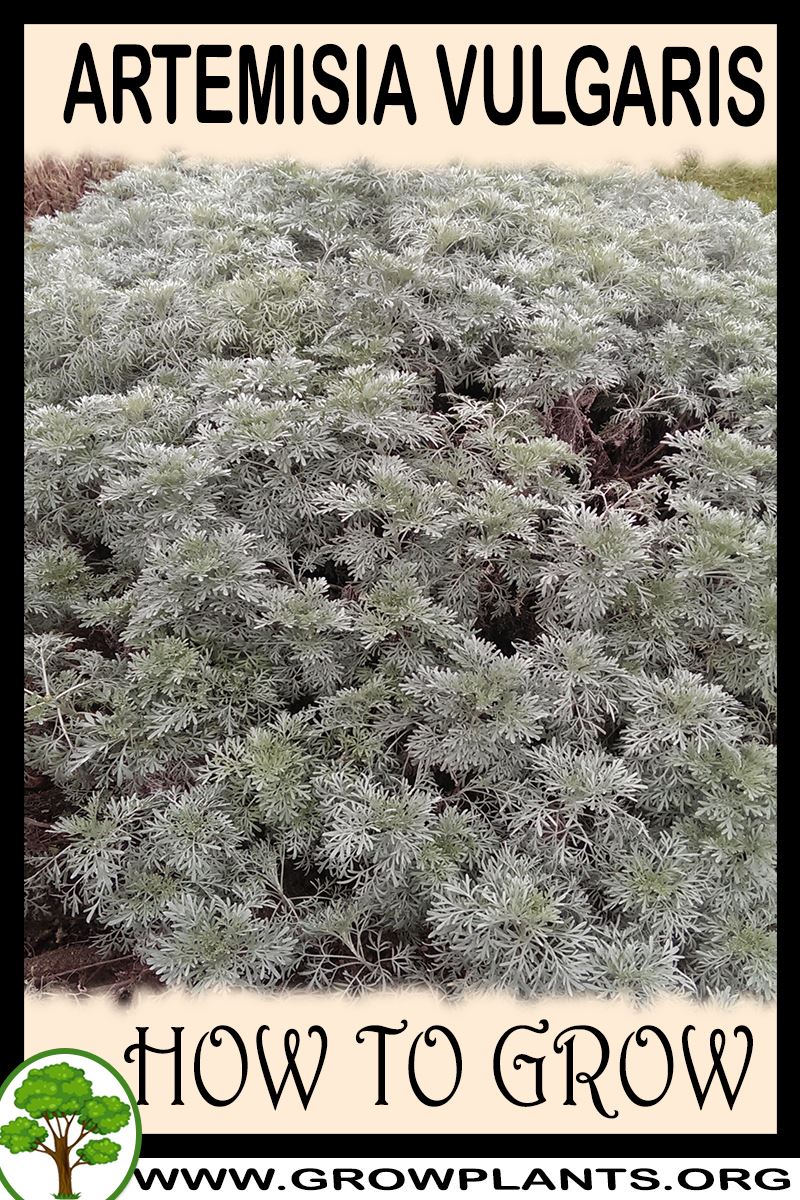
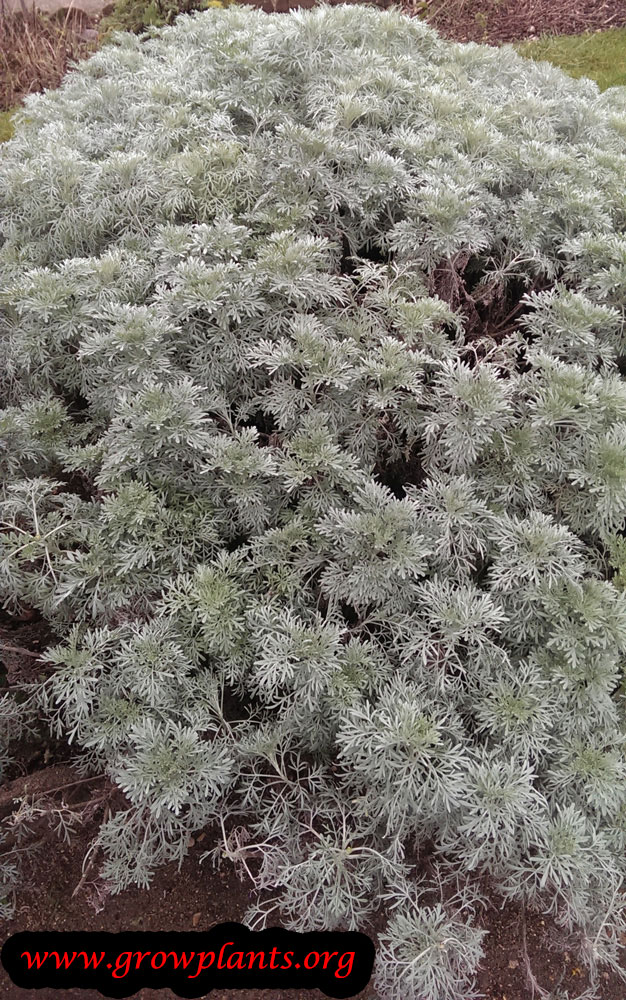
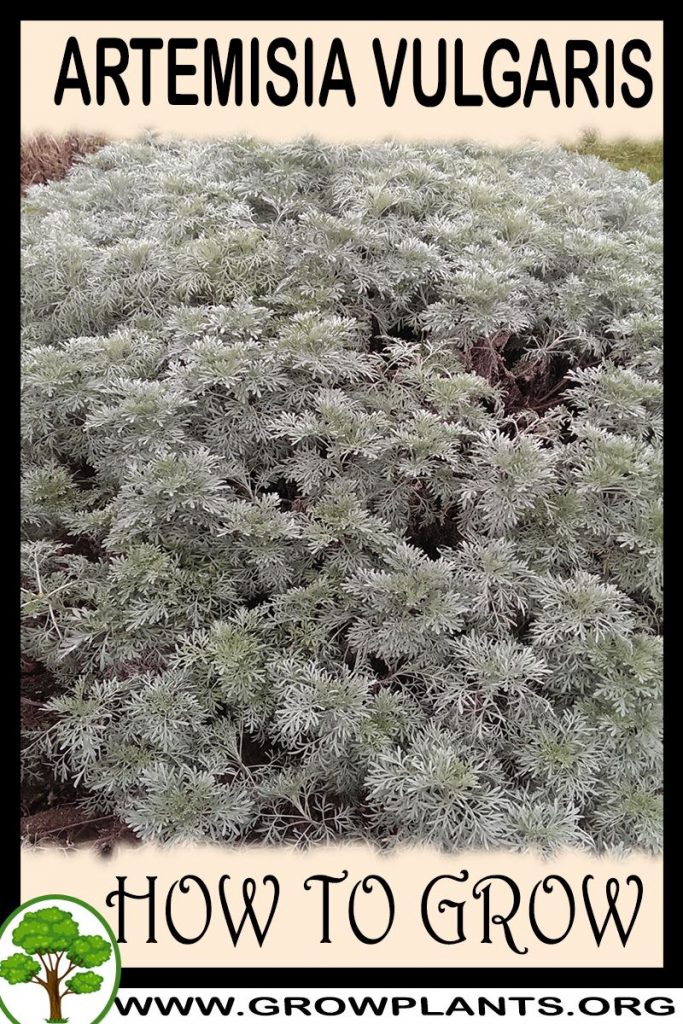
Overview: Mugwort (Artemisia vulgaris) is an aromatic, evergreen perennial herbaceous perennial reaching 80-250 cm (32-100 in), grown for its fragrant, finely divided silvery-grey foliage. It is used as an ornamental and aromatic herb, its leaves valued for flavouring, herbal infusions and traditional uses.
Quick Specifications
| Specification | Attribute |
|---|---|
| Plant Type / Life Cycle | Perennial (herbaceous perennial) |
| Foliage Type | Evergreen (semi-evergreen in cold winters) |
| Mature Size | 80-250 cm (32-100 in) |
| Growth Rate | Moderate |
| Root System | Rhizomatous – spreads aggressively by creeping rhizomes and can become invasive |
| Toxicity | Aromatic herb containing thujone; used in small amounts for flavouring and herbal medicine, but should be avoided during pregnancy |
| Hardiness | USDA 3-10 |
Growth Form & Structure
- Height & Spread: 80-250 cm (32-100 in); suited to borders and to containers, and can be grown indoors in a bright, airy spot.
- Growth Habit & Form: Upright, branching aromatic herbaceous perennial with dense, fine foliage.
- Lifespan & Maturity: Perennial reaching mature size within a season or two; cut back in autumn to keep it compact and bushy.
Anatomy & Physical Features
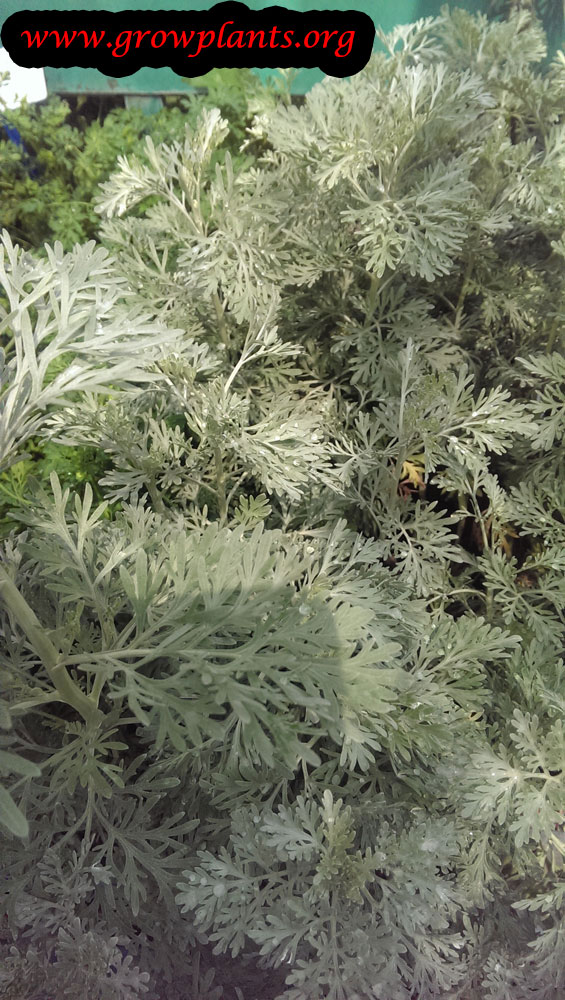
- Leaves & Foliage: Soft, deeply pinnate and serrated leaves, green above and paler grey beneath, aromatic.
- Flower Characteristics: Small greenish-yellow flower heads at the branch tips in summer.
Primary Uses & Landscape Value
- Functional & Ornamental Roles: Vigorous aromatic herb; leaves used for herbal teas, flavouring and traditional medicine. Spreads strongly by rhizome, so site with care as it is allelopathic and potentially invasive.
Care Guide: Planting, Soil & Watering
Overview: Artemisia is an aromatic Mediterranean sub-shrub that thrives in full sun and light, sharply drained soil, and is markedly drought-tolerant once established. It prefers lean, dry ground to rich or wet soil, which can rot the roots.
Quick Care Requirements
| Requirement | Ideal Condition |
|---|---|
| Planting Season | Warm season — spring through autumn, once frost has passed |
| Growth Rate | Moderate |
| Soil Type | Light, well-draining, average-to-poor soil; dislikes wet, heavy ground |
| Water Need | Low to Moderate — drought-tolerant once established; let the soil dry between waterings |
Planting & Establishment
- Best Planting Season: Plant in the warm season, from spring through autumn once frost has passed. Give it room away from other plants — its foliage and roots are allelopathic and can inhibit close neighbours.
- How to Plant:
- Hole Preparation: Dig a hole slightly larger than the root ball in a sunny, open, free-draining spot.
- Soil Amendments: Little enrichment is needed — on heavy soil work in grit or coarse sand to sharpen drainage rather than adding rich compost.
- Planting Depth: Set the plant with its root collar at soil level; do not bury the stem.
- Growth Speed & Expectations: Moderate — it forms an aromatic, bushy clump about 80-250 cm, 32-100 inches, with silvery foliage that fills out over the season.
Soil, Watering & Drainage Care
- Soil Mix & Drainage Needs: Give it light, sharply drained soil and avoid heavy, wet ground, which invites root rot. In containers use a free-draining, gritty mix with ample drainage holes.
- Watering Schedule & Technique:
- Young / Newly Planted: Water to settle it in and keep the soil lightly moist while roots establish.
- Established: Water sparingly and deeply, letting the soil dry out between waterings; established plants tolerate drought well.
- Seasonal Adjustments: Water very little in winter and wet spells; give a little extra only in prolonged heat, always avoiding soggy soil.
Climate, Light & Hardiness
Artemisia vulgaris (mugwort) grows in Mediterranean, subtropical, and tropical climates, adapting to full sun, half shade, or full shade, and it also does well as a houseplant. It is best sited in a frost-free spot for the healthiest growth, though its broad hardiness range shows good winter cold tolerance overall.
Quick Climate Specifications
| Climate Zones | Mediterranean, Subtropical, Tropical |
|---|---|
| USDA Hardiness Zones | 3–10 |
| Frost Tolerance | Moderate to High |
| Light Conditions | Full Sun / Half Shade / Full Shade |
Sunlight & Light Exposure
Optimal Light Setup
Adapts to a wide range of light, from full sun to full shade.
Direct Sun Requirement
Tolerates direct sun well but does not strictly require it, since the plant also grows in shade.
Temperature Extremes & Hardiness
USDA Hardiness & Regional Limits
Hardy across zones 3–10, an unusually wide range for the genus, indicating strong winter cold tolerance; growth is generally best where winters stay frost-free, though the plant handles real cold within its hardiness zones.
Cold Damage & Winter Protection
As a herbaceous-based perennial, top growth commonly dies back with winter cold and regrows from the roots the following spring within its hardiness range.
Frost Sensitivity
Tolerates frost well within its hardiness range.
Extreme Heat Tolerance
Handles warm to hot Mediterranean, subtropical, and tropical conditions well.
Growing in Pots, Balconies & Indoors
Mugwort (Artemisia vulgaris) is a tall, aromatic perennial the grower lists as indoor-capable with good light. It grows large and spreads, so a pot both keeps it in check and lets you bring it to a bright window.
Quick Details
- Container Size: 15-30 L (about 4-8 gal) – it grows tall, so give it root room and keep it pruned
- Indoor Suitability: Indoor-capable with strong light, but it grows tall – keep it cut back; brightest window
- Best Spot: Full sun to part shade
- Soil & Drainage: Free-draining potting mix
- Watering in Pots: Light to moderate – let the surface dry
Indoors & On the Windowsill
- Indoors with strong light: The grower says it can be grown indoors with good light, but mugwort is naturally tall and vigorous – keep it pruned and give it your brightest window to stop it growing lax.
- Overwintering: A hardy perennial that dies back and returns; a container also stops its running roots from spreading where you don’t want them.
On a Balcony or Patio
- Light & wind: Give it a sunny, open spot; the aromatic silvery foliage takes heat and wind well. Pots dry fast against warm walls, so check moisture, though it prefers drier feet.
- Practicalities: Make sure water drains away freely rather than pooling; a stable pot keeps taller plants from blowing over.
Choosing the Pot, Soil & Long-Term Care
- Pot & drainage: A pot with strong drainage holes; skip a standing-water saucer to avoid root rot. Terracotta breathes and dries faster, which suits these drought-tolerant plants.
- Potting mix: A light, free-draining potting mix with some grit or perlite; they dislike heavy, wet soil.
- Feeding: Feed lightly through the growing season – a dilute general feed now and then, as nutrients leach from pots faster than open ground.
- Repotting: Refresh the mix and pot up every year or two; divide or root-prune to keep clumps vigorous.
Fertilizing & Feeding
A light feeder: mugwort is a naturally vigorous, weedy perennial that grows strongly with little help, so feeding stays minimal to avoid encouraging even more rampant, potentially invasive growth.
Quick Fertilizing Specs
| Feeding Level | Light feeder |
|---|---|
| Main Nutrient Priority | Balanced feeding with nitrogen kept low; this plant rarely needs encouragement to grow |
| Best Feeding Period | Spring through summer active growth |
| Organic Options | Compost or well-rotted organic matter worked into the planting site |
| Reduce/Stop Feeding | Stop feeding as the plant dies back to the ground for winter |
| Micronutrients | Rarely an issue for this vigorous, undemanding plant; correct only a diagnosed deficiency |
| Soil pH | Tolerates a wide range of soils |
Feeding by Growth Stage
Establishment after planting
Root a newly planted Artemisia vulgaris into its site without pushing excessive early top growth.
| Nutrient direction | A light, balanced feeding supports root establishment; this vigorous plant rarely needs more. |
|---|---|
| Timing | At planting, in spring or autumn. |
| Frequency | A single light feeding at planting is usually enough while roots establish. |
| Fertilizer types | A balanced, complete fertilizer used at a light rate, Compost or organic matter mixed into the planting site |
| Precautions | This shrub can grow tall and spread readily, so avoid heavy feeding, which only fuels more vigorous, harder-to-manage growth. |
Active growth before harvest
Support steady production of the aromatic, edible, and medicinal foliage this plant is grown for.
| Nutrient direction | Keep nitrogen low; this naturally vigorous plant grows well on lean feeding, and restraint keeps growth manageable. |
|---|---|
| Timing | Through spring and summer active growth, ahead of the autumn pruning. |
| Frequency | Feeding is rarely needed once established; established plants often need none at all in reasonable garden soil. |
| Fertilizer types | A balanced, complete fertilizer used sparingly, if at all, Compost top-dressed instead of routine feeding |
| Precautions | Overfeeding only encourages this already vigorous, spreading plant to grow taller and spread faster, with little benefit to leaf quality. |
Winter dormancy and die-back
Let the plant rest through winter, when top growth typically dies back after the autumn pruning.
| Nutrient direction | None – withhold fertilizer while the plant is dormant over winter. |
|---|---|
| Timing | Winter, following the autumn cutback. |
| Frequency | No feeding during this dormant period. |
| Fertilizer types | No feeding at this stage; do not fertilize dormant winter growth. |
| Precautions | Do not fertilize until new shoots appear in spring; feeding dormant roots wastes nutrients and can encourage rot. |
Nutrient Deficiency Signs & Corrections
Older leaves fade to a pale, uniform green or yellow and new shoot growth is noticeably weaker than expected for this vigorous plant.
| Possible causes | very low available soil nitrogen, unusual for this plant’s typical vigor, nutrient leaching after heavy rain or watering, extremely thin, low-organic-matter, or compacted soil |
|---|---|
| Appears first on | older, lower leaves |
| What to check | recent feeding history, soil organic matter and compaction, drainage and watering pattern |
| Possible correction | Work in compost or apply a balanced complete fertilizer at a light rate, then watch new growth for recovery. |
Wilting or yellowing despite consistently moist soil, with weak or sparse new shoots.
| Possible causes | poorly drained soil holding excess water around the roots, overwatering in a plant that tolerates a wide range of moisture but not constantly saturated ground, compacted soil restricting oxygen at the roots |
|---|---|
| Appears first on | whole-plant wilting with lower leaf yellowing |
| What to check | soil drainage and recent watering frequency, root color and firmness just below the soil line, whether the site drains freely after rain |
| Possible correction | Improve drainage and reduce watering; avoid fertilizing until active new growth confirms the plant has recovered. |
New leaves at the shoot tips turn yellow between veins that stay green.
| Possible causes | high soil pH tying up available iron, waterlogged or compacted soil limiting root uptake, naturally alkaline garden soil |
|---|---|
| Appears first on | newest growth at the shoot tips |
| What to check | soil pH and drainage, recent overwatering or compaction, whether the same pattern shows on nearby plants |
| Possible correction | Improve drainage, avoid overwatering, and apply a chelated iron product per its label if the pattern persists. |
Pruning, Training & Seasonal Maintenance
Artemisia vulgaris is a fast-regrowing herbaceous/subshrub perennial that tolerates frequent, fairly hard cutting – in fact routine leaf harvest (cutting whole branches, all year per its own facts) doubles as its main pruning. The plant’s own guidance places the heavier structural cut in autumn and specifically calls for thinning the inner branches, while a summer flower-thinning step is recommended when the plant is being grown for leaf production rather than bloom. None of this affects fruiting (it is not grown for fruit), but bloom versus leaf-focused growth is a direct trade-off that pruning controls.
Quick Pruning & Maintenance Specs
| Pruning Tolerance | High |
| Primary Pruning Window | Autumn (structural cutback, per source) |
| Secondary Maintenance Window | Ongoing, all year (leaf-harvest cutting) |
| Typical Frequency | Rolling/frequent (harvest) plus one heavier autumn cut |
| Main Objective | Compact, bushy, leafy growth for harvest; open up the crowded interior |
| Young Plant Priority | Light pinching only, to build a multi-stemmed bushy base |
| Mature Plant Priority | Autumn cutback plus thinning of inner branches; ongoing harvest cuts |
| Best Tool Type | Hand snips/secateurs |
| Avoid Heavy Pruning During | Peak summer heat/drought stress, and the first weeks after transplanting |
Pruning by Plant Age & Size
Newly Established
Leave largely uncut while roots establish; remove only damaged growth.
Young / Formative
No formal training system applies to this herbaceous subshrub; pinch stem tips to encourage a bushy, multi-branched framework rather than a single leggy stem, since it can reach 80–250 cm and will flop or go woody-legged at the base if left uncut.
Mature / Established
Combine an annual autumn cutback with the source’s own instruction to cut the inner branches, opening the crowded centre of the clump; keep harvesting stems through the rest of the year to maintain leafy, compact regrowth.
Seasonal Pruning Schedule
| Stage | Objective | Remove | Do NOT remove | Expected response / flowering impact |
| Autumn | Renew compact leafy form before the plant’s slower period | Up to half to two-thirds of top growth; congested inner/crossing branches | All growth at once from a young or stressed plant | Fresh, denser leafy regrowth the following season; reduces legginess |
| Summer (if grown for leaves) | Keep the plant in leafy, vegetative growth rather than bloom | Emerging flower stems | Healthy leafy shoots needed for harvest | Thinning the bloom redirects energy into leaf production, per the plant’s own guidance |
| Ongoing / All year | Harvest and light maintenance | Whole branches for leaf harvest; any dead or overly woody stems | The entire plant at once | Continued fresh leaf flushes |
Structural Pruning & Training
- Thin the inner/crossing branches (per source) to prevent a dense, congested centre and keep air moving through the clump.
- Renewal cutting each autumn keeps the base from turning woody and sparse over time, typical of herbaceous perennial subshrubs of this size.
Special Growth to Remove
- Flower stems, thinned in summer specifically when the plant is grown for its leaves rather than bloom (per source).
- Old, woody, unproductive stems at the base once new growth has replaced them.
Container & Small-Space Pruning
Because it can reach up to 2.5 m in the ground, container specimens need more frequent, harder pinching and an annual hard cutback to keep the plant in scale with the pot; expect to prune more aggressively for height control than an in-ground planting.
Tools
- Precision snips for tip-pinching and routine leaf harvest.
- Bypass secateurs for the thicker basal stems removed in the autumn cutback.
Tool Hygiene & Disease Risk
Routine – clean, sharp tools are sufficient; no transmissible disease risk is noted in the plant’s own facts.
Cut Placement & Technique
Cut just above a leaf node or pair to encourage branching; when harvesting, cut whole stems above a lower leaf pair rather than stripping individual leaves, matching the source’s own harvest method.
Heavy Pruning & Rejuvenation
Tolerated well – as a vigorous, medium-growing herbaceous subshrub it can be cut back hard in autumn (by half or more) and will flush fresh growth the following season; avoid doing this to a plant already stressed by drought or heat.
Post-Pruning Care
After a hard autumn cutback, ease off watering slightly through the plant’s slower period; avoid fertilizing after cutting, since the cutback itself is enough to trigger fresh regrowth.
Common Pruning Mistakes
- Letting the plant go leggy and woody at the base by skipping the autumn cutback.
- Harvesting too heavily from a young, unestablished plant.
- Never thinning the inner branches, leading to a congested, airless centre.
- Ignoring summer flower-thinning when the goal is leaf production, resulting in reduced leaf quality and unwanted self-seeding.
When NOT to Prune
Avoid a hard cutback during peak summer heat or drought stress, and avoid heavy pruning in the first few weeks after transplanting while roots are still establishing.
Recommended Tools (by task)
- precision_snips – routine tip-pinching and leaf harvest throughout the year.
- bypass_secateurs – the heavier autumn cutback and removal of thicker inner branches.
Propagation Guide
Artemisia vulgaris (Mugwort) roots readily from stem cuttings and, because it spreads by rhizomes, established clumps can also be divided; either vegetative method keeps the parent’s character, while seed-grown plants can vary somewhat in habit and vigor. Propagation is easy by any of these methods.
Quick Propagation Specs
| Best Propagation Method | Stem cuttings |
| Alternative Methods | Rhizome/clump division; seed |
| Propagation Difficulty | Easy |
| Seed True-to-Type | Variable |
| Vegetative True-to-Type | Yes |
| Best Propagation Season | Spring or autumn |
| Cutting Rooting Time | 2–4 weeks |
| Seed Sowing Depth | Surface to very shallow (fine seed) |
Growing from Seed
Sowing Season
Spring or autumn.
Sowing Depth & Orientation
Sow on the surface or barely cover; the fine seed generally germinates better with light exposure.
Germination Conditions
Warm temperatures and an evenly moist medium favor germination.
Stem Cuttings
Cutting Type
Non-flowering stem tips.
Best Timing
Spring or autumn.
Cutting Preparation
Strip the leaves from the portion of stem that will be inserted into the rooting medium.
Rooting Setup
Root in water or in moist soil.
Rooting Hormone
Not required; optional.
Rooting Time
2–4 weeks.
Division, Offsets, Pups & Suckers
Mugwort spreads by underground rhizomes and forms expanding clumps. Established patches can be lifted and divided into rooted sections, ideally in spring or autumn, and replanted at a similar depth. This is not in the site’s own facts but is a well-established trait of this species, and it is a practical, low-effort option alongside cuttings.
Bloom & Flower Guide
Quick Details
- Bloom Season: Summer
- Flower Appearance: Many tiny green-yellow flower heads clustered at the tips of the branches
- Edibility: Grown for its aromatic leaves; the small flowers are not used as an edible flower
Detailed Blooming Overview
Mugwort flowers in summer, but its blooms are subtle: small, green-yellow heads massed along the ends of the branches rather than showy petals. This is a plant grown for its fragrant, silvery foliage, and the flowering is easy to miss. Note that the pollen can be a nuisance to hay-fever sufferers when the plant blooms.
Flower Characteristics
- Colour is green-yellow.
- Tiny flower heads gathered at the tips of the branches.
- Inconspicuous rather than showy.
Bloom Care & Thinning
- If you grow it for the leaves: Thin out or cut off the flowering heads as they form, which keeps the plant’s energy in fresh, aromatic foliage.
- Pollination: Mugwort is wind-pollinated rather than insect-pollinated, and its airborne pollen is a common late-summer allergen.
Fruit & Uses
The soft, green-grey, deeply serrated leaves of Artemisia vulgaris (mugwort) are the edible part, used fresh or dried as an aromatic flavouring and tea herb rather than as an everyday leafy vegetable. Leaves are typically infused, dried, or used in small amounts as a seasoning rather than eaten raw in quantity.
Quick Edible Specs
| Edible Parts | Leaves |
|---|---|
| Main Use(s) | Herb / flavouring (beverages, traditional alcohol flavouring), fragrance, traditional medicinal use |
| Eaten Raw or Cooked | Used fresh or dried; typically infused as tea or used as a flavouring rather than eaten raw in bulk |
| Preparation Required | None for fresh use as a flavouring; drying recommended for tea and storage |
| Harvest Season | All year |
| Time to First Harvest | Leaves can be cut as soon as the plant is established |
| Storage | Dry and keep in an airtight container away from light |
| Safety/Toxicity Caveat | Contains thujone; use only in culinary/tea-herb amounts, avoid during pregnancy, and use caution if sensitive to ragweed/daisy-family (Asteraceae) plants |
Leaves & Greens
Leaves are harvested by cutting whole branches and can be picked year-round. For the best leaf quality, thin out the flowers as they form — letting the plant bloom diverts energy from the foliage and can make it coarser. Leaves are used fresh or, more often, dried, for herbal tea, as a fragrant flavouring, and historically as a bittering herb in beer and other beverages before hops became the standard.
Preparation, Uses & Safety
Mugwort leaves are mainly used as a flavouring herb: infused for tea, added in small amounts to beverages and traditional alcoholic drinks, or dried for fragrance. Traditionally the leaves have also been used medicinally, though no health claims are made here. Because the plant contains thujone, use it sparingly as a culinary/tea herb rather than as a bulk leafy green, avoid it during pregnancy, and take care if sensitive to ragweed, chamomile, or other Asteraceae-family plants.
Pests, Diseases & Troubleshooting
Overview: Artemisias are aromatic, often silver-leaved plants (Asteraceae) whose essential oils make them naturally resistant to most pests and grazing animals. Their true enemy is not an insect but wet, heavy soil – crown and root rot rapidly kills them in winter wet or humid heat. Aphids (especially on soft tarragon growth), leafminers and, in hot dry spells, spider mites are about the only pests of note, with rust and powdery or downy mildew appearing in crowded, damp conditions. Mugwort (Artemisia vulgaris) is exceptionally tough and weedy; its “problem” is less pests than its own vigorous, invasive rhizomatous spread and its allergenic pollen.
Quick Troubleshooting Overview
| Issue / Pest | Main Symptom | Primary Solution |
|---|---|---|
| Crown / root rot | Plant blackens and collapses at the base in wet soil | Sharp drainage; grow lean and dry |
| Aphids | Clustered, sticky, distorted tender tips | Water blast; insecticidal soap |
| Spider mites | Fine stippling and webbing in hot dry spells | Hose foliage; horticultural oil |
| Leafminers | Pale winding trails inside the leaves | Remove mined leaves; encourage wasps |
| Rust | Orange or white powdery pustules under leaves | Remove affected foliage; airflow |
| Powdery mildew | White coating in humid, crowded growth | Thin for airflow; full sun |
Common Pests & Management
- Aphids (Macrosiphoniella artemisiae / Aphis spp.):
- Symptoms: Green, grey or dark soft-bodied insects massing on the softest new shoots and tips – most noticeable on tender, well-fed growth – distorting them and leaving sticky honeydew and sooty mould. The main insect pest of the genus. Mugwort hosts the specialist mugwort aphid Macrosiphoniella artemisiae.
- Prevention & Control: Knock colonies off with a jet of water and encourage ladybirds, lacewings and hoverflies, which flourish among artemisias. Avoid soft, over-fed growth; treat persistent infestations with insecticidal soap or neem oil sprayed in the cool of evening.
- Leafminers (Agromyzidae (leaf-mining flies)):
- Symptoms: Pale, winding or blotchy tunnels etched inside the leaves where fly larvae feed between the surfaces; largely cosmetic on a vigorous plant but disfiguring in bad years.
- Prevention & Control: Pick off and destroy mined leaves as they appear to break the cycle, and encourage the parasitic wasps that are their main natural control. Row cover excludes the egg-laying flies on prized culinary plants; chemicals are seldom warranted.
- Two-spotted spider mite (Tetranychus urticae):
- Symptoms: Fine pale stippling and a dull, bronzed, dusty appearance to the foliage with faint webbing underneath, appearing in hot, dry, stagnant conditions and on drought-stressed or indoor plants.
- Prevention & Control: Hose the foliage and raise humidity, and relieve drought stress. Introduce predatory mites under cover; use insecticidal soap or horticultural oil for heavy infestations, covering the leaf undersides well.
Diseases & Fungal Issues
- Crown and root rot (Rhizoctonia / Phytophthora / Sclerotinia spp.):
- Symptoms: The classic killer of artemisias: the base of the plant blackens and softens, stems wilt and collapse, and the roots rot – triggered almost entirely by wet, heavy, poorly drained soil, humidity and overwatering.
- Treatment & Management: This is cultural, not chemical. Plant in sharp, gritty, lean, free-draining soil in full sun, space for airflow, and avoid winter wet and overwatering. Remove and destroy collapsed plants and do not replant into the same soggy spot; raised or gravelly beds are ideal.
- Rust (Puccinia spp.):
- Symptoms: Orange, yellow or brown (sometimes whitish) powdery pustules, chiefly on the undersides of leaves, with yellow blotching above and general weakening; favoured by damp, crowded conditions.
- Treatment & Management: Remove and destroy affected leaves, thin and divide crowded clumps for airflow, and avoid overhead watering. Grow in full sun with lean soil; a sulphur fungicide can check severe outbreaks if needed.
- Powdery & downy mildew (Golovinomyces / Peronospora spp.):
- Symptoms: Powdery mildew shows as a white powdery film over leaves and stems in humid crowding; downy mildew appears as yellow blotches above with greyish mould beneath in cool, damp weather.
- Treatment & Management: Improve airflow by thinning, dividing and siting in full sun, water at the base early in the day, and avoid soft over-fed growth. Remove affected foliage; sulphur (powdery) or copper (downy) fungicide handles stubborn cases.
Growing Difficulties & Abiotic Problems
- Root rot from overwatering & winter wet:
- Cause & Symptoms: By far the commonest cause of loss. These drought-adapted plants rot in rich, wet or heavy soil, collapsing over a wet winter or in humid heat.
- Correction Strategy: Grow lean and hard in gritty, sharply drained soil in full sun; add grit, plant high, and water only sparingly once established. Mimic their dry, sunny wild habitat. Mugwort’s real management issue is containing its invasive rhizomes rather than any pest.
- Floppy, leggy, sparse growth:
- Cause & Symptoms: In rich soil or shade, artemisias grow soft, lax and open, flop apart in the middle, lose their silver colour and become more disease-prone.
- Correction Strategy: Grow in poor soil and full sun with no feeding, and cut back hard in spring (and again after flowering) to keep growth dense, silver and compact.
- Loss of aroma and flavour:
- Cause & Symptoms: Over-feeding, shade and rich soil dilute the essential oils that give the aromatic and culinary species (like tarragon and wormwood) their strength.
- Correction Strategy: Grow hard in sun and lean soil, avoid heavy nitrogen, and harvest in the warm part of the day when oils are highest for the best flavour and scent.
What Helps – Products & Tools
Very little is usually needed. For the rare pest, use a water jet, insecticidal soap or neem/horticultural oil for aphids and spider mites, and hand-removal for leafminers. Disease is best prevented culturally – grit, drainage, full sun and airflow – with sulphur fungicide for rust and powdery mildew and copper for downy mildew held in reserve. The real “tools” are horticultural grit, a free-draining bed and sharp secateurs for hard spring pruning.