

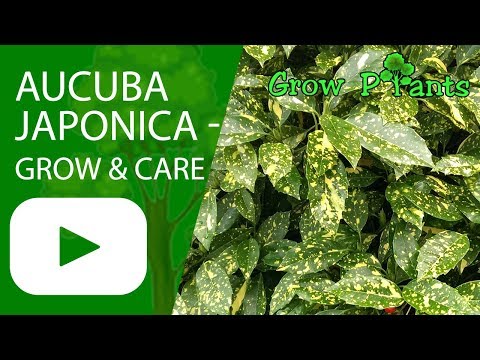

Plant Profile & Key Characteristics
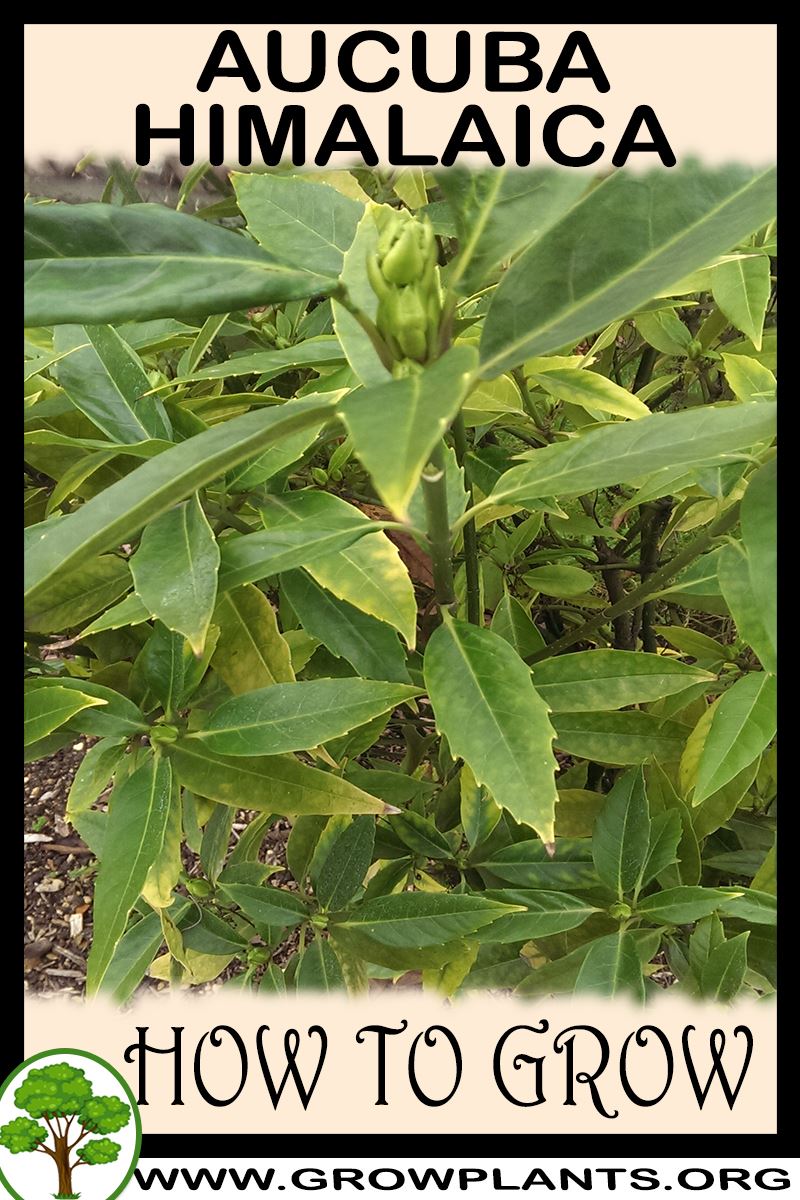
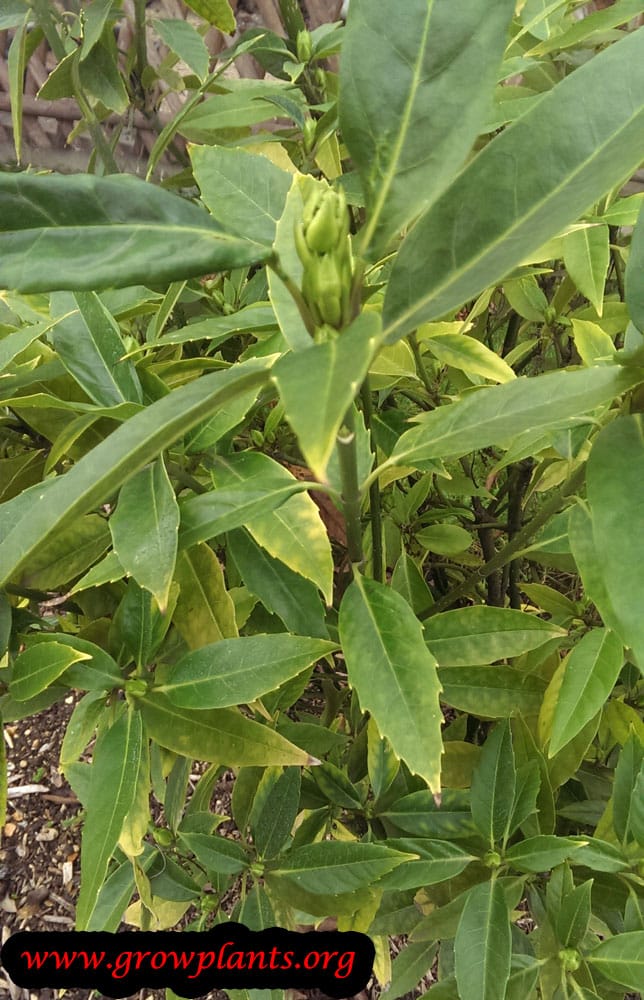
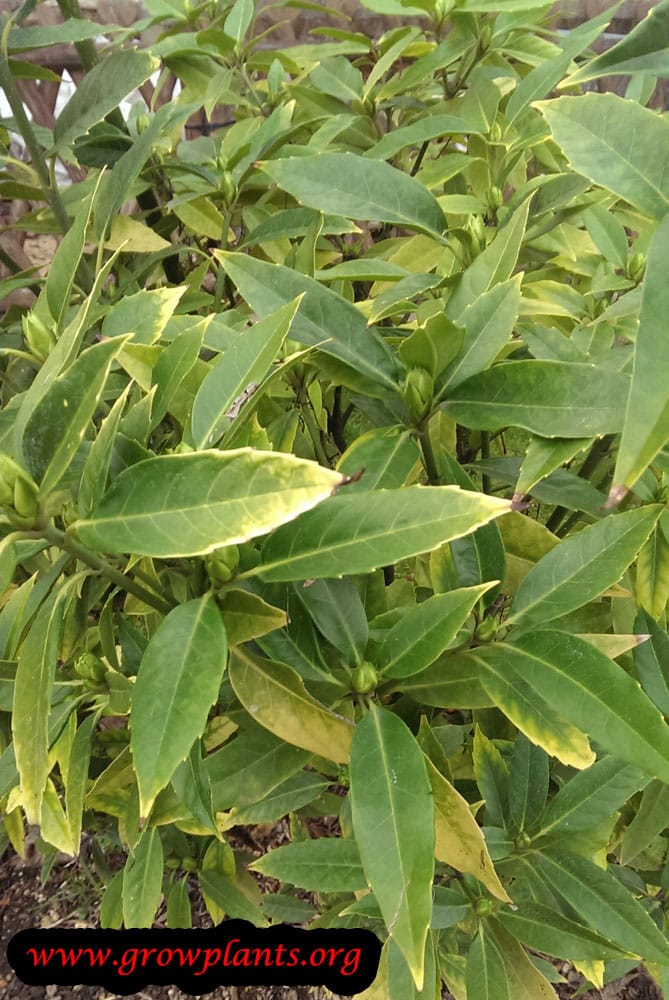
Overview: Aucuba himalaica is an evergreen shrub to small tree grown for its glossy, sometimes white-spotted foliage. It is used as an ornamental hedge or a shade-tolerant houseplant.
Quick Specifications
| Specification | Attribute |
|---|---|
| Plant Type / Life Cycle | Perennial |
| Foliage Type | Evergreen |
| Mature Size | Up to 5-10 m (15-30 ft) as a small tree, usually kept much shorter |
| Growth Rate | Moderate |
| Toxicity | Toxic – berries and foliage are poisonous if eaten |
| Hardiness | USDA zones 7-9 |
Growth Form & Structure
- Height & Spread: Reaches small-tree size in the ground but is easily kept smaller in a container or as a houseplant
- Growth Habit & Form: Upright, densely branched evergreen shrub to small tree
- Lifespan & Maturity: Long-lived; moderate rate to reach mature size
Anatomy & Physical Features
- Leaves & Foliage: Glossy elliptic leaves with pointed tips, green or variegated with white spots
- Flower Characteristics: Small red-purple flowers with yellow stamens; dioecious, with male and female flowers on separate plants (see the Bloom guide)
Primary Uses & Landscape Value
- Functional & Ornamental Roles: Ornamental hedge and shade-garden shrub; tolerant of low-light indoor conditions
Care Guide: Planting, Soil & Watering
Overview: Aucuba himalaica is a large evergreen shade shrub to small tree that favours half to full shade and rich, moisture-retentive, slightly acidic soil. It grows steadily with moderate, even watering and reliable drainage, and adapts to most soils that do not stay wet.
Quick Care Requirements
| Requirement | Ideal Condition |
|---|---|
| Planting Season | From spring after the last frost through summer |
| Growth Rate | Moderate |
| Soil Type | Rich, humus-heavy, moisture-retentive but well-draining; prefers slightly acidic soil |
| Water Need | Moderate – keep evenly moist, allowing the surface to dry slightly between waterings |
Planting & Establishment
- Best Planting Season: Plant from spring, after frost, through summer, in a shaded, sheltered position.
- How to Plant:
- Hole Preparation: Dig a hole as deep as and about twice as wide as the root ball to give the roots easy room to spread.
- Soil Amendments: Mix in plenty of compost, leaf mould or organic matter to enrich and open the soil.
- Planting Depth: Set the root collar flush with the soil line; avoid burying the stem.
- Growth Speed & Expectations: Moderate, ultimately a large shrub to small tree of 5–10 m; the plant is poisonous, so place it with care.
Soil, Watering & Drainage Care
- Soil Mix & Drainage Needs: Prefers a rich, organic, well-aerated soil that stays moist yet drains freely; in containers use a good potting mix with free-draining holes.
- Watering Schedule & Technique:
- Young / Newly Planted: Water regularly to keep the soil consistently moist while it establishes.
- Established: Water moderately and deeply, letting the surface dry slightly between waterings.
- Seasonal Adjustments: More water in hot, dry spells; less in cool, wet weather.
Climate, Light & Hardiness
Himalaican laurel is a shade-loving evergreen shrub-to-small-tree suited to temperate, Mediterranean, and subtropical climates, and adapts well as a houseplant. It has good cold hardiness and, like its relative Aucuba japonica, prefers half to full shade over direct sun.
Quick Climate Specifications
| Climate Zones | Temperate, Mediterranean, or subtropical climates; also grown as a houseplant |
|---|---|
| USDA Hardiness Zones | 7–9 |
| Frost Tolerance | High |
| Light Conditions | Half shade or full shade |
Sunlight & Light Exposure
Optimal Light Setup
Grows best in half to full shade, useful as an evergreen for shaded garden positions.
Shade & Heat Management
Full shade is well tolerated; strong direct sun can scorch the variegated foliage on this species too.
Temperature Extremes & Hardiness
USDA Hardiness & Regional Limits
Reliably hardy across zone 7–9, a somewhat narrower range than its relative Aucuba japonica, spanning cool-temperate through warm subtropical conditions.
Cold Damage & Winter Protection
Well-established plants in zone 7 and warmer generally need no winter protection.
Frost Sensitivity
Very frost tolerant for a broadleaf evergreen.
Wind, Humidity & Microclimate
Rainfall & Seasonal Moisture
Prefers reasonably consistent moisture and rich, slightly acidic soil rather than prolonged drought; site guidance calls for average watering.
Microclimate Recommendations
A shaded, sheltered site with humus-rich, slightly acidic soil suits this shrub well, whether grown outdoors or as an indoor container plant.
Growing in Pots, Balconies & Indoors
Aucuba himalaica is one of the best shade-tolerant plants for a pot – the grower grows it both indoors and in containers. Its glossy, often gold-speckled leaves brighten a dim room, shady balcony or north-facing patio where little else thrives. It can grow large, so keep it pruned to a manageable size in a pot.
Quick Details
- Container Size: Medium to large pot; pot up as it grows toward 5-10 m
- Indoor Suitability: Yes – a tolerant, shade-loving houseplant
- Best Spot: Half to full shade; low indirect light indoors
- Soil & Drainage: Well-aerated, free-draining mix
- Watering in Pots: Average – keep evenly moist, not soggy
Indoors & On the Windowsill
- Houseplant care: A tolerant houseplant for low to moderate, indirect light and cool-to-average rooms; it copes with the shade that defeats many plants.
- Windowsill: Happy on a shaded or north-facing sill; keep it out of hot direct sun, which scorches the leaves.
- Safety: The plant (notably the berries) is poisonous – keep fruit and foliage away from children and pets.
- Keep it small: Left unchecked it becomes a large shrub; regular pruning keeps it in scale with the pot.
On a Balcony or Patio
- Shade friend: Ideal for a shady or north-facing balcony or patio; protect it from harsh midday sun. Pots on a balcony or patio dry fast – walls, railings and paving reflect heat – so check moisture often and water more in warm, windy spells. Remember a full pot is heavy and sheds run-off when watered.
- Hardy: Tolerant of cool conditions; in hard-frost climates a potted plant appreciates some winter shelter.
Choosing the Pot, Soil & Long-Term Care
- Pot & drainage: Use a pot with strong drainage holes and skip a standing-water saucer so the roots never sit wet – that is the fastest route to root rot. Terracotta breathes and dries faster, while glazed or plastic pots hold moisture longer.
- Potting mix: Fill with a well-aerated, organic mix – a quality potting mix, or peat/coir loosened with perlite or vermiculite.
- Watering in pots: Average – keep evenly moist; it likes cool, not dry, roots.
- Feeding: Potted plants need feeding a little more often than those in the ground, as regular watering steadily leaches nutrients away – feed lightly through the growing season.
- Repotting: Refresh the mix and pot up about every couple of years, lightly trimming roots and top growth to keep it in balance.
Fertilizing & Feeding
This larger, tree-forming Aucuba is a light feeder – steady, modest feeding through the growing season is enough to support its shrub-to-small-tree habit without forcing soft, weak growth.
Quick Fertilizing Specs
| young_feeding | Light feeding after planting supports root establishment while the plant is still shrub-sized. |
|---|---|
| mature_feeding | Light, regular feeding through the growing season maintains foliage density as the plant develops its taller, tree-like form. |
| Main Nutrient Priority | Nitrogen-forward feeding favors the leafy growth this plant is grown for as a hedge or screen. |
| Best Feeding Period | Spring through summer while active growth is underway. |
| Organic Options | Compost or leaf-mold mulch worked into the root zone matches this plant’s preference for rich, slightly acidic soil. |
| Soil pH | Prefers slightly acidic, rich soil; poor uptake in alkaline soil can show up as pale new growth. |
| Reduce/Stop Feeding | Ease off feeding in autumn and hold off entirely once the plant goes dormant for winter. |
| Micronutrients | A complete shrub fertilizer carrying iron and manganese suits this shade-tolerant plant’s tendency toward chlorosis in poor soil. |
Feeding by Growth Stage
Establishment after planting
Get the root system established before the plant is expected to grow into its eventual shrub-to-small-tree size.
| Nutrient direction | Light, balanced feeding weighted toward root establishment rather than rapid top growth. |
|---|---|
| Timing | The first growing season after planting. |
| Frequency | A few light feedings through the first growing season are enough while the root system develops. |
| Fertilizer types | A balanced, general-purpose fertilizer formulated for evergreen shrubs |
| Precautions | Hold off on feeding right at planting and avoid heavy applications that can stress newly forming roots. |
Active foliage growth
Support the leafy growth that builds this plant’s shrub or small-tree form and keeps its variegated foliage full.
| Nutrient direction | A nitrogen-forward or balanced feed that keeps the focus on leaf growth. |
|---|---|
| Timing | Spring through summer, the main active growth window. |
| Frequency | Light, regular feedings through the growing season are enough for this moderate-growth-rate plant. |
| Fertilizer types | A nitrogen-forward or balanced evergreen shrub fertilizer that supplies a routine amount of iron and manganese |
| Routine trace nutrients | iron, manganese |
| Precautions | Watch for pale new growth in shady or alkaline conditions, and avoid feeding late enough in the season to push tender growth ahead of cold weather. |
Autumn and winter dormancy
Allow the plant to rest through its slow season without encouraging vulnerable new growth.
| Nutrient direction | None – withhold fertilizer through dormancy. |
|---|---|
| Timing | Autumn through winter, once growth slows. |
| Frequency | No feeding at this stage. |
| Fertilizer types | No feeding through the dormant season – do not fertilize until new spring growth appears. |
| Precautions | Do not fertilize while the plant is dormant; resume light feeding only once active growth restarts. |
Nutrient Deficiency Signs & Corrections
Newest leaves turn yellow while their veins remain green.
| Possible causes | Iron deficiency tied to high soil pH, Waterlogged or compacted soil restricting root function, General root stress limiting nutrient uptake |
|---|---|
| Appears first on | The newest leaves |
| What to check | Soil pH, Drainage in the root zone, Whether older leaves are affected too, which would point elsewhere |
| Possible correction | Work toward a more acidic soil and apply a chelated iron product per its label if the newest-leaf pattern fits iron deficiency. |
General pale foliage color and slower-than-expected growth on the plain-green leaf areas.
| Possible causes | Nitrogen deficiency, Low-organic-matter soil, Dense shade limiting the plant’s ability to use available nutrients |
|---|---|
| Appears first on | Older leaves and overall canopy vigor |
| What to check | Feeding history, Soil organic matter, Light exposure |
| Possible correction | Apply a balanced or nitrogen-forward shrub fertilizer and improve soil organic matter with compost. |
Leaf tip or margin browning on plants grown in containers.
| Possible causes | Fertilizer salt buildup from repeated feeding without flushing, Underwatering stress concentrating salts in the root zone, Root crowding in an undersized or long-unrepotted container |
|---|---|
| Appears first on | Leaf tips and margins |
| What to check | Visible salt crust on the soil surface, How long since the container soil was last refreshed, Watering consistency |
| Possible correction | Flush the container thoroughly with plain water to leach built-up salts, then reduce the feeding rate going forward. |
Pruning, Training & Seasonal Maintenance
Aucuba himalaica is unusual for the genus in that it grows to small-tree scale (5–10m) rather than staying a compact shrub, so it needs more deliberate early framework decisions than a typical Aucuba. Like its relative Aucuba japonica, its small dioecious flowers form in early-to-mid spring on the previous year’s growth, so structural cutback timing determines whether that year’s bloom and berry set survive. The best window for any real structural cut is right after spring flowering; light shaping is more flexible where flower/berry display isn’t the priority.
Quick Pruning & Maintenance Specs
| Pruning Tolerance | Moderate |
| Primary Pruning Window | Early-to-mid spring, immediately after flowering |
| Secondary Maintenance Window | Autumn–winter light shaping where berry/flower display is not the priority |
| Typical Frequency | Occasional shaping and framework correction, not annual hard pruning |
| Main Objective | Establish a workable tree/large-shrub framework while protecting flower and berry display |
| Young Plant Priority | Select a workable framework – single leader or a small number of co-dominant stems, not left to sucker into a dense thicket |
| Mature Plant Priority | Staggered renewal of the oldest, leggiest growth; height/canopy control on a specimen that can reach small-tree size |
| Best Tool Type | Bypass secateurs and loppers for most growth; pruning saw for older wood on a mature, tree-scale specimen |
| Avoid Heavy Pruning During | The weeks just before spring bloom, on plants kept for flowers/berries |
Pruning by Plant Age & Size
Newly Established
Minimal – remove only damage from transplanting.
Young / Formative
Because this species can reach tree scale, decide early whether to train it as a single-leader small tree or a multi-stem large shrub, and remove competing/crossing stems accordingly – unlike the smaller, purely shrubby A. japonica, leaving every stem to grow unchecked here can produce an unmanageably dense, congested small tree.
Mature / Established
Renewal pruning of the oldest or leggiest stems, staggered over two to three seasons on an overgrown specimen; height and canopy spread control becomes more relevant here than on a compact shrub-form Aucuba.
Seasonal Pruning Schedule
Post-Flowering (old-wood bloomer)
Objective: shape or reduce size while protecting next year’s bloom. Timing: right after the early/mid-spring flowers fade. What NOT to remove: don’t save the main structural cut for autumn/winter if flowers/berries matter – that removes wood that was about to bloom. Expected response: the season’s regrowth becomes next spring’s flowering wood.
Ongoing Sanitary
Remove dead, winter-damaged, or all-green reversion shoots at any time.
Flowering & Fruiting Wood
Flowers form in early-to-mid spring (with yellow stamens distinguishing this species from the green-stamened A. japonica) on wood produced the previous growing season. Autumn/winter cutback removes stems about to flower and, on female plants, reduces berry set; pruning right after spring flowering avoids this cost.
Structural Pruning & Training
Given its size, remove crossing or congested interior stems more deliberately than would be needed on a small shrub, to keep an open, healthy framework as the plant approaches tree scale. Use thinning cuts for height/spread control rather than shearing, which browns cut leaf edges on this broad-leaved species.
Special Growth to Remove
All-green reversion shoots on variegated selections, removed at the base before they outcompete the variegated growth; dead or winter-damaged tips; congested inward-growing stems that develop as the plant matures toward its larger tree-like form.
Container & Small-Space Pruning
Indoor/container growing is supported for young specimens, but given this species’ eventual 5–10m size, container culture is really only practical while the plant is small; expect to size-manage more assertively than with the naturally more compact A. japonica if keeping it container-bound long-term.
Tools
- Bypass secateurs – most young growth and selective thinning cuts.
- Loppers – thicker stems on a maturing framework.
- Pruning saw – larger old wood on a mature, tree-scale specimen that secateurs and loppers can’t handle cleanly.
Tool Hygiene & Disease Risk
Routine: clean, sharp tools are sufficient. The plant is documented as poisonous, so wear gloves when handling cut material and dispose of prunings away from children and pets.
Cut Placement & Technique
Cut back to just above a healthy leaf node/bud; use thinning cuts back to the point of origin for larger wood rather than shearing across the canopy; on the larger old-wood cuts this species can develop, cut just outside the branch collar to avoid a flush cut.
Heavy Pruning & Rejuvenation
Tolerated on the shrubby, multi-stem parts of the plant much as with A. japonica – an overgrown specimen can be cut back hard in spring right after flowering and typically resprouts. On a plant that has developed real tree-scale trunk wood, treat any large-limb removal more cautiously, as a structural decision rather than a routine rejuvenation cut, and expect a reduced flower/berry display for the following season.
Post-Pruning Care
Water consistently through the regrowth flush; no fertilizing need tied specifically to pruning; watch new growth for the aphids and spider mites already documented as this plant’s common pests.
Common Pruning Mistakes
- Letting every stem grow unchecked while young, producing a congested, hard-to-manage small tree instead of an open framework.
- Doing the main structural cutback in autumn/winter on a plant grown partly for spring flowers or berries.
- Shearing the canopy surface instead of using selective thinning cuts, which browns leaf edges on this broad-leaved species.
When NOT to Prune
Avoid major cutback in the weeks just before spring bloom on plants kept for flower/berry interest. Avoid removing large structural limbs casually once the plant has developed real trunk wood – treat that as a deliberate framework decision, not routine maintenance.
Recommended Tools (by task)
- Young plant framework selection – bypass_secateurs: clean cuts removing competing/crossing young stems.
- Mature shaping and renewal – loppers: handles the thicker stems typical of this larger-growing species.
- Larger old-wood limb removal on a tree-scale specimen – pruning_saw: needed once stems exceed what loppers can cut cleanly.
Pruning Troubleshooting
| Problem | Possible Cause | What to Check | Corrective Action |
| Congested, thicket-like growth | No framework selection was made while the plant was young | Look for many crossing, crowded stems rather than an open structure | Thin out crossing/inward stems now, staggered over a couple of seasons rather than all at once |
| Poor flowering or berry set after pruning | Structural cutback was done in autumn/winter, removing old flowering wood | Compare timing of the last hard prune against the spring bloom season | Shift structural work to right after spring flowering going forward |
Propagation Guide
Aucuba himalaica is best propagated from semi-hardwood stem cuttings, which guarantees both the white-spotted leaf variegation and the plant’s sex, since the site notes vegetative propagation is not strictly necessary but ‘ensures’ the variegated variety. Cuttings root without much difficulty, making overall difficulty Easy.
Quick Propagation Specs
| Best Propagation Method | Semi-hardwood stem cuttings |
| Alternative Methods | Seed (green species form only) |
| Propagation Difficulty | Easy |
| Seed True-to-Type | Variable – the green form comes fairly true, but white leaf variegation is not reliably passed on by seed |
| Vegetative True-to-Type | Yes, including leaf variegation and plant sex |
| Best Propagation Season | Late summer to early autumn for cuttings, matching this plant’s spring-to-summer planting window |
| Cutting Rooting Time | Often several weeks to a couple of months |
| Germination Temperature | Roughly 15–20°C (59–68°F) if raising from seed |
Growing from Seed
Seed Handling & Viability
Seed comes from ripe berries; clean seed from the pulp before sowing.
Dormancy & Pre-Sowing Treatment
A period of cold, moist stratification often improves germination.
Sowing Season
Sow fresh in autumn, or stratify and sow in spring.
Germination Time
Can be slow and erratic, often several weeks to a few months.
Seedling Care
Grow on in partial shade. This species is dioecious, so seedling sex is unknown until flowering age; keep several seedlings if fruit set is wanted, since a male and a female plant are both needed.
Stem Cuttings
Cutting Type
Semi-hardwood tip cuttings with a couple of leaf nodes, taken to preserve a specific variegation pattern.
Best Timing
Late summer to early autumn.
Cutting Preparation
Remove lower leaves and cut just below a node.
Rooting Setup
Well-drained, slightly acid, rich, peaty mix, matching the site’s own soil preference for this plant; keep humid and in partial shade.
Rooting Hormone
Optional – can help consistency though this species typically roots without difficulty.
Rooting Time
Often several weeks to a couple of months.
Bloom & Flower Guide
Quick Details
- Bloom Season: Spring
- Flower Appearance: Small red-purple flowers with yellow stamens, carried in clusters along the stems
- Edibility: None – Aucuba is poisonous; the flowers and the berries that follow should not be eaten
Detailed Blooming Overview
Aucuba is grown mostly for its handsome, often white-speckled evergreen leaves, but in spring it also flowers. The small red-purple blooms, lit by yellow stamens, appear in loose clusters. The plant is dioecious – male and female flowers grow on separate plants – so you need a male nearby to pollinate a female if you want its ornamental berries. Both flowers and berries are best treated as poisonous and kept out of reach.
Flower Characteristics
- Colour is red-purple, with yellow stamens.
- Small flowers borne in clusters along the stems.
- Male and female flowers appear on separate plants.
Bloom Care & Thinning
- For berries: Grow a male plant within pollinating distance of a female if you want fruit to follow the flowers.
- Safety first: The flowers and berries are toxic if eaten – keep the plant away from children and pets.
Pests, Diseases & Troubleshooting
Overview: Aucuba is a famously tough, deep-shade evergreen shrub with few serious pests; its troubles are mostly abiotic – blackened leaf edges and blotches from sun scorch, cold wind or waterlogging – plus sap-sucking soft scale and mealybug that invite sooty mould. Grow it in shade with moist but free-draining soil, and its glossy foliage stays clean. Being dioecious, only female plants berry, and only if a male grows nearby.
Quick Troubleshooting Overview
| Issue / Pest | Main Symptom | Primary Solution |
|---|---|---|
| Soft scale | Brown/blister bumps on stems and leaf veins, sticky honeydew, sooty mould | Wipe off, prune infested wood, horticultural oil |
| Mealybugs | White cottony tufts in leaf axils, sticky residue | Dab with alcohol, insecticidal soap/oil |
| Black leaf edges / blotches | Blackened margins or large black patches on leaves | Move out of hot sun and cold wind; improve drainage |
| Fungal leaf spot | Dark spots, sometimes with pale centres | Remove affected leaves, improve airflow, avoid wetting foliage |
| Root / crown rot | Wilting, dieback, dark mushy roots in wet soil | Improve drainage, reduce watering |
| No berries | Healthy female plant sets no fruit | Plant a male Aucuba nearby for pollination |
Common Pests & Management
- Soft brown scale (Coccus hesperidum):
- Symptoms: Flat to blister-like brown or yellow bumps along stems, leaf veins and undersides; copious sticky honeydew that blackens leaves with sooty mould and attracts ants. Foliage yellows and thins under heavy infestation.
- Prevention & Control: Scrub off light infestations with a soft brush or wipe with a damp cloth, and prune out badly encrusted wood. Encourage parasitic wasps and ladybirds, and smother remaining scale with horticultural oil (repeat to catch crawlers). Control ants, which farm and protect scale.
- Mealybugs (Pseudococcus spp.):
- Symptoms: White, cottony, waxy tufts in leaf axils, along veins and at stem joints, with sticky honeydew and sooty mould; growth becomes stunted and sticky.
- Prevention & Control: Dab colonies with a cotton bud dipped in rubbing alcohol, hose off, and encourage lacewings and mealybug destroyer beetles. Follow up with insecticidal soap or horticultural oil, wetting the hidden crevices thoroughly.
- Whitefly:
- Symptoms: Tiny white flying insects that rise in a cloud when the shrub is disturbed, with honeydew and sooty mould on lower leaves; mainly a problem under glass or on sheltered plants.
- Prevention & Control: Hang yellow sticky traps, encourage Encarsia parasitoids, and hose foliage. Insecticidal soap or neem, applied to leaf undersides in the evening, controls persistent populations.
- Spider mites (Tetranychus urticae):
- Symptoms: Fine pale stippling and a dull, dusty look with faint webbing, seen mostly on plants that are too dry, too warm or in too much sun.
- Prevention & Control: Correct the siting to cooler shade, raise humidity by hosing the foliage, and encourage predatory mites. Treat with insecticidal soap or horticultural oil if needed.
Diseases & Fungal Issues
- Fungal leaf spot / anthracnose (Colletotrichum / Phyllosticta spp.):
- Symptoms: Round to irregular dark brown or black spots, sometimes with pale grey centres and yellow halos, mainly on shaded, congested or damaged leaves; can merge into large blotches.
- Treatment & Management: Pick off and destroy affected leaves, clear fallen litter, and improve airflow by thinning crowded stems. Avoid overhead watering. Copper fungicide helps in a persistent wet spell, but this is largely cosmetic.
- Southern blight (Sclerotium rolfsii):
- Symptoms: Sudden wilt and collapse of stems with white fungal threads and tan mustard-seed-like sclerotia at the soil line in hot, humid conditions.
- Treatment & Management: Remove and destroy infected plants with surrounding soil, improve drainage, and avoid deep organic mulch piled against the stem. Do not replant susceptible shrubs in the same spot without soil renewal.
- Root and crown rot (Phytophthora spp. / Armillaria (honey fungus)):
- Symptoms: Wilting, branch dieback, sparse yellow foliage and dark, mushy roots; with honey fungus, white fan-like growth under the bark and black ‘bootlace’ rhizomorphs.
- Treatment & Management: Improve drainage, never let the root zone stay waterlogged, and reduce watering. Remove and destroy dead plants (roots and all); there is no cure for honey fungus, so isolate and replace with resistant species.
- Sooty mould:
- Symptoms: Black powdery film coating upper leaf surfaces, growing on honeydew from scale, mealybug or whitefly.
- Treatment & Management: Control the underlying sap-sucker; the mould then weathers off or can be gently wiped from prized leaves. It does not infect the plant directly but blocks light.
Growing Difficulties & Abiotic Problems
- Black leaf edges and blotches (the classic complaint):
- Cause & Symptoms: Aucuba blackens when stressed – from too much direct sun (especially winter sun), cold drying wind, frost, or roots sitting in cold wet soil. Large black patches or scorched margins result.
- Correction Strategy: Site in dappled to full shade sheltered from wind, in moist but free-draining soil. Remove the worst-affected leaves; new growth emerges clean once the stress is removed.
- Sun scorch:
- Cause & Symptoms: Foliage in too-bright a position bleaches, yellows and develops brown-black burnt patches, worst on the sunniest side.
- Correction Strategy: Move container plants or transplant to shade; provide overhead canopy. Golden-variegated forms tolerate a little more light than plain green but still resent full sun.
- Waterlogging / root rot:
- Cause & Symptoms: Heavy, poorly drained soil causes yellowing, dieback and eventual collapse.
- Correction Strategy: Improve drainage with grit and organic matter, raise the planting, and let the top of the soil dry between waterings; Aucuba tolerates dry shade far better than wet feet.
- No berries on a female plant:
- Cause & Symptoms: Aucuba is dioecious – a lone female (or a female with no male in range) sets few or no of the prized red berries.
- Correction Strategy: Plant at least one male Aucuba within pollinating distance for a berrying female; a single male serves several females.
What Helps – Products & Tools
This is a low-input shrub, so lean on cultural care – right siting (shade, shelter, good drainage), pruning out infested wood, and leaf sanitation. For scale, mealybug, whitefly and mites, horticultural oil and insecticidal soap are the mainstays; a copper fungicide addresses stubborn leaf spot. Apply oils in the evening and only when pests are actually present.