

Plant Profile & Key Characteristics
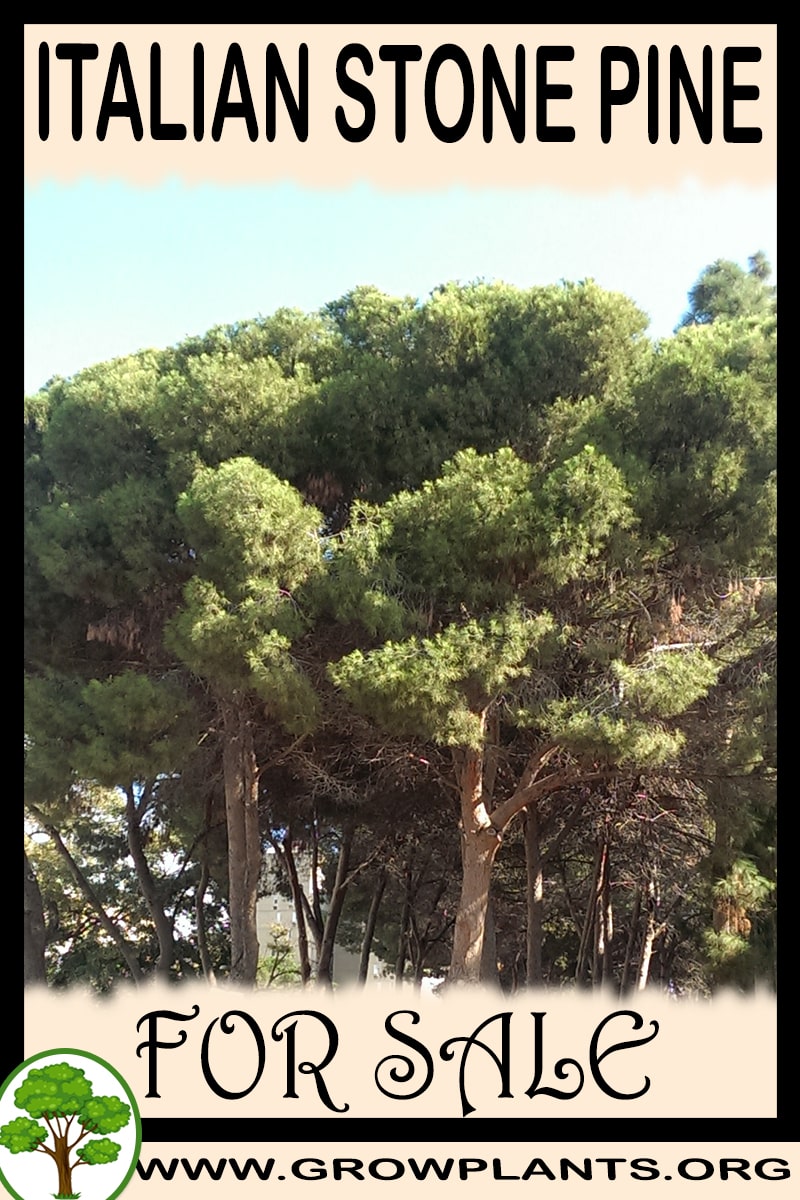
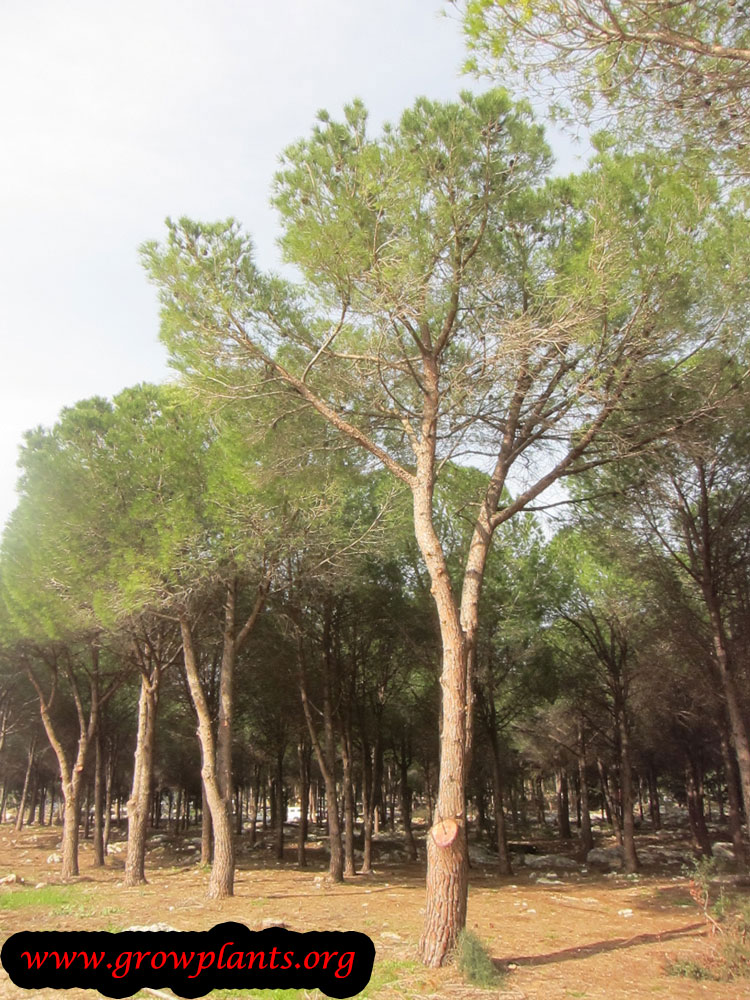
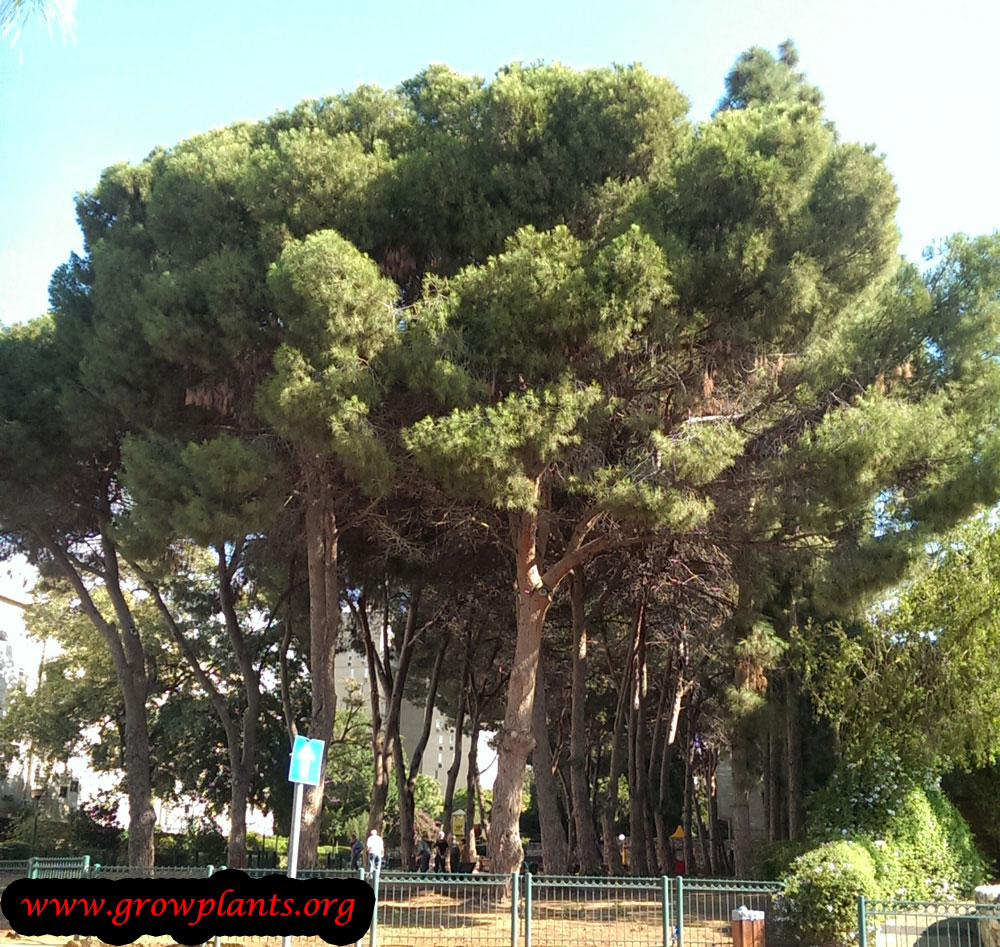
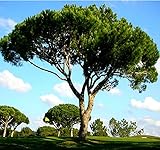
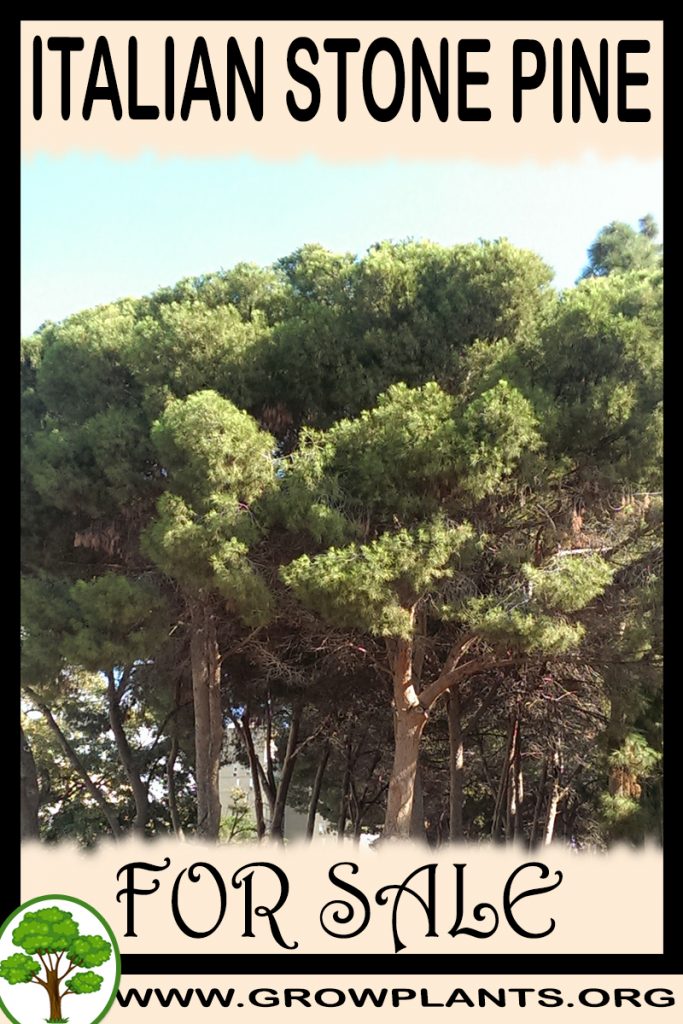
Overview: The Italian stone pine (Pinus pinea) is an evergreen conifer of 10–30 m (30–100 ft) famous for its broad, umbrella-shaped crown and edible pine nuts. It is grown both as a landmark ornamental shade tree and for its nut crop.
Quick Specifications
| Specification | Attribute |
|---|---|
| Plant Type / Life Cycle | Perennial evergreen conifer (tree) |
| Foliage Type | Evergreen (needle-leaved) |
| Mature Size | 10–30 m (30–100 ft) tall, with a wide umbrella crown |
| Growth Rate | Fast |
| Toxicity | Non-toxic / edible — the pine nuts (pinoli) are eaten |
| Hardiness | USDA zones 9–11a |
Growth Form & Structure
- Height & Spread: A large tree of 10–30 m (30–100 ft) developing a characteristic wide, flat-topped canopy; not suited to pots or indoor growing.
- Growth Habit & Form: Single-trunked conifer that starts rounded and matures into the distinctive spreading, umbrella-like crown on a clear trunk.
- Lifespan & Maturity: A long-lived tree; despite fast early growth it takes about 5–15 years to begin bearing nut-filled cones.
Anatomy & Physical Features
- Leaves & Foliage: Green needles borne in pairs along the shoots.
- Flower Characteristics: Small yellow wind-pollinated cones; dusty male cones sit high in the tree and female cones lower down.
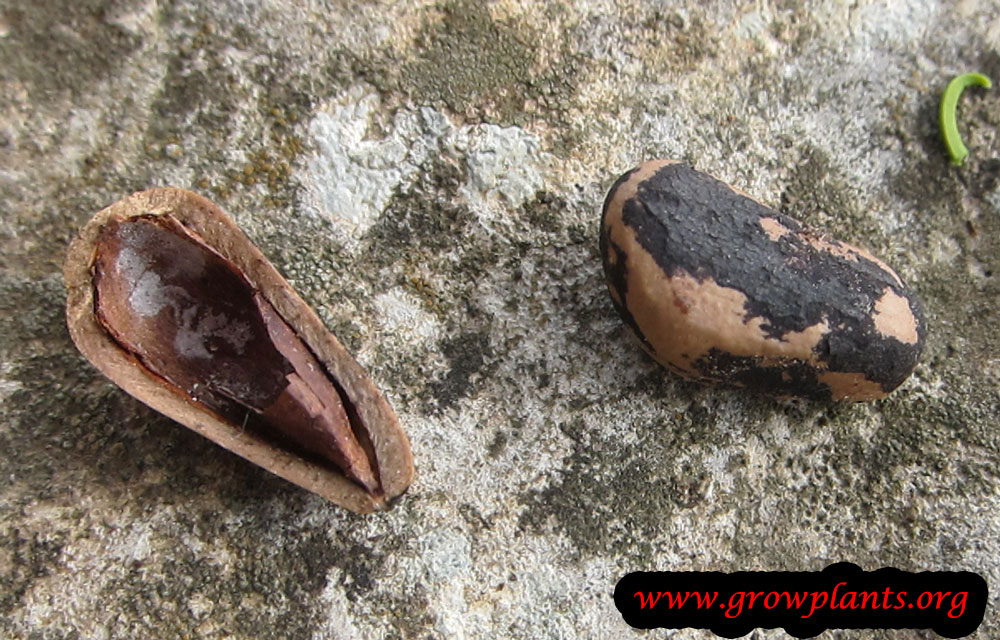
- Fruit Profile: Woody cones holding yellow-cream pine nuts in hard black-brown shells.
Primary Uses & Landscape Value
- Edible Uses: The pine nuts are eaten raw, made into pesto or cooked, once shelled.
- Functional & Ornamental Roles: Iconic ornamental shade and avenue tree for warm climates, grown for both its sculptural crown and its edible nut crop. Note the pine processionary moth can be a hazard on this species.
Note: Naturalizes and can become locally invasive outside its native Mediterranean range – documented on invasive-species watch lists in parts of South Africa, the southern USA, the Canary Islands and New South Wales.
Care Guide: Planting, Soil & Watering
Overview: Italian stone pine (Pinus pinea) is a Mediterranean conifer (hardiness zone 9-11a) suited to warm climates with a cool winter. It is drought-tolerant and grows best in deep, well-drained sandy soil in full sun.
Quick Care Requirements
| Requirement | Ideal Condition |
|---|---|
| Planting Season | Year-round in mild, frost-free climates |
| Growth Rate | Fast |
| Soil Type | Deep, well-drained sandy soil; tolerates poor ground |
| Water Need | Low – drought-tolerant once established |
Planting & Establishment
- Best Planting Season: In mild Mediterranean climates it can be planted year-round; elsewhere plant in the cooler part of the year so it establishes before summer heat.
- How to Plant:
- Hole Preparation: Dig a hole about twice the width of the root ball and equally deep in free-draining ground.
- Soil Amendments: Minimal enrichment is required; add grit on heavy soils to improve drainage rather than rich organic matter.
- Planting Depth: Set the root collar level with the surface, keeping the trunk base clear of buried soil.
- Growth Speed & Expectations: Growth is fast when young, developing the characteristic umbrella crown and reaching 10-30 m (30-100 ft).
Soil, Watering & Drainage Care
- Soil Mix & Drainage Needs: Provide deep, sandy, sharply drained soil; avoid waterlogged sites, which this pine will not tolerate.
- Watering Schedule & Technique:
- Young / Newly Planted: Water young trees periodically through their first summers to establish deep roots.
- Established: Established trees are highly drought-tolerant and rarely need watering.
- Seasonal Adjustments: Water only during extended summer drought; keep dry in winter.
Climate, Light & Hardiness
Italian stone pine (umbrella pine) is a large, drought-tolerant conifer suited to Mediterranean, subtropical, and temperate climates, needing full sun. It thrives on the Mediterranean pattern of hot, dry summers and a distinct cool winter period.
Quick Climate Specifications
| Climate Zones | Mediterranean, subtropical, or temperate climates |
|---|---|
| USDA Hardiness Zones | 9–11a |
| Frost Tolerance | Moderate |
| Light Conditions | Full sun |
Sunlight & Light Exposure
Optimal Light Setup
Needs full sun for its characteristic broad, umbrella-shaped crown to develop.
Direct Sun Requirement
Requires strong direct sun; not suited to shaded sites.
Temperature Extremes & Hardiness
USDA Hardiness & Regional Limits
Reliably hardy across zone 9–11a, reflecting its native Mediterranean basin range.
Cold Damage & Winter Protection
Site guidance specifically notes this species needs a cool winter period as part of its natural climate cycle; established trees tolerate the light winter cold typical of Mediterranean and warm subtropical climates without protection.
Frost Sensitivity
Moderate frost tolerance, suited to light Mediterranean-style winter frost rather than hard freezes.
Extreme Heat Tolerance
Well adapted to hot, dry Mediterranean and subtropical summers.
Wind, Humidity & Microclimate
Rainfall & Seasonal Moisture
Adapted to the Mediterranean dry-summer pattern; site guidance calls for only a small amount of water once established, reflecting good drought tolerance.
Microclimate Recommendations
A hot, dry, sun-exposed site with a distinct cooler winter period best matches this pine's native Mediterranean climate.
Growing in Pots, Balconies & Indoors
The grower does not treat Italian stone pine (Pinus pinea) as a houseplant, and it is not suited to long-term pots – it is a broad, umbrella-crowned pine at maturity. A young plant will sit happily in a large tub on a patio for a few years, but it eventually needs the open ground.
Quick Details
- Container Size: Large tub while young only – not a long-term pot plant
- Indoor Suitability: Not an indoor plant – it needs full outdoor light and grows too large
- Best Spot: Full sun, outdoors
- Soil & Drainage: Well-aerated, free-draining mix
- Watering in Pots: Low once established – it is drought tolerant
Indoors & On the Windowsill
- Houseplant reality: Not a houseplant – it wants full outdoor light and open air, and simply grows too big.
- Windowsill: A young plant or dwarf form belongs outdoors in its pot; indoors it stretches and weakens for lack of light.
- Overwintering: Hardy where it is grown outdoors; a potted young specimen only needs winter shelter in climates colder than it tolerates.
On a Balcony or Patio
- Light & wind: Give it the sunniest, airiest spot. Pots on a balcony or patio dry fast – walls, railings and paving reflect heat – so check moisture often and water more in warm, windy spells. Remember a full pot is heavy and sheds run-off when watered.
- While young only: A large tub works for the first few years; move it into the ground before it becomes root-bound and top-heavy.
Choosing the Pot, Soil & Long-Term Care
- Pot & drainage: A large, stable, deep container. Use a pot with strong drainage holes and skip a standing-water saucer so the roots never sit wet – that is the fastest route to root rot. Terracotta breathes and dries faster, while glazed or plastic pots hold moisture longer.
- Potting mix: Fill with a well-aerated, organic mix – a quality potting mix, or peat/coir loosened with perlite or vermiculite.
- Watering in pots: Low once established – it is drought tolerant; pots dry faster than open ground.
- Feeding: Potted plants need feeding a little more often than those in the ground, as regular watering steadily leaches nutrients away – feed lightly through the growing season.
- Repotting: Refresh the mix and pot up about every couple of years, lightly trimming roots and top growth to keep it in balance.
Fertilizing & Feeding
A light feeder once established: a fast-growing young tree benefits from modest balanced feeding, but a mature, drought-adapted tree generally needs very little.
Quick Fertilizing Specs
| Feeding Level | Light feeder |
|---|---|
| Main Nutrient Priority | Balanced feeding, mainly to support young trees |
| Best Feeding Period | Spring as the growing season begins |
| Organic Options | Compost worked into the planting area, especially in lean or sandy soil |
| Reduce/Stop Feeding | Taper off as the tree matures into a drought-tolerant, self-sufficient specimen |
| Micronutrients | Usually unnecessary; correct only a diagnosed issue |
| Soil pH | Tolerates a wide range; good drainage matters more than pH |
Feeding by Growth Stage
Establishment after planting
Help a young stone pine establish a strong root system in well-drained, Mediterranean-type soil.
| Nutrient direction | A balanced, modest fertilizer supports early root and shoot growth without forcing rapid, weak growth in a naturally fast-growing pine. |
|---|---|
| Timing | During the first growing seasons after planting, while the tree is still filling out its root system. |
| Frequency | A light feeding as growth resumes in spring is usually enough for a young tree. |
| Fertilizer types | A balanced, general-purpose fertilizer for trees, Compost worked into the planting area to improve lean or sandy soil |
| Precautions | Avoid pushing fast, soft growth with heavy nitrogen; this pine is already naturally quick-growing and dense, and soft growth is more prone to wind damage and pest pressure. |
Established maintenance
Maintain a healthy, well-structured canopy on an established tree with minimal routine feeding.
| Nutrient direction | Established stone pines in reasonable soil generally need very little supplemental feeding to stay healthy. |
|---|---|
| Timing | In spring, only if foliage looks pale or growth has clearly slowed. |
| Frequency | An occasional light feeding at most; many mature, established trees need none at all. |
| Fertilizer types | A balanced, general-purpose fertilizer, used sparingly if at all, A light compost topdressing rather than a synthetic feed |
| Precautions | This species is naturally a lean-soil, drought-adapted tree once mature: routine heavy feeding is unnecessary and can encourage excess soft growth. |
Nutrient Deficiency Signs & Corrections
Needles across the canopy look uniformly pale green to yellow-green and new growth is noticeably reduced.
| Possible causes | low soil nitrogen, poor, sandy soil typical of dry planting sites, dense shading reducing overall vigor |
|---|---|
| Appears first on | older needles and overall canopy color |
| What to check | feeding history, soil type and organic matter, amount of direct sun the tree receives |
| Possible correction | Apply a balanced fertilizer and build soil organic matter, then reassess new growth the following season. |
New needles at branch tips emerge yellow while older needles remain a normal green.
| Possible causes | alkaline soil limiting iron availability, waterlogged soil after heavy irrigation or rain, root stress from recent transplanting or nearby construction |
|---|---|
| Appears first on | newest needles at branch tips |
| What to check | soil pH, drainage and recent watering pattern, any recent root disturbance |
| Possible correction | Correct drainage and pH first; apply a chelated iron product per its label only if the pattern persists. |
Older, interior needles yellow or brown and drop while new growth at the tips stays green.
| Possible causes | normal seasonal needle shedding, which is typical for pines, magnesium deficiency in light, leached soil, drought stress reducing overall vigor |
|---|---|
| Appears first on | older, interior needles |
| What to check | whether shedding is limited to the oldest needles or spreading to younger growth, soil type and recent rainfall or irrigation, overall tree vigor and new growth |
| Possible correction | If shedding is confined to the oldest needles it is likely normal; if it spreads to younger needles, apply a labeled magnesium source and review soil moisture. |
Pruning, Training & Seasonal Maintenance
Italian stone pine needs essentially no routine pruning at maturity, per its own facts (‘no need, just when young for design’). Mature specimens naturally self-prune their lower branches to form the iconic flat-topped umbrella crown, and removing lower limbs prematurely to ‘tidy’ a young tree spoils that natural process. The only real pruning task is correcting competing leaders while the tree is young: true pines have very limited ability to break new buds from bare older wood, so later correction is unreliable once the tree has matured.
Quick Pruning & Maintenance Specs
| Pruning Tolerance | Low |
| Primary Pruning Window | Dormant season, for any young structural correction |
| Secondary Maintenance Window | Spring candle-pinching, optional, young trees only |
| Typical Frequency | Essentially a one-time young-tree correction; rarely afterward |
| Main Objective | Allow the natural umbrella crown to develop; correct competing leaders only while young |
| Young Plant Priority | Select a single leader if multiple compete |
| Mature Plant Priority | None beyond deadwood removal — do not ‘clean up’ the naturally self-pruning lower crown early |
| Best Tool Type | Pruning saw for occasional deadwood; pole pruner for a tall mature canopy |
| Avoid Heavy Pruning During | Maturity in general — not needed and poorly tolerated once established |
Pruning by Plant Age & Size
Newly Established
Minimal pruning; avoid unnecessary wounding.
Young / Formative
The only real intervention: if two or more leaders compete, select the strongest and remove the others at their base while still thin, since this correction must happen early or not at all. Optional light candle-pinching (removing part of the elongating spring candle before needles expand) can slow growth and increase density on a young specimen, but this species’ own facts confirm minimal pruning is the norm.
Mature / Established
Let the tree self-form its umbrella canopy. Remove only genuinely dead or hazardous limbs.
Structural Pruning & Training
Young leader selection is the only structural act. No thinning or height control is attempted at maturity — the wide, flat crown is the desired, naturally occurring form for this species, not a defect to correct.
Tools
- Bypass secateurs for young candle or shoot work.
- Pruning saw for occasional deadwood removal on a mature tree.
- Pole pruner for reaching deadwood high in a mature canopy without climbing.
Tool Hygiene & Disease Risk
Routine for the pruning cuts themselves. Separately, this species’ own pest fact flags Pine Processionary moth nests as a genuine human-health hazard (urticating hairs) — not a tool-hygiene issue, but worth noting as a safety point: nests should be handled by a professional in winter before larvae descend, not casually disturbed while pruning.
Cut Placement & Technique
Any young leader-correction cut should be flush to the trunk; avoid stub cuts.
Heavy Pruning & Rejuvenation
Not tolerated and not appropriate. True pines do not resprout reliably from cuts into bare older wood, so there is no rejuvenation option. An overgrown or storm-damaged mature tree is a case for professional arborist assessment, not home rejuvenation pruning.
Post-Pruning Care
Minimal; avoid unnecessary wounding of a mature specimen given its limited healing and rebudding capacity.
Common Pruning Mistakes
- Prematurely removing lower branches on a young tree, interfering with the natural process that eventually produces the umbrella crown.
- Attempting a hard cutback on an overgrown mature tree expecting regrowth.
- Disturbing Pine Processionary moth nests without professional protective handling.
When NOT to Prune
Avoid pruning a mature specimen at all beyond genuine deadwood or hazard removal — routine pruning is not needed and the tree does not reliably recover from unnecessary cuts. Avoid working near documented processionary moth nests without appropriate precautions.
Recommended Tools (by task)
- bypass_secateurs — young candle or leader-correction shoot work.
- pruning_saw — occasional deadwood removal on a mature tree.
- pole_pruner — upper deadwood in a mature, tall canopy without climbing.
Pruning Troubleshooting
| Problem | Possible Cause | What to Check | Corrective Action |
| Crown looks lopsided or has a weak fork | Competing leaders not resolved while young | Multiple similar-vigor upright stems near the top | Select the strongest while still young and thin; little can be done once wood has matured |
| No umbrella shape developing | Lower branches removed too early, interrupting natural self-pruning | History of formative pruning | Stop removing lower growth; allow natural shading and self-pruning to proceed with age |
| Silk nests in the canopy | Pine Processionary moth | White silken webbing, especially autumn–winter | Professional removal or treatment, not DIY handling, due to the human-health hazard from the caterpillars’ hairs |
Propagation Guide
Italian stone pine is propagated from seed – the same edible pine nut it is grown for – which is close to true-to-type since named cultivars are uncommon; grafting is occasionally used commercially for early-bearing selections but, per the site’s own note, is not necessary for a typical tree. Seed has a hard, woody coat and benefits from cold stratification, and like most pines this species roots very poorly from cuttings, giving overall Moderate difficulty from seed.
Quick Propagation Specs
| Best Propagation Method | Seed |
| Alternative Methods | Grafting (specialist, occasionally used commercially for earlier-bearing selections, not necessary for typical trees) |
| Propagation Difficulty | Moderate |
| Seed True-to-Type | Usually true-to-type |
| Best Propagation Season | Sow stratified seed in spring |
| Seed Germination Time | Several weeks to a couple of months, often uneven |
| Germination Temperature | 15–21°C (59–70°F) |
| Seed Sowing Depth | Sow with the hard shell just covered, or lightly nicked to speed water uptake |
Growing from Seed
Seed Handling & Viability
The edible nut is the seed inside a hard, woody shell; use fully mature, sound seed and keep it cool and dry until sowing – propagation seed should not be confused with roasted or processed nuts sold for eating.
Dormancy & Pre-Sowing Treatment
The hard seed coat can slow water uptake; lightly nicking or filing the shell, combined with a period of cold, moist stratification, is commonly used to improve and even out germination.
Sowing Season
Spring, after stratification.
Sowing Depth & Orientation
Sow with the shell just covered by the growing medium.
Germination Conditions
Cool to moderate temperatures with even moisture; as with most pines, seedlings benefit from pine-compatible mycorrhizal fungi (often already present in soil near established pines) for vigorous early growth.
Germination Time
Often slow and staggered, typically several weeks to a couple of months.
Seedling Care
Grow on with light shade initially, avoid waterlogging, and expect slow early growth typical of pines.
Stem Cuttings
Like most pines, Italian stone pine roots very poorly from cuttings; this is not a practical propagation method for home growers, and seed remains the standard approach.
Bloom & Flower Guide
Quick Details
- Bloom Season: Spring to summer
- Flower Appearance: Small yellow male (pollen) cones lower on the tree shedding dusty pollen, with separate female cones held higher up
- Edibility: Ornamental / none at the bloom stage – grown for shade and its umbrella crown
Detailed Blooming Overview
The Italian stone pine is a conifer, so it has no true flowers. In spring the tree produces clusters of small yellow pollen cones that release dusty clouds of pollen, while separate young female cones sit elsewhere on the tree and take about three years to mature into the large rounded cones the species is known for.
Flower Characteristics
- Male pollen cones are small and yellow, carrying dusty pollen.
- Female cones are separate on the same tree and ripen slowly over roughly three years.
- Male and female cones are borne separately.
Bloom Care & Thinning
- Nothing to deadhead: The cones need no thinning.
- Pollination: Wind and gravity carry the pollen from the male cones to the female cones; no insects are involved.
- Patience: Cones take several years to mature, so coning is a long game with this species.
Fruit & Uses
Italian stone pine is grown for its large cones, which contain the well-known pine nuts (pinoli/pignoli) — cream-yellow kernels wrapped in a hard black-brown shell. The nuts are eaten raw, roasted, or cooked, and are the classic ingredient in pesto.
Quick Edible Specs
| Edible Parts | Seeds (pine nuts) inside the cone; the cone itself and shell are not eaten |
| Main Use(s) | Culinary — eaten raw, roasted/cooked, and used in pesto and other dishes |
| Eaten Raw or Cooked | Both — can be eaten raw or cooked |
| Preparation Required | Nutshell must be opened to remove the kernel (per site data) |
| Harvest Season | Summer / Autumn (per site data) |
| Time to First Harvest | A slow producer among nut trees — see the Seeds & Nuts section below for the site’s specific timing note |
| Storage | Shelled pine nuts are best stored cool (refrigerated/frozen) since their oils turn rancid at room temperature over time |
| Safety/Toxicity Caveat | Generally safe to eat; check cones for worm damage before use (per site data), and note pine nuts can occasionally trigger tree-nut-type allergic reactions in sensitive individuals |
Seeds, Pods & Nuts
The edible part is the seed (pine nut) found inside the tree’s large cones, covered by a hard black-brown shell, with a yellow-cream kernel inside. Per site data, cones are harvested in summer or autumn, and the shell must be opened (cracked) to work the nut free. In large quantities the nuts are eaten raw, roasted/cooked, or made into pesto and other dishes. As with many nut and cone crops, a young stone pine takes a considerable time to mature before it bears its first cones — the site notes roughly 5 to 15 years from planting — so this is a long-term rather than a quick-turnaround harvest.
Harvesting
Cones are gathered once mature in summer/autumn and then opened to extract the nuts inside; per site data, cones should be checked for worm damage before processing. Because seed-grown trees take many years to begin bearing, harvesting is only relevant to established, mature trees.
Preparation, Uses & Safety
Once shelled, pine nuts can be eaten straight away raw, or roasted/cooked and used in sweet and savory dishes, most famously pesto. No detoxifying or cooking step is required for safety, only cracking the hard shell to reach the kernel. Discard any nuts from cones showing worm damage. As pine nuts can occasionally cause allergic reactions in sensitive individuals, introduce them cautiously if trying them for the first time.
Pests, Diseases & Troubleshooting
Overview: Pines are attacked by a well-known suite of insects — sawflies, needle scale, bark and shoot beetles, adelgids, aphids and shoot/tip moths — and by tip-blight and needle-cast fungi that flare on stressed, crowded trees. Italian stone pine is the classic Mediterranean umbrella pine grown for edible pine nuts, so its standout pest is the pine processionary moth, whose nests and urticating caterpillars defoliate and are a health hazard; cone and nut damage that the source calls ‘worms’ is actually caused by the western conifer seed bug and cone/seed moths. As with all conifers, an unstressed tree on a well-drained, sunny site with good airflow is the best protection; treat specific pests and diseases only when confirmed, and prune and sanitize in dry weather.
Quick Troubleshooting Overview
| Issue / Pest | Main Symptom | Primary Solution |
|---|---|---|
| Pine processionary moth | Silken tent nests; needles stripped; caterpillars in nose-to-tail lines | Remove/burn nests (protective gear); pheromone traps; Bt on young larvae |
| Western conifer seed bug | Empty, shrivelled or aborted pine nuts | Monitor; the true cause of poor kernels — protect cones on valued trees |
| Cone / seed moths (Dioryctria) | Bored, frass-filled cones; damaged nuts | Remove infested cones; pheromone monitoring in orchards |
| Pine needle scale | White flecks on needles; graying | Horticultural oil at crawler stage |
| Bark beetles | Fading crown, resin, boring dust | Remove dead wood; keep tree vigorous |
| Diplodia tip blight | Stunted brown shoots, resin | Prune tips in dry weather; fungicide on candles |
Common Pests & Management
- Sawflies (Neodiprion, Diprion spp.):
- Symptoms: Green, caterpillar-like larvae feeding in groups that strip needles, sometimes rapidly defoliating branches; European pine sawfly eats older needles in spring. (The source term is correct for pines, unlike for the spruces.)
- Prevention & Control: Knock colonies off with a water jet or hand-pick while small — pines tolerate some needle loss. Note that Bacillus thuringiensis does NOT control sawflies; use spinosad or insecticidal soap for heavy infestations, spraying in the evening to protect pollinators.
- Pine needle scale (Chionaspis pinifoliae):
- Symptoms: Elongate white flecks (like grains of rice) encrusting needles, which yellow and drop; heavy infestations grey the whole tree.
- Prevention & Control: Prune out badly encrusted branches, encourage parasitic wasps and lady beetles, and time horticultural-oil sprays to when crawlers are active; a dormant oil reduces overwintering stages.
- Bark and shoot beetles (Ips, Tomicus, Dendroctonus spp.):
- Symptoms: Fading, reddening needles, resin pitch tubes and boring dust on trunk or shoots; shoot beetles tunnel and break new shoots that fall to the ground.
- Prevention & Control: Keep trees vigorous and watered, remove dead wood and fresh cut logs that breed beetles, and avoid wounding bark; preventive trunk treatment is reserved for high-value trees under active attack.
- Adelgids and aphids (Pineus, Cinara spp.):
- Symptoms: White woolly tufts on bark and needles (pine bark adelgid) or large aphids clustered on twigs with heavy honeydew and sooty mold.
- Prevention & Control: Tolerate light populations and support natural enemies; wash off honeydew and treat damaging infestations with horticultural oil or insecticidal soap.
- Shoot / tip moths (Rhyacionia, Dioryctria spp.):
- Symptoms: Wilted, dying shoot tips with hollowed, resin-coated centers; crooked growth from repeated attack.
- Prevention & Control: Prune out and destroy infested tips before larvae mature; keep trees vigorous, as shoot moths favor stressed, open-grown young pines.
Diseases & Fungal Issues
- Diplodia (Sphaeropsis) tip blight (Diplodia sapinea):
- Symptoms: New shoots are stunted and brown with short, dead needles, often with resin and tiny black fruiting bodies at the needle base; damage progresses from the lower crown up and worsens on stressed trees.
- Treatment & Management: Prune out blighted tips and cones in dry weather and remove infected debris, sanitizing tools between cuts. Relieve stress, and protect emerging candles with a suitable fungicide as new growth expands where the disease is established.
- Dothistroma needle blight (Dothistroma septosporum):
- Symptoms: Reddish-brown bands and dead needle tips (red-band needle blight); older needles drop, thinning the crown from the bottom up.
- Treatment & Management: Improve airflow, avoid overhead irrigation, and rake fallen needles; copper-based fungicides on new growth over consecutive seasons protect valued trees in wet climates.
- Lophodermium needle cast (Lophodermium seditiosum):
- Symptoms: Yellow spots on needles that brown and drop the following spring, with small black football-shaped fruiting bodies; hits young pines hardest.
- Treatment & Management: Space plants for airflow and remove fallen needles; protect new needles with fungicide over two seasons only where the disease is serious on nursery or young stock.
- Root and butt rots (Armillaria, Heterobasidion spp.):
- Symptoms: Thinning crown, resin bleeding at the base, and windthrow; fungal fans or conks near the root collar.
- Treatment & Management: Plant on well-drained sites, avoid wounding roots and stumps, and remove infected stumps; there is no cure once major roots decay, so prevention is key.
Growing Difficulties & Abiotic Problems
- Winter browning / desiccation:
- Cause & Symptoms: Cold, dry winds and frozen soil dry needles faster than roots replace water, browning exposed foliage.
- Correction Strategy: Water well before the ground freezes, mulch the root zone, and shelter young trees from harsh wind; affected needles are shed and replaced.
- Drought and heat stress:
- Cause & Symptoms: Under-watered pines thin, brown from the interior, and become far more prone to beetles and tip blight.
- Correction Strategy: Water deeply in dry spells while young, mulch to conserve moisture, and choose a species suited to the site’s climate and soil.
- Chlorosis / salt injury:
- Cause & Symptoms: Alkaline soil yellows needles (iron chlorosis); de-icing or coastal salt scorches them brown.
- Correction Strategy: Correct alkalinity and iron chlorosis with soil sulfur and chelate, site away from salt spray and salted roads, and flush salty soils; pick salt-tolerant species for exposed sites.
What Helps — Products & Tools
For stone pine the important tools are nest removal with protective clothing plus Bacillus thuringiensis on young processionary larvae and pheromone traps for the moths, horticultural oil for scale and aphids, and cone protection or removal against seed bugs and cone moths that spoil pine nuts; a fungicide on candles addresses tip blight. Handle processionary caterpillars only with full protection — their hairs cause severe skin and eye reactions. Spray oils in the evening to protect pollinators.