
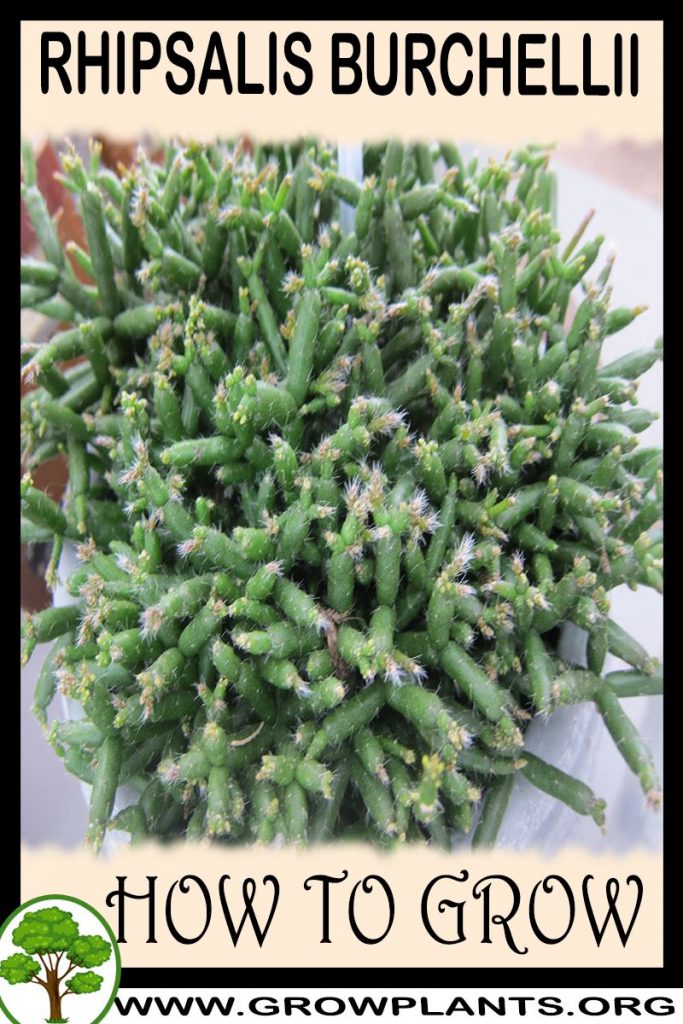
Plant Profile & Key Characteristics
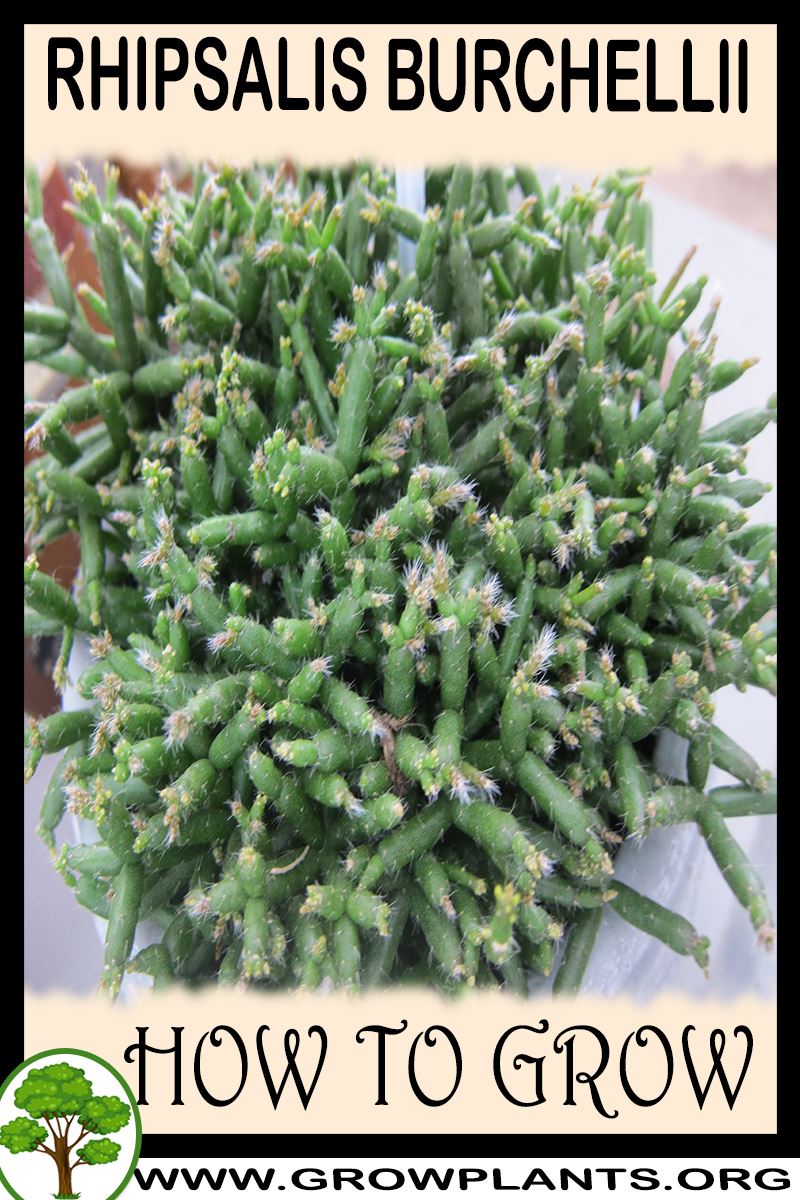
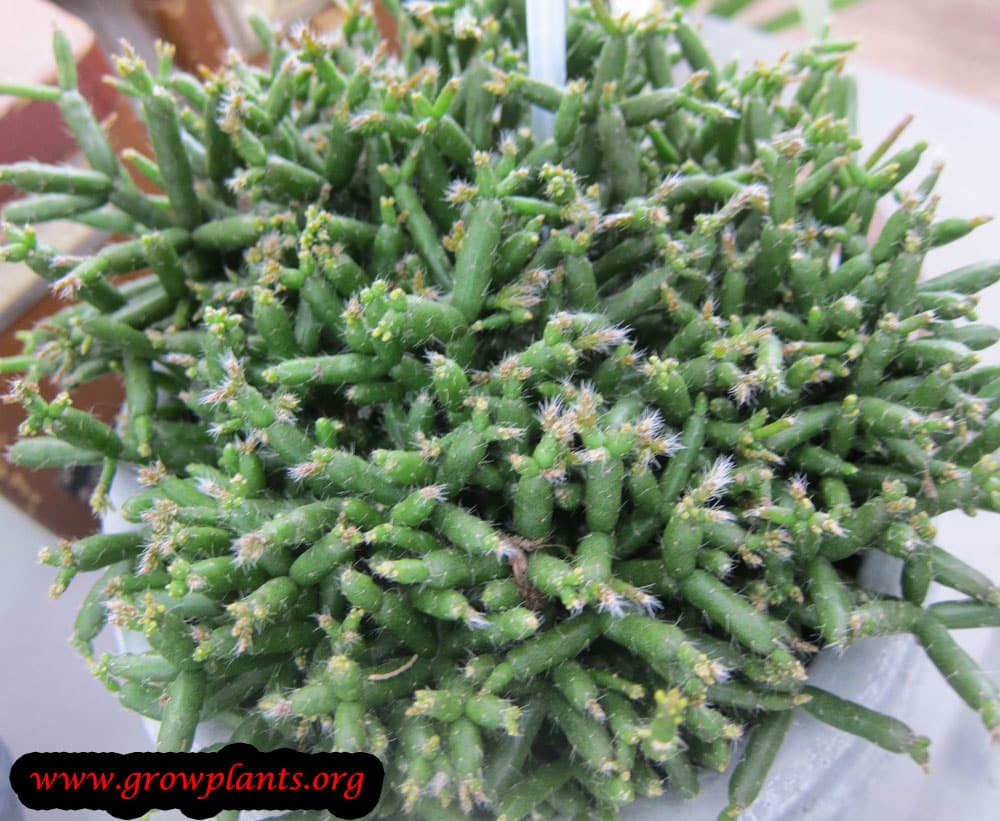
Overview: A trailing epiphytic cactus with weeping green stems 10-30 cm (4-12 in) long, grown as an ornamental and popular houseplant. Evergreen and slow-growing, it cascades from pots and baskets.
Quick Specifications
| Specification | Attribute |
|---|---|
| Plant Type / Life Cycle | Perennial (evergreen epiphytic cactus) |
| Foliage Type | Evergreen (leafless green stems) |
| Mature Size | Stems 10-30 cm (4-12 in), trailing longer with age |
| Growth Rate | Slow |
| Root System | Epiphytic — fine, shallow adventitious roots |
| Toxicity | Non-toxic (widely grown as a pet-safe houseplant) |
| Hardiness | USDA zone 10+ |
Growth Form & Structure
- Height & Spread: Trailing stems 10-30 cm (4-12 in), lengthening in a hanging pot; an excellent basket and container plant.
- Growth Habit & Form: Pendent, weeping epiphytic cactus with slender cylindrical stems.
- Lifespan & Maturity: Long-lived evergreen.
Anatomy & Physical Features
- Leaves & Foliage: Leafless; slender green (sometimes pink-tinged) stems bearing fine spines, not erect and often weeping.
- Flower Characteristics: Small white flowers with many stamens, borne along the stems.
- Fruit Profile: Small red berries with fine spines.
Primary Uses & Landscape Value
- Functional & Ornamental Roles: Hanging-basket and container ornamental, and a favourite indoor houseplant.
Care Guide: Planting, Soil & Watering
Overview: Rhipsalis burchellii is a trailing, epiphytic jungle cactus that likes bright but filtered light and an open, humus-rich yet fast-draining mix. Unlike desert cacti it enjoys steadier moisture, but still needs excellent drainage and dislikes soggy roots.
Quick Care Requirements
| Requirement | Ideal Condition |
|---|---|
| Planting Season | Year-round in warm, frost-free conditions |
| Growth Rate | Slow |
| Soil Type | Open, humus-rich, very free-draining (epiphytic/orchid-type mix) |
| Water Need | Low to Moderate — lightly moist, never waterlogged |
Planting & Establishment
- Best Planting Season: Can be planted or potted at any time of year in a warm, frost-free spot; it is tender (hardy only in zone 10+) and is often grown as a houseplant or in a hanging container.
- How to Plant:
- Hole Preparation: Set into a hanging pot or basket; being naturally epiphytic it wants a small, airy root zone rather than a deep, heavy one.
- Soil Amendments: Use an open mix — orchid bark, coco coir or peat with perlite — to mimic the loose, organic material it roots into in the wild.
- Planting Depth: Plant shallowly, just covering the roots, and let the trailing stems spill over the pot edge.
- Growth Speed & Expectations: A slow grower that gradually lengthens its weeping stems over time; give it a few seasons to fill and cascade from a basket.
Soil, Watering & Drainage Care
- Soil Mix & Drainage Needs: The mix must be both moisture-retentive and extremely airy — roughly half organic matter, half drainage material — in a freely draining pot. Grown indoors it needs bright light and good air movement.
- Watering Schedule & Technique:
- Young / Newly Planted: Keep the mix lightly and evenly moist while the new plant roots in, without letting it stay wet.
- Established: Water when the top of the mix begins to dry, then let excess drain away; it prefers more regular moisture than desert cacti but still hates sitting in water.
- Seasonal Adjustments: Water a little more in the warm growing months and give it some humidity; reduce watering in winter when growth slows.
Climate, Light & Hardiness
Rhipsalis burchellii (Mistletoe Cactus) is a shade-tolerant, trailing epiphytic cactus suited to tropical, subtropical and mediterranean climates, and it also grows well as a houseplant. It has limited frost tolerance and generally needs mild, essentially frost-free conditions.
Quick Climate Specifications
| Climate Zones | Tropics, subtropical, mediterranean, or indoors as a houseplant |
|---|---|
| USDA Hardiness Zones | Approximately 10+ |
| Optimal Temp Range | Approximately 18–26°C (64–79°F) |
| Frost Tolerance | Very Low |
| Light Conditions | Half shade |
Sunlight & Light Exposure
Optimal Light Setup
Half shade or bright indirect light suits its trailing, epiphytic stems best, reflecting its natural habitat under a forest canopy.
Shade & Heat Management
Avoid harsh direct sun, which can scorch the thin, spiny, weeping stems; when grown as a houseplant it does best with plenty of bright light even though it is not a full-sun plant outdoors.
Best Exposure / Orientation
A hanging basket in dappled outdoor shade in mild climates, or a bright indoor window without intense direct midday sun.
Temperature Extremes & Hardiness
USDA Hardiness & Regional Limits
The site places it at roughly zone 10+; outside mild, essentially frost-free tropical, subtropical or mediterranean climates it is best grown as an indoor houseplant, which the site confirms works well.
Cold Damage & Winter Protection
The site does not give a specific minimum temperature, but as a zone 10+ tropical epiphyte it should be treated as having little to no frost tolerance; move container and hanging-basket plants under cover before cold weather.
Frost Sensitivity
High - treat as frost-tender.
Extreme Heat Tolerance
Moderate; as an understory epiphyte it prefers steady warmth over prolonged extreme heat, particularly if combined with dry air.
Wind, Humidity & Microclimate
Humidity Preferences
Appreciates moist air, consistent with the site's "moist" care guidance and its tropical epiphytic origin.
Dry-Air Tolerance
Moderate to low; very dry indoor air can stress it, especially near heating vents.
Rainfall & Seasonal Moisture
Adapted to the steadier moisture of tropical and mild climates rather than a harsh dry season; well-drained but consistently lightly moist growing medium suits it best.
Microclimate Recommendations
A shaded to partly shaded, humid spot such as a hanging basket under tree cover outdoors, or a bright, humid indoor room away from cold drafts and intense direct sun.
Growing in Pots, Balconies & Indoors
Rhipsalis burchellii is a delicate trailing epiphytic cactus and a fine houseplant – the grower confirms it grows indoors with plenty of light, and in pots. Compact at 10-30 cm (4-12 in) and happiest in bright, indirect light, its fine cascading stems are made for a hanging pot indoors.
Quick Details
- Container Size: A small pot or hanging basket; shallow-rooted, so depth is not important
- Indoor Suitability: A good houseplant with plenty of bright, indirect light
- Best Spot: Bright, indirect light – keep it out of harsh direct sun
- Soil & Drainage: Free-draining, lightly organic cactus mix; strong drainage holes
- Watering in Pots: Water when the top of the mix dries; a little more than desert cacti, never soggy
Indoors & On the Windowsill
- A real houseplant: Grows well indoors with plenty of light – let the fine stems trail from a hanging pot or high shelf.
- Windowsill growing: Bright, indirect light keeps it full; as a forest cactus it dislikes scorching direct sun through glass.
- Care: It likes a little more humidity and moisture than desert cacti, but must drain freely.
On a Balcony or Patio
- Light & wind: A bright, shaded, sheltered balcony suits it in the warm months; keep it from hot sun and wind, which dry and snap the fine stems.
- Bring it in for winter: Frost-tender – move it indoors before cold weather.
Choosing the Pot, Soil & Long-Term Care
- Pot & drainage: A small pot or hanging basket with strong drainage holes and no standing water.
- Potting mix: A free-draining, lightly organic cactus mix suits this epiphyte.
- Feeding: Light feeding through the growing season, as pot nutrients leach away.
- Repotting: Refresh the mix every couple of years or when the roots fill the pot.
Fertilizing & Feeding
A light feeder: this epiphytic cactus does well with only occasional, diluted feeding while it is actively growing, and none while it is resting through cooler weather.
Quick Fertilizing Specs
| Feeding Level | Light feeder |
|---|---|
| Main Nutrient Priority | A diluted, low-nitrogen feed matched to this epiphytic species’ naturally lean, bark-based growing conditions |
| Best Feeding Period | The active warm-season growth period |
| Organic Options | A well-aerated, humus-rich mix (an orchid-bark style blend) suits this epiphyte better than a plain mineral cactus mix |
| Reduce/Stop Feeding | Feeding is stopped through the cooler rest period |
| Micronutrients | A complete, diluted fertilizer usually covers routine needs |
| Soil pH | Slightly acidic suits this epiphytic species best |
Feeding by Growth Stage
Warm-season active growth
Keep the trailing, pink-tinged stems producing healthy new segments without forcing soft growth.
| Nutrient direction | A diluted, low-nitrogen fertilizer fits this epiphyte’s naturally lean, well-aerated growing conditions in the wild. |
|---|---|
| Timing | Through the active warm-season growth period. |
| Frequency | Light, occasional feeding during active growth; minimal feeding is needed the rest of the year. |
| Fertilizer types | A diluted, low-nitrogen fertilizer, A well-aerated, humus-rich epiphyte-style mix |
| Precautions | Feed lightly – the fine, delicate root system of this epiphyte is easily injured by fertilizer salts if feeding is too strong or too frequent. |
Cooler-season rest
Let the plant coast through its cooler, slower period without competing feeding demands.
| Nutrient direction | None – withhold fertilizer while the plant is resting. |
|---|---|
| Timing | Through the cooler, slower-growth part of the year. |
| Frequency | No feeding at this stage; feeding resumes only once active growth restarts. |
| Fertilizer types | No feeding at this stage; hold off fertilizing until active growth resumes. |
| Precautions | Withhold fertilizer through this rest period – the fine roots of a resting plant are especially prone to salt injury from continued feeding. |
Nutrient Deficiency Signs & Corrections
Stems fade toward a dull, pale green and new segment growth slows.
| Possible causes | low available nitrogen in a mix that has gone a long time without feeding, nitrogen leached out by frequent watering, a humus-rich mix that has broken down and lost fertility |
|---|---|
| Appears first on | older, inner stem sections |
| What to check | feeding history, condition and age of the potting mix, watering frequency |
| Possible correction | Apply a diluted, low-nitrogen fertilizer during active growth and refresh the potting mix if it has broken down. |
New stem tip growth emerges pale or yellowish while established stems stay green.
| Possible causes | high mix pH limiting iron availability, waterlogged or poorly aerated mix restricting root uptake, a mix depleted of micronutrients over time |
|---|---|
| Appears first on | the newest growth at the stem tips |
| What to check | mix drainage and aeration, mix age, recent watering habits |
| Possible correction | Improve drainage, correct pH if identified as a cause, and apply a chelated iron product per its label. |
Stem tips shrivel or brown even though watering seems otherwise adequate.
| Possible causes | fertilizer salt buildup from infrequent flushing, underwatering that concentrates salts in the mix, feeding more often or more strongly than this fine-rooted epiphyte can use |
|---|---|
| Appears first on | stem tips and the youngest segments |
| What to check | recent feeding frequency and strength, time since the mix was last flushed, container drainage |
| Possible correction | Ease off feeding, flush the mix thoroughly with water, then resume only light feeding. |
Pruning, Training & Seasonal Maintenance
Rhipsalis burchellii is a weeping epiphytic cactus with trailing, jointed stem segments and no woody framework, so pruning is about light shaping, not structural work. Trimming is tolerated at any time of year, and the main objective is controlling trailing length and encouraging fullness. It blooms with small white flowers in autumn/winter along its stems, so heavy cutting shortly before that window removes flowering positions for the coming display.
Quick Pruning & Maintenance Specs
| Pruning Tolerance | Moderate |
| Primary Pruning Window | Any time for light shaping |
| Secondary Maintenance Window | After autumn/winter bloom finishes, for larger shaping cuts |
| Typical Frequency | Occasional – as trailing stems lengthen or thin out |
| Main Objective | Control trailing length; encourage fullness; propagate via cuttings |
| Young Plant Priority | Pinch tips lightly to encourage branching from the base |
| Mature Plant Priority | Trim leggy or bare stems; thin dense old growth for airflow |
| Best Tool Type | Precision snips |
| Avoid Heavy Pruning During | Just before autumn/winter bloom, if flowering display is the priority |
Pruning by Plant Age & Size
Newly Established
Leave undisturbed while the plant settles in; remove only clearly dead or damaged segments.
Young / Formative
No structural training system applies. Light tip pinching encourages bushier basal branching instead of a few long bare strands.
Mature / Established
Trim back bare or overly long trailing stems to keep the plant full, and thin crowded old growth occasionally to maintain airflow through the clump.
Seasonal Pruning Schedule
Light shaping is tolerated year-round. The best window for any larger trim is right after the autumn/winter bloom finishes, since cutting stems beforehand removes the areoles that would have flowered that season.
Special Growth to Remove
- Dead or shriveled stem segments.
- Excess leggy growth – segments can be taken as cuttings to propagate new plants, which this species roots easily from.
Container & Small-Space Pruning
This species is almost always grown as a hanging-basket houseplant. Pruning is about controlling how far stems trail below the pot and keeping the mass full – pinch new growth to fill gaps, and trim any strand that outgrows the display space.
Tools
- Precision snips – the soft, jointed stem segments need only a small clean tool; no saw or lopper is ever needed.
Tool Hygiene & Disease Risk
Routine: clean, sharp snips are sufficient. This is a low disease-transmission-risk plant; the main hazard from a dirty cut is localized rot rather than a spreading pathogen.
Cut Placement & Technique
Cut cleanly at a stem-segment joint rather than mid-segment, following the plant’s natural jointed structure for faster healing.
Heavy Pruning & Rejuvenation
Moderate rejuvenation is tolerated: cutting back bare or leggy stems encourages fresh basal growth. Avoid removing more than about a third of the plant at once, since the epiphytic root system has limited reserves to push a full flush of new growth.
Post-Pruning Care
Ease off watering slightly right after a larger trim and hold off on fertilizing until new growth appears. In humid conditions, check cut ends for softening or rot over the following days.
Common Pruning Mistakes
- Cutting mid-segment instead of at a joint, leaving an unnatural stub.
- Shearing off most of the plant right before its autumn/winter bloom, sacrificing that season’s flowers.
- Overwatering immediately after a hard trim.
When NOT to Prune
Avoid heavy cutting in the weeks leading into the autumn/winter bloom period if you want a full flower display, and hold off pruning any stem that is actively stressed or rotting until the cause is addressed.
Recommended Tools (by task)
- precision_snips – the only tool needed; soft trailing stems require a small, clean cut, not heavier tools.
Propagation Guide
Like other Rhipsalis, R. burchellii is propagated almost entirely from stem (cladode) cuttings rather than seed, and it roots easily without any grafting or special technique. This makes it one of the easier cacti to increase at home.
Quick Propagation Specs
| Best Propagation Method | Stem (cladode) cuttings |
| Alternative Methods | Layering of trailing stems where they touch moist media |
| Propagation Difficulty | Easy |
| Vegetative True-to-Type | Yes |
| Best Propagation Season | All year; best results in the warmer months |
| Cutting Rooting Time | Typically a few weeks under warm, humid conditions |
Stem Cuttings
Cutting Type
Take one or more healthy cladode segments (green, or green tinged with pink) a few centimeters long, cutting cleanly where segments join.
Best Timing
Can be taken year-round since the plant is kept outdoors or as a houseplant all year, though cuttings root fastest in the warmer months.
Cutting Preparation
Allow the cut end to dry and callus for a few days in a shaded spot before inserting it, to reduce the risk of rot.
Rooting Setup
Insert the callused end into a moist, well-drained mix suited to epiphytic cacti, out of direct sun, and keep it only lightly watered until rooted.
Rooting Hormone
Not necessary.
Rooting Time
Usually a few weeks to establish new growth, faster in warm, humid conditions.
Air & Ground Layering
Because the stems weep rather than growing erect, a trailing stem can be rested onto moist potting mix in a nearby pot while still attached to the parent; rooted contact points can later be severed to start a new plant.
Bloom & Flower Guide
Quick Details
- Bloom Season: Autumn into winter.
- Flower Appearance: Small white flowers with many stamens along the fine, trailing stems.
- Edibility: Ornamental only; not an edible flower. Not known to be toxic and a good pet-safe choice.
Detailed Blooming Overview
Rhipsalis burchellii is a mistletoe cactus with especially fine, thread-like trailing stems, and it flowers in the cooler months with a scatter of tiny white blooms. As with other Rhipsalis, the flowers are small and stamen-filled rather than showy, and they are often followed by small pale berries. It is at its best spilling from a hanging pot where the delicate flowering can be appreciated up close.
Flower Characteristics
- Colour: white.
- Form: small flowers with many stamens.
- Position: along the fine, trailing stems.
Bloom Care & Thinning
- Treat it as an epiphyte: bright indirect light, an open bark-based mix and steady humidity give the best flowering.
- A cooler, slightly drier autumn rest helps trigger the buds.
- Trim sparingly: flowers form on mature stems, and the tiny blooms need no deadheading.
Pests, Diseases & Troubleshooting
Rhipsalis are epiphytic ‘jungle’ cacti from humid forests and are among the easiest, most pest-resistant houseplants. Their real risks are rot from overwatering or cold and, occasionally, the usual indoor sap-suckers. Bright indirect light, an airy free-draining mix and letting the surface dry between waterings keep them problem-free.
Quick Troubleshooting Overview
| Issue / Pest | Main Symptom | Primary Solution |
|---|---|---|
| Mealybugs | White cottony fluff in stem joints and at roots | Alcohol swab, horticultural oil, isolate & repot |
| Scale insects | Brown limpet bumps on the stems | Scrape off, dab alcohol or oil |
| Spider mites | Fine stippling, dull segments in dry air | Raise humidity, hose, horticultural oil |
| Fungus gnats | Small flies from damp mix; larvae at roots | Let mix dry, sticky traps, reduce watering |
| Stem & root rot | Soft, yellow, mushy, dropping segments | Free-draining mix, less water, warmth |
| Segment drop / shrivel | Segments shrivel or drop | Correct watering; avoid cold and drought |
Common Pests & Management
- Mealybugs (Pseudococcus / Planococcus spp.):
- Symptoms: Cottony white tufts lodged in the joints and branch axils of the trailing stems, and root mealybug on the roots when repotted; they sap the plant, cause yellowing and weak growth, and leave honeydew.
- Prevention & Control: Dab clusters with a cotton bud dipped in surgical spirit, and for root mealybug wash the roots and repot into fresh mix. A horticultural-oil or neem drench helps; isolate infested plants and check neighbours regularly.
- Scale insects (Coccidae / Diaspididae):
- Symptoms: Small brown limpet-like bumps fixed along the stems, sucking sap and causing yellow spotting, weak growth and honeydew with sooty mould.
- Prevention & Control: Scrape or pick them off and dab with surgical spirit, or coat with horticultural oil to smother them; inspect the trailing stems regularly as scale hides well.
- Spider mites (Tetranychus urticae):
- Symptoms: In hot, dry indoor air fine mites cause pale stippling and a dull, greyish look to the segments, with very fine webbing in bad cases.
- Prevention & Control: Raise humidity, mist and hose the plant, as mites hate moisture, and improve airflow. Wipe or spray with horticultural oil or insecticidal soap, repeating to catch new hatchlings.
- Fungus gnats (Bradysia spp.):
- Symptoms: Small dark flies running over constantly damp compost; their larvae feed on roots and organic matter and can weaken the plant.
- Prevention & Control: Let the top of the mix dry between waterings, use an open free-draining medium, set yellow sticky traps, and treat with Bti or nematodes if larvae persist.
Diseases & Fungal Issues
- Stem & root rot (Phytophthora / Pythium / Fusarium spp.):
- Symptoms: Segments yellow, turn soft, brown and mushy and drop, and the base or roots rot; caused by overwatering, a soggy mix or cold, wet conditions. The main way Rhipsalis are lost.
- Treatment & Management: Grow in an airy, free-draining epiphytic mix, water only when the surface has dried, and keep warm and out of cold draughts. Cut away all rotted tissue back to firm green growth and re-root healthy segments as cuttings.
- Fungal leaf/stem spots (Misc. fungi):
- Symptoms: Occasional dark or sunken spots on the stems in stagnant, over-humid, poorly ventilated conditions.
- Treatment & Management: Improve airflow, avoid keeping the stems constantly wet, and remove badly marked segments. A copper or sulfur treatment checks spread if needed.
Growing Difficulties & Abiotic Problems
- Overwatering rot:
- Cause & Symptoms: Kept too wet or in a dense, water-holding mix, the roots and stems suffocate and rot – the commonest problem.
- Correction Strategy: Use an open, free-draining epiphytic mix, water thoroughly then let the surface dry, and reduce watering in cool, dull conditions.
- Segment shrivel from underwatering / drought:
- Cause & Symptoms: Left bone-dry too long the segments shrivel and go limp.
- Correction Strategy: Water more regularly in growth so the mix never dries out completely; being epiphytes they like even, light moisture and humidity.
- Scorch in direct sun:
- Cause & Symptoms: As forest epiphytes, harsh direct sun bleaches and scorches the stems.
- Correction Strategy: Give bright indirect light or dappled shade; acclimatise gradually to any stronger light.
- Cold / draught damage:
- Cause & Symptoms: Cold air and draughts cause segment yellowing, drop and rot.
- Correction Strategy: Keep above the plant’s minimum temperature, away from cold windows and draughts, and reduce watering when cool.
What Helps – Products & Tools
Rhipsalis need very little: an open, free-draining epiphytic mix and correct watering do most of the work. Keep surgical spirit and horticultural/neem oil for mealybugs and scale, insecticidal soap for the rare spider mite, and yellow sticky traps for fungus gnats.