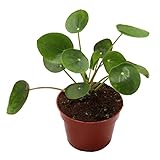

Plant Profile & Key Characteristics
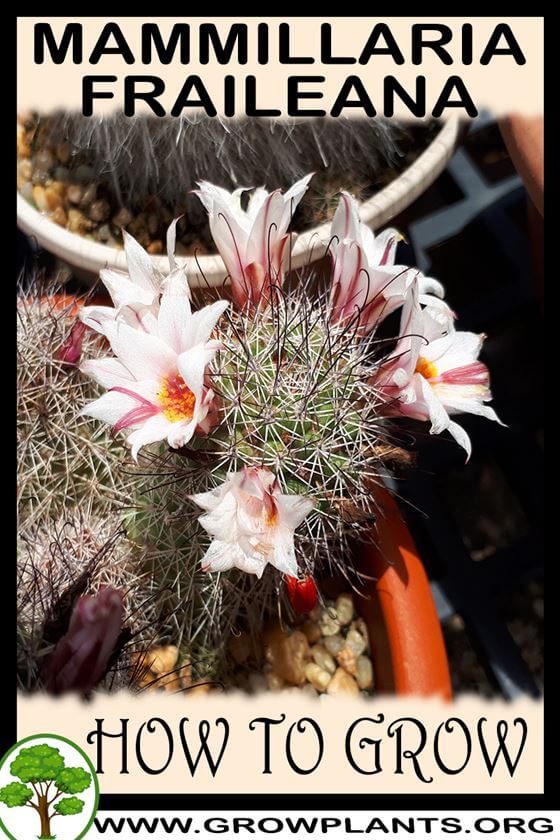
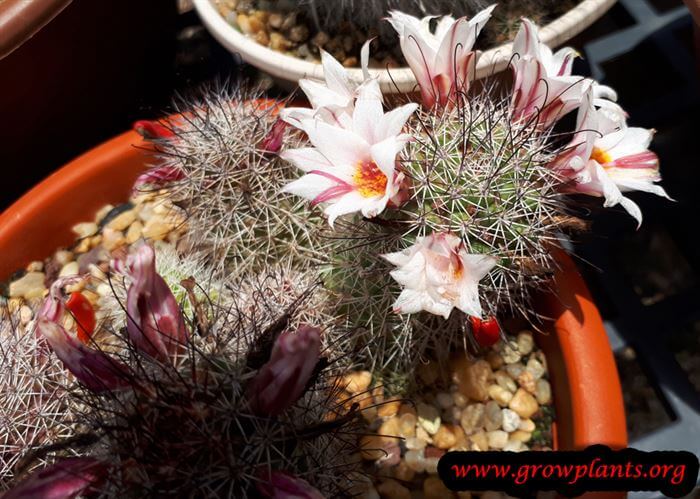
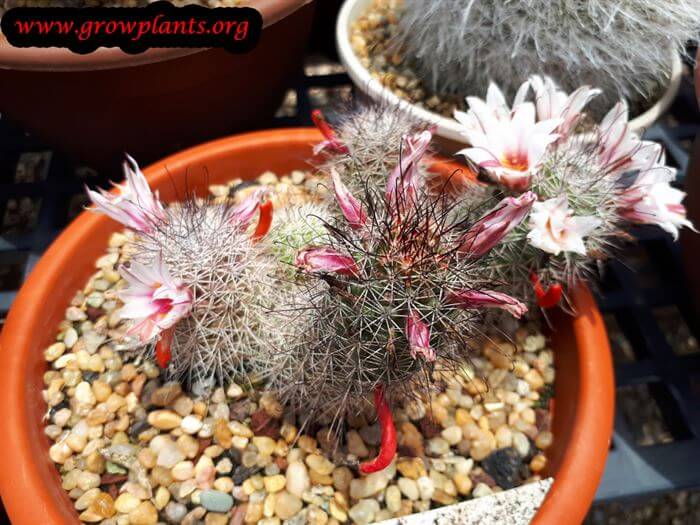
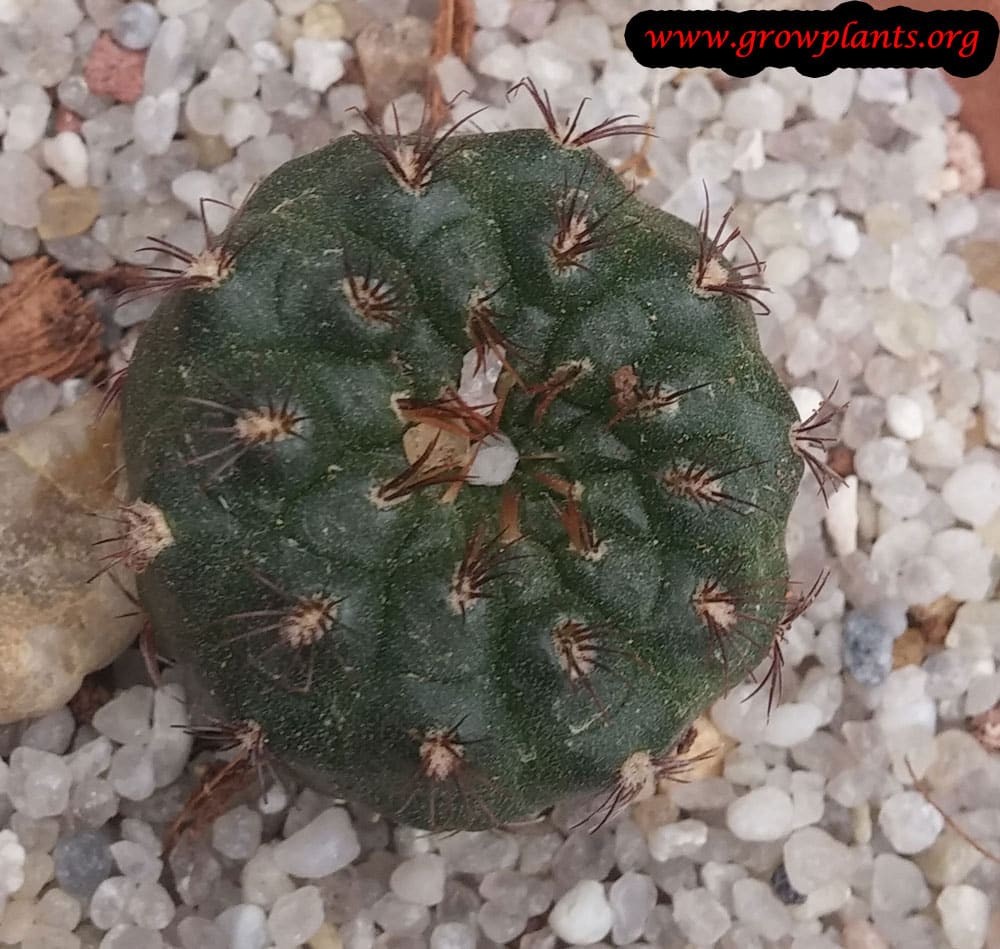
Overview: A miniature globular cactus just 2-5 cm (1-2 in) across, evergreen and very slow-growing. It is grown as a drought-tolerant ornamental novelty, prized by collectors for its tiny sea-urchin-like body.
Quick Specifications
| Specification | Attribute |
|---|---|
| Plant Type / Life Cycle | Evergreen perennial (cactus) |
| Foliage Type | Evergreen (a leafless succulent stem) |
| Mature Size | 2-5 cm (1-2 in) across |
| Growth Rate | Slow |
| Toxicity | Non-toxic, though the body bears fine spines |
| Hardiness | USDA zones 10-12 (keep above about 4 °C / 39 °F) |
Growth Form & Structure
- Height & Spread: A tiny, solitary or clustering globe 2-5 cm (1-2 in) wide; ideally a small-pot or bright-windowsill plant.
- Growth Habit & Form: Small round to slightly flattened stem, sometimes clustering, resembling a sea urchin.
- Lifespan & Maturity: Slow-growing but long-lived in a pot; it flowers readily even when very small.
Anatomy & Physical Features
- Leaves & Foliage: Leafless; the ribbed, spiny stem is green, red, purple or multi-coloured and does the work of leaves.
- Flower Characteristics: Small, light-yellow, many-petalled flowers that often set seed without opening (self-fertile, cleistogamous).
Primary Uses & Landscape Value
- Functional & Ornamental Roles: Ornamental container and windowsill cactus and a drought-tolerant collector’s and dish-garden plant.
Care Guide: Planting, Soil & Watering
Overview: Frailea is a tiny globular cactus that needs full sun and very sharp-draining, gritty soil. It stores water in its small body and asks for only occasional, careful watering, staying above about 4C.
Quick Care Requirements
| Requirement | Ideal Condition |
|---|---|
| Planting Season | Spring to summer |
| Growth Rate | Slow |
| Soil Type | Very free-draining, gritty cactus mix |
| Water Need | Low; let the soil dry out fully between waterings |
Planting & Establishment
- Best Planting Season: Plant in spring or summer during active growth; keep it above roughly 4C year-round.
- How to Plant:
- Hole Preparation: Use a small pot or spot with a gritty cactus mix that drains almost instantly.
- Soil Amendments: Blend in plenty of coarse sand, grit or pumice; ordinary rich soil holds too much water for this cactus.
- Planting Depth: Set the base of the stem at soil level, never buried, and top-dress with grit to keep the neck dry.
- Growth Speed & Expectations: A very slow grower, staying just 2-5 cm across, so it is happiest in a small container.
Soil, Watering & Drainage Care
- Soil Mix & Drainage Needs: Demands the sharpest drainage; water must never linger at the roots, which rot easily in damp, cold conditions.
- Watering Schedule & Technique:
- Young / Newly Planted: Water sparingly, letting the mix dry completely between waterings.
- Established: Give small amounts only during the warm growing season, always allowing the soil to dry out first.
- Seasonal Adjustments: Keep almost completely dry through winter to avoid rot.
Climate, Light & Hardiness
Frailea is a very small, sun-loving cactus suited to desert, mediterranean and subtropical climates. It has limited cold tolerance, with the site's own guidance being to keep it above roughly 4°C (39°F).
Quick Climate Specifications
| Climate Zones | Desert, mediterranean, subtropics |
|---|---|
| USDA Hardiness Zones | 10–12 |
| Optimal Temp Range | Approximately 18–30°C (64–86°F) during active growth |
| Approx. Survival Minimum | Around 4°C (39°F) per the site's own data |
| Frost Tolerance | Very Low |
| Light Conditions | Full sun |
Sunlight & Light Exposure
Optimal Light Setup
Full sun is needed for healthy, compact growth of its tiny, urchin-like body; indoors it is only suited to a very sunny window.
Direct Sun Requirement
Direct sun is important; the site notes it can only be grown indoors on a window with a lot of sun, and is otherwise not a typical houseplant.
Shade & Heat Management
Handles intense desert and mediterranean sun well once established, given its diminutive, ground-hugging habit.
Best Exposure / Orientation
An open, unshaded rockery or shallow, well-drained container in full sun; indoors, only a south-facing, very sunny windowsill is suitable.
Temperature Extremes & Hardiness
USDA Hardiness & Regional Limits
Suited to USDA zones 10–12; outside these mild-winter climates it needs protection or indoor growing.
Cold Damage & Winter Protection
The site's own guidance is to keep it above roughly 4°C (39°F); keep the soil dry going into winter, since cold combined with wet roots is far more damaging to this small-bodied cactus than cold alone.
Frost Sensitivity
High - its small size gives it little buffering capacity against cold compared with larger cacti.
Extreme Heat Tolerance
Very good; well adapted to hot, dry desert and mediterranean summers.
Wind, Humidity & Microclimate
Humidity Preferences
Prefers the low-to-moderate humidity typical of desert and mediterranean climates.
Dry-Air Tolerance
High - well adapted to dry air.
Rainfall & Seasonal Moisture
Adapted to climates with a pronounced dry season; sharply drained soil matters more than rainfall amount, since its small, shallow body is especially prone to rot in consistently wet conditions.
Microclimate Recommendations
A raised, gritty, well-drained spot in full sun suits it best, or a consistently sunny windowsill indoors; avoid low, damp, or shaded planting spots.
Growing in Pots, Balconies & Indoors
Frailea is a tiny, sun-loving globular cactus – just 2-5 cm (1-2 in) across. The grower says it is not a general houseplant but can be grown on a window with plenty of sun, and it takes to pots readily. Its miniature size makes it perfect for a small container on the brightest sill.
Quick Details
- Container Size: A small, shallow pot only slightly larger than the plant
- Indoor Suitability: Not a general houseplant; only a very sunny window suits it
- Best Spot: Full sun – the brightest windowsill or a sunny patio
- Soil & Drainage: Gritty cactus mix over a gravel base; strong drainage holes
- Watering in Pots: Water sparingly and let it dry out fully between waterings
Indoors & On the Windowsill
- Not a general houseplant: The grower notes it will not thrive in ordinary indoor light. A ready-made cactus and succulent soil mix provides that structure without mixing it yourself.
- Windowsill growing: On a window with a lot of sun it does well – give it the brightest, sunniest sill you have.
- Overwintering: Frost-tender; keep it bright, cool and nearly dry over winter.
On a Balcony or Patio
- Light & wind: Loves full sun on a warm, sheltered balcony; being so small, keep the little pot from being blown over and dried out.
Choosing the Pot, Soil & Long-Term Care
- Pot & drainage: Use a pot only 20-50% larger than the plant – it need not be deep, since the roots run shallow. Add a layer of gravel, lava rock or pebbles in the base, give it strong drainage holes, and never leave it standing in water.
- Potting mix: A free-draining cactus and succulent mix – gritty and well aerated so it dries quickly.
- Feeding: Potted cacti need only light feeding, as nutrients leach out with each watering; a dilute low-nitrogen cactus feed through the warm growing season is enough.
- Repotting: Every few years, once the roots fill the pot or the mix has broken down, refresh the soil and move up one size.
Fertilizing & Feeding
A very light feeder: this naturally small-bodied cactus needs only minimal feeding during active summer growth, with no feeding through the cool dormant rest.
Quick Fertilizing Specs
| Feeding Level | Light feeder |
|---|---|
| Main Nutrient Priority | A well-diluted, low-nitrogen cactus feed suited to a naturally tiny body size |
| Best Feeding Period | The warm active growing season |
| Organic Options | Minimal – a lean mineral cactus mix suits this small-bodied species |
| Reduce/Stop Feeding | Feeding is stopped through the cool dormant season |
| Micronutrients | A complete cactus fertilizer usually covers routine needs |
| Soil pH | Tolerates a wide range in a fast-draining mix |
Feeding by Growth Stage
Warm-season active growth
Support slow, steady growth of the small round body without pushing oversized, weak growth.
| Nutrient direction | A well-diluted, low-nitrogen cactus fertilizer suits this naturally small-bodied, slow-growing species. |
|---|---|
| Timing | During the warm active growing season. |
| Frequency | Minimal feeding is enough for this small, slow grower; light feeding during active growth is plenty. |
| Fertilizer types | A well-diluted, low-nitrogen cactus or succulent fertilizer |
| Precautions | Feed very lightly – overfeeding this small-bodied species pushes oversized, weak growth that loses its natural compact form. |
Cool-season dormancy
Let the plant rest through cooler weather without pushing new growth it can’t support.
| Nutrient direction | None – withhold fertilizer while the plant is dormant. |
|---|---|
| Timing | Through cool weather or the winter rest period. |
| Frequency | No feeding at this stage; feeding resumes once active growth restarts. |
| Fertilizer types | No feeding at this stage; hold off fertilizing until active growth resumes. |
| Precautions | Withhold fertilizer during dormancy – feeding a resting plant wastes nutrients and risks salt buildup around the roots. |
Nutrient Deficiency Signs & Corrections
The small round body takes on a dull, pale-green cast and growth stalls even in the growing season.
| Possible causes | low available nitrogen in a very lean mineral mix, nitrogen leached out by watering or rain, a mix that has gone a long time without any nutrient input |
|---|---|
| Appears first on | the body overall |
| What to check | feeding history, potting mix composition, watering frequency |
| Possible correction | Apply a well-diluted, low-nitrogen cactus fertilizer during active growth and consider refreshing the potting mix. |
New growth at the crown looks pale or yellowish while the rest of the body stays green.
| Possible causes | high soil pH limiting iron availability, waterlogged or poorly aerated soil restricting root uptake, a potting mix depleted of micronutrients over time |
|---|---|
| Appears first on | the newest growth at the crown |
| What to check | soil drainage and aeration, potting mix age, recent watering habits |
| Possible correction | Improve drainage, correct pH if identified as a cause, and apply a chelated iron product per its label. |
The body surface browns or scars despite otherwise adequate care.
| Possible causes | fertilizer salt buildup from infrequent flushing, underwatering that concentrates salts in the mix, feeding more often than this small plant can use |
|---|---|
| Appears first on | the body surface, especially near the crown |
| What to check | recent feeding frequency and strength, time since the mix was last flushed, container drainage |
| Possible correction | Ease off feeding, flush the mix thoroughly with water, then resume only light feeding. |
Pruning, Training & Seasonal Maintenance
Frailea is a tiny cactus, typically only 2–5cm across, growing as a small solitary or clustering ball with no woody structure and no branches to train or shape. The only maintenance that qualifies as pruning is removing spent flowers and any dead or shriveled tissue; given the plant’s minute size, this is closer to careful grooming with fine-tipped snips than conventional cutting, and it can be done whenever needed with no seasonal restriction.
Quick Pruning & Maintenance Specs
| Pruning Tolerance | Low – grooming only, no structural pruning |
| Primary Pruning Window | As needed, any time |
| Typical Frequency | Occasional, light – deadheading and dead-tissue removal |
| Main Objective | Remove spent flowers and dead tissue |
| Young Plant Priority | Leave undisturbed to establish |
| Mature Plant Priority | Deadhead spent flowers; remove dead tissue if present |
| Best Tool Type | Fine precision snips or tweezers, given the plant’s very small size |
| Avoid Heavy Pruning During | Not applicable – the plant has no heavy pruning option at this scale |
Pruning by Plant Age & Size
Newly Established
No pruning; leave the tiny plant completely undisturbed while it establishes.
Young / Formative
No structural training applies at this scale – the plant simply grows as a small ball with no branches to guide.
Mature / Established
Deadhead spent flowers and remove any shriveled or dead tissue as noticed; no other intervention is warranted.
Special Growth to Remove
- Spent flowers – the main task noted for this species; remove faded blooms for tidiness. Frailea is notable for often producing small, cleistogamous (self-pollinating, sometimes non-opening) flowers, so spent bloom remnants can appear even without an obvious open-flower display.
- Dead or shriveled tissue – remove if present, taking care given the plant’s minute size.
Container & Small-Space Pruning
Always grown in small pots given its 2–5cm mature size; no size-control pruning is relevant since the plant never grows large enough to need it.
Tools
- Precision snips (fine-tipped) – the only tool needed, sized appropriately for deadheading a plant this small.
Tool Hygiene & Disease Risk
Routine: use clean, fine-tipped tools; the species is noted as susceptible to fungal issues, so avoid working on wet tissue and let any cut dry promptly.
Cut Placement & Technique
Snip spent flowers at their base without disturbing the surrounding areoles; work carefully given the plant’s small size and spines.
Heavy Pruning & Rejuvenation
Not applicable. A plant this small and slow-growing has no rejuvenation-pruning use case.
Post-Pruning Care
No special aftercare beyond resuming the plant’s normal light watering; avoid overwatering, which the species is already noted to be sensitive to.
Common Pruning Mistakes
- Using oversized tools that damage surrounding tissue on such a small plant.
- Leaving spent flower remnants to rot in place rather than removing them, given the plant’s small size and tight growth.
When NOT to Prune
Avoid working on the plant in cold or wet weather, given its noted fungal susceptibility.
Recommended Tools (by task)
- precision_snips – fine-tipped snips suited to deadheading and light grooming on this very small cactus.
Propagation Guide
Frailea is grown almost entirely from seed, which it sets abundantly and often without any hand-pollination; well-drained soil and a spring-to-summer sowing give the most reliable results. This is an easy cactus to propagate — seedlings grow slowly but need no special skill, and vegetative reproduction is not required to keep the plant healthy.
Quick Propagation Specs
| Best Propagation Method | Seed |
| Alternative Methods | Offsets, on plants that form basal clumps |
| Propagation Difficulty | Easy |
| Seed True-to-Type | Usually true-to-type |
| Vegetative True-to-Type | Yes |
| Best Propagation Season | Spring – Summer |
| Seed Germination Time | Typically a few weeks under warm, evenly moist conditions |
| Germination Temperature | Around 21–27°C (70–80°F), typical for globular cacti |
| Seed Sowing Depth | Surface-sow or barely cover; the seed is very fine |
Growing from Seed
Seed Handling & Viability
Collect seed once the small yellow flowers’ seed pods dry; many Frailea flowers are cleistogamous (self-pollinating and often staying closed), so plants routinely set seed on their own without intervention.
Sowing Season
Sow in spring or summer, matching the plant’s own recommended planting season, so seedlings have a full warm season to establish before winter.
Sowing Depth & Orientation
Scatter the fine seed on the surface of a well-drained, gritty mix and press it in lightly rather than burying it.
Germination Conditions
Keep the mix lightly and evenly moist (not saturated) and warm; strong direct sun is not needed at this stage even though mature plants want full sun.
Germination Time
Germination is generally spread over a few weeks, with some staggering rather than a single flush.
Seedling Care
Grow seedlings on with slightly more shade and more consistent moisture than mature plants need, tapering to the species’ normal small amount of water as they size up; mature plants stay only about 2–5 cm across, and growth is slow throughout, so patience is required.
Division, Offsets, Pups & Suckers
Grafting or other vegetative propagation is not necessary for this genus. Where a plant has produced basal offsets, remove them with a clean cut once they have their own roots (or set them aside to callus briefly first) and grow them on in the same well-drained mix as the parent; not every Frailea clumps, so seed remains the main route for most specimens.
Bloom & Flower Guide
Quick Details
- Bloom Season: Summer.
- Flower Appearance: Light yellow flowers with many petals, opening at the top of these small globular plants.
- Edibility: Ornamental only; not grown as an edible flower.
Detailed Blooming Overview
Frailea is a genus of tiny globular cacti with a fascinating flowering quirk: their pale yellow blooms are largely cleistogamous, meaning they often set seed without ever opening fully. The flowers only unfurl on the hottest, brightest, most settled days – and even then only briefly – yet the plant reliably produces fertile seed whether or not you catch the flowers open. So a Frailea that seems never to bloom may in fact be self-pollinating quietly inside closed buds.
Flower Characteristics
- Colour: light yellow.
- Form: multi-petalled flowers at the crown.
- Habit: often self-pollinating within buds that barely open (cleistogamous); they open fully only in strong heat and sun.
Bloom Care & Thinning
- Heat and strong sun: the only way to coax the buds to open fully is genuinely hot, bright, still conditions.
- Cool, dry winter rest: supports the natural cycle of these small plants.
- Little to do: no deadheading is needed; leave buds be, as they may be quietly setting seed.
Pests, Diseases & Troubleshooting
Overview: Frailea are tiny South American globular cacti that are essentially pest-light but rot-prone; the whole game is a gritty mix, careful watering and watching for root mealybugs. Fungal rot from wet, cold soil is the usual killer, so restraint with the watering can protects them more than any spray.
Quick Troubleshooting Overview
| Issue / Pest | Main Symptom | Primary Solution |
|---|---|---|
| Root mealybugs | Weak, checked growth; white specks and ‘mealy’ crusts on roots in the mix | Bare-root and rinse, repot in fresh mix, systemic/oil drench |
| Stem mealybugs | White cottony tufts between ribs and at the crown; honeydew | Alcohol swab, wash off, neem/horticultural oil |
| Spider mites (red spider) | Rusty, corky scarring on the body in dry heat; fine webbing | Raise humidity, horticultural oil, isolate |
| Fungus gnats | Tiny black flies over the mix; larvae in constantly wet compost | Let mix dry, sticky traps, avoid overwatering |
| Root/stem rot | Soft, brown, collapsing base; plant topples | Sharp drainage, dry hard, cut to clean tissue, fungicide |
| Etiolation / corking | Pale stretched growth or brown corky base | More light; corking at the base is natural with age |
Common Pests & Management
- Root mealybugs (Rhizoecus spp.):
- Symptoms: Hidden in the potting mix, these produce white waxy specks and crusts on the roots and inner pot wall; above ground the plant simply grows weakly, checks and fails to thrive for no obvious reason.
- Prevention & Control: Inspect roots when repotting; if found, bare-root the plant, rinse away all mix and visible mealybugs, and repot into fresh, gritty medium. A systemic drench or horticultural-oil soak of the root zone clears stubborn infestations, and quarantining new plants prevents spread.
- Mealybugs (stem) (Pseudococcus / Planococcus spp.):
- Symptoms: White cottony tufts nestled between the ribs and around the crown and spine clusters, with sticky honeydew and slow decline.
- Prevention & Control: Dab colonies with an alcohol swab and wash off; repeat with neem or horticultural oil, taking care in strong sun to avoid scorch, and isolate affected plants.
- Spider mites (red spider) (Tetranychus / Brevipalpus spp.):
- Symptoms: In hot, dry, still air the growing point and body take on a rusty, corky, scarred appearance, sometimes with fine webbing; the scarring is permanent.
- Prevention & Control: Raise humidity and improve airflow, isolate affected plants, and treat with horticultural oil or a miticide; new clean growth confirms control, but scarred tissue remains.
- Scale insects (Diaspididae):
- Symptoms: Small brown or grey limpet-like bumps on the body, causing yellow spotting and weakening.
- Prevention & Control: Scrape or wipe off with an alcohol swab and smother the rest with horticultural oil, repeating to catch crawlers.
- Fungus gnats (Sciaridae):
- Symptoms: Tiny black flies running over the mix; their larvae live in constantly wet compost and can gnaw seedling roots and stem bases, opening the door to rot.
- Prevention & Control: Let the mix dry out between waterings, use a gritty top-dressing, and set yellow sticky traps; correcting overwatering usually eliminates them.
Diseases & Fungal Issues
- Root and stem rot (Fusarium / Phytophthora / Pythium spp.):
- Symptoms: The classic killer of small cacti – the base turns soft, brown and mushy and the plant collapses or topples, driven by overwatering, poor drainage or cold wet soil.
- Treatment & Management: Prevention is everything: a very gritty free-draining mix, watering only when dry, and warmth. If caught early, cut away all rot into clean green tissue, dust with sulfur, dry hard, and re-root the top as a cutting; badly rotted plants are usually lost.
- Fungal body spot (various fungi):
- Symptoms: Brown or black sunken spots and blotches on the stem in damp, stagnant conditions.
- Treatment & Management: Improve airflow and reduce humidity, keep water off the body, and treat with a copper or sulfur fungicide; remove badly affected plants.
Growing Difficulties & Abiotic Problems
- Rot from overwatering:
- Cause & Symptoms: Soft, discolored, collapsing base – the commonest cause of death, from too much water, dense mix or cold wet conditions.
- Correction Strategy: Use a sharply draining mineral mix, water sparingly and only in active growth and warmth, and keep plants nearly dry and cool over winter.
- Etiolation:
- Cause & Symptoms: Pale, stretched, elongated growth (rather than a tight globe) in too little light.
- Correction Strategy: Provide bright light with some protection from the fiercest midday sun; stretched growth won’t reverse, but new growth firms up.
- Sunburn / scorch:
- Cause & Symptoms: Bleached, tan, scarred patches when a plant is moved abruptly from shade into intense sun.
- Correction Strategy: Acclimate gradually to brighter light over a couple of weeks; provide light shade in extreme heat.
- Corking:
- Cause & Symptoms: A brown, bark-like crust forming at the base with age – often natural, but premature corking can follow stress.
- Correction Strategy: Basal corking with maturity is normal and needs no action; ensure good light, careful watering and stable conditions to avoid stress-induced corking higher up.
What Helps – Products & Tools
For Frailea the key items are a systemic drench or horticultural-oil soak for root and stem mealybugs, horticultural oil or a miticide for red spider, yellow sticky traps for fungus gnats, and a copper or sulfur fungicide plus sharp-draining mineral mix to fend off rot. Careful, sparing watering is the single most protective ‘tool’. Apply oils out of strong sun to avoid scorch and follow the label.