Plant Profile & Key Characteristics
Overview: Freesia is a deciduous cormous perennial 20–40 cm (8–16 in) tall, grown from a corm for its sprays of highly fragrant, colourful funnel-shaped flowers. It is a popular ornamental and cut flower.
Quick Specifications
| Specification | Attribute |
|---|---|
| Plant Type / Life Cycle | Perennial (geophyte) |
| Foliage Type | Deciduous |
| Mature Size | 20–40 cm (8–16 in) |
| Growth Rate | Moderate |
| Root System | Cormous geophyte (grows from a corm) |
| Hardiness | USDA 8–11 |
Growth Form & Structure
- Height & Spread: 20–40 cm (8–16 in) tall; well suited to pots and containers.
- Growth Habit & Form: A clump of upright, narrow leaves with wiry, one-sided flower stems arising from an underground corm.
- Lifespan & Maturity: Moderate; corms flower seasonally and multiply over time.
Anatomy & Physical Features
- Leaves & Foliage: Narrow green sword-shaped leaves in linked groups; upright and easily snapped.
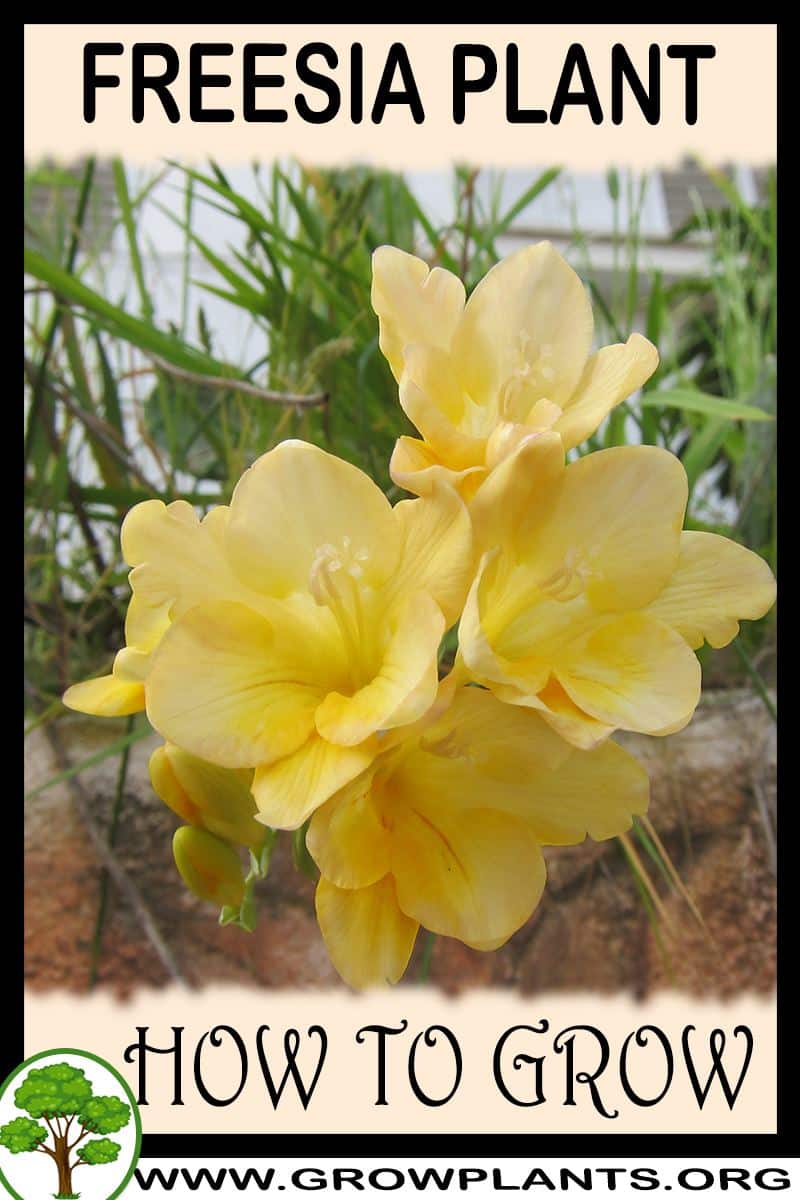
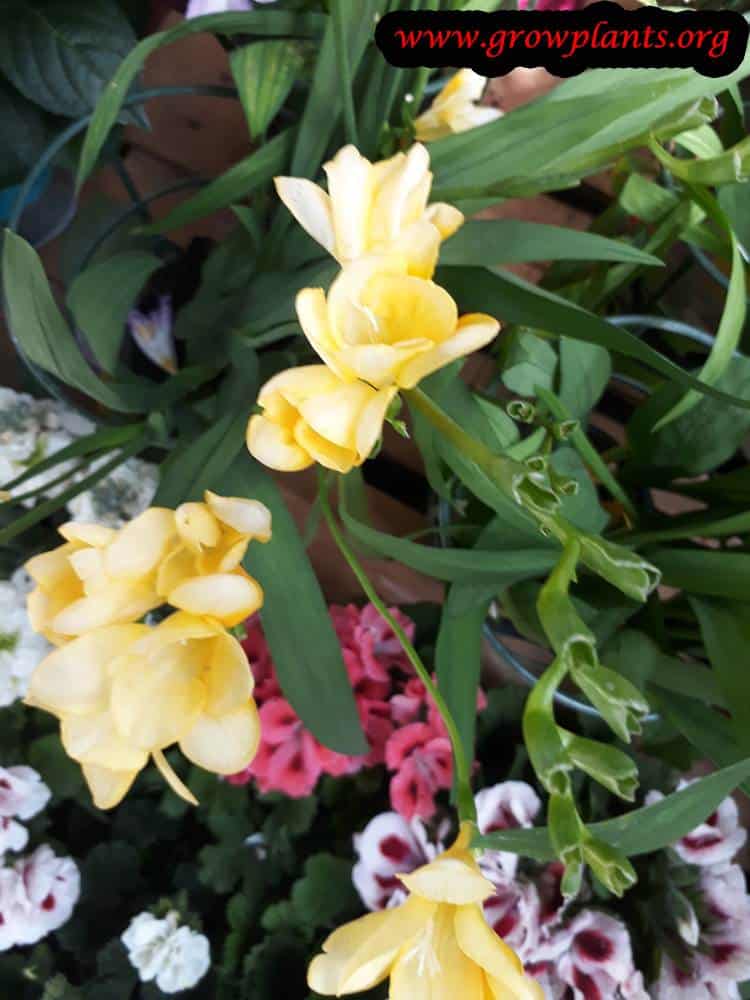
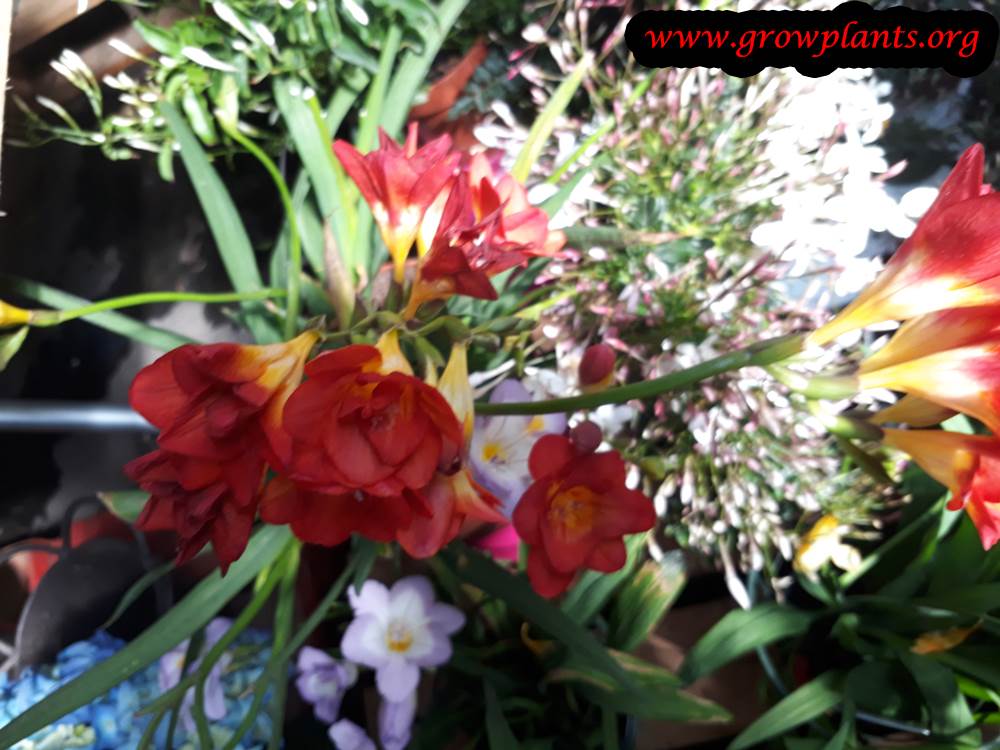
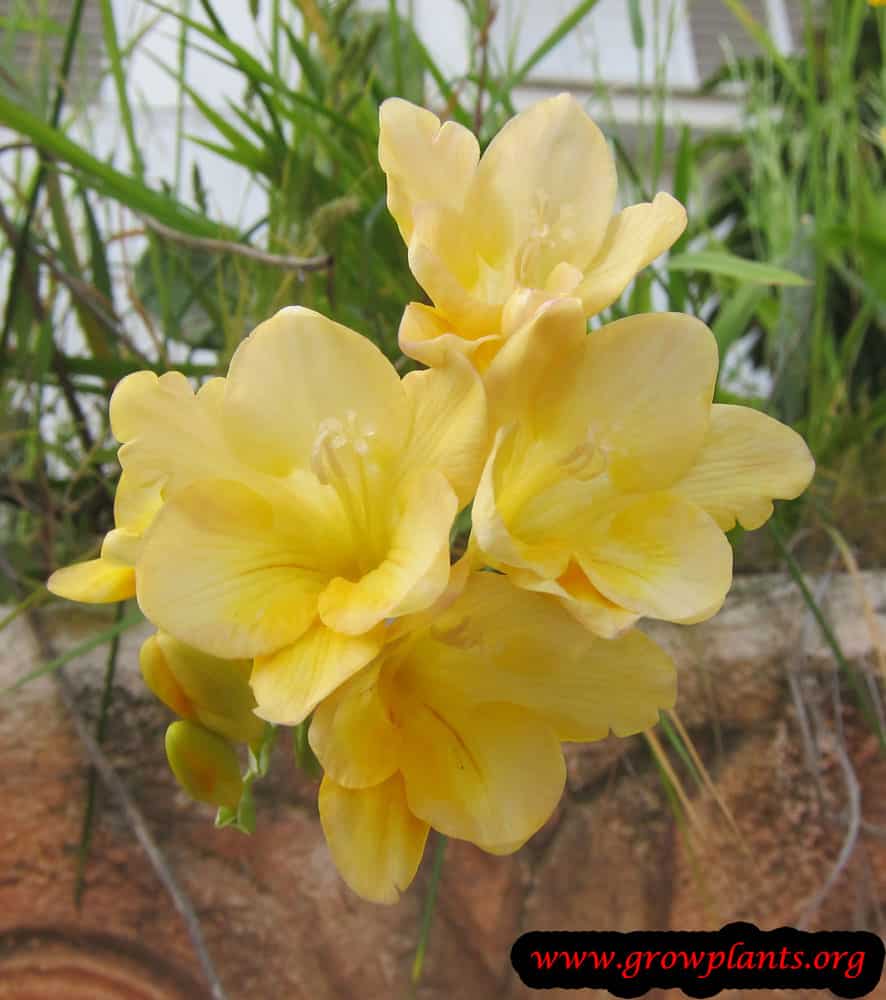
- Flower Characteristics: Very fragrant flowers in red, white, yellow, pink, orange or purple, borne in one-sided clusters on arching stems.
Primary Uses & Landscape Value
- Functional & Ornamental Roles: Ornamental border and container plant, and a prized fragrant cut flower.
Care Guide: Planting, Soil & Watering
Overview: Freesia is a corm-forming perennial that needs a well-drained soil and full sun to part shade to flower well. It takes moderate, even watering during growth and must never sit wet, or the corms rot.
Quick Care Requirements
| Requirement | Ideal Condition |
|---|---|
| Planting Season | Winter to spring |
| Growth Rate | Moderate |
| Soil Type | Light and well-draining |
| Water Need | Moderate during growth; keep on the drier side when dormant |
Planting & Establishment
- Best Planting Season: Plant the corms in winter to spring for spring-summer bloom, into a sunny, well-drained spot.
- How to Plant:
- Hole Preparation: Plant the corms a few centimetres deep, pointed end up, in loosened, free-draining soil.
- Soil Amendments: A little organic matter helps, but sharp drainage matters more than richness.
- Planting Depth: Set corms a few centimetres below the surface – not too shallow and not too deep.
- Growth Speed & Expectations: Moderate growth to 20-40 cm (8-16 in), throwing up flowering stems in spring to summer.
Soil, Watering & Drainage Care
- Soil Mix & Drainage Needs: A light, well-drained soil is essential to prevent corm rot; in containers use a free-draining mix with drainage holes.
- Watering Schedule & Technique:
- Young / Newly Planted: Water moderately once growth begins to keep the soil lightly moist.
- Established: Keep evenly but lightly moist through growth and flowering, never waterlogged.
- Seasonal Adjustments: Reduce watering as the foliage dies back and the corms go dormant; resume when growth restarts.
Climate, Light & Hardiness
Freesia is hardy to roughly zone 8–11 across Mediterranean, subtropical, and temperate climates, doing best in full sun to half shade with well-drained soil; outside that range it is typically grown from lifted corms.
Quick Climate Specifications
| Climate Zones | Mediterranean, subtropics, temperate |
|---|---|
| USDA Hardiness Zones | Approximately 8–11 |
| Light Conditions | Full sun; half shade |
Temperature Extremes & Hardiness
USDA Hardiness & Regional Limits
Hardy roughly zone 8–11; in colder zones the corms are typically lifted and stored rather than left in the ground.
Growing in Pots, Balconies & Indoors
Freesia is a fragrant corm grown for its scented spikes. The grower does not class it as a houseplant, but it is one of the classic pot-and-force bulbs – in a container on a bright, cool windowsill it can perfume a room, and it is equally happy on a sunny patio or balcony.
Quick Details
- Container Size: A free-draining pot of about 2-4 L (0.5-1 gal); plant the corms in a close group
- Indoor Suitability: Not a permanent houseplant, but easily forced in a pot on a bright, cool sill for its scent
- Best Spot: Full sun to light (half) shade; cool, bright conditions suit it best
- Soil & Drainage: Free-draining potting mix; keep moist in growth, dry at dormancy
- Watering in Pots: Water evenly while in leaf and flower; ease off as the foliage fades
Indoors & On the Windowsill
- Houseplant status: The grower marks it as not a classic houseplant, and in a warm, dim room it flops and won’t flower well.
- Windowsill growing: It excels as a forced pot bulb: a bright, cool sill gives strong, fragrant spikes – support the floppy stems with thin sticks or a ring.
- Overwintering: The corms are frost-tender; in cold climates grow them in pots kept frost-free, or lift and store them dry over winter.
On a Balcony or Patio
- Light & shelter: A sunny, sheltered balcony suits it; the slender stems need support and shelter from wind, and pots dry fast against warm walls.
- Practicalities: Allow for the weight of a filled pot and for drainage runoff onto the balcony below – stand pots on feet or a tray you can empty.
Choosing the Pot, Soil & Long-Term Care
- Pot & drainage: A 2-4 L pot with good drainage; plant corms fairly close for a full display. Use strong drainage holes and skip a standing water saucer, which invites root rot; terracotta breathes and dries fast, while glazed or plastic pots hold moisture longer.
- Potting mix: A light, aerated mix – potting compost, or peat/coir with added perlite or vermiculite for drainage.
- Feeding: Feed lightly through growth and flowering; stop as the leaves die back.
- Repotting: Lift and store the corms dry at dormancy, replanting into fresh free-draining mix for the next cycle.
Fertilizing & Feeding
A light feeder: a balanced fertilizer worked into well-drained soil supports leaf growth and fragrant blooms from planting through flowering, then feeding stops as the foliage yellows and the corm goes dormant.
Quick Fertilizing Specs
| Feeding Level | Light feeder |
|---|---|
| Main Nutrient Priority | Balanced feeding to support leaf growth and fragrant blooms |
| Best Feeding Period | From planting through active leaf growth and bloom |
| Organic Options | Compost worked into well-drained soil at planting |
| Reduce/Stop Feeding | Stop feeding once bloom finishes and the foliage begins to yellow |
| Micronutrients | A balanced bulb or flower fertilizer covers routine trace needs for most plantings |
| Soil pH | Near neutral, well-drained soil |
Feeding by Growth Stage
Active leaf growth through bloom
Support strong leaf growth and a full flush of fragrant flowers.
| Nutrient direction | A balanced complete fertilizer, kept light, worked into well-drained soil. |
|---|---|
| Timing | From planting through active leaf growth and flowering. |
| Frequency | Light feeding during active growth. |
| Fertilizer types | A balanced complete fertilizer, Compost worked into the planting area |
| Precautions | Keep feeding light; well-drained soil matters more than fertilizer, since soggy corms are prone to rot. |
Post-bloom and dormancy
Let the corm finish storing energy and go dormant without pushing new growth.
| Nutrient direction | None – withhold fertilizer as the foliage yellows and dies back. |
|---|---|
| Timing | After flowering finishes, as leaves yellow and growth stops. |
| Frequency | No feeding at this stage. |
| Fertilizer types | No feeding at this stage; do not fertilize a corm that is going dormant. |
| Precautions | Do not fertilize once foliage yellows; let the corm dry down and rest naturally. |
Nutrient Deficiency Signs & Corrections
Leaves fade to pale green and overall growth looks weak and thin.
| Possible causes | low available soil nitrogen, poor, sandy soil low in organic matter, nitrogen leaching from watering |
|---|---|
| Appears first on | older leaves |
| What to check | recent feeding history, soil organic matter, overall leaf color |
| Possible correction | Apply a balanced fertilizer and work compost into the planting area. |
Flower stems are weak and blooms are sparse or smaller than expected.
| Possible causes | low soil potassium, an overly nitrogen-heavy fertilizer program, poor root development from wet or compacted soil |
|---|---|
| Appears first on | flower stems and bloom quality |
| What to check | soil drainage and structure, recent fertilizer type used, root health at the corm |
| Possible correction | Switch to a balanced fertilizer and improve drainage so roots take up nutrients well. |
Leaf tips brown or scorch and growth stalls despite regular watering.
| Possible causes | fertilizer salt buildup in the soil or container, under-watering that concentrates salts, excessive or too-frequent feeding |
|---|---|
| Appears first on | leaf tips and margins |
| What to check | recent fertilizer amounts, watering consistency, drainage of the planting site |
| Possible correction | Ease off feeding and water thoroughly to flush salts, then resume only light feeding. |
Pruning, Training & Seasonal Maintenance
Freesia grows from a corm with narrow, easily-broken foliage and no woody structure, so pruning means deadheading the spent flower stem and, later, removing dead leaves once they yellow. Because its stems are thin and prone to flopping or snapping, light support during active growth matters more here than for sturdier bulbs. Cutting green foliage early weakens next year’s corm and bloom, just as with other spring/summer-flowering corms.
Quick Pruning & Maintenance Specs
| Pruning Tolerance | Low on green tissue / High once foliage is dead |
| Primary Pruning Window | Autumn/Winter, once foliage yellows after the Spring–Summer bloom |
| Secondary Maintenance Window | Immediately after bloom (removing the spent flower stem) |
| Typical Frequency | Twice per growing cycle |
| Main Objective | Stop seed-set drain after bloom, then clear dead foliage for corm dormancy |
| Young Plant Priority | None – first-season foliage left fully intact to build the corm |
| Mature Plant Priority | Deadhead promptly; support flopping stems rather than cutting them back early; remove foliage only once yellowed |
| Best Tool Type | Precision snips |
| Avoid Heavy Pruning During | While foliage is still green (Spring–Summer growth phase) |
Pruning by Plant Age & Size
Newly Established
Leave all foliage on newly planted corms untouched; remove only visibly damaged leaves. The thin leaves break easily, so handle the young clump gently rather than tidying it.
Young / Formative
No structural training applies in the pruning sense, but light staking or twiggy support around the clump as stems elongate prevents breakage – this is support, not pruning.
Mature / Established
Cut the spent flower stem back near its base once blooming finishes; leave foliage standing until it yellows, then remove at the base.
Seasonal Pruning Schedule
| Post-Flowering | Objective: stop energy loss to seed production. Remove: the spent bloom stem. Do not remove: any green leaves. Response: corm continues bulking up through the foliage. Flowering impact: none this season; protects next year’s bloom. |
| Autumn/Winter foliage die-back | Objective: clear dead material and let the corm enter dormancy. Remove: fully yellowed/browned foliage at the base. Do not remove: leaf tissue still showing green. Response: confirms dormancy. Flowering impact: cutting too early reduces next season’s flower size. |
Special Growth to Remove
- Spent flower stem after bloom finishes
- Fully dead, yellowed foliage at season’s end
Container & Small-Space Pruning
Freesia is commonly grown in pots. The same deadhead-then-wait rule applies; because the thin stems flop over easily in a container, a few twiggy supports or a light grow-through ring help more than any cutting-back would, and taper watering only once foliage has genuinely yellowed.
Tools
- Precision snips for deadheading and cutting for indoor arrangements
- Hand shears for the dead foliage clump at season’s end
Tool Hygiene & Disease Risk
Routine – clean tools are sufficient. Wipe the blade between plants where aphids (its known pest) are visible, since aphids can spread virus between corms if sap is transferred on cutting tools.
Cut Placement & Technique
Cut the flower stem near its base, taking care not to snap the surrounding thin leaves, which break easily. Cut dead foliage at soil level only once fully browned.
Heavy Pruning & Rejuvenation
Not applicable – there is no woody structure to rejuvenate. Dividing congested corm clumps every few years is the relevant long-term task, not pruning.
Post-Pruning Care
Water normally while foliage is green; taper off as it yellows to support dormancy. Avoid extra feeding once die-back has started.
Common Pruning Mistakes
- Cutting back green foliage right after bloom, which starves the corm and weakens next year’s flowering
- Handling or tidying the clump roughly, snapping the thin leaves unnecessarily
- Letting unsupported stems flop and break instead of adding light support during growth
When NOT to Prune
Do not remove foliage while it is still green – it is feeding the corm for next season. Avoid rough handling of the brittle leaves at any stage.
Recommended Tools (by task)
- precision_snips – clean cuts for deadheading and harvesting fragrant blooms without crushing the thin stems
- soft_ties_stakes – light support to stop the weak stems from flopping or snapping during active growth
Propagation Guide
Freesia grows from a corm, and the most practical way to increase it is by separating the small cormels that form around the base of each mature corm. Seed is also workable and, per the plant’s own data, is not strictly necessary to replace – but for named color forms, cormel division is still the surer way to keep a specific flower color and fragrance consistent. Overall this is an easy plant to propagate.
Quick Propagation Specs
| Best Propagation Method | Corm (cormel) division |
| Alternative Methods | Seed |
| Propagation Difficulty | Easy |
| Seed True-to-Type | Mostly uniform for species-type plants; named color selections are more reliably kept by division |
| Vegetative True-to-Type | Yes |
| Best Propagation Season | Lift and divide corms once foliage and bloom stems die back (autumn/winter); plant out winter to spring |
Growing from Seed
Sow seed in a well-drained mix in a warm spot. Germination generally takes a few weeks, and seedling corms need at least a season of growing-on before they reach flowering size.
Division, Offsets, Pups & Suckers
Each corm is naturally replaced over the growing cycle and produces small cormels at its base.
- Once the leaves and spent bloom stems die back (autumn/winter), lift the corms and separate the cormels by hand.
- Keep only firm, healthy cormels; discard any that are soft or shriveled.
- Small cormels usually need a season of growing-on in a nursery bed before flowering; larger lifted corms can be replanted directly for the next bloom.
- Store lifted corms somewhere cool, dry, and well-ventilated until the winter-to-spring planting season.
Bloom & Flower Guide
Quick Details
- Bloom Season: Spring in warm climates, into summer
- Time to First Bloom: Usually about 10-12 weeks after planting the corms
- Flower Appearance: Funnel-shaped flowers in a one-sided spray; colours include red, white, yellow, pink, orange and purple, often bicoloured
- Edibility: Grown as a fragrant ornamental and cut flower
Detailed Blooming Overview
Freesias are prized as much for their sweet, far-carrying scent as for their colour. The flowers line up along one side of an arching stem and open in sequence from the base upward, which makes them superb, long-lasting cut flowers. The colour range is wide and many are marked in more than one shade.
Flower Characteristics
- Funnel-shaped, richly fragrant flowers.
- Colours include red, white, yellow, pink, orange and purple, often more than one to a bloom.
- Carried in a one-sided, arching spray.
Bloom Care & Thinning
- Cutting: Harvest when the lowest buds are just opening for the longest vase life.
- Support: The flowering stems can flop and may need light staking.
- Pollination: Visited by bees and other insects.
Bloom Health & Protection
- Botrytis (grey mould): Soft browning of the petals in cool, damp conditions; good airflow and removing faded blooms reduce it, with a suitable fungicide only if it persists.
Pests, Diseases & Troubleshooting
Overview: Freesias are tender South African corms grown for fragrant flowers; their key pests are aphids and thrips (both virus vectors) plus spider mites, and their main diseases are Fusarium corm rot and Botrytis, along with the aphid-spread mosaic viruses that gradually degrade stocks. Clean, firm corms, free-draining media, cool airy growing conditions and good sanitation are the foundation of healthy plants.
Quick Troubleshooting Overview
| Issue / Pest | Main Symptom | Primary Solution |
|---|---|---|
| Aphids | Colonies on buds/leaves; honeydew; virus spread | Blast off, beneficials, insecticidal soap |
| Thrips | Silvery streaked leaves, flecked/distorted flowers | Blue sticky traps, spinosad/soap, remove debris |
| Spider mites | Fine stippling and dull leaves in dry heat | Raise humidity, rinse, miticidal soap |
| Fusarium corm rot | Corms rot; plants yellow, stunt and die | Firm clean corms, free drainage, discard rot |
| Botrytis | Grey mould on flowers/leaves in damp cool air | Airflow, remove spent blooms, avoid wet foliage |
| Mosaic virus | Mottled, streaked leaves; broken flower colour | Rogue out, control aphids, use healthy corms |
Common Pests & Management
- Aphids (Myzus persicae, Aphis spp.):
- Symptoms: Clusters of soft green or dark aphids on the flower buds, stems and leaf bases, with sticky honeydew and distortion; crucially they transmit the mosaic and bean-yellow viruses that mottle foliage and streak flowers.
- Prevention & Control: Inspect regularly and blast off or wipe out colonies, encourage ladybirds and lacewings, and use insecticidal soap or a light oil for heavier infestations, spraying in the evening. Controlling aphids is the front line against virus spread; start with clean stock.
- Thrips (Thrips simplex (gladiolus thrips), Frankliniella spp.):
- Symptoms: Silvery streaking and flecking on leaves and petals, with distorted, browned or failed buds; tiny slender insects and black frass specks hide in the flowers, and gladiolus thrips also damage stored corms.
- Prevention & Control: Use blue sticky traps to monitor, remove plant debris and spent flowers, and treat with spinosad or insecticidal soap in the evening. Dust or treat corms before storage, and store them cool and dry to stop thrips carrying over.
- Spider mites (Tetranychus urticae):
- Symptoms: Fine stippling, a dull bronzed cast and faint webbing on leaves grown too warm and dry, especially under glass.
- Prevention & Control: Raise humidity and airflow, rinse the foliage, and treat with insecticidal soap or a light miticidal oil if mites persist.
- Bulb / corm mites (Rhizoglyphus spp.):
- Symptoms: Tiny pale mites that infest damaged or rotting corms in storage and in wet soil, opening the way for rot fungi.
- Prevention & Control: Store only firm, undamaged corms in cool, dry, airy conditions, discard soft or damaged ones, and avoid waterlogged planting media. Good corm hygiene is the main control.
Diseases & Fungal Issues
- Fusarium corm rot / yellows (Fusarium oxysporum):
- Symptoms: Corms develop a firm brown-to-black rot (often from the base), and plants yellow, stunt, wilt and die; stored corms shrivel and rot. A leading cause of freesia failure.
- Treatment & Management: Plant only firm, healthy corms in free-draining media, avoid waterlogging and excessive heat, rotate to fresh soil or fresh mix, and discard any soft or discoloured corms. Curing and storing corms cool and dry reduces losses; there is no cure for infected corms.
- Botrytis (grey mould) (Botrytis cinerea):
- Symptoms: Fuzzy grey-brown mould and water-soaked spotting on flowers, buds and leaves in cool, damp, crowded, still conditions, spoiling blooms quickly.
- Treatment & Management: Improve ventilation and spacing, avoid wetting the flowers and foliage, remove faded blooms and dead leaves promptly, and lower humidity. A protective fungicide helps under persistent damp conditions.
- Mosaic and bean yellow mosaic virus (Freesia mosaic virus / Bean yellow mosaic virus):
- Symptoms: Mottled, streaked or mosaic-patterned leaves and broken, streaked or malformed flower colour, with gradual weakening and decline of the stock over successive seasons; spread by aphids and in infected corms.
- Treatment & Management: There is no cure – start with virus-tested corms, control aphid vectors rigorously, remove and destroy plants showing mosaic symptoms, and do not save corms from infected plants. Keep new stock separate from old.
- Sclerotinia / other rots (Sclerotinia spp.):
- Symptoms: Soft rotting at the stem base and crown with white mould and black resting bodies in cool, wet, crowded plantings.
- Treatment & Management: Improve drainage and airflow, avoid overcrowding and overwatering, and remove infected plants with surrounding soil. Rotate and use clean media.
Growing Difficulties & Abiotic Problems
- Floppy stems / lodging:
- Cause & Symptoms: Warm, low-light or over-rich conditions produce weak, leggy stems that flop under the weight of the flower spikes.
- Correction Strategy: Grow cool and bright with good light, avoid excess nitrogen, and support the stems with twiggy sticks or grid netting as they lengthen.
- Failure to flower / bud blast:
- Cause & Symptoms: Too much heat during growth, or dry spells, cause freesias to abort buds or fail to flower – they need a cool growing period.
- Correction Strategy: Grow through the cool season (or keep them cool under glass), keep the soil evenly moist during growth and budding, and avoid high temperatures while the spikes develop.
- Corm rot from wet soil:
- Cause & Symptoms: Heavy, waterlogged or cold-wet soil rots the corms and roots.
- Correction Strategy: Plant in free-draining soil or gritty mix, water carefully, and lift and dry the corms for storage where they are not hardy.
What Helps – Products & Tools
Healthy freesias start with clean, firm, virus-tested corms grown cool in free-draining media with good airflow and sanitation. For pests, insecticidal soap or light horticultural oil handles aphids and mites, spinosad and blue sticky traps deal with thrips, and rigorous aphid control limits virus. For disease, corm hygiene and drainage prevent Fusarium, while a protective botrytis fungicide backs up ventilation in damp conditions.