Plant Profile & Key Characteristics
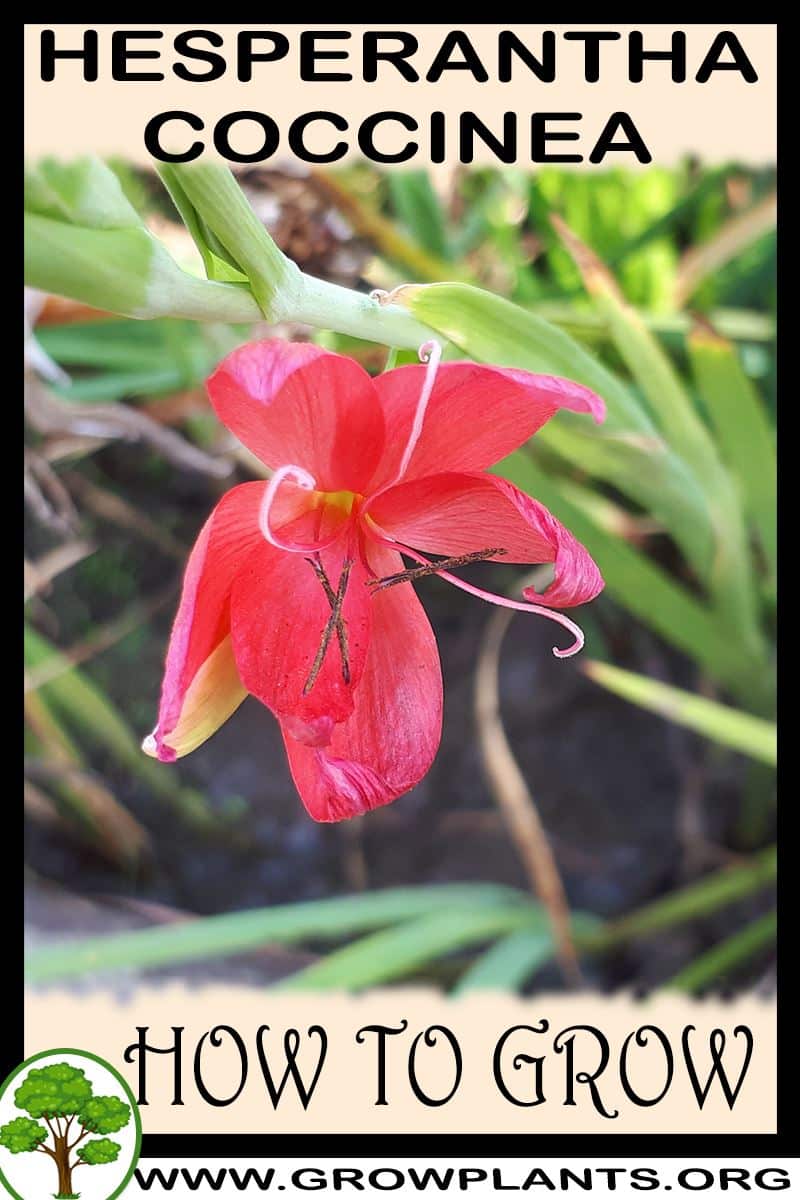
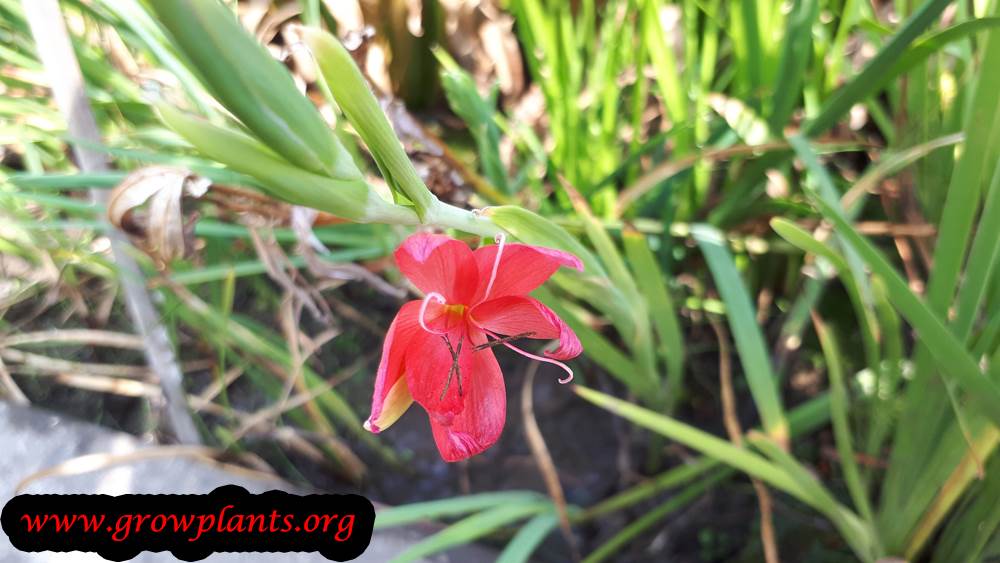
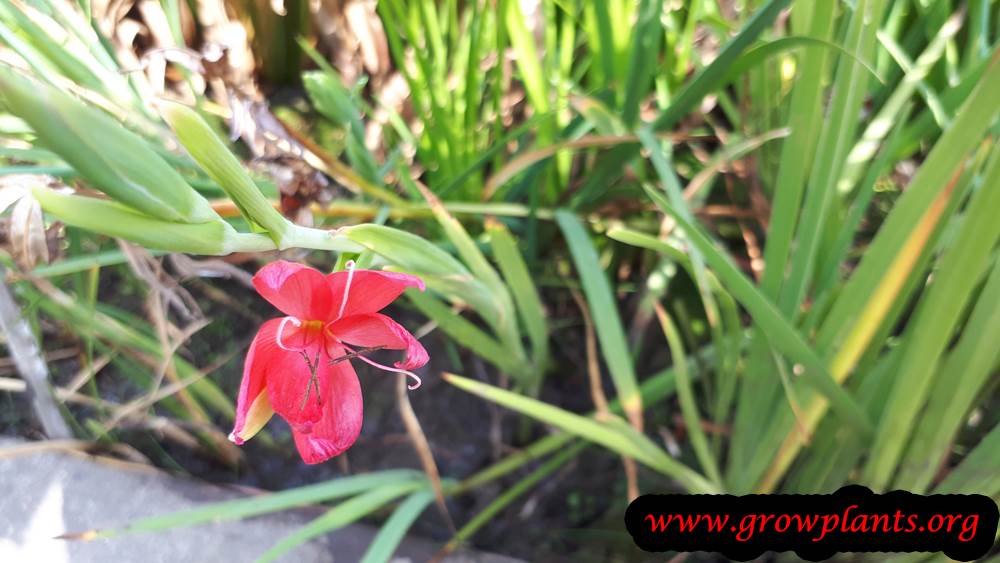
Overview: Hesperantha coccinea (river lily or Kaffir lily) is a moisture-loving geophyte reaching 40-80 cm, grown as an ornamental waterside and cut-flower plant. Evergreen to deciduous depending on climate, it produces bowl-shaped red, pink or white flowers in zones 7-10.
Quick Specifications
| Specification | Attribute |
|---|---|
| Plant Type / Life Cycle | Perennial (geophyte) |
| Foliage Type | Evergreen or deciduous (climate dependent) |
| Mature Size | 40-80 cm tall (16-32 inches) |
| Growth Rate | Fast to moderate |
| Root System | Rhizomatous, clump-forming |
| Hardiness | USDA zones 7-10 |
Growth Form & Structure
- Height and Spread: Reaches 40-80 cm (16-32 inches); grows well in containers but is not suited as an indoor houseplant.
- Growth Habit and Form: Clump-forming geophyte with upright, grassy foliage and slender flower stems.
- Lifespan and Maturity: Perennial that spreads by rhizomes into colonies at a fast to moderate rate.
Anatomy & Physical Features
- Leaves and Foliage: Green, sword-shaped (sword-like) leaves.
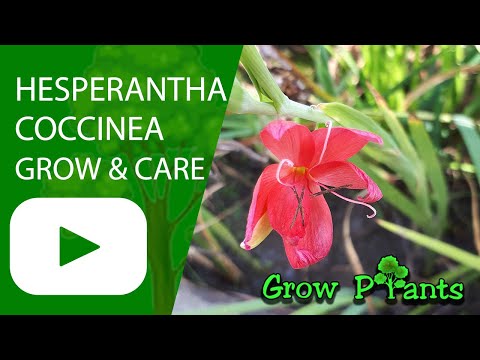
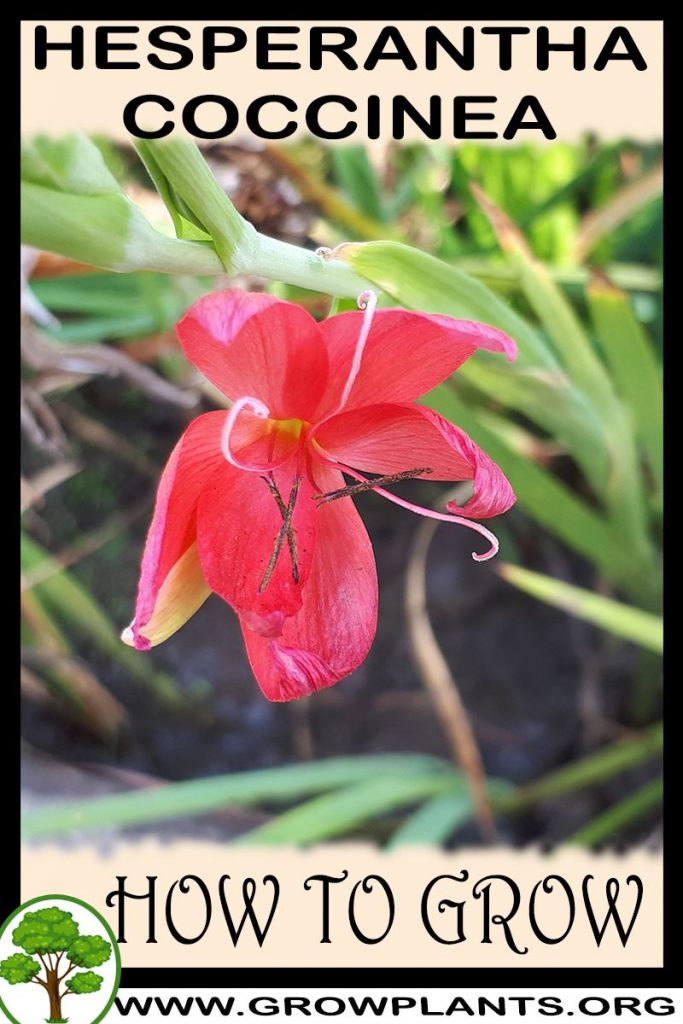
- Flower Characteristics: Bowl-shaped red, pink or white flowers on stems rising from the plant, opening summer to autumn (full detail in the Bloom accordion).
Primary Uses & Landscape Value
- Functional and Ornamental Roles: Ornamental for pond margins and moist borders, and grown as a cut flower.
Care Guide: Planting, Soil & Watering
Overview: River lily thrives in full sun with heavy, moisture-retentive soil or at the water’s edge, and needs abundant water through the growing season. It suits pond margins and consistently damp borders rather than dry ground.
Quick Care Requirements
| Requirement | Ideal Condition |
|---|---|
| Planting Season | Spring through autumn |
| Growth Rate | Moderate to fast |
| Soil Type | Heavy, moisture-retentive soil; tolerates boggy, waterside ground |
| Water Need | High – keep the soil constantly damp, never let it dry out |
Planting & Establishment
- Best Planting Season: Plant during the growing season, from spring through autumn, into permanently moist soil.
- How to Plant:
- Hole Preparation: Dig a hole a little wider than the root mass in moist ground or at a pond margin.
- Soil Amendments: Enrich with organic matter; use heavy, moisture-holding soil rather than a light, fast-draining mix.
- Planting Depth: Set the crown at soil level; it is happy in damp to boggy ground and even shallow water.
- Growth Speed & Expectations: Moderate to fast – spreads into a clump readily where moisture is plentiful.
Soil, Watering & Drainage Care
- Soil Mix & Drainage Needs: Grows in heavy, moisture-retentive soil or at the water’s edge; keep it rich and constantly damp rather than sharply drained.
- Watering Schedule & Technique:
- Young / Newly Planted: Keep the soil wet at all times while establishing.
- Established: Water generously; the soil should never dry out and can sit permanently damp.
- Seasonal Adjustments: Abundant water in the warm growing season; it can die back and rest in cold winters.
Climate, Light & Hardiness
Hesperantha coccinea (river lily) is a moisture-loving perennial suited to subtropical, temperate, and mediterranean climates, hardy in USDA zones 7–10. It grows best in full sun with consistently moist to boggy, heavy soil, or directly at a pond margin.
Quick Climate Specifications
| Climate Zones | Subtropical, temperate, mediterranean |
|---|---|
| USDA Hardiness Zones | 7–10 |
| Frost Tolerance | Moderate to High |
| Light Conditions | Full sun |
Sunlight & Light Exposure
Optimal Light Setup
Full sun.
Direct Sun Requirement
Needs strong direct sun for the best flowering.
Best Exposure / Orientation
An open, sunny pond margin or consistently moist bed.
Temperature Extremes & Hardiness
USDA Hardiness & Regional Limits
Hardy in zones 7–10.
Cold Damage & Winter Protection
Foliage and bloom stems die back in autumn/winter (consistent with its autumn/winter pruning); at the coldest edge of its range (zone 7), a mulch layer over the crown improves winter survival.
Frost Sensitivity
Moderate - established plantings tolerate typical zone 7 winter minimums but benefit from extra protection at the margins of their range.
Extreme Heat Tolerance
Not extensively documented, but the plant's suitability for subtropical climates suggests good heat tolerance provided ample moisture is available.
Wind, Humidity & Microclimate
Humidity Preferences
Prefers consistently moist to wet conditions, and is often grown directly at pond margins.
Rainfall & Seasonal Moisture
Needs a large amount of water; thrives with consistently moist or boggy soil and is not drought tolerant.
Microclimate Recommendations
Pond margins, bog gardens, or consistently irrigated beds in full sun suit it best.
Growing in Pots, Balconies & Indoors
Hesperantha coccinea (river lily) is a sun-loving, moisture-loving perennial that flowers well in a pot beside water, but the grower confirms it is not a houseplant. Grow it outdoors in full sun with a steady supply of water.
Quick Details
- Container Size: Medium – a pot with room for the clump to spread; happy in a large container by a water feature.
- Indoor Suitability: No – not a houseplant; a very sunny, damp sill at most.
- Best Spot: Full sun.
- Soil & Drainage: Rich, moisture-retentive mix – unusually for a pot plant, it likes it kept wet.
- Watering in Pots: Generous – keep it constantly moist; it thrives in damp ground and never wants to dry out.
Indoors & On the Windowsill
- Not a houseplant: The grower’s answer is no – indoors the light is too weak and the still, dry air does not suit it. It belongs outdoors in a container.
- A bright sill at most: If you want to try it inside, only a very bright, sunny windowsill comes close, and even then it is happier out on a balcony or patio.
On a Balcony or Patio
- Sun, wind and heat: Give it your sunniest, most open spot; walls and railings throw back heat and wind dries pots fast, so check moisture daily in hot weather and stake tall stems on an exposed balcony. A drip irrigation kit with a timer can take over that watering check automatically.
- Keep it wet: Unlike most pot plants it loves wet feet – stand it in a deep saucer or by a pond and never let it dry.
Choosing the Pot, Soil & Long-Term Care
- Moisture-lover: This one breaks the usual rule – keep the mix wet, and a water-holding saucer here is a help, not a hazard.
- Pot & drainage: Choose a pot with strong drainage holes and skip a standing-water saucer, which invites root rot; terracotta breathes and dries quickly, while glazed or plastic hold moisture longer.
- Potting mix: Fill with a well-aerated, organic-rich medium – a good potting mix, or peat/coir blended with perlite or vermiculite for drainage.
- Feeding: Container plants run through nutrients fast because watering washes them out, so feed a little more often through the growing season than you would in open ground.
- Repotting: Refresh the mix or pot up about every couple of years; for perennials, lightly trim the roots and top growth at the same time.
Fertilizing & Feeding
A geophyte grown at the water’s edge or in consistently moist, heavy soil, valued for its flowers and as a cut flower: moderate, balanced feeding while leaves and flower stems are actively growing supports the display, tapering off as foliage dies back.
Quick Fertilizing Specs
| Feeding Level | Moderate feeder |
|---|---|
| Main Nutrient Priority | Balanced overall through active growth, supporting stem and flower development |
| Best Feeding Period | From active leaf growth through the summer-to-autumn bloom period |
| Organic Options | Heavy, moisture-retentive soil enriched with organic matter; in aquatic plantings, nutrients are typically supplied through the planting substrate rather than dissolved feeds |
| Micronutrients | Usually adequate from a complete fertilizer or rich substrate; correct specific issues only when diagnosed |
| Reduce/Stop Feeding | Reduce and stop feeding as flowering finishes and foliage begins to die back for the season |
Feeding by Growth Stage
Active leaf growth through flowering
Support strong sword-shaped foliage and flowering stems, whether grown in aquatic margins or heavy, moist garden soil.
| Nutrient direction | Balanced feeding through leaf development and into bloom, favoring a substrate-based or slow feed where grown at the water’s edge. |
|---|---|
| Timing | From active leaf growth in spring through the summer-to-autumn bloom period. |
| Frequency | Regular light-to-moderate feeding while growth and flowering are active. |
| Fertilizer types | A balanced complete fertilizer worked into moist garden soil, A slow-release aquatic planting substrate or tablet where grown as a water plant |
| Precautions | In aquatic or bog plantings, avoid loose dissolved fertilizers that can wash into open water; keep feeding contained to the root zone or substrate. |
Post-bloom foliage dieback
Let the plant taper off undisturbed as flowering finishes and, where deciduous, foliage dies back for the season.
| Nutrient direction | None – withhold fertilizer once flowering ends and foliage begins to yellow and die back. |
|---|---|
| Timing | Autumn into winter, as pruning of dead leaves and bloom stems takes place. |
| Frequency | No feeding at this stage. |
| Fertilizer types | No feeding at this stage – allow the plant to rest without fertilizer. |
| Precautions | Do not fertilize while the plant is dying back or resting; resume feeding only once active leaf growth restarts. |
Nutrient Deficiency Signs & Corrections
Leaves are pale green to yellow and overall growth and flowering are weak.
| Possible causes | low available nutrients in the soil or planting substrate, nutrients leaching or washing away in consistently wet, moving water conditions, insufficient feeding during the active growth period |
|---|---|
| Appears first on | older, lower leaves |
| What to check | recent feeding history, planting substrate or soil fertility, overall foliage color and vigor |
| Possible correction | Apply a light-to-moderate balanced feed suited to the planting situation, using a contained or slow-release form near water. |
Leaf margins yellow or scorch on older leaves and flower stems are weak.
| Possible causes | low potassium in the soil or substrate, nutrient leaching in wet or heavily watered conditions, heavy nitrogen feeding relative to potassium |
|---|---|
| Appears first on | older leaf margins |
| What to check | soil or substrate nutrient status, recent feeding balance, flower stem strength |
| Possible correction | Rebalance feeding to include adequate potassium alongside nitrogen, using a contained or slow-release source where near water. |
New leaves emerge pale to yellow while the veins remain green.
| Possible causes | high soil or water pH tying up available iron, consistently waterlogged, low-oxygen soil around the roots, root stress from disturbance during planting or division |
|---|---|
| Appears first on | newest leaves |
| What to check | soil or water pH if known, root zone oxygen and drainage, recent planting or division |
| Possible correction | Improve root zone conditions and apply a chelated iron product per its label, in a form appropriate for aquatic or bog plantings if applicable. |
Pruning, Training & Seasonal Maintenance
Hesperantha coccinea is an herbaceous, rhizome-forming perennial with no woody parts, so its maintenance is limited to removing spent flower stems and cutting back dying foliage rather than any structural pruning. Because it is often grown in consistently moist soil or at a pond margin, foliage can persist later into the season than a typical dry-garden perennial, so the main cutback usually waits until autumn/winter when the leaves have genuinely died back.
Quick Pruning & Maintenance Specs
| Pruning Tolerance | Low – no structural pruning applies; only spent-stem and dieback cleanup |
| Primary Pruning Window | Autumn/winter, as foliage dies back |
| Typical Frequency | Once per season for the main cutback; ongoing removal of spent flower stems during bloom |
| Main Objective | Tidy the clump and remove spent growth ahead of dormancy |
| Best Tool Type | Precision snips or bypass secateurs |
| Avoid Heavy Pruning During | Active bloom, and while foliage is still green and photosynthesizing |
Special Growth to Remove
- Spent flower stems once bloom fades – cut at the base, unless being harvested earlier as cut flowers.
- Dead or yellowed leaves, once they’ve genuinely died back rather than while still green.
Container & Small-Space Pruning
Where grown in a container or small water-margin planting, keep up with spent-stem removal a little more promptly to avoid the smaller clump looking untidy; if the clump becomes congested after a few years, dividing it (a propagation task rather than a pruning one) helps maintain vigor.
Tools
- Precision snips for cutting individual flower stems, whether for the vase or as deadheading.
- Bypass secateurs for the base cutback of the whole clump’s foliage at season’s end.
Tool Hygiene & Disease Risk
Routine – clean, sharp tools are sufficient; no significant pruning-transmitted disease is noted for this species.
Cut Placement & Technique
Cut flower stems low, close to the base, when harvesting or deadheading. Cut dead foliage at the base near soil level rather than pulling it, which can disturb the shallow rhizomes.
Common Pruning Mistakes
- Cutting back green, still-active foliage instead of waiting for it to die back, which reduces the energy the rhizome can store for next year.
- Pulling rather than cutting dead leaves, risking disturbance to the rhizomes just beneath the soil surface.
When NOT to Prune
Avoid cutting foliage back while it is still green and the plant is actively growing or flowering; wait for natural autumn/winter dieback.
Recommended Tools (by task)
- precision_snips – cutting flower stems for the vase or deadheading.
- bypass_secateurs – end-of-season foliage cutback.
Propagation Guide
Hesperantha coccinea is most easily propagated by dividing its spreading, clump-forming rhizomatous rootstock, which the site lists as an available option alongside seed; division reproduces the plant true-to-type and establishes quickly. Seed is a workable, reasonably true-to-type alternative but is slower to reach flowering size, so propagation overall is easy when division is used.
Quick Propagation Specs
| Best Propagation Method | Division |
| Alternative Methods | Seed |
| Propagation Difficulty | Easy |
| Seed True-to-Type | Usually true-to-type; cultivar-dependent for named color selections |
| Vegetative True-to-Type | Yes |
| Best Propagation Season | Spring, as new growth begins |
| Seed Germination Time | Typically several weeks |
Growing from Seed
Sowing Season
Spring, matching the plant’s general planting season.
Germination Conditions
Given this plant’s own preference for constantly moist to wet, even aquatic-margin conditions, seed is likely to germinate best kept consistently moist and warm.
Germination Time
Typically several weeks, though exact timing is not documented for this species.
Seedling Care
Grow seedlings on in consistently moist to wet, humus-rich soil, matching the plant’s mature cultural preference.
Rhizomes, Tubers, Bulbs & Corms
Rhizome Division
Divide established clumps in spring as new growth begins. Lift and separate the rootstock into sections, each with roots and at least one growing fan of leaves attached.
Replant divisions immediately into consistently moist to wet, humus-rich soil, or at the margins of a water feature, since the site itself grows this plant in an aquatic or heavy, moist soil setting; water generously while divisions re-establish.
The site lists “Bulbs” as one of the ways to start this plant; note that Hesperantha coccinea spreads by a rhizomatous rootstock rather than a true bulb, though the divisions are sometimes sold commercially under that name.
Bloom & Flower Guide
Quick Details
- Bloom Season: Late summer into autumn
- Time to First Bloom: Establishes and flowers well from its second season, once the clump has settled
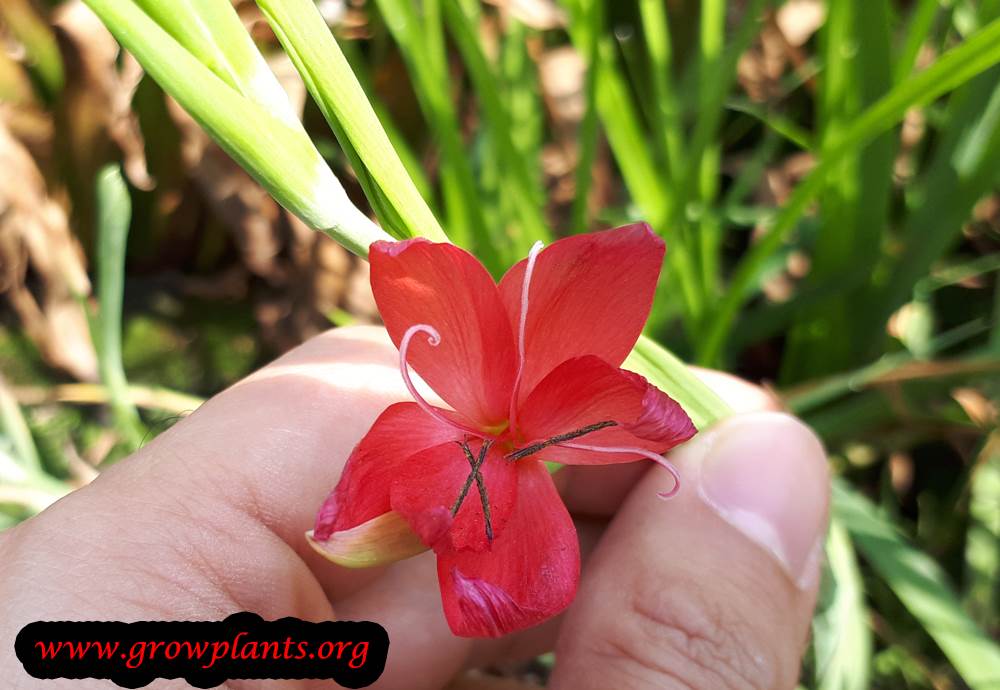
- Flower Appearance: Open, bowl-shaped, star-like flowers in red, pink or white on upright stems
- Edibility: Grown as an ornamental and cut flower — not eaten
Detailed Blooming Overview
River lily is valued for flowering late, sending up wands of starry, bowl-shaped blooms in the middle of the plant just as much of the garden is winding down. It loves damp ground and pond margins, and the flowers cut well for the vase.
Flower Characteristics
- Six tepals opening into a shallow bowl or star.
- Clear red, soft pink or white.
- Several flowers held on each slender, upright stem.
Bloom Care & Thinning
- Site for best flowering: Full sun and consistently moist to wet soil give the strongest, latest display.
- Managing the bloom: Deadhead spent flowers; divide congested clumps to keep them flowering freely.
- Pollination: Worked by bees and other insects.
Pests, Diseases & Troubleshooting
Overview: Crimson flag lily (Hesperantha coccinea, formerly Schizostylis coccinea) is a moisture-loving, rhizomatous member of the iris family. It is largely trouble-free; its most likely problems are slugs and aphids on soft growth, and fungal issues (botrytis, leaf spot, rhizome rot) where drainage or airflow is poor. Grow it in reliably moist but not waterlogged soil with good air movement and it stays healthy.
Quick Troubleshooting Overview
| Issue / Pest | Main Symptom | Primary Solution |
|---|---|---|
| Slugs & snails | Holes and shredded edges on soft foliage | Barriers, iron-phosphate pellets, hand-picking |
| Aphids | Colonies on flower stems and buds; honeydew | Hose off; insecticidal soap |
| Spider mites | Stippling and webbing in hot, dry spells | Raise humidity; hose; horticultural oil |
| Botrytis (grey mould) | Fuzzy grey mould on damp/spent foliage & flowers | Remove debris; improve airflow |
| Rhizome / root rot | Rotting crown in waterlogged soil | Improve drainage; lift and divide |
Common Pests & Management
- Slugs & snails (Deroceras / Helix spp.):
- Symptoms: Ragged holes and chewed margins on the grassy foliage and flower stems, with slime trails; worst in the damp conditions this plant enjoys.
- Prevention & Control: Clear debris, use grit or copper barriers and iron-phosphate pellets, and hand-pick after dark.
- Aphids (Aphis / Myzus spp.):
- Symptoms: Clusters of aphids on flower stems and buds with sticky honeydew and occasional distortion.
- Prevention & Control: Dislodge with water, encourage beneficial insects, and use insecticidal soap if colonies persist.
- Thrips (Frankliniella / Thrips spp.):
- Symptoms: Silvery streaking on leaves and petals with distorted or flecked blooms.
- Prevention & Control: Remove weeds and spent flowers, use blue sticky traps, and apply insecticidal soap or spinosad if numbers build.
- Spider mites (Tetranychus urticae):
- Symptoms: Fine stippling and bronzing with faint webbing during hot, dry weather — a sign the plant is too dry.
- Prevention & Control: Keep soil moist, raise humidity and hose foliage; use horticultural oil for outbreaks.
Diseases & Fungal Issues
- Botrytis / grey mould (Botrytis cinerea):
- Symptoms: Fuzzy grey mould on faded flowers, spent leaves and damaged tissue in cool, damp, crowded conditions.
- Treatment & Management: Remove spent blooms and dead foliage promptly, thin crowded clumps for airflow, and avoid overhead watering late in the day.
- Leaf spot / rust (various fungi, Puccinia spp.):
- Symptoms: Brown or reddish spots and, occasionally, rusty pustules on the strappy leaves in wet seasons.
- Treatment & Management: Remove affected leaves, improve airflow and water at the base; fungicide is seldom needed.
- Rhizome & root rot (Phytophthora / Pythium):
- Symptoms: Yellowing, collapse and a rotten crown in waterlogged, stagnant soil.
- Treatment & Management: Improve drainage, avoid standing water in winter, and lift and divide congested clumps, replanting healthy rhizomes in fresh soil.
Growing Difficulties & Abiotic Problems
- Drought stress:
- Cause & Symptoms: Browning leaf tips, poor flowering and mite attack when the soil dries out — it is a streamside plant that hates drying. Correction Strategy: Keep the soil reliably moist and mulch; grow near water features if possible.
- Winter cold / crown loss:
- Cause & Symptoms: Crown damage where winters are cold and wet. Correction Strategy: Mulch the crown in cold areas and ensure drainage so it is not cold and waterlogged at once.
- Congestion / shy flowering:
- Cause & Symptoms: Old, crowded clumps flower poorly. Correction Strategy: Lift and divide every few years to rejuvenate.
What Helps — Products & Tools
This is a low-input plant. Keep iron-phosphate slug pellets and copper barriers for slugs, insecticidal soap or horticultural oil for aphids and mites, and rely mostly on cultural care — consistent moisture, good airflow and periodic division — to keep botrytis and rot away.