

Plant Profile & Key Characteristics
Overview: Convolvulus tricolor (dwarf morning glory) is a bushy to trailing herbaceous annual, low at about 30 cm (12 in) tall and spreading 0.8-2 m (2.5-6 ft). Unlike its climbing relatives it stays compact, and is grown as a colourful ornamental for beds, edging and containers.
Quick Specifications
| Specification | Attribute |
|---|---|
| Plant Type / Life Cycle | Annual |
| Foliage Type | Herbaceous (dies back at season’s end) |
| Mature Size | Height ~30 cm (12 in), spread 0.8-2 m (2.5-6 ft) |
| Growth Rate | Moderate to fast |
| Hardiness | USDA zone 3+ (perennial in zone 9+) |
Growth Form & Structure
- Height & Spread: Low at roughly 30 cm (12 in) but spreading 0.8-2 m (2.5-6 ft); suits groundcover, banks, trellises and containers.
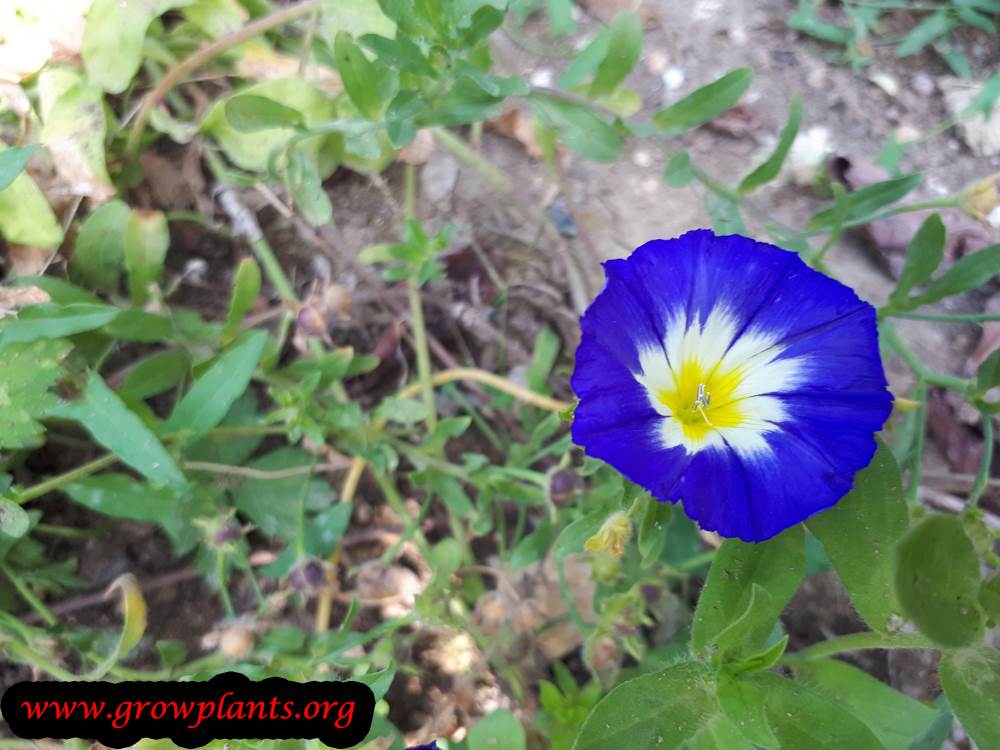
- Growth Habit & Form: Compact, bushy to lightly trailing annual that does not climb, forming low mounds of bloom.
- Lifespan & Maturity: Fast to cover ground; perennial in mild climates and grown as an annual where winters are cold.
Anatomy & Physical Features
- Leaves & Foliage: Green, linear leaves with a pointed tip.
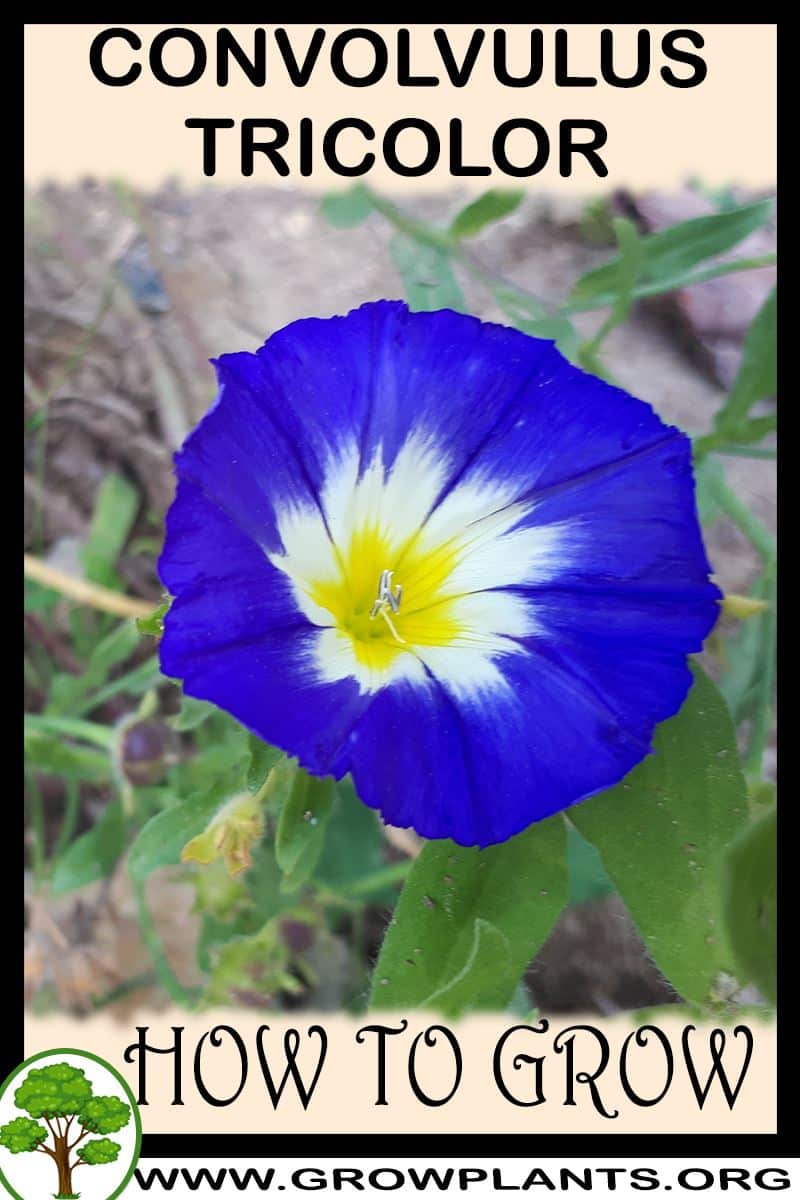
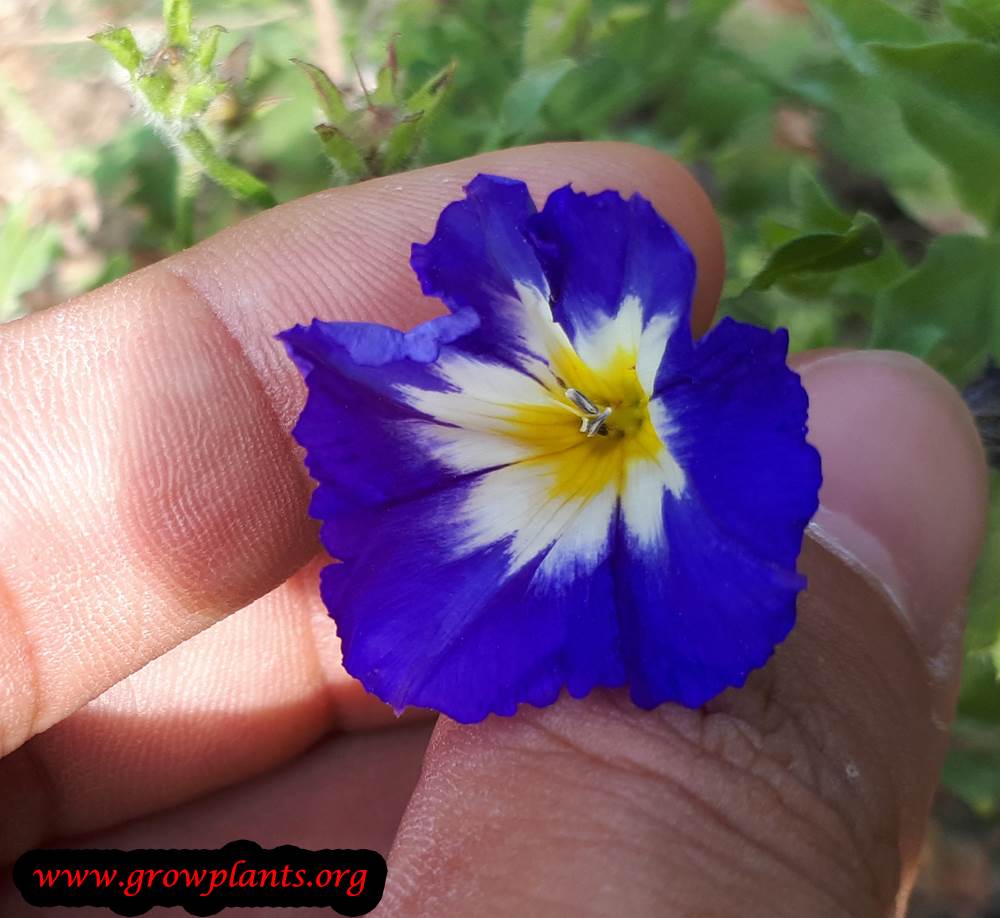
- Flower Characteristics: Round, five-petalled flowers that can be white, purple, pink, blue or red, each with a yellow centre ringed in white.
Primary Uses & Landscape Value
- Functional & Ornamental Roles: Ornamental groundcover, bank cover or informal screen; drought tolerant but potentially invasive, so site it where its spread can be managed.
Care Guide: Planting, Soil & Watering
Overview: A vigorous, drought-tolerant plant for full sun to part shade. It thrives in ordinary well-drained soil and needs only light watering once established.
Quick Care Requirements
| Requirement | Ideal Condition |
|---|---|
| Planting Season | In the warm season – spring through autumn |
| Growth Rate | Moderate to Fast |
| Soil Type | Well-draining, tolerant of poor and sandy soils |
| Water Need | Low – drought-tolerant; water sparingly |
Planting & Establishment
- Best Planting Season: Plant from spring through autumn once the soil has warmed.
- How to Plant:
- Hole Preparation: Dig a hole about twice as wide as the root ball and equally deep.
- Soil Amendments: This plant tolerates lean soil; light compost improves establishment, but rich feeding is unnecessary.
- Planting Depth: Set the root collar at soil level without burying the stem.
- Growth Speed & Expectations: Fast to moderate; it spreads quickly, so provide support and site it where its vigor can be contained.
Soil, Watering & Drainage Care
- Soil Mix & Drainage Needs: Undemanding but needs good drainage; in containers use a free-draining potting mix.
- Watering Schedule & Technique:
- Young / Newly Planted: Water regularly until it is established.
- Established: Drought-tolerant – water only during prolonged dry spells, letting the soil dry between waterings.
- Seasonal Adjustments: Give minimal water in cool, wet months and a little more during extended summer heat.
Climate, Light & Hardiness
Convolvulus tricolor is a drought-tolerant, sprawling ground-cover vine for mediterranean, desert, subtropical, temperate, and tropical climates, thriving in full sun to half shade. It is a genuinely tough, wide-range plant with good heat and dry-soil tolerance. Being a true annual, it completes its life cycle within one warm season and is not expected to overwinter as a perennial regardless of zone.
Quick Climate Specifications
| Climate Zones | Mediterranean, desert, subtropics, temperate, tropics |
|---|---|
| USDA Hardiness Zones | Zone 3 and warmer (grown as an annual) |
| Frost Tolerance | Moderate |
| Light Conditions | Full sun / half shade |
| Wind Tolerance | Moderate to high (low, ground-hugging habit) |
Sunlight & Light Exposure
Optimal Light Setup
Full sun to half shade both work well; full sun tends to give the most compact, floriferous growth.
Temperature Extremes & Hardiness
USDA Hardiness & Regional Limits
Adapted to a very wide climate range; check the specific zone note for this variety, and expect top growth to die back with hard frost while the root system typically survives within its hardy range.
Wind, Humidity & Microclimate
Dry-Air Tolerance
Good – this is a drought-adapted ground cover.
Wind Tolerance
Its low, trailing/climbing habit copes well with open, windy sites.
Growing in Pots, Balconies & Indoors
Dwarf morning glory (Convolvulus tricolor) is a bushy annual with vivid tricolour trumpets – a bright, compact plant for pots and window boxes rather than a houseplant, and one that can flower on a very sunny sill.
Quick Details
- Container Size: A small-to-medium pot or window box, about 5-12 L (1.5-3 gal), for a bushy plant around 30 cm (12 in)
- Indoor Suitability: Not a room houseplant (the grower marks it “No”); a bright, sunny windowsill is the only indoor option
- Best Spot: Full sun to light shade; flowers open in sun and close in dull weather
- Soil & Drainage: Free-draining, average mix
- Watering in Pots: Low to moderate – fairly drought-tolerant; let the surface dry between waterings
Indoors & On the Windowsill
- Houseplant limits: The grower marks it as not suitable indoors; without strong sun the flowers stay closed and the plant stretches.
- Windowsill growing: On the sunniest sill a compact plant will open its trumpets each bright morning.
- Season: A warm-season annual raised fresh from seed each cycle – nothing to overwinter, simply resow.
On a Balcony or Patio
- Light & wind: A cheerful, easy filler for a sunny balcony or window box; give it as much sun as possible for the best flowering. Small pots dry fast – check moisture in heat.
- Practicalities: It stays neatly bushy rather than climbing; ensure water drains freely.
Choosing the Pot, Soil & Long-Term Care
- Pot & drainage: A 5-12 L pot or box with strong drainage holes; skip a standing water saucer to avoid root rot.
- Potting mix: A free-draining general mix.
- Feeding: Feed lightly through the season; too rich a diet gives leaves at the expense of flowers.
- Repotting: As an annual it is resown each cycle – refresh the mix for each new planting.
A Note on Safety
- Toxic seeds: The seeds contain purgative, mildly toxic compounds; keep them away from children and pets and never let anyone eat them.
Fertilizing & Feeding
A drought-tolerant, self-seeding annual ground cover that flowers well on lean soil; it needs only light feeding to get started and none once it is growing and blooming on its own for the season.
Quick Fertilizing Specs
| Feeding Level | Light – this annual ground cover flowers best without rich soil or heavy feeding. |
|---|---|
| young_feeding | Seedlings benefit from a light, balanced feed to help them establish quickly. |
| Main Nutrient Priority | Balanced feeding while seedlings establish; little to no feeding once the plant is growing and flowering. |
| Best Feeding Period | Early in the season, around seeding or transplanting. |
| Organic Options | A light compost top-dressing at sowing time is usually sufficient support. |
| Soil pH | Tolerant of a wide range of soil conditions and performs well even in lean, low-fertility soil. |
| Reduce/Stop Feeding | Feeding is best stopped once the plant is actively flowering, and there is no need to feed as the planting declines at the end of the season. |
Feeding by Growth Stage
Seedling Establishment
Help newly sown or transplanted seedlings root in and put out their first true leaves.
| Nutrient direction | A light, balanced feed to support root establishment |
|---|---|
| Timing | At sowing or shortly after transplanting, early in the growing season |
| Frequency | A single light feeding is usually enough to get seedlings established |
| Fertilizer types | A light, balanced complete fertilizer, or a modest compost top-dressing worked into the bed before sowing |
| Precautions | Keep feeding light; this species is bred to perform on lean soil and rich feeding mainly produces soft leafy growth at the expense of flowers. |
Active Growth and Flowering
Support the plant through its main season of trailing growth and continuous colorful bloom.
| Nutrient direction | Minimal feeding is usually needed once the plant is established and flowering |
|---|---|
| Timing | Through the main flowering period of the growing season |
| Frequency | Rarely needs feeding once established; a single light top-up is enough if growth looks thin |
| Fertilizer types | A light, balanced complete fertilizer only if growth looks noticeably thin or pale |
| Precautions | Avoid extra feeding once flowering is underway, since it tends to push leafy growth over flowers in this species. |
End-of-Season Decline
Let the planting complete its natural annual life cycle as it sets seed and dies back.
| Nutrient direction | None – withhold fertilizer as the annual planting naturally declines |
|---|---|
| Timing | Late in the growing season as the plant sets seed and growth slows |
| Frequency | No feeding needed at this stage |
| Fertilizer types | No feeding needed as this annual completes its natural life cycle and declines |
| Precautions | Do not fertilize a declining annual planting; feeding will not reverse its natural end-of-season decline. |
Nutrient Deficiency Signs & Corrections
Pale, washed-out seedling leaves and slow early growth
| Possible causes | Nitrogen deficiency in very poor or depleted seedbed soil, Cold or waterlogged soil slowing root development, Competition from weeds in the seedbed |
|---|---|
| Appears first on | Youngest seedling leaves |
| What to check | Seedbed soil fertility and drainage, Soil temperature and moisture at sowing, Weed competition around seedlings |
| Possible correction | A light, balanced feed can help pale, slow-growing seedlings recover; established plants rarely need more. |
Mostly leafy, trailing growth with noticeably fewer flowers than expected
| Possible causes | Overfeeding or overly rich soil favoring leafy growth over flowers, Insufficient sunlight reaching the planting, Water stress during the main flowering period |
|---|---|
| Appears first on | Across the whole planting rather than individual leaves |
| What to check | Recent feeding or soil amendment history, Hours of direct sun the planting receives, Watering consistency during bloom |
| Possible correction | Cut back on feeding and confirm the site gets adequate sun; this species flowers best on lean soil rather than rich, heavily fed ground. |
New leaves turn pale yellow while the veins stay green
| Possible causes | Iron deficiency triggered by alkaline or poorly drained soil, Waterlogged roots reducing nutrient uptake, Cold, wet soil slowing nutrient availability |
|---|---|
| Appears first on | Newest leaves at the growing tips |
| What to check | Soil pH and drainage in the planting area, Recent overwatering or standing water, Soil temperature early in the season |
| Possible correction | Improve drainage and, where soil is markedly alkaline, consider a chelated iron product applied per its label. |
Pruning, Training & Seasonal Maintenance
Convolvulus tricolor (Dwarf Morning Glory) is a fast-growing ANNUAL bedding plant that completes its life cycle in a single season, so its ‘pruning’ is limited to pinching young growth for compactness and deadheading spent flowers to prolong the spring-summer-autumn bloom – there is no multi-year rejuvenation pruning as with its perennial Convolvulus relatives, since the plant does not persist past frost.
Quick Pruning & Maintenance Specs
| Pruning Tolerance | Moderate (tip pinching & deadheading only; no old wood to cut into) |
| Primary Pruning Window | Throughout the single growing season, spring emergence to autumn frost |
| Typical Frequency | Pinch once or twice when young; deadhead every 1-2 weeks through bloom |
| Main Objective | Bushier habit and prolonged flowering, not structure |
| Young Plant Priority | Pinch growing tips after a few sets of true leaves |
| Mature Plant Priority | Deadhead continuously; light shear-back mid-season if it turns leggy |
| Best Tool Type | Fingers or precision snips |
| Avoid Heavy Pruning During | Not applicable – there is no rejuvenation phase for a single-season annual |
Pruning by Plant Age & Size
Newly Established
Pinch the growing tip once the seedling has a few sets of true leaves to encourage branching low down.
Young / Formative
No formal training system – it is a sprawling annual, not typically grown on a support. Continued pinching builds a fuller, more floriferous plant.
Mature / Established
Deadhead spent blooms regularly; if growth turns sparse or leggy mid-season, one light shear-back can refresh the display for the remaining weeks.
Seasonal Pruning Schedule
- Ongoing Sanitary (through the growing season): pinch and deadhead; there is no autumn/winter pruning step since the plant is annual and is removed or dies at frost.
Special Growth to Remove
Spent flower stems – deadhead to prevent seed set, since the facts flag this species (like its perennial relative) as invasive/aggressive and prone to self-sowing. Trailing stems rooting at nodes outside the intended bed can be trimmed to contain spread.
Container & Small-Space Pruning
Grows well in containers. Pinch more aggressively in pots for a compact, mounded habit rather than a fully trailing one, and keep up regular deadheading to maintain a floriferous look in the confined space.
Tools
Precision snips or fingers only – this is a soft-stemmed annual with no woody growth, so no secateurs, loppers, or saws are relevant.
Tool Hygiene & Disease Risk
Routine – only aphids and larvae are flagged as pest risks, no transmissible disease noted.
Cut Placement & Technique
Pinch just above a leaf node; deadhead the spent flower stalk back to the nearest node or leaf axil.
Heavy Pruning & Rejuvenation
Not applicable in the perennial sense – being a single-season annual, there is no multi-year rejuvenation. A modest mid-season shear-back can refresh appearance for the plant’s remaining weeks, but a hard cutback late in the season provides no benefit since the plant is finishing its life cycle regardless.
Post-Pruning Care
Normal watering after pinching or deadheading; watch fresh growth for aphids/larvae.
Common Pruning Mistakes
Skipping deadheading, which slows bloom as the plant channels energy into seed production and can lead to aggressive self-sowing; assuming it needs the same dormant-season hard pruning as perennial Convolvulus relatives – it does not, since it is a single-season annual with no wood to renew.
When NOT to Prune
There is no need to prune late in the season ‘for next year’ – the plant is annual and will not regrow from cut wood once its season ends.
Recommended Tools (by task)
- precision_snips – pinching young tips and deadheading spent flowers on this soft-stemmed annual.
Propagation Guide
Convolvulus tricolor is grown almost entirely from seed, since it is a true annual that completes its life cycle in one season; seed of the species comes reasonably true, though named color forms can cross-pollinate in the garden, so cuttings are occasionally used to hold a specific flower color. Propagation is Easy.
Quick Propagation Specs
| Best Propagation Method | Seed |
| Alternative Methods | Stem cuttings (mainly to preserve a specific flower-color selection) |
| Propagation Difficulty | Easy |
| Seed True-to-Type | Variable – color forms can cross-pollinate, so garden-saved seed may not match the parent |
| Vegetative True-to-Type | Yes |
| Best Propagation Season | Spring, once frost danger has passed |
| Seed Germination Time | Typically one to a few weeks in warm soil |
| Germination Temperature | Approx. 18–24°C (64–75°F) |
| Seed Sowing Depth | Shallow, just lightly covered |
Growing from Seed
Sowing Season
Sow in spring after the last frost; can also be started a few weeks early indoors for transplanting out once conditions warm.
Sowing Depth & Orientation
Sow shallowly, lightly covered with soil.
Germination Conditions
Germinates in warm soil; like other Convolvulus, emergence can be somewhat uneven.
Seedling Care
Handle young seedlings gently when transplanting, as morning-glory relatives can be sensitive to root disturbance; direct sowing where the plant is to grow avoids this issue.
Stem Cuttings
Cutting Type
Soft, non-flowering tip cuttings.
Best Timing
During active summer growth, useful for keeping a favored flower color going or for overwintering a plant indoors in cold climates.
Rooting Setup
A light, free-draining mix kept evenly moist in bright, indirect light.
Rooting Hormone
Not necessary; cuttings root readily on their own.
Rooting Time
Typically a few weeks.
Bloom & Flower Guide
Quick Details
- Bloom Season: Spring through autumn, in a long succession of blooms
- Time to First Bloom: Grown as an annual, it flowers within a couple of months of sowing, in its first season
- Flower Appearance: Round, five-petalled trumpets in white, purple, pink, blue or red, with a yellow centre ringed by a white throat
- Edibility: Ornamental only – not eaten; the seeds are toxic
Detailed Blooming Overview
This dwarf morning glory relative earns its name honestly: each bright, five-petalled flower opens with the morning sun and closes again by afternoon. Individual blooms are short-lived, but a healthy plant produces them in steady succession from spring into autumn, especially in full sun and on the lean, well-drained soil it prefers.
Flower Characteristics
- Round, open-faced flowers with five petals fused into a shallow trumpet.
- Colours span white, purple, pink, blue and red, each with a glowing yellow eye encircled by a white band.
- Blooms are carried singly along the trailing stems, showy against the fresh green foliage.
Bloom Care & Thinning
- Encouraging bloom: Give it full sun and avoid overly rich soil – too much feeding gives leaves at the expense of flowers.
- Keeping it going: Light deadheading and removing spent growth keeps fresh buds coming through the season.
- Pollination: The open flowers are readily worked by bees and other insects.
Pests, Diseases & Troubleshooting
Overview: Convolvulus (bindweeds and dwarf morning glories) are sun-loving, drought-tolerant plants that are generally easy and resilient, troubled mainly by aphids, spider mites, whitefly and the caterpillars of tortoise beetles/leaf-tiers, plus fungal foliage diseases in humid conditions. The most distinctive disease group is the rusts and white blister of the morning-glory family, along with powdery and downy mildew; overwatering brings root rot. Full sun, lean soil and airflow keep them clean.
Quick Troubleshooting Overview
| Issue / Pest | Main Symptom | Primary Solution |
|---|---|---|
| Aphids | Sticky, curled shoots; honeydew and sooty mold | Water jet, insecticidal soap, beneficials |
| Spider mites | Stippling and webbing in hot, dry sites | Hose undersides, horticultural oil |
| Whitefly | White flies rise when disturbed; yellowing | Sticky traps, insecticidal soap |
| Caterpillars / tortoise beetles | Chewed holes and window-feeding on leaves | Hand-pick, Bt spray |
| Rust / white blister | Rusty or white pustules on leaf undersides | Remove leaves, airflow, fungicide |
| Powdery / downy mildew | White powder above or grey mould below | Space plants, sulfur or copper spray |
Common Pests & Management
- Aphids (Aphis/Myzus spp.):
- Symptoms: Soft green or black clusters on tender shoots, flower buds and leaf undersides; growth curls, honeydew turns leaves sticky and sooty, and aphids can carry viruses.
- Prevention & Control: Blast off with water and encourage lady beetles, lacewings and hoverflies; insecticidal soap clears heavy colonies, and lean feeding avoids the soft growth aphids favor.
- Spider mites (Tetranychus urticae):
- Symptoms: Fine pale stippling turning to bronzing, with delicate webbing on leaf undersides in hot, dry, dusty conditions.
- Prevention & Control: Hose the undersides and keep plants from drought-stress; introduce predatory mites and apply horticultural oil or insecticidal soap if numbers climb.
- Whitefly (Bemisia/Trialeurodes spp.):
- Symptoms: Clouds of tiny white flies rise when the plant is disturbed; nymphs on undersides cause yellowing, honeydew and sooty mold.
- Prevention & Control: Use yellow sticky traps to monitor and reduce adults, spray insecticidal soap or oil on undersides, and support parasitic wasps (Encarsia).
- Tortoise beetles & leaf-eating caterpillars (Cassida spp. and morning-glory feeders):
- Symptoms: Tortoise-beetle adults and larvae make small round or “window” holes; caterpillars chew larger ragged holes and roll or tie leaves, leaving frass.
- Prevention & Control: Hand-pick beetles and larvae, remove tied leaves, and apply Bacillus thuringiensis (Bt) for caterpillars; encourage birds and predatory bugs.
- Leaf miners (Liriomyza spp.):
- Symptoms: Pale winding tunnels mined between leaf surfaces, disfiguring foliage when abundant.
- Prevention & Control: Pick off mined leaves, avoid broad-spectrum sprays so parasitic wasps survive, and use sticky traps for the adult flies.
- Slugs & snails (on seedlings):
- Symptoms: Chewed young leaves and stems with slime trails on soft new growth in damp conditions.
- Prevention & Control: Hand-pick at night, use iron-phosphate bait and copper barriers, and remove damp hiding places near seedlings.
Diseases & Fungal Issues
- Rust (Puccinia/Coleosporium spp.):
- Symptoms: Powdery orange-to-brown pustules on leaf undersides with yellow flecks above; heavy rust yellows and drops leaves.
- Treatment & Management: Improve airflow, remove and destroy infected leaves promptly, avoid overhead watering, and use sulfur or an appropriate fungicide if rust recurs.
- White blister / white rust (Albugo spp.):
- Symptoms: Shiny white, blister-like pustules on leaf undersides with pale patches or distortion above — a signature disease of the morning-glory family.
- Treatment & Management: Space plants for airflow, remove infected foliage, avoid prolonged leaf wetness, and apply a copper fungicide preventively in wet weather.
- Powdery mildew (Erysiphe spp.):
- Symptoms: White powdery film on leaves and shoots in crowded, humid, shaded conditions; leaves distort and yellow.
- Treatment & Management: Open the planting for airflow, water at the base, and treat with sulfur or potassium-bicarbonate; give full sun.
- Downy mildew & leaf spot (Peronospora, Cercospora):
- Symptoms: Angular yellow blotches with grey mould beneath (downy mildew) or brown spots (leaf spot) in cool, wet conditions.
- Treatment & Management: Improve spacing and drainage, remove affected leaves, avoid wet foliage, and apply copper preventively in prolonged damp weather.
Growing Difficulties & Abiotic Problems
- Root rot from overwatering
- Cause & Symptoms: These drought-tolerant plants rot in heavy, wet soil, showing wilt and yellowing despite moist ground.
- Correction Strategy: Plant in well-drained soil, water sparingly once established, and never let them sit waterlogged.
- Weediness / invasiveness (field bindweed)
- Cause & Symptoms: Perennial bindweeds spread aggressively by deep roots and seed, becoming hard to eradicate.
- Correction Strategy: For weedy species, prevent seed set, dig or smother persistently, and confine ornamentals to contained beds — a management issue, not a disease.
- Few flowers / all leaf
- Cause & Symptoms: Rich soil or shade gives lush growth but poor bloom.
- Correction Strategy: Grow in full sun and lean soil, and avoid high-nitrogen feeding to encourage flowering.
- Sunburn / heat stress on shade plants
- Cause & Symptoms: Bleached leaf patches when a shaded plant is moved abruptly into intense sun.
- Correction Strategy: Acclimatize gradually and keep roots evenly moist during establishment.
What Helps – Products & Tools
Cultural steps first — full sun, airflow, base watering and good drainage. Insecticidal soap, neem and horticultural oil cover aphids, mites, whitefly and leaf miners; yellow sticky traps monitor whitefly, iron-phosphate bait handles slugs, and Bacillus thuringiensis (Bt) targets caterpillars and tortoise-beetle larvae. For disease use sulfur or potassium-bicarbonate on powdery mildew and a copper fungicide on rust, white blister and downy mildew. Follow the label and protect pollinators.