Plant Profile & Key Characteristics
Overview: Convolvulus betonicifolius (shaggy bindweed) is a trailing, twining herbaceous vine of the bindweed genus Convolvulus, low-growing at about 30 cm (12 in) tall but spreading 0.8-2 m (2.5-6 ft). It is drought tolerant and grown as an ornamental groundcover or informal hedge, though it can be vigorous and invasive.
Quick Specifications
| Specification | Attribute |
|---|---|
| Plant Type / Life Cycle | Perennial or annual |
| Foliage Type | Evergreen where frost-free (herbaceous) |
| Mature Size | Height ~30 cm (12 in), spread 0.8-2 m (2.5-6 ft) |
| Growth Rate | Moderate to fast |
| Hardiness | USDA zone 3+ (perennial in zone 9+) |
Growth Form & Structure
- Height & Spread: Low at roughly 30 cm (12 in) but spreading 0.8-2 m (2.5-6 ft); suits groundcover, banks, trellises and containers.
- Growth Habit & Form: Sprawling to twining herbaceous vine forming dense mats or covering supports.
- Lifespan & Maturity: Fast to cover ground; perennial in mild climates and grown as an annual where winters are cold.
Anatomy & Physical Features
- Leaves & Foliage: Green, arrowhead (spear) shaped leaves with a pointed tip and barbed base.
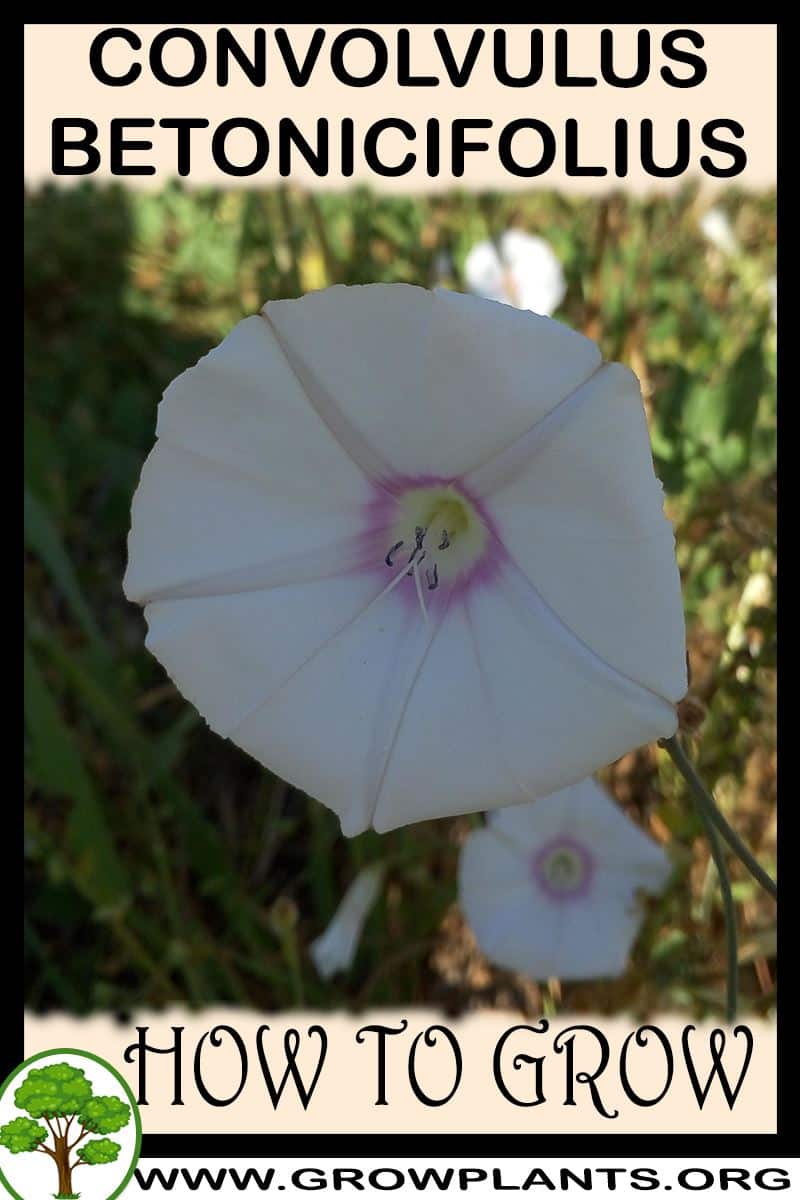
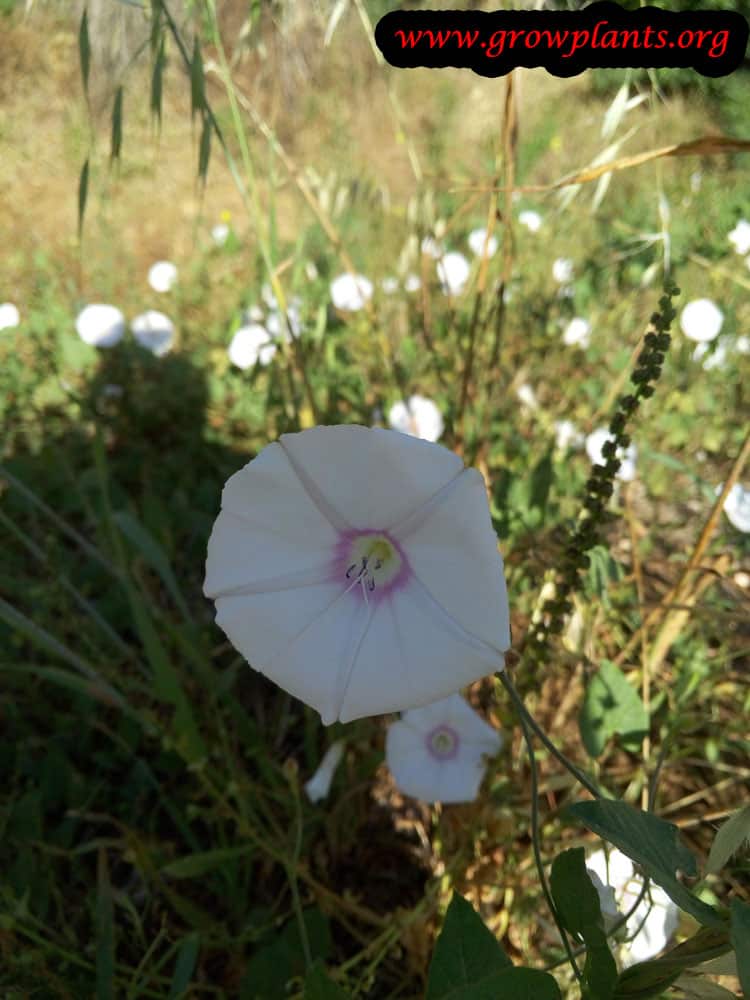
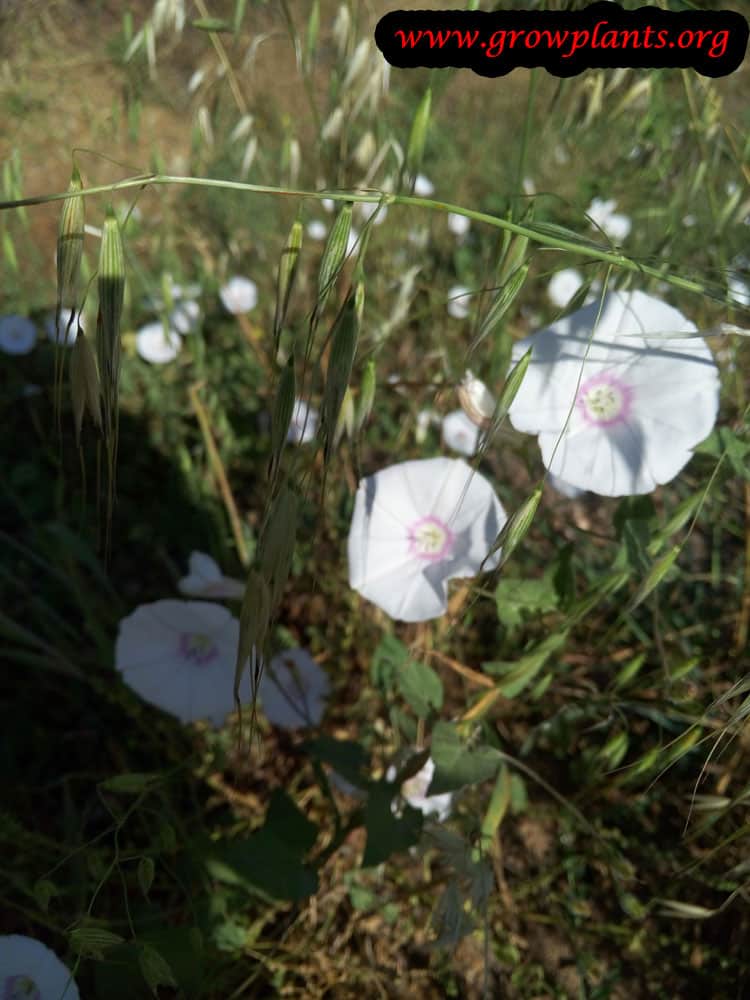
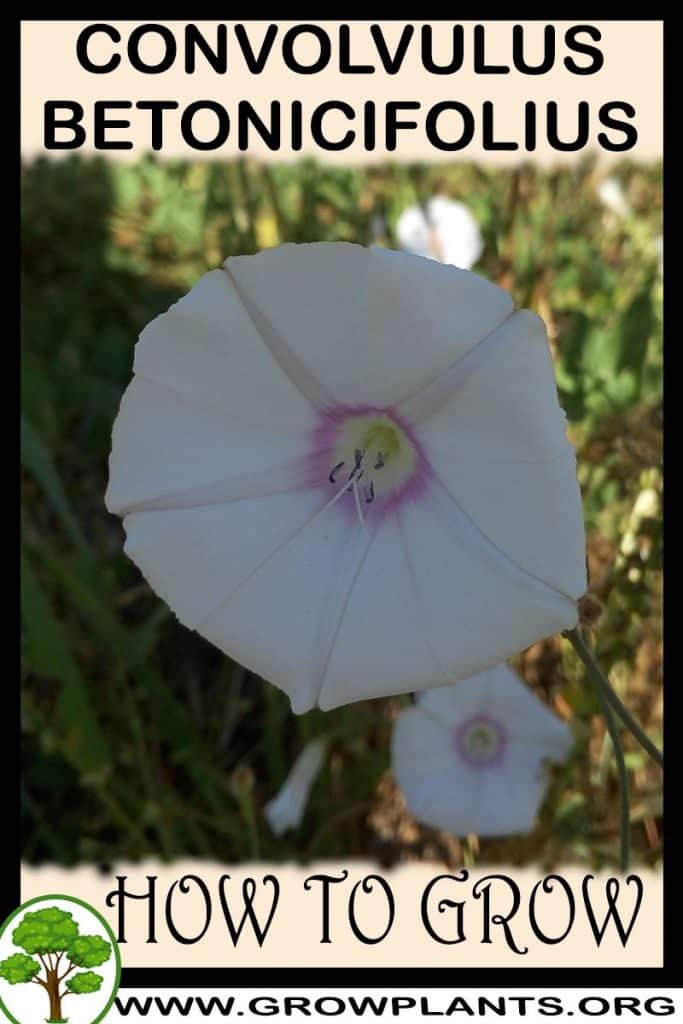
- Flower Characteristics: Funnel-shaped white flowers with fused petals.
Primary Uses & Landscape Value
- Functional & Ornamental Roles: Ornamental groundcover, bank cover or informal screen; drought tolerant but potentially invasive, so site it where its spread can be managed.
Care Guide: Planting, Soil & Watering
Overview: A vigorous, drought-tolerant plant for full sun to part shade. It thrives in ordinary well-drained soil and needs only light watering once established.
Quick Care Requirements
| Requirement | Ideal Condition |
|---|---|
| Planting Season | In the warm season – spring through autumn |
| Growth Rate | Moderate to Fast |
| Soil Type | Well-draining, tolerant of poor and sandy soils |
| Water Need | Low – drought-tolerant; water sparingly |
Planting & Establishment
- Best Planting Season: Plant from spring through autumn once the soil has warmed.
- How to Plant:
- Hole Preparation: Dig a hole about twice as wide as the root ball and equally deep.
- Soil Amendments: This plant tolerates lean soil; light compost improves establishment, but rich feeding is unnecessary.
- Planting Depth: Set the root collar at soil level without burying the stem.
- Growth Speed & Expectations: Fast to moderate; it spreads quickly, so provide support and site it where its vigor can be contained.
Soil, Watering & Drainage Care
- Soil Mix & Drainage Needs: Undemanding but needs good drainage; in containers use a free-draining potting mix.
- Watering Schedule & Technique:
- Young / Newly Planted: Water regularly until it is established.
- Established: Drought-tolerant – water only during prolonged dry spells, letting the soil dry between waterings.
- Seasonal Adjustments: Give minimal water in cool, wet months and a little more during extended summer heat.
Climate, Light & Hardiness
Convolvulus betonicifolius is a drought-tolerant, sprawling ground-cover vine for mediterranean, desert, subtropical, temperate, and tropical climates, thriving in full sun to half shade. It is a genuinely tough, wide-range plant with good heat and dry-soil tolerance.
Quick Climate Specifications
| Climate Zones | Mediterranean, desert, subtropics, temperate, tropics |
|---|---|
| USDA Hardiness Zones | Zone 3 and warmer |
| Frost Tolerance | Moderate |
| Light Conditions | Full sun / half shade |
| Wind Tolerance | Moderate to high (low, ground-hugging habit) |
Sunlight & Light Exposure
Optimal Light Setup
Full sun to half shade both work well; full sun tends to give the most compact, floriferous growth.
Temperature Extremes & Hardiness
USDA Hardiness & Regional Limits
Adapted to a very wide climate range; check the specific zone note for this variety, and expect top growth to die back with hard frost while the root system typically survives within its hardy range.
Wind, Humidity & Microclimate
Dry-Air Tolerance
Good – this is a drought-adapted ground cover.
Wind Tolerance
Its low, trailing/climbing habit copes well with open, windy sites.
Growing in Pots, Balconies & Indoors
Convolvulus betonicifolius is a trailing bindweed relative with soft foliage and funnel flowers – a sun-loving outdoor plant rather than a houseplant, and best kept in a container to keep its wandering roots in check.
Quick Details
- Container Size: A contained pot, about 5-15 L (1.5-4 gal); a container also helps restrain its spreading roots
- Indoor Suitability: Not a houseplant (the grower marks it “No”) – a full-sun trailing perennial
- Best Spot: Full sun to half shade
- Soil & Drainage: Free-draining, average or lean mix
- Watering in Pots: Low – drought-tolerant once established; let the surface dry between waterings
Indoors & On the Windowsill
- Houseplant limits: The grower marks it as not suitable indoors; it wants full sun and open air, and stretches badly in a room.
- Containment: Like its bindweed kin it can run, so keeping it potted helps stop it spreading.
On a Balcony or Patio
- Light & wind: A tough, drought-tolerant trailer for a hot, sunny balcony or a hanging basket; give it plenty of light for the best flowering.
- Practicalities: Its trailing stems spill over the rim – stand the pot off bare soil so roots cannot escape, and ensure it drains freely.
Choosing the Pot, Soil & Long-Term Care
- Pot & drainage: A 5-15 L pot with strong drainage holes, stood off the ground; skip a standing water saucer to avoid root rot.
- Potting mix: A free-draining general mix; it tolerates lean soil.
- Feeding: Feed sparingly – too much drives leaf at the expense of flowers.
- Repotting: Refresh the mix every year or two and keep roots contained.
Fertilizing & Feeding
A drought-tolerant, fast-spreading ground-cover vine that needs little beyond help getting established; once rooted in it largely fends for itself, so heavier feeding mostly just fuels unwanted spread.
Quick Fertilizing Specs
| Feeding Level | Light – this spreading ground cover asks for little beyond a boost while it is establishing. |
|---|---|
| young_feeding | New plantings benefit from a light, balanced feed to encourage roots to take hold. |
| mature_feeding | Established plantings generally do not need routine feeding. |
| Main Nutrient Priority | Balanced feeding during establishment only; little to no supplemental feeding afterward. |
| Best Feeding Period | During the establishment period right after planting. |
| Organic Options | A light compost top-dressing at planting time is usually sufficient support. |
| Soil pH | Tolerant of a wide range of soil types and not particular about soil fertility or pH. |
Feeding by Growth Stage
Establishment After Planting
Help a newly planted or seeded planting root in and begin spreading as ground cover.
| Nutrient direction | A light, balanced feed to support root establishment |
|---|---|
| Timing | During the first growing season after planting or seeding |
| Frequency | A light feeding is usually enough for this drought-tolerant grower |
| Fertilizer types | A light, balanced complete fertilizer, or a modest compost top-dressing |
| Precautions | Keep feeding light; this species spreads readily on its own and heavy feeding is unnecessary and can push growth beyond the intended planting area. |
Established Growth
Maintain a planting that is already established and spreading as ground cover.
| Nutrient direction | None – established plants do not need supplemental fertilizer |
|---|---|
| Timing | After the first growing season, once the plant is clearly established and spreading |
| Frequency | No feeding needed at this stage |
| Fertilizer types | No feeding needed once established; this vigorous grower sustains itself without supplemental fertilizer |
| Precautions | Do not fertilize established plantings, since extra nutrients mainly encourage more aggressive spread beyond the intended area. |
Nutrient Deficiency Signs & Corrections
Pale, washed-out leaf color and unusually thin, sparse coverage
| Possible causes | Nitrogen deficiency in very poor or depleted soil, Root competition from other aggressive nearby vegetation, Soil compaction limiting root spread and nutrient uptake |
|---|---|
| Appears first on | Older leaves first, then spreading across the planting |
| What to check | Soil organic matter and overall fertility, Compaction or root competition in the planting area, Whether coverage is patchy versus uniformly pale |
| Possible correction | A light, balanced feed can help thin, pale coverage recover; established plantings rarely need more. |
New leaves turn pale yellow while the veins stay green
| Possible causes | Iron deficiency triggered by alkaline or poorly drained soil, Waterlogged roots reducing nutrient uptake, Soil compaction restricting root growth |
|---|---|
| Appears first on | Newest leaves at the growing tips |
| What to check | Soil pH and drainage in the planting area, Recent overwatering or standing water, Soil compaction near the roots |
| Possible correction | Improve drainage and, where soil is markedly alkaline, consider a chelated iron product applied per its label. |
Weak, stunted growth despite this species’ normally vigorous spreading habit
| Possible causes | Root stress from compacted, waterlogged, or very poor soil, Underlying nutrient shortfall in exceptionally depleted soil, Salt buildup in the root zone from nearby runoff |
|---|---|
| Appears first on | Whole sections of the planting rather than individual leaves |
| What to check | Soil compaction and drainage, Any nearby source of salt runoff, General soil fertility compared to surrounding areas |
| Possible correction | Address the underlying soil or drainage problem first; a light balanced feed can support recovery once root conditions improve. |
Pruning, Training & Seasonal Maintenance
Convolvulus betonicifolius (shaggy bindweed) shares the same twining-vine, invasive/aggressive growth habit as its congener C. arvensis – a low, spreading groundcover/trailing vine that the source data flags as both invasive and aggressive. As with that relative, pruning is primarily about containing spread rather than ornamental shaping, and because growth continues essentially all year, cutting back is an ongoing task rather than a single seasonal event.
Quick Pruning & Maintenance Specs
| Pruning Tolerance | High |
| Primary Pruning Window | Ongoing, year-round |
| Typical Frequency | Frequent, to stay ahead of spread |
| Main Objective | Prevent it overtopping neighbouring plants and contain spread within the intended area |
| Young Plant Priority | Site it where spread is physically limited (edging, barrier, isolated bed) from the start |
| Mature Plant Priority | Repeated stem cutback plus root/runner removal at the bed edge |
| Best Tool Type | Bypass secateurs or shears for top growth; spade for roots |
| Avoid Heavy Pruning During | No strong restriction |
Pruning by Plant Age & Size
Newly Established
Contain from planting, given the documented invasive tendency.
Young / Formative
No ornamental training applies – any early management is simply directing or cutting back the twining growth.
Mature / Established
Routine repeated cutback of stems climbing over neighbouring plants; dig out spreading roots at the perimeter.
Seasonal Pruning Schedule
Ongoing Sanitary
Objective: keep the spread within bounds. Remove: cut back twining top growth and remove spreading roots wherever found extending past the intended area. Response: a temporary check on spread, with likely regrowth from remaining root fragments – a repeated task, not a one-time fix.
Structural Pruning & Training
As with its congener, the only ‘structure’ to manage is repeated cutback to stop it climbing onto and smothering neighbouring plants or structures.
Special Growth to Remove
- Stems extending beyond the intended support or area
- Spreading roots at the bed edge – as with C. arvensis, top-growth cutting alone will not fully control this species since spread also happens below ground
Container & Small-Space Pruning
Growing it in a container is the most reliable way to enjoy the trailing habit without the invasive spread becoming a problem in open ground; routine top cutback keeps it tidy.
Tools
- Bypass secateurs – routine stem cutback
- Hedge shears – only for quick, blunt cutback of a trailing mass, not precision work
- Garden spade – root/runner removal
Tool Hygiene & Disease Risk
Routine – no specific transmissible disease risk is flagged; aphids and larvae are the noted pests.
Cut Placement & Technique
Cut stems back to the edge of the desired growing area. Dig out as much of the root system as possible when removing runners, since fragments resprout readily.
Heavy Pruning & Rejuvenation
Tolerates hard cutback at any time without harm; use it as a containment tool whenever the plant exceeds its intended footprint, rather than reserving it for renewal purposes.
Post-Pruning Care
No special aftercare – this drought-tolerant species needs no extra water or feed after cutting. Watch for prompt regrowth from both cut stems and remaining roots.
Common Pruning Mistakes
- Cutting only the visible vine and assuming that controls the plant, while the root system resprouts
- Leaving cut root or stem fragments in the bed where they can re-root
When NOT to Prune
No meaningful seasonal restriction; cut back promptly whenever growth exceeds its intended area, at any time of year.
Recommended Tools (by task)
- bypass_secateurs – routine cutback of twining stems
- garden_spade – removing the spreading root system, the more important control point for this invasive species
Propagation Guide
Convolvulus betonicifolius is a perennial scrambling plant with a creeping root system. It can be propagated vegetatively by separating established rooted sections, and it can also be raised from seed.
Quick Propagation Specs
| Best Propagation Method | Division of established rooted sections |
| Alternative Method | Seed |
| Growth Habit | Perennial with a creeping rootstock |
| Propagation Difficulty | Easy to moderate |
Division
During active growth, locate a well-rooted section of the creeping plant and separate it with roots and healthy shoots attached. Replant immediately at approximately the same depth and keep the soil lightly moist until new growth resumes.
Growing from Seed
Sow mature seed in a well-drained propagation medium under warm growing conditions. Keep the medium evenly moist without waterlogging while seedlings establish.
Aftercare
Once divisions or seedlings are actively growing, provide their permanent support or growing space and avoid allowing newly planted roots to dry out completely during establishment.
Bloom & Flower Guide
Quick Details
- Bloom Season: Most of the year
- Flower Appearance: White, funnel-shaped flowers with the petals fused into a round face
- Edibility: Ornamental – not eaten
Detailed Blooming Overview
This trailing bindweed carries clean white, funnel-shaped flowers with merged petals, in the classic morning-glory style. In warm climates it blooms over much of the year, the flowers opening through the day. It makes a fast, drought-tolerant ground cover or informal screen.
Flower Characteristics
- White flowers, round-faced with fused (merged) petals in a funnel shape.
- Carried along trailing, twining stems.
Bloom Care & Thinning
- Manage the vine: Trim to keep the vigorous growth in bounds and to encourage a fresh flush of flowers.
- Placement: Full sun brings out the most bloom.
Pests, Diseases & Troubleshooting
Overview: Convolvulus (bindweeds and dwarf morning glories) are sun-loving, drought-tolerant plants that are generally easy and resilient, troubled mainly by aphids, spider mites, whitefly and the caterpillars of tortoise beetles/leaf-tiers, plus fungal foliage diseases in humid conditions. The most distinctive disease group is the rusts and white blister of the morning-glory family, along with powdery and downy mildew; overwatering brings root rot. Full sun, lean soil and airflow keep them clean.
Quick Troubleshooting Overview
| Issue / Pest | Main Symptom | Primary Solution |
|---|---|---|
| Aphids | Sticky, curled shoots; honeydew and sooty mold | Water jet, insecticidal soap, beneficials |
| Spider mites | Stippling and webbing in hot, dry sites | Hose undersides, horticultural oil |
| Whitefly | White flies rise when disturbed; yellowing | Sticky traps, insecticidal soap |
| Caterpillars / tortoise beetles | Chewed holes and window-feeding on leaves | Hand-pick, Bt spray |
| Rust / white blister | Rusty or white pustules on leaf undersides | Remove leaves, airflow, fungicide |
| Powdery / downy mildew | White powder above or grey mould below | Space plants, sulfur or copper spray |
Common Pests & Management
- Aphids (Aphis/Myzus spp.):
- Symptoms: Soft green or black clusters on tender shoots, flower buds and leaf undersides; growth curls, honeydew turns leaves sticky and sooty, and aphids can carry viruses.
- Prevention & Control: Blast off with water and encourage lady beetles, lacewings and hoverflies; insecticidal soap clears heavy colonies, and lean feeding avoids the soft growth aphids favor.
- Spider mites (Tetranychus urticae):
- Symptoms: Fine pale stippling turning to bronzing, with delicate webbing on leaf undersides in hot, dry, dusty conditions.
- Prevention & Control: Hose the undersides and keep plants from drought-stress; introduce predatory mites and apply horticultural oil or insecticidal soap if numbers climb.
- Whitefly (Bemisia/Trialeurodes spp.):
- Symptoms: Clouds of tiny white flies rise when the plant is disturbed; nymphs on undersides cause yellowing, honeydew and sooty mold.
- Prevention & Control: Use yellow sticky traps to monitor and reduce adults, spray insecticidal soap or oil on undersides, and support parasitic wasps (Encarsia).
- Tortoise beetles & leaf-eating caterpillars (Cassida spp. and morning-glory feeders):
- Symptoms: Tortoise-beetle adults and larvae make small round or “window” holes; caterpillars chew larger ragged holes and roll or tie leaves, leaving frass.
- Prevention & Control: Hand-pick beetles and larvae, remove tied leaves, and apply Bacillus thuringiensis (Bt) for caterpillars; encourage birds and predatory bugs.
- Leaf miners (Liriomyza spp.):
- Symptoms: Pale winding tunnels mined between leaf surfaces, disfiguring foliage when abundant.
- Prevention & Control: Pick off mined leaves, avoid broad-spectrum sprays so parasitic wasps survive, and use sticky traps for the adult flies.
- Slugs & snails (on seedlings):
- Symptoms: Chewed young leaves and stems with slime trails on soft new growth in damp conditions.
- Prevention & Control: Hand-pick at night, use iron-phosphate bait and copper barriers, and remove damp hiding places near seedlings.
Diseases & Fungal Issues
- Rust (Puccinia/Coleosporium spp.):
- Symptoms: Powdery orange-to-brown pustules on leaf undersides with yellow flecks above; heavy rust yellows and drops leaves.
- Treatment & Management: Improve airflow, remove and destroy infected leaves promptly, avoid overhead watering, and use sulfur or an appropriate fungicide if rust recurs.
- White blister / white rust (Albugo spp.):
- Symptoms: Shiny white, blister-like pustules on leaf undersides with pale patches or distortion above — a signature disease of the morning-glory family.
- Treatment & Management: Space plants for airflow, remove infected foliage, avoid prolonged leaf wetness, and apply a copper fungicide preventively in wet weather.
- Powdery mildew (Erysiphe spp.):
- Symptoms: White powdery film on leaves and shoots in crowded, humid, shaded conditions; leaves distort and yellow.
- Treatment & Management: Open the planting for airflow, water at the base, and treat with sulfur or potassium-bicarbonate; give full sun.
- Downy mildew & leaf spot (Peronospora, Cercospora):
- Symptoms: Angular yellow blotches with grey mould beneath (downy mildew) or brown spots (leaf spot) in cool, wet conditions.
- Treatment & Management: Improve spacing and drainage, remove affected leaves, avoid wet foliage, and apply copper preventively in prolonged damp weather.
Growing Difficulties & Abiotic Problems
- Root rot from overwatering
- Cause & Symptoms: These drought-tolerant plants rot in heavy, wet soil, showing wilt and yellowing despite moist ground.
- Correction Strategy: Plant in well-drained soil, water sparingly once established, and never let them sit waterlogged.
- Weediness / invasiveness (field bindweed)
- Cause & Symptoms: Perennial bindweeds spread aggressively by deep roots and seed, becoming hard to eradicate.
- Correction Strategy: For weedy species, prevent seed set, dig or smother persistently, and confine ornamentals to contained beds — a management issue, not a disease.
- Few flowers / all leaf
- Cause & Symptoms: Rich soil or shade gives lush growth but poor bloom.
- Correction Strategy: Grow in full sun and lean soil, and avoid high-nitrogen feeding to encourage flowering.
- Sunburn / heat stress on shade plants
- Cause & Symptoms: Bleached leaf patches when a shaded plant is moved abruptly into intense sun.
- Correction Strategy: Acclimatize gradually and keep roots evenly moist during establishment.
What Helps – Products & Tools
Cultural steps first — full sun, airflow, base watering and good drainage. Insecticidal soap, neem and horticultural oil cover aphids, mites, whitefly and leaf miners; yellow sticky traps monitor whitefly, iron-phosphate bait handles slugs, and Bacillus thuringiensis (Bt) targets caterpillars and tortoise-beetle larvae. For disease use sulfur or potassium-bicarbonate on powdery mildew and a copper fungicide on rust, white blister and downy mildew. Follow the label and protect pollinators.