Plant Profile & Key Characteristics
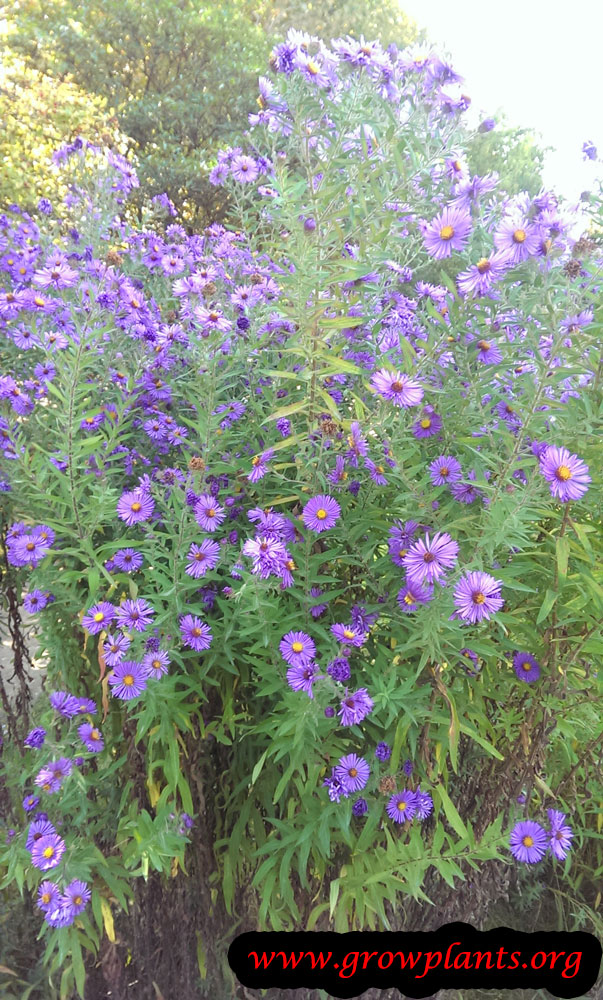
Overview: Michaelmas daisy is a herbaceous perennial forming clumps 30-90 cm (12-36 in) tall, dying back in cold winters. It is grown as an ornamental for its daisy flowers that attract pollinators.
Quick Specifications
| Specification | Attribute |
|---|---|
| Plant Type / Life Cycle | Perennial (herbaceous) |
| Foliage Type | Semi-evergreen (dies back in cold winters) |
| Mature Size | 30-90 cm tall (12-36 in) |
| Growth Rate | Fast to moderate |
| Root System | Fibrous, spreading by rhizomes |
| Toxicity | Non-toxic (safe around pets) |
| Hardiness | USDA zones 4-10a |
Growth Form & Structure
- Height & Spread: 30-90 cm (12-36 in) tall, forming a spreading clump; suited to containers.
- Growth Habit & Form: Upright clump-forming herbaceous perennial that spreads by rhizomes.
- Lifespan & Maturity: Long-lived perennial, best divided every few years.
Anatomy & Physical Features
- Leaves & Foliage: Green linear leaves on upright stems.
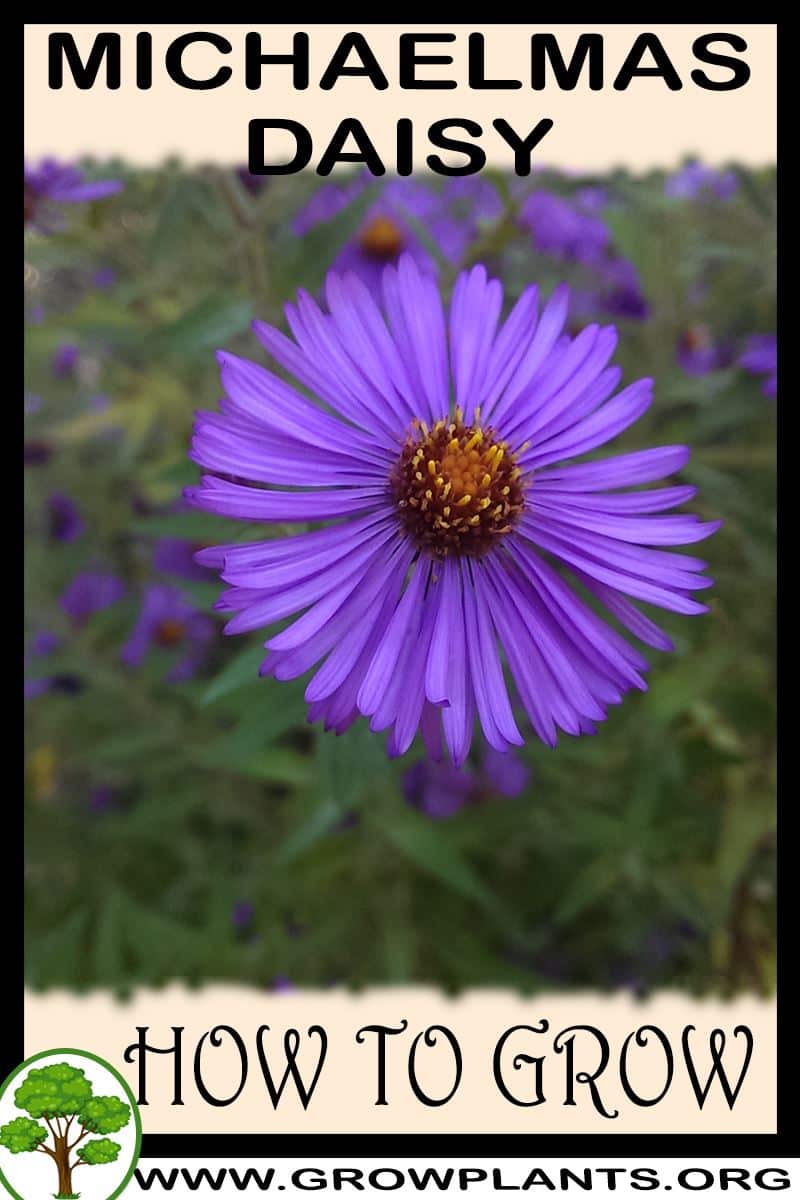
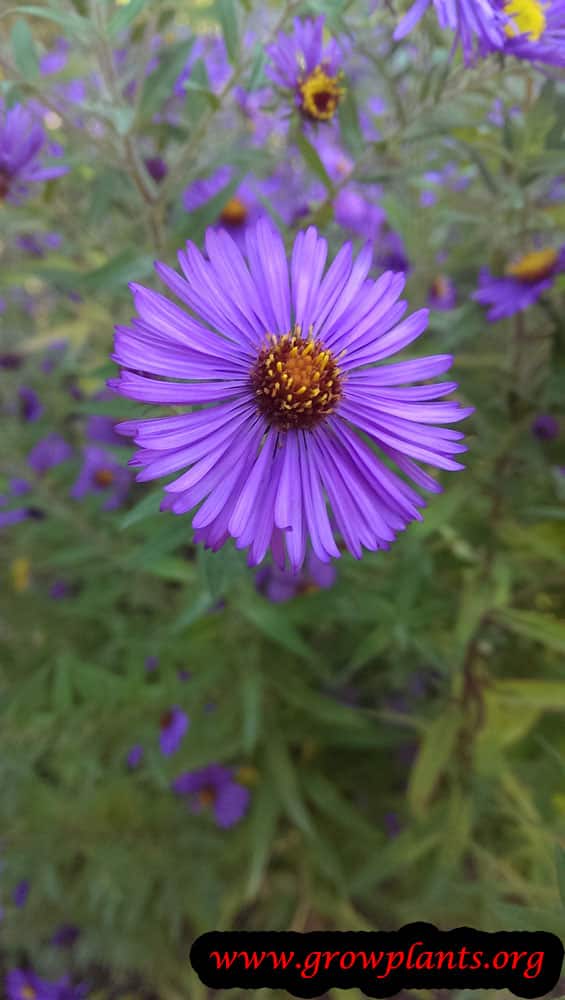
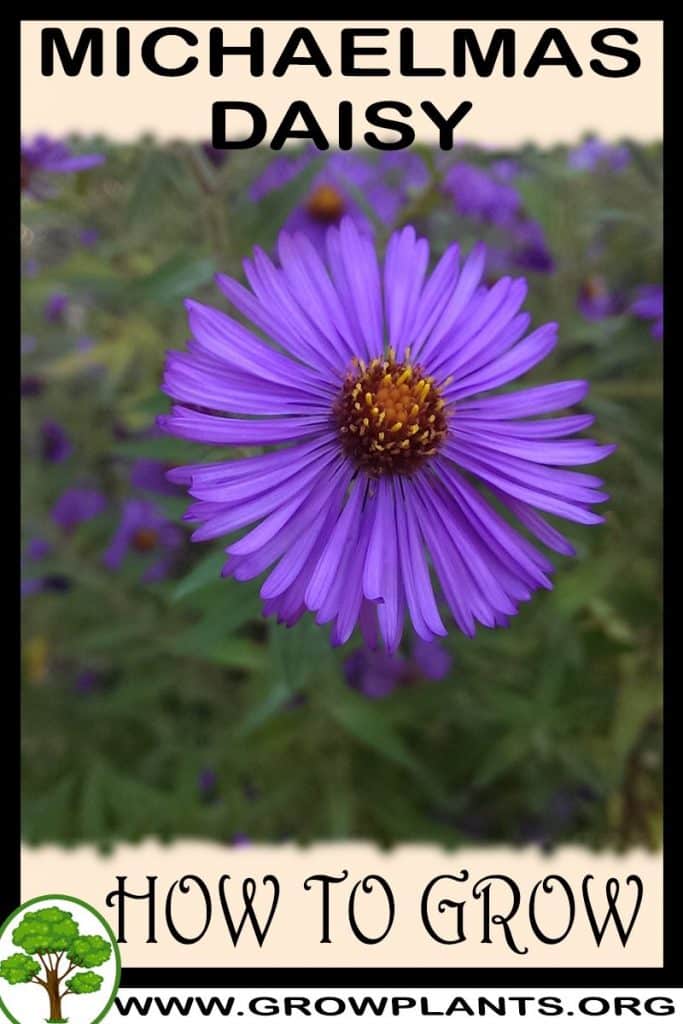
- Flower Characteristics: Fragrant daisy-form flowers in purple, blue, pink, white or bicolour (see Bloom guide).
Primary Uses & Landscape Value
- Functional & Ornamental Roles: Ornamental border perennial and pollinator plant.
Care Guide: Planting, Soil & Watering
Overview: Michaelmas daisy is a hardy herbaceous perennial (hardiness zone 4–10a) for full sun. It thrives in well-drained soil with moderate watering and is easy and adaptable.
Quick Care Requirements
| Requirement | Ideal Condition |
|---|---|
| Planting Season | Spring, summer or autumn |
| Growth Rate | Moderate to fast |
| Soil Type | Well-drained, average garden soil |
| Water Need | Low to moderate |
Planting & Establishment
- Best Planting Season: Plant in spring, summer or autumn.
- How to Plant:
- Hole Preparation: Dig a hole about the width of the root ball and loosen the surrounding soil.
- Soil Amendments: Work some compost or organic matter into the backfill for steady growth and flowering.
- Planting Depth: Set the crown at soil level.
- Growth Speed & Expectations: Growth is moderate to fast, forming a 30–90 cm clump.
Soil, Watering & Drainage Care
- Soil Mix & Drainage Needs: Well-drained soil is important to avoid rot; it is otherwise unfussy and grows well in containers.
- Watering Schedule & Technique:
- Young / Newly Planted: Keep newly planted clumps moist while they establish.
- Established: Once established, water moderately – a small to average amount is enough.
- Seasonal Adjustments: Water more in summer heat, especially before and during flowering, and less in winter.
Climate, Light & Hardiness
Michaelmas daisy is a cold-hardy, sun-loving herbaceous perennial well suited to temperate, mediterranean, and subtropical climates with cool winters. It grows best in full sun and tolerates a wide range of winter cold, from USDA zone 4 through 10a.
Quick Climate Specifications
| Climate Zones | Temperate, mediterranean, subtropics |
| USDA Hardiness Zones | 4–10a |
| Optimal Temp Range | Approximately 15–24°C (59–75°F) during active growth and bloom |
| Approx. Survival Minimum | Established plants can briefly withstand winter minimums around −34°C to −29°C (−30°F to −20°F), reflecting its zone 4 rating |
| Frost Tolerance | High |
| Light Conditions | Full sun |
| Wind Tolerance | Moderate |
Sunlight & Light Exposure
Optimal Light Setup
Full sun produces the sturdiest stems and the heaviest autumn bloom.
Direct Sun Requirement
Direct sun is important; plants grown in shade tend to become lanky with fewer flowers.
Best Exposure / Orientation
An open, unobstructed bed with good air circulation reduces foliar disease pressure.
Temperature Extremes & Hardiness
USDA Hardiness & Regional Limits
Reliably hardy outdoors from zone 4 through about 10a; as a herbaceous perennial it dies back to the ground each winter and regrows from the roots in spring.
Cold Damage & Winter Protection
Top growth is killed back by autumn frosts, which is a normal part of its dieback cycle rather than plant damage; no winter protection is generally needed within its hardy range.
Frost Sensitivity
Foliage and flowers are frost-sensitive at the end of the growing season, but the dormant crown and roots are cold-hardy.
Extreme Heat Tolerance
Tolerates warm summers reasonably well but performs best where nights cool down; sustained extreme heat can shorten bloom and increase water needs.
Wind, Humidity & Microclimate
Humidity Preferences
Adapts to a range of humidity levels; good air movement helps reduce powdery mildew and spider mite pressure.
Dry-Air Tolerance
Reasonably tolerant of drier air once established, though consistent soil moisture supports the best bloom.
Wind Tolerance
Moderate wind tolerance; taller cultivars may benefit from some shelter or staking in exposed sites.
Rainfall & Seasonal Moisture
Prefers a climate with reasonably even seasonal moisture and good soil drainage rather than prolonged drought or waterlogging.
Microclimate Recommendations
An open, sunny border with well-drained soil and good air flow suits this perennial well and helps limit fungal and pest problems.
Growing in Pots, Balconies & Indoors
Michaelmas daisies (Aster) are hardy, sun-loving autumn perennials – not houseplants, but cheerful container plants that bring late-season colour to a sunny balcony or patio.
Quick Details
- Container Size: A medium-large pot, about 7-15 L, for a 30-90 cm (12-36 in) clump
- Indoor Suitability: Not a houseplant (the grower marks it “No”); it needs full sun and a cold winter rest
- Best Spot: Full sun, open and airy – good airflow reduces mildew
- Soil & Drainage: Fertile, free-draining potting mix, kept from drying right out
- Watering in Pots: Moderate and even; pots dry fast when in bloom – don’t let the clump wilt
Indoors & On the Windowsill
- Houseplant limits: The grower marks it as not suitable indoors. A drip irrigation kit with a timer can take over that watering check automatically. It is an outdoor perennial that needs full sun and a cold winter dormancy – it will not thrive as a houseplant.
- Overwintering: Fully hardy; the pot dies back in winter and reshoots in spring – in the harshest areas just keep the pot from freezing solid.
On a Balcony or Patio
- Light & wind: Give it full sun and space for air to move around it. Taller clumps may need staking on a windy balcony.
- Practicalities: Water often when flowering – pots dry quickly; make sure they drain freely.
Choosing the Pot, Soil & Long-Term Care
- Pot & drainage: A medium-large pot with strong drainage holes; skip a standing water saucer to avoid root rot.
- Potting mix: Fertile and free-draining – an organic mix with perlite for aeration.
- Feeding: Feed through the growing season; potted plants leach nutrients faster than those in the ground.
- Dividing & refreshing: Divide the clump and refresh the mix every couple of years to keep it vigorous – the classic perennial root-and-top renewal.
Fertilizing & Feeding
A light feeder: light, balanced feeding in spring supports healthy growth and a reliable late-season bloom, while heavy feeding tends to produce tall, weak stems that flop.
Quick Fertilizing Specs
| Feeding Level | Light feeder |
|---|---|
| Main Nutrient Priority | Balanced feeding, kept light to avoid weak, floppy stems |
| Best Feeding Period | Spring growth through summer bud formation |
| Organic Options | Compost worked around the base of the clump |
| Micronutrients | Usually supplied by a complete fertilizer; correct specific issues only when diagnosed |
| Soil pH | Prefers well-drained soil; tolerates a range of pH |
Feeding by Growth Stage
Spring growth and clump establishment
Support fresh shoots and leafy growth as the clump breaks dormancy each spring.
| Nutrient direction | A balanced, general-purpose fertilizer applied lightly. |
|---|---|
| Timing | As new growth emerges in spring. |
| Frequency | A light feeding as growth resumes is usually enough. |
| Fertilizer types | A balanced, general-purpose garden fertilizer, Compost worked around the base of the clump |
| Precautions | Keep feeding light; heavy nitrogen can produce tall, floppy stems that need staking. |
Late-season flowering
Support the fragrant, pollinator-attracting flower display through summer into autumn.
| Nutrient direction | Keep feeding light and balanced; established clumps flower reliably without heavy fertilizing. |
|---|---|
| Timing | Summer into autumn as flower buds form and open. |
| Frequency | Established plants rarely need more than an occasional light feeding through bloom. |
| Fertilizer types | A balanced fertilizer used sparingly on established clumps |
| Precautions | Avoid rich soil or heavy feeding, which favor leafy growth and weak stems over sturdy flowering. |
Winter dieback and dormancy
Let the clump die back and rest through winter before returning in spring.
| Nutrient direction | None – withhold fertilizer while the plant is dormant. |
|---|---|
| Timing | After flowering ends through winter, once foliage dies back. |
| Frequency | No feeding at this stage. |
| Fertilizer types | No feeding at this stage; resume light feeding when new spring growth appears. |
| Precautions | Do not fertilize dormant or dying-back growth. |
Nutrient Deficiency Signs & Corrections
Older leaves pale or yellow and flowering is sparse.
| Possible causes | low soil nitrogen, thin or heavily leached soil, an extended period without feeding |
|---|---|
| Appears first on | older, lower leaves |
| What to check | feeding history, soil quality, overall clump vigor |
| Possible correction | Apply a balanced, general-purpose fertilizer at a light rate. |
Interveinal yellowing on older leaves while the veins stay green.
| Possible causes | low soil magnesium, potassium-heavy feeding competing with magnesium uptake, leaching in light or sandy soils |
|---|---|
| Appears first on | older, lower leaves |
| What to check | soil magnesium status, recent fertilizer balance, soil texture and drainage |
| Possible correction | Apply a labeled magnesium source such as Epsom salt and rebalance feeding toward a more balanced product. |
Tall, weak stems that flop or need staking, with lush leaves but fewer flowers.
| Possible causes | excess nitrogen from overfeeding, too-rich soil, insufficient sun encouraging soft, stretchy growth |
|---|---|
| Appears first on | overall stem and plant habit |
| What to check | recent feeding rate, soil richness, sun exposure |
| Possible correction | Reduce feeding, avoid nitrogen-heavy products, and ensure full sun exposure to promote sturdier growth. |
Pruning, Training & Seasonal Maintenance
Michaelmas daisy is a soft-stemmed herbaceous perennial that dies back to a basal crown each year, so pruning is entirely about shaping the current season’s growth rather than managing any permanent framework. Spring pinching (the classic Chelsea chop) controls final height and helps prevent the tall, floppy stems this genus is prone to; deadheading through the bloom period keeps the display tidy and can extend flowering; and cutting the whole plant back to the crown once foliage has died back after frost readies it for next season. None of this affects a woody structure, since the plant has none.
Quick Pruning & Maintenance Specs
| Pruning Tolerance | High – the whole plant dies back to ground level annually anyway |
| Primary Pruning Window | Late spring, before flower buds form (formative pinch) |
| Secondary Maintenance Window | Post-frost, once foliage has died back (autumn/winter cutback) |
| Typical Frequency | One spring pinch, ongoing deadheading in bloom, one autumn/winter cutback |
| Main Objective | Height/flop control, prolong bloom, seasonal cleanup |
| Young Plant Priority | None structural – let a first-year plant establish |
| Mature Plant Priority | Spring pinch of the tallest/most crowded stems; ongoing deadheading |
| Best Tool Type | Precision snips for pinching/deadheading; general garden shears for the bulk autumn cutback |
| Avoid Heavy Pruning During | Once flower buds have set (a late pinch removes the season’s bloom), and before foliage has actually died back in autumn |
Pruning by Plant Age & Size
Newly Established
None needed – let a first-year plant build its root system before any formative pinching.
Young / Formative
In late spring, before buds form, pinch or shear the tips of stems by roughly a third (the Chelsea chop) to force branching, lower the final height, and stagger bloom time – a well-known technique specifically for floppy late-summer/autumn asters.
Mature / Established
Repeat the spring pinch on the outer or tallest stems only, leaving some unpinched to extend the bloom window; deadhead spent flower heads through the season.
Seasonal Pruning Schedule
| Pre-Growth/Early-Spring | Pinch or shear stem tips by about a third, before flower buds form | Do not pinch after buds have set | Shorter, bushier, later- and longer-blooming stems | Delays and extends bloom rather than reducing it |
| Dormant/Winter | Cut all top growth back to the basal crown once foliage has died back after frost | Do not cut back while foliage is still green and photosynthesizing | Fresh growth from the crown next spring | None – readies the plant for next season |
Structural Pruning & Training
No scaffold; height and flop control via the spring pinch is the central structural task for this genus. Thinning or dividing an overcrowded clump also improves air circulation, which genuinely matters here – asters are prone to powdery mildew in crowded, poor-airflow plantings.
Special Growth to Remove
- Spent flower stems – deadhead to keep tidy and extend bloom
- Dead or powdery-mildew-affected foliage at the autumn cutback – removing it reduces overwintering fungal inoculum
Container & Small-Space Pruning
Possible in a large container, though not typically grown indoors. Pinch more assertively than an in-ground plant since the naturally tall habit is harder to support without staking in a pot, and watch container watering closely – moisture stress can trigger early flower drop.
Tools
Precision snips for pinching soft new growth and deadheading; general garden shears are fine for the bulk autumn cutback of many dead soft stems at once. No loppers, saw, or hedge shears – there is no woody growth on this plant.
Tool Hygiene & Disease Risk
Routine for pinching and deadheading; Increased when removing powdery-mildew-affected foliage – dispose of it rather than composting, since this is a real airborne fungal risk in crowded aster plantings.
Cut Placement & Technique
Pinch just above a leaf node. Deadhead by cutting the spent flower stem back to the next lateral bud or leaf pair, not just removing the flower head, to encourage rebloom on that stem. At the autumn cutback, cut close to the basal crown.
Heavy Pruning & Rejuvenation
The annual cutback to the crown is simply this plant’s normal herbaceous cycle, not woody rejuvenation. The real rejuvenation tool for this species is division – splitting the crown every two to three years once the center becomes bare or flowering declines, since pruning alone cannot fix that.
Post-Pruning Care
After the spring pinch, no extra feeding is needed beyond the plant’s normal schedule. After the autumn cutback, mulch over the crown in colder parts of its range (zone 4 edge) for winter protection. Watch spring regrowth for aphids and spider mites.
Common Pruning Mistakes
- Skipping the spring pinch and letting stems grow to full height unsupported, leading to flopping and splitting in wind and rain by bloom time
- Deadheading too aggressively late in the season, removing the last buds before a lengthy Michaelmas (autumn) bloom finishes
- Cutting the plant to the ground too early, before foliage has actually died back, weakening the crown’s reserves for next year
When NOT to Prune
Don’t pinch or shear after roughly midsummer once flower buds have set. Don’t cut back living green foliage in early autumn while it’s still actively building reserves in the crown – wait for frost dieback. Avoid dividing or hard cutback during active flowering.
Recommended Tools (by task)
- precision_snips – for the spring pinch and ongoing deadheading of soft stems.
Propagation Guide
Michaelmas daisy is most easily propagated by dividing established clumps, which is quick and keeps named cultivars true to type; basal stem cuttings taken in spring are another reliable vegetative option, while seed is mainly useful for growing the species from scratch since most garden plants are cultivars or hybrids. Overall this is an easy plant to propagate.
Quick Propagation Specs
| Best Propagation Method | Clump division |
| Alternative Methods | Basal stem cuttings; seed (species) |
| Propagation Difficulty | Easy |
| Seed True-to-Type | Usually true-to-type for the species; hybrid offspring vary for garden cultivars |
| Vegetative True-to-Type | Yes |
| Best Propagation Season | Spring |
| Seed Germination Time | Typically 2–4 weeks |
| Cutting Rooting Time | Around 2–3 weeks |
| Germination Temperature | Cool to moderate, around 15–21°C (59–70°F) |
| Seed Sowing Depth | Surface to very shallow; fine seed benefits from light |
Growing from Seed
Seed Handling & Viability
Use fresh seed for best germination.
Sowing Season
Autumn or spring.
Sowing Depth & Orientation
Surface-sow to very shallow cover; the fine seed germinates best with some light.
Germination Conditions
Cool to moderate temperatures.
Germination Time
Typically 2–4 weeks.
Stem Cuttings
Cutting Type
Basal cuttings taken from new spring shoots, about 8–10cm (3–4in) long.
Best Timing
Spring, as soon as new shoots emerge.
Cutting Preparation
Take shoots close to the crown, including a firmer piece of the base where possible, and remove the lowest leaves.
Rooting Setup
A moist, free-draining mix in bright, indirect light.
Rooting Hormone
Unnecessary – not required for reliable rooting.
Rooting Time
Roots typically within about 2–3 weeks.
Division, Offsets, Pups & Suckers
Divide established clumps every 2–3 years, ideally in spring, since older centers tend to lose vigor and thin out over time. Lift the clump and split it into sections that each retain several shoots and a healthy portion of roots; replant divisions promptly and water them in well to help them establish.
Bloom & Flower Guide
Quick Details
- Bloom Season: Spring, summer and – most notably – autumn
- Time to First Bloom: Flowers in its first season from spring divisions; a classic late-season bloomer
- Flower Appearance: Daisy-like heads with colourful ray petals around a central disc, in purple, blue, pink, white or bicolours
- Edibility: Ornamental – a valuable pollinator flower (generally regarded as non-toxic); not grown as an edible flower
Detailed Blooming Overview
Michaelmas daisy (genus Aster) carries masses of daisy-like flowers, lightly scented, from summer into autumn. Each “flower” is really a composite head: a ring of colourful ray florets (the petals) surrounding a central disc of many tiny disc florets. The blooms come in purple, blue, pink, white or in mixed shades, and because they peak so late in the year they are one of the most important nectar sources for bees and butterflies heading into autumn.
Flower Characteristics
- Colour: Purple, blue, pink, white or more than one colour
- Form: Composite daisy heads – ray florets (the petals) around a central disc of disc florets
- Season and value: A key late-season, nectar-rich flower that draws bees and butterflies
Bloom Care & Thinning
- Deadheading: Remove faded heads to keep the plant blooming and looking fresh.
- Pinching for shape: Cutting stems back by a third in late spring (the “Chelsea chop”) gives bushier, better-supported, more floriferous plants.
- Dividing: Lift and divide clumps every few years in spring to keep them vigorous and free-flowering.
Bloom Health & Protection
- Powdery mildew: The classic problem of Michaelmas daisies, worst in dry soil and crowded plantings. Improving airflow, keeping the roots from drying out, and – if needed – a sulfur-based fungicide all help.
Pests, Diseases & Troubleshooting
Overview: Michaelmas daisies and their kin (Aster spp.) are easy perennials defined by two problems – powdery mildew on crowded, dry plants and leafhopper-borne aster yellows – alongside common sap-suckers. Asters (Michaelmas daisies and their relatives) are cheerful, easy perennials whose two defining problems are fungal – powdery mildew on crowded, dry-rooted plants – and aster yellows, a leafhopper-borne disease that greens and deforms the flowers. Sap-suckers like aphids and mites round out the pest list. Manage them culturally: give plenty of air and space, keep the roots evenly moist, divide clumps regularly, and remove any plant showing the tell-tale green, distorted flowers of aster yellows.
Quick Troubleshooting Overview
| Issue / Pest | Main Symptom | Primary Solution |
|---|---|---|
| Powdery mildew | White powdery coating on leaves, esp. lower/inner | Space & divide plants, improve airflow, resistant varieties, fungicide |
| Aster yellows | Green, deformed flowers and yellow, distorted growth | Remove and destroy infected plants; control leafhoppers/weeds |
| Aphids | Sticky, distorted new shoots and buds | Hose off, encourage predators, insecticidal soap |
| Spider mites | Stippled, dull, bronzed leaves in hot dry spells | Keep roots moist, rinse foliage, horticultural oil |
| Rust / leaf spot | Orange pustules or brown spots on leaves | Remove affected leaves, improve airflow, avoid wetting foliage |
Common Pests & Management
- Aphids (Macrosiphoniella / Aphis spp.):
- Symptoms: Clusters of soft green, grey or black insects on new shoots, buds and flower stems, with sticky honeydew, sooty mould, curling and distortion; they can also spread aster yellows.
- Prevention & Control: Dislodge with a water jet, encourage ladybirds, lacewings and hoverflies, control ants, and treat persistent clusters with insecticidal soap or neem, focusing on buds and tips.
- Two-spotted spider mite (Tetranychus urticae):
- Symptoms: Fine pale stippling, a dull bronzed cast and fine webbing on leaves in hot, dry conditions, especially on drought-stressed plants.
- Prevention & Control: Keep roots evenly moist (drought stress invites mites), rinse foliage, encourage predatory mites, and apply horticultural oil or insecticidal soap to leaf undersides for persistent cases.
- Thrips (Frankliniella / Thrips spp.):
- Symptoms: Silvery streaking and tiny black frass on leaves and petals, with distorted buds and flecked flowers.
- Prevention & Control: Monitor with blue sticky traps, remove spent flowers, and treat with insecticidal soap, spinosad or neem, repeating to break the cycle.
- Leafhoppers (Macrosteles / Cicadellidae):
- Symptoms: Small wedge-shaped insects that hop when disturbed, causing light stippling – but their real importance is transmitting the aster yellows phytoplasma between plants.
- Prevention & Control: Control nearby weeds that host them, encourage predators, use row cover on valued plantings, and manage populations with insecticidal soap where aster yellows is a concern.
- Tarnished plant bug (Lygus lineolaris):
- Symptoms: Feeding on buds and shoots causes distorted, dimpled or aborted flowers and blackened growing tips.
- Prevention & Control: Keep the area weed-free, encourage natural enemies, remove damaged buds, and treat heavy infestations with insecticidal soap or neem.
- Slugs & snails (Gastropoda):
- Symptoms: Ragged holes in new spring growth and lower leaves, with slime trails, worst in damp shaded plantings.
- Prevention & Control: Handpick at night, clear debris, and use copper barriers, traps or iron-phosphate bait around emerging clumps.
Diseases & Fungal Issues
- Powdery mildew (Golovinomyces / Erysiphe cichoracearum):
- Symptoms: A white powdery coating on leaves and stems, worst on crowded, shaded, or dry-rooted plants in late season, causing yellowing and leaf drop – the signature aster disease.
- Treatment & Management: Space and divide plants for airflow, choose mildew-resistant varieties (many New York/New England asters are bred for this), keep roots evenly moist, avoid overhead watering, and apply sulphur, potassium bicarbonate or a horticultural-oil fungicide if needed.
- Aster yellows (phytoplasma):
- Symptoms: Yellow, stunted, witches’-broom growth and flowers that turn green, leafy and deformed instead of opening normally; spread by leafhoppers and incurable.
- Treatment & Management: There is no cure – promptly dig and destroy infected plants to stop spread, control leafhopper vectors and weedy reservoirs, and do not compost affected plants.
- Rust (Coleosporium spp.):
- Symptoms: Orange to rusty-brown pustules on leaf undersides with yellow spotting above, in humid conditions.
- Treatment & Management: Remove and destroy affected leaves, improve air movement and spacing, avoid overhead watering, and apply a sulphur fungicide if severe.
- Septoria / leaf spot (Septoria / Ramularia spp.):
- Symptoms: Brown to purple-edged spots on leaves that enlarge and merge, causing lower-leaf yellowing and drop in wet weather.
- Treatment & Management: Remove affected leaves and fallen debris, improve airflow, avoid wetting foliage, and apply a copper fungicide only if it spreads.
Growing Difficulties & Abiotic Problems
- Flopping & legginess:
- Cause & Symptoms: Tall stems splay open and flower poorly, from too much shade, rich soil, or lack of pinching/division.
- Correction Strategy: Grow in full sun, pinch or cut back by half in early growth for bushier stems, divide clumps every couple of years, and stake tall types.
- Drought stress & leaf scorch:
- Cause & Symptoms: Lower-leaf browning, wilting and mite flare-ups when roots dry out, since asters like steady moisture.
- Correction Strategy: Keep the root zone evenly moist with mulch and regular watering, especially in summer heat, to prevent both scorch and spider-mite outbreaks.
- Poor bloom:
- Cause & Symptoms: Sparse flowering from insufficient light or an over-mature, congested clump.
- Correction Strategy: Site in full sun and divide congested clumps regularly to rejuvenate flowering.
What Helps – Products & Tools
Airflow and division prevent most aster trouble. For disease, useful products are sulphur, potassium-bicarbonate or horticultural-oil fungicides for powdery mildew and rust, and copper for leaf spot; mildew-resistant varieties are the best long-term fix. For pests, insecticidal soap and neem cover aphids, mites, thrips and plant bugs; sticky traps and row cover help against leafhoppers; and iron-phosphate bait handles slugs. There is no treatment for aster yellows – remove affected plants.