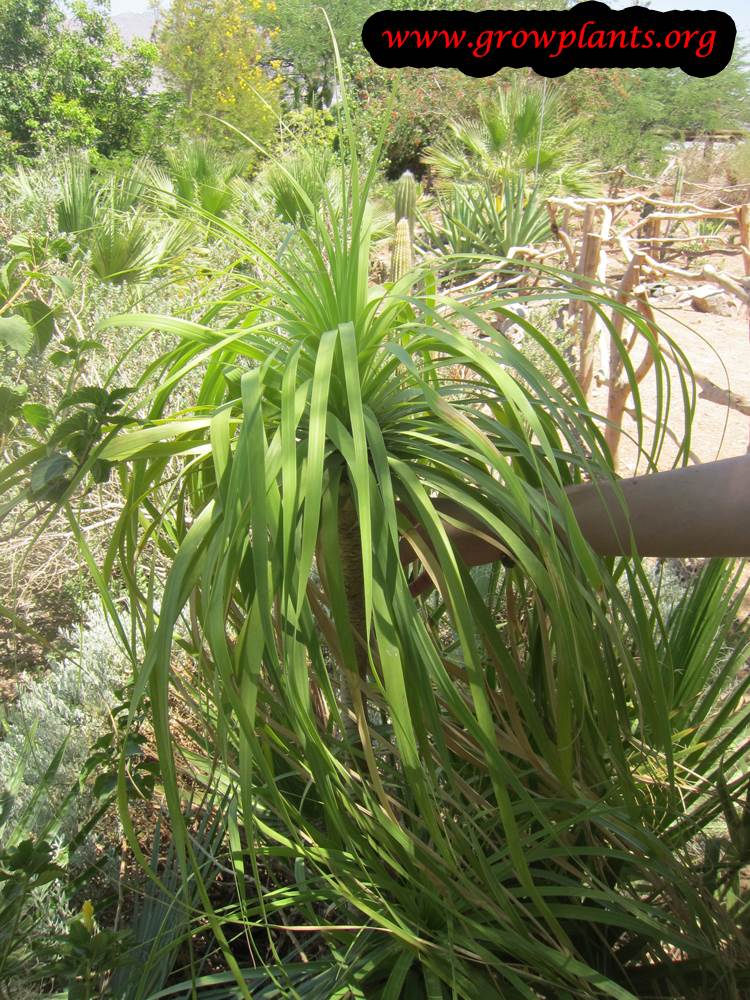
Plant Profile & Key Characteristics
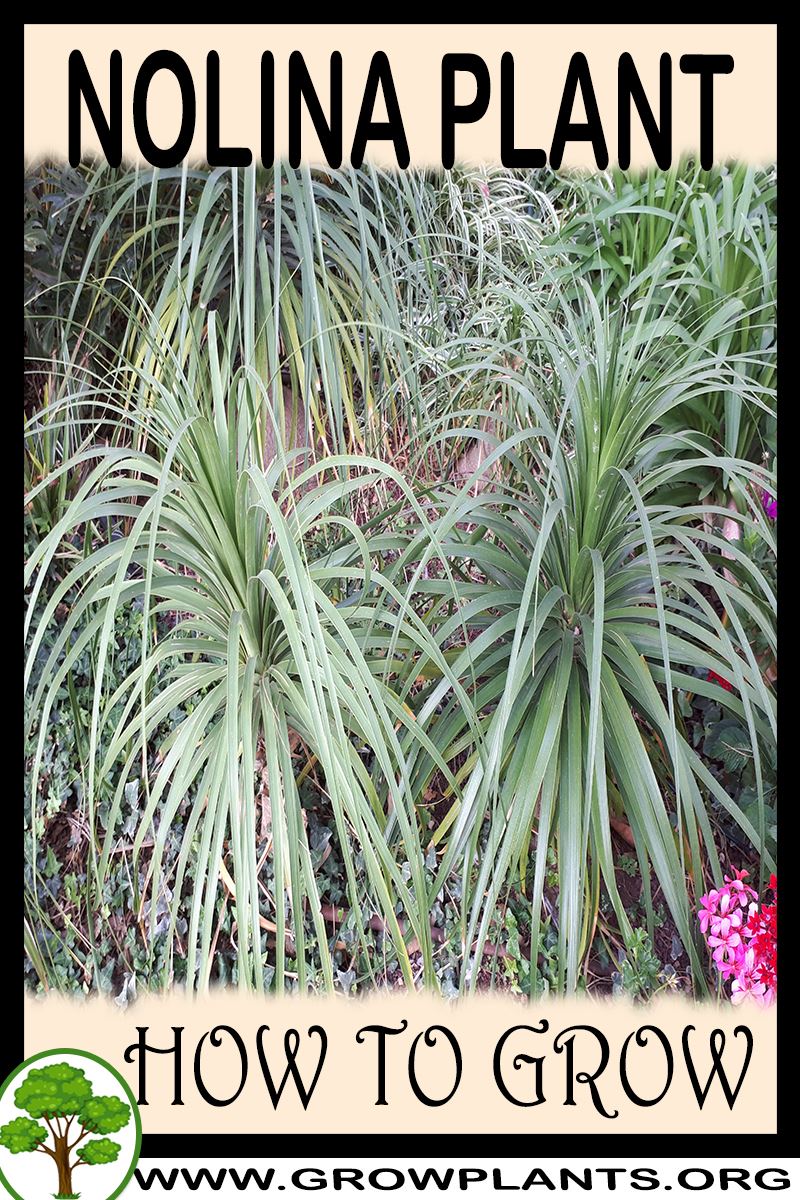
Overview: Nolina (beargrass) is a slow-growing evergreen succulent perennial that reaches 2-4 m (6-12 ft) tall. It is grown as a drought-tolerant ornamental for its fountain of narrow, spear-shaped foliage.
Quick Specifications
| Specification | Attribute |
|---|---|
| Plant Type / Life Cycle | Perennial (herbaceous succulent) |
| Foliage Type | Evergreen |
| Mature Size | 2-4 m (6-12 ft) tall |
| Growth Rate | Slow |
| Root System | Shallow-rooted |
| Hardiness | USDA zones 5-12 |
Growth Form & Structure
- Height & Spread: Reaches 2-4 m (6-12 ft) in the ground; in a container use a pot 70-100% wider than the root ball, which need not be deep as the roots are shallow.
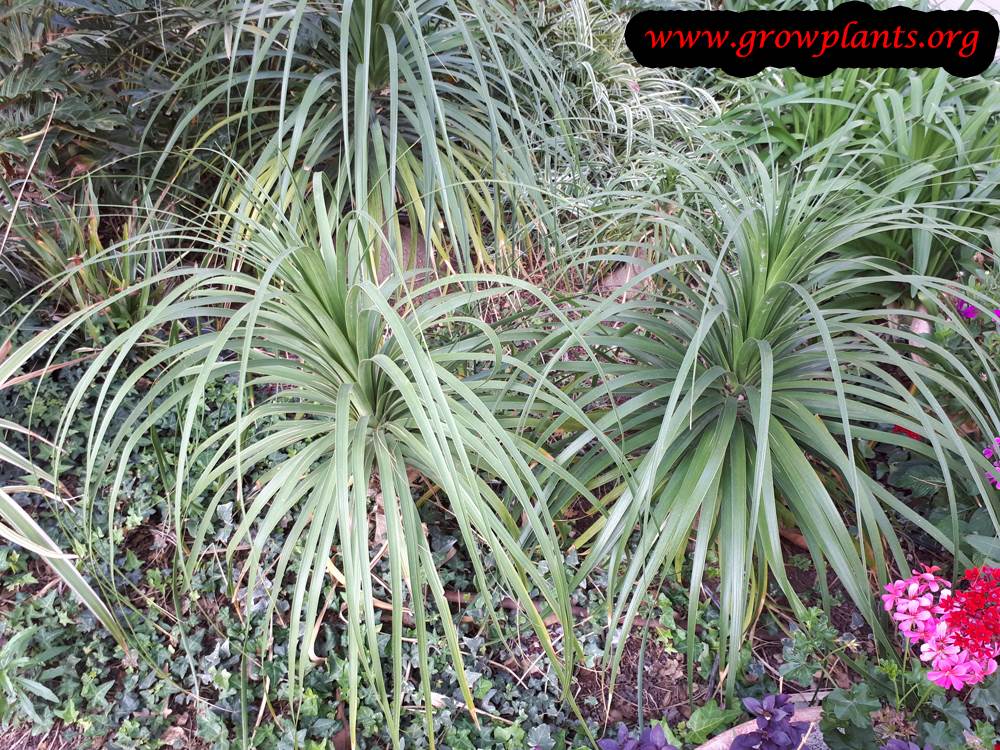
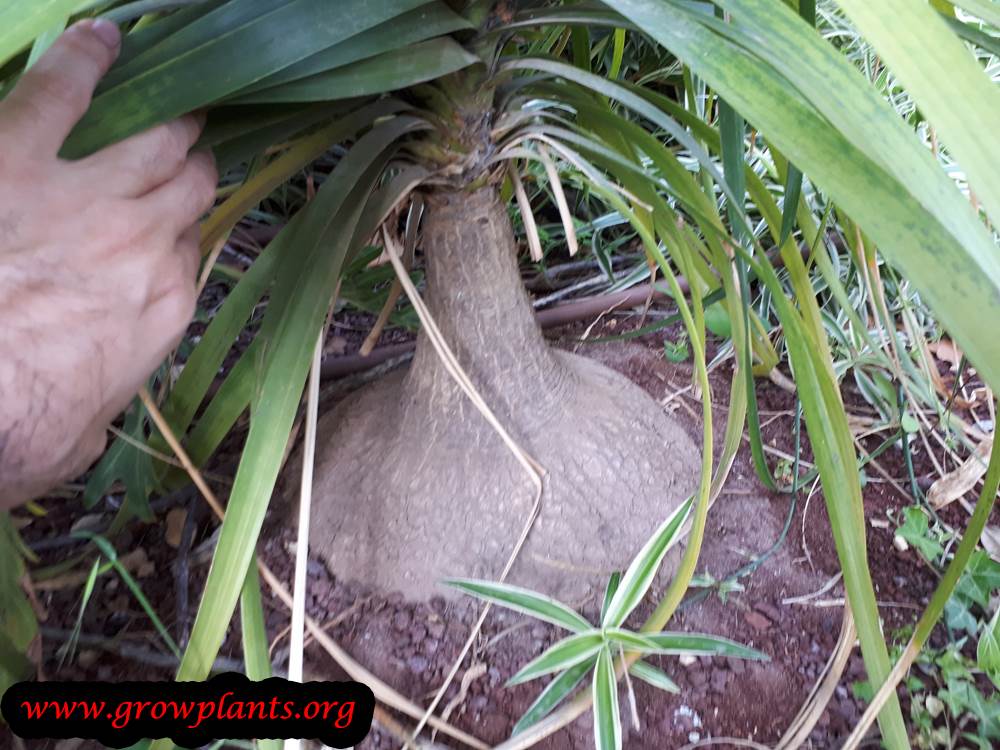
- Growth Habit & Form: Rosette-forming succulent with a swollen base and arching, grass-like leaves.
- Lifespan & Maturity: Long-lived and slow to reach full size; blooms only after several years.
Anatomy & Physical Features
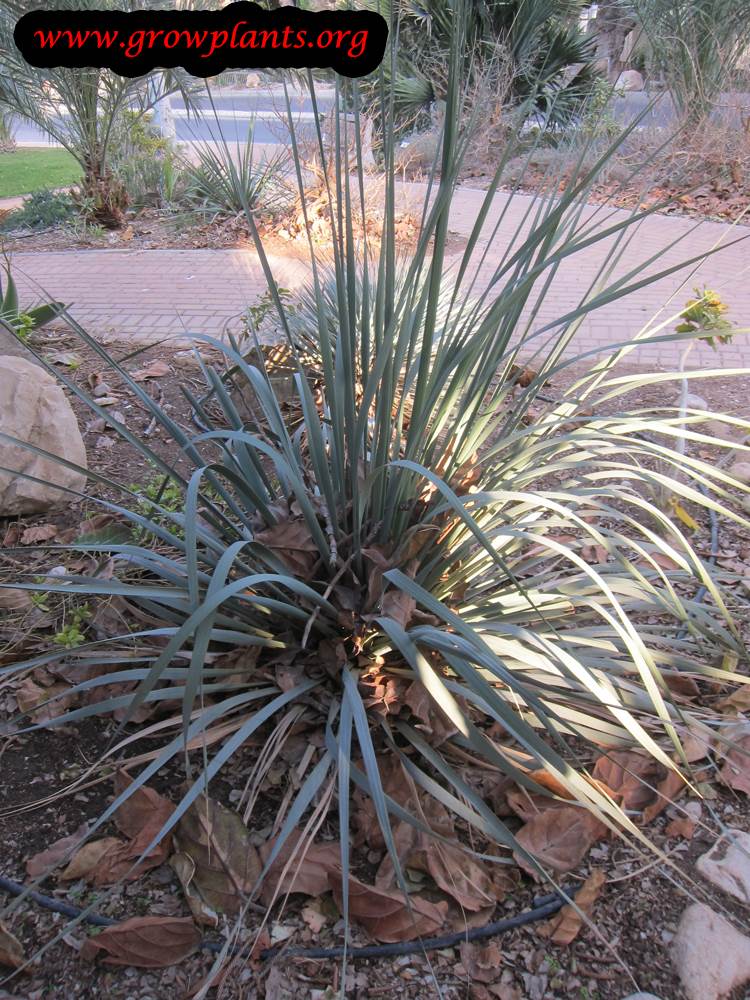
- Leaves & Foliage: Green, spear-shaped leaves; some species carry green-blue foliage.
- Flower Characteristics: Small white-to-yellow flowers in plume-like (beard) clusters, produced only on mature plants.
Primary Uses & Landscape Value
- Functional & Ornamental Roles: Drought-tolerant ornamental and architectural accent for desert, Mediterranean, subtropical and temperate gardens; also suited to containers.
Care Guide: Planting, Soil & Watering
Overview: Nolina (bear grass) is a slow-growing, drought-tolerant succulent that needs sharply drained, gritty soil in full sun to part shade. It wants little water, drying out between waterings, and resents being overwatered.
Quick Care Requirements
| Requirement | Ideal Condition |
|---|---|
| Planting Season | Spring in cold zones (5–7); spring–summer (8–10a); spring–autumn (10b–11); year-round in zone 12 |
| Growth Rate | Slow |
| Soil Type | Well-drained, gritty / sandy |
| Water Need | Low to moderate – let it dry between waterings; do not overwater |
Planting & Establishment
- Best Planting Season: Plant according to zone: spring in cold zones (5–7), spring to summer in 8–10a, spring to autumn in 10b–11, and year-round in zone 12.
- How to Plant:
- Hole Preparation: Dig a hole larger than the root ball; in wet climates, plant slightly raised so water does not pool around the crown.
- Soil Amendments: Loosen the soil for better aeration and add only a small amount of organic matter.
- Planting Depth: Cover the roots lightly but firmly enough to hold the plant stable; do not plant deep (the roots are shallow).
- Growth Speed & Expectations: Slow.
Soil, Watering & Drainage Care
- Soil Mix & Drainage Needs: Sharp-draining, gritty soil; in pots use a cactus mix over a drainage layer of gravel or lava rock, and switch the soil out every few years.
- Watering Schedule & Technique:
- Young / Newly Planted: Light watering to establish.
- Established: Infrequent deep watering, letting the soil dry between; the plant is drought-tolerant.
- Seasonal Adjustments: Sparing water in winter; a little more during summer heat.
Climate, Light & Hardiness
Nolina is an arid-climate succulent that thrives in hot, sunny conditions across desert, Mediterranean, subtropical, and temperate regions. It wants full sun to half shade and, once established, is remarkably cold-hardy for a succulent, tolerating hard freezes in colder parts of its range.
Quick Climate Specifications
| Climate Zones | Desert, Mediterranean, Subtropical, Temperate |
| USDA Hardiness Zones | Approximately 5–12 (varies by species within the genus) |
| Optimal Temp Range | Approximately 18–29°C (65–85°F) |
| Approx. Survival Minimum | In zone-5 locations, established plants can briefly endure typical zone-5 winter lows near −29°C to −23°C (−20°F to −10°F); in zone 12 areas conditions stay essentially frost-free |
| Frost Tolerance | High (species-dependent) |
| Light Conditions | Full Sun / Half Shade |
| Wind Tolerance | High |
Sunlight & Light Exposure
Optimal Light Setup
Full sun is ideal; Nolina also tolerates half shade, which can be useful in the hottest desert locations.
Direct Sun Requirement
Yes - this is a full-sun-adapted plant, not a shade species, and performs best with unobstructed direct light most of the day.
Shade & Heat Management
No special heat management is needed; light afternoon shade in extreme desert summers is optional, not required.
Best Exposure/Orientation
An open, south- or west-facing bed with no overhead canopy suits it best.
Temperature Extremes & Hardiness
USDA Hardiness & Regional Limits
The site's data spans hardiness zone 5–12, an unusually wide range because it covers multiple Nolina species with different cold tolerances - the toughest types handle zone-5 winters, while more tender types are best kept to zone 10 and warmer.
Cold Damage & Winter Protection
Young, newly planted specimens are more cold-sensitive than mature ones. In the coldest part of its range, keep the crown on the dry side over winter and consider elevating plantings in high-rainfall sites (as noted for planting) so cold, wet soil doesn't sit around the base.
Frost Sensitivity
Established plants tolerate hard frost and freezing; foliage may show some cold marking in severe cold, but the crown typically survives where zone data supports it.
Extreme Heat Tolerance
Excellent - as a drought-tolerant desert-climate plant it handles prolonged summer heat without difficulty.
Wind, Humidity & Microclimate
Humidity Preferences
Prefers dry to moderate air; it is not suited to constantly humid, muggy conditions, which favor crown and root rot.
Dry-Air Tolerance
Very high - it is native to and thrives in arid climates.
Wind Tolerance
The narrow, flexible spear-shaped leaves handle open, windy sites well.
Rainfall & Seasonal Moisture
Best adapted to climates with a distinct dry season and well-drained soil; in wetter climates, elevate the planting site so winter rains don't pool around the base.
Microclimate Recommendations
Choose an open, sunny bed with sharp drainage and avoid low spots where cold air or water collects.
Growing in Pots, Balconies & Indoors
Nolina is a slow-growing, drought-hardy plant with a swollen, water-storing base and a fountain of narrow leaves. It eventually reaches 2-4 m (6-12 ft), so the grower does not rate it as a long-term houseplant – though young plants are widely kept indoors in a very bright spot, and it thrives in a big patio pot. It is not toxic to pets.
Quick Details
- Container Size: A pot about 70-100% larger than the roots; it need not be deep, as the roots are shallow
- Indoor Suitability: Grower rates it as not a houseplant; young plants tolerate a very bright room for years
- Best Spot: Full sun to part shade
- Soil & Drainage: Cactus mix with gravel, lava rock or pebbles in the base – drainage is essential
- Watering in Pots: Sparingly – let it dry between waterings; it stores water in its swollen base
Indoors & On the Windowsill
- As a houseplant: The grower does not list it as an indoor plant – it grows large and wants strong light. A ready-made cactus and succulent soil mix provides that structure without mixing it yourself. That said, young plants are commonly grown indoors in the brightest spot available and stay small for years.
- Windowsill & young plants: While small it is happy at a very sunny window; give it all the light you can and water sparingly.
- Overwintering: In cold climates grow it in a pot so it can winter indoors in a bright, cool, frost-free room.
On a Balcony or Patio
- Light, heat & wind: Give it the sunniest, most open spot; it takes wind and reflected wall heat well, but the pot dries fast, so check the mix in warm weather.
- Weight & drainage: Use a wide, stable pot raised on feet so water runs away freely and does not pool.
Choosing the Pot, Soil & Long-Term Care
- Pot & drainage: Because the roots are shallow, a wide rather than deep pot works best – with strong drainage holes and no standing saucer. Terracotta breathes and dries fast, which suits it.
- Potting mix: A free-draining cactus mix with a layer of gravel, lava rock or pebbles in the base.
- Feeding: Feed lightly once or twice in the growing season; it is not a hungry plant.
- Refreshing the mix: Change the soil every few years, once the roots fill the pot or the mix stops draining.
Grower’s Container Tip
- Wide, shallow and free-draining: Pot it into a container about 70-100% larger than the roots; it need not be deep, since the roots are shallow. Put gravel, lava rock or pebbles in the base for drainage, use a cactus mix, make sure there are drainage holes, and change the soil after a few years once the roots fill the pot or the mix loses its structure.
Fertilizing & Feeding
A very light feeder: this slow-growing, architectural desert succulent (Beargrass) builds its thick caudex and spear-shaped leaves on lean soil, needing only an occasional light feeding during active growth and none once growth slows for the year.
Quick Fertilizing Specs
| Feeding Level | Light feeder |
|---|---|
| Main Nutrient Priority | A dilute, balanced feed applied sparingly to support slow, steady growth without pushing soft new leaves |
| Best Feeding Period | During the warm active growing season |
| Organic Options | A light amount of organic matter mixed into the planting hole, or an occasional light top-dressing of compost for ground-planted specimens |
| Reduce/Stop Feeding | Taper off as growth slows going into the cooler part of the year |
| Micronutrients | Usually met by a complete fertilizer; correct only a diagnosed issue |
| Soil pH | Tolerates a wide range in well-drained, ventilated soil |
Feeding by Growth Stage
Warm-season growth for an architectural desert succulent
Support slow, steady development of the caudex and spear-shaped leaves without encouraging soft growth that stresses this drought-adapted plant.
| Nutrient direction | A light, balanced feed used sparingly is enough for this slow-growing succulent; more is not better. |
|---|---|
| Timing | During the warm growing season, easing off as growth slows. |
| Frequency | An occasional light feeding during active growth is plenty; established, ground-planted specimens often need very little at all. |
| Fertilizer types | A dilute, balanced liquid or granular fertilizer used sparingly, A light amount of organic matter mixed in at planting or top-dressed occasionally |
| Precautions | Keep feeding light and let the well-drained soil dry between waterings; overfeeding or overwatering can invite rot in this drought-adapted, slow-growing plant. |
Cooler-season rest
Let this slow-growing succulent rest through the cooler part of the year without pushing tender new growth.
| Nutrient direction | None – withhold fertilizer while growth is slow or stopped. |
|---|---|
| Timing | During the cooler part of the year, when growth naturally slows. |
| Frequency | No feeding at this stage; resume only once active growth returns. |
| Fertilizer types | No feeding at this stage; do not fertilize until active growth resumes. |
| Precautions | Withhold fertilizer now; feeding a resting plant wastes nutrients and adds unnecessary stress heading into cooler weather. |
Nutrient Deficiency Signs & Corrections
Leaf color looks pale or washed out and growth, already slow for this succulent, becomes even slower over a full season.
| Possible causes | low available nitrogen in lean, well-drained soil that has gone unfed for a long time, nutrients leaching through fast-draining, sandy or gritty soil, general root stress from poor drainage or a waterlogged spot |
|---|---|
| Appears first on | older, lower leaves |
| What to check | how long since any feeding or soil amendment, drainage and soil texture around the root zone, overall plant vigor and leaf color |
| Possible correction | Apply a dilute, balanced or low-nitrogen fertilizer during the next active growing period and consider a light organic matter amendment. |
Leaf tips or margins brown and look scorched, especially on a container-grown plant.
| Possible causes | fertilizer salt buildup in a container with limited soil volume, feeding too often or too concentrated for this light-feeding succulent, poor drainage concentrating salts near the roots |
|---|---|
| Appears first on | leaf tips and margins |
| What to check | recent feeding frequency and strength, container or soil drainage and any visible salt crust on the surface, whether the plant is in-ground or containerized |
| Possible correction | Ease off feeding, water thoroughly to move accumulated salts through the drainage, then resume lighter feeding. |
New leaves emerge yellow with the veins staying green, while older leaves keep a normal color.
| Possible causes | iron unavailability in alkaline, compacted, or waterlogged soil, poorly aerated soil restricting root uptake, overwatering or planting too deep, limiting root function |
|---|---|
| Appears first on | newest leaves first |
| What to check | soil drainage and whether water pools around the base, planting depth relative to the root ball, recent watering pattern |
| Possible correction | Improve drainage and aeration first; correct with a chelated iron product per its label only if the pattern persists once drainage is fixed. |
Pruning, Training & Seasonal Maintenance
Nolina (beargrass) is a slow-growing, caudex-forming succulent with a rosette of spear-shaped leaves on a thickened woody base, reaching 2–4 m including its bloom stalk, and it takes several years to reach flowering size. It tolerates only light, ongoing tidying rather than any structural pruning – its single growing point produces the rosette, and pruning here means removing dead leaves and the spent flower stalk, not shaping or size reduction. This maintenance can be done any time of year since it isn’t tied to a dormancy-driven flush.
Quick Pruning & Maintenance Specs
| Pruning Tolerance | Low – maintenance only, no structural cutting |
| Primary Pruning Window | Any time (dead-leaf and spent-stalk removal is not season-bound) |
| Typical Frequency | Ongoing, as leaves brown or after flowering |
| Main Objective | Remove dead leaves and the spent bloom stalk; keep the crown clean |
| Young Plant Priority | Essentially none – leave the developing rosette undisturbed |
| Mature Plant Priority | Dead-leaf and post-bloom stalk removal only |
| Best Tool Type | Bypass secateurs for leaves; loppers for the flower stalk |
| Avoid Heavy Pruning During | Not applicable – heavy/structural pruning is not part of this plant’s care at any time |
Pruning by Plant Age & Size
Newly Established
Leave young plants alone beyond removing any damaged leaf tips; the single rosette needs its full leaf surface to build the caudex and root system.
Young / Formative
No structural or formative training applies – there is one growing point and no framework to shape. The only task is removing leaves that die back from the base as older growth is shed naturally.
Mature / Established
Continue removing dead leaves as they brown, and once a bloom stalk has finished flowering and set seed (or once it declines aesthetically), cut it back near its base.
Special Growth to Remove
Remove fully dead, browned leaves at their base rather than pulling them, since pulling can tear at the caudex. Cut the flower stalk out after bloom finishes – the facts note it can take several years to reach blooming size, so once it does bloom the spent stalk is the main seasonal removal task, not a recurring one. Never remove green, living leaves for tidiness; they are not replaced quickly on a slow-growing plant with a single crown.
Container & Small-Space Pruning
Nolina grows well in a pot. Container specimens need the same light touch as in-ground plants – no size-reduction pruning is available for controlling height, since cutting the crown does not produce a smaller, denser plant the way it would on a branching shrub. Manage scale at planting time by pot and species choice rather than through pruning.
Tools
Bypass secateurs for cutting individual dead leaves cleanly at their base; loppers for the thicker, more substantial flower stalk once it needs removing.
Tool Hygiene & Disease Risk
Routine – clean, sharp tools are sufficient. The only pest noted is mealybugs, not a disease requiring blade disinfection between cuts.
Cut Placement & Technique
Cut dead leaves close to their point of attachment rather than leaving long dead stubs or pulling them free. Cut the flower stalk down near where it emerges from the rosette once it is spent.
Heavy Pruning & Rejuvenation
Not tolerated in the usual sense: Nolina carries a single growing point per rosette, so there is no framework of older wood to cut back for rejuvenation, and heading the crown would remove the plant’s only growing tip rather than stimulating denser regrowth. If the crown is damaged, some caudex-forming relatives can eventually resprout from the base or branch below the damage, but this is a slow, uncertain recovery rather than a planned pruning technique – damage to the single growing point should be avoided, not induced.
Post-Pruning Care
No special aftercare is needed beyond normal watering; since maintenance is limited to dead material, there is no wound-response or regrowth flush to manage. Avoid overwatering after any cut near the base, since this species is drought-tolerant and prefers to dry between waterings.
Common Pruning Mistakes
Pulling dead leaves off by hand instead of cutting them, risking tears at the caudex; removing green leaves for a tidier look, which permanently reduces the plant’s leaf surface; cutting off the flower stalk before it has finished blooming, given how many years it takes to reach flowering size in the first place.
When NOT to Prune
Avoid cutting the flower stalk while it is still actively flowering, given how rare and slow-to-arrive the bloom is on this species. Avoid any cut near the crown during cold spells at the lower end of its zone 5–12 range, since wound sites are best avoided going into cold, wet conditions.
Recommended Tools (by task)
- bypass_secateurs – clean removal of individual dead leaves at their base without tearing the caudex.
- loppers – cutting the substantial spent flower stalk back near the rosette once blooming has finished.
Propagation Guide
Nolina is propagated mainly from seed, which grows true to the species and needs no grafting or special vegetative technique to succeed. Basal offsets can occasionally be removed and rooted as an alternative, but this is a slow, caudex-forming plant, so patience is needed either way — overall a Moderate plant to propagate.
Quick Propagation Specs
| Best Propagation Method | Seed |
| Alternative Methods | Basal offsets, where present |
| Propagation Difficulty | Moderate |
| Seed True-to-Type | Yes |
| Vegetative True-to-Type | Yes |
| Best Propagation Season | Spring, extending to summer or autumn in warmer hardiness zones (year-round in zone 12); avoid sowing through summer heat in hot climates |
| Seed Germination Time | 4–8 weeks |
| Seed Sowing Depth | 0.5 cm (0.25 in) |
Growing from Seed
Seed Handling & Viability
Store seed in a dry, dark spot at room temperature until sowing.
Sowing Season
Spring is best; in hardiness zone 10a sow spring to summer, zone 10b–11 spring to autumn, and zone 12+ any time — but in hot-summer locations avoid sowing during the hottest months.
Sowing Depth & Orientation
Sow shallowly, about 0.5 cm (0.25 in) deep, into sunny, sandy or well-ventilated, well-drained soil; allow roughly 40–50 cm (16–20 in) between seedlings at nursery-row spacing.
Germination Conditions
Keep the soil moist but not waterlogged, watering lightly to moderately and never letting it dry out completely.
Germination Time
About 4–8 weeks.
Seedling Care
Grow seedlings on in sun with moist, well-ventilated soil.
Division, Offsets, Pups & Suckers
Some Nolina develop multiple crowns or small basal offsets as the caudex matures. Where a well-rooted offset has formed at the base, it can be separated with its own roots attached and potted on; this is far less common in practice than raising new plants from seed, and not every basal growth will have enough of its own root system to survive removal.
Bloom & Flower Guide
Quick Details
- Bloom Season: Summer into autumn
- Time to First Bloom: After several years – this slow grower takes its time to reach flowering size
- Flower Appearance: Many tiny white-to-cream flowers massed into a soft, plume-like head
- Edibility: Grown as an ornamental; the flowers are decorative, not a food
Detailed Blooming Overview
Beargrass is grown mainly for its fountain of narrow leaves, but a mature plant rewards patience with bloom. After several years it lifts a tall stem crowded with countless small white-to-cream flowers in a feathery, beard-like plume. Nolina is dioecious – male and female flowers are carried on separate plants – so you need both nearby if you hope for seed.
Flower Characteristics
- Colour is white to cream (ageing towards pale yellow).
- Individual flowers are small; together they form a soft, plume-like head.
- Male and female flowers appear on separate plants.
Bloom Care & Thinning
- After flowering: Cut down the spent flowering stem once the display is over, along with any dead leaves.
- Encouraging flowers: Full sun and sharp drainage give the best chance of bloom on an established plant.
Pests, Diseases & Troubleshooting
Overview: Nolina are tough, drought-adapted rosette plants (beargrass / relatives of the ponytail palm) with few natural enemies; the overwhelming majority of problems come from excess moisture, not insects. Kept lean, dry between waterings, and in bright light with sharp drainage, they are among the most trouble-free plants you can grow. Manage pests culturally first — inspect, wipe, and correct watering — before reaching for any product. This profile applies across the genus.
Quick Troubleshooting Overview
| Issue / Pest | Main Symptom | Primary Solution |
|---|---|---|
| Root & crown rot | Soft, browning caudex/base; collapse | Cut watering; fast-draining mineral mix; never let the swollen base sit wet |
| Mealybugs | White cottony tufts in leaf axils & crown | Dab with alcohol; horticultural oil / insecticidal soap |
| Scale insects | Brown/tan bumps on strap leaves | Scrape off; horticultural oil, repeat |
| Spider mites | Fine stippling, webbing in hot dry air | Rinse foliage; raise humidity; oil/soap if persistent |
| Leaf-tip browning | Dry brown tips on strap leaves | Usually cosmetic/abiotic — check watering & salts, trim tips |
Common Pests & Management
- Mealybugs (Pseudococcus / Planococcus spp.):
- Symptoms: White, cottony masses tucked where leaves meet the crown and along leaf bases; sticky honeydew and sooty mould follow a heavy infestation. Root mealybugs may also appear as white deposits in the rootball.
- Prevention & Control: Inspect the dense crown regularly — that is where they hide. Spot-treat by dabbing colonies with a cotton swab dipped in rubbing alcohol, then rinse. For wider spread, apply horticultural oil or insecticidal soap into the crown and repeat every 7–10 days. Quarantine new plants and avoid over-feeding, which fuels soft growth they favour.
- Scale insects (armored & soft scale, Diaspididae / Coccidae):
- Symptoms: Small brown, tan or waxy bumps stuck along the strap-like leaves and stems that do not brush off; yellowing and honeydew with soft scale.
- Prevention & Control: Scrape off the few you see by hand or with a soft brush; wipe leaves. Treat lingering populations with horticultural oil to smother them, repeating to catch newly hatched crawlers. Good light and airflow keep numbers low.
- Spider mites (Tetranychus urticae):
- Symptoms: Fine pale stippling and a dusty look on leaves, sometimes faint webbing near the crown — almost always in hot, dry, stagnant air or indoors in winter.
- Prevention & Control: Rinse the foliage periodically and improve air movement; raise humidity a little. If they persist, insecticidal soap or horticultural oil applied to cover the leaf undersides works well; avoid dusty, drought-stressed conditions.
Diseases & Fungal Issues
- Root & crown rot (Phytophthora / Fusarium / Pythium spp.):
- Symptoms: The single most serious threat. The swollen base or roots turn soft, brown and foul; lower leaves yellow and the rosette loosens or topples. Driven by cold, wet, poorly drained soil.
- Treatment & Management: Prevention is everything — a gritty, free-draining mineral mix, an unglazed pot with drainage, and thorough dry-downs between waterings. If caught early, unpot, cut away all soft tissue to clean firm flesh, dust with sulphur, let it callus and re-root in dry mix. Advanced rot is usually fatal.
- Fungal leaf spots (various):
- Symptoms: Occasional brown or black spots on leaves in prolonged damp, crowded conditions — uncommon on well-grown plants.
- Treatment & Management: Improve airflow, keep water off the foliage, remove affected leaves. A copper fungicide is rarely needed but effective if spotting spreads.
Growing Difficulties & Abiotic Problems
- Overwatering / soggy soil:
- Cause & Symptoms: Yellowing lower leaves, a spongy base, and stalled growth from soil kept too wet or too dense — the classic killer of Nolina.
- Correction Strategy: Water only when the mix is fully dry, cut back sharply in cool months, and use a very open substrate. When in doubt, stay dry.
- Leaf-tip browning:
- Cause & Symptoms: Dry, brown strap-leaf tips from erratic watering, low humidity, or salt/fluoride build-up.
- Correction Strategy: Even watering, occasional leaching of the pot with plenty of water, and trimming tips to a natural point for looks.
- Cold damage:
- Cause & Symptoms: Mushy, translucent or blackened tissue after frost.
- Correction Strategy: Protect from hard frost; keep dry and cool rather than wet and cold overwinter.
- Sunburn (rushed sun exposure):
- Cause & Symptoms: Bleached or tan scorch patches when a shade-grown plant is moved abruptly into fierce sun.
- Correction Strategy: Acclimatise gradually to strong light over two to three weeks.
What Helps — Products & Tools
For this drought-lover, reach for gentle, cultural tools first: rubbing alcohol on a swab for spot mealybug control, insecticidal soap and horticultural (or neem) oil for scale and mites, and a sulphur or copper fungicide only if rot or leaf spotting appears. A gritty mineral potting mix and a moisture meter do more to keep it healthy than any spray.