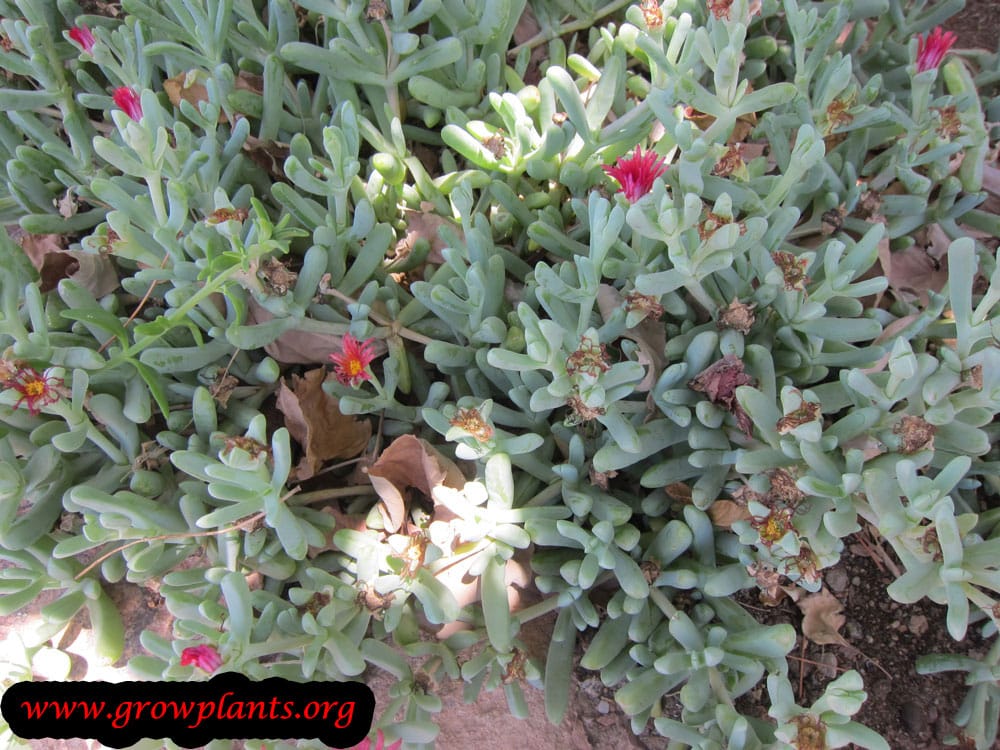


Plant Profile & Key Characteristics
Overview: Low, drought-tolerant evergreen succulent groundcover reaching 10-30 cm, grown as an ornamental mat for banks and dry gardens. Bears bright, multi-petalled daisy-like flowers.
Quick Specifications
| Specification | Attribute |
|---|---|
| Plant Type / Life Cycle | Perennial (evergreen succulent subshrub) |
| Foliage Type | Evergreen |
| Mature Size | 10-30 cm (4-12 in) tall |
| Growth Rate | Fast to moderate |
| Hardiness | USDA zones 9-12 |
Growth Form & Structure
- Height & Spread: 10-30 cm tall, spreading as a groundcover mat; suits containers and hanging planters.
- Growth Habit & Form: Low, mat-forming succulent groundcover.
- Lifespan & Maturity: Long-lived, quick-spreading succulent.
Anatomy & Physical Features
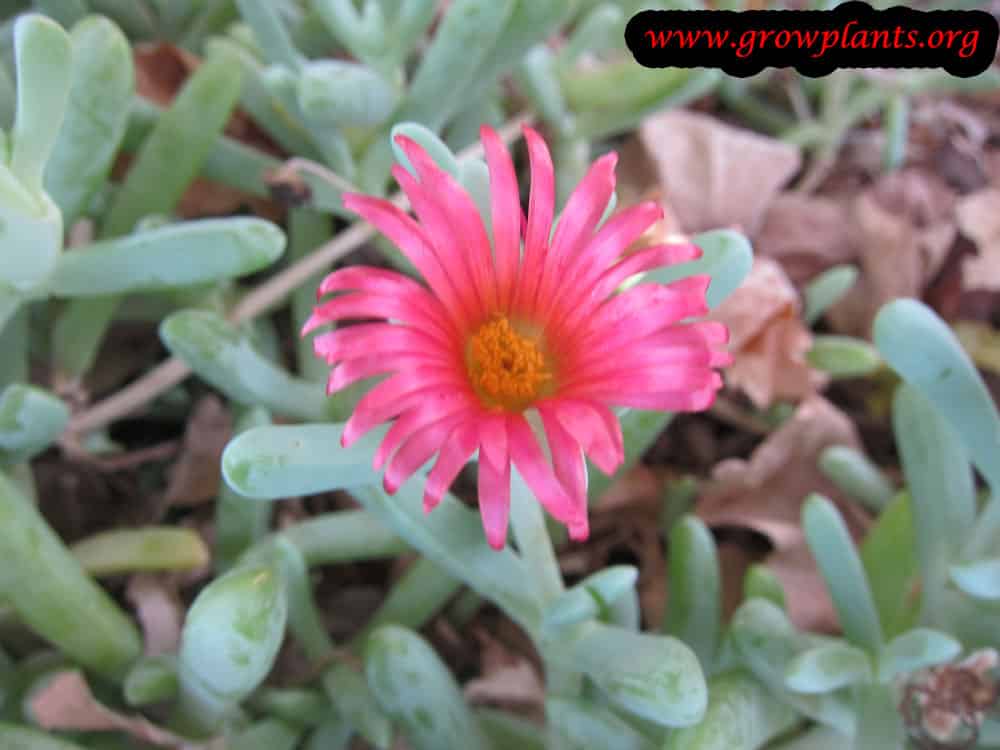
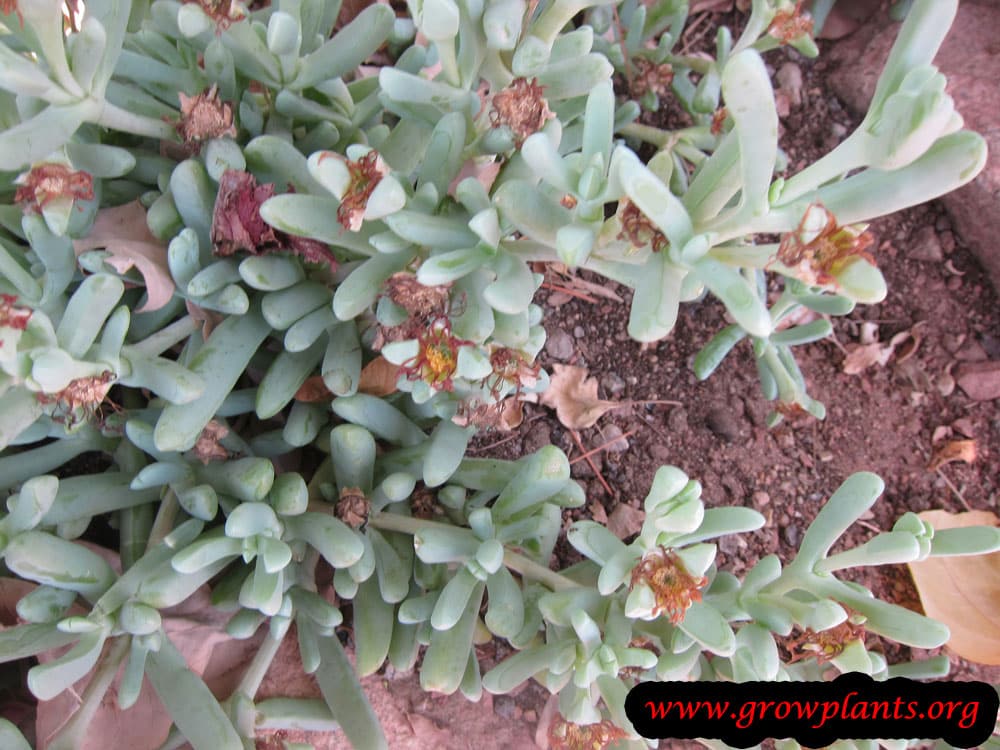
- Leaves & Foliage: Fleshy, linear leaves in green, sometimes flushed red.
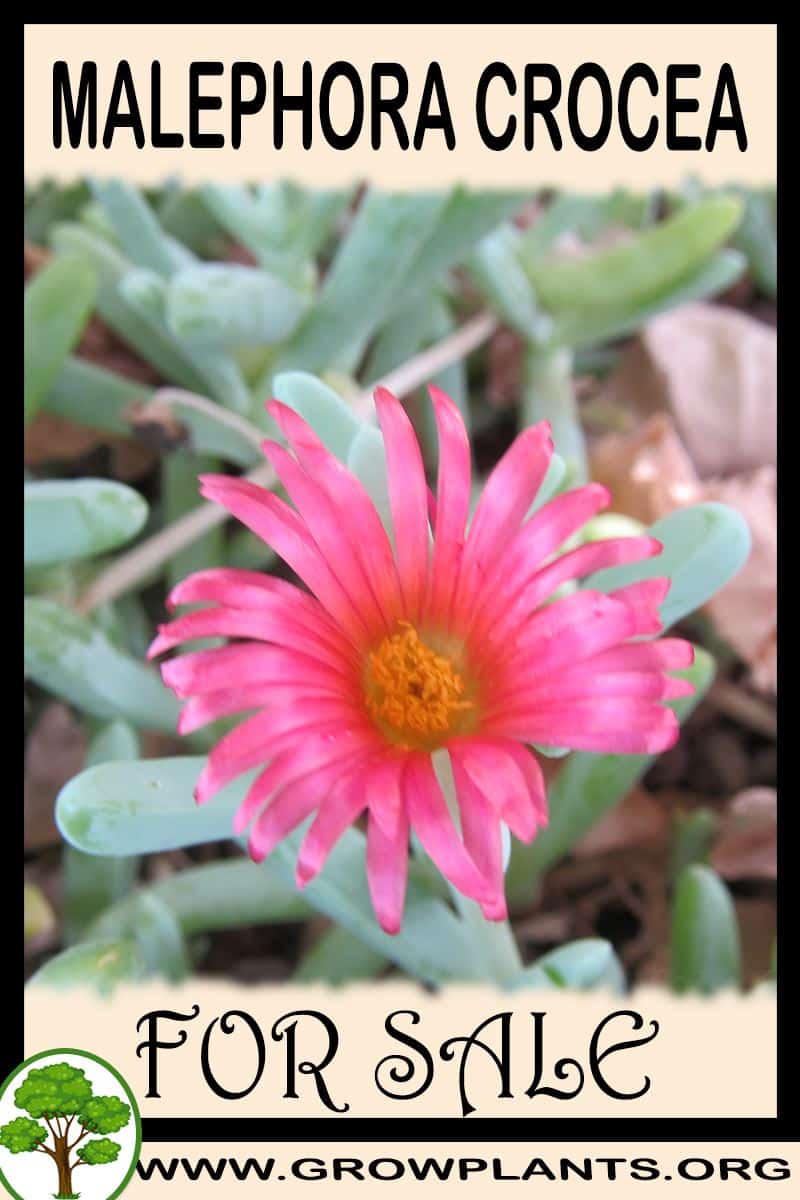
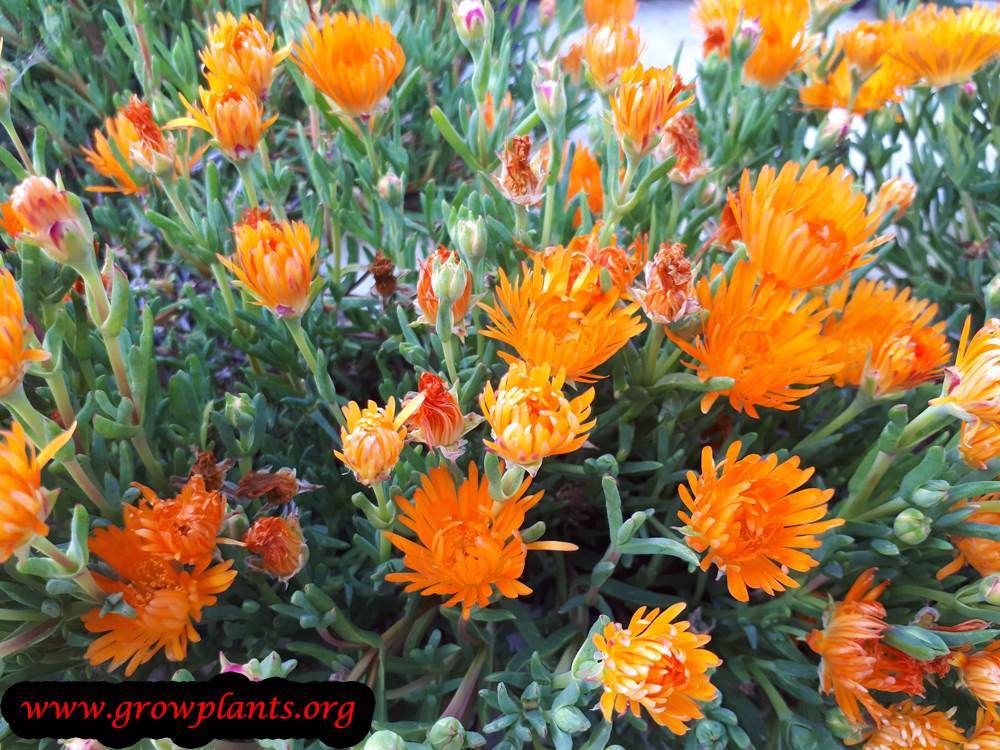
- Flower Characteristics: Flat, multi-petalled flowers in purple, yellow or orange.
Primary Uses & Landscape Value
- Functional & Ornamental Roles: Drought-tolerant ornamental groundcover for slopes and erosion control; note it can spread invasively.
Care Guide: Planting, Soil & Watering
Overview: Coppery mesemb (Malephora crocea) is a fast-spreading succulent ground cover (zones 9–12) for full sun to part shade. It needs a sandy, very well-drained soil and only low watering, making it ideal for hot, dry banks.
Quick Care Requirements
| Requirement | Ideal Condition |
|---|---|
| Planting Season | Warm season, spring to autumn |
| Growth Rate | Moderate to fast |
| Soil Type | Sandy, well-drained |
| Water Need | Low; drought-tolerant |
Planting & Establishment
- Best Planting Season: Through the warm season, from spring to autumn.
- How to Plant:
- Hole Preparation: Dig a shallow hole to match the small root ball in a sunny, sharply drained spot; space plants to allow it to spread.
- Soil Amendments: Add coarse sand or grit to open up heavy soil rather than rich organic matter.
- Planting Depth: Set the root ball level with the surface and keep the fleshy stems clear of buried soil.
- Growth Speed & Expectations: A moderate to fast grower that knits together quickly into a dense, mat-forming ground cover.
Soil, Watering & Drainage Care
- Soil Mix & Drainage Needs: A sandy, gritty, free-draining soil is essential to prevent rot; in containers use a succulent/cactus mix with drainage holes.
- Watering Schedule & Technique:
- Young / Newly Planted: Water lightly while roots establish, letting the soil dry between waterings.
- Established: Water deeply but only occasionally — wait until the soil has dried right through before watering again.
- Seasonal Adjustments: Keep it nearly dry through the cool months; give a little extra only during long, hot summer spells.
Climate, Light & Hardiness
Malephora crocea, the coppery mesemb, is a drought-tolerant ice-plant ground cover suited to Mediterranean, desert, subtropical, and temperate climates. It thrives in full sun to half shade and is not typically grown as an indoor houseplant.
Quick Climate Specifications
| Climate Zones | Mediterranean, desert, subtropics, temperate |
| USDA Hardiness Zones | 9-12 |
| Light Conditions | Full Sun / Half Shade |
Sunlight & Light Exposure
Optimal Light Setup
Full sun gives the densest ground cover and best flowering, though half shade is also tolerated.
Best Exposure / Orientation
As a spreading, mat-forming ground cover, it suits open, sunny slopes, banks, and border edges where erosion control or drought-tolerant coverage is needed.
Temperature Extremes & Hardiness
USDA Hardiness & Regional Limits
Outdoor culture is reliable from about USDA zone 9 through 12; outside this range winter cold is likely to be limiting.
Cold Damage & Winter Protection
Within its zone 9-12 range no special winter protection is typically needed, provided the soil drains well.
Frost Sensitivity
As a zone 9+ succulent, frost tolerance is limited; harder freezes than typical for its range can damage foliage.
Wind, Humidity & Microclimate
Rainfall & Seasonal Moisture
It is drought tolerant and adapts to the range of rainfall patterns found across Mediterranean, desert, subtropical, and temperate climates, provided drainage is fast.
Microclimate Recommendations
Sandy, well-drained soil is important in any climate to avoid winter rot; it can spread aggressively, so site it where its ground-covering habit is welcome.
Growing in Pots, Balconies & Indoors
Malephora crocea (coppery mesemb) is a spreading, sun-loving iceplant grown as a ground cover – not a houseplant, since it needs full sun that indoor light cannot match. It is, though, a wonderful pot, trough and hanging-basket plant for a hot, open balcony or patio, where it trails and flowers freely.
Quick Details
- Container Size: A wide, free-draining pot, trough or basket about 30% wider than the root ball; it spreads to fill whatever it is given (10-30 cm / 4-12 in, spreading)
- Indoor Suitability: Not a houseplant – it needs full outdoor sun; only the very brightest, sunniest windowsill would do, and even then it sulks
- Best Spot: Full sun (part shade at most) – the hotter and brighter, the better the flowering
- Soil & Drainage: Sandy or gritty free-draining mix; strong drainage holes
- Watering in Pots: Small amounts – very drought-tolerant; let it dry out and never leave it waterlogged
Indoors & On the Windowsill
- Not for indoors: The grower marks this as not a houseplant – it will not thrive indoors because it needs full sun to stay compact and to flower; in a room it stretches and stops blooming.
- Sunniest sill only: If you must try it inside, only the brightest, most direct-sun windowsill has any chance – it is really an outdoor plant.
- Overwintering: Tender to frost, so in hard-frost areas move the pot to a bright, cool, frost-free porch for winter rather than a warm room.
On a Balcony or Patio
- Full sun & trailing: This is its ideal home – give it the sunniest, most open spot and let it spill over the edge of a raised pot or hanging basket.
- Heat & watering: It loves the reflected heat from walls and paving; pots dry fast but it is very drought-tolerant, so water only when the mix has dried and never leave it waterlogged.
- Vigour: It spreads fast and can be invasive in open ground, so a container is a good way to keep it in bounds.
Choosing the Pot, Soil & Long-Term Care
- Pot & drainage: Choose a pot only about 30% wider than the root ball – an oversized pot holds wet soil around the roots. Rather than starting big, pot up every few years as it fills out; the mix loses structure over time, though a sharp, sandy mix that never sits wet can go five years or more between changes. Use strong drainage holes and skip a standing water saucer to avoid root rot.
- Pot material: Terracotta breathes and dries fast, which suits these rot-prone succulents; glazed or plastic pots hold moisture longer, so water even more sparingly.
- Potting mix: A gritty, free-draining mix – sandy or cactus/succulent mix, or peat/coir with perlite, with coarse lava grit at the base. A ready-made cactus and succulent soil mix provides that structure without mixing it yourself.
- Feeding: Feed only lightly – a dilute low-strength feed once or so during active growth, as frequent watering leaches nutrients from pots faster than from open ground.
- Watch for rot: Overwatering is the one real danger – in a rainy spot stand the pot in lava grit so water drains straight through, and always let the mix dry before watering again.
Fertilizing & Feeding
This is a light-feeding succulent – a dilute, balanced or low-nitrogen fertilizer during the warm active growing season is plenty, and it is best left unfed while dormant.
Quick Fertilizing Specs
| Feeding Level | Light feeder |
|---|---|
| young_feeding | Go easy while young; light, dilute feeding during active growth |
| mature_feeding | An occasional light feeding in the active season is enough |
| Main Nutrient Priority | A balanced, low-nitrogen approach |
| Best Feeding Period | The warm active growing season |
| Organic Options | A little worm castings or a gentle, well-diluted organic liquid |
| Micronutrients | Not usually needed; a complete fertilizer covers trace requirements |
| Soil pH | Tolerates a slightly acidic to near-neutral range |
| Reduce/Stop Feeding | Stop feeding during dormancy and rest |
Feeding by Growth Stage
Active growth (warm season)
Support steady, compact growth during the warm active season without forcing soft, weak growth.
| Nutrient direction | A dilute, balanced fertilizer that leans low in nitrogen, applied gently and infrequently. |
|---|---|
| Timing | During the warm active growing season. |
| Frequency | Feed sparingly through the active season; light feeding is usually enough. |
| Fertilizer types | A dilute balanced or low-nitrogen liquid fertilizer, A gentle controlled-release product formulated for cacti and succulents |
| Precautions | Avoid heavy or high-nitrogen feeding, which drives soft, stretched, rot-prone growth; keep feeding light. |
Dormancy and rest
Let the plant rest during cold or low-light dormancy when it is not actively growing.
| Nutrient direction | None – withhold fertilizer during dormancy. |
|---|---|
| Timing | During cold-season dormancy or hot-season rest when growth stalls. |
| Frequency | No feeding at this stage. |
| Fertilizer types | No feeding at this stage; do not fertilize while the plant is resting. |
| Precautions | Do not fertilize until active growth resumes; feeding a dormant succulent invites salt buildup and rot. |
Nutrient Deficiency Signs & Corrections
Older, lower leaves turn pale or yellow and overall growth slows.
| Possible causes | Low general fertility or nitrogen shortage in long-unfed mix, Root problems from overwatering or compacted, poorly drained soil, Natural aging of the oldest leaves |
|---|---|
| Appears first on | Oldest, lowest leaves. |
| What to check | Whether the plant has gone a long time without any feeding, Drainage and whether the mix stays wet, Root health when unpotting |
| Possible correction | Improve drainage and let the mix dry between waterings, then give a light, dilute feeding during active growth if fertility is genuinely low. |
Growth becomes soft, elongated and floppy with weak coloration.
| Possible causes | Too much nitrogen or over-rich feeding, Too little light causing etiolation, Overwatering keeping tissues soft |
|---|---|
| Appears first on | New growth at the tips. |
| What to check | Recent feeding strength, Light levels, Watering habits |
| Possible correction | Reduce feeding strength and move the plant to brighter light; keep any feeding light and dilute. |
Leaf tips or edges brown and dry, sometimes with a whitish crust on the soil surface.
| Possible causes | Salt buildup from over-feeding or hard water, Underwatering and a dry root zone, Excess fertilizer concentration |
|---|---|
| Appears first on | Leaf tips and margins. |
| What to check | Whether a salt crust has formed on soil or pot, Fertilizer concentration and how often it is applied, How thoroughly the plant is watered |
| Possible correction | Flush the pot thoroughly to leach accumulated salts, then feed only lightly and dilute during active growth. |
Pruning, Training & Seasonal Maintenance
Malephora crocea is a drought-tolerant, mat-forming succulent groundcover grown mainly for xeriscape and bank plantings; pruning is light and cosmetic, aimed at keeping the mat dense and flowering rather than shaping a permanent structure. It tolerates cutting back through most of the year, and because it blooms on current growth, removing spent flowers or overgrown stems does not sacrifice a coming flush. Its narrow, warm hardiness range (zone 9–12) means winter dormancy is minimal or absent in most of its growing area, so pruning timing is driven more by heat stress and bloom cycles than by frost.
Quick Pruning & Maintenance Specs
| Pruning Tolerance | High – resprouts readily from cut-back stems |
| Primary Pruning Window | Spring through autumn, timed to bloom flushes |
| Secondary Maintenance Window | Cooler months (winter) for a light renewal shear where climate allows |
| Typical Frequency | Ongoing light deadheading; one renewal cutback per year |
| Main Objective | Dense, compact mat with prolonged flower color; contain spread |
| Young Plant Priority | Pinch tips to encourage lateral branching before the mat is asked to cover ground |
| Mature Plant Priority | Renewal shearing to stop the clump thinning out and going woody at the base |
| Best Tool Type | Hand snips for deadheading; hand shears for renewal cutback |
| Avoid Heavy Pruning During | Peak summer heat/drought stress and any unseasonal cold snap |
Pruning by Plant Age & Size
Newly Established
Only remove damaged or desiccated growth from transplant shock; a young planting needs to root out before any deliberate cutback.
Young / Formative
No structural training is used – pinch stem tips on young plants so the groundcover branches and thickens quickly rather than spreading as a few long runners with bare gaps between them.
Mature / Established
Once established, an annual renewal shear keeps the mat compact: the reddish tinge the leaves take on under stress or cool weather is normal and not a reason to cut, but stems that have gone bare and woody at the base should be cut back to a live node to force replacement growth.
Seasonal Pruning Schedule
| Ongoing Sanitary (year-round in mild zones) | Objective: remove spent flowers and keep the mat tidy. Remove: faded flower heads, any heat- or drought-stressed dead stems. Do not remove: stems still carrying buds. Response: continued flowering. Bloom impact: positive, deadheading extends color. |
| Pre-Growth / Early Spring | Objective: renewal cutback before the main growth push. Remove: bare, woody, or winter-tattered stems. Do not remove: green, actively growing tips. Response: dense new growth from the base. Bloom impact: none – new growth carries the season’s flowers. |
Structural Pruning & Training
No branch framework exists to train. The plant’s structural need is renewal (cutting old, sparse, or leggy stems back to force fresh replacement growth) and containment – this species is flagged as invasive, and trailing stems root readily where they touch soil, so trimming back at the intended planting line prevents it from creeping into adjoining beds or turf.
Special Growth to Remove
- Spent flower heads – deadhead to prolong the purple, yellow, or orange bloom display
- Bare, woody stems at the mat’s base – cut back to a live node during renewal
- Runners that have rooted outside the intended planting area – trim to control spread
Container & Small-Space Pruning
In containers the mat fills its soil volume quickly, so trim tips more frequently to keep growth compact rather than letting stems trail unchecked over the pot rim; because it is not grown indoors, container culture here means an outdoor pot, patio bed, or trough, where the same renewal-shear logic applies on a shorter cycle than an in-ground planting.
Tools
Hand snips handle deadheading and tip pinching on the soft, fleshy stems; small hand shears are appropriate for the periodic whole-mat renewal cut.
Tool Hygiene & Disease Risk
Routine hygiene is sufficient – no transmissible disease is noted for this species, only snail and slug feeding on new growth. Keep tools clean and sharp; disinfection between cuts is not required.
Cut Placement & Technique
Deadhead back to a leaf node or side shoot. When renewing woody stems, cut just above a point where green, living tissue is visible – cuts made into fully dried, bare stems will not regenerate.
Heavy Pruning & Rejuvenation
Tolerates a hard cutback well when the plant has become sparse or overly woody: shear back by up to half during a mild period outside peak heat or any cold snap, and expect vigorous, dense regrowth with a temporary lull in flowering while the plant rebuilds.
Post-Pruning Care
Water modestly after a hard cutback to support regrowth without overwatering this drought-adapted succulent, and keep an eye out for slug and snail damage on the new tender shoots. No supplemental feeding is needed to trigger the regrowth flush.
Common Pruning Mistakes
- Assuming the reddish leaf tinge is dieback and cutting away healthy stressed growth unnecessarily
- Letting the mat spread unchecked into turf or neighboring beds given its invasive habit
- Cutting hard during peak summer heat or drought stress rather than in a milder window
When NOT to Prune
Avoid heavy cutback during the hottest, driest stretch of the growing season, when the plant is under stress and slow to recover, and skip pruning ahead of any unseasonal cold snap even though this is normally a frost-free-climate species.
Recommended Tools (by task)
- precision_snips – deadheading and tip-pinching on soft, fleshy stems.
- hedge_shears (hand-held) – periodic renewal shear of the whole mat to reset density.
Propagation Guide
Malephora crocea is easiest to propagate from stem cuttings, which root readily and keep the exact leaf colour and flower shade of the parent plant; seed also germinates well but flower colour (purple, yellow, or orange) can vary among seedlings. Propagation is easy.
Quick Propagation Specs
| Best Propagation Method | Stem cuttings |
| Alternative Methods | Seed; division of rooted mat sections |
| Propagation Difficulty | Easy |
| Seed True-to-Type | Variable |
| Vegetative True-to-Type | Yes |
| Best Propagation Season | Spring – summer (cuttings); spring (seed) |
| Cutting Rooting Time | Typically a few weeks |
| Germination Temperature | About 20–24°C (68–75°F) |
| Seed Sowing Depth | Surface-sow, barely covered |
Growing from Seed
Seed Handling & Viability
Seed is very fine, typical of the ice plant family; use fresh, clean seed for best germination.
Sowing Depth & Orientation
Surface-sow and press in lightly — do not bury the fine seed.
Germination Conditions
Keep a free-draining seed mix lightly moist in a warm, bright spot; germination can be uneven.
Germination Time
Germination is generally slow and may be staggered over several weeks.
Stem Cuttings
Cutting Type
Short, non-flowering stem tip cuttings.
Best Timing
Spring through summer, during active growth.
Cutting Preparation
Remove the lower leaves and allow the cut end to callus for a day or two before inserting, standard practice for fleshy succulent stems to reduce rot risk.
Rooting Setup
Insert into a well-drained, sandy or gritty mix; keep only lightly moist until rooted.
Rooting Hormone
Not necessary — this species roots readily without it.
Rooting Time
Roots typically form within a few weeks.
Division, Offsets, Pups & Suckers
As a spreading, drought-tolerant ground cover, rooted stem sections can be lifted with roots attached and replanted directly; best done in spring or summer.
Bloom & Flower Guide
Quick Details
- Bloom Season: Spring through autumn
- Time to First Bloom: Usually in the first year, once established in a sunny, well-drained spot
- Flower Appearance: Flat, many-petalled, daisy-like flowers in purple, yellow or orange
- Edibility: Ornamental only
Detailed Blooming Overview
Malephora crocea, the coppery mesemb, is a tough, spreading iceplant that flowers over a long stretch from spring into autumn. Its flat, many-petalled, daisy-like blooms come in warm purple, yellow and orange tones and often open through the middle of the day, closing again as the light softens. The plant makes a durable, drought-tolerant ground cover.
Flower Characteristics
- Flat, many-petalled flowers with a satiny sheen.
- Colours purple, yellow or orange.
- Open in bright sun, close in dull weather and at night.
Bloom Care & Thinning
- Encouraging bloom: Full sun and sharp drainage give the most flowers; shade and heavy, wet soil hold blooming back.
- Managing the bloom: A light shear after a flush keeps the mat neat and can bring on more flowers.
Bloom Health & Protection
- Aphids may gather on the soft buds and new shoots; a strong jet of water or a little insecticidal soap keeps them down.
- In cool, damp spells gray mould (Botrytis) can spot the open flowers – better airflow and removing faded blooms help prevent it.
Pests, Diseases & Troubleshooting
Overview: Coppery mesemb is a tough, drought-hardy succulent groundcover in the ice-plant family, so it is largely pest-free apart from the classic succulent trio of mealybugs, scale and aphids, plus snails and slugs grazing the fleshy foliage. Its one serious threat is root and stem rot from overwatering or wet soil. Keep it dry, sunny and sharply drained and it thrives on neglect.
Quick Troubleshooting Overview
| Issue / Pest | Main Symptom | Primary Solution |
|---|---|---|
| Mealybugs | White cottony tufts at stem joints; honeydew | Alcohol swab; horticultural oil; check roots |
| Scale | Brown bumps on stems | Scrape off; horticultural oil |
| Aphids | Clusters on flower buds/new tips | Hose off; insecticidal soap |
| Snails & slugs | Chewed, ragged fleshy stems and leaves | Handpick at night; barriers; iron-phosphate bait |
| Root & stem rot | Blackened, mushy, collapsing patches | Sharp drainage; withhold water; remove rotted parts |
| Sunburn/etiolation | Bleaching, or stretched pale growth | Acclimate to sun; give full light |
Common Pests & Management
- Mealybugs (Pseudococcus / Planococcus spp.):
- Symptoms: White, cottony, waxy clusters tuck into stem joints and leaf bases (and can infest roots), sucking sap and leaving honeydew and sooty mould; growth yellows and stalls.
- Prevention & Control: Dab colonies with dilute isopropyl alcohol, wash off with water, and treat with horticultural oil or insecticidal soap, repeating to catch hatchlings; check the roots when repotting and isolate new plants.
- Scale insects (Coccus / Diaspididae spp.):
- Symptoms: Small brown or waxy bumps fixed to the fleshy stems, sucking sap and producing honeydew.
- Prevention & Control: Scrape off by hand and apply horticultural oil to smother crawlers; keep plants healthy and inspect regularly, as scale spreads slowly.
- Aphids (Aphis / Myzus spp.):
- Symptoms: Soft green or dark insects cluster on flower buds and soft new tips, causing distortion and sticky honeydew.
- Prevention & Control: Hose off with water, encourage ladybirds and lacewings, and use insecticidal soap for heavy colonies.
- Snails & slugs (Gastropoda):
- Symptoms: Ragged holes, chewed stem tips and slime trails on the fleshy foliage, worst in damp, sheltered, over-watered conditions.
- Prevention & Control: Handpick after dark, keep the bed dry and free of hiding places, use copper or grit barriers, and scatter iron-phosphate bait sparingly; drier conditions greatly reduce them.
Diseases & Fungal Issues
- Root & stem rot (Pythium / Phytophthora / Fusarium):
- Symptoms: Blackened, soft, mushy, collapsing stems and roots – the main disease of this succulent, driven by overwatering, wet soil, poor drainage or crown moisture rather than any exotic pathogen.
- Treatment & Management: Plant in sharply drained, gritty or sandy soil, water sparingly and only when dry, avoid overhead watering and winter wet, and cut away rotted tissue back to firm growth; badly rotted patches are best restarted from healthy cuttings, which root very easily.
- Fungal leaf spot / grey mould (Botrytis):
- Symptoms: Spotting or fuzzy grey mould on foliage in cool, damp, crowded, over-watered conditions.
- Treatment & Management: Improve airflow and sun exposure, avoid wetting the foliage, remove affected growth, and reduce watering; rarely an issue in dry culture.
Growing Difficulties & Abiotic Problems
- Overwatering / root rot:
- Cause & Symptoms: Soft, discoloured, collapsing stems and general rot when watered too often or grown in heavy, wet soil.
- Correction Strategy: Treat it as a succulent: water deeply but infrequently, let the soil dry fully between waterings, ensure very sharp drainage, and keep it dry in cool weather.
- Sunburn vs. etiolation:
- Cause & Symptoms: Bleached or scorched patches if suddenly exposed to fierce sun, or stretched, pale, floppy growth with poor colour and few flowers in too much shade.
- Correction Strategy: Acclimate gradually to strong sun, then grow in full sun for compact, well-coloured, free-flowering growth; move shade-etiolated plants into brighter light.
- Frost damage:
- Cause & Symptoms: Mushy, translucent, collapsed tissue after hard frost on this tender succulent.
- Correction Strategy: Protect from hard frost or grow in containers to move under cover; it tolerates light frost but not sustained freezing.
What Helps – Products & Tools
Very little is needed here: isopropyl alcohol and horticultural oil for mealybugs and scale, insecticidal soap for aphids, and iron-phosphate bait for snails and slugs. The key ‘product’ is sharp drainage and restrained watering – no fungicides are needed if it is kept dry.