




Plant Profile & Key Characteristics
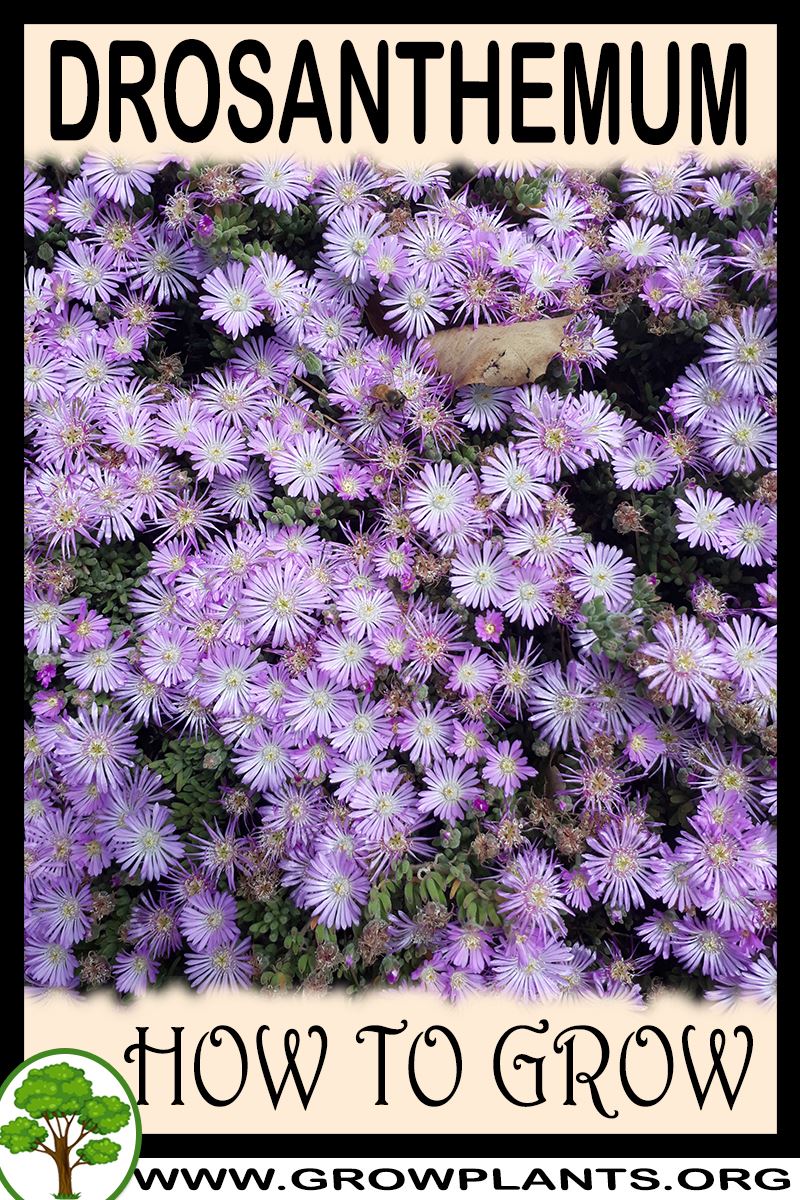
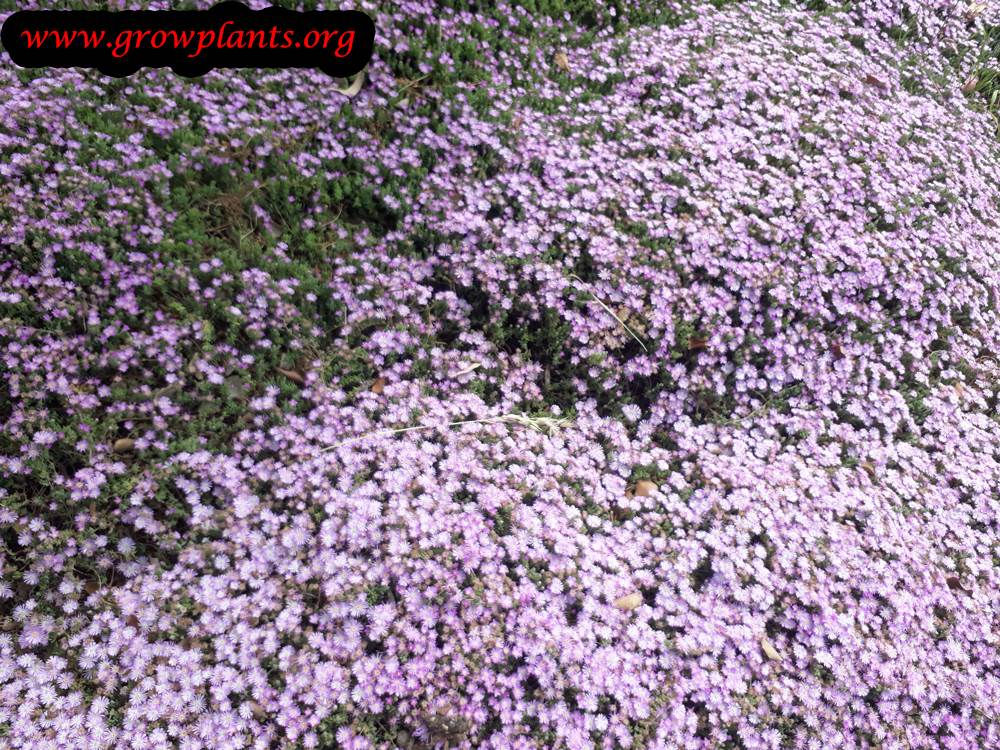
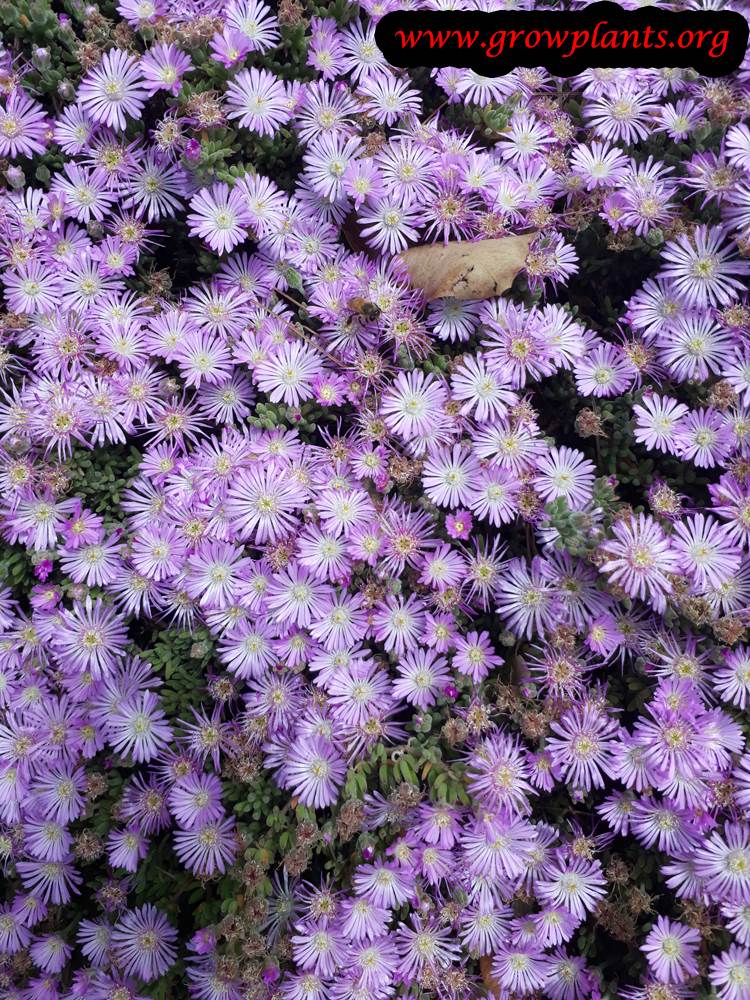
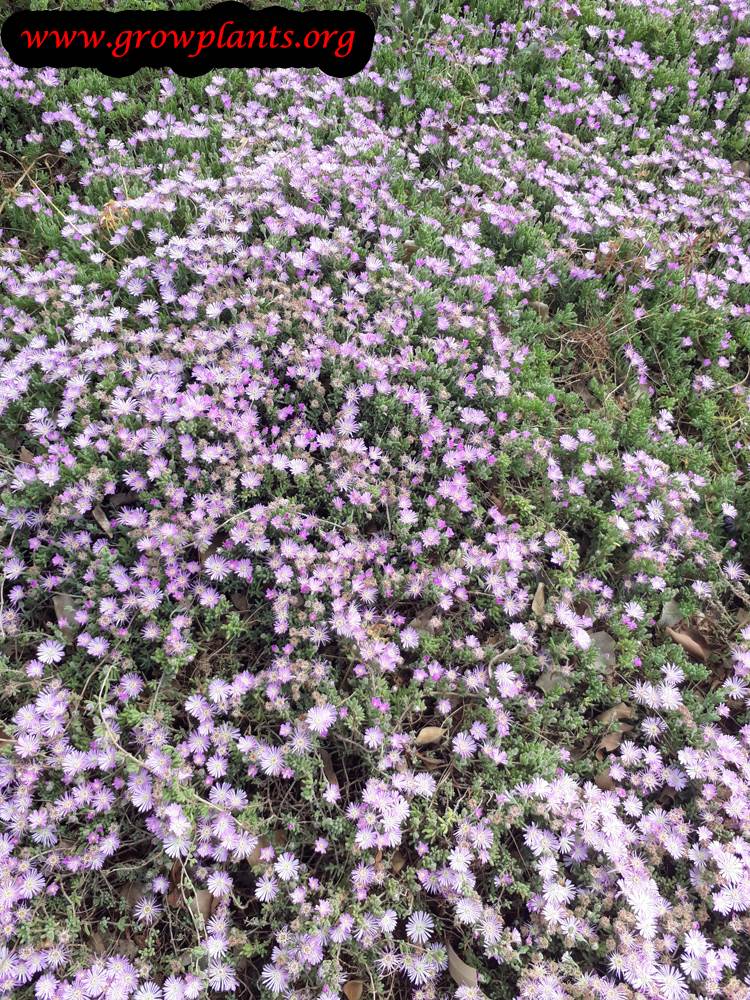
Overview: Drosanthemum is a fast-growing evergreen succulent subshrub forming a low mat 10–20 cm (4–8 in) high, grown as a drought-tolerant flowering groundcover. It is smothered in flat, many-petalled, brightly coloured daisy-like flowers.
Quick Specifications
| Specification | Attribute |
|---|---|
| Plant Type / Life Cycle | Perennial (evergreen succulent; grown as an annual in cold zones) |
| Foliage Type | Evergreen |
| Mature Size | 10–20 cm (4–8 in) high, spreading widely |
| Growth Rate | Fast |
| Root System | Shallow and fibrous, rooting along the trailing stems |
| Hardiness | USDA zone 10 and above as a perennial; zones 5–10 as an annual |
Growth Form & Structure
- Height & Spread: Low at 10–20 cm but spreads widely as a groundcover, rooting where stems touch the soil; also trails attractively from containers and walls.
- Growth Habit & Form: Mat-forming, trailing succulent subshrub; vigorous and can be invasive or aggressive.
- Lifespan & Maturity: Perennial in mild climates, often grown as an annual where frosts occur.
Anatomy & Physical Features
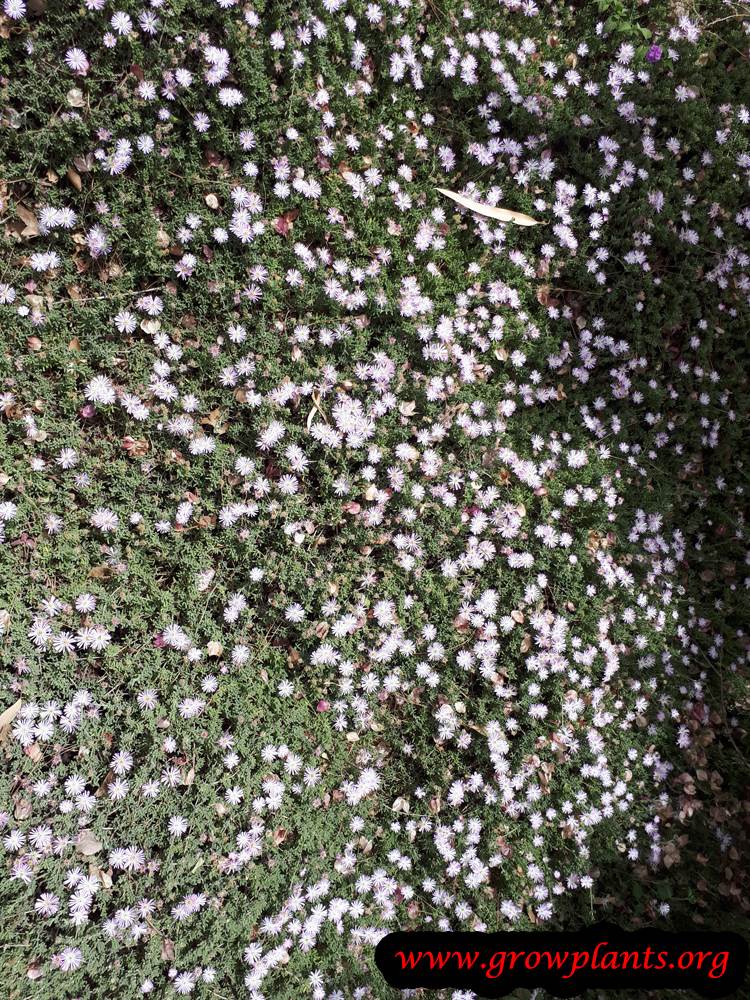
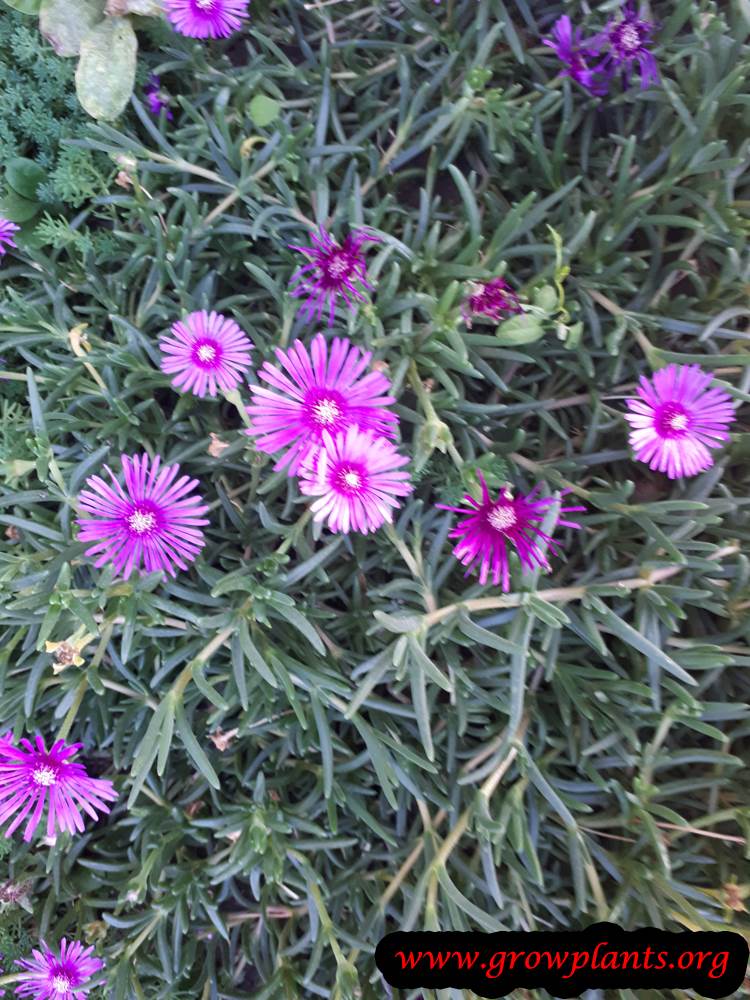
- Leaves & Foliage: Small, fleshy, slightly hairy, cone-linear green leaves, sometimes red-tipped.
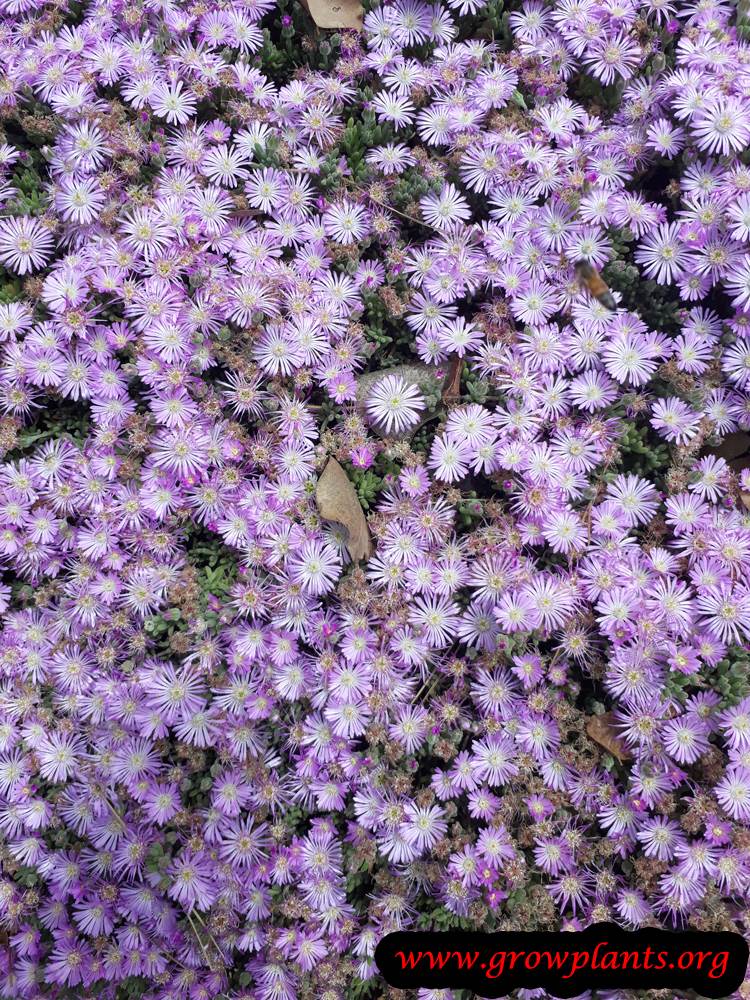
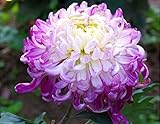
- Flower Characteristics: Flat, many-petalled, shimmering flowers in red, white, yellow, orange, purple, pink or bicolours.
Primary Uses & Landscape Value
- Functional & Ornamental Roles: Drought-tolerant flowering groundcover for banks, rockeries, slopes and containers; note that it can spread aggressively.
Care Guide: Planting, Soil & Watering
Overview: Drosanthemum is a fast-spreading succulent ground cover that thrives on neglect in hot, sunny sites. It needs sharply drained soil and very little water, making it ideal for dry banks and rockeries — though its vigour can become invasive.
Quick Care Requirements
| Requirement | Ideal Condition |
|---|---|
| Planting Season | Spring in cold climates (after frost); autumn through spring in mild, warm climates |
| Growth Rate | Fast |
| Soil Type | Sandy, sharply draining — even poor soil suits it |
| Water Need | Low — drought-tolerant once established |
Planting & Establishment
- Best Planting Season: In cold areas plant in spring after the last frost; in mild-winter climates plant from autumn through spring.
- How to Plant:
- Hole Preparation: Dig a shallow hole matching the root ball in a sunny, sharply drained spot; on slopes it quickly knits together to bind the soil.
- Soil Amendments: Little enrichment is needed — add coarse sand or grit to heavy soil to improve drainage rather than richness.
- Planting Depth: Set it at the same depth it grew previously, keeping the crown at the surface.
- Growth Speed & Expectations: Growth is fast and spreading; give it room, as it can become invasive and crowd out neighbours.
Soil, Watering & Drainage Care
- Soil Mix & Drainage Needs: Excellent drainage is essential; sandy or gritty soil suits it best, and in pots a free-draining cactus mix prevents rot.
- Watering Schedule & Technique:
- Young / Newly Planted: Water lightly to help it root in, then taper off as it establishes.
- Established: Water infrequently — it is very drought-tolerant and rots in soggy soil; let the soil dry thoroughly between waterings.
- Seasonal Adjustments: Little to no water is needed in cool or rainy periods; occasional water in extreme summer heat keeps it looking fresh.
Climate, Light & Hardiness
Drosanthemum is a fast-growing ice-plant relative that behaves as a true evergreen perennial in mild climates and as a cool-season annual in colder ones, thriving across Mediterranean, desert, subtropical, temperate, and tropical regions. It grows best in full sun to half shade and is not typically grown as an indoor houseplant.
Quick Climate Specifications
| Climate Zones | Mediterranean, desert, subtropics, temperate, tropics |
| USDA Hardiness Zones | 10+ as a perennial; commonly grown as an annual from about zone 5-10 |
| Frost Tolerance | Low |
| Light Conditions | Full Sun / Half Shade |
Sunlight & Light Exposure
Optimal Light Setup
Full sun gives the densest ground cover and heaviest flowering, though half shade is also tolerated.
Best Exposure / Orientation
As a fast-spreading ground cover, it suits open, sunny slopes and beds, and can become aggressive if not kept in check.
Temperature Extremes & Hardiness
USDA Hardiness & Regional Limits
Where winters stay frost-free (roughly USDA zone 10 and warmer) it persists as a long-lived evergreen perennial; in colder regions, down to about zone 5, it is grown instead as a warm-season annual, replanted after winter kills it back.
Cold Damage & Winter Protection
Frost damages and typically kills the plant outside its zone 10+ perennial range, which is why it is treated as an annual in colder climates rather than being given winter protection.
Frost Sensitivity
Frost tolerance is low; timing of planting differs by climate - spring planting in cold climates, and autumn, winter, or spring planting in warm, frost-free climates.
Wind, Humidity & Microclimate
Rainfall & Seasonal Moisture
It adapts to the range of rainfall patterns found across Mediterranean, desert, subtropical, temperate, and tropical climates, provided the soil drains well.
Microclimate Recommendations
Well-drained soil is important in any climate to avoid rot; because it is invasive and aggressive, give it defined boundaries such as edging or containers where spread needs to be controlled.
Growing in Pots, Balconies & Indoors
Drosanthemum is a spreading, sun-loving iceplant grown as a ground cover – not a houseplant, since it needs full sun that indoor light cannot match. It is, though, a wonderful pot, trough and hanging-basket plant for a hot, open balcony or patio, where it trails and flowers freely.
Quick Details
- Container Size: A wide, free-draining pot, trough or basket about 30% wider than the root ball; it spreads to fill whatever it is given (10-20 cm / 4-8 in, spreading)
- Indoor Suitability: Not a houseplant – it needs full outdoor sun; only the very brightest, sunniest windowsill would do, and even then it sulks
- Best Spot: Full sun (part shade at most) – the hotter and brighter, the better the flowering
- Soil & Drainage: Sandy or gritty free-draining mix; strong drainage holes
- Watering in Pots: Small amounts – very drought-tolerant; let it dry out and never leave it waterlogged
Indoors & On the Windowsill
- Not for indoors: The grower marks this as not a houseplant – it will not thrive indoors because it needs full sun to stay compact and to flower; in a room it stretches and stops blooming.
- Sunniest sill only: If you must try it inside, only the brightest, most direct-sun windowsill has any chance – it is really an outdoor plant.
- Overwintering: Tender to frost, so in hard-frost areas move the pot to a bright, cool, frost-free porch for winter rather than a warm room.
On a Balcony or Patio
- Full sun & trailing: This is its ideal home – give it the sunniest, most open spot and let it spill over the edge of a raised pot or hanging basket.
- Heat & watering: It loves the reflected heat from walls and paving; pots dry fast but it is very drought-tolerant, so water only when the mix has dried and never leave it waterlogged.
- Vigour: It spreads fast and can be invasive in open ground, so a container is a good way to keep it in bounds.
Choosing the Pot, Soil & Long-Term Care
- Pot & drainage: Choose a pot only about 30% wider than the root ball – an oversized pot holds wet soil around the roots. Rather than starting big, pot up every few years as it fills out; the mix loses structure over time, though a sharp, sandy mix that never sits wet can go five years or more between changes. Use strong drainage holes and skip a standing water saucer to avoid root rot.
- Pot material: Terracotta breathes and dries fast, which suits these rot-prone succulents; glazed or plastic pots hold moisture longer, so water even more sparingly.
- Potting mix: A gritty, free-draining mix – sandy or cactus/succulent mix, or peat/coir with perlite, with coarse lava grit at the base. A ready-made cactus and succulent soil mix provides that structure without mixing it yourself.
- Feeding: Feed only lightly – a dilute low-strength feed once or so during active growth, as frequent watering leaches nutrients from pots faster than from open ground.
- Watch for rot: Overwatering is the one real danger – in a rainy spot stand the pot in lava grit so water drains straight through, and always let the mix dry before watering again.
Fertilizing & Feeding
This is a light-feeding succulent – a dilute, balanced or low-nitrogen fertilizer during the warm active growing season is plenty, and it is best left unfed while dormant.
Quick Fertilizing Specs
| Feeding Level | Light feeder |
|---|---|
| young_feeding | Go easy while young; light, dilute feeding during active growth |
| mature_feeding | An occasional light feeding in the active season is enough |
| Main Nutrient Priority | A balanced, low-nitrogen approach |
| Best Feeding Period | The warm active growing season |
| Organic Options | A little worm castings or a gentle, well-diluted organic liquid |
| Micronutrients | Not usually needed; a complete fertilizer covers trace requirements |
| Soil pH | Tolerates a slightly acidic to near-neutral range |
| Reduce/Stop Feeding | Stop feeding during dormancy and rest |
Feeding by Growth Stage
Active growth (warm season)
Support steady, compact growth during the warm active season without forcing soft, weak growth.
| Nutrient direction | A dilute, balanced fertilizer that leans low in nitrogen, applied gently and infrequently. |
|---|---|
| Timing | During the warm active growing season. |
| Frequency | Feed sparingly through the active season; light feeding is usually enough. |
| Fertilizer types | A dilute balanced or low-nitrogen liquid fertilizer, A gentle controlled-release product formulated for cacti and succulents |
| Precautions | Avoid heavy or high-nitrogen feeding, which drives soft, stretched, rot-prone growth; keep feeding light. |
Dormancy and rest
Let the plant rest during cold or low-light dormancy when it is not actively growing.
| Nutrient direction | None – withhold fertilizer during dormancy. |
|---|---|
| Timing | During cold-season dormancy or hot-season rest when growth stalls. |
| Frequency | No feeding at this stage. |
| Fertilizer types | No feeding at this stage; do not fertilize while the plant is resting. |
| Precautions | Do not fertilize until active growth resumes; feeding a dormant succulent invites salt buildup and rot. |
Nutrient Deficiency Signs & Corrections
Older, lower leaves turn pale or yellow and overall growth slows.
| Possible causes | Low general fertility or nitrogen shortage in long-unfed mix, Root problems from overwatering or compacted, poorly drained soil, Natural aging of the oldest leaves |
|---|---|
| Appears first on | Oldest, lowest leaves. |
| What to check | Whether the plant has gone a long time without any feeding, Drainage and whether the mix stays wet, Root health when unpotting |
| Possible correction | Improve drainage and let the mix dry between waterings, then give a light, dilute feeding during active growth if fertility is genuinely low. |
Growth becomes soft, elongated and floppy with weak coloration.
| Possible causes | Too much nitrogen or over-rich feeding, Too little light causing etiolation, Overwatering keeping tissues soft |
|---|---|
| Appears first on | New growth at the tips. |
| What to check | Recent feeding strength, Light levels, Watering habits |
| Possible correction | Reduce feeding strength and move the plant to brighter light; keep any feeding light and dilute. |
Leaf tips or edges brown and dry, sometimes with a whitish crust on the soil surface.
| Possible causes | Salt buildup from over-feeding or hard water, Underwatering and a dry root zone, Excess fertilizer concentration |
|---|---|
| Appears first on | Leaf tips and margins. |
| What to check | Whether a salt crust has formed on soil or pot, Fertilizer concentration and how often it is applied, How thoroughly the plant is watered |
| Possible correction | Flush the pot thoroughly to leach accumulated salts, then feed only lightly and dilute during active growth. |
Pruning, Training & Seasonal Maintenance
Drosanthemum is a low, mat-forming succulent groundcover genus, evergreen and perennial in zone 10 and warmer but grown as a frost-killed annual in zone 5–10 – a distinction that matters for pruning, since renewal cutbacks only make sense where the plant actually persists year to year. Where it is perennial, it tolerates cutting back through most of the season, flowers on current growth so deadheading does not cost bloom, and the main pruning task noted in its own growing guidance is shaping for design rather than any structural training. Where it is grown as an annual, pruning is limited to light grooming and spread control for that single season, since there is no framework to renew going into a following year.
Quick Pruning & Maintenance Specs
| Pruning Tolerance | High where perennial (zone 10+); moderate, season-only where grown as an annual |
| Primary Pruning Window | Through the growing season (all the season, per its own growing notes), timed around bloom |
| Typical Frequency | Ongoing light shaping/deadheading; one renewal cut per year where perennial |
| Main Objective | Neat, dense mat shaped for design; contained spread |
| Young Plant Priority | Pinch tips to build a branching mat |
| Mature Plant Priority | Where perennial: renew bare/woody growth and contain runners. Where annual: shape and deadhead only |
| Best Tool Type | Hand snips for shaping/deadheading; hand shears for renewal (perennial zones only) |
| Avoid Heavy Pruning During | Shortly before frost, especially where the plant is only marginally perennial |
Pruning by Plant Age & Size
Newly Established
Avoid cutting back a newly planted specimen; let it root out first, removing only transplant-damaged growth.
Young / Formative
Pinch tips on young plants to encourage branching and faster mat coverage; no staking or structural framework applies to this creeping succulent.
Mature / Established
In zone 10+, where the plant persists as a perennial, renew aging mats by cutting bare or woody stems back to a lower node; in colder zones where it behaves as an annual, mature-stage care is limited to shaping and deadheading for the remainder of that growing season.
Seasonal Pruning Schedule
| Ongoing Sanitary (through the growing season) | Objective: shape the mat and prolong bloom. Remove: spent flowers, stems shaped for design, growth spreading past its intended area. Do not remove: actively budding stems. Response: continued flowering, tidier form. Bloom impact: positive where deadheading is involved. |
| Pre-Growth / Early Spring (perennial zones only) | Objective: renew an established mat. Remove: bare, woody, or winter-damaged stems. Do not remove: live, budded growth. Response: dense fresh regrowth. Bloom impact: none. |
Structural Pruning & Training
No branch framework exists. Where perennial, renewal cuts on old, bare-centered stems and containment of rooting runners are the only structural concerns, given the genus is flagged invasive/aggressive; where grown as an annual, containment within the current season is the relevant task instead.
Special Growth to Remove
- Spent flowers – remove to extend the bloom display
- Stems grown out of the desired shape – trim for design, per the genus’s own growing notes
- Rooted runners spreading beyond the intended footprint – contain, given the invasive/aggressive habit
Container & Small-Space Pruning
In a container, this fast-growing genus fills its soil volume quickly, so tip-pinch and shape more often than an in-ground planting to keep growth compact; where treated as a perennial in a mild-climate container, renew the mat on the same schedule as an in-ground planting once it thins at the center.
Tools
Hand snips suit deadheading, shaping, and tip work on the soft succulent stems; small hand shears are appropriate for a renewal cutback on perennial plantings.
Tool Hygiene & Disease Risk
Routine hygiene – only snail pressure is noted, no transmissible disease. Clean, sharp tools are sufficient.
Cut Placement & Technique
Deadhead to a node or side shoot; shape cuts should follow the natural line of the mat rather than cutting flat across it. Renewal cuts on woody stems should go back to a point with visible green tissue.
Heavy Pruning & Rejuvenation
Where perennial (zone 10+), tolerates a hard cutback of an overgrown or leggy mat, with vigorous regrowth and a temporary bloom lull. Where grown as an annual in colder zones, heavy rejuvenation pruning is not relevant since the plant will not carry over to a following season regardless.
Post-Pruning Care
Water lightly to support regrowth without overwatering this drought-adapted succulent, and watch for snail feeding on fresh growth. No extra feeding is needed after a cut.
Common Pruning Mistakes
- Attempting a renewal rejuvenation cut on plants being grown as annuals, where there is no benefit to be gained
- Letting the mat spread unchecked, given its noted invasive/aggressive habit
- Shaping cuts that ignore the plant’s natural mat contour, leaving an unnatural flat-topped look
When NOT to Prune
Avoid heavy cutback shortly before frost, particularly where the plant is only marginally perennial at the cooler edge of its range.
Recommended Tools (by task)
- precision_snips – deadheading, tip-pinching, and design shaping.
- hedge_shears (hand-held) – renewal shearing of established perennial plantings.
Propagation Guide
Drosanthemum is most easily propagated from stem cuttings, which root readily in a gritty mix and preserve flower colour exactly; seed is also viable, though flower colour is variable within the genus (red, white, yellow, orange, purple, or pink), so seed-grown plants may differ from the parent. Propagation is easy.
Quick Propagation Specs
| Best Propagation Method | Stem cuttings |
| Alternative Methods | Seed; division of rooted mat sections |
| Propagation Difficulty | Easy |
| Seed True-to-Type | Variable |
| Vegetative True-to-Type | Yes |
| Best Propagation Season | Spring in cold climates; autumn, winter, or spring in warm climates |
| Cutting Rooting Time | Typically a few weeks |
| Germination Temperature | About 20–24°C (68–75°F) |
| Seed Sowing Depth | Surface-sow, barely covered |
Growing from Seed
Seed Handling & Viability
Seed is very fine, typical of the ice plant family; use fresh seed for best results.
Sowing Depth & Orientation
Surface-sow and press in lightly rather than burying.
Germination Conditions
Keep a free-draining seed mix lightly moist in a warm, bright spot; germination can be uneven.
Germination Time
Generally slow and can be staggered over several weeks.
Stem Cuttings
Cutting Type
Short, non-flowering stem tip cuttings.
Best Timing
Spring in cold climates; autumn through spring in warm, frost-free climates, following the plant’s own recommended planting season.
Cutting Preparation
Let the cut end callus for a day or two before inserting, standard practice for fleshy succulent stems to reduce rot risk.
Rooting Setup
Insert into a well-drained, gritty mix; keep only lightly moist until rooted.
Rooting Hormone
Not necessary for this easy-rooting succulent.
Rooting Time
Roots typically form within a few weeks.
Division, Offsets, Pups & Suckers
As a spreading mat-forming ground cover, rooted stem sections can be lifted with roots attached and replanted directly.
Bloom & Flower Guide
Quick Details
- Bloom Season: Winter, spring and summer
- Time to First Bloom: Usually in the first year, once established in a sunny, well-drained spot
- Flower Appearance: Flat, many-petalled, daisy-like flowers with a satiny shimmer; colours red, white, yellow, orange, purple, pink or mixed
- Edibility: Ornamental only
Detailed Blooming Overview
Drosanthemum, the dew-plant, is a mat- or mound-forming iceplant grown for its dazzling flush of flowers, which can appear across winter, spring and summer depending on climate. Each bloom is a flat disc of many fine, glistening petals in a wide range of colours. The flowers open in bright sun and close as the light fades, so the sheet of colour comes and goes with the day.
Flower Characteristics
- Flat, many-petalled flowers with a sparkling, satiny sheen.
- Colours red, white, yellow, orange, purple, pink or more than one colour.
- Open in bright sun, close in dull weather and at night.
Bloom Care & Thinning
- Encouraging bloom: Full sun and sharp drainage bring the heaviest flowering; the plant blooms poorly in shade or rich, wet soil.
- Managing the bloom: A light shear after a flush keeps the mat neat and can prompt a fresh round of flowers.
Bloom Health & Protection
- Aphids often gather on the soft buds and new growth; a strong jet of water or a little insecticidal soap keeps them in check.
- In cool, damp spells gray mould (Botrytis) can spot the open flowers – improving airflow and removing faded blooms helps prevent it.
Pests, Diseases & Troubleshooting
Drosanthemum (dew-flower or ice plant) is a mat-forming succulent in the Aizoaceae, and like most mesembs its overwhelming vulnerability is rot from too much water or poor drainage rather than insects. Sap-suckers — mealybugs (including root mealybugs), scale, aphids and mites — can colonise the fleshy stems and leaves, and snails or slugs graze soft growth, but these are secondary. Grow it lean and sharply drained in full sun, water sparingly, and it is remarkably self-sufficient; treat any pests with gentle, cultural methods first.
Quick Troubleshooting Overview
| Issue / Pest | Main Symptom | Primary Solution |
|---|---|---|
| Root / stem rot | Blackening, mushy collapse of stems in wet soil | Cut back to firm tissue, dry gritty mix, less water |
| Mealybugs | White cottony tufts on stems, leaf joints and roots | Alcohol swab, insecticidal soap, horticultural oil |
| Scale insects | Small brown bumps on stems and leaves | Scrape off, horticultural oil |
| Aphids | Clusters on soft new growth and flower buds | Hose off, insecticidal soap |
| Spider mites | Fine stippling, dullness in hot dry, sheltered air | Rinse foliage, horticultural oil |
| Snails & slugs | Chewed soft growth; slime trails | Hand-pick, iron-phosphate bait, grit barrier |
Common Pests & Management
- Mealybugs (Pseudococcus / Planococcus spp.):
- Symptoms: White cottony, waxy tufts nestled among the fleshy leaves, at stem joints, and on the roots (root mealybug). Sticky honeydew and stunted, off-colour growth follow. The most persistent pest of ice plants.
- Prevention & Control: Dab colonies with an alcohol-dipped swab and treat with insecticidal soap or horticultural oil, repeating every 7–10 days. For root mealybugs, unpot, rinse the roots, and repot into fresh, gritty mix; drench if needed.
- Scale insects (Coccus / Aspidiotus spp.):
- Symptoms: Small brown, tan or grey bumps on the stems and fleshy leaves, sometimes with honeydew and sooty mould; easily mistaken for part of the succulent surface.
- Prevention & Control: Scrape scale off gently and dab with alcohol, then smother the rest with horticultural oil. Repeat for crawlers and prune out badly infested sections of the mat.
- Aphids (Aphis / Myzus spp.):
- Symptoms: Clusters of soft green or black insects on the tender new shoots and the bright daisy-like flower buds, with honeydew and some distortion of growth.
- Prevention & Control: Rinse them off with a jet of water and wipe the growth. Apply insecticidal soap if they persist, and encourage ladybirds and lacewings, which control aphids well in the open garden.
- Spider mites (Tetranychus urticae):
- Symptoms: Fine pale stippling and a dull, bronzed cast to the foliage, with faint webbing in severe cases; worst on plants grown hot, dry and sheltered, or under glass.
- Prevention & Control: Raise humidity a little and rinse the foliage. Apply horticultural oil or insecticidal soap to both surfaces, repeating to break the cycle; improve ventilation for plants under cover.
- Snails & slugs (Deroceras / Helix spp.):
- Symptoms: Ragged, chewed soft growth and grazed young shoots, with silvery slime trails; most damaging on lush new growth in damp, shady, or over-watered situations.
- Prevention & Control: Hand-pick after dark and clear damp hiding places and debris. Use iron-phosphate bait or a grit/diatomaceous-earth barrier; keeping the planting lean, sunny and dry greatly reduces their numbers.
Diseases & Fungal Issues
- Root & stem (basal) rot (Pythium / Phytophthora / Fusarium spp.):
- Symptoms: Blackening, softening and collapse of stems from the base, and brown mushy roots, in wet or poorly drained soil — the classic and most lethal problem of ice plants, often striking in humid heat or cold wet spells.
- Treatment & Management: Cut out all soft, blackened tissue back to firm, healthy stem and let cuttings/plants dry; healthy pieces re-root easily. Grow in very free-draining, gritty soil, water sparingly, and improve drainage and airflow. Avoid overhead watering in warm humid weather.
- Fungal leaf & stem spot (Cercospora / Colletotrichum / Alternaria spp.):
- Symptoms: Sunken brown or black spots and blotches on the leaves and stems, spreading in humid, crowded, over-watered conditions and sometimes preceding rot.
- Treatment & Management: Remove affected growth and thin dense mats to improve airflow. Keep the foliage dry and reduce watering; a copper-based fungicide checks a serious outbreak, but cultural drying is the main control.
- Grey mould (Botrytis) (Botrytis cinerea):
- Symptoms: Fuzzy grey mould and soft browning on foliage, flowers, or damaged tissue in cool, damp, still, humid conditions.
- Treatment & Management: Improve air movement and light, remove faded flowers and any dead or rotting tissue, and reduce humidity around the plant. A fungicide is seldom needed if the planting is kept open and dry.
Growing Difficulties & Abiotic Problems
- Overwatering & poor drainage (signature issue):
- Cause & Symptoms: Being a succulent, Drosanthemum stores water in its leaves and rots fast in soggy, heavy, or poorly drained soil; symptoms are softening, blackening stems and collapse, especially in humid heat.
- Correction Strategy: Grow in gritty, sharply drained soil or a raised, sunny position, and water only when the soil is dry — much less in cool or wet weather. In containers use a succulent mix with drainage holes and never leave it standing in water.
- Frost damage:
- Cause & Symptoms: The soft, water-filled tissue is damaged by hard frost, blackening and turning mushy after a freeze, though plants often regrow from surviving stems.
- Correction Strategy: In frost-prone areas grow it in containers that can be sheltered, or as a summer/warm-season planting; keep it dry going into cold, as wet-and-cold together is far more damaging than dry cold. Trim frost-damaged growth once new growth resumes.
- Sunburn / soft etiolated growth:
- Cause & Symptoms: Grown too shaded, wet, or heavily fed, it becomes soft, floppy, pale and shy to flower, and such soft growth then scorches when suddenly exposed to strong sun.
- Correction Strategy: Grow it hard in full sun with lean soil and little feeding for compact, colourful, free-flowering mats. Acclimatise sheltered plants to strong sun gradually to avoid scorch.
- Vigorous / potentially invasive spread:
- Cause & Symptoms: As a fast, mat-forming groundcover that roots as it trails, Drosanthemum can spread aggressively and swamp smaller neighbours, and may naturalise beyond where it is wanted in mild climates.
- Correction Strategy: Site it where its spread is an asset (banks, dry walls, hot slopes) and trim back the mat to keep it in bounds; remove stray rooted pieces. Avoid planting it near sensitive native areas in frost-free regions.
What Helps – Products & Tools
Very little is needed for this sun-loving succulent: insecticidal soap and neem / horticultural oil for mealybugs, scale, aphids and mites; rubbing alcohol for spot-dabbing; iron-phosphate slug bait or a grit/diatomaceous-earth barrier for snails and slugs; and a copper fungicide for stubborn leaf/stem spot. Above all, a gritty, free-draining succulent mix, full sun, and a light hand with water prevent the rot that is by far its biggest threat.