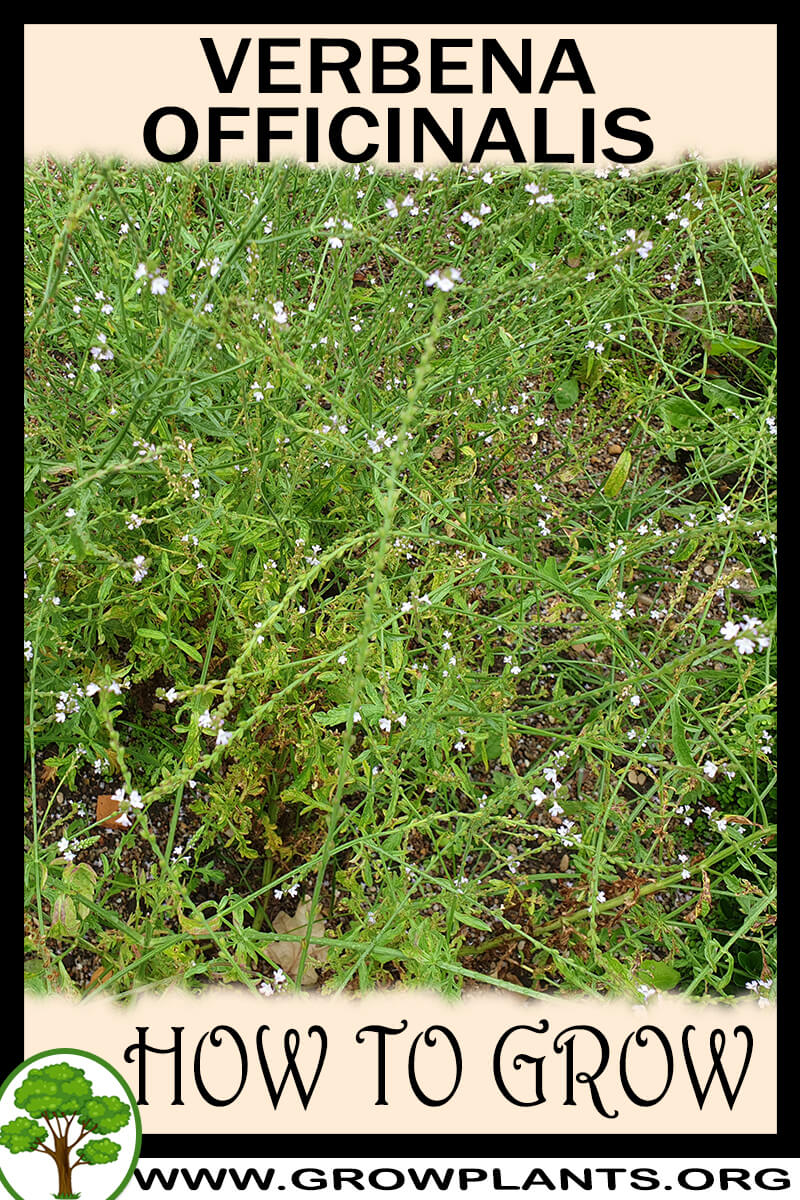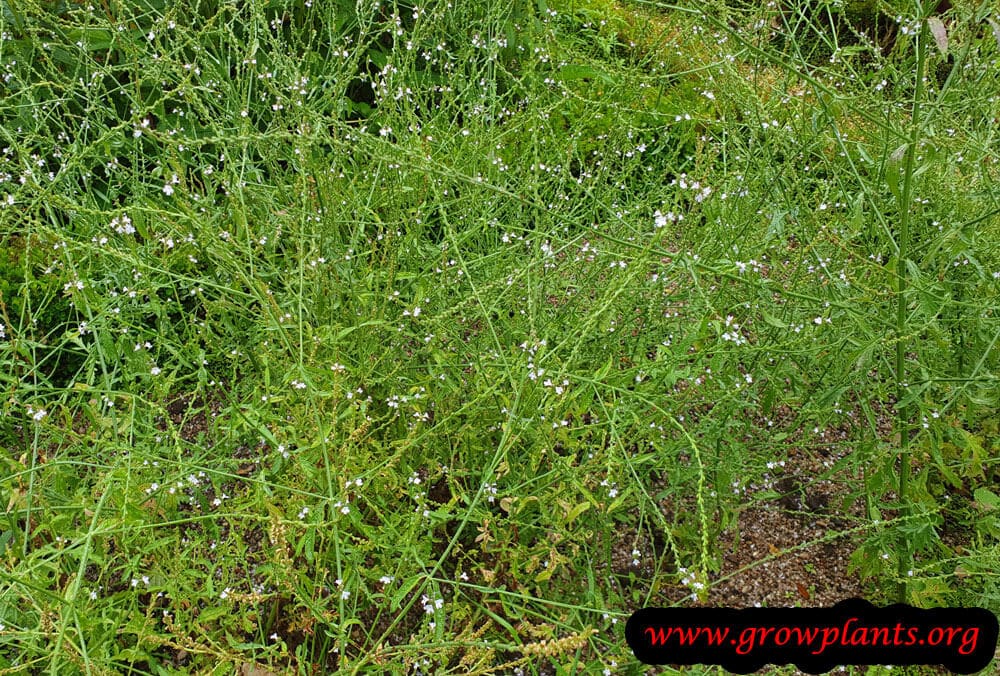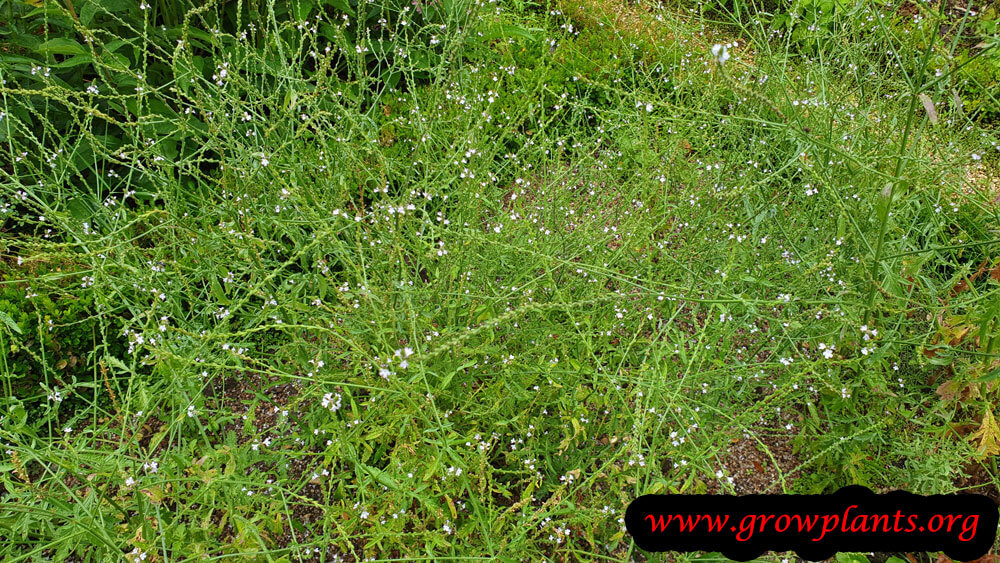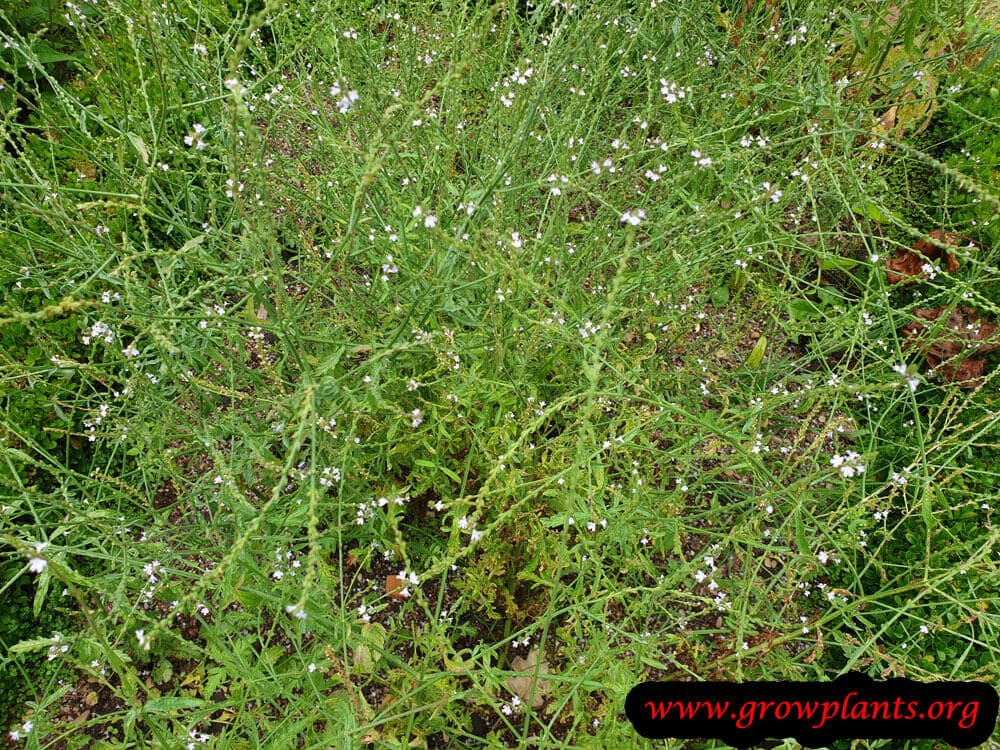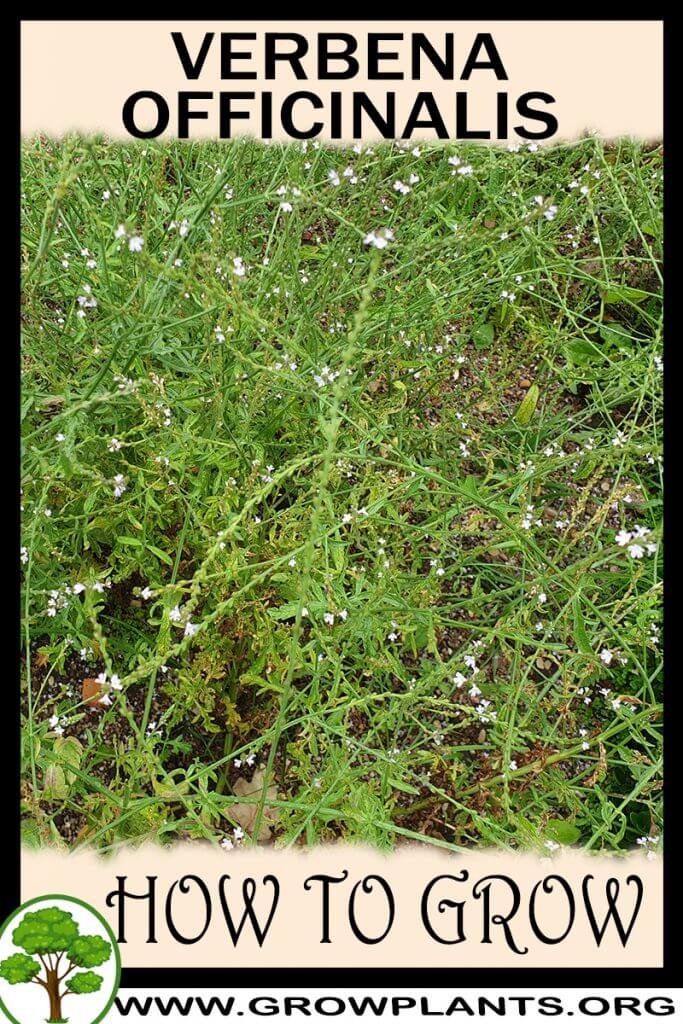
Plant Profile & Key Characteristics
Overview: Common vervain is an upright, wiry perennial growing 40-70 cm (16-28 in) tall, used medicinally, as a herbal tea, and as an aromatic ornamental. It is deciduous and hardy across temperate gardens (USDA zones 4-9).
Quick Specifications
| Specification | Attribute |
|---|---|
| Plant Type / Life Cycle | Perennial (herbaceous / subshrub) |
| Foliage Type | Deciduous |
| Mature Size | 40-70 cm (16-28 in) tall |
| Growth Rate | Fast to moderate |
| Toxicity | Non-toxic (leaves used as herbal tea) |
| Hardiness | USDA zones 4-9 |
Growth Form & Structure
- Height & Spread: 40-70 cm (16-28 in) tall on slender branching stems; container-friendly.
- Growth Habit & Form: Erect, wiry, sparsely branched perennial.
- Lifespan & Maturity: Perennial that regrows each season.
Anatomy & Physical Features
- Leaves & Foliage: Green, elliptic edible leaves.
- Flower Characteristics: Tiny blue, purple or pink five-petalled flowers on slender spikes.
Primary Uses & Landscape Value
- Edible Uses: Leaves used to make herbal beverages / tea.
- Functional & Ornamental Roles: Traditional medicinal and aromatic ornamental herb.
Care Guide: Planting, Soil & Watering
Overview: Verbena officinalis (vervain) is an upright perennial (zone 4-9) for full sun to light shade that appreciates a cold winter. It grows in most reasonable garden soils and likes steady, moderate-to-generous moisture.
Quick Care Requirements
| Requirement | Ideal Condition |
|---|---|
| Planting Season | In spring to summer during the warm season |
| Growth Rate | Moderate to Fast |
| Soil Type | Ordinary, well-draining garden soil |
| Water Need | Moderate to High |
Planting & Establishment
- Best Planting Season: Plant in spring to summer once the soil has warmed.
- How to Plant:
- Hole Preparation: Dig a hole slightly wider than the root ball in loosened soil.
- Soil Amendments: Mix in compost to hold moisture and support the leafy growth.
- Planting Depth: Set the root ball level with the surface and keep the crown at soil level.
- Growth Speed & Expectations: A moderate-to-fast grower forming slender stems to 40-70 cm (16-28 in).
Soil, Watering & Drainage Care
- Soil Mix & Drainage Needs: Grows in most soils that stay moist yet drain; avoid stagnant waterlogging.
- Watering Schedule & Technique:
- Young / Newly Planted: Keep evenly moist while establishing.
- Established: Water regularly and fairly generously so the soil does not dry out for long.
- Seasonal Adjustments: More in summer heat; reduce over a cold winter rest.
Climate, Light & Hardiness
Common verbena (vervain) is a cold-hardy temperate-to-subtropical perennial that dies back with the seasons and benefits from a genuine cold winter. It grows best in full sun to half shade and is comfortably hardy across USDA zones 4–9.
Quick Climate Specifications
| Climate Zones | Temperate, subtropical |
|---|---|
| USDA Hardiness Zones | 4–9 |
| Frost Tolerance | High |
| Light Conditions | Full sun / half shade |
Sunlight & Light Exposure
Optimal Light Setup
Full sun to half shade both suit it well.
Best Exposure / Orientation
Open, sunny beds or borders let it grow and bloom most freely through its long spring-to-autumn (and, in mild climates, even winter) bloom season.
Temperature Extremes & Hardiness
USDA Hardiness & Regional Limits
Hardy from zone 4 to zone 9, indicating solid cold tolerance typical of a temperate wildflower/herb.
Cold Damage & Winter Protection
The site notes it appreciates a cold winter – a period of genuine winter cold supports its normal dormancy and growth cycle, rather than being merely tolerated. No special winter protection is needed within its hardy zones.
Frost Sensitivity
Tolerates hard frost well as an established, cold-hardy perennial.
Wind, Humidity & Microclimate
Microclimate Recommendations
An open site with a genuine seasonal cold winter suits it better than a mild, frost-free microclimate, given its preference for a real winter dormancy.
Growing in Pots, Balconies & Indoors
Common vervain is an airy, full-sun perennial herb (40-70 cm) with wiry, branching stems. It is not a houseplant – it needs strong sun and grows lax in low light – but it does well in a sunny patio pot.
Quick Details
- Container Size: A medium pot, around 5-15 L
- Indoor Suitability: Not a houseplant – too little light indoors makes it flop
- Best Spot: Full sun to part shade outdoors
- Soil & Drainage: Rich but free-draining potting mix
- Watering in Pots: Average to generous; keep evenly moist, not soggy
Indoors & On the Windowsill
- Not a houseplant: The grower marks it unsuitable indoors. Its slender stems need full sun and stretch and flop where light is weak.
- Overwintering: It dies back and re-shoots; in cold areas keep the pot in a sheltered spot outdoors over winter.
On a Balcony or Patio
- Light & wind: Give it full sun; the wiry stems shrug off breeze but may need light support in a rich pot. Pots dry faster than beds, so check moisture regularly.
Choosing the Pot, Soil & Long-Term Care
- Pot & drainage: A pot with strong drainage holes and no standing saucer.
- Potting mix: A free-draining, moderately rich mix – potting or peat with some perlite.
- Feeding & refreshing: Feed lightly through the season and refresh or divide every couple of years.
Fertilizing & Feeding
A lean-growing medicinal and beverage herb grown mainly for its leaves; light, restrained feeding keeps growth steady without diluting its character.
Quick Fertilizing Specs
| Feeding Level | Light |
|---|---|
| Main Nutrient Priority | Balanced feeding with restrained nitrogen to support leafy growth |
| Best Feeding Period | Spring through the active growing season |
| Organic Options | Compost worked into the planting area |
| Soil pH | Tolerates a wide range of well-drained soils |
| Micronutrients | Usually adequate in reasonably fertile soil; correct only diagnosed deficiencies |
| Reduce/Stop Feeding | Feeding stops once the plant dies back for the cold winter |
Feeding by Growth Stage
Establishment After Planting
Help newly planted or seed-grown vervain root into well-drained soil and put out its first leaves.
| Nutrient direction | A light, balanced feeding supports early root and leaf establishment. |
|---|---|
| Timing | At planting, and through the first weeks of active growth in spring. |
| Frequency | A light feeding at planting is enough to support establishment. |
| Fertilizer types | A balanced, complete fertilizer worked lightly into the soil, Compost mixed into the planting area |
| Precautions | Avoid rich soil or heavy feeding, which can dilute the character of this lean-growing herb. |
Active Growth and Leaf Harvest
Support steady leafy growth for repeated harvest through the growing season.
| Nutrient direction | A light, balanced feeding sustains regrowth of leaves after harvesting for tea or other uses. |
|---|---|
| Timing | Through spring and summer, the plant’s main active growing period. |
| Frequency | Light, occasional feeding through active growth is usually enough. |
| Fertilizer types | A balanced, complete fertilizer, A light compost top-dressing renewed as needed |
| Precautions | Established plants rarely need much feeding; overfeeding can favor lush growth at the expense of the plant’s typical character. |
Cold-Winter Dieback
Let the plant die back naturally through its cold winter rest.
| Nutrient direction | None – withhold fertilizer once the plant dies back for winter. |
|---|---|
| Timing | Autumn through winter, once cold weather sets in. |
| Frequency | No feeding at this stage. |
| Fertilizer types | No feeding at this stage; hold off fertilizing until active growth resumes in spring. |
| Precautions | Do not fertilize while the plant is dormant through cold weather. |
Nutrient Deficiency Signs & Corrections
Leaves turn uniformly pale green to yellow and new growth is small and sparse.
| Possible causes | Low available soil nitrogen, Nutrients leached from frequent watering, Repeated harvesting without replacing nutrients |
|---|---|
| Appears first on | Older, lower leaves first. |
| What to check | Feeding and harvest history, Soil organic matter, Watering frequency |
| Possible correction | Apply a light, balanced fertilizer and refresh compost around the plant. |
Interveinal yellowing appears on older leaves while the veins stay green.
| Possible causes | Low soil magnesium, Leaching from frequent watering in light or sandy soil, Heavy potassium feeding competing with magnesium uptake |
|---|---|
| Appears first on | Older, lower leaves. |
| What to check | Soil magnesium status, Watering and drainage, Recent feeding balance |
| Possible correction | Apply a labeled magnesium source such as Epsom salt and adjust feeding balance. |
Leaf edges brown or scorch, especially on container-grown plants.
| Possible causes | Fertilizer salt buildup in a container with limited leaching, Under-watering that concentrates salts, Feeding more often than this light feeder needs |
|---|---|
| Appears first on | Leaf margins and tips. |
| What to check | Recent feeding amounts, Container drainage, Watering consistency |
| Possible correction | Pause feeding, flush the pot or bed thoroughly with plain water, then resume lighter feeding. |
Pruning, Training & Seasonal Maintenance
Verbena officinalis is a small, soft-stemmed deciduous perennial that dies back seasonally, so pruning is light annual tidying rather than shaping a woody framework. It blooms almost year-round on its current stems (spring through winter per its bloom record), so a single autumn–winter cutback of the past season’s growth – done mainly “for design” per its own care notes – clears the way for fresh flowering stems without costing much bloom, since spent stems are largely done producing by then. Because the leaves are harvested for use as a beverage herb, regular cutting back for harvest doubles as informal pruning through the season.
Quick Pruning & Maintenance Specs
| Pruning Tolerance | Moderate – a small soft-stemmed perennial, not woody framework |
| Primary Pruning Window | Autumn to winter |
| Secondary Maintenance Window | Spring through autumn – ongoing harvest cuts and deadheading |
| Typical Frequency | Once for the main autumn–winter tidy, plus casual cuts through the season for harvest |
| Main Objective | Tidy shape, encourage fresh flowering stems, and supply leaves for use |
| Young Plant Priority | Let the plant establish before any cutting back |
| Mature Plant Priority | Autumn–winter cutback of spent stems; ongoing deadheading/harvest |
| Best Tool Type | Precision snips |
Pruning by Plant Age & Size
Newly Established
Leave the young plant to establish; avoid cutting back until it is actively growing well.
Young / Formative
No structural training applies to this small forb; light pinching of stem tips can encourage a bushier habit once established.
Mature / Established
Cut back the past season’s stems in autumn–winter for tidiness, and harvest leaves freely through the growing season (the source notes leaves can be cut with the stem or just at the leaf tip once the plant is established) – this doubles as light, ongoing shaping.
Special Growth to Remove
- Spent flower stems – deadhead through the long spring–winter bloom season to keep new flowers coming.
- Old, dieback-prone top growth – clear in the autumn–winter cutback.
Container & Small-Space Pruning
Grows well in pots. In a container, keep harvesting/deadheading a little more frequent to maintain a compact, tidy shape in the limited space.
Tools
- Precision snips – the only tool this small, soft-stemmed herb needs, for both harvest cuts and the seasonal tidy.
Tool Hygiene & Disease Risk
Routine – clean, sharp snips are sufficient. Aphids are the only pest noted and are not primarily spread through pruning cuts.
Cut Placement & Technique
Deadhead spent flower stems just above a lower leaf pair to encourage branching and further bloom; harvest leaves at the leaf base or with a short stem as needed.
Common Pruning Mistakes
- Leaving spent flower stems in place through the long bloom season, which slows the production of new flowers.
- Cutting back hard while the plant is still establishing, setting growth back unnecessarily.
When NOT to Prune
- Avoid a hard cutback in the first season while the plant is still establishing.
Recommended Tools (by task)
- precision_snips – for deadheading spent bloom stems and harvesting leaves on this small herbaceous perennial; no larger cutting tool is ever needed.
Propagation Guide
Common vervain is usually grown from seed, which the site indicates is sufficient on its own without needing vegetative propagation; division of the clump or basal cuttings offer a faster alternative when quick, identical plants are wanted. This is an easy plant to propagate overall, though seed germination can take patience.
Quick Propagation Specs
| Best Propagation Method | Seed |
| Alternative Methods | Division of the clump; Basal stem cuttings |
| Propagation Difficulty | Easy |
| Seed True-to-Type | Usually true-to-type |
| Vegetative True-to-Type | Yes |
| Best Propagation Season | Spring |
| Seed Germination Time | Often slow and irregular; can take several weeks or more |
| Cutting Rooting Time | Typically a few weeks |
Growing from Seed
Dormancy & Pre-Sowing Treatment
A period of cold-moist stratification is sometimes used by growers to make germination more even, though it is not always necessary.
Sowing Season
Spring, matching the plant’s recommended planting season.
Sowing Depth & Orientation
Sow the fine seed shallowly, just lightly covered.
Germination Conditions
Full sun with average-to-generous moisture.
Germination Time
Germination is often slow and can be uneven, sometimes taking several weeks or more.
Seedling Care
Keep young seedlings consistently moist in full sun while they establish.
Stem Cuttings
Cutting Type
Basal or softwood stem cuttings taken from non-flowering shoots.
Best Timing
Spring, as new growth emerges.
Rooting Setup
A moist, well-drained rooting medium in bright, indirect light.
Rooting Hormone
Optional.
Rooting Time
Typically a few weeks.
Division, Offsets, Pups & Suckers
Timing
Spring, as growth resumes, or in autumn.
Minimum Viable Size
Each division should keep healthy roots and at least one growing point.
Establishment Care
Keep newly divided sections consistently moist until they are established.
Bloom & Flower Guide
Quick Details
- Bloom Season: Late spring through summer and autumn, and into winter in mild areas
- Flower Appearance: Tiny five-petalled flowers in pale lilac, pink or blue, spaced along slender, branching flower spikes
- Edibility: Grown as a medicinal/herbal plant (the leaves and flowering tops are used in teas); the flower itself is not a culinary edible flower
Detailed Blooming Overview
Common vervain is a wiry, airy perennial herb long valued in herbal traditions. Its small flowers open only a few at a time along thin, candelabra-like spikes, giving a long, delicate season of bloom.
Flower Characteristics
- Tiny, five-petalled flowers in lilac, pink or blue.
- Held along slender branching spikes; good for small pollinators.
Bloom Care & Thinning
- Best conditions: Full sun and free-draining soil; drought-tolerant once established.
- After bloom: Cut back once flowering fades; it self-seeds readily if a few spikes are left.
Fruit & Uses
Common vervain’s leaves are the edible part, used mainly as a herbal tea (beverage) rather than as a vegetable. The elliptic green leaves are harvested fresh once the plant is established and are typically dried or steeped fresh to make the infusion.
Quick Edible Specs
| Edible Parts | Leaves |
|---|---|
| Main Use(s) | Beverage / herbal tea; traditional medicinal note |
| Eaten Raw or Cooked | Infused as a tea – not eaten as a vegetable |
| Preparation Required | None beyond drying or steeping fresh leaves |
| Harvest Season | Spring, Summer, Autumn |
| Time to First Harvest | Qualitative – once the plant is established; see Care for planting details |
| Storage | Dried leaves kept in a dark, dry place |
| Safety/Toxicity Caveat | No significant toxicity documented at normal tea strength; as with many herbal teas, some traditional sources advise caution or avoidance during pregnancy – no dosing guidance is given here |
Leaves & Greens
Once the plant is established, the elliptic green leaves can be cut freely – either with a portion of stem or just the leaf tips – and used fresh or dried to make a beverage/tea.
Preparation, Uses & Safety
The leaves are steeped as a beverage; the site records this directly as their main use. Vervain also has a long tradition of medicinal herbal use, mentioned here only as historical context with no health claims made. As a general precaution common to many herbal teas, some sources advise caution or avoidance during pregnancy – consult a health professional if unsure.
Pests, Diseases & Troubleshooting
Overview: Common vervain is a wiry, resilient herb with few serious problems; the genus’s powdery mildew is the main issue, with occasional aphids, spider mites and thrips, and root rot only in wet ground. It is largely trouble-free in an open, sunny, well-drained spot.
Quick Troubleshooting Overview
| Issue / Pest | Main Symptom | Primary Solution |
|---|---|---|
| Powdery mildew | White coating on leaves | Airflow; sun; bicarbonate/sulfur |
| Spider mites | Stippled, dull, webbed leaves | Humidity; oil/soap; predatory mites |
| Aphids & whitefly | Curled tips, honeydew, sooty mould | Beneficials; sticky traps; soap |
| Thrips | Silvered leaves, deformed buds | Sticky traps; sanitation; spinosad |
| Budworm caterpillars | Chewed buds and leaves | Hand-pick; Bt/spinosad |
| Root rot | Wilting in wet soil | Sharp drainage; avoid overwatering |
Common Pests & Management
- Spider mites (two-spotted mite) (Tetranychus urticae):
- Symptoms: Fine pale stippling or bronzing on upper leaf surfaces, later a dull sandblasted look; delicate webbing on undersides and shoot tips in hot dry spells. Confirm by tapping foliage over white paper and watching for moving specks.
- Prevention & Control: Mites thrive in hot, dusty, drought-stressed conditions, so keep plants well watered and raise humidity where practical; hose down foliage and remove badly affected leaves. Introduce predatory mites (Phytoseiulus) under cover. If needed, apply insecticidal soap or horticultural oil, ensuring thorough coverage of leaf undersides and repeating to catch newly hatched mites.
- Aphids (Aphidoidea):
- Symptoms: Clusters of small soft-bodied green, black or grey insects on new shoots, buds and leaf undersides; curled or distorted young growth, sticky honeydew and a black sooty mould film; ants farming the colonies. Look-alikes include whitefly nymphs (flat, static) and psyllids.
- Prevention & Control: Encourage and protect ladybirds, lacewings, hoverflies and parasitic wasps; knock colonies off with a strong jet of water and pinch out badly infested tips. Avoid excess nitrogen, which drives soft aphid-prone growth. If numbers stay high, treat with insecticidal soap or a horticultural/neem oil, spraying leaf undersides in the cool of the evening to protect pollinators.
- Whitefly (Aleyrodidae):
- Symptoms: Clouds of tiny white moth-like insects rising when foliage is disturbed; pale mottling, honeydew and sooty mould, with scale-like nymphs on leaf undersides. A vector of several plant viruses.
- Prevention & Control: Use yellow sticky traps to catch adults and monitor build-up; encourage Encarsia parasitic wasps and predatory beetles, especially under cover. Remove heavily infested lower leaves. Insecticidal soap or horticultural oil sprayed to leaf undersides, repeated every few days, breaks the life cycle.
- Thrips (Thysanoptera):
- Symptoms: Silvery-white flecking and streaking on leaves and petals, tiny black frass dots, and distorted new growth; slender pale-to-dark insects that dart away when disturbed. Thrips can also spread viruses.
- Prevention & Control: Remove weeds and spent flowers that harbour them, and use blue sticky traps to monitor and reduce adults. Encourage predatory mites, minute pirate bugs and lacewings. Where control is needed, spinosad or insecticidal soap applied to growing points in the evening helps; rotate products to avoid resistance.
- Budworm / leaf-tier caterpillars (Noctuidae larvae):
- Symptoms: Chewed, rolled or webbed leaves and eaten buds and flowers, with dark frass; small caterpillars tucked into shoot tips, most troublesome on bedding verbena.
- Prevention & Control: Hand-pick caterpillars and remove rolled leaves, and encourage birds and parasitic wasps. For persistent attacks, an organic caterpillar spray (Bacillus thuringiensis) or spinosad on the young larvae in the evening controls them.
Diseases & Fungal Issues
- Powdery mildew (Erysiphales):
- Symptoms: White to greyish powdery patches on upper leaf surfaces, stems and sometimes buds; leaves may yellow, distort and drop in severe cases. Worst in warm days, cool nights and crowded, shaded plantings.
- Treatment & Management: Improve airflow with correct spacing and thinning, site in good light, and avoid wetting foliage late in the day; water at the roots. Remove and destroy affected leaves and clean up debris. Resistant varieties help. Organic sprays of potassium bicarbonate, sulfur or a diluted horticultural oil check spread if applied early and repeated.
- Grey mould / Botrytis blight (Botrytis cinerea):
- Symptoms: Fuzzy grey-brown mould on flowers, buds, soft stems and fruit, often starting on damaged or fading tissue; water-soaked spots that collapse in cool, damp, still conditions.
- Treatment & Management: Remove faded flowers, damaged tissue and debris promptly, improve ventilation and avoid overhead watering and overcrowding. Do not leave wet foliage overnight. Where pressure is high, an appropriate fungicide can be used, but sanitation and airflow are the main controls.
- Fungal leaf spot (Cercospora / Septoria etc.):
- Symptoms: Round to angular brown or purple-bordered spots on the leaves, sometimes merging into blotches; heavy spotting causes yellowing and early leaf drop in warm, wet conditions.
- Treatment & Management: Remove and destroy spotted leaves and fallen debris, water at the base to keep foliage dry, and space plants for airflow. Rotate annual plantings. A copper fungicide gives protection where the disease is persistent, but sanitation is the first line of defence.
- Root and crown rot (Phytophthora / Pythium spp.):
- Symptoms: Wilting despite moist soil, yellowing lower leaves, dark soft roots and a blackened crown; general decline and collapse. Waterlogged or poorly drained soil is the trigger.
- Treatment & Management: Prevention is decisive: plant in free-draining soil or raised beds, avoid overwatering, and never let containers stand in water. Remove and destroy badly affected plants. Improve drainage and let the surface dry between waterings; biological drenches (Trichoderma) can help protect healthy roots.
Growing Difficulties & Abiotic Problems
- Poor drainage and root rot:
- Cause & Symptoms: Wilting, yellowing and collapse in heavy, wet soil or overwatered containers; verbena resents wet feet.
- Correction Strategy: Grow in full sun in free-draining soil or gritty container mix, water when the surface dries rather than keeping it soggy, and avoid crowding; good drainage also reduces the mildew that thrives on stressed plants.
- Legginess and shy flowering:
- Cause & Symptoms: Sparse flowers and weak, drawn stems in shade or without trimming; old growth becomes bare and woody.
- Correction Strategy: Site in full sun, feed lightly, and shear or deadhead after flushes to keep plants bushy and blooming; adequate light is the key to strong flowering.
- Iron chlorosis:
- Cause & Symptoms: Yellowing between green veins on new leaves, mainly on alkaline soils or in tired container mix.
- Correction Strategy: Maintain a slightly acidic to neutral, free-draining medium, refresh container mix, and correct with an iron chelate and balanced feed if chlorosis appears.
What Helps — Products & Tools
Verbena management centres on powdery mildew: full sun, airflow and potassium bicarbonate or sulfur sprays, backed by insecticidal soap and horticultural/neem oil for spider mites, aphids and whitefly, blue sticky traps and spinosad for thrips, and Bacillus thuringiensis for budworm. Sharp drainage prevents the root rot and the stress that invites mildew.