Plant Profile & Key Characteristics
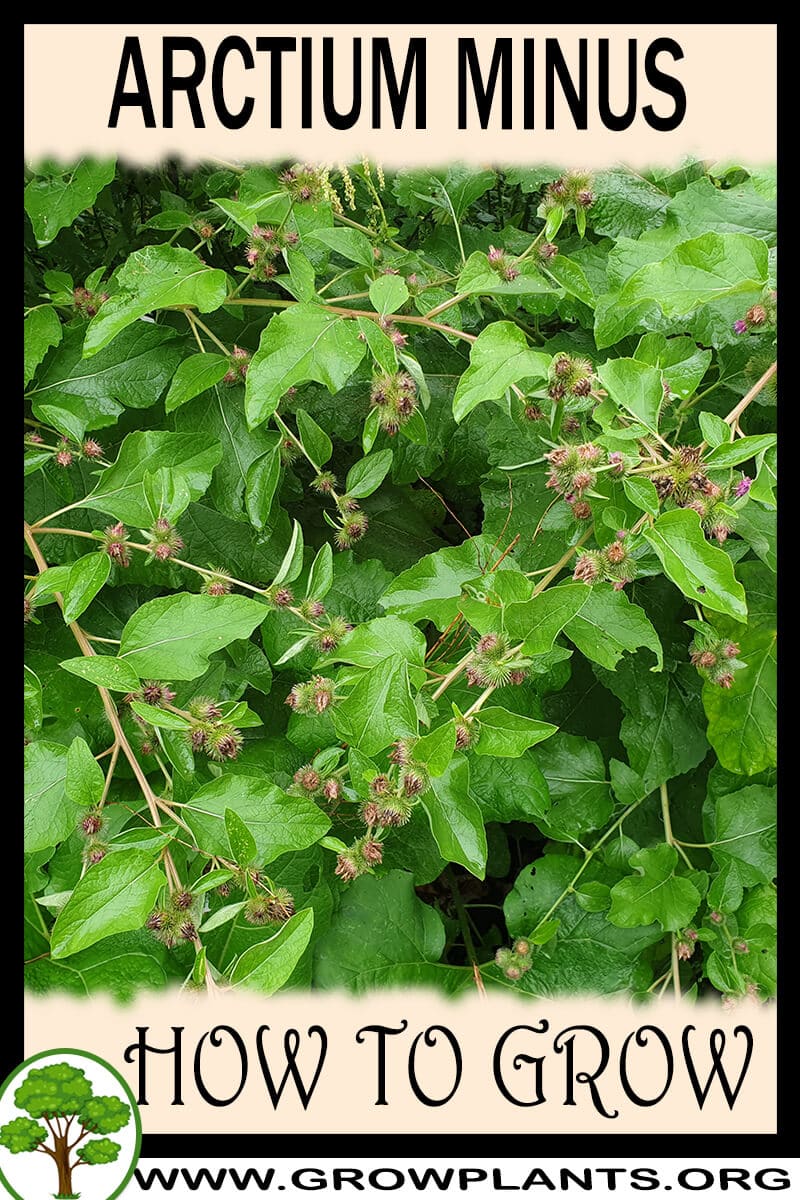
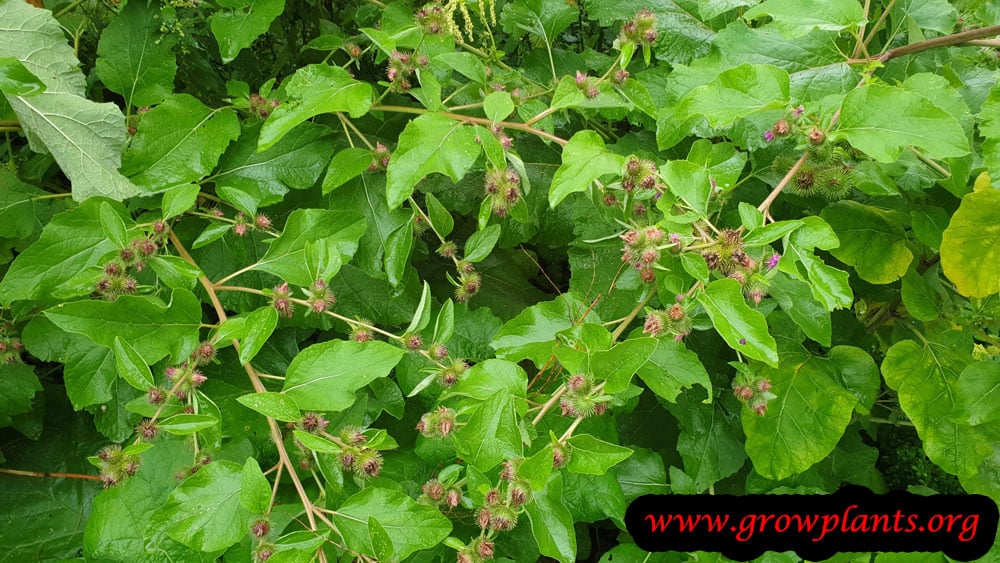
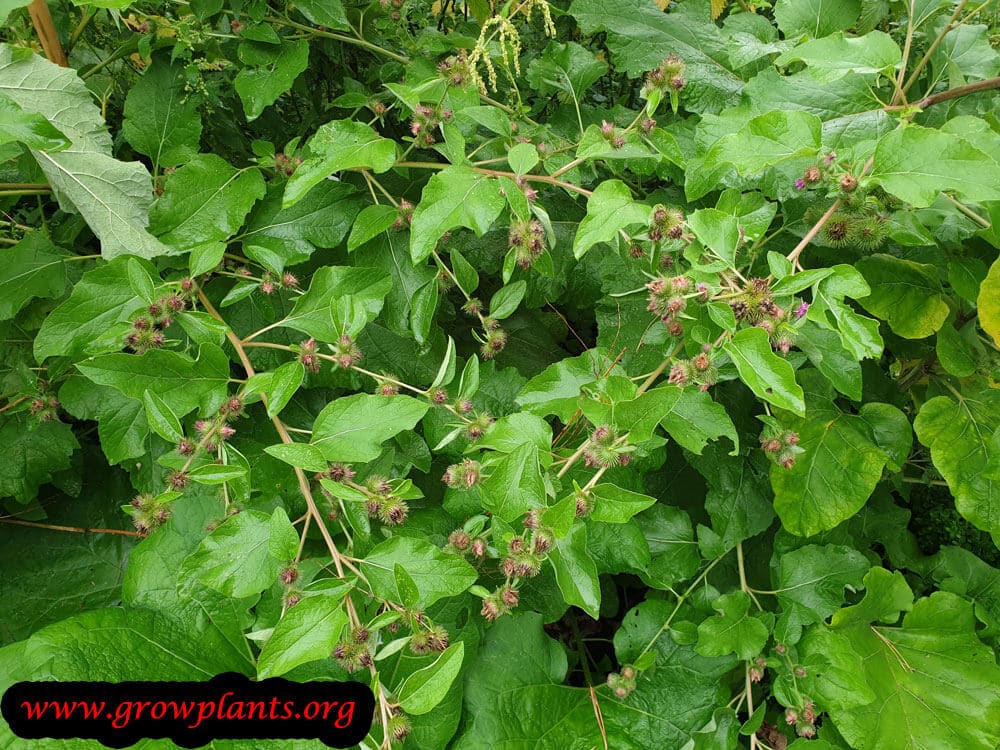
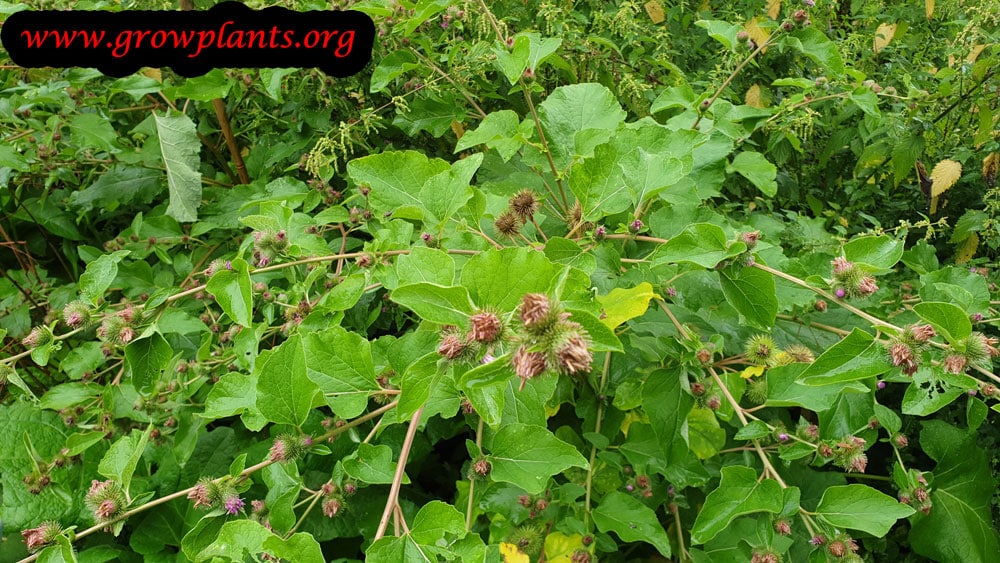
Overview: Lesser burdock (Arctium minus) is a biennial herb reaching about 1-1.5 m, closely related to greater burdock and likewise grown for its edible taproot and young greens. It forms a leaf rosette in year one and spiny purple flower heads in year two.
Quick Specifications
| Specification | Attribute |
|---|---|
| Plant Type / Life Cycle | Biennial |
| Mature Size | 1-1.5 m tall (3-4.5 ft) |
| Growth Rate | Fast to moderate |
| Root System | Long taproot (edible) |
| Toxicity | Non-toxic – root, young leaves and flower heads are edible |
| Hardiness | USDA zones 4-8 |
Growth Form & Structure
- Height & Spread: 1-1.5 m (3-4.5 ft) tall in flower; suited to a deep container for the taproot.
- Growth Habit & Form: Herbaceous biennial forming a basal leaf rosette, then a branched flowering stem.
- Lifespan & Maturity: Biennial – roots harvested in the first season; the plant flowers, seeds and dies in the second year.
Anatomy & Physical Features
- Leaves & Foliage: Green leaves in a spear to deltoid shape; young leaves edible.
- Flower Characteristics: Purple thistle-like heads with hooked spines forming clinging burrs.
- Fruit Profile: Hooked burrs that attach to passing animals and clothing.
Primary Uses & Landscape Value
- Edible Uses: Taproot cooked or used as a beverage; young leaves cooked, flower heads eaten cooked or raw.
- Functional & Ornamental Roles: Edible/foraging and traditional medicinal plant; ornamental but potentially invasive.
Care Guide: Planting, Soil & Watering
Overview: Greater burdock is a vigorous biennial grown for its long edible taproot, thriving in full sun to part shade and cool climates. It wants deep, loose, consistently moist soil so the roots can drive straight down.
Quick Care Requirements
| Requirement | Ideal Condition |
|---|---|
| Planting Season | In spring through autumn during the warm season |
| Growth Rate | Fast |
| Soil Type | Deep, loose, rich and moisture-retentive |
| Water Need | Moderate to High; keep evenly moist |
Planting & Establishment
- Best Planting Season: Sow or plant out from spring into summer, and into autumn in hotter climates, once the soil has warmed.
- How to Plant:
- Hole Preparation: Cultivate deeply, loosening at least 30-60 cm (1-2 ft) of soil and removing stones so the long taproot can grow straight and unforked.
- Soil Amendments: Dig in plenty of compost or well-rotted organic matter to feed this hungry, fast grower and help the soil hold moisture.
- Planting Depth: Set transplants at the same depth they grew in the pot, keeping the crown at soil level.
- Growth Speed & Expectations: A fast grower that reaches 1-1.5 m (3-4.5 ft), so give it room; note that it self-seeds and can spread.
Soil, Watering & Drainage Care
- Soil Mix & Drainage Needs: It likes rich, moisture-retentive but not waterlogged soil, and loose, deep ground gives the best roots. It can be grown in a deep container.
- Watering Schedule & Technique:
- Young / Newly Planted: Keep seedlings and transplants consistently moist while they establish.
- Established: Water regularly and deeply so the soil never dries out; steady moisture keeps the roots tender and helps prevent premature bolting.
- Seasonal Adjustments: Increase watering in summer heat and ease off in cool or wet weather.
Climate, Light & Hardiness
Arctium minus (lesser burdock, wild rhubarb) is a robust, cold-hardy biennial herb suited to temperate and subtropical climates, reliably hardy across USDA zones 4–8. It grows best in full sun, shifting to half shade in hotter climates, and prefers cool, consistently moist conditions.
Quick Climate Specifications
| Climate Zones | Temperate, subtropical |
|---|---|
| USDA Hardiness Zones | 4–8 |
| Approx. Survival Minimum | Established plants tolerate winter minimums to about −34°C (−30°F) at the zone 4 edge of their range |
| Frost Tolerance | High |
| Light Conditions | Full sun; half shade in hotter climates |
Sunlight & Light Exposure
Optimal Light Setup
Full sun gives the strongest, most vigorous growth in temperate climates.
Direct Sun Requirement
Does best with direct sun for most of the day where summers are mild to moderate.
Shade & Heat Management
In hotter parts of its range, half shade helps prevent heat stress, per site guidance for hotter climates.
Best Exposure / Orientation
An open, sunny site suits it in cooler regions; partial afternoon shade is preferable where summers are hot.
Temperature Extremes & Hardiness
USDA Hardiness & Regional Limits
One of the more cold-hardy herbs, reliably surviving winters across zones 4–8 - from roughly zone 4's typical minimums of about −34 to −29°C (−30 to −20°F) - while also tolerating the warmer, subtropical-edge conditions of zone 8.
Cold Damage & Winter Protection
As a biennial, the first-year rosette overwinters at or near ground level and is well protected by the plant's inherent cold hardiness; flowering stems emerge in the second year after the plant has experienced a cold winter period.
Frost Sensitivity
Tolerates frost and freezing winter conditions well within its hardiness range.
Extreme Heat Tolerance
Site data indicates a general preference for a cooler, moist climate; in hotter regions, part shade and consistent soil moisture help offset heat stress.
Wind, Humidity & Microclimate
Rainfall & Seasonal Moisture
Naturally suited to temperate climates with regular moisture rather than prolonged drought or arid conditions.
Microclimate Recommendations
An open, sunny site in cool-temperate regions suits it best; in the hotter part of its range, part shade and reliable soil moisture help it thrive.
Growing in Pots, Balconies & Indoors
Lesser burdock is a large, leafy biennial (1-1.5 m / 3-4.5 ft) that forms a rosette of big leaves in its first year and a tall flowering stem with burrs in its second. The grower says it is not a houseplant – it wants full sun to part shade and open ground – but it can be grown in a large container.
Because it drives down a deep taproot, container growing means a deep, roomy pot; it is an outdoor plant, not an indoor one.
Quick Details
- Container Size: A large, deep pot to accommodate the long taproot.
- Indoor Suitability: Not a houseplant – too big and sun-loving for indoor life.
- Best Spot: Full sun, or half shade in hotter climates, outdoors.
- Soil & Drainage: Deep, rich, moisture-retentive but free-draining mix.
- Watering in Pots: Water generously – it is thirsty and leafy – but avoid standing water.
Indoors & On the Windowsill
- Not for indoors: The grower says no – it is a big, sun-loving biennial with a deep taproot, unsuited to a windowsill.
On a Balcony or Patio
- Light & space: Give it a sunny, open spot; its large leaves catch wind, so use a heavy, stable pot and shelter it if exposed.
- Biennial habit: Expect leaves the first year and flowers and burrs the second; then it sets seed and dies, so start fresh plants for continuity.
Choosing the Pot, Soil & Long-Term Care
- Pot & drainage: A large, deep pot so the taproot has room to run down. Give it strong drainage holes and skip a standing-water saucer to avoid root rot; terracotta breathes and dries faster, while glazed or plastic pots hold moisture longer.
- Potting mix: A light, aerated, organic-rich mix – potting soil, or peat/coir with perlite, enriched with a little humus or compost.
- Feeding: Potted plants use up their food faster because nutrients wash out with every watering, so feed lightly but more regularly than plants growing in open ground.
- Repotting: As a short-lived biennial it will not need long-term repotting; refresh the mix for each new sowing and feed while in leaf.
Fertilizing & Feeding
A moderate to fairly heavy feeder: steady balanced feeding supports the big leafy top early on, then a shift toward potassium helps the root bulk up before feeding stops ahead of harvest.
Quick Fertilizing Specs
| Feeding Level | Moderate to fairly heavy feeder |
|---|---|
| Main Nutrient Priority | Balanced feeding early, shifting to potassium-forward as the root bulks up, then stopping before harvest |
| Best Feeding Period | Spring through the main growing season |
| Organic Options | Compost or aged manure worked into the soil before planting |
| Reduce/Stop Feeding | Stop feeding well before harvesting the root |
| Micronutrients | Usually supplied by a complete vegetable fertilizer; correct only diagnosed issues |
| Soil pH | Near neutral, in deep, loose, moisture-retentive soil |
Feeding by Growth Stage
Establishment after sowing or transplanting
Help young plants root in and put out their first true leaves.
| Nutrient direction | A balanced complete fertilizer worked into the soil supports steady early rooting and leaf growth. |
|---|---|
| Timing | At planting and through early seedling growth. |
| Frequency | A light feeding at planting, worked into the soil before seedlings emerge. |
| Fertilizer types | A balanced complete fertilizer worked into the soil, Compost or aged manure incorporated before planting |
| Precautions | Avoid concentrated fertilizer in direct contact with seeds or young roots; work it into the soil first. |
Leafy canopy growth
Build a full, vigorous leaf canopy that will fuel root development later on.
| Nutrient direction | A nitrogen-forward fertilizer supports the large leafy top this biennial puts on before the root bulks up. |
|---|---|
| Timing | Through the main leaf growth period before root bulking begins. |
| Frequency | Regular light feedings through this leafy growth period. |
| Fertilizer types | A nitrogen-forward complete fertilizer |
| Precautions | Avoid excess nitrogen late in the season, which favors leaf growth at the expense of the root. |
Root bulking
Support the root as it thickens and lengthens underground.
| Nutrient direction | Shift toward a potassium-forward fertilizer to support root development, easing back on nitrogen. |
|---|---|
| Timing | Once the leaf canopy is established and the root begins to bulk up. |
| Frequency | Periodic feeding through the root bulking period. |
| Fertilizer types | A potassium-forward fertilizer, A reduced-nitrogen complete fertilizer |
| Precautions | Keep nitrogen moderate at this stage so energy goes into the root rather than more leaf growth. |
Pre-harvest maturation
Let the root finish maturing without pushing new soft growth right before harvest.
| Nutrient direction | None – withhold fertilizer as harvest approaches. |
|---|---|
| Timing | In the weeks leading up to root harvest. |
| Frequency | No feeding at this stage; harvest without further feeding. |
| Fertilizer types | No feeding at this stage; do not fertilize as the root approaches harvest. |
| Precautions | Withhold fertilizer now; late feeding can push soft new growth and affect root quality at harvest. |
Nutrient Deficiency Signs & Corrections
Leaves are uniformly pale green to yellow and the canopy stays small.
| Possible causes | low available soil nitrogen, nitrogen leaching from heavy rain or watering, poor, thin soil low in organic matter |
|---|---|
| Appears first on | older, lower leaves |
| What to check | recent feeding history, soil organic matter, watering and rainfall |
| Possible correction | Apply a nitrogen-forward fertilizer and work organic matter into the soil. |
Leaf edges yellow and then brown or scorch, and root development seems weak.
| Possible causes | low soil potassium relative to demand during bulking, excess nitrogen diluting relative potassium availability, light, sandy soil that leaches potassium |
|---|---|
| Appears first on | older leaf margins |
| What to check | soil potassium status, recent fertilizer nitrogen-to-potassium balance, soil texture and drainage |
| Possible correction | Shift to a potassium-forward fertilizer and ease back on nitrogen. |
Roots develop internal cracking, brown discoloration, or a hollow, poorly filled core.
| Possible causes | low soil boron availability, inconsistent soil moisture during root bulking, overly alkaline soil limiting boron uptake |
|---|---|
| Appears first on | the developing root itself |
| What to check | soil boron status, watering consistency through the bulking period, soil pH |
| Possible correction | Correct soil pH and apply a labeled boron product per its instructions, since boron has a narrow safe range. |
Pruning, Training & Seasonal Maintenance
Lesser Burdock is a monocarpic biennial: it spends its first year as a basal leaf rosette, then in its second year sends up a 1–1.5m flowering stalk, sets seed, and dies – there is no woody or perennial framework to prune or train across years. General pruning tolerance is low and mostly sanitary (removing dead leaves), and it can be done any time through the growing season. The one maintenance action that matters more than routine tidying is deadheading the spent purple flower heads before their spiny burrs dry and disperse, since this species is documented as invasive and spreads readily by self-seeding; timing that single action correctly does more for the plant’s management than any other cut.
Quick Pruning & Maintenance Specs
| Pruning Tolerance | Low – no framework to shape, mostly sanitary removal and deadheading |
| Primary Pruning Window | Ongoing through the growing season, with deadheading a priority in Summer/Autumn as flower heads finish |
| Secondary Maintenance Window | Spring, for cleaning up the first-year rosette |
| Typical Frequency | As needed; deadheading promptly once each flower head finishes is time-sensitive |
| Main Objective | Remove dead leaves; prevent seed-burr dispersal by deadheading before burrs dry |
| Young Plant Priority (1st-year rosette) | Remove only damaged outer leaves; leave the rest to build the taproot |
| Mature Plant Priority (2nd-year flowering stalk) | Deadhead spent flower heads promptly; remove dead lower leaves |
| Best Tool Type | Precision snips for leaves/flower heads; bypass secateurs for the coarser flowering stalk |
| Avoid Heavy Pruning During | Stripping excessive first-year rosette leaves if you intend to harvest the root, since the plant needs its leaves to build it |
Pruning by Plant Age & Size
Newly Established
Remove only visibly damaged or dead outer leaves from a young first-year rosette; the plant needs its healthy leaves to build the taproot.
Young / Formative
No structural training applies – the first year produces only a basal rosette, with no stem or branches to train.
Mature / Established
In the second year, once the flowering stalk finishes blooming, deadhead spent flower heads before their burrs dry and disperse, and remove dead lower leaves. Since the whole plant dies after seeding regardless of pruning, there is no ongoing framework to maintain beyond this.
Seasonal Pruning Schedule
| Stage | Spring (1st-year rosette / early regrowth) |
| Objective | Sanitary clean-up of the basal rosette |
| Remove | Damaged or dead outer leaves |
| Do Not Remove | Healthy crown leaves the plant needs to build its taproot |
| Expected Response | Cleaner rosette; no effect on the plant’s eventual bolting |
| Flowering / Fruiting Impact | None – this is pre-bolting |
| Stage | Summer / Autumn (2nd-year, post-flowering) |
| Objective | Prevent invasive reseeding |
| Remove | Spent purple flower heads, cut before the spiny burrs dry and disperse (unless being harvested for the edible flower head first) |
| Do Not Remove | Flower heads still in bloom or intended for harvest before they are used |
| Expected Response | No seed set, controlling this already-invasive species’ spread |
| Flowering / Fruiting Impact | None – deadheading happens after bloom is finished |
Special Growth to Remove
- Dead or damaged leaves at the base of the rosette
- Spent flower heads/developing seed burrs – remove before they dry and disperse, given this species’ documented invasive, self-seeding habit
- The whole second-year flowering stalk once fully finished at season’s end, since the plant is monocarpic and will not regrow from it regardless
Container & Small-Space Pruning
Can be grown in a planter; container culture naturally limits the size of the edible taproot, and prompt deadheading is especially important in a garden setting to avoid this invasive species seeding into nearby beds.
Tools
Precision snips for leaf clean-up and deadheading the flower heads; bypass secateurs for cutting down the tougher, fibrous 1–1.5m flowering stalk at season’s end.
Tool Hygiene & Disease Risk
Routine – the only pest documented is aphids, with no significant transmissible pathogen risk from pruning cuts, so clean sharp tools are sufficient.
Cut Placement & Technique
Cut spent flower heads back to the stalk they grow from, cut the whole flowering stalk near its base once fully finished at the end of the season, and cut rosette leaves at the base of the petiole without disturbing the crown in the first year.
Heavy Pruning & Rejuvenation
Not applicable in the renewal sense – as a monocarpic biennial, the plant completes its two-year life cycle and dies after its second-year seed set regardless of any pruning. No cut extends its life or produces a second flowering from the same rosette.
Post-Pruning Care
Keep soil consistently moist, which this species prefers; no special aftercare is needed beyond routine watering, and watch young regrowth for aphids.
Common Pruning Mistakes
- Leaving spent flower heads to dry and disperse their bur-like seeds, letting this already-invasive species spread further
- Stripping too many first-year rosette leaves at once if planning to harvest the root, weakening taproot development
- Mistaking normal second-year die-back after seeding for a disease problem
When NOT to Prune
Avoid stripping first-year rosette leaves excessively if the root is intended for harvest – but treat deadheading as the opposite case: once a flower head has finished blooming, remove it promptly rather than delaying, since delay is exactly what allows the burrs to dry and disperse seed.
Recommended Tools (by task)
- Any age, deadheading & leaf clean-up (precision_snips): flower heads and rosette leaves need only a clean small-scale snip.
- 2nd-year flowering stalk, end-of-season removal (bypass_secateurs): the 1–1.5m flowering stalk is coarser and fibrous, needing a bypass blade for a clean cut.
Propagation Guide
Arctium minus is propagated only from seed – the site confirms vegetative reproduction is not needed – sown directly where the taprooted biennial is to grow, since this weedy species establishes and self-sows readily. Propagation is easy.
Quick Propagation Specs
| Best Propagation Method | Direct sowing of seed |
| Propagation Difficulty | Easy |
| Seed True-to-Type | Yes (true species) |
| Best Propagation Season | Spring through autumn in warmer climates |
Growing from Seed
Seed Handling & Viability
No special handling is noted by the site; seed keeps and sows readily in the same or following season.
Dormancy & Pre-Sowing Treatment
No pre-treatment is required for reliable garden germination. The site notes this species is invasive, so expect and manage volunteer seedlings from self-sowing.
Sowing Season
Spring through autumn in warmer climates.
Sowing Depth & Orientation
Not specified by the site; sow shallowly, lightly covering the seed, as is typical for Asteraceae seed of this size.
Germination Conditions
Moist soil; full sun to half shade in hotter climates.
Seedling Care
As a biennial with a long taproot that is itself harvested for food in its first year, this species is best sown directly where it is to mature rather than transplanted, since taprooted seedlings dislike root disturbance – consistent with the site’s note that vegetative propagation is not used for it.
Bloom & Edible Flower Guide
Quick Details
- Bloom Season: Summer into autumn
- Time to First Bloom: In its second year – burdock is a biennial that flowers after its first season of leaf growth
- Flower Appearance: Purple, thistle-like flower heads set in hooked, spiny bracts
- Edibility: Edible – the young flower heads are eaten cooked or raw; watch the hooked spines on mature heads
Detailed Blooming Overview
Lesser burdock (Arctium minus) is a biennial that flowers in its second year, carrying purple, thistle-like heads on branched stems. Each head is enclosed in green bracts tipped with tiny hooks – the burrs that later catch on clothing and fur. The young flower heads are edible cooked or raw, though the maturing burrs and spines make timing important.
Flower Characteristics
- Purple, thistle-like flower heads, borne on branched stems.
- Each head is wrapped in hooked, spiny bracts (the burrs).
Bloom Care & Thinning
- Harvesting: Take the flower heads while young and tender; once the burrs harden, the hooks catch on everything and the heads are past their best for eating.
- Self-seeding: Deadhead before the burrs mature to stop it spreading its seed far and wide.
- Pollination: The nectar-rich heads attract bees.
Fruit & Uses
Lesser burdock (also called Wild rhubarb) is grown as much for its edible parts as for looks: the young leaves, the taproot, and the immature flower heads are all eaten. Leaves and root are normally cooked, while the flower heads can be treated either as a cooked vegetable or, once well trimmed, eaten raw.
Quick Edible Specs
| Edible Parts | Young leaves, taproot, immature flower heads |
|---|---|
| Main Use(s) | Culinary vegetable (leaves, root); root also used as a beverage/cordial ingredient |
| Eaten Raw or Cooked | Leaves & root: cooked. Flower heads: cooked or raw (trimmed) |
| Preparation Required | Cook (leaves, root); remove spines/bracts before eating flower heads |
| Harvest Season | Leaves: spring, while young. Root: summer/autumn |
| Time to First Harvest | As a biennial, the root is best dug while still in its first year of growth, before the plant bolts and the root turns woody (see Propagation/Growth) |
| Storage | Root keeps best stored cool and unwashed, similar to other taproot vegetables; leaves and flower heads are best used fresh |
| Safety/Toxicity Caveat | Positively identify before foraging – burdock’s rosette of leaves can be mistaken for toxic look-alikes (e.g. deadly nightshade/belladonna); flower heads have spiny bracts that must be trimmed away |
Leaves & Greens
The green, spear- to deltoid-shaped leaves are edible while the plant is still young. They are harvested at the base of the plant early, in spring — older leaves toughen and turn more bitter as the plant matures. Site guidance lists them as a cooked vegetable rather than a raw salad green.
Roots & Tubers
The taproot is the best-known edible part: a cone-shaped root with brown skin and white flesh underneath. It is dug in summer/autumn and used cooked, or brewed as a beverage/cordial ingredient. Because Arctium minus is biennial, the root is most tender if lifted before the plant flowers and sets seed in its second year; letting the plant bolt diverts energy from the root and toughens it (see Pruning/Growth for the plant’s general life cycle).
Flowers & Flower Buds
The purple flower heads are edible while still immature and closed, similar in concept to a small artichoke or thistle head. The bracts around the head are spiny, so they need to be trimmed away before eating; once cleaned up, the heads can be cooked or eaten raw. Letting flower heads mature and open is mainly relevant to seed production, not the edible harvest.
Harvesting
Harvest is staggered across the season by part: young leaves in spring, flower heads while still unopened, and the root in summer or autumn (ideally still within the plant’s first year, before it bolts). Because taking the root kills that plant, and letting the plant flower toughens the root, gardeners generally choose either a leaf/root harvest from young first-year plants or let select plants flower for seed — not both from the same plant.
Preparation, Uses & Safety
Young leaves and the root are typically cooked as a vegetable; the root is also used to make a beverage/cordial. Flower heads need their spiny outer bracts removed before eating and are then cooked or, once cleaned, eaten raw. The main safety point is correct identification before foraging any wild burdock – its leaf rosette can resemble toxic look-alike plants such as deadly nightshade (belladonna), so plants grown or gathered for eating should be positively identified.
Pests, Diseases & Troubleshooting
Overview: Burdock is a vigorous, deep-rooted Asteraceae biennial (grown as gobo for its edible root) and is fairly robust, but its large soft leaves attract sap-suckers and leaf-eaters, and it is very prone to powdery mildew in late season. Arctium minus (lesser burdock) is a hardy wayside biennial with the same pest and disease profile as greater burdock. Good spacing, airflow and deep, stone-free soil prevent most problems; healthy plants simply outgrow minor pest damage.
Quick Troubleshooting Overview
| Issue / Pest | Main Symptom | Primary Solution |
|---|---|---|
| Aphids | Colonies on leaf undersides, sticky honeydew | Water jet, ladybirds, insecticidal soap |
| Leaf miners | Pale winding tunnels inside leaves | Pick off mined leaves, floating row cover |
| Burdock borer / root larvae | Wilting, tunnelled stems and root crown | Remove affected plants, rotate, tidy debris |
| Caterpillars & loopers | Ragged holes chewed in leaves | Hand-pick, Bt spray, encourage birds |
| Powdery mildew | White powdery coating on upper leaves | Airflow, avoid crowding, sulfur or potassium bicarbonate |
| Forked / split roots | Distorted, forked gobo roots at harvest | Deep, loose, stone-free soil; steady moisture |
Common Pests & Management
- Aphids (Aphis / Uroleucon spp.):
- Symptoms: Dense colonies of soft green or black aphids on the undersides of the big leaves and on flower stalks, leaving sticky honeydew, sooty mould and puckered growth. They can also spread viruses.
- Prevention & Control: Dislodge them with a strong spray of water and rely on ladybirds, lacewings and parasitic wasps, which colonise burdock readily. Remove badly infested lower leaves. For heavy attacks use insecticidal soap or neem, coating leaf undersides.
- Leaf miners (Agromyzidae):
- Symptoms: Pale, meandering or blotchy tunnels mined between the leaf surfaces by small larvae, giving a scribbled, translucent look. Damage is mostly cosmetic on a vigorous plant.
- Prevention & Control: Pick off and destroy mined leaves as they appear to remove the larvae inside. Floating row cover over young plants keeps egg-laying flies off. Encourage parasitic wasps; sprays are rarely justified for a root crop.
- Burdock borer & root-feeding larvae (Papaipema cataphracta):
- Symptoms: Larvae that tunnel into the stem base, crown and upper root, causing sudden wilting, weakened or toppling stems, and frass at entry holes — a real concern for a root crop.
- Prevention & Control: Pull and destroy infested plants, and clear weedy Asteraceae and plant debris where moths overwinter. Rotate the crop to fresh ground each year and cultivate to expose pupae. Healthy, unstressed roots resist minor tunnelling.
- Caterpillars & loopers (Noctuidae):
- Symptoms: Ragged holes and chewed margins on the large leaves, with green or brown caterpillars and dark droppings on the foliage. Seldom fatal but disfiguring.
- Prevention & Control: Hand-pick caterpillars in the evening and encourage insect-eating birds and predatory wasps. For outbreaks on young plants, spray Bacillus thuringiensis (Bt), which is selective and pollinator-safe.
- Flea beetles (Chrysomelidae: Alticini):
- Symptoms: Tiny jumping beetles that pepper leaves with small round shot-holes, worst on young seedlings in warm dry weather.
- Prevention & Control: Protect seedlings with row cover until established, keep them well watered and vigorous, and use yellow sticky traps. A dusting of diatomaceous earth on dry foliage deters them; established plants tolerate the damage.
- Spider mites (Tetranychus urticae):
- Symptoms: Fine pale stippling and a dull bronzed cast to leaves, with faint webbing on undersides during hot, dry, dusty spells.
- Prevention & Control: Hose foliage to raise humidity and knock mites off, mulch to keep roots cool and moist, and protect predatory mites. Insecticidal soap or horticultural oil controls stubborn colonies.
Diseases & Fungal Issues
- Powdery mildew (Erysiphe / Golovinomyces cichoracearum):
- Symptoms: A white to greyish powdery bloom spreading over the upper leaf surfaces, especially in late season, on crowded plants and in warm days with cool nights. Leaves yellow and die back early.
- Treatment & Management: Space plants generously and thin surrounding growth for airflow, and water at the base rather than over the leaves. Remove the worst leaves. Apply sulfur, potassium bicarbonate or a milk spray at first signs; these organic options work well on burdock.
- Downy mildew (Peronosporaceae):
- Symptoms: Pale yellow angular patches on the upper leaf with a greyish or purplish fuzzy mould beneath in cool, wet, humid conditions. Distinct from powdery mildew, which coats the top surface.
- Treatment & Management: Improve drainage and air movement, avoid overhead watering and evening wetness, and remove infected leaves promptly. Copper fungicide gives preventive protection where downy mildew recurs in damp seasons.
- Leaf spot (Cercospora / Septoria spp.):
- Symptoms: Round to angular brown or grey spots, sometimes with dark borders or pale centres, scattered across leaves and merging in wet weather to brown out foliage.
- Treatment & Management: Rake up fallen leaves, rotate crops, and keep foliage dry with base watering and good spacing. Copper fungicide can be applied in persistently wet conditions, but cultural sanitation usually suffices.
- Root & crown rot / Sclerotinia (Sclerotinia / Rhizoctonia):
- Symptoms: Soft, water-soaked rot at the crown and upper root, wilting, and (with Sclerotinia) a white cottony mould with hard black resting bodies, especially in wet, heavy soil.
- Treatment & Management: Grow in deep, free-draining soil, avoid overwatering and waterlogging, and rotate away from other Asteraceae and susceptible crops. Remove and destroy rotted plants; do not compost them. No spray substitutes for good drainage and rotation.
Growing Difficulties & Abiotic Problems
- Forked, split or stunted roots:
- Cause & Symptoms: Stony, compacted, shallow or freshly manured soil forces the long taproot to fork, split or stunt — the main quality problem for a root crop like gobo.
- Correction Strategy: Cultivate deeply (30–60 cm) into loose, stone-free soil, avoid fresh manure before sowing, and keep moisture steady so the root drives straight down. Raised deep beds give the cleanest roots.
- Premature bolting:
- Cause & Symptoms: As a biennial, burdock runs to a tall flower stalk in its second year or under stress (heat, drought, crowding), making the root woody and inedible.
- Correction Strategy: Harvest roots in the first season before flowering, sow at the right time for your climate, and keep plants unstressed with even watering and spacing. Remove flower stalks if you only want foliage.
- Drought stress:
- Cause & Symptoms: Prolonged dryness wilts the large leaves, checks root growth and makes roots tough and fibrous, while also inviting mites and mildew.
- Correction Strategy: Mulch well and water deeply during dry spells to keep the deep root zone moist. Consistent moisture gives tender, well-formed roots and lush foliage.
What Helps — Products & Tools
Burdock rarely needs much: a water jet and insecticidal soap or neem for aphids and mites, Bacillus thuringiensis (Bt) for caterpillars, floating row cover and yellow sticky traps for flies and flea beetles, and diatomaceous earth on dry foliage as a deterrent. For late-season powdery mildew, sulfur, potassium bicarbonate or a milk spray are effective and food-safe; copper fungicide covers downy mildew and leaf spot in wet seasons. The deepest control is cultural — deep loose soil, spacing and rotation.