

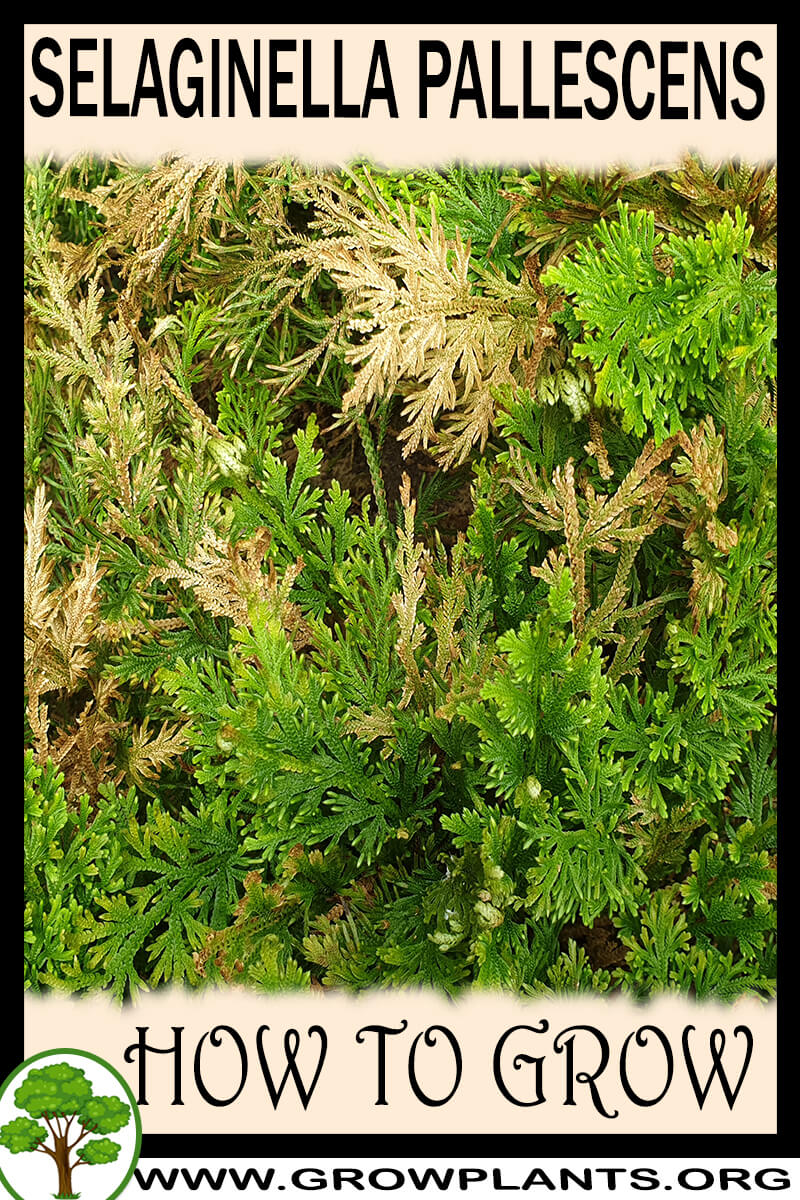
Plant Profile & Key Characteristics
Overview: A low, mat-forming evergreen spikemoss reaching only 5-15 cm (2-6 in) high but spreading to form a mossy, fern-like carpet. This spore-bearing lycophyte is grown purely as an ornamental foliage plant for shady, humid spots, terrariums and as an indoor groundcover.
Quick Specifications
| Specification | Attribute |
|---|---|
| Plant Type / Life Cycle | Herbaceous perennial (spore-bearing lycophyte / fern ally) |
| Foliage Type | Evergreen (can be semi-deciduous in cold) |
| Mature Size | 5-15 cm (2-6 in) tall, spreading indefinitely as a mat |
| Growth Rate | Moderate to fast |
| Root System | Shallow and fibrous, produced from creeping stems (rhizophores) that root as they spread |
| Hardiness | USDA zone 11+ (to 10b with extra care and frost protection) |
Growth Form & Structure
- Height & Spread: Stays 5-15 cm (2-6 in) tall in the ground yet creeps outward to cover a wide area; in a pot it trails over the rim and stays more contained, and is potted up 40-50% larger than the root ball as it fills in.
- Growth Habit & Form: Low, creeping mat-former with slender branching stems clothed in tiny scale-like leaves, giving a soft moss-and-fern texture; it can become invasive in warm, damp sites.
- Lifespan & Maturity: Long-lived perennial that roots freely along its stems and reaches spreading size within a season or two in warm, humid conditions.
Anatomy & Physical Features
- Leaves & Foliage: Green, finely divided lacy leaves that give a delicate, fern-like frond. It bears no true flowers, reproducing by spores.
Primary Uses & Landscape Value
- Functional & Ornamental Roles: Shade- and moisture-loving groundcover, terrarium and bottle-garden filler, and an easy indoor foliage houseplant where humidity is kept high.
Care Guide: Planting, Soil & Watering
Overview: Selaginella pallescens (spikemoss) is a moisture-loving, shade-dwelling foliage plant that wants high humidity, rich organic soil and steadily moist — but never soggy — conditions. Unlike a succulent it must not be allowed to dry out, yet it still needs good drainage to keep its shallow roots from rotting.
Quick Care Requirements
| Requirement | Ideal Condition |
|---|---|
| Planting Season | Spring to summer in zone 10b (avoiding the hottest days); spring to autumn in zone 11; year-round in zones 12+ |
| Growth Rate | Moderate to Fast |
| Soil Type | Rich, moisture-retentive soil high in organic matter — a peat-based mix with perlite |
| Water Need | Moderate to High — keep the soil constantly moist and never let it dry out |
Planting & Establishment
- Best Planting Season: Plant in spring once the weather is warm and settled, avoiding peak summer heat; it is frost-tender, so in cool climates grow it indoors or in a sheltered, shaded spot.
- How to Plant:
- Hole Preparation: Prepare a hole only a little larger than the small, shallow root ball; spikemoss roots run near the surface and want a moist but well-aerated pocket rather than a deep one.
- Soil Amendments: Work in plenty of compost, leaf mould or peat plus a little perlite so the soil holds moisture yet still drains — rich, spongy, humus-filled ground is ideal.
- Planting Depth: Set it at the depth it grew before, leaving the creeping stems resting on the surface where they root as they spread.
- Growth Speed & Expectations: In warm, humid shade it grows at a moderate to fast pace, spreading into a soft, low carpet of foliage.
Soil, Watering & Drainage Care
- Soil Mix & Drainage Needs: Use a rich, organic, moisture-retentive mix (potting or peat soil with perlite); in pots choose one only 40–50% larger than the root ball with good drainage, so the soil stays evenly damp without turning stagnant.
- Watering Schedule & Technique:
- Young / Newly Planted: Keep the soil evenly moist from the start and never let it dry; mist regularly to give young plants the high humidity they need to establish.
- Established: Water regularly so the soil stays consistently damp — this is not a plant to let dry between waterings — and pair steady moisture with high humidity, especially indoors.
- Seasonal Adjustments: Water a little less in cool winter weather when growth slows, but never let it dry out; increase misting and watering during hot, dry spells.
Climate, Light & Hardiness
Spikemoss is a tropical-to-subtropical, deep-shade plant that grows best above about 15°C (59°F), tolerating conditions down to roughly 7°C (45°F), but with no meaningful frost hardiness.
Quick Climate Specifications
| Climate Zones | Tropics, Subtropics (Mediterranean with added summer moisture) |
|---|---|
| USDA Hardiness Zones | 11+ (10b achievable with attentive care) |
| Optimal Temp Range | Generally above approximately 15°C (59°F) |
| Approx. Survival Minimum | Around 7°C (45°F) |
| Frost Tolerance | None |
| Light Conditions | Full Shade |
Sunlight & Light Exposure
Optimal Light Setup
A forest-floor plant by nature, it wants full shade rather than any direct light.
Shade & Heat Management
Naturally suited to deep shade; there is no indication in the growing data that it tolerates strong or direct light at any point.
Best Exposure / Orientation
A north-facing or interior position away from direct-sun windows works well indoors; outdoors, site it beneath dense canopy.
Temperature Extremes & Hardiness
USDA Hardiness & Regional Limits
Rated to zone 11 and warmer, extending down to zone 10b with attentive care per site data. Reliable outdoor culture is limited to essentially frost-free tropical-to-warm-subtropical climates; in Mediterranean climates it can be grown outdoors with extra summer moisture, though winter cold remains the limiting factor there.
Cold Damage & Winter Protection
Site data indicates it grows best above about 15°C (59°F) and can still get by down to roughly 7°C (45°F), though below its comfortable range expect slowed growth and increasing stress. Bring container specimens under cover before temperatures fall toward the mid-40s°F.
Frost Sensitivity
Has no frost tolerance; a freeze is likely to kill the foliage outright.
Wind, Humidity & Microclimate
Humidity Preferences
Needs consistently high humidity alongside moist, organically rich soil.
Dry-Air Tolerance
Tolerates dry air poorly; site care notes specifically flag the need to manage humidity carefully when this plant is grown indoors.
Rainfall & Seasonal Moisture
In Mediterranean climates it needs supplemental moisture through the dry summer to compensate for that region's naturally dry season, unlike in its native tropical and subtropical range where rainfall is more consistent.
Microclimate Recommendations
Pair full shade with consistently high humidity - a shaded courtyard, terrarium, or humidity tray indoors suits it well; protect it from cold drafts and dry heating or cooling air in winter.
Growing in Pots, Balconies & Indoors
Selaginella pallescens is a low, moss-like spikemoss that the grower confirms grows well as a houseplant – as long as you keep the humidity up – and it grows well in containers too. Its love of shade and constant moisture makes it a natural terrarium and indoor plant.
Quick Details
- Container Size: A small pot 40-50% larger than the root ball for this tiny 5-15 cm plant (grower’s value)
- Indoor Suitability: A genuine houseplant – excellent indoors and in terrariums if humidity is high
- Best Spot: Full shade / bright indirect light – never direct sun
- Soil & Drainage: Rich, moisture-retentive but free-draining mix with organic matter
- Watering in Pots: Average to generous – keep evenly moist; never let it dry out for long
Indoors & On the Windowsill
- A humidity-loving houseplant: The grower confirms it grows well indoors provided you keep the humidity high. Give it bright, indirect light, steady moisture, and humid air – a terrarium, a covered dish or a pebble tray is ideal, as dry room air quickly browns it.
- Warmth: Keep it warm and away from dry heater or air-conditioner draughts, which dry it out fast.
On a Balcony or Patio
- Light & shelter: Outdoors it needs deep shade, shelter and constant humidity – only a protected, damp, shaded corner suits it; it dislikes sun, wind and drought.
- Practicalities: In open air it dries out very fast – it is far happier in an enclosed, humid setting than on an exposed balcony.
Choosing the Pot, Soil & Long-Term Care
- Pot & drainage: Choose a pot 40-50% larger than the root ball (grower’s value), with strong drainage holes; keep the mix moist but not waterlogged.
- Potting mix: Rich, organic mix – potting or peat soil with perlite (grower’s spec), holding moisture while still draining.
- Feeding: Feed very lightly – the grower adds only a small amount of fertiliser every 3-4 years, plus humus and mulch.
- Repotting: Pot up when the roots fill the pot; once at its final size, every few years renew the soil and trim back some roots and foliage (grower’s method).
Grower’s Container Tip
- A little feed goes a long way: The grower feeds only sparingly – a small dose every 3-4 years with added humus and mulch – rather than regular feeding, which this delicate plant does not need.
Fertilizing & Feeding
A very light feeder grown for its finely shredded foliage: this humidity-loving plant thrives mainly on rich, moist, organic-matter-heavy soil, and only occasionally benefits from a small, gentle feeding rather than routine fertilizing.
Quick Fertilizing Specs
| Feeding Level | Very light feeder |
|---|---|
| Main Nutrient Priority | Balanced feeding used sparingly, secondary to rich, moist, organic-matter-heavy soil |
| Best Feeding Period | During the active warm growing season, in small amounts and only occasionally |
| Organic Options | Rich soil, peat soil, or organic matter and mulch to keep the soil consistently moist |
| Micronutrients | Usually adequate from rich, organic-matter-heavy soil; correct specific issues only when diagnosed |
| Soil pH | Prefers a rich, moist, well-drained growing medium |
| Reduce/Stop Feeding | Skip feeding entirely during cooler months or whenever growth is not active |
Feeding by Growth Stage
Establishment after planting or repotting
Let newly rooted daughter plants or repotted divisions settle into rich, moist soil before any feeding.
| Nutrient direction | None – hold off on fertilizer while the plant is establishing new roots. |
|---|---|
| Timing | Immediately after planting, division, or repotting. |
| Frequency | No feeding at this stage. |
| Fertilizer types | No feeding at this stage – allow roots to establish first |
| Precautions | Do not fertilize freshly divided or repotted plants; disturbed roots are easily stressed by feeding. |
Active growth in rich, moist soil
Support steady growth of the shredded green foliage while relying mainly on rich, moist, organic soil rather than routine feeding.
| Nutrient direction | A small, well-diluted balanced feed used only occasionally; rich organic soil does most of the work for this light feeder. |
|---|---|
| Timing | During the warm season when the plant is actively putting out new growth. |
| Frequency | Minimal feeding is usually enough for this plant, applied only occasionally alongside a fresh top-up of organic matter. |
| Fertilizer types | A balanced liquid houseplant fertilizer used at reduced strength, applied sparingly, Organic matter or mulch worked into the soil surface to maintain richness and moisture |
| Precautions | Keep feeding minimal and infrequent; this plant is easily overwhelmed by more than a light, occasional application. |
Cool or low-light slowdown
Match feeding to the plant’s naturally reduced growth in cooler conditions or lower humidity.
| Nutrient direction | None – withhold fertilizer while growth is minimal. |
|---|---|
| Timing | During cooler months or whenever humidity and warmth drop below what the plant prefers. |
| Frequency | No feeding at this stage. |
| Fertilizer types | No feeding at this stage – resume only once active growth restarts |
| Precautions | Do not fertilize a plant that has stopped producing new growth; unused nutrients can build up around the roots in already-moist soil. |
Nutrient Deficiency Signs & Corrections
Foliage browns, crisps, or shrivels rather than staying lush and green.
| Possible causes | insufficient ambient humidity, soil allowed to dry out between waterings, drafts from heating or cooling equipment |
|---|---|
| Appears first on | leaf tips and outer foliage |
| What to check | ambient humidity around the plant, soil moisture consistency, proximity to vents, heaters, or air conditioning |
| Possible correction | Increase humidity, keep soil consistently moist without waterlogging, and move away from drafts; feeding will not resolve a humidity or watering problem. |
New growth emerges pale, sparse, or noticeably weaker than the established foliage.
| Possible causes | soil that has become depleted of organic matter over time, insufficient light for the season, root stress from soil that dries out too often |
|---|---|
| Appears first on | newest growth |
| What to check | how long since the soil was last refreshed with organic matter, light exposure, soil moisture consistency |
| Possible correction | Refresh the soil with organic matter or a small, dilute feeding, and confirm consistent moisture and appropriate shaded light. |
The base of the plant softens, darkens, or smells musty, with foliage above declining.
| Possible causes | soil that stays waterlogged rather than evenly moist, poor drainage in the growing container, overfeeding stressing the root zone |
|---|---|
| Appears first on | the base of the plant and lower stems |
| What to check | drainage of the potting soil and container, recent watering frequency, recent feeding amounts |
| Possible correction | Improve drainage, let excess water escape rather than pool, and hold off on feeding until the plant shows active recovery. |
Pruning, Training & Seasonal Maintenance
Selaginella pallescens is a low, mat-forming spikemoss grown purely for its shredded-textured green foliage – it never flowers. “Pruning” here is light grooming and shaping rather than structural work: removing dead fronds and trimming back the spreading mat to keep it within bounds. It tolerates trimming at any time of year, and since it has no flowers or fruiting wood, cuts have no bloom-timing consequences to weigh – the only real trade-off is how much of the low, humidity-loving foliage you remove at once, since this species is noted to spread in the right (humid) conditions and can become a bit invasive locally.
Quick Pruning & Maintenance Specs
| Pruning Tolerance | Moderate (grooming and shaping, not structural) |
| Primary Pruning Window | Any time of year |
| Typical Frequency | Light, ongoing grooming as fronds brown or the mat spreads past its space |
| Main Objective | Remove dead fronds; contain spread; keep the mat dense rather than leggy |
| Young Plant Priority | Let the mat fill in; no shaping needed yet |
| Mature Plant Priority | Trim back spreading edges; thin congested growth for airflow in humid conditions |
| Best Tool Type | Precision snips |
Pruning by Plant Age & Size
Newly Established
No trimming needed while the small plant (5–15cm) is filling in; remove only visibly damaged fronds from planting.
Young / Formative
No structural training applies to a creeping mat plant; light pinching of trailing stem tips can encourage denser, bushier growth rather than thin, wandering runners.
Mature / Established
Trim back the mat where it has spread beyond its allotted space, and thin out congested patches occasionally to keep air moving through the foliage, since this species likes humidity but is also noted to attract mealybugs, whitefly and spider mites in dense, poorly-ventilated growth.
Special Growth to Remove
Dead or browned fronds, removed close to their base. Where the mat has rooted and spread beyond where it is wanted (this species is noted as invasive in favorable conditions), trim or lift out the unwanted spreading sections.
Container & Small-Space Pruning
When repotting – typically every few years, or once roots fill the pot – growers are advised to switch the soil and cut back some of the roots and leaves at the same time, rather than pruning foliage alone; this resets a container specimen that has become congested. Between repottings, keep container plants shaped smaller and more frequently trimmed than an open ground-cover planting would need.
Tools
Precision snips are the only tool needed – the fine, soft fronds and thin creeping stems do not call for anything heavier.
Tool Hygiene & Disease Risk
Routine risk – clean tools are sufficient. The pests noted for this species (mealybugs, whitefly, spider mites) are not spread by pruning cuts, so no special blade disinfection is warranted; good airflow from thinning is more useful for pest prevention than tool hygiene.
Cut Placement & Technique
Snip dead fronds close to their base. When pinching trailing stem tips for bushiness, cut just above a node where new growth can branch.
Post-Pruning Care
Keep humidity and soil moisture consistent after trimming, since this species is sensitive to drying out; no feeding is needed immediately after a light trim.
Common Pruning Mistakes
Letting the mat go untrimmed until it has smothered neighboring plants, rather than containing its spread early. Trimming in a way that reduces airflow instead of improving it, encouraging the mealybugs, whitefly or spider mites this species is prone to.
When NOT to Prune
Avoid heavy trimming right after repotting or dividing, since the plant is already recovering from root disturbance at that point.
Recommended Tools (by task)
| Task | Plant Age/Size | Stem/Frond Size | Tool Category | Why |
| Remove dead fronds / shape the mat | Any age, 5–15cm | Fine fronds and thin creeping stems | precision_snips | Delicate, controlled cuts suited to soft, small-scale foliage |
Propagation Guide
This spikemoss is propagated almost entirely by rooting its own leaf bases rather than by spores, which the site notes are difficult to use successfully; vegetative propagation is effectively necessary for reliable results. It is an easy plant to increase this way, especially when the rooting leaf is left attached to the mother plant until it has established on its own.
Quick Propagation Specs
| Best Propagation Method | Leaf-base rooting (left attached until established) |
| Alternative Methods | Detached leaf-with-root cutting; spores |
| Propagation Difficulty | Easy (leaf rooting) / Difficult (spores) |
| Vegetative True-to-Type | Yes |
| Best Propagation Season | Spring to summer, avoiding the hottest summer days, per the site’s planting-season notes |
Leaf & Root Cuttings
Roots naturally form at the base of the leaves along the creeping stems. The site describes two rooting approaches: cut a leaf section that already carries a root and place it in water, changing the water every few days, or set the cut piece directly into rich, peat-based soil kept moist but well-drained, without letting it dry out. The site’s preferred and faster method is to skip cutting first – instead, let the leaf-base roots establish while the piece is still attached to the mother plant, and only sever the connection once the new rooted section has established itself.
Spores
Spore propagation is possible but the site notes it is difficult, which is why leaf-base rooting is the recommended and effectively necessary method for this species rather than an optional alternative.
Pests, Diseases & Troubleshooting
Overview: Spikemosses are moisture- and humidity-loving fern allies with delicate, scale-like foliage that is largely trouble-free when its cultural needs are met; most problems trace back to dry air, stagnant soil moisture, or the sap-sucking insects that colonise soft indoor foliage. Manage it culturally first — steady humidity, gentle airflow, and clean plants — and reach for treatments only when pests are confirmed.
Quick Troubleshooting Overview
| Issue / Pest | Main Symptom | Primary Solution |
|---|---|---|
| Mealybugs | White cottony tufts in leaf junctions; sticky honeydew | Dab with alcohol; insecticidal soap or neem |
| Spider mites | Fine stippling, faint webbing, bronzed dry foliage | Raise humidity; rinse; insecticidal soap or oil |
| Whitefly | Tiny white flies rising when disturbed; sooty mould | Yellow sticky traps; insecticidal soap |
| Fungus gnats | Small black flies at the soil; larvae in wet mix | Let surface dry; sticky traps; Bti drench |
| Leaf browning / crisping | Fronds dry, brown at the edges or tips | Raise humidity, keep evenly moist, shade from sun |
| Root & crown rot | Blackened stems, collapse, sour wet soil | Improve drainage; ease off water; remove rotted parts |
Common Pests & Management
- Mealybugs (Pseudococcus spp.):
- Symptoms: White, cottony, waxy clusters tucked into the crown and where the tiny leaves meet the stems; they excrete sticky honeydew that can turn black with sooty mould. Slow-moving and easily missed on congested, mat-forming foliage.
- Prevention & Control: Isolate the plant and wipe or spot-treat colonies with a cotton bud dipped in diluted rubbing alcohol. Follow with insecticidal soap or a light neem-oil solution, repeating every 7–10 days to catch newly hatched crawlers. Keep new plants quarantined and inspect the crown regularly, as dense growth hides infestations.
- Spider mites (Tetranychus urticae):
- Symptoms: Fine pale stippling on the fronds, a dull bronzed cast, and in bad cases gossamer webbing over the tips — almost always a symptom of air that is too dry. Confirm by tapping foliage over white paper and watching for moving specks.
- Prevention & Control: Prevention is humidity: mist, group plants, or use a pebble tray so the air never dries out. Rinse foliage to dislodge mites, then treat with insecticidal soap or a fine horticultural oil, covering the undersides and repeating twice at weekly intervals. Predatory mites work well in enclosed terrariums.
- Whitefly (Trialeurodes vaporariorum):
- Symptoms: Clouds of tiny white flies lift off when the plant is disturbed; nymphs on the leaf undersides suck sap and produce honeydew and sooty mould, leaving foliage weak and dull.
- Prevention & Control: Hang yellow sticky traps to monitor and thin the adults. Spray insecticidal soap or neem to the undersides in the evening, repeating every few days to break the cycle. Encourage airflow and avoid over-feeding, which produces the soft growth whitefly prefer.
- Fungus gnats (Bradysia spp.):
- Symptoms: Small dark flies running over the soil surface and around the pot; their larvae live in the top layer of permanently wet mix and can nibble tender roots of young plants.
- Prevention & Control: Let the surface dry slightly between waterings even though the plant likes moisture, cover the mix with a thin grit layer, and set yellow sticky traps. For persistent problems drench with Bacillus thuringiensis israelensis (Bti) or use beneficial nematodes.
Diseases & Fungal Issues
- Root & crown/stem rot (Pythium / Phytophthora / Rhizoctonia spp.):
- Symptoms: Stems blacken and collapse at the base, foliage yellows and goes limp, and the mix smells sour — the classic result of soil kept saturated in poor light or cold, stagnant conditions.
- Treatment & Management: Prevention is everything: use a free-draining, organic-rich mix, keep it evenly moist but never waterlogged, and ensure gentle air movement. Remove rotted sections back to healthy tissue, repot into fresh mix, and reduce watering while it recovers. Avoid cold water and cold, still rooms.
- Grey mould (Botrytis cinerea):
- Symptoms: Fuzzy grey-brown mould on soft, congested foliage and dead frond tips, usually in cool, damp, still air with poor drying between waterings.
- Treatment & Management: Increase airflow and reduce leaf wetness in cool spells, remove affected and dead material promptly, and thin overcrowded growth. Sanitation and drier air usually suffice; a copper-based or biological fungicide can be used if it spreads.
Growing Difficulties & Abiotic Problems
- Leaf browning & crisping (low humidity):
- Cause & Symptoms: Fronds dry out, brown at the margins and tips, and the mat looks scorched — caused by dry indoor air, draughts, or letting the mix dry out. This is the single most common complaint with spikemoss.
- Correction Strategy: Keep humidity high and consistent with a pebble tray, grouping, a humidifier, or a terrarium/enclosed case. Maintain even soil moisture, keep it out of hot draughts and heating vents, and mist with soft water in dry spells.
- Sun scorch & bleaching:
- Cause & Symptoms: Direct sun bleaches the colour and burns patches brown; spikemosses are woodland-floor plants adapted to shade and dappled light.
- Correction Strategy: Grow in bright indirect light or light shade, well back from hot windows. Introduce any new light levels gradually and shade from midday sun outdoors.
- Overwatering vs. drying out:
- Cause & Symptoms: Both extremes cause browning: soggy stagnant soil rots the base, while any drying-out of this shallow-rooted plant crisps the foliage almost irreversibly.
- Correction Strategy: Aim for constantly moist but well-aerated mix; water when the surface just begins to feel less wet, and never let the root ball dry completely. Good drainage plus steady humidity is the balance point.
What Helps – Products & Tools
For pest work on spikemoss, the gentle organic staples do the job: insecticidal soap and light horticultural or neem oil for mealybugs, mites and whitefly, rubbing alcohol on a cotton bud for spot-treating mealybugs, yellow sticky traps for whitefly and fungus gnats, and a Bti drench for gnat larvae. On the disease side a copper-based fungicide handles grey mould if sanitation alone falls short. The best ‘tools’, though, are a humidifier or pebble tray and a free-draining, organic-rich mix — keep the air moist and the roots aerated and this plant rarely needs sprays.
