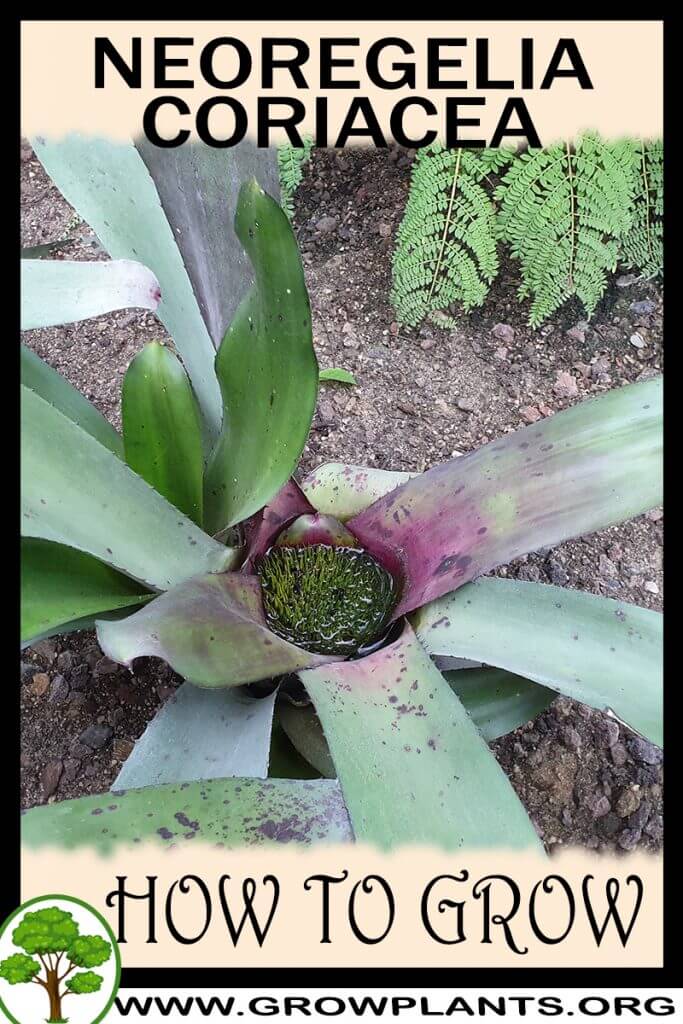
Plant Profile & Key Characteristics
Overview: This Neoregelia is an evergreen, rosette-forming epiphytic bromeliad only 5-20 cm (2-8 in) tall, grown as an ornamental for its brilliantly coloured leaves. It suits subtropical, Mediterranean and tropical climates and makes an easy houseplant.
Quick Specifications
| Specification | Attribute |
|---|---|
| Plant Type / Life Cycle | Perennial (epiphytic bromeliad) |
| Foliage Type | Evergreen |
| Mature Size | 5-20 cm (2-8 in) tall |
| Growth Rate | Slow to Moderate |
| Root System | Epiphytic – roots act mainly as anchors rather than a feeding system |
| Toxicity | Non-toxic |
| Hardiness | USDA zones 11a-11b+ (with winter protection) |
Growth Form & Structure
- Height & Spread: Low rosette 5-20 cm (2-8 in) tall; grown in shallow pots or mounted on cork/bark, disconnected from soil.
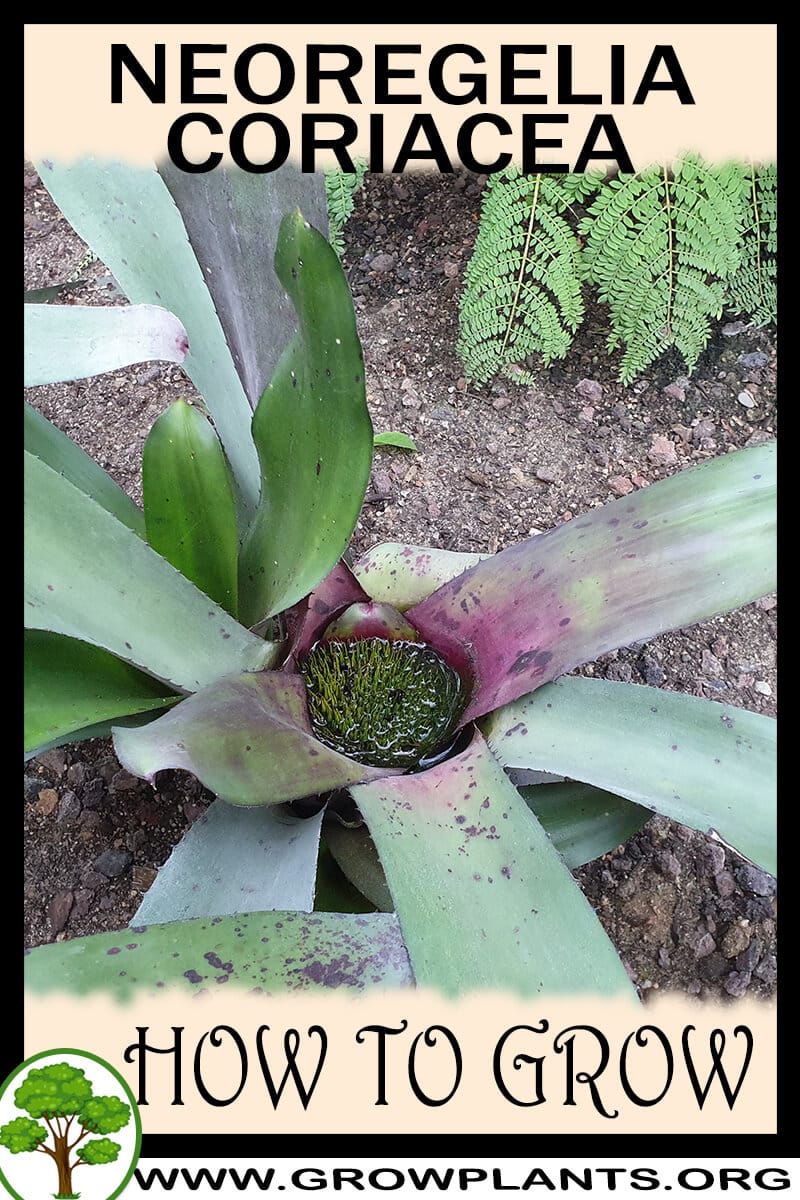
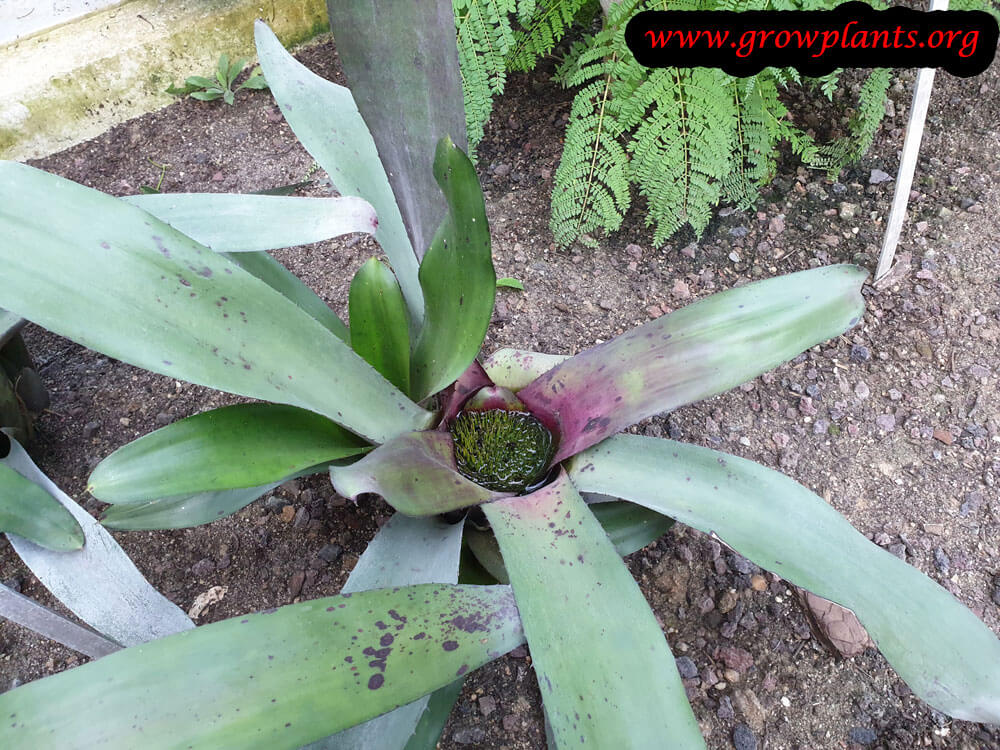
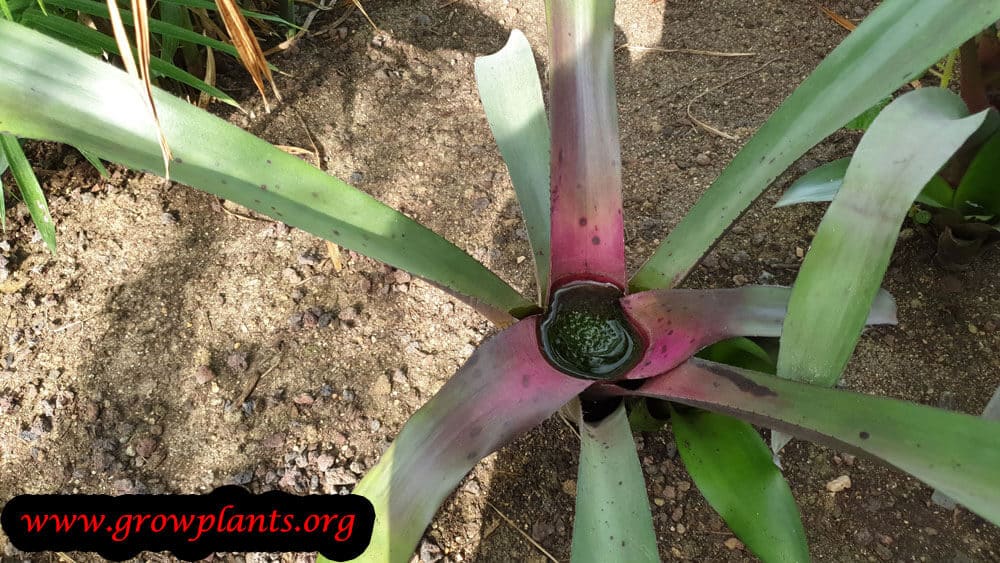
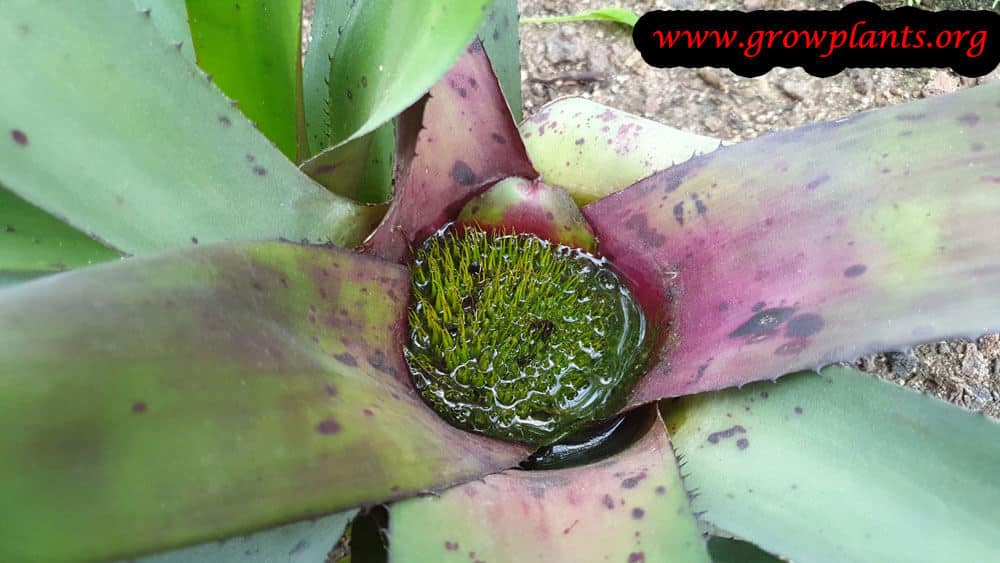
- Growth Habit & Form: Flattened rosette of strappy leaves forming a central water-holding cup (‘tank’).
- Lifespan & Maturity: Each rosette flowers once then produces offsets (pups); slow to moderate growth.
Anatomy & Physical Features
- Leaves & Foliage: Strap-like, sharp-edged leaves in a flat rosette; coloured green, pink, black, red, brown, orange, purple, white or yellow, often patterned with a darker central line.
- Flower Characteristics: Small white flowers borne low in the central cup of the rosette.
Primary Uses & Landscape Value
- Functional & Ornamental Roles: Ornamental foliage houseplant; grown in pots, mounted on bark, or in bright frost-free gardens.
Care Guide: Planting, Soil & Watering
Overview: Neoregelia is an epiphytic bromeliad that grows in a light, airy, inert mix (or mounted on bark) rather than ordinary soil, and takes its water from the central leaf cup. It needs warmth, bright light without direct sun, and moderate water – letting the potting medium dry between waterings.
Quick Care Requirements
| Requirement | Ideal Condition |
|---|---|
| Planting Season | Warm season – spring to summer/autumn in warm zones; year-round in the tropics (zone 12+) |
| Growth Rate | Moderate to slow |
| Soil Type | Light, airy, inert mix (sphagnum / bark); often grown epiphytically |
| Water Need | Moderate – fill the central cup and let the mix dry between waterings |
Planting & Establishment
- Best Planting Season: Plant in the warm season (spring through summer or autumn depending on zone, year-round in zone 12+).
- How to Plant:
- Hole Preparation: Pot into a small container of loose bark or sphagnum, or mount the plant on cork or bark.
- Soil Amendments: Use an inert, free-draining medium – not rich soil; these plants are naturally epiphytes.
- Planting Depth: Set the base so the rosette sits just above the medium; never bury the crown, which rots easily.
- Growth Speed & Expectations: Moderate to slow; each rosette flowers once, then produces offsets.
Soil, Watering & Drainage Care
- Soil Mix & Drainage Needs: The medium must be very airy, sharp-draining and low in nutrients, and must never stay soggy at the roots.
- Watering Schedule & Technique:
- Young / Newly Planted: Keep the medium lightly moist and the central cup topped up.
- Established: Keep water in the central rosette cup and let the potting medium dry between waterings; use rainwater or purified water, as the plant is sensitive to hard water.
- Seasonal Adjustments: Keep warmer and a little drier in winter (above ~10–15°C); give more humidity and water in summer heat.
Climate, Light & Hardiness
Blushing bromeliad is a warm subtropical-to-tropical plant prized for its colorful foliage; it wants bright light without direct sun and stays healthiest above about 15°C (59°F), tolerating brief dips to roughly 10°C (50°F) but with essentially no frost hardiness.
Quick Climate Specifications
| Climate Zones | Subtropics, Mediterranean, Tropics (or indoors as houseplant) |
|---|---|
| USDA Hardiness Zones | 11b+ (11a achievable with attentive overwinter care) |
| Optimal Temp Range | Generally above approximately 15°C (59°F) |
| Cold Damage Begins | Below approximately 15°C (59°F) |
| Approx. Survival Minimum | Around 10°C (50°F) |
| Frost Tolerance | None |
| Light Conditions | Bright light without direct sun |
Sunlight & Light Exposure
Optimal Light Setup
Wants plenty of bright light but filtered or indirect - not direct sun.
Direct Sun Requirement
Direct sun should be avoided rather than sought: site data specifically notes that direct sun burns the leaves and flowers, leaving marks.
Shade & Heat Management
In hot summer conditions the leaves can bleach, so bright shade is preferable to intense midday sun, particularly during peak summer heat.
Best Exposure / Orientation
An east-facing exposure with gentle morning light and afternoon shade, or filtered light beneath other foliage, suits this plant well.
Temperature Extremes & Hardiness
USDA Hardiness & Regional Limits
Rated to zone 11b+ outdoors, extending to zone 11a with attentive winter care per site data; outside these zones it is best grown as a houseplant or seasonal patio plant.
Cold Damage & Winter Protection
Growth and leaf color are best maintained above roughly 15°C (59°F); the plant can persist briefly down to about 10°C (50°F) but with increasing risk of stress or damage below its preferred range. Bring it indoors or under cover before nights approach that mark.
Frost Sensitivity
Has no frost tolerance - freezing temperatures are expected to be fatal.
Extreme Heat Tolerance
Site data notes leaves can bleach in hot summer conditions, especially under strong direct light, so pairing heat with bright shade rather than full sun helps protect the coloring this plant is grown for.
Wind, Humidity & Microclimate
Humidity Preferences
In its native tropical forest habitat this plant grows on rocks and tree bark under frequent heavy rains that keep it humid at all times, so it needs consistently high ambient humidity in cultivation.
Dry-Air Tolerance
Tolerates dry air poorly; indoor care notes specifically warn against placing it near ventilators, heaters, and air-conditioning units.
Microclimate Recommendations
Outside the tropics, site data notes it is often actually easier to grow indoors, where wind and low humidity are controllable, rather than outdoors where those conditions are harder to manage. Keep it away from heaters, air conditioners, and cold drafts.
Growing in Pots, Balconies & Indoors
Neoregelia coriacea is a small epiphytic bromeliad the grower confirms grows better as a houseplant than outdoors in most climates. It grows easily in a container – or mounted on cork or bark like it lives in nature – and wants bright shade, humidity and water in its central cup.
Quick Details
- Container Size: A small, snug pot for the compact 5-20 cm rosette
- Indoor Suitability: A genuine, easy houseplant – often easier indoors than out
- Best Spot: Bright shade – lots of light but no direct sun, which scorches leaves and flowers
- Soil & Drainage: Very open, fast-draining epiphyte mix; roots must never stay sodden
- Watering in Pots: Average water into the central rosette ‘cup’; keep the mix only lightly moist
Indoors & On the Windowsill
- An easy houseplant: The grower notes it is usually easier indoors – no wind, steady humidity, and easy to tend. Choose a spot with plenty of light and even a little sun, water into the cup, and keep the open mix barely moist.
- Keep from dry draughts: The grower stresses keeping it away from fans, heaters and air conditioners; it even grows well in a humid bathroom – where, because the air is so damp, it needs less watering.
On a Balcony or Patio
- Light & shelter: Outdoors it needs a shaded, sheltered spot with no direct sun or drying wind, plus warmth and humidity; it is not frost-hardy.
- Practicalities: The cup and mix dry faster in open air – check both often and bring it in before cold weather.
Choosing the Pot, Soil & Long-Term Care
- Pot & drainage: Use a pot with strong drainage holes and skip a standing-water saucer, which invites root rot. Terracotta breathes and dries faster, while glazed or plastic pots hold moisture longer. Bromeliads like to be a little pot-bound in a fast-draining mix.
- Potting mix: An airy epiphyte or orchid-style mix – bark with some perlite – rather than heavy soil.
- Feeding: Feed very lightly; over-feeding harms bromeliads and can dull their leaf colour.
- Life cycle: Each rosette flowers once, then produces offsets you can pot on to continue the plant.
Grower’s Container Tip
- Grow it mounted: As in nature, it can be grown on cork or bark instead of soil; keep the roots wrapped in moss or bark and kept moist and humid.
Growing this plant in a greenhouse
A greenhouse can give neoregelia coriacea frost protection, cold protection, humidity control and extra warmth. In the right climate it may also be kept growing through winter, depending on how much warmth and light are provided.
Greenhouse at a glance
| Greenhouse suitability | Good - clearly useful |
|---|---|
| Main benefits | frost protection, cold protection, humidity control, extra warmth |
| Season extension | earlier spring & later autumn |
| Outdoor protection advisable below | about 15°C |
| Maintain greenhouse minimum | around 15°C for active growth |
| Suitable types | heated greenhouse, polycarbonate greenhouse |
| Heating | Heating is recommended in cold climates for continuous growth. |
Related greenhouse guides
- Greenhouses: How to Choose the Right Greenhouse
- Best Greenhouse Heaters
- Greenhouse Climate Control: Temperature, Ventilation and Humidity
- Polycarbonate Greenhouses: What to Look for Before Buying
Fertilizing & Feeding
A light feeder as an epiphytic bromeliad: in nature it draws nutrients from rainfall and organic debris caught in its rosette, so it rarely needs more than gentle, dilute feeding to keep its colorful leaves vivid.
Quick Fertilizing Specs
| Feeding Level | Light feeder, epiphytic bromeliad habit |
|---|---|
| Main Nutrient Priority | Balanced, dilute feeding to support strong leaf color without pushing soft, oversized growth |
| Best Feeding Period | During the active growing season |
| Organic Options | Light, inert organic mix such as sphagnum moss or bark-based potting media |
| Micronutrients | Usually adequate from a dilute balanced feed; correct specific issues only when diagnosed |
| Soil pH | Prefers a light, well-drained, slightly acidic growing medium |
| Reduce/Stop Feeding | Ease off feeding in cooler, lower-light months when growth slows |
Feeding by Growth Stage
Establishment after planting or repotting
Let the rosette settle into its light, inert growing medium and root in before feeding begins.
| Nutrient direction | None – hold off on fertilizer while the plant is establishing. |
|---|---|
| Timing | Immediately after planting or repotting. |
| Frequency | No feeding at this stage. |
| Fertilizer types | No feeding at this stage – allow roots to establish first |
| Precautions | Do not fertilize a freshly potted plant; disturbed roots are easily stressed by feeding. |
Active growth and leaf coloration
Support vivid leaf color and steady rosette growth without overfeeding this naturally light-feeding epiphyte.
| Nutrient direction | A well-diluted, balanced feed applied sparingly, since this bromeliad rarely needs more than a light touch. |
|---|---|
| Timing | Through the warm, actively growing months. |
| Frequency | Minimal feeding is usually enough for this plant; light applications well spaced through the growing season. |
| Fertilizer types | A balanced liquid houseplant fertilizer used at reduced strength, Light, inert organic media such as sphagnum moss or bark mix |
| Precautions | Feed sparingly and avoid letting fertilizer pool or concentrate in the central rosette cup, which can damage the plant. |
Cool or low-light slowdown
Match feeding to the plant’s naturally reduced growth in cooler, lower-light conditions.
| Nutrient direction | None – withhold fertilizer while growth is minimal. |
|---|---|
| Timing | During cooler months or extended low-light periods. |
| Frequency | No feeding at this stage. |
| Fertilizer types | No feeding at this stage – resume only once active growth restarts |
| Precautions | Do not fertilize a plant that has stopped producing new growth; unused nutrients can build up in the rosette and roots. |
Nutrient Deficiency Signs & Corrections
The normally vivid leaf coloration looks faded, dull, or greener than expected for the cultivar.
| Possible causes | insufficient light for the season, under-feeding over an extended period, an aging growing medium depleted of nutrients |
|---|---|
| Appears first on | newer leaves as they mature |
| What to check | light exposure, especially bright light without direct sun, time since the last light feeding, age and condition of the growing medium |
| Possible correction | Confirm adequate bright indirect light and resume light, dilute feeding through the growing season. |
Leaf tips or margins brown and crisp, sometimes with visible salt-like residue near the base.
| Possible causes | fertilizer applied too strong or too often for this light-feeding plant, fertilizer pooling in the central rosette cup, mineral buildup from hard water |
|---|---|
| Appears first on | leaf tips and the rosette base |
| What to check | recent feeding strength and frequency, whether fertilizer was allowed to sit in the central cup, water source used for feeding |
| Possible correction | Flush the growing medium and rosette cup with clean water, ease off feeding, and switch to purified or rainwater going forward. |
Leaves develop pale, bleached, or burned-looking patches, especially on exposed portions.
| Possible causes | excess direct sun exposure, sudden change in light levels, stress compounding an underlying feeding or watering issue |
|---|---|
| Appears first on | the most sun-exposed leaves |
| What to check | recent changes in light exposure, overall plant vigor and feeding history, humidity around the plant |
| Possible correction | Move to bright light without direct sun and allow the plant to recover before resuming normal light feeding. |
Pruning, Training & Seasonal Maintenance
Neoregelia coriacea needs almost no pruning in the conventional sense – it is a rosette-forming bromeliad grown for its colored leaves, and “pruning” here means grooming rather than shaping. The individual rosette is monocarpic: once it flowers from its center it gradually declines, and the plant carries on through the pups (offsets) it produces at its base, not through renewal cuts. Grooming can be done any time of year and has no season-driven flowering impact, since the plant’s leaf color and vigor – not a pruning schedule – are what growers manage.
Quick Pruning & Maintenance Specs
| Pruning Tolerance | Low (grooming only) |
| Primary Pruning Window | Any time, as needed |
| Typical Frequency | Occasional, as older leaves die back |
| Main Objective | Remove dead leaves; keep the rosette tidy |
| Young Plant Priority | Leave the rosette intact while it establishes |
| Mature Plant Priority | Groom dead leaves; separate pups once the mother rosette has flowered and begins to decline |
| Best Tool Type | Precision snips |
Pruning by Plant Age & Size
Newly Established
No pruning; remove only visibly damaged leaves from transport or planting.
Young / Formative
No structural training applies to a rosette plant – there is no framework to build. The only task is grooming any damaged outer leaves as the plant settles in.
Mature / Established
Once a rosette blooms and begins to fade, the priority shifts from grooming that rosette to letting the surrounding pups develop, since they – not the spent rosette – are the plant’s continuation.
Special Growth to Remove
Dead or badly bleached leaves (this species is noted to bleach in hot summer sun) can be snipped close to the base. After a rosette finishes flowering and visibly declines, it can eventually be cut away once its pups are large enough to stand on their own, rather than trying to renew the original rosette, since bromeliads do not regenerate a spent flowering rosette.
Container & Small-Space Pruning
This species is commonly grown in a pot or even mounted on cork/bark as an epiphyte-style planting; because it is almost always grown this way rather than in open ground, there is no separate in-ground pruning practice to contrast it with – grooming stays the same regardless of container size.
Tools
Precision snips are the only tool needed, for removing individual dead or damaged leaves close to their base without disturbing the rest of the rosette.
Tool Hygiene & Disease Risk
Routine risk – clean tools are sufficient. Mealybugs (noted for this species) are a pest issue rather than a cut-transmissible disease, so no special blade disinfection protocol is warranted.
Cut Placement & Technique
Cut dead leaves close to the base where they meet the rosette, without nicking neighboring healthy leaves.
Post-Pruning Care
No special aftercare beyond normal watering into the rosette’s central cup; avoid letting fertilizer or debris collect in the cup after grooming.
Common Pruning Mistakes
Cutting into a still-green, functional leaf instead of waiting for it to fully die back. Trying to “rejuvenate” a spent flowering rosette by cutting it back hard, which does not work – that rosette will not regenerate; the plant’s future is in its pups.
When NOT to Prune
Avoid separating pups before they have formed their own roots, since premature division stresses the offset rather than helping it.
Recommended Tools (by task)
| Task | Plant Age/Size | Stem/Leaf Size | Tool Category | Why |
| Remove dead or bleached leaves | Any age | Individual leaves, small plant (5–20cm) | precision_snips | Fine, controlled cuts close to the base without damaging the compact rosette |
Propagation Guide
This rosette-forming bromeliad is best propagated by removing offset pups that form around the base of the mother rosette, since the site notes vegetative propagation is needed to keep the same colorful cultivar; seed will grow a new plant but is unlikely to reproduce the exact leaf coloring and patterning. Pup division is an easy, standard method for bromeliads like this one.
Quick Propagation Specs
| Best Propagation Method | Offset (pup) division |
| Alternative Methods | Seed |
| Propagation Difficulty | Easy |
| Seed True-to-Type | Cultivar-dependent – variable leaf color/pattern likely from seed |
| Vegetative True-to-Type | Yes |
| Best Propagation Season | Spring to summer (spring to autumn in warmer hardiness zones, per site planting-season data) |
Growing from Seed
Seed is an option per the site data, but since this plant is grown mainly for its rosette of patterned, multicolored leaves, seedlings are unlikely to reliably match the parent’s exact coloring; use seed mainly for novelty or breeding rather than to reproduce a specific look.
Division, Offsets, Pups & Suckers
Like other rosette bromeliads, the mother rosette produces offset pups at its base as it matures, typically after or alongside flowering. Wait until a pup has developed some of its own roots and reached roughly a third to half the size of the mother rosette before separating it with a clean cut close to the main stem. Pot the separated pup into the same light, well-drained, sphagnum-moss-type mix the species prefers (per the site’s care notes), and keep humidity high while it roots and establishes as an independent plant; not every very small or rootless offshoot will survive separation, so it is worth waiting for a reasonably developed pup.
Bloom & Flower Guide
Quick Details
- Bloom Season: Summer into autumn
- Time to First Bloom: Once the rosette reaches maturity; each rosette flowers a single time
- Flower Appearance: Small white flowers held low in the central cup of the plant
- Edibility: Ornamental – grown for its coloured foliage
Detailed Blooming Overview
Blushing bromeliad (Neoregelia coriacea) flowers from deep within its rosette rather than on a tall spike. The small white flowers sit low in the water-holding central cup, and as flowering approaches the inner leaves flush red – the “blush” that gives the plant its name and much of its display.
Flower Characteristics
- Small white flowers, nestled in the centre of the rosette.
- The inner leaves colour up red at bloom time, framing the flowers.
Bloom Care & Thinning
- Understanding the bloom: Like most bromeliads, each rosette flowers only once. Afterwards the mother plant slowly declines while producing offsets (“pups”) that carry on.
- During bloom: Keep a little fresh water in the central cup and avoid letting it stagnate.
Pests, Diseases & Troubleshooting
Overview: Neoregelia coriacea are tank-forming bromeliads whose central water-holding cup makes them prone to sap-feeding pests hiding in the leaf axils and to crown rot if the cup stays foul or the plant sits cold and wet. N. coriacea follows the standard Neoregelia pattern, coloring in the center at flowering. They are otherwise tough; good light, airflow and clean water in the cup prevent most trouble.
Quick Troubleshooting Overview
| Issue / Pest | Main Symptom | Primary Solution |
|---|---|---|
| Mealybugs | White cottony tufts in leaf axils | Alcohol wipe; neem/soap; predators |
| Scale insects | Brown/gray bumps on leaves | Scrape/wipe; horticultural oil |
| Aphids | Clusters on flower spike/soft growth | Rinse; soap if needed |
| Bromeliad crown/heart rot | Central rosette pulls out, foul cup | Flush cup; drier, warmer; fungicide drench |
| Fungal leaf spot | Brown ringed spots on leaves | Remove leaves; improve airflow |
Common Pests & Management
- Mealybugs (Pseudococcus / Planococcus spp.):
- Symptoms: White cottony tufts wedged deep in the leaf axils and around the base, with honeydew and sooty mold – the most common bromeliad pest.
- Prevention & Control: Wipe colonies out with a cotton bud dipped in 70% alcohol, flush the leaf axils, and treat with neem or insecticidal soap; encourage natural predators and avoid overcrowding.
- Scale insects (Diaspididae / Coccidae):
- Symptoms: Brown, gray or white limpet-like bumps along the leaves and undersides, with sticky honeydew.
- Prevention & Control: Scrape or wipe off, coat remaining scale with horticultural oil, and repeat as crawlers hatch; prune off heavily infested leaves.
- Aphids (Aphididae):
- Symptoms: Clusters on the emerging flower spike and any soft growth, distorting it and leaving honeydew.
- Prevention & Control: Rinse off with water, encourage ladybirds and lacewings, and use insecticidal soap only if they persist on the inflorescence.
- Flyspeck & thrips (Thysanoptera / minor):
- Symptoms: Silvery flecking or tiny dark specks on leaves and flowers; usually minor.
- Prevention & Control: Remove affected foliage, monitor with sticky cards, and treat only if damage builds.
Diseases & Fungal Issues
- Bromeliad crown / heart rot (Fusarium / Phytophthora / Erwinia):
- Symptoms: The central rosette loosens and pulls out easily, the cup smells foul, and the base browns and softens – from stagnant cup water, cold-wet conditions, or overwatering.
- Treatment & Management: Flush the central cup regularly with clean water, keep plants warmer and drier and well-ventilated, and empty the cup in cold spells; drench with a suitable fungicide and remove plants that are collapsing.
- Fungal leaf spot (Helminthosporium / Colletotrichum):
- Symptoms: Brown, sometimes water-soaked or ringed spots on the leaves in humid, still, crowded conditions.
- Treatment & Management: Remove spotted leaves, improve airflow and light, keep water off the foliage at night, and use a copper fungicide only if it spreads.
- Root rot (Pythium / Phytophthora):
- Symptoms: Poor anchorage and browning roots in a dense, soggy, airless mix.
- Treatment & Management: Grow in an open, fast-draining epiphytic mix, water the mix sparingly (the cup does most of the work), and never leave it waterlogged.
Growing Difficulties & Abiotic Problems
- Faded / bleached color:
- Cause & Symptoms: Too much harsh sun scorches leaves; too little light dulls the bright central coloring.
- Correction Strategy: Give bright, indirect light (some morning sun) to bring up color without scorching; bright indirect light keeps its leathery leaves well-colored.
- Cup / tip browning from water quality:
- Cause & Symptoms: Hard, salty or chlorinated water burns leaf tips and leaves deposits in the cup.
- Correction Strategy: Fill the cup with rainwater or filtered water, flush it periodically, and avoid softened water.
- Post-bloom decline:
- Cause & Symptoms: Each rosette naturally dies slowly after flowering, producing offsets (‘pups’).
- Correction Strategy: This is normal – leave the pups attached until they are about a third of the parent’s size, then separate and pot them on.
What Helps – Products & Tools
Simple organic care: 70% alcohol and neem or insecticidal soap for mealybugs, scale and aphids, horticultural oil for scale, copper fungicide only for stubborn leaf spot, and clean rain/filtered water flushed through the cup to prevent rot and tip burn.