Plant Profile & Key Characteristics
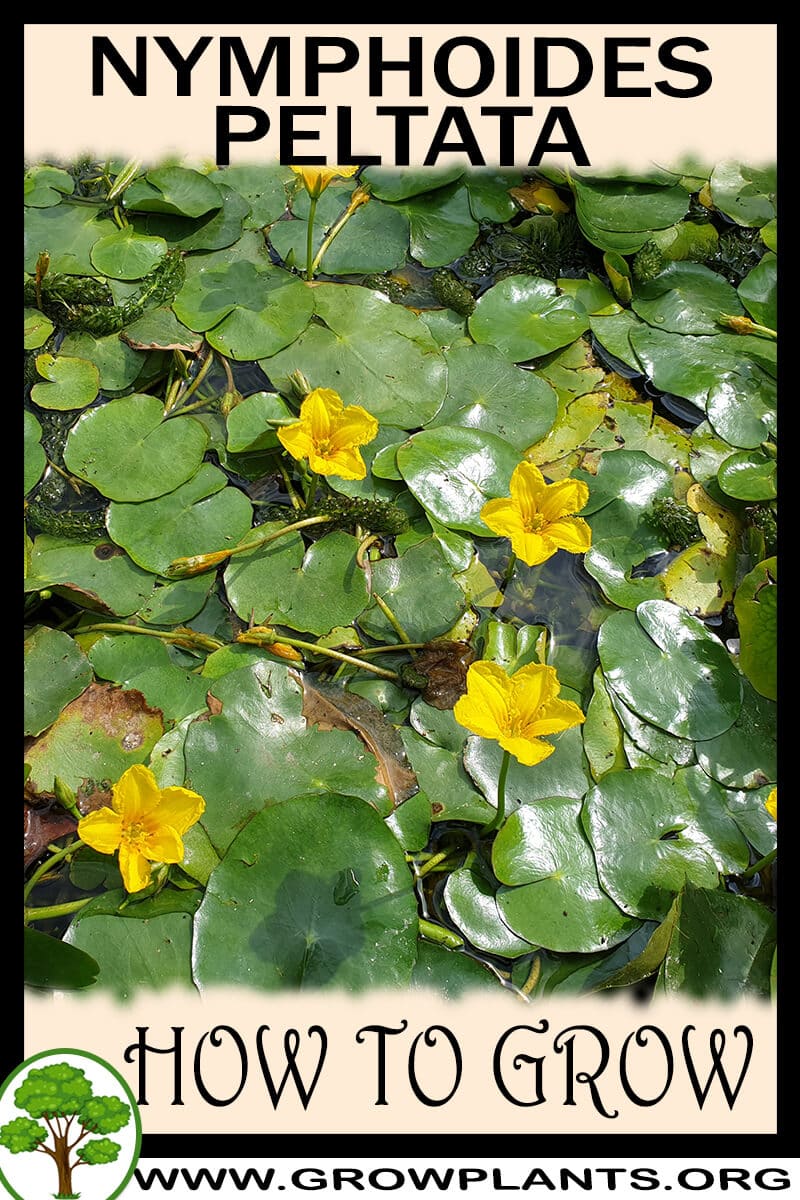
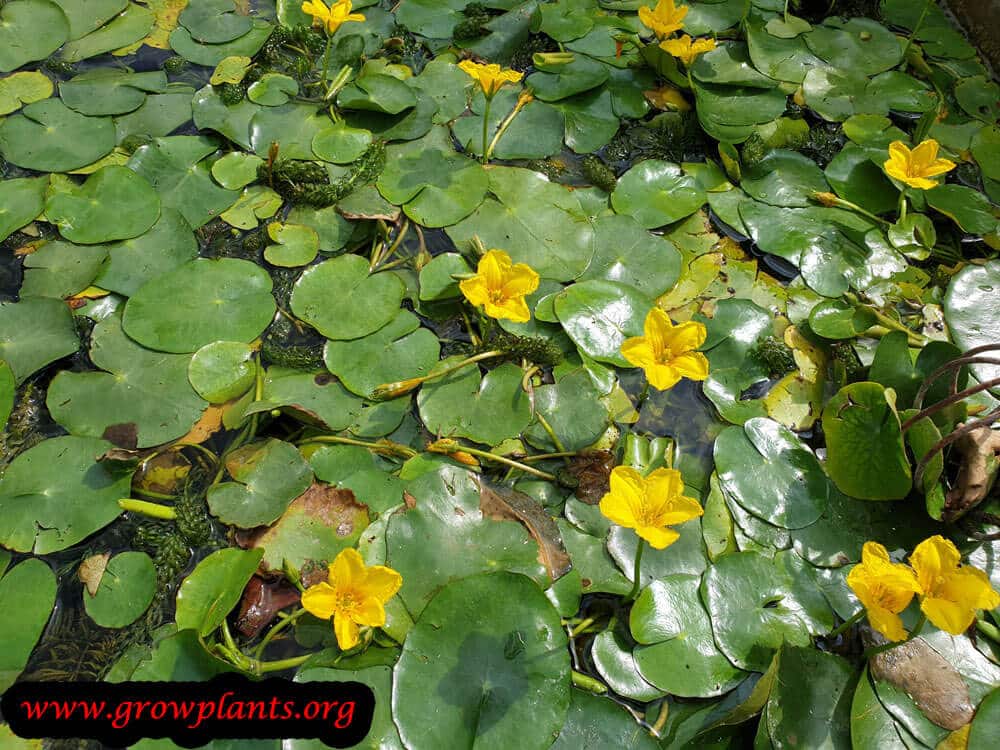
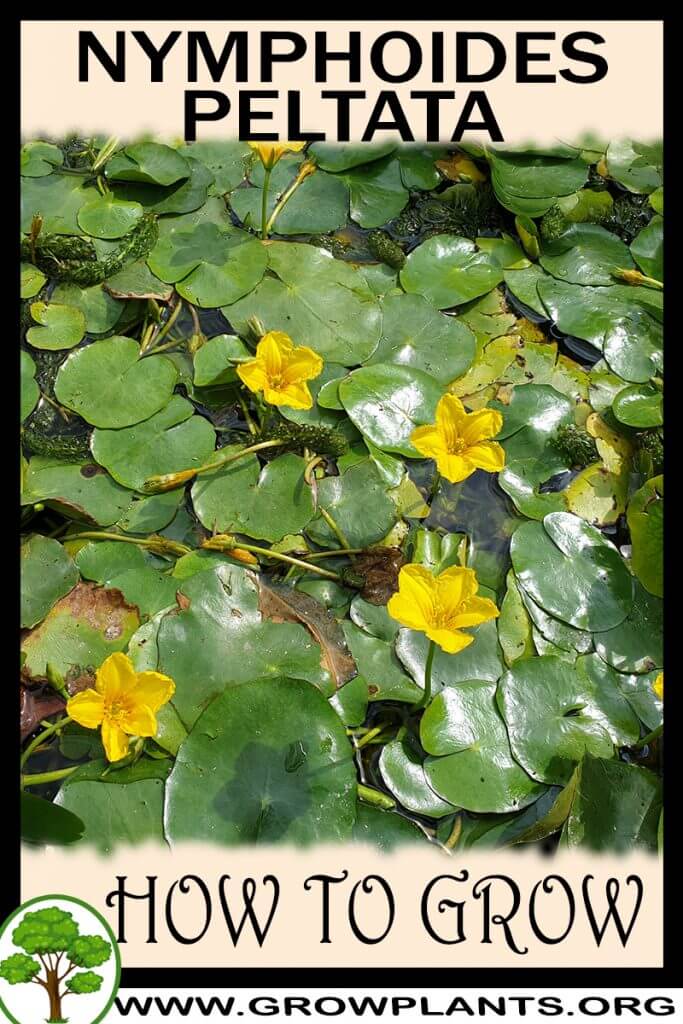
Overview: Nymphoides peltata (fringed water lily) is a moderate-growing aquatic perennial grown as an ornamental pond plant, evergreen or deciduous depending on climate. Its round floating leaves and bright yellow, fringed flowers sit at the water surface.
Quick Specifications
| Specification | Attribute |
|---|---|
| Plant Type / Life Cycle | Perennial (aquatic) |
| Foliage Type | Evergreen or deciduous (climate-dependent) |
| Mature Size | Leaves float on the surface, rooted 0.3-2 m (12-80 in) below water; flowers held 2-5 cm (1-2 in) above it |
| Growth Rate | Moderate |
| Root System | Rhizomatous |
| Hardiness | USDA zones 5-10a |
Growth Form & Structure
- Height & Spread: Rhizome rooted 0.3-2 m (12-80 in) below the surface with leaves floating above; grown in submerged aquatic baskets or pots.
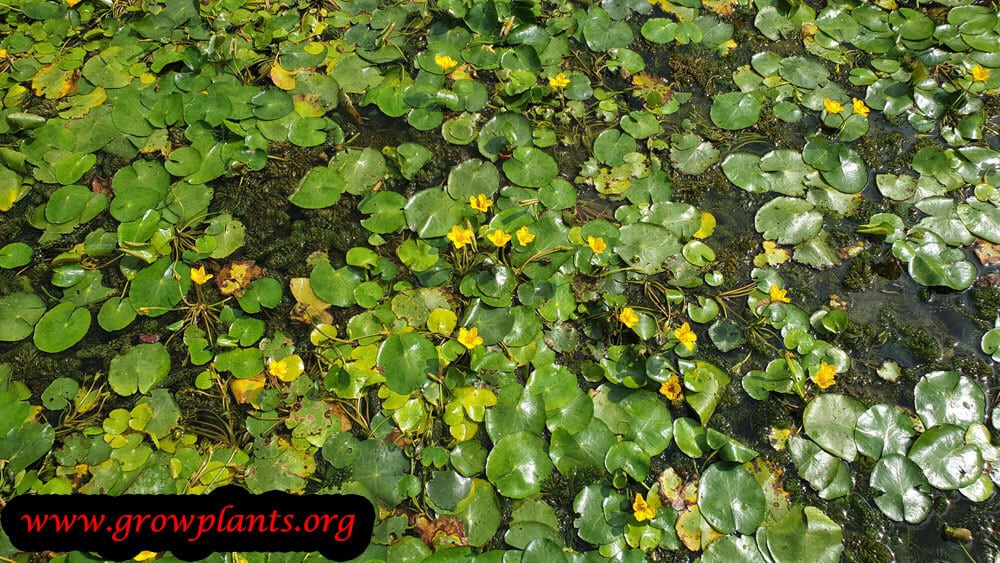
- Growth Habit & Form: Rhizomatous aquatic perennial with round, long-stalked floating leaves that spread across the surface.
- Lifespan & Maturity: Long-lived perennial that spreads vigorously by rhizome and runners.
Anatomy & Physical Features
- Leaves & Foliage: Round green floating leaves with a notched (packman-like) cleft.
- Flower Characteristics: Bright yellow five-petalled flowers with fringed petal margins and a yellow centre.
Primary Uses & Landscape Value
- Functional & Ornamental Roles: Ornamental water and pond plant; floating leaves shade the water surface.
Care Guide: Planting, Soil & Watering
Overview: Fringed water lily (Nymphoides peltata) is a hardy aquatic perennial for ponds and water gardens, grown in full sun to part shade with its roots in rich soil at the pond bottom and its round leaves floating on the surface. It is a true water plant – it must stand permanently in water, with the crown rooted under roughly 0.3-2 m (12-80 in) of it.
Quick Care Requirements
| Requirement | Ideal Condition |
|---|---|
| Planting Season | Warm season – spring through autumn |
| Growth Rate | Moderate |
| Soil Type | Heavy, rich aquatic or loam soil in a planting basket, topped with gravel |
| Water Need | Aquatic – permanently submerged, roots in soil under 0.3-2 m of water |
Planting & Establishment
- Best Planting Season: Plant during the warm season, from spring through autumn, while the water is warm and the plant is in active growth.
- How to Plant:
- Hole Preparation: Pot the rhizome into a mesh aquatic planting basket rather than an open hole, so it can be lowered into the pond and lifted for division.
- Soil Amendments: Use a heavy loam or dedicated aquatic soil enriched with organic matter, and cap it with a layer of gravel to keep the soil from clouding the water.
- Planting Depth: Set the rhizome just below the soil surface with the crown at soil level, then lower the basket so the crown sits under about 30-60 cm of water to start, deeper once established.
- Growth Speed & Expectations: Growth is moderate; in warm water the floating leaves spread steadily across the surface through the season, so give it room or thin it to keep it in bounds.
Soil, Watering & Drainage Care
- Soil Mix & Drainage Needs: Use a dense, nutrient-rich aquatic soil in a submerged basket topped with gravel – light or peaty potting mixes float away and foul the water. There is no drainage to manage; instead the basket keeps the soil contained while the roots stay wet.
- Watering Schedule & Technique:
- Young / Newly Planted: Keep the basket in shallower water at first so the leaves reach the surface easily, then lower it as the plant establishes.
- Established: As a true aquatic it never dries out – simply maintain the pond’s water level so the crown stays submerged.
- Seasonal Adjustments: Growth slows and the foliage may die back in winter; the rhizome overwinters in the pond below the freezing line and re-sprouts in spring.
Climate, Light & Hardiness
Fringed water lily is an unusually climate-adaptable aquatic perennial, thriving in ponds and water gardens from temperate to tropical regions; it wants full sun to half shade, and its submerged rhizome gives it far better winter cold survival than its delicate floating foliage would suggest.
Quick Climate Specifications
| Climate Zones | Temperate, Mediterranean, Desert, Subtropics, Tropics |
|---|---|
| USDA Hardiness Zones | 5–10a |
| Frost Tolerance | High (rhizome) / Low (foliage) |
| Light Conditions | Full Sun / Half Shade |
Sunlight & Light Exposure
Optimal Light Setup
Full sun gives the strongest flowering; half shade is tolerated but typically produces fewer blooms.
Direct Sun Requirement
At least several hours of direct, unobstructed sun on the water surface is important for good flower production.
Best Exposure / Orientation
Site the pond or container in the open, away from overhanging trees that would shade the water surface or drop debris on the floating leaves.
Temperature Extremes & Hardiness
USDA Hardiness & Regional Limits
Hardy from zones 5 through 10a, meaning it can overwinter outdoors across most temperate climates provided the water body itself doesn't freeze solid to the bottom.
Cold Damage & Winter Protection
The floating leaves and flowers are killed back by the first hard freeze, but the rhizome sitting below the waterline is insulated by the surrounding water and survives freezing air temperatures. In containerized ponds, sink pots to the deepest point, below the likely ice line, before winter.
Frost Sensitivity
Foliage is frost-tender and dies back at the first freeze; this is normal seasonal dieback rather than plant loss, and new growth resumes from the rhizome in spring.
Extreme Heat Tolerance
Its wide climate range, spanning Mediterranean and desert conditions through subtropics and tropics, shows this plant handles hot summers without difficulty.
Wind, Humidity & Microclimate
Rainfall & Seasonal Moisture
As an aquatic species rooted in mud beneath a permanent water body, it depends on year-round water presence rather than seasonal rainfall patterns for its climate suitability.
Microclimate Recommendations
Outside the reliable end of its hardiness range, or in shallow ponds that freeze solid, move container specimens to the deepest part of the pond or into an unheated but frost-free greenhouse tank for winter.
Growing in Pots, Balconies & Indoors
Nymphoides peltata (fringed water lily) is a floating-leaved aquatic plant, not a houseplant or a conventional pot plant. The grower confirms it can be grown in a container – but as a submerged planting basket in a pond, tub or water bowl, not in ordinary potting soil.
Quick Details
- Container Size: An aquatic planting basket or crate stood in a pond or water tub; water depth roughly 0.3-2 m over the crown
- Indoor Suitability: Not a houseplant – it is a pond plant needing full outdoor light and open water
- Best Spot: Full sun to half shade over still or slow water outdoors
- Soil & Drainage: Heavy aquatic/loam soil in the basket, topped with gravel; the whole basket sits underwater
- Watering in Pots: Grown submerged – the ‘pot’ stands in water rather than being watered
Indoors & On the Windowsill
- Houseplant limits: The grower does not rate it as a houseplant – it is an aquatic that grows in open water and full light, impossible to keep as an ordinary room plant.
- Overwintering: It is hardy in water; the submerged crown overwinters in a pond that does not freeze solid, dying back and reshooting in the warm season.
On a Balcony or Patio
- As a water-garden plant: On a balcony or patio grow it in a watertight tub or bowl in full sun – a mini water garden – with the planting basket sitting on the bottom.
- Vigour warning: It spreads strongly and is invasive in some regions – keep it confined to a contained tub or pond, never released to natural waterways.
Choosing the Pot, Soil & Long-Term Care
- Planting basket: Use a mesh aquatic basket lined and filled with heavy loam or aquatic soil, topped with gravel to stop the soil clouding the water; stand it at the right depth on bricks.
- Feeding: Push aquatic fertiliser tablets into the basket in the growing season if growth weakens – ordinary feed would foul the water.
- Dividing: Lift and divide the crowded basket every year or two to keep it vigorous and in bounds.
Fertilizing & Feeding
A light-to-moderate feeder once established: nutrients come mainly from a rich aquatic planting medium and slow-release aquatic tablets rather than routine liquid feeding, since open water dosing risks feeding algae instead of the plant.
Quick Fertilizing Specs
| Feeding Level | Light feeder, fed through the substrate rather than the open water |
|---|---|
| Main Nutrient Priority | Balanced feeding pressed into the planting soil to support leaf and flower production |
| Best Feeding Period | Through the active spring-to-autumn growing and blooming season |
| Organic Options | Rich, heavy aquatic planting soil or clay-loam topped with gravel |
| Micronutrients | Usually adequate from a rich aquatic planting medium; correct specific issues only when diagnosed |
| Soil pH | Tolerates a wide range of aquatic soils; prefers a rich, heavy planting medium |
| Reduce/Stop Feeding | Taper off as leaf growth slows heading into the cooler months, when the rhizome becomes dormant |
Feeding by Growth Stage
Planting and root establishment
Get the rhizome rooted into a rich aquatic planting medium so it can push up floating leaves.
| Nutrient direction | A balanced feeding worked into the rich planting soil at potting, not applied to the open water. |
|---|---|
| Timing | At planting in spring through early leaf establishment. |
| Frequency | A single feeding pressed into the aquatic soil at planting is usually enough to start. |
| Fertilizer types | Rich, heavy aquatic planting soil or clay-loam, An aquatic-safe slow-release tablet pressed into the root zone |
| Precautions | Keep any fertilizer buried in the planting soil; loose fertilizer in open water encourages algae rather than feeding the plant. |
Active leaf growth and summer flowering
Sustain the spreading floating foliage and the yellow five-petaled flowers through the warm season.
| Nutrient direction | A balanced aquatic-plant feeding pressed back into the root zone as the rich planting soil depletes. |
|---|---|
| Timing | Through spring, summer, and into autumn while leaves and flowers are actively produced. |
| Frequency | Occasional root-zone feedings through the growing season, renewed as the aquatic tablet is exhausted. |
| Fertilizer types | An aquatic-safe slow-release tablet pressed into the root zone, Rich aquatic planting soil topped up as needed |
| Precautions | Avoid overfeeding open water; excess nutrients in the pond promote algae blooms rather than plant growth. |
Cool-season slowdown and rhizome rest
Let the rhizome rest through the cooler months without pushing soft new growth.
| Nutrient direction | None – withhold fertilizer as leaf production slows and the plant settles into its winter rest. |
|---|---|
| Timing | From the end of active autumn growth through the coldest part of the year. |
| Frequency | No feeding at this stage. |
| Fertilizer types | No feeding at this stage – allow the rhizome to rest undisturbed in the aquatic soil |
| Precautions | Do not fertilize during the dormant rest period; feeding into cold water mainly feeds algae, not the resting plant. |
Nutrient Deficiency Signs & Corrections
Floating leaves emerge pale, small, or sparse rather than dense green growth.
| Possible causes | depleted or too-light aquatic planting soil, insufficient light reaching the water surface, root disturbance or an undersized planting container |
|---|---|
| Appears first on | new floating leaves |
| What to check | richness and depth of the planting soil, how much direct sun the water surface receives, root crowding in the planting container |
| Possible correction | Repot into a richer, heavier aquatic soil with a fresh root-zone tablet and confirm the site gets adequate sun. |
The plant produces abundant leaves but few or no yellow flowers through the season.
| Possible causes | nutrient-depleted planting soil, too much shade over the water surface, crowding from its own spreading foliage |
|---|---|
| Appears first on | the whole plant, seen as an absence of blooms |
| What to check | sun exposure over the water surface, age and richness of the planting soil, how densely the foliage has spread |
| Possible correction | Refresh the root-zone feeding, move to a sunnier spot if possible, and thin overcrowded foliage. |
Water turns green or leaves become fouled with algae, and the plant’s own growth appears to decline alongside it.
| Possible causes | excess nutrients released into open water, overfeeding or fertilizer applied outside the root zone, insufficient plant coverage to shade and compete with algae |
|---|---|
| Appears first on | the water surface and leaf undersides |
| What to check | whether fertilizer was applied to open water rather than buried in soil, overall nutrient load in the pond, amount of surface shading from floating plants |
| Possible correction | Stop open-water feeding, keep any fertilizer buried in the planting soil, and increase surface plant coverage to shade out algae. |
Pruning, Training & Seasonal Maintenance
Fringed Water Lily is a floating-leaved aquatic rhizome plant. “Pruning” here means thinning its floating leaf/runner mat and removing spent flowers and yellowed leaves to keep open water and prevent the dense surface coverage this vigorous spreader is prone to – it is considered invasive in some regions outside its native range – rather than any woody or structural cutting.
Quick Pruning & Maintenance Specs
| Pruning Tolerance | High (vigorous spreader, tolerates regular thinning) |
| Primary Pruning Window | Year-round during active growth; heaviest thinning in Spring/early Summer before peak coverage |
| Secondary Maintenance Window | Through bloom season – ongoing deadheading |
| Typical Frequency | Regular, as needed through the growing season |
| Main Objective | Control surface spread/coverage, remove spent flowers and dead leaves, keep open water |
| Young Plant Priority | None – allow the newly planted rhizome to establish |
| Mature Plant Priority | Routine thinning of the spreading mat and clump division to control coverage |
| Best Tool Type | Precision snips for leaves/flowers; spade for dividing rhizome mats |
| Avoid Heavy Pruning During | Peak winter dormancy in cooler parts of its range – avoid disturbing the root/rhizome zone |
Pruning by Plant Age & Size
Newly Established
No pruning – allow the newly planted rhizome to root and produce its first leaves.
Young / Formative
No structural training, given its floating aquatic habit; simply monitor early spread.
Mature / Established
Regular thinning of floating leaves and runners to prevent it covering the entire water surface, and periodic division of the rhizome mat to control its vigorous, potentially invasive spread.
Seasonal Pruning Schedule
Summer Canopy Management
Objective: keep open water. Remove: thin the floating leaf/runner mat regularly through spring and summer peak growth. Do not remove: all leaf cover, which fish and other pond life may rely on for shade. Response: prevents dense monoculture cover.
Ongoing Sanitary
Objective: tidiness and water quality. Remove: spent flowers and yellowed/dying leaves through the bloom season. Do not remove: actively flowering growth. Response: less decaying organic matter in the water.
Dormant/Winter
Objective: minimal intervention. Established rhizomes overwinter in the pond mud/root zone in colder parts of the range; avoid disturbing them.
Structural Pruning & Training
None formal – the main “structural” task is spread/coverage control via thinning and division rather than shaping a woody framework.
Special Growth to Remove
- Spent flowers
- Yellowed or dead floating leaves
- Excess runners/rhizome growth spreading beyond the intended planting area or container basket – a real concern given this species’ documented invasive tendency in some regions
Container & Small-Space Pruning
Often grown in submerged planting baskets specifically to contain its spread; thin and divide the rhizome within the basket periodically so it doesn’t escape into the surrounding water body.
Tools
- Precision snips – leaves and spent flowers
- Garden spade – dividing and lifting rhizome mats
Tool Hygiene & Disease Risk
Routine – clean tools are sufficient; no significant transmissible pathogen risk noted, though decaying plant material should be removed from the water to avoid fouling water quality.
Cut Placement & Technique
Snip leaf/flower stems at the base near the rhizome or where they emerge from the water; when dividing, cut the rhizome into sections each retaining growing points and roots.
Heavy Pruning & Rejuvenation
Tolerates aggressive thinning/cutback well given its vigorous growth. If a pond becomes overrun, a substantial portion of the leaf mat and rhizome can be removed at once to reopen the water surface without harming the remaining planting.
Post-Pruning Care
No fertilizing is needed, as it is typically grown in already nutrient-rich pond/aquatic soil. Dispose of removed plant material away from natural waterways given its invasive potential, rather than composting near water.
Common Pruning Mistakes
- Leaving the mat completely unthinned, letting it cover the entire water surface and shade out other aquatic life
- Disposing of thinned material directly into natural waterways, which can spread this species where it is considered invasive
When NOT to Prune
No strong seasonal restriction, though avoid heavy rhizome disturbance during the coldest part of winter dormancy in cooler zones.
Recommended Tools (by task)
- Precision snips – removing spent flowers and dead leaves
- Garden spade – dividing and thinning the spreading rhizome mat to control coverage
Propagation Guide
Fringed water lily is most easily and reliably increased by dividing its spreading rhizome, since this keeps flower form consistent and establishes new plants quickly in a pond or container; seed propagation is possible but slower and less predictable for named forms. Overall this is an easy aquatic plant to propagate for the home pond grower.
Quick Propagation Specs
| Best Propagation Method | Rhizome division |
| Alternative Methods | Seed |
| Propagation Difficulty | Easy |
| Seed True-to-Type | Variable – seedlings may not match the parent’s exact flower form |
| Vegetative True-to-Type | Yes |
| Best Propagation Season | Spring to summer, during active growth |
| Germination Temperature | Warm, roughly 20–25°C (68–77°F) |
Growing from Seed
Seed Handling & Viability
Seed is produced in floating capsules after flowering; site data notes seed propagation is an option but that vegetative starts are preferred to reproduce the same flower reliably. Seed is best sown fresh, as viability in water-lily-family seed tends to decline with dry storage.
Sowing Depth & Orientation
Sow into wet mud or shallow water rather than dry soil, reflecting its aquatic habit.
Germination Conditions
Warm water and full sun to half shade, matching the plant’s stated light preference, typically give the most reliable germination; timing can be irregular.
Rhizomes, Tubers, Bulbs & Corms
Rhizome Division: In spring or summer, lift or reach into the rooted rhizome mass and cut off a healthy section that carries its own roots and at least one growing point. Replant the division directly into aquatic soil or a submerged planting basket at the same shallow depth as the parent, per the site’s noted planting seasons (spring, summer, autumn). New leaves should begin floating within the growing season as the division establishes.
Bloom & Flower Guide
Quick Details
- Bloom Season: Spring through autumn
- Flower Appearance: Bright yellow, 5-petalled flowers with distinctly fringed petal edges, held just above the water on slender stalks
- Edibility: An ornamental water plant — not an edible flower
Detailed Blooming Overview
The fringed water lily lifts cheerful yellow flowers just clear of the water above its floating, lily-like leaves. Each bloom has five petals edged with a delicate fringe, and while an individual flower is short-lived, they open in succession through the warm months for a long overall season on the pond surface.
Flower Characteristics
- Five bright yellow petals, each finely fringed along the margin.
- Held on slender stalks above the water; each flower short-lived but freely produced.
Bloom Care & Thinning
- Managing the bloom: This is a vigorous spreader — thin the plants regularly to keep it in check, as it is considered invasive in many regions.
Pests, Diseases & Troubleshooting
Overview: Yellow floating-heart / fringed water lily (Nymphoides peltata) is a fast, floating-leaved aquatic that shares the same surface-grazing pests as true water lilies despite belonging to a different family. Its foliage is expendable and regenerates quickly, so management is cultural — hosing, hand-picking, and encouraging fish — never broad insecticides in a pond. Note that in many regions this plant is itself an aggressive invasive to be contained. The pests and cultural care mirror true water lilies.
Quick Troubleshooting Overview
| Issue / Pest | Main Symptom | Primary Solution |
|---|---|---|
| Water lily aphid | Colonies on pads & flowers; sticky, distorted growth | Hose pads underwater; encourage fish; remove worst leaves |
| Water lily beetle | Adults/larvae skeletonising the pads | Hand-pick; hose off larvae for fish to eat |
| China-mark moth | Oval pieces cut from pads; leaf “cases” | Remove floating cut sections and caterpillars by hand |
| Leaf-mining midge | Winding pale trails/holes in pads | Trim affected pads; healthy plants outgrow it |
| Crown / rhizome rot | Soft, foul rhizome; leaves detach | Remove rotten tissue; correct depth & planting; divide |
| Yellowing pads | Pale leaves, weak growth | Feed with aquatic fertiliser tabs; check depth & light |
Common Pests & Management
- Water lily aphid (Rhopalosiphum nymphaeae):
- Symptoms: Dense brown-green aphid colonies on the upper pads, stems and flowers; sticky honeydew, sooty mould and puckered, yellowing growth. Worst in warm, still weather.
- Prevention & Control: Never spray insecticide over water. Blast the pads with a hose so aphids fall in for fish to eat, or briefly submerge the pads. Remove the most infested leaves. Support fish, ladybirds and other predators; a strong pond food web usually keeps them in check.
- Water lily / pond-lily beetle (Galerucella nymphaeae):
- Symptoms: Small brown beetles and dark, slug-like larvae grazing the upper leaf surface, leaving elongated brown scars and skeletonised, rotting pads.
- Prevention & Control: Hand-pick adults and larvae; hose larvae into the water for fish. Remove and bin badly grazed pads to break the cycle. Clear excess dead foliage in autumn where adults overwinter.
- Brown china-mark moth (Elophila nymphaeata):
- Symptoms: Neat oval or oblong pieces cut from the pad edges; caterpillars build protective “cases” from two leaf pieces and shelter beneath floating leaf fragments.
- Prevention & Control: Pick off the floating cases and caterpillars by hand and remove damaged pads. Fish help control young larvae. No chemical control is appropriate in a pond.
- False leaf-mining / gall midges & leaf-miners:
- Symptoms: Pale winding trails, blotches or small holes chewed through the floating pads by midge or fly larvae.
- Prevention & Control: Trim and remove mined pads; healthy, well-fed plants simply grow past the damage, which is largely cosmetic.
Diseases & Fungal Issues
- Crown / rhizome rot (bacterial & fungal):
- Symptoms: The crown or rhizome turns soft, dark and foul-smelling; leaves and stems detach easily and growth stalls or collapses. Linked to damaged rhizomes, stagnant water, or planting too deep.
- Treatment & Management: Lift the plant, cut away all soft rotten tissue back to firm healthy rhizome, and replant a clean division at the correct depth in fresh heavy aquatic soil. Handle rhizomes gently and keep water reasonably oxygenated.
- Leaf spot & leaf blight (Cercospora / Ramularia / Ovularia spp.):
- Symptoms: Dark or reddish-brown spots and blotches on the pads that enlarge, dry out and rot holes through the leaf, especially on crowded or long-standing foliage.
- Treatment & Management: Cut off and remove affected pads promptly — sanitation is the main tool. Thin overcrowded plants for better air and light at the surface; avoid systemic fungicides in water bodies with fish.
Growing Difficulties & Abiotic Problems
- Yellowing / pale pads (nutrient shortage):
- Cause & Symptoms: Overall pale, weak leaves and few flowers from starved soil in the planting basket.
- Correction Strategy: Push aquatic fertiliser tablets into the soil during the growing season; use a heavy loam aquatic soil, not compost, and re-pot congested plants.
- Wrong planting depth:
- Cause & Symptoms: Too deep gives few or no surface pads and no flowers; too shallow exposes and scorches the crown.
- Correction Strategy: Match depth to the variety — establish shallow and lower gradually as leaf stems lengthen.
- Too much shade / competition:
- Cause & Symptoms: Sparse, leggy growth and no bloom in low light or under surface-choking weed/algae.
- Correction Strategy: Give full sun at the surface and control competing algae/duckweed.
- Overcrowding / congestion:
- Cause & Symptoms: Pads pushed up out of the water in a dome, smaller leaves and fewer flowers as the rhizome fills its basket.
- Correction Strategy: Lift and divide every few years, replanting the vigorous growing tips.
What Helps — Products & Tools
In a pond the best “products” are non-chemical: a hose for knocking pests into the water, fish and beneficial insects as biological control, sharp secateurs for removing damaged pads and dividing, aquatic fertiliser tablets for feeding, and a heavy aquatic planting soil with baskets and hessian liners. Keep insecticides and systemic fungicides out of water that holds fish and wildlife.