Plant Profile & Key Characteristics
Overview: A clump-forming herbaceous perennial reaching about 60-90 cm (2-3 ft), grown for its neat basal foliage and upright pokers of pink flowers. It is a pollinator-friendly ornamental and, historically, an edible pot-herb.
Quick Specifications
| Specification | Attribute |
|---|---|
| Plant Type / Life Cycle | Herbaceous perennial |
| Foliage Type | Deciduous (dies back in winter) |
| Mature Size | 60-90 cm (2-3 ft) tall |
| Growth Rate | Fast to moderate |
| Root System | Rhizomatous (short, twisted rhizome — the source of the name ‘bistort’) |
| Toxicity | Non-toxic / edible — young leaves and roots have historically been eaten as a pot-herb |
| Hardiness | USDA zones 5-9 |
Growth Form & Structure
- Height & Spread: Forms a spreading clump 60-90 cm (2-3 ft) tall in the ground; a border and waterside plant rather than a container subject.
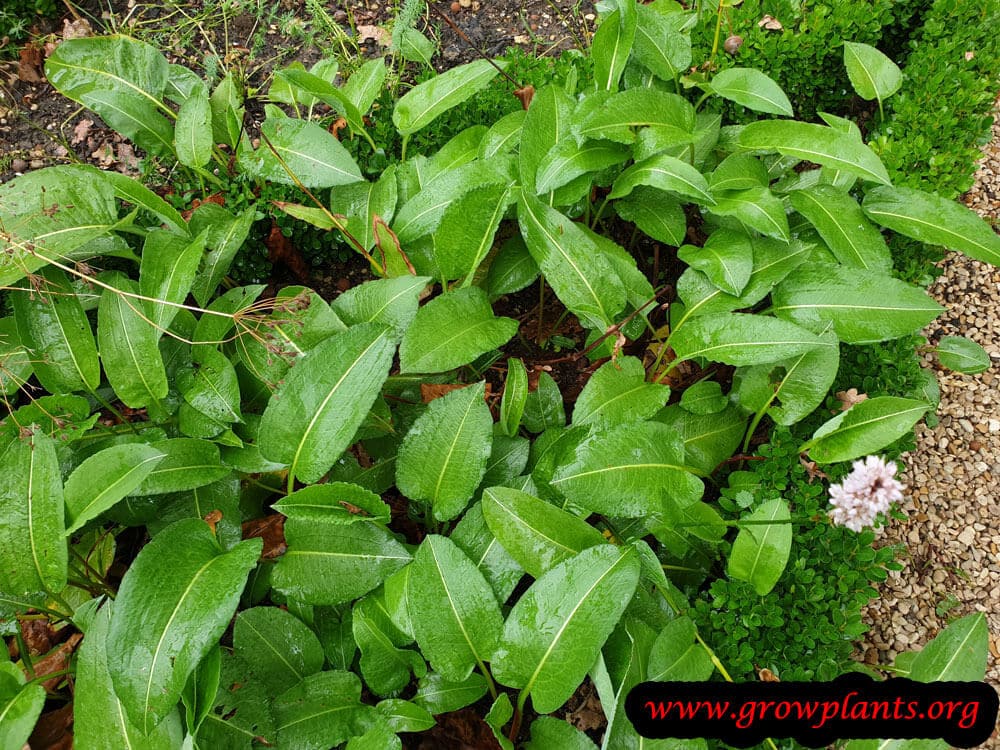
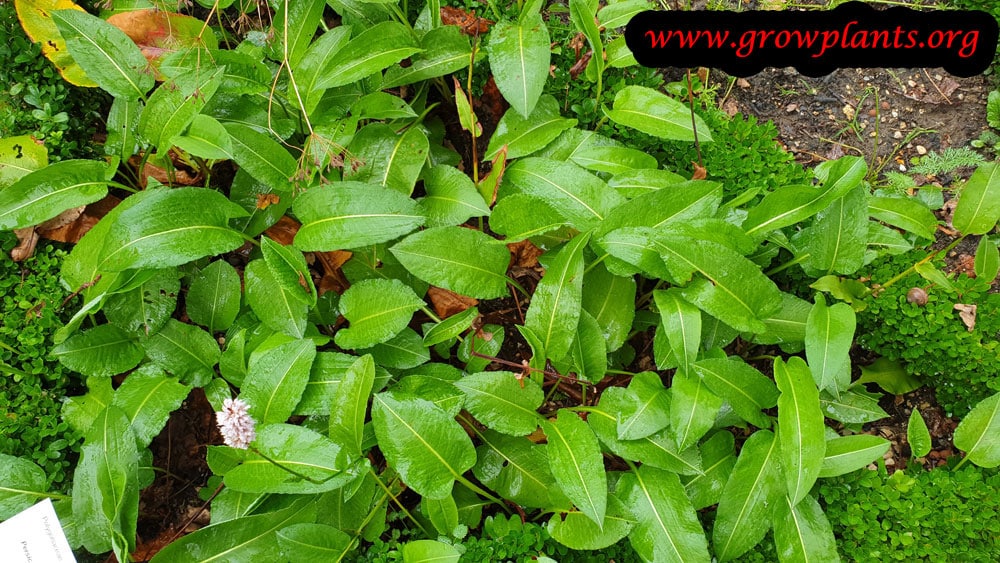
- Growth Habit & Form: A tidy, clump-forming perennial spreading by rhizomes to make a leafy mat, with flower stems held well above.
- Lifespan & Maturity: A long-lived, hardy perennial that reaches full size quickly and returns reliably each year.
Anatomy & Physical Features
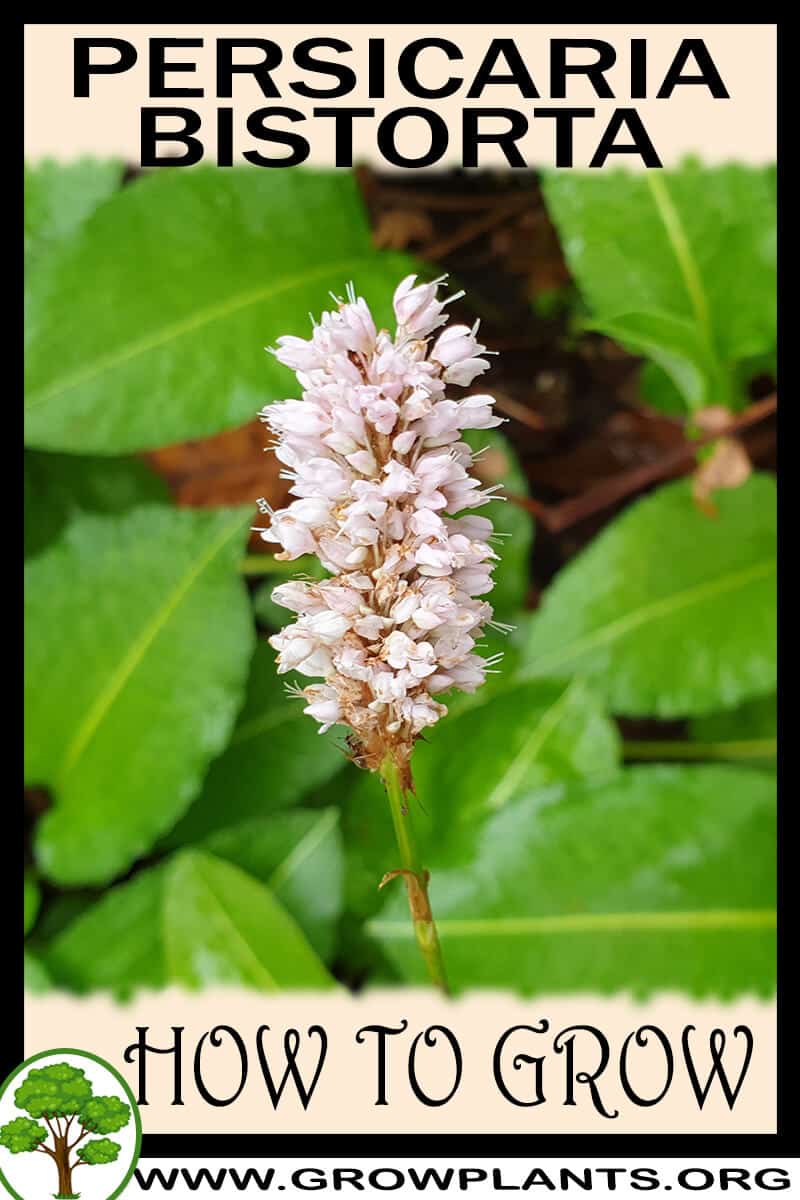
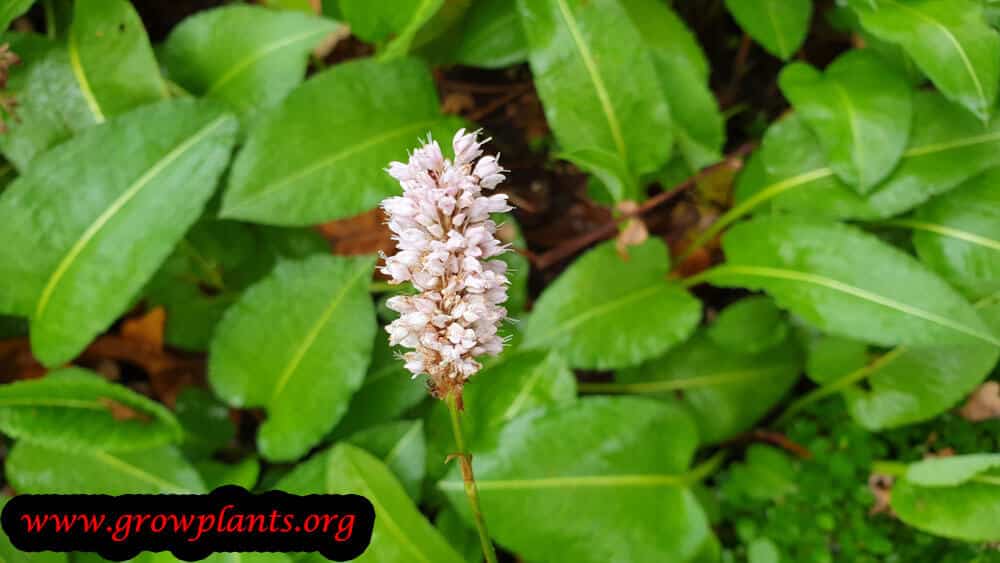
- Leaves & Foliage: Arrow-shaped green leaves forming a dense basal clump.
- Flower Characteristics: Slender, upright poker-like spikes densely packed with small purple, pink or white flowers.
Primary Uses & Landscape Value
- Edible Uses: Young leaves and the rhizome have traditionally been eaten (notably in spring pot-herb dishes).
- Functional & Ornamental Roles: A border, meadow and pond-margin ornamental for moist soil, valued for its long flowering and value to pollinators.
Care Guide: Planting, Soil & Watering
Overview: Persicaria bistorta (common bistort) is a vigorous, herbaceous perennial for temperate and subtropical zones (temperate to subtropical zones) that draws pollinators. It grows best in full sun to partial shade in consistently moist soil.
Quick Care Requirements
| Requirement | Ideal Condition |
|---|---|
| Planting Season | Spring through autumn, in mild frost-free conditions (zone 9 and warmer) |
| Growth Rate | Moderate to Fast |
| Soil Type | Moisture-retentive, humus-rich, adaptable |
| Water Need | Moderate to High – keep the soil consistently moist |
Planting & Establishment
- Best Planting Season: Plant from spring to autumn while conditions are mild and frost-free (zone 9 and warmer).
- How to Plant:
- Hole Preparation: Dig a hole about twice the width of the root ball and no deeper than its height, loosening the sides so young roots can spread easily.
- Soil Amendments: Work compost or well-rotted organic matter into the backfill; on heavy ground add grit or coarse material to sharpen drainage.
- Planting Depth: Set the plant so the root collar sits level with the surrounding soil – never bury the stem – then firm gently and water in.
- Growth Speed & Expectations: In good conditions it grows quickly, filling out and spreading within a season.
Soil, Watering & Drainage Care
- Soil Mix & Drainage Needs: Grows in most soils but is happiest in deep, humus-rich ground that holds moisture; improve light soils with organic matter. Keep it steadily moist but not stagnant – it dislikes drying out.
- Watering Schedule & Technique:
- Young / Newly Planted: Water in well at planting and keep the soil evenly moist while roots establish, checking every day or two in warm weather.
- Established: Water deeply and regularly so the soil stays consistently moist; do not let it dry out fully.
- Seasonal Adjustments: Increase watering during heat and reduce in cool, wet, or dormant periods.
Climate, Light & Hardiness
Persicaria bistorta (common bistort) is a moisture-loving herbaceous perennial for temperate and subtropical climates, growing well in full sun to half shade. It is reliably perennial across roughly USDA zones 5–9, while in colder zones (about 2–5) and in warmer zones (about 9–11) it is more often grown as an annual, since winter cold or the warm-climate growing cycle there limit its long-term perennial persistence.
Quick Climate Specifications
| Climate Zones | Temperate, Subtropical |
|---|---|
| USDA Hardiness Zones | 5–9 as a perennial; commonly grown as an annual in zones roughly 2–5 or 9–11 |
| Cold Damage Begins | Foliage dies back with hard autumn frost, near 0°C (32°F) |
| Approx. Survival Minimum | Established rhizomes in the core perennial range typically survive winter cold to around −23 to −29°C (−10 to −20°F), typical of zone 5 |
| Frost Tolerance | Moderate to High (rhizome); Low (foliage) |
| Light Conditions | Full Sun to Half Shade |
| Wind Tolerance | Moderate |
Sunlight & Light Exposure
Optimal Light Setup
Full sun to half shade both suit it; some afternoon shade is helpful in hotter, subtropical parts of its range to keep the moisture-loving foliage from wilting.
Direct Sun Requirement
Direct sun is not essential; the plant performs well in half shade, particularly with consistently moist soil.
Shade & Heat Management
In warm subtropical gardens, part shade combined with reliably moist soil reduces heat and moisture stress.
Best Exposure / Orientation
A pond-edge, streamside, or damp border position with morning sun and some afternoon shade suits it well.
Temperature Extremes & Hardiness
USDA Hardiness & Regional Limits
Reliably perennial across roughly USDA zones 5–9. Outside that core range - in the colder zones 2–5 and the warmer zones 9–11 - the site data indicates it is more commonly grown as an annual, reflecting reduced long-term persistence at the cold and warm extremes rather than an inability to grow there at all.
Cold Damage & Winter Protection
Top growth dies back naturally each autumn/winter within its perennial range; this is normal seasonal dieback, and the rhizome needs no special protection through typical zone 5–9 winters.
Frost Sensitivity
Foliage is frost-tender and collapses with hard freezes, while the dormant rhizome is considerably more cold-hardy.
Extreme Heat Tolerance
Moderate; sustained heat combined with dry soil causes wilting, so consistent moisture and some shade help it through hot spells, especially toward the warmer end of its range.
Wind, Humidity & Microclimate
Humidity Preferences
Prefers moderate to high humidity and consistently moist soil, in keeping with its average-to-generous water needs.
Wind Tolerance
Moderate; the upright flowering stems can lean in strong wind but are not especially fragile.
Rainfall & Seasonal Moisture
Best suited to climates with reliable rainfall or a consistently moist site through the growing season; it is not adapted to prolonged drought.
Microclimate Recommendations
A damp, humus-rich site such as a pond margin, streamside bed, or moisture-retentive border gives this plant its best performance.
Growing in Pots, Balconies & Indoors
Persicaria bistorta is a vigorous, spreading, moisture-loving perennial. The grower rates it as neither a houseplant nor a good container plant – it runs at the root and wants damp ground, so it performs far better planted in open, moist soil than confined to a pot.
Quick Details
- Container Size: Not recommended by the grower – if trialled at all, only a large, deep pot short-term
- Indoor Suitability: Not a houseplant – it needs outdoor air, light and a cold dormant season
- Best Spot: Full sun to half shade in reliably moist ground
- Soil & Drainage: Rich, damp, moisture-retentive soil – it dislikes drying out
- Watering in Pots: Would need constant moisture – a key reason it struggles in pots
Indoors & On the Windowsill
- Houseplant limits: The grower does not rate it as a houseplant – it is a hardy, spreading perennial that needs outdoor conditions and a winter chill, which a room cannot supply.
- Overwintering: Fully hardy – it dies back and overwinters outdoors with no indoor shelter.
On a Balcony or Patio
- Better in the ground: The grower does not recommend container culture for this plant; its running rhizomes and thirst for constant moisture make a pot a poor home. If you must try it, use the largest, deepest container you can and never let it dry out.
- Practicalities: Any pot will dry and root-fill quickly given its spreading, moisture-hungry nature – which is exactly why the grower steers it to open ground.
Choosing the Pot, Soil & Long-Term Care
- If you trial a pot: Choose a very large, deep container with strong drainage holes and a rich, moisture-holding mix, and expect to divide it often as it fills the pot.
- Potting mix: A well-aerated, organic-rich medium – a quality potting mix, or peat/coir loosened with perlite or vermiculite. Lean it towards moisture-retentive.
- Feeding: Potted plants run through their soil faster as nutrients leach away with each watering, so feed a little more often than plants in open ground.
- Repotting: Lift and divide the fast-spreading clump frequently to keep it in bounds.
Fertilizing & Feeding
A moderate feeder: balanced feeding through spring and summer supports the cone-shaped flower clusters, but this vigorous, spreading plant rarely needs more than light, occasional fertilizing.
Quick Fertilizing Specs
| Feeding Level | Moderate feeder |
|---|---|
| Main Nutrient Priority | Balanced feeding with adequate nitrogen for foliage and the clustered flower spikes |
| Best Feeding Period | Spring into summer as growth and bloom develop |
| Organic Options | Compost or well-rotted manure worked into consistently moist soil |
| Reduce/Stop Feeding | Taper feeding by late summer as the plant heads toward winter dormancy |
| Micronutrients | Usually supplied by a complete fertilizer and organic matter; correct only a diagnosed deficiency |
| Soil pH | Tolerates a fairly wide range provided the soil stays consistently moist |
Feeding by Growth Stage
Spring flush of growth
Support fresh arrow-shaped foliage as the clump breaks dormancy in moist soil.
| Nutrient direction | A balanced complete fertilizer with adequate nitrogen builds leafy growth ahead of bloom. |
|---|---|
| Timing | As new growth emerges in spring. |
| Frequency | A light feeding at the start of active growth is generally enough to carry the plant into bloom. |
| Fertilizer types | A balanced complete fertilizer, Compost or well-rotted manure worked into the soil |
| Precautions | This plant spreads readily; avoid rich feeding that further encourages it to overrun neighboring plants. |
Summer bloom
Support the small purple, pink, or white flowers clustered in dense, cone-shaped spikes.
| Nutrient direction | Continued balanced feeding supports flowering without pushing excess foliage. |
|---|---|
| Timing | Through the summer bloom period. |
| Frequency | An occasional light feeding sustains flowering, especially in consistently moist soil. |
| Fertilizer types | A balanced complete fertilizer, Compost as a light top-dressing |
| Precautions | Keep soil consistently moist when feeding; this plant does not tolerate drying out well and fertilizer applied to dry soil can stress roots. |
Winter dormancy
Let the clump die back and rest through winter without pushing new growth.
| Nutrient direction | None – withhold fertilizer once top growth dies back for the season. |
|---|---|
| Timing | Autumn into winter, after top growth declines. |
| Frequency | No feeding at this stage. |
| Fertilizer types | No feeding at this stage; do not fertilize until active growth resumes in spring. |
| Precautions | Do not fertilize a dormant clump; feeding now wastes nutrients and can leach away in wet, moist ground. |
Nutrient Deficiency Signs & Corrections
Older, lower leaves fade to pale green or yellow and overall growth loses vigor.
| Possible causes | low available soil nitrogen, nitrogen leaching from the consistently moist soil this plant needs, thin, low-organic-matter soil |
|---|---|
| Appears first on | older, lower leaves |
| What to check | recent feeding history, soil organic matter, how quickly water drains through the bed |
| Possible correction | Apply a balanced fertilizer with adequate nitrogen and work organic matter into the soil. |
Leaf margins show scorch or browning and flower spikes appear smaller or weaker than usual.
| Possible causes | low soil potassium, heavy leaching from frequent moisture, excess nitrogen feeding diluting relative potassium |
|---|---|
| Appears first on | older leaf margins |
| What to check | soil potassium status, watering frequency and leaching, balance of recent feeding |
| Possible correction | Shift toward a potassium-leaning fertilizer and correct any excess nitrogen feeding. |
Leaf margins brown or scorch despite the soil being kept consistently moist.
| Possible causes | fertilizer salt buildup in the root zone, excessive or too-frequent feeding, restricted rooting from compacted soil |
|---|---|
| Appears first on | leaf margins and tips |
| What to check | recent fertilizer amounts, watering consistency, soil compaction and drainage |
| Possible correction | Ease off feeding and water thoroughly to flush accumulated salts, then return to lighter feeding. |
Pruning, Training & Seasonal Maintenance
Common Bistort is a herbaceous perennial that dies back seasonally; pruning is limited to a winter cutback of old foliage and stems, optional deadheading or shaping during the growing season, and periodic division to keep its naturally spreading, aggressive clump in check.
Quick Pruning & Maintenance Specs
| Pruning Tolerance | High (herbaceous, cut to the ground annually) |
| Primary Pruning Window | Winter |
| Secondary Maintenance Window | During bloom – deadhead spent flower spikes to tidy |
| Typical Frequency | Once-yearly cutback plus occasional deadheading |
| Main Objective | Tidy dead winter growth, shape, control aggressive spread |
| Young Plant Priority | None – let it establish |
| Mature Plant Priority | Winter cutback plus periodic clump division |
| Best Tool Type | Precision snips/bypass secateurs; spade for division |
| Avoid Heavy Pruning During | Active summer bloom if a flower display is wanted, and drought stress |
Pruning by Plant Age & Size
Newly Established
No pruning – allow the clump to establish.
Young / Formative
No structural training needed – this is a low, spreading, herbaceous habit, not a shrub form.
Mature / Established
Winter cutback of dead top growth; divide the spreading clump every few years to control its aggressive habit and reinvigorate flowering.
Seasonal Pruning Schedule
Dormant/Winter
Objective: tidy the dormant clump. Remove: dead foliage and flower stems, cut to near ground level once winter dieback is complete. Do not remove: the crown or living roots. Response: clean regrowth in spring.
Ongoing Sanitary (Summer bloom)
Objective: tidiness. Remove: spent flower spikes, optionally. Do not remove: fresh buds. Response: not essential, since this vigorous spreader continues producing new growth regardless.
Structural Pruning & Training
None formal – the main structural concern is spread containment, not shape. Divide or edge the clump periodically to keep it within its allotted space, given its noted aggressive/spreading habit.
Special Growth to Remove
- Dead winter foliage and stems
- Spent flower spikes, if deadheading
- Excess rhizome spread beyond the intended area – dig out or edge annually
Container & Small-Space Pruning
Can be grown in large containers, where spread is naturally limited by the pot; still benefits from a winter cutback and occasional division/repotting as roots fill the container.
Tools
- Precision snips/bypass secateurs – winter cutback and deadheading
- Garden spade – dividing the clump
Tool Hygiene & Disease Risk
Routine – clean, sharp tools are sufficient. Aphids are the main pest noted, not a tool-vectored concern.
Cut Placement & Technique
Cut stems to near ground level for the winter tidy; deadhead just below the spent flower spike.
Heavy Pruning & Rejuvenation
Tolerates full cutback to the ground annually as normal herbaceous maintenance. For an overcrowded, less floriferous clump, dig and divide in spring or autumn to rejuvenate.
Post-Pruning Care
Water normally; no extra feeding is needed after the routine winter cutback. Watch for aphids on fresh spring growth.
Common Pruning Mistakes
- Letting the aggressive spreading habit go unchecked without dividing or containing it, allowing it to overrun neighboring plants
- Skipping the winter cutback and leaving matted dead growth that can harbor slugs or rot going into spring
When NOT to Prune
Avoid dividing or disturbing the clump during summer heat or drought stress – do division in cooler, moister conditions (spring or autumn).
Recommended Tools (by task)
- Precision snips – deadheading and light seasonal tidy
- Garden spade – dividing the spreading clump to control its aggressive habit
Propagation Guide
Persicaria bistorta spreads by a creeping rhizomatous rootstock, so dividing an established clump is the fastest and most reliable way to start new plants and is not strictly necessary but is easy, as the site notes. Seed is also a workable option for this species and, being a true species rather than a named cultivar, generally comes reasonably true to type. Overall this is an easy plant to propagate.
Quick Propagation Specs
| Best Propagation Method | Rhizome/clump division |
| Alternative Methods | Seed |
| Propagation Difficulty | Easy |
| Seed True-to-Type | Usually true-to-type (species plant) |
| Vegetative True-to-Type | Yes |
| Best Propagation Season | Spring or autumn for division; spring for seed sowing |
| Seed Germination Time | Typically a few weeks, sometimes uneven |
| Germination Temperature | Cool to moderate, roughly 15–20°C (59–68°F) |
| Seed Sowing Depth | Shallow – just cover the seed |
Growing from Seed
Dormancy & Pre-Sowing Treatment
Fresh seed generally germinates most readily; where germination is slow, a period of cold moist stratification (such as outdoor autumn sowing) can help even it out, as is common for many moisture-loving Persicaria species.
Sowing Season
Spring, or autumn outdoors to receive natural winter chilling.
Germination Conditions
Consistently moist, cool to moderately cool conditions, matching this plant’s preference for moist soil.
Seedling Care
Keep seedlings evenly moist while establishing.
Division, Offsets, Pups & Suckers
Lift and divide the spreading rhizomatous clump in spring or autumn, separating sections that each carry healthy roots and at least one growth point; replant promptly and keep well watered until re-established. Given the plant’s noted aggressive spreading habit, division sections establish quickly.
Bloom & Flower Guide
Quick Details
- Bloom Season: Summer
- Flower Appearance: Small purple, pink or white flowers packed into dense, cone-like spikes
- Edibility: Ornamental – grown for its flower spikes and for pollinators
Detailed Blooming Overview
Common bistort (Persicaria bistorta) sends up dense, bottlebrush-like flower spikes through the summer. Each spike is packed with many tiny flowers, giving a soft, cylindrical head of colour that stands well above the foliage and hums with pollinators.
Flower Characteristics
- Tiny, mouth-shaped flowers in purple, pink or white.
- Crowded into dense, cone- or poker-shaped spikes on tall stems.
Bloom Care & Thinning
- Prolonging the display: Deadhead spent spikes to keep the plant tidy and encourage further flowering.
- Pollination: The nectar-rich spikes are popular with bees and butterflies.
Fruit & Uses
The young spring leaves of common bistort are a traditional wild food, best known as the main ingredient of Yorkshire’s ‘dock pudding’ (also called Easter-ledge pudding), and are always eaten cooked rather than raw. The starchy root has also been used historically, mainly in parts of Eastern Europe, as a potato-like vegetable, but it is strongly astringent and needs thorough cooking before it is palatable.
Quick Edible Specs
| Edible Parts | Young leaves/shoots; root (minor, historical use) |
|---|---|
| Main Use(s) | Culinary (traditional spring dish); root: historical starchy vegetable, traditionally also an astringent remedy |
| Eaten Raw or Cooked | Cooked |
| Preparation Required | Cook (boil/simmer); root additionally needs prolonged boiling or soaking to reduce astringency |
| Harvest Season | Early spring, while leaves are young and tender, before the plant flowers |
| Time to First Harvest | Each year’s new spring growth, once the clump is established; see Growth speed |
| Storage | Best used fresh soon after picking/digging |
| Safety/Toxicity Caveat | Leaves are mildly bitter/astringent and always cooked, not eaten raw; the root is very high in tannins and must be well cooked – it is a minor, historical food rather than a everyday vegetable |
Leaves & Greens
The arrow-shaped leaves are gathered in early spring while still young and tender, before flowering stems appear – once the plant flowers and matures, the leaves toughen and become less palatable. Traditionally they are simmered or steamed and mixed with nettles, oats, and onion into a savory, spinach-like dish. Because taking the leaves is a spring, cut-and-come-again style harvest, picking too heavily or too late in the season reduces their tenderness and quality.
Roots & Tubers
The twisted, knotted root (the source of the name ‘bistort’, from Latin for ‘twice-twisted’) has historically been eaten as a starchy vegetable in parts of Eastern Europe, particularly in times of scarcity, but it is one of the most astringent, tannin-rich roots among edible plants. It requires prolonged boiling, and sometimes leaching, to become palatable, and is best understood as a historical or emergency food rather than a routine one; harvesting the root also removes the plant.
Preparation, Uses & Safety
Cook young leaves before eating, traditionally combined with other early spring greens such as nettles in dishes like dock pudding. The root, if used, must be boiled thoroughly to cut its strong astringency and is traditionally also used, in small amounts, as an astringent remedy for minor ailments – no medical or dosing claims are made here, only that this traditional use exists. Because the root’s culinary use is minor and requires significant processing, the leaves are the more practical and better-established edible part of this plant.
Pests, Diseases & Troubleshooting
Persicarias are tough, adaptable Polygonaceae perennials with few serious enemies. This is a vigorously spreading type, so its main ‘problem’ is running growth rather than pests. Their genuine issues are light: aphids and occasional Japanese beetles or slugs on soft growth, spider mites in drought, and the foliar fungal diseases of the family—powdery mildew, rust, downy mildew and leaf spots—in crowded, humid or damp conditions, plus leaf scorch or root rot from moisture extremes. Give them moist but drained soil and airflow and they largely care for themselves.
Quick Troubleshooting Overview
| Issue / Pest | Main Symptom | Primary Solution |
|---|---|---|
| Aphids | Sticky, curled new shoots with honeydew | Hose off; encourage beneficials; insecticidal soap if needed |
| Slugs & snails | Ragged holes in young leaves in damp shade | Hand-pick, barriers, iron-phosphate bait |
| Powdery mildew | White powdery film on leaves in dry, crowded sites | Improve airflow and spacing; sulfur if severe |
| Rust | Orange-brown pustules on leaf undersides | Remove affected leaves; water at the base |
| Leaf scorch | Brown, crisp leaf edges in dry sun | Keep soil evenly moist; part shade in hot climates |
Common Pests & Management
- Aphids (Aphidoidea):
- Symptoms: Colonies of small soft-bodied insects on tender new shoots and flower stems, with honeydew, sooty mould and some leaf curl; usually only a light problem.
- Prevention & Control: Blast off with water, rely on ladybirds, lacewings and hoverflies, and use insecticidal soap only for stubborn colonies, sprayed in the evening.
- Slugs and snails (Gastropoda):
- Symptoms: Irregular holes and slime trails on emerging shoots and low leaves, mainly in damp, shaded, mulched sites.
- Prevention & Control: Hand-pick after dark, remove damp hiding places, use grit or copper barriers around prized clumps, and set iron-phosphate bait or beer traps if pressure is high.
- Japanese beetles and leaf beetles (Scarabaeidae / Chrysomelidae):
- Symptoms: Skeletonised or holed leaves from adult chewing, sometimes in noticeable numbers in summer.
- Prevention & Control: Hand-pick or knock beetles into soapy water in the cool of the morning, encourage natural enemies, and treat only severe outbreaks; healthy clumps outgrow light damage.
- Spider mites (Tetranychidae):
- Symptoms: Fine stippling, dull bronzed foliage and faint webbing in hot, dry conditions on drought-stressed plants.
- Prevention & Control: Keep the soil evenly moist to avoid drought stress, hose the foliage to raise humidity, and treat persistent mites with insecticidal soap or horticultural oil.
Diseases & Fungal Issues
- Powdery mildew (Erysiphaceae):
- Symptoms: White-to-grey powdery patches on leaves and stems, later yellowing and browning foliage, worst in crowded, dry-rooted or shaded plantings.
- Treatment & Management: Space and divide clumps for airflow, keep the roots evenly moist, remove affected growth, and apply sulfur or potassium bicarbonate if it spreads.
- Rust (Puccinia spp.):
- Symptoms: Powdery orange-to-brown pustules mainly on leaf undersides with yellow flecking above; heavy rust yellows and drops leaves.
- Treatment & Management: Improve spacing and airflow, water at the base, and remove and destroy infected leaves; a sulfur or copper fungicide can be used in persistent wet spells.
- Downy mildew / leaf spot (Peronosporaceae / Cercospora spp.):
- Symptoms: Yellow blotches with greyish mould beneath (downy mildew) or brown leaf spots that merge in wet weather.
- Treatment & Management: Improve airflow and drainage, water at the base, clear affected foliage and debris, and use a copper-based fungicide in prolonged wet conditions.
Growing Difficulties & Abiotic Problems
- Leaf scorch / drought stress:
- Cause & Symptoms: Dry soil in full hot sun crisps and browns the leaf edges and can wilt the plant.
- Correction Strategy: Grow in reliably moist, humus-rich soil, give light afternoon shade in hot climates, and mulch to conserve moisture.
- Root rot in waterlogged soil:
- Cause & Symptoms: While moisture-loving, stagnant waterlogging can still rot the roots and crown.
- Correction Strategy: Provide moist but not stagnant soil with reasonable drainage, and avoid sitting water over winter.
- Aggressive spread:
- Cause & Symptoms: Many persicarias spread strongly by rhizomes or self-seeding and can crowd out neighbours.
- Correction Strategy: Site them where vigour is welcome, install root barriers or grow in containers to contain runners, and divide or cut back to control size.
What Helps – Products & Tools
Persicarias need little intervention. Keep insecticidal soap or light horticultural oil for the odd aphid or mite, iron-phosphate bait or copper barriers for slugs, and a sulfur or copper-based fungicide only if powdery mildew or rust flares in a damp season. Even moisture and airflow prevent most trouble; the main ongoing task is containing vigorous spread.