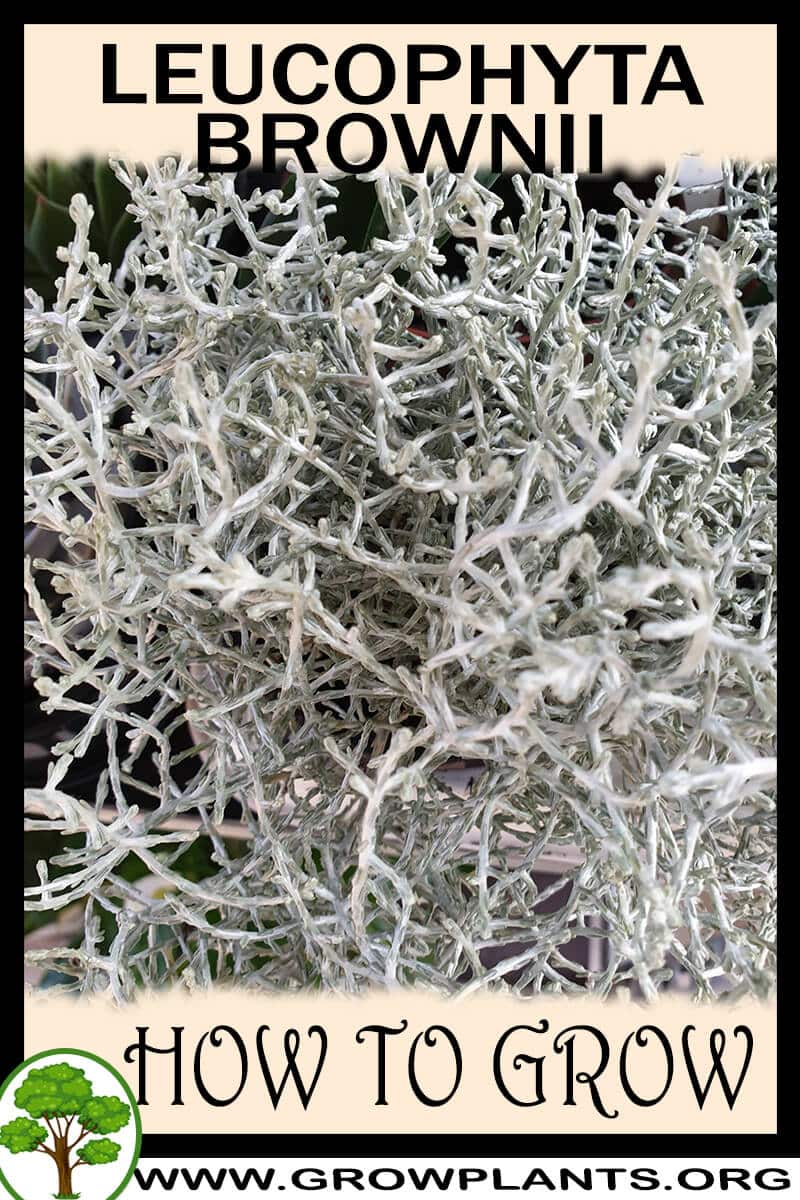
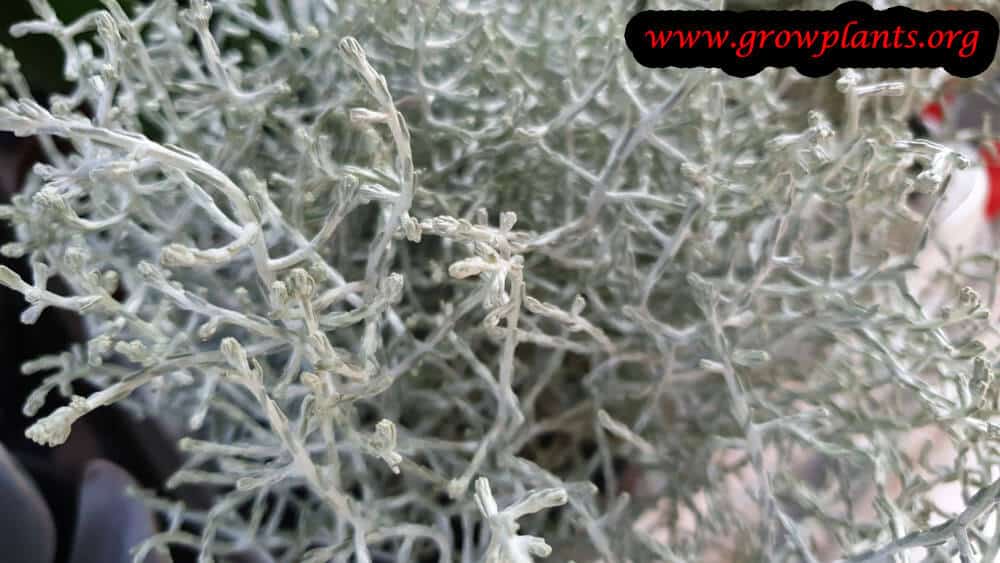
Plant Profile & Key Characteristics
Overview: Leucophyta brownii (cushion bush) is a rounded silver-grey evergreen shrub of about 10-60 cm, grown as an ornamental foliage plant. It is a fast- to moderate-growing, drought-tolerant perennial (sometimes grown as an annual) hardy across USDA zones 10-11.
Quick Specifications
| Specification | Attribute |
|---|---|
| Plant Type / Life Cycle | Perennial (sometimes grown as annual) |
| Foliage Type | Evergreen |
| Mature Size | 10-60 cm tall (4-24 in) |
| Growth Rate | Fast to moderate |
| Toxicity | Non-toxic |
| Hardiness | USDA zones 10-11 |
Growth Form & Structure
- Height & Spread: Reaches about 10-60 cm (4-24 in) tall, forming a dense rounded mound; well suited to containers.
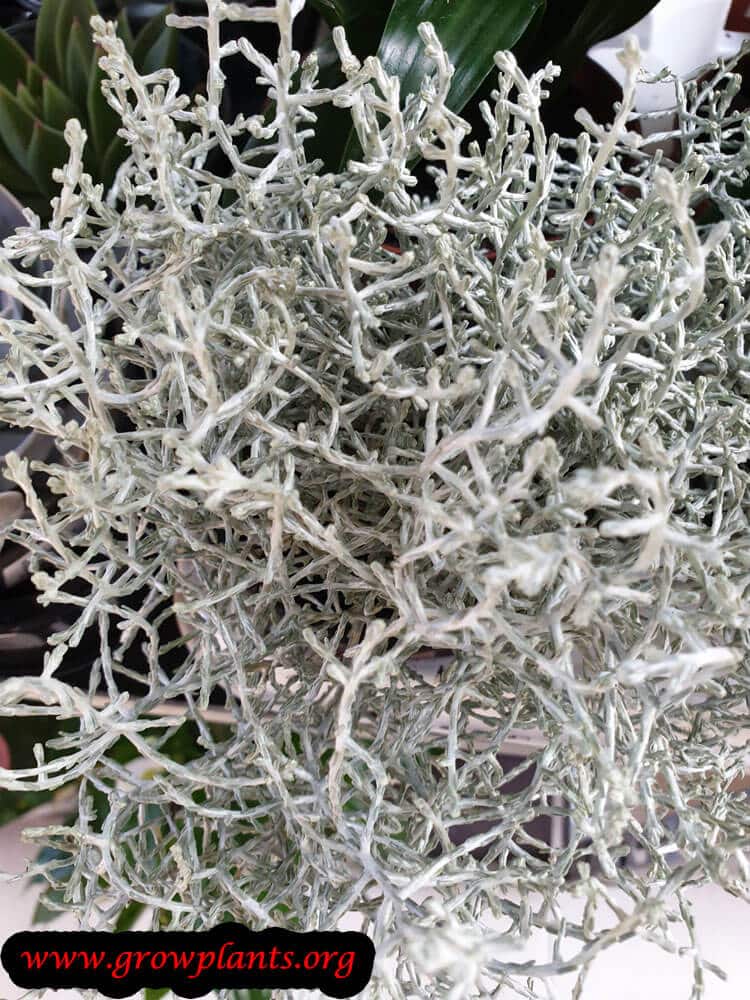
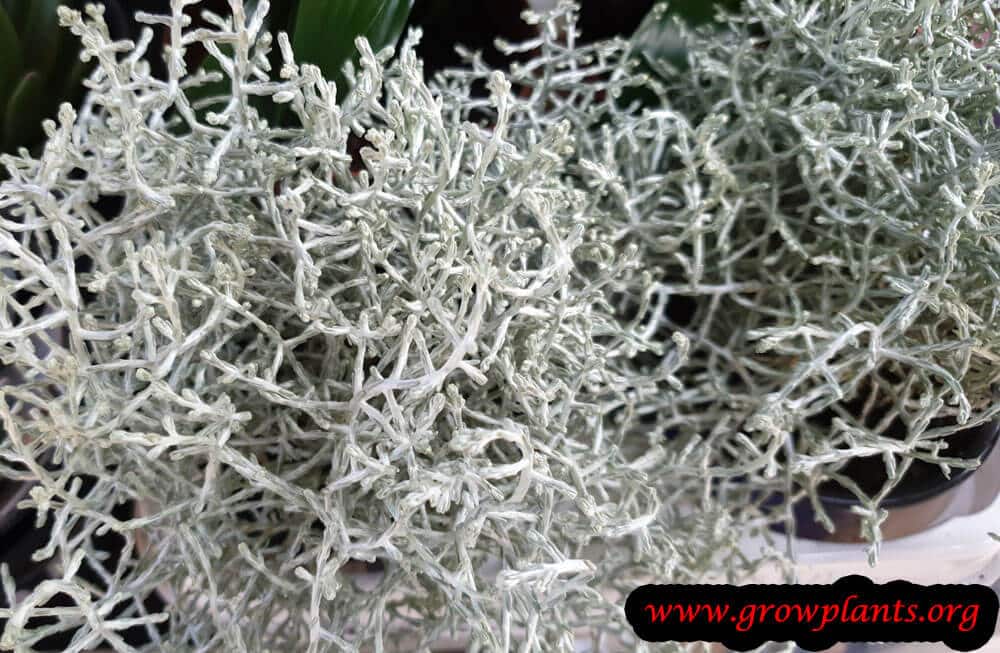
- Growth Habit & Form: Compact, cushion-like shrub of wiry silver stems, naturally growing into a rounded ball.
- Lifespan & Maturity: Fast to moderate to reach its mound shape; kept dense by trimming.
Anatomy & Physical Features
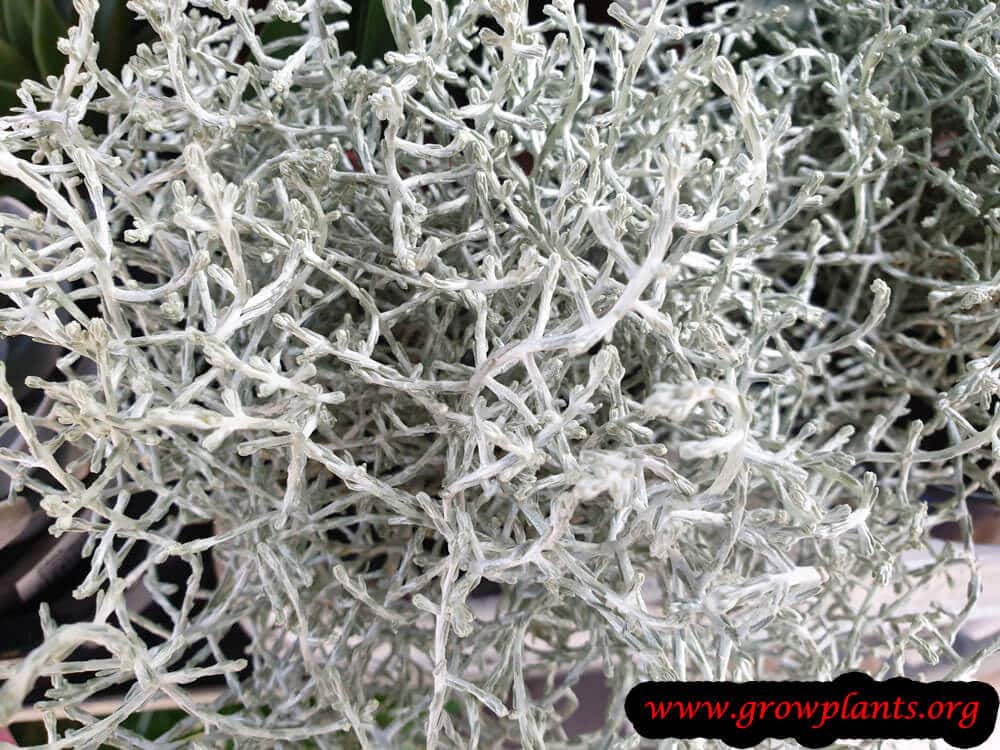
- Leaves & Foliage: Tiny silver-grey, cone-like leaves pressed to wiry stems, giving the whole plant a silvery appearance.
- Flower Characteristics: Small yellow-to-white pompom flower heads borne on stems.
Primary Uses & Landscape Value
- Functional & Ornamental Roles: Ornamental silver foliage plant for coastal, gravel and container gardens; drought- and salt-tolerant and attracts pollinators.
Care Guide: Planting, Soil & Watering
Overview: Cushion bush is a coastal, drought-tolerant shrub that grows in full sun to part shade in Mediterranean, desert, or subtropical climates (hardiness zone 10-11). It needs a sandy, sharply drained soil and only low to moderate water.
Quick Care Requirements
| Requirement | Ideal Condition |
|---|---|
| Planting Season | Warm season, spring through autumn |
| Growth Rate | Moderate to fast |
| Soil Type | Well-draining, sandy |
| Water Need | Low to moderate; drought tolerant |
Planting & Establishment
- Best Planting Season: Plant during the warm season, spring through autumn.
- How to Plant:
- Hole Preparation: Dig a hole about the width of the root ball.
- Soil Amendments: Add sand or grit to guarantee free drainage.
- Planting Depth: Set the root collar level with the soil.
- Growth Speed & Expectations: A fast to moderate grower reaching about 10-60 cm (4-24 in).
Soil, Watering & Drainage Care
- Soil Mix & Drainage Needs: Use a sandy, free-draining soil; it is prone to rot in waterlogged ground.
- Watering Schedule & Technique:
- Young / Newly Planted: Give light, regular water to help it establish.
- Established: Water occasionally; it is drought tolerant.
- Seasonal Adjustments: Reduce watering in winter.
Climate, Light & Hardiness
Leucophyta brownii (cushion bush) is a silvery, drought-tolerant coastal shrub suited to Mediterranean, desert, and subtropical climates, or grown as a houseplant in colder regions. It accepts full sun through to full (bright) shade and is frost-tender, reliably hardy outdoors only across USDA zones 10–11.
Quick Climate Specifications
| Climate Zones | Mediterranean, Desert, Subtropical; also grown as a houseplant |
|---|---|
| USDA Hardiness Zones | 10–11 |
| Cold Damage Begins | Foliage is damaged by frost, near 0°C (32°F) |
| Approx. Survival Minimum | Established plants may briefly tolerate light cold to around −1°C (30°F), typical of zone 10 winters, but hard frost is generally fatal |
| Frost Tolerance | Low |
| Light Conditions | Full Sun to Full Shade (bright, indirect light) |
| Wind Tolerance | High |
| Salt / Coastal Tolerance | High |
Sunlight & Light Exposure
Optimal Light Setup
Grows well from full sun to half shade outdoors, and even tolerates full shade provided the light there is still bright; indoors, a bright spot keeps the silvery foliage compact.
Direct Sun Requirement
Direct sun is not essential; the plant is unusually flexible on light, though outdoor plants in full sun tend to be the most compact and silvery.
Shade & Heat Management
Handles hot, sun-baked desert and Mediterranean conditions with ease; no heat shading is required given well-drained soil.
Best Exposure / Orientation
An open, sunny, well-ventilated site suits it outdoors; a bright windowsill or bright indirect light suits it indoors.
Temperature Extremes & Hardiness
USDA Hardiness & Regional Limits
Reliably hardy outdoors year-round only in roughly USDA zones 10–11; outside that range it is grown as a warm-season annual or as a container/houseplant brought indoors for winter.
Cold Damage & Winter Protection
Frost damages and can kill the foliage; where grown as an annual bedding or container plant in cooler climates, bring it under cover before the first frost or treat it as disposable for the season.
Frost Sensitivity
Frost-sensitive; even light freezing conditions typically injure the foliage.
Extreme Heat Tolerance
High; as a drought-tolerant, sun-loving species it copes well with prolonged heat.
Wind, Humidity & Microclimate
Humidity Preferences
Prefers drier air, in keeping with its coastal-cliff and dry-climate origins; indoors, avoid constantly damp, still conditions.
Dry-Air Tolerance
High - it is well adapted to dry atmospheric conditions, distinct from its low frost tolerance.
Wind Tolerance
High; its low, dense, cushion-like habit and wiry stems are naturally wind-resistant, consistent with its native exposed coastal habitat.
Coastal / Salt Tolerance
High - cushion bush is a classic exposed-coastline plant and handles salt spray and sandy, saline sites well, based on its native coastal-cliff habitat.
Rainfall & Seasonal Moisture
Best suited to climates with a distinct dry season or low rainfall; sharp drainage is important wherever rainfall is heavier.
Microclimate Recommendations
An open, sunny, sharply drained, wind-exposed site - such as a coastal garden or rockery - suits it particularly well; where winters are colder, grow it in a container that can be moved indoors.
Growing in Pots, Balconies & Indoors
Leucophyta brownii is a silvery, wiry coastal shrub that the grower lists as suitable for growing indoors, and it also grows well in containers. It is prized for its metallic-silver, ball-shaped form and wants bright light and sharp drainage.
Quick Details
- Container Size: A small to medium pot for a 10-60 cm cushion
- Indoor Suitability: Can be grown indoors per the grower – give it the brightest spot you have
- Best Spot: Full sun to bright shade; the more light, the denser and more silver the growth
- Soil & Drainage: Gritty, very free-draining mix – it hates wet feet
- Watering in Pots: Small to average water – let the surface dry between waterings
Indoors & On the Windowsill
- Indoors with bright light: The grower marks it as suitable indoors. It will accept a room only if the light is strong – a very bright window – since poor light makes it thin and leggy and dulls the silver colour.
- Overwintering: It is a tender coastal plant; in cold climates keep it in its brightest indoor spot over winter and water very sparingly.
On a Balcony or Patio
- Light & wind: A tough coastal native, it revels in full sun, wind and reflected heat – an exposed, sunny balcony suits it perfectly.
- Practicalities: Its sharp drainage means pots dry fast, but it far prefers dry to wet – water only when the mix has dried.
Choosing the Pot, Soil & Long-Term Care
- Pot & drainage: Use a pot with strong drainage holes and skip a standing-water saucer, which invites root rot. Terracotta breathes and dries faster, while glazed or plastic pots hold moisture longer. Add extra grit for the sharp drainage it demands.
- Potting mix: A lean, gritty mix – potting mix cut with plenty of perlite, grit or sand.
- Feeding: Feed very sparingly; it thrives on poor, lean soil.
- Repotting: Refresh the mix and pot up roughly every couple of years, lightly trimming the root ball and top growth on perennials. Trim lightly to keep the neat cushion shape.
Growing this plant in a greenhouse
A greenhouse can give leucophyta brownii frost protection and cold protection. In the right climate it may also be kept growing through winter, depending on how much warmth and light are provided.
Greenhouse at a glance
| Greenhouse suitability | Good - clearly useful |
|---|---|
| Main benefits | frost protection, cold protection |
| Season extension | earlier spring & later autumn |
| Outdoor protection advisable below | about 5°C |
| Maintain greenhouse minimum | around 5°C for active growth |
| Suitable types | unheated greenhouse, polycarbonate greenhouse, lean-to |
| Heating | Heating is optional - useful mainly for winter growing in cold areas. |
Related greenhouse guides
- Greenhouses: How to Choose the Right Greenhouse
- Best Lean-To Greenhouses
- Polycarbonate Greenhouses: What to Look for Before Buying
Fertilizing & Feeding
A light feeder: this drought-tolerant, silvery-foliaged shrub is grown mainly for its dense rounded form and texture, and rich feeding tends to spoil that shape with soft, floppy growth.
Quick Fertilizing Specs
| Feeding Level | Light feeder |
|---|---|
| Main Nutrient Priority | A lean, balanced feeding that keeps the compact, silvery form intact rather than pushing lush growth |
| Best Feeding Period | Spring as new growth resumes, if grown in lean or sandy soil |
| Organic Options | A light application of compost only if the soil is very poor; this plant generally prefers lean conditions |
| Reduce/Stop Feeding | Skip feeding altogether once established in typical garden or sandy soil |
| Micronutrients | Rarely an issue in well-drained, mineral soil; correct only a diagnosed deficiency |
| Soil pH | Tolerates a wide range; performs best in lean, well-drained, sandy soil |
Feeding by Growth Stage
Spring establishment
Help a young plant root in and fill out its rounded, cushion-like form.
| Nutrient direction | A light, balanced fertilizer supports establishment without encouraging lanky growth. |
|---|---|
| Timing | At planting and as new growth resumes in spring. |
| Frequency | A single light feeding at planting is usually enough to get this lean feeder established. |
| Fertilizer types | A balanced complete fertilizer, applied sparingly |
| Precautions | Favor well-drained, sandy soil over rich, fertile ground; this plant is prone to open, floppy growth if overfed. |
Bloom period
Support the small yellow-to-white pompom flowers that attract pollinators, without disturbing the plant’s tight form.
| Nutrient direction | This stage rarely needs feeding; established plants typically bloom well without additional fertilizer. |
|---|---|
| Timing | Through the spring-to-autumn bloom period. |
| Frequency | Minimal feeding is typical once the plant is established. |
| Fertilizer types | A balanced complete fertilizer, only occasionally and sparingly, for an established, well-sited plant |
| Precautions | Extra feeding here tends to open up the naturally dense, silvery form rather than improve flowering. |
Cool-season rest
Let the plant coast through cooler weather without pushing new growth.
| Nutrient direction | None – withhold fertilizer while growth is slow through cooler conditions. |
|---|---|
| Timing | During the coolest part of the year, or indoors in low light where it may be overwintered. |
| Frequency | No feeding at this stage. |
| Fertilizer types | No feeding at this stage; do not fertilize until active growth resumes. |
| Precautions | Do not fertilize during this rest period; this drought-adapted plant does not need or want off-season feeding. |
Nutrient Deficiency Signs & Corrections
Overall dull, thin foliage and noticeably slower fill-in of the rounded form.
| Possible causes | very lean or depleted soil, root competition in a crowded bed, extended drought limiting nutrient uptake even where nitrogen is present |
|---|---|
| Appears first on | overall foliage density and color |
| What to check | soil fertility, crowding from nearby plants, recent watering and drought stress |
| Possible correction | Apply a light balanced fertilizer and address any drought stress with deeper, less frequent watering. |
New growth near the shoot tips looks pale or yellowed rather than its usual silvery gray.
| Possible causes | high soil pH limiting iron availability, waterlogged soil in a spot with poor drainage, root stress from compacted ground |
|---|---|
| Appears first on | newest growth at the shoot tips |
| What to check | soil pH, drainage in the planting site, recent watering patterns |
| Possible correction | Improve drainage first, then apply a chelated iron product per its label if pH cannot be adjusted. |
Leaf tips brown or dry out despite the plant’s normal drought tolerance.
| Possible causes | fertilizer salt buildup from over-application, infrequent rainfall or watering to flush salts, restricted rooting in a container |
|---|---|
| Appears first on | leaf tips |
| What to check | recent fertilizer amounts, how long since the soil was last flushed by rain or watering, container drainage, if potted |
| Possible correction | Stop feeding, water thoroughly to flush accumulated salts, then resume with a much lighter approach. |
Pruning, Training & Seasonal Maintenance
Cushion Bush is a small, fast-growing silvery mounding subshrub grown mainly for its rounded, felted foliage form. It needs regular light tip-shearing to maintain its dense cushion shape and control the sprawling, vigorous habit noted in its care facts – but like many silver-leaved Mediterranean subshrubs, it should never be cut back hard into bare, leafless old wood, which often fails to resprout.
Quick Pruning & Maintenance Specs
| Pruning Tolerance | Moderate (frequent light shearing yes; hard cuts into old wood no) |
| Primary Pruning Window | Spring through Autumn active growth (year-round in mild/frost-free climates) |
| Secondary Maintenance Window | After flowering – remove spent pompom flowerheads |
| Typical Frequency | Light shearing every few weeks during active growth |
| Main Objective | Maintain a dense, rounded cushion form; prevent sprawl/legginess |
| Young Plant Priority | Pinch tips early to establish a dense, compact framework |
| Mature Plant Priority | Regular light shearing, staying within leafy growth |
| Best Tool Type | Precision snips/hand shears |
| Avoid Heavy Pruning During | Any cut into bare woody stems with no live foliage, at any time of year |
Pruning by Plant Age & Size
Newly Established
None – let it root in.
Young / Formative
Pinch tips while young to force branching and build a dense mounded framework before growth becomes loose or sprawling.
Mature / Established
Routine light shearing over the whole mound to keep it neat and compact, always cutting back into leafy growth, never bare stems.
Seasonal Pruning Schedule
Summer Canopy Management / Ongoing Sanitary
Objective: hold the cushion shape. Remove: light shearing of outer growth every few weeks through active growth (or year-round in frost-free climates). Do not remove: growth below the live leafy zone. Response: denser, more compact regrowth; prevents the naturally vigorous habit from sprawling open.
Post-Flowering
Objective: tidiness. Remove: spent yellow-white pompom flowerheads. Do not remove: healthy foliage. Response: keeps the silver foliage the visual focus.
Structural Pruning & Training
No formal training system – this is a low mounding subshrub, not trained to a leader. Shape by shearing the outer canopy into a tight rounded form; thin only if the centre becomes congested and floppy.
Special Growth to Remove
- Spent flowerheads
- Dead or frost-damaged stem tips
- Sprawling outer stems that have flopped open – shear back to encourage denser regrowth from within the leafy canopy
Container & Small-Space Pruning
Very well suited to pots and hanging baskets. Pinch and shear more frequently in containers to keep it compact, and avoid overwatering after trimming, since this drought-adapted plant is sensitive to wet, poorly drained conditions.
Tools
- Precision snips – pinching and most shaping cuts
- Hedge shears – quick overall shearing of the whole cushion mound
Tool Hygiene & Disease Risk
Routine – clean, sharp tools are sufficient. Aphids are the main pest noted; no major transmissible disease risk.
Cut Placement & Technique
Shear or pinch back into leafy growth only, leaving green foliage on every cut stem; never cut back to bare wood with no live growth below the cut.
Heavy Pruning & Rejuvenation
NOT reliably tolerated – unlike many shrubs, Cushion Bush often fails to resprout from hard cuts into bare old stems. An overgrown, woody, or sparse specimen is better replaced or renewed from fresh cuttings (it roots easily) rather than rejuvenation-pruned.
Post-Pruning Care
Water lightly and normally; avoid overwatering post-trim given its drought tolerance. No extra feeding is needed.
Common Pruning Mistakes
- Cutting back hard into bare, leafless wood expecting it to resprout like a typical shrub
- Letting it go unclipped, so its vigorous habit causes it to flop open and lose its neat cushion form
When NOT to Prune
Avoid hard cuts into bare wood at any time. Avoid pruning during cold, wet winter spells (frost/rot risk on fresh wounds).
Recommended Tools (by task)
- Precision snips – pinching tips and precise shaping
- Hedge shears – quick overall shearing of the mounded cushion form
Propagation Guide
Semi-hardwood stem cuttings are the most practical and commonly used way to propagate Leucophyta brownii, giving quick, reliable new plants that keep the compact silver-foliage habit. Seed is also viable for the species and is not strictly needed, matching the site’s note that vegetative propagation, while easy, is not required. Overall this is an easy-to-moderate plant to propagate, with good care taken to avoid overwatering cuttings, which can be prone to rot in humid, poorly-drained conditions.
Quick Propagation Specs
| Best Propagation Method | Semi-hardwood stem cuttings |
| Alternative Methods | Seed |
| Propagation Difficulty | Easy to Moderate |
| Seed True-to-Type | Mostly uniform (species plant) |
| Vegetative True-to-Type | Yes |
| Best Propagation Season | Spring to summer |
| Cutting Rooting Time | Typically a few weeks |
| Germination Temperature | Warm, roughly 18–24°C (64–75°F) |
Growing from Seed
Sowing Season
Spring.
Germination Conditions
Warm temperatures with a free-draining, gritty or sandy mix, consistent with this plant’s preference for well-drained, sandy soil.
Seedling Care
Water carefully to avoid waterlogging young seedlings, and provide bright light once established.
Stem Cuttings
Cutting Type
Semi-hardwood tip cuttings.
Best Timing
Spring to summer, during active growth.
Cutting Preparation
Take a short tip cutting and remove the lower foliage, leaving a clean stem to insert into the rooting medium.
Rooting Setup
Insert into a very free-draining, gritty or sandy mix; keep only lightly moist, since this silver, drought-tolerant foliage plant is prone to rotting in overly wet or humid conditions.
Rooting Hormone
Optional – can help but is not essential for this easy-rooting shrub.
Rooting Time
Typically a few weeks.
Bloom & Flower Guide
Quick Details
- Bloom Season: Spring through autumn
- Flower Appearance: Small, rounded pompom flower heads in yellow to white
- Edibility: Ornamental – grown for its silvery foliage and button flowers
Detailed Blooming Overview
Cushion bush (Leucophyta brownii) is a rounded, silver-stemmed shrub whose small, button-like flower heads appear over a long season. Set against the pale foliage, the little yellow-to-white pompoms give the plant a fine, textured look and draw in pollinators.
Flower Characteristics
- Small, full, pompom-shaped flower heads.
- Colour ranges from yellow to creamy white.
- Held at the tips of slender, silvery stems.
Bloom Care & Thinning
- Keeping its shape: A light trim after flowering keeps the rounded cushion form dense and neat.
- Pollination: The little heads attract bees and other pollinators; the plant copes well with dry, exposed sites.
Pests, Diseases & Troubleshooting
Overview: Cushion bush is a silvery, wiry Australian coastal shrub (Asteraceae) grown for its architectural foliage, and it is very pest-resistant; adapted to salt, sun and sharp drainage, its real weakness is root rot and collapse in rich, humid or poorly drained conditions rather than insects. Grow it hard, sunny and dry and it needs almost nothing.
Quick Troubleshooting Overview
| Issue / Pest | Main Symptom | Primary Solution |
|---|---|---|
| Root / crown rot | Wilting, browning, collapse in wet or humid soil | Sharp drainage; go dry; full sun |
| Aphids | Sticky new tips (uncommon) | Water jet; soap |
| Spider mites | Fine stippling in hot dry air | Hose; miticidal oil |
| Mealybugs | White fluff in stem joints | Wipe with alcohol; oil |
| Fungal leaf/stem spot | Dark spots in humid, wet conditions | Airflow; remove affected growth |
| Humidity / wet decline | Rotting, browning in muggy or damp climates | Ventilation; gritty free-draining mix |
Common Pests & Management
- Aphids (Aphis spp.):
- Symptoms: Occasional soft-bodied insects on the softest new growth, mainly when the plant is over-watered or fed; honeydew and slight distortion. Uncommon on a hard-grown plant.
- Prevention & Control: Hose off and encourage beneficials; ease off water and feed, which is what produces the soft growth aphids favour. Insecticidal soap only for heavy cases, in the evening.
- Spider mites (Tetranychus urticae):
- Symptoms: Fine pale stippling and a dull look to the fine silvery foliage in hot, dry, still air.
- Prevention & Control: Hose the foliage, improve airflow, and use a horticultural oil for outbreaks; a minor, occasional issue.
- Mealybugs (Pseudococcus spp.):
- Symptoms: White cottony tufts tucked into the wiry stem joints, sucking sap and leaving honeydew, mainly on pot-grown or sheltered plants.
- Prevention & Control: Wipe off with an alcohol-dipped swab and treat with horticultural oil; isolate new plants and inspect regularly.
Diseases & Fungal Issues
- Root & crown rot (Phytophthora / Rhizoctonia spp.):
- Symptoms: Wilting, greying, browning and collapse of stems or the whole plant in rich, wet, humid or poorly drained soil – the usual cause of failure for this drainage-loving coastal shrub.
- Treatment & Management: Grow in gritty, very free-draining soil in full sun with excellent airflow, water sparingly, and never let it sit wet. Remove and destroy collapsed plants; take cuttings to renew stock.
- Fungal leaf & stem spot (Various fungi):
- Symptoms: Dark spots or blotches on the fine foliage and stems in humid, wet, stagnant conditions.
- Treatment & Management: Improve airflow, keep foliage dry, remove affected growth, and grow harder and drier – chemical treatment is rarely needed.
Growing Difficulties & Abiotic Problems
- Humidity & wet-soil decline:
- Cause & Symptoms: Rotting, browning and dieback in humid climates or moisture-retentive soil, as the plant is adapted to dry, breezy coasts.
- Correction Strategy: Provide sharp drainage, full sun and free air movement, grow in gritty soil or a raised bed, and keep it on the dry side; treat it as a specialist of lean, dry conditions.
- Legginess / opening up:
- Cause & Symptoms: Old plants become open, woody and sparse, losing their neat cushion form.
- Correction Strategy: Trim lightly and regularly to keep it dense, avoid rich soil and feeding, and renew from cuttings as it is naturally short-lived.
- Salt tolerance / soft growth:
- Cause & Symptoms: Lush, floppy, weak growth from too much water and feed makes it prone to rot and less characterful.
- Correction Strategy: Grow it hard and lean – it thrives on poor, salty, dry coastal soil and resents pampering.
What Helps – Products & Tools
Almost care-free – the key tool is gritty, free-draining soil and a dry, sunny, breezy spot. On the rare aphid, mite or mealybug, keep insecticidal soap and neem/horticultural oil. Root rot is prevented by drainage, not fungicides. Spray oils in the evening to protect pollinators.