Plant Profile & Key Characteristics
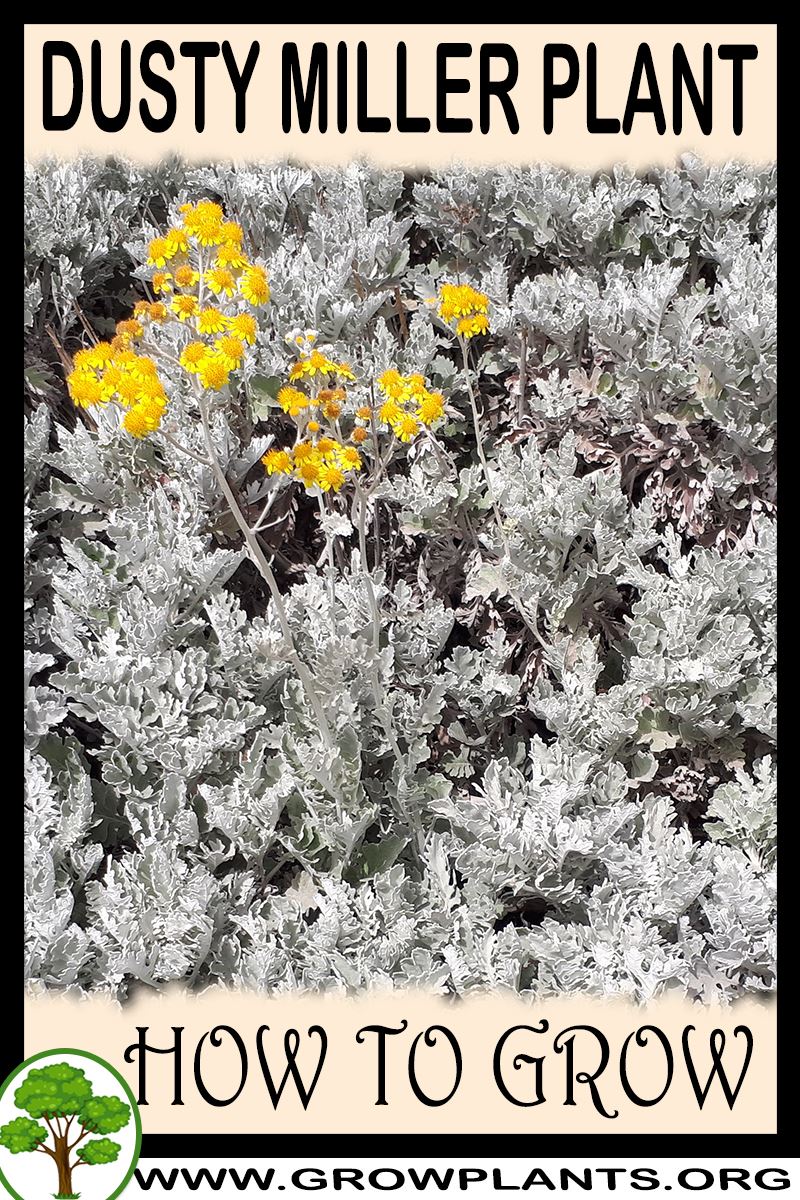
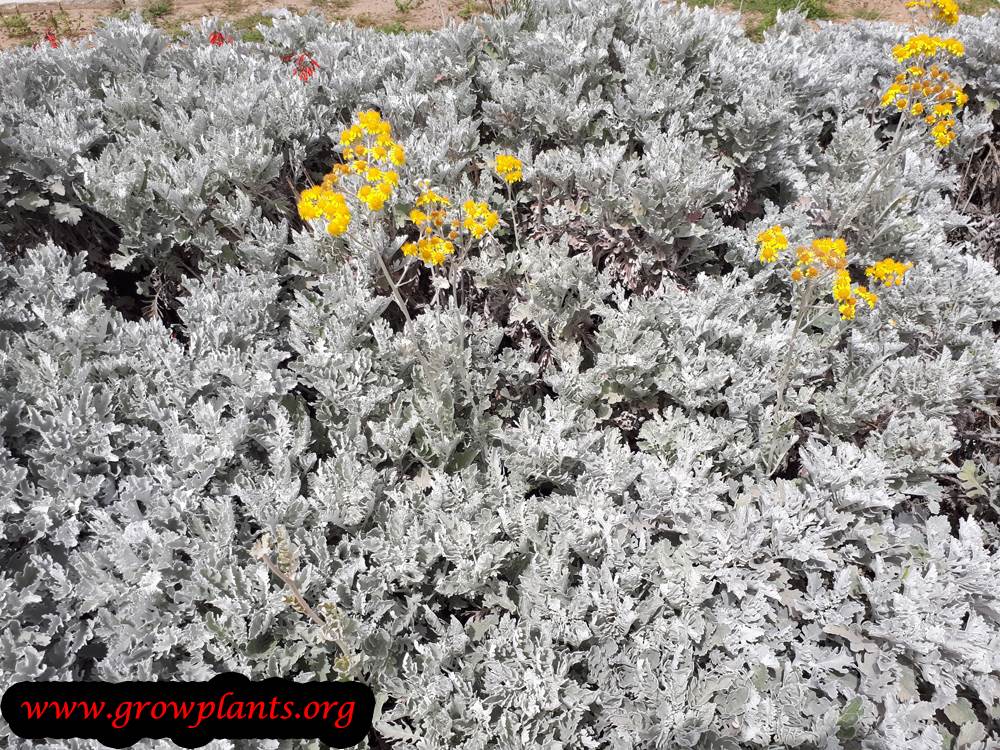
Overview: Dusty miller (Jacobaea maritima, syn. Senecio cineraria) is a compact evergreen perennial subshrub 20-40 cm tall, prized for its silvery-white, felted foliage. Drought-tolerant, it is widely used for bedding and edging and is often grown as an annual.
Quick Specifications
| Specification | Attribute |
|---|---|
| Plant Type / Life Cycle | Perennial (evergreen); often grown as annual |
| Foliage Type | Evergreen (silvery) |
| Mature Size | 20-40 cm (8-16 in) |
| Growth Rate | Moderate |
| Root System | Fibrous |
| Toxicity | Toxic – contains pyrrolizidine alkaloids (Senecio group); not for consumption, keep from pets and livestock |
| Hardiness | USDA zone 8-11 |
Growth Form & Structure
- Height & Spread: 20-40 cm (8-16 in) mound in ground; also grown in planters and containers.
- Growth Habit & Form: Low, mounding subshrub; often sheared to keep the foliage dense and compact.
- Lifespan & Maturity: Moderate; reaches full size within a season and looks best in its first year or two.
Anatomy & Physical Features
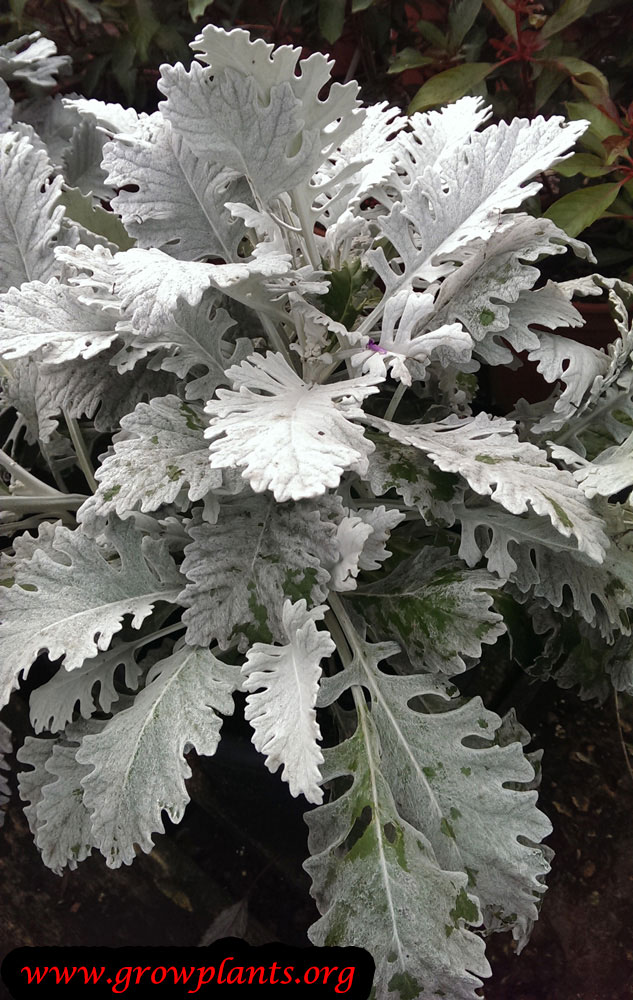
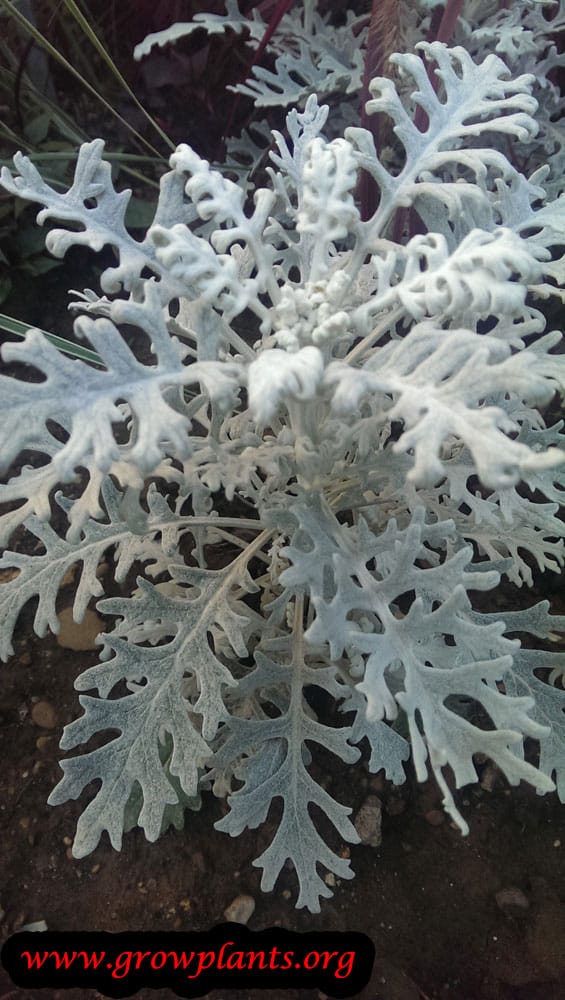
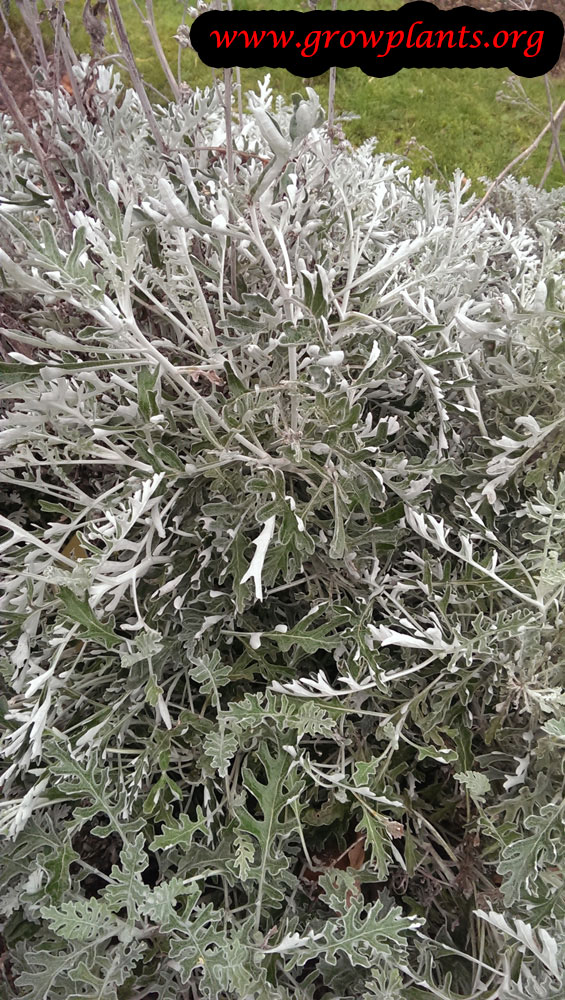
- Leaves & Foliage: Silvery-white, lobed to deeply lobed leaves densely covered in fine, velvety hairs – the key ornamental feature.
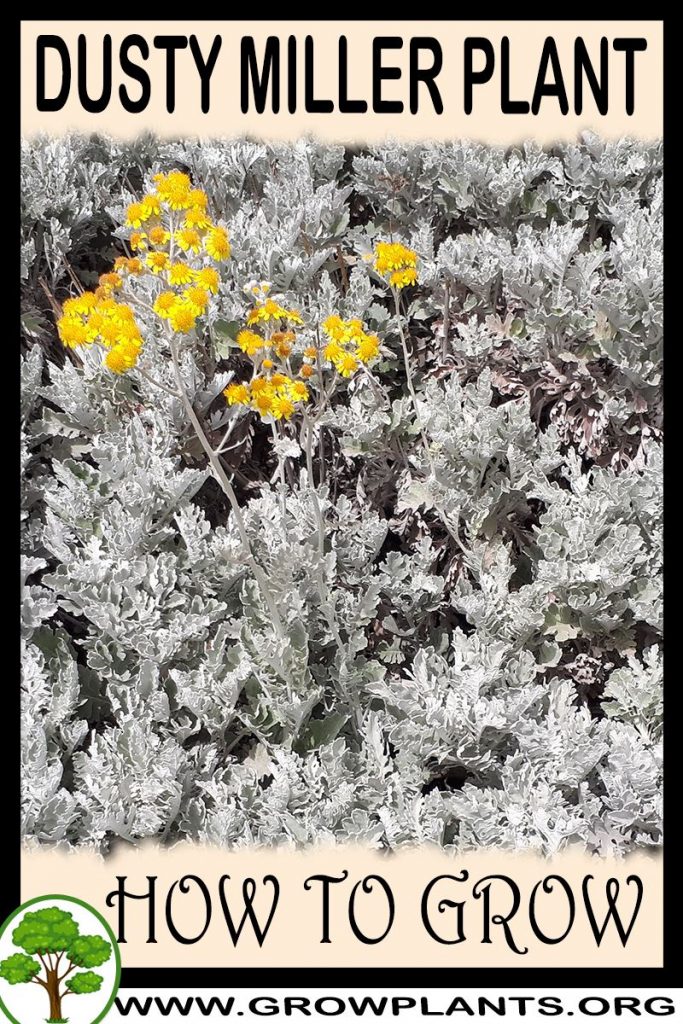
- Flower Characteristics: Small yellow daisy-like flowers in clusters in summer; often removed to keep the foliage looking its best (full detail in the Bloom guide).
Primary Uses & Landscape Value
- Functional & Ornamental Roles: Ornamental silver-foliage plant for bedding, borders, edging and containers; drought-tolerant and useful as a colour foil.
Care Guide: Planting, Soil & Watering
Overview: Dusty miller is a silvery-leaved, drought-tolerant subshrub for full sun to part shade in sharply drained soil. Grown for its felted white foliage, it thrives on the dry side and dislikes wet, heavy ground.
Quick Care Requirements
| Requirement | Ideal Condition |
|---|---|
| Planting Season | In spring to summer (also autumn in mild climates) |
| Growth Rate | Moderate |
| Soil Type | Well-draining; tolerates poor, dry soil |
| Water Need | Low to moderate; let the soil dry well between waterings |
Planting & Establishment
- Best Planting Season: Plant in spring to summer once frost has passed, or into autumn in mild-winter climates.
- How to Plant:
- Hole Preparation: Loosen a hole a little wider than the root ball in free-draining soil.
- Soil Amendments: Add grit or coarse sand to heavy soil; it does not need rich ground and prefers lean, dry conditions.
- Planting Depth: Set the root ball at the level it grew and firm gently.
- Growth Speed & Expectations: A moderate grower reaching 20-40 cm, grown mainly for foliage; trim after flowering to keep it compact.
Soil, Watering & Drainage Care
- Soil Mix & Drainage Needs: Sharp drainage is essential to prevent rot; use a free-draining, gritty potting mix in containers and avoid overwatering.
- Watering Schedule & Technique:
- Young / Newly Planted: Water moderately to settle it in, then begin easing off.
- Established: Water sparingly, letting the soil dry well between waterings; it is very drought-tolerant.
- Seasonal Adjustments: A little more in extreme heat, very little in winter.
Climate, Light & Hardiness
Dusty miller is a drought-tolerant, silvery-leaved Mediterranean-coastal subshrub happiest in mediterranean, desert, subtropical, or temperate climates with full sun to half shade. Its felted, heat-reflective leaves are built for sun and dryness, not for hard winter cold.
Quick Climate Specifications
| Climate Zones | Mediterranean, desert, subtropics, temperate |
|---|---|
| USDA Hardiness Zones | Zones 8–11 |
| Cold Damage Begins | Approaching freezing |
| Frost Tolerance | Low to moderate |
| Light Conditions | Full sun / half shade |
| Salt / Coastal Tolerance | Moderate to high (a classic seaside garden plant) |
Sunlight & Light Exposure
Optimal Light Setup
Full sun keeps the foliage densest and most silver; in hot desert climates light afternoon shade can help it stay tidy through peak summer heat.
Temperature Extremes & Hardiness
USDA Hardiness & Regional Limits
Reliable as a perennial subshrub through zones 8–11; in colder gardens it is usually grown as a bedding annual and does not survive hard freezes.
Cold Damage & Winter Protection
Woody stems can be damaged or killed by hard frost; well-drained soil reduces winter losses more than mulching does.
Wind, Humidity & Microclimate
Dry-Air Tolerance
Excellent - the fuzzy, felted leaf surface is a drought and dry-air adaptation.
Coastal / Salt Tolerance
Handles salt spray and coastal wind well, which is why it is a traditional seaside bedding plant.
Growing in Pots, Balconies & Indoors
Dusty miller (Jacobaea maritima, syn. Senecio cineraria) is grown for its felted, silvery-white foliage and thrives in hot, dry, full-sun sites. It is not a houseplant, but its silver leaves make it a favourite for pots, troughs and balcony displays.
Quick Details
- Container Size: A small-to-medium pot, roughly 5-12 L (1.5-3 gal); excellent in troughs and window boxes
- Indoor Suitability: Not a houseplant – an outdoor silver-foliage plant for full sun
- Best Spot: Full sun (tolerates light shade)
- Soil & Drainage: Sharply drained, gritty mix – potting mix with added perlite or coarse sand.
- Watering in Pots: Water when the mix dries – it is drought-tolerant and rots easily if kept wet.
Indoors & On the Windowsill
- Houseplant limits: Its silver foliage needs full sun to stay dense and bright; indoors it grows loose, greener and weak.
- Windowsill growing: A hot, very sunny sill might hold a small plant, but it looks and grows far better outdoors in full sun.
On a Balcony or Patio
- Light & wind: Give it the sunniest, most open spot; it loves reflected heat, tolerates wind and drought, and pairs well with brighter flowers in mixed pots.
- Practicalities: Water the pot in – allow for its weight on a balcony, and set it where drainage runoff won’t be a nuisance.
Choosing the Pot, Soil & Long-Term Care
- Safety: Dusty miller is toxic if eaten, so keep containers out of reach of children and pets – grow it for looks, never for the kitchen.
- Pot & drainage: Choose a pot with strong drainage holes and skip a standing-water saucer, which invites root rot. Terracotta breathes and dries quickly, which suits these sun-lovers; glazed or plastic pots hold moisture longer if you can’t water often.
- Potting mix: Sharply drained, gritty mix – potting mix with added perlite or coarse sand.
- Feeding: Potted plants use up their food faster because watering leaches nutrients away, so feed a little more often through the growing season than you would in open ground.
- Repotting: Refresh the mix or pot up about every couple of years to keep growth healthy.
Fertilizing & Feeding
A light feeder: this plant is grown chiefly for its silvery, velvet-textured foliage rather than its yellow flower clusters, and lean feeding keeps growth compact and richly colored – heavy feeding pushes softer, greener growth that loses the silvery look.
Quick Fertilizing Specs
| Feeding Level | Light feeder |
|---|---|
| Main Nutrient Priority | Light, balanced feeding kept minimal; lean feeding keeps the signature silvery foliage compact and dense |
| Best Feeding Period | Spring as new growth begins, tapering off once foliage is established |
| Organic Options | A light topdress of compost is usually enough |
| Micronutrients | Usually supplied by a complete fertilizer; correct specific issues only when diagnosed |
| Soil pH | Prefers well-drained soil; tolerates a range of pH |
Feeding by Growth Stage
Spring foliage growth
Support fresh, silvery, velvet-textured foliage growth as the plant resumes active growth in spring.
| Nutrient direction | A light, balanced fertilizer, or often none at all in reasonably fertile soil. |
|---|---|
| Timing | Spring as new growth begins. |
| Frequency | At most a light feeding at the start of the season; many plants need little beyond that. |
| Fertilizer types | A light, balanced general-purpose fertilizer used sparingly, A thin topdress of compost |
| Precautions | Keep feeding light – rich feeding pushes soft, greener growth that loses this plant’s characteristic silvery color and compact habit. |
Summer foliage upkeep
Maintain dense, silvery foliage through summer; flowering is a secondary event many gardeners limit by removing bloom heads to keep the foliage display at its best.
| Nutrient direction | Only minimal further feeding is usually needed; prioritize removing spent bloom heads over feeding for foliage quality. |
|---|---|
| Timing | Summer as the plant matures and yellow flower clusters may appear. |
| Frequency | Established plants typically need only minimal additional feeding through summer. |
| Fertilizer types | Most established plants need only very light additional feeding once foliage is established; use a light feed only if growth looks pale or thin |
| Precautions | Avoid feeding heavily once foliage is established – excess nitrogen favors soft green growth and flowering over the compact silvery foliage most gardeners want. |
Winter rest
Let growth slow or stop through the coldest part of the year.
| Nutrient direction | None – withhold fertilizer while growth is slow or stopped. |
|---|---|
| Timing | Late autumn through winter. |
| Frequency | No feeding at this stage. |
| Fertilizer types | No feeding at this stage; resume light feeding, if needed at all, when spring growth resumes. |
| Precautions | Do not fertilize during the winter rest period. |
Nutrient Deficiency Signs & Corrections
Foliage turns greener and looser or leggier instead of staying dense and silvery.
| Possible causes | excess nitrogen from overfeeding, overly rich or moisture-retentive soil, too much shade reducing the silvery leaf-hair effect |
|---|---|
| Appears first on | new foliage growth overall |
| What to check | recent feeding history, soil richness, sun exposure |
| Possible correction | Reduce or stop supplemental feeding and confirm the planting gets full sun. |
Pale, thin, sparse foliage rather than the usual dense silvery cover.
| Possible causes | very low soil nitrogen, extremely poor sandy soil, a prolonged period without any feeding |
|---|---|
| Appears first on | overall foliage density |
| What to check | soil fertility history, planting age, general growing conditions |
| Possible correction | Apply a light, balanced fertilizer. |
Wilting, yellowing, and foliage dieback despite adequate feeding.
| Possible causes | waterlogged or poorly drained soil, root rot from excess moisture in a plant that prefers drier conditions, damaged roots limiting nutrient uptake rather than true nutrient deficiency |
|---|---|
| Appears first on | whole-plant wilting and lower foliage |
| What to check | soil drainage, watering frequency, root health |
| Possible correction | Improve drainage and reduce watering before adjusting fertilizer. |
Pruning, Training & Seasonal Maintenance
Dusty miller (Jacobaea maritima) is a drought-tolerant subshrub grown almost entirely for its silvery, felted, deeply lobed foliage rather than its plain yellow flowers. Pruning tolerance is high and cutting can be done through most of the year, but the single most useful cut is removing the flower stalk as it emerges: this plant’s own facts note pruning is “better after the bloom,” and in practice many growers pinch out the bud spike before it even opens, since flowering both looks less attractive than the foliage and diverts the plant’s energy from producing the compact silver growth it’s grown for. A secondary spring cutback keeps plants that have become loose or leggy compact and full.
Quick Pruning & Maintenance Specs
| Pruning Tolerance | High (foliage subshrub, cut back freely for shape) |
| Primary Pruning Window | As flower stalks emerge/after bloom, through summer |
| Secondary Maintenance Window | Early spring cutback if growth has become loose or leggy |
| Typical Frequency | Ongoing through the growing season as flower spikes appear |
| Main Objective | Keep silver foliage dense and compact; remove less-ornamental flower spikes |
| Young Plant Priority | Pinch tips to build a full, bushy foliage clump |
| Mature Plant Priority | Remove flower stalks; cut back hard if the clump loosens |
| Best Tool Type | Precision snips |
| Avoid Heavy Pruning During | Peak summer heat/drought stress |
Pruning by Plant Age & Size
Newly Established
Pinch young plants once or twice to encourage low branching; avoid removing more than the growing tip while roots are still establishing.
Young / Formative
No formal training system applies to this low, mounding subshrub – formative pruning is limited to tip-pinching for a full, dense clump of foliage.
Mature / Established
Remove flower stalks as they appear (or immediately after bloom) to redirect energy into foliage; if the plant becomes sparse or floppy, cut it back harder to renew compact growth.
Seasonal Pruning Schedule
Ongoing Sanitary
Objective: keep the silver foliage the visual focus and the plant compact. Remove: flower stalks/heads as they emerge or fade, and any dead or damaged leaves. Do not remove: healthy young foliage. Expected response: denser, more compact foliage growth in place of the removed flower stalk. Flowering impact: intentionally reduced – this plant is not grown for its bloom.
Pre-Growth / Early-Spring
Objective: renew a full, compact mound if the plant has become loose or leggy over winter. Remove: up to about one-third of overall growth, cutting to a point with live leaves. Do not remove: stems back to completely bare wood. Expected response: a flush of new silver growth from below the cut.
Structural Pruning & Training
- Canopy density: the mounding habit can loosen and open up over a season; cutting back restores a tight, felted-silver profile.
- Height & spread control: keep growth near its compact ~20–40cm mature size with the spring cutback.
Special Growth to Remove
- Flower stalks/bloom heads – the plant’s own facts specifically call these out for removal, both for tidiness and because the yellow flowers are considered less ornamental than the foliage.
- Dead or damaged leaves.
Container & Small-Space Pruning
Dusty miller is well suited to containers and mixed pots (per facts). In a container, pinch and deadhead a little more proactively than in a bed, since it is commonly grown as a filler/edging plant where a compact, non-flowering silver profile is the entire point of including it.
Tools
Precision snips for pinching tips and removing flower stalks; nothing larger is needed for this soft-stemmed subshrub.
Tool Hygiene & Disease Risk
Routine: clean tools are sufficient. Watch for aphids and spider mites (per this plant’s own pest facts), which favor the soft new growth that follows a cutback.
Cut Placement & Technique
Cut flower stalks down at their base, at or just above the foliage line, rather than leaving a bare stub; when cutting back for shape, cut to a point with live leaves.
Post-Pruning Care
Water normally after cutting back; avoid extra feeding, since lush over-fed growth can look coarser and less tightly felted-silver than moderately grown foliage.
Common Pruning Mistakes
- Leaving flower stalks in place through the season, which both looks untidy and pulls energy from foliage production.
- Cutting into completely bare stems expecting reliable regrowth.
When NOT to Prune
Avoid a hard cutback during peak summer heat or drought stress, when the plant is least able to push fresh regrowth.
Recommended Tools (by task)
- precision_snips – for pinching tips, removing flower stalks, and the periodic shape-renewal cutback on this soft, low subshrub.
Propagation Guide
Dusty miller is most commonly started from seed, which is the standard, easy way this silvery-leaved bedding subshrub is grown, though germination can be slow and uneven; stem cuttings are a useful secondary method for keeping a particular plant or overwintering stock. Vegetative reproduction is not required to grow the species, and overall propagation difficulty is easy.
Quick Propagation Specs
| Best Propagation Method | Seed |
| Alternative Methods | Softwood stem cuttings |
| Propagation Difficulty | Easy |
| Seed True-to-Type | Usually true-to-type for the species; named silver-leaf cultivars best kept true by cuttings |
| Vegetative True-to-Type | Yes |
| Best Propagation Season | Spring, matching the plant’s spring–summer (autumn in warm climates) planting season |
| Seed Germination Time | Often slow and uneven, typically a few weeks |
| Cutting Rooting Time | Usually roots within a few weeks in warm conditions |
| Germination Temperature | Around 18–24°C (64–75°F) |
| Seed Sowing Depth | Surface sow – the fine seed benefits from light exposure to germinate |
Growing from Seed
Sowing Season
Sow in spring (or into autumn in warm climates), matching the plant’s own planting season.
Sowing Depth & Orientation
Sow on the surface without covering, since the fine seed germinates better with light exposure.
Germination Conditions
Keep the surface lightly moist, warm and in bright light; avoid waterlogging, since the species prefers well-drained soil and only a small to average amount of water.
Germination Time
Germination is often slow and can be uneven, typically taking a few weeks.
Seedling Care
Let the surface dry slightly between waterings once seedlings emerge, since overwatering fine silvery-leaved seedlings in poorly drained soil encourages rot.
Stem Cuttings
Cutting Type
Softwood tip cuttings, useful for maintaining a specific plant or a named cultivar’s leaf form.
Best Timing
Spring through summer, within the plant’s active growing season.
Cutting Preparation
Trim just below a node and remove the lower leaves before inserting.
Rooting Setup
Insert into a well-drained mix, matching the plant’s own soil preference; avoid keeping the medium too wet.
Rooting Hormone
Optional – not essential, though it can speed rooting.
Rooting Time
Usually a few weeks under warm conditions.
Bloom & Flower Guide
Quick Details
- Bloom Season: Summer
- Flower Appearance: Small yellow daisy-like flowers, petals and stamens both yellow, in clusters on upright stems
- Edibility: Not edible – the plant contains toxic pyrrolizidine alkaloids; it is grown for its silver foliage
Detailed Blooming Overview
Dusty miller is prized for its felted silver leaves, and many gardeners actually shear off the flower buds to keep the plant compact and the foliage at its brightest. Left alone, it opens clusters of small yellow flowers in summer – pleasant enough, but a secondary feature next to that woolly silver mound.
Flower Characteristics
- Small yellow flowers with yellow petals and stamens.
- Carried in clusters on upright stems above the silver foliage.
Bloom Care & Thinning
- Managing the bloom: For the best foliage effect, pinch or shear off the flowering stems as they rise; leave them if you enjoy the yellow show.
- Safety: The plant is toxic if eaten – enjoy the flowers in the garden, not the kitchen, and keep them from children and pets.
Pests, Diseases & Troubleshooting
Overview: Dusty miller is grown for its felted silver foliage and is largely pest-resistant – the woolly leaf coating deters many insects – so its main weaknesses are root and foliage rots in wet, humid or poorly drained conditions rather than pests. A sunny, free-draining site keeps it looking its best.
Quick Troubleshooting Overview
| Issue / Pest | Main Symptom | Primary Solution |
|---|---|---|
| Root / stem rot | Wilting, blackened base in wet soil | Improve drainage, ease watering |
| Botrytis / foliage rot | Grey mold, matted foliage in humid heat | Airflow, remove affected growth |
| Rust | Orange-brown pustules on leaves | Remove leaves, spacing, sulfur/copper |
| Aphids | Sticky, distorted new growth | Rinse off, insecticidal soap |
| Spider mites | Fine stippling in hot dry conditions | Hose foliage, horticultural oil |
| Leggy / flopping | Stretched, open, flowering reduces silver look | Full sun, shear back, pinch flower buds |
Common Pests & Management
- Aphids (Aphis / Myzus spp.):
- Symptoms: Occasional colonies on tender new shoots causing distortion and honeydew; usually minor because the felted foliage deters them.
- Prevention & Control: Rinse off with water and encourage ladybirds and lacewings. Insecticidal soap clears persistent colonies; avoid over-feeding with nitrogen.
- Spider mites (Tetranychus urticae):
- Symptoms: Fine stippling and light webbing in hot, dry, sheltered conditions; the silver foliage can mask early damage.
- Prevention & Control: Hose the plant and raise humidity around it. Horticultural oil or insecticidal soap controls heavy populations; predatory mites help under glass.
- Leaf miners (Agromyzid flies (Liriomyza spp.)):
- Symptoms: Pale winding tunnels or blotches mined between the leaf surfaces by tiny larvae; largely cosmetic on this foliage plant.
- Prevention & Control: Pick off and destroy mined leaves to break the cycle, encourage parasitic wasps, and remove weedy hosts nearby. Chemical control is rarely justified for cosmetic mining.
Diseases & Fungal Issues
- Root and stem rot (Pythium / Rhizoctonia / Phytophthora spp.):
- Symptoms: Wilting despite moist soil, blackened softened stem bases and collapse – the plant’s main cause of failure, from wet, heavy, poorly drained soil.
- Treatment & Management: Grow in free-draining soil in full sun, water only when the surface dries, and avoid crowding and overhead watering. Remove collapsed plants and improve drainage before replanting.
- Botrytis / foliage rot (Botrytis cinerea):
- Symptoms: Grey mold and browning of the woolly leaves, especially where the dense silver foliage stays wet in humid heat or after overhead watering.
- Treatment & Management: Improve airflow and spacing, water at the base and in the morning, and remove affected growth promptly. Sanitation usually solves it; avoid the humid, crowded conditions it favors.
- Rust (Puccinia / Coleosporium spp.):
- Symptoms: Orange-brown powdery pustules on leaf undersides with yellowing above, in damp conditions.
- Treatment & Management: Remove and bin affected leaves, improve spacing and airflow, and avoid wetting foliage. Sulfur or copper fungicide checks spread where rust recurs.
Growing Difficulties & Abiotic Problems
- Root rot from overwatering:
- Cause & Symptoms: As a Mediterranean, drought-tolerant plant, dusty miller resents wet feet; soggy soil quickly rots the roots and crown.
- Correction Strategy: Plant in gritty, free-draining soil or raised beds in full sun, water sparingly once established, and ensure containers drain freely.
- Foliage melt in humid heat:
- Cause & Symptoms: In hot, humid climates the dense silver foliage can rot and ‘melt out’ in the center of the plant.
- Correction Strategy: Space plants for airflow, avoid overhead watering, and shear back tired or matted growth to encourage fresh, healthy leaves.
- Legginess & loss of silver display:
- Cause & Symptoms: In too much shade the plant stretches and greens, and letting it flower diverts energy and opens up the neat silver mound.
- Correction Strategy: Grow in full sun, pinch or shear to keep it compact, and remove the yellow flower buds if you want to keep the tidy silver foliage as the feature.
What Helps – Products & Tools
Because it is so pest-resistant, the priorities are cultural: free-draining soil, full sun and restrained watering to prevent root and foliage rots. When needed, insecticidal soap or horticultural oil handles aphids and mites, and a sulfur or copper fungicide addresses rust or persistent botrytis. Follow labels and protect pollinators.