


Plant Profile & Key Characteristics
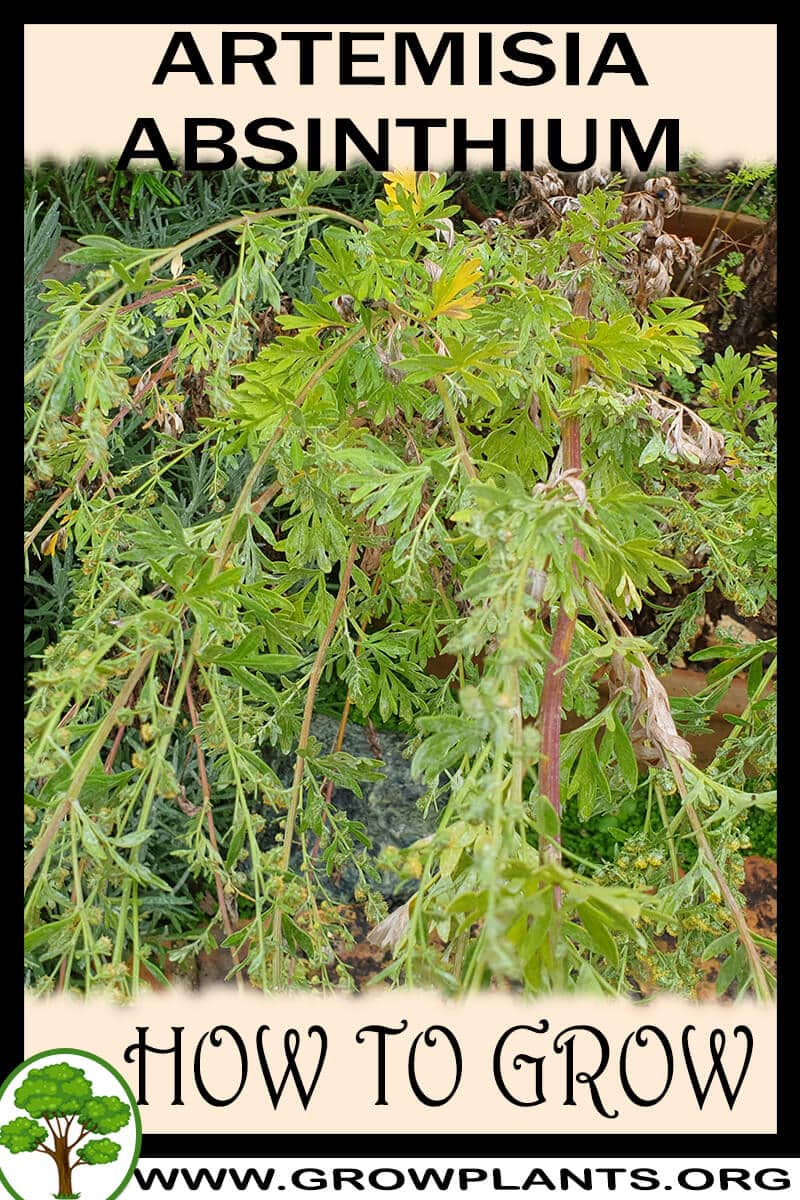
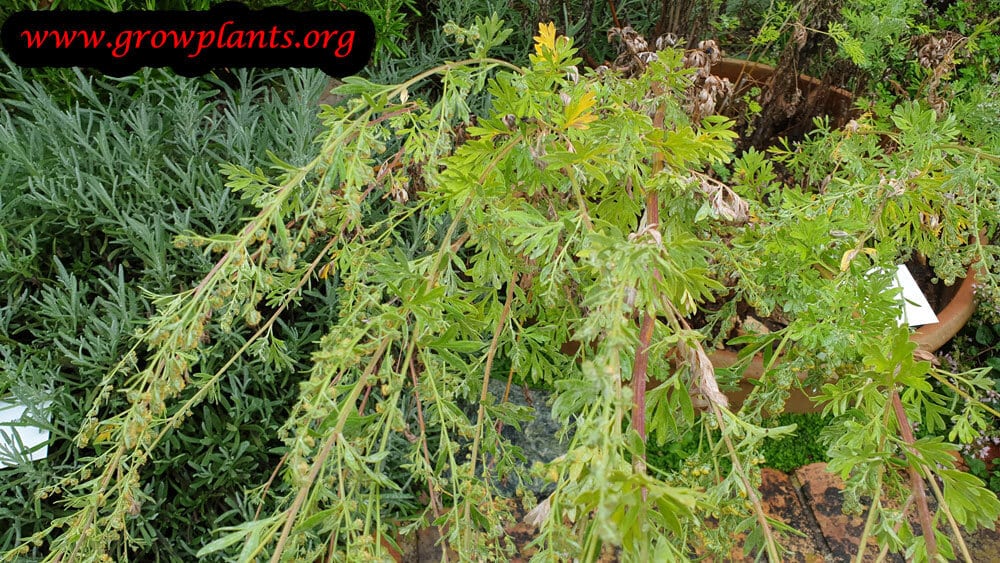
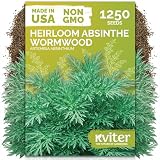
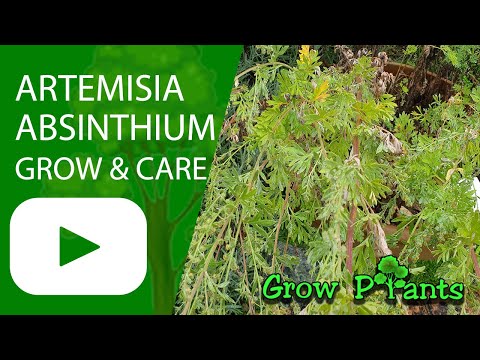
Overview: Common wormwood (Artemisia absinthium) is an aromatic, evergreen perennial subshrub reaching 1-1.5 m (40-60 in), grown for its fragrant, finely divided silvery-grey foliage. It is used as an ornamental and aromatic herb, its leaves valued for flavouring, herbal infusions and traditional uses.
Quick Specifications
| Specification | Attribute |
|---|---|
| Plant Type / Life Cycle | Perennial (subshrub) |
| Foliage Type | Evergreen (semi-evergreen in cold winters) |
| Mature Size | 1-1.5 m (40-60 in) |
| Growth Rate | Moderate |
| Toxicity | Contains thujone and is toxic in quantity (the bittering agent in absinthe); use only in small, medicinal amounts and avoid in pregnancy |
| Hardiness | USDA 4-10a (to 10b with care) |
Growth Form & Structure
- Height & Spread: 1-1.5 m (40-60 in); suited to borders and to containers, and can be grown indoors in a bright, airy spot.
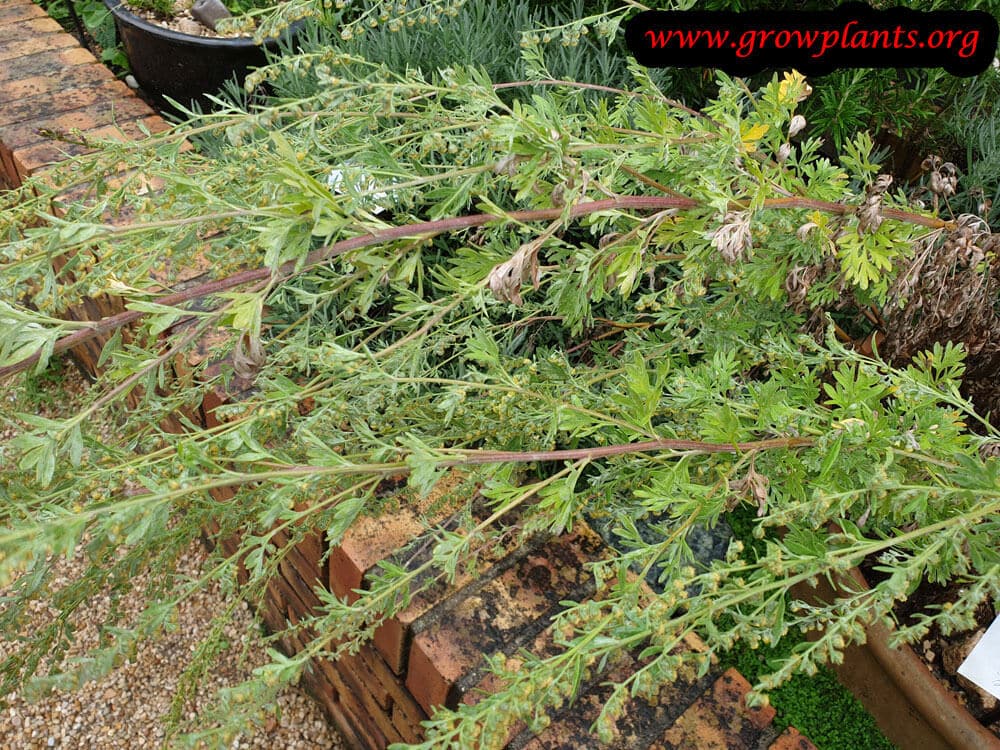
- Growth Habit & Form: Upright, branching aromatic subshrub with dense, fine foliage.
- Lifespan & Maturity: Perennial reaching mature size within a season or two; cut back in autumn to keep it compact and bushy.
Anatomy & Physical Features
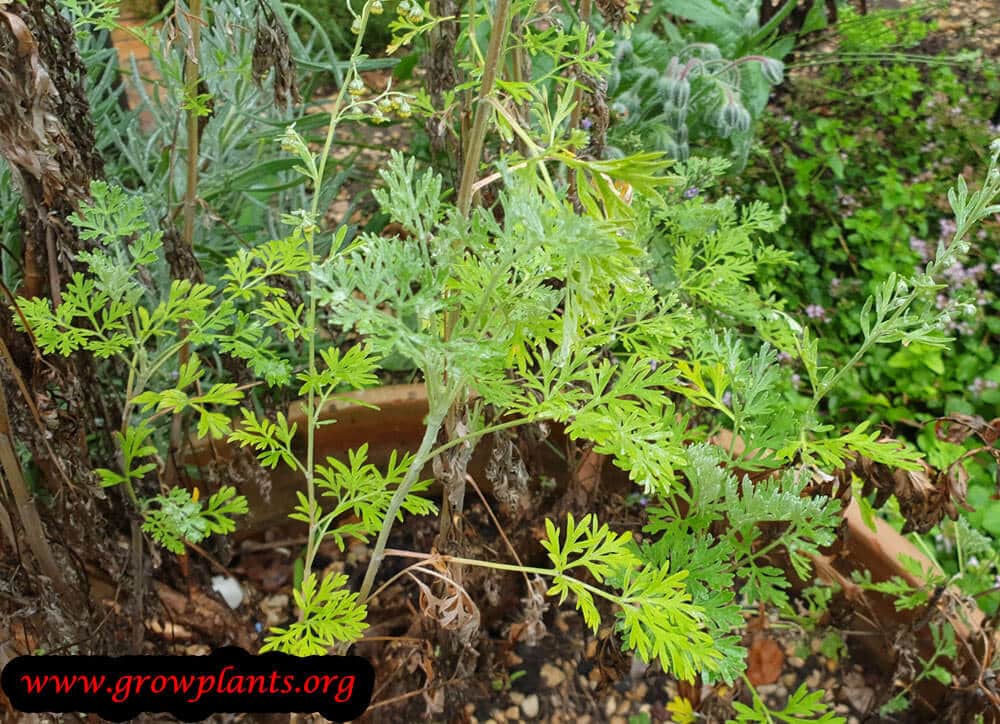
- Leaves & Foliage: Deeply lobed, silvery green-grey aromatic leaves.
- Flower Characteristics: Small yellow flower heads in spherical clusters at the branch tips in summer.
Primary Uses & Landscape Value
- Functional & Ornamental Roles: Silvery aromatic foliage plant for ornamental and herb gardens and containers; leaves used for bittering, fragrance and traditional medicine (in small amounts only). Best kept away from other plants (allelopathic).
Care Guide: Planting, Soil & Watering
Overview: Artemisia is an aromatic Mediterranean sub-shrub that thrives in full sun and light, sharply drained soil, and is markedly drought-tolerant once established. It prefers lean, dry ground to rich or wet soil, which can rot the roots.
Quick Care Requirements
| Requirement | Ideal Condition |
|---|---|
| Planting Season | Warm season — spring through autumn, once frost has passed |
| Growth Rate | Moderate |
| Soil Type | Light, well-draining, average-to-poor soil; dislikes wet, heavy ground |
| Water Need | Low to Moderate — drought-tolerant once established; let the soil dry between waterings |
Planting & Establishment
- Best Planting Season: Plant in spring to summer in zone 4-9, spring to early autumn in zone 10a, autumn to early spring in zone 10b. Give it room away from other plants — its foliage and roots are allelopathic and can inhibit close neighbours.
- How to Plant:
- Hole Preparation: Dig a hole slightly larger than the root ball in a sunny, open, free-draining spot.
- Soil Amendments: Little enrichment is needed — on heavy soil work in grit or coarse sand to sharpen drainage rather than adding rich compost.
- Planting Depth: Set the plant with its root collar at soil level; do not bury the stem.
- Growth Speed & Expectations: Moderate — it forms an aromatic, bushy clump about 1-1.5 m, 40-60 inches, with silvery foliage that fills out over the season.
Soil, Watering & Drainage Care
- Soil Mix & Drainage Needs: Give it light, sharply drained soil; it resents wet feet. In containers use a potting or peat mix lightened with perlite and a little organic matter, keep good drainage holes, and let any water in the saucer drain away the same day.
- Watering Schedule & Technique:
- Young / Newly Planted: Water to settle it in and keep the soil lightly moist while roots establish.
- Established: Water sparingly and deeply, letting the soil dry out between waterings; established plants tolerate drought well.
- Seasonal Adjustments: Water very little in winter and wet spells; give a little extra only in prolonged heat, always avoiding soggy soil.
Climate, Light & Hardiness
Common wormwood is a tough, cold-hardy Mediterranean and temperate-climate herb that grows best in full sun, though it also tolerates half or even full shade with less vigorous, less aromatic growth. It is reliably hardy from USDA zone 4 through 10a, and can be grown with extra care into zone 10b.
Quick Climate Specifications
| Climate Zones | Mediterranean, temperate, subtropical |
|---|---|
| USDA Hardiness Zones | 4–10a (10b possible with extra care) |
| Optimal Temp Range | Generally around 15–25°C (59–77°F) during active growth |
| Approx. Survival Minimum | Roughly −34 to −29°C (−30 to −20°F) for the root system, consistent with USDA zone 4 |
| Frost Tolerance | High |
| Light Conditions | Full Sun to Full Shade (full sun gives the strongest, most aromatic growth) |
| Wind Tolerance | Moderate |
Sunlight & Light Exposure
Optimal Light Setup
Full sun produces the most compact, aromatic growth; the plant is adaptable enough to also grow in half or full shade.
Direct Sun Requirement
Not strictly required – it tolerates shade well, though flowering and foliage aroma are reduced without good sun.
Shade & Heat Management
In the hottest part of its range (desert-like zone 10a), light afternoon shade can help prevent scorch and keep the silvery foliage color from fading.
Best Exposure / Orientation
An open, sunny bed with good drainage suits it best; avoid low, damp spots.
Temperature Extremes & Hardiness
USDA Hardiness & Regional Limits
Reliably hardy zone 4–10a per site data, with zone 10b achievable given extra care – an unusually wide cold-to-warm range for a single species.
Cold Damage & Winter Protection
As a hardy perennial sub-shrub, top growth may die back in severe cold while the rootstock survives; in mild winters the evergreen habit often persists largely intact. A light mulch is a sensible precaution at the cold end of its range.
Frost Sensitivity
Low – well adapted to seasonal frost and winter freezing within its rated zones.
Extreme Heat Tolerance
Good; native to warm, dry Mediterranean-type summers, though light shade helps in the most extreme desert heat.
Wind, Humidity & Microclimate
Humidity Preferences
Adapted to the drier air typical of Mediterranean and temperate climates; does not need high humidity.
Dry-Air Tolerance
High – a classic trait of this Mediterranean-origin herb.
Wind Tolerance
Generally good; its sturdy, woody-based habit reflects an origin in open, exposed steppe and Mediterranean sites.
Rainfall & Seasonal Moisture
Adapted to a Mediterranean-type pattern of drier summers and wetter winters; does not tolerate waterlogged soil.
Microclimate Recommendations
An open, sunny site with good air movement and sharp drainage suits it best; avoid frost pockets at the cold end of its range and any soil that stays wet.
Growing in Pots, Balconies & Indoors
Common wormwood (Artemisia absinthium) is an aromatic, silvery sub-shrub reaching 1-1.5 m (40-60 in). The grower says it can be grown indoors given good light and well-ventilated air, so treat it as a bright, airy windowsill or sunroom plant; it also does very well in a container on a sunny patio or balcony.
Quick Details
- Container Size: At least 30-50% larger than the plant; a roomy pot for its bushy growth
- Indoor Suitability: Possible indoors with strong light and good airflow (grower’s note) – a bright, airy sill
- Best Spot: Full sun to half shade, even full shade – very adaptable, but best colour in sun
- Soil & Drainage: Potting mix or peat with perlite, blended with humus/organic matter; well-drained
- Watering in Pots: Small to average – it is drought-tolerant and dislikes soggy soil
Indoors & On the Windowsill
- Indoors with light & air: The grower confirms it indoors provided there is enough light and well-ventilated air – a bright window with good airflow. Stagnant, dim spots invite mildew on the soft grey foliage.
- Aromatic: The foliage is strongly scented – pleasant to brush past on a sill; it is also a useful deterrent to some insects.
- Overwintering: Hardy outdoors in most climates; a potted plant can overwinter outside in a sheltered spot, or come in to a cool bright room.
- Safety: Wormwood is toxic if eaten (it contains thujone) – grow it for scent and looks, keep it away from children and pets, and never let it be nibbled.
On a Balcony or Patio
- Light & air: A sunny, breezy spot gives the best silver foliage and keeps it disease-free; it tolerates part shade too. Note the grower’s caution that it shows allelopathy – its roots and leaf litter can suppress nearby plants, so keep it in its own pot.
- Practicalities: Drought-tolerant, so let it approach dryness; free drainage matters more than frequent watering.
Choosing the Pot, Soil & Long-Term Care
- Pot & drainage: A pot at least 30-50% larger than the plant, with strong drainage holes. As the grower notes, you can let the pot base fill with water briefly but it should drain dry the same day – never leave it standing wet.
- Potting mix: Potting mix or peat with perlite, blended with humus and organic matter; a chopped-mulch top keeps the soil evenly moist.
- Feeding: Potted plants exhaust and leach nutrients faster than those in the ground, so feed lightly during active growth – more often than you would in open soil.
- Repotting: Every few years refresh the soil – best done in the cool dormant season: wash the soil off the roots, trim the roots and prune the top before repotting.
Fertilizing & Feeding
A light feeder by nature: keeping nutrition modest preserves the concentrated aromatic oils this herb is grown for, so err on the side of underfeeding rather than pushing lush, diluted growth.
Quick Fertilizing Specs
| Feeding Level | Light feeder |
|---|---|
| Main Nutrient Priority | A low-nitrogen, balanced approach that favors aromatic oil content over soft leafy bulk |
| Best Feeding Period | As new growth resumes in spring through the active growing season |
| Organic Options | Compost or well-rotted organic matter worked into lean, well-drained soil |
| Soil pH | Tolerates a wide range; does well in near-neutral to alkaline soil typical of Mediterranean plantings |
| Micronutrients | Rarely an issue in average garden soil; correct only a diagnosed deficiency |
Feeding by Growth Stage
Establishment after planting
Help newly planted or newly rooted wormwood settle in and build a root system in its lean, well-drained preferred soil.
| Nutrient direction | A light, balanced feeding paired with organic matter supports root establishment without forcing soft top growth. |
|---|---|
| Timing | At planting and through the first weeks as roots establish, spring to early summer. |
| Frequency | A single light feeding at planting is usually enough to start the plant off. |
| Fertilizer types | A balanced general-purpose fertilizer at a light rate, Compost or organic matter mixed into the planting area |
| Precautions | This plant thrives on neglect once established; avoid rich soil or heavy feeding, which can produce weak, floppy stems and reduce the plant’s characteristic silvery foliage and fragrance. |
Active growth through the growing season
Maintain healthy, aromatic silver-gray foliage through the growing and bloom season without overfeeding.
| Nutrient direction | A low-nitrogen, balanced approach keeps growth compact and the foliage’s essential oils concentrated; heavy nitrogen dilutes aroma and weakens stems. |
|---|---|
| Timing | Through spring and summer while the plant is actively growing. |
| Frequency | Minimal feeding is usually enough; established plants in decent soil often need none at all through the season. |
| Fertilizer types | A light, balanced or low-nitrogen fertilizer only if growth looks thin, A light top-dressing of compost in place of synthetic feeding |
| Precautions | Keep feeding sparing; wormwood is allelopathic and naturally competitive, and overfeeding does not improve performance, only softens the plant and reduces fragrance. |
Nutrient Deficiency Signs & Corrections
Older, lower leaves turn pale green to yellow and overall growth and leaf production slows.
| Possible causes | low available soil nitrogen, very lean, sandy, or leached soil, root competition from nearby plants |
|---|---|
| Appears first on | older, lower leaves |
| What to check | soil organic matter and texture, recent feeding history, root health and crowding |
| Possible correction | Work in a light amount of balanced fertilizer or compost and monitor for greener regrowth before adding more. |
New growth turns yellow while the leaf veins remain green.
| Possible causes | high soil pH tying up available iron, waterlogged or compacted soil limiting root uptake, cold soil temporarily slowing nutrient uptake |
|---|---|
| Appears first on | newest leaves at the shoot tips |
| What to check | soil pH and drainage, watering frequency and soil compaction, recent temperature swings |
| Possible correction | Improve drainage and correct pH toward neutral where practical, or apply a chelated iron product per its label. |
Leaf tips and margins brown or scorch, especially on container-grown plants, despite adequate watering.
| Possible causes | fertilizer salt buildup from overfeeding, infrequent watering that concentrates salts in the root zone, poor drainage in a container or dense soil |
|---|---|
| Appears first on | leaf tips and margins |
| What to check | recent feeding amounts and frequency, container drainage, watering consistency |
| Possible correction | Ease off feeding, water thoroughly to move accumulated salts past the root zone, and resume only light feeding afterward. |
Pruning, Training & Seasonal Maintenance
Artemisia absinthium is a perennial subshrub that becomes woody at the base with age; it tolerates cutting back well while the wood is still young and pliable, but like many woody Artemisia and related aromatic subshrubs, it resists resprouting from bare old wood, so the main structural cut – thinning the inner branches – is best kept to younger growth rather than deep into the old base. The primary window is autumn into winter, and because the plant is grown partly for its aromatic leaves, cutting also doubles as light harvest.
Quick Pruning & Maintenance Specs
| Pruning Tolerance | Moderate – tolerates thinning and cutback on younger wood, but does not reliably resprout from old bare wood |
| Primary Pruning Window | Autumn to winter |
| Typical Frequency | Once a year, plus incidental leaf harvest through the growing season |
| Main Objective | Thin inner branches for light and airflow; keep the base from becoming congested and overly woody |
| Young Plant Priority | Light pinching to encourage branching before the base woodies over |
| Mature Plant Priority | Thin congested inner branches annually; avoid cutting into the oldest bare wood |
| Best Tool Type | Bypass secateurs |
| Avoid Heavy Pruning During | Deep cuts into old, leafless basal wood at any time, since regrowth from there is unreliable |
Pruning by Plant Age & Size
Newly Established
Pinch young growth lightly to encourage branching while the plant is still soft-stemmed, before the base begins to woody over.
Young / Formative
No formal training system is used; light pinching for a bushy, many-stemmed habit is the only shaping needed at this stage.
Mature / Established
Once a year, cut the inner branches out to open up the plant and prevent the congested, twiggy center that this species is prone to; keep these cuts within younger growth rather than into the oldest, barest wood at the base.
Structural Pruning & Training
Thinning the inner branches is the main structural task here – it opens the plant’s center to light and airflow and helps prevent the bare, sparse-centered look that untended wormwood develops over time. This is a genuine thinning need for this species, not a routine add-on.
Special Growth to Remove
- Spent flower stems, once the small yellow blooms finish
- Congested inner branches, thinned annually to keep the center open
Container & Small-Space Pruning
When repotting every few years, the plant is typically root-pruned and top-pruned together – trim some of the root mass when refreshing the soil, and prune the top growth to match, rather than leaving a large top on a newly reduced root system.
Tools
- Bypass secateurs – for both the annual thinning cut and incidental leaf harvest
Tool Hygiene & Disease Risk
Routine: clean, sharp tools are sufficient. The only pest noted for this species is aphids, a treatment matter rather than a between-cut contamination risk. Note the plant’s allelopathic tendency (it is recommended to be grown away from other plants) – this affects placement, not pruning technique.
Cut Placement & Technique
Cut inner branches back to a point with visible leaf buds or side growth rather than into bare wood, since this species does not reliably break new growth from leafless old stems.
Heavy Pruning & Rejuvenation
A hard rejuvenation cut into old bare wood is not reliable for this species – if the plant has become very woody and sparse, it is generally more dependable to propagate a fresh plant from a cutting than to hard-prune the old one and hope for regrowth.
Post-Pruning Care
Water as normal after the annual thinning cut; no feeding is needed specifically because of pruning.
Common Pruning Mistakes
- Cutting hard into old, bare basal wood expecting it to resprout, which this species does not reliably do
- Letting the center go untouched for years, leading to a congested, twiggy interior with foliage only at the outer edges
When NOT to Prune
Avoid deep cuts into old leafless wood at any time of year; if unsure whether a stem is old enough to be unreliable, favor a lighter cut into younger growth instead.
Recommended Tools (by task)
- Bypass secateurs – annual thinning of inner branches and general leaf/stem harvest
Propagation Guide
Common wormwood is most reliably propagated from stem cuttings, which root readily and keep the plant’s aromatic character true, though it also grows well from seed. Propagation is generally easy by cutting and moderate by seed, since germination can be slow and somewhat uneven.
Quick Propagation Specs
| Best Propagation Method | Stem cuttings |
| Alternative Methods | Seed; layering (bending a branch down and covering it with soil) |
| Propagation Difficulty | Easy (cuttings); Moderate (seed) |
| Vegetative True-to-Type | Yes |
| Best Propagation Season | Spring / Autumn |
| Seed Germination Time | 4–8 weeks |
| Cutting Rooting Time | 2–4 weeks |
| Germination Temperature | 15–25°C (59–77°F) |
| Seed Sowing Depth | 0.5–1cm (0.25–0.5 in) |
Growing from Seed
Seed Handling & Viability
Store saved seed in a dry, dark, cool place until sowing.
Sowing Season
Spring to summer in hardiness zone 4–10a; autumn to early spring in zone 10b.
Sowing Depth & Orientation
Sow shallowly at 0.5–1cm (0.25–0.5 in) deep, with plants spaced about 30x30cm (12×12 in).
Germination Conditions
Keep the soil moist, humid, and weed-free at 15–25°C (59–77°F).
Germination Time
Typically 4–8 weeks; germination can be gradual, so allow the full range before judging a sowing as failed.
Seedling Care
Keep young seedlings in moist soil and a sunny location until established.
Stem Cuttings
Cutting Type
Softwood/semi-hardwood stem cuttings, taken leafless (strip the lower leaves before inserting).
Best Timing
Spring or autumn.
Cutting Preparation
Take a stem section and remove the leaves from the portion that will be inserted into the medium.
Rooting Setup
Insert into moist soil, ideally peat-based, though other soils work; a greenhouse or covered plastic box helps maintain the high humidity cuttings need. Rooting in a jar of water is also possible, changing the water every few days, though this method is less reliable.
Rooting Hormone
Not stated as required by the site; optional to speed rooting.
Rooting Time
About 2–4 weeks to develop roots.
Air & Ground Layering
Ground layering is a viable alternative: bend a lower branch down to soil level and cover the contact section with soil, leaving the tip exposed, until it roots on its own.
Bloom & Flower Guide
Quick Details
- Bloom Season: Summer
- Flower Appearance: Small, nodding yellowish-white flower heads strung along the branch ends
- Edibility: Not edible – wormwood contains thujone and is toxic; it is grown for its aromatic foliage, not for eating
Detailed Blooming Overview
Common wormwood is grown above all for its silvery, intensely aromatic foliage, and its bloom is a quiet affair: in summer it produces sprays of small, nodding, greenish-yellow to whitish flower heads along the tips of the branches. The flowers are inconspicuous, with no showy petals, and add a soft haze rather than bold colour.
Flower Characteristics
- Small, rounded, yellowish-white flower heads carried along the branch ends.
- Petal-less and understated, in keeping with a plant grown chiefly for its leaves.
Bloom Care & Thinning
- Thinning: If you are growing it for the foliage, remove the flower heads as they form to keep the plant bushy and the leaves at their best.
- Pollination: Like other Artemisia, wormwood is wind-pollinated rather than insect-pollinated, and its light pollen is a known hay-fever trigger.
Fruit & Uses
The grey-green, deeply lobed leaves are the only edible part of common wormwood, used as an intensely bitter flavoring herb rather than as a food green. Leaves are mostly used dried or infused (for bitters, vermouth-style beverages and herbal tea) and only occasionally used fresh in very small amounts, since the plant’s strong bitterness and thujone content make it unsuitable for eating in quantity.
Quick Edible Specs
| Edible Parts | Leaves |
|---|---|
| Main Use(s) | Culinary flavoring (bitters, historically vermouth and absinthe), herbal beverage/tea, fragrance, traditional medicinal use |
| Eaten Raw or Cooked | Rarely raw; mostly dried and infused |
| Preparation Required | Use in small amounts only; infuse or dry rather than eating fresh in bulk |
| Harvest Season | All year |
| Time to First Harvest | Once the plant is established and has developed leaf growth |
| Storage | Dry, dark, cool place |
| Safety/Toxicity Caveat | Contains thujone; large or frequent doses are toxic – this is a flavoring herb, not a leafy vegetable |
Leaves & Greens
The leaves are green-grey and deeply lobed. They are cut for use as an aromatic bittering herb: fresh or dried leaves are steeped to flavor beverages and were historically a key bittering agent in vermouth and absinthe-style drinks, and dried leaves are used for herbal tea and fragrance. Because the flavor is very bitter and the leaves contain thujone, only small quantities are used at a time, and concentrated extracts or oils should be avoided.
Harvesting
Leaves can be harvested all year by cutting whole branches; cut stems are then dried or used fresh in small quantity. If the plant is being grown mainly for leaf harvest, thinning the flowers is recommended, since letting it bloom heavily diverts energy from leaf growth (see Pruning for general cutting guidance).
Preparation, Uses & Safety
Leaves are dried for tea and bitters, or infused fresh in small amounts to flavor beverages; the plant is also valued for its fragrance. It has a long history of traditional medicinal use, though this should be understood as folk use only, not a health claim. Safety comes first with this plant: the thujone content makes it unsuitable for regular or large-quantity consumption, and it should be treated strictly as an occasional flavoring herb rather than a food.
Pests, Diseases & Troubleshooting
Overview: Artemisias are aromatic, often silver-leaved plants (Asteraceae) whose essential oils make them naturally resistant to most pests and grazing animals. Their true enemy is not an insect but wet, heavy soil – crown and root rot rapidly kills them in winter wet or humid heat. Aphids (especially on soft tarragon growth), leafminers and, in hot dry spells, spider mites are about the only pests of note, with rust and powdery or downy mildew appearing in crowded, damp conditions. Wormwood (Artemisia absinthium) is a silver, powerfully aromatic species that is strongly allelopathic – its leaf secretions can stunt nearby plants – and, like its kin, very pest-resistant but rot-prone in wet soil.
Quick Troubleshooting Overview
| Issue / Pest | Main Symptom | Primary Solution |
|---|---|---|
| Crown / root rot | Plant blackens and collapses at the base in wet soil | Sharp drainage; grow lean and dry |
| Aphids | Clustered, sticky, distorted tender tips | Water blast; insecticidal soap |
| Spider mites | Fine stippling and webbing in hot dry spells | Hose foliage; horticultural oil |
| Leafminers | Pale winding trails inside the leaves | Remove mined leaves; encourage wasps |
| Rust | Orange or white powdery pustules under leaves | Remove affected foliage; airflow |
| Powdery mildew | White coating in humid, crowded growth | Thin for airflow; full sun |
Common Pests & Management
- Aphids (Macrosiphoniella artemisiae / Aphis spp.):
- Symptoms: Green, grey or dark soft-bodied insects massing on the softest new shoots and tips – most noticeable on tender, well-fed growth – distorting them and leaving sticky honeydew and sooty mould. The main insect pest of the genus.
- Prevention & Control: Knock colonies off with a jet of water and encourage ladybirds, lacewings and hoverflies, which flourish among artemisias. Avoid soft, over-fed growth; treat persistent infestations with insecticidal soap or neem oil sprayed in the cool of evening.
- Leafminers (Agromyzidae (leaf-mining flies)):
- Symptoms: Pale, winding or blotchy tunnels etched inside the leaves where fly larvae feed between the surfaces; largely cosmetic on a vigorous plant but disfiguring in bad years.
- Prevention & Control: Pick off and destroy mined leaves as they appear to break the cycle, and encourage the parasitic wasps that are their main natural control. Row cover excludes the egg-laying flies on prized culinary plants; chemicals are seldom warranted.
- Two-spotted spider mite (Tetranychus urticae):
- Symptoms: Fine pale stippling and a dull, bronzed, dusty appearance to the foliage with faint webbing underneath, appearing in hot, dry, stagnant conditions and on drought-stressed or indoor plants.
- Prevention & Control: Hose the foliage and raise humidity, and relieve drought stress. Introduce predatory mites under cover; use insecticidal soap or horticultural oil for heavy infestations, covering the leaf undersides well.
Diseases & Fungal Issues
- Crown and root rot (Rhizoctonia / Phytophthora / Sclerotinia spp.):
- Symptoms: The classic killer of artemisias: the base of the plant blackens and softens, stems wilt and collapse, and the roots rot – triggered almost entirely by wet, heavy, poorly drained soil, humidity and overwatering.
- Treatment & Management: This is cultural, not chemical. Plant in sharp, gritty, lean, free-draining soil in full sun, space for airflow, and avoid winter wet and overwatering. Remove and destroy collapsed plants and do not replant into the same soggy spot; raised or gravelly beds are ideal.
- Rust (Puccinia spp.):
- Symptoms: Orange, yellow or brown (sometimes whitish) powdery pustules, chiefly on the undersides of leaves, with yellow blotching above and general weakening; favoured by damp, crowded conditions.
- Treatment & Management: Remove and destroy affected leaves, thin and divide crowded clumps for airflow, and avoid overhead watering. Grow in full sun with lean soil; a sulphur fungicide can check severe outbreaks if needed.
- Powdery & downy mildew (Golovinomyces / Peronospora spp.):
- Symptoms: Powdery mildew shows as a white powdery film over leaves and stems in humid crowding; downy mildew appears as yellow blotches above with greyish mould beneath in cool, damp weather.
- Treatment & Management: Improve airflow by thinning, dividing and siting in full sun, water at the base early in the day, and avoid soft over-fed growth. Remove affected foliage; sulphur (powdery) or copper (downy) fungicide handles stubborn cases.
Growing Difficulties & Abiotic Problems
- Root rot from overwatering & winter wet:
- Cause & Symptoms: By far the commonest cause of loss. These drought-adapted plants rot in rich, wet or heavy soil, collapsing over a wet winter or in humid heat.
- Correction Strategy: Grow lean and hard in gritty, sharply drained soil in full sun; add grit, plant high, and water only sparingly once established. Mimic their dry, sunny wild habitat. Wormwood is allelopathic, so site it away from sensitive neighbours; it too rots quickly in wet ground.
- Floppy, leggy, sparse growth:
- Cause & Symptoms: In rich soil or shade, artemisias grow soft, lax and open, flop apart in the middle, lose their silver colour and become more disease-prone.
- Correction Strategy: Grow in poor soil and full sun with no feeding, and cut back hard in spring (and again after flowering) to keep growth dense, silver and compact.
- Loss of aroma and flavour:
- Cause & Symptoms: Over-feeding, shade and rich soil dilute the essential oils that give the aromatic and culinary species (like tarragon and wormwood) their strength.
- Correction Strategy: Grow hard in sun and lean soil, avoid heavy nitrogen, and harvest in the warm part of the day when oils are highest for the best flavour and scent.
What Helps – Products & Tools
Very little is usually needed. For the rare pest, use a water jet, insecticidal soap or neem/horticultural oil for aphids and spider mites, and hand-removal for leafminers. Disease is best prevented culturally – grit, drainage, full sun and airflow – with sulphur fungicide for rust and powdery mildew and copper for downy mildew held in reserve. The real “tools” are horticultural grit, a free-draining bed and sharp secateurs for hard spring pruning.