

Plant Profile & Key Characteristics
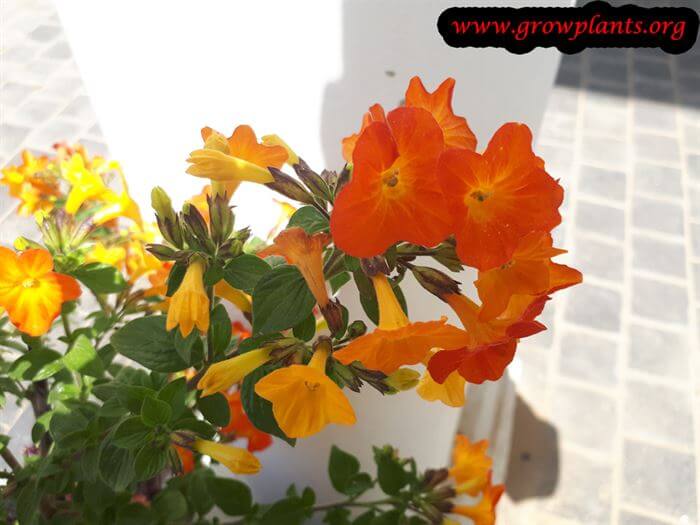
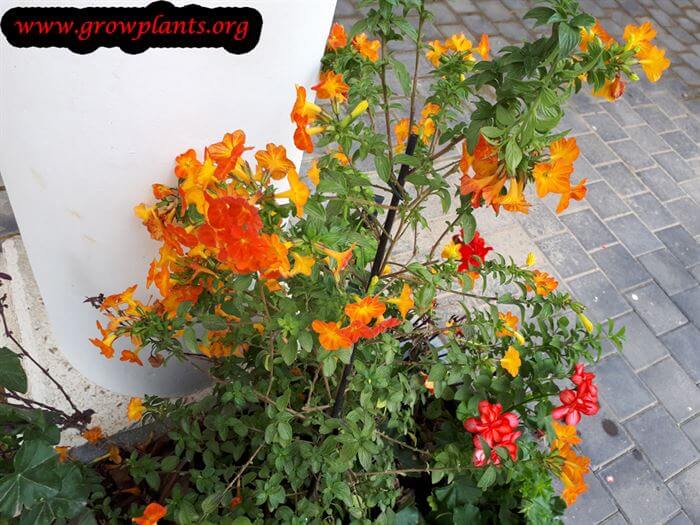
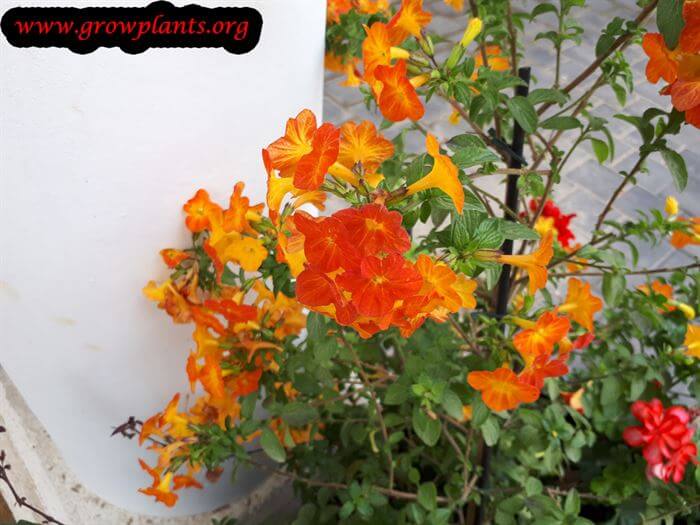
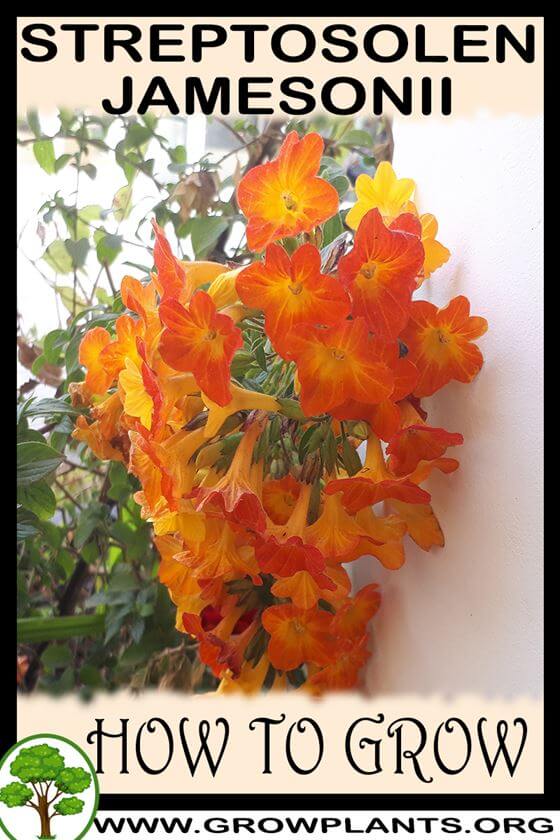
Overview: Marmalade bush (Streptosolen jamesonii) is an evergreen ornamental shrub 1-2 m tall whose clustered funnel-shaped flowers open yellow and age to orange-red. It is a perennial for subtropical to Mediterranean climates and attracts pollinators.
Quick Specifications
| Specification | Attribute |
|---|---|
| Plant Type / Life Cycle | Perennial (evergreen shrub) |
| Foliage Type | Evergreen |
| Mature Size | 1-2 m (3-6 ft) |
| Growth Rate | Moderate to fast |
| Toxicity | Contains some toxicity – keep away from children and pets |
| Hardiness | USDA zone 10+ |
Growth Form & Structure
- Height & Spread: 1-2 m (3-6 ft); grows well in a container.
- Growth Habit & Form: Loose, sprawling evergreen shrub that can be trained on a support or as a low hedge.
- Lifespan & Maturity: Fast-growing and relatively short-lived.
Anatomy & Physical Features
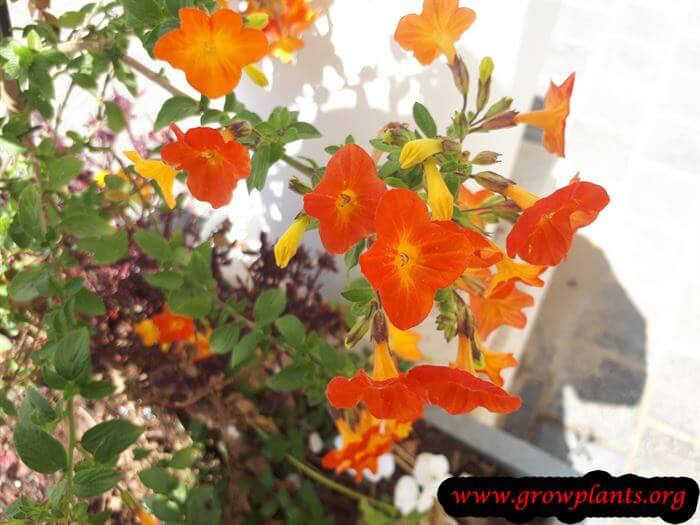
- Leaves & Foliage: Green elliptic to oval leaves with a textured surface.
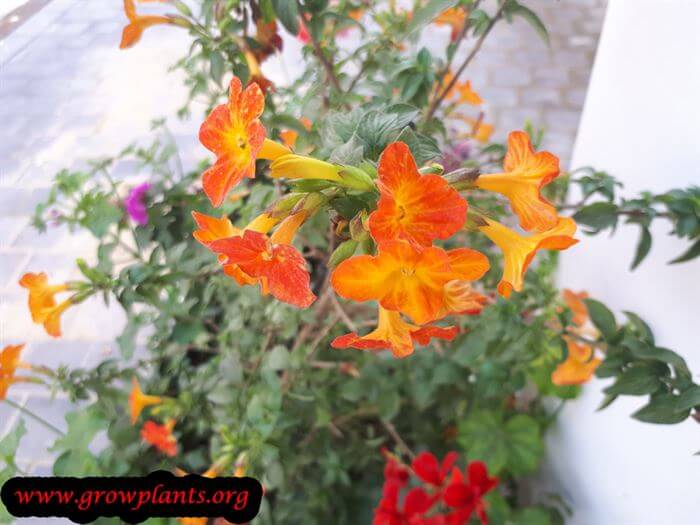
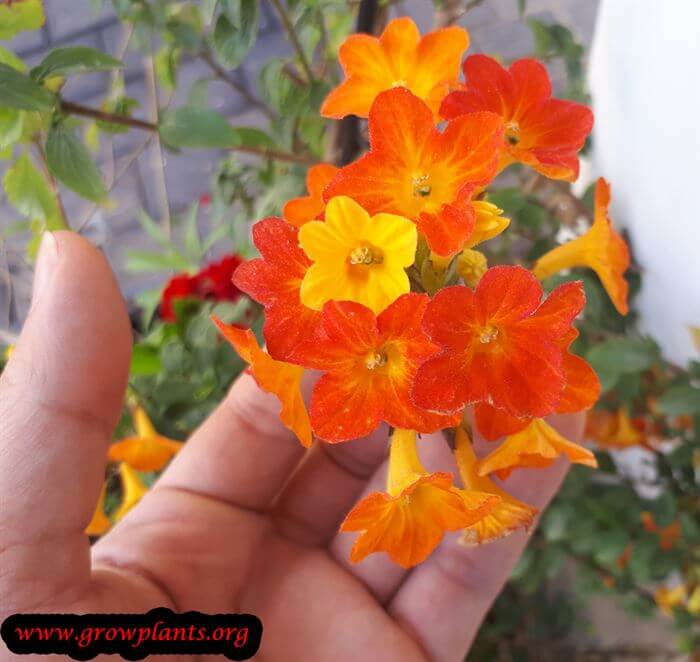
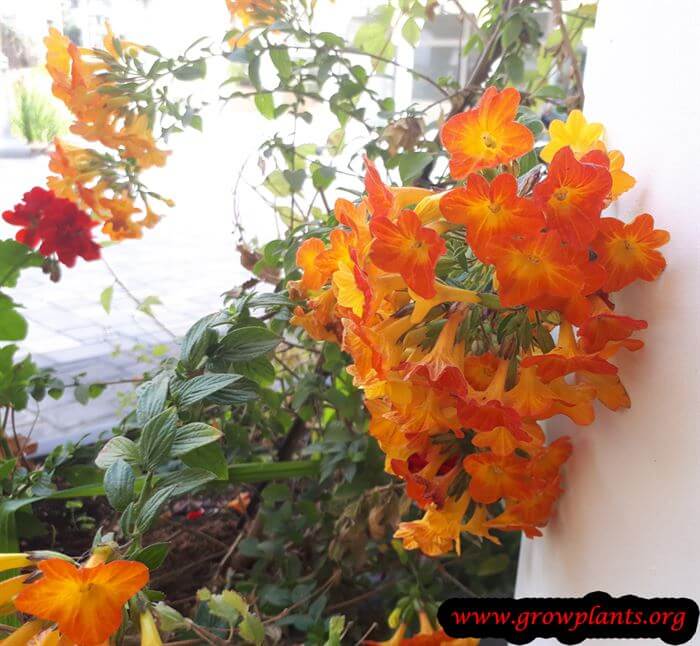
- Flower Characteristics: Funnel-shaped flowers in dense clusters, opening yellow and ageing through orange to red (full detail in the Bloom guide).
Primary Uses & Landscape Value
- Functional & Ornamental Roles: Ornamental flowering shrub for banks, containers and informal hedging; attracts pollinators.
Care Guide: Planting, Soil & Watering
Overview: Marmalade bush is a fast-growing, frost-tender evergreen shrub that flowers best in full sun to light shade with light, well-draining soil. It prefers low to moderate, regular watering and sharp drainage, disliking heavy, soggy ground.
Quick Care Requirements
| Requirement | Ideal Condition |
|---|---|
| Planting Season | Year-round in warm, frost-free climates |
| Growth Rate | Fast to moderate |
| Soil Type | Light, well-draining soil |
| Water Need | Low to moderate – water regularly but let the surface dry between waterings |
Planting & Establishment
- Best Planting Season: In its frost-free range (zone 10+) it can be planted at any time of year; where nights are cool, favour spring so it settles in before winter.
- How to Plant:
- Hole Preparation: Dig a hole about twice the width of the root ball and the same depth, loosening the surrounding soil.
- Soil Amendments: Blend in some compost or organic matter to feed the plant while keeping the mix open and free-draining.
- Planting Depth: Plant at the same level it sat in its container, with the crown at the surface; avoid burying the stem.
- Growth Speed & Expectations: Expect quick growth and a long flowering display in warm conditions, filling out into a loose, arching shrub.
Soil, Watering & Drainage Care
- Soil Mix & Drainage Needs: Give it light, airy, well-draining soil; in pots use a free-draining potting mix and make sure surplus water escapes, since wet feet lead to root rot.
- Watering Schedule & Technique:
- Young / Newly Planted: Water regularly after planting to keep the root ball evenly moist until the plant is established.
- Established: Water moderately, letting the top few centimetres dry between waterings; it tolerates short dry spells once settled.
- Seasonal Adjustments: Water more in hot, dry weather and cut back in cool periods, keeping it drier through winter.
Climate, Light & Hardiness
Streptosolen jamesonii (marmalade bush) is a fast-to-medium growing evergreen shrub suited to subtropical, Mediterranean, tropical, and desert climates in full sun to half shade. It is frost-sensitive and reliably hardy outdoors only where winters stay essentially frost-free.
Quick Climate Specifications
| Climate Zones | Subtropical, Mediterranean, Tropical, Desert |
|---|---|
| USDA Hardiness Zones | 10+ |
| Cold Damage Begins | Frost damages foliage and flowers, generally around 0°C (32°F) |
| Approx. Survival Minimum | Established plants at the cool edge of zone 10 (typical average minimum extreme of roughly −1 to 4°C / 30–40°F) may survive a brief light frost with some dieback if the roots are mulched; hard freezes are usually fatal |
| Frost Tolerance | Low |
| Light Conditions | Full Sun / Half Shade |
Sunlight & Light Exposure
Optimal Light Setup
Full sun brings the heaviest bloom of yellow-to-orange-red flower clusters; half shade is tolerated, especially in hot climates.
Shade & Heat Management
In intense desert or subtropical summer heat, light afternoon shade can ease leaf and flower stress while still giving strong bloom.
Best Exposure / Orientation
A warm, sunny, sheltered wall or border - especially at the cooler edge of its range - helps buffer occasional cold snaps.
Temperature Extremes & Hardiness
USDA Hardiness & Regional Limits
Reliably hardy outdoors only in USDA zone 10 and warmer. At the cooler margins of its range it can suffer dieback in a cold winter and resprout from the base in spring if the roots are protected.
Cold Damage & Winter Protection
Frost blackens foliage and flowers; mulching the root zone and siting it against a warm wall can help it survive an occasional light frost with only top damage.
Frost Sensitivity
Frost-sensitive; grow in a container and bring under cover for winter anywhere colder than its hardy zones.
Wind, Humidity & Microclimate
Humidity Preferences
Adapts to both the humid air of subtropical and tropical climates and the drier conditions of Mediterranean and desert regions.
Wind Tolerance
Moderate; some shelter from strong, drying winds helps protect its relatively soft, fast-growing stems.
Microclimate Recommendations
A warm, sheltered spot such as a south-facing wall extends its usable range into cooler gardens.
Growing in Pots, Balconies & Indoors
Streptosolen jamesonii (Marmalade bush) is a fast-growing evergreen shrub, 1-2 m tall, smothered in yellow-to-orange-red funnel flowers. The grower does not consider it an indoor houseplant – it is really an outdoor sun-lover – but it grows well in a large container on a warm patio or balcony, where in cold climates it can also be moved under cover for winter. It carries some toxicity, so site it away from children and pets.
Quick Details
- Container Size: A large, sturdy container (well upward of 20-30 L for a mature 1-2 m shrub); pot up in stages
- Indoor Suitability: Not a houseplant – too large and too sun-hungry for indoors; best outdoors or in a bright, airy conservatory
- Best Spot: Full sun to half shade, outdoors on a warm, sheltered patio or balcony
- Soil & Drainage: Well-drained, organic-rich mix; strong drainage holes
- Watering in Pots: Small to average amounts; keep lightly moist in growth but never waterlogged – pots dry faster than open ground
Indoors & On the Windowsill
- Not a houseplant: The grower marks it as unsuitable indoors. As a 1-2 m flowering shrub that craves sun, it will not thrive in a living room; a bright, airy sunroom or conservatory is the closest indoor option.
- Overwintering under cover: Frost-tender (hardiness zone 10+). Its best use of a pot is portability – in cold climates grow it in a container and shift it into a bright, frost-free space (a greenhouse or conservatory) over winter, then back out in the warm season.
- Safety: It contains some toxicity – keep it away from children and pets, and wash hands after pruning.
On a Balcony or Patio
- Light, wind & heat: Give it the sunniest, most sheltered spot; it flowers hard in warmth and reflected wall heat, but that also dries pots fast – check moisture often. Shelter the lax stems from strong wind and tie them in or let it sprawl.
- Practicalities: A big shrub in a big pot is heavy – place it before filling, and make sure drainage runoff can escape.
Choosing the Pot, Soil & Long-Term Care
- Pot & drainage: A large pot with strong drainage holes; skip a standing water saucer. Glazed or plastic pots hold moisture longer, which suits its steadier moisture needs than fast-drying terracotta.
- Potting mix: A well-aerated, organic-rich mix – for example coir or peat with perlite.
- Feeding: Potted shrubs leach nutrients, so feed regularly through the growing and flowering season with a balanced feed to fuel its heavy bloom.
- Repotting: Pot up in stages as it grows; refresh the top layer of mix each year and prune after flowering to keep it bushy and in bounds.
Growing this plant in a greenhouse
A greenhouse can give streptosolen jamesonii frost protection, cold protection, humidity control and extra warmth. In the right climate it may also be kept growing through winter, depending on how much warmth and light are provided.
Greenhouse at a glance
| Greenhouse suitability | Conditional - depends on your climate |
|---|---|
| Main benefits | frost protection, cold protection, humidity control, extra warmth |
| Season extension | earlier spring & later autumn |
| Outdoor protection advisable below | about 5°C |
| Maintain greenhouse minimum | around 5°C for active growth |
| Suitable types | unheated greenhouse, polycarbonate greenhouse, lean-to |
| Heating | Heating is optional - useful mainly for winter growing in cold areas. |
Related greenhouse guides
- Greenhouses: How to Choose the Right Greenhouse
- Best Lean-To Greenhouses
- Polycarbonate Greenhouses: What to Look for Before Buying
Fertilizing & Feeding
A moderate feeder. This fast-growing, pollinator-attracting shrub flowers over a long season, so it benefits from steady balanced feeding through its growth flush and repeat bloom, tapering off during its brief cool-season lull.
Quick Fertilizing Specs
| Feeding Level | Moderate feeder |
|---|---|
| Main Nutrient Priority | Balanced feeding with adequate nitrogen to fuel new shoots and the long repeat bloom; extra phosphorus is not needed to flower well |
| Best Feeding Period | The active growing season, from spring growth through the long winter-into-spring bloom |
| Organic Options | Compost worked into the soil at planting and as a topdressing |
| Reduce/Stop Feeding | Reduce feeding during the shrub’s brief cool-season lull |
| Micronutrients | Usually met by a complete fertilizer; correct only diagnosed issues |
| Soil pH | Tolerates a wide range in well-drained soil |
Feeding by Growth Stage
Renewed shoot growth
Support fresh shoot growth on this fast-growing shrub as it comes back into active growth.
| Nutrient direction | A balanced complete fertilizer with adequate nitrogen supports the vigorous new growth this shrub is known for. |
|---|---|
| Timing | As new shoot growth resumes and the shrub is clearly active. |
| Frequency | Regular light-to-moderate feedings support the flush of new growth. |
| Fertilizer types | A balanced complete fertilizer, Compost worked into the soil |
| Routine trace nutrients | iron, manganese |
| Precautions | Avoid heavy nitrogen feeding, which can push rank, leggy growth at the expense of flowering. |
Extended repeat bloom
Sustain this shrub’s characteristic long flowering display, which peaks through the winter into spring but can continue on and off through much of the year.
| Nutrient direction | Steady, balanced nutrition keeps the shrub flowering well; balanced feeding, not extra phosphorus, is what drives strong bloom. |
|---|---|
| Timing | Through the extended bloom period, especially the winter-into-spring peak. |
| Frequency | Light, regular feeding through the bloom period keeps flowering steady without forcing excess foliage. |
| Fertilizer types | A balanced complete fertilizer, A balanced fertilizer formulated for flowering shrubs |
| Routine trace nutrients | iron, manganese |
| Precautions | Keep nitrogen moderate during peak bloom so the shrub puts energy into flowers rather than only foliage. |
Brief cool-season lull
Let the shrub coast through its shortest, least active stretch of the year without pushing growth it cannot use.
| Nutrient direction | None – withhold fertilizer during the shrub’s brief period of slowed growth in the coolest weather. |
|---|---|
| Timing | The coolest part of the year when growth and flowering are clearly at their slowest. |
| Frequency | No feeding at this stage; resume once active growth and flowering pick back up. |
| Fertilizer types | No feeding at this stage; do not fertilize until active growth resumes. |
| Precautions | Do not fertilize during this brief slow period; feeding now only wastes nutrients while the shrub is not actively using them. |
Nutrient Deficiency Signs & Corrections
Older, lower leaves fade to pale green or yellow and shoot growth and flowering are both noticeably weak.
| Possible causes | low available soil nitrogen, nitrogen leached from light or sandy soils, a shrub left unfed through its long growing and flowering season |
|---|---|
| Appears first on | older, lower leaves |
| What to check | recent feeding history, soil texture and drainage, overall vigor of new shoot growth |
| Possible correction | Apply a balanced complete fertilizer with adequate nitrogen during the active growing season and monitor new growth for recovery. |
New leaves turn pale to yellow between the veins while the veins themselves stay green.
| Possible causes | high soil pH reducing iron availability, poorly drained or overly wet soil limiting root uptake, root stress from compacted or waterlogged soil |
|---|---|
| Appears first on | newest leaves at the shoot tips |
| What to check | soil pH, drainage around the root zone, root health for compaction or waterlogging |
| Possible correction | Correct pH if high, improve drainage, and, only if a true deficiency is confirmed, apply a chelated iron product per its label. |
Leaf margins brown or scorch and growth stalls despite adequate watering, especially in containers.
| Possible causes | fertilizer salt buildup in the root zone, under-watering that concentrates salts, excessive or too-frequent feeding during the long bloom season |
|---|---|
| Appears first on | leaf margins and tips |
| What to check | recent fertilizer amounts and frequency, watering consistency, drainage, especially in containers |
| Possible correction | Ease off feeding, water thoroughly to flush accumulated salts, then return to lighter feeding. |
Pruning, Training & Seasonal Maintenance
Streptosolen jamesonii is a fast-to-medium, sprawling evergreen shrub that flowers on new growth almost year-round (heaviest in winter–spring), so pruning is mainly about renewing that flowering wood before it gets leggy, not about a single dormant structural cut. It tolerates fairly free pruning, but timing matters: cutting right before or during the main bloom removes the coming flower show, while a post-flush trim pushes fresh shoots that carry the next round of blooms.
Quick Pruning & Maintenance Specs
| Pruning Tolerance | Moderate to High |
| Primary Pruning Window | Early–mid spring, once the main winter–spring bloom flush has finished |
| Secondary Maintenance Window | Light shaping/tidying in autumn, before the next winter bloom cycle builds |
| Typical Frequency | 1–2 times per year plus occasional tip-pinching |
| Main Objective | Renew flowering wood, control legginess and size |
| Young Plant Priority | Pinch tips to build a bushy, multi-branched framework |
| Mature Plant Priority | Cut back sprawling/leggy stems after bloom to keep the shrub compact and floriferous |
| Best Tool Type | Bypass secateurs, with precision snips for tip-pinching |
| Avoid Heavy Pruning During | Peak winter–spring bloom – a hard cut then sacrifices the current flower display |
Pruning by Plant Age & Size
Newly Established
Minimal – remove only damaged growth while the plant roots in; avoid hard pruning in the first season.
Young / Formative
Multi-leader/open habit – pinch growing tips a few times in the first season to force branching low down, since this shrub has no natural central leader and left alone tends to grow a few long, sparse stems.
Mature / Established
Annual cutback of the previous season’s growth by roughly a third after the main bloom, plus removal of any winter-damaged or overly sprawling stems, keeps the shrub compact and produces the fresh growth it flowers on.
Seasonal Pruning Schedule
Post-Flowering
Objective: renew flowering wood after the heavy winter–spring bloom. Remove: spent flowering shoots, cutting back into the framework to a healthy bud. Do not remove: more than about a third of the plant at once, or it can be slow to refill. Expected response: vigorous new shoots that carry the next flowering flush. Flowering impact: positive – this is what produces next season’s bloom wood.
Ongoing Sanitary
Objective: autumn tidy before the winter bloom builds. Remove: only dead, damaged or crossing growth – a light trim, not a hard cutback. Do not remove: healthy stems carrying developing flower buds. Expected response: a tidier plant without interrupting the coming bloom. Flowering impact: none, if kept light.
Structural Pruning & Training
No formal training system – just an open, multi-stemmed shrub shape. Remove crossing or rubbing stems and cut back any single stem that has shot well ahead of the rest to keep the habit even; this shrub sprawls if left unchecked, so height/spread control is an ongoing task rather than a one-time cut.
Special Growth to Remove
- Dead or winter-damaged stem tips (in marginal, near-frost sites).
- Spent flower clusters, if deadheading is wanted for tidiness (not essential for rebloom, since new flowering wood forms regardless).
Container & Small-Space Pruning
In a pot, more frequent tip-pinching and a harder post-bloom cutback keep this naturally sprawling shrub in proportion to the container; without it, container specimens quickly become top-heavy and floppy.
Tools
Bypass secateurs for the post-bloom cutback and stem selection; precision snips for tip-pinching young growth. Hedge shears are not a good fit even though this is a shrub – shearing cuts indiscriminately across the leaf surface, which spoils this plant’s naturally open, flower-covered habit and can strip developing buds wholesale.
Tool Hygiene & Disease Risk
Routine – no specific pathogen risk is flagged for this species; clean, sharp tools are sufficient. Note the sap can be a mild skin/eye irritant, so wearing gloves during a bigger cutback is a sensible precaution, not a disease-hygiene one.
Cut Placement & Technique
Make heading cuts just above an outward-facing bud so regrowth opens the shrub rather than crowding its centre; remove whole stems at their point of origin when thinning, rather than leaving stubs.
Heavy Pruning & Rejuvenation
Tolerates a fairly hard cutback (up to about half) if it has become very leggy or frost-damaged, best done in early spring as new growth resumes; expect a temporary pause in flowering while it regrows, with bloom resuming on the fresh wood within the same season in a warm climate.
Post-Pruning Care
Water normally; watch new flush growth for aphids, which are drawn to the soft new shoots a cutback produces. No extra feeding is needed – the cutback itself is what stimulates regrowth.
Common Pruning Mistakes
- Hard-pruning right at the start of the winter–spring bloom and losing the main flower display for the year.
- Shearing the surface instead of making selective cuts, leaving a stubbly outline with few flowers.
- Never cutting back, letting the shrub sprawl into a sparse, leggy tangle.
When NOT to Prune
Avoid hard pruning during the main winter–spring flowering peak, and avoid heavy cuts right before an expected cold snap in marginal zones.
Recommended Tools (by task)
- Post-bloom renewal cutback (mature plants): bypass_secateurs – the main structural cut this shrub needs.
- Tip-pinching young growth: precision_snips – builds the bushy framework.
Propagation Guide
Marmalade bush is most commonly propagated from stem cuttings, which root readily and grow quickly true to the parent plant; seed is a workable but less common alternative. Propagation is easy.
Quick Propagation Specs
| Best Propagation Method | Semi-hardwood or softwood stem cuttings |
| Alternative Methods | Seed |
| Propagation Difficulty | Easy |
| Seed True-to-Type | Yes (species) |
| Vegetative True-to-Type | Yes |
| Best Propagation Season | Spring or summer while the plant is actively growing, though it can be planted out year-round in frost-free climates |
| Cutting Rooting Time | Typically a few weeks |
| Germination Temperature | Warm, roughly 20–24°C (68–75°F) |
| Seed Sowing Depth | Lightly cover; do not sow deeply |
Growing from Seed
Sowing Season
Spring, once conditions are warm.
Germination Conditions
Use a well-drained mix kept lightly moist and warm.
Stem Cuttings
Cutting Type
Semi-hardwood or softwood tip cuttings.
Best Timing
Spring or summer, during active growth.
Cutting Preparation
Cut just below a node and remove the lower leaves before inserting the cutting into the rooting medium.
Rooting Setup
Use a well-drained mix and maintain even humidity around the leafy top (for example with a clear cover or occasional misting) so the cutting doesn’t wilt before it roots.
Rooting Hormone
Beneficial for more consistent results, though not strictly required.
Rooting Time
Typically a few weeks under warm, humid conditions.
Bloom & Flower Guide
Quick Details
- Bloom Season: Much of the year, at its heaviest from winter into spring
- Time to First Bloom: Flowers readily once established, usually within the first year or two in the ground
- Flower Appearance: Funnel-shaped flowers in dense clusters that shift from yellow through orange to red as they age, giving a marmalade blend of colours on one plant
- Edibility: Ornamental – the flowers are not eaten
Detailed Blooming Overview
The marmalade bush earns its name from the way each cluster carries flowers at different stages – freshly opened yellow, maturing orange and older red all at once – so the whole shrub looks like a warm blend of citrus colours. It blooms over a long stretch of the year, peaking in the cooler winter-to-spring months, and the nectar-rich flowers are a genuine draw for pollinators.
Flower Characteristics
- Funnel-shaped flowers held in tight clusters.
- Colour changes with age from yellow to orange to red, so clusters show several shades together.
Bloom Care & Thinning
- Light and warmth: Full sun to light shade and a frost-free spot give the fullest, longest flowering.
- Prune to shape: A light trim after the main flush keeps the loose, arching growth tidy and encourages fresh flowering shoots.
- Pollinators: The bright, nectar-rich clusters attract butterflies, bees and hummingbirds where present, so it earns its place as a pollinator plant.
Pests, Diseases & Troubleshooting
Overview: Marmalade bush is a tender evergreen flowering shrub in the nightshade family, prone to the usual soft-bodied sap-suckers of that group – aphids, whiteflies, mealybugs and mites – especially under glass or in still, warm conditions. It is otherwise fairly easy, with root rot in soggy soil and frost being its main non-pest risks. Airflow, sun and careful watering prevent most problems.
Quick Troubleshooting Overview
| Issue / Pest | Main Symptom | Primary Solution |
|---|---|---|
| Aphids | Curled sticky new shoots and flower buds | Water blast, insecticidal soap, encourage predators |
| Whiteflies | White flies rising when disturbed, honeydew | Yellow sticky traps, soap/oil on undersides |
| Spider mites | Fine stippling and webbing in hot dry air | Rinse, raise humidity, miticidal oil |
| Mealybugs | White cottony fluff in leaf axils and tips | Alcohol swab, horticultural oil, control ants |
| Root rot | Wilting and yellowing in wet soil | Free-draining mix, water less, improve drainage |
| Frost damage | Blackened wilted growth after cold | Shelter or bring under cover; site frost-free |
Common Pests & Management
- Aphids (Myzus / Aphis spp.):
- Symptoms: Clusters of soft green or black insects on the tender shoot tips and flower buds, causing curled, sticky, distorted growth and sooty mould; they can also spread viruses.
- Prevention & Control: Knock colonies off with a firm water spray, conserve lady beetles and lacewings, and spray insecticidal soap on the new growth for heavier infestations. Avoid excess nitrogen that pushes the soft growth aphids prefer.
- Whiteflies (Trialeurodes / Bemisia spp.):
- Symptoms: Tiny white flies that rise in a cloud when the plant is disturbed, with honeydew and sooty mould on lower leaves and general yellowing; a frequent problem on nightshade-family plants under glass.
- Prevention & Control: Hang yellow sticky traps, rinse leaf undersides, and spray insecticidal soap or light horticultural oil repeatedly to catch new emergents; introduce Encarsia parasitic wasps in a greenhouse.
- Spider mites (Tetranychus urticae):
- Symptoms: Fine pale stippling and a dull bronzed look with fine webbing on undersides in hot, dry, sheltered conditions; heavy feeding causes leaf drop.
- Prevention & Control: Rinse foliage and raise humidity, improve airflow, and treat outbreaks with miticidal soap or light oil on the leaf undersides; avoid drought stress.
- Mealybugs (Planococcus spp.):
- Symptoms: White cottony, waxy clusters in leaf axils, shoot tips and along stems, with sticky honeydew and sooty mould.
- Prevention & Control: Swab colonies with a cotton bud dipped in rubbing alcohol and rinse, control attendant ants, and spray horticultural or neem oil, repeating to reach hidden crawlers.
- Scale insects (soft & armoured):
- Symptoms: Immobile brown or waxy bumps on stems and leaf undersides, honeydew and weakened growth.
- Prevention & Control: Scrape off, prune out badly encrusted wood, and apply horticultural oil to smother crawlers and settled scale; conserve natural parasites.
Diseases & Fungal Issues
- Root and crown rot (Phytophthora / Pythium):
- Symptoms: Wilting, yellowing and dieback with a soft, darkened base and decayed roots in heavy, poorly drained or overwatered soil.
- Treatment & Management: Plant in free-draining soil or a well-drained container mix, water thoroughly then let the surface dry, and never leave roots waterlogged. Remove rotted roots and repot; improve drainage as the main prevention.
- Powdery mildew (Erysiphe / Podosphaera spp.):
- Symptoms: A white powdery coating on leaves and shoots in humid, shaded, crowded, poorly ventilated conditions.
- Treatment & Management: Site in sun with good air movement, avoid overhead watering, and thin crowded growth. Remove affected leaves; a sulphur or potassium-bicarbonate fungicide is reserved for persistent cases.
- Leaf spot (fungal / bacterial):
- Symptoms: Brown or black spots, sometimes haloed, on leaves in wet conditions.
- Treatment & Management: Improve airflow, avoid wetting foliage late in the day, and remove affected leaves; sanitation usually suffices, with copper fungicide for stubborn spotting.
- Sooty mould (secondary):
- Symptoms: A black film on leaves growing on the honeydew of aphids, whitefly, mealybugs and scale.
- Treatment & Management: Control the sap-sucking insects and their ants; the mould then weathers off and can be wiped from valued foliage.
Growing Difficulties & Abiotic Problems
- Frost / cold sensitivity:
- Cause & Symptoms: Blackened, wilted growth and dieback after frost; this is a tender warm-climate shrub.
- Correction Strategy: Grow in a frost-free spot, shelter or bring container plants under cover in cold spells, and prune out cold damage in spring once regrowth resumes.
- Poor flowering:
- Cause & Symptoms: Few of its bright orange-and-yellow flowers in shade or with excess nitrogen.
- Correction Strategy: Give a sunny, warm position, feed with a balanced-to-bloom fertiliser rather than high nitrogen, and prune lightly after flowering to keep it bushy and blooming.
- Chlorosis:
- Cause & Symptoms: Yellow leaves with green veins on alkaline soils where iron is unavailable.
- Correction Strategy: Add organic matter, keep soil slightly acidic to neutral, and correct with a chelated iron foliar feed.
- Leggy growth:
- Cause & Symptoms: Sparse, open, straggly shape in low light or without pruning.
- Correction Strategy: Grow in full sun and pinch or prune after bloom to encourage branching and a denser, more floriferous habit.
What Helps – Products & Tools
Standard gentle tools serve this shrub: insecticidal soap and horticultural or neem oil for aphids, whitefly, mealybugs, scale and mites, yellow sticky traps for monitoring, and rubbing alcohol for spot-treating mealybugs. A sulphur or potassium-bicarbonate fungicide handles mildew, and chelated iron corrects chlorosis; sharp drainage prevents root rot better than any product.