


Plant Profile & Key Characteristics
Overview: Zantedeschia (genus) (calla / arum lily) is a perennial geophyte 0.5–1 m tall, deciduous in dry summers and evergreen in wet conditions. It is grown as a drought-tolerant ornamental and cut flower.
Quick Specifications
| Specification | Attribute |
|---|---|
| Plant Type / Life Cycle | Perennial (geophyte) |
| Foliage Type | Deciduous in dry summers, evergreen where moist |
| Mature Size | 0.5–1 m (20–40 in) tall |
| Growth Rate | Fast |
| Root System | Rhizomatous / tuberous geophyte |
| Toxicity | Toxic – all parts contain irritant calcium-oxalate crystals |
| Hardiness | USDA zone 8+ |
Growth Form & Structure
- Height & Spread: Clumping plant 0.5–1 m tall growing from an underground rhizome; thrives in beds, boggy margins and containers, and can be grown indoors.
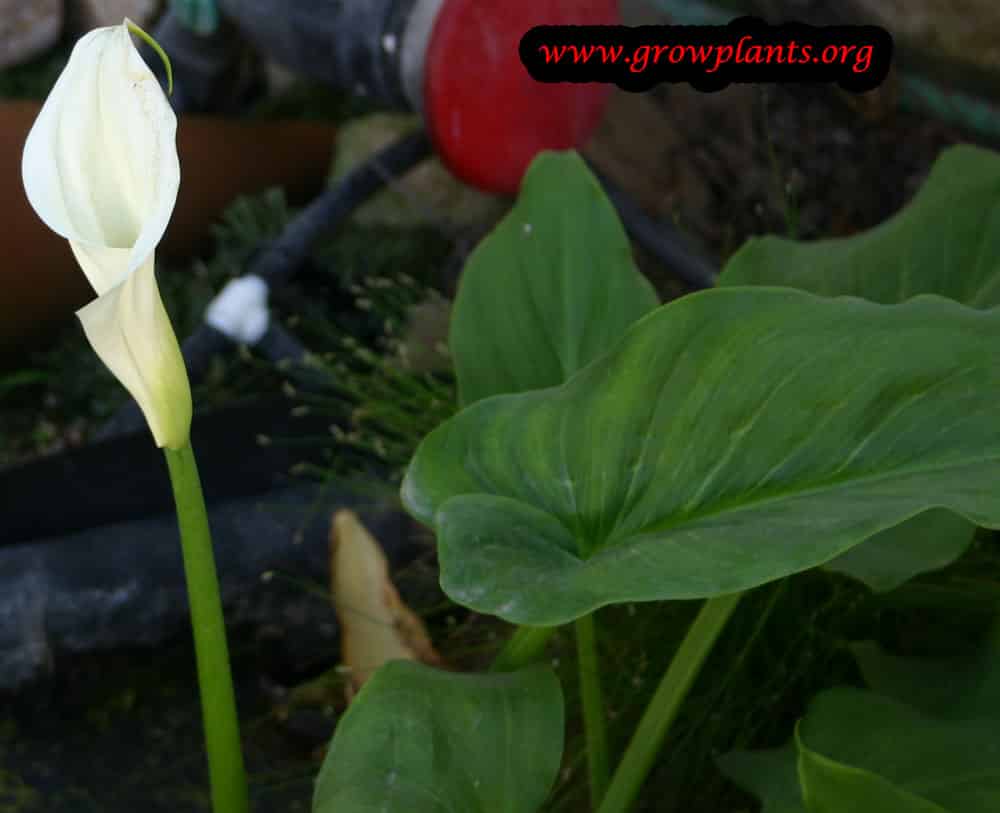
- Growth Habit & Form: Clump-forming geophyte; each cluster of long-stalked leaves carries a single flower stem from its centre.
- Lifespan & Maturity: Fast-growing perennial that regrows each season from its rhizome, dying back in dry or cold periods.
Anatomy & Physical Features
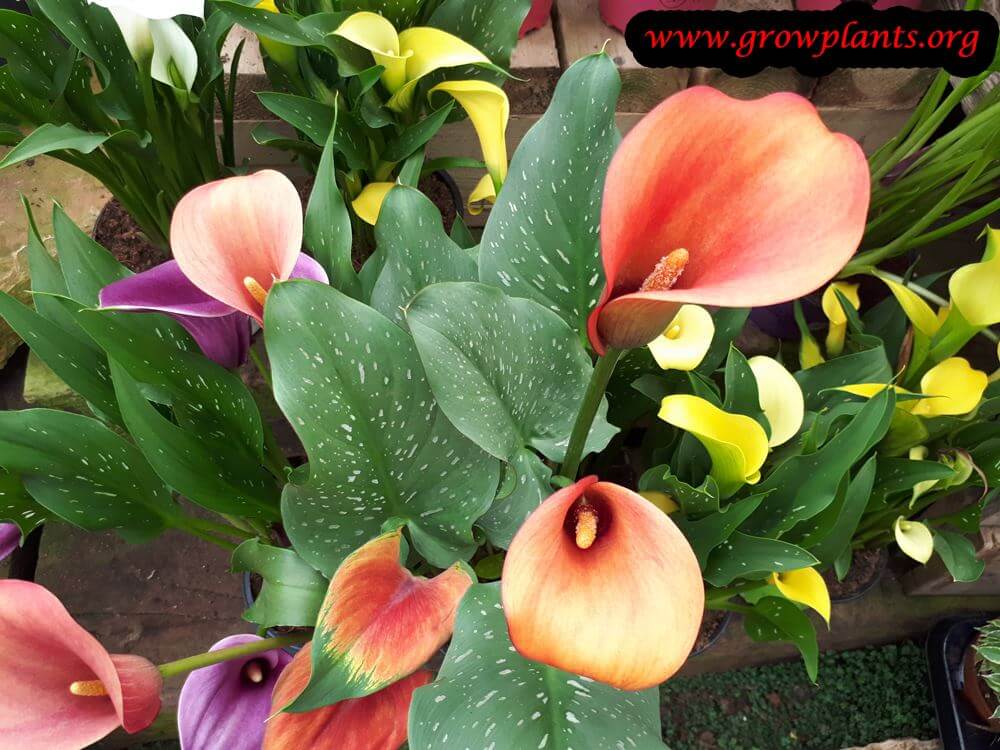
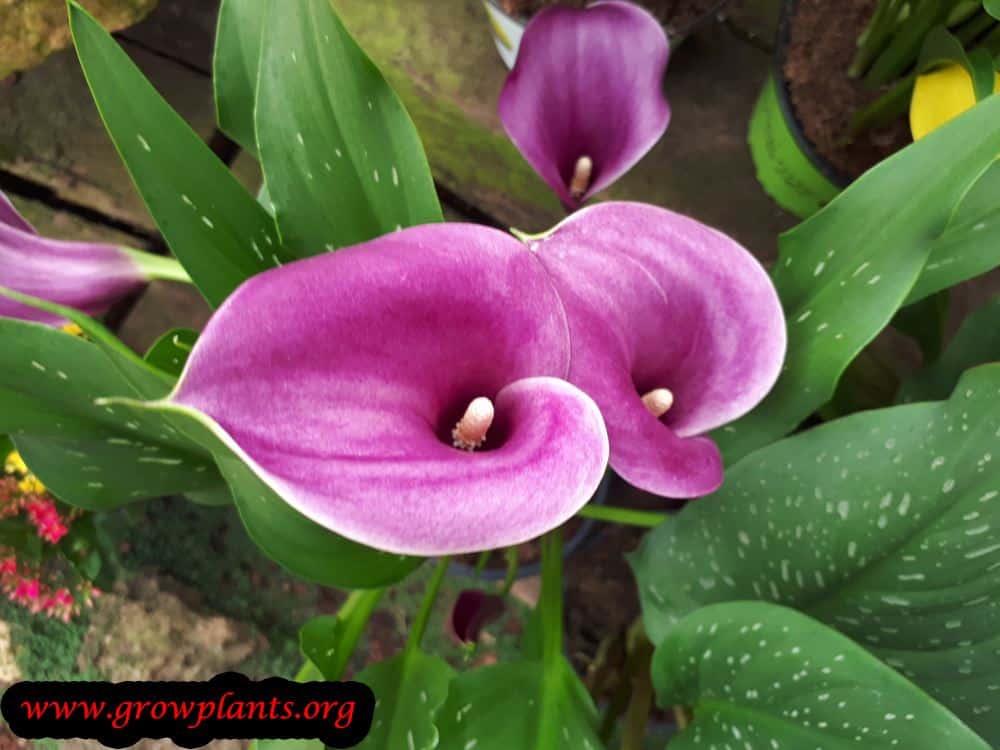
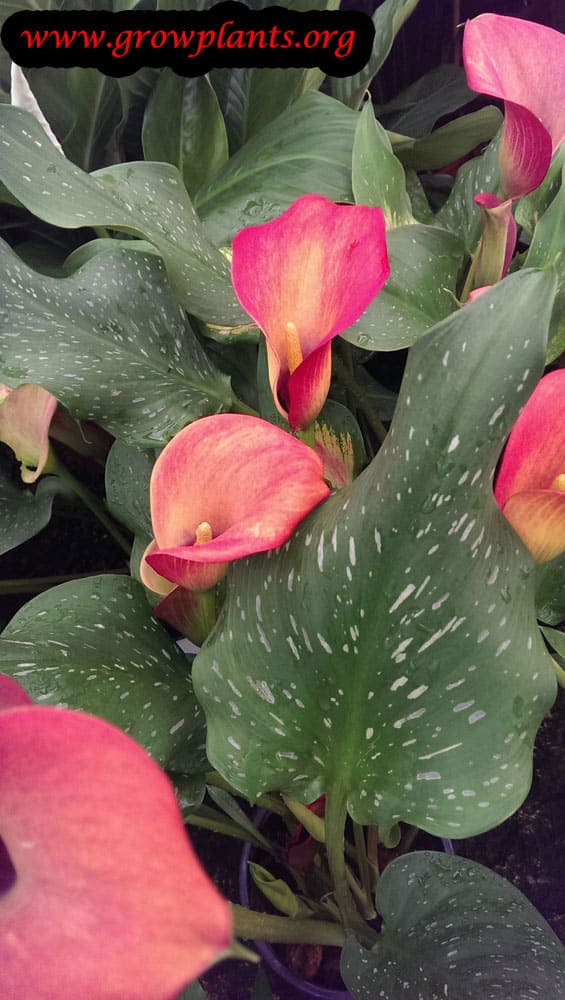
- Leaves & Foliage: Green, sometimes white-spotted, arrow-shaped leaves like small elephant ears on long stalks.
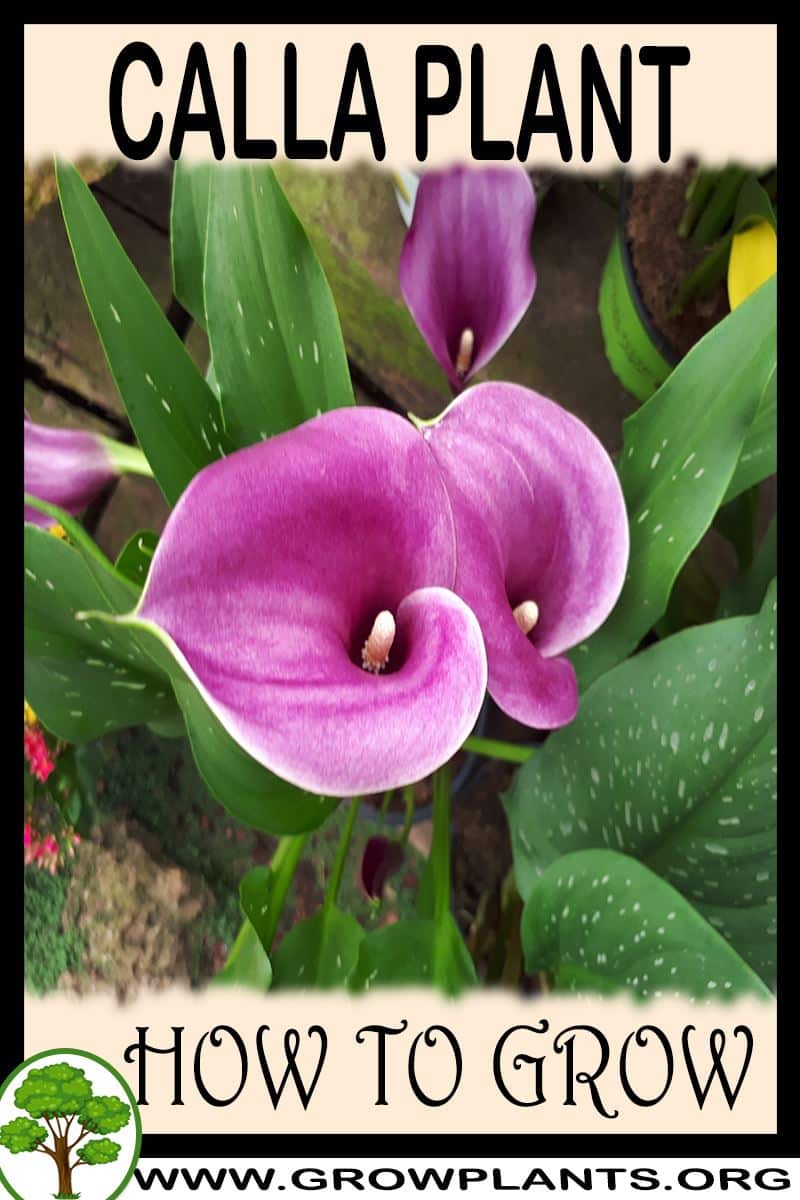
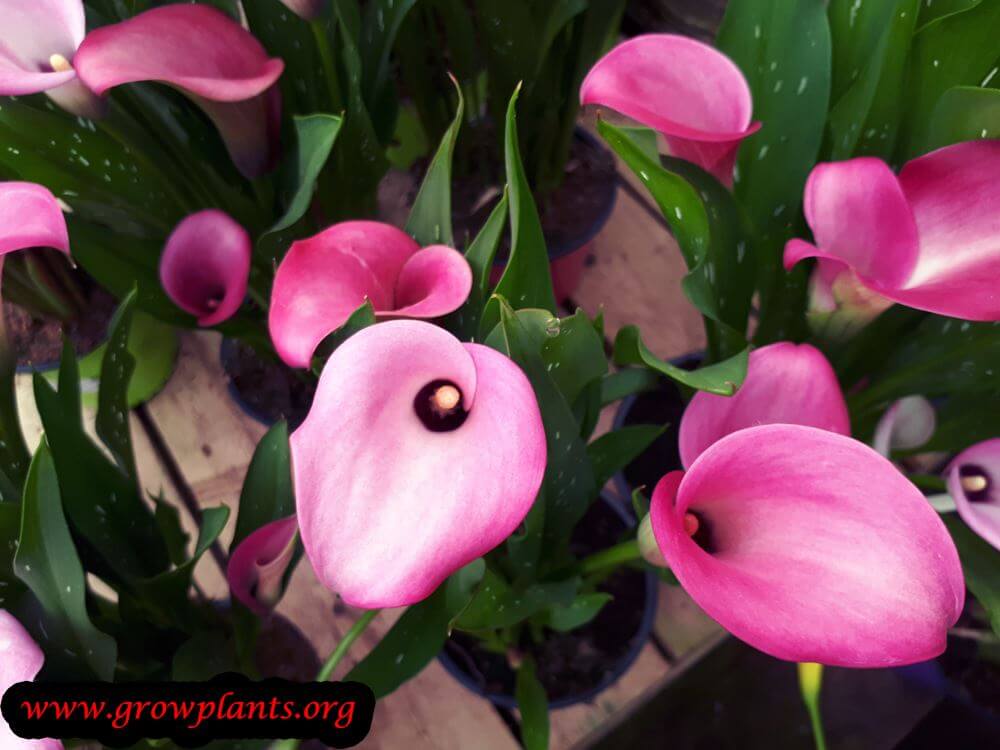
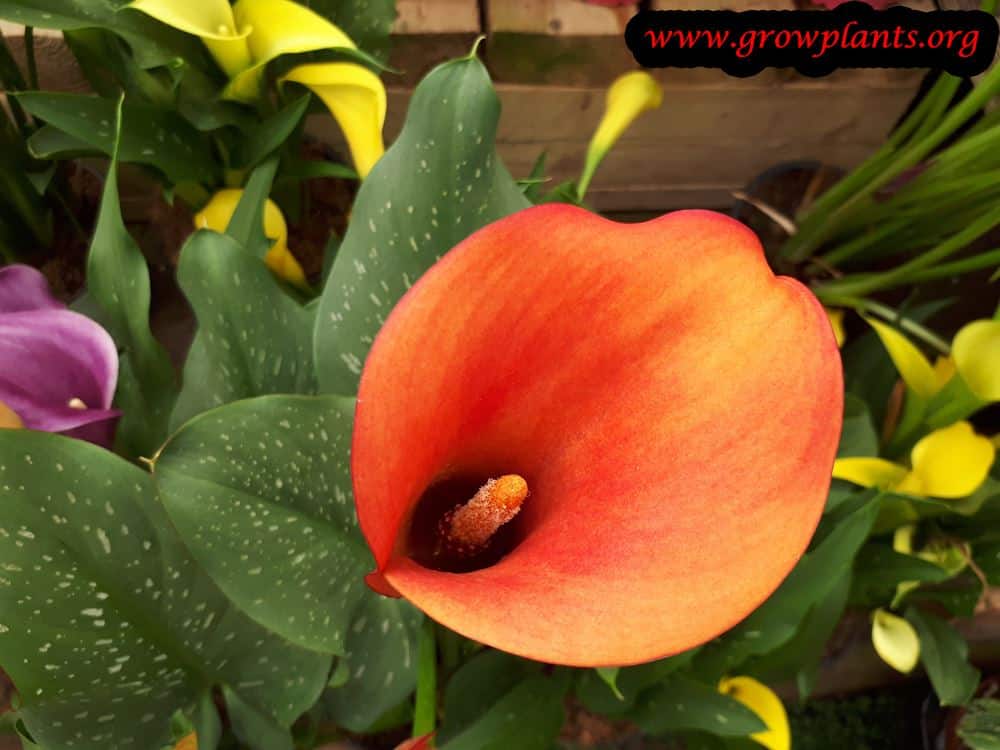
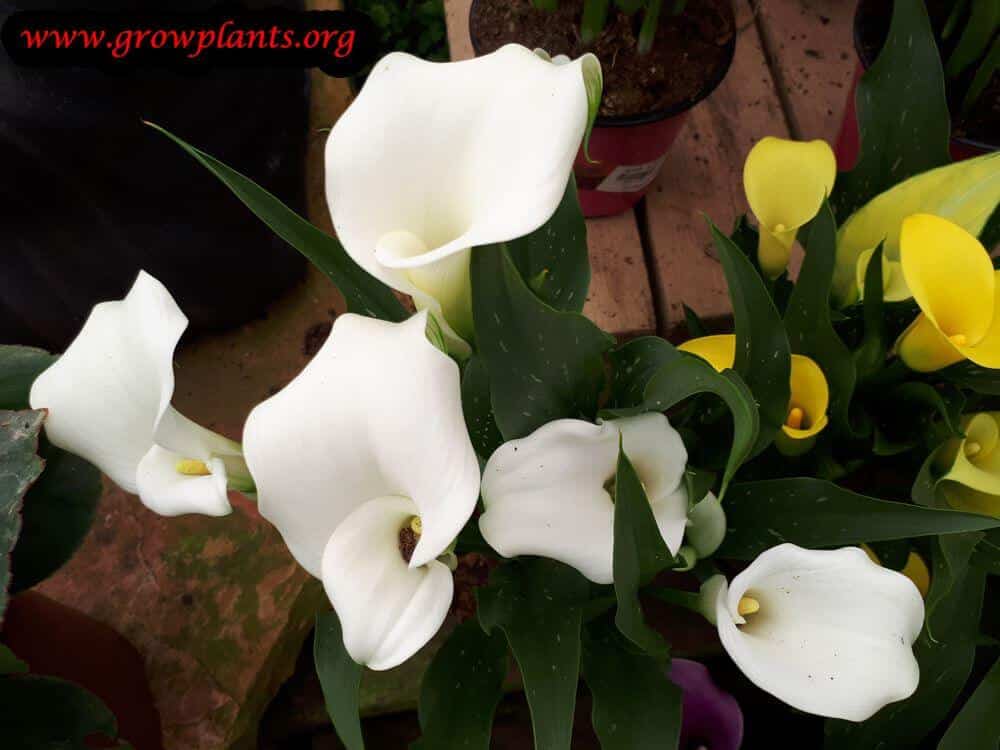
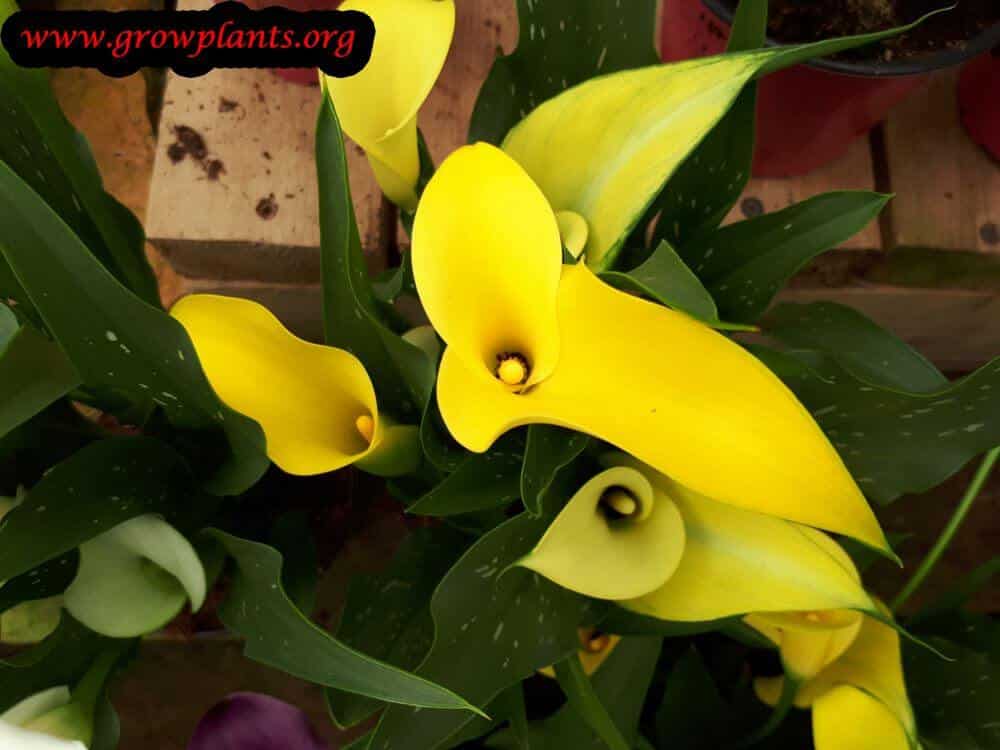
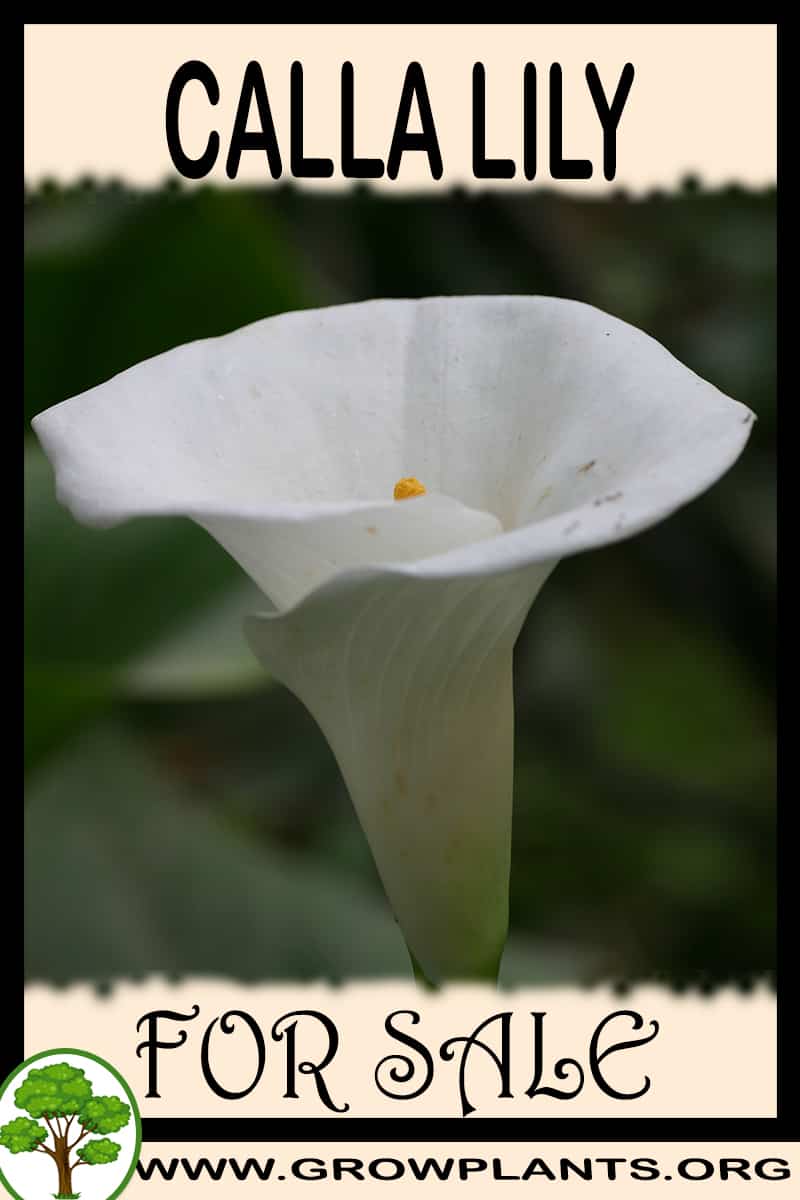
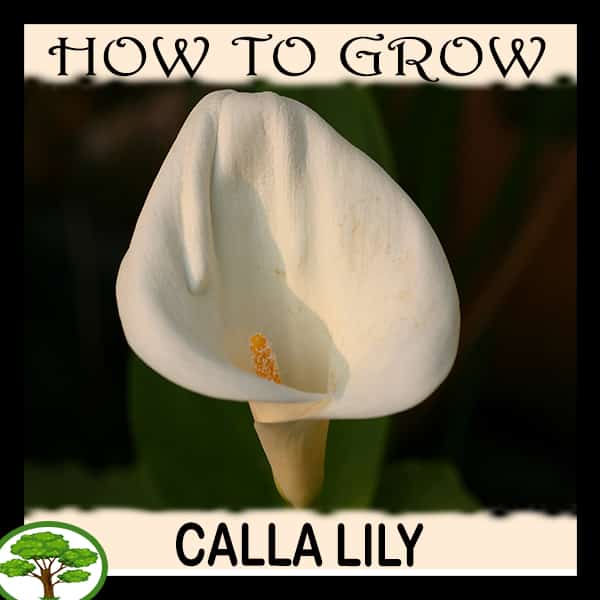
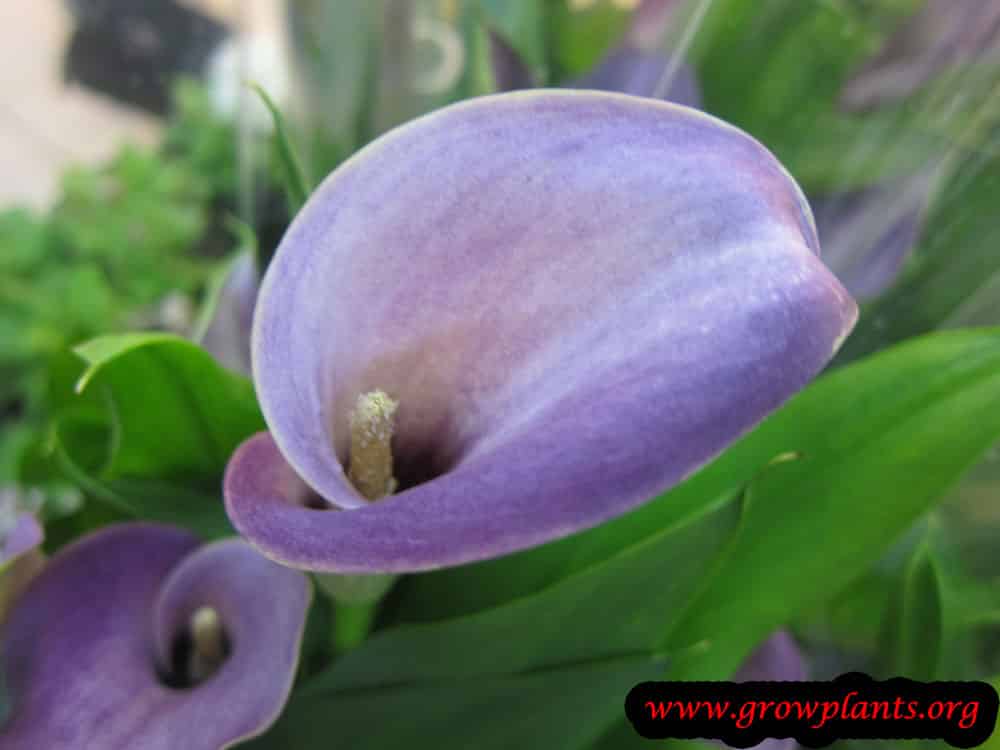
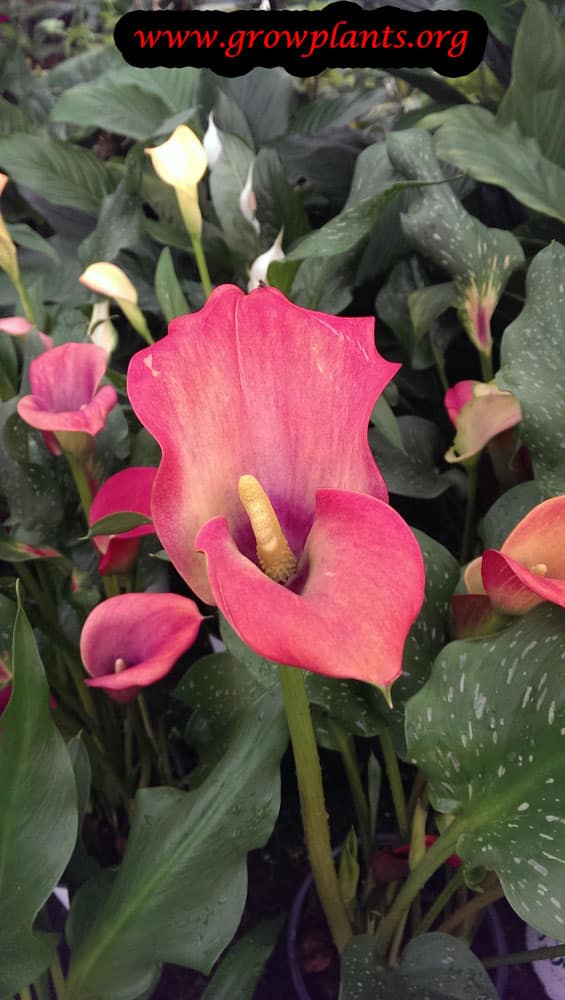
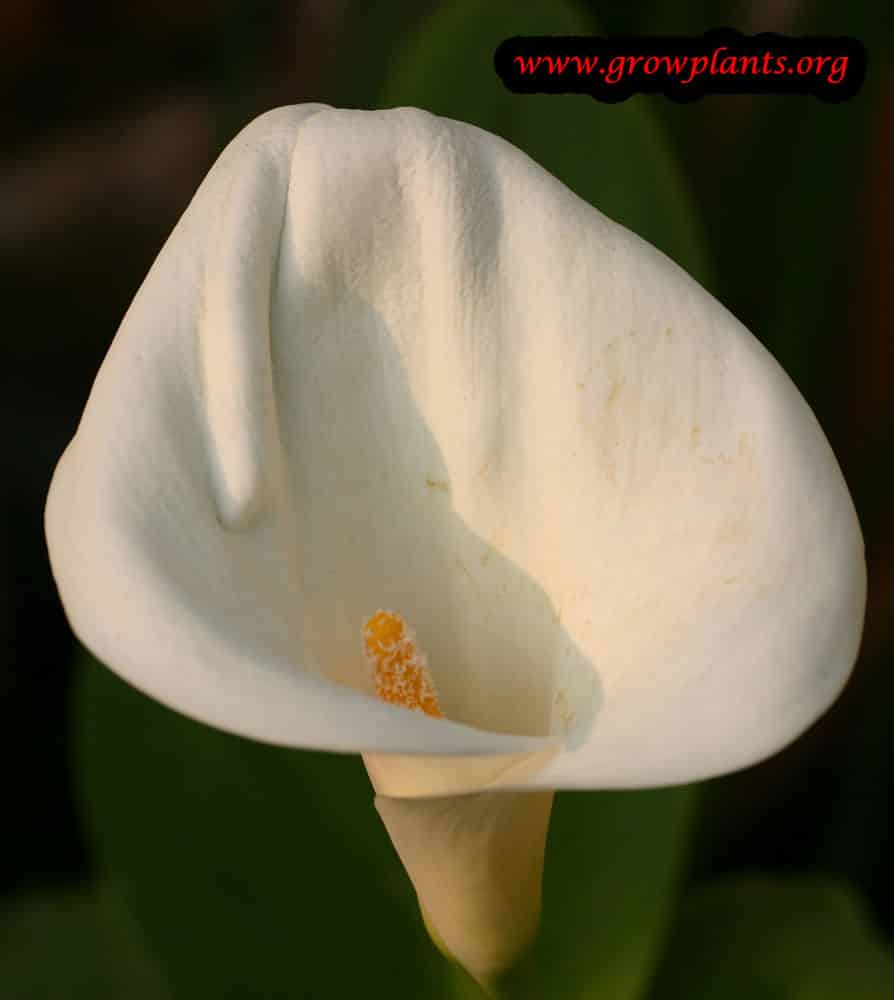
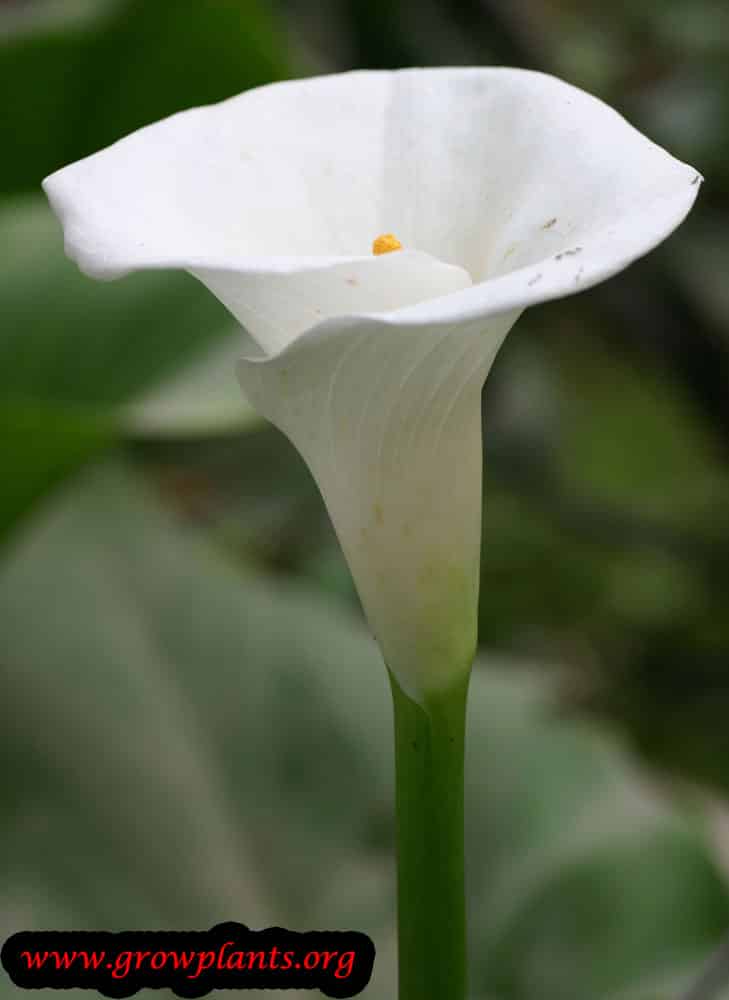
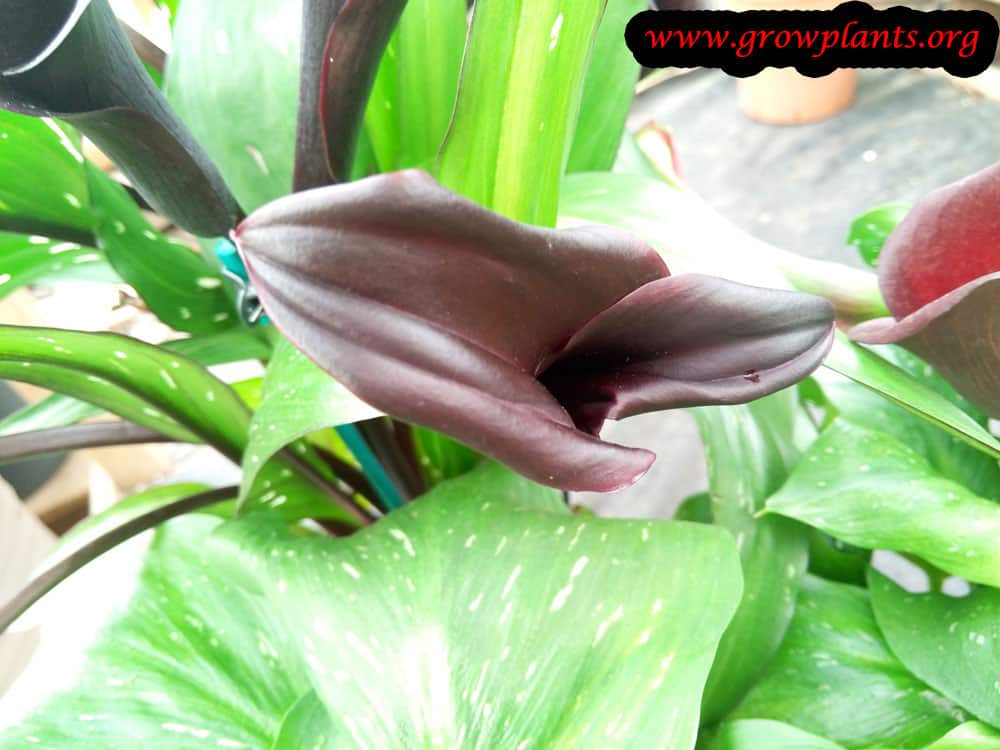
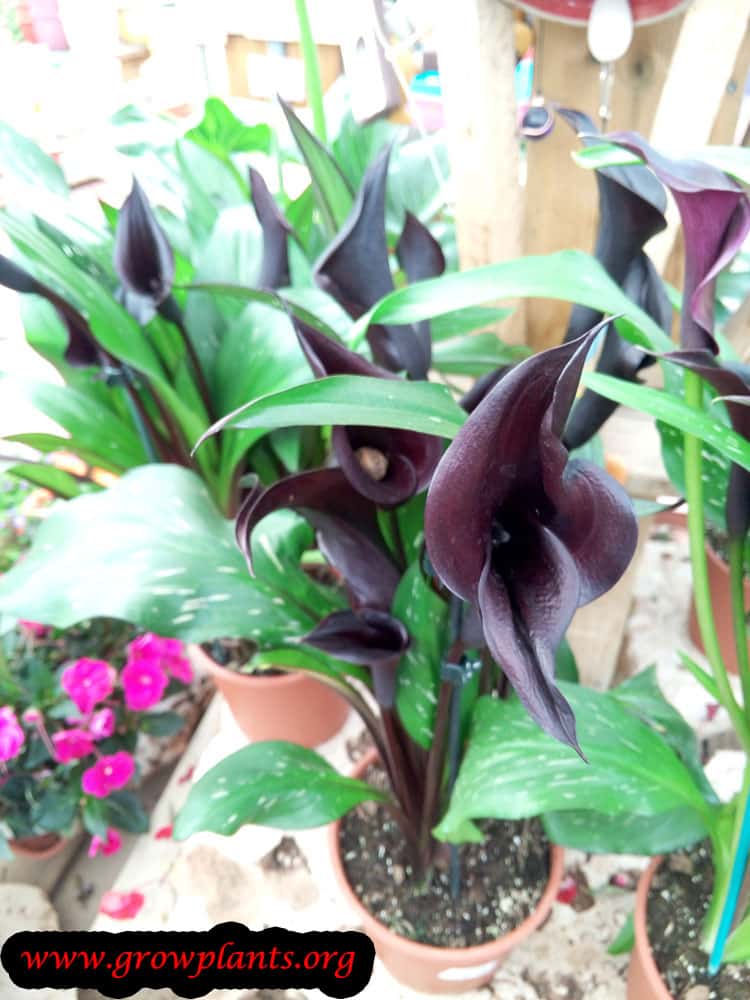
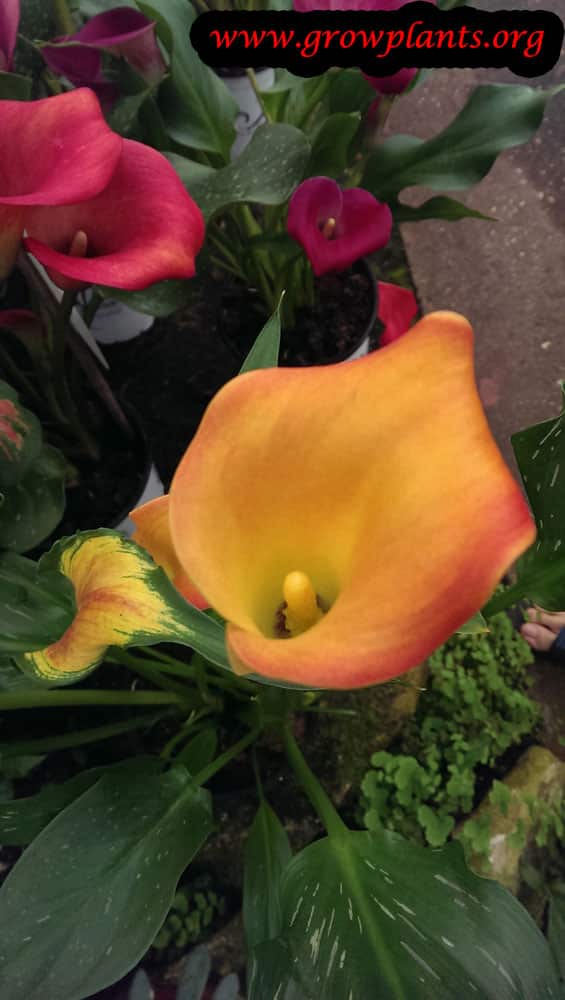
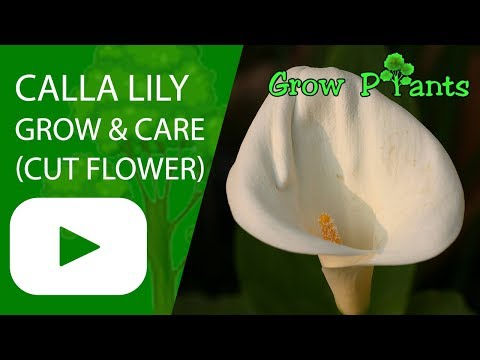
- Flower Characteristics: A funnel-shaped spathe in white, pink, red, orange, yellow, purple, near-black or blends, around a yellow spadix.
Primary Uses & Landscape Value
- Functional & Ornamental Roles: Drought-tolerant ornamental for borders, pond edges and containers, and a long-lasting cut flower; also grown as a houseplant.
Care Guide: Planting, Soil & Watering
Overview: Calla lilies are moisture-loving geophytes that thrive in rich, heavy soil and part to full shade. Unusually for a bulb, they tolerate very wet — even flooded — ground, and grow quickly with abundant water through the season.
Quick Care Requirements
| Requirement | Ideal Condition |
|---|---|
| Planting Season | Spring through autumn, during the warm season (frost-free, zone 8+) |
| Growth Rate | Fast |
| Soil Type | Rich, heavy, moisture-retentive soil; tolerates wet and even flooded ground |
| Water Need | Moderate to High — keep constantly moist; it thrives in boggy, waterside conditions |
Planting & Establishment
- Best Planting Season: Plant rhizomes from spring through autumn in the warm, frost-free season (zone 8 and warmer).
- How to Plant:
- Hole Preparation: Dig a hole and set the rhizome in rich, moisture-holding soil; a damp, low-lying or waterside spot suits it well.
- Soil Amendments: Work in plenty of compost and organic matter — calla thrives in heavy, fertile, water-retentive ground rather than free-draining soil.
- Planting Depth: Plant the rhizome a few centimetres deep with the growing points facing up.
- Growth Speed & Expectations: Growth is fast; plants quickly reach 0.5–1 m and flower through the warm season.
Soil, Watering & Drainage Care
- Soil Mix & Drainage Needs: Unlike most bulbs, calla likes heavy, constantly moist soil and even tolerates standing water, so drainage matters far less than steady moisture. In containers keep the mix rich and damp.
- Watering Schedule & Technique:
- Young / Newly Planted: Keep the soil wet from planting; calla rarely suffers from too much water while in growth.
- Established: Water generously and often to keep the soil constantly moist; it will grow happily at pond margins and in boggy ground.
- Seasonal Adjustments: Water heavily through the growing and flowering season; where summers are dry it dies back and rests, needing far less water while dormant.
Climate, Light & Hardiness
The calla plant is a moisture-loving geophyte suited to Mediterranean, subtropical, tropical, or desert (with irrigation) climates, and also grows well as a houseplant. It prefers full to half shade, is comfortably hardy to USDA zone 8, and its behavior shifts between evergreen and deciduous depending on how consistently wet its site stays.
Quick Climate Specifications
| Climate Zones | Mediterranean, subtropics, tropics, desert (irrigated), or houseplant |
|---|---|
| USDA Hardiness Zones | 8+ |
| Approx. Survival Minimum | Typical of zone 8 winters for the rhizome, approximately −12°C to −9°C (10°F to 15°F) |
| Frost Tolerance | Moderate (rhizome); foliage is frost-tender |
| Light Conditions | Full Shade / Half Shade |
Sunlight & Light Exposure
Optimal Light Setup
Part shade to full shade suits it best; some morning sun is tolerated in cooler climates.
Direct Sun Requirement
Not required; hot, direct sun in dry inland climates stresses the foliage.
Shade & Heat Management
Full shade is recommended in hot climates, with lighter shade sufficing elsewhere.
Best Exposure/Orientation
North- or east-facing beds, or areas with filtered canopy light, work well.
Temperature Extremes & Hardiness
USDA Hardiness & Regional Limits
Reliably hardy from zone 8 upward; the underground rhizome survives winter cold at the margins of this range even though the top growth dies back.
Cold Damage & Winter Protection
Foliage is frost-sensitive and collapses with freezing temperatures; in zone 8 margins, mulch over the dormant rhizome for winter protection.
Frost Sensitivity
High for the foliage; moderate for the established rhizome, which persists underground through winter from zone 8 upward.
Extreme Heat Tolerance
Can struggle or go summer-dormant in hot, dry conditions without adequate moisture; performs best where heat is paired with reliable water.
Wind, Humidity & Microclimate
Humidity Preferences
Prefers consistently humid, moist conditions, thriving in wet or even flooded soil.
Dry-Air Tolerance
Low; performs poorly in arid, dry-air conditions without consistent moisture and tends toward summer dormancy there.
Rainfall & Seasonal Moisture
Adapted to reliably wet or marshy environments and tolerates flooded soil; where summers are dry it becomes deciduous, while in areas with year-round moisture it stays evergreen.
Microclimate Recommendations
Pond edges, bog gardens, or other consistently damp low spots provide the ideal climate niche.
Growing in Pots, Balconies & Indoors
The grower grows calla lily indoors as a houseplant, and it takes readily to pots and planters on a shaded patio or balcony. It likes part to full shade and steady moisture – more thirsty than most container plants.
Quick Details
- Container Size: A medium pot comfortably larger than the rhizome and roots
- Indoor Suitability: A good houseplant in bright, indirect light
- Best Spot: Full to half shade – bright but out of hot direct sun
- Soil & Drainage: Rich, moisture-retentive but free-draining mix
- Watering in Pots: Average to generous – it likes consistently moist soil, but not stagnant water
Indoors & On the Windowsill
- A genuine houseplant: Grows well indoors in bright, indirect light; keep the mix evenly moist during growth and let it rest and dry back after flowering.
- Windowsill growing: A bright, shaded sill suits it; avoid hot, direct sun that scorches the leaves.
- Safety: All parts of calla (Zantedeschia) are toxic – the sap contains calcium oxalate that irritates mouth and skin – so keep it away from children and pets and never eat it.
On a Balcony or Patio
- Light & wind: Best in part to full shade outdoors; it dislikes hot, dry, windy positions, so keep it sheltered and the soil moist as pots dry quickly.
- Practicalities: Its high water need means pots need checking often in warm weather; ensure runoff can escape.
Choosing the Pot, Soil & Long-Term Care
- Pot & drainage: Use a pot with strong drainage holes; because it likes moisture, glazed or plastic holds water well – but still empty any saucer so the rhizome does not rot.
- Potting mix: Rich, organic, moisture-retentive mix that still drains – loosen potting soil with a little perlite.
- Feeding: Potted plants exhaust their mix faster than those in open ground – nutrients leach away with each watering – so feed lightly through the active growing season. Feed through the active growing season for strong flowering.
- Repotting: Refresh the mix and divide congested rhizomes every couple of years, ideally as growth restarts.
Fertilizing & Feeding
A moderate feeder: steady balanced feeding through leaf growth and the long bloom period supports both foliage and cut-flower quality, then feeding stops as the plant dies back or rests.
Quick Fertilizing Specs
| Feeding Level | Moderate feeder |
|---|---|
| Main Nutrient Priority | Balanced feeding with nitrogen for leaves, shifting attention toward potassium as flowering stems form |
| Best Feeding Period | Spring through the leafy growth and bloom period |
| Organic Options | Compost or well-rotted organic matter worked into heavy soil |
| Reduce/Stop Feeding | Stop feeding as foliage yellows and the plant enters dieback or dormancy |
| Micronutrients | Usually met by a complete fertilizer and organic matter; correct only diagnosed issues |
| Soil pH | Tolerates a wide range, including heavy or occasionally flooded soil |
Feeding by Growth Stage
Leaf and bud growth
Fuel vigorous leaf growth and support the developing flower spike.
| Nutrient direction | A balanced, nitrogen-forward feeding to build strong foliage ahead of bloom. |
|---|---|
| Timing | As new leaves emerge and through the run-up to flowering, spring into summer. |
| Frequency | Regular light feedings through this leafy growth phase. |
| Fertilizer types | A balanced complete fertilizer, Organic matter worked into heavy or wet soil |
| Precautions | Avoid waterlogged, stagnant conditions when feeding; feed alongside, not instead of, good soil moisture management. |
Flowering
Support the cone-shaped spathe and spadix through a long bloom period, including for cut flowers.
| Nutrient direction | Continue balanced feeding through bloom, with attention to potassium for stem and flower quality. |
|---|---|
| Timing | During the spring-to-summer bloom period, extending into autumn in mild, moist climates. |
| Frequency | Light, steady feeding continues while flowers and cut stems are being produced. |
| Fertilizer types | A balanced complete fertilizer, A potassium-inclusive feed to support flower and stem quality |
| Precautions | Do not force extra nitrogen for more flowers; balanced feeding plus adequate light and moisture drives bloom. |
Post-bloom dieback or dormancy
Let the plant redirect energy into the rhizome as foliage yellows and dies back.
| Nutrient direction | None – withhold fertilizer as leaves yellow and the plant enters its rest. |
|---|---|
| Timing | After bloom finishes, as leaves die back naturally, especially where summers are dry. |
| Frequency | No feeding during dieback and dormancy; resume only when new leaf growth begins again. |
| Fertilizer types | No feeding at this stage; hold off fertilizing until new leaf growth resumes. |
| Precautions | Withhold fertilizer now; feeding while the plant is going dormant wastes nutrients and can encourage rot in wet, heavy soil. |
Nutrient Deficiency Signs & Corrections
Overall pale leaves and a weak, thin flower spike during active growth.
| Possible causes | low available nitrogen in the soil, nutrients leached out by heavy or flooded soil conditions, root stress limiting uptake |
|---|---|
| Appears first on | older, lower leaves |
| What to check | feeding history, soil drainage and how often it stays wet, root and rhizome condition |
| Possible correction | Apply a balanced, nitrogen-forward fertilizer during leaf growth and improve soil drainage if it stays waterlogged. |
Flower stems are weak or floppy and cut-flower quality is poor despite healthy foliage.
| Possible causes | low soil potassium, nitrogen-heavy feeding that outpaces other nutrients, leaching from very wet or flooded soil |
|---|---|
| Appears first on | the flowering stems |
| What to check | recent feeding balance, soil moisture and drainage, stem firmness compared with past seasons |
| Possible correction | Shift toward a more balanced or potassium-inclusive fertilizer as flowering approaches. |
New leaves emerge yellow between the veins while the veins themselves stay green.
| Possible causes | high soil pH tying up iron, waterlogged or flooded soil limiting root function, cold, wet conditions slowing uptake |
|---|---|
| Appears first on | the newest leaves |
| What to check | soil pH, how often the soil sits wet or flooded, recent temperatures |
| Possible correction | Improve drainage where possible, correct pH toward neutral, or apply a chelated iron product per its label. |
Pruning, Training & Seasonal Maintenance
Calla lily is a rhizomatous perennial grown mainly for its long-stemmed flowers, and “pruning” here mostly means removing spent flower stalks and, at the end of the bloom cycle, cutting the leaf stems back at the base once they yellow. In naturally dry-summer sites the plant is deciduous and dies back to the rhizome for a dormant rest; in consistently wet, heavy or flooded soil it can stay evergreen, so cutback timing should follow the foliage’s own condition rather than a fixed date. There is no woody structure to train or shape.
Quick Pruning & Maintenance Specs
| Pruning Tolerance | Moderate – tolerates full leaf removal once foliage has finished its job, but not while leaves are green and active |
| Primary Pruning Window | End of the flowering season, once leaves begin to yellow |
| Secondary Maintenance Window | Through the bloom season, for cutting flowers and removing spent flower stalks |
| Typical Frequency | Ongoing spent-stalk removal during bloom; one main leaf cutback per dieback cycle |
| Main Objective | Harvest flowers, prevent seed drain, tidy foliage as it declines |
| Best Tool Type | Bypass secateurs for the fleshy leaf and flower stalks |
| Avoid Heavy Pruning During | While leaves are still green and upright – they are feeding the rhizome for next season’s growth |
Pruning by Plant Age & Size
Newly Established
Leave newly planted rhizomes undisturbed through their first full leaf cycle so they can build reserves; only remove any leaves damaged at planting.
Young / Formative
No structural training applies – growth is a basal rosette of leaf stems from the rhizome. Simply keep slug damage and spent stalks cleaned up.
Mature / Established
Established clumps mainly need spent flower stalks removed through the season and a full leaf cutback at the base once foliage yellows and collapses at the end of its cycle.
Special Growth to Remove
- Spent flower stems – cut at the base once the spathe fades, both to harvest as cut flowers and to stop the plant putting energy into seed.
- Yellowing or collapsed leaf stems at the end of the growth cycle – cut from the base once clearly dying back, not while still green.
- Slug-damaged leaves, a known pest issue for this species.
Container & Small-Space Pruning
Calla grows well in pots and tolerates heavy, moisture-retentive soil, so container culture needs no special pruning adjustment beyond the same rule as in-ground plants: remove spent stalks as they finish and cut back foliage only once it is genuinely declining, since container plants have a smaller reserve of rhizome to draw on.
Tools
- Bypass secateurs for the thick, fleshy flower and leaf stalks.
- Precision snips for lighter deadheading.
Tool Hygiene & Disease Risk
Routine care is sufficient – clean, sharp tools. No specific transmissible disease risk is flagged for this species beyond general sanitation; the main pest to watch for is slugs on foliage rather than a cut-borne pathogen.
Cut Placement & Technique
Cut fleshy flower and leaf stalks at the base, close to the rhizome, rather than leaving long stubs that can rot and carry moisture into the crown.
Post-Pruning Care
After a full leaf cutback, ease off watering if the plant is entering its natural dry-summer dormancy; keep soil moist as usual if the site is a wet-area planting that stays evergreen. No fertilizing is needed immediately after cutback.
Common Pruning Mistakes
- Cutting back green, upright leaves early for tidiness – this weakens the rhizome and reduces next season’s flowering.
- Leaving long leaf-stalk stubs instead of cutting flush to the base, which can rot inward.
- Letting spent flowers go to seed instead of removing them, diverting energy from the rhizome.
When NOT to Prune
Do not remove leaf stems while they are still green and upright – they are actively recharging the rhizome for the next growth cycle. In wet sites where the plant stays evergreen, there may be no need for a full cutback at all.
Recommended Tools (by task)
- bypass_secateurs – clean cuts through the thick, fleshy flower and leaf stalks without crushing them.
- precision_snips – light deadheading of individual spent flowers.
Propagation Guide
Zantedeschia (calla) is most reliably and quickly increased by dividing its thick rhizome (often sold as a ‘bulb’) into sections, which gives an exact copy of the parent and reaches flowering size fast. Seed from hybrid callas is variable and slow to flower, so vegetative division is the recommended, essentially necessary method for keeping a named color true; propagation is Easy.
Quick Propagation Specs
| Best Propagation Method | Rhizome division |
| Alternative Methods | Seed (species types only) |
| Propagation Difficulty | Easy |
| Seed True-to-Type | Hybrid offspring vary |
| Vegetative True-to-Type | Yes |
| Best Propagation Season | During dormancy, once foliage has died back at the end of the flowering season, or before new growth resumes |
Growing from Seed
Seed is a minor method for this plant since it is described on-site as needing vegetative reproduction; seed from hybrid cultivars will not reproduce the parent’s exact flower color. Where seed is used, sow it fresh, keep it warm and consistently moist, and expect germination to be slow and somewhat irregular.
Rhizomes, Tubers, Bulbs & Corms
Rhizome Division
Divide the rhizome during dormancy, once the foliage has died back after flowering (matching the site’s own pruning note to cut dead leaves from the base at season’s end) or just before new growth starts in spring. Each division should include at least one visible growth eye or bud. It is often recommended to let the cut surfaces air-dry briefly before replanting to reduce rot risk, though established callas otherwise tolerate wet, even flooded soil unusually well once growing. Small natural offset rhizomes that form around the parent can be separated with their own roots at the same time as division. Plant divisions with growth points facing upward.
Bloom & Flower Guide
Quick Details
- Bloom Season: Spring and summer, and into autumn where soil stays moist
- Flower Appearance: A cone-like coloured spathe wrapped around a central yellow spike (spadix); colours include red, pink, near-black, yellow, orange, purple, white or blends
- Edibility: Not edible – all parts are toxic (calcium oxalate); handle with care
Detailed Blooming Overview
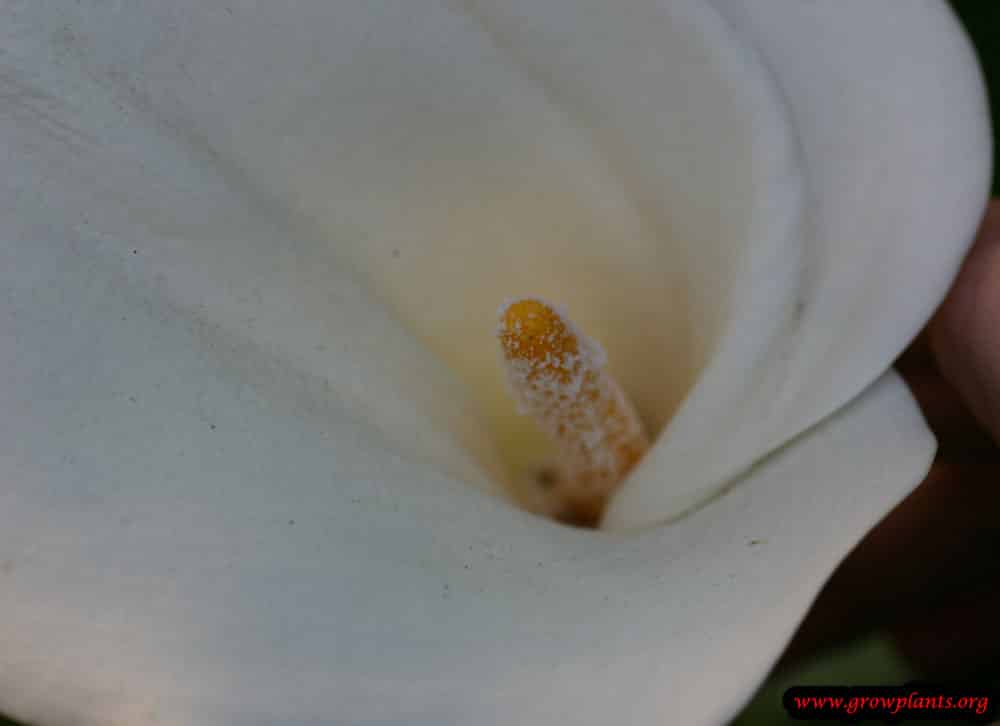
The calla (Zantedeschia) is grown for its elegant, sculptural blooms that rise on tall stems from spring into summer. What reads as the “flower” is actually a coloured, funnel-shaped spathe – a modified bract – curled around a central yellow spadix that carries the true, tiny flowers. In moist ground the display can continue into autumn, though it pauses where summers are dry and the plant goes dormant.
Flower Characteristics
- The showy part is a spathe rolled into a cone, not a ring of petals.
- A yellow spadix stands at the centre, bearing the real flowers.
- Spathe colours range widely – red, pink, black, yellow, orange, purple, white or multicoloured.
Bloom Care & Thinning
- Encouraging bloom: Steady moisture and bright light during the growing season give the strongest flush; the plant rests when dry.
- Cutting: Callas make excellent, long-lasting cut flowers – cut stems cleanly at the base.
- Safety while handling: The sap is irritating and all parts are toxic if eaten; wear gloves if you are sensitive and keep away from pets and children.
Pests, Diseases & Troubleshooting
Overview: Callas are arum-family plants grown from fleshy rhizomes or tubers, and their defining problem is bacterial soft rot of that rhizome, alongside sap-sucking aphids and thrips that spread viruses. As a genus, callas share one core profile centered on bacterial soft rot of the rhizome and aphid/thrips-borne virus. The colored callas grow from a tuber that is highly prone to soft rot; they need moist but never waterlogged soil and a dry rest when dormant. Clean planting stock, careful watering, and good drainage prevent most trouble.
Quick Troubleshooting Overview
| Issue / Pest | Main Symptom | Primary Solution |
|---|---|---|
| Bacterial soft rot | Mushy, foul-smelling rhizome; sudden collapse | Clean firm stock; drainage; discard rotted rhizomes |
| Aphids | Sticky, curled growth; virus spread | Water blast; insecticidal soap |
| Thrips | Silvery streaked leaves and flowers | Blue sticky traps; spinosad |
| Spider mites | Stippling in hot, dry conditions | Hose foliage; horticultural oil |
| Slugs & snails | Ragged holes, slime trails | Hand-pick; iron-phosphate bait |
| Root rot (Pythium) | Yellowing, wilting in soggy soil | Improve drainage; ease off watering |
Common Pests & Management
- Aphids (Myzus persicae / Aphis spp.):
- Symptoms: Clusters of soft green or black insects on new leaves, stems, and flower spathes, curling growth and leaving sticky honeydew; they are important chiefly as vectors of the mosaic and spotted-wilt viruses that damage callas.
- Prevention & Control: Rinse them off with water, encourage ladybirds and lacewings, and treat persistent groups with insecticidal soap. Prompt control limits virus spread through the planting.
- Thrips (Frankliniella occidentalis):
- Symptoms: Silvery flecking and streaking on leaves and spathes with distorted, discolored flowers; thrips also transmit tomato spotted wilt and impatiens necrotic spot viruses.
- Prevention & Control: Monitor with blue sticky traps, remove weeds that harbor them, and rogue out virus-suspect plants. Spinosad or insecticidal soap, applied in the evening to spare pollinators, controls heavy numbers.
- Spider mites (Tetranychus urticae):
- Symptoms: Fine stippling and a dull, bronzed look with light webbing during hot, dry weather, especially under cover.
- Prevention & Control: Raise humidity and hose the foliage; encourage predatory mites. Horticultural oil or insecticidal soap treats stubborn colonies.
- Slugs & snails (Deroceras / Helix spp.):
- Symptoms: Ragged holes and silvery slime trails on the lush leaves and flower stems, worst in damp, shaded conditions.
- Prevention & Control: Hand-pick at night, clear damp hiding places, and use grit or copper barriers on containers. Iron-phosphate bait helps where pressure is high.
Diseases & Fungal Issues
- Bacterial soft rot (Pectobacterium (Erwinia) carotovorum):
- Symptoms: The signature and most destructive calla disease: the rhizome or tuber turns into a soft, wet, foul-smelling mush and the plant yellows and collapses, often starting at the crown; it spreads through wounds and warm, wet, stagnant conditions.
- Treatment & Management: Start with clean, firm, undamaged rhizomes, avoid injuries at planting and lifting, and plant in well-drained soil without waterlogging the crown. Remove and destroy rotted plants and the surrounding soil, cure and store tubers dry, and never replant into contaminated ground; there is no cure once rot sets in.
- Pythium / Rhizoctonia root & tuber rot (Pythium / Rhizoctonia spp.):
- Symptoms: Yellowing, wilting, poor growth, and dark, rotted roots and tuber tissue in cold, wet, poorly drained soil.
- Treatment & Management: Ensure sharp drainage, avoid overwatering (especially for the colored hybrids), and use clean media and stock. Remove affected plants; drenches are secondary to correcting drainage and watering.
- Botrytis / gray mold (Botrytis cinerea):
- Symptoms: Grey, fuzzy mold and water-soaked spots on flowers and leaves in cool, damp, crowded, still air.
- Treatment & Management: Space plants for airflow, remove spent flowers and debris, and avoid overhead evening watering. A fungicide is rarely needed where sanitation and drainage are good.
- Calla mosaic / spotted wilt virus (mosaic virus / tomato spotted wilt virus):
- Symptoms: Yellow mottling, streaking, ringspots, and distorted, stunted growth spread by aphids and thrips and through infected stock.
- Treatment & Management: There is no cure. Control aphid and thrips vectors, buy clean rhizomes, and rogue out symptomatic plants; never propagate from infected stock.
Growing Difficulties & Abiotic Problems
- Overwatering / crown rot (hybrids):
- Cause & Symptoms: Colored callas rot easily when kept too wet, especially the crown, showing yellowing, collapse, and soft tubers.
- Correction Strategy: Keep soil moist but never soggy in active growth, ease right off as the plant dies back for its dry rest, and ensure excellent drainage.
- Failure to bloom / weak growth:
- Cause & Symptoms: Few or no flowers from too much shade, immature or overcrowded rhizomes, excess nitrogen, or a missed dormancy in the colored types.
- Correction Strategy: Give bright light to full sun (with some afternoon shade in hot climates), feed a balanced-to-high-potassium fertilizer rather than heavy nitrogen, divide congested clumps, and allow the colored hybrids a proper dry dormant rest.
- Leaf tip browning / edema:
- Cause & Symptoms: Brown leaf tips and edges from salt buildup or erratic watering, or corky bumps (edema) on undersides from waterlogging in humid, low-light conditions.
- Correction Strategy: Water evenly, flush container soil periodically to remove salts, and improve light and airflow to prevent edema; avoid swings between bone-dry and soggy.
What Helps – Products & Tools
The tools that matter most for callas are cultural: clean firm rhizomes, careful handling, and sharp drainage to prevent bacterial soft rot, the disease that does most damage. For pests, use insecticidal soap for aphids, blue sticky traps and spinosad for thrips, horticultural oil for mites, and iron-phosphate bait for slugs; control the aphid and thrips vectors to limit virus. Apply sprays in the evening to protect pollinators and follow the label.