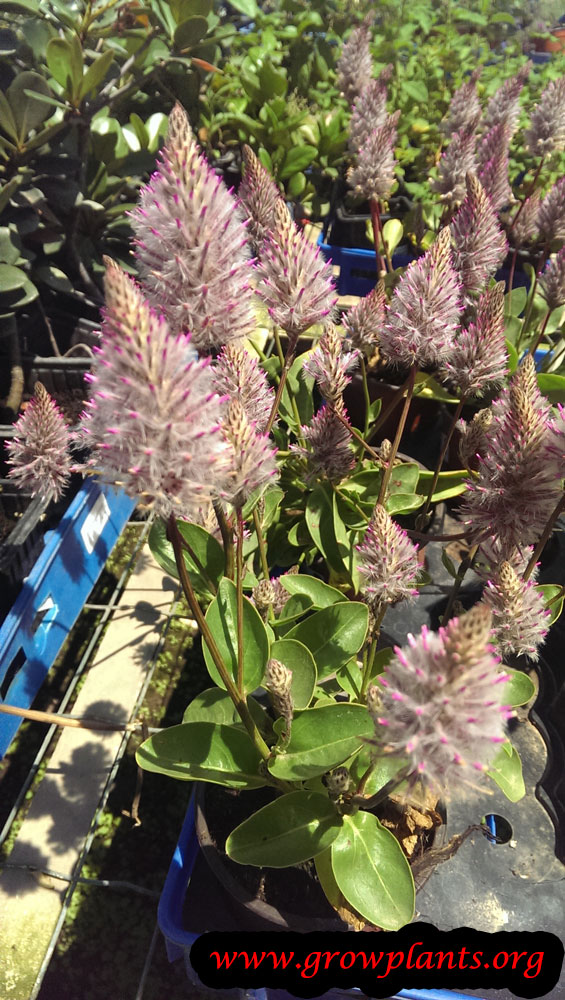
Plant Profile & Key Characteristics
Overview: A drought-tolerant Australian ornamental (the genus Ptilotus, or mulla mulla), a short perennial or annual reaching 0.1-1.5 m (4-60 in) with fleshy leaves and showy cone-shaped flower spikes. It is grown purely as an ornamental for hot, dry, sunny gardens.
Quick Specifications
| Specification | Attribute |
|---|---|
| Plant Type / Life Cycle | Short-lived perennial, often grown as an annual |
| Foliage Type | Evergreen where perennial (fleshy foliage) |
| Mature Size | 0.1-1.5 m (4-60 in) |
| Growth Rate | Fast |
| Hardiness | USDA zones 10b+ as a perennial; grown as an annual in cooler zones |
Growth Form & Structure
- Height & Spread: 0.1-1.5 m (4-60 in) tall in the ground; also grown in containers, though not as an indoor plant.
- Growth Habit & Form: A herbaceous plant or small shrub forming an upright clump topped by cone-shaped flower spikes.
- Lifespan & Maturity: A fast-growing but short-lived perennial that flowers within its first season and is often replaced or resown.
Anatomy & Physical Features
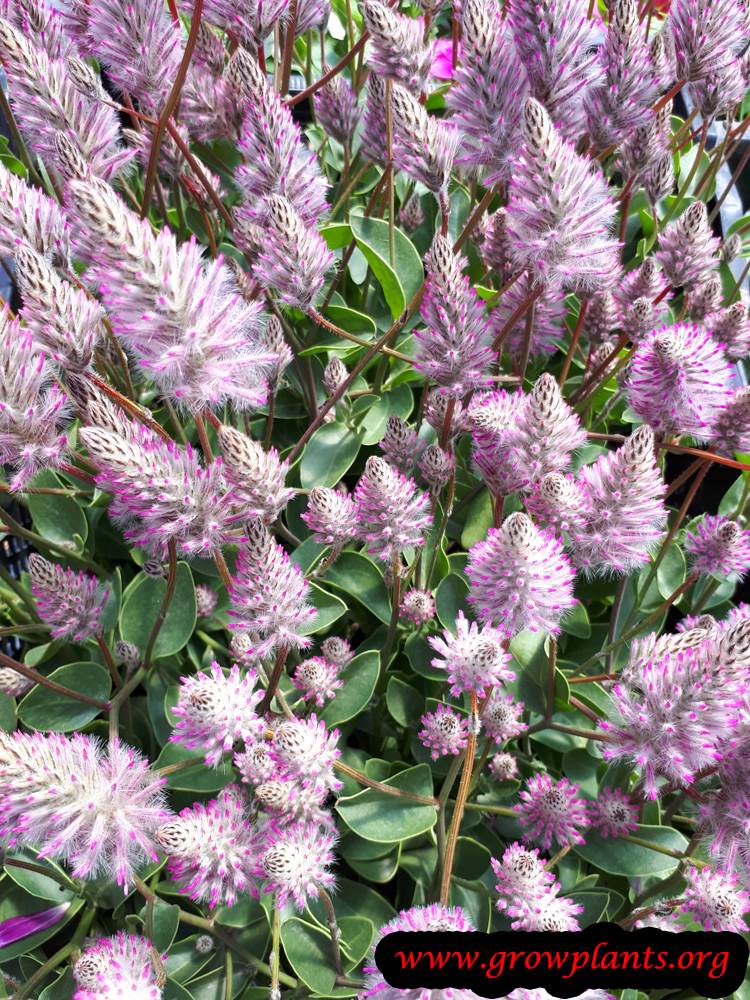
- Leaves & Foliage: Green, fleshy, elliptic leaves.
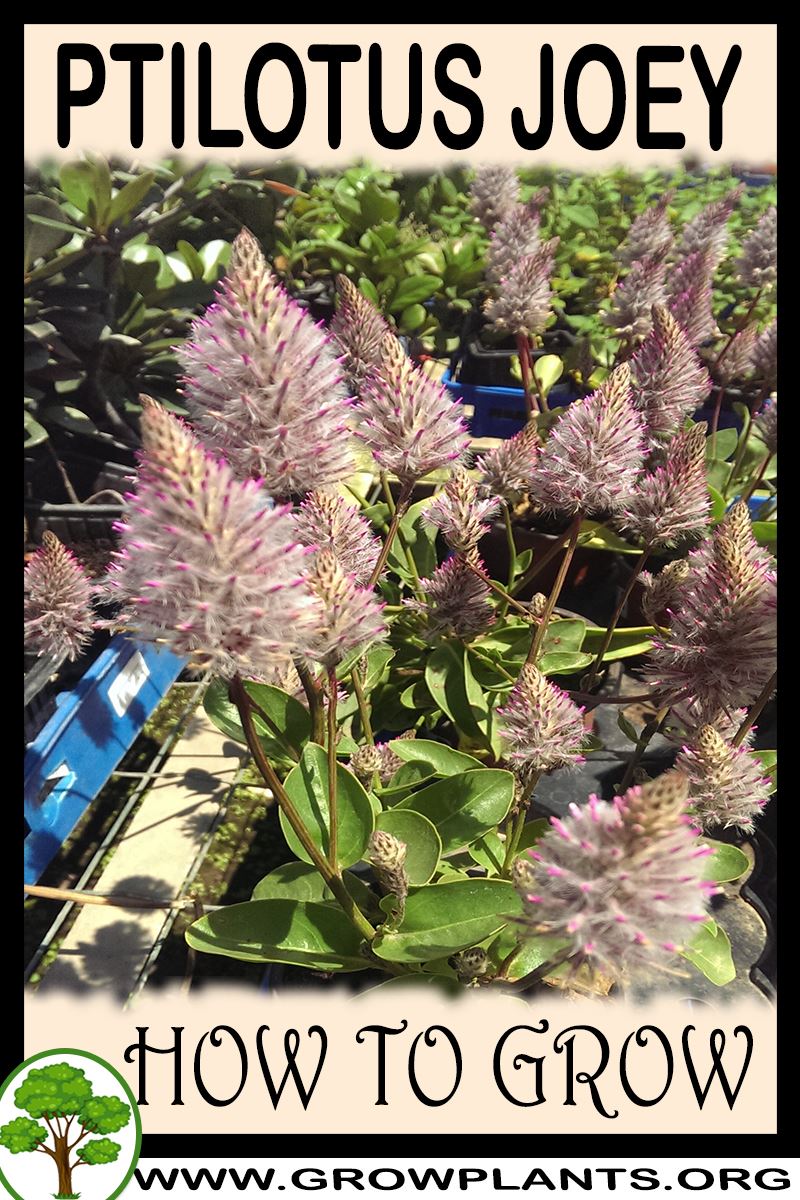
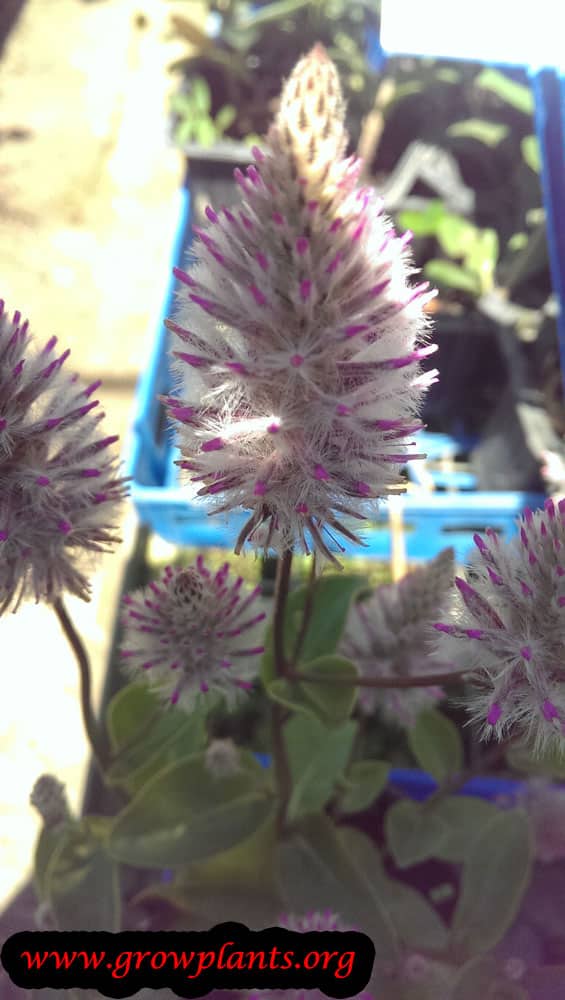
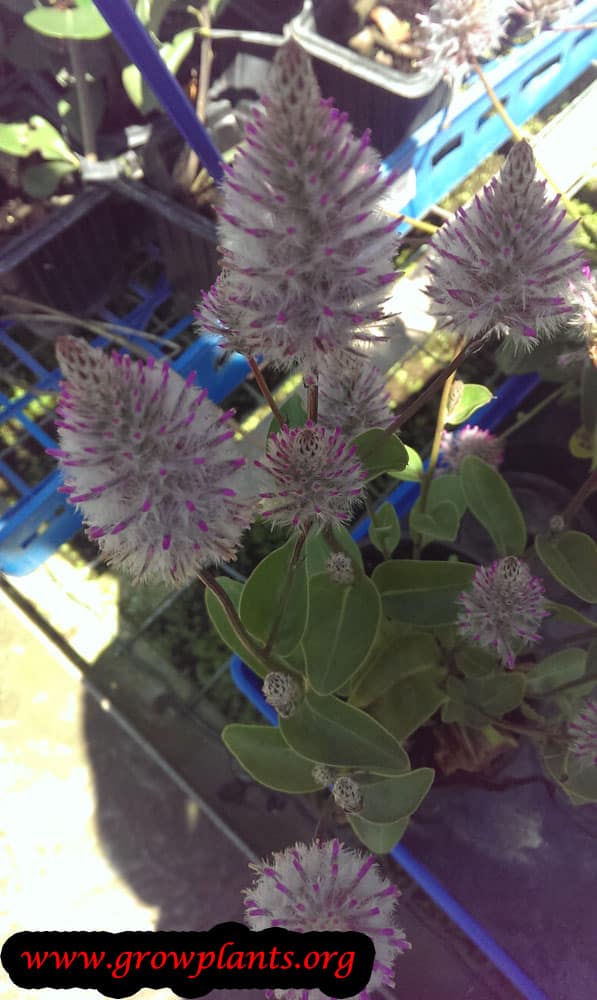
- Flower Characteristics: Small flowers packed into fluffy cone-shaped spikes in yellow, pink, purple, white or blends.
Primary Uses & Landscape Value
- Functional & Ornamental Roles: A drought-tolerant ornamental for sunny beds, borders, rockeries and water-wise plantings, and for containers; not grown indoors.
Care Guide: Planting, Soil & Watering
Overview: Ptilotus (pink mulla mulla) (Ptilotus) is a fast-growing, drought-tolerant Australian native grown as a short-lived perennial in frost-free zones (10b+) or as a warm-season annual. It thrives in full sun to part shade in gritty, very free-draining soil, needs little water, and resents wet, humid conditions and heavy feeding.
Quick Care Requirements
| Requirement | Ideal Condition |
|---|---|
| Planting Season | In the warm season, spring through autumn (in spring where grown as an annual) |
| Growth Rate | Fast |
| Soil Type | Light, gritty, sharply drained |
| Water Need | Low; drought-tolerant, let the soil dry between waterings |
Planting & Establishment
- Best Planting Season: Plant in the warm season, from spring through autumn; where grown as an annual, plant in spring once frost has passed.
- How to Plant:
- Hole Preparation: Choose a hot, open, very well-drained spot – a raised bed or slope is ideal – and loosen a hole just larger than the root ball.
- Soil Amendments: Add coarse sand or grit to heavy soil to sharpen drainage; keep feeding light, as these natives dislike rich, phosphorus-heavy soils.
- Planting Depth: Set the plant at the level it was growing, keeping the crown at the surface, and firm in gently.
- Growth Speed & Expectations: A fast grower reaching about 0.1-1.5 m; deadhead old flower spikes to keep it tidy and blooming.
Soil, Watering & Drainage Care
- Soil Mix & Drainage Needs: Sharp drainage is essential: use a gritty, free-draining mix and avoid wet feet, which quickly rot the roots; in containers add perlite or grit and avoid a permanently full saucer.
- Watering Schedule & Technique:
- Young / Newly Planted: Water lightly to settle the plant in, letting the surface dry between waterings while the roots establish.
- Established: Once established it is very drought-tolerant; water sparingly and only when the soil has dried, as overwatering is the main cause of failure.
- Seasonal Adjustments: Give a little more in prolonged heat and keep it dry in cool, wet weather; in frosty areas grow it as an annual or overwinter under cover.
Climate, Light & Hardiness
Ptilotus (pink mulla mulla) is a sun-loving, heat- and drought-adapted Australian ornamental suited to Mediterranean, desert, subtropical, temperate and tropical climates. It is frost-tender: hardy as a perennial only in USDA zone 10b and warmer, but widely grown as a warm-season annual in colder zones, where winter cold limits it to a single season.
Quick Climate Specifications
| Climate Zones | Mediterranean, desert, subtropical, temperate or tropical |
|---|---|
| USDA Hardiness Zones | 10b and warmer as a perennial; grown as an annual from about zone 2 in colder regions |
| Optimal Temp Range | Warm, sunny conditions |
| Cold Damage Begins | Near freezing (frost-tender) |
| Approx. Survival Minimum | Frost ends the plant where winters freeze |
| Frost Tolerance | Low |
| Light Conditions | Full sun to partial shade |
Sunlight & Light Exposure
Optimal Light Setup
It performs best in full sun, which drives the strongest flowering; it also accepts partial shade.
Direct Sun Requirement
Full, direct sun is preferred for the best flower display and compact, sturdy growth.
Shade & Heat Management
Adapted to arid heat, it needs little heat protection; light shade is acceptable but reduces flowering.
Best Exposure / Orientation
An open, sunny, freely drained position is ideal.
Temperature Extremes & Hardiness
USDA Hardiness & Regional Limits
It is perennial in warm, frost-free climates and is grown as an annual where winters are cold. Cold winters limit outdoor perennial cultivation to USDA zone 10b and warmer; in colder zones it is grown as a warm-season annual, and can persist longer only where conditions stay frost-free.
Cold Damage & Winter Protection
Being frost-tender, it is damaged as temperatures approach freezing; frost is what forces it to be treated as an annual in cold-winter regions.
Frost Sensitivity
Frost tolerance is low - a hard frost ends the plant, so where winters freeze it is grown for a single warm season.
Extreme Heat Tolerance
Heat tolerance is excellent; coming from hot, arid Australian habitats it flourishes in high summer heat.
Frost-Free Growing Season
As a warm-season plant it is set out after frost and flowers through the warm months, needing a frost-free stretch to perform.
Wind, Humidity & Microclimate
Humidity Preferences
It favours drier air, in keeping with its arid-zone origins, and dislikes prolonged humid, wet conditions.
Dry-Air Tolerance
Dry-air tolerance is excellent - it is well suited to low-humidity, sunny climates.
Rainfall & Seasonal Moisture
Adapted to low and seasonal rainfall; sharp drainage and protection from prolonged wet, cold weather suit it best.
Microclimate Recommendations
A warm, sunny, freely drained, sheltered spot - and a container in cold-winter regions so it can be enjoyed as a warm-season display - works well.
Growing in Pots, Balconies & Indoors
Ptilotus (Ptilotus) is a sun-loving, drought-tolerant container plant rather than a houseplant – the grower does not rate it as an indoor plant, but it grows well in pots and thrives on a bright, sunny balcony or patio. Indoors it needs the strongest direct light you can offer, so only the sunniest windowsill will do.
Quick Details
- Container Size: A small pot, about 5-10 L (1.3-2.6 gal), with sharp drainage.
- Indoor Suitability: Not a true houseplant; at best it manages on the sunniest, brightest windowsill.
- Best Spot: Full sun to light shade – as bright and sunny as possible.
- Soil & Drainage: Sharp, free-draining mix – it hates wet feet; potting mix with plenty of perlite or grit.
- Watering in Pots: Water sparingly – it is drought-tolerant; let the mix dry between waterings and never leave it soggy.
Indoors & On the Windowsill
- Houseplant limits: The grower does not treat it as a houseplant – in normal room light it grows weak and leggy.
- Windowsill growing: If you try it indoors, use the sunniest windowsill with hours of direct sun, and keep the mix on the dry side.
- Overwintering: In cold climates a potted plant can be sheltered on a bright, frost-free sill over winter, kept barely moist, then moved back into full sun once it warms.
On a Balcony or Patio
- Light & wind: This is where it shines – give it the sunniest, warmest corner. Walls and paving reflect heat, so pots dry fast, but this plant enjoys sharp drainage and dislikes staying wet, so err on the dry side.
- Practicalities: Make sure water drains away freely; in an exposed spot, shelter taller flower spikes from strong wind.
Choosing the Pot, Soil & Long-Term Care
- Pot & drainage: A small pot, about 5-10 L (1.3-2.6 gal), with sharp drainage. with strong drainage holes and no standing saucer, to keep the roots from sitting wet. Terracotta suits it well, breathing and drying fast.
- Potting mix: Sharp and free-draining – potting mix with added perlite, grit or vermiculite.
- Feeding: Potted plants need feeding a little more often as nutrients leach out, but keep it light – this is a lean-soil plant.
- Repotting: Refresh the mix or pot up roughly every couple of years to keep the roots open and healthy.
Fertilizing & Feeding
A light feeder adapted to lean soils: a little balanced feeding through the warm growing season is plenty, and high-phosphorus bloom formulas should be avoided.
Quick Fertilizing Specs
| Feeding Level | Light feeder |
|---|---|
| Main Nutrient Priority | Light balanced feeding with adequate nitrogen; avoid excess phosphorus |
| Best Feeding Period | Warm active growing and flowering season |
| Organic Options | A little compost or light organic matter in free-draining soil |
| Reduce/Stop Feeding | Pause feeding in winter dormancy and for spent annual plants |
| Micronutrients | Usually met by a complete fertilizer; correct only diagnosed issues |
| Soil pH | Tolerates a wide range; prefers free-draining soil |
Feeding by Growth Stage
Spring flush of growth
Support fresh leafy growth as the plant starts into the warm season.
| Nutrient direction | A light, balanced complete fertilizer with adequate nitrogen gets growth going without forcing soft, floppy stems. |
|---|---|
| Timing | As growth resumes in spring or at the start of the warm season. |
| Frequency | A light feeding as active growth begins. |
| Fertilizer types | A balanced complete fertilizer used at low strength, A low-phosphorus balanced feed, which suits this lean-soil native, A little light organic matter |
| Precautions | Feed lightly; this drought-tolerant, lean-soil plant is easily overfed and sensitive to excess phosphorus. |
Flowering flush
Fuel abundant, long-lasting flower spikes.
| Nutrient direction | Continue light, balanced feeding with adequate nitrogen to sustain flowering; a high-phosphorus bloom booster is not needed and can harm this species. |
|---|---|
| Timing | Through the flowering flush in the warm season. |
| Frequency | Occasional light feeding while in bloom. |
| Fertilizer types | A balanced complete fertilizer at low strength, Adequate nitrogen with only modest phosphorus and potassium |
| Precautions | Avoid high-phosphorus bloom formulas; balanced feeding with enough nitrogen drives flowering, and excess phosphorus can damage this Australian native. |
Dormancy or rest
Let the plant rest through cold or dormancy without pushing tender growth.
| Nutrient direction | None – withhold fertilizer while the plant is dormant or resting. |
|---|---|
| Timing | During winter cold or dormancy, and for spent annual plants. |
| Frequency | No feeding while the plant is dormant. |
| Fertilizer types | No feeding at this stage; do not fertilize until active growth resumes in spring. |
| Precautions | Do not fertilize a dormant or resting plant; wait for fresh spring growth. |
Nutrient Deficiency Signs & Corrections
Older leaves fade to pale yellow, growth is thin and weak, and flowering is sparse.
| Possible causes | low available nitrogen, nitrogen leaching in sandy, free-draining soil, thin, low-organic-matter soil |
|---|---|
| Appears first on | older, lower leaves |
| What to check | recent feeding history, soil organic matter, drainage and watering |
| Possible correction | Apply a light nitrogen-containing balanced fertilizer and build modest organic matter. |
New leaves yellow between the veins while the veins stay green.
| Possible causes | alkaline, high-pH soil locking up iron, waterlogged or compacted roots, hard irrigation water |
|---|---|
| Appears first on | youngest leaves |
| What to check | soil and water pH, drainage, whether hard water is being used |
| Possible correction | Correct pH, improve drainage, and apply a chelated iron product per its label. |
Leaf tips and margins brown or scorch and growth stalls, often in containers.
| Possible causes | fertilizer salt buildup in the root zone, overfeeding a plant adapted to lean soils, under-watering that concentrates salts |
|---|---|
| Appears first on | leaf margins and tips |
| What to check | recent fertilizer amounts, watering consistency, drainage, especially in containers |
| Possible correction | Ease off feeding, water thoroughly to flush accumulated salts, then return to light feeding. |
Pruning, Training & Seasonal Maintenance
Ptilotus (mulla mulla) is a drought-tolerant Australian native grown for its fluffy, cone-shaped flower spikes; it tolerates light-to-moderate pruning well but not cuts into old, leafless stems. The main job is deadheading spent spikes through its long spring-to-autumn bloom season, plus an occasional cutback so the taller forms in this species’ wide size range (10 cm to 1.5 m) don’t go floppy or bare at the base – pruning is safe through the growing season but best avoided during summer heat/drought stress.
Quick Pruning & Maintenance Specs
| Pruning Tolerance | Moderate |
| Primary Pruning Window | Ongoing through the spring–autumn bloom season (deadheading) |
| Secondary Maintenance Window | Light cutback in early spring before the new season’s flush |
| Typical Frequency | Every few weeks while flowering, plus one seasonal cutback |
| Main Objective | Prolong flowering and prevent legginess/flopping |
| Young Plant Priority | Pinch tips to build a branched, bushy base |
| Mature Plant Priority | Deadhead regularly; cut back by about a third after a bloom flush |
| Best Tool Type | Precision snips / bypass secateurs |
| Avoid Heavy Pruning During | Summer heat or drought stress; late autumn in marginal (cold-edge) zones |
Pruning by Plant Age & Size
Newly Established
Remove only damaged growth while the plant settles in; once it has a few sets of leaves, pinch the growing tip to encourage branching rather than a single tall stem.
Young / Formative
Repeated tip-pinching over the first season builds the multi-stemmed, bushy habit this fast-growing plant needs to hold up its flower spikes; no formal training system (leader, espalier, staking) applies to it.
Mature / Established
Deadhead spent spikes regularly to keep the plant tidy and flowering. Where the plant reaches the taller end of its size range and starts to sprawl or thin at the base, cut stems back by around a third after a flowering flush.
Seasonal Pruning Schedule
Pre-Growth / Early-Spring
Cut back any winter-worn or straggly growth and reshape before the new season’s flush; response is vigorous new branching from the base, which sets up the coming bloom season.
Ongoing Sanitary
Through the spring–summer–autumn bloom season, deadhead spikes as they fade to keep the display going and limit self-seeding; this does not reduce the next flush, since new spikes form on current-season growth.
Structural Pruning & Training
Control height and spread by shortening the longest stems after a bloom flush rather than shearing the whole plant to one height, which preserves the natural spike display. Thin congested inner stems occasionally for airflow, and renew an ageing, sprawling clump by cutting the whole plant back by a third to half in early spring rather than replacing it.
Special Growth to Remove
- Spent flower spikes – deadhead at the stem below the faded cone
- Self-sown seedlings – remove if you want to limit spread, since this genus self-seeds readily
Container & Small-Space Pruning
Grows well in a pot; because it is adapted to lean, well-drained conditions, container culture depends more on drainage than on pruning – keep it compact with the same tip-pinching and post-bloom cutback described above rather than one hard annual shear.
Tools
- Precision snips – for deadheading individual spikes
- Bypass secateurs – for the seasonal cutback of older, thicker stems
Tool Hygiene & Disease Risk
Routine: clean, sharp tools are sufficient; no specific pruning-transmissible disease is noted for this genus beyond general good hygiene.
Cut Placement & Technique
Deadhead just below the spent flower cone, above a leaf node or side shoot. Make the seasonal cutback with an angled cut just above an outward-facing bud so regrowth opens the plant rather than crowding it.
Heavy Pruning & Rejuvenation
Tolerated in moderation: cutting an overgrown clump back by a third to half in early spring is usually enough to renew it. Avoid cutting into completely bare, leafless old stems, which may not reshoot reliably.
Post-Pruning Care
Water in after a hard cutback, but skip extra feeding – this plant is adapted to lean, well-drained soil, and over-feeding after pruning encourages soft growth that flops.
Common Pruning Mistakes
- Shearing the whole plant flat like a hedge, which destroys the natural spike display
- Leaving spent flowers on so long the plant puts energy into seed instead of new spikes
- Cutting hard into bare old wood expecting it to reshoot
When NOT to Prune
Avoid hard cutback during summer heat or drought stress, and skip pruning in late autumn in zones near this plant’s cold limit, since it can push soft new growth that is vulnerable to cold.
Recommended Tools (by task)
- precision_snips – deadheading individual spent flower spikes
- bypass_secateurs – seasonal cutback of older stems
Propagation Guide
Ptilotus is grown mainly from seed, and the species come reasonably true, though the tiny seed sits inside a fluffy perianth and germination is often slow and uneven. Soft tip cuttings are the usual way to bulk up a selected form; overall Moderate because seed can be erratic.
Quick Propagation Specs
| Best Propagation Method | Seed |
| Alternative Methods | Soft tip (stem) cuttings |
| Propagation Difficulty | Moderate |
| Seed True-to-Type | Species mostly uniform; selected forms variable |
| Vegetative True-to-Type | Yes |
| Best Propagation Season | Spring to autumn (warm season for cuttings) |
Growing from Seed
Seed Handling & Viability
Sow the fluffy seed as it comes; store it dry and dark until sowing.
Dormancy & Pre-Sowing Treatment
Germination is often erratic and staggered; fresh seed and gentle warmth help, but there is no single reliable pre-treatment — avoid overworking the seed.
Germination Conditions
Use a very free-draining mix and water carefully; as a drought-tolerant plant it damps off easily if kept wet.
Germination Time
Emergence may be slow and uneven rather than all at once.
Stem Cuttings
Cutting Type & Timing
Take soft tip cuttings in the warm season and root them under high humidity.
Rooting Hormone
Beneficial — it improves an otherwise variable strike rate.
Bloom & Flower Guide
Quick Details
- Bloom Season: Spring through autumn
- Time to First Bloom: Fast – often within the first season, a few months from sowing
- Flower Appearance: Fuzzy, cone-shaped spikes of tiny flowers in pink, purple, yellow or white, sometimes more than one colour
- Edibility: Ornamental – the flowers are not eaten
Detailed Blooming Overview
Mulla mulla is a drought-tolerant plant grown for its soft, feathery flower spikes, which are long-lasting and excellent as cut or dried flowers. It flowers over a long season from spring right through autumn, especially where it gets full sun and sharp drainage.
Flower Characteristics
- Fuzzy, cone-shaped spikes made up of many tiny flowers.
- Colours run through pink, purple, yellow and white, sometimes blending on one spike.
Bloom Care & Thinning
- Deadheading: Removing spent spikes keeps fresh ones coming.
- Conditions for bloom: Full sun and free-draining soil give the best flowering – they dislike wet feet.
- For arrangements: Cut spikes just as they open for use fresh or dried.
Pests, Diseases & Troubleshooting
These Australian everlastings are sun-loving, drought-adapted plants whose greatest weakness is wet, poorly drained or humid conditions rather than any single insect — root and crown rot and damping-off cause most losses, followed by sap-suckers (aphids, whitefly, mites, mealybug) on soft growth under cover. The core of good management is sharp drainage, airflow and restrained watering; pests are usually secondary and respond to gentle, cultural control. Treat the growing conditions and most problems disappear.
Quick Troubleshooting Overview
| Issue / Pest | Main Symptom | Primary Solution |
|---|---|---|
| Root rot / damping-off | Wilting, blackened stem base, sudden collapse in wet or humid conditions | Sharpen drainage, water sparingly, improve airflow; avoid wet crowns |
| Aphids | Sticky, distorted new shoots and flower stems; insect clusters | Water jet, beneficials, insecticidal soap if heavy |
| Whitefly / mealybug | White insects, honeydew and sooty mould (mainly under glass/in pots) | Sticky traps, oil/soap sprays, control ants, isolate stock |
| Spider mites | Fine stippling and webbing in hot, dry, still air | Rinse foliage, predatory mites, miticidal oil |
| Botrytis on flowers | Grey mould and browning on the fluffy flower spikes in humidity | Improve airflow, remove spent blooms, avoid overhead watering |
| Root-knot nematode | Galled roots, stunting and wilting in warm sandy soils | Clean stock/media, organic matter, crop rotation |
Common Pests & Management
- Aphids (Aphis / Myzus / Macrosiphum spp.):
- Symptoms: Soft green, grey or black insects clustering on the tender new shoots, buds and flower stems, sucking sap so growth puckers and stunts; they leave sticky honeydew and can transmit viruses. Worst on lush, over-fed or sheltered plants.
- Prevention & Control: Knock colonies off with a jet of water and encourage ladybirds, hoverflies and lacewings by avoiding broad-spectrum sprays. Avoid excess nitrogen that drives soft growth. If they persist, insecticidal soap or a light horticultural/neem oil, applied in the evening to spare pollinators, clears them.
- Whiteflies (Bemisia / Trialeurodes spp.):
- Symptoms: Tiny white flies that flutter up when plants are disturbed, mainly a problem in greenhouses, pots and humid situations; nymphs on leaf undersides suck sap and coat foliage with honeydew and sooty mould, weakening plants.
- Prevention & Control: Use yellow sticky traps to monitor and reduce adults, conserve or introduce Encarsia parasitoids, and control ants. Spray leaf undersides with insecticidal soap or horticultural oil, repeating to catch new generations; keep plants uncrowded and airy.
- Spider mites (Tetranychus urticae):
- Symptoms: Minute mites that thrive in hot, dry, stagnant air, stippling leaves with pale flecks, dulling and bronzing foliage and spinning fine webs at the tips in heavy attacks. Common on stressed, dusty container plants.
- Prevention & Control: Raise humidity briefly and rinse foliage to disrupt them, avoid drought stress, and introduce predatory mites (Phytoseiulus) under cover. A light horticultural or neem oil, or a rotated miticide, controls outbreaks; treat in the cool of the day.
- Mealybugs (Pseudococcus / Planococcus spp.):
- Symptoms: White, cottony, waxy insects tucked into leaf axils, on stems and on roots (root mealybug), sucking sap, stunting growth and fouling plants with honeydew; mainly seen on pot-grown or indoor plants.
- Prevention & Control: Isolate affected plants, dab colonies with an alcohol-soaked bud, and check roots at repotting. Insecticidal soap or horticultural oil clears foliar mealybug; a systemic drench handles stubborn root infestations. Manage ants that spread them.
- Root-knot nematodes (Meloidogyne spp.):
- Symptoms: Soil roundworms that gall the roots so plants are stunted, pale and wilt readily despite adequate water and feed; a risk chiefly in warm, sandy soils and reused potting media.
- Prevention & Control: Grow in clean, fresh, free-draining media or nematode-free ground, add organic matter to boost antagonistic soil life, and rotate away from susceptible plants. Solarise or discard infested soil rather than spreading it.
Diseases & Fungal Issues
- Root, crown & stem-base rot (Pythium / Phytophthora / Rhizoctonia spp.):
- Symptoms: The main disease of the genus: in wet, heavy or poorly aerated soil, or with overwatering and high humidity, the roots and stem base rot, plants wilt (often from one side), the base blackens and they collapse — frequently mistaken for drought because the top wilts.
- Treatment & Management: This is prevented rather than cured: plant in very free-draining, gritty or sandy soil in full sun, water sparingly and only when the soil has dried, and never let crowns sit wet. Improve raised-bed and container drainage, space for airflow, and remove and destroy collapsed plants. Biofungicides (Trichoderma) help protect roots preventatively.
- Damping-off (seedlings) (Pythium / Rhizoctonia / Fusarium spp.):
- Symptoms: Seedlings fail to emerge or topple with a pinched, water-soaked stem at soil level in cool, wet, crowded conditions — a common frustration when raising these plants from seed.
- Treatment & Management: Sow thinly into sterile, free-draining seed mix, use clean containers, water from below and keep the surface on the dry side with good ventilation and light. Avoid overwatering; a Trichoderma or copper drench can protect valuable sowings.
- Botrytis grey mould (Botrytis cinerea):
- Symptoms: Fuzzy grey mould and browning collapse on the fluffy flower spikes, spent blooms and any damaged tissue in cool, humid, still conditions; the ornamental plumes are especially prone once they age or get wet.
- Treatment & Management: Improve airflow, avoid wetting the flowers, and remove faded or damaged blooms promptly. Harvest cut stems in dry conditions and keep foliage dry. A targeted fungicide is rarely needed if ventilation and sanitation are good.
- Powdery mildew (Erysiphales):
- Symptoms: A white powdery coating on leaves and stems in warm, humid but still conditions, sometimes yellowing and distorting growth; more likely on crowded or shaded plants than on those in open sun.
- Treatment & Management: Space plants and site in full sun with free air movement, and remove badly affected leaves. Potassium bicarbonate, sulphur or a light horticultural oil controls it; avoid sulphur in extreme heat.
Growing Difficulties & Abiotic Problems
- Overwatering & poor drainage:
- Cause & Symptoms: By far the commonest cause of failure: as drought-adapted plants they rot when kept wet, so waterlogged or heavy soil brings yellowing, wilting and collapse even though the plant looks thirsty.
- Correction Strategy: Grow in sharply drained, gritty or sandy soil in full sun, water deeply but infrequently and let the soil dry between waterings, and use raised beds or free-draining pots. Ease right off water in cool or dormant periods.
- Humidity & poor airflow stress:
- Cause & Symptoms: In humid, still or crowded conditions plants sulk, flowers spoil and fungal problems set in; they resent the muggy conditions many gardens provide out of their native range.
- Correction Strategy: Give open, breezy positions with generous spacing, avoid overhead watering late in the day, and grow under cover only with strong ventilation. Choosing an airy, sunny site prevents most trouble.
- Chlorosis / nutrient issues:
- Cause & Symptoms: In rich, wet or alkaline soils leaves can yellow; these lean-country natives dislike heavy feeding and waterlogging, and over-fertilising promotes soft, pest-prone growth.
- Correction Strategy: Use lean, free-draining soil and feed lightly with a balanced, low-phosphorus fertiliser; correct genuine deficiency with a light micronutrient feed rather than heavy nitrogen. Fix drainage before adding nutrients.
- Short-lived / winter losses:
- Cause & Symptoms: Many are naturally short-lived or grown as annuals outside warm, dry climates, and are lost to cold, wet winters rather than to disease.
- Correction Strategy: Treat as short-lived, replacing plants regularly from seed or cuttings, and protect from cold, wet winters (dry overwintering or container culture) in cooler regions.
What Helps – Products & Tools
For these plants, prevention through sharp-draining, gritty soil and restrained watering does most of the work. Keep a biofungicide (Trichoderma) and, if needed, a copper drench to protect roots and seedlings from rot and damping-off. For occasional sap-suckers use insecticidal soap and horticultural/neem oil, with yellow sticky traps for whitefly and a miticide/oil for spider mites; a light sulphur or potassium-bicarbonate spray covers powdery mildew.