

Plant Profile & Key Characteristics
Overview: A vigorous herbaceous perennial 1–2 m tall, grown for its edible, nutritious leaves. It spreads by rhizomes and the foliage bears stinging hairs, so it is best sited with care.
Quick Specifications
| Specification | Attribute |
|---|---|
| Plant Type / Life Cycle | Perennial (herbaceous) |
| Foliage Type | Evergreen in mild climates; herbaceous |
| Mature Size | 1–2 m H (3–6.5 ft) |
| Growth Rate | Fast |
| Root System | Rhizomatous (spreading, can be invasive) |
| Toxicity | Foliage has stinging hairs that irritate skin; leaves are edible once cooked |
| Hardiness | USDA zones 3–10 |
Growth Form & Structure
- Height & Spread: Upright stems 1–2 m tall spreading by rhizomes; can be grown in planters, containers or indoors to contain it.
- Growth Habit & Form: Clumping-to-spreading herbaceous perennial; vigorous and can be invasive.
- Lifespan & Maturity: Persistent perennial; once established the leaves can be harvested freely.
Anatomy & Physical Features
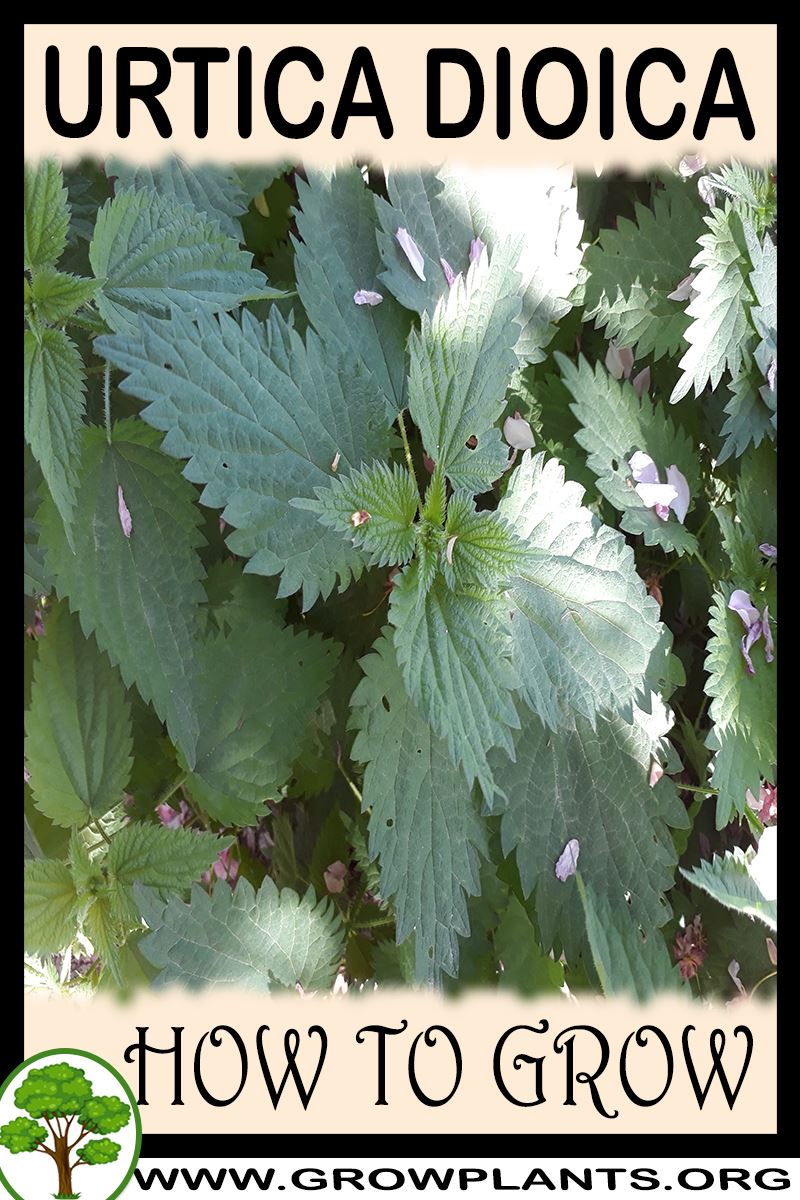
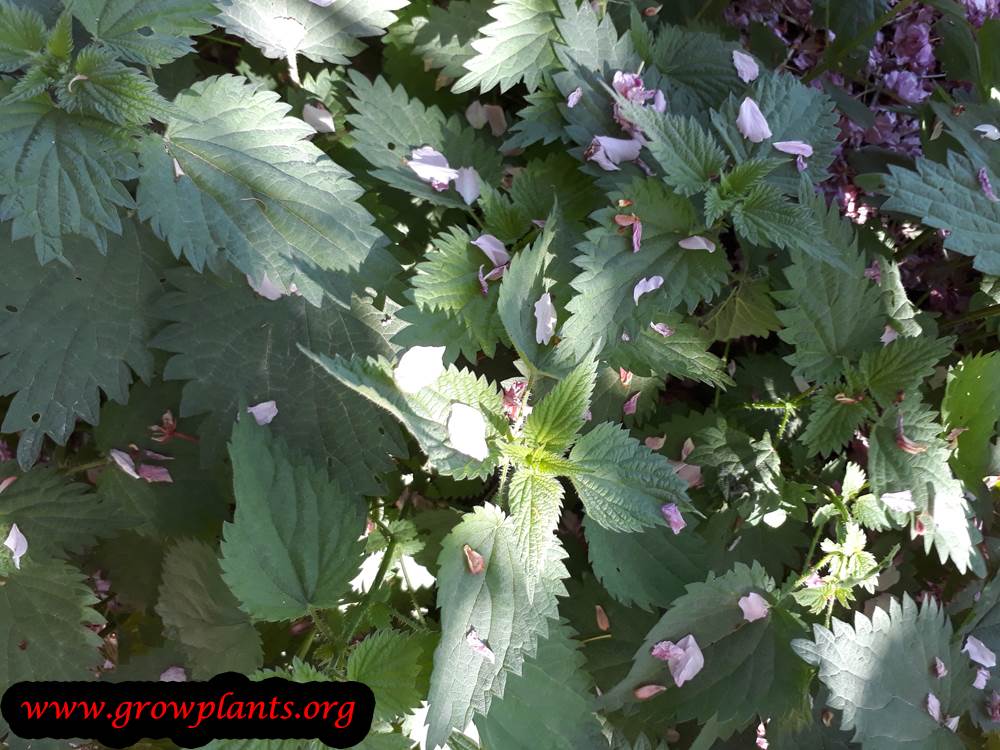
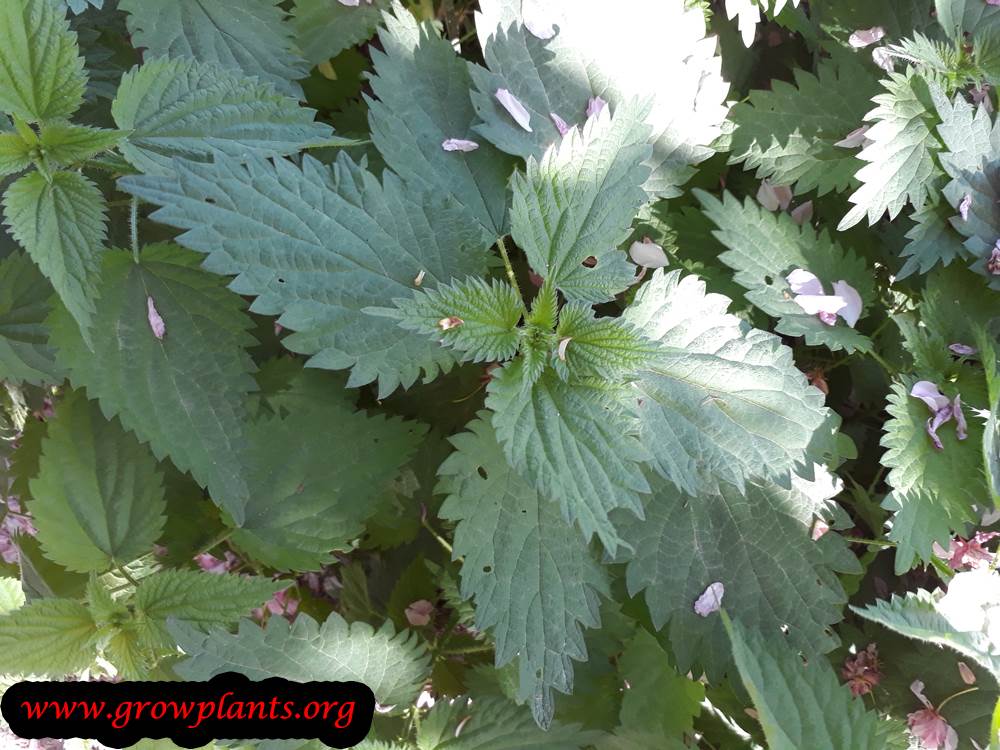
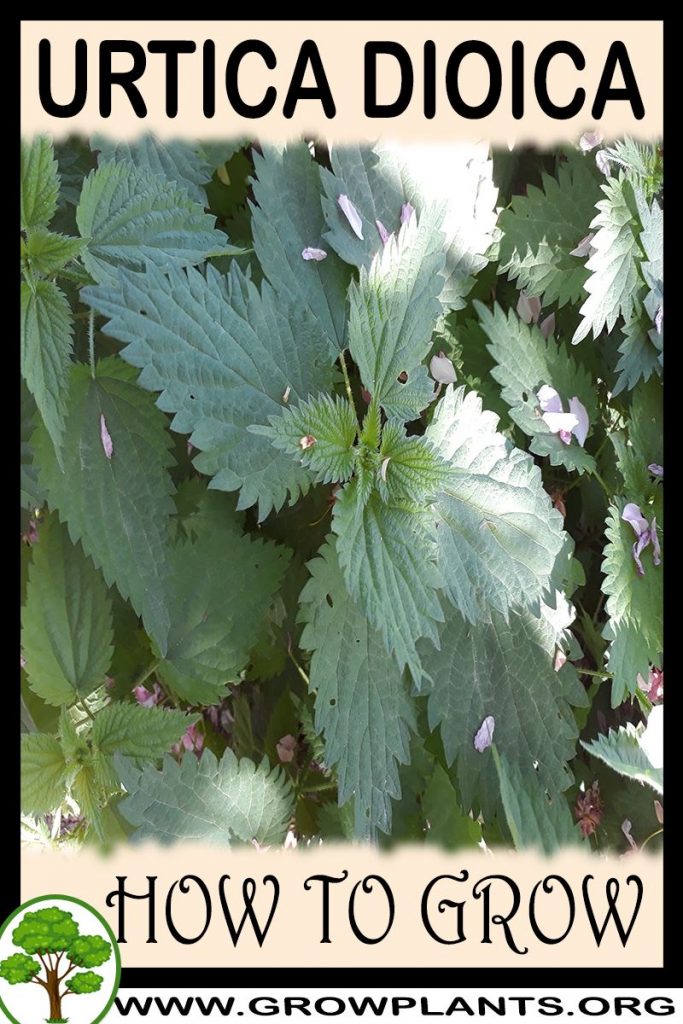
- Leaves & Foliage: Deltoid-to-oval green leaves with serrated margins and stinging hairs (best grown in shade); grows more tender in shade.
- Flower Characteristics: Small green-to-brown flowers borne on the stems (full detail in the Bloom accordion).
Primary Uses & Landscape Value
- Edible Uses: Leaves cooked in soups, as a dough filling and other dishes (cooking removes the sting); also used medicinally.
- Functional & Ornamental Roles: Edible and medicinal leaf crop and wildlife plant for moist ground.
Care Guide: Planting, Soil & Watering
Overview: Stinging nettle is a fast, hardy perennial that grows in sun to part shade and rich, consistently moist soil. It thrives in fertile, damp ground and spreads readily by rhizome, so site it where it can be contained.
Quick Care Requirements
| Requirement | Ideal Condition |
|---|---|
| Planting Season | Spring through autumn |
| Growth Rate | Fast |
| Soil Type | Rich, moist, nitrogen-rich |
| Water Need | Moderate to High; keep the soil consistently moist |
Planting & Establishment
- Best Planting Season: Plant from spring through autumn during the growing season.
- How to Plant:
- Hole Preparation: Dig a hole large enough to hold the roots and creeping rhizomes.
- Soil Amendments: Work in plenty of organic matter; it loves rich, nitrogen-heavy soil.
- Planting Depth: Set the crown at soil level.
- Growth Speed & Expectations: A fast grower reaching 1-2 m (40-80 in) that spreads by rhizome once settled.
Soil, Watering & Drainage Care
- Soil Mix & Drainage Needs: Keep it in moisture-retentive, fertile soil; growing it in a container helps rein in its spread.
- Watering Schedule & Technique:
- Young / Newly Planted: Keep the soil moist while it establishes.
- Established: Water to maintain consistent moisture, especially in heat.
- Seasonal Adjustments: Reduce watering as it dies back for winter.
Climate, Light & Hardiness
Stinging nettle is a robust, cold-hardy perennial herb at home across temperate, subtropical, and mediterranean climates, reliably overwintering from about USDA zone 3 through 10. It tolerates a wide range of light from full sun to full shade, doing best with some shade where summers run hot.
Quick Climate Specifications
| Climate Zones | Temperate, Subtropical, Mediterranean |
|---|---|
| USDA Hardiness Zones | 3–10 |
| Frost Tolerance | High |
| Light Conditions | Full Sun to Full Shade |
Sunlight & Light Exposure
Optimal Light Setup
Adaptable from full sun through full shade; in hot climates, partial to full shade keeps growth lush and delays the plant toughening up in summer heat.
Temperature Extremes & Hardiness
USDA Hardiness & Regional Limits
Very cold-hardy, reliably perennial from zone 3 (severe winters) through zone 10; the root system survives hard freezes even though top growth dies back each winter.
Cold Damage & Winter Protection
Foliage dies back with the first hard frosts of autumn/winter and simply regrows from the roots in spring - no winter protection is needed.
Frost Sensitivity
Low; this is a genuinely frost-hardy herbaceous perennial.
Extreme Heat Tolerance
Tolerates heat reasonably well in subtropical and mediterranean climates, though growth timing shifts: in hotter climates, active leaf growth concentrates more in the cooler autumn-to-spring months rather than through peak summer heat.
Wind, Humidity & Microclimate
Rainfall & Seasonal Moisture
Prefers a climate with reasonably reliable moisture rather than a long, hard dry season, consistent with its moisture-loving habit.
Growing in Pots, Balconies & Indoors
Stinging nettle (Urtica dioica) is a vigorous perennial, 1-2 m, valued as an edible and medicinal herb and a wildlife plant. The grower marks it as suitable for indoors and for containers – a pot is in fact the sensible way to grow it, keeping its running roots and stinging stems contained.
Quick Details
- Container Size: A large, sturdy pot (15-30 L) to contain the spreading roots
- Indoor Suitability: The grower lists it as a houseplant; grow it in a bright spot, but handle with care because of the sting
- Best Spot: Full sun to full shade – very adaptable; bright light indoors
- Soil & Drainage: Rich, moisture-retentive but free-draining mix
- Watering in Pots: Average to generous – it likes rich, moist soil and pots dry fast
Indoors & On the Windowsill
- Grower’s note: He marks it ‘Yes’ for indoors – kept in a pot in a bright spot it will grow readily, though most gardeners grow it outdoors as a herb.
- Windowsill / bright room: It tolerates a wide range of light; keep the rich mix moist and cut it back to keep it bushy and in bounds.
- Containment: A pot keeps its aggressive roots from spreading – essential if you grow it near the house.
- Safety: The leaves and stems have stinging hairs – always wear gloves to handle it, and keep it well away from children and pets. (Cooking or drying destroys the sting for use as a herb.)
On a Balcony or Patio
- Light & adaptability: It grows in sun or shade on a balcony; a pot keeps this rampant plant under control.
- Watering: It is thirsty and likes rich, moist soil – water often, as pots dry faster than open ground; a drip irrigation kit with a timer takes the daily guesswork out of that schedule.
- Handling: Site it away from seating and walkways so no one brushes the stinging foliage by accident.
Choosing the Pot, Soil & Long-Term Care
- Pot & drainage: A large, strong pot with good holes; skip a standing water saucer to avoid root rot. Glazed or plastic holds the moisture it enjoys.
- Potting mix: A rich, organic, moisture-retentive blend – loam-based mix with plenty of compost.
- Feeding: A hungry grower; Potted plants exhaust their food faster because watering leaches nutrients, so feed lightly through the growing season – more often than plants in open ground.
- Repotting: Divide and refresh the mix every year or two, wearing gloves, to curb its spread and keep it productive.
Fertilizing & Feeding
A moderate feeder – this fast-growing, invasive-prone leaf herb responds well to nitrogen-forward feeding and consistently moist, rich soil to keep leaf harvests coming. A fertilizer formulated for tomatoes and vegetables supports that feeding pattern through harvest.
Quick Fertilizing Specs
| Feeding Level | Moderate feeder |
|---|---|
| Main Nutrient Priority | Nitrogen-forward feeding to support continuous leaf production |
| Best Feeding Period | The main growing season while leaves are being harvested |
| Organic Options | Compost, well-rotted organic matter, and mulch worked into moist, rich soil |
| Micronutrients | Usually adequate from rich, well-fed soil; correct specific issues only when diagnosed |
| Soil pH | Tolerates a wide range provided the soil stays consistently moist and fertile |
| Reduce/Stop Feeding | Taper off feeding as growth naturally slows going into cooler months |
Feeding by Growth Stage
Establishment after planting
Help new plants root into consistently moist, fertile soil before leaf harvesting begins.
| Nutrient direction | A balanced fertilizer or organic matter worked into moist, rich soil at planting. |
|---|---|
| Timing | At planting and through the first weeks of root establishment. |
| Frequency | A light feeding at planting is usually enough to get this vigorous plant going. |
| Fertilizer types | A balanced complete fertilizer worked into the planting soil, Compost or well-rotted organic matter mixed into moist, rich soil |
| Precautions | This plant spreads readily and can be invasive; consider a contained planting area alongside any feeding to keep growth manageable. |
Active leaf growth and harvest
Support vigorous, tender leaf production through the harvesting season.
| Nutrient direction | A nitrogen-forward feed to encourage lush, harvestable leaf growth. |
|---|---|
| Timing | Through the main growing season while leaves are being actively harvested. |
| Frequency | Regular light feedings support continuous leaf regrowth after harvest. |
| Fertilizer types | A nitrogen-forward complete fertilizer, Compost or well-rotted organic matter as a mulch to keep soil consistently moist |
| Precautions | Since the leaves are eaten, follow label guidance on harvest timing after feeding, and keep soil consistently moist – this plant does not perform well when it dries out. |
Nutrient Deficiency Signs & Corrections
Older leaves turn pale green to yellow and overall leaf growth is small and slow.
| Possible causes | low soil nitrogen, depleted or sandy soil, insufficient feeding for a fast-growing, heavy-leaf plant |
|---|---|
| Appears first on | older, lower leaves |
| What to check | soil richness and recent feeding history, soil texture, growth rate compared to expected vigor |
| Possible correction | Apply a nitrogen-forward feed and work organic matter into the soil to build long-term fertility. |
Leaves wilt, curl, or turn crisp at the edges between waterings.
| Possible causes | insufficient soil moisture, fast-draining soil, extended dry periods without irrigation |
|---|---|
| Appears first on | leaf margins and younger growth |
| What to check | soil moisture, watering frequency, soil’s ability to retain moisture |
| Possible correction | Improve soil moisture retention with organic matter and mulch, and water consistently; feeding will not correct drought stress. |
Lower stems and roots darken and soften, and the plant wilts despite moist soil.
| Possible causes | waterlogged or poorly drained soil, overwatering, root disease favored by constantly saturated conditions |
|---|---|
| Appears first on | the root zone and lower stems |
| What to check | soil drainage, recent watering, condition of the roots |
| Possible correction | Improve drainage while keeping soil evenly moist rather than saturated. |
Pruning, Training & Seasonal Maintenance
Stinging nettle genuinely does not need pruning – its own facts confirm this directly. What looks like cutting on this plant is really leaf/shoot harvesting for food, done through its growing season, plus an optional autumn/winter clearing of dead top growth once it dies back in cooler parts of its range. Because it spreads readily by both rhizome and seed and is noted as invasive, the one pruning-adjacent task worth doing deliberately is removing flowering stems before seed sets, to limit unwanted spread rather than to shape the plant.
Quick Pruning & Maintenance Specs
| Pruning Tolerance | Low – not needed for the plant’s health; cutting is for harvest or spread control |
| Primary Maintenance Window | Ongoing harvest through the growing season; optional autumn/winter dead-growth clearing |
| Main Objective | Harvest edible leaves; remove dead stems once foliage dies back; limit self-seeding |
| Best Tool Type | Precision snips – always with sting-proof gloves |
| Avoid Heavy Handling During | No particular season is off-limits, but the stinging hairs are present on all green growth, so gloves are needed year-round when cutting |
Seasonal Pruning Schedule
Dormant/Winter
Objective: tidy dead top growth once it has collapsed in colder parts of this plant’s range. Remove: dead, blackened stems. Do not remove: the rootstock/rhizome base, which resprouts the following season. Response: fresh shoots emerge from the crown and spreading rhizomes the following growing season, which are then harvested as new leaves.
Special Growth to Remove
- Flowering stems, if cut before seed sets, to help limit this plant’s self-seeding where its spread is unwanted – not required for plant health, purely a containment choice.
- Dead stems once they have collapsed at season’s end.
Container & Small-Space Pruning
Growing it in a container is itself the main containment strategy for its spreading rhizome, more so than any pruning; within a pot, harvest cutting is the same light, ongoing task as in open ground.
Tools
- Precision snips for harvest cutting and any dead-stem clearing – always paired with thick gloves, since every green part of this plant carries stinging hairs.
Tool Hygiene & Disease Risk
Routine: clean, sharp snips are sufficient; no transmissible pruning-borne disease is documented for this species.
Cut Placement & Technique
Cut stems above a leaf node when harvesting, which encourages a fresh flush of harvestable young leaves from the same plant; clear dead stems back to the base once collapsed.
Post-Pruning Care
No special aftercare beyond normal watering; this plant needs no feeding to resprout after harvest cutting.
Common Pruning Mistakes
- Handling or cutting without gloves – every part of the live plant stings.
- Letting all stems flower and set seed where controlling this plant’s spread matters.
When NOT to Prune
There is no real health-based restriction on when to cut this plant; the only consideration is choosing when to harvest leaves versus when to allow flowering for pollinators or wildlife value if spread is not a concern.
Recommended Tools (by task)
- precision_snips – the only tool needed, for routine leaf/shoot harvest and end-of-season stem clearing.
Propagation Guide
Stinging nettle is normally grown from seed, sown directly where the soil stays moist, and is an easy plant to establish. The site’s own facts don’t mention it, but nettle also spreads readily by its underground rhizomes – division of an established rhizome clump is a fast, reliable alternative where a start from an existing patch is available, and is often quicker than raising plants from seed.
Quick Propagation Specs
| Best Propagation Method | Seed |
| Alternative Methods | Rhizome/clump division |
| Propagation Difficulty | Easy |
| Seed True-to-Type | Usually true-to-type |
| Vegetative True-to-Type | Yes |
| Best Propagation Season | Spring through autumn |
Growing from Seed
Sowing Season
Spring through autumn.
Germination Conditions
Consistently moist soil, matching this plant’s general moisture preference.
Seedling Care
Nettle is noted as an invasive spreader; site new seedlings, and any divided rhizome pieces, somewhere their spread can be contained if that is a concern.
Division, Offsets, Pups & Suckers
Established stands can be propagated by lifting and dividing a section of the spreading rhizome mat, each piece carrying its own roots and at least one growth bud, then replanting it into moist soil. This is a quick way to start a new patch from an existing one, but because the species is noted as invasive here, it’s worth siting and containing new plantings deliberately – for example in a bottomless container sunk into the ground – rather than dividing it directly into open borders.
Bloom & Flower Guide
Quick Details
- Bloom Season: Summer
- Flower Appearance: Tiny green to brown flowers in drooping, catkin-like tassels along the stems
- Edibility: Not an edible flower — the leaves are edible cooked, but the plant stings
Detailed Blooming Overview
Nettle flowers are wind-borne affairs: tiny, petalless and green-brown, hanging in catkin-like tassels through summer. Male and female flowers are usually carried on separate plants (the species is dioecious).
Flower Characteristics
- Minute green-brown flowers in drooping clusters, with no petals.
- Wind-pollinated rather than insect-pollinated.
Bloom Care & Thinning
- For tender leaves: many growers cut plants back before flowering to keep young leaves coming and to limit prolific self-seeding.
- Safety: the whole plant is covered in stinging hairs — handle with gloves.
Fruit & Uses
Stinging nettle is grown for its young leaves, which are cooked and used as a leafy green in soups and as a filling for savoury dough dishes. The leaves sting on bare-skin contact when fresh and are never eaten raw; cooking, blanching or drying neutralises the sting and makes them safe to eat.
Quick Edible Specs
| Edible Parts | Leaves |
|---|---|
| Main Use(s) | Culinary – cooked green, soup, dough filling; traditionally also used medicinally |
| Eaten Raw or Cooked | Cooked only – not eaten raw |
| Preparation Required | Cook, blanch or dry to neutralise the stinging hairs; wear gloves when harvesting and washing fresh leaves |
| Harvest Season | All year once established – mainly spring to summer in colder climates, autumn to spring in hotter climates |
| Time to First Harvest | Can be harvested freely as soon as the plant is established |
| Storage | Best used fresh soon after picking; can also be dried for later use |
| Safety/Toxicity Caveat | Fresh leaves and stems carry stinging hairs that irritate skin on contact – handle with gloves and always cook, blanch or dry before eating |
Leaves & Greens
The edible leaves are deltoid to oval with a serrated margin; plants grown in some shade are noted by the site as producing better leaves. Young growth is harvested freely once the plant is established, and picking can continue across the growing season. Because the plant is a vigorous, self-renewing perennial, regular leaf harvesting is not noted as a trade-off against the plant’s other growth.
Preparation, Uses & Safety
Leaves are cooked into soups or used as a filling for dough-based dishes (e.g. pies and similar baked fillings); cooking is required both for texture/flavour and, critically, to destroy the stinging compounds in the leaf hairs. Always wear gloves when harvesting and rinsing fresh nettle, and never eat the raw leaf. Nettle is also traditionally used medicinally, though no specific health claims are made here.
Pests, Diseases & Troubleshooting
Overview: Stinging nettle is a vigorous native perennial best known as a wildlife plant – it is the food plant of many butterfly caterpillars and a nursery for beneficial insects, so much of its ‘pest’ life is actually welcome. It is extremely robust and essentially free of damaging pests; its own nettle aphid and nettle rust are the notable specialists, and the real management challenge is its spreading, stinging vigour rather than keeping it alive.
Quick Troubleshooting Overview
| Issue / Pest | Main Symptom | Primary Solution |
|---|---|---|
| Nettle aphid | Dense colonies on stems (feed ladybirds) | Usually leave as beneficial-insect food |
| Butterfly caterpillars | Chewed leaves (desirable wildlife) | Leave them – nettle is a key larval host |
| Nettle rust | Orange pustules on stems and leaves | Remove affected growth, thin stands |
| Powdery mildew | White coating on leaves late season | Airflow, cut back, remove leaves |
| Invasive spread | Rhizomes and seed colonising ground | Barriers, cutting, containment |
Common Pests & Management
- Nettle aphid (Microlophium carnosum):
- Symptoms: Large green aphids forming dense colonies on the stems and shoot tips in spring, with honeydew; typically an early and abundant food source rather than a real threat.
- Prevention & Control: In most gardens leave them – they feed the first lady beetles, lacewings and hoverflies of the season, which then move onto crops. Only cut back or hose off if you specifically want cleaner growth for harvesting.
- Butterfly and moth caterpillars (Aglais / Vanessa spp.):
- Symptoms: Clusters of black or spiny caterpillars (peacock, small tortoiseshell, red admiral, comma) chewing the leaves and spinning silk webs on the shoot tips.
- Prevention & Control: These are highly desirable – nettle is a key larval food plant. Leave a patch specifically for them; no control is wanted. Site the nettle patch where its stings and spread are not a nuisance.
- Slugs and snails (Gastropoda):
- Symptoms: Minor grazing of the soft young leaves in damp conditions, with slime trails.
- Prevention & Control: Rarely worth acting on given the plant’s vigour; handpick only if establishing a fresh patch from seedlings.
Diseases & Fungal Issues
- Nettle rust (Puccinia urticata):
- Symptoms: Bright orange, swollen pustules and distorted, thickened patches on stems and leaves in spring – the characteristic disease of nettle, which alternates onto sedges.
- Treatment & Management: Cut back and remove badly infected growth, thin dense stands for airflow; on a wildlife or utility nettle patch it is usually simply tolerated, and fresh clean growth follows a cut-back.
- Powdery mildew (Erysiphe / Podosphaera spp.):
- Symptoms: White powdery coating on leaves in crowded, late-season, dry-rooted conditions, causing yellowing.
- Treatment & Management: Cut the stand back to force clean regrowth, improve airflow, and keep roots moist; fungicide is essentially never needed.
- Leaf spots (Septoria / Ramularia spp.):
- Symptoms: Small brown or grey spots on leaves in wet weather, minor on this robust plant.
- Treatment & Management: Remove affected leaves or cut back; no treatment is normally warranted.
Growing Difficulties & Abiotic Problems
- Invasive spread:
- Cause & Symptoms: Yellow creeping rhizomes and copious seed let nettle colonise ground rapidly – the main practical problem, along with its sting.
- Correction Strategy: Contain with a root barrier or grow in a defined patch, cut before it seeds, and dig out unwanted rhizomes; wear gloves and cover up when handling.
- Coarse, tough growth:
- Cause & Symptoms: Old plants become tall, tough and less useful for harvest or wildlife, and can flop.
- Correction Strategy: Cut the patch back through the season to force tender young growth (best for both harvest and caterpillars), and cut down old stems in late dormancy.
What Helps – Products & Tools
Stinging nettle needs no pesticides – most of its insect life is beneficial and deliberately encouraged. The only ‘tools’ worth having are gloves, a root barrier and a pair of shears: cut the patch back to force clean young growth against rust and mildew and to keep it in bounds. Leave the aphids and caterpillars for the wildlife they support.