
Plant Profile & Key Characteristics
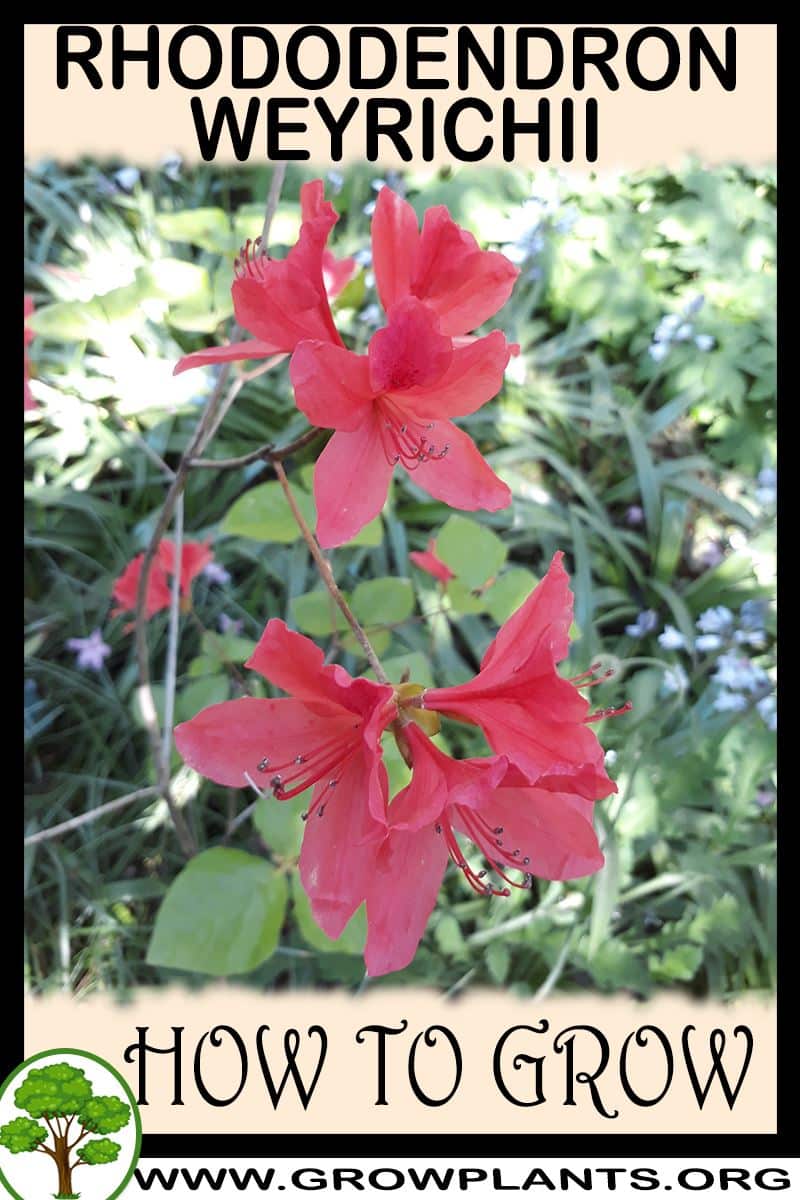
Overview: A deciduous ornamental shrub reaching about 0.5–1.5 m, prized for the trumpet-shaped pink, orange or red flowers that can cover the whole plant. It is grown mainly as a showy, acid-loving spring-flowering ornamental.
Quick Specifications
| Specification | Attribute |
|---|---|
| Plant Type / Life Cycle | Perennial shrub |
| Foliage Type | Deciduous |
| Mature Size | 0.5–1.5 m tall (20–60 in) |
| Growth Rate | Moderate |
| Root System | Fibrous, shallow (surface feeder – dislikes deep planting) |
| Toxicity | Toxic – all parts contain grayanotoxins, harmful if eaten by people or pets |
| Hardiness | USDA zones 5–10a |
Growth Form & Structure
- Height & Spread: 0.5–1.5 m (20–60 in) in the ground; can also be kept more compact in a large container.
- Growth Habit & Form: Rounded, twiggy deciduous shrub.
- Lifespan & Maturity: Long-lived woody shrub that reaches full flowering size over several years.
Anatomy & Physical Features
- Leaves & Foliage: Green, elliptic to ovate leaves that are shed in the cold season.
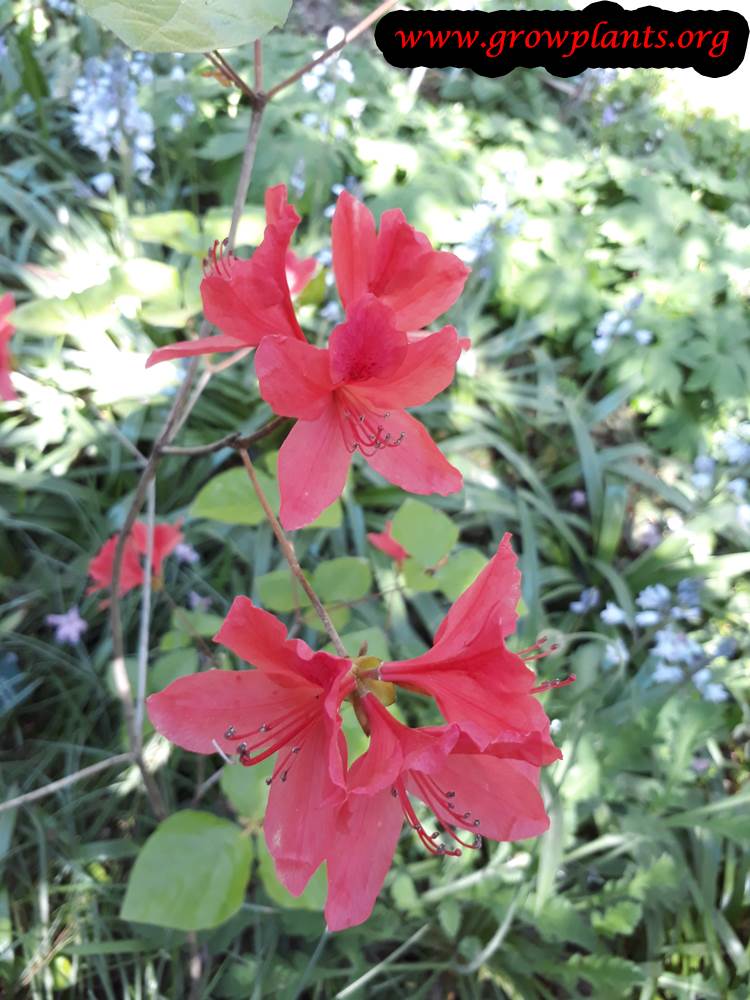
- Flower Characteristics: Trumpet-shaped flowers in pink, orange or red that can smother the whole plant.
Primary Uses & Landscape Value
- Functional & Ornamental Roles: Ornamental flowering shrub for acid-soil borders, woodland gardens and large containers.
Care Guide: Planting, Soil & Watering
Overview: This rhododendron is an acid-loving shrub that grows best in full sun to part shade in rich, moist but well-drained, distinctly acidic soil. Keep the shallow roots cool and evenly moist with mulch, avoid lime, and never let it dry out.
Quick Care Requirements
| Requirement | Ideal Condition |
|---|---|
| Planting Season | In winter, spring or summer, avoiding hard frost |
| Growth Rate | Moderate |
| Soil Type | Rich, moist, well-drained, humus-rich acidic soil |
| Soil pH | Acidic, about 4–6 |
| Water Need | Moderate to High — keep evenly moist, never waterlogged |
Planting & Establishment
- Best Planting Season: Plant in the cooler part of the year (winter to spring), or in summer where mild, so roots establish before heat or hard frost.
- How to Plant:
- Hole Preparation: Dig a wide but shallow hole to suit the fibrous, surface roots; loosen the sides for easy rooting.
- Soil Amendments: Blend in acidic organic matter such as leaf mould, composted bark or ericaceous compost; avoid lime.
- Planting Depth: Plant shallowly with the top of the root ball at or just above soil level — deep planting suffocates the shallow roots — then mulch.
- Growth Speed & Expectations: Moderate, forming a 0.5–1.5 m shrub that flowers in spring to early summer.
Soil, Watering & Drainage Care
- Soil Mix & Drainage Needs: Rich, humus-rich, acidic soil with sharp drainage is essential; the shallow roots need constant moisture yet rot in waterlogged ground, so mulch and never let them dry out.
- Watering Schedule & Technique:
- Young / Newly Planted: Keep the root zone consistently moist while establishing; use rainwater where tap water is hard.
- Established: Water regularly so the soil stays evenly moist, especially in dry spells; mulch to conserve moisture.
- Seasonal Adjustments: Water more in summer heat and drought; reduce in winter while keeping the roots from drying.
Climate, Light & Hardiness
This deciduous azalea-type Rhododendron suits temperate and subtropical climates, growing best in full sun to half shade. It is hardy through USDA zones 5–10a.
Quick Climate Specifications
| Climate Zones | Temperate, Subtropics |
|---|---|
| USDA Hardiness Zones | 5–10a |
| Frost Tolerance | High |
| Light Conditions | Full Sun / Half Shade |
Sunlight & Light Exposure
Optimal Light Setup
Full sun to half shade both suit this shrub; in hotter parts of its range, some shade helps protect flowers and foliage from scorch.
Temperature Extremes & Hardiness
USDA Hardiness & Regional Limits
Hardy through USDA zones 5–10a, a cold-tolerant deciduous shrub well suited to temperate gardens with real winter cold as well as milder subtropical regions.
Frost Sensitivity
As a deciduous shrub, dormant wood tolerates winter cold well within its zone range; flower buds opening in spring are more vulnerable to a late frost.
Wind, Humidity & Microclimate
Humidity Preferences
Prefers consistently moist, acidic, humus-rich soil conditions typical of woodland-edge Rhododendron habitats.
Growing in Pots, Balconies & Indoors
This deciduous azalea is an acid-loving shrub that needs a genuine winter chill, so the grower rates it as an outdoor plant rather than a houseplant. It grows well in an ericaceous container on a patio, kept outside year-round for the cold season it needs.
Quick Details
- Container Size: A large pot for this 0.5-1.5 m shrub; pot on as it grows
- Indoor Suitability: Not a houseplant; it needs an outdoor winter chill and cannot take a hot room
- Best Spot: Full sun to part shade
- Soil & Drainage: Acid / ericaceous, free-draining, organic-rich mix – no lime
- Watering in Pots: Average to generous; keep evenly moist with soft, low-lime water
Indoors & On the Windowsill
- Houseplant limits: The grower does not rate it as an indoor plant; without a cold winter it will not flower well, so a warm room defeats it.
- Keep it cold: Leave the pot outdoors through winter for the chilling it needs.
- Safety: Like all rhododendrons, every part is toxic if eaten – keep away from children and pets.
On a Balcony or Patio
- Light & wind: A sunny to part-shaded balcony suits it; shelter it from cold, drying winds and never let the acidic mix dry out.
Choosing the Pot, Soil & Long-Term Care
- Pot & drainage: A large pot with strong drainage holes; use rainwater where tap water is hard.
- Acid mix: Ericaceous (lime-free), free-draining, organic-rich potting mix.
- Feeding: Feed with an ericaceous fertiliser through the growing season.
- Repotting: Pot on or refresh the ericaceous mix every couple of years.
Fertilizing & Feeding
A moderate feeder that thrives with a light, acid-forming shrub fertilizer applied in spring, paired with organic mulch to help maintain the distinctly acidic soil this rhododendron relative needs.
Quick Fertilizing Specs
| Feeding Level | Moderate – benefits from a light spring feeding as a deciduous, acid-loving flowering shrub |
|---|---|
| Main Nutrient Priority | Balanced, acid-forming feeding rather than any single nutrient push |
| Best Feeding Period | Early spring as new growth begins |
| Soil pH | Needs distinctly acidic, rich, well-drained soil; an acid-forming fertilizer and organic mulch help maintain it |
| Reduce/Stop Feeding | Stop feeding by late summer so new growth hardens off before the shrub drops its leaves |
Feeding by Growth Stage
Spring growth and root establishment
Support new stem and leaf growth on this deciduous, acid-loving rhododendron relative as it breaks dormancy
| Nutrient direction | A balanced, acid-forming fertilizer formulated for rhododendron-type shrubs supports steady growth |
|---|---|
| Timing | In early spring as new growth begins |
| Frequency | A light feeding at the start of spring growth is usually enough for an established shrub |
| Fertilizer types | A balanced fertilizer formulated for acid-loving shrubs (rhododendron/azalea type), Acidic organic mulch worked lightly into the root zone |
| Routine trace nutrients | iron, manganese |
| Precautions | Keep fertilizer away from the trunk base, and avoid heavy nitrogen that pushes soft growth vulnerable to late frost |
Trumpet-flower bloom period
Maintain nutrition through the spring-to-summer bloom display of trumpet-shaped flowers
| Nutrient direction | Continue a light, balanced acid-forming feed; heavy feeding during bloom is not needed |
|---|---|
| Timing | During the spring-to-summer bloom period |
| Frequency | Light feeding is usually enough for established shrubs already fed in spring |
| Fertilizer types | A balanced acid-forming shrub fertilizer, only if spring feeding was skipped or growth looks weak |
| Precautions | Avoid fertilizing directly onto open flowers, and don’t force late growth that won’t harden off before autumn |
Autumn dieback and winter dormancy
Allow this deciduous shrub to drop its leaves and rest through winter
| Nutrient direction | None – withhold fertilizer once the shrub drops its leaves for winter |
|---|---|
| Timing | From autumn leaf drop through winter |
| Frequency | No feeding at this stage |
| Fertilizer types | No feeding at this stage; resume a light acid-forming feed as spring growth begins |
| Precautions | Do not fertilize during winter dormancy; late-season feeding risks tender growth that cold can damage |
Nutrient Deficiency Signs & Corrections
New leaves emerge yellow with green veins standing out clearly
| Possible causes | Iron deficiency triggered by soil pH that’s too high for this acid-loving shrub, Poor drainage or waterlogged roots limiting nutrient uptake, Root disturbance from recent transplanting |
|---|---|
| Appears first on | Newest leaves at branch tips |
| What to check | Soil pH – needs to be distinctly acidic, Drainage and whether roots sit in standing water, Whether the shrub was recently transplanted or disturbed |
| Possible correction | Correct pH toward acidic if testing shows it’s too high, and consider a chelated iron product per its label |
Overall pale, undersized leaves and fewer flower buds than expected
| Possible causes | Nitrogen deficiency, Root competition or compacted soil limiting uptake, Insufficient organic mulch over the root zone |
|---|---|
| Appears first on | Older leaves and overall bud count |
| What to check | Mulch depth and organic matter over the root zone, Whether roots are compacted or competing with other plants, How bud count compares with previous seasons |
| Possible correction | Apply a balanced acid-forming fertilizer per its label and refresh the organic mulch layer |
Interveinal yellowing on older leaves, sometimes with a reddish tint, distinct from normal autumn color change
| Possible causes | Magnesium deficiency, more likely in sandy or well-leached soil, Potassium excess interfering with magnesium uptake, Normal seasonal leaf color change being mistaken for a deficiency |
|---|---|
| Appears first on | Older leaves lower on the shrub |
| What to check | Season – rule out normal autumn coloring first, Soil type and fertilizing history, Whether new growth still looks healthy green |
| Possible correction | Apply a balanced acid-forming fertilizer that includes magnesium per its label if the pattern persists outside of autumn |
Pruning, Training & Seasonal Maintenance
Rhododendron weyrichii is a deciduous, azalea-type Rhododendron that flowers on wood formed the previous season, so timing is the single most important pruning decision. It tolerates moderate pruning – mainly deadheading and light shaping – and because it naturally holds a neat, rounded form within its modest 0.5–1.5 m size, heavy structural work is rarely needed. The safe window is immediately after flowering, before the plant sets next year’s buds later in the season.
Quick Pruning & Maintenance Specs
| Pruning Tolerance | Moderate |
| Primary Pruning Window | Immediately after flowering |
| Typical Frequency | Once a year, plus occasional dieback removal |
| Main Objective | Deadhead; maintain natural rounded form; remove dead/crossing wood |
| Young Plant Priority | Minimal shaping while establishing in acidic soil; remove only damaged growth |
| Mature Plant Priority | Deadhead spent trusses; thin crossing or congested interior growth |
| Best Tool Type | Bypass secateurs; precision snips for deadheading |
| Avoid Heavy Pruning During | Late summer through winter, once next year’s flower buds have set |
Pruning by Plant Age & Size
Newly Established
Remove only damaged or dead growth while the plant establishes its root system in acidic soil; avoid shaping cuts in the first couple of seasons.
Young / Formative
No formal training system is needed – this species naturally forms a well-shaped shrub. Light tip pinching just after flowering can encourage bushier young growth if desired.
Mature / Established
Deadhead spent flower trusses each year and remove any dead, damaged or crossing wood; thin congested interior growth occasionally to improve airflow.
Seasonal Pruning Schedule
Post-Flowering (old-wood bloomer): as soon as flowers fade in spring/summer, deadhead and do any shaping cuts – flower buds for the following year form on this season’s new growth soon after bloom, so this is the only window that doesn’t sacrifice next year’s flowers.
Ongoing Sanitary: remove dead or winter-damaged wood as noticed, any time of year.
Flowering & Fruiting Wood
Like other Rhododendrons, this deciduous azalea-type species sets its flower buds on the current season’s new growth shortly after flowering, and those buds then overwinter to open the following spring/summer. Pruning right after bloom removes none of next year’s flowers; pruning from late summer onward, through autumn and winter, cuts off wood that is already carrying next season’s buds.
Structural Pruning & Training
Remove crossing or rubbing branches and thin dense interior growth for airflow – Rhododendrons in crowded, poorly ventilated canopies are more prone to fungal dieback. Keep the plant within its natural 0.5–1.5 m size with light post-bloom trimming rather than infrequent hard cuts.
Special Growth to Remove
- Spent flower trusses (deadheading) – prevents energy loss to seed pods and improves next year’s bloom.
- Dead or winter-damaged tips.
Container & Small-Space Pruning
Grows well in containers. Because it is shallow-rooted and acid-loving, favor light post-bloom trimming over heavy cutback, and avoid disturbing the rootball when pruning – manage size mainly through routine deadheading and tip control rather than hard renewal cuts.
Tools
Bypass secateurs for stem work; precision snips for deadheading individual trusses.
Tool Hygiene & Disease Risk
Increased – Rhododendrons are susceptible to twig and branch dieback fungal pathogens. Remove and dispose of any dieback wood promptly, and clean tools between plants if dieback symptoms are present.
Cut Placement & Technique
Cut spent trusses back to just above the topmost set of leaves or a healthy bud to avoid leaving a dying stub. Use thinning cuts rather than shearing to preserve the natural form and next year’s bud sites.
Heavy Pruning & Rejuvenation
Tolerates moderate rejuvenation of leggy or overgrown growth, done right after flowering; expect reduced bloom for a season or two while the plant regrows and resets its flower-bud cycle.
Post-Pruning Care
Maintain consistent moisture and acidic mulch after pruning; avoid heavy fertilizing right after a cutback, and watch for sunscald on newly exposed interior growth if a significant amount of canopy was opened.
Common Pruning Mistakes
- Pruning from late summer through winter, which removes the flower buds already set for next year – the most common Rhododendron pruning error.
- Shearing into a formal shape instead of selective thinning, which spoils the natural form and reduces bloom.
- Disturbing the shallow root system with heavy digging or cutback in containers.
When NOT to Prune
Avoid pruning from mid/late summer through winter, once next year’s flower buds have set; avoid pruning during active bloom if the current display is wanted; avoid heavy pruning during heat or drought stress.
Recommended Tools (by task)
- Bypass secateurs – for stem and deadwood removal.
- Precision snips – for deadheading individual flower trusses.
Pruning Troubleshooting
| Problem | Possible Cause | What to Check | Corrective Action |
| No flowers the following year | Pruned in the wrong season | Was pruning done after late summer instead of right after bloom? | Shift all shaping/deadheading to immediately after flowering going forward |
| Branch tip dieback | Fungal twig/branch dieback | Discolored or dying wood, timing of onset | Prune well below symptomatic wood and dispose of debris; sanitize tools |
| Sparse, leggy growth | Overcrowded planting or lack of renewal pruning | Surrounding shade, canopy density | Thin congested growth right after bloom to open the interior |
Propagation Guide
As a species (not a named hybrid), Rhododendron weyrichii can be grown fairly true from seed, but most gardeners get a flowering-size plant faster and more reliably from semi-hardwood stem cuttings taken in summer. Cuttings need consistent humidity and patience to root, making this a moderate-difficulty plant to propagate.
Quick Propagation Specs
| Best Propagation Method | Semi-Hardwood Stem Cuttings |
| Alternative Methods | Seed; Layering |
| Propagation Difficulty | Moderate |
| Seed True-to-Type | Usually true-to-type (species) |
| Vegetative True-to-Type | Yes |
| Best Propagation Season | Summer for cuttings; Winter to Spring for seed/planting, matching the plant’s own planting season |
| Cutting Rooting Time | Typically several weeks to a few months |
Growing from Seed
Seed Handling & Viability
Seed is fine and dust-like; use it reasonably fresh.
Sowing Depth & Orientation
Surface-sow onto an acidic seed mix without covering, as light helps germination.
Germination Conditions
Cool to moderate temperatures, consistent moisture and an acidic medium matching the plant’s preferred acidic, rich soil.
Seedling Care
Seedlings are slow-growing at first and best left undisturbed before pricking out.
Stem Cuttings
Cutting Type
Semi-hardwood tip cuttings, roughly 8–10cm, taken once new growth has begun to firm.
Best Timing
Summer.
Cutting Preparation
Remove lower leaves, wound the base lightly, and dip the cut end in rooting hormone.
Rooting Setup
An acidic, free-draining cutting mix under high humidity (mist or a covered propagator) gives the best results.
Rooting Hormone
Beneficial – rhododendrons and azaleas can be slow to root, and hormone treatment improves success rates.
Rooting Time
Often several weeks to a few months.
Air & Ground Layering
Low, flexible branches can be layered where cuttings prove difficult to root: wound the underside of the branch lightly, peg or bury the wounded section in moist, acidic soil, and leave it attached to the parent plant until it roots, which can take a full growing season or more before it is ready to separate.
Bloom & Flower Guide
Quick Details
- Bloom Season: Spring, often as the new leaves emerge
- Flower Appearance: Clusters of pink to orange-red trumpet-shaped flowers that can cover the shrub
- Edibility: None — toxic; ornamental only
Detailed Blooming Overview
This deciduous azalea-type rhododendron flowers generously in spring, often just as the fresh foliage unfolds, wreathing the whole plant in trumpet blooms.
Flower Characteristics
- Trumpet- or funnel-shaped flowers in pink, orange or red.
- Borne in clusters that can smother the shrub at peak bloom.
Bloom Care & Thinning
- Conditions: acid soil, dappled shade and shelter from harsh sun and wind; mulch to keep the roots cool and moist.
- Safety: the flowers, foliage and nectar contain grayanotoxins and are toxic — do not eat any part.
Pests, Diseases & Troubleshooting
Overview: Rhododendron weyrichii (Weyrich’s azalea) is a deciduous, spring-flowering azalea in the genus Rhododendron, and like all azaleas it prizes cool, moist, acidic, humus-rich soil with sharp drainage. Its main vulnerabilities are sap-sucking foliage pests, root-rotting water moulds in wet or alkaline ground, and lime-induced chlorosis. Management is organic and cultural first: right soil and siting, good airflow, mulch and sanitation, with sprays only as a backup.
Quick Troubleshooting Overview
| Issue / Pest | Main Symptom | Primary Solution |
|---|---|---|
| Aphids | Curled, sticky new shoots with sooty mould | Water jet, beneficials, insecticidal soap |
| Rhododendron lace bug | Silvery-mottled upper leaves, dark specks beneath | Shade/vigour, spray undersides with oil or soap |
| Vine weevil | Notched leaf edges; wilting from root-eaten crowns | Beneficial nematodes, remove debris |
| Phytophthora root rot | Wilting, browning, dieback in wet soil | Improve drainage, never overwater, remove plant |
| Leaf gall (Exobasidium) | Swollen, pale, fleshy leaf/bud galls | Handpick and destroy galls before they whiten |
| Lime-induced chlorosis | Yellow leaves with green veins | Acidify soil, chelated iron, ericaceous feed |
Common Pests & Management
- Aphids (Aphis / Illinoia spp.):
- Symptoms: Colonies on soft new shoots and flower buds, causing curled, distorted growth, sticky honeydew and black sooty mould; the source note of “aphids” fits azaleas well.
- Prevention & Control: Inspect young growth; dislodge with a water jet; conserve ladybirds, lacewings and hoverflies. For persistent colonies use insecticidal soap or a light horticultural oil sprayed in the evening to spare pollinators.
- Rhododendron Lace Bug (Stephanitis rhododendri):
- Symptoms: Coarse silvery-white or yellow mottling on upper leaf surfaces with shiny black tar-like excrement and cast skins beneath; worst on plants in hot, dry, sunny positions.
- Prevention & Control: Site in the light shade azaleas prefer and keep plants vigorous and mulched; encourage predatory bugs. Spray leaf undersides with horticultural oil or insecticidal soap when nymphs first appear.
- Azalea Whitefly (Pealius azaleae):
- Symptoms: Tiny white moth-like insects rising in clouds when disturbed; mottled, honeydew-coated, sooty leaves.
- Prevention & Control: Use yellow sticky traps to monitor; encourage Encarsia and general predators; spray undersides with insecticidal soap or horticultural oil, repeating to catch new hatches.
- Vine Weevil (Otiorhynchus sulcatus):
- Symptoms: Adults notch leaf margins at night; white C-shaped larvae eat roots and bark at the crown, causing wilting and sudden collapse, especially in containers.
- Prevention & Control: Drench soil with entomopathogenic nematodes (Heterorhabditis) in warm soil; clear leaf litter; check container rootballs; trap adults with rolled cardboard.
- Spider Mites (Tetranychus / Oligonychus spp.):
- Symptoms: Fine pale stippling and bronzing of leaves with faint webbing on undersides during hot, dry weather; foliage looks dull and dusty.
- Prevention & Control: Keep soil moist and mulched to reduce drought stress; hose down foliage; release predatory mites under cover; treat heavy attacks with insecticidal soap or horticultural oil.
Diseases & Fungal Issues
- Phytophthora Root & Crown Rot (Phytophthora cinnamomi):
- Symptoms: Dull, wilting foliage that browns and dies back branch by branch; roots and crown turn dark and rotten. The single most serious azalea killer, driven by wet, poorly drained or alkaline soil.
- Treatment & Management: Plant high in raised, free-draining, acidic beds enriched with organic matter; never overwater or let plants stand wet. Remove and destroy affected plants and avoid replanting azaleas in the same spot.
- Azalea Leaf Gall (Exobasidium japonicum / vaccinii):
- Symptoms: Young leaves and buds swell into thick, pale green, fleshy galls that later turn white with spores, then brown. Common in cool, humid spring weather.
- Treatment & Management: Handpick and destroy galls before they whiten and release spores; improve airflow and avoid overhead watering. Rarely needs fungicide; copper can help where galling is severe.
- Powdery Mildew (Erysiphe / Microsphaera spp.):
- Symptoms: On deciduous azaleas such as this, white powdery patches or purplish blotches and premature leaf drop, especially in dry summers with humid nights.
- Treatment & Management: Space and prune for airflow, avoid drought stress and clear fallen leaves. Apply sulphur or potassium-bicarbonate spray at first sign, coating both leaf surfaces.
- Petal Blight (Ovulinia azaleae):
- Symptoms: Small watery spots on petals that rapidly enlarge to soft, slimy brown collapse, leaving flowers rotting and clinging to the plant in wet bloom weather.
- Treatment & Management: Remove and bin infected flowers and spent blooms; avoid wetting flowers when watering; refresh mulch to bury resting bodies. Preventive fungicide at bud-break helps only where it recurs badly.
- Azalea Rust (Pucciniastrum spp.):
- Symptoms: Yellow spots on upper leaf surfaces with orange powdery pustules beneath, chiefly on deciduous azaleas; heavy attacks cause early leaf fall.
- Treatment & Management: Rake and destroy fallen leaves; improve airflow; avoid overhead watering. Sulphur or a suitable fungicide can protect new foliage where rust is a recurring problem.
Growing Difficulties & Abiotic Problems
- Lime-Induced Chlorosis:
- Cause & Symptoms: As a strict acid-lover, alkaline soil or hard water locks up iron; leaves yellow between green veins, and growth weakens.
- Correction Strategy: Grow in acidic (pH ~4.5–5.5) ericaceous soil, mulch with pine needles or composted bark, water with rainwater, and apply chelated iron and an ericaceous feed.
- Waterlogging & Root Suffocation:
- Cause & Symptoms: Heavy, compacted or poorly drained soil starves shallow azalea roots of air, causing wilting, yellowing and dieback that mimics disease and invites Phytophthora.
- Correction Strategy: Plant high in raised beds with plenty of organic matter, keep evenly moist but never sodden, and improve drainage before planting.
- Leaf Scorch & Sun/Wind Burn:
- Cause & Symptoms: Fierce sun, cold drying winds or drought scorch leaf edges brown, and can damage tender new spring growth.
- Correction Strategy: Site in dappled shade with shelter from harsh sun and wind, mulch to conserve moisture, and water deeply in dry spells.
- Bud & Bloom Failure:
- Cause & Symptoms: Late frosts, drought during bud formation, or deep shade reduce or brown the flower buds of this early-blooming deciduous azalea.
- Correction Strategy: Shelter from frost pockets, keep well watered through summer when next year’s buds form, and give enough light for good budding.
What Helps – Products & Tools
For azaleas the essentials are cultural and organic: ericaceous/acidic compost, pine-bark or pine-needle mulch, chelated iron and an ericaceous feed to prevent chlorosis, insecticidal soap and horticultural oil for aphids, lace bug, whitefly and mites, yellow sticky traps for monitoring, beneficial nematodes for vine weevil, and sulphur or copper fungicide for rust, mildew and petal blight when cultural steps are not enough.