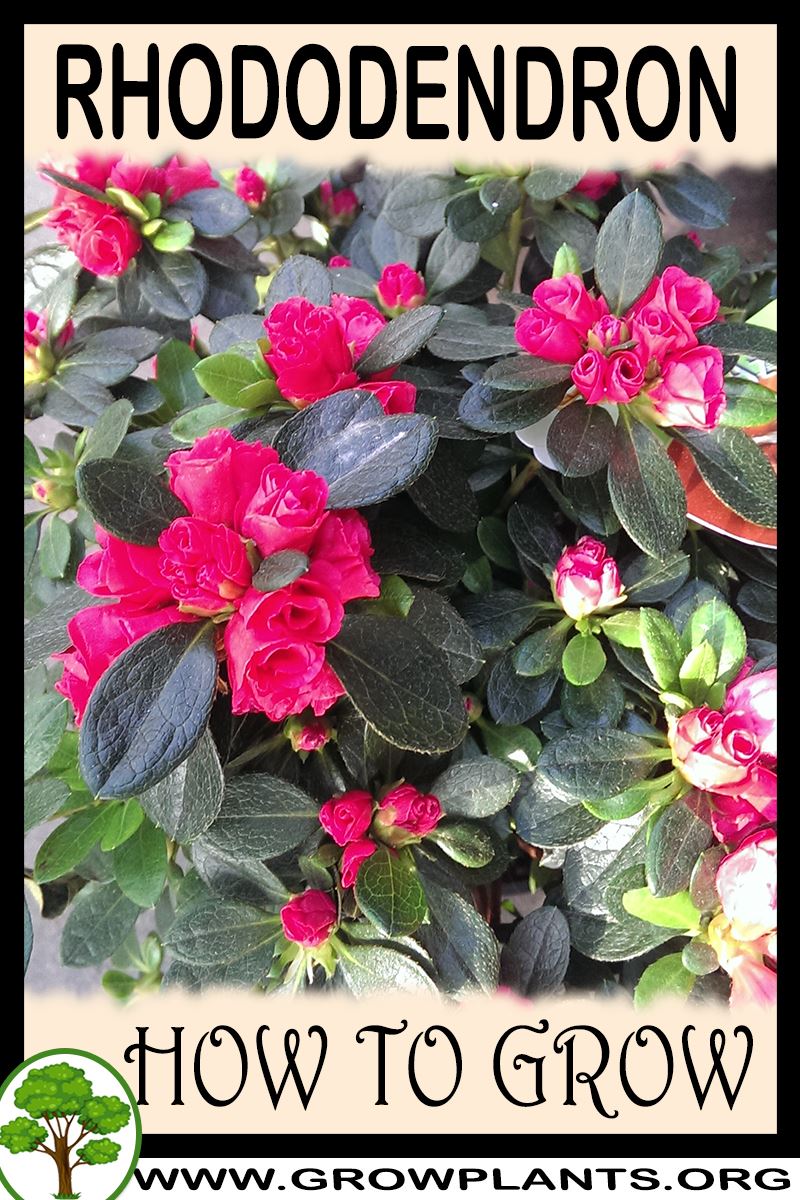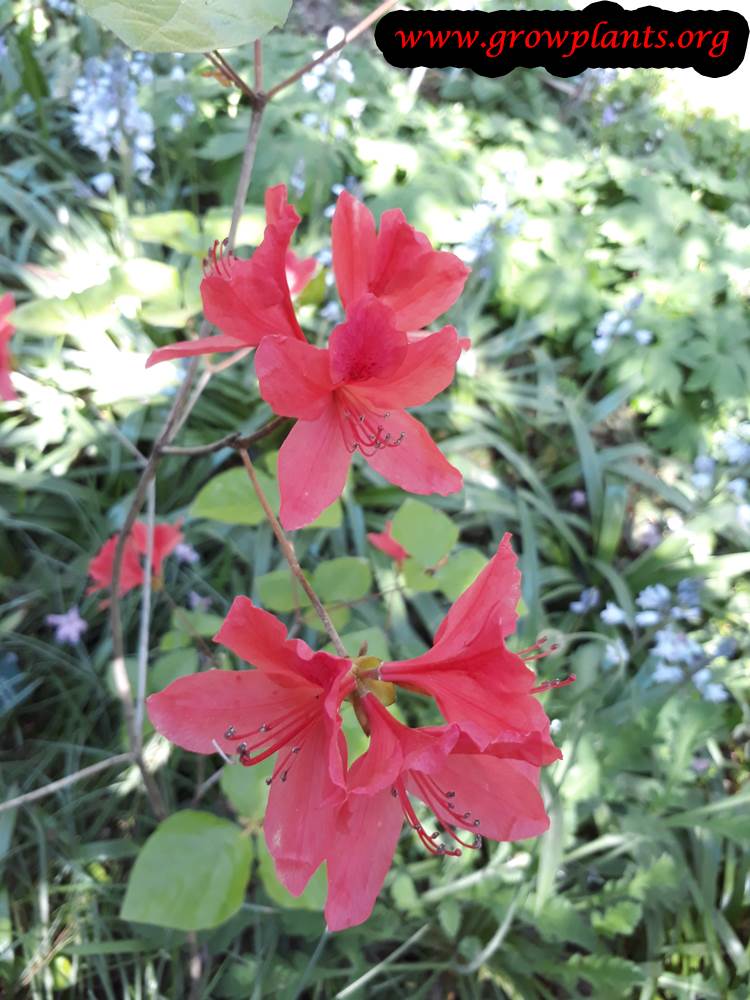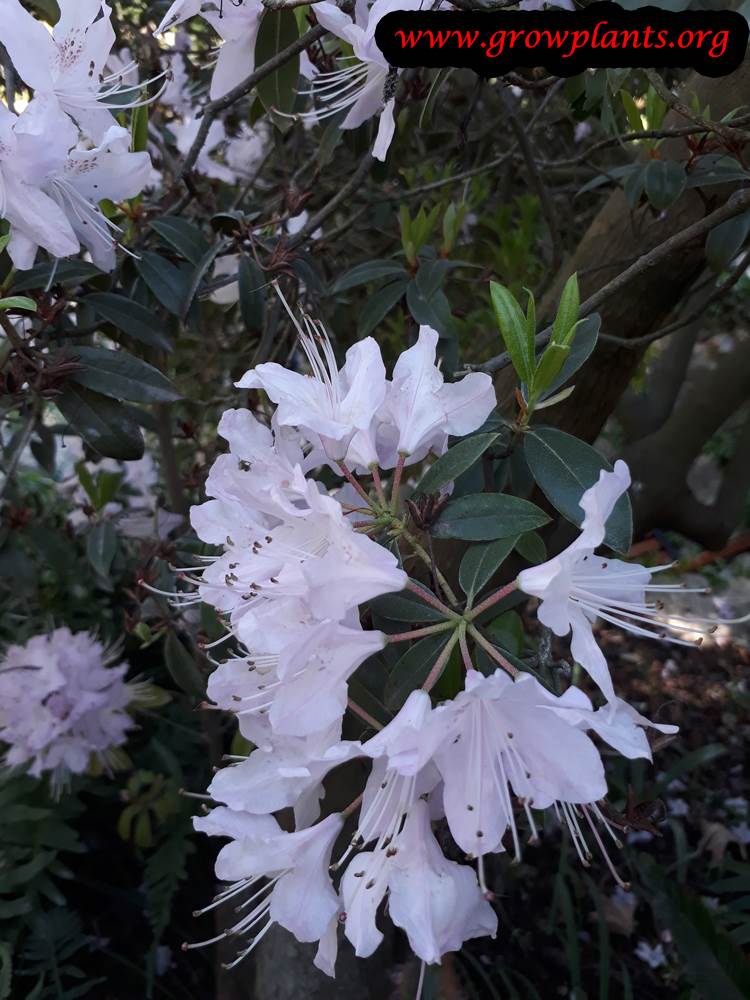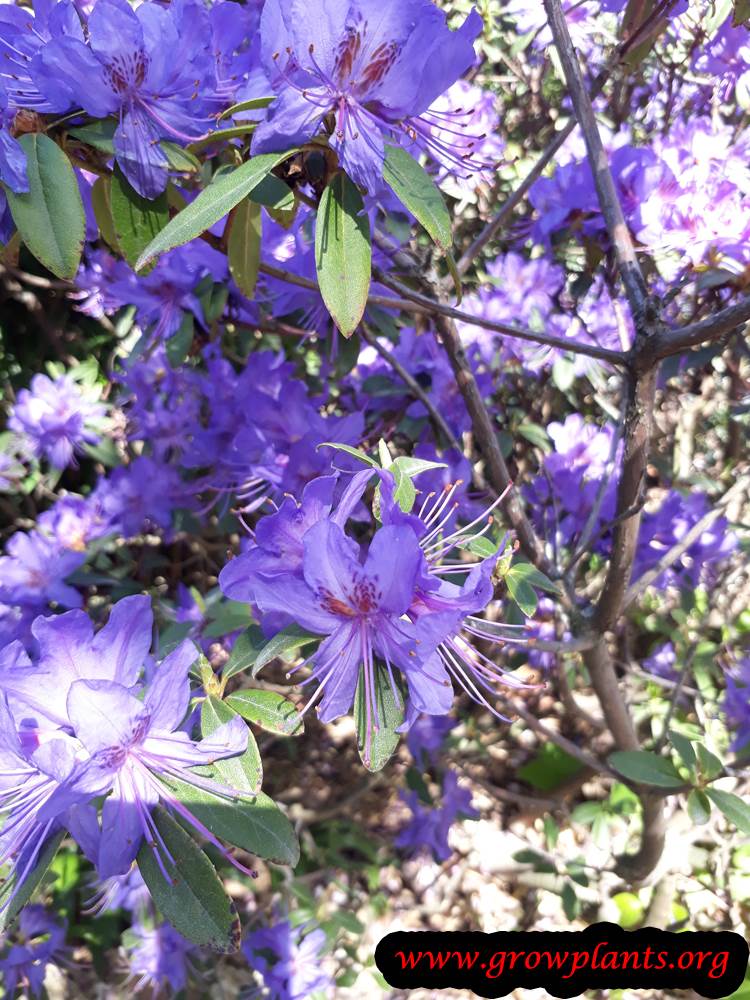

Plant Profile & Key Characteristics
Overview: Rhododendron is a large genus of evergreen and deciduous flowering shrubs (including azaleas) ranging from about 0.2 m to 3 m or more. All need acidic soil and all parts are toxic; they are grown for their showy trumpet blooms.
Quick Specifications
| Specification | Attribute |
|---|---|
| Plant Type / Life Cycle | Perennial |
| Foliage Type | Evergreen or deciduous (varies by species) |
| Mature Size | 0.2-3 m (8 in – 10 ft), varies widely |
| Growth Rate | Moderate |
| Root System | Shallow, fibrous |
| Toxicity | Toxic – all parts contain grayanotoxins |
| Hardiness | USDA zones 3-10a |
Growth Form & Structure
- Height & Spread: From dwarf forms about 0.2 m to large shrubs 3 m or more; smaller types grow well in containers with an acidic mix.
- Growth Habit & Form: Evergreen or deciduous shrub (the genus includes azaleas), habit ranging from low mounds to large shrubs.
- Lifespan & Maturity: Long-lived perennial; blooms in spring and summer.
Anatomy & Physical Features
- Leaves & Foliage: Green, elliptic to ovate leaves.
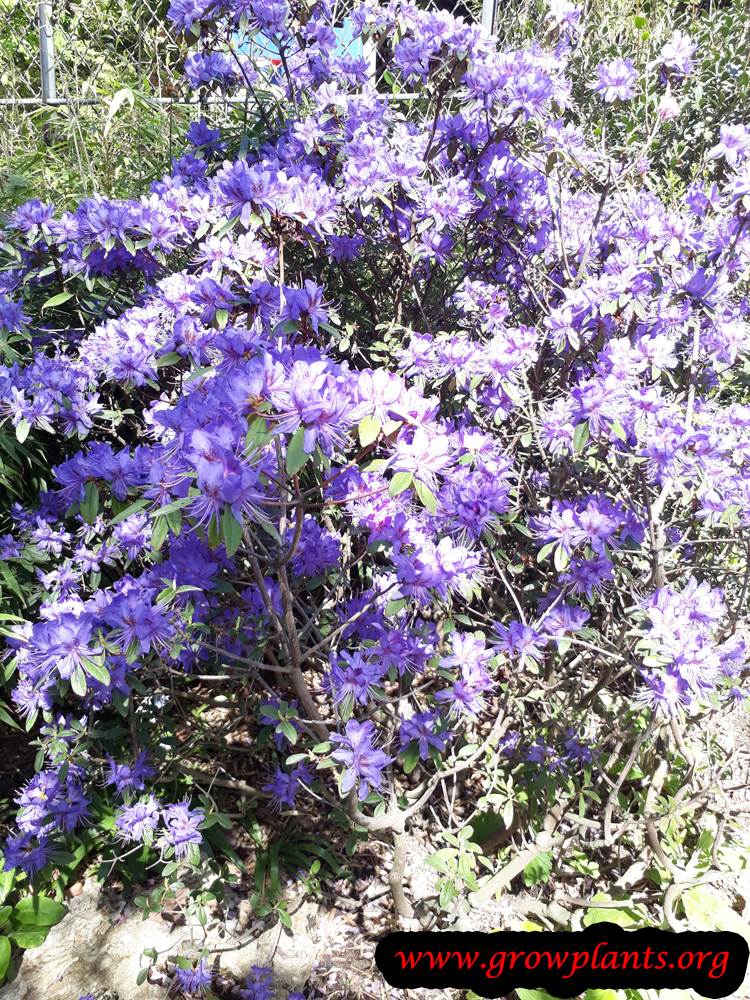
- Flower Characteristics: Trumpet-shaped flowers in a very wide colour range including orange, red, blue, purple, yellow and white.
Primary Uses & Landscape Value
- Functional & Ornamental Roles: Flowering ornamental shrub and hedge for woodland and acidic borders, and container growing.
Care Guide: Planting, Soil & Watering
Overview: Rhododendron is an acid-loving shrub that grows best in full sun to part shade (some tolerate deeper shade) in rich, moist but well-drained, distinctly acidic soil. Keep the shallow roots cool and evenly moist with mulch, avoid lime, and never let it dry out.
Quick Care Requirements
| Requirement | Ideal Condition |
|---|---|
| Planting Season | In winter, spring or summer, avoiding hard frost |
| Growth Rate | Moderate |
| Soil Type | Rich, moist, well-drained, humus-rich acidic soil |
| Soil pH | Acidic, about 4–6 |
| Water Need | Moderate to High — keep evenly moist, never waterlogged |
Planting & Establishment
- Best Planting Season: Plant in the cooler part of the year (winter to spring), or in summer where mild, so roots establish before heat or hard frost.
- How to Plant:
- Hole Preparation: Dig a wide but shallow hole to suit the fibrous, surface roots; loosen the sides for easy rooting.
- Soil Amendments: Blend in acidic organic matter such as leaf mould, composted bark or ericaceous compost; avoid lime.
- Planting Depth: Plant shallowly with the top of the root ball at or just above soil level — deep planting suffocates the shallow roots — then mulch.
- Growth Speed & Expectations: Moderate, forming a 0.2–3 m shrub that flowers in spring to early summer.
Soil, Watering & Drainage Care
- Soil Mix & Drainage Needs: Rich, humus-rich, acidic soil with sharp drainage is essential; the shallow roots need constant moisture yet rot in waterlogged ground, so mulch and never let them dry out.
- Watering Schedule & Technique:
- Young / Newly Planted: Keep the root zone consistently moist while establishing; use rainwater where tap water is hard.
- Established: Water regularly so the soil stays evenly moist, especially in dry spells; mulch to conserve moisture.
- Seasonal Adjustments: Water more in summer heat and drought; reduce in winter while keeping the roots from drying.
Climate, Light & Hardiness
Rhododendron is a large genus of temperate and subtropical shrubs, grown outdoors in USDA zones 3–10a or as a houseplant elsewhere. Light needs range from full sun to full shade depending on the species, though most prefer bright, filtered conditions.
Quick Climate Specifications
| Climate Zones | Temperate, Subtropical |
|---|---|
| USDA Hardiness Zones | 3–10a |
| Light Conditions | Full Sun to Full Shade (species-dependent) |
Sunlight & Light Exposure
Optimal Light Setup
Tolerated light ranges from full sun to full shade, but this varies considerably by species and cultivar - many rhododendrons do best with bright, filtered light or morning sun and afternoon shade rather than either extreme.
Shade & Heat Management
Full-shade tolerance requires otherwise bright ambient light and is not universal across species; deep, dim shade generally reduces flowering.
Temperature Extremes & Hardiness
USDA Hardiness & Regional Limits
As a genus, Rhododendron spans USDA zones 3–10a, but any individual species or cultivar typically covers a narrower band within that range - cold tolerance varies significantly by species, cultivar, and whether it is evergreen or deciduous.
Cold Damage & Winter Protection
Evergreen types can suffer leaf curl, browning, or bud damage in severe or exposed winter conditions even within their hardy zone; a sheltered site and a mulch layer over the root zone help buffer temperature swings.
Growing in Pots, Balconies & Indoors
Rhododendron is a woodland shrub (0.2-3 m / 8-120 in, sometimes larger) that the grower grows in containers but not as a houseplant. It is an excellent patio shrub in an acidic, ericaceous mix, and a pot is the easy way to give it the acid soil it needs if your ground is limy.
Quick Details
- Container Size: A wide, large tub (30 L+ / 8 gal+); shallow-rooted, so width matters more than depth
- Indoor Suitability: Not a houseplant; grow it outdoors in a container
- Best Spot: Half shade to dappled light suits most; some take full sun in cool climates
- Soil & Drainage: Acidic (pH 4-6) ericaceous mix, rich and moisture-retentive but free-draining; mulch the surface
- Watering in Pots: Keep evenly moist – never let the shallow roots dry out; rainwater is best in hard-water areas
Indoors & On the Windowsill
- Houseplant limits: Not an indoor plant – it needs cool, bright outdoor conditions and a winter chill.
- Safety: All parts are toxic if eaten – keep it away from children and pets, and wash hands after pruning.
On a Balcony or Patio
- Light & wind: Best on a sheltered, part-shaded balcony out of harsh midday sun and drying wind; walls and paving reflect heat, so pots dry fast – check moisture often.
- Practicalities: Account for the weight of a full pot and make sure drainage water can run away freely without staining the balcony.
Choosing the Pot, Soil & Long-Term Care
- Pot & drainage: Use a pot with strong drainage holes and skip a standing-water saucer to avoid root rot; terracotta breathes and dries faster, while glazed or plastic holds moisture longer.
- Potting mix: Must be acidic (ericaceous) – a lime-free mix of peat/coir with composted bark; never ordinary alkaline potting soil.
- Feeding: Feed with an ericaceous (acid-loving) fertilizer through the growing season; potted plants leach nutrients quickly.
- Repotting: Refresh the surface mix each year and pot on or divide every couple of years, trimming the roots lightly once it fills the container.
Fertilizing & Feeding
A moderate feeder that specifically wants an acid-forming, ericaceous-type fertilizer: feed lightly in spring and just after bloom, and avoid feeding once the strongly acidic soil this shrub needs starts to drift toward neutral or alkaline.
Quick Fertilizing Specs
| Feeding Level | Moderate feeder |
|---|---|
| Main Nutrient Priority | Balanced feeding from an acid-forming, ericaceous-type fertilizer suited to acid-loving shrubs |
| Best Feeding Period | Early spring and again just after flowering finishes |
| Organic Options | Acidic organic mulch such as pine bark or leaf mold worked lightly into the surface |
| Reduce/Stop Feeding | Stop as flower buds set for next season so late growth does not interfere with blooming |
| Micronutrients | Iron and other micronutrients need to stay plant-available, which mainly depends on keeping the soil properly acidic |
| Soil pH | Strongly acidic, well beyond what most garden shrubs need |
Feeding by Growth Stage
Early spring growth
Support new leaf growth and bud development as the plant breaks winter dormancy.
| Nutrient direction | An acid-forming, balanced fertilizer formulated for acid-loving shrubs supports growth while helping maintain the acidic soil this plant needs. |
|---|---|
| Timing | Early spring as new growth begins, before flower buds open. |
| Frequency | A single light feeding at the start of spring growth is usually enough. |
| Fertilizer types | An acid-forming, ericaceous-type complete fertilizer, Acidic organic mulch such as pine bark or leaf mold |
| Precautions | Avoid lime, wood ash, or alkaline amendments nearby, which work against the acidic soil this shrub depends on. |
Feeding just after flowering
Support strong regrowth right after the flower display finishes, when the plant is setting up next year’s buds.
| Nutrient direction | A light, balanced acid-forming feeding right after bloom supports the new growth that will carry next season’s flower buds. |
|---|---|
| Timing | Immediately after the flower display fades. |
| Frequency | A single light feeding right after bloom is generally sufficient. |
| Fertilizer types | An acid-forming, ericaceous-type complete fertilizer at a light rate |
| Precautions | Feed promptly after bloom and then taper off; late, heavy feeding can push soft growth that interferes with next year’s flower buds. |
Summer-to-winter rest
Let the shrub set and ripen next year’s flower buds and go through winter without pushing new growth.
| Nutrient direction | None – withhold fertilizer once the post-bloom feeding window has passed. |
|---|---|
| Timing | From mid-to-late summer through winter, while buds ripen and the plant is not producing new growth. |
| Frequency | No feeding at this stage. |
| Fertilizer types | No feeding at this stage; hold off fertilizing until early spring growth resumes. |
| Precautions | Do not fertilize during this rest period; withhold feeding until early spring, since late feeding can damage cold-hardiness and next year’s buds. |
Nutrient Deficiency Signs & Corrections
New leaves turn yellow while the veins stay dark green, a classic sign in this acid-loving shrub.
| Possible causes | soil pH drifting too high (not acidic enough) for this plant’s needs, lime or concrete runoff nearby raising soil pH, waterlogged or compacted roots limiting uptake |
|---|---|
| Appears first on | newest leaves |
| What to check | soil pH near the root zone, any nearby lime, concrete, or alkaline water sources, drainage and root condition |
| Possible correction | Lower soil pH with an acidifying amendment suited to acid-loving shrubs and apply a chelated iron product per its label. |
Interveinal yellowing appears on older leaves while the veins themselves stay green.
| Possible causes | low soil magnesium, heavy leaching in the light, acidic, well-drained soil this plant prefers, potassium-heavy feeding competing with magnesium uptake |
|---|---|
| Appears first on | older, lower leaves |
| What to check | soil magnesium status, how well-drained and leached the planting site is, recent fertilizer balance |
| Possible correction | Apply a labeled magnesium source such as Epsom salt formulated to stay compatible with acidic soil. |
Older leaves fade to pale green or yellow, and flower bud set for next season looks sparse.
| Possible causes | low available soil nitrogen, nutrients leached from acidic, well-drained soil, thin soil low in organic matter |
|---|---|
| Appears first on | older, lower leaves |
| What to check | recent feeding history, soil organic matter and mulch depth, overall vigor compared with earlier seasons |
| Possible correction | Apply an acid-forming, balanced complete fertilizer and refresh acidic organic mulch around the root zone. |
Pruning, Training & Seasonal Maintenance
Rhododendrons need very little routine pruning — most species and hybrids have a naturally attractive, rounded form and are best left largely alone. The plant sets its flower buds for next year during summer/autumn on the current season’s ripened growth, so the single most important rule is timing: prune immediately after flowering, before new buds form, or you sacrifice next year’s bloom. Heavier renovation of overgrown or leggy plants is possible on many (though not all) larger-leaved species, but recovery is slow.
Quick Pruning & Maintenance Specs
| Pruning Tolerance | Low–Moderate for routine shaping; Moderate for renovation on suitable species |
| Primary Pruning Window | Immediately after flowering, before new buds set |
| Typical Frequency | Light, as needed — not an annual requirement |
| Main Objective | Remove dead/damaged/crossing wood and deadhead; preserve next year’s flower buds |
| Young Plant Priority | Minimal shaping; deadhead to redirect energy from seed to growth |
| Mature Plant Priority | Thin dense interior growth, remove old/diseased wood, occasional renewal |
| Best Tool Type | Precision snips/bypass secateurs for trusses and small wood; loppers or a saw for renovation |
| Avoid Heavy Pruning During | Late summer through winter, once next year’s flower buds have set |
Pruning by Plant Age & Size
Newly Established
Avoid pruning in the first year after planting beyond removing damaged growth; the shallow root system needs time to establish before the plant is asked to regrow from cuts.
Young / Formative
No formal training system is used — rhododendrons keep their natural rounded form. Deadhead spent flower trusses on young plants so energy goes into vegetative growth and next year’s buds rather than seed production.
Mature / Established
Remove dead, diseased, or crossing branches, and thin congested interior growth to improve light and airflow, especially on plants growing in shaded, humid positions.
Seasonal Pruning Schedule
Post-Flowering (old-wood bloomers)
Objective: shape and deadhead while preserving the coming year’s bloom. Remove: spent flower trusses, dead/diseased/crossing wood. Do not remove: the vegetative buds clustered just below each spent truss — these are next year’s growth and flowers. Expected response: vigorous new growth that will ripen and set flower buds by late summer. Flowering impact: pruning in this window protects next year’s bloom.
Ongoing Sanitary
Objective: plant health. Remove: dead or diseased wood at any time of year. Do not remove: healthy wood outside the post-flowering window. Expected response: reduced disease spread. Flowering impact: none if limited to genuinely dead/diseased material.
Flowering & Fruiting Wood
Rhododendrons flower on wood from the previous season: new growth put on right after this year’s bloom ripens over summer and sets the flower buds that open the following spring. Pruning right after flowering (before those buds form) has no cost; pruning later in summer, in autumn, or through the dormant season removes the buds already set and forfeits that year’s flowering entirely.
Structural Pruning & Training
Keep the natural rounded form rather than shearing to a shape. Remove crossing or rubbing branches, and thin dense interior growth on plants in shaded, poorly ventilated spots to reduce disease pressure. Height and spread are best controlled by selective thinning cuts back to a lateral branch, not by shearing the surface.
Special Growth to Remove
- Spent flower trusses — snap or cut cleanly just above the ring of new vegetative buds at its base, taking care not to damage those buds.
- Suckers arising below the graft union on grafted cultivars.
- Dead or winter-damaged tips.
Container & Small-Space Pruning
Container-grown rhododendrons can be grown successfully but need extra care with root disturbance, since the species has a naturally shallow, fine root system; avoid combining root pruning with heavy top pruning in the same season, and keep the same deadhead-after-flowering routine.
Tools
- Precision snips or bypass secateurs — for deadheading trusses and small wood.
- Loppers — for thicker old wood during renewal work.
- Pruning saw — for large stems on an overgrown, mature shrub being renovated.
Tool Hygiene & Disease Risk
Increased: rhododendrons are susceptible to Phytophthora dieback and other fungal cankers that can spread on pruning wounds and contaminated blades, particularly in wet conditions. Disinfect tools between plants and after cutting any dead or diseased wood.
Cut Placement & Technique
Deadhead by cleanly snapping or cutting the truss stem just above the new bud whorl without crushing those buds. Make thinning cuts back to a lateral branch or bud rather than leaving stubs, and avoid flush cuts into the main stem.
Heavy Pruning & Rejuvenation
Many large-leaved rhododendrons tolerate hard rejuvenation pruning, cut back to roughly 30–45cm (12–18in) from the ground in early spring, provided there is visible dormant budding wood along the old stems. Recovery is slow, often with little or no bloom for two to three years, and very overgrown plants are best renovated over two seasons rather than all at once. Some smaller-leaved and thinner-barked types respond less reliably to hard cutback, so confirm the specific cultivar tolerates it before committing.
Post-Pruning Care
Water consistently after any significant pruning, since the shallow root system is sensitive to drought. Watch newly exposed inner foliage for sunburn after opening up a dense canopy. Avoid heavy feeding immediately after a hard cutback — the stored energy in the plant, not extra fertilizer, drives the regrowth.
Common Pruning Mistakes
- Pruning in late summer, autumn, or winter, after flower buds have already set, which sacrifices that year’s bloom.
- Shearing into a tight formal shape, which destroys the naturally attractive habit and reduces flowering.
- Cutting flush into the main stem instead of back to a bud or lateral, encouraging dieback.
- Feeding heavily right after a hard rejuvenation cut, which can stress the plant instead of helping it.
When NOT to Prune
Do not prune in the dormant season or in the weeks before flowering if you want that year’s bloom — the buds are already formed and will be removed. Avoid pruning within the first year after transplanting, and avoid heavy work during summer heat stress.
Recommended Tools (by task)
- precision_snips — sized for deadheading individual flower trusses without damaging adjacent buds.
- bypass_secateurs — for small-to-medium wood under about 2cm during routine thinning.
- loppers — for older wood during renewal or renovation.
- blade_disinfectant — given the genus’s susceptibility to Phytophthora and other canker diseases spread by pruning cuts.
Pruning Troubleshooting
| Problem | Possible Cause | What to Check | Corrective Action |
| No bloom the year after pruning | Pruned too late, after flower buds had already set | Confirm when the cut was made relative to the previous bloom | Shift pruning to immediately after flowering next time; be patient for buds to reform |
| Dieback appearing at or below a pruning cut | Phytophthora or other canker infection entering through the wound, often in wet conditions | Inspect cut for discoloration spreading down the stem; check drainage and recent weather | Cut back into clean wood, disinfect tools, improve drainage/airflow |
| Bare, leggy lower growth | Insufficient light or years without any renewal thinning | Assess canopy density and surrounding shade | Selectively thin for light, or consider staged rejuvenation pruning |
| Sparse flowering despite correct timing | Dense shaded interior limiting bud formation | Check canopy density and sun exposure on flowering wood | Thin congested interior branches to improve light penetration |
Propagation Guide
Most garden rhododendrons are propagated from semi-hardwood stem cuttings, though how easily a given plant roots varies a great deal by species and cultivar; layering is a traditional, reliable alternative for types that are slow or reluctant to root, and grafting is still used commercially for some choice hybrids. Seed is mainly used for species, since hybrid seedlings will not come true. Overall difficulty is moderate and cultivar-dependent.
Quick Propagation Specs
| Best Propagation Method | Semi-hardwood stem cuttings |
| Alternative Methods | Layering (especially for hard-to-root types); grafting (for some difficult hybrids); seed (species only) |
| Propagation Difficulty | Moderate – varies widely by species/cultivar |
| Seed True-to-Type | Species usually true-to-type; hybrid offspring vary |
| Vegetative True-to-Type | Yes |
| Best Propagation Season | Cuttings: mid to late summer. Layering: spring. Seed: late winter to spring, under protection |
| Cutting Rooting Time | Variable, often several weeks to a few months depending on cultivar |
| Germination Temperature | Warm, roughly 18–21°C (64–70°F) |
| Seed Sowing Depth | Surface-sow, do not cover |
Growing from Seed
Seed Handling & Viability
Seed is fine and dust-like; relatively fresh seed germinates most reliably.
Sowing Season
Typically late winter to spring, under protection.
Sowing Depth & Orientation
Surface-sow onto a moist, acidic, well-drained sterile medium (such as milled sphagnum peat) – do not bury the seed, since light aids germination.
Germination Conditions
Warm, humid, and brightly lit but not in harsh direct sun, on a consistently moist acidic medium.
Germination Time
Can take a few weeks to a couple of months and may be uneven.
Seedling Care
Seedlings are tiny and slow to start; grow on with good light and consistent moisture before potting on.
Stem Cuttings
Cutting Type
Semi-hardwood tip cuttings from the current season’s growth.
Best Timing
Mid to late summer, once new growth has begun to firm up.
Cutting Preparation
Lightly wounding the base of the cutting is commonly used to improve rooting on the woodier types.
Rooting Setup
An acidic, free-draining, moisture-retentive medium (such as a peat/perlite mix), high humidity (mist or an enclosed propagator), and some bottom heat can all help.
Rooting Hormone
Often beneficial, and for harder-to-root cultivars it can make the difference between success and failure.
Rooting Time
Variable – often several weeks to a few months, with some cultivars rooting much more slowly than others.
Grafting & Budding
Why Grafting Is Used
Some choice or difficult-to-root hybrid cultivars are grafted onto a vigorous, compatible rootstock to improve vigor and rootability where cuttings are unreliable.
Preferred Grafting Methods
Typically a side or wedge (cleft) graft.
Rootstock
A vigorous, compatible rhododendron rootstock.
Scion Selection
Healthy, disease-free wood from the desired cultivar.
Best Grafting Season
Commonly carried out under protection during the dormant season.
Graft Aftercare
Keep humid and protected until the graft union knits together.
Air & Ground Layering
Rhododendrons layer readily where low, flexible branches can reach the ground, making this a reliable option for cultivars that are slow or difficult to root from cuttings. Wound or lightly girdle the underside of the stem where it will be buried, peg it into acidic, moisture-retentive soil, and keep it consistently moist; layers can take many months, often a full growing season, to root sufficiently before being severed from the parent.
Bloom & Flower Guide
Quick Details
- Bloom Season: Spring into summer, depending on the type
- Time to First Bloom: Young plants may take a few years to settle in before flowering well
- Flower Appearance: Showy trumpet-shaped flowers, usually in rounded trusses, in almost every colour
- Edibility: Toxic – not edible; the flowers and even the nectar contain natural poisons
Detailed Blooming Overview
Rhododendrons put on one of the great flowering displays of the shrub world. In spring and early summer the bushes cover themselves in trumpet-shaped flowers, usually gathered into full, rounded trusses, in an enormous colour range – orange, peach, red, blue, purple, yellow, white and multicolours. The show is spectacular, but every part of the plant is poisonous, so it is grown purely for its beauty.
Flower Characteristics
- Trumpet-shaped flowers, typically many to a rounded truss.
- Colours span orange, peach, red, blue, purple, yellow, white and blends.
- Often lightly fragrant, but toxic throughout – including the nectar.
Bloom Care & Thinning
- Safety first: All parts, flowers and nectar included, contain grayanotoxins and are poisonous to people and pets – never eat any part, and keep honey from these flowers off the table.
- Managing the bloom: Snap off spent trusses just above the developing buds (deadheading) to steer energy into next year’s flowers; avoid damaging the new buds sitting just below.
Bloom Health & Protection
- Petal blight: In warm, wet spring weather the open flowers can develop watery brown spots that quickly turn the whole truss to mush. Removing and binning affected flowers, improving air movement, and a protective fungicide labelled for petal blight all help where it recurs.
- Grey mould (botrytis): In damp, crowded conditions flowers may go mouldy; better airflow and prompt removal of spent blooms keep it down.
Pests, Diseases & Troubleshooting
Overview: Rhododendrons are acid-loving woodland shrubs whose troubles come mainly from sap-sucking pests in sun/dry sites and from root and shoot rots on badly drained ground. The best defence is the right position – dappled shade, an acidic, humus-rich, moisture-retentive but free-draining soil, and a permanent leaf-mould mulch – because a healthy, unstressed plant shrugs off most of the pests below.
Quick Troubleshooting Overview
| Issue / Pest | Main Symptom | Primary Solution |
|---|---|---|
| Rhododendron lace bug | Coarse yellow stippling above, rusty spots beneath leaves | Improve shade/moisture; oil or soap on leaf undersides at nymph stage |
| Vine weevil | Notched leaf edges; sudden wilt from grubs eating roots | Biological nematodes to soil; check pots; hand-pick night adults |
| Rhododendron leafhopper | Green/red hoppers on leaves; spreads bud blast | Tolerate light numbers; clear infected buds; sticky traps |
| Powdery mildew | White bloom or yellow blotches with brown undersides | Airflow, avoid drought; sulphur or bicarbonate on susceptible types |
| Bud blast | Buds turn brown/black, silvery, and fail to open | Pick off dead buds; control leafhopper vector |
| Phytophthora root rot | Wilting, sparse dull foliage, dieback, dark roots | Improve drainage; never plant deep; remove and replace soil if confirmed |
Common Pests & Management
- Rhododendron lace bug (Stephanitis rhododendri):
- Symptoms: Upper leaf surface develops a coarse, silvery-yellow mottling while the undersides carry shiny black tarry excrement spots and the tiny lacy-winged bugs. Damage is worst on plants in too much sun or dry soil and can make foliage look scorched.
- Prevention & Control: Move or nurse plants into cooler, moister, part-shaded positions, which greatly reduces attacks. Encourage predators and spray leaf undersides – where the nymphs feed – with insecticidal soap or a light horticultural oil in the evening; repeat as generations appear.
- Vine weevil (Otiorhynchus sulcatus):
- Symptoms: Adults chew characteristic notches from leaf margins at night, but the real damage is the fat white C-shaped larvae eating roots and bark at the collar, causing sudden wilting and collapse – especially in containers.
- Prevention & Control: Inspect pots and root zones; drench with parasitic nematodes (Steinernema/Heterorhabditis) when soil is warm and moist. Hand-pick adults at night, use sticky barriers on pots, and keep plants vigorous so light root grazing is tolerated.
- Rhododendron leafhopper (Graphocephala fennahi):
- Symptoms: Bright turquoise-and-red 3–4 mm hoppers rest on leaves and jump when disturbed. They cause little direct harm but lay eggs in flower buds and are strongly linked to spreading bud blast fungus.
- Prevention & Control: Tolerate modest populations. Because their main importance is disease spread, remove infected ‘blasted’ buds through the season and reduce shelter of overgrown, congested bushes. Yellow sticky traps help monitor numbers.
- Rhododendron whitefly (Dialeurodes chittendeni):
- Symptoms: Tiny white moth-like flies rise in clouds when foliage is disturbed; scale-like larvae on leaf undersides excrete honeydew that supports black sooty mould, dulling and weakening the plant.
- Prevention & Control: Conserve parasitic wasps and use yellow sticky traps to monitor. Spray leaf undersides with insecticidal soap or light oil targeting the immature scales; ensure good airflow and avoid soft, over-fed growth.
- Two-spotted spider mite (Tetranychus urticae):
- Symptoms: Fine pale speckling and bronzing of leaves in hot, dry, sheltered spots, sometimes with faint webbing and tiny mites on the undersides; heavy attacks cause leaf drop.
- Prevention & Control: Raise humidity and keep roots moist and mulched – mites thrive on drought-stressed plants. Hose down foliage, conserve predatory mites, and use a light oil or soap only if bronzing spreads.
- Aphids (Aphidoidea):
- Symptoms: Colonies of soft green or brown aphids on the softest new shoots and flower buds, causing sticky honeydew, sooty mould and some leaf distortion, mainly on tender spring growth.
- Prevention & Control: Squash or hose off early colonies and conserve ladybirds, lacewings and hoverflies. Insecticidal soap or a light oil on leaf undersides clears heavier outbreaks; avoid over-feeding with nitrogen, which fuels soft aphid-prone growth.
Diseases & Fungal Issues
- Powdery mildew (Erysiphe / Microsphaera spp.):
- Symptoms: Depending on species it appears either as a white powdery bloom on the leaves or, in many rhododendrons, as diffuse yellow blotches on top with buff-to-brown felty patches beneath; heavy attacks cause leaf drop.
- Treatment & Management: Improve air circulation by thinning congested growth and avoid drought stress, which predisposes plants. Remove and destroy fallen infected leaves. On susceptible cultivars a sulphur, bicarbonate or approved fungicide spray, repeated as needed, keeps it in check.
- Petal blight (Ovulinia azaleae):
- Symptoms: Flowers develop small watery, translucent spots that rapidly expand into a slimy brown collapse; blighted blooms cling to the plant and dry to a papery texture, carrying the fungus over in tiny sclerotia.
- Treatment & Management: Remove and bin spent and blighted flowers rather than letting them fall and rot beneath the plant, and clear old mulch that harbours sclerotia. Avoid overhead watering during bloom; protective fungicide at first-colour helps in wet springs.
- Bud blast (Seifertia (Pycnostysanus) azaleae):
- Symptoms: Flower buds turn brown to silvery-grey over winter, fail to open, and become covered in minute black bristly fungal pin-heads; affected buds persist on the bush.
- Treatment & Management: Pick off and destroy every blasted bud, ideally before the black spore heads mature. Because the fungus is linked to rhododendron leafhopper egg-laying wounds, reducing that pest and opening up congested bushes lowers infection.
- Phytophthora root rot & dieback (Phytophthora cinnamomi / P. spp.):
- Symptoms: Plants wilt despite moist soil, foliage becomes sparse, dull and off-colour, whole branches die back, and the roots and stem base show reddish-brown rotted tissue; usually fatal on wet ground.
- Treatment & Management: There is no cure once established – prevention is everything. Plant high in raised, sharply drained acidic beds, never bury the collar, and avoid waterlogging. Remove and destroy affected plants with surrounding soil and replant elsewhere or in fresh substrate.
- Azalea leaf & flower gall (Exobasidium vaccinii):
- Symptoms: Young leaves or flower parts swell into pale, fleshy, bladder-like galls that turn white with a bloom of spores, then brown and hard; most common in humid spring weather on azaleas.
- Treatment & Management: Hand-pick and destroy the fleshy galls before they turn white and shed spores – this alone controls it on small plants. Improve airflow; a copper spray at bud-break helps where the problem recurs badly.
- Rhododendron rust (Chrysomyxa spp.):
- Symptoms: Yellow spots on the upper leaf surface with matching cushions of orange-to-rusty spores beneath; heavy infection causes early leaf fall and weakens the shrub.
- Treatment & Management: Rake up and destroy fallen infected leaves and improve air movement. Remove badly affected leaves; on valued plants an approved fungicide can be used, and susceptible species sited with good airflow suffer far less.
Growing Difficulties & Abiotic Problems
- Lime-induced chlorosis:
- Cause & Symptoms: On neutral or alkaline soil (or where hard tap water is used) iron and manganese become unavailable and the youngest leaves yellow between green veins.
- Correction Strategy: Grow only in acidic soil (pH ~4.5–6); mulch with leaf-mould/composted bark, water with rain water, feed an ericaceous fertiliser, and correct quickly with chelated iron and manganese.
- Leaf scorch & bronzing:
- Cause & Symptoms: Too much sun, cold drying winds, frozen soil in winter or drought cause brown leaf margins, purple-bronze winter colour and desiccation because the shallow roots cannot resupply water.
- Correction Strategy: Site in dappled shade with wind shelter, keep the root zone permanently mulched and moist (especially before winter), and protect newly planted or exposed shrubs from harsh wind and late frosts.
- Waterlogging & root death:
- Cause & Symptoms: Rhododendrons have fine surface roots that suffocate and rot in compacted, poorly drained or overwatered soil, showing as wilting and dull foliage that mimics disease.
- Correction Strategy: Plant high in raised beds of open, humus-rich acidic soil, never deeper than the original root ball, and improve drainage rather than watering more when leaves wilt.
- Frost & bud damage:
- Cause & Symptoms: Late frosts brown the young growth and open flowers, and hard freezes can kill flower buds on early-flowering species, ruining the display.
- Correction Strategy: Choose later-flowering species in frost-prone gardens, avoid frost pockets and early-morning-sun positions that thaw frozen buds too fast, and fleece small plants on hard frost nights.
What Helps – Products & Tools
For rhododendrons keep an ericaceous (acidic) feed and chelated iron/manganese on hand for chlorosis, a light horticultural oil and insecticidal soap for lace bug, whitefly, mites and aphids on leaf undersides, and parasitic nematodes for vine weevil grubs. For disease, sulphur or bicarbonate handles powdery mildew and a copper or approved fungicide addresses petal blight, leaf gall and rust; the most valuable ‘tool’, though, is a deep acidic leaf-mould mulch and correct siting.