

Plant Profile & Key Characteristics
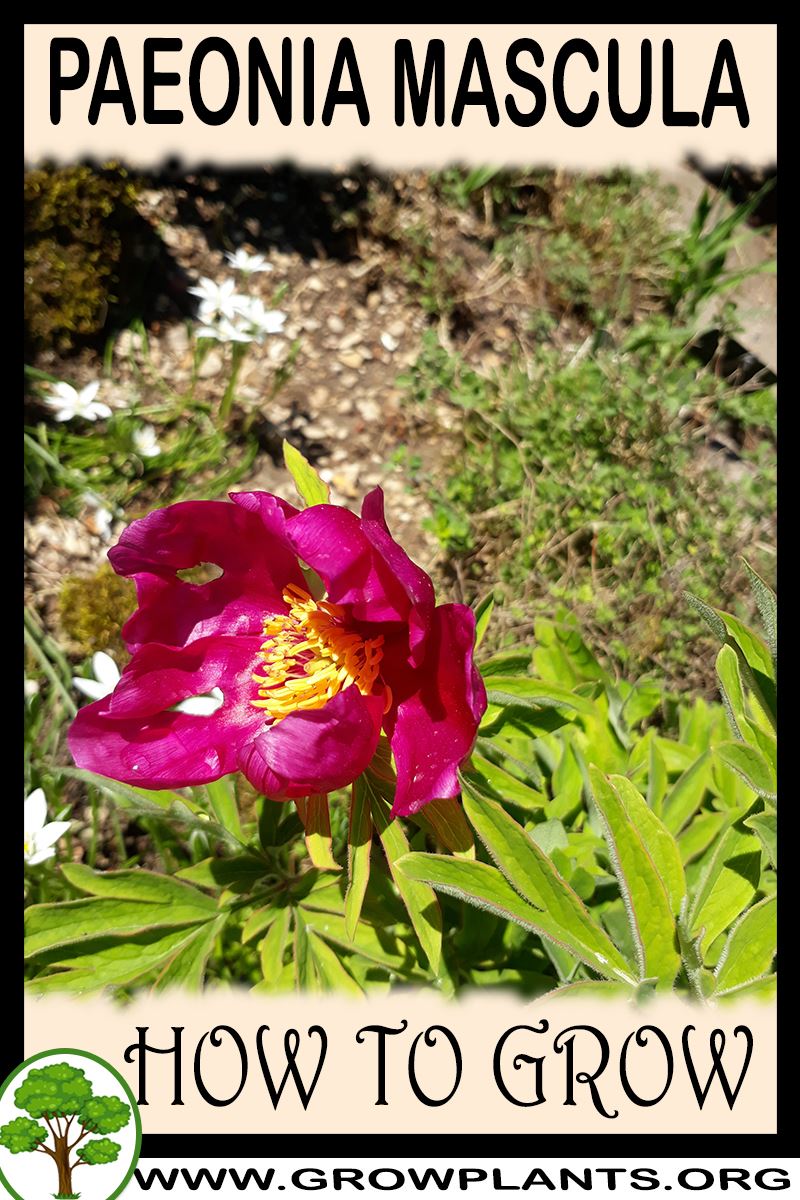
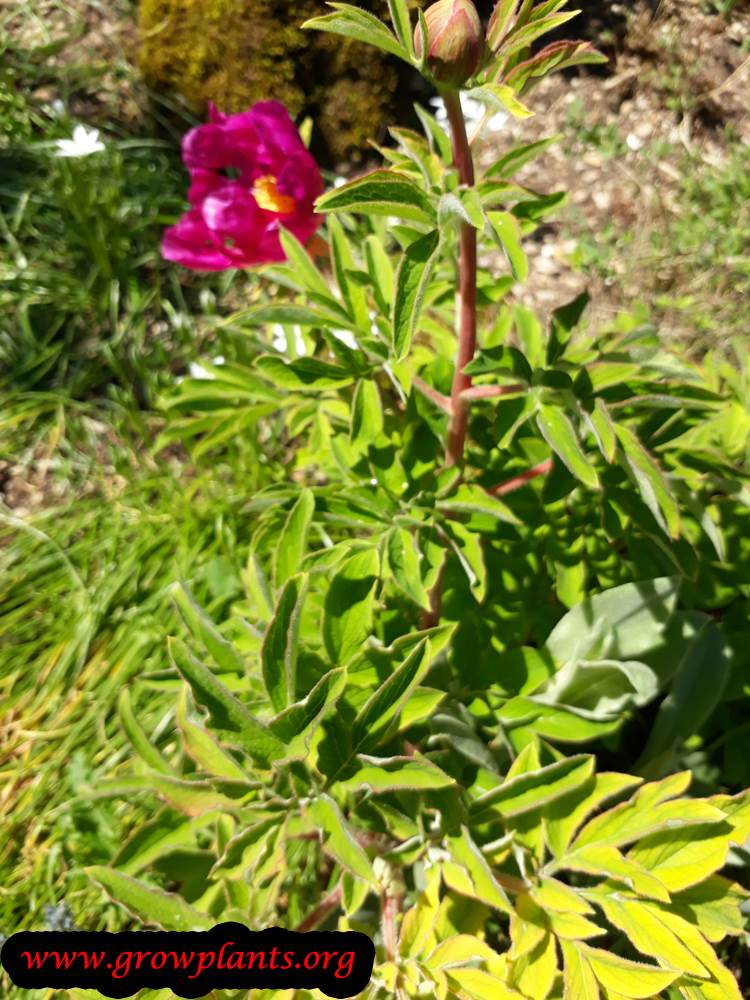
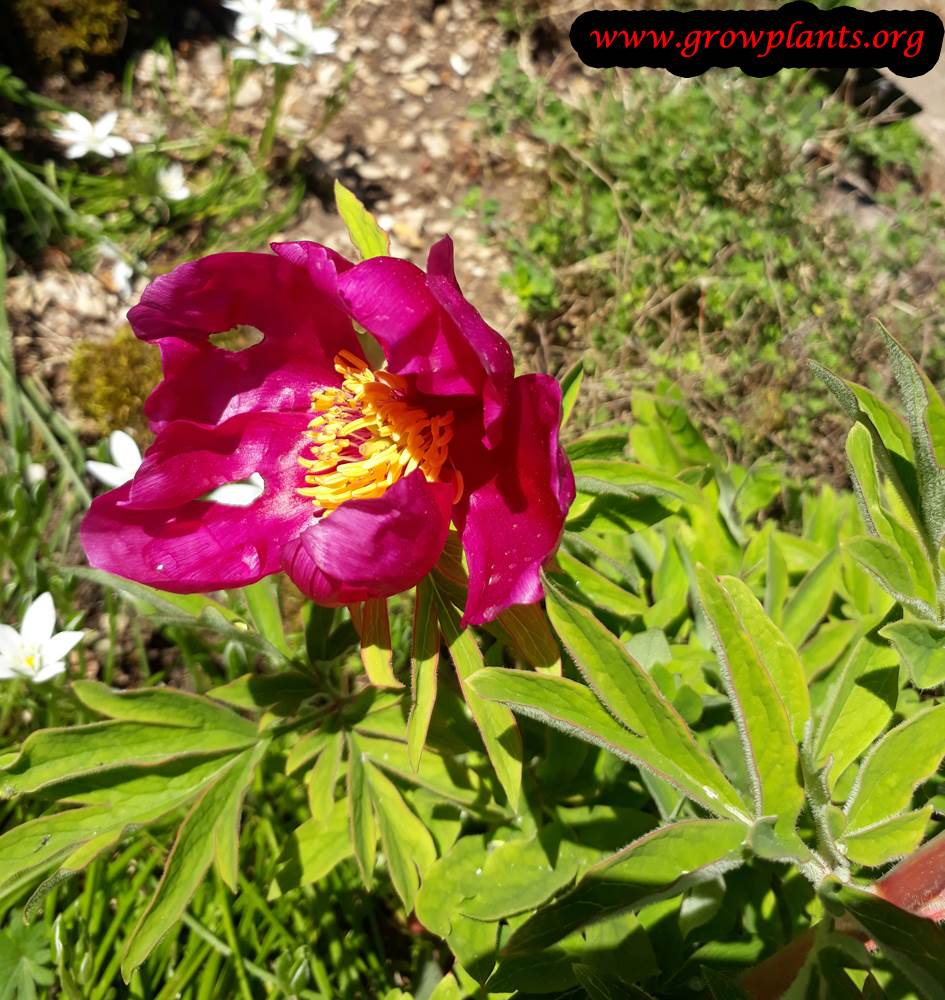
Overview: Paeonia mascula, the wild peony, is a clump-forming herbaceous perennial with divided bluish-green foliage and large single spring flowers in rose-pink to deep purplish-red shades. The above-ground stems die back seasonally and regrow from the perennial crown.
Quick Specifications
| Plant Type / Life Cycle | Herbaceous perennial |
| Foliage | Deciduous |
| Growth Habit | Erect, clump-forming |
| Mature Size | About 0.5-1 m tall and wide |
| Light | Full sun to partial shade |
| Soil | Deep, fertile, moist but well-drained |
| Flower | Large single pink to purplish-red flowers with yellow stamens |
| Bloom Season | Spring |
Growth Form & Structure
This is a herbaceous peony, not a tree peony. Its shoots are seasonal and the permanent plant survives below ground as a long-lived crown and root system.
Note: Growth Rate: slow – typically takes 2-5 years to reach flowering maturity.
Care Guide: Planting, Soil & Watering
Overview: Peonies are long-lived, hardy perennials that need a cold winter to set flower buds and thrive in full sun to light shade. They demand deep, fertile, well-draining soil and steady moisture, but rot in soggy ground.
Quick Care Requirements
| Requirement | Ideal Condition |
|---|---|
| Planting Season | In autumn, or early spring while dormant |
| Growth Rate | Moderate |
| Soil Type | Deep, fertile, well-draining |
| Water Need | Moderate; consistent moisture, never waterlogged |
Planting & Establishment
- Best Planting Season: Plant while dormant; autumn is ideal, or early spring, so the roots settle before growth. A cold winter is essential for the chilling hours that trigger flowering.
- How to Plant:
- Hole Preparation: Dig a wide hole in deep, well-worked soil so the fleshy roots can spread.
- Soil Amendments: Work in compost and organic matter, and ensure sharp drainage, as peonies rot in wet ground.
- Planting Depth: Set the crown at or just below soil level.
- Growth Speed & Expectations: A moderate grower and very long-lived herbaceous perennial, reaching about 0.5-1.5 m.
Soil, Watering & Drainage Care
- Soil Mix & Drainage Needs: Needs deep, fertile, free-draining soil; not ideal for long-term pots, but if potted use a rich, well-draining mix with drainage holes.
- Watering Schedule & Technique:
- Young / Newly Planted: Water regularly to keep the soil evenly moist while the roots establish.
- Established: Water deeply during dry spells and while flowering; let the surface dry slightly between waterings.
- Seasonal Adjustments: More during spring growth and bloom; much less in winter dormancy.
Climate, Light & Hardiness
This peony grows in temperate to subtropical climates and needs a cold winter to bloom well, thriving in full sun to half shade. Per the site's own data it is hardy through USDA zones 7–11a.
Quick Climate Specifications
| Climate Zones | Temperate, Subtropics |
|---|---|
| USDA Hardiness Zones | 7–11a |
| Frost Tolerance | Moderate to High |
| Light Conditions | Full Sun / Half Shade |
Sunlight & Light Exposure
Optimal Light Setup
Full sun to half shade both suit this peony; full sun generally supports the strongest flowering.
Temperature Extremes & Hardiness
USDA Hardiness & Regional Limits
Hardy through USDA zones 7–11a per the site's own data, tolerating winter cold typical of temperate gardens through to milder subtropical conditions.
Chilling Requirement
Peonies in this group need a period of cold winter weather to flower reliably; the plant's own care notes specifically flag "cold winter" as a requirement, so very mild, frost-free climates may see reduced flowering.
Frost Sensitivity
Dormant winter growth is cold-hardy; fresh spring shoots and flower buds are more vulnerable to a late, hard frost.
Wind, Humidity & Microclimate
Microclimate Recommendations
A site with real winter cold (rather than a frost-free microclimate) supports the best flowering for this cold-requiring peony.
Growing in Pots, Balconies & Indoors
This peony is a long-lived perennial that needs a genuine cold winter to flower, so it is an outdoor plant rather than a houseplant. It can be grown in a large, deep container on a patio, kept outside year-round so it gets the chilling it needs.
Quick Details
- Container Size: A large, deep pot – peonies are deep-rooted and long-lived
- Indoor Suitability: Not a houseplant; it needs an outdoor winter chill to bloom
- Best Spot: Full sun to part shade
- Soil & Drainage: Rich, deep, free-draining mix
- Watering in Pots: Average to generous while in growth; ease off as it dies back for winter
Indoors & On the Windowsill
- Houseplant limits: The grower does not rate it as an indoor plant; without a cold winter it will not set flower buds, so a warm room defeats it.
- Keep it cold: Leave the pot outside through winter so it gets the chilling it needs.
- Safety: Peony is toxic to cats and dogs if eaten – worth noting if the pot is on an accessible patio.
On a Balcony or Patio
- Light & wind: Give it a sunny or lightly shaded balcony and a heavy, stable pot; keep the deep root run evenly moist in the growing season.
- Don’t move it about: Peonies dislike disturbance, so choose its spot and leave it settled.
Choosing the Pot, Soil & Long-Term Care
- Pot & drainage: A large, deep pot with strong drainage holes; never let it stand in water.
- Rich mix: A deep, organic-rich, free-draining potting mix.
- Planting depth: Set the crown only shallowly below the surface – buried too deep, peonies fail to flower.
- Feeding: Potted plants exhaust their soil faster than those in the ground – feed through the growing season, since nutrients leach out with every watering.
Fertilizing & Feeding
A moderate feeder: balanced feeding with adequate nitrogen through spring growth and into bloom supports strong shoots and quality flowers, with feeding stopped completely through the plant’s required winter dormancy.
Quick Fertilizing Specs
| Feeding Level | Moderate feeder |
|---|---|
| Main Nutrient Priority | Balanced feeding with adequate nitrogen; avoid a high-phosphorus-for-bloom approach |
| Best Feeding Period | From spring shoot emergence through bud set and flowering |
| Organic Options | Compost or well-rotted organic matter worked into well-drained soil, away from the crown |
| Micronutrients | Usually supplied by a complete fertilizer; correct iron only if new growth looks pale |
| Soil pH | Tolerates a wide range in fertile, well-drained soil |
| Reduce/Stop Feeding | Stop feeding once bloom finishes and foliage begins its post-bloom decline toward winter dormancy |
Feeding by Growth Stage
Spring shoot emergence and foliage growth
Support strong new shoot emergence and leaf canopy development in spring.
| Nutrient direction | A balanced, complete fertilizer supports steady root and foliage growth as new shoots emerge. |
|---|---|
| Timing | From spring shoot emergence through early leaf development. |
| Frequency | A light feeding as new shoots emerge, continuing at a modest pace through early spring growth. |
| Fertilizer types | A balanced complete garden fertilizer, Compost or well-rotted organic matter worked into well-drained soil |
| Precautions | Keep fertilizer away from direct contact with the crown; overly rich or waterlogged soil around the crown favors rot. |
Bud set and active flowering
Support strong bud formation and quality, fragrant blooms.
| Nutrient direction | Continue a balanced, complete feeding through bud set and bloom; adequate nitrogen alongside other nutrients drives good flowering, rather than a high-phosphorus approach. |
|---|---|
| Timing | As flower buds form and through the main flowering period. |
| Frequency | Light, steady feeding through bud formation and bloom, easing off as flowering finishes. |
| Fertilizer types | A balanced complete garden fertilizer |
| Precautions | Avoid switching to a heavily phosphorus-weighted product for bloom; a balanced fertilizer with adequate nitrogen generally serves this plant better. |
Post-bloom dieback and winter dormancy
Let foliage decline naturally and the plant rest through its required cold-winter dormancy.
| Nutrient direction | None – withhold fertilizer while the plant is dormant. |
|---|---|
| Timing | From post-bloom foliage decline through winter dormancy. |
| Frequency | No feeding at this stage. |
| Fertilizer types | No feeding at this stage – allow the plant to rest through winter dormancy |
| Precautions | Do not fertilize during dormancy; this plant relies on a proper cold winter rest to flower well the following spring. |
Nutrient Deficiency Signs & Corrections
Overall growth looks weak with pale green older leaves and fewer, smaller shoots than expected.
| Possible causes | insufficient nitrogen feeding, poor, depleted soil, competition from nearby plant roots |
|---|---|
| Appears first on | older leaves |
| What to check | overall feeding history, soil richness, how crowded the planting site is |
| Possible correction | Apply a balanced complete fertilizer with adequate nitrogen in spring as growth resumes. |
Leaf margins yellow or scorch and flower stems come weak or prone to flopping.
| Possible causes | low soil potassium, an imbalanced, nitrogen-heavy feeding history, leaching in light, sandy soils |
|---|---|
| Appears first on | older leaf margins |
| What to check | recent feeding balance, soil texture and drainage, stem strength compared to a typical season |
| Possible correction | Shift toward a more balanced or potassium-forward complete fertilizer and improve soil organic matter. |
New leaves emerge yellow between the veins while the veins themselves stay green.
| Possible causes | alkaline soil tying up iron, poorly drained soil, root stress from waterlogging |
|---|---|
| Appears first on | newest leaves |
| What to check | soil pH if testing is available, soil drainage, overall root health |
| Possible correction | Improve drainage and soil conditions, and apply a chelated iron product per its label if chlorosis persists. |
Pruning & Seasonal Maintenance
Paeonia mascula is a herbaceous peony and does not need structural pruning. Maintenance consists mainly of removing spent flowers if desired and cutting the old stems and foliage back after they have naturally died down.
Quick Pruning Specs
| Pruning Need | Low |
| Main Tasks | Deadhead if desired and remove dead seasonal growth |
| Seasonal Cutback | After foliage has yellowed and died back |
| Structural Pruning | Not applicable |
After Flowering
Spent flowers can be removed to tidy the plant and reduce unwanted seed formation. Leave healthy green leaves and stems in place so they can continue feeding the underground crown.
End-of-Season Cutback
After the foliage has naturally yellowed and died back, cut the stems close to ground level and remove old plant debris from around the crown.
What to Avoid
Do not treat this herbaceous species like a woody tree peony. It should not be shaped by cutting permanent woody framework because its above-ground stems are seasonal.
Propagation Guide
Paeonia mascula is best propagated by dividing the root clump of an established plant; seed is possible and generally comes true to type for this species, but germination is often slow and irregular, so division is the more practical and quicker route to a flowering-size plant. Each division should keep at least a few growth buds (“eyes”) attached to a healthy piece of root.
Quick Propagation Specs
| Best Propagation Method | Root/crown division |
| Alternative Methods | Seed |
| Propagation Difficulty | Moderate by division; difficult by seed |
| Seed True-to-Type | Usually true-to-type |
| Vegetative True-to-Type | Yes |
| Best Propagation Season | Autumn, once the foliage has died back |
Division, Offsets, Pups & Suckers
Lift and divide the root clump once the plant is dormant, cutting it into sections with at least a few healthy growth buds (“eyes”) and some root attached to each piece. Replant divisions promptly with the buds close to the soil surface, since planting peony divisions too deep is a common cause of poor or absent flowering. Newly divided plants may take a couple of seasons to re-establish and flower well.
Growing from Seed
Seed generally comes true to type for this species. As is typical for peonies, seed often has a built-in dormancy that can make germination slow and spread out over more than one growing season; patience is needed, and division remains the faster route to a flowering-size plant.
Bloom & Flower Guide
Quick Details
- Bloom Season: Late spring into early summer
- Time to First Bloom: Peonies are slow to settle in — expect the first strong flush two to three seasons after planting
- Flower Appearance: Large, fragrant, multi-petalled blooms in pink, white, red or purple
- Edibility: Ornamental — grown for cut flowers and fragrance, not for eating (foliage and roots are mildly toxic if ingested)
Detailed Blooming Overview
Paeonia mascula is a long-lived peony prized for its large, bowl-shaped, fragrant flowers. Bloom comes in a single generous flush in late spring, and the plant rewards patience, flowering more freely as the crown matures.
Flower Characteristics
- Fragrant, multi-petalled flowers in pink, white, red or purple.
- Large, showy blooms on sturdy stems, excellent for cutting.
Bloom Care & Thinning
- Disbudding: for fewer but larger blooms, remove the small side buds and leave the main terminal bud.
- Support: heavy flowers can flop after rain — a ring or stake keeps them upright.
- After flowering: deadhead spent blooms but leave the foliage to feed next year’s crown.
Bloom Health & Protection
- Botrytis (peony blight / bud blast): in wet springs buds blacken and fail to open — improving airflow, removing affected buds and applying a copper- or sulfur-based fungicide all help.
Pests, Diseases & Troubleshooting
Overview: Peonies are long-lived and robust, but the source’s ‘aphids’ badly understates their real problem: fungal disease, led by Botrytis blight, is the peony’s number-one issue, alongside powdery mildew and peony leaf blotch. Aphids, thrips, and scale are minor by comparison, and the ants on the buds are harmless nectar-feeders – not a pest. This is a herbaceous species peony; note a data mismatch in the source (title ‘mascula’ vs a Latin field reading ‘suffruticosa’), so the exact species should be confirmed. Airflow, sanitation, and correct planting depth prevent nearly everything.
Quick Troubleshooting Overview
| Issue / Pest | Main Symptom | Primary Solution |
|---|---|---|
| Botrytis blight | Buds blacken and fail; grey mould on stems/leaves; stems rot at base | Cut out infected parts; autumn clean-up; improve airflow; copper |
| Powdery mildew | White powdery film on leaves late in season | Improve airflow; sulfur/potassium bicarbonate |
| Peony leaf blotch | Glossy purple-brown spots (‘measles’) on leaves/stems | Remove debris; airflow; copper if severe |
| Aphids | Sticky, curled tips; minor | Rinse off; insecticidal soap |
| Ants on buds | Ants crawling over sticky buds | None needed – harmless nectar-feeders |
| Failure to bloom | Healthy leaves, few/no flowers | Plant shallower; more sun; be patient |
Common Pests & Management
- Aphids (Aphis / Macrosiphum spp.):
- Symptoms: Small green or brownish soft insects on the soft new shoots, flower stalks, and buds in spring, leaving sticky honeydew and curled tips; a minor pest that rarely does lasting harm.
- Prevention & Control: Blast off with a jet of water and squash survivors; ladybirds and lacewings usually clear them. Only heavy infestations need insecticidal soap or a light oil on the tips and undersides.
- Thrips (Frankliniella spp.):
- Symptoms: Tiny slender insects that rasp buds and petals, causing silvery flecking, browned petal edges, and distorted or failed blooms, with black specks of frass in the flowers.
- Prevention & Control: Remove and destroy infested buds and spent flowers, and encourage predatory mites and minute pirate bugs. Blue sticky traps monitor them; spinosad or insecticidal soap can be used if flowers are being spoiled, applied to protect pollinators.
- Scale insects (Coccus / Eulecanium spp.):
- Symptoms: Immobile brown or tan bumps on stems and (on tree peonies) woody branches, with sticky honeydew and sooty mould; heavy scale weakens growth.
- Prevention & Control: Scrape off light infestations and prune out badly encrusted wood. Apply horticultural oil to smother scale and overwintering stages; repeat and encourage parasitic wasps and predators.
- Nematodes (root-knot / foliar) (Meloidogyne / Aphelenchoides spp.):
- Symptoms: Root-knot forms gall the roots and stunt the plant; foliar nematodes cause angular, vein-bounded brown blotches on leaves in wet conditions.
- Prevention & Control: Plant into clean, well-drained soil and avoid moving soil from infested areas. Remove and destroy affected foliage, keep leaves dry, and rotate planting sites; there is no cure once roots are heavily galled, so prevention is key.
Diseases & Fungal Issues
- Botrytis blight (Botrytis paeoniae / B. cinerea) – the peony’s #1 disease:
- Symptoms: Young shoots blacken and wilt in spring; buds turn brown or black and fail to open (‘bud blast’); stem bases rot and topple, and grey fuzzy mould appears on affected buds, stems, and leaves in cool, damp weather.
- Treatment & Management: Sanitation is decisive: cut infected shoots, buds, and leaves well below the rot and remove all top growth to the ground in autumn (never compost it). Improve airflow by spacing and thinning, avoid overhead watering and excess nitrogen, and plant in a sunny, open site. A copper or appropriate fungicide at emergence protects in wet springs, but clean culture is the real control.
- Powdery mildew (Erysiphe / Podosphaera spp.):
- Symptoms: A white to greyish powdery film coating the upper leaves and stems, usually later in the season; largely cosmetic but disfiguring, and worse in crowded, shaded, humid conditions.
- Treatment & Management: Improve air movement, thin crowded clumps, and avoid overhead watering. Remove the worst leaves and clear debris in autumn; sulfur, potassium bicarbonate, or a milk spray checks it at first sign.
- Peony leaf blotch / ‘measles’ (Graphiopsis chlorocephala, syn. Cladosporium paeoniae):
- Symptoms: Glossy purple to reddish-brown spots and blotches on the upper leaf surfaces (dull chestnut beneath), with elongated red-brown streaks on stems; disfiguring but rarely fatal.
- Treatment & Management: Remove and destroy fallen leaves and cut top growth to the ground in autumn to break the cycle. Improve airflow and keep foliage dry; a copper-based fungicide from emergence helps where the disease is a recurring nuisance.
- Phytophthora blight & root rot (Phytophthora cactorum):
- Symptoms: Dark, leathery water-soaked rot on stems, crowns, and buds, and blackened root/crown collapse, especially in wet, heavy, poorly drained soil – more serious and less reversible than Botrytis.
- Treatment & Management: Plant in well-drained soil or raised beds, avoid waterlogging, and improve drainage. Remove and destroy affected plants and surrounding soil; do not replant peonies in the same infected spot.
- Viruses (peony ringspot / mosaic):
- Symptoms: Ring patterns, mottling, and yellow-green mosaic on leaves; usually mild but permanent, spread by propagation and sometimes sap-feeding insects.
- Treatment & Management: Buy healthy stock, control aphids and thrips, and disinfect tools between plants. Rogue out severely affected plants; there is no cure, so prevention and clean division are the management.
Growing Difficulties & Abiotic Problems
- Failure to bloom (the classic peony complaint)
- Cause & Symptoms: Lush, healthy leaves but few or no flowers, from planting the crown/eyes too deep, too much shade, recent division, immaturity, or over-feeding with nitrogen.
- Correction Strategy: Plant the eyes just 3–5 cm below the surface (deeper planting is the commonest cause of no flowers), give full sun, avoid excess nitrogen, and be patient – divisions often take 2–3 years to settle before blooming well.
- Bud blast (buds that fail to open)
- Cause & Symptoms: Pea-sized buds that form then dry, brown, and abort without opening, from Botrytis, late frost, drought at bud-set, undernourishment, or too-deep/too-shaded planting.
- Correction Strategy: Rule out and control Botrytis first, keep plants evenly watered and fed through bud development, protect early buds from hard frost, and correct planting depth and light. Established, well-sited plants blast far less.
- Flopping stems
- Cause & Symptoms: Heavy double blooms pull herbaceous stems to the ground, especially after rain, spoiling flowers and inviting rot where they touch soil.
- Correction Strategy: Set peony rings or grow-through supports early in the season, choose sturdier single/semi-double or Itoh types where flopping is a problem, and give full sun for stronger stems.
- Site & transplant sensitivity
- Cause & Symptoms: Sulking, non-flowering plants after being moved, divided, or planted in wet, poorly drained soil.
- Correction Strategy: Choose the site carefully – peonies resent disturbance and can live for decades in one spot. Plant in well-drained, fertile soil at the correct depth, divide only in autumn, and then leave them undisturbed.
What Helps – Products & Tools
For the minor insects, insecticidal soap, horticultural oil (for scale), and spinosad or blue sticky traps (for thrips) are enough. The real programme is disease-focused: rigorous autumn clean-up, good spacing, and a copper fungicide or sulfur / potassium bicarbonate against Botrytis, leaf blotch, and powdery mildew. Sharp secateurs and clean sanitation matter more than any spray.