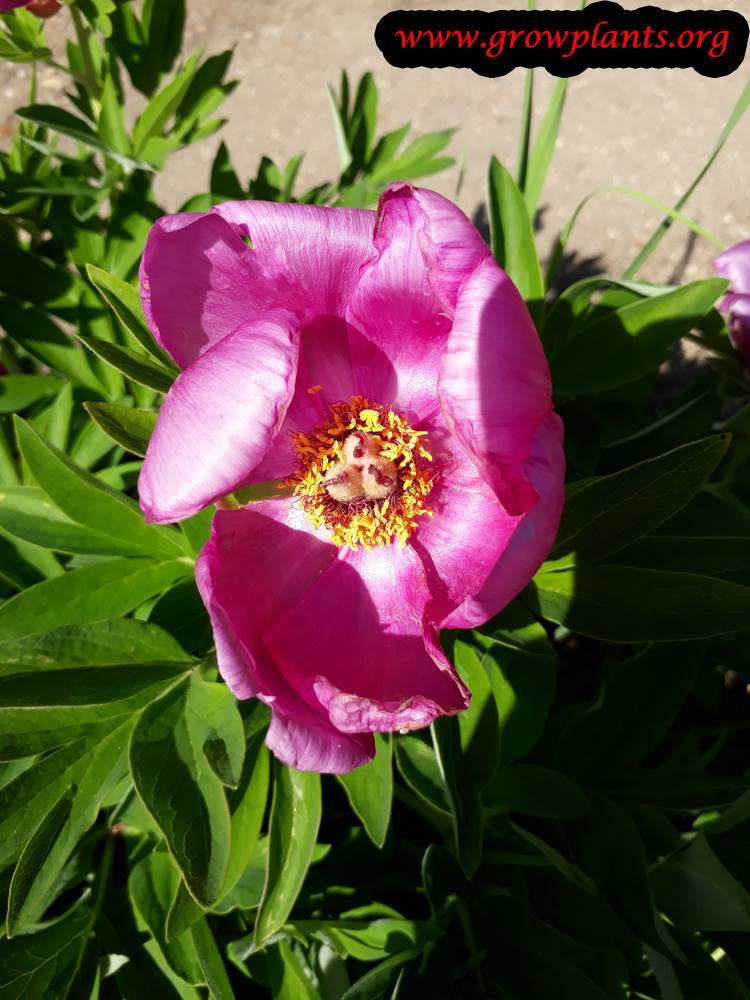
Plant Profile & Key Characteristics
Overview: A herbaceous perennial of the genus Paeonia (common / garden peony) growing 60-80 cm tall, with divided foliage that can be deciduous or evergreen. It is grown as a fragrant cut flower and ornamental, and has traditional medicinal uses.
Quick Specifications
| Specification | Attribute |
|---|---|
| Plant Type / Life Cycle | Perennial (herbaceous or shrub) |
| Foliage Type | Deciduous or evergreen (by type) |
| Mature Size | 60-80 cm (24-32 in) tall |
| Growth Rate | Moderate |
| Root System | Fleshy tuberous roots |
| Toxicity | Toxic to pets if eaten |
| Hardiness | USDA zones 8-10 |
Growth Form & Structure
- Height & Spread: 60-80 cm (24-32 in); suits borders and large containers.
- Growth Habit & Form: Clump-forming herbaceous perennial.
- Lifespan & Maturity: Very long-lived; needs a cold winter (chilling hours) to flower well.
Anatomy & Physical Features
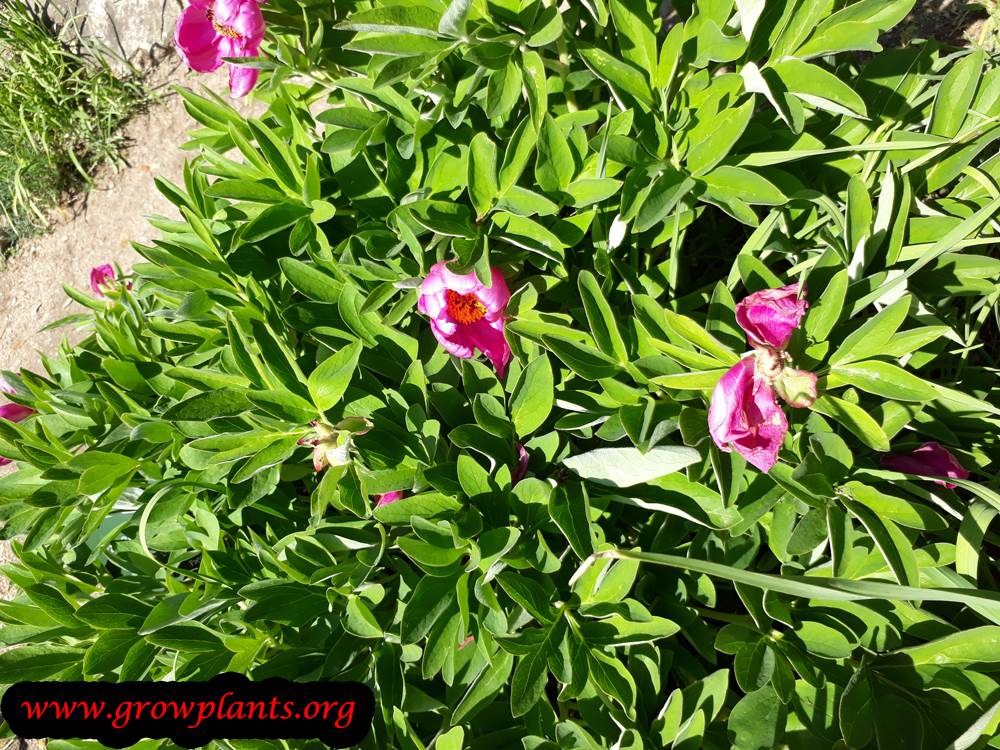
- Leaves & Foliage: Green (some cultivars red- or purple-tinted), divided into elliptic leaflets joined in threes at the base, some lobed.
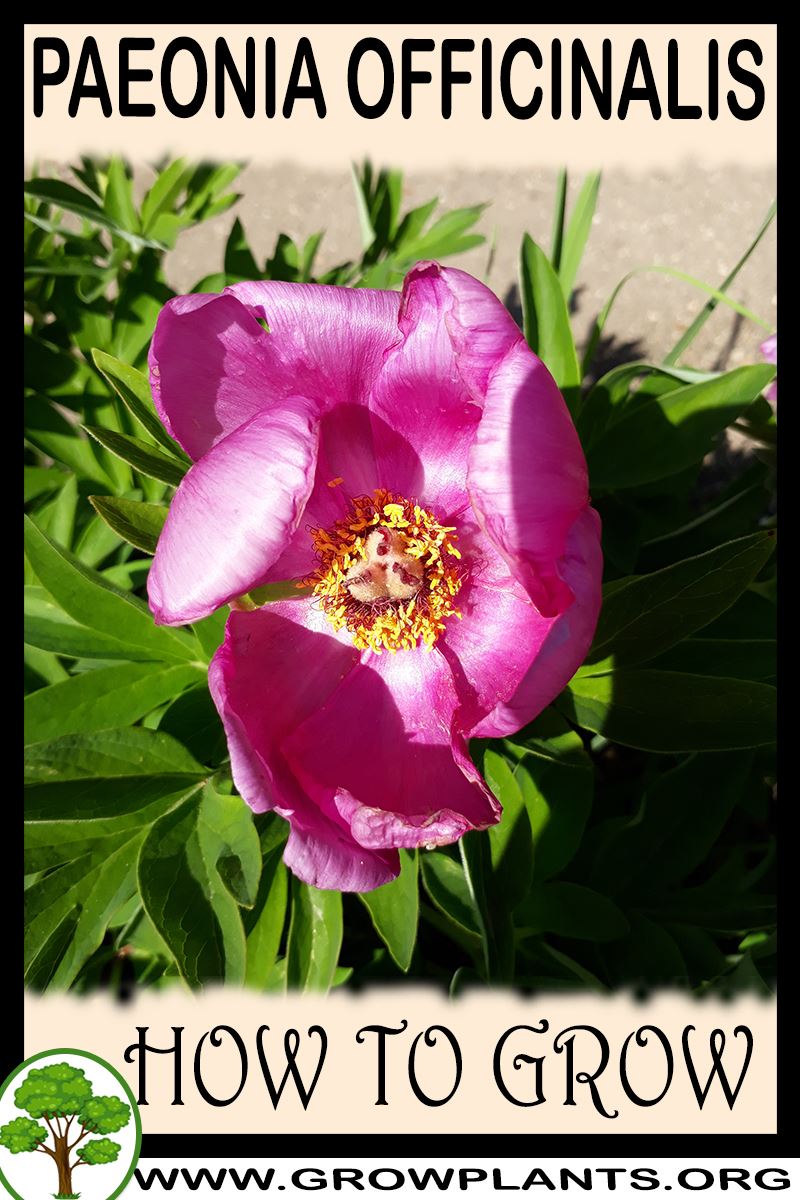
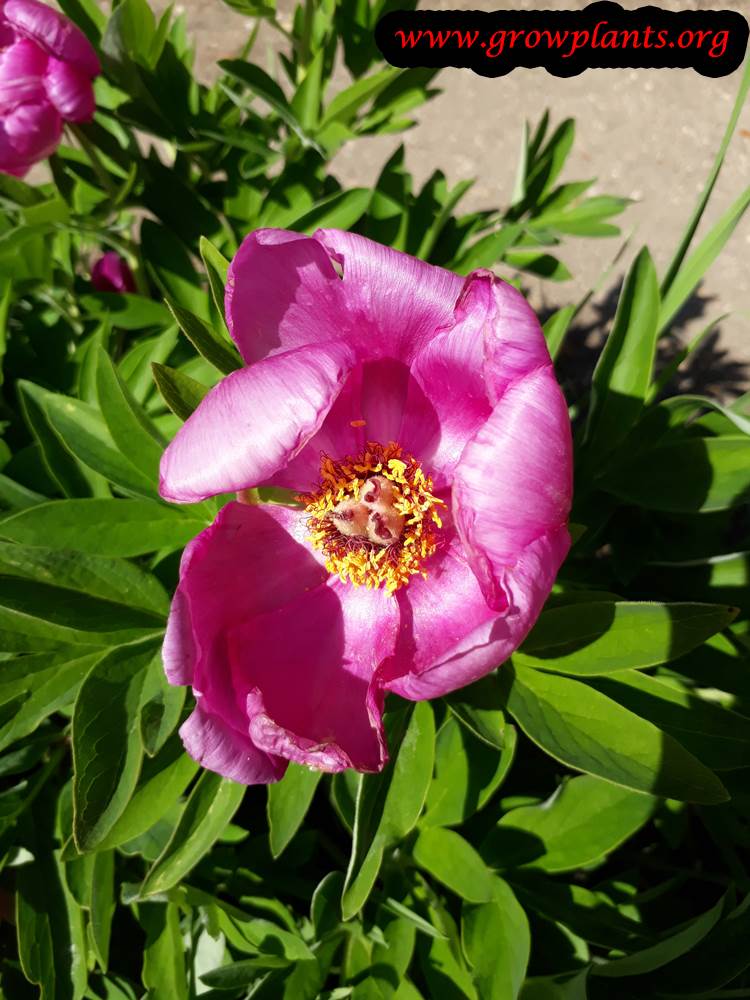
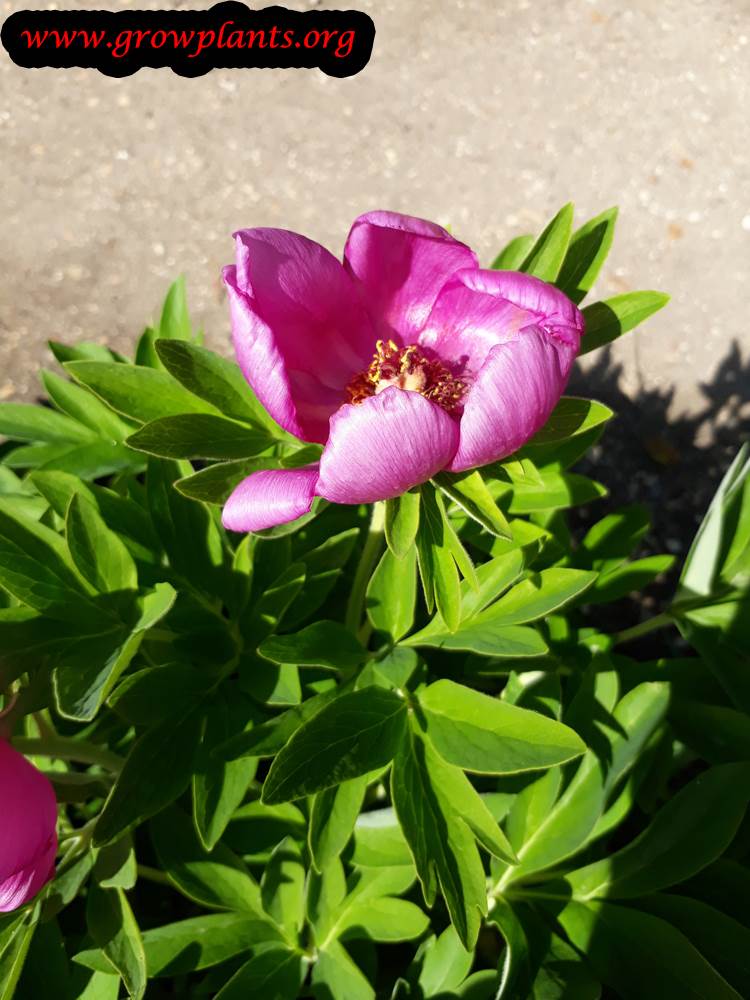
- Flower Characteristics: Large, fragrant, multi-petalled flowers in pink, white, yellow, red, orange or purple.
Primary Uses & Landscape Value
- Functional & Ornamental Roles: Fragrant cut flower and ornamental border plant; also has traditional medicinal uses.
Care Guide: Planting, Soil & Watering
Overview: Peonies are long-lived, hardy perennials that need a cold winter to set flower buds and thrive in full sun to light shade. They demand deep, fertile, well-draining soil and steady moisture, but rot in soggy ground.
Quick Care Requirements
| Requirement | Ideal Condition |
|---|---|
| Planting Season | In autumn, or early spring while dormant |
| Growth Rate | Moderate |
| Soil Type | Deep, fertile, well-draining |
| Water Need | Moderate; consistent moisture, never waterlogged |
Planting & Establishment
- Best Planting Season: Plant while dormant; autumn is ideal, or early spring, so the roots settle before growth. A cold winter is essential for the chilling hours that trigger flowering.
- How to Plant:
- Hole Preparation: Dig a wide hole in deep, well-worked soil so the fleshy roots can spread.
- Soil Amendments: Work in compost and organic matter, and ensure sharp drainage, as peonies rot in wet ground.
- Planting Depth: Crucial: set the growth eyes only 2-5 cm below the surface. Planting too deep is the most common reason herbaceous peonies fail to bloom.
- Growth Speed & Expectations: A moderate grower and very long-lived, reaching about 60-80 cm; it dies back each winter and returns in spring.
Soil, Watering & Drainage Care
- Soil Mix & Drainage Needs: Needs deep, fertile, free-draining soil; not ideal for long-term pots, but if potted use a rich, well-draining mix with drainage holes.
- Watering Schedule & Technique:
- Young / Newly Planted: Water regularly to keep the soil evenly moist while the roots establish.
- Established: Water deeply during dry spells and while flowering; let the surface dry slightly between waterings.
- Seasonal Adjustments: More during spring growth and bloom; much less in winter dormancy.
Climate, Light & Hardiness
Paeonia officinalis, the common or garden peony, is a hardy herbaceous perennial for temperate, Mediterranean and subtropical climates, grown in full sun to half shade. It needs a cool winter to flower well, so within its range winter chill availability - more than cold damage - governs how freely it blooms.
Quick Climate Specifications
| Climate Zones | Temperate, Mediterranean, subtropical |
|---|---|
| USDA Hardiness Zones | Approximately 8–10 (per site data) |
| Optimal Temp Range | Cool to mild growing conditions with a distinct cool winter |
| Cold Damage Begins | Dormant crowns tolerate normal winter freezes of their zones; late frosts can damage new shoots and buds |
| Frost Tolerance | Moderate to High (dormant); emerging growth more vulnerable |
| Light Conditions | Full sun to half shade |
| Wind Tolerance | Moderate |
Sunlight & Light Exposure
Optimal Light Setup
Full sun produces the sturdiest stems and best flowering; half shade is accepted and can protect blooms in hotter areas.
Shade & Heat Management
Light afternoon shade in warm regions extends the life of individual flowers and eases heat stress on foliage.
Best Exposure / Orientation
An open, sunny, well-ventilated position is ideal, with a little shelter from the fiercest afternoon sun where summers are hot.
Temperature Extremes & Hardiness
USDA Hardiness & Regional Limits
The site data places this peony at roughly USDA zones 8–10. Established dormant crowns tolerate the normal winter freezes of those zones; the practical limit toward the warm end is having enough winter chill to trigger good flowering.
Cold Damage & Winter Protection
Dormant crowns are cold-tough within their range. The main risk is a late-spring frost hitting soft emerging shoots and swelling buds, which may warrant temporary cover.
Frost Sensitivity
Frost-hardy while dormant; the frost-sensitive stage is spring growth after buds begin to move.
Extreme Heat Tolerance
Prolonged heat shortens the bloom period and can scorch foliage; cool roots and some shade help through hot spells.
Chilling Requirement
Needs winter chilling to bloom reliably. In mild-winter areas insufficient chill leads to poor bud break and few flowers, so a genuinely cool winter is important. Precise chill needs vary by cultivar and conditions.
Wind, Humidity & Microclimate
Humidity Preferences
Prefers moderate humidity with free air movement; stagnant, damp air favours foliar disease.
Wind Tolerance
Full double blooms are heavy and can flop or break in wind; support or a sheltered spot keeps them upright.
Microclimate Recommendations
Give it an open, sunny, well-drained site with good airflow and a cool winter to meet its chilling need.
Growing in Pots, Balconies & Indoors
Common peony (Paeonia officinalis) is a long-lived, sun-loving perennial that needs a cold winter to flower, so it is not a houseplant. The grower grows it in containers – use a large, deep pot and leave it outdoors for its winter chill.
Quick Details
- Container Size: A large, deep pot – it is deep-rooted and long-lived
- Indoor Suitability: Not a houseplant – needs full sun and a cold winter dormancy
- Best Spot: Full sun to half shade
- Soil & Drainage: Rich but free-draining mix; peonies resent soggy soil
- Watering in Pots: Keep evenly moist in growth; sharp drainage – peonies hate waterlogged roots
Indoors & On the Windowsill
- Not a houseplant: The grower does not grow peonies indoors – they need full sun and, crucially, a cold winter dormancy to set flower buds, which a warm room cannot provide.
- Containers with a cold rest: They grow well in large pots outdoors; leave the pot outside (or in an unheated spot) through winter so the plant gets the chill it needs.
- Keep away from pets: Peonies are mildly toxic to dogs and cats if eaten – worth noting if pots are within reach.
On a Balcony or Patio
- Light & wind: Give it the sunniest spot. Walls, railings and paving reflect heat, so pots dry fast – check moisture daily in warm weather, and shelter or stake tall growth from wind. A drip irrigation kit with a timer can take over that watering check automatically.
- Weight & runoff: A full pot of moist soil is heavy – check the balcony can take it, and stand pots so drainage water runs off cleanly without staining or flooding a neighbour below.
Choosing the Pot, Soil & Long-Term Care
- Pot & drainage: A pot with strong drainage holes and no standing-water saucer, so the roots never sit wet and rot. Terracotta breathes and dries faster (good against overwatering), while glazed or plastic holds moisture longer – match it to how often you water.
- Potting mix: A light, aerated, organic-rich mix – potting soil or peat/coir with perlite or vermiculite, blended with compost or well-rotted organic matter.
- Feeding: Nutrients leach out of pots with every watering, so potted plants need feeding more often than those in the ground – a balanced liquid feed through the growing season keeps them going.
- Repotting: Refresh the mix and pot up about every two years; for perennials, lightly trim the root ball and top growth at the same time to keep them vigorous.
Fertilizing & Feeding
Peonies are moderate feeders that flower in one main flush; feed as shoots emerge and again after bloom to build reserves, keeping fertilizer off the crown and nitrogen in check.
Quick Fertilizing Specs
| Feeding Level | moderate |
|---|---|
| Main Nutrient Priority | Balanced feeding with adequate potassium; keep nitrogen moderate |
| Best Feeding Period | In spring at emergence and again after flowering |
| Soil pH | Near neutral, in cool well-drained soil |
| Organic Options | Compost and well-rotted organic matter around (not on) the crown |
| Micronutrients | Rarely needed unless a deficiency appears |
| Reduce/Stop Feeding | Stop feeding after the post-bloom period; none through winter dormancy |
Feeding by Growth Stage
Spring emergence
Fuel the new shoots and foliage that emerge each spring so the plant can build toward flowering.
| Nutrient direction | Balanced, complete feeding with adequate nitrogen as growth pushes up. |
|---|---|
| Timing | As shoots emerge in early spring. |
| Frequency | A light feeding as growth starts. |
| Fertilizer types | A balanced complete garden fertilizer, Compost or well-rotted organic matter around the crown |
| Precautions | Keep fertilizer off the crown and go easy on nitrogen, which can encourage foliage over flowers. |
Budding and bloom
Carry the plant through budding and flowering with even nutrition for full, strong blooms.
| Nutrient direction | Balanced feeding; adequate potassium and steady nitrogen support bloom better than high-phosphorus products. |
|---|---|
| Timing | From bud formation through flowering in late spring to summer. |
| Frequency | Light feeding through the budding and bloom window. |
| Fertilizer types | A balanced complete fertilizer |
| Precautions | Skip high-phosphorus ‘bloom’ feeds; balanced nutrition and good growing conditions drive flowering. |
After bloom – building reserves
Help the plant rebuild root reserves after flowering so it sets strong buds for next year.
| Nutrient direction | Balanced feeding leaning on potassium to restock reserves as foliage keeps working. |
|---|---|
| Timing | After flowering, while the leaves are still green and active. |
| Frequency | A light feeding once flowering finishes. |
| Fertilizer types | A balanced complete fertilizer with adequate potassium |
| Precautions | Keep feeding modest; the goal is steady reserve building, not a surge of soft growth. |
Winter dormancy
Allow the plant to rest fully through winter, which peonies need for next season’s bloom.
| Nutrient direction | None – withhold fertilizer while the plant is resting. |
|---|---|
| Timing | Through winter, after the foliage has died back. |
| Frequency | No feeding at this stage. |
| Fertilizer types | No feeding at this stage – the plant is dormant or resting and takes up little nutrient. |
| Precautions | Do not fertilize until active growth resumes; feeding a dormant plant wastes nutrients and can burn roots. |
Nutrient Deficiency Signs & Corrections
Older, lower leaves turn pale and yellow-green, growth is weak and blooming is sparse.
| Possible causes | low available nitrogen in the soil, nitrogen leached out by heavy watering or in sandy soil, cold or waterlogged soil limiting root uptake |
|---|---|
| Appears first on | older, lower leaves |
| What to check | whether yellowing starts on old versus new leaves, recent feeding history, drainage and how wet the soil stays |
| Possible correction | Apply a balanced complete fertilizer and build soil organic matter; correct drainage so roots can take up nutrients. |
Newest leaves yellow between the veins while the veins stay green (interveinal chlorosis).
| Possible causes | high (alkaline) soil pH locking up iron, waterlogged or cold soil impairing root function, genuinely low available iron |
|---|---|
| Appears first on | youngest leaves |
| What to check | soil pH, drainage and root health, whether new growth is most affected |
| Possible correction | Correct soil pH toward the plant’s preferred range and improve drainage; if it persists, apply a chelated iron product per its label. |
Leaf margins on older leaves scorch and brown, stems are weak and flowering is poor.
| Possible causes | low soil potassium, uneven watering or drought stress, excess nitrogen pushing leafy growth at the expense of flowers |
|---|---|
| Appears first on | margins of older leaves |
| What to check | watering consistency, whether feeding has been very nitrogen-heavy, soil test for potassium |
| Possible correction | Use a balanced fertilizer that supplies adequate potassium and keep watering even; avoid over-applying high-nitrogen feeds. |
Pruning, Training & Seasonal Maintenance
Paeonia officinalis (common or garden peony) is a herbaceous peony: it dies back to a ground-level crown each year and flowers in late spring on shoots that rise fresh from that crown, so its ‘pruning’ is a simple, well-defined annual rhythm rather than any woody shaping. The two fixed jobs are deadheading spent flowers, and cutting the whole plant down to the crown in autumn once the foliage yellows — a cut that doubles as vital sanitation against botrytis (peony wilt), the plant’s signature disease, which over-winters on left-behind foliage. It is a long-lived, slow-to-settle plant that resents disturbance and, famously, will make leaves but no flowers if its crown is planted too deep. Renewal, when needed, is by careful autumn division into pieces with several eyes — never by hard cutting-back, which does not apply to a herbaceous crown.
Quick Pruning & Maintenance Specs
| Pruning Tolerance | Herbaceous — cut to the ground yearly; no woody structure to prune |
| Primary Pruning Window | Autumn cut-down to the crown once foliage yellows (botrytis sanitation) |
| Secondary Maintenance Window | Deadhead through and after the late-spring bloom; divide in autumn if needed |
| Typical Frequency | One autumn cut-down and deadheading each year; division only every many years |
| Main Objective | Protect next year’s bloom and clear botrytis-carrying foliage |
| Young Plant Priority | Leave undisturbed to establish; deadhead only; check crown depth |
| Mature Plant Priority | Deadhead, autumn cut-down, and occasional division |
| Best Tool Type | Bypass secateurs for stems; a spade and knife for division |
| Avoid Heavy Pruning During | While foliage is still green and feeding the crown |
Pruning by Plant Age & Size
Newly Established
A young plant is slow to settle and best left almost alone for the first couple of years — remove only damaged growth and deadhead. The one thing to get right is planting depth: the crown eyes should sit just two to five centimetres below the surface, because a crown set too deep will grow foliage but never flower. Do not mound soil or heavy mulch over the crown.
Young / Formative
There is no training — the shoots rise from the crown each spring and need no shaping. Formative care is simply deadheading and letting the plant build strength; a young peony may take two or three years to flower well, and cutting it about will only set it back.
Mature / Established
A mature plant follows the annual rhythm: deadhead as blooms fade, then cut all top growth to the crown in autumn. Division is rarely needed — peonies are happy left in place for decades — but if the plant must be moved or has grown congested and shy-flowering, lift it in autumn and split the crown into pieces with three to five eyes each, replanting shallowly.
Seasonal Pruning Schedule
Late Spring (deadheading)
Objective: tidy the plant and stop it setting seed. Remove: each spent flower, cutting the stem back to a strong leaf. Do NOT: remove healthy foliage. Expected response: energy returns to the crown to build next year’s eyes. Flowering impact: supports the following season’s bloom.
Autumn (cut-down & botrytis sanitation)
Objective: remove disease-carrying foliage before winter. Remove: all top growth, cut to just above the crown once it yellows, and bin or burn it rather than composting. Do NOT: gouge the crown eyes or bury them with mulch. Expected response: far less botrytis carried into spring. Flowering impact: none — next year’s eyes are already set on the crown.
Ongoing (sanitary)
Objective: keep disease down in the growing season. Remove: any botrytis-wilted shoots or mouldy buds as soon as they appear. Do NOT: leave infected material lying at the crown. Expected response: less spread of peony wilt. Flowering impact: protects the remaining healthy shoots.
Flowering & Fruiting Wood
Paeonia officinalis flowers on the current season’s shoots, which emerge new from the crown each spring, so the autumn cut-down removes only spent foliage and takes nothing from next year’s display — the flowers come from eyes already formed on the crown. This is why an herbaceous peony can be cut hard to the ground yearly without harm, and why the real determinant of flowering is not pruning at all but crown depth and maturity: buried eyes, or a recently divided crown, simply will not bloom until conditions are right.
Structural Pruning & Training
There is no woody framework to select or train; the plant’s only enduring ‘structure’ is the crown, renewed solely by division. Any support the plant needs is physical — the heavy double flowers can flop, so ring or link stakes, put in early, keep the stems upright — but that is staking, not pruning. Nothing about the top growth is trained or thinned for structure.
Special Growth to Remove
The removals are spent flowers (deadheaded to a strong leaf) and, in autumn, the whole of the dead top growth. There are no suckers, runners or woody shoots — this is a herbaceous crown, and the only ‘renewal’ growth is the crown eyes, which are kept. Botrytis-affected shoots are the extra thing to cut out promptly whenever they appear.
Container & Small-Space Pruning
In a large container the regime is unchanged: deadhead, cut down to the crown in autumn, and remove any wilted shoots. The pot does not let you control size by cutting — a herbaceous peony’s size comes from its crown — and the critical container detail is again depth: pot the crown with its eyes only a few centimetres deep, or it will not flower. Use a deep, wide pot for the fleshy roots and keep it cool over winter, since the plant needs its winter chill to bloom.
Tools
Bypass secateurs make the clean cuts for deadheading and for the autumn cut-down of the herbaceous stems, and a sharp spade with a knife handles lifting and dividing the crown. There is no woody growth here, so loppers and saws are unnecessary, and hedge shears are wrong — deadheading and sanitary cuts are selective, not a shear.
Tool Hygiene & Disease Risk
Treat hygiene as Increased because botrytis (peony wilt) is the defining disease: it over-winters on infected debris and stems, so destroy affected material rather than composting it, and clean the blade after cutting out any wilted or mouldy stem before moving on to healthy growth or another plant. Deadheading healthy tissue needs only clean, sharp tools; cutting diseased stems calls for disinfecting between cuts.
Cut Placement & Technique
Deadhead by cutting the flower stem back to a strong, healthy leaf so the foliage keeps feeding the crown. At the autumn cut-down, cut the stems cleanly to just above the crown without nicking the eyes. When dividing, cut the crown into sections that each carry three to five plump eyes and a share of the fleshy root, and replant with the eyes only two to five centimetres deep.
Heavy Pruning & Rejuvenation
There is no woody rejuvenation cut — the annual autumn cut-down to the crown is normal, not drastic, and the plant returns from the crown each spring. A congested, shy-flowering old clump is renewed only by lifting and dividing it in autumn into three-to-five-eye pieces, replanted shallowly, after which it will typically sulk for a year or two before flowering fully again. Patience, not a harder cut, is what renews this plant.
Post-Pruning Care
After the autumn cut-down, clear away the debris (do not compost it) and mulch lightly for winter, keeping the mulch off the crown so the eyes stay shallow. After division, replant at the correct depth, water in, and expect delayed flowering while the plant re-establishes. Avoid heavy nitrogen feeding, which favours soft, botrytis-prone foliage over flowers.
Common Pruning Mistakes
- Planting or replanting the crown too deep — the classic reason a peony makes leaves but never flowers.
- Leaving the dead foliage over winter, carrying botrytis (peony wilt) straight into spring.
- Cutting the foliage down while it is still green, before it has fed the crown for next year.
- Dividing too often or too small, then wondering why the plant sulks and will not bloom.
When NOT to Prune
Do not cut the foliage down while it is green — wait until it yellows in autumn so it has finished feeding the crown. Avoid dividing or moving the plant in spring or summer; do it in autumn, and expect delayed flowering even then. And take care never to bury or disturb the crown when pruning or mulching, since the plant needs its eyes shallow to bloom.
Pruning Troubleshooting
| Problem | Possible Cause | What to Check | Corrective Action |
| Healthy leaves but no flowers | Crown planted too deep; too much shade; recently divided; excess nitrogen | Depth of the crown eyes; light; how recently moved; feeding | Replant with eyes 2–5 cm deep; give more sun; allow 1–2 years after division; cut nitrogen |
| Buds blacken, shoots wilt and collapse | Botrytis / peony wilt carried over on old foliage | Grey fuzz at stem bases; whether last autumn’s foliage was cleared | Cut out and destroy affected shoots; do the autumn cut-down and bin the foliage; clean tools |
| Flopping stems after rain | Heavy double blooms with no support | Whether stakes went in early | Ring- or link-stake early in the season; this is staking, not a pruning fix |
| Fewer, smaller flowers on an old clump | Congested, aging crown | Age since planting and flowering trend | Lift and divide in autumn into 3–5-eye pieces, replant shallowly, and wait a season or two |
Recommended Tools (by task)
- bypass_secateurs — for deadheading to a strong leaf and the annual autumn cut-down to the crown.
- garden_spade — for lifting and dividing the crown into three-to-five-eye pieces in autumn.
Propagation Guide
This herbaceous peony is most easily and reliably increased by dividing the dormant crown in autumn; grafting is not needed. Seed is possible but slow, deeply dormant and variable, so division is the practical choice for reproducing a good plant.
Quick Propagation Specs
| Best Propagation Method | Crown division |
| Alternative Methods | Seed (slow, variable) |
| Propagation Difficulty | Easy by division; Difficult by seed |
| Seed True-to-Type | Variable |
| Vegetative True-to-Type | Yes |
| Best Propagation Season | Autumn |
Division, Offsets, Pups & Suckers
Timing & Method
Lift the dormant clump in autumn and cut the fleshy crown into pieces, each with three to five buds (eyes) and a portion of storage root. Replant with the eyes only a few centimetres below the surface – planting too deep is a common cause of shy flowering.
Establishment
Divisions resent disturbance and settle in gradually, so avoid moving them again once replanted.
Growing from Seed
Dormancy & Germination
Seed has double dormancy, typically needing a warm spell to form the root and then a cold spell to release the shoot; emergence is slow and often spread across seasons. Sow fresh seed and expect variable offspring, so use seed for raising species or breeding rather than copying a chosen plant.
Bloom & Flower Guide
Quick Details
- Bloom Season: Spring to summer
- Time to First Bloom: Often from the second or third year, as the crown establishes
- Flower Appearance: Large, fragrant, many-petalled flowers in pink, white, yellow, red, orange or purple
- Edibility: Best treated as not for eating – this is the medicinal common peony, and its parts can be toxic if eaten raw
Detailed Blooming Overview
Paeonia officinalis, the common or garden peony, is the old cottage-garden peony, opening large, fragrant, many-petalled flowers in late spring and summer in shades of pink, white, yellow, red, orange and purple. It has a long history of medicinal use, and because its parts can be toxic if eaten raw it is grown for display rather than the kitchen.
Flower Characteristics
- Large, fragrant, usually many-petalled flowers in pink, white, yellow, red, orange or purple.
- Held on strong stems above the divided green foliage.
- Long-lasting and excellent as a cut flower.
Bloom Care & Thinning
- Managing the bloom: Support the heavy blooms so they are not flattened by rain, and deadhead spent flowers to keep the plant tidy; for larger blooms, remove the small side buds.
- Pollination: Visited mainly by bees; ants seen on the buds are after the sweet nectar and cause no harm.
- Safety: Although grown as an ornamental, the plant has a medicinal history and its parts can be toxic if eaten raw – keep it out of the kitchen and away from grazing pets.
Bloom Health & Protection
- Botrytis bud blast (grey mould): In cool, wet spring weather buds can blacken and fail to open, sometimes with a grey fuzz. Cutting out affected buds and stems, clearing old foliage and improving air circulation help most; a sulfur- or copper-based fungicide can be used where it keeps returning.
Fruit & Uses
This is grown as an ornamental and cut flower, and the only part that is eaten is the flower petals, which serve as a minor edible flower — scattered fresh as a garnish or dried for a delicate floral tea. Treat it as ornamental first: the roots, seeds and foliage are not eaten, so keep to a few clean petals from known, unsprayed plants.
Quick Edible Specs
| Edible Parts | Flower petals (marginal edible flower) |
|---|---|
| Main Use(s) | Culinary garnish and floral tea (minor); root traditionally used medicinally |
| Eaten Raw or Cooked | Petals used raw as a garnish or infused as tea |
| Preparation Required | Use petals only; snip off and discard the pale, bitter heel at the petal base; avoid roots, seeds and leaves |
| Harvest Season | During bloom, spring to summer |
| Safety/Toxicity Caveat | Roots and seeds are considered toxic if eaten; petals only, in small amounts; not a staple food; the plant is also toxic to pets |
Flowers & Flower Buds
The soft, fragrant petals are the edible part. Harvest them when the blooms are fully open and scented, in spring and early summer, picking clean petals from plants that have not been sprayed. Rinse gently and snip away the pale base of each petal, which can be bitter. The petals are used fresh to garnish salads, desserts and drinks, or dried and steeped for a light floral tea.
Preparation, Uses & Safety
Culinary use is limited to the petals — as an edible-flower garnish or infused for tea — and should stay modest; peony is not a food crop. Peony root has a long history of being traditionally used in herbal medicine, but no medicinal or health use is implied here. Safety first: the roots and seeds are regarded as toxic if eaten, the plant is toxic to pets, and only correctly identified, pesticide-free petals should ever be tasted, and only in small quantities.
Pests, Diseases & Troubleshooting
Overview: Peonies are long-lived and robust, but the source’s ‘aphids’ badly understates their real problem: fungal disease, led by Botrytis blight, is the peony’s number-one issue, alongside powdery mildew and peony leaf blotch. Aphids, thrips, and scale are minor by comparison, and the ants on the buds are harmless nectar-feeders – not a pest. A classic hardy herbaceous species, tough but still Botrytis-prone in damp springs. Airflow, sanitation, and correct planting depth prevent nearly everything.
Quick Troubleshooting Overview
| Issue / Pest | Main Symptom | Primary Solution |
|---|---|---|
| Botrytis blight | Buds blacken and fail; grey mould on stems/leaves; stems rot at base | Cut out infected parts; autumn clean-up; improve airflow; copper |
| Powdery mildew | White powdery film on leaves late in season | Improve airflow; sulfur/potassium bicarbonate |
| Peony leaf blotch | Glossy purple-brown spots (‘measles’) on leaves/stems | Remove debris; airflow; copper if severe |
| Aphids | Sticky, curled tips; minor | Rinse off; insecticidal soap |
| Ants on buds | Ants crawling over sticky buds | None needed – harmless nectar-feeders |
| Failure to bloom | Healthy leaves, few/no flowers | Plant shallower; more sun; be patient |
Common Pests & Management
- Aphids (Aphis / Macrosiphum spp.):
- Symptoms: Small green or brownish soft insects on the soft new shoots, flower stalks, and buds in spring, leaving sticky honeydew and curled tips; a minor pest that rarely does lasting harm.
- Prevention & Control: Blast off with a jet of water and squash survivors; ladybirds and lacewings usually clear them. Only heavy infestations need insecticidal soap or a light oil on the tips and undersides.
- Thrips (Frankliniella spp.):
- Symptoms: Tiny slender insects that rasp buds and petals, causing silvery flecking, browned petal edges, and distorted or failed blooms, with black specks of frass in the flowers.
- Prevention & Control: Remove and destroy infested buds and spent flowers, and encourage predatory mites and minute pirate bugs. Blue sticky traps monitor them; spinosad or insecticidal soap can be used if flowers are being spoiled, applied to protect pollinators.
- Scale insects (Coccus / Eulecanium spp.):
- Symptoms: Immobile brown or tan bumps on stems and (on tree peonies) woody branches, with sticky honeydew and sooty mould; heavy scale weakens growth.
- Prevention & Control: Scrape off light infestations and prune out badly encrusted wood. Apply horticultural oil to smother scale and overwintering stages; repeat and encourage parasitic wasps and predators.
- Nematodes (root-knot / foliar) (Meloidogyne / Aphelenchoides spp.):
- Symptoms: Root-knot forms gall the roots and stunt the plant; foliar nematodes cause angular, vein-bounded brown blotches on leaves in wet conditions.
- Prevention & Control: Plant into clean, well-drained soil and avoid moving soil from infested areas. Remove and destroy affected foliage, keep leaves dry, and rotate planting sites; there is no cure once roots are heavily galled, so prevention is key.
Diseases & Fungal Issues
- Botrytis blight (Botrytis paeoniae / B. cinerea) – the peony’s #1 disease:
- Symptoms: Young shoots blacken and wilt in spring; buds turn brown or black and fail to open (‘bud blast’); stem bases rot and topple, and grey fuzzy mould appears on affected buds, stems, and leaves in cool, damp weather.
- Treatment & Management: Sanitation is decisive: cut infected shoots, buds, and leaves well below the rot and remove all top growth to the ground in autumn (never compost it). Improve airflow by spacing and thinning, avoid overhead watering and excess nitrogen, and plant in a sunny, open site. A copper or appropriate fungicide at emergence protects in wet springs, but clean culture is the real control.
- Powdery mildew (Erysiphe / Podosphaera spp.):
- Symptoms: A white to greyish powdery film coating the upper leaves and stems, usually later in the season; largely cosmetic but disfiguring, and worse in crowded, shaded, humid conditions.
- Treatment & Management: Improve air movement, thin crowded clumps, and avoid overhead watering. Remove the worst leaves and clear debris in autumn; sulfur, potassium bicarbonate, or a milk spray checks it at first sign.
- Peony leaf blotch / ‘measles’ (Graphiopsis chlorocephala, syn. Cladosporium paeoniae):
- Symptoms: Glossy purple to reddish-brown spots and blotches on the upper leaf surfaces (dull chestnut beneath), with elongated red-brown streaks on stems; disfiguring but rarely fatal.
- Treatment & Management: Remove and destroy fallen leaves and cut top growth to the ground in autumn to break the cycle. Improve airflow and keep foliage dry; a copper-based fungicide from emergence helps where the disease is a recurring nuisance.
- Phytophthora blight & root rot (Phytophthora cactorum):
- Symptoms: Dark, leathery water-soaked rot on stems, crowns, and buds, and blackened root/crown collapse, especially in wet, heavy, poorly drained soil – more serious and less reversible than Botrytis.
- Treatment & Management: Plant in well-drained soil or raised beds, avoid waterlogging, and improve drainage. Remove and destroy affected plants and surrounding soil; do not replant peonies in the same infected spot.
- Viruses (peony ringspot / mosaic):
- Symptoms: Ring patterns, mottling, and yellow-green mosaic on leaves; usually mild but permanent, spread by propagation and sometimes sap-feeding insects.
- Treatment & Management: Buy healthy stock, control aphids and thrips, and disinfect tools between plants. Rogue out severely affected plants; there is no cure, so prevention and clean division are the management.
Growing Difficulties & Abiotic Problems
- Failure to bloom (the classic peony complaint)
- Cause & Symptoms: Lush, healthy leaves but few or no flowers, from planting the crown/eyes too deep, too much shade, recent division, immaturity, or over-feeding with nitrogen.
- Correction Strategy: Plant the eyes just 3–5 cm below the surface (deeper planting is the commonest cause of no flowers), give full sun, avoid excess nitrogen, and be patient – divisions often take 2–3 years to settle before blooming well.
- Bud blast (buds that fail to open)
- Cause & Symptoms: Pea-sized buds that form then dry, brown, and abort without opening, from Botrytis, late frost, drought at bud-set, undernourishment, or too-deep/too-shaded planting.
- Correction Strategy: Rule out and control Botrytis first, keep plants evenly watered and fed through bud development, protect early buds from hard frost, and correct planting depth and light. Established, well-sited plants blast far less.
- Flopping stems
- Cause & Symptoms: Heavy double blooms pull herbaceous stems to the ground, especially after rain, spoiling flowers and inviting rot where they touch soil.
- Correction Strategy: Set peony rings or grow-through supports early in the season, choose sturdier single/semi-double or Itoh types where flopping is a problem, and give full sun for stronger stems.
- Site & transplant sensitivity
- Cause & Symptoms: Sulking, non-flowering plants after being moved, divided, or planted in wet, poorly drained soil.
- Correction Strategy: Choose the site carefully – peonies resent disturbance and can live for decades in one spot. Plant in well-drained, fertile soil at the correct depth, divide only in autumn, and then leave them undisturbed.
What Helps – Products & Tools
For the minor insects, insecticidal soap, horticultural oil (for scale), and spinosad or blue sticky traps (for thrips) are enough. The real programme is disease-focused: rigorous autumn clean-up, good spacing, and a copper fungicide or sulfur / potassium bicarbonate against Botrytis, leaf blotch, and powdery mildew. Sharp secateurs and clean sanitation matter more than any spray.