



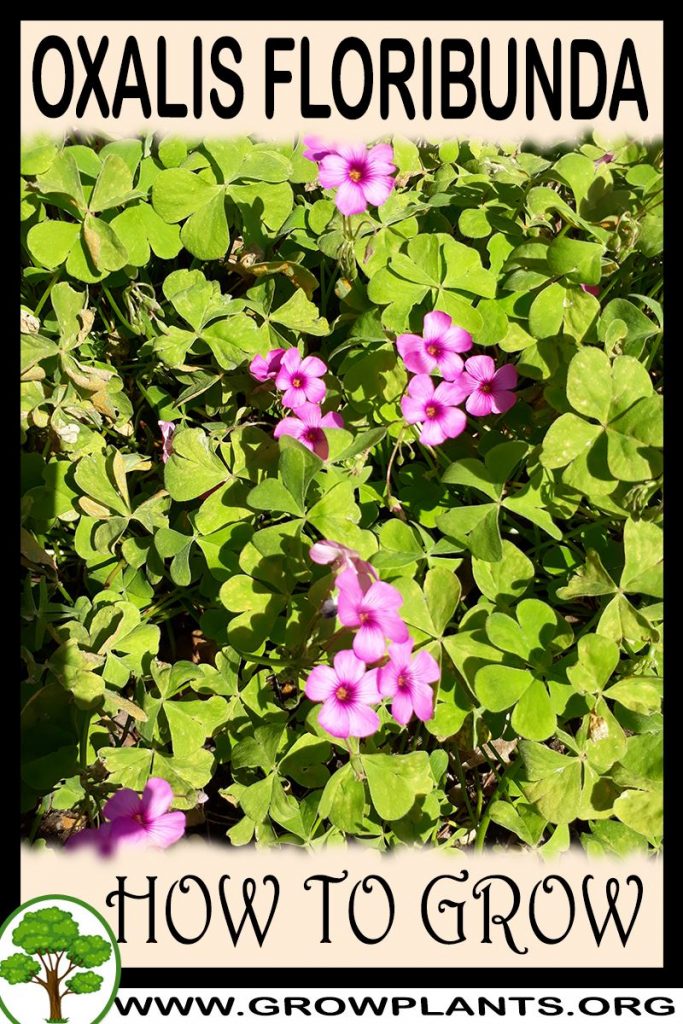
Plant Profile & Key Characteristics
Overview: A herbaceous perennial geophyte of the genus Oxalis (abundant-flowering wood sorrel) reaching 10-40 cm high, with clover-like trifoliate foliage that dies back over summer. It is grown as an ornamental for its clusters of pink flowers.
Quick Specifications
| Specification | Attribute |
|---|---|
| Plant Type / Life Cycle | Perennial (bulbous geophyte) |
| Foliage Type | Summer-deciduous |
| Mature Size | 10-40 cm (4-16 in) tall |
| Growth Rate | Fast to moderate |
| Root System | Bulbous geophyte |
| Toxicity | Contains oxalic acid – mildly toxic in large quantities |
| Hardiness | USDA zones 6-10 |
Growth Form & Structure
- Height & Spread: 10-40 cm (4-16 in) tall in low clumps; in containers start at 3-6 L (0.8-1.6 gal) and pot on as it fills out.
- Growth Habit & Form: Low, clump-forming geophyte grown from small bulbs.
- Lifespan & Maturity: Perennial that regrows from its bulbs each season, dormant over summer.
Anatomy & Physical Features
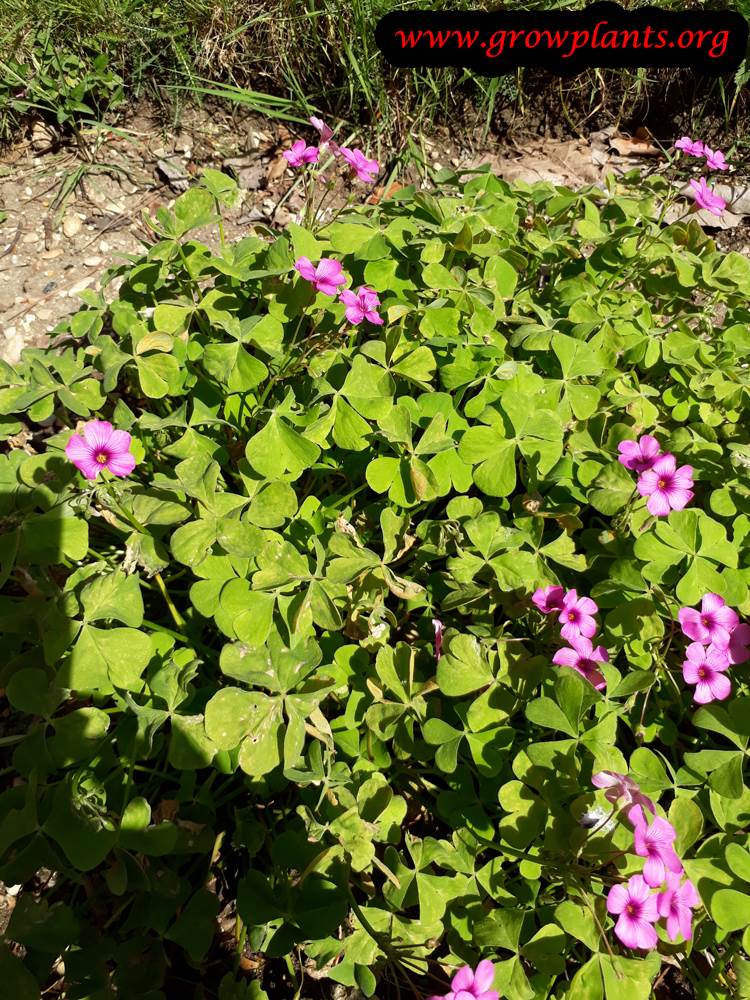
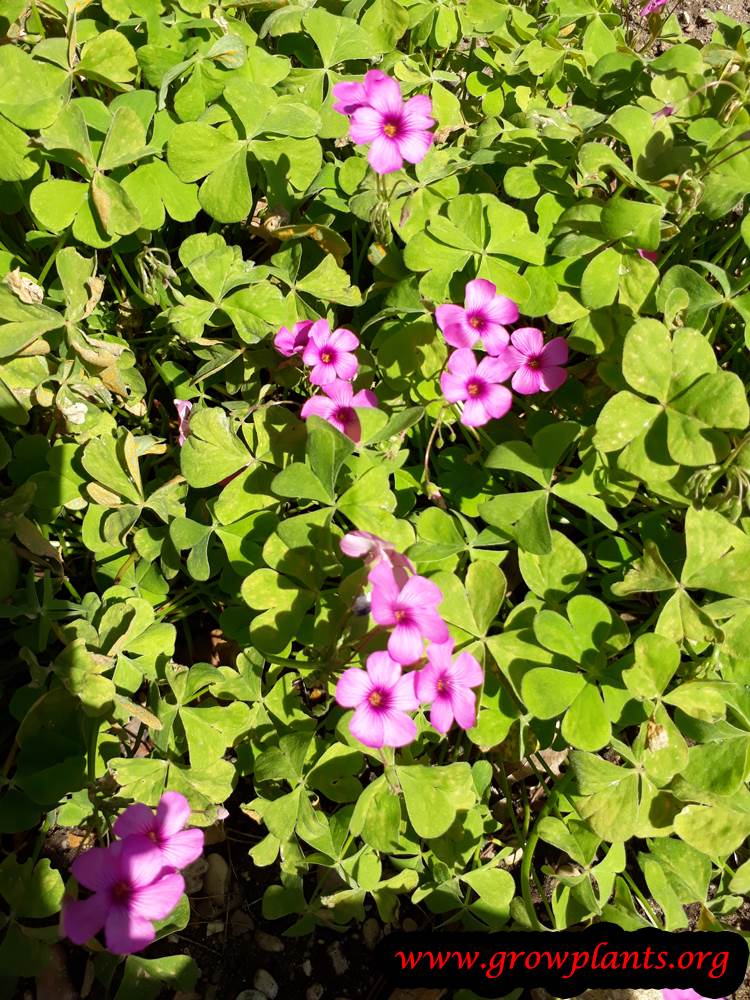
- Leaves & Foliage: Green, obcordate (heart-shaped) leaflets in threes, joined at the base into a radial, clover-like leaf.
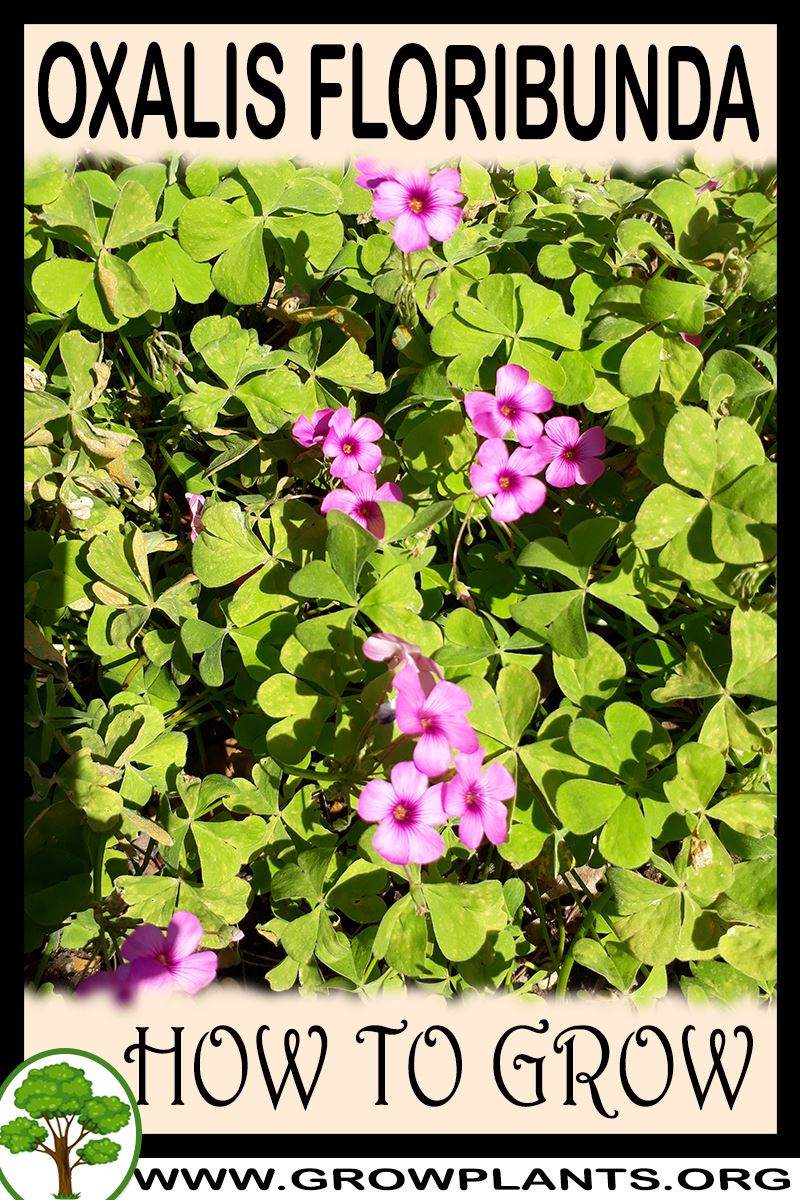
- Flower Characteristics: Pink, five-petalled flowers about 2.5 cm or more across, borne in clusters.
Primary Uses & Landscape Value
- Functional & Ornamental Roles: Ornamental border and container plant.
Care Guide: Planting, Soil & Watering
Overview: Oxalis floribunda is a bulbous, summer-dormant geophyte that grows from small bulbs in rich, well-draining soil kept evenly moist during its active season. It appreciates regular moisture while in leaf, then rests through its dormancy.
Quick Care Requirements
| Requirement | Ideal Condition |
|---|---|
| Planting Season | Spring to summer in warm zones; autumn to winter where temperatures drop below freezing |
| Growth Rate | Moderate to Fast |
| Soil Type | Rich, well-draining soil that holds some moisture (peat / organic) |
| Water Need | Moderate to High – keep evenly moist during active growth |
Planting & Establishment
- Best Planting Season: Plant at the start of the growing season – spring to summer in mild climates, or autumn to winter where hard frosts occur; set bulbs 2–5 cm (1–2 in) deep.
- How to Plant:
- Hole Preparation: Dig the hole noticeably larger than the root ball – roughly two to three times its size – so the roots settle into loose soil; bulbs go 2–5 cm (1–2 in) deep.
- Soil Amendments: Mix organic matter, humus and dried leaves into the backfill for a rich, moisture-retentive but still free-draining bed, then mulch the surface to hold moisture.
- Planting Depth: Set the root ball at soil level and firm the soil gently – not too hard, but firm enough that the plant does not sink when watered.
- Growth Speed & Expectations: Growth is moderate to fast during the active season; the clump fills out and can be lifted and divided when dormant.
Soil, Watering & Drainage Care
- Soil Mix & Drainage Needs: Use a rich, well-draining mix that still retains some moisture; in containers use rich soil with organic matter and drainage holes, and the bulbs can be lifted and stored during dormancy. It grows in full sun to half shade.
- Watering Schedule & Technique:
- Young / Newly Planted: Water daily for about the first two weeks after planting (preferably in the morning) to settle the plant, keeping the soil consistently moist.
- Established: Keep the soil evenly moist through active growth, watering deeply but never leaving it waterlogged.
- Seasonal Adjustments: Reduce watering as the foliage dies back into dormancy and keep it on the dry side while resting; resume regular watering when new growth appears.
Climate, Light & Hardiness
This summer-deciduous geophyte grows in mediterranean and subtropical climates in full sun to half shade, going dormant through its rest period. It is hardy through USDA zones 6–10, with its bulb-planting and pruning timing keyed to whether the local climate freezes.
Quick Climate Specifications
| Climate Zones | Mediterranean, Subtropical |
|---|---|
| USDA Hardiness Zones | 6–10 |
| Frost Tolerance | Low to Moderate |
| Light Conditions | Full Sun / Half Shade |
Sunlight & Light Exposure
Optimal Light Setup
Full sun to half shade both suit this flowering perennial through its active growing season.
Temperature Extremes & Hardiness
USDA Hardiness & Regional Limits
Hardy through USDA zones 6–10; the plant's own care data distinguishes frost-free areas (temperature staying above roughly 5°C/41°F) from colder zones where temperatures fall below about 0°C/32°F, and times bulb planting and pruning around that threshold.
Cold Damage & Winter Protection
In colder zones (below about 0°C/32°F), the bulb goes dormant through winter and is planted/pruned on an autumn–winter schedule rather than the spring–summer schedule used in frost-free areas.
Frost Sensitivity
Top growth is frost-tender, but the underground bulb is the plant's key survival structure and tolerates cold better than the foliage.
Wind, Humidity & Microclimate
Microclimate Recommendations
Mulching when the plant goes dormant helps protect the bulb through its rest period, whichever season that falls in locally.
Growing in Pots, Balconies & Indoors
This oxalis is a small, free-flowering bulb often enjoyed in pots. The grower does not list it as a room houseplant, but its neat size and love of light make it a fine plant for a sunny windowsill and an easy, cheerful container on a balcony or patio.
Quick Details
- Container Size: Start at 3-6 L (0.8-1.6 gal) and pot on to bigger sizes as it fills each pot
- Indoor Suitability: Not rated a deep-indoor houseplant, but excellent on a bright, sunny windowsill
- Best Spot: Full sun to part shade
- Soil & Drainage: Rich, organic, free-draining mix with drainage holes
- Watering in Pots: Average to generous in growth; ease off as it dies back into dormancy
Indoors & On the Windowsill
- Sunny sill: Compact and floriferous, it flowers well on a bright windowsill in good light, even though the grower does not class it as a full houseplant.
- Dormancy: When it dies back, the grower notes you can lift the bulbs out of the soil and store them until the next growing season.
- Safety: Oxalis contains oxalates and is mildly toxic if eaten – keep it out of reach of children and pets.
On a Balcony or Patio
- Light & wind: A sunny or lightly shaded balcony suits it; small pots dry quickly, so keep the soil evenly moist while it is in leaf and flower.
Choosing the Pot, Soil & Long-Term Care
- Pot & drainage: Start in a 3-6 L pot with good drainage holes; never let it stand in water.
- Rich mix: A rich, organic, free-draining potting mix.
- Feeding: Feed through the growing season, as potted soil is soon depleted.
- Soil refresh: When the plant is large, replace part of the soil to keep it fresh.
Grower’s Container Tip
- Pot up in stages: The grower prefers to start small (3-6 L) and move up a size each time the plant fills its pot, until it reaches the size you want. This keeps the soil fresh and makes care more efficient; you can also lift and store the bulbs when they go dormant.
Fertilizing & Feeding
A light feeder from the bulb: balanced feeding supports leaf growth as the plant emerges from dormancy, then a lower-nitrogen, potassium-forward approach favors flowering, with feeding stopped completely once the plant goes summer-dormant.
Quick Fertilizing Specs
| Feeding Level | Light feeder |
|---|---|
| Main Nutrient Priority | Balanced during leaf growth, then lower-nitrogen and potassium-forward through bloom |
| Best Feeding Period | From new growth emerging through the main flowering period |
| Organic Options | Compost or well-rotted organic matter worked into moist, rich soil |
| Micronutrients | Usually supplied by a complete fertilizer; correct iron only if new growth looks pale |
| Soil pH | Tolerates a wide range in moist, well-drained soil |
| Reduce/Stop Feeding | Stop feeding entirely once foliage dies back and the bulbs go dormant |
Feeding by Growth Stage
Active leaf growth and bud set
Support healthy foliage growth and bud formation as the plant comes out of dormancy.
| Nutrient direction | A balanced, light feeding supports steady leaf growth heading into bloom. |
|---|---|
| Timing | As new growth emerges from the bulbs and through leaf development ahead of flowering. |
| Frequency | A light feeding as growth resumes, continuing at a modest pace while leaves develop. |
| Fertilizer types | A balanced complete garden fertilizer, applied lightly, Compost or well-rotted organic matter worked into moist, rich soil |
| Precautions | Keep soil moist but well drained; overly rich or waterlogged soil around the bulbs favors rot. |
Active flowering
Support quality flowering without pushing excess leafy growth at the expense of blooms.
| Nutrient direction | Ease back toward a lower-nitrogen, potassium-forward feed to favor flowering over foliage. |
|---|---|
| Timing | Through the main flowering period. |
| Frequency | Light, steady feeding through the bloom period, easing off as flowering finishes. |
| Fertilizer types | A lower-nitrogen, potassium-forward complete fertilizer, used sparingly |
| Precautions | Avoid heavy nitrogen feeding during bloom, which favors leaves over flowers in this plant. |
Summer dormancy
Let the plant die back and rest through its summer-deciduous dormant period undisturbed.
| Nutrient direction | None – withhold fertilizer while the plant is dormant. |
|---|---|
| Timing | Through the summer dormant period after foliage dies back. |
| Frequency | No feeding at this stage. |
| Fertilizer types | No feeding at this stage – allow the bulbs to rest undisturbed through dormancy |
| Precautions | Do not fertilize dormant bulbs; keep the area mulched and avoid disturbing the soil until new growth appears. |
Nutrient Deficiency Signs & Corrections
Bulbs soften, discolor, or fail to sprout, and any emerged growth wilts and collapses.
| Possible causes | waterlogged or poorly drained soil, overwatering, especially during dormancy, overly rich soil that stays too wet |
|---|---|
| Appears first on | the bulbs and base of new shoots |
| What to check | soil drainage, watering routine, especially during the dormant period, soil richness around the bulbs |
| Possible correction | Improve drainage, reduce watering during dormancy, and avoid feeding wet soil until conditions dry out. |
Leaf margins yellow or scorch and flowering comes sparse or smaller than expected.
| Possible causes | low soil potassium, an imbalanced, nitrogen-heavy feeding history, leaching in light, frequently watered soil |
|---|---|
| Appears first on | older leaf margins |
| What to check | recent feeding balance, soil texture and drainage, flower count and size compared to a typical season |
| Possible correction | Shift toward a lower-nitrogen, potassium-forward feed during the growing and bloom period. |
New leaves emerge pale or yellowish while veins stay comparatively green.
| Possible causes | alkaline soil tying up iron, poorly drained soil, root stress from waterlogging |
|---|---|
| Appears first on | newest leaves |
| What to check | soil pH if testing is available, drainage around the bulbs, overall root health |
| Possible correction | Improve drainage and soil texture, and apply a chelated iron product per its label if chlorosis persists. |
Pruning, Training & Seasonal Maintenance
Oxalis floribunda is a bulb-forming perennial that dies back to its bulb each year, so ‘pruning’ means removing spent flowers and fading foliage rather than cutting structural growth. It tolerates this kind of grooming freely, and the main objective is tidiness plus curbing self-seeding, since the plant is noted as invasive. The safest window follows the facts’ own pruning-season guidance: as the foliage begins to die back toward dormancy (autumn in mild climates, or summer where winters are cold enough to already send it dormant).
Quick Pruning & Maintenance Specs
| Pruning Tolerance | Low (little to remove beyond spent growth) |
| Primary Pruning Window | As foliage dies back heading into dormancy (autumn in mild zones; summer where winters are cold) |
| Typical Frequency | A tidy-up once or twice per growing cycle |
| Main Objective | Remove dead foliage and spent flowers; keep self-seeding in check |
| Young Plant Priority | Leave foliage fully intact to build up the bulb |
| Mature Plant Priority | Deadhead and clear dead leaves as the clump cycles through dormancy |
| Best Tool Type | Precision snips |
| Avoid Heavy Pruning During | While foliage is still green and actively photosynthesizing |
Pruning by Plant Age & Size
Newly Established
Leave the young clump undisturbed to build bulb reserves; remove only clearly damaged leaves.
Young / Formative
No structural training applies to this low clumping geophyte.
Mature / Established
Deadhead spent flower clusters for tidiness and to reduce self-seeding of this invasive species, and clear away foliage once it yellows and dies back naturally rather than pulling it while still green.
Seasonal Pruning Schedule
| Ongoing Sanitary | Objective: tidy appearance and dormancy prep. Remove: dead/yellowing leaves and spent flower stalks. Do not remove: green, still-functioning foliage – it is feeding the bulb for next season’s growth and flowering. Response: cleaner planting; less volunteer seedling spread. Flowering impact: deadheading does not affect the current bloom and helps limit unwanted spread. |
Special Growth to Remove
- Spent flower stems – remove to tidy the planting and reduce self-seeding, given this species’ noted invasiveness
- Fully yellowed/dead foliage as the plant enters dormancy
Container & Small-Space Pruning
In containers, deadheading is especially useful to prevent volunteer seedlings colonizing nearby pots; let the foliage die back fully in the pot before tidying so the bulb finishes storing energy for the next cycle.
Tools
- Precision snips for deadheading and removing dead leaves
Tool Hygiene & Disease Risk
Increased: powdery mildew and other fungal issues are noted pest/disease risks for this species – remove affected foliage promptly and keep tools clean between plants to avoid spreading fungal spores.
Cut Placement & Technique
Cut spent flower stems down at the base near the foliage rather than leaving long stubs; let dying leaves detach naturally or snip close to the crown once fully yellow.
When NOT to Prune
Avoid removing foliage while it is still green, since the leaves are actively recharging the bulb for the next growth and bloom cycle; also be aware oxalic acid is present in the plant, so handle cut material accordingly.
Common Pruning Mistakes
- Cutting back green foliage too early, which weakens the bulb for next season
- Leaving spent flowers to set seed, worsening this species’ tendency to spread
Recommended Tools (by task)
- precision_snips – deadheading and clearing dead foliage on a small clumping bulb
Propagation Guide
Oxalis floribunda is best propagated by dividing and separating its bulbs during dormancy, which preserves the plant reliably though the bulbs themselves are small and can be hard to locate; seed is possible but the site notes bulbs are the easier route. Because the small bulbs sit deep in the soil and are easily damaged when dug, overall difficulty is best rated moderate rather than easy.
Quick Propagation Specs
| Best Propagation Method | Bulb division |
| Alternative Methods | Seed |
| Propagation Difficulty | Moderate |
| Seed True-to-Type | Usually true-to-type |
| Vegetative True-to-Type | Yes |
| Best Propagation Season | Dormant season for dividing bulbs; plant divisions in spring above 5°C (41°F), or in autumn where winter temperatures fall below 0°C (32°F) |
| Seed Sowing Depth | Bulbs are planted 2–5cm (1–2in) deep |
Rhizomes, Tubers, Bulbs & Corms
Separate bulbs from the parent clump during the plant’s dormant season. The bulbs are small and often hard to find; if they cannot be located directly, lift and divide the whole plant instead, digging gently and deeply since the bulbs can sit quite deep in the soil – if they are left behind or damaged during digging, the plant will usually die. Plant divided bulbs about 2–5cm (1–2in) deep in moist, rich, well-drained soil, and keep the soil consistently moist and watered until new growth appears. Plant in spring where temperatures stay above 5°C (41°F), or in autumn in colder hardiness zones where winter temperatures drop below 0°C (32°F). In containers, bulbs can also be lifted out of the soil during dormancy for storage or division.
Growing from Seed
Seed is a viable alternative but is not necessary, since starting new plants from bulbs is easier and more dependable for this species.
Bloom & Edible Flower Guide
Quick Details
- Bloom Season: Autumn, winter and spring – the cool-season months, with the plant resting in summer
- Flower Appearance: Pink, five-petalled funnel-shaped flowers, about 2.5 cm or more, in loose clusters above clover-like leaves
- Edibility: Yes, in moderation – the flowers (and leaves) are edible with a tart, lemony tang, but they contain oxalic acid, so eat only small amounts
Detailed Blooming Overview
This wood sorrel is a cool-season bloomer, flowering generously from autumn through winter into spring and going dormant over summer. Clusters of bright pink flowers, each with five petals fused at the base, are held on slender stalks above the shamrock-like foliage. The flowers open in sun and close in dull weather or at night, in the charming way of oxalis.
Flower Characteristics
- Pink flowers about 2.5 cm or more across, with five petals joined at the base into a funnel.
- Carried in loose clusters that open in sunshine and close when dull.
- Set off by the clover-like, three-part leaves.
Bloom Care & Thinning
- Pollination: Worked by bees and other insects when the flowers are open in the sun.
- Managing the bloom: No thinning is needed; enjoy the long cool-season show and let the plant rest in summer.
- Using the flowers: A few flowers make a tart, lemony garnish – use sparingly because of the oxalic acid, and avoid them if you need to limit oxalates.
Pests, Diseases & Troubleshooting
Overview: Ornamental Oxalis floribunda (abundant-flowering wood sorrel) is generally tough, but its soft, oxalic-rich foliage is prone to sap-sucking insects and, above all, to Oxalis rust. In damp, crowded, or poorly ventilated conditions foliar fungi take hold quickly. Manage it culturally first – good airflow, dry foliage, and prompt removal of infected leaves – and reserve sprays for genuine outbreaks; the plant readily regrows from its bulbils after a hard cutback.
Quick Troubleshooting Overview
| Issue / Pest | Main Symptom | Primary Solution |
|---|---|---|
| Oxalis rust | Bright orange-yellow pustules on leaf undersides, distorted leaves | Remove infected foliage; improve airflow; sulfur or copper if severe |
| Aphids | Sticky, curled new growth; clusters on stems | Blast off with water; insecticidal soap |
| Spider mites | Fine stippling, faint webbing in hot/dry spells | Raise humidity; horticultural oil |
| Powdery mildew | White powdery film on leaves | Thin growth; improve airflow; sulfur spray |
| Whiteflies | Tiny white flies rising when disturbed; yellowing | Yellow sticky traps; insecticidal soap |
| Wet-soil rot | Mushy crown/bulbs, collapse | Improve drainage; ease off watering |
Common Pests & Management
- Aphids (Aphis spp.):
- Symptoms: Small green, black, or grey soft-bodied insects clustered on tender shoots and flower stalks, leaving sticky honeydew and curled, stunted new leaves; ants patrolling the plant are a giveaway.
- Prevention & Control: Dislodge colonies with a firm jet of water and squash survivors. Encourage ladybirds, lacewings, and hoverflies. For persistent infestations use insecticidal soap or a light horticultural oil, covering leaf undersides; repeat weekly until clear.
- Spider mites (Tetranychus urticae):
- Symptoms: Fine pale stippling that gives leaves a dusty, bronzed look, with delicate webbing on undersides during hot, dry weather; foliage dulls and dries.
- Prevention & Control: Raise humidity and avoid drought stress. Hose down foliage to knock back numbers. Introduce predatory mites (Phytoseiulus persimilis) under cover, or spray insecticidal soap / horticultural oil, targeting undersides and repeating every 5–7 days.
- Whiteflies (Trialeurodes vaporariorum):
- Symptoms: Clouds of tiny white moth-like insects lifting off when the plant is touched; yellow-mottled leaves and sooty mould on honeydew.
- Prevention & Control: Hang yellow sticky traps to monitor and reduce adults. Encourage Encarsia parasitic wasps under glass. Spray insecticidal soap or horticultural oil on undersides in the evening, repeating to catch newly hatched scales.
- Fungus gnats (Bradysia spp.):
- Symptoms: Small dark flies running over the soil surface; larvae in constantly wet compost can nibble fine roots and weaken potted plants.
- Prevention & Control: Let the top of the mix dry between waterings and improve drainage. Use yellow sticky traps and a layer of grit or sand on the surface; drench with Bacillus thuringiensis var. israelensis or beneficial nematodes if larvae persist.
Diseases & Fungal Issues
- Oxalis rust (Puccinia oxalidis):
- Symptoms: The signature disease of the genus: bright orange to yellow-brown powdery pustules erupt on leaf undersides, with pale spots above; heavily infected leaves twist, yellow, and die back. It spreads fast in humid, still air.
- Treatment & Management: Remove and bin (do not compost) infected leaves at first sign, and thin the clump to open it up. Water at the base to keep foliage dry and space plants for airflow. A sulfur or copper-based fungicide checks severe outbreaks; a hard cutback often lets clean new growth flush from the bulbils.
- Powdery mildew (Erysiphe / Podosphaera spp.):
- Symptoms: A white to greyish powdery coating on upper leaf surfaces and stems, usually in warm days with cool, humid nights; leaves may yellow and distort.
- Treatment & Management: Improve air movement, avoid overhead watering, and remove the worst leaves. Treat with sulfur, potassium bicarbonate, or a milk-based spray at the first film; keep the planting uncrowded to prevent recurrence.
- Botrytis / grey mould (Botrytis cinerea):
- Symptoms: Fuzzy grey-brown mould on spent flowers and soft, damaged, or crowded foliage in cool, damp conditions, causing tissue to collapse and rot.
- Treatment & Management: Deadhead spent blooms, clear fallen debris, and increase ventilation. Avoid wetting foliage late in the day. Remove affected parts promptly; a general fungicide is rarely needed if sanitation and airflow are good.
- Root and bulb rot (Pythium / Rhizoctonia spp.):
- Symptoms: Sudden wilting or collapse with soft, brown, mushy bulbs and crown in waterlogged soil, especially in dormancy when the plant is watered as if in active growth.
- Treatment & Management: Plant in free-draining soil or gritty potting mix and never leave pots standing in water. Withhold water during dormancy. Lift and discard rotted bulbils; replant only firm, healthy ones in fresh, well-drained media.
Growing Difficulties & Abiotic Problems
- Invasive spread
- Cause & Symptoms: The plant self-sows and multiplies aggressively from tiny bulbils, colonising beds, paths, and neighbouring pots; broken bulbils survive cultivation and resprout.
- Correction Strategy: Grow in containers or contained beds, deadhead before seed sets, and dig out unwanted clumps completely – sieving soil for stray bulbils. Solarising infested soil or repeated cutting weakens established patches.
- Dormancy dieback (mistaken for disease)
- Cause & Symptoms: Foliage yellows and dies back naturally in heat or after flowering, which growers sometimes read as pest damage and over-water.
- Correction Strategy: Recognise this as normal rest: reduce watering, let the plant go dormant, and resume feeding and water when fresh shoots appear. Do not treat dormancy with fungicide or extra water.
- Oxalic acid (edibility caution)
- Cause & Symptoms: All parts contain oxalic acid; while nibbled in tiny amounts by people, large quantities are mildly toxic and the sap can irritate, and it makes the plant unpalatable to some pests.
- Correction Strategy: Site away from where children or pets graze if that is a concern; this is a handling note rather than a disease and needs no treatment.
- Leggy, weak growth
- Cause & Symptoms: Pale, stretched, floppy stems with sparse flowering in deep shade or overly rich, wet soil.
- Correction Strategy: Give bright light (with some shade in the fiercest sun), lean well-drained soil, and moderate feeding. Trim back leggy growth to encourage a compact, floriferous habit.
What Helps – Products & Tools
Reach for gentle, contact-based tools first: a strong water jet and insecticidal soap for aphids and whiteflies, horticultural / neem oil for mites and soft insects, and yellow sticky traps to monitor flying pests. For rust and powdery mildew, a sulfur or copper fungicide (or potassium bicarbonate) applied early is most effective, alongside sanitation. Free-draining soil and restrained watering are your best defence against rot.