Plant Profile & Key Characteristics
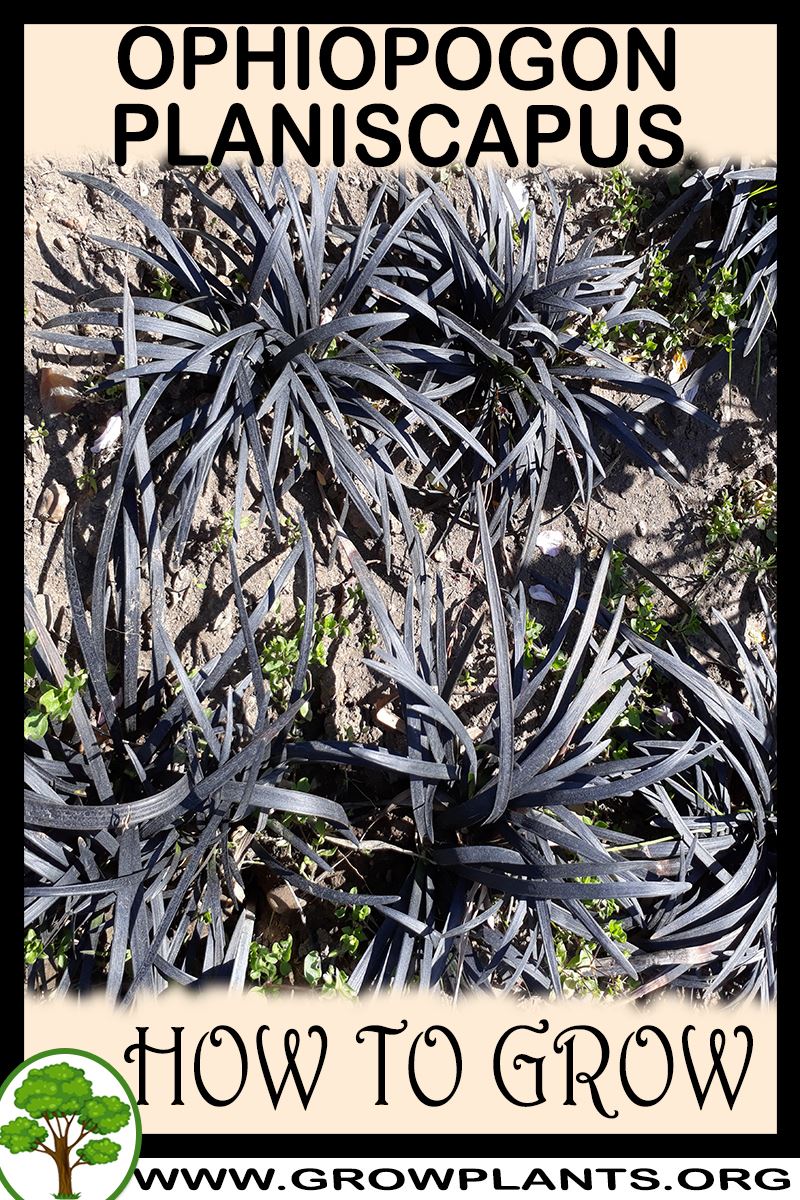
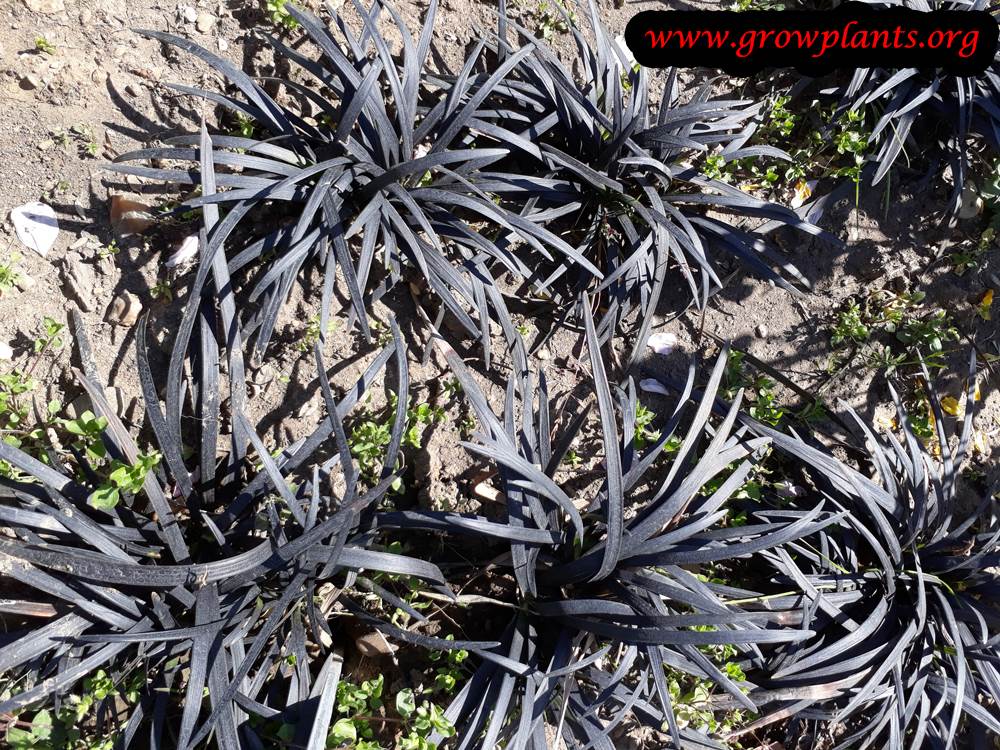
Overview: Ophiopogon planiscapus (black mondo grass) is a low, grass-like rhizomatous perennial about 10-20 cm (4-8 in) tall. It is evergreen and grown as an ornamental and groundcover, prized for its striking dark, near-black foliage.
Quick Specifications
| Specification | Attribute |
|---|---|
| Plant Type / Life Cycle | Perennial |
| Foliage Type | Evergreen |
| Mature Size | 10-20 cm (4-8 in) tall |
| Growth Rate | Fast to moderate |
| Root System | Rhizomatous |
| Toxicity | Non-toxic |
| Hardiness | USDA zones 6-10 |
Growth Form & Structure
- Height & Spread: 10-20 cm (4-8 in) tall in the ground; also grown in planters.
- Growth Habit & Form: Tufted, grass-like clumping groundcover that spreads by rhizomes to form dark mats.
- Lifespan & Maturity: Long-lived perennial that spreads steadily to knit together as groundcover.
Anatomy & Physical Features
- Leaves & Foliage: Narrow, linear, grass-like leaves in green to purple-black.
- Flower Characteristics: Small bell-shaped flowers in purple to white, borne in clusters atop the stems (see the Bloom guide).
Primary Uses & Landscape Value
- Functional & Ornamental Roles: Ornamental foliage groundcover and edging plant valued for its dark colour; suited to containers.
Care Guide: Planting, Soil & Watering
Overview: Black mondo grass is a tough evergreen groundcover that grows in moist, slightly acidic soil in sun to part shade. It spreads by rhizomes and needs steady but moderate moisture.
Quick Care Requirements
| Requirement | Ideal Condition |
|---|---|
| Planting Season | In spring, summer or autumn during the growing season |
| Growth Rate | Fast to moderate |
| Soil Type | Moist, well-drained soil |
| Soil pH | Slightly acidic |
| Water Need | Low to moderate — keep lightly and evenly moist |
Planting & Establishment
- Best Planting Season: Plant during the growing season, in spring, summer or autumn.
- How to Plant:
- Hole Preparation: Dig a hole as deep as and wider than the root and rhizome ball.
- Soil Amendments: Work in organic matter to hold moisture; a slightly acidic mix is preferred.
- Planting Depth: Set the crown level with the soil surface.
- Growth Speed & Expectations: Fast to moderate; it spreads steadily by rhizomes and can be aggressive, so allow space or contain it.
Soil, Watering & Drainage Care
- Soil Mix & Drainage Needs: A moisture-retentive but well-drained, slightly acidic soil keeps this groundcover healthy.
- Watering Schedule & Technique:
- Young / Newly Planted: Keep moist to establish.
- Established: Provide moderate, even moisture.
- Seasonal Adjustments: More in summer heat, less in winter.
Climate, Light & Hardiness
Black mondo grass is an evergreen groundcover suited to temperate, Mediterranean, and subtropical climates, growing well in full sun to half shade. It is reliably hardy through USDA zones 6–10.
Quick Climate Specifications
| Climate Zones | Temperate, Mediterranean, Subtropical |
|---|---|
| USDA Hardiness Zones | 6–10 |
| Frost Tolerance | Moderate to High |
| Light Conditions | Full Sun / Half Shade |
Sunlight & Light Exposure
Optimal Light Setup
Tolerates full sun to half shade; in hotter climates some afternoon shade helps keep the deep purple-black foliage color from bleaching.
Temperature Extremes & Hardiness
USDA Hardiness & Regional Limits
Hardy through USDA zones 6–10 as an evergreen groundcover, tolerating the winter cold of temperate gardens as well as the milder Mediterranean and subtropical end of its range.
Frost Sensitivity
Foliage may show some frost bronzing in the coldest part of its range but the grass-like clumps generally recover from the base.
Wind, Humidity & Microclimate
Microclimate Recommendations
As a low, spreading groundcover, it is well suited to edging and border microclimates where its foliage color contrasts with surrounding plantings.
Growing in Pots, Balconies & Indoors
Black mondo grass is a low, grass-like evergreen grown for its near-black foliage. The grower rates it as an outdoor plant rather than a houseplant, but it makes a handsome, tidy container and edging plant for a patio or balcony.
Quick Details
- Container Size: A few litres is plenty for this low, clumping plant; pot on as clumps fill out
- Indoor Suitability: Not a houseplant – grow it outdoors in pots or as edging
- Best Spot: Full sun to part shade – a little shade deepens the dark leaf colour
- Soil & Drainage: Free-draining, organic-rich mix with perlite for aeration
- Watering in Pots: Small to average water; keep lightly moist and never waterlogged – pots dry faster
Indoors & On the Windowsill
- Houseplant limits: The grower does not consider it an indoor plant; it prefers real outdoor light and a natural cool season, and tends to sulk in a warm room.
- Cool-season note: It is hardy and happiest left outside; there is no need to bring it in except in the very hardest frosts.
On a Balcony or Patio
- Light & wind: An easy, wind-tough plant for a sunny or part-shaded balcony; its low habit shrugs off exposure. Pots against warm walls dry fast, so check moisture regularly.
- Design use: Excellent as a dark edging in mixed containers or window boxes.
Choosing the Pot, Soil & Long-Term Care
- Pot & drainage: Use a pot with strong drainage holes; skip a standing-water saucer (or empty it promptly) so the roots never sit wet and rot. Terracotta breathes and dries fast; glazed or plastic holds moisture longer.
- Potting mix: A free-draining yet organic-rich mix – a quality potting mix or peat/coir blended with perlite or vermiculite for aeration.
- Feeding: Potted plants exhaust their soil faster than those in the ground – feed through the growing season, since nutrients leach out with every watering.
- Dividing: Every couple of years lift and divide the spreading clumps to refresh them and fill new pots.
Fertilizing & Feeding
A light feeder overall: modest, balanced feeding through the growing season supports steady growth and the plant’s dark ornamental foliage without pushing soft, washed-out leaves.
Quick Fertilizing Specs
| Feeding Level | Light feeder |
|---|---|
| Main Nutrient Priority | Balanced and modest, favoring dark foliage color over lush green growth |
| Best Feeding Period | The main growing season, tapering off as growth slows |
| Organic Options | Compost or well-rotted organic matter worked into the soil |
| Micronutrients | Usually adequate from soil and light feeding; correct iron only if new leaves lose their color |
| Soil pH | Prefers slightly acid soil |
| Reduce/Stop Feeding | Hold off on feeding through the cooler, slow-growth part of the year |
Feeding by Growth Stage
Establishment after planting or division
Support new plantings in rooting into slightly acid, moist soil.
| Nutrient direction | A balanced, light feeding to support root establishment without pushing soft, weak growth. |
|---|---|
| Timing | At planting or after dividing clumps, through the first period of new root growth. |
| Frequency | A light feeding at planting, then hold off until new growth confirms the plant has settled in. |
| Fertilizer types | A balanced complete garden fertilizer, applied lightly, Compost or well-rotted organic matter worked into the soil |
| Precautions | Keep soil consistently moist but well drained; avoid heavy feeding that can scorch tender new roots. |
Active growing season maintenance
Maintain steady growth and the plant’s deep foliage color without encouraging weak, washed-out leaves.
| Nutrient direction | A light, balanced feeding is generally enough; this plant rarely needs anything beyond modest, steady nutrition. |
|---|---|
| Timing | Through the main growing season while the plant is actively putting out new leaves. |
| Frequency | An occasional light feeding through the active growing season is usually sufficient. |
| Fertilizer types | A balanced complete garden fertilizer, applied sparingly, Light topdressing with compost |
| Precautions | Avoid rich, nitrogen-heavy feeding, which can favor plain green leaf color over the plant’s ornamental dark foliage. |
Cool-season growth slowdown
Let the plant rest through its slower cool-season period without pushing new growth it cannot support.
| Nutrient direction | None – withhold fertilizer while growth is slow. |
|---|---|
| Timing | Through the cooler part of the year when growth naturally slows. |
| Frequency | No feeding at this stage. |
| Fertilizer types | No feeding at this stage – allow the plant to rest through its slower season |
| Precautions | Do not fertilize during this slow period; feeding now mainly feeds weeds and risks tender growth that cold can damage. |
Nutrient Deficiency Signs & Corrections
New leaves emerge pale or yellowish instead of the plant’s usual dark color, with veins staying greener than the surrounding tissue.
| Possible causes | alkaline soil tying up iron, poorly drained or waterlogged soil, root stress from compacted soil |
|---|---|
| Appears first on | newest leaves |
| What to check | soil pH if testing is available, soil drainage and moisture level, root health for compaction or rot |
| Possible correction | Work in organic matter to gently acidify soil, improve drainage, and apply a chelated iron product per its label if needed. |
Overall growth slows and leaves look thin or pale rather than lush.
| Possible causes | low soil fertility, poor, depleted soil that has never been amended, competition from surrounding plants for nutrients |
|---|---|
| Appears first on | whole clump, most visible in older leaves |
| What to check | soil richness and organic matter content, how crowded the planting has become, overall feeding history |
| Possible correction | Apply a balanced complete fertilizer lightly and work organic matter into the soil. |
Clumps thin out, leaf tips brown, and the crown may soften or smell musty despite otherwise adequate care.
| Possible causes | waterlogged or poorly drained soil, overwatering, overly rich soil that stays soggy |
|---|---|
| Appears first on | the crown and older leaves |
| What to check | soil drainage, recent watering frequency, crown firmness |
| Possible correction | Improve drainage, let soil dry slightly between watering, and avoid heavy feeding until new healthy growth is visible. |
Pruning, Training & Seasonal Maintenance
Black mondo grass tolerates only light grooming, not true pruning – it is a low, clump-forming evergreen groundcover with no woody framework to train. The main goal is removing tatty or frost-damaged foliage and spent flower stems to keep the near-black strappy leaves tidy; the safest window is late winter into very early spring, just before new shoots emerge from the crown, so tired winter foliage is cleared without cutting into fresh growth. Grooming has no effect on flowering the following summer since blooms arise from the crown on new season’s growth.
Quick Pruning & Maintenance Specs
| Pruning Tolerance | Low – grooming only, not structural pruning |
| Primary Pruning Window | Late winter, just before new growth starts |
| Secondary Maintenance Window | Autumn – remove spent flower stalks and any damaged leaves |
| Typical Frequency | Once or twice a year |
| Main Objective | Remove dead/damaged leaves and spent flowers; keep the clump neat and contained |
| Young Plant Priority | Leave undisturbed while establishing; remove only clearly dead leaves |
| Mature Plant Priority | Annual tidy-up plus spread control, since the species is noted as an aggressive spreader |
| Best Tool Type | Precision snips or small hand shears |
| Avoid Heavy Pruning During | Active spring/summer growth flush |
Pruning by Plant Age & Size
Newly Established
Do not cut back a newly planted division; remove only leaves that are clearly dead or damaged from transplanting so the small crown can put its energy into rooting in.
Young / Formative
No structural training applies to a rhizomatous groundcover grass – there is no leader, cane, or vase shape to build. Formative work is limited to pinching out any stray runner that has rooted outside the intended bed line, since the species spreads aggressively by rhizome.
Mature / Established
Established clumps benefit from an annual tidy: shear away winter-worn or browned foliage before the spring flush, and edge back any rhizomes that have crept beyond the bed to keep the groundcover in bounds.
Seasonal Pruning Schedule
| Stage | Objective | Remove | Do Not Remove | Response / Impact |
| Dormant/Winter (late winter, pre-flush) | Refresh appearance before new leaves emerge | Browned, split or frost-damaged leaf tips; old flower stalks | Green, healthy foliage | New black-purple leaves emerge clean from the crown; no effect on summer bloom |
| Ongoing Sanitary (through the growing season) | Keep the clump presentable | Individual dead or damaged leaves as noticed | Spent flower stems until fully faded, since they carry ornamental dark berries | Minor, cosmetic only |
Special Growth to Remove
- Spent flower stems, once the purple-to-white summer blooms and their berries have fully finished.
- Dead or browned leaf blades, cut at the base rather than mid-blade.
- Wandering rhizomes/runners that have spread past the intended planting line – this species is documented as aggressive and will colonize adjacent beds if left unchecked.
Container & Small-Space Pruning
In a pot, mondo grass stays naturally compact, so pruning is limited to the same grooming as in-ground plants; there is no need for size-reduction cuts. Because the container restricts the rhizomes, periodic division (lifting and splitting the clump) does more to manage size than any pruning cut.
Tools
- Precision snips or small hand shears for individual leaf and flower-stem removal on a single clump.
- Hedge shears only when grooming a large mass planting used as groundcover, for speed across many clumps at once.
Tool Hygiene & Disease Risk
Routine – clean, sharp blades are sufficient. No transmissible disease risk is documented for this species that would require disinfecting between cuts.
Cut Placement & Technique
Cut individual dead leaves at the base near the crown rather than partway along the blade, which leaves a clean line instead of a ragged brown tip. When shearing a whole clump, cut just above the crown so new spring shoots are not damaged.
Heavy Pruning & Rejuvenation
Not typically needed. If a clump becomes congested or thin in the centre, hard cutting back to near ground level in late winter is tolerated and the plant will regrow fully from the crown by summer, but this is a rejuvenation option rather than routine practice.
Post-Pruning Care
Water normally after grooming; no extra feeding is needed since this is light maintenance, not stress-inducing hard pruning. Watch for slug and snail damage on fresh new leaves after a late-winter tidy.
Common Pruning Mistakes
- Shearing too early in autumn and removing flower stems before the ornamental berries have finished displaying.
- Leaving cut clippings sitting in the crown, where they can trap moisture against the base.
- Not controlling spreading rhizomes, letting the aggressive groundcover invade neighboring plantings instead of dividing or edging it back.
When NOT to Prune
Avoid cutting back hard during mid-summer heat or active spring growth flush, since this interrupts the current season’s fresh foliage; the low-stress late-winter window is safest.
Recommended Tools (by task)
- precision_snips – single-clump grooming, removing individual dead leaves or spent flower stalks with clean cuts at the base.
- hedge_shears – only for large mass groundcover plantings, for a quick, uniform late-winter tidy across many clumps at once.
Propagation Guide
Ophiopogon planiscapus is most reliably propagated by dividing its spreading rhizomatous clumps, which is quick and keeps the plant true to type; seed is possible but is not necessary and, for the dark-leaved forms grown as ornamentals, seedlings can lack the intense black-purple color of the parent. Division is an easy method suited to home gardeners.
Quick Propagation Specs
| Best Propagation Method | Rhizome/clump division |
| Alternative Methods | Seed |
| Propagation Difficulty | Easy |
| Seed True-to-Type | Variable – dark-leaved selections may not come fully true, with some seedlings reverting toward green |
| Vegetative True-to-Type | Yes |
| Best Propagation Season | Spring, within the plant’s spring–autumn planting window |
Rhizomes, Tubers, Bulbs & Corms
Lift and divide established clumps by separating sections of rhizome, each with several leaf fans and its own roots attached. Replant divisions promptly at the same depth as the parent clump and keep the soil moist until new growth resumes.
Growing from Seed
Seed is not necessary for this species since division is faster and preserves the plant’s appearance; it is mainly useful where large numbers of plants are wanted and exact leaf color is not critical.
Bloom & Flower Guide
Quick Details
- Bloom Season: Late spring into summer
- Flower Appearance: Small bell-shaped flowers in pale lilac to white, in short clusters on stems among the near-black foliage
- Edibility: Grown as an ornamental groundcover, not as an edible flower
Detailed Blooming Overview
Black mondo grass is grown chiefly for its striking dark, grassy foliage, but it does flower – short spikes of small, nodding bell-shaped blooms in pale lilac to white push up among the leaves in summer. The subtle flowers show up nicely against the near-black leaves and are followed by glossy black berries. It is a slow, clump-forming groundcover for the front of a bed.
Flower Characteristics
- Small, nodding bell-shaped flowers in lilac to white.
- Carried in short clusters on stems tucked among the foliage.
- Understated, and set off by the dark leaves.
Bloom Care & Thinning
- Pollination: Worked by small insects.
- Managing the bloom: No thinning needed; simply tidy old foliage in late winter to keep the clump looking fresh.
Pests, Diseases & Troubleshooting
Overview: Black mondo grass is a tough, evergreen, grass-like perennial (actually a lily relative, not a true grass) that is one of the more pest- and disease-free ground covers you can grow. Its few problems are night-feeding slugs and snails on soft new growth, occasional scale and mites, and root/crown rot where drainage is poor. Give it decent drainage and it looks after itself.
Quick Troubleshooting Overview
| Issue / Pest | Main Symptom | Primary Solution |
|---|---|---|
| Slugs & snails | Ragged, chewed young leaves; slime trails | Night patrols, iron-phosphate bait, barriers |
| Scale insects | Small bumps on leaf bases, sticky film | Wipe off, horticultural oil |
| Spider mites | Fine stippling in hot dry sites | Rinse foliage, raise humidity |
| Root / crown rot | Yellowing, mushy crown in wet soil | Improve drainage, reduce watering |
| Anthracnose leaf spot | Brown lesions on leaves | Airflow, remove affected leaves |
| Sun / poor colour | Scorched or greenish, weak black colour | Right light: sun to part shade for best colour |
Common Pests & Management
- Slugs & snails (Deroceras / Cornu spp.):
- Symptoms: The main pest – ragged notches and grazed tips on soft new leaves overnight, with tell-tale slime trails, especially in the damp shade this plant enjoys.
- Prevention & Control: Night patrols, beer traps, and grit or copper barriers; iron-phosphate pellets where pressure is high. Keep mulch and debris clear of the crowns.
- Scale insects (Coccidae / Diaspididae):
- Symptoms: Small brown or waxy bumps on leaf bases and crowns, with a little honeydew and sooty mould; uncommon but possible in sheltered plantings.
- Prevention & Control: Wipe off light infestations or smother with horticultural oil; divide and refresh congested clumps.
- Spider mites (Tetranychus spp.):
- Symptoms: Fine pale stippling and a dull look in hot, dry, exposed positions.
- Prevention & Control: Rinse the foliage and keep the root zone from drying out; rarely needs treatment beyond that.
- Root mealybugs / aphids (minor):
- Symptoms: Occasional root mealybug in containers (white specks among roots) or aphids on flower stems – both minor.
- Prevention & Control: Check roots at potting; a soil drench of soap or a repot resolves root mealybug, and aphids rinse off easily.
Diseases & Fungal Issues
- Root & crown rot (Pythium / Phytophthora / Sclerotium):
- Symptoms: Yellowing, softening and collapse of crowns in heavy, waterlogged soil – the most likely cause of loss for this otherwise durable plant.
- Treatment & Management: Plant in free-draining soil enriched with organic matter, avoid waterlogging, and don’t bury the crowns. Lift, divide and replant healthy sections if rot appears.
- Anthracnose / fungal leaf spot (Colletotrichum / Cercospora):
- Symptoms: Brown or tan lesions and blotches on the strappy leaves in warm, wet, crowded conditions.
- Treatment & Management: Improve airflow and spacing, remove affected leaves, and avoid overhead watering. Rarely needs fungicide.
Growing Difficulties & Abiotic Problems
- Poor black colour:
- Cause & Symptoms: In deep shade the foliage reverts toward green and the prized near-black colour fades; in harsh sun it can scorch.
- Correction Strategy: Give full sun to part shade – enough light for strong dark colour, with some afternoon shade in hot climates to prevent bleaching.
- Winter/scorch tip browning:
- Cause & Symptoms: Cold winds or drought brown the leaf tips; old foliage tatters over time.
- Correction Strategy: Comb out or trim tired foliage in early spring to refresh the clump; keep soil from drying completely.
- Slow spread / congestion:
- Cause & Symptoms: Clumps spread slowly by stolon and can thin or congest over years.
- Correction Strategy: Divide every few years in spring to rejuvenate and multiply plants.
What Helps — Products & Tools
This is a low-input plant: iron-phosphate slug bait, beer traps and copper barriers cover its main pest, and horticultural oil handles the rare scale or mite. The key to health is cultural – free-draining soil and the right light for colour – with fungal leaf issues managed by airflow and sanitation rather than sprays.