
Plant Profile & Key Characteristics
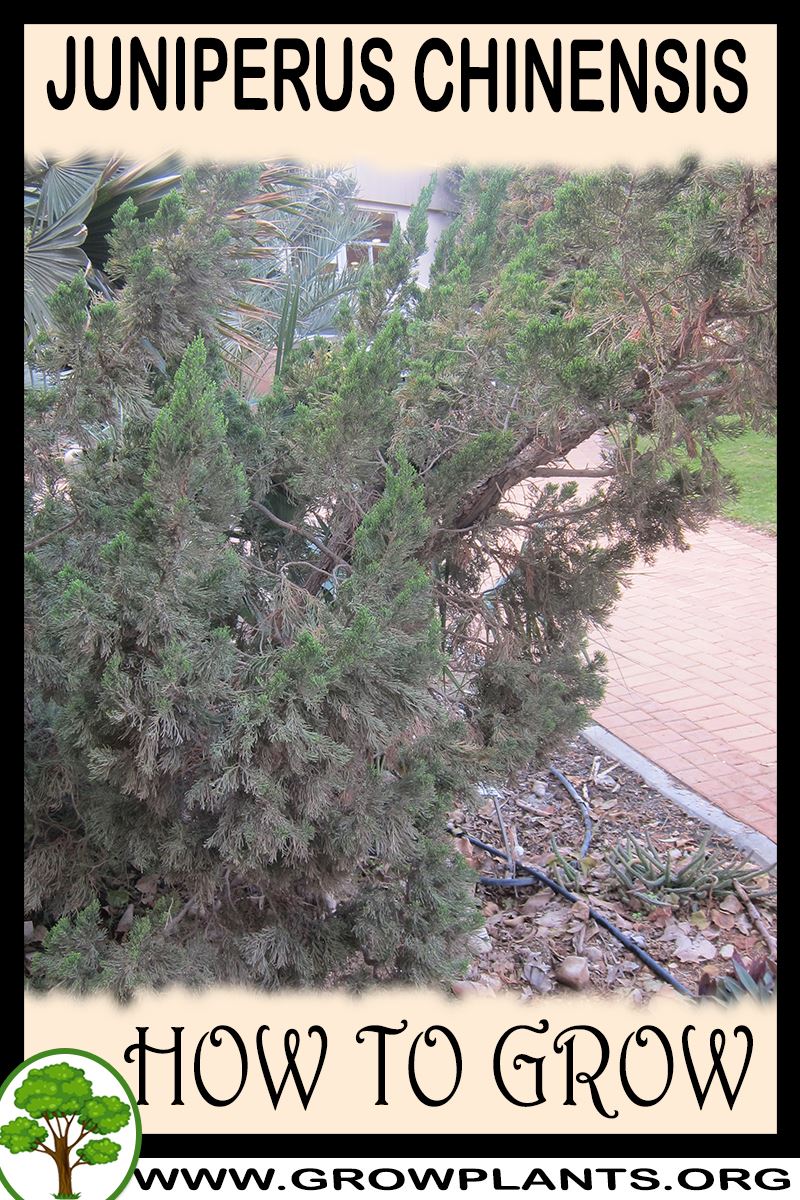
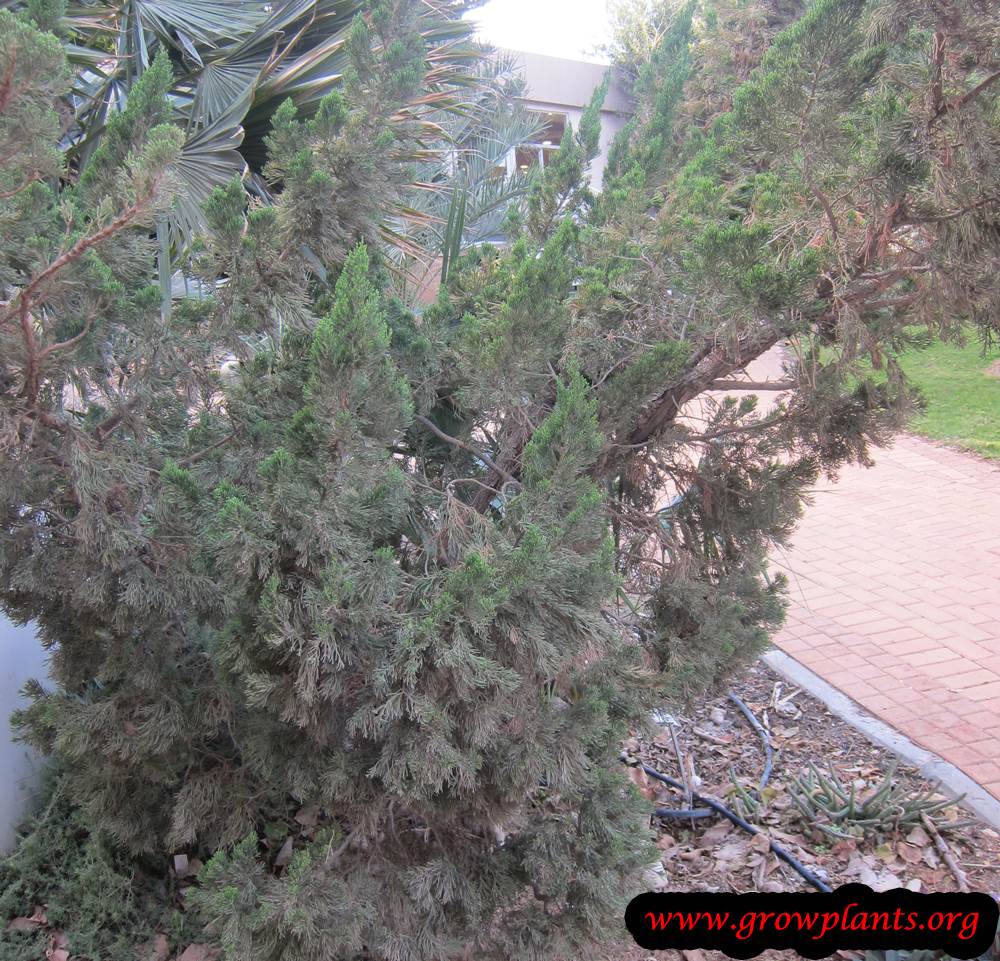
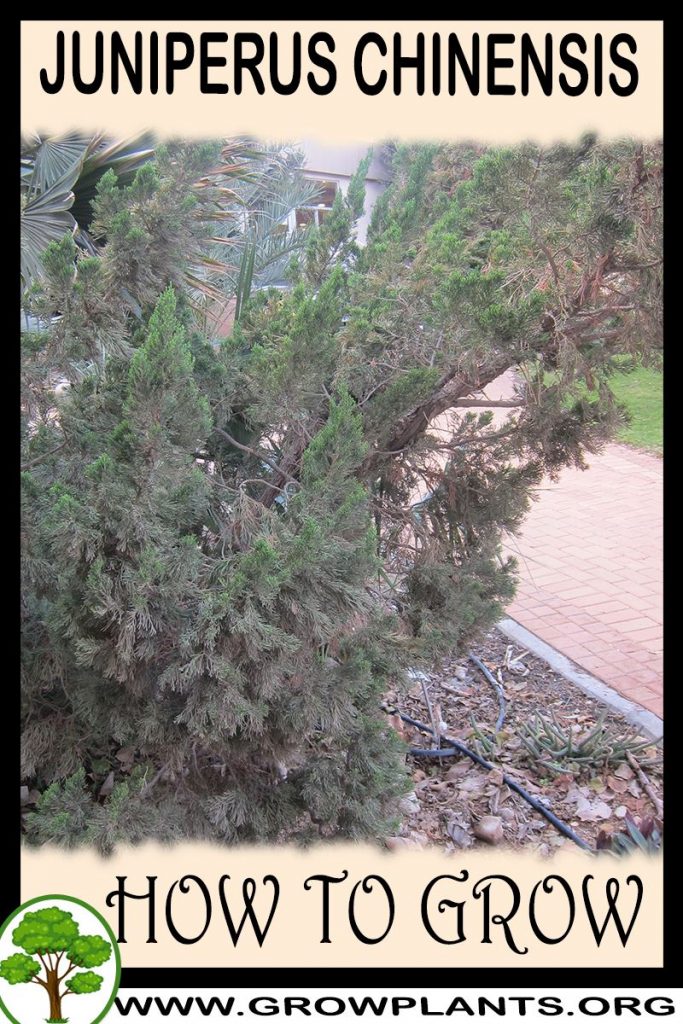
Overview: Juniperus chinensis (Chinese juniper) is an evergreen coniferous shrub or small tree 1–8 m (3–24 ft) tall, widely used for hedging, screening and bonsai. It is hardy and adaptable across temperate to subtropical climates.
Quick Specifications
| Specification | Attribute |
|---|---|
| Plant Type / Life Cycle | Perennial |
| Foliage Type | Evergreen (coniferous) |
| Mature Size | 1–8 m tall (3–24 ft) |
| Growth Rate | Moderate |
| Hardiness | USDA zones 4–10 |
Growth Form & Structure
- Height & Spread: A shrub or small tree 1–8 m (3–24 ft), variable in habit; also grown in containers and trained as bonsai.
- Growth Habit & Form: Evergreen conifer ranging from low and spreading to upright and columnar according to cultivar.
- Lifespan & Maturity: Long-lived evergreen conifer of moderate growth.
Anatomy & Physical Features
- Leaves & Foliage: Green to yellow (blue-tinged in some cultivars) foliage that is both needle- and scale-like, joined at the leaf base; aromatic.
- Flower Characteristics: Dioecious – small yellow male and female cones on separate plants in spring.
Primary Uses & Landscape Value
- Functional & Ornamental Roles: Ornamental hedge, screen and specimen conifer, and a classic subject for bonsai; note its aggressive, allelopathic tendencies.
Care Guide: Planting, Soil & Watering
Overview: This juniper is a tough, cold-hardy evergreen conifer for temperate and mediterranean climates that thrives in dry, well-drained soil and full sun to light shade. Once established it is notably drought tolerant, asking only for moderate water and, above all, sharp drainage.
Quick Care Requirements
| Requirement | Ideal Condition |
|---|---|
| Planting Season | In spring or summer |
| Growth Rate | Moderate |
| Soil Type | Dry, well-draining soil; tolerant of poor and stony ground |
| Water Need | Moderate while establishing, low once established (drought tolerant) |
Planting & Establishment
- Best Planting Season: Plant in spring or summer once the ground has warmed.
- How to Plant:
- Hole Preparation: Dig a hole about twice the width of the root ball and no deeper than it, loosening the sides so roots spread into the surrounding soil.
- Soil Amendments: Junipers prefer lean, sharply drained soil; on heavy ground add grit or coarse sand rather than rich organic matter.
- Planting Depth: Set the root ball so its top is level with the surrounding soil, keeping the root collar at grade and never mounding soil against the stem.
- Growth Speed & Expectations: Moderate; it fills out steadily into a dense evergreen and takes well to training, including bonsai.
Soil, Watering & Drainage Care
- Soil Mix & Drainage Needs: It needs excellent drainage above all and copes with poor, dry, stony soils; avoid heavy, wet ground, which causes root rot.
- Watering Schedule & Technique:
- Young / Newly Planted: Water regularly through the first season to settle the roots in, letting the topsoil dry between waterings.
- Established: Once established it needs little water, relying largely on rainfall; water deeply only in extended drought.
- Seasonal Adjustments: Reduce or stop watering over a cool, wet winter, and water occasionally during long summer dry spells.
Climate, Light & Hardiness
Chinese juniper is a very cold-hardy conifer for temperate, subtropical, and Mediterranean climates, thriving in full sun to half shade with well-drained soil and cool conditions.
Quick Climate Specifications
| Climate Zones | Temperate, Subtropical, Mediterranean |
|---|---|
| USDA Hardiness Zones | 4–10 |
| Frost Tolerance | High |
| Light Conditions | Full Sun to Half Shade |
Sunlight & Light Exposure
Optimal Light Setup
Full sun gives the densest, healthiest growth; half shade is tolerated but can lead to looser, less compact form.
Temperature Extremes & Hardiness
USDA Hardiness & Regional Limits
Hardy in USDA zones 4–10, tolerating severe winter cold without protection, as expected of a widely planted landscape conifer.
Wind, Humidity & Microclimate
Wind Tolerance
As a tough, woody landscape and hedging conifer, it generally tolerates exposed, windy sites well.
Growing in Pots, Balconies & Indoors
Chinese juniper is a hardy evergreen conifer the grower confirms is not a houseplant but grows well in containers – it is one of the most popular bonsai subjects. It must stay outdoors, however: like all junipers it needs full sun and a real winter cold period, so it cannot live indoors as a room plant.
Quick Details
- Container Size: Depends on style – a training or bonsai pot up to 20-40 L for a larger specimen
- Indoor Suitability: Not an indoor plant – a cold-hardy conifer that needs to overwinter outside
- Best Spot: Full sun to light shade, outdoors year-round
- Soil & Drainage: Well-drained, gritty mix; junipers dislike wet roots
- Watering in Pots: Average water; let the top dry between waterings
Indoors & On the Windowsill
- Not a houseplant: Despite being sold as indoor bonsai, junipers decline in a warm room – they need outdoor light and a cold winter rest.
- Grown as bonsai: Keep it on a bright, cold balcony or patio, not inside; it is only a houseplant in the sense of a container plant kept outdoors.
- Allelopathy: Its roots can suppress nearby plants, so grow it in its own pot.
On a Balcony or Patio
- Light & cold: Full sun and open air suit it; it needs winter cold to stay healthy, so never bring it indoors to ‘protect’ it.
- Wind & weight: It tolerates wind well; make sure a heavy trained specimen is stable on an exposed balcony.
Choosing the Pot, Soil & Long-Term Care
- Pot & drainage: A well-drained pot with strong drainage holes and no standing-water saucer to avoid root rot; terracotta breathes and dries faster, glazed or plastic holds moisture longer; junipers rot in soggy soil.
- Potting mix: Gritty and free-draining – add grit or bonsai substrate for sharp drainage.
- Feeding: Potted plants are fed more often than those in the ground, as watering steadily leaches nutrients from the mix – feed lightly through the growing season.
- Repotting: Refresh the mix and root-prune every couple of years in the cooler season, as done for bonsai.
Fertilizing & Feeding
A naturally light feeder – established junipers generally do best with minimal, occasional feeding rather than a regular fertilizing routine.
Quick Fertilizing Specs
| Feeding Level | Light feeder |
|---|---|
| Main Nutrient Priority | Light, low-nitrogen feeding – avoid rich or heavy applications |
| Best Feeding Period | Active growing season on an established plant |
| Soil pH | Prefers well-drained soil; tolerant of a range of pH |
| Reduce/Stop Feeding | Stop feeding through winter dormancy |
| Organic Options | A light compost topdressing suits this modest feeder well |
Feeding by Growth Stage
Establishment After Planting
Help new roots establish without forcing soft, weak growth
| Nutrient direction | A light, balanced feeding direction supports steady root establishment |
|---|---|
| Timing | During the first growing season after planting |
| Frequency | A light feeding as new growth begins is usually enough while roots establish |
| Fertilizer types | A diluted, balanced, general-purpose or conifer-formulated fertilizer |
| Precautions | Avoid heavy feeding at planting – this conifer establishes best with modest, steady care rather than a rich start |
Established Plant Maintenance
Maintain steady, healthy growth on an established shrub, tree-form specimen, or bonsai planting
| Nutrient direction | Keep feeding light – this conifer is naturally a light feeder and performs best without excess nitrogen |
|---|---|
| Timing | During the active growing season once the plant is established |
| Frequency | This conifer rarely needs feeding – an occasional light feeding is usually plenty, especially for hedge or landscape specimens |
| Fertilizer types | A light, balanced, general-purpose or conifer-formulated fertilizer; specialty bonsai feeding practices apply for plants trained as bonsai |
| Precautions | Avoid heavy nitrogen feeding, which produces soft, leggy growth more prone to pest and disease problems, and can distort form on hedge or bonsai specimens |
Winter Dormancy
Let the plant rest through the coldest part of the year without pushing new growth
| Nutrient direction | None – withhold fertilizer through the dormant season |
|---|---|
| Timing | Winter, while growth is paused |
| Frequency | No feeding at this stage |
| Fertilizer types | No feeding at this stage – withhold fertilizer until active spring growth resumes |
| Precautions | Do not fertilize during winter dormancy |
Nutrient Deficiency Signs & Corrections
New growth at branch tips turns yellow to almost white while older foliage stays green
| Possible causes | High soil pH limiting iron availability, Poorly drained or compacted soil restricting root function, Root stress from recent transplanting |
|---|---|
| Appears first on | Newest growth at branch tips first |
| What to check | Soil pH and drainage, Recent transplant stress, Whether yellowing is interveinal or uniform |
| Possible correction | Correct pH toward a more favorable range, improve drainage, or apply a chelated iron product per its label |
Growth is unusually soft, leggy, and pale despite regular feeding, with branch tips prone to dieback
| Possible causes | Excess nitrogen feeding producing weak, disease-prone growth, Poor drainage stressing the root system, Pest or fungal issues taking hold on weakened, overfed growth |
|---|---|
| Appears first on | Newest, softest shoots first |
| What to check | Recent feeding rate and frequency, Soil drainage, Signs of pests or fungal issues on affected shoots |
| Possible correction | Cut back or stop supplemental feeding and address any underlying drainage or pest issues |
Foliage yellows or browns in patches or on whole branches rather than following a uniform pattern
| Possible causes | Root stress from waterlogged or compacted soil, Root damage from construction, digging, or drought, Localized pest or disease issues rather than a nutrient shortfall |
|---|---|
| Appears first on | Whole branches or sectors of the plant, often unevenly |
| What to check | Soil drainage and compaction, Recent digging, construction, or drought stress near the roots, Whether the pattern is uniform (more nutrient-like) or patchy (more root/disease-like) |
| Possible correction | Address the underlying root stress (drainage, compaction, drought) first; fertilizer will not correct symptoms caused by root damage |
Pruning, Training & Seasonal Maintenance
Chinese juniper tolerates regular shaping well as long as one hard rule is respected: like most conifers, it does not resprout from bare, leafless (brown) wood, so every cut must stay within the green foliage zone. Light shaping can be done through most of the year, but the single most important pruning decision comes early – deciding whether to grow it as a single-leader tree or a multi-stemmed shrub – since that shapes every structural cut afterward. This species is grown both as a clipped hedge and as bonsai material, and the pruning approach differs sharply between the two uses.
Quick Pruning & Maintenance Specs
| Pruning Tolerance | Moderate (high for foliage tip work; effectively zero for cutting into bare old wood) |
| Primary Pruning Window | Year-round for light shaping; avoid pruning wet foliage |
| Typical Frequency | Several light shaping sessions a year for hedges/bonsai; occasional tidy for specimen plants |
| Main Objective | Maintain the chosen tree or shrub form; keep foliage dense within its green zone |
| Young Plant Priority | Decide single-leader tree vs. multi-stem shrub form early, then train toward it |
| Mature Plant Priority | Maintain density and outline without ever cutting back into bare wood |
| Best Tool Type | Hedge shears for clipped hedges; precision snips/bypass secateurs for bonsai and specimen shaping; pruning saw for removing whole branches |
| Avoid Heavy Pruning During | Wet weather (raises fungal twig-blight risk); never into bare, leafless wood at any time |
Pruning by Plant Age & Size
Newly Established
Remove only damaged growth while the plant establishes; this is the point to commit to a single leader if a tree form is wanted, or to select several main stems for a shrub form, since the plant’s own facts note this decision is best made early.
Young / Formative
For a tree form: select and maintain one dominant leader, removing competing vertical shoots. For a shrub or hedge form: encourage multiple stems and shear or pinch tips to build density. For bonsai: use selective pinching and wiring of young, flexible green shoots to establish the intended silhouette.
Mature / Established
Maintain the established outline with regular light shearing (hedges) or selective tip and interior thinning (specimens/bonsai), always working within live green growth.
Structural Pruning & Training
Once the tree-vs-shrub form is set, remove any growth that competes with it – a second leader on a tree form, or an overly dominant single stem on a shrub form. Thin dense interior growth on specimen or bonsai plants to let light reach inner foliage and reduce the risk of dieback from shading, but do so gradually, since removing too much green cover at once can expose previously shaded interior branches that may not have enough foliage left to sustain them.
Container & Small-Space Pruning
For bonsai and other container specimens, shaping relies on frequent light pinching of soft new tip growth rather than infrequent hard cuts, since – as with all junipers – there is no way to renew a container specimen that has been cut back into bare wood.
Tools
- Hedge shears, but only where Chinese juniper is grown and maintained as a clipped hedge.
- Precision snips or bypass secateurs for selective shaping cuts on specimen and bonsai-trained plants.
- Pruning saw for removing a whole unwanted branch on a larger specimen or tree-form plant.
Tool Hygiene & Disease Risk
Increased – junipers are susceptible to fungal twig blights (such as Phomopsis and Kabatina blight) that can enter through fresh pruning wounds, especially in wet conditions. Prune in dry weather where possible, and clean tools between plants if any blighted or dead twig tissue has been cut.
Cut Placement & Technique
Always cut back to a point within live green foliage – never into the leafless brown wood behind it, since junipers lack the dormant buds needed to resprout from bare stems. When removing a full branch, cut back to its point of origin rather than leaving a bare stub.
Heavy Pruning & Rejuvenation
Not tolerated: unlike many broadleaf shrubs, Chinese juniper cannot be rejuvenated by cutting back hard into old wood – any branch cut back past its green foliage will not resprout and should be considered permanently removed. Keep shaping incremental and stay within the green zone rather than attempting a drastic renewal cut.
Post-Pruning Care
Water normally; avoid pruning right before or during prolonged wet weather to reduce blight infection risk through fresh cuts. No extra feeding is needed after routine shaping.
Common Pruning Mistakes
- Cutting back into bare, leafless wood expecting it to resprout – it will not, leaving a permanent gap.
- Letting a young plant grow without deciding on a tree or shrub form, then trying to correct the structure later once branches have thickened.
- Shearing during or right after rain, which increases the chance of fungal twig blight entering fresh cuts.
When NOT to Prune
Avoid pruning during or immediately after wet weather, when foliage is damp and fungal twig-blight spores are most likely to infect fresh cuts.
Recommended Tools (by task)
- hedge_shears – routine clipping, only for plants specifically maintained as a formal hedge.
- precision_snips – fine pinching and shaping of soft green tip growth on bonsai and specimen plants.
- pruning_saw – removing a whole unwanted branch on a larger tree-form specimen.
- blade_disinfectant – wiping tools between cuts when removing any blighted or dead twig tissue, given this species’ documented susceptibility to fungal twig blight.
Pruning Troubleshooting
| Problem | Possible Cause | What to Check | Corrective Action |
| Permanent bare patch after a cut | Cut made into leafless brown wood past the green foliage zone | Confirm whether any green foliage remains on the cut branch | None – junipers do not resprout from bare wood; the gap must grow out from surrounding branches or the branch removed entirely |
| Browning or dieback of individual twigs after pruning | Fungal twig blight entering through fresh wounds, especially after wet weather | Inspect cut ends and nearby twigs for dieback beyond the pruning cut itself | Remove affected twigs back to healthy green growth, disinfect tools between cuts, and avoid pruning in wet conditions going forward |
Propagation Guide
Juniperus chinensis can be grown from seed, but seed has a hard coat plus embryo dormancy that often makes germination slow and irregular, sometimes not occurring until the following year; semi-hardwood or hardwood cuttings taken in autumn to winter are a commonly used, more practical alternative that roots reasonably well and avoids this wait. As this is the straight species rather than a named cultivar, seed reproduces it reliably, though open-pollinated seedlings show the normal variation typical of the species. Overall difficulty is moderate.
Quick Propagation Specs
| Best Propagation Method | Semi-Hardwood/Hardwood Stem Cuttings |
| Alternative Methods | Seed |
| Propagation Difficulty | Moderate |
| Seed True-to-Type | Usually true-to-type, with normal open-pollinated variation |
| Vegetative True-to-Type | Yes |
| Best Propagation Season | Cuttings: autumn to winter. Seed: sown in autumn for natural winter stratification, or after artificial stratification |
| Cutting Rooting Time | Often several weeks to a few months |
| Seed Germination Time | Slow and often irregular; seedlings may not appear until the following year |
Growing from Seed
Seed Handling & Viability
Juniperus chinensis is dioecious, with separate male and female plants, so viable seed only forms in the fleshy cones (‘berries’) of female plants growing near a male for pollination.
Dormancy & Pre-Sowing Treatment
Seed typically has a hard coat combined with embryo dormancy and often needs an extended period of warm followed by cold stratification (or scarification of the coat) to germinate reliably; without this, germination can be slow and spread out over more than one season.
Sowing Season
Sow outdoors in autumn to allow natural winter stratification, or sow after artificial stratification for spring germination.
Germination Time
Slow and often irregular; seedlings may not appear until the following year.
Seedling Care
Grow seedlings on in a nursery bed or pots for a couple of years before planting them in their final position.
Stem Cuttings
Cutting Type
Semi-hardwood to hardwood cuttings taken from the current season’s growth.
Best Timing
Autumn to winter, once growth has firmed.
Cutting Preparation
Take cuttings roughly 10–15cm (4–6 inches) long, stripping the needles from the lower portion.
Rooting Setup
A well-drained, gritty cutting mix kept consistently moist without waterlogging, matching this plant’s preference for well-drained soil.
Rooting Hormone
Beneficial – rooting hormone often improves and speeds rooting in conifers like this one, though it is not strictly required.
Rooting Time
Several weeks to a few months, as conifer cuttings root slowly.
Bloom & Flower Guide
Quick Details
- Cone Season: Spring, when the male plants shed pollen
- Appearance: Tiny yellow male pollen cones and small green female cones – not true flowers
- Edibility: Not applicable as a flower; Chinese juniper bears cones, and the ripe blue-black female cones are the aromatic “juniper berries” used elsewhere
Detailed Blooming Overview
Chinese juniper is a conifer, so it does not produce true flowers at all – it reproduces with cones. Plants are usually dioecious, meaning male and female cones are carried on separate specimens. In spring the male plants release clouds of yellow pollen from small pollen cones, while female plants bear inconspicuous green cones that later ripen into the fleshy, glaucous blue seed cones commonly called juniper berries. Pollination is by wind, so there are no petals, scent or nectar to attract insects.
Cone Characteristics
- Male (pollen) cones: tiny and yellow, releasing pollen in spring.
- Female (seed) cones: small and green, ripening over one to two years to a berry-like blue-black.
- Male and female cones are normally on separate plants.
Cone Care & Notes
- Pollination: Entirely wind-borne; the spring pollen can be a notable allergen from male plants.
- Managing it: Nothing is needed at cone stage; junipers are simply trimmed to shape as a hedge or bonsai.
Pests, Diseases & Troubleshooting
Overview: Junipers are tough, drought-hardy conifers, but in the wrong conditions they face chewing and sucking pests (bagworms, spider mites, scale, webworm) and a distinctive set of diseases – the Gymnosporangium rusts that shuttle between junipers and apples/hawthorns, plus Phomopsis and Kabatina tip blights. Good air movement, sun, sharp drainage and prompt removal of infected wood prevent most trouble.
Quick Troubleshooting Overview
| Issue / Pest | Main Symptom | Primary Solution |
|---|---|---|
| Bagworms | Spindle-shaped bags of foliage; branches stripped | Hand-pick bags in winter; Bt on young larvae |
| Spider mites | Fine stippling, bronzing, webbing in dry heat | Hose foliage; horticultural oil / miticide |
| Juniper scale | White then dark bumps on needles, yellowing | Dormant/horticultural oil at crawler stage |
| Juniper webworm | Webbed, browning shoot tips | Prune out webs; Bt or spinosad on larvae |
| Cedar-apple & related rusts | Orange gelatinous galls; on nearby apples too | Prune galls; separate from rosaceous hosts |
| Tip blights | Browning shoot tips dying back | Prune in dry weather; airflow; copper if severe |
Common Pests & Management
- Bagworms (Thyridopteryx ephemeraeformis):
- Symptoms: Small spindle-shaped bags covered in bits of foliage hang from the branches; larvae inside strip needles, and heavy infestations can defoliate and kill sections of an evergreen that does not readily re-leaf.
- Prevention & Control: Hand-pick and destroy the bags through autumn and winter to remove overwintering eggs, encourage birds and parasitic wasps, and spray Bacillus thuringiensis while larvae are young and still feeding outside the bag.
- Spruce spider mite (Oligonychus ununguis):
- Symptoms: Needles become finely stippled, dull and bronzed, with fine webbing; a cool-season mite that also flares in hot dry spells, causing interior browning and thinning.
- Prevention & Control: Rinse the foliage forcefully to dislodge mites, avoid dusty drought stress, and treat with horticultural oil or a miticide; check with a white-paper tap test to time sprays.
- Juniper scale (Carulaspis juniperi):
- Symptoms: Tiny round white-to-grey then darkening scales encrust the needles; foliage yellows, growth stalls, and the plant looks off-color and stunted.
- Prevention & Control: Apply horticultural or dormant oil timed to the crawler stage to smother them, prune out heavily encrusted wood, and keep trees vigorous; repeat as crawlers emerge.
- Juniper webworm (Dichomeris marginella):
- Symptoms: Shoot tips webbed together with browning, dead needles bound in silk; young larvae mine needles before webbing foliage, disfiguring especially upright junipers.
- Prevention & Control: Prune out and destroy the webbed tips, and spray Bacillus thuringiensis or spinosad on young larvae before they are protected inside dense webbing.
- Aphids & tip midge (Cinara / Oligotrophus spp.):
- Symptoms: Sticky honeydew and sooty mold from aphids, or swollen, distorted browning shoot tips from tip-midge larvae.
- Prevention & Control: Hose off aphids and conserve their predators; prune out and destroy midge-galled tips; treat with horticultural oil only where damage is significant.
Diseases & Fungal Issues
- Gymnosporangium rusts (cedar-apple & kin) (Gymnosporangium spp.):
- Symptoms: Brown woody galls on juniper twigs that, in wet spring weather, swell into bright orange gelatinous horns; the fungus needs an alternate rosaceous host (apple, crabapple, hawthorn, quince) to complete its cycle, spotting their leaves and fruit.
- Treatment & Management: Prune out and destroy the galls before they gelatinize, avoid planting susceptible junipers close to apples/hawthorns, choose resistant cultivars, and use preventive fungicide on high-value hosts rather than the juniper itself.
- Phomopsis tip blight (Phomopsis juniperovora):
- Symptoms: New shoot tips turn dull green then reddish-brown and die back; small black fruiting bodies form on dead tissue, worst on young, soft growth in wet weather.
- Treatment & Management: Prune out blighted tips well below the damage in dry weather, sterilize tools between cuts, improve airflow, avoid overhead watering, and apply copper or an appropriate fungicide to protect flushing growth in wet springs.
- Kabatina tip blight (Kabatina juniperi):
- Symptoms: Tips die back in a similar way to Phomopsis but typically on year-old wood in late winter/early spring, often entering through wounds; a grey band marks the junction of live and dead tissue.
- Treatment & Management: Prune out affected tips, avoid mechanical and winter injury, maintain vigor and drainage; fungicides are of limited help since it enters through wounds – sanitation is key.
- Phytophthora root rot (Phytophthora spp.):
- Symptoms: Overall yellowing, thinning and dieback with root and crown decay in heavy, wet, poorly drained soils.
- Treatment & Management: Plant on well-drained sites or mounds, do not overwater, keep mulch off the trunk, and remove plants killed by root rot; junipers demand sharp drainage.
Growing Difficulties & Abiotic Problems
- Winter burn / desiccation:
- Cause & Symptoms: Foliage browns, especially on the windward and sunny sides, when frozen soil prevents roots replacing water lost from the needles in cold, drying winds.
- Correction Strategy: Water well before the ground freezes, mulch the roots, shelter from harsh winter wind, and site plants out of exposed frost-and-wind funnels.
- Interior needle browning:
- Cause & Symptoms: Older inner needles naturally brown and shed, but excessive interior browning also signals shade, poor airflow or mite/blight stress.
- Correction Strategy: Some seasonal shedding is normal; improve light and airflow, shake or blow out dead needles, and rule out mites and tip blight if it is heavy.
- Root rot from wet soil:
- Cause & Symptoms: Yellowing and decline where junipers sit in heavy, poorly drained or over-irrigated ground.
- Correction Strategy: Give them the sharp drainage and full sun they need; raise beds, amend heavy soil with grit, and cut back watering.
What Helps – Products & Tools
Juniper management is cultural first: full sun, sharp drainage, airflow and prompt pruning of infected or webbed wood in dry weather. Horticultural or dormant oil handles scale and mites, Bacillus thuringiensis or spinosad targets bagworm and webworm larvae, and copper fungicide protects new growth from Phomopsis tip blight. For the Gymnosporangium rusts, separate junipers from apples and hawthorns and remove galls rather than spraying the juniper.