Plant Profile & Key Characteristics
Overview: Epimedium alpinum (barrenwort) is a low, spreading perennial groundcover 10-30 cm (4-12 in) tall, with heart-shaped leaves and airy sprays of small flowers. Evergreen to deciduous and drought tolerant, it is valued for dry shade.
Quick Specifications
| Specification | Attribute |
|---|---|
| Plant Type / Life Cycle | Herbaceous perennial |
| Foliage Type | Evergreen or deciduous |
| Mature Size | 10-30 cm (4-12 in) tall, spreading |
| Growth Rate | Moderate |
| Root System | Rhizomatous |
| Hardiness | USDA zone 4-9 |
Growth Form & Structure
- Height & Spread: 10-30 cm (4-12 in) tall, spreading by rhizomes to form a groundcover; also suited to containers.
- Growth Habit & Form: Low clumping-to-spreading perennial with wiry stems and rhizomatous roots.
- Lifespan & Maturity: Long-lived perennial.
Anatomy & Physical Features
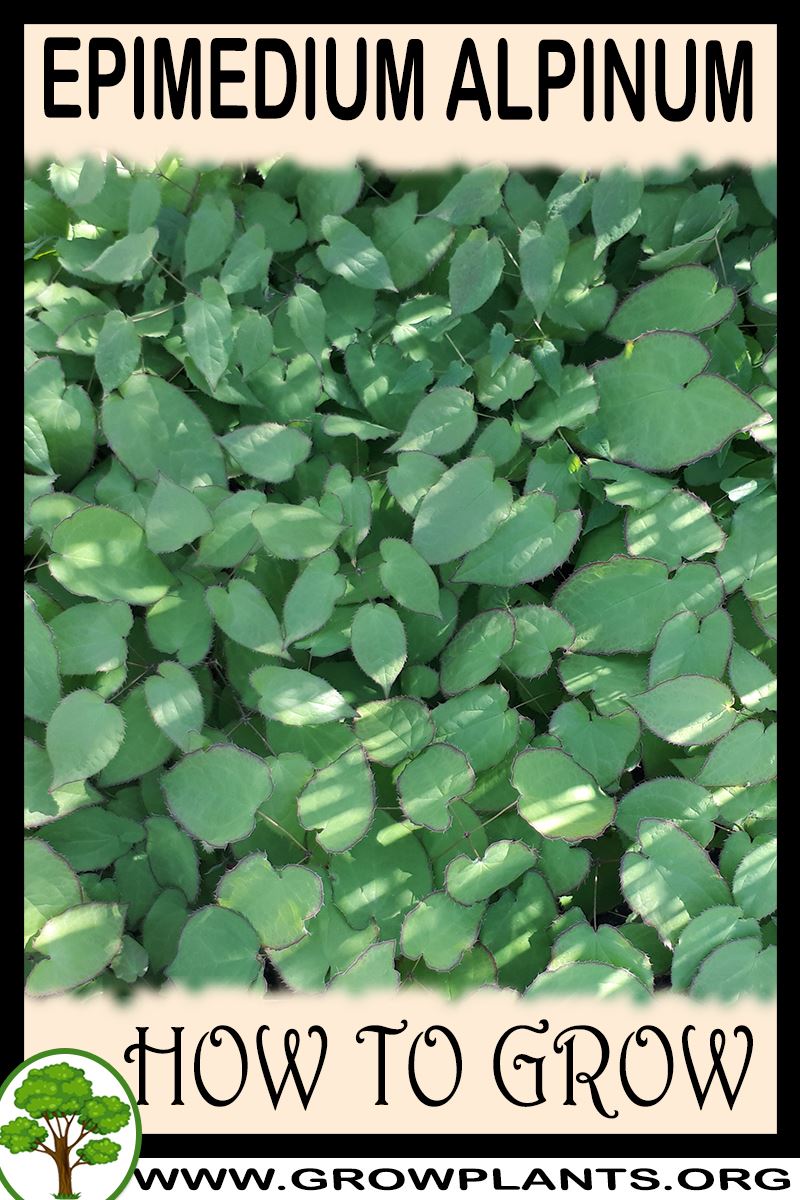
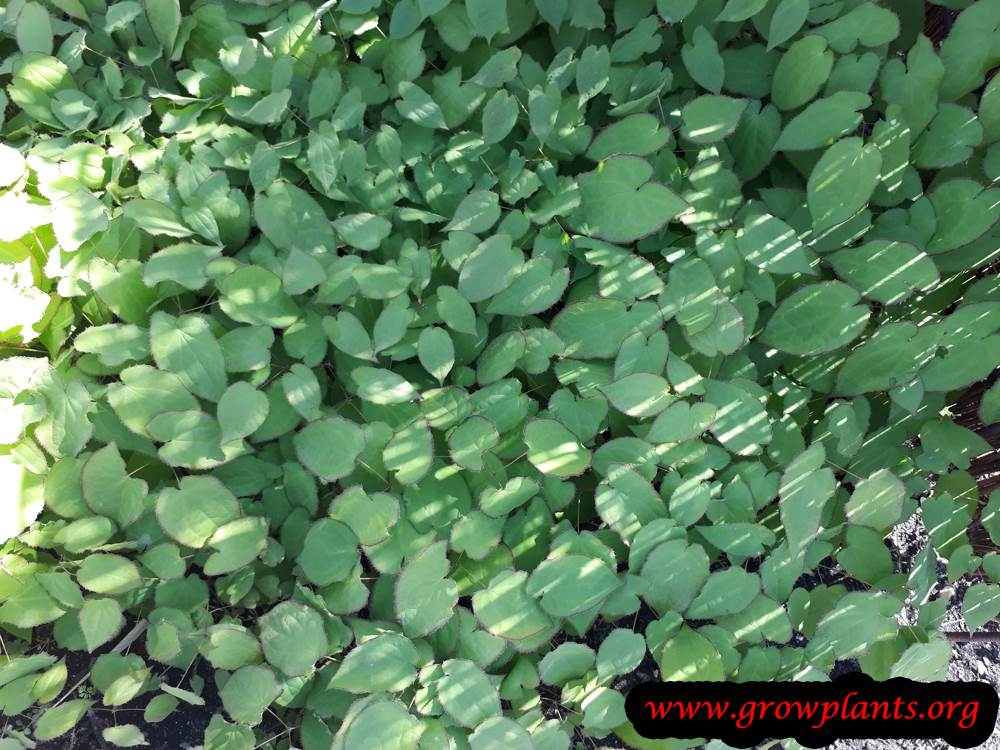
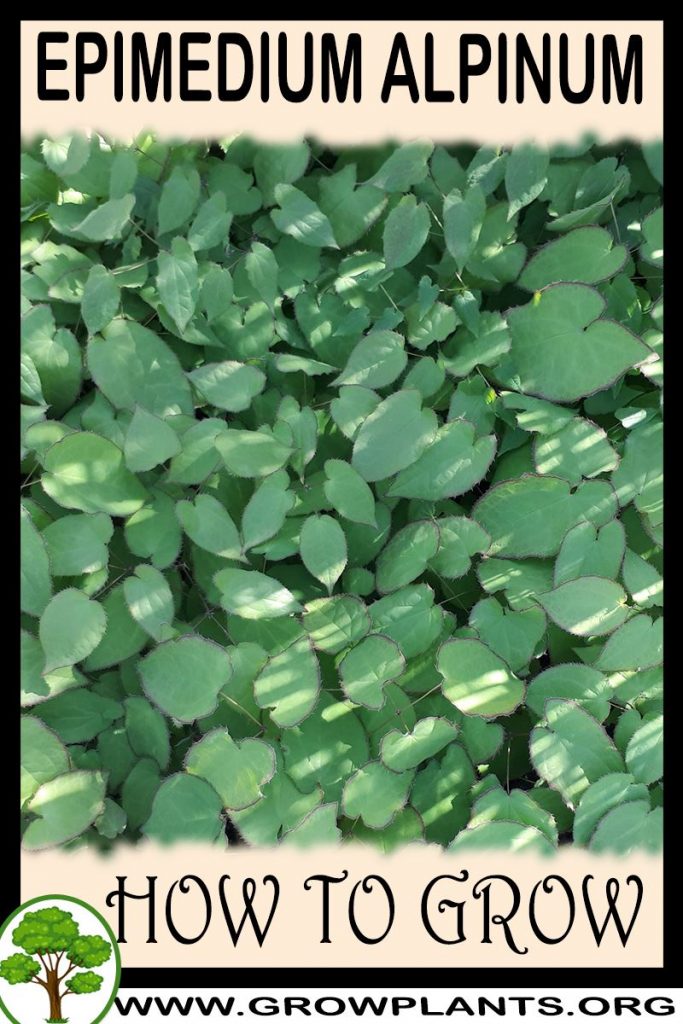
- Leaves & Foliage: Heart-shaped green leaves, sometimes dark-margined.
- Flower Characteristics: Small cross-shaped flowers in red, orange or purple with a white or yellow centre (full detail in the Bloom guide).
Primary Uses & Landscape Value
- Functional & Ornamental Roles: Grown as a drought-tolerant ornamental groundcover for shade; suited to containers and indoors.
Care Guide: Planting, Soil & Watering
Overview: Epimedium alpinum (barrenwort) is a tough, shade-loving ground cover that thrives in well-drained, humus-rich soil beneath trees and shrubs. Once established it is notably drought-tolerant, needing only modest water.
Quick Care Requirements
| Requirement | Ideal Condition |
|---|---|
| Planting Season | Warm season (spring to summer) |
| Growth Rate | Moderate |
| Soil Type | Well-drained, humus-rich (tolerates dry shade) |
| Water Need | Low to moderate – let the soil dry slightly between waterings |
Planting & Establishment
- Best Planting Season: Plant in spring or summer while the soil is warm.
- How to Plant:
- Hole Preparation: Dig a hole about twice as wide as the root ball and the same depth, loosening the soil so roots spread into shady ground.
- Soil Amendments: Blend in leaf mould or compost to enrich and open the soil, improving drainage in the root zone.
- Planting Depth: Set the crown level with the soil surface and mulch lightly.
- Growth Speed & Expectations: Growth is moderate; clumps spread steadily by rhizomes into weed-smothering cover.
Soil, Watering & Drainage Care
- Soil Mix & Drainage Needs: It needs humus-rich, well-drained soil that never stays soggy; good drainage matters more than constant moisture.
- Watering Schedule & Technique:
- Young / Newly Planted: Water regularly through the first season to establish, letting the surface dry slightly between waterings.
- Established: Water sparingly once settled; established plants tolerate dry shade well.
- Seasonal Adjustments: Water during summer dry spells and little in cool months.
Climate, Light & Hardiness
Like its relative Epimedium perralchicum, this shade-loving, drought-tolerant ground cover from subtropical and temperate climates is cold hardy and thrives in half to full shade.
Quick Climate Specifications
| Climate Zones | Subtropical, Temperate |
|---|---|
| USDA Hardiness Zones | 4–9 |
| Frost Tolerance | High |
| Light Conditions | Half Shade to Full Shade |
Sunlight & Light Exposure
Optimal Light Setup
Prefers half to full shade, typical of a woodland-floor ground cover.
Shade & Heat Management
Shade helps protect foliage color and prevents leaf scorch, especially in the warmer, subtropical part of its range.
Best Exposure / Orientation
Under trees or on the shaded, north-facing side of structures.
Temperature Extremes & Hardiness
USDA Hardiness & Regional Limits
Genuinely cold hardy across zones 4–9.
Cold Damage & Winter Protection
Reliably winter hardy within its range; evergreen foliage may be damaged by the coldest winters, in which case the plant behaves as deciduous and resprouts in spring.
Frost Sensitivity
Tolerates hard frost well; old foliage can look tattered after a hard winter even though the plant itself survives.
Extreme Heat Tolerance
Moderate; benefits from shade in hot subtropical summers.
Wind, Humidity & Microclimate
Humidity Preferences
Adaptable, tolerating both the humidity of subtropical climates and drier temperate summers.
Dry-Air Tolerance
Good; tolerates dry spells once established.
Rainfall & Seasonal Moisture
Tolerates a range of rainfall, though it looks its best with occasional moisture during dry spells.
Growing in Pots, Balconies & Indoors
Epimedium alpinum (barrenwort) is a tough, shade-loving groundcover, and the grower confirms it grows both indoors and in pots. Its low, spreading habit and tolerance of shade make it an easy container and interior foliage plant.
Quick Details
- Container Size: 5-10 L, wide and shallow suits its spreading roots – it stays low at 10-30 cm
- Indoor Suitability: A houseplant per the grower – an easy, shade-tolerant foliage plant
- Best Spot: Half to full shade; ideal for a cooler, lower-light spot indoors or a shady corner
- Soil & Drainage: Free-draining, humus-rich potting mix
- Watering in Pots: Keep lightly moist; water when the surface dries and avoid both drought and waterlogging
Indoors & On the Windowsill
- As a houseplant: The grower confirms indoor growing. Its shade tolerance is a real advantage – it copes with the modest light of most rooms as a low foliage plant.
- Windowsill: A north or east sill out of direct sun keeps the foliage fresh; hot sun scorches the leaf edges.
- Cool rest: A hardy perennial, it welcomes a cooler winter; it can also spend the warm months outdoors in shade.
On a Balcony or Patio
- Light & shelter: Perfect for a shady, sheltered balcony corner; keep it out of strong sun and drying wind.
- Practicalities: Low and undemanding, it makes tidy underplanting around taller potted shrubs; ensure runoff drains freely.
Choosing the Pot, Soil & Long-Term Care
- Pot & drainage: A pot with strong drainage holes; skip a standing-water saucer, which invites root rot. Terracotta breathes and dries faster (good for plants that hate wet feet); glazed or plastic pots hold moisture longer.
- Potting mix: Well-aerated potting mix – a peat-free or peat/coir blend opened up with perlite or vermiculite.
- Feeding: Potted plants need feeding more often than those in the ground, as watering leaches nutrients away; a balanced liquid feed through the growing season is enough.
- Repotting: Refresh the top of the mix each year and pot on or divide every couple of years, lightly trimming roots and old growth to keep it vigorous.
Fertilizing & Feeding
Epimedium alpinum is a low-demand woodland groundcover that grows well with only light, infrequent feeding.
Quick Fertilizing Specs
| Feeding Level | Light – an undemanding shade groundcover that needs little supplemental feeding. |
|---|---|
| Best Feeding Period | Early-to-mid spring, as new growth and flowers emerge. |
| Soil pH | Adaptable to a range of well-drained woodland soils without special adjustment. |
| Organic Options | Leaf mold or woodland compost complements this plant’s natural habitat well. |
| Reduce/Stop Feeding | Stop feeding heading into the autumn and winter rest period. |
Feeding by Growth Stage
Spring Flush of Growth
Support new heart-shaped leaves and the red-and-white cross-shaped flowers as this groundcover comes out of winter rest.
| Nutrient direction | A light, balanced feeding at spring green-up is enough for this naturally undemanding woodland perennial. |
|---|---|
| Timing | As new leaves and flower stems emerge in early-to-mid spring. |
| Frequency | One light feeding at the start of spring growth typically covers this plant’s modest needs for the season. |
| Fertilizer types | A light, balanced fertilizer applied at the soil surface, Leaf mold or a woodland-style compost top-dress, matching this plant’s natural habitat |
| Precautions | Keep any fertilizer light – heavy applications can scorch the tender new foliage as it unfurls. |
Summer Maintenance
Sustain groundcover density and leaf health through the summer months without over-feeding.
| Nutrient direction | This plant is naturally low-demand once established; minimal feeding through summer is typically all it needs. |
|---|---|
| Timing | Through summer once spring growth has matured. |
| Frequency | Feed sparingly if at all; well-established plantings in average soil rarely need more than the spring feeding. |
| Fertilizer types | An occasional light, balanced feeding only where growth is visibly weak, A light compost or leaf-mold top-dress |
| Precautions | Overfeeding does not improve this plant’s performance and can encourage soft growth more prone to summer leaf scorch. |
Autumn-Winter Rest
Let the plant settle into its natural slow-growth or dormant period going into autumn and winter.
| Nutrient direction | None – withhold fertilizer during this rest period. |
|---|---|
| Timing | From autumn through winter, whether foliage persists or dies back. |
| Frequency | No feeding at this stage. |
| Fertilizer types | No feeding is appropriate through this autumn-to-winter rest period. |
| Precautions | Do not fertilize during this rest period; resume light feeding only once new spring growth is visible. |
Nutrient Deficiency Signs & Corrections
Overall dull or pale foliage and a thinner groundcover mat than expected.
| Possible causes | Low soil fertility with minimal organic matter, Root competition from nearby trees or shrubs typical of woodland settings, Dry soil limiting nutrient uptake independent of actual fertility |
|---|---|
| Appears first on | General foliage color across the planting |
| What to check | Soil organic matter and general fertility, Degree of competition from nearby tree or shrub roots, Soil moisture levels for the site |
| Possible correction | Top-dress with compost or a light balanced fertilizer, and rule out dryness or root competition before treating this as a straightforward nutrient issue. |
New leaves come in yellowish with green veins remaining visible.
| Possible causes | Alkaline soil reducing iron availability, Compacted or poorly drained soil limiting root function, Stress from a recent division or transplant |
|---|---|
| Appears first on | Newest leaves first |
| What to check | Soil pH and drainage conditions, Whether the plant was recently divided or moved, Overall root health |
| Possible correction | Work toward the near-neutral to slightly acidic conditions this woodland plant favors, or apply a chelated iron product per its label if chlorosis continues. |
Browning or crisping along leaf margins, especially in summer.
| Possible causes | Dry shade conditions common under established trees, Root competition reducing available soil moisture, Excess fertilizer salt stress compounding an already dry site |
|---|---|
| Appears first on | Leaf edges and tips first |
| What to check | Soil moisture under any tree canopy at the site, Extent of root competition from nearby woody plants, Recent fertilizer history that could add to salt stress in dry soil |
| Possible correction | Improve soil moisture and reduce root competition where possible; hold off on fertilizer until watering is adequate, since feeding a drought-stressed plant can worsen scorch. |
Pruning, Training & Seasonal Maintenance
Epimedium alpinum, an evergreen-to-deciduous shade groundcover, needs almost no pruning beyond one well-timed task: clearing away the old, leathery foliage before the red, orange or purple cross-shaped flowers (each with a white or yellow center) emerge in spring. Old winter-worn leaves can hide or damage those small flowers, so the whole point of pruning this plant is getting that single cutback done in the autumn–winter window, finished before new growth resumes.
Quick Pruning & Maintenance Specs
| Pruning Tolerance | Low overall, but the one seasonal task is important |
| Primary Pruning Window | Autumn to Winter, finished before spring flower spikes emerge |
| Typical Frequency | Once a year |
| Main Objective | Remove old foliage so new flower spikes are not hidden or damaged |
| Young Plant Priority | Leave undisturbed to establish; no formative training needed |
| Mature Plant Priority | Annual old-foliage cutback timed ahead of spring flowering |
| Best Tool Type | Hedge shears for larger drifts (a non-selective, whole-clump cut); precision snips for small clumps or containers |
| Avoid Heavy Pruning During | After flower spikes have already emerged |
Pruning by Plant Age & Size
Newly Established
No pruning needed while the plant is settling in; let it establish through its first season.
Young / Formative
No structural training applies to this low herbaceous groundcover.
Mature / Established
One annual cutback of old foliage, timed to finish before new flower spikes appear.
Seasonal Pruning Schedule
Dormant / Winter (before spring growth resumes)
Objective: clear old, tattered foliage ahead of flowering. Remove: all old leaves, cutting the clump back near ground level. Do not remove: anything once new flower spikes have started to emerge – by then the window has closed. Expected response: fresh new leaves and unobstructed flowers emerge from the crown. Flowering/fruiting impact: correctly timed removal improves flower visibility and display; cutting too late, after spikes emerge, damages or removes the flowers outright.
Structural Pruning & Training
Not applicable – this is a low, spreading herbaceous groundcover with no framework to train.
Special Growth to Remove
Old, tattered leaves from the previous season, whether the plant has behaved as evergreen or deciduous that particular winter – clear them all before spring growth resumes.
Container & Small-Space Pruning
This species can be grown indoors or in containers. The same once-a-year old-foliage cutback applies; in a pot, precision snips make it easy to work close to the crown without disturbing the shallow root mass.
Tools
- Hedge shears – efficient for shearing off old foliage across a larger drift, since this is a blanket, non-selective cut rather than selective pruning
- Precision snips – small clumps, containers, or working carefully near a crown where new shoots may already be close to emerging
Tool Hygiene & Disease Risk
Routine: clean, sharp tools are sufficient. No transmissible disease risk is indicated in the source data.
Cut Placement & Technique
Cut old foliage back near ground level, close to the base of each leaf stalk. When shearing a larger drift, keep the blade above the crown itself so dormant buds are not damaged.
Heavy Pruning & Rejuvenation
The full annual removal of old foliage is itself this plant’s routine ‘reset’ and is well tolerated every year – it is not a stress event, since the plant regrows its full leaf canopy each spring regardless.
Post-Pruning Care
Keep the soil around the crowns from drying out as new shoots emerge after the cutback; no extra feeding is needed for this task.
Common Pruning Mistakes
- Cutting back too late, after flower spikes have already emerged, which damages or removes the bloom
- Leaving old tattered foliage in place all winter, which then hides the flowers once they open
- Shearing too deeply into the crown and damaging dormant buds
When NOT to Prune
Once new flower spikes have started emerging in spring, it is too late for the old-foliage cutback – wait until after flowering, or until the following autumn–winter window, rather than cutting through emerging bloom.
Recommended Tools (by task)
- Annual old-foliage cutback, larger drifts: hedge_shears – a fast, whole-clump cut suits this genuinely non-selective task.
- Same task, small clumps or containers: precision_snips – finer control when working close to a crown that may already be showing new growth.
Pruning Troubleshooting
| Problem | Possible Cause | What to Check | Corrective Action |
| Missing or damaged flowers in spring | Old foliage cutback done too late, after flower spikes had emerged | Timing of the last cutback relative to spring growth | Move the cutback earlier, into the autumn–winter window, well before new spikes are due |
| Flowers hidden from view | Old foliage left in place through winter | Whether last season’s leaves were cleared before spring | Cut back old foliage fully each year ahead of flowering |
Propagation Guide
Epimedium alpinum, unlike many popular garden Epimediums, is a true species rather than a hybrid, so seed generally comes reasonably true to type; even so, dividing its spreading rhizomes remains the faster and more reliable way to build up a patch or share a particular plant, and is easy for most gardeners. Seed propagation is a little slower and more moderate in difficulty, mainly because germination itself can be slow.
Quick Propagation Specs
| Best Propagation Method | Rhizome/clump division |
| Alternative Methods | Seed |
| Propagation Difficulty | Easy (division); Moderate (seed) |
| Seed True-to-Type | Usually true-to-type |
| Vegetative True-to-Type | Yes |
| Best Propagation Season | Divide in early spring as growth begins, or just after flowering; sow seed when fresh, in autumn, or stratified and sown in early spring |
| Seed Germination Time | Often slow, several weeks to a few months |
| Germination Temperature | 10–18°C (50–64°F) |
| Seed Sowing Depth | Shallow, lightly covered |
Growing from Seed
Seed Handling & Viability
Sow while reasonably fresh where possible, as viability in woodland-perennial seed like this tends to decline in storage.
Dormancy & Pre-Sowing Treatment
Seed generally benefits from a period of cold, moist stratification; an autumn sowing left outdoors over winter is a simple way to provide this naturally.
Sowing Season
Autumn, or, after stratification, early spring.
Sowing Depth & Orientation
Sow shallow and lightly cover.
Germination Conditions
A cool, humus-rich, moisture-retentive but well-drained mix in light shade.
Germination Time
Can be slow and staggered; allow several months before giving up on a batch.
Seedling Care
Grow seedlings on in light shade; since this species is not a hybrid, seedlings should resemble the parent reasonably closely.
Division, Offsets, Pups & Suckers
Epimedium alpinum spreads by short rhizomes into a low groundcover clump, and lifting and dividing an established clump is the most practical way to multiply it, especially to keep a particular flower-color form (site notes flowers can be red, orange or purple) identical to the parent. Divide in early spring as new growth begins, or just after flowering; each division should carry a length of rhizome with several growth buds and some fibrous roots, with old, woody centers discarded. Replant at the original depth in humus-rich, well-drained soil in half to full shade, and keep evenly moist until established.
Bloom & Flower Guide
Quick Details
- Bloom Season: Spring, sometimes into early summer
- Time to First Bloom: Established clumps flower each spring
- Flower Appearance: Crossed, four-pointed flowers with red, orange or purple outer parts and a yellow or white centre
- Edibility: Grown as an ornamental groundcover – the flowers are not eaten
Detailed Blooming Overview
Alpine barrenwort opens two-toned spring flowers, their crossed outer segments in red, orange or purple set against a pale yellow or white heart. Held in airy sprays over the heart-shaped leaves, they bring welcome early colour to shaded ground.
Flower Characteristics
- Small crossed flowers combining red, orange or purple with a yellow or white centre.
- Borne in delicate sprays above the foliage.
Bloom Care & Thinning
- Encouraging bloom: Trim away the old leaves in late winter so the flowers are not hidden.
- Pollination: The early flowers attract bees.
Pests, Diseases & Troubleshooting
Overview: Epimedium (barrenwort / bishop’s hat) is a tough, shade-loving woodland groundcover that is close to pest-free and shrugs off dry shade once established. Its handful of issues are the container root pest vine weevil, occasional slugs on new growth, and a mosaic-type virus in some stock, plus winter leaf scorch on the evergreen kinds – nearly all managed culturally.
Quick Troubleshooting Overview
| Issue / Pest | Main Symptom | Primary Solution |
|---|---|---|
| Vine weevil (containers) | Notched leaves; grubs eat roots; sudden wilt | Nematodes; check root ball; trap adults |
| Slugs & snails | Holes and ragged edges on new spring growth | Hand-pick at night; barriers; iron-phosphate bait |
| Mosaic virus | Yellow mottling/streaking, distorted leaves | Rogue infected plants; buy clean stock; clean tools |
| Winter leaf scorch | Old evergreen leaves browned/tattered by spring | Shear off old foliage before new flush |
| Leaf spot | Brown blotches in damp, still conditions | Airflow; clear debris; base-water |
Common Pests & Management
- Vine weevil (Otiorhynchus sulcatus):
- Symptoms: The main pest, especially in pots: adults notch the leaf margins with distinctive scalloped bites at night, while C-shaped white grubs devour the roots and can cause sudden wilting or death of a seemingly healthy plant.
- Prevention & Control: Inspect the root ball of container plants, drench with parasitic nematodes (Heterorhabditis/Steinernema) in warm, moist soil to kill grubs, and hand-pick or trap adults at night. Refresh potting media and check new purchases before planting out.
- Slugs & snails (Gastropoda):
- Symptoms: Irregular holes and ragged, chewed margins on the soft emerging spring foliage and flower stems, with slime trails.
- Prevention & Control: Hand-pick after dark, clear damp hiding places, use grit or copper barriers around choice plants, and apply iron-phosphate pellets (safer for wildlife) if pressure is high. Established leathery summer foliage is rarely touched.
- Aphids (Aphididae):
- Symptoms: Occasional small colonies on new shoots and flower stems, with light distortion and honeydew; seldom serious.
- Prevention & Control: Rinse off with water and rely on predators; treat only heavy colonies with insecticidal soap.
Diseases & Fungal Issues
- Mosaic virus (Cucumber mosaic virus / other mosaic viruses):
- Symptoms: Yellow mottling, mosaic patterning or streaking and distorted, puckered leaves; growth may be stunted. Carried in infected divisions and spread by aphids.
- Treatment & Management: There is no cure – remove and destroy confirmed infected plants, buy from reputable clean stock, control aphids, and disinfect tools when dividing to avoid spreading it.
- Leaf spot / anthracnose (Colletotrichum / Phyllosticta spp.):
- Symptoms: Brown or purplish blotches and spots on leaves in damp, stagnant, shady conditions; largely cosmetic.
- Treatment & Management: Improve airflow, clear fallen leaves, water at the base, and shear off badly affected foliage; fungicide is rarely needed.
- Root rot (Phytophthora / Pythium spp.):
- Symptoms: Decline, wilting and browning where the soil stays waterlogged, particularly in pots.
- Treatment & Management: Improve drainage, use a free-draining humus-rich mix, and avoid overwatering; barrenwort tolerates dry shade far better than wet feet.
Growing Difficulties & Abiotic Problems
- Winter leaf scorch (evergreen types):
- Cause & Symptoms: On evergreen and semi-evergreen Epimedium, old foliage is battered, browned and tattered by winter cold and wind, and hides the emerging spring flowers.
- Correction Strategy: Shear off all the old leaves in late winter, just before the new flush and flower stems emerge, so blooms show cleanly and fresh foliage follows – a routine, beneficial trim, not a disease.
- Dry-shade establishment stress:
- Cause & Symptoms: Newly planted divisions can struggle and brown at the edges before their roots colonise dry soil under trees.
- Correction Strategy: Water and mulch well for the first year or two; once established, barrenwort is notably drought- and root-competition tolerant.
- Scorch in full sun:
- Cause & Symptoms: Grown in too much sun or exposed heat, leaves scorch and brown at the margins.
- Correction Strategy: Site in partial to full shade with humus-rich, moisture-retentive but drained soil; a woodland-edge position is ideal.
What Helps – Products & Tools
Barrenwort needs very little intervention. Keep parasitic nematodes for vine weevil in containers, iron-phosphate slug bait for spring, and insecticidal soap for the rare aphid. The most useful ‘tool’ is a sharp pair of shears for the late-winter cut-back of old evergreen leaves. Buy clean, healthy divisions to avoid mosaic virus.