Plant Profile & Key Characteristics
Overview: Clump-forming herbaceous perennial 30-60 cm tall, grown for its early, bright-yellow daisy flowers. A hardy cool-climate border and cottage-garden plant that dies back after flowering.
Quick Specifications
| Specification | Attribute |
|---|---|
| Plant Type / Life Cycle | Perennial (herbaceous) |
| Foliage Type | Deciduous (dies back after flowering / in winter) |
| Mature Size | 30-60 cm tall (1-2 ft) |
| Growth Rate | Fast to moderate |
| Root System | Rhizomatous (spreads by rhizomes) |
| Hardiness | USDA zones 2b-8 |
Growth Form & Structure
- Height & Spread: 30-60 cm (1-2 ft) tall clumps; also grows in containers.
- Growth Habit & Form: Clump-forming herbaceous perennial spreading by rhizomes.
- Lifespan & Maturity: Fast-establishing perennial that often goes dormant after blooming.
Anatomy & Physical Features
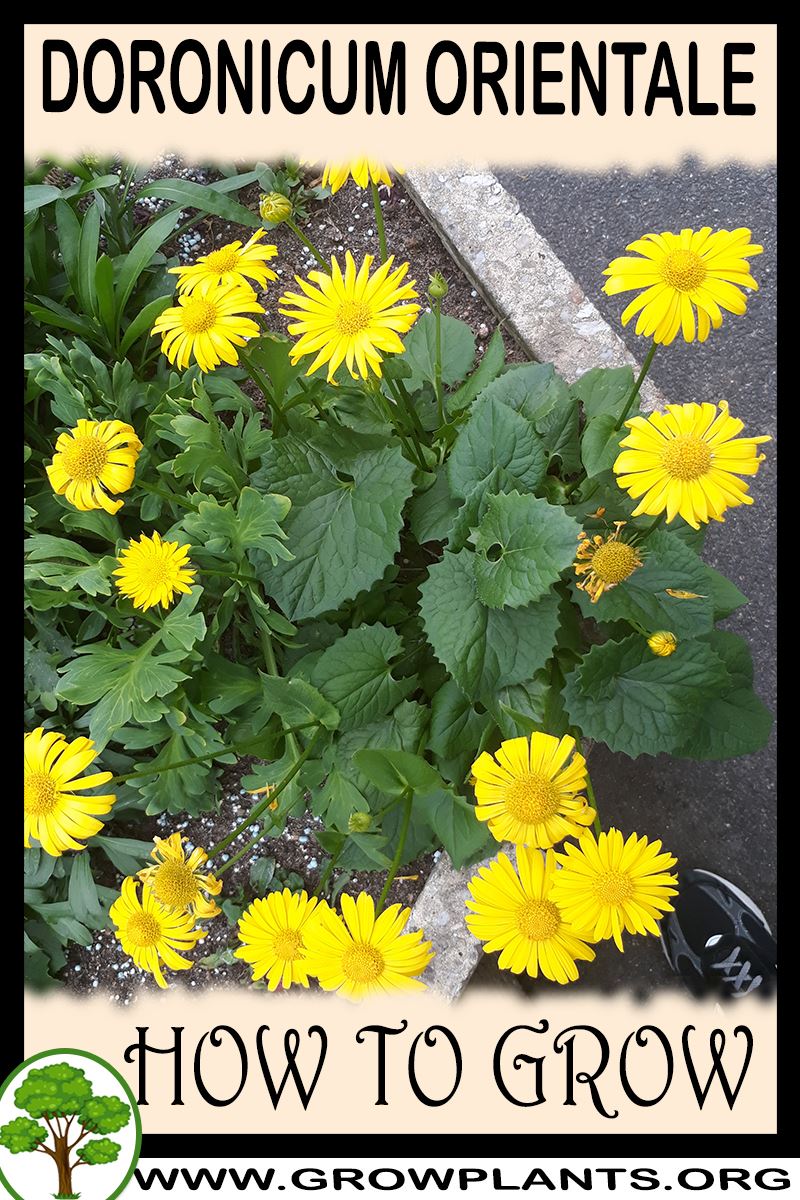
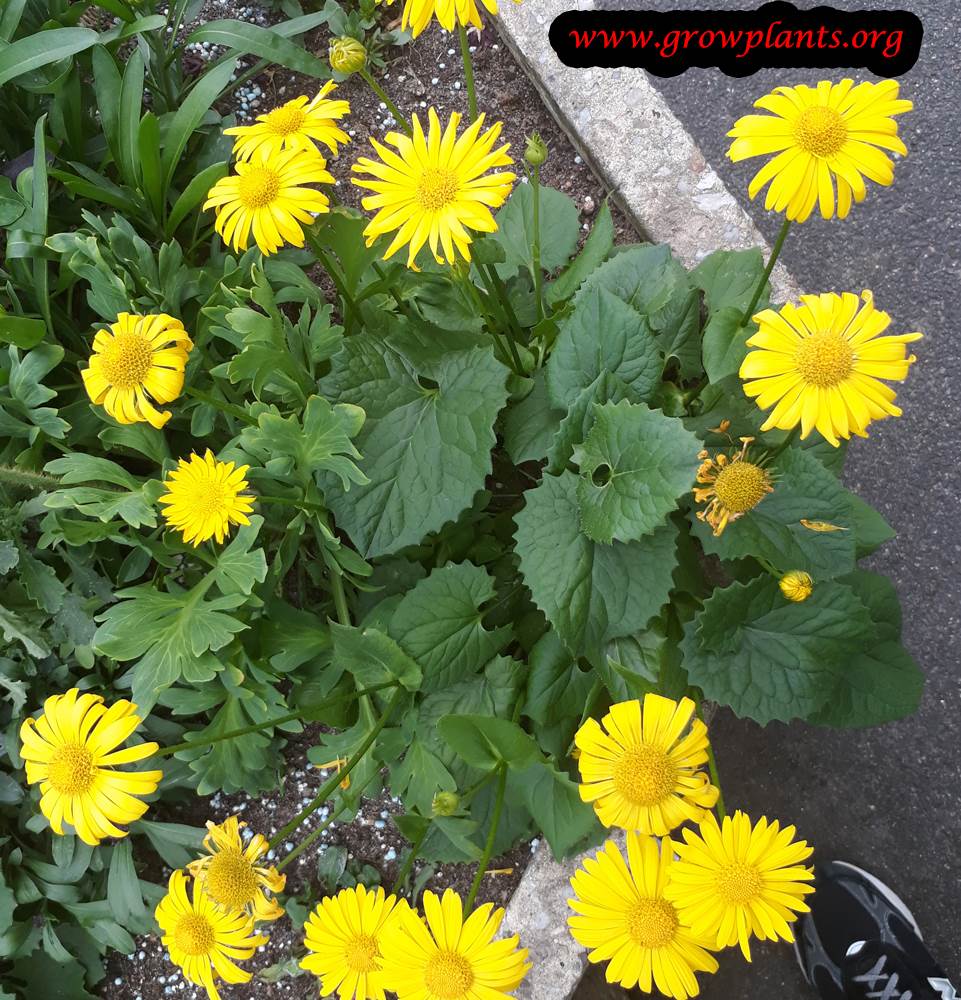
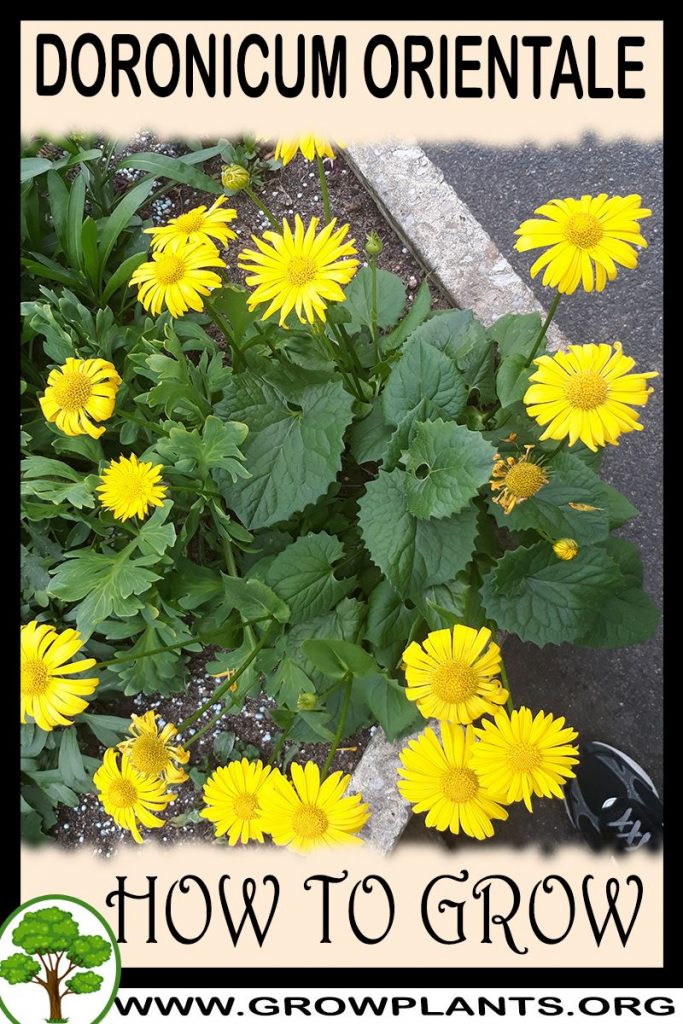
- Leaves & Foliage: Bright green, heart-shaped leaves.
- Flower Characteristics: Cheerful yellow daisy flowers on slender stems; attracts pollinators.
Primary Uses & Landscape Value
- Functional & Ornamental Roles: Ornamental spring border and cottage-garden perennial, cut flower and pollinator plant; very cold-hardy.
Care Guide: Planting, Soil & Watering
Overview: Doronicum orientale (leopard’s-bane) is a cool-climate perennial that grows best in full sun to partial shade in moist, well-draining soil. It enjoys steady moisture through its spring growth and flowering, then dies back for the season.
Quick Care Requirements
| Requirement | Ideal Condition |
|---|---|
| Planting Season | In spring or early summer, once the soil is workable |
| Growth Rate | Fast to moderate |
| Soil Type | Moist, well-draining soil |
| Water Need | Moderate to high — keep evenly moist |
Planting & Establishment
- Best Planting Season: Plant in spring or early summer once the soil is workable, in full sun to partial shade.
- How to Plant:
- Hole Preparation: Dig a hole about the size of the root ball so the plant sits level with the surrounding soil.
- Soil Amendments: Enrich the soil with compost or organic matter to hold moisture while still draining freely.
- Planting Depth: Set the crown level with the soil surface, keeping the growing point at ground level — do not bury it.
- Growth Speed & Expectations: Grows quickly in spring to form a leafy clump and its cheerful daisy flowers, then dies back afterwards.
Soil, Watering & Drainage Care
- Soil Mix & Drainage Needs: Provide moisture-retentive but well-draining soil; in containers use a good potting mix that stays damp yet lets excess water drain away.
- Watering Schedule & Technique:
- Young / Newly Planted: Keep the soil evenly moist while the young plant establishes.
- Established: Water regularly so the soil stays consistently moist, especially during spring growth and flowering.
- Seasonal Adjustments: Water more in warm, dry spells; the plant needs little water once it dies back and goes dormant.
Climate, Light & Hardiness
This early-spring-flowering perennial from cool temperate climates is genuinely very cold hardy, thriving in full sun to half shade with reliable moisture.
Quick Climate Specifications
| Climate Zones | Temperate |
|---|---|
| USDA Hardiness Zones | 2b–8 |
| Frost Tolerance | High |
| Light Conditions | Full Sun to Half Shade |
Sunlight & Light Exposure
Optimal Light Setup
Full sun to half shade; part shade is especially useful in the warmer parts of its range to keep it cool through summer.
Direct Sun Requirement
Benefits from good direct sun, especially in cooler climates, for strong spring flowering.
Shade & Heat Management
In the warmer end of its range, afternoon shade helps prevent summer heat stress.
Best Exposure / Orientation
A cool, sunny to part-shaded border suits its early-spring display.
Temperature Extremes & Hardiness
USDA Hardiness & Regional Limits
Very cold hardy, thriving in zones as cold as 2b, down to zone 8 at the mild end.
Cold Damage & Winter Protection
Extremely winter hardy within its range; goes dormant in winter and requires no special protection.
Frost Sensitivity
Tolerates hard frost and freezing winters without difficulty; early spring flowers can occasionally be nipped by a very late freeze.
Extreme Heat Tolerance
Limited; this is a cool-climate plant that can struggle in hot summers, particularly toward zone 8.
Wind, Humidity & Microclimate
Humidity Preferences
Prefers the moderate humidity of cool temperate climates.
Dry-Air Tolerance
Moderate; benefits from reasonably consistent moisture.
Rainfall & Seasonal Moisture
Prefers regular moisture through spring growth and flowering; avoid letting it dry out completely.
Growing in Pots, Balconies & Indoors
Doronicum orientale (leopard’s bane) is a hardy, spring-flowering border perennial that dies back and needs a cold winter rest. The grower confirms it is not a houseplant but grows well in containers, so grow it in a pot outdoors on a patio or balcony.
Quick Details
- Container Size: 10-20 L – it reaches 30-60 cm
- Indoor Suitability: Not suited to indoor life; best in a container outdoors
- Best Spot: Bright light with sun for part of the day
- Soil & Drainage: Free-draining, humus-rich potting mix
- Watering in Pots: Keep evenly moist through growth – it likes a fair amount of water
Indoors & On the Windowsill
- Not a houseplant: The grower marks it as unsuitable for growing indoors – it is a hardy perennial that goes dormant and needs a cold winter, which a warm room cannot give.
- Windowsill: A very bright, sunny sill is the closest indoor option, but it is really an outdoor plant and does best in a pot on the patio or balcony.
- Dormancy: It naturally dies back after flowering and rests over winter, so leave the pot outdoors in a cool, sheltered spot rather than indoors.
On a Balcony or Patio
- Light & wind: Bright light with sun for part of the day; it takes full sun to half shade Pots against warm walls dry fast, so check moisture often.
- Practicalities: Grown in a pot it stays where you want it and drains freely; let runoff escape and never let the roots stew.
Choosing the Pot, Soil & Long-Term Care
- Pot & drainage: A pot with strong drainage holes; skip a standing-water saucer, which invites root rot. Terracotta breathes and dries faster (good for plants that hate wet feet); glazed or plastic pots hold moisture longer.
- Potting mix: Well-aerated potting mix – a peat-free or peat/coir blend opened up with perlite or vermiculite.
- Feeding: Potted plants need feeding more often than those in the ground, as watering leaches nutrients away; a balanced liquid feed through the growing season is enough.
- Repotting: Refresh the top of the mix each year and pot on or divide every couple of years, lightly trimming roots and old growth to keep it vigorous.
Fertilizing & Feeding
Doronicum orientale is a moderate feeder – a balanced feeding program through spring growth and bloom supports good flowering without pushing weak, floppy growth.
Quick Fertilizing Specs
| Feeding Level | Moderate – balanced feeding through the growing and flowering season. |
|---|---|
| Main Nutrient Priority | Balanced feeding rather than a high-phosphorus bloom booster; adequate nitrogen supports both foliage and flowering. |
| Best Feeding Period | Early spring through the bloom period, tapering off as flowering finishes for the season. |
| Organic Options | Compost or compost tea suit this pollinator-friendly perennial well. |
| Reduce/Stop Feeding | Reduce and stop feeding as autumn approaches and the foliage begins to die back. |
Feeding by Growth Stage
Spring Growth
Fuel the flush of new foliage and stem growth as Doronicum orientale breaks dormancy in spring.
| Nutrient direction | A balanced fertilizer with adequate nitrogen supports strong leafy growth ahead of flowering; skip the temptation to lean heavily on phosphorus for blooms. |
|---|---|
| Timing | As new growth emerges in early spring, before flower buds form. |
| Frequency | A light feeding at spring green-up is usually enough to carry the plant into its bloom period. |
| Fertilizer types | A balanced, complete fertilizer worked lightly into the soil or applied as a top-dress, Compost or aged organic matter to build soil fertility for the season |
| Precautions | Avoid heavy nitrogen applications that push soft, floppy foliage at the expense of flowering. |
First Bloom Flush
Support the plant’s daisy-like yellow flowers and sustain pollinator interest through the main bloom period.
| Nutrient direction | Keep feeding balanced rather than shifting to a high-phosphorus bloom booster – adequate nitrogen alongside phosphorus and potassium is what actually drives flowering. |
|---|---|
| Timing | During the plant’s main flowering period in spring. |
| Frequency | Continue light, balanced feeding through bloom; avoid overfeeding once flowering is underway. |
| Fertilizer types | A balanced, complete fertilizer at a light rate, Organic options such as compost tea for gentle, steady feeding |
| Precautions | Deadheading spent flowers supports rebloom better than extra fertilizer; do not over-apply in an attempt to extend flowering. |
Repeat Bloom Flushes
Encourage additional flowering flushes through summer and into autumn where climate allows.
| Nutrient direction | A light, balanced feeding after deadheading helps sustain energy for further bloom flushes without forcing excess foliage. |
|---|---|
| Timing | After the first bloom flush fades, through summer and into autumn. |
| Frequency | An occasional light feeding tied to deadheading is enough; this stage rarely needs more than that. |
| Fertilizer types | A balanced, complete fertilizer at a light rate following deadheading |
| Precautions | Reduce feeding as autumn approaches so growth can harden off before winter. |
Autumn Dieback and Winter Dormancy
Allow the deciduous foliage to die back and the plant to rest through winter.
| Nutrient direction | None – withhold fertilizer once growth dies back for winter. |
|---|---|
| Timing | From autumn dieback through winter dormancy. |
| Frequency | No feeding at this stage. |
| Fertilizer types | No feeding is appropriate once the foliage dies back for winter. |
| Precautions | Do not fertilize dormant crowns; resume only after new spring growth appears. |
Nutrient Deficiency Signs & Corrections
Older leaves turn uniformly pale yellow-green and overall growth looks weak or stunted.
| Possible causes | Low nitrogen availability in the soil, Poor soil fertility that has never been amended, Root competition from nearby plants limiting nutrient uptake |
|---|---|
| Appears first on | Older, lower leaves first |
| What to check | Soil fertility and organic matter levels, Root crowding from nearby plants, Recent feeding history |
| Possible correction | Apply a balanced, complete fertilizer at a light rate and work compost into the bed to build long-term fertility. |
New leaves emerge yellow with the veins staying green.
| Possible causes | Alkaline soil limiting iron availability, Poorly drained or compacted soil restricting root function, Recent transplant stress |
|---|---|
| Appears first on | Newest leaves first |
| What to check | Soil pH and drainage, Whether the plant was recently divided or moved, General root health |
| Possible correction | Adjust conditions toward the near-neutral soil this plant prefers, or apply a chelated iron product per its label if chlorosis persists. |
Lush, dark green foliage but few or no flowers form.
| Possible causes | Excess nitrogen pushing vegetative growth at the expense of flowering, Too much shade reducing bloom regardless of feeding, Old, overcrowded clumps that need dividing to rebloom well |
|---|---|
| Appears first on | Whole-plant – abundant foliage with sparse flowering |
| What to check | Recent fertilizer history and nitrogen-heavy inputs, Light exposure at the site, Clump age and whether division is overdue |
| Possible correction | Ease off nitrogen-heavy feeding, confirm the site gets adequate sun, and divide overcrowded clumps rather than adding more fertilizer. |
Pruning, Training & Seasonal Maintenance
Doronicum orientale is a low-maintenance herbaceous perennial with no persistent woody structure, so "pruning" here means deadheading and an end-of-season cutback rather than shaping cuts. It tolerates cutting well since it regrows fully from a basal clump each year. The main goals are prolonging its Spring–Autumn daisy-flower display by removing spent flower stems, and clearing the whole clump of dead foliage once it dies back for winter. Cutting does not affect next year’s flowering, since new bloom stems arise fresh from the crown each season.
Quick Pruning & Maintenance Specs
| Pruning Tolerance | High – regrows fully from the crown |
| Primary Pruning Window | Autumn/Winter (full foliage cutback as the clump dies down) |
| Secondary Maintenance Window | Spring–Autumn (deadheading during bloom) |
| Typical Frequency | Deadhead every 1–2 weeks while in flower; one cutback in Autumn/Winter |
| Main Objective | Prolong bloom and tidy the clump for dormancy |
| Young Plant Priority | Let the clump establish; remove only damaged or yellowing leaves |
| Mature Plant Priority | Deadhead spent stems; full Autumn/Winter cutback |
| Best Tool Type | Precision snips / hand shears |
| Avoid Heavy Pruning During | Active spring/summer leaf growth before and during bloom |
Pruning by Plant Age & Size
Newly Established
Minimal – remove only damaged or yellowing leaves while the clump builds its root system; do not cut back healthy foliage in the first season.
Young / Formative
No structural training applies to this clump-forming perennial. Simply deadhead spent flowers as they fade to encourage continued blooming.
Mature / Established
Deadhead spent flower stems throughout the Spring–Autumn bloom season, then cut the whole clump of foliage back close to ground level once it dies down for winter.
Seasonal Pruning Schedule
Post-Flowering (repeat through Spring–Autumn)
Objective: extend flowering and stop the plant diverting energy into seed. Remove: individual spent flower stems, cut back to the basal foliage. Do not remove: healthy green basal leaves or unopened buds. Expected response: continued/repeat flowering from the crown. Flowering impact: positive – encourages further bloom.
Dormant/Winter
Objective: tidy the plant as it naturally dies back for winter. Remove: all dead or yellowed leaves and old flower stalks, cut near ground level. Do not remove: the crown/rootstock itself. Expected response: clean fresh foliage the following spring. Flowering impact: none – new bloom stems emerge fresh each spring regardless.
Special Growth to Remove
- Spent flower stems – deadhead back to the basal rosette to keep the plant blooming.
- Dead/yellowing leaves – remove as they senesce, especially before winter, to reduce shelter for the aphids this plant is prone to.
Container & Small-Space Pruning
This plant also grows well in a container. Deadhead a little more diligently than a border planting, since the smaller root volume makes each flower stem a larger share of the plant’s energy budget, and keep the Autumn/Winter cutback so it produces a compact, fresh flush the following spring rather than growing leggy.
Tools
Precision snips for individual deadheading cuts through the bloom season, and again for the single Autumn/Winter clump cutback. No cut on this plant is ever thicker than a soft green stem, so loppers or a saw are never needed.
Tool Hygiene & Disease Risk
Routine. Stems are soft and herbaceous with no known transmissible disease risk here; clean, sharp tools are enough to make quick, clean cuts.
Cut Placement & Technique
Deadhead by cutting the flower stem down to just above a set of basal leaves rather than partway up a bare stalk. For the winter cutback, cut all top growth back close to, but not into, the crown.
Heavy Pruning & Rejuvenation
Not applicable in the woody-plant sense – the whole-clump Autumn/Winter cutback already is this plant’s natural annual reset. No additional hard pruning is needed or beneficial.
Post-Pruning Care
After the Autumn/Winter cutback, a light mulch over the crown is worthwhile at the colder end of this plant’s range (zone 2b) to protect the resting bud. No extra feeding is needed after cutting back, since dieback is a natural dormancy event, not a stress response. Watch for aphids on the fresh spring growth.
Common Pruning Mistakes
- Shearing off unopened flower buds along with spent ones when deadheading quickly.
- Cutting the clump back hard mid-season while leaves are still green and photosynthesizing, which weakens next year’s bloom by removing the plant’s energy source too early.
- Leaving old wet foliage matted over the crown through winter, inviting rot.
When NOT to Prune
Avoid cutting back healthy green foliage during active spring/summer growth – even non-flowering leaves are recharging the crown for next year. Avoid disturbing the crown during flowering beyond simple deadheading.
Recommended Tools (by task)
- precision_snips – soft, thin flower stems and foliage; clean small cuts for deadheading and the seasonal cutback are all this plant ever needs.
Propagation Guide
Doronicum orientale is most easily and quickly propagated by dividing established clumps, which keeps named selections true and gives flowering-size plants the same season; the species also grows readily from seed, though seedlings usually take a season or two to reach flowering size. Both methods are straightforward, making this an easy perennial to propagate.
Quick Propagation Specs
| Best Propagation Method | Clump division |
| Alternative Methods | Seed |
| Propagation Difficulty | Easy |
| Seed True-to-Type | Usually true-to-type; cultivar-dependent for named selections |
| Vegetative True-to-Type | Yes |
| Best Propagation Season | Divide in early spring or just after flowering; sow seed in spring |
| Seed Germination Time | Typically a few weeks, can be uneven |
| Germination Temperature | 18–21°C (64–70°F) |
| Seed Sowing Depth | Shallow, barely covering the fine seed |
Growing from Seed
Seed Handling & Viability
No special storage treatment is noted for this species; use reasonably fresh seed for the best germination.
Sowing Season
Spring, once frost risk has passed, or started indoors a little earlier.
Sowing Depth & Orientation
Sow shallow, barely covering the fine seed.
Germination Conditions
Moderate warmth around 18–21°C (64–70°F), kept consistently moist, in bright but not scorching light.
Germination Time
Typically a few weeks, though germination can be somewhat uneven.
Seedling Care
Pot on seedlings once true leaves form; first-year plants generally put energy into roots and foliage before flowering well.
Division, Offsets, Pups & Suckers
Doronicum orientale forms spreading clumps from a fibrous, lightly rhizomatous crown, and lifting and dividing this clump every few years renews vigor and multiplies stock true to the parent. Best timing is early spring, just as new growth begins, or immediately after flowering; the plant’s own autumn/winter routine of cutting back dead leaves and spent bloom stems also makes early spring, before regrowth is dense, an easy time to see and divide the crown. Each division should keep healthy roots and one or two growth points, with the older, woodier center of the clump discarded. Replant divisions promptly at their original depth and water well until re-established.
Bloom & Flower Guide
Quick Details
- Bloom Season: Chiefly spring – one of the earliest daisies, sometimes with a lighter later flush
- Time to First Bloom: Established clumps flower each spring
- Flower Appearance: Bright yellow, daisy-shaped flowers on slender stems
- Edibility: Grown as an ornamental and cut flower – not eaten
Detailed Blooming Overview
Leopard’s bane is one of the first daisies of the year, opening cheerful yellow blooms in spring above heart-shaped leaves. It makes an excellent early cut flower and draws in the season’s first pollinators; after flowering the plant often rests as the weather warms.
Flower Characteristics
- Classic yellow daisy flowers – a ring of ray petals around a golden centre.
- Held singly on wiry stems well above the foliage.
Bloom Care & Thinning
- Encouraging bloom: Deadhead spent flowers to tidy the plant and encourage any repeat bloom.
- Pollination: An early, welcome nectar source for bees and other pollinators.
Pests, Diseases & Troubleshooting
Overview: Doronicum orientale (leopard’s bane) is an early-flowering daisy-family perennial whose soft foliage attracts aphids, leaf miners and, above all, slugs and snails, while its diseases are the damp-weather fungal ones — powdery and downy mildew, leaf spot and crown rot. It is easy in cool, moist, humus-rich, well-drained soil in part shade; it naturally goes dormant in summer heat, which is often mistaken for disease, and rots in wet winter soil.
Quick Troubleshooting Overview
| Issue / Pest | Main Symptom | Primary Solution |
|---|---|---|
| Slugs and snails | Ragged holes in soft leaves, grazed new shoots | Hand-pick at night, iron-phosphate bait |
| Aphids | Colonies on buds and shoot tips, honeydew, distortion | Hose off, insecticidal soap; conserve predators |
| Leaf miners | Pale winding tunnels or blotches inside the leaves | Pick off mined leaves; remove weeds, conserve parasitoids |
| Powdery mildew | White powdery coating on leaves, yellowing | Airflow, even moisture; potassium bicarbonate or sulfur |
| Leaf spot / downy mildew | Brown spots or pale blotches with greyish underside | Remove leaves, avoid wet foliage; suitable fungicide |
| Summer dieback | Foliage yellows and dies down after spring bloom | Normal dormancy; keep roots cool and moist, do not overwater |
Common Pests & Management
- Slugs and snails (Deroceras / Cornu spp.):
- Symptoms: Ragged holes and grazed, shredded soft leaves and new shoots, with slime trails, worst on the emerging spring growth and on young plants in damp, shaded, mulched conditions; the leading pest of this soft-leaved plant.
- Prevention & Control: Hand-pick after dark, set beer traps, and ring plants with grit or copper, keeping the crown clear of damp debris. Iron-phosphate pellets are effective and safe around pets and wildlife; protect the emerging spring rosettes especially.
- Aphids (Aphis / Myzus spp.):
- Symptoms: Colonies of soft green or black insects on the flower buds, stems and shoot tips, causing distortion, honeydew and sooty mould, mainly during the flush of spring growth and flowering.
- Prevention & Control: Hose off and squash early colonies, and conserve ladybirds, lacewings, hoverflies and parasitic wasps. Insecticidal soap or neem clears heavier build-ups, applied in the cool of evening to protect pollinators.
- Leaf miners (Chromatomyia / Liriomyza spp.):
- Symptoms: Pale, winding tunnels or blotches within the leaves where the larvae feed between the surfaces, disfiguring the foliage; a common cosmetic pest of daisy-family perennials.
- Prevention & Control: Pick off and destroy mined leaves as they appear, remove nearby weed hosts, and conserve the parasitic wasps that control them. Damage is usually cosmetic and rarely needs spraying on an established clump.
- Thrips and spider mites (Frankliniella / Tetranychus urticae):
- Symptoms: Silvery flecking and streaked, distorted flowers from thrips, and fine stippling with webbing from spider mites in hot, dry spells, both more likely when the plant is drought-stressed in summer.
- Prevention & Control: Keep the plant cool and evenly moist to reduce stress, hose mite-prone foliage, and use blue sticky traps to monitor thrips. Insecticidal soap or horticultural oil controls heavy pressure; avoid broad-spectrum sprays that flare up mites.
Diseases & Fungal Issues
- Powdery mildew (Golovinomyces / Erysiphe spp.):
- Symptoms: White powdery patches on the leaves and stems, with yellowing, distortion and premature leaf loss, worst in crowded plantings, dry-root/humid-air conditions, and as the plant is stressed by summer heat.
- Treatment & Management: Space for airflow, keep the roots evenly moist, and remove affected leaves. Milk sprays, potassium bicarbonate or sulfur help; growing the plant in cool, part-shaded, unstressed conditions reduces susceptibility.
- Downy mildew and leaf spot (Peronospora / Ramularia / Septoria spp.):
- Symptoms: Pale yellow blotches with a greyish downy underside (downy mildew) or brown to greyish leaf spots that merge and blight the foliage (leaf spot), both favoured by cool, wet, humid weather and overhead watering.
- Treatment & Management: Improve airflow and spacing, water at the base to keep foliage dry, and remove and destroy infected leaves and end-of-season debris. A copper or suitable fungicide protects new growth under persistent damp pressure.
- Sclerotinia and crown rot (Sclerotinia / Rhizoctonia / Sclerotium spp.):
- Symptoms: Sudden wilting and collapse with soft, rotting crowns and stem bases, sometimes with white cottony fungal growth and hard black or tan resting bodies, in wet, crowded, poorly drained conditions.
- Treatment & Management: Improve drainage and airflow, avoid dense wet mulch against the crown, and remove and destroy infected plants along with the surrounding soil. Do not replant susceptible plants in that spot without improving conditions; these soil fungi persist.
- Rust (Puccinia spp.):
- Symptoms: Occasional orange to brown powdery pustules on the leaf undersides with yellow flecks above, a minor and mostly cosmetic problem in humid conditions that causes some yellowing if severe.
- Treatment & Management: Remove affected leaves, improve air movement, and avoid wetting the foliage. This is rarely serious; sulfur or a suitable fungicide is only justified under heavy, persistent pressure.
Growing Difficulties & Abiotic Problems
- Summer dormancy (mistaken for disease):
- Cause & Symptoms: The foliage naturally yellows and dies down after the spring flowering as the plant goes dormant through summer heat and dryness, which gardeners often mistake for a fatal disease.
- Correction Strategy: Expect and allow the summer dieback, keep the dormant roots cool and lightly moist (never waterlogged), and mark the position so it is not dug up. Fresh growth returns in autumn or the following spring; interplant with later perennials to fill the gap.
- Crown rot in wet soil:
- Cause & Symptoms: Soft, rotting crowns and collapse in heavy, wet, poorly drained soil, especially over a wet winter or when the dormant clump is kept too wet through summer.
- Correction Strategy: Grow in humus-rich but free-draining soil, avoid low wet spots, and do not overwater the dormant clump in summer. Improve drainage on heavy ground and lift and divide congested clumps to keep them healthy.
- Scorch and heat stress in full sun:
- Cause & Symptoms: Wilting, scorched leaf margins and premature dieback where the plant is grown in full hot sun and dry soil, since it is a cool-climate woodland-edge plant that prefers part shade and moist roots.
- Correction Strategy: Grow in dappled or part shade with cool, moist, humus-rich soil, mulch to keep the roots cool, and water in dry spells before dormancy. In hot climates give more shade; it takes more sun only where summers are cool and moist.
- Short-lived, congested clumps:
- Cause & Symptoms: Gradual decline, weak flowering and die-out in the centre of the clump after a few years, as these can be short-lived perennials that exhaust themselves or become congested.
- Correction Strategy: Lift and divide the clumps every few years in cool weather to rejuvenate them, replant the vigorous outer divisions in refreshed soil, and feed lightly. Regular division keeps leopard’s bane flowering well.
What Helps — Products & Tools
For leopard’s bane the useful kit is iron-phosphate slug bait as the priority, insecticidal soap and neem for aphids, blue sticky traps and horticultural oil for thrips and mites, and hand-removal of mined leaves. On the disease side, airflow, base watering and sanitation prevent the mildews and leaf spots, potassium bicarbonate or sulfur helps against powdery mildew, and good drainage prevents crown and Sclerotinia rot. Remember that summer dieback is normal dormancy, not disease. The source pest names are unreliable and were not used.