Plant Profile & Key Characteristics
Also known as: Chinese plant, White ramie, Ramie
Overview: A herbaceous evergreen perennial reaching 1-2 m (40-80 in), grown for its edible leaves, as a bast-fibre plant (ramie), and as an ornamental. It is a fast-growing, clump-spreading species.
Quick Specifications
| Specification | Attribute |
|---|---|
| Plant Type / Life Cycle | Perennial |
| Foliage Type | Evergreen |
| Mature Size | 1-2 m (40-80 in) tall |
| Growth Rate | Fast to moderate |
| Root System | Rhizomatous (spreading) |
| Hardiness | USDA zone 7-11 |
Growth Form & Structure
- Height & Spread: 1-2 m (40-80 in) tall, spreading by rhizomes into clumps; can be container grown.
- Growth Habit & Form: Upright, clump-forming herbaceous perennial spreading by rhizomes.
- Lifespan & Maturity: Fast to moderate growth; forms fibrous stems used for ramie fibre.
Anatomy & Physical Features
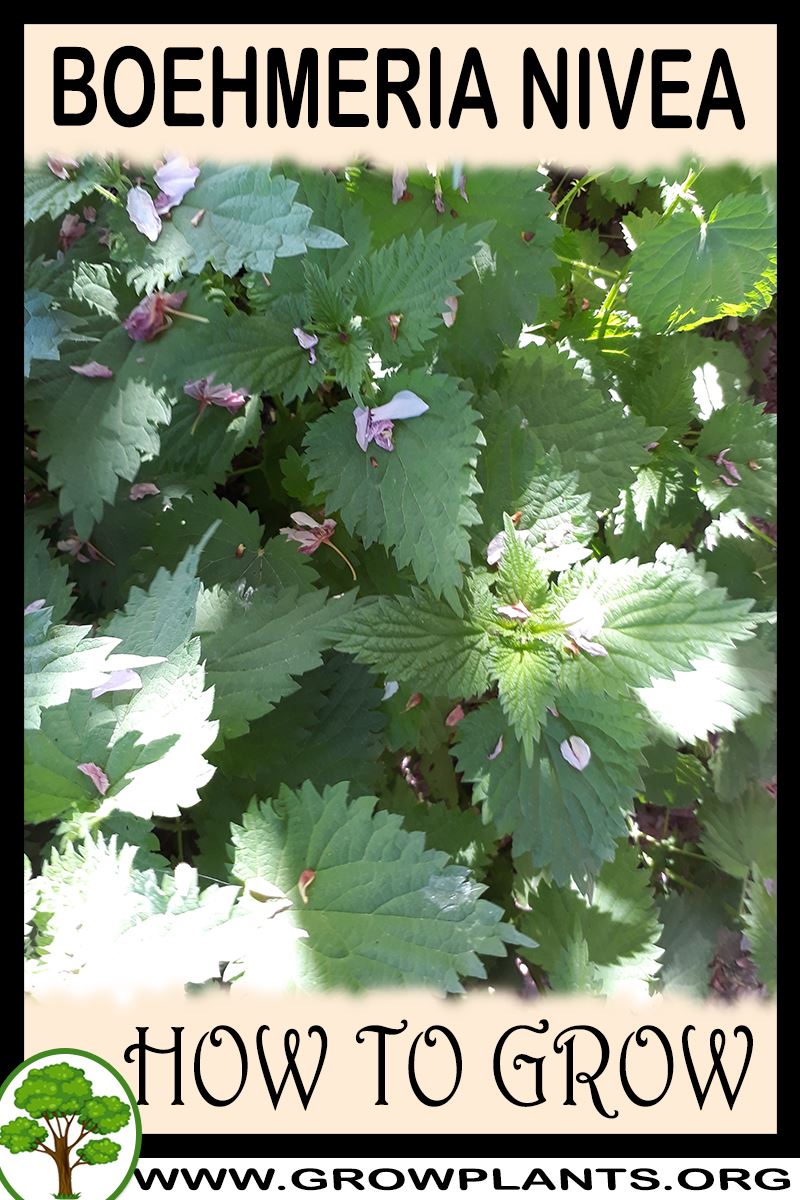
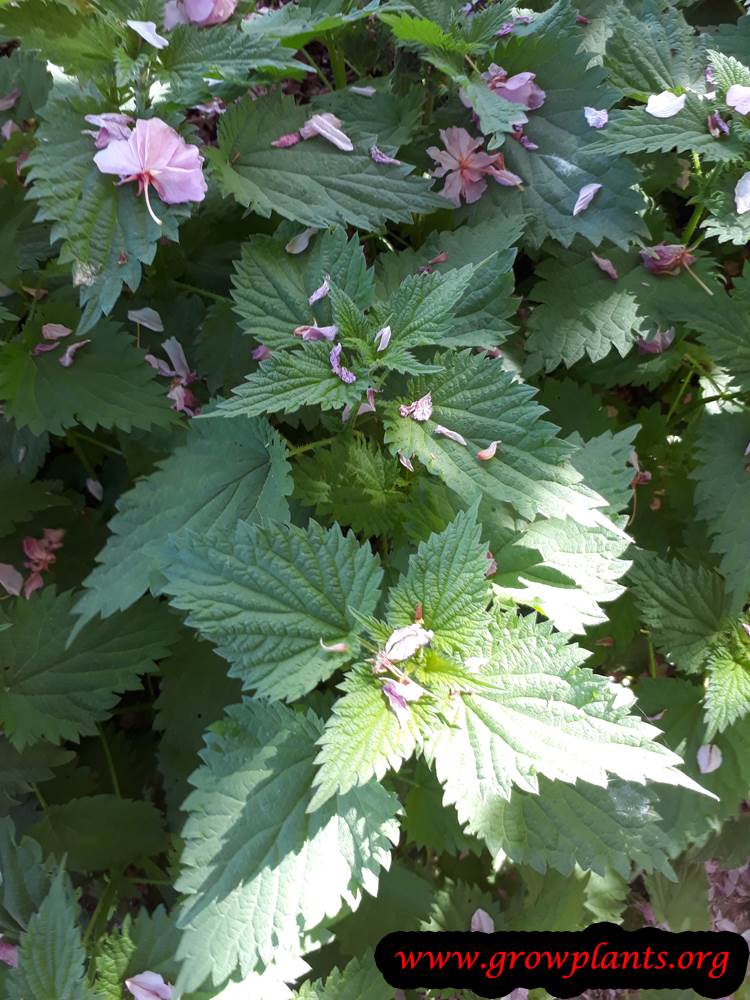
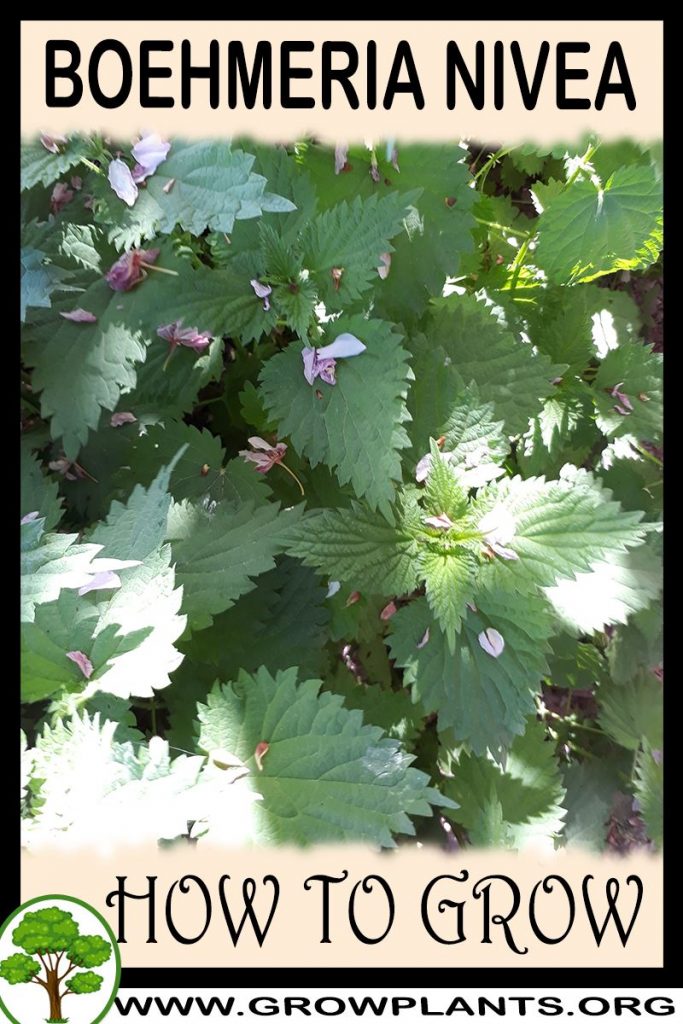
- Leaves & Foliage: Green, heart-shaped leaves, often white-felted beneath (giving the ‘white ramie’ name).
- Flower Characteristics: Small white flowers in pompom-like clusters (full detail in the Bloom section).
Primary Uses & Landscape Value
- Edible Uses: Leaves are edible, used cooked.
- Functional & Ornamental Roles: Grown for ramie bast fibre, as an edible-leaf crop, and as an ornamental foliage plant.
Care Guide: Planting, Soil & Watering
Overview: Boehmeria nivea (ramie) is a vigorous evergreen perennial for full sun to part shade that likes a rich, well-drained soil. It is a fast grower with modest low-to-moderate water needs.
Quick Care Requirements
| Requirement | Ideal Condition |
|---|---|
| Planting Season | In spring and summer, during the warm growing season |
| Growth Rate | Moderate to fast |
| Soil Type | Rich, fertile and well-draining |
| Water Need | Low to moderate – water when the top of the soil dries |
Planting & Establishment
- Best Planting Season: Plant in spring or summer during active growth.
- How to Plant:
- Hole Preparation: Dig a hole about twice the width of the root ball.
- Soil Amendments: Work in generous organic matter or compost for a rich, free-draining bed.
- Planting Depth: Set the root collar at soil level; do not bury the stems.
- Growth Speed & Expectations: Moderate to fast; a 1–2 m (40–80 in) clump-former that can spread by rhizomes.
Soil, Watering & Drainage Care
- Soil Mix & Drainage Needs: Rich but well-drained soil; avoid waterlogging.
- Watering Schedule & Technique:
- Young / Newly Planted: Keep evenly moist while establishing.
- Established: Water moderately, letting the top few cm dry between waterings.
- Seasonal Adjustments: More in summer heat; less in cool weather.
Climate, Light & Hardiness
Ramie is a vigorous fiber and foliage perennial from temperate to subtropical and Mediterranean climates, growing well in full sun to half shade with good general cold tolerance.
Quick Climate Specifications
| Climate Zones | Temperate, Subtropical, Mediterranean |
|---|---|
| USDA Hardiness Zones | 7–11 |
| Frost Tolerance | Moderate |
| Light Conditions | Full Sun to Half Shade |
Sunlight & Light Exposure
Optimal Light Setup
Full sun to half shade; grows vigorously in either, with sun encouraging denser growth.
Direct Sun Requirement
Tolerates, and generally prefers, a good amount of direct sun.
Shade & Heat Management
Handles warm subtropical summers well; light shade can be useful in the hottest climates.
Best Exposure / Orientation
An open bed with rich, well-drained soil suits its fast growth.
Temperature Extremes & Hardiness
USDA Hardiness & Regional Limits
Hardy in zones 7–11.
Cold Damage & Winter Protection
In the cooler part of its range, foliage is likely damaged or killed back by hard frost, with the plant resprouting from the roots in spring; mulching the root zone helps in marginal areas.
Frost Sensitivity
Foliage is frost-tender; the perennial rootstock is considerably hardier than the top growth.
Extreme Heat Tolerance
Good; thrives in warm, humid subtropical summers.
Wind, Humidity & Microclimate
Humidity Preferences
Prefers humid, warm-temperate to subtropical conditions.
Dry-Air Tolerance
Moderate; performs best with reasonable humidity and consistent soil moisture.
Rainfall & Seasonal Moisture
Prefers rich, consistently moist soil; not well suited to prolonged drought.
Growing in Pots, Balconies & Indoors
Ramie (Boehmeria nivea) is a leafy fibre plant. The grower lists it as not a houseplant, but it grows readily in a large container on a warm patio or balcony where its bold foliage makes a lush clump.
Quick Details
- Container Size: A large pot for a 1-2 m clump
- Indoor Suitability: Not a houseplant – it needs strong light and room to clump
- Best Spot: Full sun to half shade
- Soil & Drainage: Rich, free-draining mix
- Watering in Pots: Small to average – keep lightly moist; avoid both drought and waterlogging
Indoors & On the Windowsill
- Houseplant limits: Not an indoor plant; it grows vigorously and needs good outdoor light.
- Overwintering: In cold climates the roots can be over-wintered in a frost-free spot; top growth dies back and regrows in warmth.
On a Balcony or Patio
- Light & spread: Give it warmth and good light; it spreads at the root, so a container also keeps it in check. Pots dry faster in reflected heat – keep lightly moist.
- Practicalities: Cut back old stems as they tire to keep the clump fresh.
Choosing the Pot, Soil & Long-Term Care
- Pot & drainage: A large pot with strong drainage holes and no saucer; a container usefully restrains its spreading roots.
- Potting mix: A well-aerated, organic-rich mix – peat or coir blended with perlite or vermiculite so it drains freely.
- Feeding: Potted plants need feeding more often than those in open ground, since frequent watering leaches nutrients from the mix – feed regularly through the growing season.
- Repotting: Refresh the top of the mix each year and pot up about every two years; for perennials, lightly prune the root ball and top growth when you do.
Fertilizing & Feeding
A moderate feeder: this fast-growing, leafy perennial is grown for its foliage, so it benefits from steady, nitrogen-leaning nutrition through the growing season in rich soil.
Quick Fertilizing Specs
| Feeding Level | Moderate |
|---|---|
| young_feeding | Balanced feeding to establish, worked into rich soil |
| mature_feeding | Nitrogen-leaning feeding to support continued leafy regrowth |
| Main Nutrient Priority | Nitrogen to support strong leaf and stem growth |
| Best Feeding Period | Through the active growing season, especially after cutting back |
| Organic Options | Compost and well-rotted manure worked into rich soil |
| Reduce/Stop Feeding | Ease off as growth slows going into the cooler season |
Feeding by Growth Stage
Establishment
Help newly planted Boehmeria nivea root in and build its first flush of leafy growth.
| Nutrient direction | A balanced complete fertilizer worked into rich soil supports steady early growth. |
|---|---|
| Timing | After planting, once the plant is actively rooting and putting out new leaves. |
| Frequency | A light starter feeding as the plant establishes. |
| Fertilizer types | Balanced complete fertilizer, Compost or well-rotted organic matter worked into the soil |
| Precautions | Avoid heavy feeding before the root system is established, and keep soil rich but well drained. |
Active growth
Support vigorous, leafy regrowth through the growing season, especially after the plant is cut back.
| Nutrient direction | A nitrogen-leaning feed favors the leafy growth this plant is grown for. |
|---|---|
| Timing | Through the active growing season, particularly as new growth resumes after cutting. |
| Frequency | Several light feedings spread through the active growing season. |
| Fertilizer types | Nitrogen-forward complete fertilizer, Compost or aged manure as an organic source of nitrogen |
| Precautions | This plant can spread aggressively, so avoid excess feeding that encourages even more vigorous, hard-to-control growth. |
Nutrient Deficiency Signs & Corrections
Older, lower leaves fade to pale green or yellow and regrowth after cutting is weak.
| Possible causes | Low soil nitrogen, Poor, leached or sandy soil, Cold or waterlogged soil limiting root uptake |
|---|---|
| Appears first on | Older, lower leaves |
| What to check | Recent feeding history, Soil organic matter and drainage |
| Possible correction | Apply a nitrogen-containing complete fertilizer during active growth and build soil with compost. |
Interveinal yellowing on older leaves while the veins stay green.
| Possible causes | Low soil magnesium, High potassium or nitrogen feeding competing with magnesium uptake, Sandy, leached soils |
|---|---|
| Appears first on | Older leaves |
| What to check | Soil test for magnesium, Balance of recent fertilizer use |
| Possible correction | Apply a magnesium source such as a labeled Epsom-salt drench if a soil test confirms the need. |
Leaves wilt or scorch at the margins despite moist soil.
| Possible causes | Salt buildup from over-fertilizing, Waterlogged or compacted roots, Root disturbance from crowding or dividing |
|---|---|
| Appears first on | Leaf margins and newest growth |
| What to check | Recent fertilizer rate and frequency, Soil drainage and root crowding |
| Possible correction | Flush the soil with water to reduce salt buildup and ease back on feeding rate. |
Pruning, Training & Seasonal Maintenance
Boehmeria nivea (ramie) is a fast-growing herbaceous perennial with a persistent rootstock – its ‘pruning’ is really the same cutback that produces its edible-leaf and fibre harvest, not a structural regime on woody framework. It tolerates being cut hard to the base and regrows vigorously, with the safest main cutback in autumn–winter dormancy as the top growth naturally declines; in warm, frost-free zones the same base cut can be repeated after each flush to keep fresh growth coming.
Quick Pruning & Maintenance Specs
| Pruning Tolerance | High (cut-and-regrow herbaceous perennial) |
| Primary Pruning Window | Autumn–winter, as top growth declines |
| Secondary Maintenance Window | Repeat basal cuts through the growing season in frost-free zones for fresh leaf/fibre flushes |
| Typical Frequency | 1 main cutback per year (cool zones) to several per year (warm zones, fibre-style management) |
| Main Objective | Renew leafy growth; harvest leaves/fibre; remove old, worn stems |
| Young Plant Priority | Let the plant establish a full season before the first hard cutback |
| Mature Plant Priority | Cut all top growth to the base; divide the clump if it spreads beyond its space |
| Best Tool Type | Bypass secateurs or loppers (stems are fibrous, tougher than a typical soft herb) |
| Avoid Heavy Pruning During | Just before first frost in marginal zones, so regrowth is not caught by cold |
Pruning by Plant Age & Size
Newly Established
Avoid cutting back in the first season – let the plant build a strong rootstock before any hard harvest cutback.
Young / Formative
No structural training; once established, begin the annual (or more frequent, in warm zones) basal cutback cycle.
Mature / Established
Routine basal cutback of all top growth; periodically divide congested clumps, since this species spreads by rhizome and can crowd itself over time.
Seasonal Pruning Schedule
Dormant/Winter
Objective: renew the plant for the coming season. Remove: all top growth, cut back to the base as it declines. Do not remove: the rootstock/crown itself. Response: vigorous fresh regrowth from the base in spring, matching the plant’s fast growth rate. Impact: none negative – this is the standard renewal cycle for the species.
Ongoing Sanitary (warm zones)
Where the plant stays in growth year-round, repeat basal cuts after each leaf/fibre harvest flush rather than waiting for a single annual cutback.
Special Growth to Remove
Old, spent stems at the end of each flush – cutting these at the base is both the harvest and the pruning. Remove excess rhizome growth or divisions if the clump spreads past its intended space.
Container & Small-Space Pruning
Works in a large container, which also helps contain its spreading rhizome habit; still cut top growth back hard on the same schedule, and divide/reduce the root mass at repotting if it fills the pot.
Tools
Bypass secateurs for routine stem harvesting; loppers for thicker basal stems at a full cutback, since ramie’s fibrous stems are tougher than a typical soft-stemmed herb.
Tool Hygiene & Disease Risk
Routine – clean, sharp tools are sufficient; no specific disease-transmission risk is noted for this species.
Cut Placement & Technique
Cut stems close to the base/crown in a clean pass, rather than leaving tall stubs, to keep the regrowth flush even.
Heavy Pruning & Rejuvenation
Fully tolerated and, in fact, the standard management technique – cutting the entire top growth to the ground is how this fast-growing perennial is renewed and harvested, with vigorous regrowth from the rootstock each time.
Post-Pruning Care
Keep soil evenly moist through the regrowth flush; light feeding supports the next leaf/fibre cycle given how much top growth is removed at each cutback.
Common Pruning Mistakes
Cutting back too close to first frost in marginal zones, exposing tender new regrowth to cold damage; leaving the clump undivided for years, letting rhizome spread crowd the planting.
When NOT to Prune
Avoid a hard cutback right before an expected frost in cooler parts of its range; otherwise this species is flexible about timing given its fast regrowth.
Recommended Tools (by task)
- bypass_secateurs – routine stem harvesting and lighter cutback work.
- loppers – thicker basal stems at a full seasonal cutback.
- garden_spade – dividing the spreading rhizome clump when propagating or controlling spread.
Propagation Guide
Boehmeria nivea (ramie) spreads naturally by underground rhizomes, so dividing established clumps is the quickest, most reliable way to get established plants true to the parent, though the site confirms seed also works and vegetative propagation is not strictly necessary. Overall propagation is Easy by either route, with division giving faster, more uniform establishment than seed.
Quick Propagation Specs
| Best Propagation Method | Rhizome/root division |
| Alternative Methods | Seed |
| Propagation Difficulty | Easy |
| Seed True-to-Type | Usually true-to-type (species, not a named cultivar) |
| Vegetative True-to-Type | Yes |
| Best Propagation Season | Spring (matches this plant’s spring/summer planting season) |
| Seed Germination Time | Typically a few weeks under warm conditions |
| Germination Temperature | 20–25°C (68–77°F) |
| Seed Sowing Depth | Surface-sow or barely cover; seed is fine |
Growing from Seed
Sowing Season
Sow in spring, in line with this plant’s spring/summer planting window.
Sowing Depth & Orientation
Press onto the surface or cover very lightly — seed is fine.
Germination Conditions
Keep the medium consistently moist and warm; this rich-soil-loving perennial responds well to fertile, well-drained mixes at the seedling stage too.
Germination Time
Usually within a few weeks under warm conditions.
Division, Offsets, Pups & Suckers
Lift and divide established clumps in spring, separating rhizome sections that each carry healthy roots and at least one growth point; sections without their own roots are unlikely to establish well. Replant promptly into rich, well-drained soil and water in to help divisions settle before active growth resumes.
Bloom & Flower Guide
Quick Details
- Bloom Season: Spring into summer.
- Flower Appearance: Tiny white flowers gathered into small, soft pompom-like clusters along the stems.
- Edibility: Ornamental / not eaten – ramie is grown for its leaves and fibre, and the flowers are not a culinary flower.
Detailed Blooming Overview
Ramie is best known as a fibre and leaf crop, and its bloom is understated: clusters of very small whitish flowers that form fuzzy little pompoms in the leaf axils. As a member of the nettle family it is monoecious and wind-pollinated, so the flowers are built for function rather than show.
Flower Characteristics
- Very small white flowers.
- Grouped into soft, pompom-like clusters.
- Inconspicuous, in keeping with a wind-pollinated plant.
Bloom Care & Thinning
- Managing the bloom: If you are growing ramie for tender leaves or fibre, cutting stems before heavy flowering keeps growth vigorous.
- Pollination: Wind-pollinated.
Fruit & Uses
The young leaves of ramie are the edible part of this plant, used as a cooked leaf vegetable and, in some traditional East and Southeast Asian recipes, worked into rice-cake dough as a colouring and flavouring. Leaves are cooked rather than eaten raw; the plant’s fibrous stems, grown for textile fiber, are not food.
Quick Edible Specs
| Edible Parts | Young leaves |
|---|---|
| Main Use(s) | Culinary (leaf vegetable; traditional rice-cake ingredient) |
| Eaten Raw or Cooked | Cooked |
| Preparation Required | Cook (blanch or boil); use young, tender leaves only |
| Harvest Season | Spring to summer, during active growth |
| Time to First Harvest | New leaves can be picked once the plant is established and producing fresh growth each season |
| Storage | Best used fresh; not typically stored long-term |
| Safety/Toxicity Caveat | Only young, tender leaves are used for food; older leaves are simply tough, not toxic |
Leaves & Greens
Only young, tender, heart-shaped leaves are picked for food – older leaves toughen quickly and are better left for the plant’s fiber production. Leaves are hand-picked through the spring-to-summer growing season, then cooked (commonly boiled or blanched) before use as a leaf vegetable, or ground into glutinous rice dough for traditional cakes, where the leaf also lends a green colour. Because this species is also grown commercially for its strong bast fiber (extracted from the stem, a separate, non-food process), heavy leaf harvesting can reduce that season’s fiber yield – the two uses compete somewhat when a plant is grown for both.
Preparation, Uses & Safety
Young ramie leaves should be cooked (blanched or boiled) before eating, in keeping with traditional preparation – they are not commonly eaten raw. No toxicity is documented for the leaves in normal culinary use. The plant’s better-known use, its strong stem fiber, is a separate, non-food process and outside the scope of this section.
Pests, Diseases & Troubleshooting
Overview: Ramie is a nettle-family fibre crop (Urticaceae), and its signature pest is the ramie moth, a large caterpillar that can defoliate stands, alongside aphids and spider mites on the soft foliage. Leaf spots and root or stem rots occur in wet, poorly drained conditions. It is a vigorous, nitrogen-hungry plant that recovers strongly from cutting, so cultural management and biological controls handle most problems.
Quick Troubleshooting Overview
| Issue / Pest | Main Symptom | Primary Solution |
|---|---|---|
| Ramie moth caterpillar | Large caterpillars rapidly defoliating plants | Handpick, Bacillus thuringiensis, encourage predators |
| Aphids | Honeydew and curled soft new leaves | Water blast, insecticidal soap, predators |
| Spider mites | Stippling and webbing in hot, dry spells | Hose foliage, insecticidal soap or oil |
| Leaf spot | Brown spots and blotches on leaves | Airflow, sanitation, copper if severe |
| Root / stem rot | Wilting and collapse in wet soil | Improve drainage; avoid waterlogging |
Common Pests & Management
- Ramie moth (Arcte coerula):
- Symptoms: Large, striking caterpillars feed voraciously on the leaves and can strip whole plants; they are the defining pest of ramie across its range.
- Prevention & Control: Handpick caterpillars and egg masses, apply Bacillus thuringiensis to young larvae, encourage birds and parasitic wasps, and monitor stands regularly during warm growth.
- Aphids (Aphididae):
- Symptoms: Colonies on soft shoots and leaf undersides curl and yellow growth and leave honeydew and sooty mould.
- Prevention & Control: Blast with water, spray insecticidal soap or neem, and support ladybirds, lacewings and hoverflies; avoid excess nitrogen that pushes soft growth.
- Spider mites (Tetranychus urticae):
- Symptoms: Fine stippling, bronzing and webbing on leaf undersides in hot, dry weather.
- Prevention & Control: Hose foliage, maintain moisture, and treat undersides with insecticidal soap or horticultural oil.
- Whitefly & leaf-rolling caterpillars (Aleyrodidae / various Lepidoptera):
- Symptoms: Whitefly excrete honeydew on undersides; leaf-rollers tie and feed inside folded leaves.
- Prevention & Control: Use yellow sticky traps and insecticidal soap for whitefly, and handpick or use Bt on rolled-leaf caterpillars.
Diseases & Fungal Issues
- Leaf spot (Cercospora / Cylindrosporium spp.):
- Symptoms: Brown to grey spots and blotches on the leaves, sometimes merging in wet weather and causing leaf drop.
- Treatment & Management: Remove and destroy affected leaves, improve airflow, water at the base, and apply copper only in persistent damp conditions.
- Root and stem rot (Rhizoctonia / Pythium spp.):
- Symptoms: Wilting, stem-base lesions and rotted roots in heavy, waterlogged soil, leading to collapse.
- Treatment & Management: Plant in free-draining soil, avoid waterlogging, space for airflow, and remove severely affected plants.
- Bacterial wilt (Ralstonia solanacearum):
- Symptoms: Rapid wilting without yellowing, with brown vascular tissue, in warm wet soils.
- Treatment & Management: Improve drainage, rotate, remove and destroy infected plants, and avoid moving contaminated soil or tools.
Growing Difficulties & Abiotic Problems
- Nitrogen hunger / chlorosis:
- Cause & Symptoms: This heavy-feeding fibre crop yellows and stalls on poor or leached soil.
- Correction Strategy: Feed generously with nitrogen and organic matter, keeping growth vigorous for fibre and leaf yield.
- Frost dieback:
- Cause & Symptoms: Top growth is cut back by frost, though established crowns re-shoot.
- Correction Strategy: Mulch the crown in cold areas; regrowth comes from the rootstock in spring.
- Drought stress:
- Cause & Symptoms: Dry spells reduce growth and fibre quality and stress the plant into mite outbreaks.
- Correction Strategy: Keep evenly moist during active growth.
What Helps – Products & Tools
For ramie keep Bacillus thuringiensis for the ramie moth and other caterpillars, insecticidal soap or neem for aphids, whitefly and mites, and copper fungicide for leaf spot in wet weather. Vigorous, well-fed, well-drained growth and regular monitoring for caterpillars are the backbone of management.