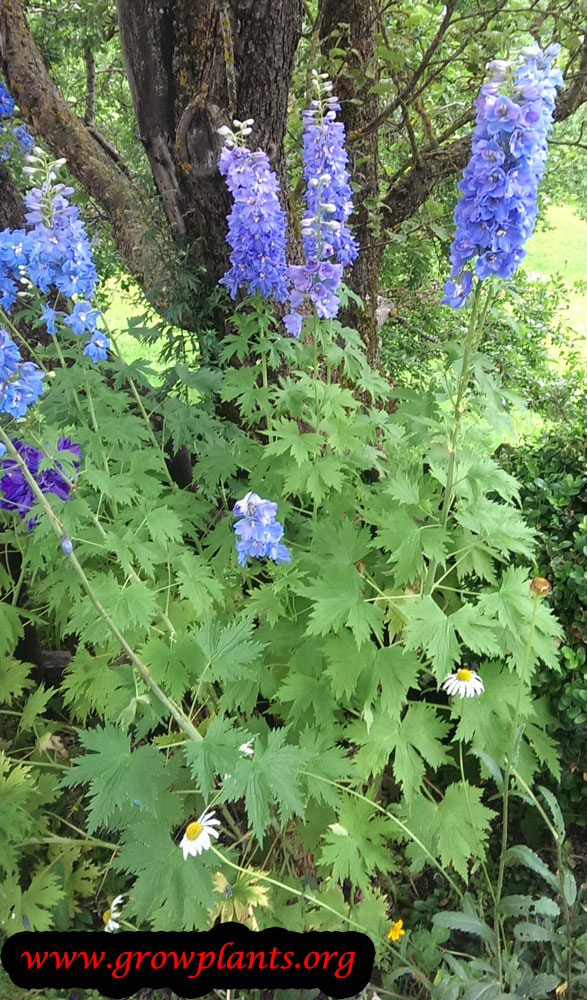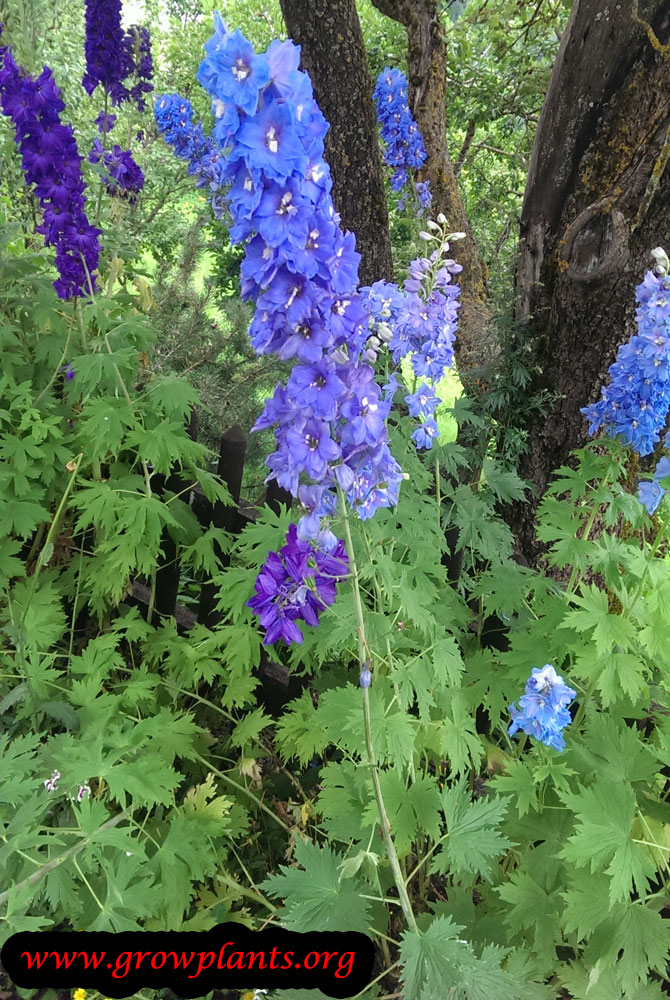



Plant Profile & Key Characteristics
Overview: Delphinium (Larkspur) is a tall herbaceous plant 0.7-2 m high, grown for its dramatic flower spikes and as a cut flower. It is a short-lived perennial (often grown as an annual) that attracts bees and butterflies.
Quick Specifications
| Specification | Attribute |
|---|---|
| Plant Type / Life Cycle | Perennial (often grown as an annual) |
| Foliage Type | Herbaceous, evergreen or deciduous |
| Mature Size | Height 0.7-2 m (2-6 ft) |
| Growth Rate | Moderate to fast |
| Toxicity | Toxic / poisonous – all parts (contains alkaloids) |
| Hardiness | USDA zones 3-10 |
Growth Form & Structure
- Height & Spread: Sends up tall flower spikes 0.7-2 m (2-6 ft) high from a basal clump; can be grown in a container.
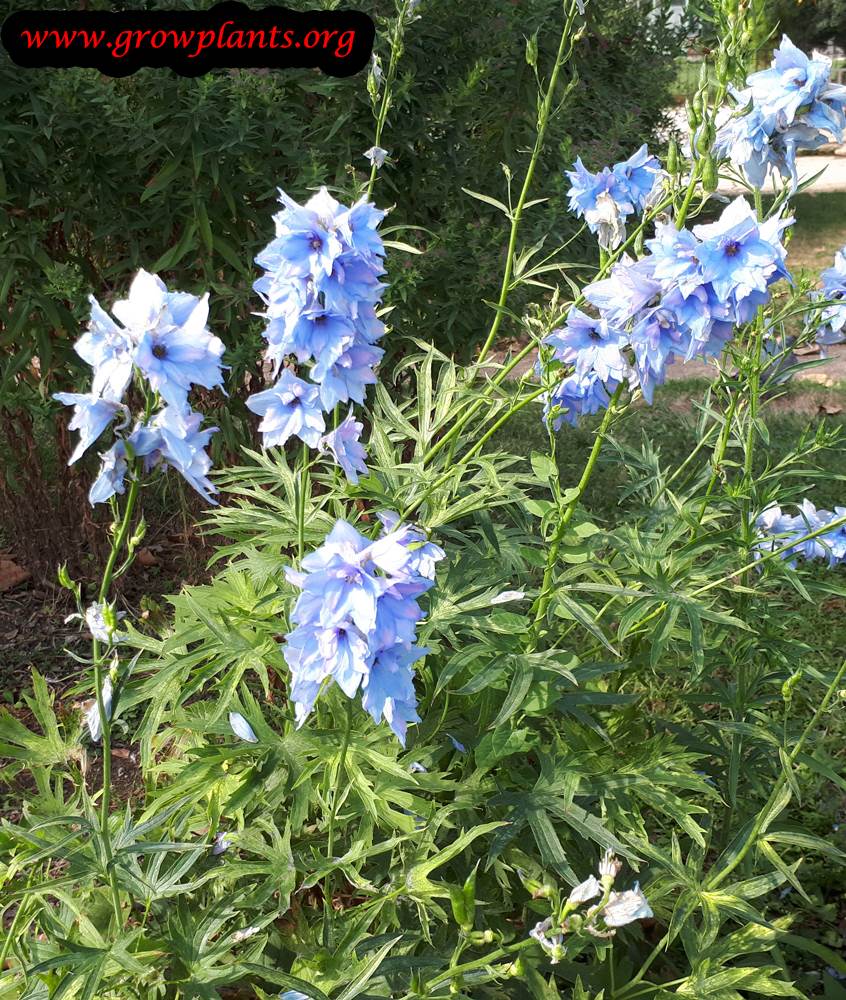
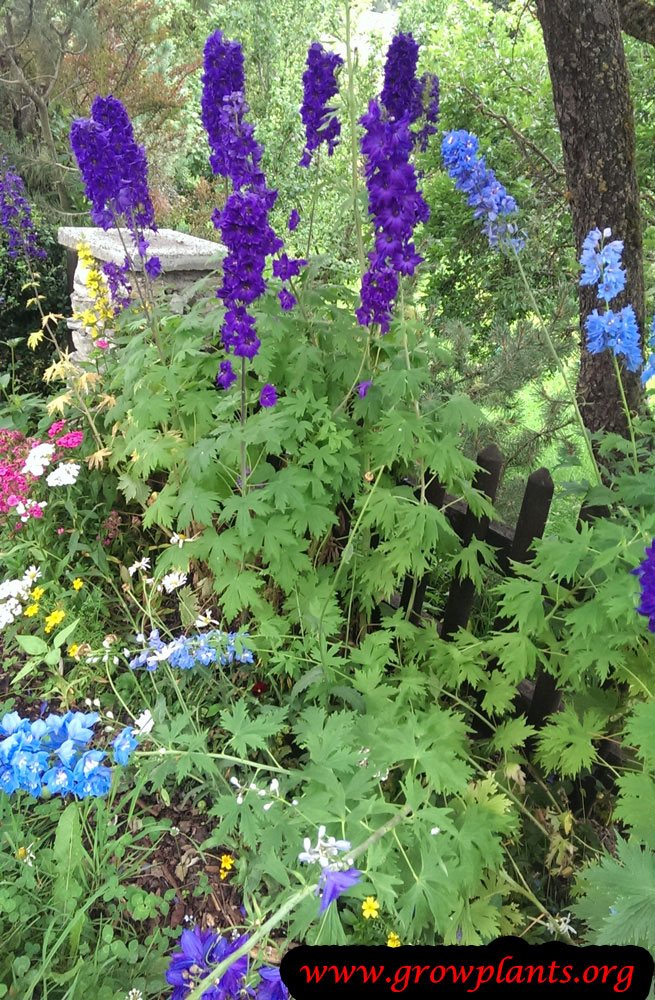
- Growth Habit & Form: Upright, clump-forming herbaceous plant with towering vertical flower spikes.
- Lifespan & Maturity: Short-lived perennial, frequently grown as an annual or biennial; fast to reach flowering height.
Anatomy & Physical Features
- Leaves & Foliage: Green, palmately lobed leaves (3-7 lobes) with serrated edges.
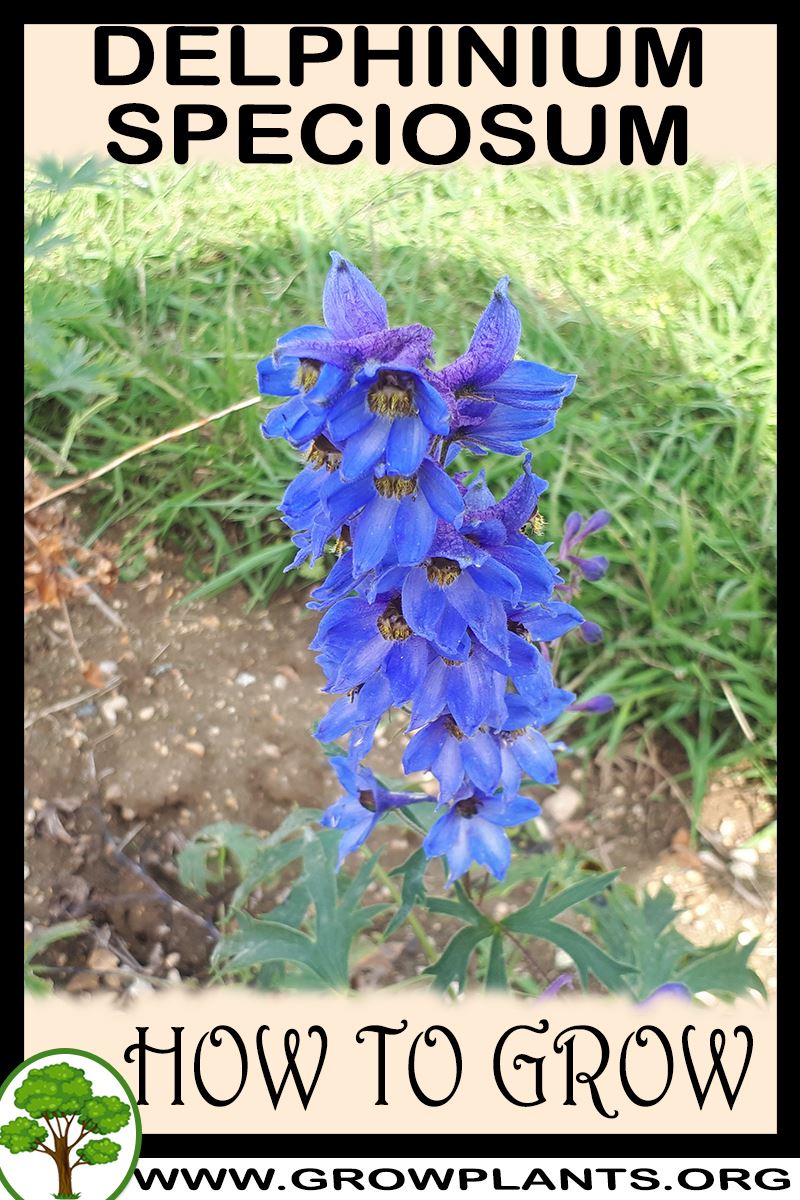
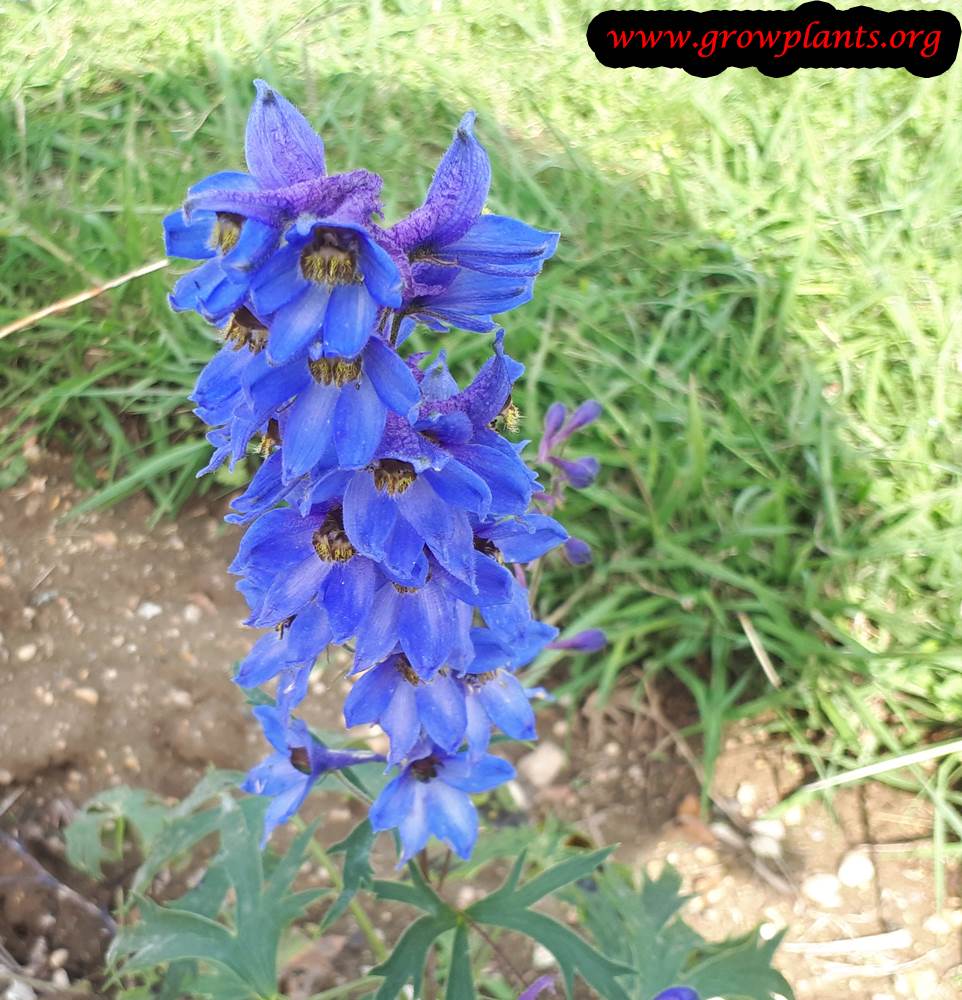
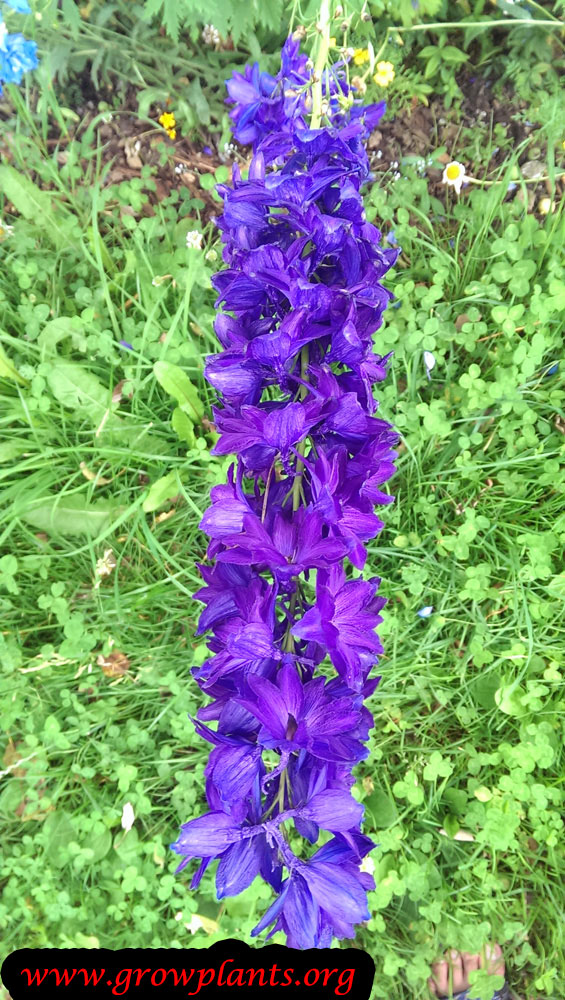
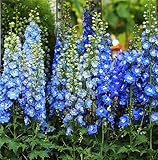
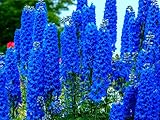
- Flower Characteristics: Tall spikes of flowers in blue, purple, pink, red, yellow, white, near-black or bicolours; a classic cut flower (full detail in the Bloom guide).
Primary Uses & Landscape Value
- Functional & Ornamental Roles: Ornamental border backbone, pollinator plant (bees and butterflies) and premium cut flower.
Care Guide: Planting, Soil & Watering
Overview: Delphiniums are tall perennials that grow best in full sun with rich, well-drained soil and steady moisture. They favour neutral to slightly alkaline soil and need consistent watering to support their fast, upright growth.
Quick Care Requirements
| Requirement | Ideal Condition |
|---|---|
| Planting Season | In spring to summer (or autumn in hot climates) |
| Growth Rate | Moderate to Fast |
| Soil Type | Rich, well-draining soil |
| Soil pH | Neutral to slightly alkaline |
| Water Need | Moderate to High – keep evenly moist |
Planting & Establishment
- Best Planting Season: Plant in spring to summer, or in autumn in hot climates.
- How to Plant:
- Hole Preparation: Dig a hole a little wider than the root ball on fertile, well-drained ground.
- Soil Amendments: Mix in compost or organic matter; a little garden lime suits its preference for slightly alkaline soil.
- Planting Depth: Set the crown at soil level – do not bury it, which can cause crown rot.
- Growth Speed & Expectations: Fast, sending up tall flower spikes that often need staking.
Soil, Watering & Drainage Care
- Soil Mix & Drainage Needs: Rich but free-draining soil; avoid waterlogging around the crown.
- Watering Schedule & Technique:
- Young / Newly Planted: Keep consistently moist while establishing.
- Established: Water regularly and deeply, especially during growth and flowering; do not let it dry out.
- Seasonal Adjustments: More in summer heat; less in winter dormancy.
Climate, Light & Hardiness
Delphinium (Delphinium) is a cool-climate perennial (sometimes grown as an annual) of temperate, Mediterranean, desert and mild-subtropical regions, performing best in full sun to light shade. It is very cold-hardy - grown across roughly USDA zones 3–10 - while summer heat and humidity, not winter cold, are what limit it at the warm end.
Quick Climate Specifications
| Climate Zones | Temperate, Mediterranean, desert, mild subtropical |
|---|---|
| USDA Hardiness Zones | Approximately 3–10 |
| Optimal Temp Range | Cool, roughly 15–21 °C (59–70 °F) |
| Cold Damage Begins | Very cold-hardy; the dormant crown withstands hard winter freezes |
| Approx. Survival Minimum | Established plants to about the zone 3 limit, roughly −40 to −34 °C (−40 to −30 °F) |
| Frost Tolerance | High (dormant crown) |
| Light Conditions | Full sun to half shade (afternoon shade in hot climates) |
| Wind Tolerance | Low (tall, brittle, hollow stems) |
Sunlight & Light Exposure
Optimal Light Setup
Full sun in cool climates gives the strongest, most densely flowered spikes; in warmer regions afternoon shade keeps plants cooler and prolongs bloom.
Shade & Heat Management
Where summers are hot, light or afternoon shade reduces heat stress that would otherwise cut flowering short and shorten the plant’s life.
Best Exposure / Orientation
An open but wind-sheltered position, with some relief from fierce afternoon sun in hot areas, suits it best.
Temperature Extremes & Hardiness
USDA Hardiness & Regional Limits
Hardy across roughly zones 3–10 and genuinely cold-loving. In hot-summer regions it is often short-lived and treated as an annual or biennial - a heat limitation, not a cold one. Hardiness also varies among the many hybrid strains.
Cold Damage & Winter Protection
The dormant crown is extremely frost-hardy; in the coldest zones a winter mulch mainly steadies it through freeze-thaw. New spring shoots are the tender part and can be nipped by a sharp late frost.
Frost Sensitivity
Low for established plants; only emerging spring growth is vulnerable to hard late frosts.
Extreme Heat Tolerance
This is the limiting factor - prolonged heat, and especially humid heat, weakens plants, encourages mildew and shortens their life, which is why cool-summer climates or afternoon shade give the best results.
Wind, Humidity & Microclimate
Humidity Preferences
Prefers cool, moderately dry to moderate humidity; muggy, still heat promotes powdery mildew and crown problems.
Wind Tolerance
Low - the tall, hollow flower stems snap readily in wind, so a sheltered site (and staking) is important to protect the spikes.
Microclimate Recommendations
A cool, wind-sheltered position with rich, even conditions and some afternoon shade in hot climates gives the tallest, longest-lasting spikes.
Growing in Pots, Balconies & Indoors
Delphiniums are stately border perennials (0.7-2 m) grown for their towering blue and purple flower spires. They are not houseplants, as the grower confirms, but they can be grown in large, deep pots on a patio. Note that the plant is poisonous.
Quick Details
- Container Size: A large, deep pot (25-40 L) to anchor the tall spikes and hold moisture
- Indoor Suitability: Not a houseplant (per the grower) – a tall outdoor border plant
- Best Spot: Full sun to half shade
- Soil & Drainage: Rich, aerated, free-draining mix, kept evenly moist
- Watering in Pots: Average to generous – they’re hungry, thirsty plants that dislike drying out
Indoors & On the Windowsill
- Houseplant limits: The grower marks it no for indoors; the tall spires need full outdoor light, cool air and space, not a windowsill.
- Overwintering: As perennials they die back and rest over winter; a potted crown is easy to keep in a sheltered spot and cut back after flowering.
On a Balcony or Patio
- Light & wind: Give them sun and, above all, staking – the tall hollow spikes snap in wind, so support them early and shelter from gusts. Pots dry fast, so keep the mix evenly moist and feed well.
Choosing the Pot, Soil & Long-Term Care
- Pot & drainage: Use a pot with strong drainage holes and skip a standing-water saucer, which invites root rot; terracotta breathes and dries faster, while glazed or plastic holds moisture longer.
- Potting mix: A light, aerated organic mix – peat or coir with perlite or vermiculite – gives the roots both moisture and air.
- Feeding: Potted plants use up their feed faster because each watering leaches nutrients away, so feed a little more often than plants in open ground.
- Repotting: Refresh the top of the mix and pot up every couple of years; a light root and top prune at repotting keeps established plants vigorous.
Safety: Delphinium is poisonous – all parts contain toxic alkaloids. Keep pots away from children and pets, and don’t eat any part.
Fertilizing & Feeding
A moderate feeder: delphiniums are hungry border plants that reward balanced spring feeding and rich, well-drained soil, then need no feeding while dormant.
Quick Fertilizing Specs
| Feeding Level | Moderate |
|---|---|
| young_feeding | Balanced feeding to establish |
| mature_feeding | Balanced feeding through growth and bloom |
| Main Nutrient Priority | Balanced nutrition; adequate nitrogen for growth, not high phosphorus for bloom |
| Best Feeding Period | Spring through the flowering period |
| Organic Options | Compost, well-rotted manure and mulch |
| Micronutrients | Rarely needed where soil is healthy and near neutral |
| Soil pH | Neutral to slightly alkaline, well-drained soil |
| Reduce/Stop Feeding | Ease off after flowering and stop during dormancy |
Feeding by Growth Stage
Spring growth
Fuel fresh spring growth of stems and foliage on delphinium.
| Nutrient direction | A balanced complete fertilizer as growth resumes in spring supports strong leaves and stems. |
|---|---|
| Timing | Early in the growing season as new growth begins. |
| Frequency | A light feeding as growth starts, repeated modestly through spring. |
| Fertilizer types | Balanced complete flower or garden fertilizer, Compost or well-rotted organic matter |
| Precautions | Avoid heavy nitrogen, which produces lush foliage at the expense of flowers. |
Bloom
Support abundant, good-quality flowers on delphinium through the blooming period.
| Nutrient direction | Keep feeding balanced with adequate nitrogen; balanced nutrition, not high phosphorus, drives good bloom. |
|---|---|
| Timing | From bud formation through the flowering period. |
| Frequency | Light, steady feeding while in active bloom. |
| Fertilizer types | Balanced complete fertilizer, Compost as a slow background source |
| Precautions | Do not rely on high-phosphorus ‘bloom booster’ products; balanced feeding is enough. |
Dormancy or rest
Let delphinium rest without pushing new growth.
| Nutrient direction | None – withhold fertilizer during dormancy. |
|---|---|
| Timing | After flowering, through autumn and winter dormancy. |
| Frequency | No feeding at this stage. |
| Fertilizer types | No feeding at this stage; do not fertilize until active growth resumes. |
| Precautions | Do not fertilize dormant plants; resume only when growth restarts. |
Nutrient Deficiency Signs & Corrections
Overall pale, yellowing leaves with weak, slow growth.
| Possible causes | Low soil nitrogen, Poor, leached or sandy soil, Cold or waterlogged soil limiting uptake |
|---|---|
| Appears first on | Older, lower leaves |
| What to check | Feeding history, Soil organic matter, Drainage and weather |
| Possible correction | Apply a balanced complete fertilizer and build the soil with compost. |
Lush leafy growth but few flowers.
| Possible causes | Excess nitrogen relative to other nutrients, Too much shade, Over-feeding with a high-nitrogen fertilizer |
|---|---|
| Appears first on | The whole plant, as a balance of leaves over flowers |
| What to check | Fertilizer type and rate, Light levels, Overall vigour |
| Possible correction | Switch to balanced feeding, ease off nitrogen and ensure adequate light. |
Young leaves yellow between still-green veins.
| Possible causes | High soil pH limiting iron availability, Waterlogged or cold soil, A genuine micronutrient shortage |
|---|---|
| Appears first on | Youngest leaves |
| What to check | Soil pH, Drainage, Whether only new growth is affected |
| Possible correction | Correct pH where possible and, if needed, apply a chelated micronutrient product per its label. |
Pruning, Training & Seasonal Maintenance
Delphinium is an herbaceous perennial with no permanent woody structure, so pruning is really deadheading and an end-of-season cutback. Removing the spent flower spike promptly, cut back to a strong side shoot, often triggers a smaller secondary flush of bloom; the plant is then cut down to the base in autumn-winter once its tall flowering stems have finished and foliage begins to die back. Because the display comes from current-season growth off the crown, timing affects rebloom and tidiness far more than it affects the plant’s long-term shape.
Quick Pruning & Maintenance Specs
| Pruning Tolerance | Moderate (tolerates a full cutback once flowering ends) |
| Primary Pruning Window | Autumn-winter (old flowering stems cut to the base) |
| Secondary Maintenance Window | During bloom (deadheading spent spikes) |
| Typical Frequency | Deadhead through the bloom season; one full cutback in autumn-winter |
| Main Objective | Prolong bloom by deadheading; clear old top growth before winter |
| Young Plant Priority | None – let the plant build a strong crown; stake as it grows tall |
| Mature Plant Priority | Deadhead spent spikes; stake tall stems; cut back fully in autumn-winter |
| Best Tool Type | Bypass secateurs; stakes/ties for support |
| Avoid Heavy Pruning During | Peak flowering |
Pruning by Plant Age & Size
Newly Established
Minimal – no pruning beyond removing damaged growth while the plant develops its root system and crown.
Young / Formative
Staking is the main “training” task: at 0.7-2 m (2-6 ft), the flower spikes are tall and top-heavy, so support stakes are best set early, before stems lean or snap, rather than after.
Mature / Established
Deadhead the main spike just above a strong lateral bud once its flowers fade, to encourage a secondary flush; cut all flowering stems back to near ground level in autumn-winter.
Seasonal Pruning Schedule
Post-Flowering: remove the spent flower spike, cutting back to a strong lateral shoot or bud; leave healthy basal foliage untouched; the response is typically a shorter secondary bloom flush, so the impact on flowering is positive.
Dormant/Winter: remove all old flowering stems and dying foliage, cutting near the base, once top growth has finished for the season; leave the basal crown itself intact. This clears material that could otherwise harbour disease over winter and has no negative effect on next year’s bloom, since new spikes arise fresh from the crown.
Structural Pruning & Training
Staking tall spikes against wind and rain is the main structural concern; there is no canopy or branch framework to manage on this herbaceous plant.
Special Growth to Remove
Spent flower spikes/stems (deadhead) and old, dying foliage and stems cleared in the autumn-winter cutback.
Container & Small-Space Pruning
Can be grown in containers; staking is even more important there, since a pot is more easily toppled by top-heavy flower spikes than a plant in open ground, and containers dry out faster given the plant’s average-to-high water needs.
Tools
Bypass secateurs for cutting the firm flower stems; soft ties or stakes for support. Loppers, saws and hedge shears have no place on this herbaceous perennial.
Tool Hygiene & Disease Risk
Routine – clean, sharp secateurs are sufficient. The plant is toxic, so wear gloves when handling cut stems for the handler’s protection.
Cut Placement & Technique
Deadhead by cutting just above a strong side shoot or bud rather than at the very top, so the plant has somewhere to direct its rebloom energy; cut old stems near the base at the autumn-winter clearing, taking care not to crush the pithy, hollow stems.
Heavy Pruning & Rejuvenation
A full cutback to the base is normal and expected once flowering finishes for the season – this is routine maintenance, not a rare rejuvenation measure. Avoid cutting the plant hard back while it is still actively flowering.
Post-Pruning Care
After the autumn-winter cutback, ensure the crown has sharp drainage over winter (delphiniums are prone to crown rot in soggy, poorly drained soil); resume normal average-to-high watering after deadheading during the growing season.
Common Pruning Mistakes
Cutting the whole plant down while spikes are still partly in flower; deadheading too far above a viable side shoot, wasting the chance of a second flush; failing to stake early, so stems snap and need removing instead of simply being supported.
When NOT to Prune
Avoid a full cutback while spikes are still flowering; avoid heavy handling during prolonged wet weather, since delphiniums are susceptible to crown and root rot in waterlogged conditions.
Recommended Tools (by task)
- Bypass secateurs – deadheading spent spikes and the autumn-winter cutback.
- Soft ties/stakes – supporting tall, top-heavy flower spikes before they lean or snap.
Propagation Guide
Delphinium is raised from seed for species and seed strains, but named hybrids are variable from seed and are kept true by vegetative means — basal stem cuttings taken in spring or division of the crown. Seed is short-lived and germinates best cool. Overall moderate.
Quick Propagation Specs
| Best Propagation Method | Basal stem cuttings or crown division (named forms); seed (species/strains) |
| Alternative Methods | Seed |
| Propagation Difficulty | Moderate |
| Seed True-to-Type | Hybrids variable; species/strains fairly true |
| Vegetative True-to-Type | Yes |
| Best Propagation Season | Spring (cuttings/division); sow spring or autumn |
Growing from Seed
Seed Handling & Viability
Delphinium seed is short-lived and loses viability quickly in warm storage — sow fresh, or keep seed cool or refrigerated until sowing.
Dormancy & Pre-Sowing Treatment
Germinates best in cool conditions and prefers darkness, so cover the seed lightly; warm soil suppresses germination.
Sowing Season
Sow in spring or autumn, matching the site’s spring/summer and autumn windows.
Germination Conditions
Cool, moist, lightly covered; emergence can be uneven.
Stem Cuttings
In spring, take basal cuttings from young shoots a few inches tall, cutting close to the crown so each has a sliver of firm basal tissue. Reject hollow shoots — choose solid ones. Root them under humidity. This keeps a named cultivar true.
Division, Offsets, Pups & Suckers
Lift and divide the crown in spring as growth begins, making sure each piece has both buds and roots; replant promptly. All parts are toxic — wear gloves.
Bloom & Flower Guide
Quick Details
- Bloom Season: Late spring into summer
- Time to First Bloom: Perennial types usually flower in their second year; annual larkspurs bloom in their first season
- Flower Appearance: Tall spikes densely packed with flowers in blue, purple, pink, red, yellow, white, near-black or bicolour
- Edibility: Not edible – all parts of Delphinium (larkspur) are poisonous; the flowers must never be eaten
Detailed Blooming Overview
Delphiniums are grown above all for their dramatic vertical flower spikes. The blooms are rich in nectar and draw in butterflies and bees, and the long spikes are a classic cut flower. Handsome as they are, every part of the plant is toxic, so enjoy the flowers in the border or the vase rather than on the plate.
Flower Characteristics
- Flowers carried on tall upright spikes, opening from the bottom of the spike upward.
- Very wide colour range – blue, purple, pink, red, yellow, white, near-black, and bicolours.
- Nectar-rich and long-lasting once cut.
Bloom Care & Thinning
- Support: The tall, top-heavy spikes benefit from staking so wind and rain do not snap them.
- Deadheading & rebloom: Cutting spent spikes back to a lower set of leaves often coaxes a lighter second flush.
- Pollination: Visited by bees and butterflies drawn to the nectar.
- Safety: All parts are poisonous – keep cut stems and trimmings away from children and pets.
Bloom Health & Protection
- Powdery mildew: A white dusty film can appear on leaves and buds in warm, humid, crowded conditions. Good spacing and airflow help most, and a sulfur-based fungicide can be used if it takes hold.
Pests, Diseases & Troubleshooting
Delphinium (larkspur) is a tall, soft-tissued Ranunculaceae perennial whose lush spring growth is a magnet for slugs and snails – its number-one enemy – along with cyclamen mite, aphids and leaf-miner larvae, while powdery mildew, bacterial black blotch and crown rot are the key diseases. All parts are toxic, so handle with care. Slug vigilance from the first shoots, good airflow and sharp winter drainage are the heart of successful culture.
Quick Troubleshooting Overview
| Issue / Pest | Main Symptom | Primary Solution |
|---|---|---|
| Slugs & snails | Emerging shoots shredded overnight; slime trails | Early night patrol, barriers, iron-phosphate bait |
| Cyclamen mite | Distorted, blackened, stunted new growth and buds | Remove affected shoots; hot-water/miticide, isolate |
| Aphids | Sticky curled tips; spreads virus | Rinse off, beneficials, insecticidal soap |
| Larvae / leaf miners | Blotchy mined leaves, chewed foliage | Pick affected leaves, encourage wasps |
| Powdery mildew | White film on leaves and stems | Airflow, avoid overhead water, sulphur |
| Black blotch (bacterial) | Shiny black blotches on leaves/stems | Remove/destroy, avoid wetting, sanitation |
Common Pests & Management
- Slugs & snails (Deroceras / Helix / Arion spp.):
- Symptoms: The number-one pest: emerging spring shoots and tender leaves are rasped and shredded overnight, often destroying young crowns before they can grow away; slime trails confirm the culprit.
- Prevention & Control: Start patrols the moment shoots appear; hand-collect at dusk after rain; ring crowns with sharp grit, crushed shell or copper; use iron-phosphate pellets, which are safer around pets and wildlife; clear nearby debris where slugs shelter.
- Cyclamen mite (Phytonemus pallidus):
- Symptoms: Microscopic mites deep in the growing tips cause distorted, brittle, blackened and stunted new leaves and deformed flower buds; damage is often mistaken for disease.
- Prevention & Control: Cut out and destroy affected shoots; isolate infested plants and avoid spreading mites on hands and tools; encourage predatory mites; badly affected clumps may need disposal, as these mites are hard to reach with sprays.
- Aphids (Myzus persicae / Aphis spp.):
- Symptoms: Soft green or black insects cluster on shoot tips, flower stems and leaf undersides; growth curls, honeydew makes leaves sticky, and aphids spread larkspur viruses.
- Prevention & Control: Dislodge with a water jet, support ladybirds, lacewings and hoverflies, pinch out badly infested tips, and treat persistent colonies with insecticidal soap in the evening. Wear gloves – the plant is toxic.
- Delphinium leaf miner / larvae (Phytomyza / caterpillar larvae):
- Symptoms: Larvae mine blotches inside the leaves or chew the foliage, leaving pale blotchy patches and ragged holes that mar the plant.
- Prevention & Control: Pick off and destroy mined and chewed leaves, keep the area weeded, encourage parasitic wasps and birds, and use Bt for caterpillars where needed; tolerate minor cosmetic damage.
- Two-spotted spider mite (Tetranychus urticae):
- Symptoms: In hot, dry spells leaves show fine stippling and bronzing, with fine webbing on undersides.
- Prevention & Control: Raise humidity and hose down foliage, keep plants watered and unstressed, encourage predatory mites, and use horticultural oil or insecticidal soap if it persists.
Diseases & Fungal Issues
- Powdery mildew (Erysiphe / Golovinomyces):
- Symptoms: A white, dusty coating spreads over leaves and stems, mainly in crowded plantings and late in the season; leaves yellow and dry and flowering suffers.
- Treatment & Management: Space and stake plants for airflow, thin overcrowded stems, and avoid overhead watering late in the day; remove affected foliage; spray sulphur or potassium bicarbonate at first signs, repeating as needed.
- Bacterial black blotch (Pseudomonas delphinii (syn. P. syringae pv. delphinii)):
- Symptoms: Irregular, shiny, tar-black blotches appear on leaves, stems and buds, starting on lower leaves in wet weather and spreading upward; distinctive and disfiguring.
- Treatment & Management: There is no cure: remove and destroy affected leaves and, if severe, whole plants; avoid overhead watering and working plants when wet; clear debris, sanitise tools, and improve airflow to slow spread.
- Crown and root rot (Sclerotium / Pythium / Phytophthora / Rhizoctonia):
- Symptoms: The crown and roots rot in wet, heavy or poorly drained soil, causing sudden wilting, blackening at the base and collapse, often in warm, waterlogged conditions.
- Treatment & Management: Plant in free-draining soil with the crown at the right depth, avoid winter waterlogging and heavy mulch piled on the crown, and improve drainage; remove and destroy rotted plants and do not replant delphiniums in the same infected spot.
- Fungal leaf spot (Various fungi):
- Symptoms: Brown or dark spots with defined margins scatter over the leaves in wet, humid seasons.
- Treatment & Management: Remove spotted leaves, clear debris, and improve air movement; rarely needs a fungicide if airflow and sanitation are good.
Growing Difficulties & Abiotic Problems
- Toxicity (grower safety):
- Cause & Symptoms: All parts, especially seeds and young growth, are poisonous if eaten and the sap can irritate skin.
- Correction Strategy: Wear gloves when handling, cutting or dividing, wash hands afterwards, and keep the plant and its seed away from children, pets and grazing animals.
- Wind and stem collapse:
- Cause & Symptoms: Tall, hollow, brittle flower spikes snap or flop in wind and rain, especially the large hybrid types.
- Correction Strategy: Stake early with canes or ring supports as the spikes rise, site out of strong wind, and cut spent spikes to encourage a sturdier second flush.
- Winter wet / short-lived crowns:
- Cause & Symptoms: Crowns rot and clumps dwindle in cold, wet, heavy soil, and hybrid delphiniums are often short-lived.
- Correction Strategy: Improve drainage and add grit to heavy soil, keep the crown from sitting wet in winter, divide clumps regularly, and mulch away from the crown itself.
- Poor flowering / weak spikes:
- Cause & Symptoms: Shade, poor soil, drought or overcrowding give thin, sparse spikes.
- Correction Strategy: Grow in full sun to light shade in rich, well-drained soil, feed and water through the growing season, thin weak shoots for fewer strong spikes, and divide congested clumps.
What Helps – Products & Tools
For delphiniums, slug control comes first: iron-phosphate bait and grit or copper barriers protect the emerging spikes. Insecticidal soap and horticultural oil handle aphids and mites, sulphur or potassium-bicarbonate fungicide covers powdery mildew, and rigorous sanitation is the answer to bacterial black blotch. Sharp drainage guards the crowns, and good staking prevents storm damage. Wear gloves – the plant is toxic.