Plant Profile & Key Characteristics
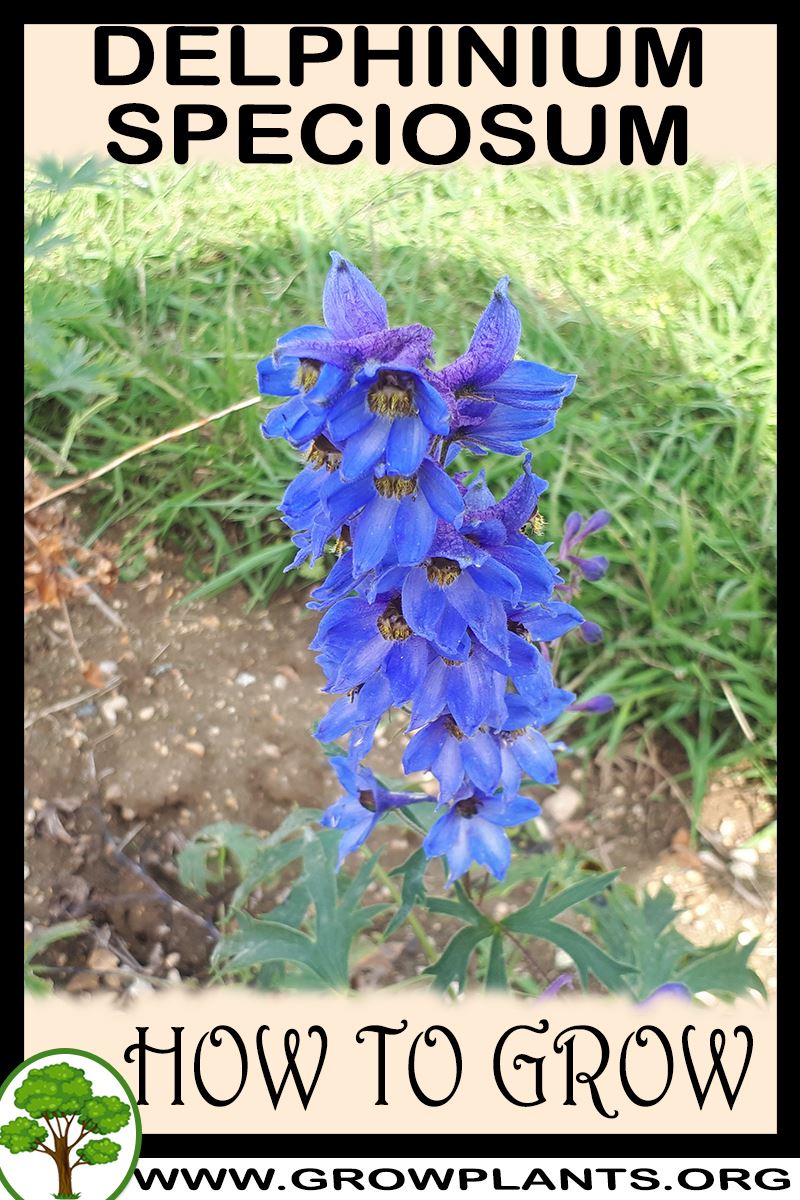
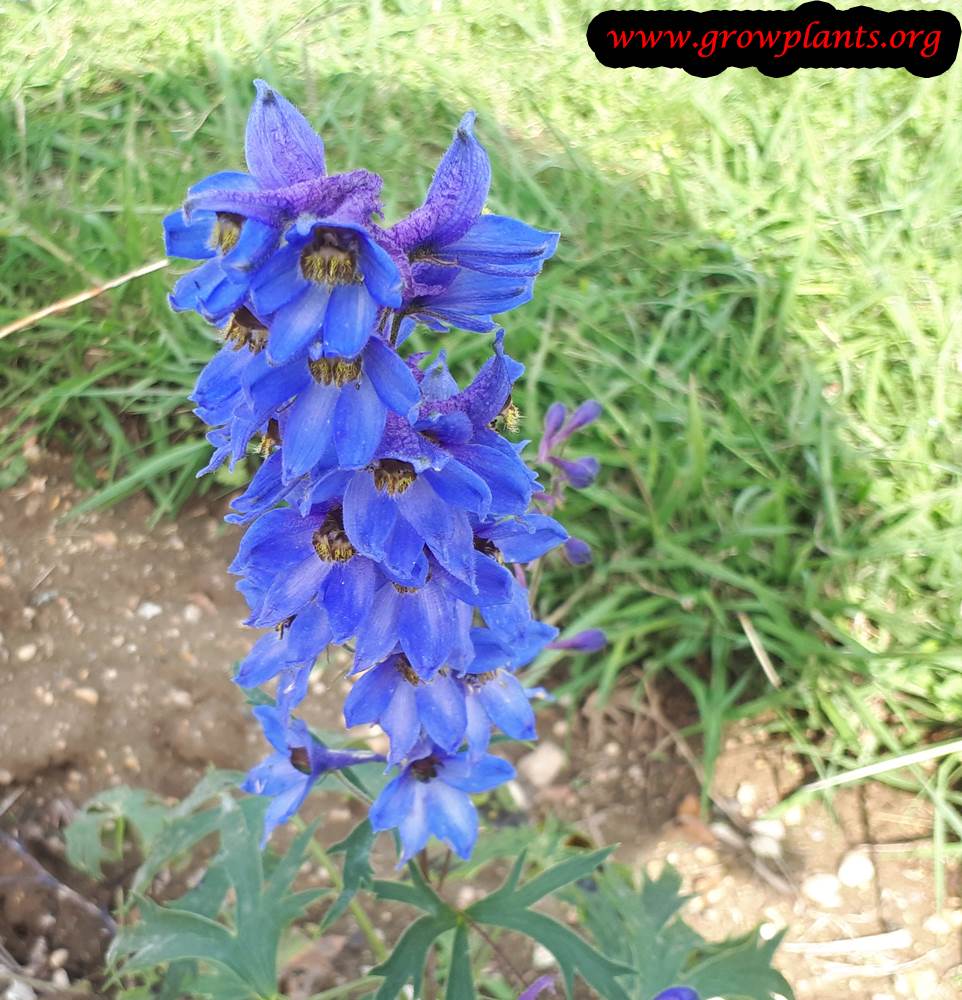
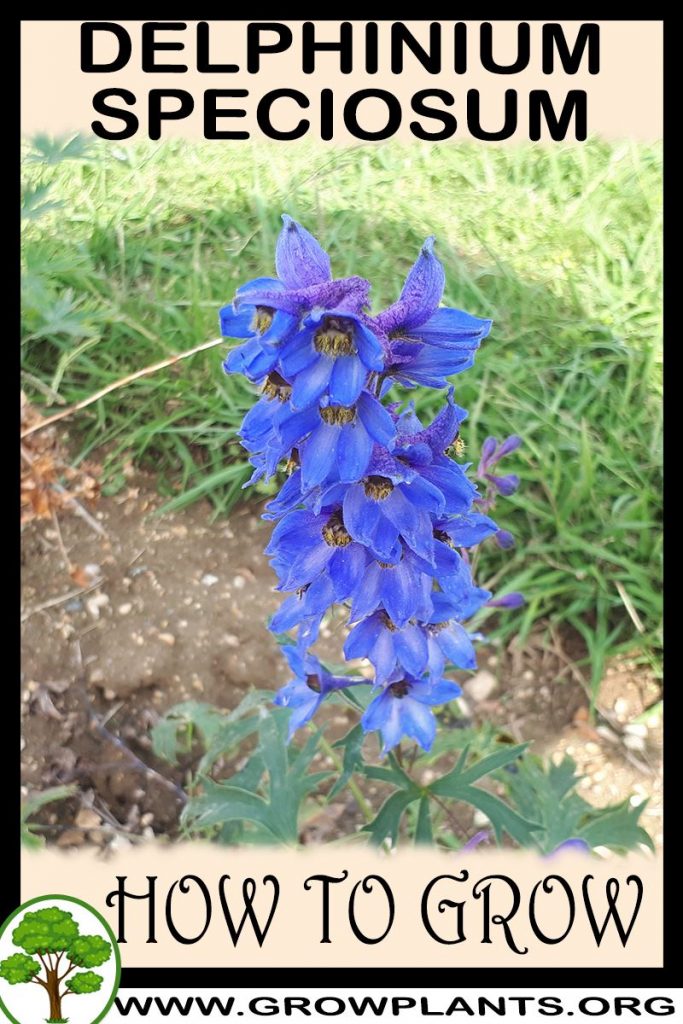
Overview: Candle larkspur (Delphinium speciosum) is an upright herbaceous perennial reaching 0.7-2 m, grown for its tall spikes of blue-purple flowers. All parts are toxic, and it is valued as a cut flower and pollinator plant.
Quick Specifications
| Specification | Attribute |
|---|---|
| Plant Type / Life Cycle | Perennial (sometimes grown as an annual) |
| Foliage Type | Semi-evergreen (evergreen or deciduous by climate) |
| Mature Size | 0.7-2 m (2-6 ft) tall |
| Growth Rate | Fast to Moderate |
| Root System | Fibrous, clumping |
| Toxicity | Toxic – all parts contain toxic alkaloids |
| Hardiness | USDA zones 3-10 |
Growth Form & Structure
- Height & Spread: Tall flower spikes 0.7-2 m (2-6 ft), often needing staking; also grown in containers.
- Growth Habit & Form: Upright, clumping herbaceous perennial producing tall vertical flower spikes.
- Lifespan & Maturity: Perennial (often short-lived); blooms in spring and summer.
Anatomy & Physical Features
- Leaves & Foliage: Green, palmately lobed leaves (3-7 lobes) with serrated edges.
- Flower Characteristics: Blue to purple flowers borne on tall spikes; excellent as a cut flower.
Primary Uses & Landscape Value
- Functional & Ornamental Roles: Ornamental back-of-border and cut flower; attracts butterflies and bees.
Care Guide: Planting, Soil & Watering
Overview: Candle larkspur is a tall perennial that grows best in full sun to light shade in rich, well-drained soil kept steadily moist. It is one of the few border plants that genuinely prefers a neutral-to-alkaline soil, and all parts are toxic if eaten.
Quick Care Requirements
| Requirement | Ideal Condition |
|---|---|
| Planting Season | In spring and summer (or autumn in hot climates), after frost |
| Growth Rate | Moderate to Fast |
| Soil Type | Rich, well-drained soil |
| Soil pH | Neutral to slightly alkaline (source notes it prefers alkaline soil) |
| Water Need | Moderate to High — keep evenly moist |
Planting & Establishment
- Best Planting Season: Plant in spring to summer after the last frost; in hot-summer climates plant in autumn so roots establish in cooler weather.
- How to Plant:
- Hole Preparation: Dig a hole about twice the width of the root ball; in heavy ground loosen deeply to improve drainage, and plan to stake the tall spikes.
- Soil Amendments: Enrich the backfill with compost; where soil is very acidic, a little garden lime suits this alkaline-preferring plant.
- Planting Depth: Set the crown at soil level, not buried, to avoid crown rot; firm and water in.
- Growth Speed & Expectations: Moderate to fast, sending up flower spikes 0.7–2 m tall that usually need staking.
Soil, Watering & Drainage Care
- Soil Mix & Drainage Needs: Rich but sharply drained soil is key — the plant wants steady moisture at the roots yet rots in waterlogged, poorly drained ground.
- Watering Schedule & Technique:
- Young / Newly Planted: Keep the soil consistently moist while the young plant builds its root system.
- Established: Water regularly and deeply so the soil stays evenly moist, especially as flower spikes form; avoid letting it dry out.
- Seasonal Adjustments: Water more in warm, active growth and flowering; reduce over winter dormancy.
Climate, Light & Hardiness
Delphinium speciosum (Candle larkspur) is a cold-hardy herbaceous perennial suited to temperate, Mediterranean, desert, and subtropical climates, grown as an evergreen, deciduous, or annual plant depending on conditions. It performs best in full sun to half shade and tolerates winter cold across a wide zone range.
Quick Climate Specifications
| Climate Zones | Temperate, Mediterranean, desert, and subtropical climates |
|---|---|
| USDA Hardiness Zones | Approximately zone 3–10 |
| Optimal Temp Range | Cool to mild growing-season temperatures |
| Cold Damage Begins | Foliage dies back with hard freezes in colder parts of its range |
| Approx. Survival Minimum | The root system of established plants tolerates the severe winter cold typical of zone 3 |
| Frost Tolerance | High |
| Light Conditions | Full Sun to Half Shade |
Sunlight & Light Exposure
Optimal Light Setup
Full sun to half shade suits this plant well; some afternoon shade helps in hot desert or subtropical climates.
Direct Sun Requirement
Several hours of direct sun daily support the strongest flower spikes.
Best Exposure / Orientation
An open bed in full sun works well in cooler zones; light afternoon shade is preferable in the hottest parts of its range.
Temperature Extremes & Hardiness
USDA Hardiness & Regional Limits
Site data places this plant across a broad zone 3–10 range, reflecting strong winter cold tolerance; at the warm end of its range (desert, subtropical), summer heat rather than cold becomes the main limiting factor, and the plant may behave as a shorter-lived or annual planting.
Cold Damage & Winter Protection
In the coldest zones, the plant dies back to the ground in winter and regrows from the root in spring; a layer of mulch can help protect the crown.
Frost Sensitivity
Foliage is frost sensitive and dies back with hard freezes, but the root system is very cold hardy across most of its range.
Extreme Heat Tolerance
Heat and drought stress are more limiting than cold in the warmer, desert, and subtropical parts of its range.
Wind, Humidity & Microclimate
Microclimate Recommendations
A site with good air circulation and well-drained soil helps this tall-spiked plant handle both winter cold and summer heat without rot or lodging.
Growing in Pots, Balconies & Indoors
Delphiniums are tall, sun-loving border perennials, not houseplants – the grower confirms they will not grow indoors. They can, however, be grown in a large, deep container on a sunny patio or balcony, where their flower spikes make a fine display before they are cut back for the season.
Quick Details
- Container Size: Large and deep – these grow 0.7-2 m (2-6 ft) tall and need root room and stability
- Indoor Suitability: Not a houseplant; grow outdoors
- Best Spot: Full sun to light shade, sheltered from wind
- Soil & Drainage: Rich, moisture-retentive but free-draining mix
- Watering in Pots: Keep evenly moist through the growing season – tall growth is thirsty and pots dry fast
Indoors & On the Windowsill
- Not for indoors: The grower marks it as unsuitable as a houseplant – it needs full outdoor sun, cool air, and a winter chill to perform, none of which a room provides.
- Overwintering: As a hardy perennial it is best left outdoors; in pots it dies back and re-sprouts, so simply protect the pot from waterlogging over winter.
On a Balcony or Patio
- Light & wind: Give it the sunniest spot, but stake the tall spikes and shelter from wind, which snaps them easily. Walls and paving reflect heat, so check pot moisture often.
- Weight & drainage: A big, filled pot is heavy and prone to blowing over when top-heavy – use a sturdy, wide-based container and let excess water drain away freely.
Choosing the Pot, Soil & Long-Term Care
- Pot & drainage: Choose a pot a size or two larger than the root ball, with strong drainage holes; skip a standing water saucer to avoid root rot. Terracotta breathes and dries faster, while glazed or plastic pots hold moisture longer.
- Potting mix: A well-aerated, organic-rich mix – a quality potting mix, or peat/coir blended with perlite or vermiculite.
- Feeding: Potted plants need feeding more often than those in open ground, as frequent watering leaches nutrients away – feed lightly through the growing season.
- Repotting: Refresh the mix or pot up about every two years; for perennials, lightly trim the root ball and top growth at the same time.
Fertilizing & Feeding
A moderate feeder – steady, balanced nutrition through spring growth and bloom supports the tall flower spikes, but the plant should rest without feeding once flowering ends.
Quick Fertilizing Specs
| Feeding Level | Moderate feeder |
|---|---|
| young_feeding | Establish new plants with a light, balanced feed as spring growth begins |
| mature_feeding | Balanced feeding through spring growth and into bud set, then rest after bloom |
| Main Nutrient Priority | Balanced overall nutrition rather than a phosphorus-heavy bloom formula |
| Best Feeding Period | Spring growth through bud set |
| Organic Options | Compost or aged manure worked in around the crown in spring can substitute for part of a balanced feeding program |
| Soil pH | Prefers alkaline, well-drained soil |
| Reduce/Stop Feeding | Stop feeding once bloom finishes and the plant is cut back for the season |
Feeding by Growth Stage
Spring Growth
Build strong basal foliage and sturdy flower spikes as new growth emerges from the crown
| Nutrient direction | A balanced, all-around feed that supports steady leaf and stem development without pushing soft, floppy growth |
|---|---|
| Timing | Early spring as new shoots emerge from the crown |
| Frequency | A light, regular feeding routine through the early growth period is usually enough |
| Fertilizer types | A balanced granular or liquid garden fertilizer worked in around the crown |
| Precautions | Keep fertilizer off the crown itself and water it in well to avoid root burn |
Bud Set and Bloom
Sustain the tall flower spikes through budding and bloom without encouraging excess leafy growth at the plant’s expense
| Nutrient direction | Continue a balanced feed rather than switching to a high-phosphorus bloom booster – adequate overall nutrition, not extra phosphorus, drives flowering |
|---|---|
| Timing | As flower spikes elongate through bloom |
| Frequency | A modest feeding as spikes begin to form is generally sufficient for the bloom cycle |
| Fertilizer types | A balanced garden fertilizer, avoiding heavy phosphorus-only bloom formulas |
| Precautions | Avoid heavy feeding late in bloom, which can weaken stems that are already carrying tall flower spikes |
Post-Bloom Rest
Let the plant recover after flowering and cutting back without pushing new growth into cold weather
| Nutrient direction | None – withhold fertilizer once bloom finishes and the spent spikes are cut back |
|---|---|
| Timing | After bloom finishes through autumn and winter |
| Frequency | No feeding at this stage |
| Fertilizer types | No feeding at this stage – resume balanced feeding only when new spring growth appears |
| Precautions | Do not fertilize dormant crowns; feeding now encourages tender growth vulnerable to cold |
Nutrient Deficiency Signs & Corrections
Lower, older leaves turn pale green to yellow while new growth stays green
| Possible causes | nitrogen deficiency from lean soil or no feeding program, waterlogged roots limiting nutrient uptake, natural lower-leaf senescence as the plant matures |
|---|---|
| Appears first on | older, lower leaves first |
| What to check | feeding history and soil richness, drainage and root health, whether yellowing is isolated to the oldest leaves |
| Possible correction | Work in a balanced fertilizer or compost at the start of spring growth and correct any drainage problems |
New leaves emerge yellow with the veins staying green
| Possible causes | iron chlorosis linked to the alkaline soil this plant favors, poor drainage stressing the root system, manganese deficiency producing a similar interveinal pattern |
|---|---|
| Appears first on | newest leaves |
| What to check | soil pH tendency, drainage, whether the pattern is truly interveinal |
| Possible correction | Apply a chelated iron product per its label if soil pH is pushing too alkaline, and improve drainage |
Flower spikes grow tall but thin and flop over before or during bloom
| Possible causes | excess nitrogen pushing soft leafy growth at the expense of sturdy stems, insufficient light causing stretched, weak growth, inadequate staking or support for the plant’s natural height |
|---|---|
| Appears first on | flower stems and upper foliage |
| What to check | recent feeding balance and nitrogen load, light exposure, whether the planting is staked or supported |
| Possible correction | Shift to a balanced rather than nitrogen-heavy feed and provide staking support |
Pruning, Training & Seasonal Maintenance
Delphinium speciosum is an herbaceous perennial (often grown as an annual in hot climates) that produces tall flower spikes each season, so pruning here means seasonal cutback and deadheading rather than shaping woody structure. It tolerates fairly hard cutting back since new growth resprouts from the basal crown, and the main objective is to remove spent flower spikes to tidy the plant, reduce self-seeding, and prepare the crown for its autumn–winter dormancy. Because the whole plant is toxic, cutting is also a safety task, not just a cosmetic one.
Quick Pruning & Maintenance Specs
| Pruning Tolerance | Moderate–High (regrows from basal crown) |
| Primary Pruning Window | Autumn–winter, after flowering finishes and foliage declines |
| Secondary Maintenance Window | Spring–summer deadheading of spent spikes as blooms fade |
| Typical Frequency | 1–2 times per growing season |
| Main Objective | Remove spent flower spikes; cut back for winter dormancy |
| Young Plant Priority | Remove only damaged or frost-hit growth; let the crown establish |
| Mature Plant Priority | Deadhead to prolong bloom; full cutback once the spike is spent |
| Best Tool Type | Bypass secateurs (spikes are thick and fibrous at the base) |
| Avoid Heavy Pruning During | Active spring–summer bloom |
Pruning by Plant Age & Size
Newly Established
In the first season, avoid cutting back the crown; remove only damaged, yellowing, or frost-nipped leaves so the plant can build the root and basal-leaf reserves it needs to flower well the following year.
Young / Formative
No structural training is needed – Delphinium speciosum does not form a woody framework. Where spikes reach 1–2m and are tall relative to the clump, staking (not pruning) supports the flower stem instead of cutting it back early.
Mature / Established
Established clumps benefit from deadheading the main spike as flowers fade (this can trigger a smaller secondary flush of side spikes) and a full cutback of the flowering stem once the display is over for the season.
Seasonal Pruning Schedule
| Post-Flowering (spring–summer) | Objective: prolong bloom and stop seed drop. Remove: the spent flower spike, cut back to the topmost healthy leaf or side-shoot. Do not remove: healthy basal foliage. Expected response: often a secondary, smaller bloom spike. Flowering impact: encourages rebloom rather than seed set. |
| Dormant / Autumn–Winter | Objective: tidy the plant for dormancy and reduce disease-harboring dead material. Remove: the old flowering stem down near the basal foliage/crown. Do not remove: the living crown itself. Expected response: the crown pushes fresh basal leaves and a new spike in spring. Flowering impact: none negative – next year’s spike comes from new growth. |
Special Growth to Remove
- Spent flower spikes (the "old spike" is the main cut – left in place, they set seed and encourage self-sowing, and in wet weather can rot down into the crown).
- Dead or yellowing leaves at any time of year.
Container & Small-Space Pruning
Delphinium speciosum can be grown in a large planter. Because container plants have a restricted root run, deadhead promptly so the plant does not exhaust itself on seed production, and cut back fully once flowering finishes rather than leaving tall spent spikes that catch wind and rock the root ball.
Tools
- Bypass secateurs for the flower spike and basal stem material.
- Precision snips for light deadheading of individual side-florets.
Tool Hygiene & Disease Risk
Routine – clean, sharp tools between plants are sufficient; no known transmissible pathogen requires disinfecting between cuts. Because the whole plant is toxic, wear gloves when handling cut material and wash tools after use.
Cut Placement & Technique
Cut the spent spike just above a healthy leaf or side-shoot when deadheading, and cut the full stem down near the basal rosette during the autumn–winter tidy-up; avoid tearing the hollow stem, which invites rot.
Heavy Pruning & Rejuvenation
A full autumn–winter cutback of the old flowering stem is the plant’s normal rejuvenation – it resprouts readily from the crown the following spring. No harder or more drastic pruning is needed or beneficial.
Post-Pruning Care
Keep the crown on the drier side once cut back for winter to reduce rot risk, and watch for aphids, snails and slugs on the fresh spring regrowth, the plant’s known pest issues.
Common Pruning Mistakes
- Leaving spent spikes in place too long, encouraging heavy self-seeding and volunteer seedlings.
- Cutting back a still-flowering spike too early, sacrificing potential secondary bloom.
- Handling cut stems without gloves given the plant’s toxicity.
When NOT to Prune
Avoid cutting back while the main spike is still actively flowering – wait until blooms fade so side-shoots get a chance to develop first.
Recommended Tools (by task)
- bypass_secateurs – for cutting the thick, fibrous flower-spike stem at deadheading and for the autumn–winter cutback.
- precision_snips – for light deadheading of individual faded florets along the spike.
Propagation Guide
Delphinium speciosum is most reliably grown from seed, which the site notes does not require vegetative propagation to stay true; basal (crown) cuttings or division offer an alternative when an exact clone of a particular plant is wanted. Propagation is moderate in difficulty – seed germinates best under cool conditions and can be slow or uneven, while basal cuttings need careful timing in spring.
Quick Propagation Specs
| Best Propagation Method | Seed |
| Alternative Methods | Basal (crown) cuttings; division of established clumps |
| Propagation Difficulty | Moderate |
| Seed True-to-Type | Usually true-to-type for the species |
| Vegetative True-to-Type | Yes |
| Best Propagation Season | Seed: late winter to spring; basal cuttings and division: spring |
| Seed Germination Time | Typically 2–4 weeks, can be slower or irregular |
| Cutting Rooting Time | A few weeks under cool, humid conditions |
| Germination Temperature | 10–18°C (50–65°F); Delphinium seed generally germinates better cool than warm |
Growing from Seed
Seed Handling & Viability
Delphinium seed loses viability relatively quickly; sow it as fresh as possible or keep it cool and dry (refrigerated) if it must be stored.
Dormancy & Pre-Sowing Treatment
Germination can benefit from a short period of cold stratification (a couple of weeks refrigerated) before sowing, though seed will often germinate without it, just less evenly.
Sowing Season
Sow in late winter to early spring indoors, or direct-sow outdoors in spring; the site lists spring through summer (and autumn in hot climates) as the general planting window.
Germination Conditions
Cool temperatures favor germination – warm conditions can inhibit it. Keep the sowing medium evenly moist.
Germination Time
Usually a few weeks, but can be slow and uneven, especially without cool stratification.
Seedling Care
Grow on in cool, bright conditions and transplant once true leaves appear; handle with care as the site notes this plant is toxic.
Stem Cuttings
Cutting Type
Basal cuttings taken from young shoots emerging at the base of an established crown in spring.
Best Timing
Spring, when new basal growth is a few inches tall but still solid.
Cutting Preparation
Remove a young shoot close to its point of origin on the crown, ideally with a sliver of the firmer basal tissue attached, since Delphinium stems are often pithy or hollow higher up and prone to rot if cut there.
Rooting Setup
Insert into a free-draining, gritty propagating mix and keep humidity moderate to high without waterlogging the cutting.
Rooting Hormone
Not essential, but can improve success given the pithy stem tissue.
Rooting Time
Typically a few weeks in cool, humid conditions.
Division, Offsets, Pups & Suckers
Established perennial clumps that have formed multiple crowns can be lifted and divided in spring or autumn. Each division should include healthy roots and at least one growth bud; discard old, woody, or hollow central portions in favor of vigorous outer sections.
Bloom & Flower Guide
Quick Details
- Bloom Season: Spring to summer
- Flower Appearance: Blue to purple flowers carried on tall upright spikes
- Edibility: Toxic – all parts, the flowers included, are poisonous if eaten; not edible
Detailed Blooming Overview
Delphinium speciosum (Candle larkspur) is a herbaceous perennial (sometimes grown as an annual) whose tall flower spikes are a classic cut flower. From spring into summer it sends up dense spires of blue to purple blooms that draw in butterflies and bees. Handle it with respect, though: every part of the plant, flowers and sap included, contains toxic diterpene alkaloids.
Flower Characteristics
- Blue to purple flowers
- Massed on tall, upright spikes
- Long-lasting and excellent for cutting
Bloom Care & Thinning
- Deadheading: Remove faded spikes to tidy the plant and sometimes coax a second, lighter flush.
- Support: The tall spikes may need staking in exposed or windy spots.
- Pollination: Freely visited by bees and butterflies while in flower.
- Safety: Wear gloves when handling, and keep cut stems and flowers away from children and pets.
Bloom Health & Protection
- Powdery mildew: A white bloom on stems and foliage in warm, humid, crowded conditions; better spacing and airflow help, as can a sulfur-based or potassium-bicarbonate fungicide.
- Slugs and snails: They target soft new shoots as flower spikes rise; hand-picking or a barrier around the crown protects the emerging bloom.
Pests, Diseases & Troubleshooting
Overview: Delphiniums are prized but demanding perennials: their commonest ruin is slugs and snails devouring the emerging spring shoots, followed by powdery mildew on crowded plants and crown rot in wet winters, with cyclamen mite blackening the growing tips. Protect the young shoots, give airflow and sharp winter drainage, and stake the tall spikes against wind, and they reward richly.
Quick Troubleshooting Overview
| Issue / Pest | Main Symptom | Primary Solution |
|---|---|---|
| Slugs & snails | Emerging shoots rasped, holed or grazed to stumps | Iron-phosphate bait; night patrols; grit/copper rings |
| Powdery mildew | White powdery bloom on leaves in crowded plantings | Thin/space; even moisture; sulphur or bicarbonate |
| Cyclamen mite | Blackened, stunted, distorted new growth and buds | Remove & destroy affected tips; isolate; approved miticide |
| Aphids | Curled sticky shoot tips; may spread virus | Rinse off; insecticidal soap; conserve predators |
| Crown/root rot | Base blackens and rots in wet soil; plant collapses | Sharp winter drainage; don’t mulch over the crown |
| Wind/stem break | Tall spikes snap or flatten in wind and rain | Stake early; site with shelter; grow sturdier types |
Common Pests & Management
- Slugs & snails (Gastropoda):
- Symptoms: The number-one delphinium pest: they rasp, hole and shred the tender emerging spring shoots, sometimes grazing new growth to the ground overnight, and leave slime trails, especially in damp weather.
- Prevention & Control: Protect the crowns as they emerge – clear damp hiding places, patrol at night, and ring plants with grit or copper. Iron-phosphate pellets are effective and wildlife-safe; encourage ground beetles, frogs and birds as allies.
- Aphids (Aphidoidea):
- Symptoms: Soft green or black aphids cluster on the soft new shoots, leaf undersides and developing flower spikes, curling growth and leaving honeydew, and can spread viruses.
- Prevention & Control: Rinse colonies off with water and conserve ladybirds, lacewings and hoverflies. Insecticidal soap clears heavier colonies; keeping aphids down also limits virus spread.
- Delphinium leaf miner (Phytomyza / Agromyzid larvae):
- Symptoms: Pale, winding or blotchy tunnels (‘mines’) appear within the leaves where larvae feed between the surfaces; heavy mining disfigures foliage but rarely threatens the plant.
- Prevention & Control: Pick off and destroy mined leaves to remove the larvae, and conserve parasitic wasps. Damage is largely cosmetic, so tolerance and leaf removal usually suffice.
- Cyclamen mite (Phytonemus pallidus):
- Symptoms: Microscopic mites hidden in the buds and growing points cause the new growth to become stunted, thickened, blackened and grotesquely distorted – easily mistaken for disease or frost damage.
- Prevention & Control: Cut out and destroy affected shoots and buds, isolate infested plants, and avoid spreading the mites on hands and tools. Hot-water treatment of dormant divisions and, if needed, an approved miticide help on valued plants.
- Two-spotted spider mite (Tetranychus urticae):
- Symptoms: Fine pale stippling and bronzing of leaves in hot, dry weather, with webbing on leaf undersides in bad cases.
- Prevention & Control: Keep plants well-watered and hose down foliage in hot spells, and conserve predatory mites. A light soap is used only if bronzing spreads.
Diseases & Fungal Issues
- Powdery mildew (Erysiphe / Golovinomyces spp.):
- Symptoms: A white-to-grey powdery coating on the leaves and stems, worst on crowded plants with dry roots and poor airflow, causing yellowing and early leaf loss.
- Treatment & Management: Thin and space plants and divide congested clumps for airflow, keep the roots evenly moist, and remove infected foliage. Sulphur, potassium bicarbonate or an approved fungicide keeps it in check.
- Bacterial black spot (Pseudomonas syringae pv. delphinii):
- Symptoms: Irregular tar-black spots and blotches spread over the leaves, stems and buds, sometimes with distortion, in warm wet weather; badly affected buds fail to open.
- Treatment & Management: Remove and destroy affected foliage and avoid overhead watering and handling plants when wet. Improve airflow; a copper spray helps in prolonged wet weather, and starting with clean stock prevents introduction.
- Crown & root rot (Sclerotium / Erwinia / Pythium):
- Symptoms: The crown and stem bases turn soft, brown and rotten, sometimes slimy (bacterial) or with white fungal threads and hard sclerotia, and the plant wilts and collapses; worst in heavy, wet, poorly drained soil.
- Treatment & Management: Provide very sharp drainage, especially over winter, plant on the high side and avoid mulching directly over the crown. Remove and destroy rotted plants and surrounding soil; do not replant delphiniums in the same infected spot.
- Downy mildew (Peronospora spp.):
- Symptoms: Pale yellow patches on the upper leaf surface with a grey-purple downy mould beneath in cool, wet, humid weather; leaves brown and die.
- Treatment & Management: Improve airflow and drainage, avoid overhead watering, and remove infected leaves. Copper or an approved fungicide protects new growth during prolonged wet spells.
Growing Difficulties & Abiotic Problems
- Wind & rain damage:
- Cause & Symptoms: The tall, heavy flower spikes are brittle and easily snapped or flattened by wind and rain, ruining the display.
- Correction Strategy: Stake spikes individually or with grow-through supports early, before they are tall, site plants in a sheltered spot, and choose shorter, sturdier cultivars in exposed gardens.
- Winter wet & crown loss:
- Cause & Symptoms: In cold, wet, poorly drained soil the dormant crowns rot over winter and fail to reshoot – a common cause of losing established plants.
- Correction Strategy: Grow in rich but sharply drained soil, improve heavy ground with grit, and keep winter mulch off the crown itself; container plants should not sit in saucers of water.
- Nutrient chlorosis:
- Cause & Symptoms: Hungry plants on poor soils yellow and flower weakly, as delphiniums are hungry feeders.
- Correction Strategy: Enrich the soil with compost and a balanced feed in the growing season, and correct any iron chlorosis on alkaline soils with chelated iron.
What Helps – Products & Tools
For delphiniums the essentials are iron-phosphate slug bait (and copper/grit rings) to protect emerging shoots, insecticidal soap for aphids and mites, and sulphur or potassium bicarbonate for powdery mildew, with copper for bacterial black spot and downy mildew in wet weather. Sturdy stakes or grow-through supports and sharp winter drainage are as important as any spray.