Plant Profile & Key Characteristics
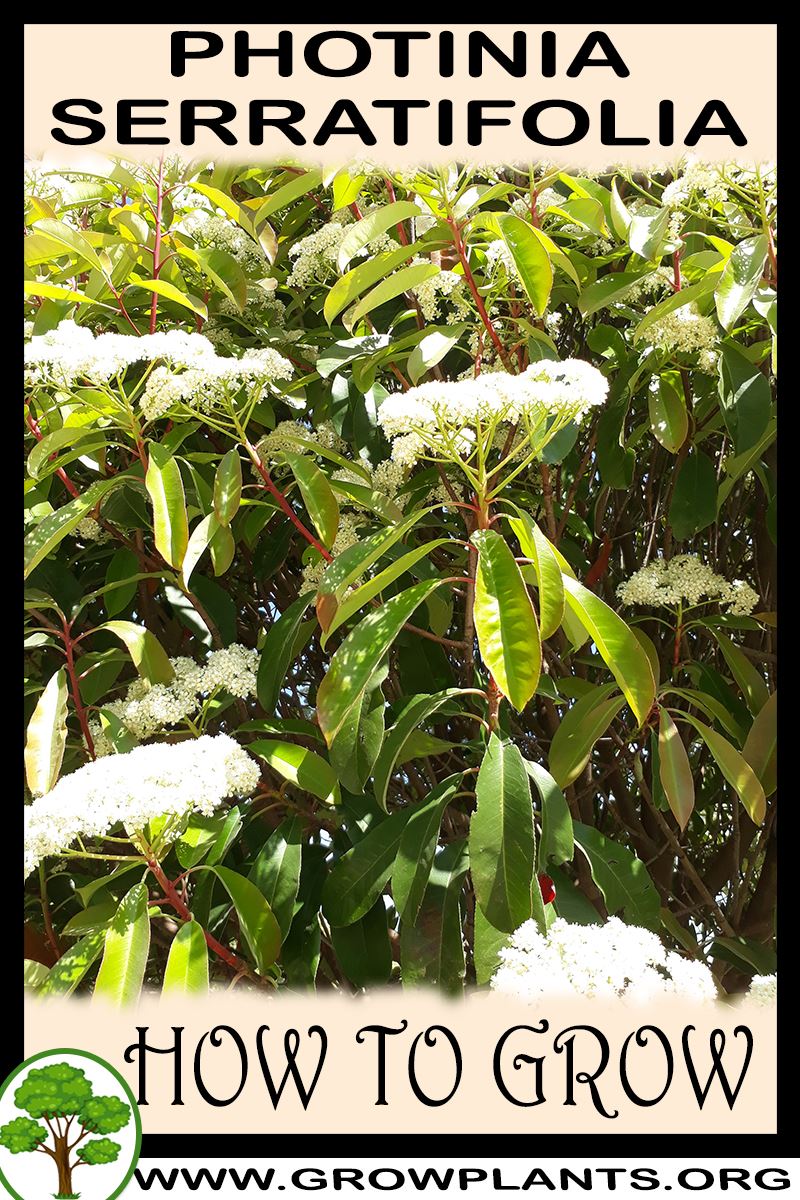
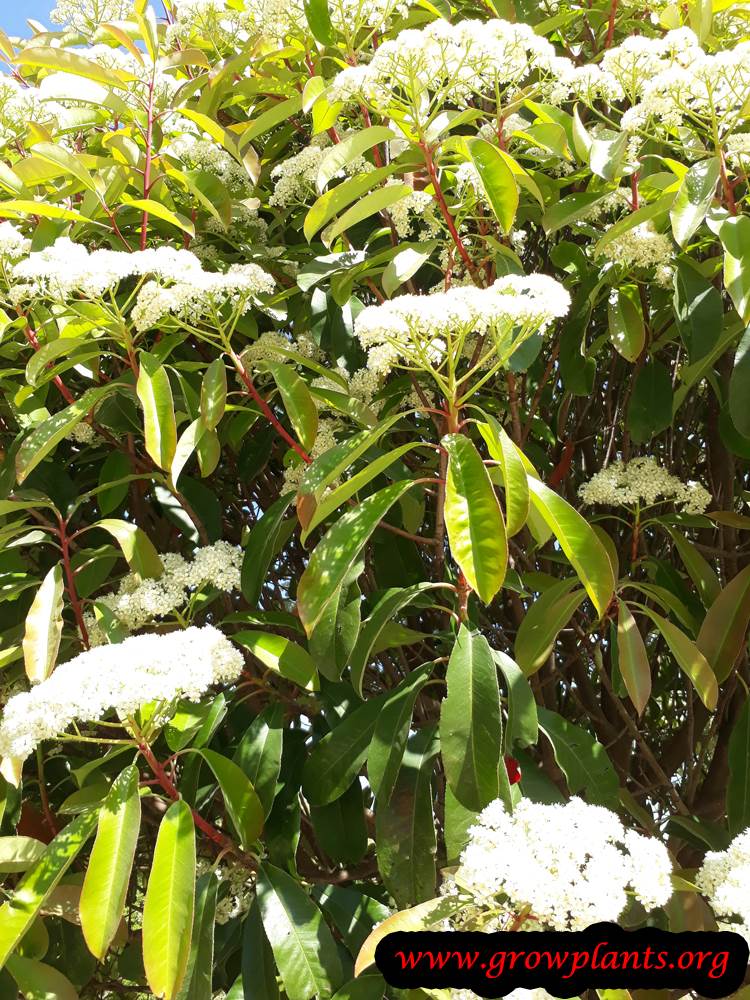
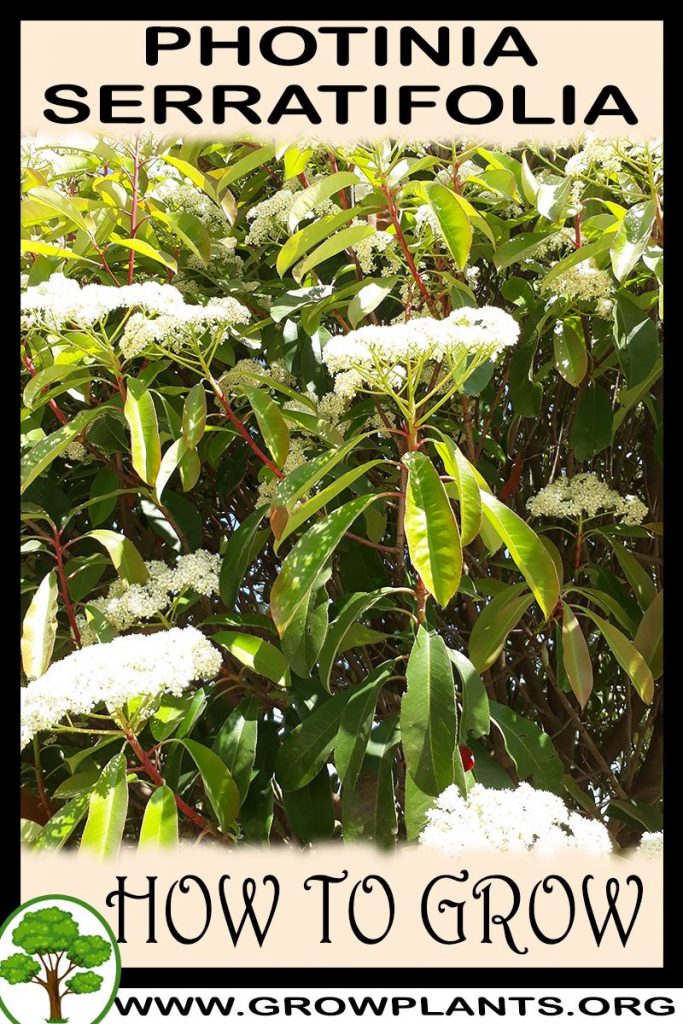
Overview: Chinese photinia (Photinia serratifolia) is an evergreen shrub to small tree 4-10 m grown as an ornamental hedge, prized for its glossy foliage with red and pink new growth. It clips well for formal screens.
Quick Specifications
| Specification | Attribute |
|---|---|
| Plant Type / Life Cycle | Perennial |
| Foliage Type | Evergreen |
| Mature Size | 4-10 m (12-30 ft) |
| Growth Rate | Fast to moderate |
| Toxicity | Foliage and seeds mildly toxic (cyanogenic) if eaten |
| Hardiness | USDA zones 6-9 |
Growth Form & Structure
- Height & Spread: 4-10 m; commonly kept clipped as a hedge and grown in containers while young.
- Growth Habit & Form: Dense, upright shrub to small tree that responds well to clipping.
- Lifespan & Maturity: Long-lived perennial; fast to medium growing.
Anatomy & Physical Features
- Leaves & Foliage: Glossy oval leaves, green with pink, red or bronze new growth.
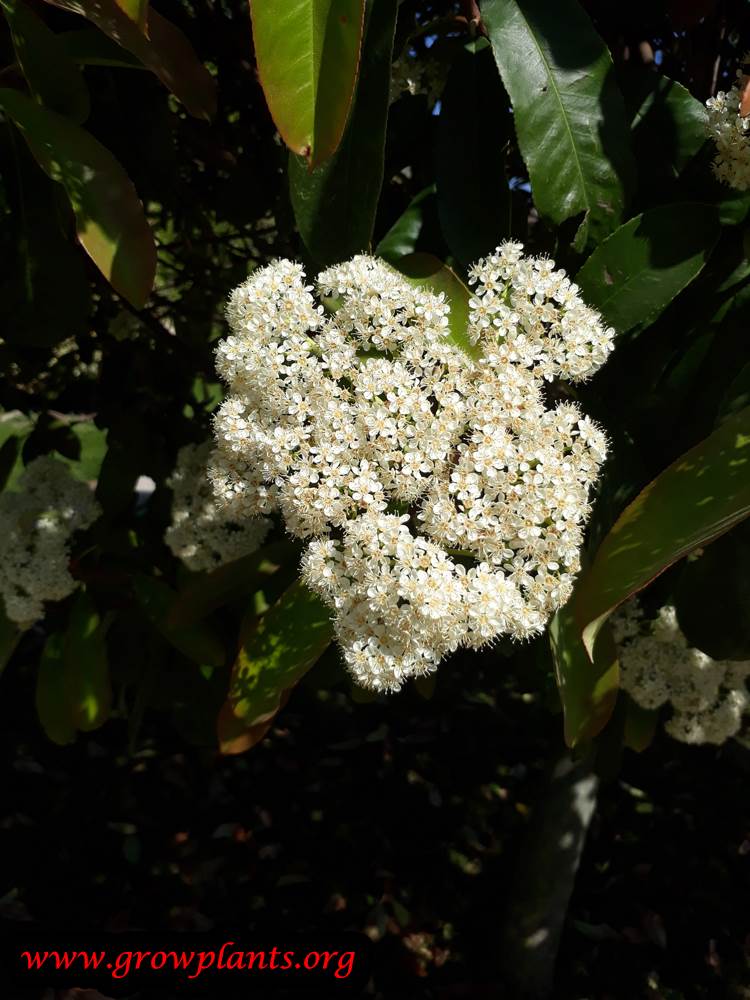
- Flower Characteristics: Small white, star-shaped flowers borne in clusters.
Primary Uses & Landscape Value
- Functional & Ornamental Roles: Evergreen hedge or screen with ornamental foliage; suited to containers.
Care Guide: Planting, Soil & Watering
Overview: Chinese photinia is a fast, evergreen shrub or small tree for temperate to mediterranean zones (6-9) that grows in full sun to half shade and prizes a cool winter. It likes rich, mulched, well-drained soil and steady moisture, and makes a popular hedge.
Quick Care Requirements
| Requirement | Ideal Condition |
|---|---|
| Planting Season | Spring or summer |
| Growth Rate | Moderate to fast |
| Soil Type | Rich, mulched and well-draining |
| Water Need | Moderate to high; keep the soil evenly moist |
Planting & Establishment
- Best Planting Season: Plant in spring or summer; it appreciates a cool winter and settles quickly in warm soil.
- How to Plant:
- Hole Preparation: Dig a hole a little wider than the root ball in rich, well-worked soil.
- Soil Amendments: Improve the ground with compost and mulch to feed vigorous growth and retain moisture.
- Planting Depth: Set the root ball level with the surface and firm in.
- Growth Speed & Expectations: A fast grower that can reach 4-10 m; regular clipping keeps it as a dense hedge and encourages colourful new foliage.
Soil, Watering & Drainage Care
- Soil Mix & Drainage Needs: Wants rich but free-draining soil; container-growing is possible with a good potting mix and regular water.
- Watering Schedule & Technique:
- Young / Newly Planted: Keep newly planted shrubs consistently moist while they establish.
- Established: Water regularly, especially in dry spells, to keep the foliage lush; established plants have some drought tolerance.
- Seasonal Adjustments: More water in summer heat; less over a cool, damp winter.
Climate, Light & Hardiness
Chinese photinia (Photinia serratifolia) is a hardy evergreen shrub-to-small-tree for temperate, subtropical and Mediterranean climates, grown in full sun to half shade. It is fairly cold-hardy - the site data gives roughly USDA zones 6–9 - and appreciates a cool winter, with established plants taking normal frost while the soft new growth can be nipped by late-spring frost.
Quick Climate Specifications
| Climate Zones | Temperate, subtropical and Mediterranean |
|---|---|
| USDA Hardiness Zones | Approximately zones 6–9 (site data) |
| Optimal Temp Range | Mild temperate to warm conditions with a distinct cool winter |
| Cold Damage Begins | Established plants are frost-hardy; the tender new flush is damaged by late-spring frost |
| Approx. Survival Minimum | Hardy to about zone 6; hard, prolonged freezes below that damage foliage and stems |
| Frost Tolerance | Moderate–High (established); new growth Low |
| Light Conditions | Full sun to half shade |
| Wind Tolerance | Moderate |
Sunlight & Light Exposure
Optimal Light Setup
Full sun keeps growth dense and hedge-worthy and brings out the brightest colour in the new leaves; it also grows well in half shade, where growth is a little more open.
Direct Sun Requirement
Good direct sun encourages tight, even growth and the best foliage colour, which is why it is favoured as a clipped evergreen hedge.
Shade & Heat Management
Tolerates part shade well; in the hottest, most exposed sites a little afternoon shade eases stress on the foliage.
Best Exposure / Orientation
An open, sunny to lightly shaded aspect with good airflow suits it best; free air movement also helps limit the leaf-spot disease it is prone to in damp, still conditions.
Temperature Extremes & Hardiness
USDA Hardiness & Regional Limits
The site data gives roughly zones 6 to 9. As an evergreen it holds its leaves through winter, so it suits regions with cool but not brutally cold winters; its own care notes point to a cool winter as beneficial.
Cold Damage & Winter Protection
Established plants take normal winter frost, but a late-spring frost can scorch the soft new flush, which then re-shoots. Toward the cold edge of its range a sheltered position reduces winter foliage burn and cold-wind desiccation.
Frost Sensitivity
The evergreen foliage and mature wood are moderately frost-hardy; the emerging new growth is the frost-sensitive part.
Extreme Heat Tolerance
Handles warm summers well; in very hot, exposed sites light afternoon shade and steady soil moisture keep the leaves in good condition.
Wind, Humidity & Microclimate
Humidity Preferences
Adaptable, but warm, damp, humid air with poor airflow strongly favours leaf-spot disease, so an airy spot is preferable.
Dry-Air Tolerance
Good once established; the leathery evergreen leaves cope with ordinary dry air.
Wind Tolerance
Moderate; it stands up to normal wind as a hedge, though cold, drying winter winds can scorch exposed foliage near its cold limit.
Rainfall & Seasonal Moisture
Prefers a climate with reasonable air movement; prolonged wet, humid spells raise the risk of leaf spot, so an open position is best.
Microclimate Recommendations
An open, airy, sunny to lightly shaded spot keeps the foliage healthy; near its cold limit, shelter from cold winter wind protects both the evergreen leaves and the tender new flush.
Growing in Pots, Balconies & Indoors
Photinia serratifolia (Chinese photinia) is an evergreen shrub or small tree – the familiar red-tipped hedging plant – reaching about 4-10 m (12-30 ft), so a container suits it only while young or where you keep it clipped as a patio specimen. It is not a houseplant; grown in a large pot it makes a handsome, glossy evergreen for a sunny terrace or balcony, but in time it wants the open ground.
Quick Details
- Container Size: A large 40 L+ (10 gal+) pot with strong drainage (general guidance – the grower confirms containers work; it outgrows pots eventually)
- Indoor Suitability: Not a houseplant and ultimately too large; keep it outdoors as a potted evergreen while young
- Best Spot: Full sun to part shade (sun gives the brightest red new growth)
- Soil & Drainage: Fertile, well-aerated mix that drains freely
- Watering in Pots: Keep evenly moist – pots dry fast; ease back in cool weather but never let an evergreen dry out fully
Outdoors, Not Indoors
- Not a houseplant: It needs full outdoor light and air; indoors it grows weak and disease-prone. Enjoy it as an outdoor container evergreen and clip it to keep it in scale.
- Winter care in pots: It is largely hardy but roots are less protected in a pot – in cold areas shelter the container or wrap it in hard frosts.
- Safety: Photinia leaves contain cyanogenic compounds and are toxic if eaten – keep clippings and prunings away from children, pets and grazing animals.
On a Balcony or Patio
- Light & wind: A sunny to lightly shaded spot keeps the red new leaves vivid; it tolerates wind but pots against warm walls dry fast, so water well in summer. Good airflow helps prevent leaf spot.
- Practicalities: A large evergreen in a full pot is heavy and catches wind – site it firmly and low against gusts.
Choosing the Pot, Soil & Long-Term Care
- Pot & drainage: A large 40 L+ pot with strong drainage holes. Skip a standing-water saucer, which keeps the roots wet and invites rot. Terracotta breathes and dries faster; glazed or plastic pots hold moisture longer.
- Potting mix: Well-aerated and organic-rich – a quality potting mix, or peat/coir with perlite or vermiculite for drainage.
- Feeding: Potted plants need feeding more often than those in the ground, since frequent watering leaches nutrients away – feed through the growing season with a balanced, organic-rich fertilizer.
- Repotting: Every couple of years refresh the mix and pot on a size; for perennials, lightly prune the root ball and top growth at the same time to keep them vigorous.
Grower’s Note
- Trimming: Clip lightly a couple of times in the growing season to keep it dense and to trigger fresh red growth; refresh the mix and root-prune every couple of years to hold it in a pot longer.
Fertilizing & Feeding
A moderate feeder valued for colorful new foliage: nitrogen-leaning balanced feeding during growth flushes keeps hedges dense.
Quick Fertilizing Specs
| Feeding Level | moderate |
|---|---|
| Main Nutrient Priority | Nitrogen-leaning balanced feeding for foliage flushes |
| Best Feeding Period | During spring and warm-season growth flushes |
| Reduce/Stop Feeding | Stop feeding by late summer and through winter |
| Soil pH | Prefers slightly acidic, well-drained soil |
| Organic Options | Mulch and compost over the root zone |
Feeding by Growth Stage
Establishment
Help young or newly planted shrubs build roots and settle in.
| Nutrient direction | A balanced complete fertilizer for steady establishment. |
|---|---|
| Timing | In the first growing seasons after planting, as growth resumes. |
| Frequency | A feeding as growth begins in the warm season. |
| Fertilizer types | Balanced complete shrub fertilizer, Mulch and compost over the root zone |
| Precautions | Water feedings in well, especially for hedges competing for root space. |
Growth flushes
Fuel the flushes of colorful new foliage prized in hedges.
| Nutrient direction | A complete fertilizer with a nitrogen lean encourages leafy flushes. |
|---|---|
| Timing | During the spring and warm-season growth flushes. |
| Frequency | Feed as growth flushes appear, easing off toward autumn. |
| Fertilizer types | Nitrogen-forward complete shrub fertilizer |
| Precautions | Ease the nitrogen push by late summer so growth hardens before cool weather. |
Cool-winter slowdown
Growth slows in the cool winter; no feeding is needed then.
| Nutrient direction | None – withhold fertilizer while the plant is not in active growth. |
|---|---|
| Timing | Through the cool winter when growth pauses. |
| Frequency | No feeding at this stage. |
| Fertilizer types | No feeding at this stage – hold off on fertilizer until growth resumes |
| Precautions | Do not fertilize during the cool-winter slowdown; wait for active growth. |
Nutrient Deficiency Signs & Corrections
Older, lower leaves fade to pale green or yellow and overall growth is slow and weak.
| Possible causes | Low or leached soil nitrogen, Cold or waterlogged soil limiting root uptake |
|---|---|
| Appears first on | Older, lower leaves |
| What to check | Recent feeding history and soil organic matter, Soil drainage and root health |
| Possible correction | Apply a complete nitrogen-bearing fertilizer during active growth and build soil with compost. |
Youngest leaves yellow between still-green veins (interveinal chlorosis).
| Possible causes | High soil pH reducing iron availability, Waterlogged or cold roots, Often not a true shortage of soil iron |
|---|---|
| Appears first on | Youngest leaves |
| What to check | Soil pH, Soil drainage and watering |
| Possible correction | Correct soil pH and, where needed, apply a chelated iron product per its label. |
Interveinal yellowing on older leaves while the veins stay green.
| Possible causes | Low soil magnesium, High potassium competing with magnesium uptake, Sandy, leached soils |
|---|---|
| Appears first on | Older leaves |
| What to check | Soil test for magnesium, Balance of recent fertilizer use |
| Possible correction | Apply a magnesium source such as a labeled Epsom-salt drench if a soil test confirms the need. |
Pruning, Training & Seasonal Maintenance
Chinese photinia is a large evergreen that reaches small-tree size (roughly 4–10 m), so it is usually handled as a big shrub, informal screen or multi-stem specimen tree rather than a tightly clipped hedge. It tolerates pruning and even hard renovation, but because it is valued for its spring white flower clusters and the red haws that follow, timing and restraint matter more than with the foliage-grown red-tip hybrid. Entomosporium leaf spot remains a real risk, so open, airy structure is the goal.
Quick Pruning & Maintenance Specs
| Pruning Tolerance | Moderate to High (tolerates hard renovation) |
| Primary Pruning Window | Late winter for structure; after flowering if the flower/berry display is wanted |
| Secondary Maintenance Window | Growing-season thinning for airflow and shape |
| Typical Frequency | Light annual thinning; structural cuts as the framework develops |
| Main Objective | A sound, open small-tree framework and controlled height/spread |
| Young Plant Priority | Select a single or multi-stem framework (modified leader) |
| Mature Plant Priority | Thin the crown, remove deadwood, hold height with reduction cuts |
| Best Tool Type | Secateurs, loppers and a pruning saw for selective and limb cuts |
| Avoid Heavy Pruning During | Warm, wet leaf-spot weather and periods of frost risk on soft growth |
Pruning by Plant Age & Size
Newly Established
Remove only damaged shoots and let it establish; begin thinking about which stems will form the framework rather than heading it back.
Young / Formative
Train a modified-leader or multi-stem framework: select a few well-spaced main stems, remove competing or crossing shoots, and gradually clear the lower trunk if a tree form is wanted. Avoid shearing a naturally tree-shaped plant into a lollipop.
Mature / Established
Thin the crown to keep it open and airy, remove deadwood and crossing limbs, and hold height and spread with reduction cuts back to strong laterals.
Seasonal Pruning Schedule
Dormant / Late Winter
Objective: structural work while the framework is visible. Remove: dead, crossing and poorly placed limbs. Do NOT: strip all flowering wood if you want the spring display. Expected response: strong spring regrowth.
Post-Flowering
Objective: shape without losing bloom or berries. Remove: overlong or misplaced shoots after the flowers fade. Do NOT: cut developing berry-bearing wood if the haws are wanted.
Ongoing Sanitary
Remove and bin leaf-spot-infected shoots and fallen spotted leaves.
Flowering & Fruiting Wood
White flower clusters open in spring on the previous season’s wood and are followed by red pome-like haws. Heavy shearing removes this flowering and fruiting wood, so if the display is wanted, prune selectively and after flowering rather than clipping the whole canopy.
Structural Pruning & Training
Limb up gradually for a clean-trunked small tree, thin the crown to reduce leaf-spot humidity, and remove crossing or rubbing branches. Reduce height by cutting to lower laterals rather than topping, which produces weak, upright, disease-prone regrowth.
Special Growth to Remove
Own-root, so no rootstock suckers. Remove basal shoots to maintain a tree form (or retain them for a multi-stem/screen habit), and clear dead, spotted twigs.
Container & Small-Space Pruning
Its eventual size makes it a poor long-term container subject, but a young plant can be kept as a clipped patio specimen for a few years with regular tip pruning and root-pruning at repotting; expect vigorous regrowth and plan to move it to open ground.
Tools
Bypass secateurs for shoots up to ~1.5 cm, loppers for branches to ~3 cm, and a pruning saw for larger limbs when shaping the trunk. A pole pruner reaches the upper crown of a tall specimen. Hedge shears are only appropriate if it is deliberately kept as a formal screen.
Tool Hygiene & Disease Risk
Increased to high, driven by Entomosporium leaf spot. Disinfect blades when moving between plants and after cutting infected wood, work in dry weather, and bin rather than compost infected material.
Cut Placement & Technique
Cut just outside the branch collar and avoid flush cuts or long stubs. Stage-remove big limbs (undercut first) to prevent bark tearing, and use thinning cuts to laterals in preference to indiscriminate heading.
Heavy Pruning & Rejuvenation
Tolerates hard renovation and will reshoot from old wood, so an overgrown specimen can be reduced hard in late winter and rebuilt over a couple of seasons; spread very large reductions across years to limit stress and sunburn on newly exposed bark.
Post-Pruning Care
Water during dry spells while regrowth establishes; newly exposed inner bark can sunburn after a big crown-opening, so avoid removing too much at once. Watch the fresh flush for leaf spot and keep overhead watering off the foliage.
Common Pruning Mistakes
Shearing a naturally tree-shaped plant into a tight ball; topping instead of reducing to laterals (weak, upright, disease-prone regrowth); removing all flowering wood and losing the spring flowers and red haws; and pruning in wet weather, spreading leaf spot.
When NOT to Prune
Not in warm, wet leaf-spot weather; not late enough that soft growth meets frost; and not during drought stress.
Recommended Tools (by task)
- bypass_secateurs — selective thinning and removal of spotted shoots up to ~1.5 cm.
- loppers — branches to ~3 cm when shaping a multi-stem framework.
- pruning_saw — larger limbs when limbing up the trunk of a small-tree specimen.
- pole_pruner — reaching the upper crown of a tall (to ~10 m) specimen for thinning without a ladder.
Pruning Troubleshooting
| Problem | Possible Cause | What to Check | Corrective Action |
| Dark leaf spots and defoliation | Entomosporium leaf spot in a dense, damp crown | Canopy density and pruning weather | Thin the crown, prune dry, remove infected leaves, disinfect tools |
| Few flowers or berries | Flowering wood sheared off | Whether the canopy is being clipped all over | Prune selectively and after flowering, retaining some old wood |
| Dense, congested, shaded crown | Never thinned | Interior branch spacing | Thin to laterals to open the crown |
| Weak upright regrowth after big cuts | Topped rather than reduced to laterals | Where the reduction cuts were made | Reduce to strong outward laterals; thin the resulting watersprouts |
Propagation Guide
As a true species, Photinia serratifolia can be raised both from seed and from cuttings; seed comes reasonably true for the species but is slow, so semi-hardwood cuttings are usually preferred because they are faster and preserve the exact leaf form. Overall it is moderately easy.
Quick Propagation Specs
| Best Propagation Method | Semi-hardwood stem cuttings |
| Alternative Methods | Seed, softwood cuttings, layering |
| Propagation Difficulty | Moderate |
| Seed True-to-Type | Species comes reasonably true; seedlings show some variation |
| Vegetative True-to-Type | Yes |
| Best Propagation Season | Cuttings in summer to early autumn; sow cleaned seed in autumn or after stratification |
| Cutting Rooting Time | Several weeks to a couple of months |
Growing from Seed
Seed Handling & Viability
Extract seed from the small red pome-like fruit and clean off the pulp, which can inhibit germination; sow reasonably fresh rather than storing long.
Dormancy & Pre-Sowing Treatment
Seed has a cold requirement: a period of cold-moist stratification (or autumn sowing outdoors over winter) breaks dormancy.
Germination Time
Germination is slow and uneven, often spread over many weeks after the cold period; treat it as staggered.
Stem Cuttings
Cutting Type
Semi-hardwood cuttings of firmed current-season growth taken in summer to early autumn.
Cutting Preparation
10–15 cm (4–6 in) cuttings below a node, lower leaves removed and upper leaves reduced; a basal wound helps on firmer wood.
Rooting Setup
Root in a free-draining, moist mix under humidity and warmth in bright shade.
Rooting Hormone
Beneficial and generally recommended for this firmer wood.
Air & Ground Layering
Low branches can be layered into moist soil and separated once rooted.
Bloom & Flower Guide
Quick Details
- Bloom Season: Late spring into summer
- Flower Appearance: Small white five-petaled star flowers massed in broad flat-topped clusters
- Edibility: Not eaten – the flowers carry a strong, unpleasant scent, and the foliage contains cyanogenic compounds. Grown as an ornamental hedge
Detailed Blooming Overview
Chinese photinia is grown mainly as a glossy evergreen hedge, but in early summer it puts on a generous show of small white flowers gathered into broad, frothy clusters. The bloom is showy from a distance, though the scent is famously strong and not to everyone’s taste; it draws pollinators before giving way to small berry-like fruit.
Flower Characteristics
- Tiny five-petaled white stars, each only a few millimeters across.
- Massed by the hundred into broad, flattened, branching clusters.
- Strongly (and to many, unpleasantly) scented.
Bloom Care & Thinning
- Pruning and bloom: Frequent hedge clipping removes flower buds, so allow the shrub to grow more freely if you want the bloom; trim after flowering.
- Pollination: The flowers attract bees and other insects.
Pests, Diseases & Troubleshooting
Photinia is grown for its glossy red new growth, and that soft flush draws aphids, scale, mites and thrips – but its defining problem is not a pest at all: Entomosporium leaf spot, a fungal disease that disfigures and defoliates hedges, especially in wet, crowded, poorly pruned conditions. As a member of the rose family it can also get fireblight. Airflow, sanitation and avoiding overhead watering are the heart of keeping it clean.
Quick Troubleshooting Overview
| Issue / Pest | Main Symptom | Primary Solution |
|---|---|---|
| Entomosporium leaf spot | Red-purple spots then heavy leaf drop | Airflow, remove fallen leaves, resistant stock |
| Aphids | Colonies and honeydew on red new growth | Water-jet, beneficials, insecticidal soap |
| Scale | Brown bumps and sooty mould on stems | Prune out, horticultural oil |
| Fireblight | Blackened, hooked shoot tips (‘scorched’) | Prune out well below, disinfect tools |
| Chlorosis | Yellow leaves on alkaline/wet soil | Improve drainage, iron chelate |
Common Pests & Management
- Aphids (Aphis / Myzus / Macrosiphum spp.):
- Symptoms: Small soft-bodied insects (green, black or grey) clustering on the soft red new growth and shoot tips; they suck sap, causing curled, distorted and yellowing growth plus a sticky honeydew that blackens with sooty mould and draws ants. Winged forms spread them plant to plant and can carry viruses.
- Prevention & Control: Blast colonies off with a firm jet of water and pinch out badly infested tips; encourage and protect ladybirds, lacewings and hoverflies, and grow flowering companions to feed them. For persistent outbreaks use insecticidal soap or a light horticultural/neem oil, wetting leaf undersides in the cool of the evening to spare pollinators.
- Scale insects (Coccus / Parthenolecanium spp.):
- Symptoms: Brown or waxy bumps on stems and leaf undersides, weakening growth and producing honeydew and sooty mould.
- Prevention & Control: Prune out badly infested wood, encourage parasitic wasps and ladybirds, and smother scale with horticultural oil, repeating to catch crawlers.
- Two-spotted spider mite (Tetranychus urticae):
- Symptoms: Fine pale stippling that bronzes whole leaves, with delicate webbing on the undersides and growing tips in hot, dry, dusty spells; heavily fed leaves dry and drop. Look for the moving specks with a hand lens.
- Prevention & Control: Raise humidity and hose foliage down regularly, and never let plants suffer dust or drought stress. Introduce predatory mites (Phytoseiulus persimilis) under cover. Treat hot-spots with insecticidal soap or horticultural oil, repeating at 5-7 day intervals to catch newly hatched mites.
- Thrips (Frankliniella / Thrips spp.):
- Symptoms: Slender pale insects that rasp the surface, leaving silvery-flecked, distorted leaves and petals speckled with tiny black droppings; buds may fail to open cleanly.
- Prevention & Control: Keep plants unstressed and remove spent flowers and weeds that harbour them; blue sticky traps help monitor. Encourage predatory mites and lacewings, and treat with insecticidal soap or spinosad, repeating to reach the sheltered nymphs.
- Caterpillars (various Lepidoptera):
- Symptoms: Chewed, notched or webbed leaves where leaf-eating caterpillars feed on the foliage; usually minor on an established shrub.
- Prevention & Control: Hand-pick and encourage birds and parasitic wasps; Bacillus thuringiensis (Bt) deals with a heavy outbreak without harming beneficials.
Diseases & Fungal Issues
- Entomosporium leaf spot (Entomosporium mespili (Diplocarpon mespili)):
- Symptoms: Small red to purple spots on both leaf surfaces, especially on new growth, enlarging and merging with grey centres and dark specks, then causing heavy leaf drop; the classic, disfiguring disease of photinia hedges in wet weather.
- Treatment & Management: Improve airflow by spacing and thinning, avoid overhead watering and shearing in wet weather (which spreads spores and forces vulnerable new flushes), and rake up and destroy fallen infected leaves. Choose resistant plantings; where needed apply a protective copper or myclobutanil fungicide to new flushes.
- Fireblight (Erwinia amylovora):
- Symptoms: Sudden blackening and wilting of shoot tips and flowers, bent into a ‘shepherd’s crook’, with a scorched appearance and sunken cankers; a bacterial disease of the rose family.
- Treatment & Management: Prune out affected wood well below the visible damage, disinfecting tools between cuts, and destroy the prunings; avoid excess nitrogen that forces soft, susceptible growth. There is no cure, so prompt removal is key.
- Powdery mildew (Podosphaera / Erysiphe spp.):
- Symptoms: White powdery coating on new leaves and shoots, distorting the flush in humid conditions.
- Treatment & Management: Improve airflow and sun, avoid drought stress, and remove affected growth; sulphur or potassium bicarbonate checks it if needed.
Growing Difficulties & Abiotic Problems
- Lime-induced chlorosis:
- Cause & Symptoms: Yellowing leaves with green veins on alkaline or wet soil, where iron becomes unavailable.
- Correction Strategy: Improve drainage, mulch with organic matter, and apply chelated iron for a quick correction; avoid overwatering.
- Frost damage to new growth:
- Cause & Symptoms: The prized soft red flush is tender and can be blackened by late frost.
- Correction Strategy: Site out of frost pockets, delay hard pruning until the danger passes, and simply trim out frosted tips, which the shrub readily replaces.
What Helps – Products & Tools
The defining need here is disease management: a protective copper or myclobutanil fungicide on new flushes against Entomosporium leaf spot, backed by raking up fallen leaves and improving airflow. For the sap-suckers, insecticidal soap and horticultural or neem oil cover aphids, scale, mites and thrips; iron chelate greens up chlorotic plants.