Plant Profile & Key Characteristics
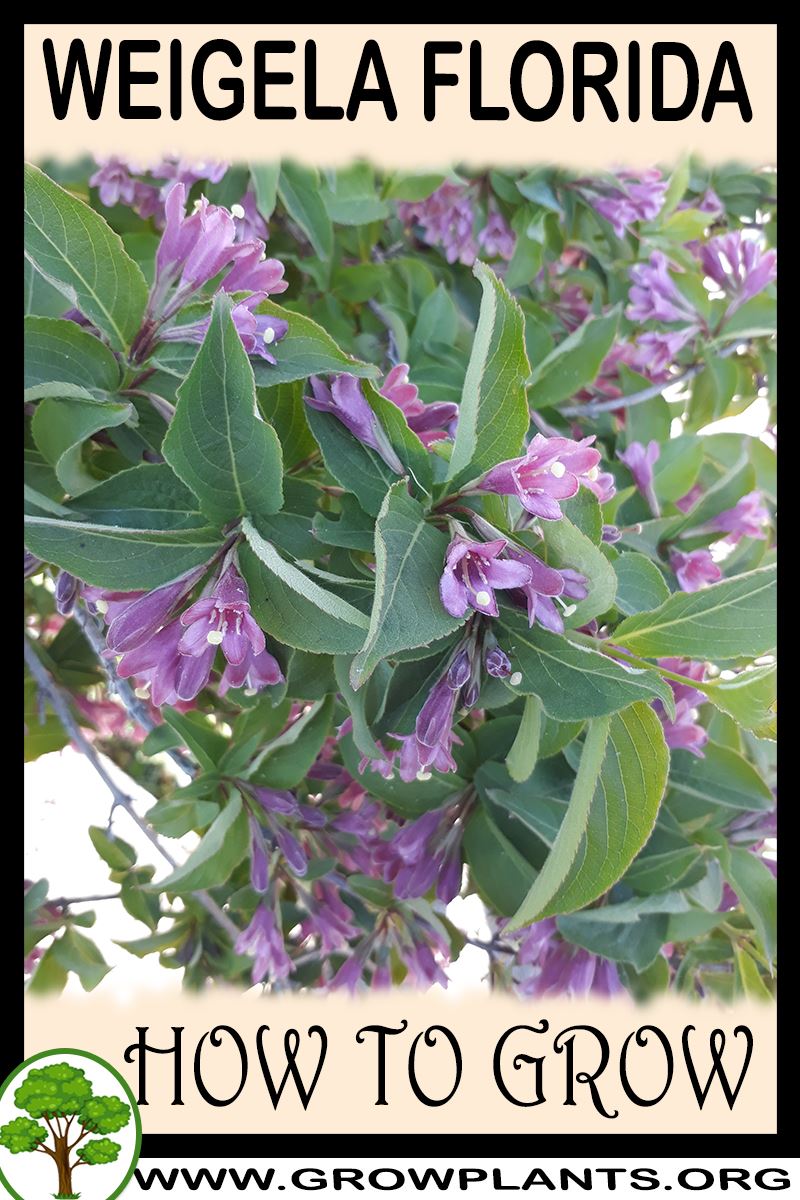
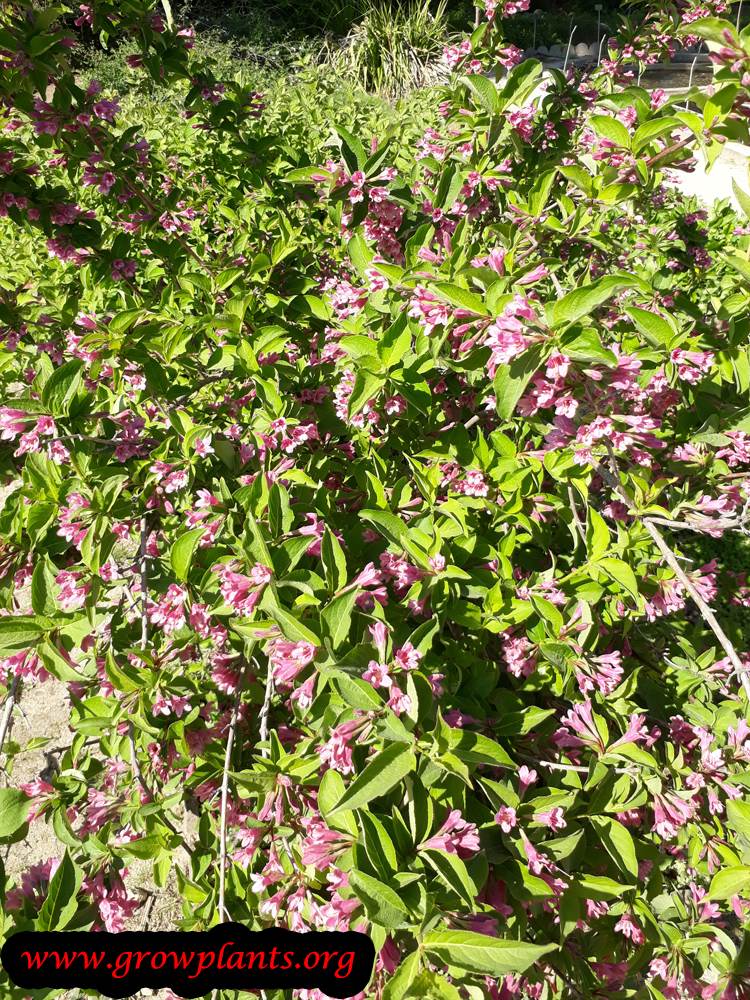
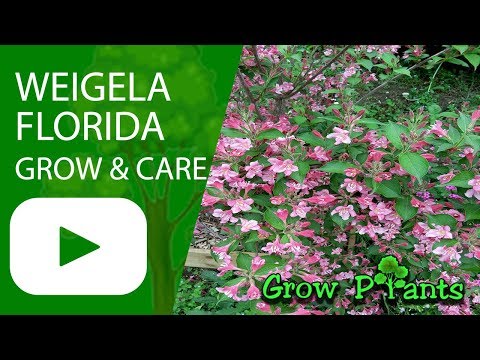
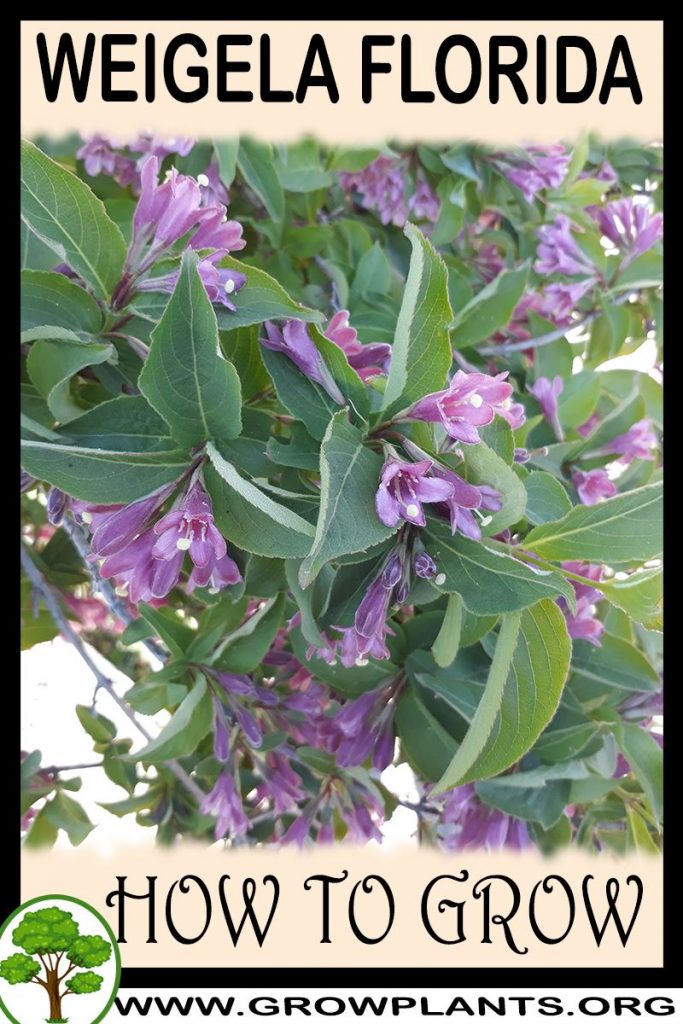
Overview: Weigela florida (old-fashioned weigela) is a deciduous perennial shrub 1.5–3 m tall with ovate green to variegated foliage. It is grown as a fragrant, pollinator-friendly flowering ornamental and informal hedge.
Quick Specifications
| Specification | Attribute |
|---|---|
| Plant Type / Life Cycle | Perennial |
| Foliage Type | Deciduous |
| Mature Size | 1.5–3 m (6–10 ft) tall |
| Growth Rate | Moderate to Fast |
| Hardiness | USDA zones 3–9 |
Growth Form & Structure
- Height & Spread: Rounded arching shrub 1.5–3 m tall in the ground; also grows in large containers.
- Growth Habit & Form: Multi-stemmed deciduous shrub with arching branches; can spread vigorously and become invasive in favourable sites.
- Lifespan & Maturity: Moderate to fast growth, flowering within a few years of planting.
Anatomy & Physical Features
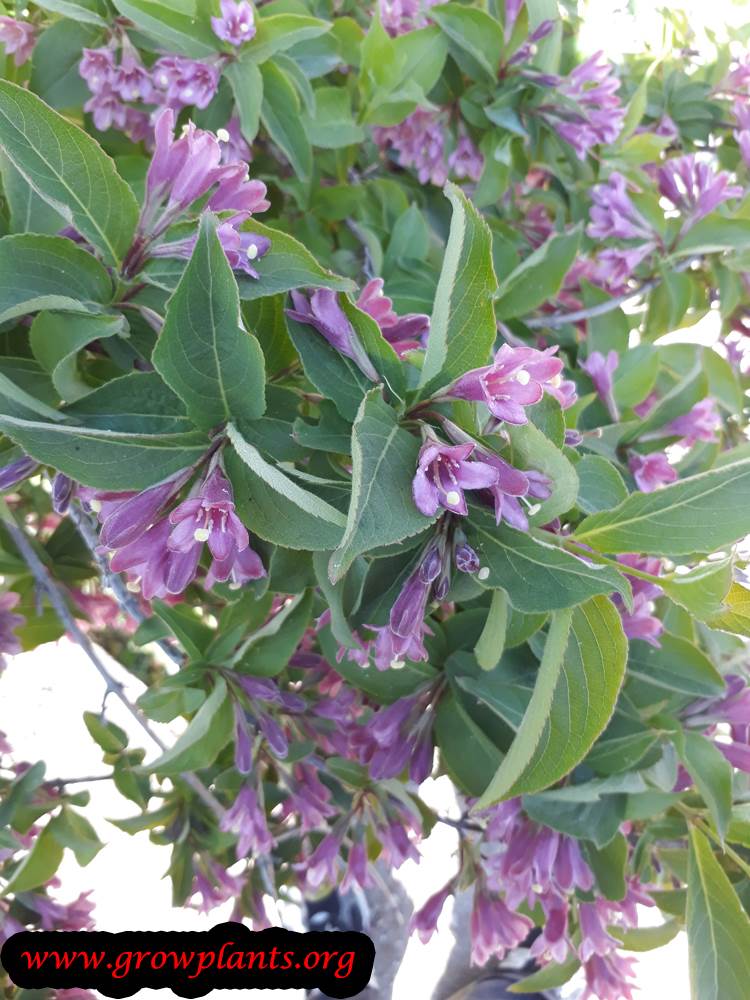
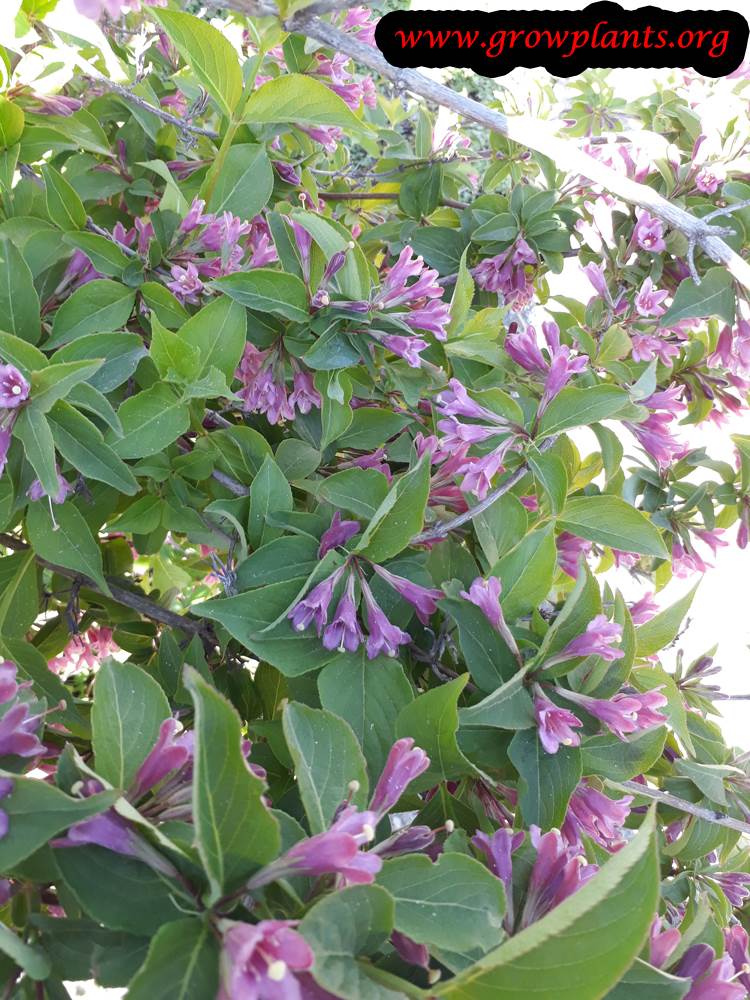
- Leaves & Foliage: Ovate leaves in green, purple or variegated forms (green-and-white, green-and-pink, green-and-yellow).
- Flower Characteristics: Fragrant funnel-shaped flowers in pink, red or white.
Primary Uses & Landscape Value
- Functional & Ornamental Roles: Fragrant flowering ornamental, informal hedge and pollinator plant for borders and pots.
Care Guide: Planting, Soil & Watering
Overview: Weigela florida is an easy, cold-hardy deciduous shrub that flowers best in full sun to part shade in moist, well-draining soil. It appreciates a genuine cold winter and steady moisture, especially while young.
Quick Care Requirements
| Requirement | Ideal Condition |
|---|---|
| Planting Season | Late winter through spring and into summer |
| Growth Rate | Moderate to Fast |
| Soil Type | Moist, well-draining soil; adaptable to most garden soils |
| Water Need | Moderate to High — keep evenly moist, especially while establishing |
Planting & Establishment
- Best Planting Season: Plant from late winter through spring and into summer; spring planting in cooler regions gives roots time to establish before winter.
- How to Plant:
- Hole Preparation: Dig a hole twice as wide as the root ball and the same depth, loosening the sides so roots can spread outward.
- Soil Amendments: Mix compost or well-rotted organic matter into the backfill to hold moisture while keeping the soil open and free-draining.
- Planting Depth: Set the shrub so the top of the root ball sits level with the surrounding soil; do not bury the stem base.
- Growth Speed & Expectations: Growth is fast to moderate; plants reach about 1.5–3 m and flower freely through spring and summer.
Soil, Watering & Drainage Care
- Soil Mix & Drainage Needs: Provide moist but well-draining soil; it dislikes both drought and waterlogging. In containers use a quality potting mix with free drainage.
- Watering Schedule & Technique:
- Young / Newly Planted: Water newly planted shrubs regularly through the first season or two to establish deep roots.
- Established: Water deeply during dry spells, letting the top few centimetres dry between waterings; established plants are fairly resilient.
- Seasonal Adjustments: Water more in summer heat and much less over winter, when this deciduous shrub drops its leaves; the winter chill helps set the next season’s flowers.
Climate, Light & Hardiness
Old-fashioned weigela is a hardy, deciduous flowering shrub for temperate and cooler Mediterranean/subtropical gardens, flowering best in full sun to part shade. It is cold-hardy and needs a real cold winter - the site data gives a range of roughly USDA zone 3 to 9, with summer heat rather than winter cold setting its warm limit.
Quick Climate Specifications
| Climate Zones | Temperate, Mediterranean and cooler subtropical (needs a cold winter) |
|---|---|
| USDA Hardiness Zones | Approximately zones 3–9 (site data) |
| Optimal Temp Range | Temperate conditions with a warm growing season and a cold winter rest |
| Cold Damage Begins | Fully deciduous and hardy; it drops its leaves and rests, tolerating hard winter cold within its zones |
| Approx. Survival Minimum | Wood survives severe winter cold to about zone 3 |
| Frost Tolerance | High (hardy deciduous shrub) |
| Light Conditions | Full sun to part shade |
| Wind Tolerance | Moderate |
Sunlight & Light Exposure
Optimal Light Setup
Full sun gives the heaviest bloom and the strongest leaf colour on purple and variegated forms; it also grows in part shade, flowering a little less freely.
Direct Sun Requirement
Good direct sun drives its late-spring flush of funnel-shaped flowers; deep shade thins the display.
Best Exposure / Orientation
An open, sunny position suits it as a fragrant flowering hedge or specimen that attracts pollinators.
Temperature Extremes & Hardiness
USDA Hardiness & Regional Limits
The site data gives roughly zones 3 to 9, and the plant's own notes call for a cold winter. It needs a distinct winter dormancy and is limited at the warm end by heat rather than cold, so it struggles in hot, essentially winterless climates.
Cold Damage & Winter Protection
Fully hardy within its range - it drops its leaves and rests through winter with no protection needed. Because it flowers on the previous year's wood, only a severe late frost (or badly timed hard pruning) reduces the coming bloom.
Frost Sensitivity
Low as a dormant shrub; the main risk is a sharp late-spring frost catching tender new shoots or flower buds.
Extreme Heat Tolerance
Moderate - it favours temperate summers; toward zone 9 heat and reduced winter chilling limit its vigour, so give part shade and steady moisture in hot areas.
Wind, Humidity & Microclimate
Humidity Preferences
Adaptable across typical temperate humidity; airflow helps keep the foliage clean.
Dry-Air Tolerance
Moderate once established, with steady moisture giving the best growth.
Wind Tolerance
Moderate; the arching stems flex in wind, and a reasonably sheltered spot protects the flowering display.
Microclimate Recommendations
An open, sunny, temperate site is ideal; in hotter regions a cooler, part-shaded aspect with reliable moisture offsets the heat at the edge of its range.
Growing in Pots, Balconies & Indoors
Weigela florida is a hardy, deciduous flowering shrub, not a houseplant – it needs a real winter chill to rest and flower, so it belongs outdoors. That said, it makes an excellent patio or balcony container shrub, smothered in trumpet flowers that bees and hummingbirds love. Mature size is about 1.5-3 m (5-10 ft), though a pot and regular pruning keep it more compact.
Quick Details
- Container Size: A large 30-50 L (8-13 gal) pot with strong drainage (general guidance – the grower confirms containers work)
- Indoor Suitability: Not a houseplant – it needs cold winter dormancy; grow it outdoors in a pot instead
- Best Spot: Full sun to part shade (best flowering in sun)
- Soil & Drainage: Fertile, well-aerated mix that drains freely
- Watering in Pots: Keep evenly moist through the growing season – pots dry fast; less in winter dormancy
Outdoors, Not Indoors
- Not a houseplant: Weigela must go through a cold, leafless winter rest, which a warm room cannot provide – kept indoors it declines. Enjoy it as an outdoor container shrub.
- Winter care in pots: It is fully hardy, so it stays outside, but roots are less insulated in a pot – in hard-freeze areas move the pot to a sheltered spot or wrap it, and keep the mix just barely moist while dormant.
- Non-toxic: Weigela is not considered poisonous and is a good, wildlife-friendly choice around children and pets.
On a Balcony or Patio
- Light & wind: Give it a sunny to lightly shaded spot for the best flowering; it tolerates wind but pots dry quickly against warm walls, so water well in summer.
- Practicalities: A large filled pot is heavy – position it first; the arching stems look their best where they can spill over a railing edge.
Choosing the Pot, Soil & Long-Term Care
- Pot & drainage: A large 30-50 L pot with strong drainage holes. Skip a standing-water saucer, which keeps the roots wet and invites rot. Terracotta breathes and dries faster; glazed or plastic pots hold moisture longer.
- Potting mix: Well-aerated and organic-rich – a quality potting mix, or peat/coir with perlite or vermiculite for drainage.
- Feeding: Potted plants need feeding more often than those in the ground, since frequent watering leaches nutrients away – feed through the growing season with a balanced, organic-rich fertilizer.
- Repotting: Every couple of years refresh the mix and pot on a size; for perennials, lightly prune the root ball and top growth at the same time to keep them vigorous.
Grower’s Note
- Pruning: Prune right after flowering, taking out some of the oldest stems, to keep a potted plant shapely and free-flowering; refresh the mix every couple of years.
Fertilizing & Feeding
A moderate feeder: a balanced feeding as growth resumes in spring is usually enough for good bloom.
Quick Fertilizing Specs
| Feeding Level | moderate |
|---|---|
| Main Nutrient Priority | Balanced nutrition; no need for high-phosphorus bloom products |
| Best Feeding Period | Spring, as growth resumes |
| Reduce/Stop Feeding | Stop feeding by late summer so growth hardens before winter |
| Soil pH | Tolerates a range from slightly acidic to near-neutral |
| Organic Options | Compost and mulch over the root zone |
Feeding by Growth Stage
Spring growth
Fuel the spring flush of leaves and stems that carry the bloom.
| Nutrient direction | A balanced complete fertilizer as growth resumes in spring. |
|---|---|
| Timing | Early in the growing season as new growth emerges. |
| Frequency | A feeding as growth starts in spring. |
| Fertilizer types | Balanced complete shrub fertilizer, Compost or mulch over the root zone |
| Precautions | Avoid late-season nitrogen that pushes tender growth before winter. |
Bloom
Support flowering without forcing excess leafy growth.
| Nutrient direction | A balanced feed supplies bloom needs; high-phosphorus ‘bloom boosters’ are unnecessary. |
|---|---|
| Timing | Through the spring-to-summer bloom period. |
| Frequency | Light feeding to sustain the plant through bloom. |
| Fertilizer types | Balanced complete fertilizer |
| Precautions | Extra phosphorus does not increase flowering and can harm soil life. |
Autumn and winter dormancy
Let the deciduous shrub drop its leaves and rest; no nutrients are needed.
| Nutrient direction | None – withhold fertilizer while the plant is not in active growth. |
|---|---|
| Timing | Autumn into winter after leaves drop. |
| Frequency | No feeding at this stage. |
| Fertilizer types | No feeding at this stage – hold off on fertilizer until spring growth resumes |
| Precautions | Do not fertilize a dormant shrub; wait until growth resumes in spring. |
Nutrient Deficiency Signs & Corrections
Older, lower leaves fade to pale green or yellow and overall growth is slow and weak.
| Possible causes | Low or leached soil nitrogen, Cold or waterlogged soil limiting root uptake |
|---|---|
| Appears first on | Older, lower leaves |
| What to check | Recent feeding history and soil organic matter, Soil drainage and root health |
| Possible correction | Apply a complete nitrogen-bearing fertilizer during active growth and build soil with compost. |
Youngest leaves yellow between still-green veins (interveinal chlorosis).
| Possible causes | High soil pH reducing iron availability, Waterlogged or cold roots, Often not a true shortage of soil iron |
|---|---|
| Appears first on | Youngest leaves |
| What to check | Soil pH, Soil drainage and watering |
| Possible correction | Correct soil pH and, where needed, apply a chelated iron product per its label. |
Interveinal yellowing on older leaves while the veins stay green.
| Possible causes | Low soil magnesium, High potassium competing with magnesium uptake, Sandy, leached soils |
|---|---|
| Appears first on | Older leaves |
| What to check | Soil test for magnesium, Balance of recent fertilizer use |
| Possible correction | Apply a magnesium source such as a labeled Epsom-salt drench if a soil test confirms the need. |
Pruning, Training & Seasonal Maintenance
Weigela is a fast, arching deciduous shrub that tolerates moderate-to-hard pruning and reshoots vigorously, but its timing is dictated by one fact: it flowers on wood formed the previous season. Prune the whole plant just after the late-spring/early-summer flush finishes — pruning in dormancy or spring simply removes that year’s flower buds. The main objective is renewal of one-year-old flowering wood and control of the fountain-shaped canopy.
Quick Pruning & Maintenance Specs
| Pruning Tolerance | Moderate to High |
| Primary Pruning Window | Immediately after the main flush finishes (early–mid summer) |
| Secondary Maintenance Window | Dormant season for deadwood/structural cuts only (accepting some bloom loss) |
| Typical Frequency | Light shaping yearly; cane-renewal thinning every 1–2 years |
| Main Objective | Renew flowering wood & restrain the arching 1.5–3 m spread |
| Young Plant Priority | Build several strong basal stems; tip after bloom to branch |
| Mature Plant Priority | Cane renewal — remove the oldest stems at the base |
| Best Tool Type | Bypass secateurs & loppers for selective cane cuts |
| Avoid Heavy Pruning During | Autumn/before frost (soft regrowth), and dormancy when bloom matters |
Pruning by Plant Age & Size
Newly Established
Minimal. Remove only broken or damaged shoots at planting and let the roots establish; do not head it back, as that delays the fountain form.
Young / Formative
Use multi-leader / cane selection, not a central leader — encourage several vigorous basal stems for a full, arching shrub. After the first flowering, tip overly long whips to induce branching. No formal framework is needed.
Mature / Established
Switch to renewal pruning: each year after bloom, cut roughly one-quarter to one-third of the oldest, thickest canes right to the base to force young, free-flowering wood, then lightly shorten remaining stems to shape.
Seasonal Pruning Schedule
Post-Flowering (main event)
Objective: renew flowering wood and shape. Remove: spent flowering stems, the oldest canes, and any weak twiggy growth. Do NOT remove: strong young basal shoots (next year’s flowers form on these). Expected response: a fresh flush of vigorous shoots that ripen into next season’s flowering wood. Flowering impact: none if done promptly — the plant has the whole summer to set buds.
Dormant / Winter
Objective: structure and hygiene only. Remove: dead, damaged or crossing wood. Do NOT remove: healthy one-year wood carrying flower buds. Flowering impact: any live wood you cut now is bloom lost, so keep dormant work to deadwood.
Ongoing Sanitary
Remove broken or diseased shoots whenever seen.
Flowering & Fruiting Wood
Funnel-shaped pink, red or white flowers are borne on one-year-old wood produced the previous summer; some modern reblooming cultivars add a lighter show on new growth, but the main display is old-wood. This is why pruning in winter or spring destroys the coming bloom, and why hard renewal cuts trade one season’s flowers on those specific canes for stronger future wood.
Structural Pruning & Training
Thin a congested centre and remove crossing or rubbing stems to a base or a strong outward branch. Control height and spread by cutting back to a lower outward-facing side branch — never by shearing into a ball, which ruins the arching habit and shaves off the flower wood.
Special Growth to Remove
Basal shoots are the renewal engine here: retain vigorous young basal canes and remove only the oldest, exhausted ones. The plant is own-root, so there are no rootstock suckers to chase. Deadheading is cosmetic only. Note the species can naturalise/spread — removing spent seed heads and stray basal growth also helps limit unwanted spread.
Container & Small-Space Pruning
Container plants stay in scale through the same after-bloom cane renewal plus light tip pruning; do not just copy in-ground sizing. Root-prune and refresh soil when repotting every 2–3 years, and cut hard in late winter if a potted plant becomes woody and bare (accepting that season’s bloom loss).
Tools
Bypass secateurs handle one-year canes up to about 1.5 cm; loppers take older basal canes of 1.5–3 cm; an occasional pruning saw removes very old thick basal stumps during renewal. Do not use hedge shears — Weigela needs selective cuts, not shearing.
Tool Hygiene & Disease Risk
Routine. The main pest is aphids on soft new shoots, which is not tool-borne, so clean, sharp blades are enough; disinfect only if you cut out obviously diseased or cankered wood.
Cut Placement & Technique
Use thinning cuts at the base for renewal and heading cuts to an outward-facing bud to keep the crown open. Cut just above a healthy bud or side branch, leaving no long stubs.
Heavy Pruning & Rejuvenation
Well tolerated. A neglected, twiggy Weigela can be cut hard (to roughly 30–45 cm) in late winter; it regrows strongly in a single season at the cost of that year’s flowers. Spreading the renewal over two years (half the canes each year) keeps some bloom while rebuilding the plant.
Post-Pruning Care
Water the regrowth during dry spells while it establishes. Do not force-feed after renewal — the hard cut itself drives vigorous shoots. Watch the soft new growth for aphids.
Common Pruning Mistakes
Shearing it into a formal ball (destroys the arching form and removes flower wood); pruning in winter or early spring and losing the whole bloom; and never renewing old canes, so the shrub becomes twiggy and flowers poorly.
When NOT to Prune
Avoid autumn pruning, which pushes soft growth that frost then kills; avoid dormant/spring pruning if you want flowers; and do not prune a drought-stressed plant.
Recommended Tools (by task)
- bypass_secateurs — clean renewal and heading cuts on one-year flowering wood up to ~1.5 cm, done right after bloom.
- loppers — reach and leverage for removing old basal canes 1.5–3 cm during cane renewal.
- pruning_saw — for the oldest thick basal stumps when rejuvenating a neglected shrub.
Pruning Troubleshooting
| Problem | Possible Cause | What to Check | Corrective Action |
| Few or no flowers next season | Pruned in dormancy/spring, removing flower buds on old wood | When the cuts were made | Prune only immediately after flowering |
| Sparse, twiggy shrub with declining bloom | Old canes never renewed | Age/thickness of the main stems | Remove a third of the oldest canes at the base each year after bloom |
| Long, floppy, leafy stems with little flower | Too much shade or excess nitrogen | Light exposure and feeding | Site in full sun, thin and tip-prune, ease feeding |
| Vigorous leafy regrowth, no flowers after a hard cut | Normal response to rejuvenation | Whether it was cut hard last dormancy | Expected — the new wood flowers the following season |
Propagation Guide
Weigela florida is propagated most easily from stem cuttings, which root readily and keep the widely grown coloured-leaf and flower cultivars (such as the purple-leaved and variegated forms) true to type. Seed is viable but not required, and because almost all garden plants are named selections, vegetative propagation is the practical choice — seedlings do not reproduce the cultivar.
Quick Propagation Specs
| Best Propagation Method | Semi-hardwood stem cuttings |
| Alternative Methods | Softwood cuttings, hardwood cuttings, ground layering, seed (species only) |
| Propagation Difficulty | Easy |
| Seed True-to-Type | Cultivar-dependent — named forms do not come true from seed |
| Vegetative True-to-Type | Yes |
| Best Propagation Season | Softwood in late spring to early summer; hardwood during dormancy |
| Cutting Rooting Time | Typically several weeks under warm, humid conditions |
Stem Cuttings
Cutting Type
Softwood tip cuttings in early summer root quickly; semi-hardwood cuttings of the current year’s growth are the dependable standard, and dormant hardwood cuttings are also possible.
Cutting Preparation
Use 10–15 cm (4–6 in) shoots cut below a node, strip the lower leaves and halve large leaves to reduce moisture loss.
Rooting Setup
Root in a moist, free-draining mix in warm, humid, lightly shaded conditions; cover softwood cuttings to hold humidity until roots form.
Rooting Hormone
Optional for soft growth, beneficial for firmer semi-hardwood and hardwood cuttings.
Growing from Seed
Seed Handling & Germination
Only useful for the plain species. Surface-sow the fine seed or barely cover it on moist mix in the light; germination is slow and staggered over several weeks and seedlings are variable.
Air & Ground Layering
Peg a wounded low branch into moist soil in the growing season and detach it once well rooted — a simple way to reproduce a cultivar from a single plant.
Bloom & Flower Guide
Quick Details
- Bloom Season: Late spring into summer, often with a lighter repeat flush later
- Flower Appearance: Funnel-shaped flowers in pink, red or white
- Edibility: Not a culinary flower – grown as an ornamental. The plant is not considered toxic, but the flowers are for display
Detailed Blooming Overview
The old-fashioned weigela is one of the most reliable flowering shrubs, wreathing its arching branches in funnel-shaped blooms in late spring. The lightly fragrant, nectar-rich flowers pull in bees, butterflies and hummingbirds, and a trim after flowering often coaxes a second, lighter show.
Flower Characteristics
- Trumpet- or funnel-shaped flowers with five spreading lobes.
- Pink, red or white, frequently with a paler or deeper throat.
- Borne generously along the previous season’s stems.
Bloom Care & Thinning
- Pruning for bloom: It flowers on old wood, so prune just after the main flush and remove some of the oldest stems to keep it vigorous.
- Pollination: The nectar-rich flowers attract bees, butterflies and hummingbirds.
- Encouraging bloom: Full sun brings the fullest display.
Pests, Diseases & Troubleshooting
Overview: Weigela is a hardy, easy-going deciduous shrub with notably few pest or disease problems; it is one of the more trouble-free flowering shrubs. The common old-fashioned weigela is famously easy and disease-resistant, with only minor and occasional pests. What issues it does get are sap-suckers such as aphids and scale, occasional plant bugs and beetles, and minor leaf spots or dieback on stressed plants. Basic care – sun, decent drainage, and light pruning after bloom – keeps it healthy.
Quick Troubleshooting Overview
| Issue / Pest | Main Symptom | Primary Solution |
|---|---|---|
| Aphids | Curled, sticky new growth | Water blast; insecticidal soap; beneficials |
| Four-lined plant bug | Sunken dark spots on leaves | Tolerate minor damage; hand-pick; tidy debris |
| Scale insects | Bumps on stems; sooty mold | Prune infested wood; horticultural oil |
| Spider mites | Stippling in hot, dry spells | Hose foliage; horticultural oil |
| Leaf spot | Brown spots in wet, crowded conditions | Airflow; remove affected leaves; rarely needs spray |
Common Pests & Management
- Aphids (Aphis / Myzus spp.):
- Symptoms: Clusters of soft green or black insects on tender new shoots and leaf undersides, curling growth and leaving sticky honeydew that can blacken with sooty mold.
- Prevention & Control: Blast them off with water and protect ladybirds, lacewings, and hoverflies, which usually keep them in check. Insecticidal soap treats heavy outbreaks; avoid excess nitrogen that fuels soft growth.
- Four-lined plant bug (Poecilocapsus lineatus):
- Symptoms: Neat, round, sunken dark or translucent spots on the upper leaves in late spring, from the bug’s feeding punctures; damage looks like disease but is insect-caused and largely cosmetic.
- Prevention & Control: Tolerate the mostly cosmetic damage, hand-pick the fast-moving greenish-yellow bugs where practical, and clear plant debris and weeds where they overwinter. Insecticidal soap targets nymphs if numbers are high.
- Scale insects (Coccidae / Diaspididae):
- Symptoms: Small brown, waxy, or armored bumps on stems and branches; sap loss causes yellowing, weak growth, and sooty mold from soft-scale honeydew.
- Prevention & Control: Prune out heavily encrusted wood, scrape light infestations, and apply horticultural oil to smother them, covering stems thoroughly. Control attendant ants and encourage parasitic wasps.
- Spider mites (Tetranychus urticae):
- Symptoms: Fine pale stippling and a dull, bronzed look with light webbing during hot, dry weather.
- Prevention & Control: Hose the foliage, keep the shrub watered and unstressed, and encourage predatory mites. Horticultural oil or insecticidal soap treats persistent colonies.
- Japanese beetle (Popillia japonica):
- Symptoms: Adults skeletonize leaves, chewing the tissue between the veins to leave a lacy pattern, in outbreak years and warm regions.
- Prevention & Control: Hand-pick in the cool morning into soapy water and avoid lure traps that attract more beetles. Healthy shrubs tolerate moderate feeding; neem deters under heavy pressure.
Diseases & Fungal Issues
- Leaf spot (Cercospora / Alternaria / Myrothecium spp.):
- Symptoms: Brown to grey spots, sometimes with darker margins, mostly on stressed or overcrowded plants in wet weather; usually cosmetic.
- Treatment & Management: Improve airflow, water at the base, and rake up fallen leaves. Remove badly spotted foliage; fungicide is seldom warranted on an otherwise healthy shrub.
- Twig / branch dieback (canker) (Botryosphaeria / Phomopsis spp.):
- Symptoms: Scattered dead twigs and branches with sunken cankers, usually following drought, winter injury, or other stress.
- Treatment & Management: Prune out dead and cankered wood well below the damage, disinfecting tools between cuts, and keep the shrub vigorous with adequate water and mulch. Stress reduction is the main defense.
- Root rot (Phytophthora / Armillaria spp.):
- Symptoms: Wilting, yellowing, and decline in heavy, waterlogged soils, with dark, rotted roots at the base.
- Treatment & Management: Plant in well-drained soil, avoid overwatering and soggy sites, and improve heavy ground with organic matter. Remove and replace plants killed by root rot; prevention through drainage is key.
Growing Difficulties & Abiotic Problems
- Winter dieback / cold injury:
- Cause & Symptoms: Dead twig tips and patchy spring growth after a hard or fluctuating winter; some cultivars are hardier than others.
- Correction Strategy: Choose cultivars suited to your climate, avoid late-season feeding that pushes tender growth, and prune out winter-killed wood in spring once live buds show.
- Poor flowering:
- Cause & Symptoms: Few blooms from too much shade or from pruning at the wrong time and removing flower buds.
- Correction Strategy: Grow in full sun for best bloom and prune right after flowering, since weigela flowers on the previous season’s wood; avoid hard pruning in dormancy.
- Leaf scorch / chlorosis:
- Cause & Symptoms: Browned leaf margins in drought and heat, or pale leaves with green veins in very alkaline soil.
- Correction Strategy: Mulch and water deeply during dry spells, and correct chlorosis with chelated iron and organic matter to adjust pH over time.
What Helps – Products & Tools
Weigela needs little intervention: insecticidal soap and light horticultural or neem oil cover aphids, scale, mites, and plant bugs; hand-picking handles Japanese beetles; and good airflow plus sanitation manage the minor leaf spots. Sharp drainage prevents root rot and pruning after bloom keeps it flowering. Reach for products only when a problem is real – apply oils in the evening to protect pollinators and follow the label.