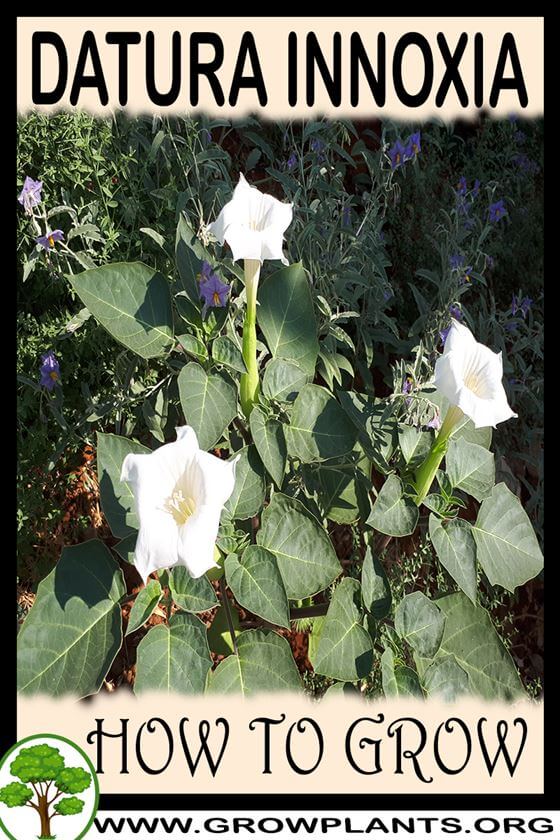

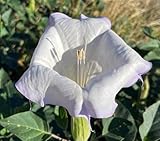


Plant Profile & Key Characteristics
Overview: Datura (Devil’s Trumpet) is a fast-growing herbaceous perennial 0.5-2 m tall, evergreen in warm zones and grown as an annual where it freezes. It is grown ornamentally for its large trumpet flowers and has a history of medicinal and hedge use.
Quick Specifications
| Specification | Attribute |
|---|---|
| Plant Type / Life Cycle | Perennial in warm zones (grown as an annual in cool climates) |
| Foliage Type | Evergreen (or annual) |
| Mature Size | Height 0.5-2 m (20-80 in) |
| Growth Rate | Fast |
| Toxicity | Highly toxic / poisonous – all parts (tropane alkaloids) |
| Hardiness | USDA zones 5-10 as annual, 10+ as perennial |
Growth Form & Structure
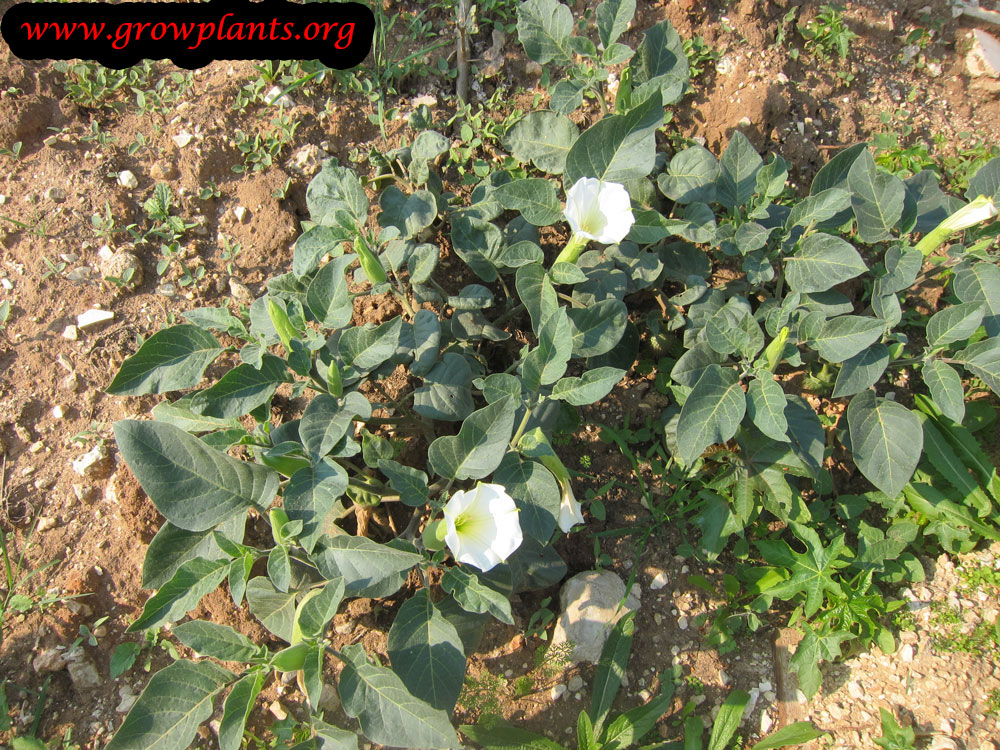
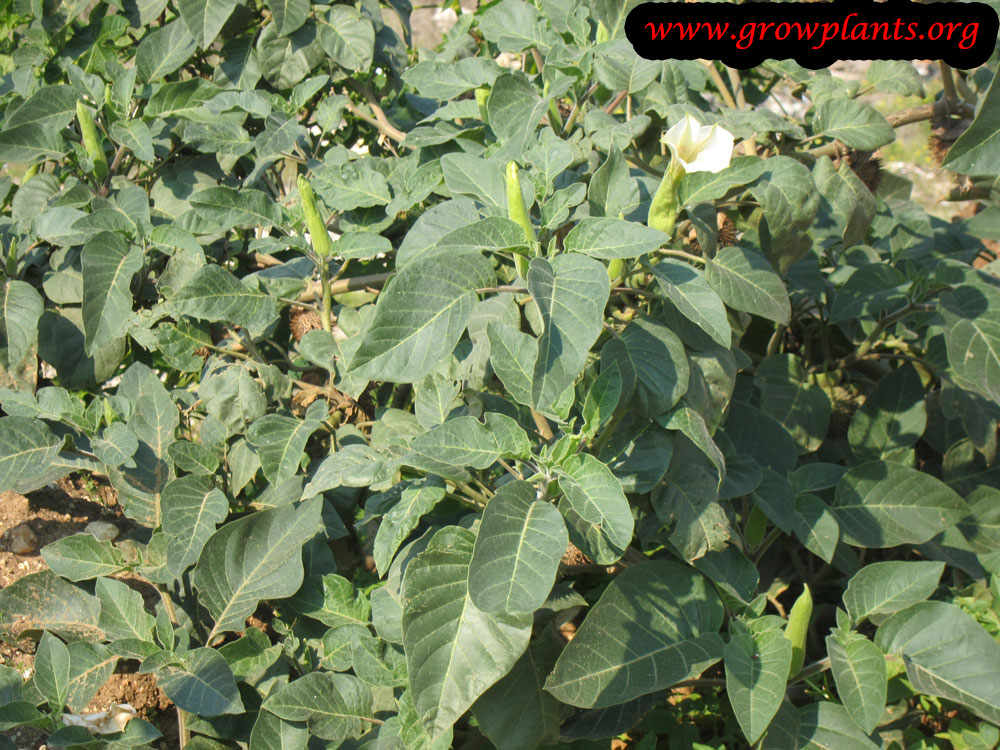
- Height & Spread: A bushy plant 0.5-2 m (20-80 in) tall and roughly as wide; can be grown in a container.
- Growth Habit & Form: Coarse, fast-growing herbaceous to sub-shrubby plant with a spreading, bushy form.
- Lifespan & Maturity: Perennial in frost-free zones, otherwise a vigorous single-season annual; matures quickly.
Anatomy & Physical Features
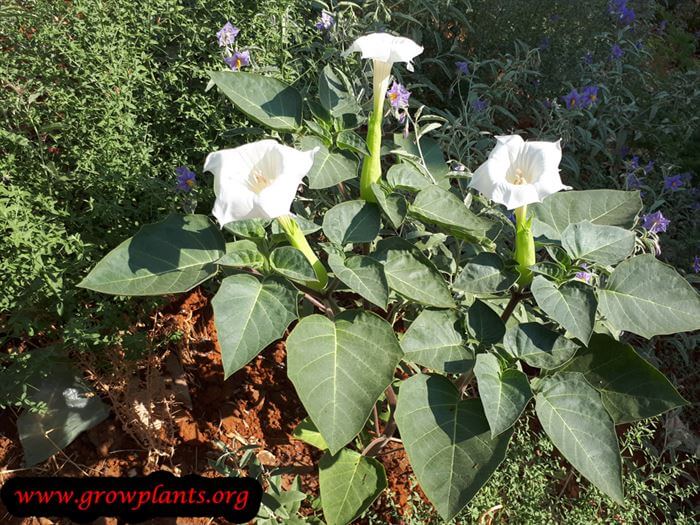
- Leaves & Foliage: Green, deltoid (triangular) leaves with a toothed (dentate) margin.
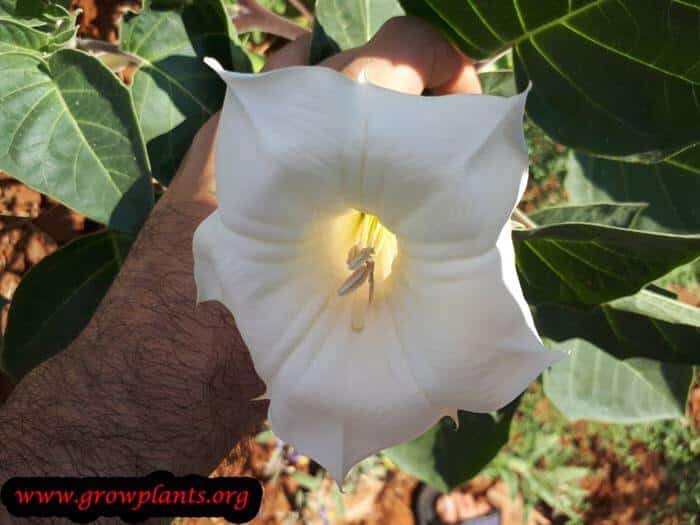
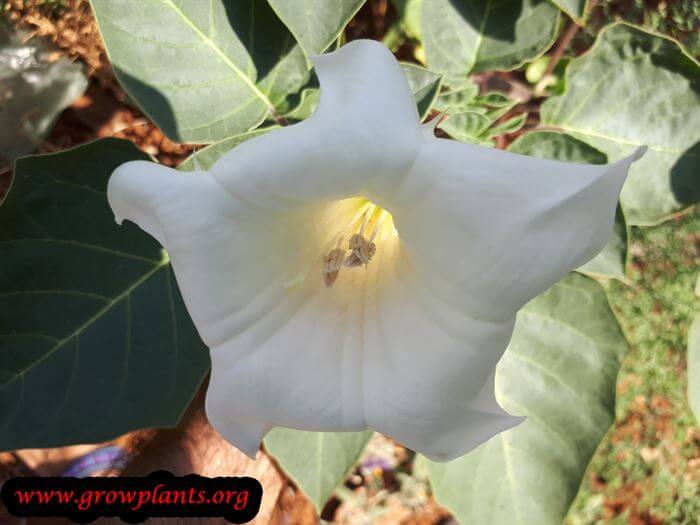
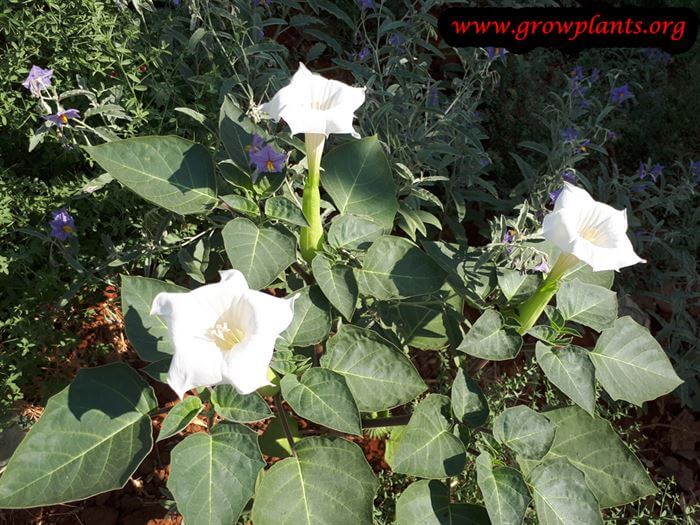
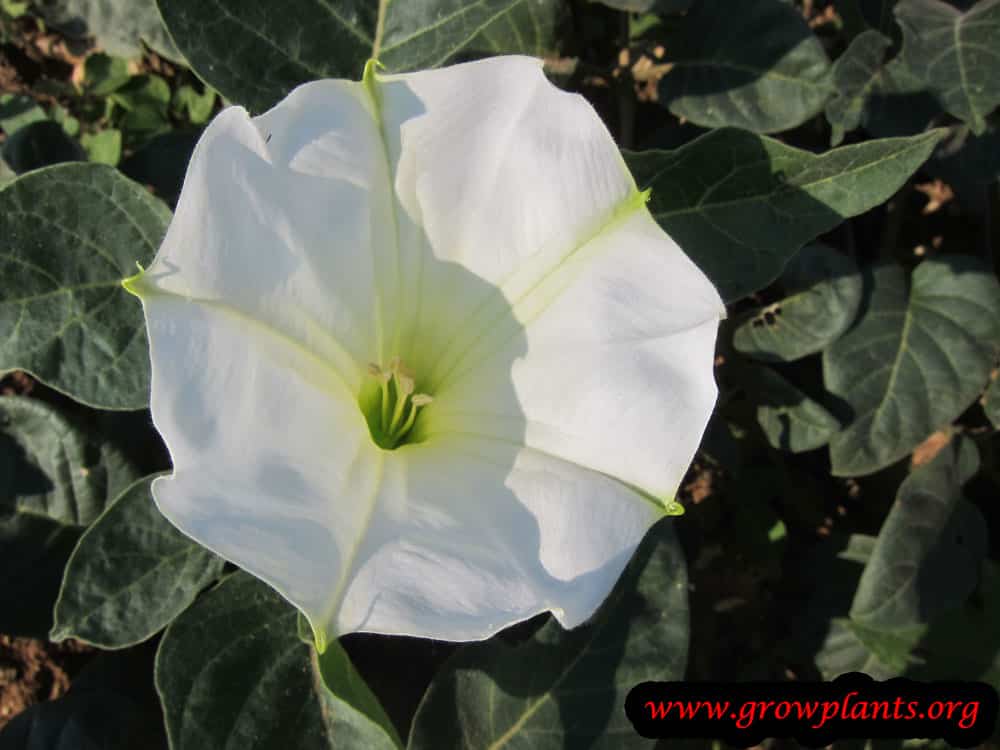
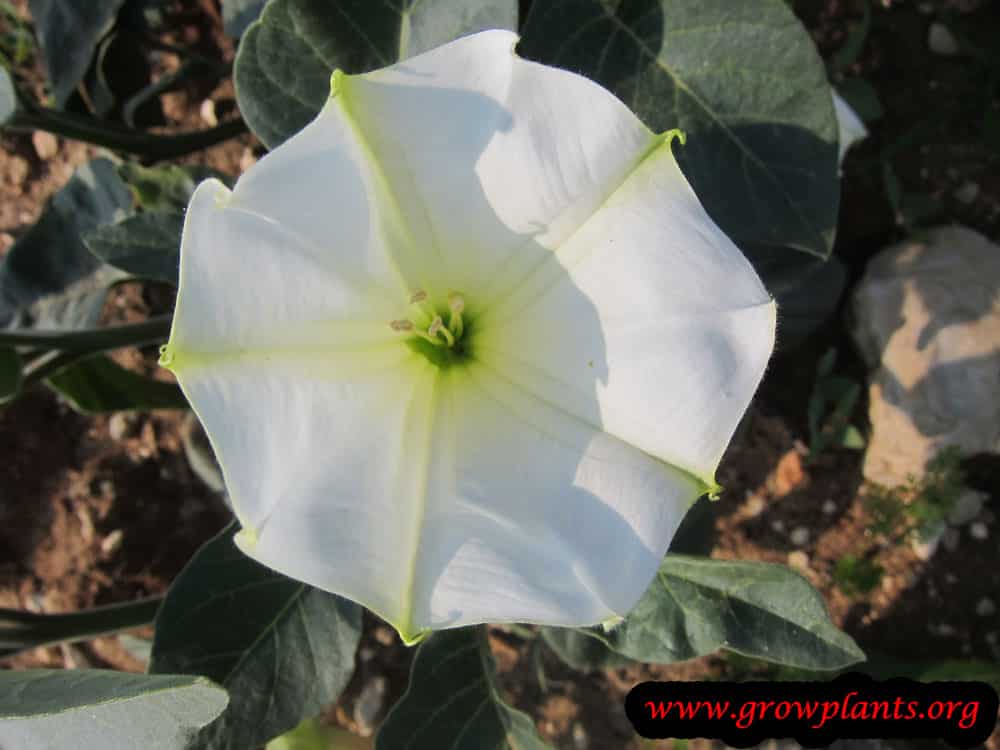
- Flower Characteristics: Large upward-facing trumpet flowers with fused petals in white, purple, pink or blue, often bicoloured with white (full detail in the Bloom guide).
Primary Uses & Landscape Value
- Functional & Ornamental Roles: Ornamental flowering plant and informal hedge, with traditional medicinal use; can be invasive.
Care Guide: Planting, Soil & Watering
Overview: Datura is a fast-growing, warmth-loving plant that thrives in full sun with well-drained soil and modest watering. It is drought-tolerant once established but frost-tender, and is grown as an annual where winters are cold.
Quick Care Requirements
| Requirement | Ideal Condition |
|---|---|
| Planting Season | In spring after the last frost (or autumn in warm climates) |
| Growth Rate | Fast |
| Soil Type | Well-draining soil |
| Water Need | Low to Moderate – let the surface dry between waterings |
Planting & Establishment
- Best Planting Season: Plant in spring after frost has passed, or in autumn in frost-free climates.
- How to Plant:
- Hole Preparation: Dig a hole a little wider than the root ball on a well-drained site.
- Soil Amendments: Mix in compost or organic matter to support this hungry, fast grower.
- Planting Depth: Set the root ball level with the soil surface.
- Growth Speed & Expectations: Fast, reaching around 0.5-2 m in a single season.
Soil, Watering & Drainage Care
- Soil Mix & Drainage Needs: Well-drained soil; tolerates moderate drought and dislikes soggy ground.
- Watering Schedule & Technique:
- Young / Newly Planted: Keep lightly moist while the plant establishes.
- Established: Moderate watering, allowing the top of the soil to dry between waterings; avoid waterlogging.
- Seasonal Adjustments: More in summer heat; little in winter (or treat as an annual where frosty).
Climate, Light & Hardiness
Datura is a fast, warm-season herbaceous plant – a tender perennial in frost-free climates and grown as an annual where winters freeze – suited to Mediterranean, desert, subtropical and temperate gardens. It likes full sun to partial shade and warmth, and the site rates it at hardiness zones 5–10 when grown as an annual and zone 10 and warmer as a perennial.
Quick Climate Specifications
| Climate Zones | Mediterranean, desert, subtropical, temperate |
|---|---|
| USDA Hardiness Zones | Approximately 5–10 grown as an annual; 10 and warmer as a perennial (site data) |
| Optimal Temp Range | Warm; keep above about 10°C (50°F) for continued perennial growth (site care note) |
| Cold Damage Begins | Frost kills the top growth |
| Frost Tolerance | Very low |
| Light Conditions | Full sun to partial shade |
Sunlight & Light Exposure
Optimal Light Setup
Full sun gives the sturdiest plants and best flowering; light shade is tolerated, especially in very hot climates.
Direct Sun Requirement
Well adapted to strong, direct sun and reflected heat, which suits it to open, hot and arid sites.
Temperature Extremes & Hardiness
USDA Hardiness & Regional Limits
The site keeps two figures because lifecycle and cold tolerance are separate: it behaves as a perennial only in frost-free zones (about 10 and warmer), and is commonly grown as an annual down to about zone 5 where winters freeze. The plant's own care note asks for temperatures above roughly 10°C (50°F) to keep it growing as a perennial.
Cold Damage & Winter Protection
Frost cuts down the soft top growth. In frost-free climates it persists and regrows; where winters freeze it is treated as an annual (or lifted/overwintered under cover). Young plants are the most cold-sensitive.
Extreme Heat Tolerance
High – datura relishes heat and copes with dry air, flowering through hot Mediterranean and desert summers.
Wind, Humidity & Microclimate
Dry-Air Tolerance
Good tolerance of dry, low-humidity air.
Wind Tolerance
Moderate; the large, soft leaves can be tattered by strong wind, so a somewhat sheltered spot keeps foliage looking best.
Microclimate Recommendations
A warm, sunny, sheltered position lengthens the flowering season; where frost is expected, grow it as an annual or overwinter a container under cover.
Growing in Pots, Balconies & Indoors
Datura is a tender, fast-growing plant (0.5-2 m / 20-80 in) grown for its large trumpet flowers. It is not a houseplant, but it makes an excellent large-container plant for a sunny patio or balcony, and potting it lets you move it under cover to overwinter where winters are cold.
Quick Details
- Container Size: A roomy pot sized to the plant; pot up as the root ball fills
- Indoor Suitability: Not a houseplant – too light-hungry for a room; pot it mainly so it can be overwintered frost-free
- Best Spot: Full sun to half shade
- Soil & Drainage: Well-aerated, organic-rich mix (potting mix, or peat with perlite); must drain freely
- Watering in Pots: Average and evenly moist – pots dry faster than open ground; let water drain away
Indoors & On the Windowsill
- Houseplant limits: Grown for its flowers, it needs strong sun and will not thrive deep indoors.
- Overwintering: This is the main reason to pot it – in cold climates move the container somewhere bright and frost-free over winter and water sparingly until growth restarts.
- Safety: All parts of Datura are highly toxic and poisonous if eaten – keep it well away from children and pets, and never let any part be ingested.
On a Balcony or Patio
- Light & wind: Give it the sunniest spot; it can grow tall, so shelter it from strong wind and stake if needed. Walls and paving reflect heat, so pots dry quickly – check moisture daily in warm weather. A drip irrigation kit with a timer can take over that watering check automatically.
- Practicalities: A large filled pot is heavy – make sure the balcony can take the weight and that drainage runoff will not be a nuisance below.
Choosing the Pot, Soil & Long-Term Care
- Pot & drainage: A roomy pot with strong drainage holes; skip a standing water saucer to avoid root rot. Terracotta breathes and dries faster, while glazed or plastic pots hold moisture longer.
- Potting mix: Aerated and organic-rich – potting mix, or peat with perlite.
- Feeding: Potted shrubs need feeding more often than those in the ground, as nutrients wash out with each watering – a balanced feed through the growing season.
- Repotting: Pot up as the roots fill the container, and every couple of years refresh the mix and lightly prune the root ball and top growth.
Fertilizing & Feeding
A steady, light feeder: a balanced complete fertilizer through the growing and blooming season keeps flowering ornamentals healthy without forcing soft growth.
Quick Fertilizing Specs
| Feeding Level | moderate |
|---|---|
| Main Nutrient Priority | A balanced complete fertilizer with steady nitrogen; extra phosphorus is not needed for bloom. |
| Best Feeding Period | Through the active growing and flowering season. |
| Organic Options | Compost and other organic matter improve the soil and supply gentle, steady nutrition. |
| Soil pH | Slightly acidic to near neutral suits most flowering ornamentals. |
| Reduce/Stop Feeding | Ease off feeding as growth slows heading into the cool, dormant rest period. |
Feeding by Growth Stage
Spring growth flush
Support healthy new shoots and leaf growth as the plant wakes up.
| Nutrient direction | A complete, balanced fertilizer with steady nitrogen to build strong foliage and stems. |
|---|---|
| Timing | As new growth begins in spring and the weather warms. |
| Frequency | Light, regular feedings through the active growing season. |
| Fertilizer types | A balanced complete garden fertilizer, A slow-release complete fertilizer worked into the soil, Compost or other organic matter to enrich the soil |
| Precautions | Feed lightly and avoid overfeeding with nitrogen, which pushes soft leafy growth at the expense of flowers. |
Flowering period
Fuel abundant, well-colored flowers while keeping the plant vigorous.
| Nutrient direction | A balanced complete fertilizer with adequate nitrogen; balanced feeding, not extra phosphorus, drives good bloom. |
|---|---|
| Timing | Through the blooming season. |
| Frequency | Steady, light feeding maintained across the flowering period. |
| Fertilizer types | A balanced complete flowering-plant fertilizer, A water-soluble complete fertilizer for container plants |
| Precautions | Skip high-phosphorus ‘bloom booster’ products; they are rarely needed and excess phosphorus can harm the soil. Container plants need even feeding to avoid salt buildup. |
Repeat bloom and rebound
Keep long-blooming plants flushing new flowers after deadheading or shearing.
| Nutrient direction | A balanced complete fertilizer to refuel growth and encourage the next wave of flowers. |
|---|---|
| Timing | After each flush of bloom or a mid-season trim, while the plant is still actively growing. |
| Frequency | Resume light, regular feeding as new growth pushes. |
| Fertilizer types | A balanced water-soluble complete fertilizer, A balanced complete garden fertilizer |
| Precautions | Feed sparingly in heat; combine feeding with consistent watering so nutrients stay available. |
Dormancy or cool-season rest
Let the plant rest through cold or low-light conditions without forcing new growth.
| Nutrient direction | None – withhold fertilizer while the plant is resting. |
|---|---|
| Timing | During cold winter weather or the plant’s low-light dormant rest. |
| Frequency | No feeding at this stage. |
| Fertilizer types | No feeding at this stage – resume only when active growth returns. |
| Precautions | Do not fertilize until active growth resumes; feeding a resting plant risks salt buildup and root injury. |
Nutrient Deficiency Signs & Corrections
Older, lower leaves fade to pale green or yellow and overall growth is weak.
| Possible causes | Low nitrogen in the soil, Nutrients leached out by heavy rain or frequent watering, Cold, wet roots slowing nutrient uptake |
|---|---|
| Appears first on | Older, lower leaves |
| What to check | Recent feeding history, Soil drainage and how often it is watered, Whether roots are healthy and warm enough |
| Possible correction | Apply a balanced complete fertilizer and improve drainage; correct soil pH if it is far off so nutrients stay available. |
Newest leaves turn yellow between green veins (interveinal yellowing) while older leaves stay greener.
| Possible causes | High soil pH locking up iron, Waterlogged or poorly aerated roots, Genuinely low available iron |
|---|---|
| Appears first on | Youngest, newest leaves |
| What to check | Soil pH, Drainage and root health, Whether only new growth is affected |
| Possible correction | Correct soil pH and improve drainage; where iron is truly short, apply a chelated iron product per its label. |
Lush leaves but few flowers, or pale weak blooms.
| Possible causes | Excess nitrogen driving leafy growth over flowers, Too little light for good flowering, A pest or cultural problem rather than a nutrient shortage |
|---|---|
| Appears first on | Flower buds and flowering shoots |
| What to check | How much nitrogen was applied, Hours of direct light, General plant health and pest pressure |
| Possible correction | Ease off nitrogen, move the plant to brighter light, and keep feeding balanced rather than reaching for high-phosphorus products. |
Pruning, Training & Seasonal Maintenance
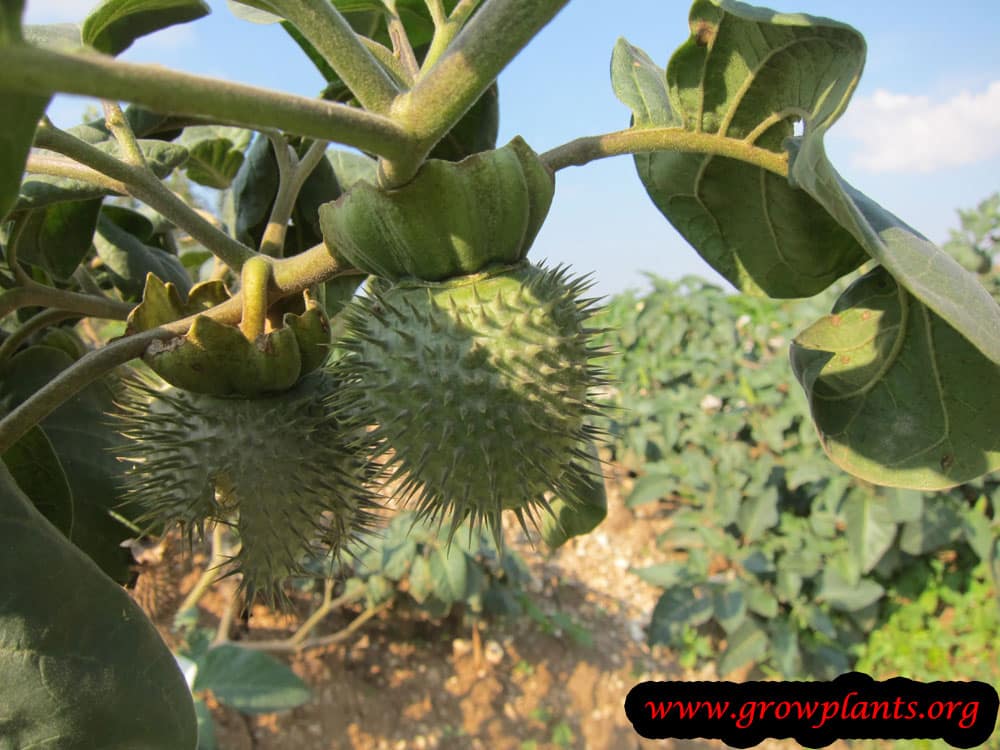
Datura (devil’s trumpet) is a fast, soft-stemmed plant grown as an annual or tender perennial, with upward-facing trumpet flowers borne continuously on new growth – so, unlike its woody, down-flowered relative Brugmansia, it needs no structural or woody-framework pruning. The main jobs are deadheading and removing the spiny developing seed pods, both to keep it blooming and, importantly, to stop its prolific self-seeding, since the facts flag it as invasive. Every part is poisonous, so prunings are handled with gloves.
Quick Pruning & Maintenance Specs
| Pruning Tolerance | Moderate to high – herbaceous; resprouts from the base |
| Primary Pruning Window | Through the growing season for deadheading and pod removal |
| Secondary Maintenance Window | Late winter, to cut back an overwintered tender perennial |
| Typical Frequency | Ongoing deadheading; an optional annual cut-back |
| Main Objective | Prolong bloom, prevent invasive self-seeding, control size |
| Young Plant Priority | Pinch tips for a bushier, multi-stemmed plant if wanted |
| Mature Plant Priority | Deadhead, remove seed pods, shorten leggy stems |
| Best Tool Type | Precision snips or bypass secateurs for soft stems |
| Avoid Heavy Pruning During | Just before frost on a plant you intend to overwinter |
Pruning by Plant Age & Size
Newly Established
Pinch the growing tips to encourage a bushier, multi-stemmed plant, and otherwise remove only damage.
Young / Formative
No woody training applies – the plant is herbaceous. Simply pinch for shape; it will branch and rebloom from lower leaf pairs.
Mature / Established
Deadhead spent flowers, cut off the spiny seed capsules before they ripen, and shorten leggy stems to a lower leaf pair to keep it compact and blooming.
Seasonal Pruning Schedule
Growing-Season Ongoing
Objective: keep it flowering and prevent unwanted seeding. Remove: spent flowers and developing seed pods continuously; tip-prune leggy growth. Do NOT remove: healthy leafy growth, which carries the constant new flowers. Expected response: repeated bloom on fresh growth, and no self-sown seedlings.
Late-Winter Cut-Back (tender perennial)
Objective: renew an overwintered plant. Remove: old, frost-tired top growth, cutting hard. Expected response: strong resprouting from the base as warmth returns. Where grown purely as an annual, this step is unnecessary – the plant is simply cleared at season’s end.
Structural Pruning & Training
None in the woody sense – because it blooms on new growth continuously, cutting a leggy stem back to a lower leaf pair simply prompts fresh, well-branched growth that reblooms. Keep it shapely by pinching rather than by building a permanent framework.
Special Growth to Remove
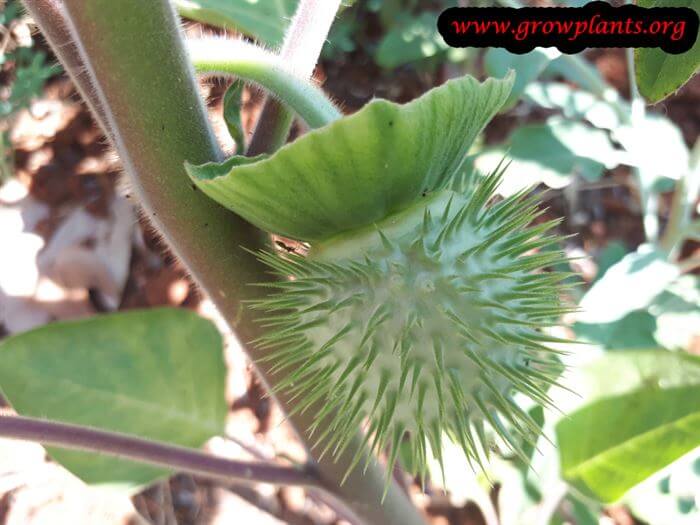
- Developing seed capsules – the priority: remove the spiny pods before they mature and scatter seed, both to curb invasiveness and to redirect energy into more flowers.
- Spent flowers – deadhead regularly to keep the display going.
- Frost- or disease-damaged stems – cut back to healthy growth.
Container & Small-Space Pruning
Excellent in pots, where diligent deadheading also stops unwanted seedlings appearing in nearby beds. Cut back and keep frost-free to carry a tender perennial through winter; in a container the invasive self-seeding is easy to contain by removing pods.
Tools
Use precision snips for deadheading and cutting off seed pods, and bypass secateurs for shortening leggy stems. No saw, loppers or shears are needed on this soft-stemmed plant.
Tool Hygiene & Disease Risk
Increased – the plant is poisonous, so glove up, keep prunings and seed pods away from children, pets and livestock, and wash tools and hands. Cleanliness is otherwise routine.
Cut Placement & Technique
Pinch or cut just above a leaf pair to force branching, and snip flower and pod stalks off cleanly at their base.
Heavy Pruning & Rejuvenation
Tolerated as a herbaceous plant: an overwintered clump can be cut back hard in late winter and will resprout from the base, while plants grown as annuals are simply pulled at the end of the season rather than rejuvenated.
Post-Pruning Care
Light watering supports regrowth; no feeding is needed merely because you pinched. Bag and dispose of the seed pods so they cannot self-sow.
Common Pruning Mistakes
- Letting the spiny pods ripen and seed everywhere, creating an invasive weed problem.
- Handling the toxic foliage and pods bare-handed.
- Hard-pruning a tender plant just before frost instead of after winter.
When NOT to Prune
Right before frost on a plant you intend to overwinter; otherwise Datura is forgiving of cutting at almost any time in the growing season.
Recommended Tools (by task)
- precision_snips – deadheading and removing the spiny seed pods on soft stalks.
- bypass_secateurs – cutting leggy stems back to a leaf pair and the late-winter cut-back.
Propagation Guide
Datura is grown mainly from seed, which it sets freely and from which the species comes largely true; softwood cuttings are an easy alternative for perennial types. It is easy to raise, the main points being warm conditions for germination and care in handling the toxic seed.
All parts, including the seed, are poisonous; handle with care and note that this plant self-seeds readily and can become invasive.
Quick Propagation Specs
| Best Propagation Method | Seed |
| Alternative Methods | Softwood cuttings (perennial types) |
| Propagation Difficulty | Easy |
| Seed True-to-Type | Usually true-to-type at species level; some variation |
| Vegetative True-to-Type | Yes |
| Best Propagation Season | Spring, into warm conditions |
| Germination Temperature | Warm, about 20–30°C (68–86°F) |
Growing from Seed
Seed Handling & Viability
Seed stores well dry and stays viable for years. Wear gloves — the seed is toxic.
Dormancy & Pre-Sowing Treatment
No cold treatment is needed. Germination can be slow and erratic; soaking the seed, or lightly nicking the hard coat, can help even and speed emergence.
Sowing Season & Depth
Sow in spring once conditions are warm, covering the seed shallowly (roughly 5–10 mm, about ¼ in).
Germination Conditions
Keep warm, about 20–30°C (68–86°F), and evenly moist; emergence is often staggered.
Stem Cuttings
Perennial types can be grown from softwood cuttings in the warm season, rooted in a moist mix under humidity; a rooting hormone is optional.
Bloom & Flower Guide
Quick Details
- Bloom Season: Spring, summer and autumn
- Time to First Bloom: Fast – plants often flower in their first season
- Flower Appearance: Large, upward-facing trumpets of fused petals in white, purple, pink or blue, often more than one colour
- Edibility: None – every part of Datura is highly poisonous and must never be eaten
Detailed Blooming Overview
Datura carries big, dramatic trumpet flowers that open toward evening and give off a heavy night scent. That evening timing suits its main visitors – night-flying hawk moths, which pollinate the long-throated blooms. Striking in the garden, but every part of the plant is toxic.
Flower Characteristics
- Large trumpet-shaped flowers with fused petals.
- Colours: white, purple, pink or blue, often blended.
- Open toward evening and scented at night.
Bloom Care & Thinning
- Managing the bloom: Remove faded trumpets to keep the plant tidy and prolong flowering; wear gloves and wash your hands after handling.
- Safety: All parts are highly poisonous – keep well away from children, pets and livestock, and never let any part be eaten.
Pests, Diseases & Troubleshooting
Datura (thorn apple / moonflower) is a fast, soft-leaved Solanaceae that shares the pest roster of tomatoes and other nightshades: spider mites, whitefly, aphids and hungry hornworm caterpillars, plus mosaic virus and leaf spots. Every part of the plant is highly toxic, so wear gloves and keep it away from children, pets and livestock when handling, pruning or clearing it. Vigorous, unstressed plants shrug off most pests.
Quick Troubleshooting Overview
| Issue / Pest | Main Symptom | Primary Solution |
|---|---|---|
| Spider mites | Fine stippling, bronzing, webbing in hot dry air | Hose foliage, raise humidity, horticultural oil |
| Whitefly | Clouds of white flies, honeydew, yellowing | Yellow sticky traps, insecticidal soap, Encarsia |
| Aphids | Sticky curled tips; spreads virus | Rinse off, beneficials, insecticidal soap |
| Hornworms | Large leaves stripped fast; big green caterpillars | Hand-pick, Bt (spinosad), encourage wasps |
| Leaf miners | Pale winding tunnels inside leaves | Pick mined leaves, sticky traps, tidy debris |
| Tobacco mosaic virus | Mottled, distorted, stunted foliage | Rogue plants, hygiene, control aphids |
Common Pests & Management
- Spider mites (Tetranychus urticae):
- Symptoms: In hot, dry conditions leaves show fine pale stippling, then bronze, dry and curl, with fine webbing on undersides and growing tips; plants weaken quickly under heavy pressure.
- Prevention & Control: Raise humidity and hose down leaf undersides; keep the plant watered and unstressed; introduce predatory mites; treat with horticultural oil or insecticidal soap, avoiding broad-spectrum sprays that flare mite numbers.
- Whitefly (Trialeurodes vaporariorum / Bemisia tabaci):
- Symptoms: Clouds of tiny white flies rise when the plant is disturbed; scale-like nymphs on leaf undersides excrete honeydew, and heavy feeding yellows and weakens foliage while spreading viruses.
- Prevention & Control: Hang yellow sticky traps to monitor and reduce adults; introduce Encarsia parasitic wasps under cover; spray insecticidal soap or horticultural oil on undersides every few days to break the cycle.
- Aphids (Myzus persicae / Aphis spp.):
- Symptoms: Soft green or black insects mass on tips, buds and leaf undersides; growth curls, honeydew turns leaves sticky, and aphids spread mosaic and other viruses.
- Prevention & Control: Dislodge with water; support ladybirds, lacewings and hoverflies; pinch out badly infested tips; treat persistent colonies with insecticidal soap in the evening. Wear gloves – the sap is toxic.
- Hornworms (Manduca sexta / M. quinquemaculata):
- Symptoms: Large green caterpillars with a rear horn strip leaves and soft stems rapidly, leaving bare stalks and dark frass pellets; a few can defoliate a plant.
- Prevention & Control: Hand-pick (wear gloves) and drop into soapy water; encourage parasitic braconid wasps (leave caterpillars carrying white cocoons); spray Bacillus thuringiensis (Bt) or spinosad on young larvae for organic control.
- Leaf miners (Liriomyza spp.):
- Symptoms: Pale, winding tunnels wander inside the leaves as larvae mine between the surfaces; heavy mining reduces vigour and mars the foliage.
- Prevention & Control: Pick off and destroy mined leaves, keep the area weeded, use sticky traps for adult flies, and encourage parasitic wasps; systemic-heavy sprays are rarely justified for cosmetic mining.
- Flea beetles (Epitrix / Phyllotreta spp.):
- Symptoms: Tiny beetles pit young leaves with many small round ‘shot-holes’ and jump when disturbed; worst on seedlings.
- Prevention & Control: Protect young plants with fine mesh, keep them growing strongly, tidy weedy nightshade hosts nearby, and dust or spray only if seedlings are being overwhelmed.
Diseases & Fungal Issues
- Tobacco / tomato mosaic virus (TMV / ToMV):
- Symptoms: Light and dark green mottling, puckering and distortion of leaves, with stunting; symptoms are permanent and cannot be cured.
- Treatment & Management: Remove and destroy infected plants; do not compost; wash hands and disinfect tools after handling (tobacco products can carry TMV); control aphids and avoid working plants when wet.
- Leaf spot (Cercospora / Alternaria spp.):
- Symptoms: Brown or dark angular spots, sometimes with concentric rings or yellow halos, appear on leaves in warm, wet, humid weather and can cause early leaf drop.
- Treatment & Management: Space plants for airflow, avoid overhead watering, remove spotted leaves and clear debris; a copper fungicide can help in wet spells, but sanitation is the main control.
- Southern blight / root rot (Sclerotium rolfsii / Pythium / Phytophthora):
- Symptoms: White fungal threads and a soft rot at the stem base, or general wilting and root decay in warm, waterlogged soil, cause sudden collapse.
- Treatment & Management: Improve drainage, avoid waterlogging and deep mulch piled against stems, rotate planting sites, and remove and destroy affected plants and surrounding soil crust.
Growing Difficulties & Abiotic Problems
- Toxicity (grower safety):
- Cause & Symptoms: All parts – leaves, seeds, flowers, roots – are highly poisonous if ingested and the sap can irritate skin and eyes.
- Correction Strategy: Wear gloves when handling or pruning, wash hands afterwards, keep seeds and prunings away from children, pets and livestock, and site the plant where it will not be nibbled or mistaken for food.
- Wilting from heat/drought:
- Cause & Symptoms: Large soft leaves wilt in fierce midday heat or dry soil, then usually recover as it cools.
- Correction Strategy: Water deeply and consistently, mulch to conserve moisture, and give afternoon shade in the hottest climates; brief midday wilt with moist soil is normal.
- Root rot / overwatering:
- Cause & Symptoms: Soggy soil rots the roots, yellowing and collapsing the plant even without a specific pathogen.
- Correction Strategy: Grow in free-draining soil, let the surface dry between waterings, and avoid standing water; in pots ensure free drainage.
What Helps – Products & Tools
Treat Datura like a nightshade crop: insecticidal soap and light horticultural or neem oil for mites, whitefly and aphids; Bt or spinosad for hornworms; yellow sticky traps for whitefly and leaf-miner flies; and copper fungicide for leaf spot in wet weather. Above all, wear gloves – the plant is toxic – and keep growth vigorous, since healthy plants resist most of these pests.